Paying respect to Sayas for their metta & cetana is a tradition that is unique to Burma / Myanmar. The tradition is alive and well.
Saya Pu Zaw Pwes
There have been seven world wide SPZPs :
SPZP-2000 (USA) : hosted by RIT Alumni International
SPZP-2000
SPZP-2002, SPZP-2007, SPZP-2010 (Singapore) : hosted by RIT sayas & alumni in Singapore
SPZP-2004, SPZP-2012, SPZP-2016 (Yangon) : hosted by RIT sayas & alumni in Myanmar
SPZP-2000 was cancelled due to the pandemic.
Alumni
Many alumni are active in the following:
SDYF (Swel Daw Yeik Foundation)
RITAA (RIT-YIT-YTU Alumni Association)
MES (Myanmar Engineering Society)
MEC (Myanmar Engineering Council)
HMEE
HMEE 1HMEE 2HMEE 3
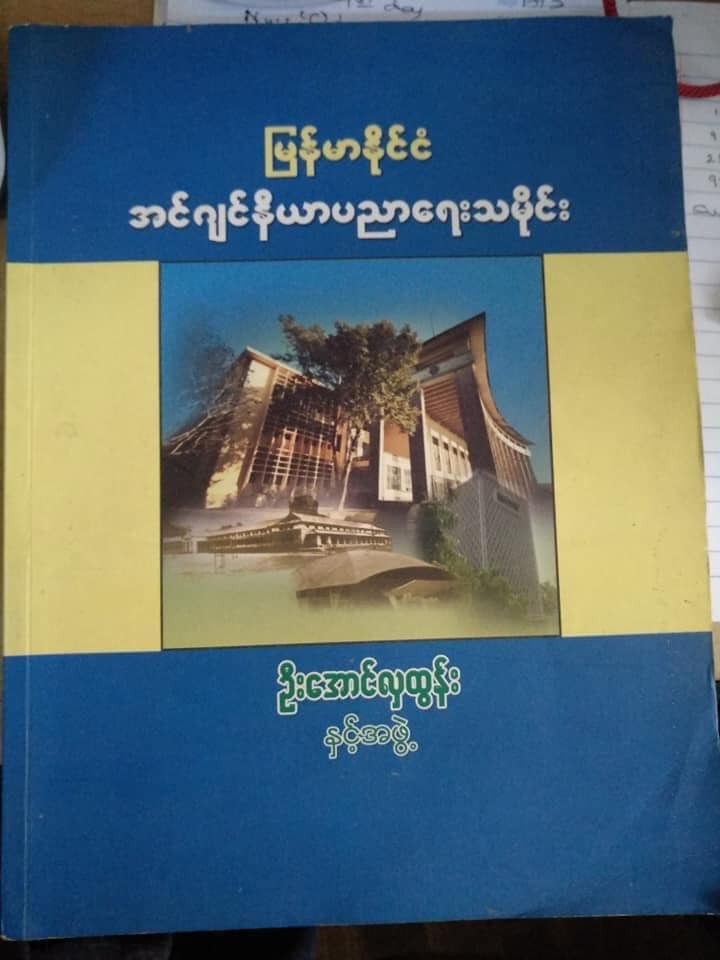
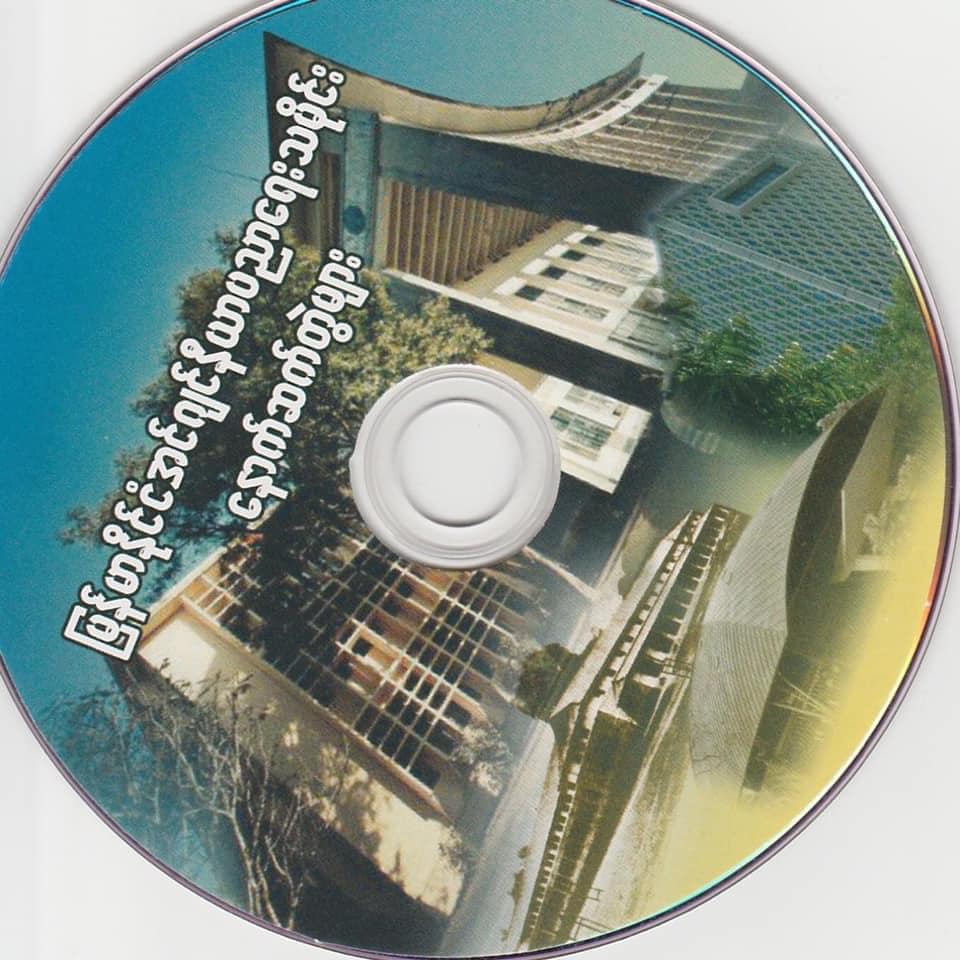
“History of University Engineering Education in Burma/Myanmar” (HMEE-2012) was published in time for SPZP-2012.
The project’s initiators included Saya U Soe Paing, Sayagyi U Ba Than and several sayas and alumni (See Acknowledgement in the Book).
Saya U Aung Hla Tun and team (including Yours Truly) compiled the book.
The draft for the first two sections were prepared by Saya U Soe Paing and team.
Ko Ohn Khine (M70) translated Section 1 and summarized Section 2.
Ko Ohn Khine’s translations have been revised by Saya U Soe Paing.
Saya U Aung Hla Tun suggests that the Book is due for revision/update every five years (or so).
Several meetings have been held for HMEE-2018 (follow up project to HMEE-2012 mentioned above.
YTU Library Modernization Project
Donations — large and small — are coming in.
U Khin Maung Tun (T78), Daw Myint Myint (C69), Saya Dr. Myo Khin (C70) and Daw Mya Nwe (Winsome, C73), Saya U Tin Htut (M60) … donated K100 Lakhs each (or more) for the Project.
Thanks to Ma Nan Khin Nwe (83 Intake) and team. The team had incrementally published the list of donors.
Phase One : The construction for adding a storey is completed.
Archives
The YTU Library could/should have a section to help remember our beloved alma mater, our sayas and alumni activities.
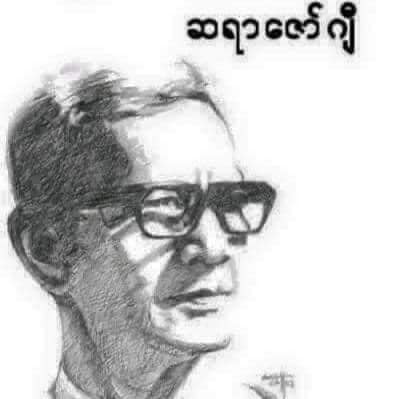
Sayagyi Dr. Aung Gyi endorsed Ko Benny Tan’s proposal to archive the mementos.
I have requested several class representatives to record (both formally and informally) their gatherings.
HCF (Health Care Funds)
Steeve and Helen Kay Health Care Fund for RIT Sayas
U Khin Maung Tun and family Fund for Vision Care
Swel Daw Yeik Foundation
Others : by discipline and/or class
Accreditation
We would be glad to hear about the progress of the Accreditation …
RIT related Facebook pages and web sites
hlamin.com
RIT Updates
Swel Daw Yeik Foundation
RIT-YIT-YTU Alumni Association
NorCal RITAA
Google Group for Combined 1st BE Intake of 64 and 65
He is the first native Professor of Pali and Burmese. He successfully proposed the opening of the Burmese Department at Rangoon University.
His works include
Translation of Visuddhimagga
The Expositor (Atthasalai)
Burmese Grammar
Glass Palace Chronicle (co-author)
U Thitthila
U Thitthila
Sayadaw did missionary work in UK. He came back to Burma and taught at the Pali Department for several years before continuing his missionary work abroad.
Sayadaw also translated for Pali Text Society (PTS).
U Shwe Zan Aung
U Shwe Zan Aung
He translated a Buddhist text for Pali Text Society (PTS).
U Aung Than
He was Pali Professor. He was also Commander of the Rangoon University Training Corps.
U Tin Lwin
Pali Professor
Also taught at IMBTU.
Co-authored the translation of Maha Buddhavamsa (Life Story of the Buddha) by Tipitaka Sayadaw U Vicittasarabhivamsa).
U Silanandabhivamsa
U SilanandaProtective Suttas
He served as Chief Compiler of the Tipitaka Pali-Myanmar Dictionary for the Sixth Buddhist Council.
Served as an external examiner for the Pali Department.
Chief Resident Monk of Dhammananda Vihara.
He wrote books in Burmese and English. “Paritta Pali & Protective Verses” was published by a Thai Devotee as a birthday present for Sayadaw.
First Rector of IMBTU
U Hoke Sein
Pali Burmese Dictionary
He spent over a decade to compile and refine the Pali-English-Burmese Dictionary. U Hoke Sein, son U Saw Hlaing, grand daughter Dr. Cherry Hlaing and two great grand children all stood first in their respective Matriculation examination.
Mr. Balwant Singh
He took Pali Honors.
He is RUBC Gold,
He was forced to retire as Commissioner of Pegu Division.
Joined the United Nations and served as a Security Expert.
Kha Lay Ba Wa means childhood. The days of the innocent childhood became a theme of the song composed by Sai Kham Leik and sung by Sai Htee Saing.
Young Sons
Kha Lay Ah Thinn
Some time back, my cousin sister said, “I still have the paper with the song that you wrote for Kha Lay Ah Thinn.”
When we were young, there was no Internet or TV.
The Burma Broadcasting Service (BBS) would broadcast for specified hours in the morning, afternoon, evening and night.
We spend a lot of time outdoors.
One hangout was the corner in our uncle’s compound.
Someone came up with the idea that we should form a “Kha Lay Ah Thinn”. I was chosen to be the “Okkahta” (President). I am not a composer, but that did not prevent from trying out a “Theme Song”. The music and lyrics were not spectacular, but I would have earned a nod for moving out of my comfort zone.
We did not have fund. Our uncles, aunts and elder cousins decided to help with the fund raiser. There was the renowned “Bu Thee Gyaw & Ah Chin”. It may be a sign that I would become an organizer.
KG
I did not cherish going to school at an early age. It was not fun to get up early.
It was not easy to use slate.
All that changed when a caring Karen Christian Teacher named “Teacher Kywe” magically transformed me into a dutiful student with an inquiring mind.
Myees (Grand children)
Young Myees
The elder Myee is 11 years old. The younger Myee is 8 years old. They are excellent in studies, sports and social relations.
They have lots of books, educational kits and toys. They enjoy visiting zoos, play grounds, gyms, and museums. They like TV, You Tube and taking photos.
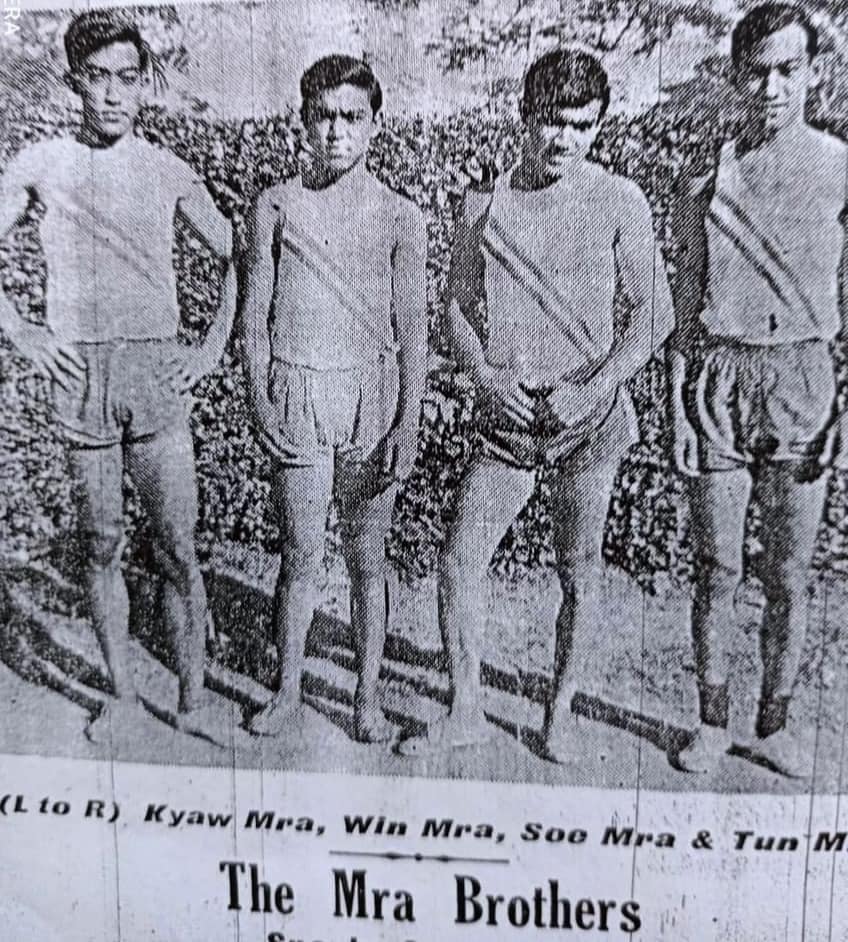
Represented RU and Burma in the First SEAP Games in Bangkok in 1959, and the Second SEAP Games in Rangoon in 1961 Won Bronze in 1959 and Gold in 1961 for 4x 100 m Relay
Team mates include Tun Mra (Sprint), Kyaw Mra (Hurdles) and Soe Mra (Pole Vault).
Mra Brothers
Mra Brothers
Sons of U Shwe Mra (ICS; Chief Secretary, Union of Burma; UN)
U Shwe Mra & Tun Mra
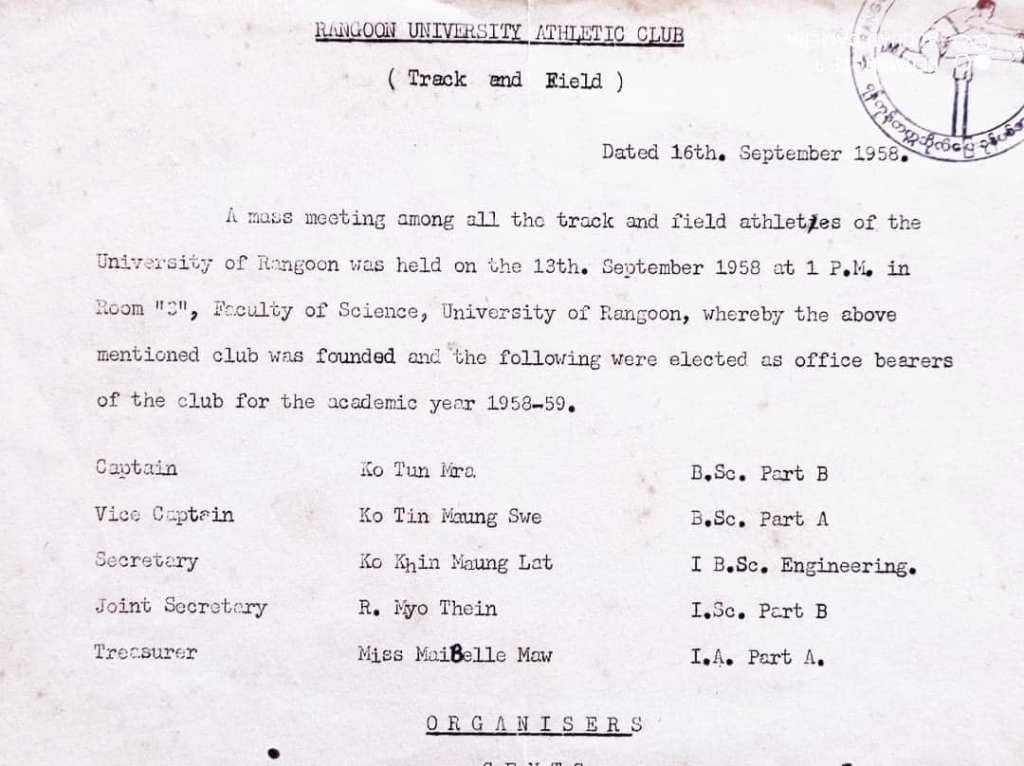
Tun Mra Represented RU and Burma in the First SEAP Games in Bangkok in 1959, and the Second SEAP Games in Rangoon in 1961 Won Bronze in 1959 and Gold in 1961 for 4x 100 m Relay. Full Green, Old member and Patron of RUBC. Appeared in Saya Nyein’s program for RU Diamond Jubilee.
RU Athletic Club
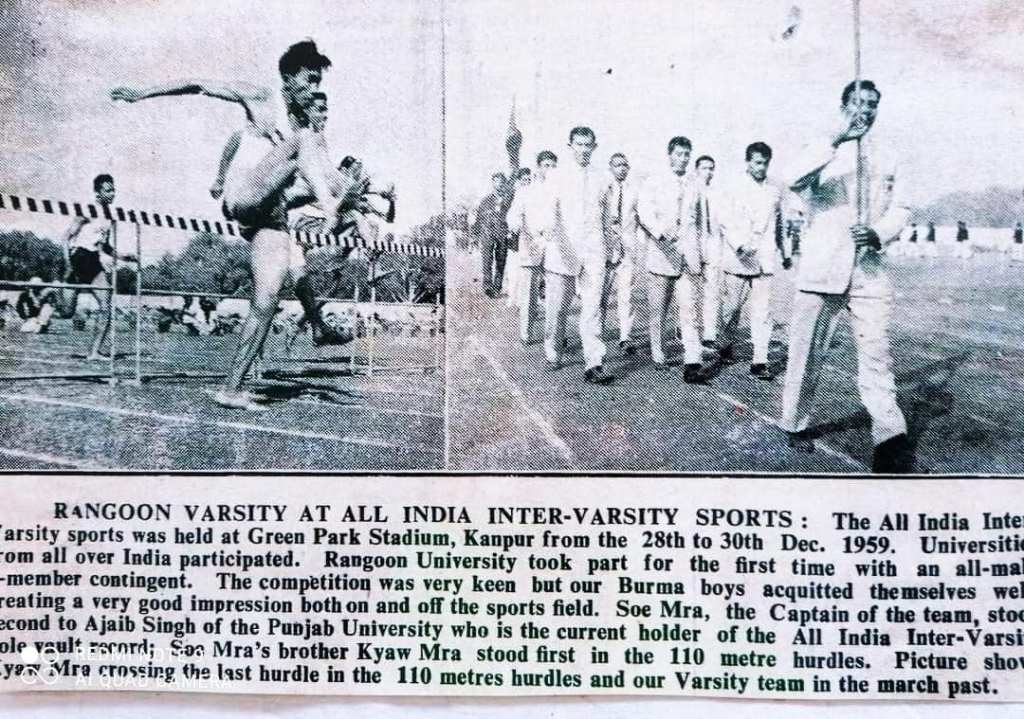
Kyaw Mra (GBNF) Represented RU and Burma in the First SEAP Games in Bangkok in 1959, and the Second SEAP Games in Rangoon in 1961 Won Silver for Hurdles at the Second SEAP Games. Retired as National Coach for Track and Field. Full Green, Old member of RUBC.
RU Athletes
Soe Mra won Gold for Pole Vault at the Second SEAP Games. He won Gold in subsequent Games.
Inter-Varsity Sports
Win Mra was a Medalist in Burma Pole Vault before doctors asked him to retire. He is an excellent guitarist and vocalist. Taught English at RIT. Retired as Myanmar Ambassador to the United Nations. Chair of Myanmar Human Rights Commission.
Maung Maung Mra succeeded his elder brothers as Burma Pole Vault Champion. Won Bronze at the Fifth SEAP Games. Also competed for RASU in High Jump at the Inter-Institute Tournament.
Dr. Aung Mra represented IM(1) in Track and Field. Pole Vault seems to be the favorite for the Mra brothers.
Kyaw Khin (GBNF)
Represented SPHS, RASU and Burma in Track and Field.
Events include 800m, 1500m, 110m Hurdles and 400m Hurdles
Became National Coach in Track and Field
Richard Yu Khin (GBNF)
Won Gold in Yachting with U Maung Maung Lwin (Commodore of Rangoon Sailing Club)
Trained with Burma Selected Swimmers, but he could compete in two sports at the SEAP Games.
U Aye (M62) wrote :
Mg Hla(Badminton), was from Moulmein. We were together at Moulmein College (1956-58). He was selected as a National player even at that time.
Aye Kyaw (Swimming) was from Mudon. He joined Navy after graduation.
Myanmar Sagar — Spoken Burmese Predates the written language
Myanmar Sar — Written language First appeared as the fourth and final language of the Mya Zedi Kyauksar (stone inscription). An early Indo-Tibetan script was used to write Burmese.
Burmese Department
The Department of Oriental Studies at Rangoon University gave degree courses in Pali.
Saya U Pe Maung Tin requested to have a Burmese Department as a sub-department of Oriental Studies.
Burmese later became a separate Department.
EarlyAlumni
Saya U Pe Maung Tin was proud of his students — Theikpan Maung Wa, Zawgyi and Minthuwun — for founding the “Khit San Sar Pay”. He would express Mudita (Altruistic Joy) for their talents and achievements.
U Pe Maung Tin
U Sein Tin, ICS — Theikpan Maung Wa Victim of a botched robbery. We had to study his “Wut Htu Saung Par”.
U Thein Han — Zawgyi; Laureate Poet; Literary Award winner. Taught at Burmese Department. Retired as Chief Librarian, Rangoon University Central Library.
Zawgyi
U Wun — Minthuwun; Head of the Translation Department of Rangoon University; Compiler of “Myanamr Abhidan”; For a short period, served as Burmese Professor at RU; Visiting Professor at Osaka University for four years
Minthuwun
Daw Khin Saw Mu — Khit San Kabyar Spouse : ICS U Ba Tint ; Children : Daw Khin Saw Tint, U Nay Oke
Daw Khin Saw Mu
U Tin Aye — Shan Pyay; Pinlon Agreement signer; Succeeded U Wun as Head of Translation Department
U Tin Aye
Sayas and Sayamas
Burmese Sayas (at University)
U E Maung (pronounced as Aye Maung) served as its first Professor. His compilation “Garland of Kabyars (Poems)” was a prescribed text for my elder siblings. Spouse : Daw Khin Mya Mu was an expert in reading and transcribing Kyauk Sar (Inscription)
U Chan Mya — Mya Ketu
U Toe Aung — Kutha
U Hla Maung — Abhiddhama later served as a Member of the Burmese Language Commission / Myanmar Sar Ah Phwe
U Sunn Tun (Mandalay) — “Shay Tho” series
U Kyaw Yin — Kathika U Kyaw Yin later served as Rector of MASU
U Po Kyaw Myint
Daw Than Swe
Daw Po — Taught in our I.Sc.(A) class; Staff Sayama at Inle Luyechun Camp in the Summer of 1965; later became Professor
Maung Khin Min Danuphu — Professor
RIT Burmese
U Tein Kyi — Head of RIT Burmese Department; later moved to Regional College
U Soe Myint — succeeded U Tein Kyi as Head
U Saw Tun — Saw Lu; later became Head of Burmese Department at NIU
U Kyaw Hlaing — later taught Burmese at Hawaii University and Center of Burmese Studies in Northern Illinios
St. Paul’s High School
U Pe Tin — Middle School
U Nge — Middle School
U Nyunt Maung — High School
U Sein — High School His son Dr. Soe Win (SPHS58) stood First in Burma and is Retired Rector of YUFL U Thet Lwin (Maung Ngwe Hlinne) was also a student of Saya Sein
Prescribed Texts
They include
Myanmar Thadda (Burmese Grammar) by Saya U Pe Maung Tin which we studied in Middle School
Kabyar Pan Kone (Garland of Flowers) compiled by Saya U E Maung which was prescribed for High School before our days
U Pon Nya Wutthu Paung Kyote compiled and annotated by Saya U Wun which we studied in High School
Poems by U Kyin U
Selections from Zat Taw Gyi Hse Bwe (e.g. Mahosadha)
Pyazat (e.g. Deva Gomban)
Burmese Language Commission
Also known as Myanma Sar Ah Phwe
Bohmu Ba Thaung, Head of Burmese Department at DSA, was an early member of the Commission
U San Lwin (DSA First Batch) served as Chair of the Commission
In the 1980s, several History Commission members were assigned to the Myanma Sar Ah Phwe
The Commission published books, e.g. on Spelling and Proverbs
Decline of Formal Burmese
The Commission revised the Burmese spelling twice. Some revisions were ill-advised.
Authors and publishers were fined ten pyas for each violation of the spelling rules.
Many classic texts were ruined when every occurrence of TA had to be replaced with TIT to please the whims of the higher authorities. The rhyme and rhythm of the beloved texts were lost.
The rise of the Internet was sadly accompanied by the decline of Burmese usage and the adoption of slangs and abbreviations in messages, blogs and even articles.
The Union Bank of Burma issued Burmese Currency notes backed by Gold Reserves.
The bills were signed by authorities (e.g. Sithu U Kaung, U San Lin).
One US dollar traded at 5 – 6 kyats, and one Sterling pound around 12 – 13 kyats.
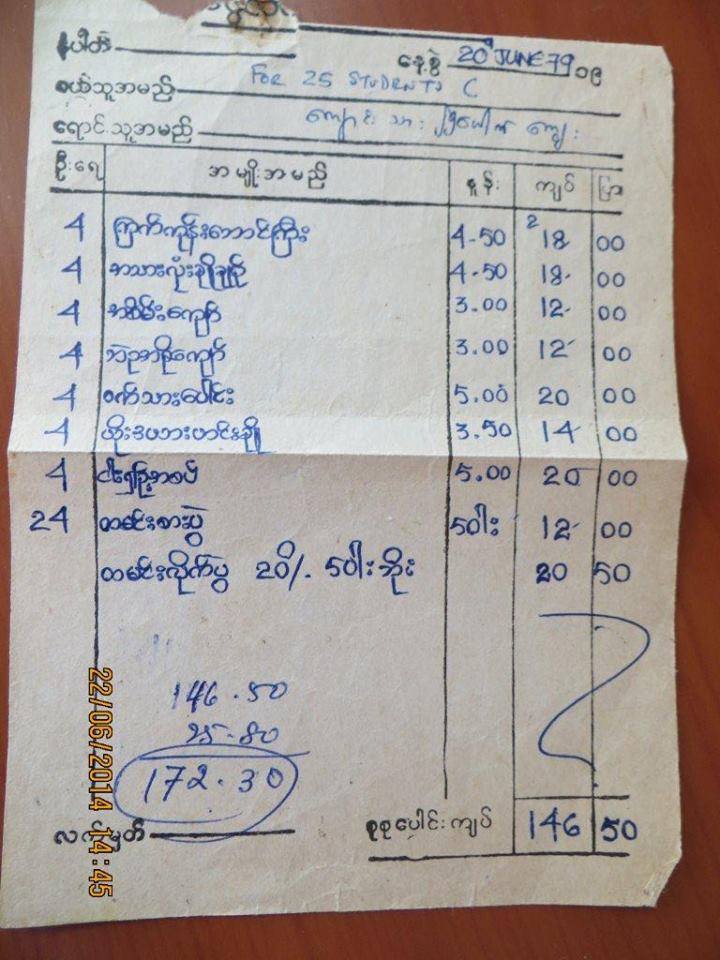
Old Receipt
Old Receipt from 1979
The Old Receipt (for 146 Kyats and 50 Pyas) is a testament of the purchasing power in the 70s.
It was for a farewell dinner for Saya U Myo Win (M/Ag65) by 25 members of the RIT Automobile Club.
Decline in the value of theKyat
Three rounds of Demonetization, mismanagement, … saw a huge decline in the value of the Kyat.
Snap shots of the exchange rate :
1 Kyat = 4 (or more) Bahts (Early days)
1 Kyat = 1 Baht (Baht Taik Kyat Taik Khit)
4 (or more Kyats) = 1 Baht
Four decades ago, a Palmist friend told me that I would own 10 Lakhs. The top prize for the “Aung Bar Lay” Lottery was 1 Lakh. A professor’s monthly salary was K1300. A lecturer earned 800 – 1200 kyats.
A few years back, my friend had to pay 10 Lakhs for a visit to a hospital in Yangon.
Another friend had to pay 800+ Lakhs to a hospital in Singapore. Luckily, he had inherited a fortune from his parents.









 HlaMin