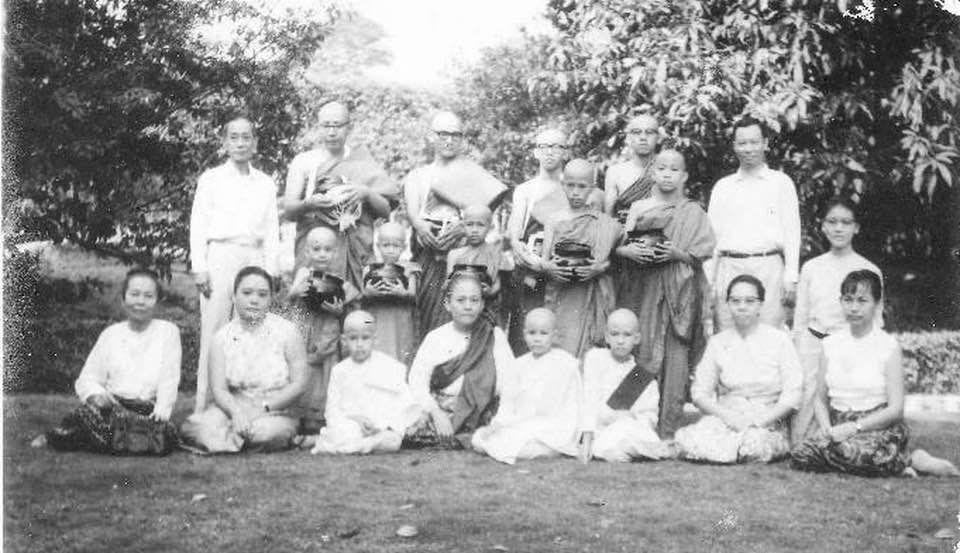
ဂျပန် – မြန်မာ အဘိဓာန် Japanese – Burmese Dictionary (ချစ်မန်းနွယ် အဖွဲ့နှင့် အတူ) with Chit Man Nwe / Professor Harada & team
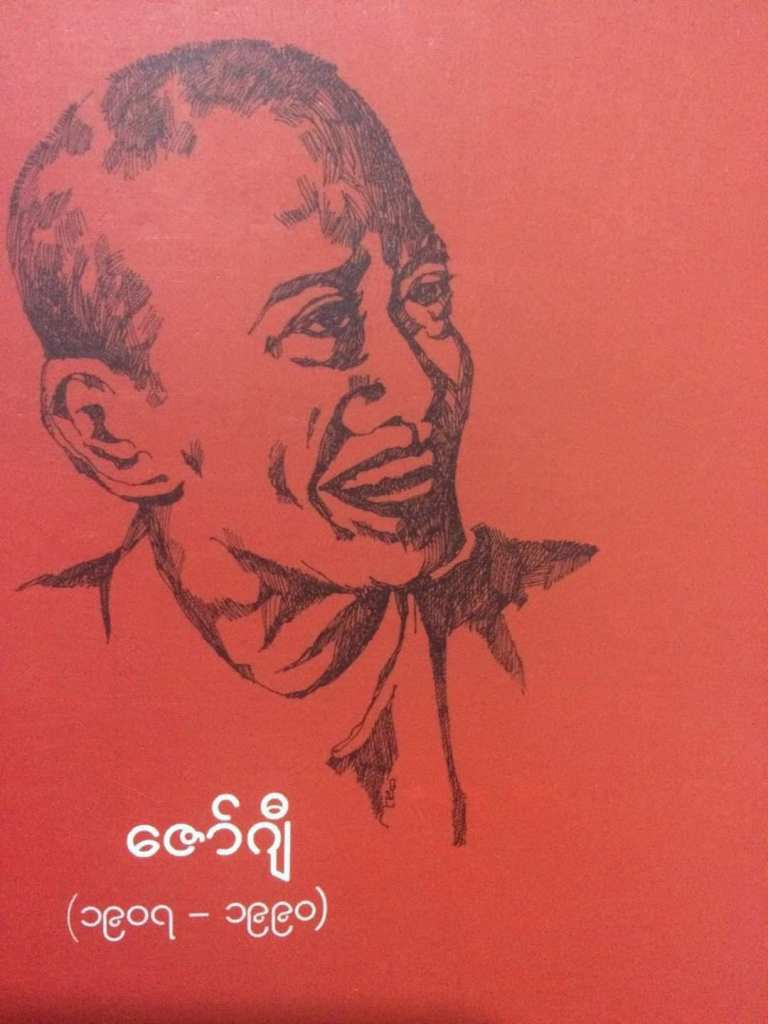
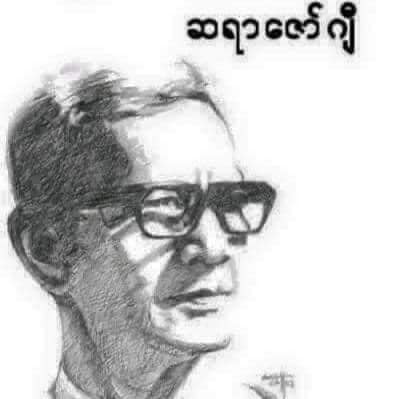
ခေတ်စမ်းစာပေ Co-founder of Khit San Sar Pay with Theikpan Maung Wa and Zawgyi
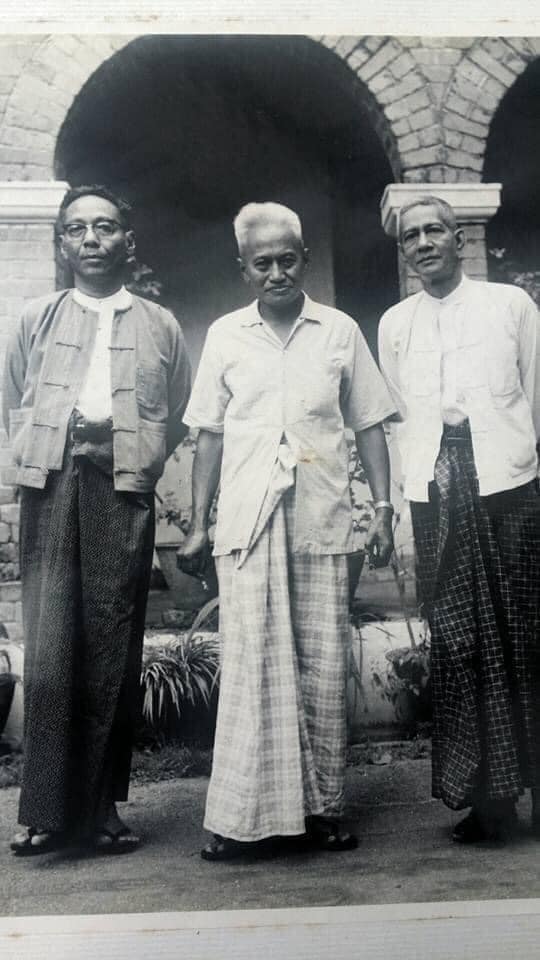
Three Pioneers
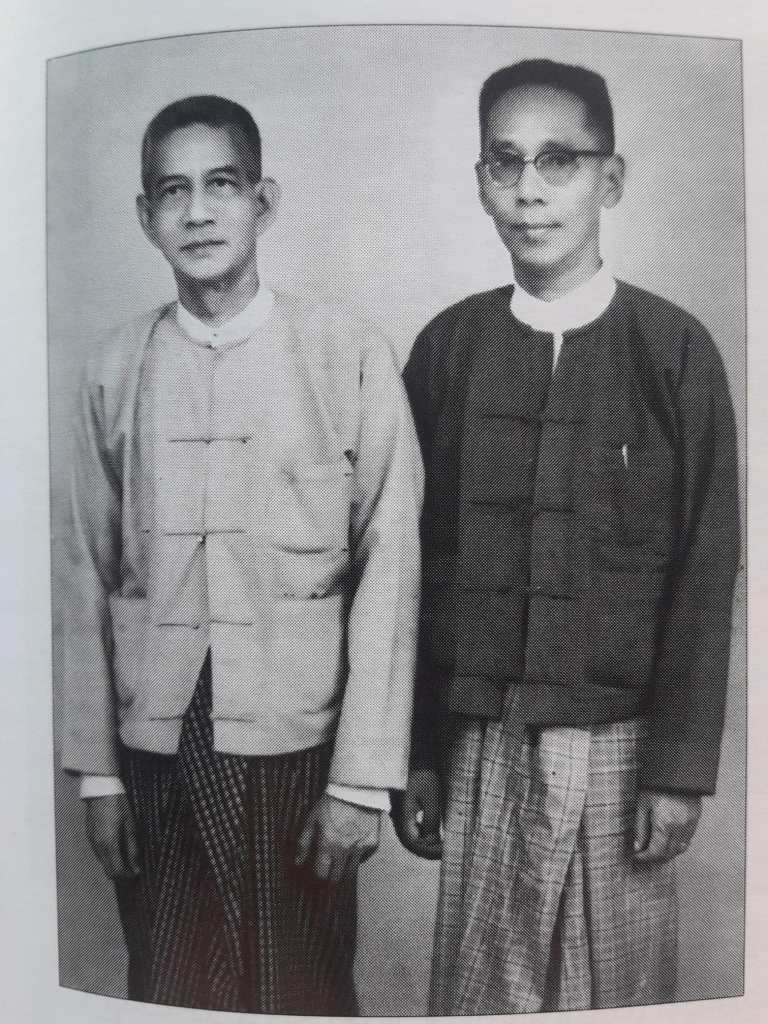
Saya U Wun (Minthuwun), BBS U Khin Zaw (“K”) and Saya U Thein Han (Zawgyi)
U Khin Zaw founded BBS (Burma Broadcasting Service, Myanmar Ah Than) and served as its Director. Earlier, he was Chief Librarian of Rangoon University Library. He was succeeded by U Thein Han.
U Wun headed the Translation Department at Rangoon University. He served as Professor of Burmese at RU, and as Visiting Professor at Osaka University. He is a Lexicographer. He compiled the Myanmar Abhidan. He worked with Professor Harada (Chit Man Nwe) and team on the Japanese-Burmese Dictionary.
Zawgyi and Minthuwun are Laureate Poets. They co-founded Khit San Sar Pay with Theikpan Maung Wa (ICS U Sein Tin). They were the early students of Saya U Pe Maung Tin (Pali and Burmese Scholar, first native Principal of Rangoon College).
There are two forms of Myanmar / Burmese language.
Myanmar Sagar (Oral / spoken)
Myanmar Sar (Written)
Alphabet
The Alphabet has 33 Eik Khaya (letter or character).
Grouping
There are several groups (Wagga) of five letters.
Linguists and phonologists refer to the groups as
Gutturals (Ka group)
Palatels (Sa group)
Cerebrals (Ta-ta-lin-chaik group)
Dentals (Ta group)
Labials (Pa group)
The first group (known as “Ka” wag [or wagga]) consists of Ka (Ka gyi), Kha (Kha Gway), Ga (Ga Nge), Ga (Ga Gyi) and Nga. Note that the 3rd and 4th members have the same sound.
Basic Rules
There are some basic rules for “Pa Sint” (where one letter is placed on top of the other).
One rule says “Eik Khaya Tu, Wag Tu Sint”. It means the two letters forming a “Pa Sint” must be the same, or from the same group. So, it is a “No No” to have a Ka on top of Sa.
Another rule says, “Even for letters within a group, the ordering must be preserved”. So, Ka can be put on top of Kha, but not the other way. Also, Ga Nge can be put on top of Ga Gyi, but not the other way.
Byee and Thara
Ah is used as a Byee (Consonant) and sometimes as a Thara (Vowel).
A Burmese word can be formed with a Byee and one or more Thara.
Typewriter Keyboard
When the Burmese Keyboard was implemented for a typewriter (e.g. Olympia), the keys are labeled Red (keys that prevent the shifting of the carriage to type Thara) and Black (keys that signal the completion of the word and allows the carriage to advance).
Word Processing
The early Burmese word processing systems use
transliteration (e.g. on Apple Macintosh computers)
Thara before Byee (as in the typewriter)
Byee followed by Thara (which requires processing to delimit the words and to have a canonical ordering for representation).
Issues
The Myanmar Sar Ah Phwe မြန်မာစာအဖွဲ့ published two major revisions for spelling. It forced publishers to use “Tit” တစ် instead of “Ta” တ (without exception) with a fine of ten pyas for each violation. Scholars pointed out the ancient pagoda had “Bo Ta Htaung” ဗိုလ်တထောင် and not “Bo Tit Htaung” in its inscriptions, but the group who wanted to please Number One prevailed.
There was a rush to implement Burmese type faces and type fonts. The implementations did not have consensus and did not address compliance (e.g. with Unicode). They led to the incompatibility issues in the current computer systems, smart phones and devices.
Short Messaging Systems inadvertently degraded the spelling prowess.
Before the Internet, we get international, national and local news from the newspapers. Most papers were printed at night in batches. The early batches were dispatched by road and rail to other cities. The later batches have a “STOP PRESS” section to cover the “latest” news.
Most newspapers get the international and/or national news from news agencies such as Reuters, AP, and UPI. They get local news from their reporters and from other people willing to submit or share the news.
For example, I would write reports of the Rag Regatta, Monsoon Regatta and Annual Regatta and give it to selected newspapers.
Later, I would type reports of the golf tournaments at RGC (Rangoon Golf Club) and/or BGC (Burma Golf Club) provided by Saya U Soe Paing.
Newspapers
There were ten (or more) newspapers in our younger days. Most households will subscribe two (or more) newspapers. One can sell old newspaper (by weight).
In the early days, most were morning newspapers. A few were evening newspapers.
The English newspapers include Nation (by U Law Yone and team), and Guardian (by U Sein Win and team).
The Burmese/Myanmar newspapers include Kyemon (modeled after the Daily Mirror), Yangon, Tun, Hanthawaddy, Oway, Bama Khit (and later Moe Gyo), Myanmar Ah Lin, Man Daing, Ah Htauk Taw (known for gossip), Tagun (“Banner” known for sports) and Ludu (in Mandalay).
Some papers have political affiliations. They had roles during the AFPFL split.
The papers have columnists such as Zawana and Thagadoe.
Some carry information about the horse races in general and their picks for the “Treble Tote” .
Some carry cartoons, serial novels and daily horoscope.
Each paper has a signature.
After Coup d’etat
Things changed after the coup d’etat on March 2, 1962.
Several newspapers were shit down or nationalized. Censorship with varying degrees was introduced.
NAB (News Agency Burma) was formed to
compile news from the news agencies
select news
translate the selected news
distribute the news and translations to the six national newspapers (four in Burmese/Myanmar and two in English).
Two new papers were established with Sayagyi Shwe Oo Daung as Chief Editor of the “Loke Tha Pyithu Nay Zin” and Saya U Khin Maung Latt as Chief Editor of the “Working People’s Daily” (WPD). Grapevine says that the then Number One promised “full authority” to the two Chief Editors.
The promise did not last long. U Khin Maung Latt was asked if he wanted to be an Ambassador. Daw Khin Myo Chit stepped in and replied that “Ko Latt would go back to teaching”.
U Khin Maung Latt
My Writings
I wrote articles (mostly on computers), poems and translations (including a short story by U Thu Kha) for the Guardian and WPD. I received fifteen kyats for most of them. U Thu Kha and I got fifty kyats each for the short story and its translation.
I was requested to write for the SarsodawNaySupplement. I was shown the type set copy of my writing about Ananda Thuriya (“A Man of Infinite Valor”). The higher authorities did not want the readers to appreciate “Dhammata“; so it did not appear in the newspaper on Sarsodaw Nay.
The six Chief Editors were formed into two groups. Each group (with one English and two Burmese Chief Editors) would be penalized if an item published in one of their newspaper was found to be sensitive.
U Soe Myint (GBNF, Chief Editor of Guardian and later father-in-law of KMZ) approved my writings (mostly about Computer Applications).
Shwe Yoe (Scott, author and teacher) introduced soccer to St. John’s Diocesan Boys High School.
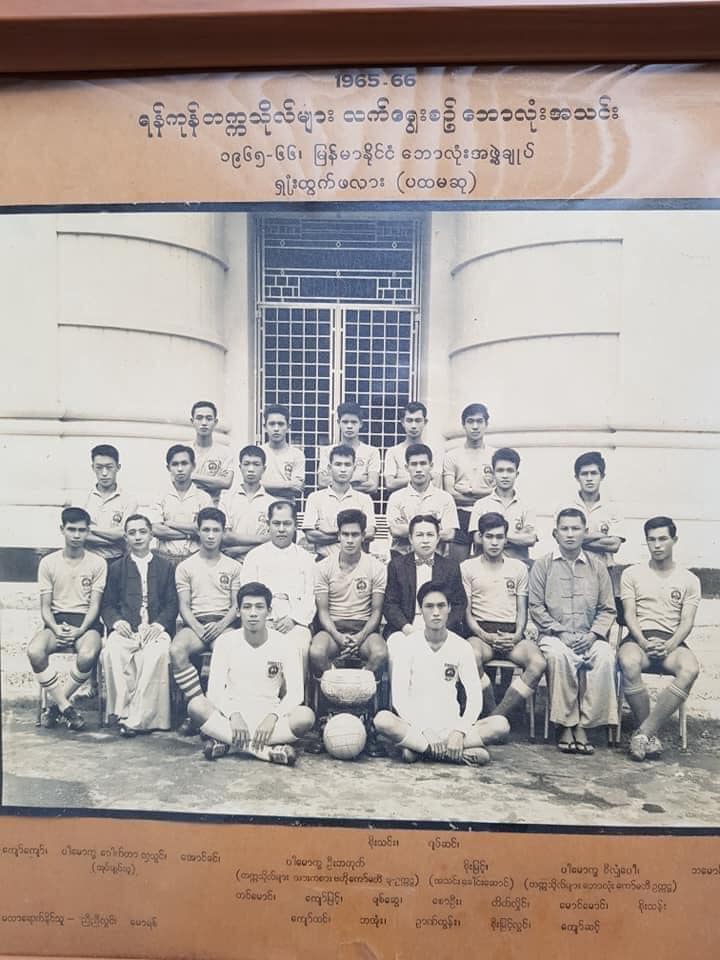
BAA (Burma Athletic Association) stadium (aka Aung San Stadium) hosted the First Division matches. There were (a) League Championship (b) Dunlop Knock Out Tournament … For several years, Rangoon University First Eleven competed as a First Division team.
RU Soccer
Saya Nyein (Diocesan Alumni) was RU Coach. U Than Win (Captain of RU football) studied in the US and served as a Director of SPED (Sports and Physical Education Department)8. His spouse retired as Professor of Botany Department, RU.
Some early players include U Chan Tha (Past Captain of RUBC & Captain of the Prome Hall team), U Tun Kyi (engineer), Collegian Nay Win (Academy winner) and U Kenneth Shein (father of Ma Pale Shein (ex-UCC)).
U Chan Tha’s team won the Inter-Hall Soccer Trophy for two consecutive years. Saya U Tin Swe (EE53, GBNF) was a star player.
Saya U Myo Myint Sein (A58) was a well-known soccer player.
Ko Kyaw Sint (Edward, T70, GBNF) was among the preliminary members for Burma Selected, when his career was cut short by a vicious tackle by Tin Han.
Ko Kyaw Htin (C67), Ko Soe Myint Lwin (EP68, GBNF) and Ko Khin Maung Myint (John Tint, M72, GBNF) played for youth and/or senior National Soccer Teams.
Ko Khin Maung Lay (T68), Ko Myo Nyunt (C69), Ko Myint Sein (Jabu), Ko Khin Maung Lay (Mutu), and Sai Thein Maung represented RIT in soccer. U Maung Maung (Burma) was RIT Sports Officer.
At one time, the RU Sports Council conferred Blue and Half Blue to eligible students who excel in sports.
In our days, Saya U Maung Maung Than (T, GBNF) chaired the RIT Sports Committee. Certificates were presented to the RIT sportsmen and sportswomen at the Annual gathering.
Many people in Myanmar follow the World Cup, Premium League, European Cup … in addition to the soccer tournaments (Asian Games, SEA Games, …) in which Myanmar compete.
Some not so young people from overseas remember “U Thant”, and the once “powerful soccer nation in SE Asia” when they hear the name Burma”.
Since April 1999, I have served as a messenger, a story teller and a record keeper of the RIT Community.
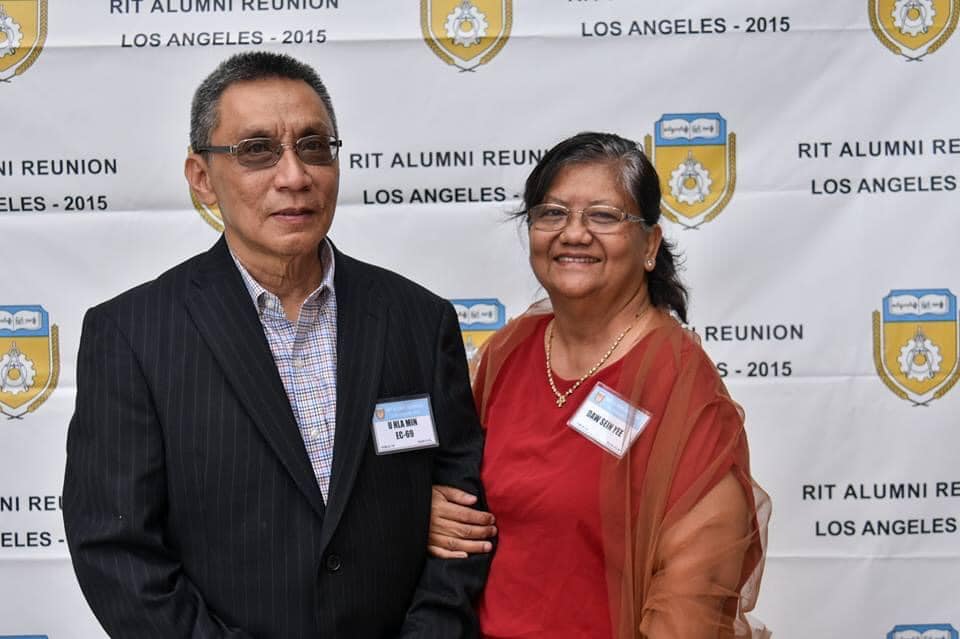
It would not be possible without the support from my beloved spouse. She attended SPZPs and selected gatherings.
My beloved spouse
In the beginning
Full of Excitement
Many sayas and alumni contributed news, articles, photos, jokes, cartoons, suggestions and comments.
They were excited to get reconnected electronically and physically.
Down Memory Lane
Kogyi Koung
Several enjoyed walking down memory lane. Kogyi Koung (Dr. Koung Nyunt, A67, GBNF) wrote about several topics. They include
Lost songs from RIT : one by Sayagyi U Tha Tun, another for Ma Ma Q
Letter to Thagyarmin about Naw Louisa Benson
Kyaik Hti Yo Development Project
University Days
Saya U Aung Khin, U Aw Taik Moh, Saya Dr. Aung Gyi, Saya U Min Wun (GBNF), Saya Dr. San Hla Aung, Saya U Soe Paing, U Tin Htoon, U Myint Khine (Norman), Ko Htay Aung (Victor) and several others wrote about their University Days (Yankin College, Main Campus, BOC College, Leik Khone, Gyogone Campus).
Photo Contributors
The following provided Class Photos, Group Photos and other interesting photos.
Saya Dr. Freddie Ba Hli (GBNF)
Saya Allen Htay (C58, GBNF) & classmates
Saya U Htin Paw (EE58, GBNF)
Saya U San Tun (M59)
Saya L. Tin Tun (Chris, M59)
Saya Krishna (M59)
U Soe Thein (EE60)
U Tin Htoon (A60) & classmates
Saya U Htun Aung Kyaw (ChE67)
U Thein Swe (EE69, GBNF) & classmates
U Aung Min (M69) & classmates
Benny Tan (M70) & classmates
U Kyi Aung (Roland, ChE73)
Dr. L Sein Myint (M73) & classmates
U Myint Swe (EP74), Daw San San (EC74) & classmates
We have acknowledged the Contributions in my Newsletter Updates, my Facebook groups and my website.
Fast forward
SPZP-2000 Organizers
Inam the Last Guy Standing from the Organizers of SPZP-2000.
Several are spending quality time with their families (especially Myees).
The RIT webmasters (Ko Khin Maung Zaw & Ko Wunna Ko Ko) became extremely busy after getting lucrative jobs. The websites became inactive.
SPZPs
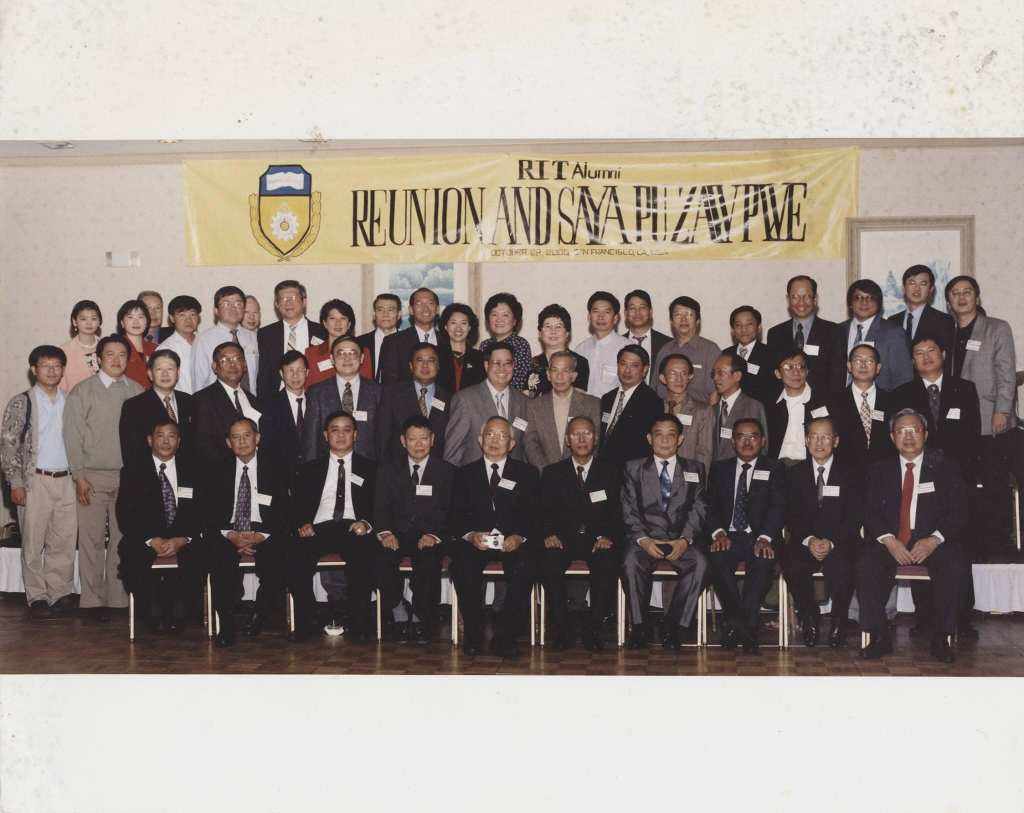
There were seven Grand Reunion and Saya Pu Zaw Pwe in 2000, 2002, 2004, 2007, 2010, 2012 and 2016.
SPZP-2020 was canceled due to the pandemic.
There will probably be no more RIT Gathering that can equal SPZP-2016 (using any Metric).
Jara, Byadi & Marana
Many sayas, organizers, sponsors & donors, alumni are GBNF.
Over 40% of 69ers are GBNF. About 20 passed away in 2020. Many succumbed to Covid.
Not so senior sayas and alumni are having medical problems in the sunset of their lives.
Loss of memory & balance are becoming common.
Pleaded for Help, but …
One said he wished he were 30 years younger to help me.
Another suggested providing some incentives to interested “New Blood” to keep my project alive and eventually take over.
I am hoping for the best, but prepared for the worst.
I have categorized and tagged my posts for easier access.
I have laid down the foundation for “Memories of our alma mater, mentors and alumni” Project.
I am confident that some passionate sayas & alumni will fulfill my Dreams.
Thanks
Kudos to all who have kept the RIT Spirit alive and well.
Robert W (Bob) Floyd (June 8, 1936 – September 25, 2001)
He attended the University of Chicago. He has two Bachelor degrees. He completed BA in 1953 at the age of 17. He finished BS in 1958 after working and studying part-time.
In most US universities, one needs a doctorate to be an Assistant Professor.
Floyd is an exception. He was appointed Associate Professor at Carnegie Mellon University in 1965. Stanford University lured him in 1968 and promoted him to Full Professor in 1970. In 1973, he was appointed Chairman, Department of Computer Science at Stanford University. He supervised Ph.D. candidates.
Floyd received numerous awards including the prestigious ACM Turing Award, which is considered the equivalent of a Nobel Prize in Computer Science.
Professor Donald Knuth (ACM Turing Award Winner, Author of “The Art of Computer Programming”, “TeX & MetaFont”) recommended Floyd for the Chair.
Floyd had been a major reviewer of Knuth’s Classic Texts. Knuth said, “Floyd had published 13+ seminal papers. Every one of them is worthy of a Doctorate.”
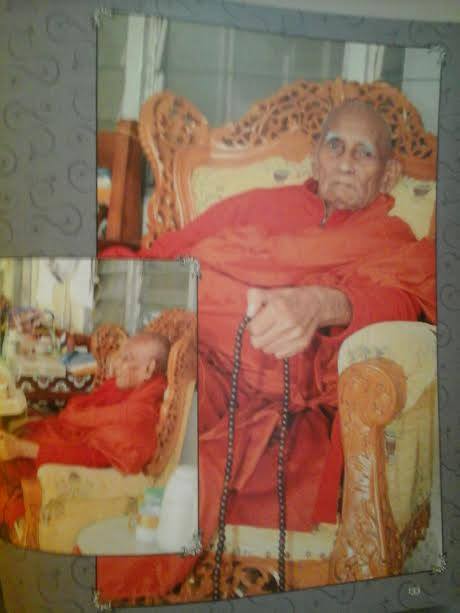
Dat Paung Zon Sayadaw ဓာတ်ပေါင်းစုံ ဆရာတော် from 1949
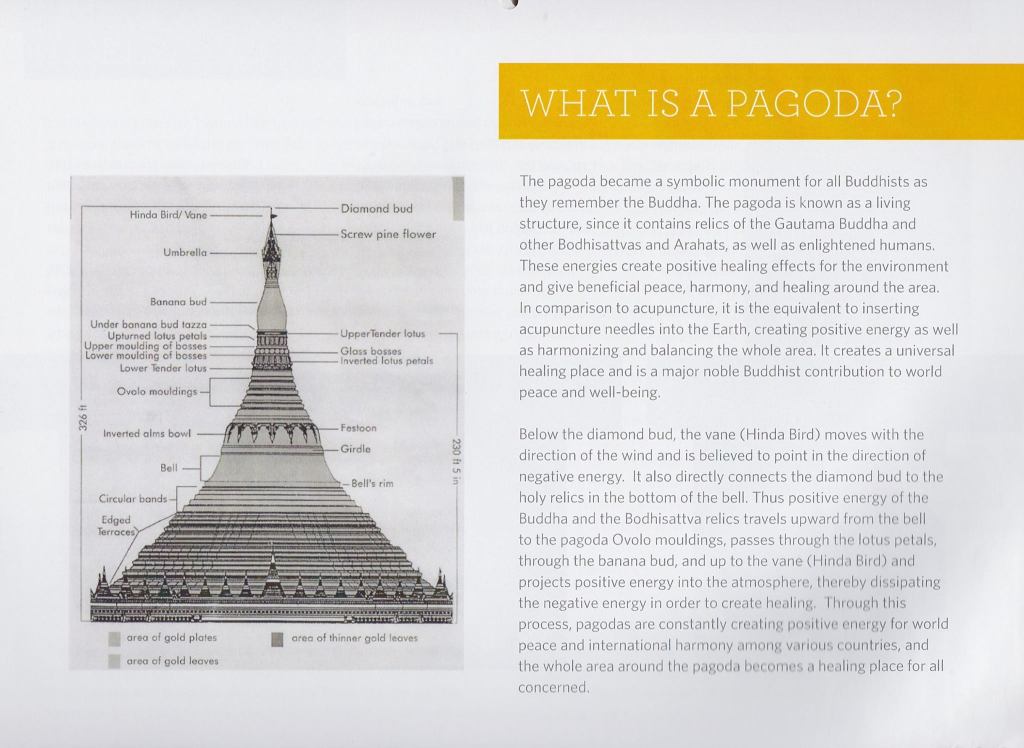
DPZ Pagoda
In 1948, my father, his siblings and dhamma friends (e.g U Kyaw Myint) built the Dat Paung Zon Pagoda and Monastery.
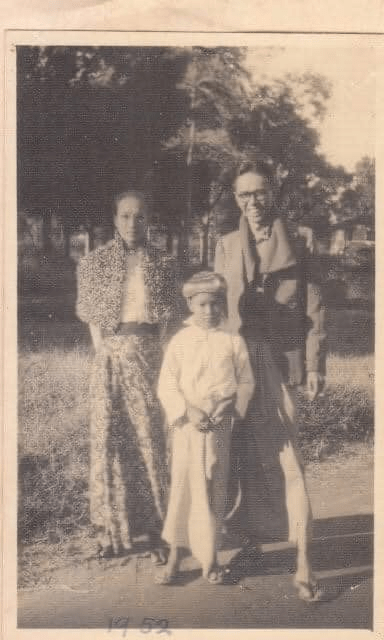
My parents
My elder brother was ordained as a novice. He volunteered as a Construction Helper.
DPZ Sayadaw
He served as the Chief Abbot of the Dat Paung p Aung Min Gaung monastery on Windermere Road, Rangoon, Burma from 1949.
Trip to USA
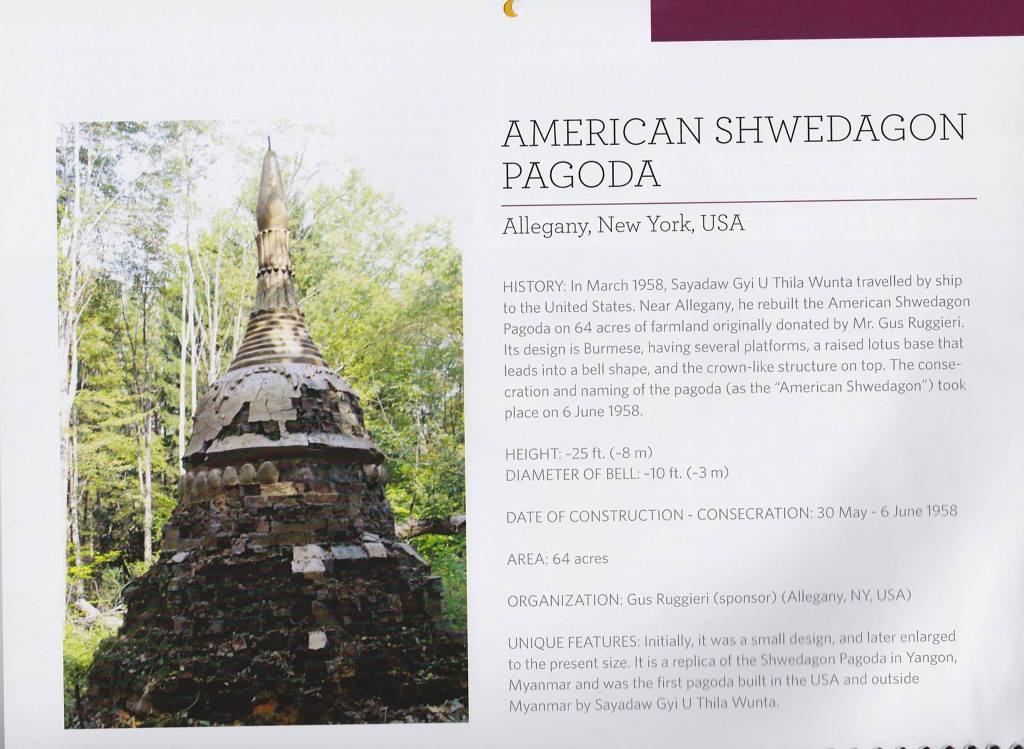
Pagoda in Allegheny
At the invitation of U Thant, Sayadaw traveled to the US (via the ocean liner – predating the days of air travel) and built a pagoda on the Allegheny Mountains.
Ananda Bodhi
In 1958, Leslie Dawson, Canadian of Irish and Scottish descent, asked Mon Sayadaw to be his mentor.
Dawson traveled to Bodh Gaya, India to rejoin the Sayadaw and received ordination as a samanera (novice monk).
He continued on to Burma where he was ordained as Anandabodhi bhikkhu at the Shwedagon temple, Rangoon (21 Dec 1958).
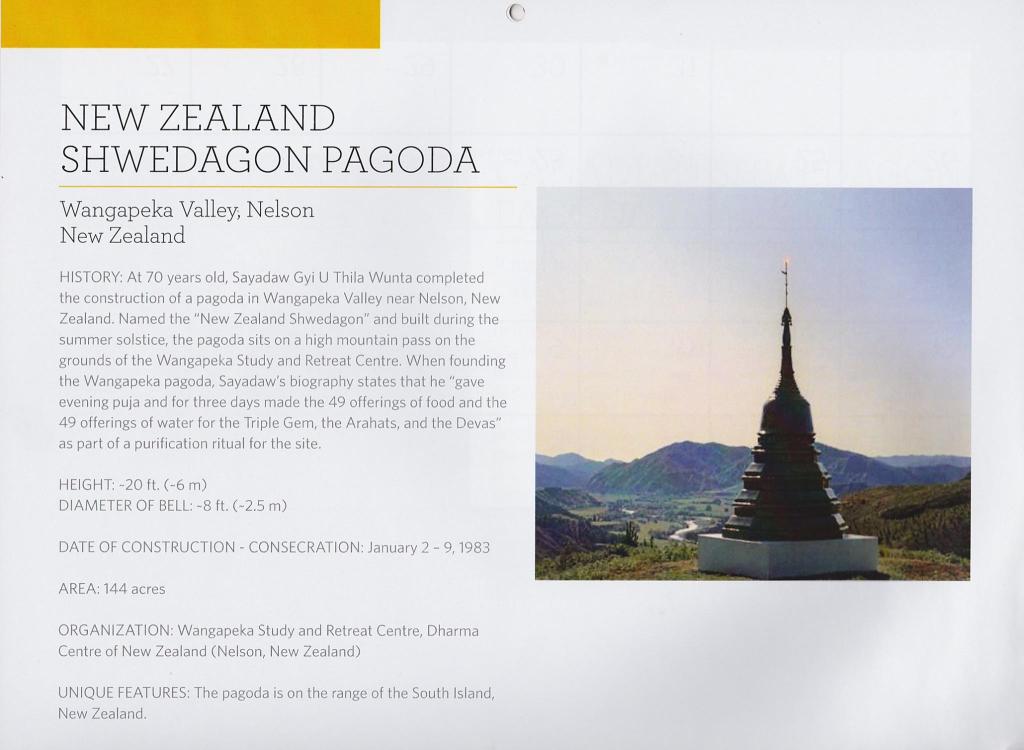
Ananda Bodhi had followers in Canada and New Zealand, most of whom have visited Sayadaw and the Dat Paung Zon pagoda. Two of them also ordained as Buddhist monks with Mon Sayadaw as preceptor.
Ananda Bodhi became a Tibetan Master with the name Namgyal Rinpoche in 1971, but continued to preach dhamma from Theravada, …
Pagodas around the world
Mon Sayadaw built pagodas in the several countries including USA, Canada, New Zealand, and South Africa.
DPZ 1DPZ 2DPZ 3DPZ 4DPZ 5DPZ 6
Suggested Reading
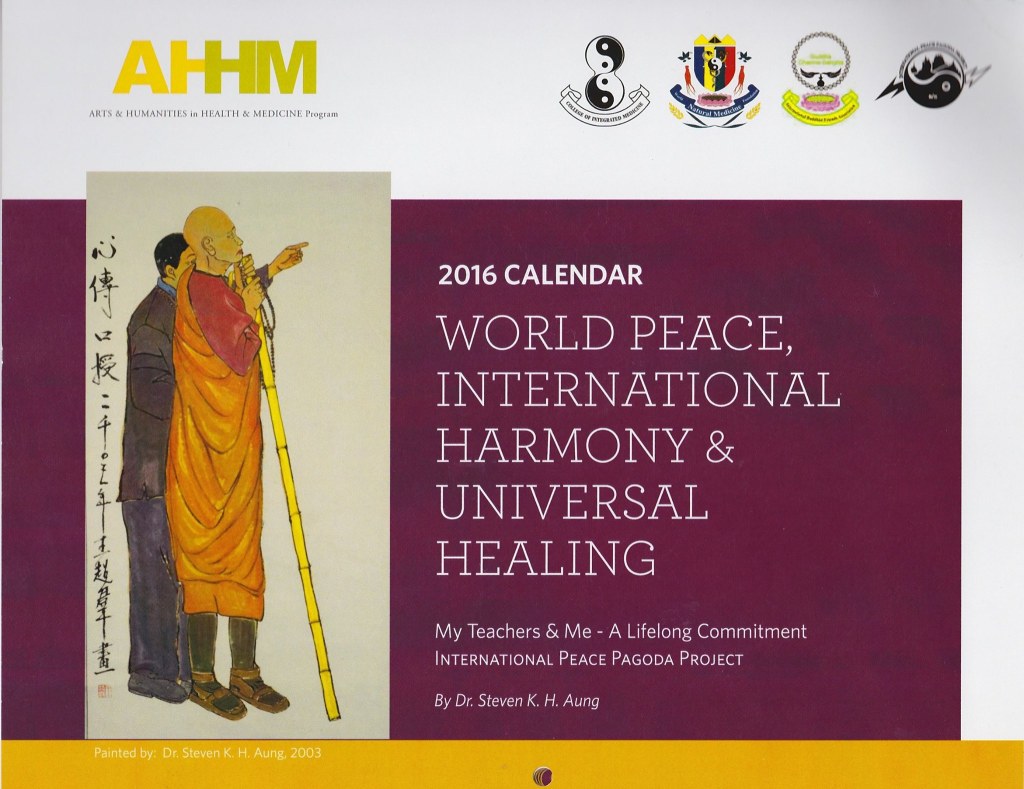
Details of Sayadaw’s dhamma duta missions can be found in the official biography (in Burmese and English) and the web pages of his disciples (e.g Dr. Steven K H Aung).
It is a Noble Tradition that is practiced in Burma.
Thet Kyee Pu Zaw Pwe သက်ကြီးပူဇော်ပွဲ is for paying respect to the Elders. The age requirements vary.
Sayas at SPZP-2000
Saya Pu Zaw Pwe ဆရာပူဇော်ပွဲ is for paying respect to the sayas and sayamas. Some use the term Acariya Pu Zaw Pwe အာစရိယပူဇော်ပွဲ
Thet Kyee Pu Zaw Pwe
Seniors
The definition of a Senior may vary with place and time.
In some places, a Senior Day is held. Transportation, Food, Entertainment and Photo-shoot are provided for seniors of all races and creeds.
At a Festival
Thet Kyee PZP may be held in conjunction with a Festival, e.g Thingyan or Thadinkyut. Buddhists may also pay respect physically to the Elders.
Myanmar Engineering Society
MES
MES organized Thet Kyee PZP for Senior Engineers and Architects.
All-Mechanical Gathering
All Mechanical Gathering
The All-Mechanical Gatherings have a program to pay respect to Thet Kyee Mechanical Engineers.
Acariya Pu Zaw Pwe
Examples :
Combined 1st BE Intake of 64 and 65
M72 and selected Disciplines
ICST/UCSY
Saya Pu Zaw Pwe
SPZP-2000
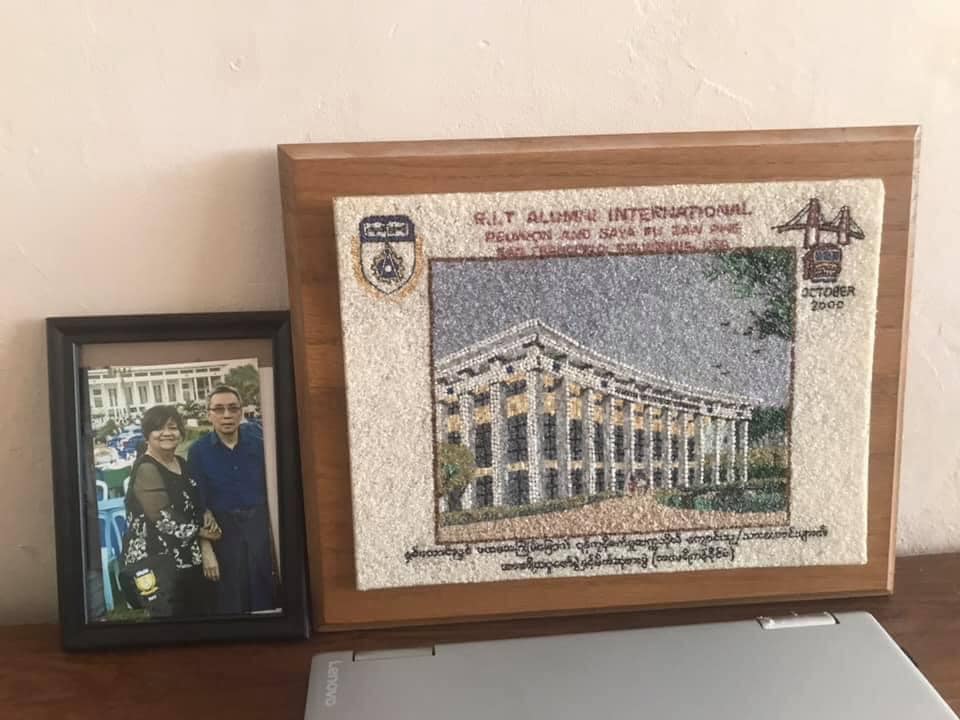
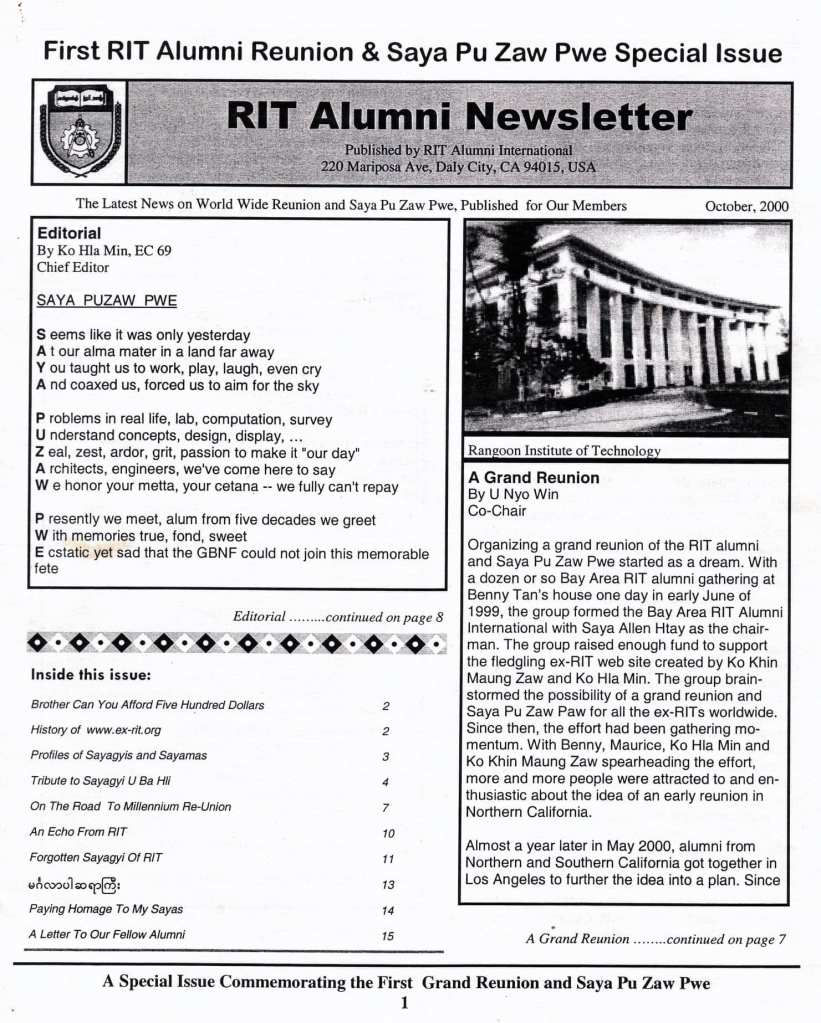
RIT Alumni International hosted the First RIT Grand Reunion and SPZP in San Francisco, California in October 2000.
Kyauk Si Bagyee for SPZP-2000
The term Saya Pu Zaw Pwe was chosen over Saya Ga Dawt Pwe so that Alumni of different Faith can pay back the Metta and Cetana of their mentors.
SPZP-2000 Organizers
I am honored to be a Core Organizer of SPZP-2000. I wrote the poem “SAYA PU ZAW PWE”. It was published in the RIT website and the Commemorative Issue of the RIT Alumni Newsletter for SPZP-2000.
Newsletter for SPZP-2000Back cover of NewsletterEE Group at SPZP-2000
Singapore SPZPs
Singapore hosted SPZP-2002, SPZP-2007 and SPZP-2010. Saya U Moe Aung (Tekkatho Moe War) and team published Commemorative Issue of Swel Daw Yeik Sar Saung for the SPZPs.
My poem (SAYA PU ZAW PWE) was reprinted on the Back Cover of SDYSS-2002.
I wrote a poem “SWE DAW YEIK” for SDYSS-2007.
I wrote an article “EE Sayas : A Sad and Short Clip” for SDYSS-2010.
Yangon SPZPs
Yangon hosted SPZP-2004, SPZP-2012 and SPZP-2016.
Commemorative Issue of Swel Daw Yeik Magazine was published for SPZP-2012 and SPZP-2016. U Saw Lin (GBNF) was Chief Editor of SDYM-2012. Saya U Moe Aung was Chief Editor of SPZP-2016. Several Distinguished Authors (e.g Ma Sandar, Maung Sein Win — Padeegone, N Jar Thaing, Aw Pi Kye) also served as Editors.
Due to the pandemic, SPZP-2020 was canceled.
Gone But Not Forgotten
Some of the Organizers and Volunteers of the SPZPs are GBNF. They include Saya Allen Htay, Ko Saw Lin, Ko Aung Moung, Ko Than Sin Myint and Ko Robin.
Saya Allen Htay (Left)
Several Sayas are GBNF. They include U Ba Toke, H Num Kok, U Soe Khaw, U Ba Than, U Min Wun, U Khin Aung Kyi, U Thit, Dr. Mg Mg Win, S Arya, S Kyaw Aye, U Soe Lwin.
Sayas U Ba Than & U Ba Toke
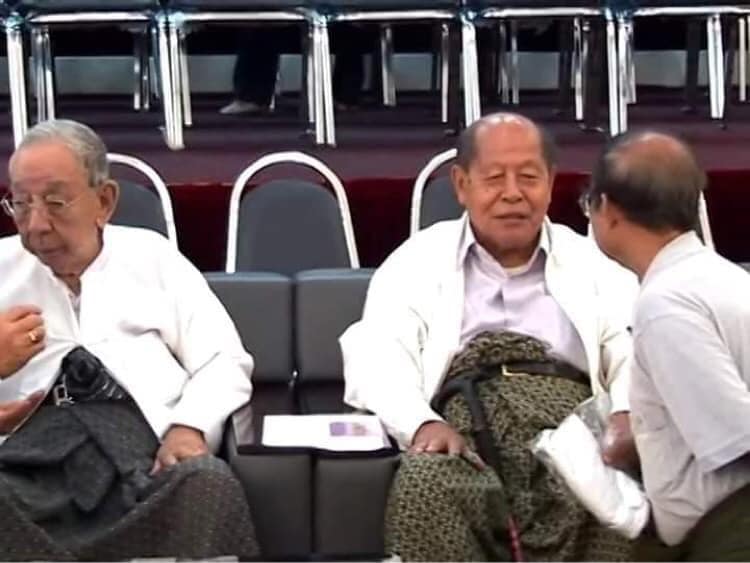
Sayas U Aung Khin, Dr. Aung Gyi and U Myo Myint Sein are 90+ years young. Many of our sayas are 80+ years young.
We hope to see SPZPs in the not so distant future (after the Calamities have ended).