Author: Hla Min (Lifelong Learner)

  • 2011

    2011

    by Hla Min

    Updated : June 2026

    Naing Win (M70)

    Passed away in Yangon in January, 2011. His spouse Polly Win (Polly Ba San) represented Burma in swimming. I met her at A Lo Daw Pyie Kyaung, Apache Junction, Arizona.

    Kyaw Nyein (UCC)

    Passed away in March 2011 because of heart failure. He was not feeling well and was going downstairs for the toilet when he collapsed. They took him to RGH and he passed away in the emergency room.

    Yin Kyu (M/Ag67)

    • Passed away on 26th April, 2011 at 8:45 am.
    • Worked for Public Works (Construction Corporation) as superintending engineer and retired in 2006.
    • Died of kidney failure, based on diabetes.

    Chit Po Po (M69)

    Chit Po Po

    Win Boh (Robert, EC69) wrote :

    • It is with my great sadness, to inform you that our close friend Ko Chit Po Po (M69, beloved husband of Dr. Daisy Saw) passed away at Asia-Taw Win Private Hospital YGN on 15 Jan 2011 Saturday early morning.
    • I have phoned his brother-in-Law Stanley Saw (M71) in New Zealand to convey our 69ers’ condolence.
    • His daughter Thiri Po in Sydney will be leaving soon to YGN for funeral.
    • Kindly pass on this message to Ko Chit Po Po’s friends far and near.

    Thein Swe (EP69) wrote :

    • It is sad news. Ko Chit Po Po (M69, ex-irrigation, tall and smiling Yangonite) passed away.
    • He and his brother (Dr ?) U Chit Ko Ko were close friends of my spouse’s brothers.
    • Before he went back to Yangon he stayed in Cambodia, Malaysia and Thailand, etc. After he quit Irrigation Dept he ran an engineering (medium sized) company of Installation and Services for Air-cons and refrigerators, etc. in Lanmadaw Township.
    • He was a friendly classmate.
    • Unwillingly or in sadness we have to lose another friend.

    Tin Myint (John, M69) wrote :

    • It is a shock to me in hearing the sad news of Ko Chit Po Po, who was a very close friend, co-worker and also my lunch mate in the Irrigation Department at 81/2 mile workshop location.
    • He and I and another classmate rode the same Mazda car to work and coming back from work everyday.
    • He and I ate our lunch everyday.
    • I still remember vividly that during lunch time, after opened his lunch box and discovered fried shrimps, he would offered me his jumbo shrimps and skipped his lunch.
    • I enjoyed shrimps while he had no interest in shrimps.
    • He and I usually had one e-mail/year with exception of having two e-mails the most.
    • This year I received his e-mail once and I tried to have more e-mails and more info from him.
    • Now I received this sad news.

    Aung Thu Yein (EC69) wrote :

    Our Colleague/Comrade/Friend – Chit Po Po,

    • We will miss you.
    • Just talking about you a few days ago.
    • Why so fast?
    • Why so sudden !!!

    True Friends – Their Top 10 Characteristics (By Martin Sawdon)

    1. When you forget the song in your heart, a friend is someone who sings it back to you. (Helen Steiner)
    2. A friend’s support is unconditional: when the going gets tough a friend is right there beside you.
    3. A friend has seen you at your worst and loves you even so.
    4. A friend is someone with whom you can share secrets in confidence.
    5. You can phone a friend for help even in the middle of the night.
    6. A friend is honest with you, deflates your ego and inflates your Self.
    7. A friend shares your sense of humor, provides nourishment and inspiration for the mind.
    8. A friend is drawn to you not for what you are but who you are.
    9. When you share your wildest dreams, a friend is someone who replies, quote, How can I help? unquote.
    10. Thinking about Needs and Values, once you have recognized those Needs which,satisfied, enable you to be the best person you possibly can be, a friend will help you get them met.

    Sein Tin (“Omega”, Pathein, M 69) wrote :

    • We are feeling very sorry like you.
    • Our ages are at the sunset.
    • So take care of our health first and last.

    Ivan Lee (Khin Maung Oo, M 69) wrote :

    Dr. Daisy Saw and family:

    • Please accept my deepest sympathy and heartfelt condolences to you and your family.
    • We will remember him forever.

    Yi Yi Khaing (Vilma, ChE69) wrote :

    • I have a photo, which was taken at our gathering on 17 March 2010 by 69ers for KCPP’s visit to Singapore.
    • We were all very happy to meet him then!!

    Editor’s Notes :

    • Ko Chit Po Po is an expert at playing Burmese Harp.
    • I met Zeyar Po, Ko CPP’s son, in Sydney in 2006 along with his maternal uncle Ko Stanley Saw.
    • Ko Chit Po Po represented RIT in rowing along with Ko Aung Lwin (Jasper Wu, Canada), Ko Aung Tun Oo (Dennis Smithers, Australia), Ko Wunna Sithu (US) and me.
  • Life cut short by misguided Policies

    Life cut short by misguided Policies

    by Hla Min

    Updated : June 2026

    P-E-T-E-R

    P Peter (NHS Hero) paid a high price for misguided policies and guidelines
    E Envisioned retirement to spend quality time with his extended family
    T Talented Doctor, Gourmet Chef, Sketch and Oil Painter — to name a few
    E Educated and/or entertained aspiring medical specialists far and near
    R Real irreparable loss to patients, friends, family and community

    Tribute to Peter Khin Tun

    P Pote Pote Kyee (see “Cho Cho Hlaing”)
    E Enthusiastic learner and practitioner (see “Aung Jee”)
    T Took care of parents of relatives, patients and friends (see “Min Ko”)
    E Ever smiling and helpful (see “Ye Myint”)
    R Rural doctor with a huge heart (see “Vicky Bowman)

    This image has an empty alt attribute; its file name is cherry-85-1.jpg
    85th Birthday of Ma Cherry (Peter’s mom)
    This image has an empty alt attribute; its file name is pkt8-1.jpg
    Zoom gathering for offering Dana in memory of Peter

    Sad Loss that might have been prevented

    Dr. Khin Tun (Peter) served as Associate Graduate Dean at Oxford University from 2012 – 2016. He worked at Royal Berkshire Hospital in Reading for 20+ years.

    Sadly, he passed away on April 13, 2020 due to COVID-19 infection. He was the first doctor from RBH Trust to pass away in the line of duty. Due to misguided Policies and Guidelines, Peter lost his life at the tender age of 62. Thanks in part to interviews by Minko and Ye Myint, RBH Trust initiated an inquiry into the loss of Peter.
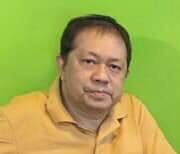
    Peter was looking forward to retiring in a couple of years and spend quality time with his extended family.

    His paternal grand mother lived up to 94.

    His father celebrated his 90th birthday in 2019. He used to sit in the garden every evening talking with someone and taking his daily dose of medicine. After learning about Peter’s untimely demise, he was devastated for three days. He no longer had the desire to sit in the garden. He lamented that he had no one to talk to. Ye Myint told his father that he will call from UK daily.

    His mother passed away a few months short of her 89th birthday. She and Peter are both January born. Peter would fly back to Yangon almost every year (for the past decade) in time for his mother’s birthday. They would perform dana together mostly at Chan Myei Yeiktha.

    Three uncles and two aunts are in their 80s.

    Relatives and friends mourn the loss of Peter and miss his compassion, help and smiles.

    Hope

    We cannot get Peter back, but we hope other medical staff in the front line fighting the invisible enemy would not have to suffer the same fate as Peter.

  • Winner Inn

    Winner Inn

    by Hla Min

    Updated : June 2026

    • Winner Inn is run by Saya U Ba Than’s family : son Ye Than, daughter-in-law Win Mar Oo, grandson Aung Myo Myint and granddaughter Ei Khine.
    U Ba Than
    • Before the family moved to a new residential home (a little bit further down Than Lwin Road), Saya would entertain his relatives (visiting from abroad), former colleagues and students at Winner Inn.

    Gatherings

    • An informal gathering took place at Winner Inn in January 2017.
      Attendees include Dr. Khin Tun (Peter, GBNF) & Daw Win Mar, U Hla Win, U Aung Moung (GBNF), my spouse and me
    • U Aung Moung came to see Saya U Ba Than and Daw Win Mar.
      It’s a small world. Win Mar’s older brother was a childhood friend of U Aung Moung.
    • Sadly, U Aung Moung passed away in 2018.
      He was active in HMEE, SDYF and several social and religious organizations.
      Several monks arranged their own transportation to attend U Aung Moung’s last journey at Yay Way.

    Dr. Peter Khin Tun (GBNF)

    • Peter would usually come back to Yangon before January 12 to celebrate his mother Dr. Kyi Kyi Nyunt’s birthday. His father U Tin U is the elder brother of Saya U Ba Than.
    • Peter would host some celebrations (e.g. engagement party of his elder son Min Ko) at Winner Inn.
    • Sad to report that Peter was an early victim of Covid and lax UK Hospital policies about PPE. He passed away on April 13, 2020 (which was Easter Monday & start of Thingyan). The sad news is covered in BBC and some UK newspapers.
    • His spouse Win Mar recovered after two weeks of treatment at the hospital.
    • On a bright note, Peter was given awards posthumously and the UK hospital systems adopted better procedures.
  • Four

    Four

    by Hla Min

    Updated : June 2026

    Numeral

    • Hindu-Arablic numeral : 4
    • Roman numeral : IV
    • In Burmese : လေး

    Recent Buddhas of ဘဒ္ဒကမ္ဘာ

    • Kakusandha
    • Konagamana
    • Kassapa
    • Gautama

    Sacca / Noble Truth သစ္စာ

    • Dukkha ဒုက္ခ
      Unsatisfactoriness / Misery / Suffering
    • Samudiya သမုဒယ
      Cause of suffering
    • Nirodha နိရောဓ
      Cessation of suffering
    • Magga မဂ္ဂ
      The Path / The Middle Way

    Foundation of Mindfulness

    Four Foundations of Mindfulness
    • Contemplation of the kaya / body ကာယ
    • Contemplation of the vedana / feeling ဝေဒနာ
    • Contemplation of the citta / mind စိတ္တ
    • Contemplation of the dhamma ဓမ္မ / general objects — not covered by the above three

    Brahma Vihara Practice

    • Metta မေတ္တာ
      Loving kindness / Unbounded love
    • Karuna ကရုဏာ
      Compassion
    • Mudita မုဒိတာ
      Sympathetic joy / Altruistic joy
    • Uppekkha ဥပေက္ခာ
      Equanimity

    Guardian deities

    • Dhatarattha (East) ဓတ္တရဋ္ဌ
    • Virulhaka (South) ဝိရူဠက
    • Virupkkha (West) ဝိရူပက္ခ
    • Kuvera (North) ကုဝေရ

    Mahabhuta

    • Patthavi ပထဝီ
      Earth element
    • Tejo တေဇော
      Fire element
    • Apo အာပေါ
      Water or liquid element
    • Vayo ဝါယော
      Air or wind element

    Miscellaneous

    • Four sided figures စတုဂံ
      Rectangle, Square, Parallelogram, Parallepiped, Rhombus
    • Baseball
      first base, second base, third base, home plate
    • Games
      Four quarters (e.g. Football, Basketball)
    • Rowing လေးတက်လှော်
      Coxless fours, Coxed fours, Quadruple sculls
    • Education ပညာရေး
      Freshman, Sophomore, Junior, Senior
    • April ဧပြီ
      4th month of the Gregorian Calendar

    Posts

    • Computation
    • Digital
    • Number Systems
    • Numbers
    • Numerals
  • Burmese Festivals

    Burmese Festivals

    by Ashin Acariya & Hla Min

    Updated : June 2026

    Hla Min

    The Burmese Calendar is a luni-solar-socio-religious calendar.

    The Burmese New Year falls on or around April 16. The three (or sometimes four) days preceding the New Year is celebrated as Thingyan (similar to Songkran festival in Thailand).

    It is a lunar calendar with 12 lunar months in most years. An intercalary month called “Second Waso” is added every three years. There are 12 religious and/or social festivals (one for each Burmese month).

    Most religious festivals are celebrated on the Full Moon Day.

    The following is a brief description of the 12 Burmese months and the associated festivals.

    1. Month of Tagu

    Name of the auspicious event:
    Ushering in the Burmese New Year by the Buddhists

    Associated festival:
    A Ta Thingyan Water Festival (generally held from April 13 – 15 or 16)

    Details for the celebration:
    (a) Invite guests for special treat. (b) Take eight precepts and practice Sila (morality). (c) Listen attentively to the “38 Blessings” by the sangha. (d) Chant Paritta (protective verses) and Pathana (“relations”) (e) Pay homage to the elderly people as if they were one’s own parents (f) All the above are performed (by the Burmese Buddhist) to accumulate kusala (wholesome deeds) (g) Most younger people usher in the Burmese New Year by throwing water (h) Thingyan festival is the most prominent among the 12 (monthly) festivals.

    Objectives:
    To cleanse akusala (unwholesome deeds) from the past year (a) symbolically by throwing water (b) practically by performing meritorious deeds such as dana (charity), sila (mrality), and bhavana (meditation)

    2. Full Moon Day of Kason

    Name of the auspicious event:
    Buddha’s Day. It is the most prominent day for the (Theravada) Buddhists celebrating four milestones (a) the proclamation that the Bodhisatta Sumeda would become Buddha in four incalculables and 100,000 worlds (b) birth of the Boddhisatta Sidartha (c) enlightenment of Gautama Buddha (d) Mahaparinibbna (final passing away of Buddha)

    Associated festival:
    Kason Nyaung Ye Thun Pwe (pouring water on the Bodhi tree)

    Details for the celebration:
    (a) Invite guests for special treat. (b) Invite sangha and offer requisites (c) Take (five or eight) precepts and practice Sila (morality) (d) Listen to the dhamma talks (e) Practice metta (loving kindness meditation) (f) Share merits (g) Pour water on the Bodhi tree

    Objectives:
    (a) To acknowledge the practice of parami (perfection) for four incalculables in order to become a Buddha (b) To realize that Buddha’s teachings are for our own good (c) To make a determination that we should practice Buddha’s teachings to the fullest extent

    3. Full Moon Day of Nayone

    Name of the auspicious event:
    Mahasamaya (“Great Occasion”) A Kha Daw Nay
    (a) Commemorating truce between Kapilavutta and Koliya countries (b) Assembly of devas, brahmas, galons, nagas, and sanghas expressing their metta (unbounded love) (c) Ordination of 500 princes from the Sakya clan (d) In sum, distinguished and outstanding day of love and peace

    Associated festival:
    Recitation of Mahasamaya Sutta

    Details for the celebration:
    (a) Invite guests for special treat. (b) Invite sangha and offer requisites (c) Take (five or eight) precepts and practice Sila (morality) (d) Listen to the dhamma talks (e) Recite Mahasamaya Sutta (f) Practice metta (loving kindness meditation) (g) Share merits

    Objectives:
    (a) To advocate love and peace among nations with diverse cultures and beliefs (b) To practice metta (unbounded love) not only for humans but for all beings

    4. Month of Waso

    Name of the auspicious event:
    (a) Offering of Waso robes (b) Recitation of Dhammacakkapavutna Sutta (“Turning the Wheel of Dhamma”)

    Associated festival:
    There is no specific date for the offering of Waso robes to the sangha.
    Full Moon Day of Waso is a prominent day for (Theravada) Buddhists celebrating three milestones (a) the day when Boddhisatta was conceived in the womb of Queen Mahamaya (b) the day when Prince Sidharta renounced his worldly pleasures (c) the day when the First Sermon Dhammacakkapavutna Sutta was delivered to his five disciples

    Details for the celebration:
    (a) Invite guests for special treat. (b) Invite sangha and offer requisites (c) Take (five or eight) precepts and practice Sila (morality) (d) Listen to the dhamma talks about Magga (Noble Eight-fold Path) (e) Collectively recite Dhammacakkapavutna Sutta (f) Practice metta (loving kindness meditation) (g) Share merits

    Objectives:
    (a) To avoid the two extremes of sensual pleasure and self-mortification (b) To practice the Noble Eight-fold Path

    5. Full Moon Day of Wa Khaung

    Name of the auspicious event:
    Metta (“Unbounded Love”) A Kha Daw Nay
    500 monks who were practicing meditation in the forest were intimidated by nats (guardian spirits) and returned to Buddha’s monastery. Buddha preached them Metta Sutta and exhorted them to practice loving kindness meditation to the nats before meditating. The monks returned to the forest and practiced per Buddha’s exhortation. The nats no longer obstructed the practice of the monks, thereby allowing them to progress and get enlightened. Thus, Metta A Kha Daw Nay came into being.

    Associated festival:
    Recitation of Metta Sutta & Sar Ye Tan Mei (deciding the donation to a monk based on a “raffle” [letter written on a stick, in ancient times]

    Details for the celebration:
    (a) Invite guests for special treat. (b) Invite sangha and offer requisites (c) Take (five or eight) precepts and practice Sila (morality) (d) Collectively recite Metta Sutta (e) Offer requisites to the monks based on the Sar Ye Tan Mei “raffle” (f) Dhamma talk on metta and the virtues of practicing metta (g) Share merits

    Objectives:
    To practice metta (unbounded love), karuna (compassion), mudita (altruistic joy), & uppekha (equinamity)

    6. Full Moon Day of Tawthalin

    Name of the auspicious event:
    Garudhamma (“Five precepts”) A Kha Daw Nay
    A brief history is as follows. Bodhisatta was (once) born in Kuru Taing (province), where the king and his people practiced Garudhamma. They refrain from (a) killing (b) stealing (c) sexual misconduct (d) lying (e) taking intoxicants. So, the weather was fine and wealth was amassed. Kawlinga Taing (province) suffered from (a) war (b) famine (c) disease. Many perished. The king and people of Kawlinga Taing decided to emulate the king and people of Kuru Taing. Soon, the weather became fine and wealth was amassed. The three sufferings disappeared. The Full Moon Day of Tawthalin, which is part of the rainy season, was named Garudhamma (“Five precepts”) A Kha Daw Nay.

    Associated festival:
    Competition for reciting poems about the merits of taking five precepts.

    Details for the celebration:
    Host competitions for reciting poems about the merits of taking five precepts.

    Objectives:
    (a) To make people aware of the merits of taking five precepts (b) To have a peaceful community (c) To promote world peace

    7. Full Moon Day of Thadinkyut

    Phaungdaw-u Festival

    Name of the auspicious event:
    Abhidhamma (“Ultimate Reality”) A Kha Daw Nay & Mahapavayana Nay
    Buddha taught Abhidhamma to the devas in Savateinsa (during the Buddhist Lent) and returned to earth on the Full Moon Day of Thadinkyut

    Associated festival (1):
    Festival of Light

    Details for the celebration:
    (a) Light candles (b) Light incandescent bulbs
    Objectives: Emulate the scene where the devas and the people paid homage with candles and lights to the Buddha upon his return from Savateinsa

    Associated festival (2):
    Pavayana Pwe

    Details for the celebration:
    (a) Monks assemble in a sima hall (b) Each monk invites other monks to give advice. He says, “If you have seen me commit a misdeed, you may reprimand me. If you hear that I have committed a misdeed, you may reprimand me. If you doubt me, you may reprimand me. I will try not to commit that misdeed in the future.” (c) Lay people might also invite their fellow people to give advice.


    Objectives:
    (a) To practice Nivata Mangala — blessing where one displays humility (b) For monks to practice Sovacasatta Mangala — blessing where one takes constructive critism (c) For lay people to become good & wise people

    8. Full Moon Day of Tazaungdaing

    Name of the auspicious event:
    Samyannaphala (“Virtues of monkhood”) A Kha Daw Nay
    Buddha gave the sermon to King Ajjasathat on the Full Moon Day of Tazaungdaing

    Associated festival:
    Tazaungdaing Festival

    Details for the celebration:
    (a) Light candles (b) Take (eight) precepts and practice Sila (morality) (c) Dhamma talks based on Samyannaphala Sutta (d) Practice metta (loving kindness meditation) (e) Share merits

    Objectives:
    (a) Make people aware of the virtues of monkhood and the qualities of sangha (b) If one has conducted misdeeds like King Ajjasathat, one should acknowledge the fact, but be determined to be good by doing meritorious deeds.

    9. Full Moon Day of Nadaw

    Name of the auspicious event:
    Dhamma Sarsodaw Myar Nay
    In Burmese History, Full Moon Day of Nadaw honors the literary giants (writers, poets). In modern days, the Department of Religious Affairs designated the day to honor writers for the dissemination of dhamma

    Associated festival:
    Sar Pyan Pwe (Oral and written examination for the monks)

    Details for the celebration:
    (a) Hold religious examinations (b) Written examination about Tipitaka (“Three Baskets”) : Vinaya (Monastic rules of conduct), Sutta (Discourses), Abhidhamma (Ultimate Reality) (c) Oral examination about Tipitaka (d) Lay people may visit libraries and borrow religious books (e) Lay people may hold discussions about dhamma

    Objectives:
    (a) Preservation and propagation of Tipitaka (b) Encourage youths to be highly literate and have good moral character

    10. Month of Pyatho

    Name of the auspicious event:
    Shin Ta Htaung (1000 ascetics) A Kha Daw Nay
    During Buddha’s time, 1000 ascetics in Uruvela forest led by the Kassappa brothers renounced their wrong beliefs and become arahants.

    Associated festival:
    Ordination of monks and novices

    Details for the celebration:
    (a) Hold ceremonies for higher ordination of monks (b) Allow youths to become novices

    Objectives: (a) To reinforce the importance of practicing morality (b) To familiarize people with religious ceremonies & the performing of meritorious deeds

    11. Full Moon Day of Tabodwe

    Name of the auspicious event:
    Ovada Patimauk (Buddha’s exhortation to avoid akusala, to perform kusala, and to purify one’s mind) A Kha Daw Nay

    The Full Moon Day of Tabodwe is significant for several reasons. (a) Venerable Sariputta became an arahant (b) Both Venerable Sariputta and Venerable Mogallana were proclaimed by Buddha as the Best in their specialties (c) Without any explicit notice, Ehi Bhikkhu Calabinna Patisambidapatta arahants (elite monks who do not need explicit ordination, who possess six divine powers, and who easily became enlightened) convened for the Ovada Patimauk ceremony.

    Associated festival:
    Ovadaha Partimauk & Htamane Pwe (Sticky rice) festival

    Details for the celebration:
    (a) Collectively prepare Htamane (b) Offer htamane to monks and devotees (c) Listen to dhamma talks

    Objectives:
    (a) Emphasize the strength of unity (b) Perform meritorious deeds collectively (c) Understand Buddha’s exhortation to avoid akusala, to perform kusala, and to purify one’s mind & practice accordingly

    12. Full Moon Day of Tabaung

    Name of the auspicious event:
    Myat Buddha Pyi Daw Win A Kha Daw Nay
    At the request of his father’s emissary Kaludayi, Buddha accompanied by 20000 arahants returned to Kapilavutta from Rajagaha. The return trip commenced on the 1st waning day of Tabaung in year 103 of Mahatheikarit (calendar used in Buddha’s time)

    Associated festival:
    Buddha Pujaniya Tabaung Festival (paying homage to Buddha)

    Details for the celebration:
    (a) Invite as many sangha as possible (b) Offer requisites to the sangha

    Objectives:
    To remember the Triple Gems: Buddha , Dhamma, and Sangha

    Posts

    • Calendars
    • Holidays & Festivals
    • Seasonal Changes
    • Translation
  • Distinguished  Monks

    Distinguished Monks

    by Hla Min

    Update : June 2026

    U Lokanatha (Italian Buddhist Monk)

    A book changed his life

    U Lokanatha
    • Mr. Salvitore was working as a Chemist in the USA.
    • Received a book as Christmas present from his supervisor. A chapter was “Dhammapada”.
      After reading it, Samvega (sense of urgency) crept in.
    • Quit his job. Left for Burma to be ordained as a Buddhist monk. Became “U Lokanatha”.
    • Wrote “I became a Buddhist. My supervisor remained a Christian.”
    • Was from a devout Catholic family. Elder brother was a Priest.
    • My paternal grand mother offered a monastery for U Lokanatha in Bawdigone (Windermere), Rangoon.
    • Practiced Dhutanga. Preached & took Dhamma Dhuta missions to India and Ceylon.
    • Passed away in Maymyo in 1966.

    Ashin Ananda

    (Latvian monk)

    Fled Communist Rule

    • Rev. Friedrich V. Lustig’s mentor was the Buddhist Archbishop of Latvia and Lithuania. When the Communists invaded their country, they sought refuge in Burma. The government provided them a monastery in the “Ah Le Pyit Sa Yan” of Shwe Dagon Pagoda.

    Moke Seit

    • Known as “Moke Seit Phone Gyi” for his beard. Came for alms to our parent’s house in Windermere Road.
    • After his mentor’s demise, he became Buddhist Archbishop of Latvia & Lithuania.

    Ashin Ananda

    • Shaved his beard
    • Ordained as a Theravada monk with the title “Ashin Ananda”
    • Laureate Poet & Translator.
      Wrote poems in English.
      Translated selected Burmese poems into English.
    • In July 1969, he gave my poem “Men on the Moon” to Mr. Hall (USIS) to be forwarded to Apollo 11 astronauts. Gave a copy to the Guardian newspaper for publication.
    Men on the Moon

    U Thilawuntha (Mon Sayadaw)

    Built pagodas worldwide

    Dat Poung Zon Sayadaw
    Mon Sayada
    • Dat Paung Zon Aung Min Gaung Sayadaw U Thilawunta (fondly known as “Mon Sayadaw”) built pagodas in Burma/Myanmar, USA, Canada, New Zealand, South Africa and several other countries.
    • In the ’50s, Sayadaw visited the United Nations and U Thant. He built the first Burmese pagoda in the Allegheny mountains near New York.
    First pagoda in USA
    • During his visit to California, Sayadaw would spend time with his devotees such as Russell Wolfe (Santa Cruz) and U Aung Myint (Donald, Milpitas).

    Sayadaw U Zeya

    Monastery in Las Vegas

    • Las Vegas has some monasteries including Thai monasteries supported by members of the Royal Family.
    • Sayadaw resided at a Thai monastery and rose up in the ranks. Gave dhamma talks in Thai, English & Burmese.
      Several devotees offered him a monastery.
    • In May 2013, several dhamma friends in the Bay Area rented a van to attend “Htee Tin Pwe” of the pagoda inside U Zeya’s monastery compound.
    • Donated for two Nagas at the Las Vegas Monastery in memory of our parents and in-laws.

    Engineers & Architects

    Dr. Lwin Aung (A59)

    Dr. Lwin Aung
    • Entered monk-hood after retirement
    • Was Professor of Architecture and Pro-Rector of YTU
    • Volunteered as a Consulting Architect for the construction of dhamma buildings
    • Due to health, he left monk-hood after several vassa.

    U Bo Gyi (A59)

    U Bo Gyi
    • Founded “Architect Incorporated” with U Tin Htoon (A60) & U Aung Kyee Myint (A60)
    • Later joined PWD along with his partners
    • Designed Mausoleum for Daw Khin Kyi, and was shunned by the higher authorities.
    • Hobbies : music (piano) and modeling (sculpture)
    • He is now GBNF.

    U Han Nyo (Met60)

    • He helped conduct meditation retreats in Southern California and Mexico.

    U Myo Tun (A69)

    U Myo Tun
    • Ashin Pannagavesaka
    • Won prizes for essays under the name “Errol Than Tun”
    • Made dhamma duta mission to Vietnam
    • Was Dhamma Librarian for Moulmein Pa Auk Tawya Monastery
    • Edited Pa Auk Sayadaw’s books
    • Taught English to Dhammacariya Sayadaws

    U Aung Chaw (C69, SPHS63)

    U Aung Chaw
    • Ashin Ukkamsa
    • Resided in Sagaing
    • Later moved to the Irrawaddy Delta region
    • Met him in 2018 when he came to Yangon. Attended some breakfast gatherings by the 69ers. Kyaw Win (SPHS63) offered soon to Sayadaw at Shwe Ba Htamin Saing, and also offered Nawakamma.

    U Wara (Win Paing, ChE70, SPHS64)

    U Wara
    • Younger brother of Saya U Soe Paing (EE, UCC)
    • Entered monkhood after the Final Year ChE exam
    • Chief Resident Sayadaw, KabaAye Sun Lun Gu Kyaung
    • Was Taik Oke Sayadaw for Sayadaw U Vinaya
    • He is now GBNF

    U Jotika (EE73)

    • Prolific writer and an outstanding Dhamma Lecturer
    • Spent vasa at Taung Pu Lu Kaba Aye monastery in Boulder Creek
    • Revisited US about a decade ago
    • Frequently visited Singapore and other neighboring countries

    Ashin Pannobhasa (M91)

    • Met him in SF Bay Area with his mentor (Sayadaw from Myanmar).
    • Born in April 1966 Thursday (2nd Waning day of Kason 1328 BE) in Pyapon, Irrawaddy Division.
    • After finishing his Mechanical Engineering degree from Yangon (Rangoon) Institute of Technology he received higher ordination as a Bhikkhu or a monk at the age of 24 in the Ordination Hall, Pyapon Mahasi Sasana Yeiktha under the preceptor of Venerable U Vannita, Pyapon Mahasi Sayadaw, Pyapon Mahasi Sasana Yeiktha on 27th July 1991.
    • Chief Resident Monk at a monastery in Seattle, Washington
  • Buddhist Councils

    Buddhist Councils

    by Hla Min

    Updated : June 2026

    • According to the Theravada (Way of the Elders) Tradition, there have been six Buddhist Councils.
    • The Fifth Buddhist Council was held in Mandalay, Burma. The Pali Canon was enshrined in Stone Inscriptions ကျောက်စာ by the team led by ရသေ့ကြီးဦးခန္တီ
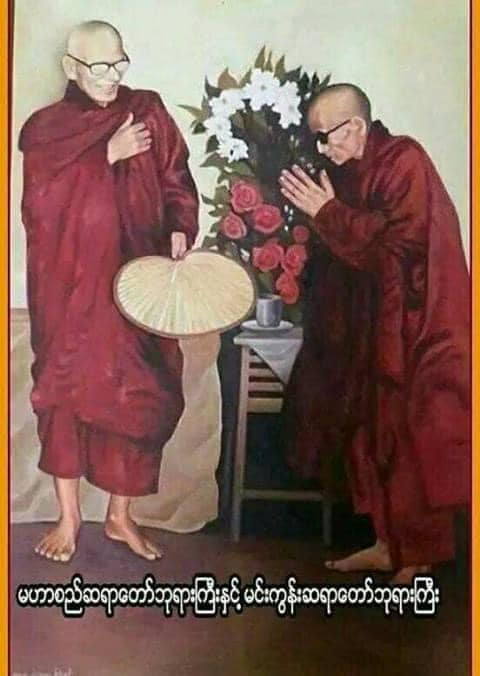
    • The Sixth Buddhist Council was held at Kaba Aye (World Peace) Pagoda, Rangoon, Burma from 1954 – 1956. The Presiding Sayadaws include Nyaung Yan Sayadaw (ညောင်မ်းဆရာတော်) Ma Soe Yein Sayadaw (မစိုးရိမ်ဆရာတော်) Mahasi Sayadaw (မဟာစည်ဆရာတော်) and Mingun Tipitaka Sayadaw (မင်းကွန်းတိပိဋကဆရာတော်)
    Nyaung Yan Sayadaw
    Sangha Maha Nayaka for Sixth Buddhist Council

    Tipitaka တိပိဋက

    • It is a Pali term. It is commonly rendered as “Three Baskets” :
    • Vinaya (Monastic rules of conduct) ဝိနည်း
    • Sutta (Discourses) သုတ္တန်
    • Abhidhamma (Ultimate reality) အဘိဓမ္မာ

    Buddhist Councils သံဂါယနာ

    U Silananda
    • According to the Theravada tradition, there are six Buddhist Councils.
    • The First, Second and Third Councils were held in India.
    • The Fourth Council (which recorded the teachings on palm leaves) was held in Ceylon.
    • The Fifth Council was held in Mandalay, Burma. U Khanti inscribed the Tipitaka on marble slabs. It was featured as the World’s Largest Book in Ripley’s “Believe it or not”.
    • The Sixth Council was held in Rangoon, Burma. Tipitaka was reconfirmed and published as printed texts. Selected Pali texts were also translated into Burmese.

    First Buddhist Council

    Source : U Silananda

    • Date : 3 months and 5 days (Sasana Era)
    • Place : Rajagaha (India)
    • King : Ajasattha
    • Leader : Mahakassapa Thera
    • Number of Monks : 500
    • Duration : 7 months
    • Accomplishment :
      Collected, examined, classified, and recorded orally the Buddha’s Teachings
    • Ashin Maha Kassapa acted as the Chief Questioner.
    • Ashin Upali recited Vinaya.
    • Ashin Ananda recited Sutta and Abhidhamma.
    • 500 Arahants confirmed Buddha’s teachings.

    References :

    • Culavagga-Pali pp. 479 – 490
    • Dipavamsa 1.24; 5.4
    • Mahavamsa 3.26 – 41
    • Vinaya Atthakatha I 2 – 25
    • Digha-Attahakatha I 3-26

    Second Buddhist Council

    Source : U Silananda

    • Date : 100 (Sasana Era)
    • Place : Vesali (India)
    • King : Kalasoka
    • Leader : Yasa Thera (Vinaya Athakatths)
      Revata Thera (Mahavamsa)
    • Number of Monks : 700
    • Duration : 8 months
    • Accomplishment :
      Reaffirmed the Texts accepted at the 1st Council after a group of monks tried to relax the rules of discipline (oral)

    References :

    • Culavagga-Pali pp. 490 – 508
    • Dipavamsa 5.30
    • Mahavamsa 4.9 – 64
    • Vinaya Atthakatha I 25 – 29

    Third Buddhist Council

    Source : U Silananda

    • Date : 234 (Sasana Era)
      310 BC
    • Place : Pataliputta (India)
    • King : Asoka
    • Leader : Mogallaputta-Tissa Thera
    • Number of Monks : 1000
    • Duration : 9 months
    • Accomplishment :
      Reaffirmed the Texts accepted at the previous Councils. The Kattavatthu (5th book of Abdhidhamma) is added (oral)

    References :

    • Dipavamsa 7.34-43, 44-59
    • Mahavamsa 5.228-279
    • Vinaya Atthakatha I 29 – 78

    Fourth Buddhist Council

    Source : U Silananda

    • Date : 450 (Sasana Era)
      94 BC
    • Place : Alokavihara (Sri Lanka)
    • King : Vattagamani Abhaya
    • Number of Monks : 500
    • Accomplishment :
      Wrote the Buddha’s Teachings together with the Commentaries on palm leaves

    References :

    • Vajirabuddhitika 543
    • Mahavamsa 33.100-101

    Fifth Buddhist Council

    Source : U Silananda

    • Date : April 5, 1871 (*)
    • Place : Mandalay (Burma)
    • King : Mindon
    • Leader : Jagara Thera
    • Number of Monks : 2400
    • Duration : 5 months (recitation)
      Began on April 14, 1871
      Ended on September 9, 1871
    • Accomplishment :
      Reaffirmed the Texts accepted at the previous Councils and wrote them on 729 marble slabs.

    References :

    • Burmese Chronicles

    (*) 1853 – 59 Writing on palm leaves in gold-color ink, ink and stylus – over 200 volumes.

    Began writing on marble slabs on October 26, 1859. Ended writing on marble slabs on May 4, 1868. Took 7 years, 6 months and 19 days.

    Seven books of Abidhamma on 208 slabs.

    Slab size : 5 feet high, 3 feet across, 5 inches thick and about 90 lines long

    Ripley’s “Believe It or Not” named it the “Largest Book in the World”.

    Sixth Buddhist Council

    Source : U Silananda

    • Date : May 1954 – 56
    • Place : Rangoon (Burma)
    • Prime Minister : U Nu
    • Leader : Revata Thera
    • Number of Monks : 2500
    • Duration : Two years for the Pali Texts
    • Accomplishment :
      Reaffirmed the Texts accepted at the previous Councils.
      Editions of Pali Texts, Commentaries and Sub-commentaries.

    References :

    • Sangayana Album

    Editor’s Notes :

    • The Sixth Buddhist Council was held in Kaba Aye Pagaoda, Rangoon.
    • 2500 Sayadaws from Burma and neighboring Theravada Buddhist nations re-confirmed Buddha’s teachings.
    • Mahasi Sayadaw U Sobhana acted as the Chief Questioner.
    Mahasi & Mingun
    • Mingun Sayadaw Ashin Vicittacarabhimvamsa acted as the Chief Reciter.
    • Mingun Sayadaw’s memory feat was recognized in the Guinness Book of World Records (in the mid-50s).

    Tipitaka Examination

    Background

    • Burma wanted to host the Sixth Buddhist Council.
    • The Sayadaws visited neighboring Theravada countries to seek advice and to solicit participation in the Council to celebrate 2500 years of Sasana.
    • The Theravada Sayadaws expressed the need for a Tipitaka Sayadaw.

    Burma invited interested Sayadawa to sit for Oral and Written Examination over four years (or more)

    • Vinaya
    • Sutta
    • Abhidhamma (Part One)
    • Abhidhamma (Part Two)

    Mingun Tipitaka Sayadaw U Vicittacara

    Mingun Sayadaw
    • He served as an Examiner for the first Tipitaka examination.
    • One Sayadaw passed the Vinaya, but said that he would not take further examinations to concentrate on his Practice of the Dhamma.
    • Sir U Thwin requested Mingun Sayadaw to take the Tipitaka examination as preparation for the Sixth Buddhist Council.
    • Mingun Sayadaw passed with Distinction in all subjects, and was awarded “Tipitakadara Bandakarika”.
  • Retirees’ Gathering in 2008

    Retirees’ Gathering in 2008

    by Hla Min

    Updated : June 2026

    Retirees Gathering

    In April 2008, Maurice Chee (M75) organized a lunch gathering for SF Bay Area retirees at a restaurant in South San Francisco.

    Attendees

    Attendees
    • Saya U San Tun (M59) & spouse
    • Saya U Maung Maung (George, ChE66) & spouse
    • Stan Liou (M67) & spouse
    • U Hla Min (EC69) & spouse
    • Benny Tan (M70) & spouse
    • Maurice Chee (M75)
    • U Aye Tun (Anthony, M76)
    Spouses
  • Outstanding Burmans

    Outstanding Burmans

    by Hla Min

    Updated : June 2026

    (1) Aung San

    Aung San
    • Born on February 13, 1915.
      February 13 is also known as “Khalay Mya Nay” (Childrens’ Day).
    • Zartar name : Htain Lin
    • Preferred name : Aung San rhymes with Aung Than (his elder brother).
    • Alternate names : Thakin Aung San, Bo Teza
    • Spouse : Daw Khin Kyi
    • Children : Aung San Oo, Aung San Lin (GBNF), Aung San Suu Kyi
    • Received Bachelor of Arts (BA)
    • Secretary, Rangoon University Students Union
    • Editor, Oway Magazine;
      Translated “Invictus”
    • Expelled from RU for refusing to disclose the author of “Hell Hound At Large”
    • Quit studying for Bachelor of Law (BL) to concentrate on politics
    • Architect of Burma’s Independence
    • Assassinated on July 19, 1947.
    • Public Mourning at Jubilee Hall
    • Laid to rest at Mausoleum near Shwe Dagon Pagoda

    I wrote the following for Bogyoke Aung San’s Centennial Celebration in the San Francisco Bay Area.

    AUNG SAN
    (Feb 13, 1915 – July 19, 1947)

    AUNG

    A — Architect of Burma’s Independence;
    He signed the Aung San – Atlee Agreement.
    It led to the Nu — Atlee Agreement that gave Independence.

    U — University Student Leader;
    He served as Chief Editor of the Oway Magazine.
    He refused to name the author of “Hell Hound Turned Loose”.
    He was expelled, resulting in the 1938 Universities Student Strike.
    He translated “Invictus“.

    N — National Unity & Solidarity Proponent;
    He organized the Panlong (Pinlon) Agreement.
    The agreement was signed on February 12, 1947.

    G —  Gone but not forgotten;
    He was a General, but he promised to step down after Independence.
    He was gunned down at the tender age of 32.

    SAN

    S — Showed leadership & personal sacrifice;
    He wore torn uniforms.
    He ate Pebyoke and Nanbya.

    A — Anti Fascist People’s Freedom League (AFPFL);
    He was a Co-founder.

    N — National Planning Advocate;
    He displayed Nationalism and Patriotism by deeds and not words.

    (2) Some Firsts in the History of Burma

    Based partly on the compilation of Sayagyi Minthuwun

    (1) Sao Shwe Thaik served as the first President of the Union of Burma. Burma gained Independence on January 4, 1948. He was succeeded by Dr. Ba U and Mahn Win Maung. Coup d’etat took place before Sama Duwa Sinwa Naung could take office. Sao Shwe Thaik’s son passed away during the Coup.

    (2) U Nu served as the first Prime Minister of the Union of Burma. He was also the last Prime Minister before the fateful Coup d’etat on March 2, 1962.

    Dawei U Ba Swe was Prime Minister for some time when U Nu took a break.

    (3) Dr. Shaw Loo was the first doctor to study medicine in the West.

    (4) Mekkhaya Mintha (Prince) & Mr. Lane translated Dr. Samuel Johnson’s Dictionary into Burmese.

    (5) Yaw Mingyi U Pho Hlaing was the first Burmese author to write about Science and Technology.

    (6) Arzani U Razak was one of the first to graduate from Ah Myo Tha Kaw Leik (National College). He served as Principal of the National School in Mandalay. He was Minister of Education in Bogyoke Aung San’s Cabinet. He was assassinated on July 19, 1947.

    (7) Phan Chet Wun U Shwe Oh was the first Burmese engineer.

    (8) Sayadaw U Ottama was the first Political Prisoner in Burma. “U Ottama Pan Chan ဦးဥုတ္တမ ပန်းခြံ” is a park named in his honor.

    Sayadaw U Wisara was another famous Political Prisoner. “U Wisara Kyauk Taing ဦးဝိစာရကျောက်တိုင်” was erected in his honor.

    (9) Phwa Oo Zun (Mandalay native) was the first Burmese female to perform Social Service for the public. She established the Home for the Aged. Details can be found in Ludu Daw Ah Mar’s book “Mandalay Thar & Mandalay Thu”.

    (10) U Nyi Pu (brother of Daw Khin Myint, A1 U Tin Nwe, U Maung Maung Soe and A1 U Tin Maung) was the first leading male actor in a Burmese movie. The siblings and their extended families founded several film companies. U Nyi Pu founded Maha Weikzahto Film. The “Thamankyaw” movie was shot and produced at U Nyi Pu’s studio. The crew consisted of A1 Than Htut (Director), A1 Thein Htut (Cinematographer), Than Win (T70, Author), Toe Nyunt, Ko Myint (Min70), Sai Wunna, Win Hlaing, Myo Thant, Toe Chit, Bo Ba Ko, Min Naung & Nwe Nwe Mu.

    (11) London Art U Ohn Maung founded a company to produce Burmese films and served as a Director.

    (12) Kyaw Soe won the inaugural award for Best Male Actor.

    Note: The awards are known as “Shwe Sin Yoke Su ရွှေစင်ရုပ်ဆု”. The winners prefix their names with “Academy”.

    (13) Kyi Kyi Htay won the inaugural award for the Best Female Actor. She won the award several more times.

    (14) Aung Tun Lay won the inaugural award for the Best Child Actor.

    (15) U Kyauk Lone (U Aung Gyi) won the inaugural award for the Best Male Supporting Actor.

    (16) Daw May Nwe won the inaugural award for the Best Female Supporting Actor.

    (17) U Thu Kha won the inaugural award for the Best Director. He also wrote, acted and sang. My translation “Still So Young” of his short story was published in the Sunday Supplement of Working People’s Daily. I received K50 for the translation. U Thu Kha received an honorarium of K50 for his short story.

    (18) Sein Beda was the first Saing Saya ဆိုင်းဆရာ to perform overseas.

    (19) James Hla Kyaw wrote the first Burmese novel “Maung Yin Maung Ma Mae Ma မောင်ရင်မောင်မမယ်မ”.

    (20) Independent Daw San was the first Burmese female Journalist.

    (21) Dr. Ba Maw was the first Burmese lecturer at the Department of English at the University of Rangoon. He became Adhipati အဓိပတိ during the Japanese Occupation.

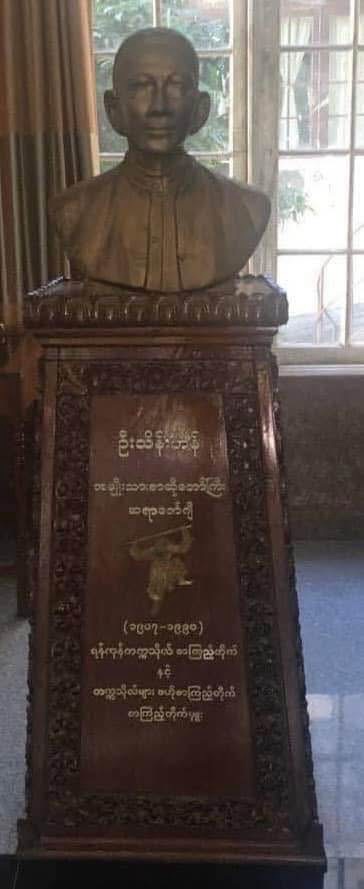
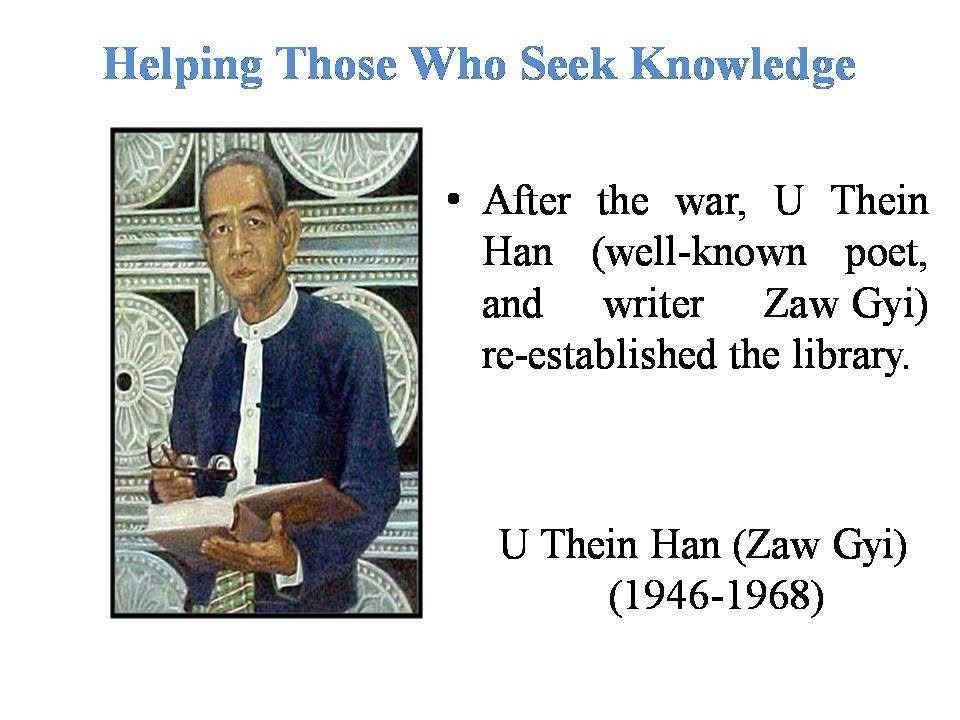
    (22) Professor U Pe Maung Tin was the first Principal of the University of Rangoon. He was Professor of Oriental Studies (including Pali). He proposed to have a separate Department for Burmese. Three outstanding students — ICS U Sein Tin (Theikpan Maung Wa), U Thein Han (Zawgyi) and U Wun (Minthuwun) — founded the “Khit San Sar Pay ခေတ်စမ်းစာပေ” movement.

    (23) Tekkatho Tun Naung (BDS, Luyechun) was the first vocalist of the Stereo Khit (Era). Others include Accordion Ohn Kyaw and Min Min Latt. Former performers of BBS Local Talent and Variety Show became professionals.

    (24) Mee Bone Byan U Kyaw Yin was the first aerial acrobat to perform stunts from a Hot Air Balloon. He was featured in a text book that we studied in Middle School.

    (25) U Kyi built the first robot.

    (26) Great Po Sein founded the first Nei Hlei Zat Tha Bin (နယ်လှည့်ဇာတ်သဘင် roving troupe for performing plays). His sons Kenneth Sein and Thet Thet Sein also performed.

    (27) Dr. / Sir Mya Bu, who studied in France and Germany, served as the first Burmese Chief Justice of High Court.

    (28) U Ba Hli served as first native Dean of Engineering at Rangoon University.

    (29) Dr. Tin Hlaing founded the Department of Atomic Energy and served as the first Director General.

    (30) U Ba Galay (U Shwe Ta Lay) was the first Burmese Cartoonist.

    (31) Sithu U Kaung served as the first President of Burmese History Commission. The History Commission was later merged with the Burmese Language Commission. He is the father of U Thaw Kaung, Dr. Daw Yee May Kaung and Daw Kyi May Kaung.

    (32) Dr. Chit Swe is the Computer Pioneer in Burma. He founded the Universities’ Computer Center (UCC) with the help of Saya U Soe Paing, Saya U Myo Min and Saya U Ko Ko Lay (GBNF). He served as the Director of UCC in addition to the Maths Professorship. He established the academic and training courses at UCC with the help of Professor Dr. Harry D. Huskey (Past ACM President) and visiting professors from US, US and Europe. He enabled the academic courses at UCC to have degrees conferred by the Department of Mathematics at RASU. He became Rector of RASU. He never lost his passion about UCC and the dissemination of Computer Science and Applications.

    (33) Dr. Tin Maung (son of Saya U Kar) succeeded Dr. Chit Swe as Director of UCC. During his tenure, DCS (Department of Computer Science) and ICST (Institute of Computer Science and Technology) were established. U Tun Aung Gyaw (EC69) and I were members of “Generation Zero” at UCC. We taught at UCC, DCS and ICST.

    (34) U Raschid (also known as M. A. Raschid) served as the first President of Ba Ka Tha (ဗကသ All Burma Students’ Union). He was also President of Ta Ka Ta (တကသ RU Student Union). He served as a Minister in the AFPFL ဖဆပလ Government.

    (35) Chit Oo Nyo, a prolific writer, wrote the first book to play “Kyar” (ကျား Checkers).

    (36) Hajeema Pyinmana Daw Pu was the first female to win Lu Hmu Htoo Chun Su Pathama Sint (လူမှုထူးချွန်ပထမဆင့် First Class for Distinguished Social Service). She donated for the founding of some hospitals. She is the mother-in-law of Saya U Ba Than Haq (Retired Professor of Geology and Pro-Rector of RASU)

    (37) Bohmu (Major) Daw Khin Ohn Mya (also known as writer Mya Marlar) was the first recipient of the Florence Nightingale Award for outstanding Nursing.

    (38) U Win Myint (Mandalay) was the first Burmese to donate his body.

    (39) U Thant succeeded Daj Hammerjold as UNSG (United Nations Secretary General). He was the Third UNSG and the first UNSG from Asia. He served two terms. “U Thant Ah Yay Ah Khin” is a sad event in the history of Burma.

    (40) Daw Aung San Suu Kyi was the first Burmese to receive the prestigious Nobel Peace Prize.

    Minthuwun
    Minthuwun and family

    Saya Minthuwun (U Wun)

    • Retired Professor of Burmese at Rangoon University
    • Head of the Translation Department
    • Compiler of the Myanmar Abhidan (Burmese Dictionary)
    • Co-compiler of the Japanese-Burmese Dictionary
    • Visiting Professor of Burma at Osaka University at the invitation of Professor Harada (“Chit Mann Nwe ချစ်မန်းနွယ်”)
    • Co-founder of “Khit San Sar Pay”
    • Laureate Poet
    • Saya is the father of Edgar Wun (U Nyan Soe), Peter Wun (U Htin Kyaw, former President of Myanmar) and Rosalind Wun (Daw Htar Cho)

    (3) Pioneers and/or record holders

    Computer Ah Sa UCC Ga

    I wrote 30+ posts on “Memories of UCC”. A summary was published in the Commemorative Magazine for the 30th Anniversary of the founding of ICST.

    Sayagyi Dr. Chit Swe founded UCC (Universities’ Computer Center) with the help of Saya U Soe Paing, Saya U Myo Min, and Saya U Ko Ko Lay (GBNF). They also led TOSS (Team Of System Specialists), which helped the computerization of various government departments and organizations.

    Dr. Tin Maung (GBNF) succeeded Dr. Chit Swee as Director of UCC. During his tenure, DCS (Department of Computer Science) and ICST (Institute of Computer Science and Technology) were opened. He served as the Rector of ICST.

    U Soe Paing wrote “Computer Ah Sa UCC Ga” in a computer magazine in Myanmar. It was re-posted in “Mandalay Gazette”, a publication based in Los Angeles.

    Burmese Movies

    A1 U Tin Nwe is the eldest of the four brothers. He and his youngest brother U Tin Maung founded A1 Film. Several of his descendents are Directors and Actors. His grandchildren include A1 Than Htut, A1 Thein Htut, Thamankyar Ko Myint (Min71) and Sai Wunna.

    U Nyi Pu, the second brother, founded his own film company called ” Maha Weikkzado Films”.

    U Maung Maung Soe (U Tin Pe), the third brother, founded “Maung Maung Soe Film”. He is the grand father of Ma Pyi Aye (Rosalind, A66) and Ma Khin Than Nu (Glory, EC70).

    U Kyaw Zaw (PPBRS) and U Nay Win (British Burma) studied cinematography in US.

    U Tin Yu is the son of Daw Khin Myint (eldest daughter of Myanmar Ah Swe founders). For the Yoke Shin Centennial, he gave interviews about his uncles (notably A1 U Tin Maung) and his career (as a cinematographer, assistant director and full-fledged director). Than Win (T70, son-in-law) wrote the novel for Thamankyar.

    U Mya Maung (brother in law of U Tin Yu) founded Mya Zaw Films. His children include Peggy Mya Maung, Winnie / Win Mar (Academy winner), Ted / Toe Nyunt (Shwe Gaung Byaung), Rosebelle / Sandar (Academy winner) and Mya Zaw.

    Tipitaka Sayadaw

    Sayadaw U Vicittacara is the first Burmese to appear in the “Guiness Book of World Records” for his phenomenal memory. Sayadaw recited 8000+ pages of Tipitaka : Vinaya (Monastic rules of conduct), Sutta (Discourses), and Abhidhamma (Ultimate Reality) at the Sixth Buddhist Council held at KabaAye from 1954 – 56.

    Lexicographers

    • Reverend Judson and his team
    • U Tun Nyein
    • Dr. Ba Han
    • U Ohn Pe (Tet Toe)
    • U Hoke Sein (Pali, English, Burmese)
    • Minthuwun (Burmese, Japanes)
    • Sixth Buddhist Council Team (e.g. Sayadaw U Silananda)

    Medical Research

    BMRI (Burma Medical Research Institute) was founded by Dr. Mya Tu.

    It later became DMR (Directorate of Medical Research)

    His successors include Dr. Aung Than Ba Tu, Dr. Khin Maung Tin and Dr. Daw May May Yi.

    Details of the early and/or prominent doctors/educators have been written by Saya Dr. Thane Oke Kyaw Myint (SPHS60) and Dr. Nyunt Wai (Victor, SPHS63).

    U Ba Hi and his son Dr. Freddie Ba Hli

    Sayagyi U Ba Hli was the first native Dean of the Faculty of Engineering, Rangoon University. He also taught Civil Engineering courses. He was the driving force (with the support of Professor Horwood of MIT) behind the “Twinning Program” with prestigious universities in US and UK.

    Dr. Freddie Ba Hli (Sc.D from MIT) was the first Director General of UBARI (Union of Burma Applied Research Institute). He also taught part-time at the Electrical Engineering Department. Heblater served as a Board Member for UCC.

    UN Delegation

    Before becoming the 3rd Secretary General of United Nations, U Thant was the Permanent Representative of the Burmese Mission to the UN. He was preceded and succeeded by Mr. James Barrington (ICS and RUBC Gold).

    U Thant was the unanimous choice following the Soviet Union’s veto of Dr. Ralph Bunche (prominent Black diplomat), and the USA’s veto of the “Trioka” (proposed by USSR). Burma was a co-founder of the “Non Aligned Movement” to balance the USSR and USA Blocs.

    The Permanent Secretary post was later renamed as Ambassador to the United Nations.

    Early Native Professors

    Dr. Maung Maung Kha (Physics), Dr. Hla Myint (Economics) and Dr. Tha Hla (Geology) did their doctorates in the UK. Upon their return to Burma, they helped replace the non-Burmese (mostly British and some Indian) professors from Rangoon University. They also served as Rector of Rangoon University.

    Cartoonists

    Prominent cartoonists include U Ba Gyan, U Heng Soon, U Pe Thein, U Aung Shein, U Kyaw San, U Sein, and U Ba Htwe.

    RIT Cartoon Box was established by U Myint Pe (M72) under the Patronage of Saya U Khin Maung Phone Ko (C64), Saya U Aung Myint (Pet69, GBNF). Four generations maintained the RIT Cartoon Box.

    Cartoons were displayed along U Ba Gyan Street during the Tazaungdaing Festival.

    Translation & Adaptation

    There have been adaptations as well as “direct translation” of works from English to Burmese.

    James Hla Kyaw’s novel was based on the Count of Monte Cristo.

    Shwe Oo Daung’s U San Shar and U Thein Maung are the Burmese counterparts of Sherlock Holmes & Dr. Watson.

    Mya Than Tint (BA, BL) & Thakin Ba Thaung are distinguished translators.

    Sports

    U Zaw Weik was the first Burmese to compete in Olympics as a member of the British Empire team (governing India and Burma). He co-founded the Burma Olympic Council.

    U Aung Gyi (flyweight) was the first Burmese weight lifter to set/break an Olympic record.

    Some Burmese Champions who competed in the Olympics include Maung Maung Lwin (Yatching), Tin Maung Ni (Swimming), Myee Tone Naw (Track and Field), Thein Myint (Boxing) and 1972 Munich Olympics Soccer Team.

    Several students of Rangoon University represented Burma in the First SEAP Games in Bangkok in 1959, and the Second SEAP Games held in Rangoon in December 1961. I have posted a photo provided by Dr. Richard Yu Khin (MEHS61, GBNF) who won a Gold Medal in Yachting.

    Tun Mra (4×100 meters relay), Kyaw Mra (hurdles, GBNF) and Soe Mra (Pole vault) won medals at the 2nd SEAP Games. Their younger brothers Win Mra, Maung Maung Mra and Aung Mra also also excellent Pole Vaulters. Kyaw Mra became National Coach for Track and Field.

    Education

    There have been several “New” Education Systems.

    When the Universities which were forced to close following the Anniversary Celebrations in July 1963, the higher authorities decided to reorganize the Rangoon University as a number of autonomous Institutes.

    The Faculty of Engineering underwent two name changes: first to BIT (Burma Institute of Technology) in 1961 and then to RIT (Rangoon Institute of Technology) in November 1964. The degrees conferred became B.E. and B.Arch under the then new Education System. U Yone Mo became the first Rector of RIT. U Soe Thein became the Registrar.

    World wide Saya Pu Zaw Pwe

    The first RIT Grand Reunion and Saya Pu Zaw Pwe was held in San Francisco, California, USA in October of 2000. I am honored to be a member of the RIT Alumni International that hosted SPZP-2000.

    I founded the RIT Alumni International Newsletter and have served as its Editor and Content Provider for 26 years. I have repaid the metta and cetana of my mentors.

    There have been seven RIT Grand Reunion and SPZPs (also known as World Wide SPZPs). They are

    • SPZP-2000 : USA in October 2000
    • SPZP-2002 : Singapore in December 2002
    • SPZP-2004 : Yangon in December 2004
    • SPZP-2007 : Singapore in April 2007
    • SPZP-2010 : Singapore in December 2010
    • SPZP-2012 : Yangon at the Gyogone Campus in December 2012 (True Home Coming). The Reunion dinner was held at MICT Park
    • SPZP-2016 : Yangon in December 2016. A free All Day Event at the Gyogone Campus with exhibitions, and two stages.

    Note : SPZP-2020 was cancelled due to the COVID-19 pandemic.

    For SPPZ-2000, I served as Chief Editor for the commemorative issue of “RIT Alumni International Newsletter”.

    For SPZP-2002, SPZP-2007 and SPZP-2010, Saya U Moe Aung (Tekkatho Moe War) served as Chief Editor of the commemorative issue of “Swel Daw Yeik Sar Saung”. He also served as Chief Editor of the commemorative issue of “Swel Daw Yeik Magazine” for Shwe YaDu 2014 and SPZP-2016.

    U Saw Lin (C71, GBNF) served as Chief Editor of “Swel Daw Yeik Magazine” for SPZP-2012.

    Other special publications for SPZP-2012 are

    • HMEE-2012 (History of Myanmar Engineering Education) by Saya U Aung Hla Tun and team. I was a member. U Ohn Khine and I compiled a CD supplement for the book.
    • Selected RIT Cartoons by U Myint Pe (M72) and fellow cartoonists

    Associations

    The Student Unions and most associations were not allowed to function for five or so decades.

    With the Pwint Linn Era, some progress was made.

    Swel Daw Yeik Foundation

    Swel Daw Yeik Foundation (SDYF) was founded in 2013 to help the sayas and students — past, present and future — of our beloved alma mater. U Khin Maung Tun is the President and main donor.

    SDYF has provided

    • Annual Medical Check up of eligible sayas and sayamas
    • Limited financial assistance for sayas and sayamas needing (a) hospitalization (b) frequent visits to clinics (c) long term care

    SDYF helped with Shwe YaDu Celebrations in December 2014.

    RITAA

    RIT-YIT-YTU Alumni Association (RITAA) was founded on March 13, 2016. Since there was a length limitation for naming, BIT (which was technically a renaming of the “Faculty of Engineering” of the University of Rangoon) was left out of the Association’s name.

    RITAA became a major sponsor for SPZP-2016.

    RITAA is a major force in the implementation of “YTU Library Modernization” Project.

    U Myo Aye is the current President. U Tin Latt, who led the Association before the first AGM (Annual General Meeting), is the Vice President.

    (4) Burmese Female Scholars

    The list is partly based on a special broadcast by BBC, which covered the early Burmese female scholars that studied for their Masters and Doctorates (mostly in the UK and the US). Additional details are provided by friends and relatives (including Dr. Thane Oke Kyaw Myint, Dr. Yan Naing Lwin, Dr. Kyaw Tint, Dr. Richard Yu Khin and Uncle U Thein Han).

    Masters

    • Daw Mya Sein (History)
    • Daw Ma Ma Khin (Nutrition)
    • Daw Khin Khin Gyi (Education)

    Arts

    • Dr. Thinn Kyi (Geography) — aunt of Ko Theikdi
    • Dr. Thaung Blackmore (History) — aunt of Dr. Richard Yu Khin
    • Dr. Yi Yi (History)
    • Dr. Khin Hla Han (History) — daughter of Saya U Thein Han (Zawgyi)

    Education

    • Dr. Khin Mya (Education)
    • Dr. Saw Yi (Education)
    • Dr. K Mya Yi (Education)

    Social Science

    • Dr. Khin Nyo Nyo (Eco/Commerce)
    • Dr. Khin Ohn Thant (Eco/Commerce)
    • Dr. Yi Yi Chit Maung (Commerce) — sister of Saya U Tin Htut
    • Dr. Kyi May Kaung (Political Economics) — daughter of Sithu U Kaung
    • Dr. Khin San Yi (Eco/Commerce)

    Political Science, Literature, Library Science & Journalism

    • Dr. Emma Ba Yoke Nyunt Han (Political Science)
    • Dr. Khin Mya Kyu (Literature)
    • Dr. Khin Lay Myint (Literature, French) — daughter of Journal Gyaw Ma Ma Lay
    • Dr. Khin Thet Htar (Library Science) — compiled magnum opus of Health Professionals in Burma (with her spouse Saya Dr. Mya Tu)
    • Dr. Marjarie Tin Nyo (Journalism) — daughter of Nation U Law Yone

    Science

    • Dr. Linsday (Zoology)
    • Dr. Yi Yi (Botany)
    • Dr. Mya Mya Nu (Zoology, Ornithology)
    • Dr. Yin Yin Nwe (Geology, Earth Science)
    • Dr. Hla Hla Sein (Mathematics)
    • Dr. Mya Mya Than (Botany)
    • Dr. Khin Mya Mya (Physics)
    • Dr. Khin Sein (Botany)

    Medicine

    • Dr. Khin Khin Kyi (1) (Pharmacology)
    • Dr. Khin Khin Kyi (2) (Microbiology)
    • Dr. Khin Ma Gyi (Pharmacology)
    • Dr. San Yi (Physiology)
    • Dr. Marlar Maung (Microbiology)

    Some countries offer C.Sc. (Candidate of Science).

    Dr. Thane Oke Kyaw Myint added :

    Although not doctorates, first in their fields:

    Dr. Daw Saw Hsa, FRCS, surgery
    Dr. Daw Yin May, FRCS, FRCOG, FRCP (only Burmese Doctor to be conferred fellowships from three different colleges).

    Fields of study of medicine:

    Dr. Daw Khin Kyi Kyi (pharmacology)
    Dr. Daw Khin Kyi Kyi 2 (microbiology)
    Dr. Khin Ma Gyi (pharmacology)

    Dr. Daw San Yi (physiology)

    Dr. Daw Marlar Maung (microbiology) younger sister of Alumnus Khin Maung Maung (Burma Navy) (SPHS 1960)

    Prof. Daw Phae (Mrs. Yu Khin) microbiology

    Prof. Daw Myint Myint Khin, BA English, FRCP Edin: Professor of Medicine writer and poet, Medical educationalist

    Prof. Daw Hla Kyi, FRCOG, MMSA. She was the only OB-GYN with Master of Midwifery of the Society of Apothecaries.

    Dr. Yan Naing Lwin wrote :

    Daw Hla Hla Sein — who taught Mathematics at RIT and is a sister of Daw Myint Myint Sein (M70) — received M.A in math from University of Indiana, Bloomington, Ind . and Ph.D. in mathematics from University of Illinois , U-C. She passed away about 2 years ago in Pasadena, Ca.

    Mimi Aung – received her BS & MS degrees in EE from University of Illinois, U-C. She has been the program manager for NASA Mars helicopter project at JPL – Pasadena.

    Doris Chan – received her BS , MS & Ph.D. degrees in EE from University of Illinois, U-C. Currently at BAE systems.

    Angel Chan – received her BS in Chemistry & Biology from Western Illinois University Ph.D. in Material Science & MD degrees from University of Illinois, U-C Currently at John Hopkins University

    Dr. Kyaw Tint wrote :

    Daw May Su, received Master of Science in Nuclear Physics. Based on my conversation with her, I noticed her University was in London, but could not recall the name. She passed away in Northern California several years ago.

    There is also another lady named Dr. Khin Mya Mya, PhD in Physics, I think from Australia in 1970s.

    Dr. Daw Khin Sein of Botany was my English teacher of proficiency course at IFL. Her high school was in Darjeeling and the PhD was most likely from Britain.

    U Thein Han wrote :

    Professor Daw Kyu Kyu Swe, MBBS, MRCOG, Mandalay Medical College (spouse of Professor Dr. Pe Thein).

    (5) Dr. Chit Swe

    Dr. Chit Swe
    Saya Chit in 2006
    • Saya passed away in Sydney, Australia in 2019.
    • The following is one of several articles I wrote about Saya.

    Still So Young And Passionate: Saya Chit

    Saya Chit (Dr. Chit Swe) is 88 years young, but he still has an active mind and has a desire to payback to Myanmar.

    Until a few years back, Saya was supervising Burmese students in Australia with their research and theses.

    Saya studied at Mandalay University. His contemporaries include Saya Di (Dr. Maung Di) and Tekkatho Phone Naing (U Khin Maung Tint, who supposedly based his characters on his friends).

    Saya did his studies at Imperial College (University of London) and the University of Liverpool in the UK.

    During his studies at Imperial College, Saya U Ba Than (Retired Professor of Mechanical Engineering, RIT) was his room mate.

    Saya was Head of Mathematics Department at the Institute of Economics when he proposed to the Ministry of Education to acquire a computer for research and teaching. Saya Nyi Nyi requested Saya Chit to extend the scope of his proposal to cover selected universities and institutes. The UCC project was born.

    It would take several years before UNDP would approve to fund the UCC project. UNESCO would act as the Executing Agency.

    Mandalay Hall

    Saya Chit succeeded Saya U Ba Toke as Professor of Mathematics Department at RASU. Saya recruited volunteers to help plan for the implementation of UCC. Saya received permission to use Mandalay Hall as the temporary home for UCC.

    Saya Chit, Saya Paing (U Soe Paing), Saya Myo (U Myo Min), Saya Lay (U Ko Ko Lay, GBNF) and several others conducted courses on Computer Fundamentals & Programming, Systems Analysis and Design, and Numerical Methods.

    Thamaing College Campus

    UCC moved over to Thamaing College Campus as a neighbor to RC2 (Regional College Two). Saya Chit became the Founder and Director of UCC. Saya Paing, Saya Myo and Saya Lay became Managers in charge of Systems Division, Applications Division, and Operations Division.

    Note : After reorganization, Applications Division was split into Business Applications Division and Scientific Applications Division.

    Saya’s Vision

    Saya was a pioneer and an advocate of “Technology Transfer”, “Leapfrogging Technology”, “Knowledge Sharing”, and TOSS (Team of System Specialists).

    Saya is modest. During a trip to Chauk Htat Yone (Six Storey Office), the admin would “ignore” Saya Chit and would pay respect to U Myint Oo (his student and volunteer assistant), who was well dressed and was carrying a suitcase.

    Saya insisted a Component in the UCC Project Plan to invite the elite Computer Scientists and Practitioners including

    (a) two Past Presidents of the prestigious ACM (Association of Computing Machinery) : Professor Harry Huskey (UCSC) and Professor Anthony Ralston (SUNY Buffalo),

    (b) a future ACM Turing Award Winner (considered as the Nobel Prize for Computing) : Professor Michael Stonebraker (UCB) to UCC and jump start courses in Computer Science and Applications.

    Misconception

    Saya thought that I had served as an Editor for a newspaper. I had written articles, poems and translations for Guardian, WPD (Working People’s Daily) newspapers and Forward Magazine.

    Upon learning that I was an RIT graduate volunteering for the UCC Project Maung Thaw Ka (Bohmu Ba Thaw, Chief Editor of Forward Magazine, GBNF) suggested that I should join his staff.

    In my 3rd BE, editors from NAB (News Agency Burma) headed by Tet Toe (U Ohn Pe, Chief Editor) invited me to join their staff.

    My parents supported my hobbies, but they wanted to make sure that I have a good education and a decent job.

    I became a writer for Saya’s projects:

    • High School Mathematics Curriculum Development
    • Children’s Treasury of Knowledge (CTK)
    • Planning for computerization of Government Departments
    • Team of System Specialists (TOSS).

    Saya believed in me and gave the opportunity to take challenges.

    Life After UCC

    After UCC, Saya served as Rector of RASU, but his passion for his “Dream Child” and his care for his former students never diminished.

    After retirement, Saya taught at Assumption University — formerly known as ABAC (Assumption Business and Accounting College) — in Bangkok, Thailand.

    Saya later relocated to Sydney, Australia. Several Burmese there completed their doctorates under his supervision.

    Reunion With Saya In Australia

    In June 2006, I visited Sydney, Australia to attend several gatherings:

    • RIT alumni gathering headed by Saya U Hla Myint (Charlie, M65) and Saya U Myo Win (Melvin, M65, GBNF)
    • UCC alumni gathering at Saya Zaw’s house where we paid homage to Saya Chit and Saya Dr. Freddie Ba Hli (National Planning Adviser & Board Member of UCC)
    • Old Paulians gathering at Olympic Park organized by Dr. Thann Naing (Bonnie Kywe, SPHS66, Geology70)

    Saya’s Present

    Saya asked me to give a lecture or seminar to interested young people in Sydney. He then presented me with his hat. I hope that Saya’s hat can “transfer” his brilliant thinking into my head.

    Visits

    In the past years, Saya visited Singapore and Myanmar and shared his wisdom, knowledge and experience.

    He has minor health problems, but his mind is sharp as ever.

    (6) U Tin Tut & his siblings

    U Tin Tut
    U Kyaw Myint
    Dr. Htin Aung

    Many know about the accomplishments of the four brothers :

    • ICS U Tin Tut (First ICS by invitation, former Foreign Minister, Brigadier General of Reserve Army, Journalist)
    • U Kyaw Myint (Barrister, former Judge & Dean of the Faculty of Law, Chair of the Tribunal that tried Galon U Saw)
    • U Myint Thein (Former Chief Justice of the Union of Burma, former Ambassador to China, author and translator)
    • Dr. Htin Aung (former Chancellor of Rangoon University, prolific writer)

    Their three sisters had accomplishments of their own.

    • Daw Khin Mya Mu (Lecturer in Burmese, family court judge and decipher of stone inscriptions, spouse of Burmese Prof U E Maung)
    • Daw Khin Saw Mu (Poet, mother of Sayama Daw Khin Saw Tint & U Nay Oke Tint, featured in TEDx talk by U Nay Oke)
    • Daw Tin Saw Mu (Lecturer in English)

    Sayama Daw Khin Saw Tint (bi-lingual author) wrote an article about her mother Daw Khin Saw Mu and her aunts.

    Dr. Thane Oke Kyaw Myint wrote :

    Before independence, Burma had only a High Court and the Supreme Court was in New Delhi. After independence, there was Supreme Court in Burma. My father was High Court Judge during the British rule but became one of the first Supreme Court Judges. Just as the Chief Justice of the Union is considered as equal to the Prime Minister, Supreme Court Judges were equal to cabinet ministers. Both my father and his brother had the Burmese flag on their cars, opened only when they are in the car. All Supreme Court judges and Chief Justice had “Honorable” in front of their names just like with cabinet ministers.

    Dr. Htin Aung was the first Burmese to be appointed as Head of Rangoon College. When the College was changed to become a university he became the first Rector of Rangoon University.

    U Tin Tut became the first ICS by nomination. After him, candidates had to take an exam to be eligible for ICS training in UK.

    A list of ICS appears in the autobiography of U Ba Htay ICS.

    (7) U Thant

    U Thant succeeded Daj Hammerjold as the Secretary General of the United Nations.

    At the Centennial Birthday Celebration for U Thant held in the San Francisco Bay Area, I was a guest speaker.

    Ko Tin Maung Thant, U Thant’s son, was a couple of years senior at the Private Primary Boundary Road School. He left the school to join his father (then Permanent Secretary of the Burmese Delegation to the United Nations). Sadly, he passed away unexpectedly during his visit to Burma. His funeral service was grander than that of Commodore Than Pe (Minister of Health and Education), the first member of the Revolutionary Council.

    U Thant’s mother told U Thant to study only for two years at the University of Rangoon and then come back and work. He became a Saya at the Pantanaw National School. For accreditation requirements of the school, he asked U Nu to be the Principal. Later, U Nu (leader of AFPFL and Prime Minister) asked U Thant to help the party and the government in various capacities.

    U Thant won essay and translation competitions in his youth. He had excellent communication skills (reading, writing, speaking).

    In finding a successor to Hammerjold, the two big powers USA and USSR could not agree. USSR refused to accept USA’s candidate. USA refused to accept USSR’s proposal of Troika.

    As a compromise, they agreed to have U Thant (who hailed from Burma, a co-founder of the Non-Aligned Movement) as the Interim UNSG. The General Assembly later ratified him as the Third UNSG.

    Sad for Burma, only U Aung Tun, Deputy Minister of Education, was at the Mingaladon airport to pay respect to U Thant’s body. He was dismissed.

    What followed is another Dark Moment in the History of Burma.

    (8) U Ba Kyi

    He is an internationally renowned artist. He was a saya at the Institute of Education.

    His painting was displayed on the then new Mingalardon International Airport.

    He spent 49 days in Sabbath before drawing paintings for “Illustrated History of Buddhism” written by Mahagandayone Sayadaw Ashin Janakabhivamsa.

    The book was published by YMBA (Young Men’s Buddhist Association). The English translation was published as a Supplement.

    With permission from YMBA, Sayadaw U Silanandabhivamsa and his devotees (mostly from the Theravada Buddhist Society of America) printed the book with the contents in both Burmese and English.

    An Arts Professor from Standford University wanted to use the book in his course, but unfortunately the book was published for Dhamma Dana (free distribution) and did not have an ISBN.

    Saya’s talent was to translate selected Burmese songs into English such that the English version can be sung to the original tune.

    He translated and sang “Hne Yauk Hte Nay Chin De နှစ်ယောက်ထဲနေချင်တယ်” composed by Saya Myoma Nyein and made famous by Mar Mar Aye) to the accompaniment on the violin by Saya Dr. Maung Maung Kha.

    Saya also translated “Kaba Ma Kyei” (National Anthem of the Union of Burma).

    Saya translated precisely the chorus of a famous song “Hna yauk hte nay gin de”.

    Darling
    Only two we will live dear
    On the high crest
    Of the Mount Everest
    And the Sahara Desert
    Driest without water
    To the North Pole
    May be freezing cold
    Where the sun will never never grow
    With all my heart and soul
    Only two darling We will go

    He translated the verse while was invigilating.

    Dr. Maung Maung Kha used to accompany U Ba Kyi’s vocals with his violin at the functions (mostly at Rangoon University Ah Nu Pyinnya Ah Thin”).

    (9) U Thittila

    • Sayadaw U Thittila (1896 – 1997) was Ovadacariya to Sangha Maya Nayaka, trustees of renowned pagodas.
    • He is an Outstanding teacher and writer.
    • He played an important role in reviving Buddhism in India and propagating the study of Abhidhamma.
    • He was very modest. He rarely talked about his many achievements.

    Achievements

    • He was Patamagyaw scholar of all Burma in 1918. He stood first among the 5000+ candidates.
    • He was Panyattisasanahita in 1923. He was among the 4 out of 150 entrants who passed the toughest monastic exam.
    • He studied Sanskrit in India. He studied English in India and England.
    • He lectured in 25+ countries including US, UK, and France.

    Translation

    He translated Vibhanga (second of the seven Adbhidhamma texts) from Pali to English. It was published by the Pali Text Society (PTS) in 1969 with the title “The Book of Analysis”.

    Essential Themes of Buddhist Lectures

    Collection of unconnected individual talks given between 1938 and 1983.

    • Part 1 : Introductory articles or Talks of Buddhism (10 lectures)
    • Part 2 : Talks involving Sila in particular (5 lectures)
    • Part 3 : Talks involving Samadhi in particular (12 lectures)
    • Part 4 : Talks involving Panna in particular (4 lectures)
    • Part 5 : Talks dealing with Buddhism in general (12 lectures)

    (10) Family of First in Burma in Matriculation

    Four generations (with five members) stood First in Burma in Matriculation.

    • U Hoke Sein : Compiler of the Pali-English-Burmese Dictionary
    • U Saw Hlaing : Son of U Hoke Sein
    • Dr. Cherry Hlaing (Than Than Tin) : Daughter of U Saw Hlaing; Stood first in the Matriculation exam in 1964. She was Luyechun from IM(1).
    • Son and Daughter of Dr. Cherry Hlaing
  • Commerce (Talk)

    by Hla Min

    Updated : June 2026

    Video Broadcast on October 14, 2020

    Introduction

    • Started as Option of Economics Department in the Faculty of Social Science
    • Became a separate department
    • Later : department in the Institute of Economics

    Sayas

    • Saw William Paw : Professor and Head of Department;
      Chair, Rangoon University Sports Council; Succeeded Sithu U Tin as President of RUBC; During my tenure as Treasurer of RUBC, I had to see him frequently.
    • Dr. Khin Maung Kyi : Attended RU as a monk. Known for his debates and writings. Taught at Commerce Department and later headed the Research Department. Performed Research in Malaysia & Singapore. During my visit to Singapore, I had to see Saya and gave him the package presented by Saya U Myo Min (UCC)
    • Dr. Khin Maung Kyawe (Jimmy) : Became DG of BERB.
      First met him when my uncle Saya U Than Lwin (Eric) took me to the Social Science Library. Uncle Eric taught Economics and also served as Librarian. He would give rides to the sayas including Saya Jimmy.
    • U Maw Than : Auditor General. Used APL in his studies.
    • Dr. Mya Than taught and/or did research at the Institute of Economics, Singapore and Thailand. Before going for further studies, he taught at PBRS (Private Boundary Road School). Spouse : Daw Kyi May Kaung
    • Daw Yi Yi Myint and Daw Hla Myint : Attended UCC courses prior to their studies in the USA
    • U Mya Thein (GBNF) : Transferred to UCC as Business Application Programmer/Analyst. Retired as Manager of Business Applications at UCC.
      Also taught at ITBMU.
    • U Thein Oo : Transferred to UCC as Business Application Programmer/Analyst. Taught at UCC, DCS and ICST. Co-founder, MCI. Founder, Ace
    • U Khin Nyo : RUBC; Became Registrar, Mawlamyine College / University

    Alumni

    • U Myo Min : First in I.Com in 1960; First in B.Com (Accounting) in 1962;
      Chartered Accountant (UK);
      Systems Analyst (IBM UK);
      Per request from his mother and Dr. Chit Swe, he came back to Burma to help co-found UCC. In April 1971, he joined UCC as Manager of Business Applications. Taught classes at UCC and the Institute of Economics. Moved to Singapore and then to USA.
      Passed Thingyo examination.
    • Dr. Yi Yi Chit Maung : First in B.Com (Management) in 1962;
      Studied in Canada; Retired in USA
    • U Kyi Soe : Secretary, CGA (Commerce Graduate Association); Rowed for Eco;
      Attended UCC; Worked for MOC
    • Uzin Kondannadhaja (“George” Chan Min) was the de facto leader for the Institute of Economic Rowing teams (including Htin Kyaw and Soe Thin). Worked for EPC and found soul mate (Engineer).
      Attended courses at UCC.
      Moved to the USA. After retirement, he decided to become a monk. For the transition, he asked me to be a temporary monk with him for a week. He resides at Dhammananda Vihara in Half Moon Bay, California. Per request from his brother Dr. Patheda Tin, he spent one vassa at the Chan Myei Yeiktha in Springfield, Illinois.
    • U Kun Pe, U Kyi Khin and U Ohn Myint : Classmates of Uzin Chan Min; Accountant / Auditor; Volunteer for social and religious organizations in SF Bay Area
    • U Than Maung Maung : Worked for UCC and TSC; Moved to the US

    General

    • Per request of Ko Kyi Soe, I taught Mathematics of Finance & related topics at a course conducted by CGA
    • I succeeded U Myo Min as Business Application Manager at UCC
    • Chambers of Commerce :
      Burmese, Chinese, Indian
    • e-Commerce
    • B2B : Business to Business
    • eBMS : e-Business Management System
    • @hmin3664
    YouTube Channel for my Videos