In Red written by a teacher means “Incorrect” or “Wrong”
X and O are symbols used in Tic-Tac-Toe.
Planet X could mean the Tenth Planet or Unknown Planet
XL — Extra Large
XML — eXtensible Markup Language
XP — eXtreme Programming; Windows Operating System
XS — Extra Small
XSL — eXtensible Style Language
XSLT — XSL Transform
XXL — Extra Extra Large
XXS – Extra Extra Small
U Maung Maung wrote : Madam X
U Khin Maung Zaw (EC76) wrote : There was a joke from one comedian when the movie ‘Malcolm X’ came out. [Malcolm X was an American Muslim minister famous in the 1950s and 1960s and was assassinated Feb 21, 1965.] The joke was that he, the comedian, has been away from the movies for quite some time, he did not know and therefore missed the Malcolm I through IX.
I am following the noble tradition of honoring pioneers and outstanding people. I am trying my best to present their achievements and contributions. I an privileged to have known many seniors, contemporaries and juniors.
Who’s Who, Twentieth Century Impressions of Burma, Five Minute Biographies တွေ ကို နည်းယူပြီး ကျွန်တော် က Old Burma တုန်းက ထူးချွန်သူ တွေ ကို မှတ်တမ်းတင် ဂုဏ်ပြု နေတဲ့ ရှေ့မှီ နောက်မှီ (ဘေးမှီ) သူတယောက်ပါ။
I volunteered as a Docent at the Computer History Museum (CHM) for two years. CHM’s programs include Hardware & Software Artifacts, Exhibits, Oral History, Lectures, Panels and Award Ceremonies.
The Old Burma Group has posts about History, Notable (Famous as well as Notorious) people. I appreciate the invaluable posts as a reader and contributor.
Old Burma Group ဟာလည်း သမိုင်း နဲ့ ထူးချွန် / ဆိုးသွမ်း (Famous as well as Notorious) ကို မှတ်တမ်း တင် နေ တဲ့ အဖွဲ့ မို့ Contributor တယောက် အနေ နဲ့ ဝမ်းသာ ကြည်နူး မိပါတယ်။
I request the Group Administrator and Moderators to approve my posts.
ကျွန်တော် ရဲ့ posts တွေကို တင်ပြခွင့်ပြုပါ Admin နဲ့ Moderator များ ခင်ဗျာ။
ကျွန်တော် က I am
Founder & Chief Editor စာတည်းချုပ် of RIT Alumni Newsletter
Owner & Admin of RIT Updates FB Group
Member of HMEE (History of Myanmar Engineering Education) မြန်မာနိုင်ငံ အင်ဂျင်နီယာ ပညာရေ: သမိုင်း အဖွဲ့ဝင်၊
ကံ့ကော်မြေ (တက္ကသိုလ်ရာပြည့်) Former Moderator of RU Centennial Group : Moderator ငြိမ်း၊
U Myo Myint (Retired Deputy General Manager of Burma Railways) is an accomplished Painter, Cover Designer and Cartoonist. He drew Pon Tu’s of selected RIT Sayas, Sayamas, and colleagues. I am honored to receive his present.
ပန်းချီ မြတ်မျိုးမြင့် ရဲ့ လက်ဆောင် မွန် Pon Tu gift from Bagyee Myat Myo Myint / U Myo Myint (M)
Pon Tu
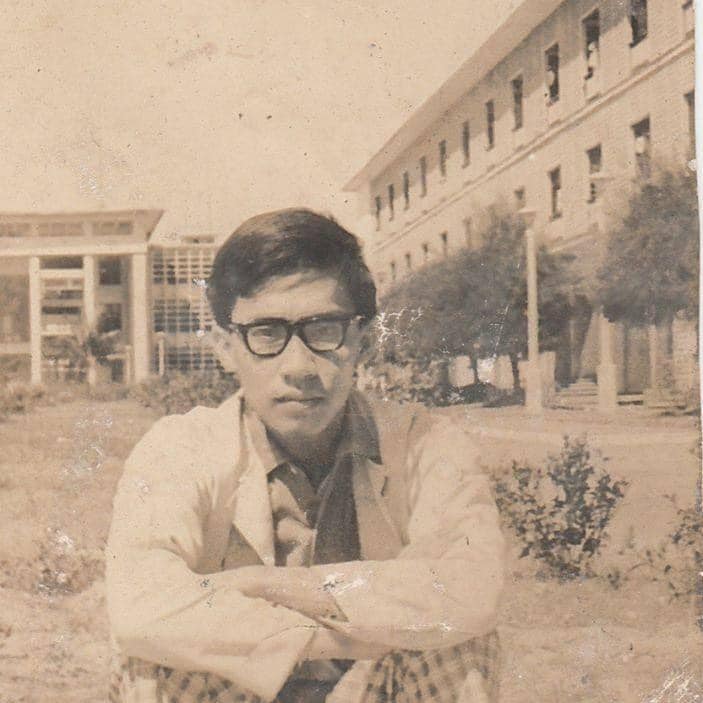
1964 – 65 Rangoon Institute of Technology (RIT)
I was admitted to 2nd BE (Bachelor of Engineering) in November 1964.
The photo was taken at the Gyogone campus.
2nd BE student
1964 – 65 ရန်ကုန်စက်မှုတက္ကသိုလ် ဒုတိယနှစ် သင်တန်းသား 2nd BE Student at Rangoon Institute of Technology
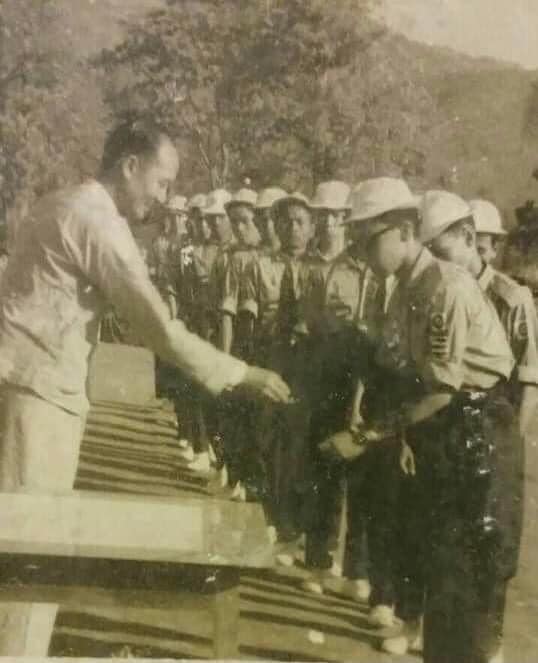
1965 Summer Inlay Luyechun Camp
I was selected as Luyechun (Outstanding Student).
The photo was taken at the Welcome Ceremony by the Head of Shan States.
LYC
1965 နွေရာသီ အင်းလေး ခေါင်တိုင် လူရည်ချွန် စခန်း တက္ကသိုလ် နဲ့ အထက်တန်း လူရည်ချွန်များ Inlay Khaung Daing Luyechun Camp in the Summer of 1965
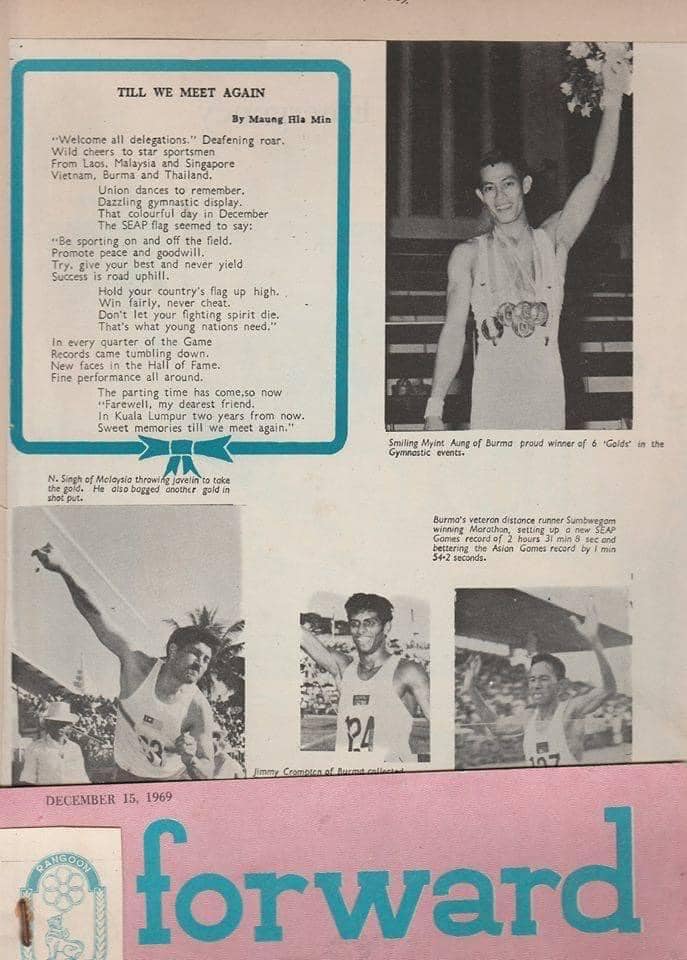
1969 December Poem for 5th SEAP Games
Burma hosted the 2nd SEAP Games in 1961, and the 5th SEAP Games in 1969.
The photo shows a page from the Forward Magazine. Maung Thaw Ka (Bohmu Ba Thaw, GBNF) was Chief Editor of the magazine.
Forward
Forward မဂ္ဂဇင်း — ဒီဇင်ဘာ 1969 ပဥ္စမ အကြိမ် အရှေ့တောင်အာရှ ကျွန်းဆွယ်ပွဲ အတွက် ကဗျာ စပ်ဆို ခဲ့ Poem about the 5th SEAP Games
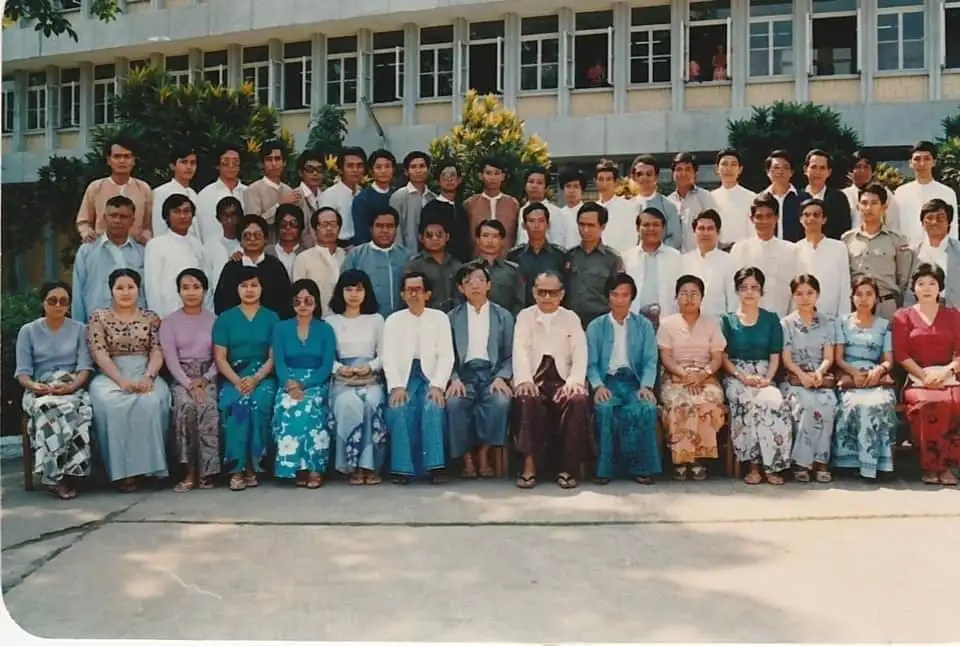
Mid 1970s Universities’ Computer Center (UCC), Rangoon
The photo was taken with the Teachers and Students of CPC (Computer Programming Course).
Dr. Tin Maung (GBNF) succeeded Dr. Chit Swe (UCC Founder, GBNF) as Director of UCC.
UCC
တက္ကသိုလ်များ ကွန်ပျူတာ ဌာန က ပို့ချတဲ့ သင်တန်း တခု Computer Course at Universities’ Computer Center (UCC), Thamaing College Campus
1999 Aprilto 2025 Chief Editor of RIT Alumni International Newsletter
2005++ Paying Homage to Sayadaw U Silanandabhivamsa
U Silananda
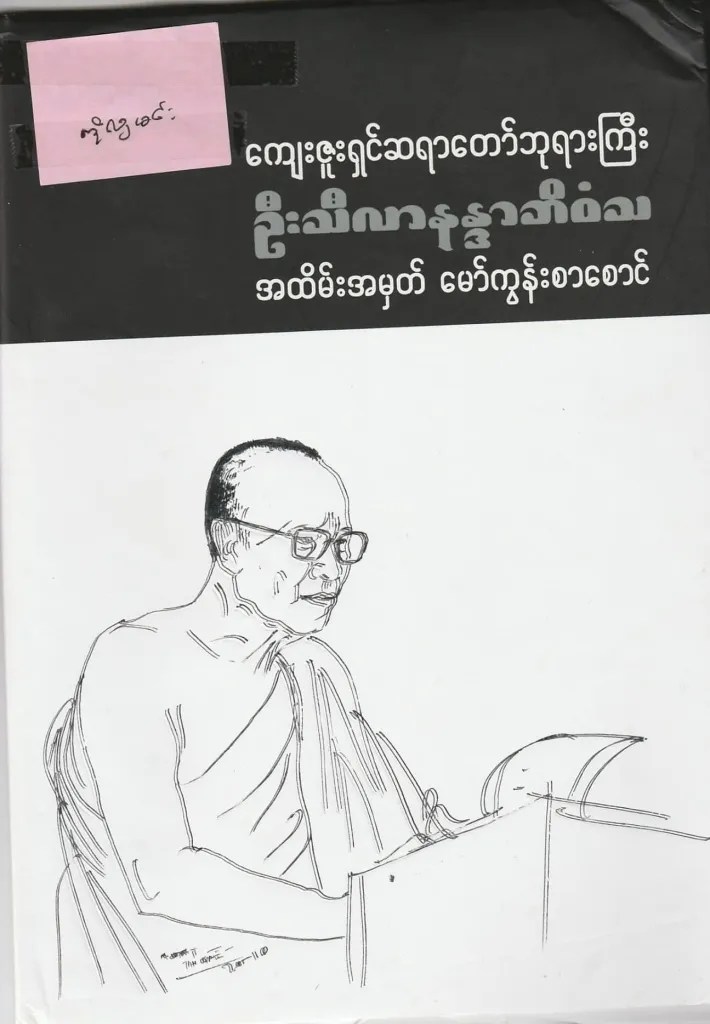
ဆရာတော် ဦးသီလာနန္ဒာဘိဝံသ (ပါချုပ်ဆရာတော်) အထိမ်းအမှတ် မော်ကွန်းစာစောင်အတွက် အဖွဲ့ဝင် & စာတည်း Contributing Editor for the Book published in memory of Sayadaw U Silanandabhivamsa
2010 December Saya Pu Zaw Pwe in Singapore
SDY Sar Saung
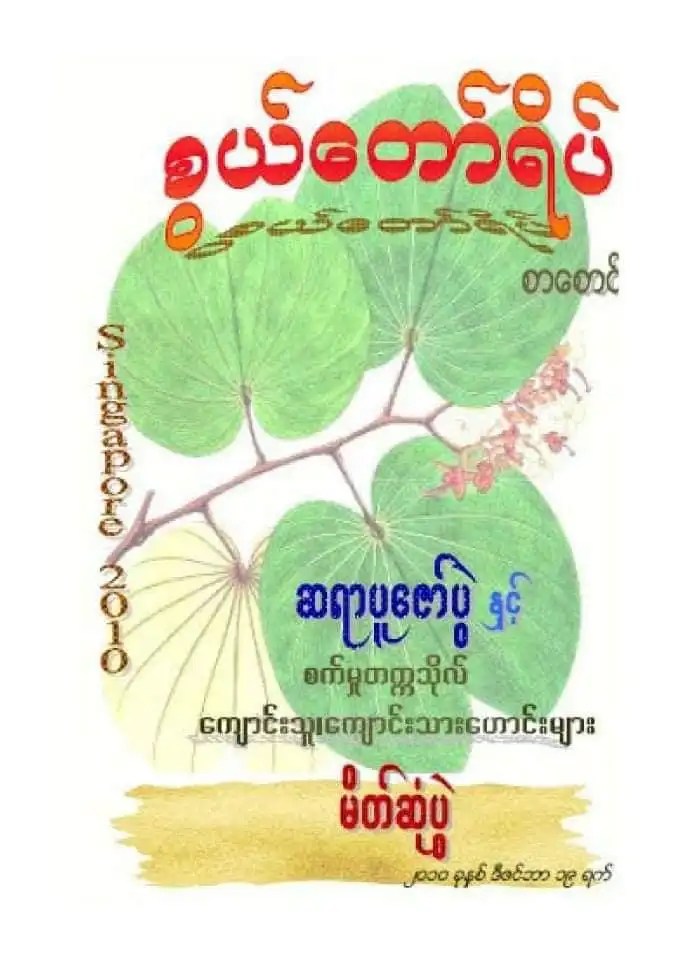
2010 စင်ကာပူ မှာ ကျင်းပတဲ့ စက်မှုတက္ကသိုလ် ဆရာပူဇော်ပွဲ အထိမ်း အမှတ် စွယ်တော်ရိပ်စာစောင် Wrote an article “A Sad and Short Clip: EE Sayas” for the Commemorative Issue of Swel Daw Yeik Sar Saung for SPZP-2010 in Singapore
HMEE (History of Myanmar Engineering Project) HMEE Book published in 2012
HMEE
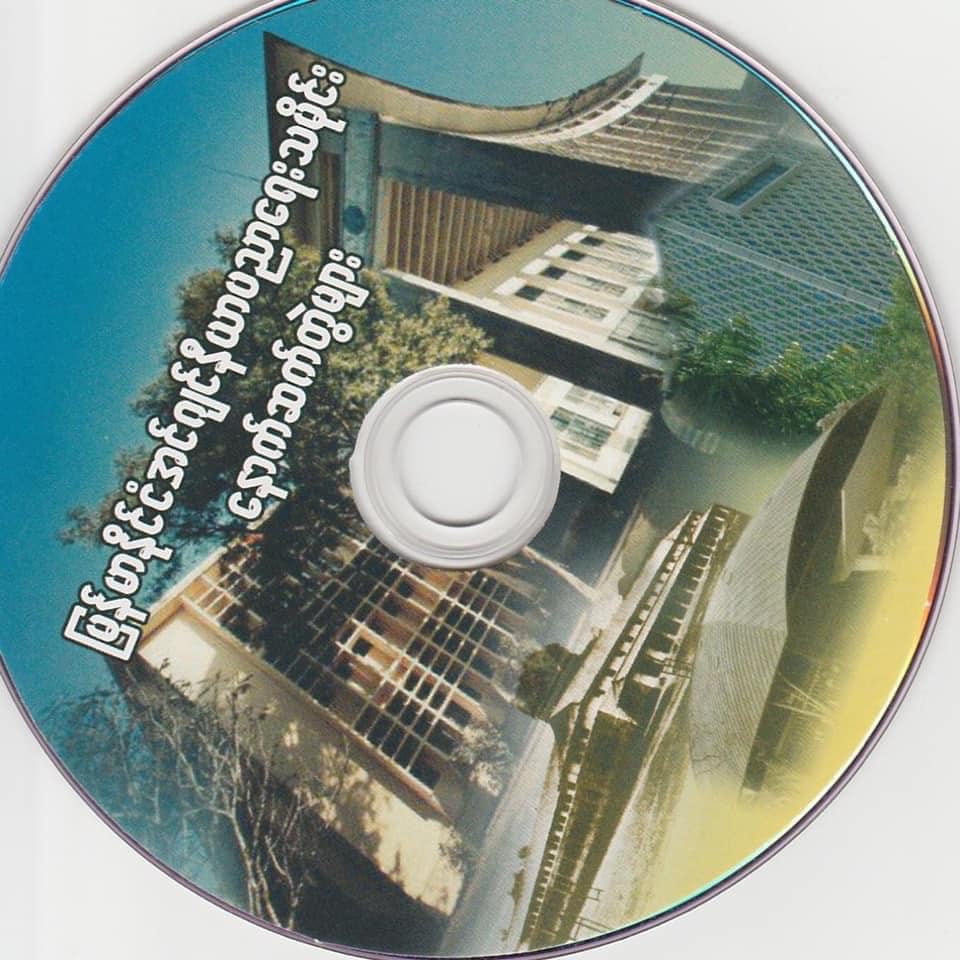
မြန်မာနိုင်ငံ အင်ဂျင်နီယာ ပညာရေး သမိုင်း ပြုစု တဲ့ အဖွဲ့ Member of HMEE (History of Myanmar Engineering Education) U Ohn Khine (M70) and I compiled the CD Supplement for the HMEE Book published in 2012 Copies of the Book were donated to Libraries
CD
2012 နှစ် မှာ ထုတ်ဝေခဲ့တဲ့ မြန်မာနိုင်ငံ အင်ဂျင်နီယာပညာရေး သမိုင်း စာအုပ် ရဲ့ နောက်ဆက်တွဲ စီဒီ CD Supplement for the HMEE Book Photos and articles (in English) to supplement the articles (in Burmese) in the HMEE Book
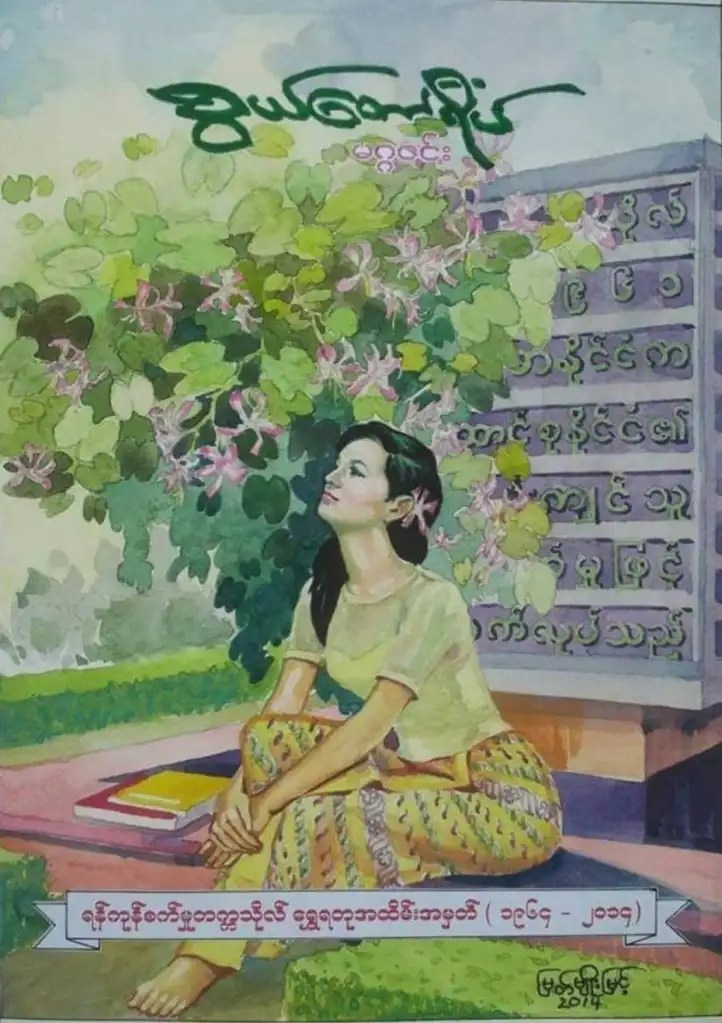
ရန်ကုန်စက်မှုတက္ကသိုလ် ရွှေရတု အထိမ်းအမှတ်စွယ်တော်ရိပ် မဂ္ဂဇင်း (2014) Wrote an article “Memories of a 69er” for the Commemorative Issue of Swel Daw Yeik Magazine for Shwe YaDu 2014
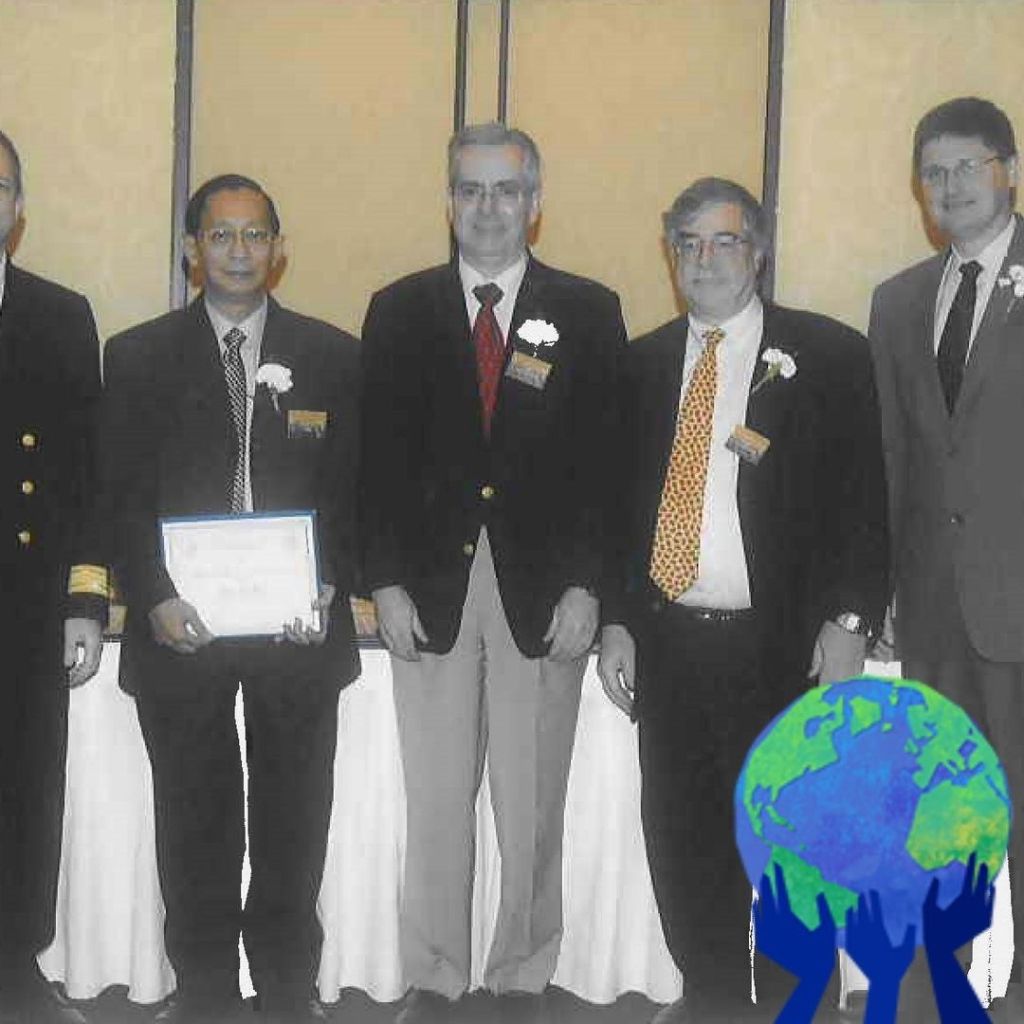
2016 September Alumni Appreciation Award
Award
2019 December RUBC 96th Anniversary Regatta
Regatta
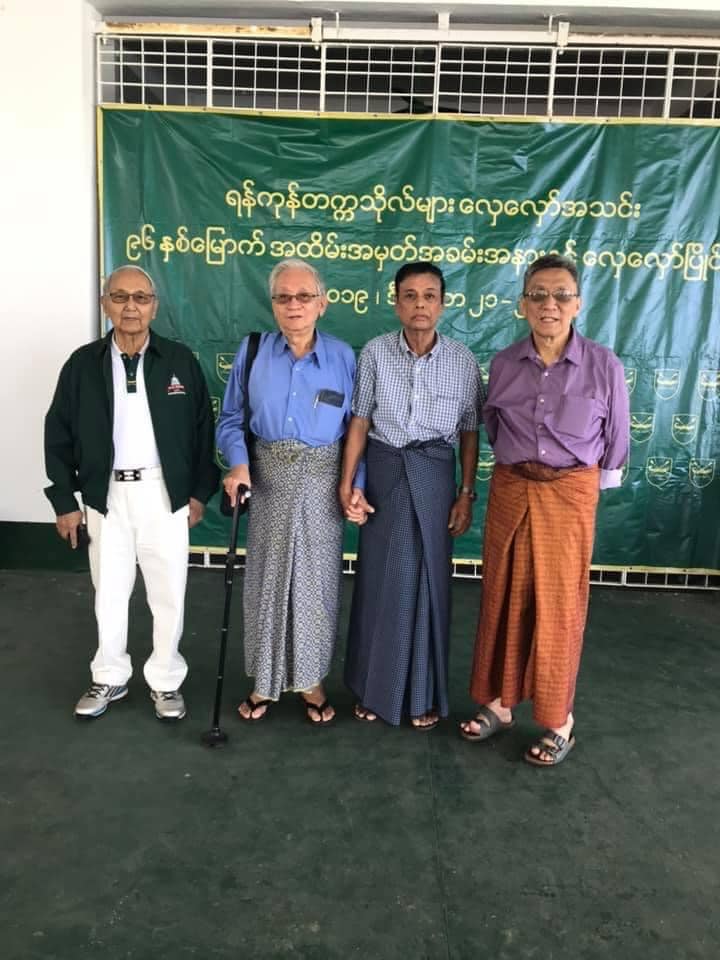
RUBC 96th Anniversary & Regatta (2019) U Tin Myint (GBNF), U Sein Htoon, U Khin Maung Latt, U Hla Min
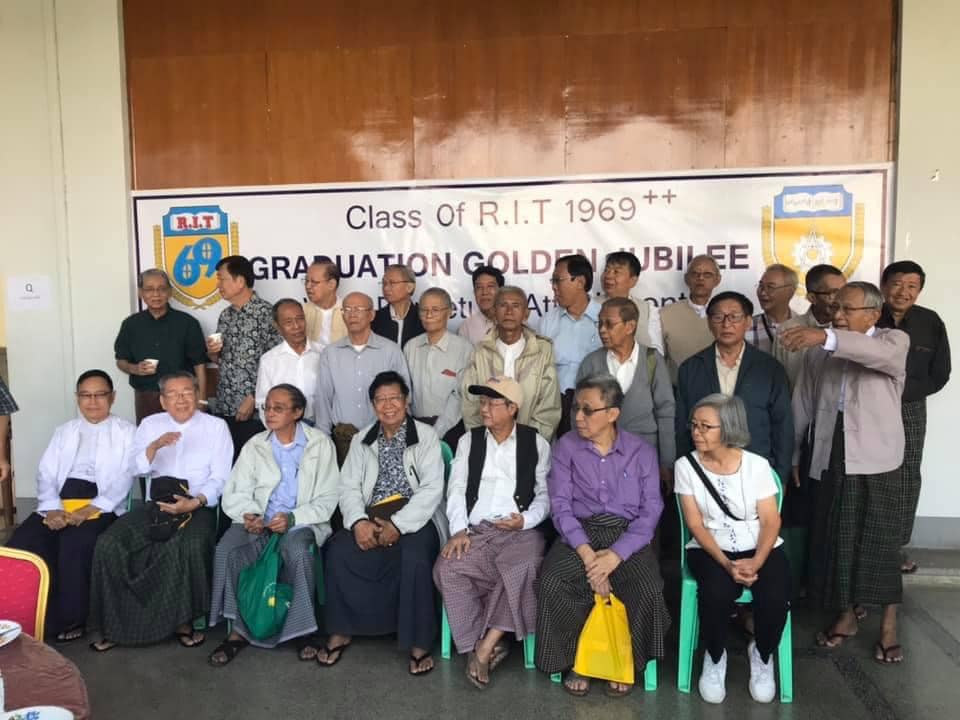
2019 December Golden Jubilee of Graduation of RIT 69ers
GJ
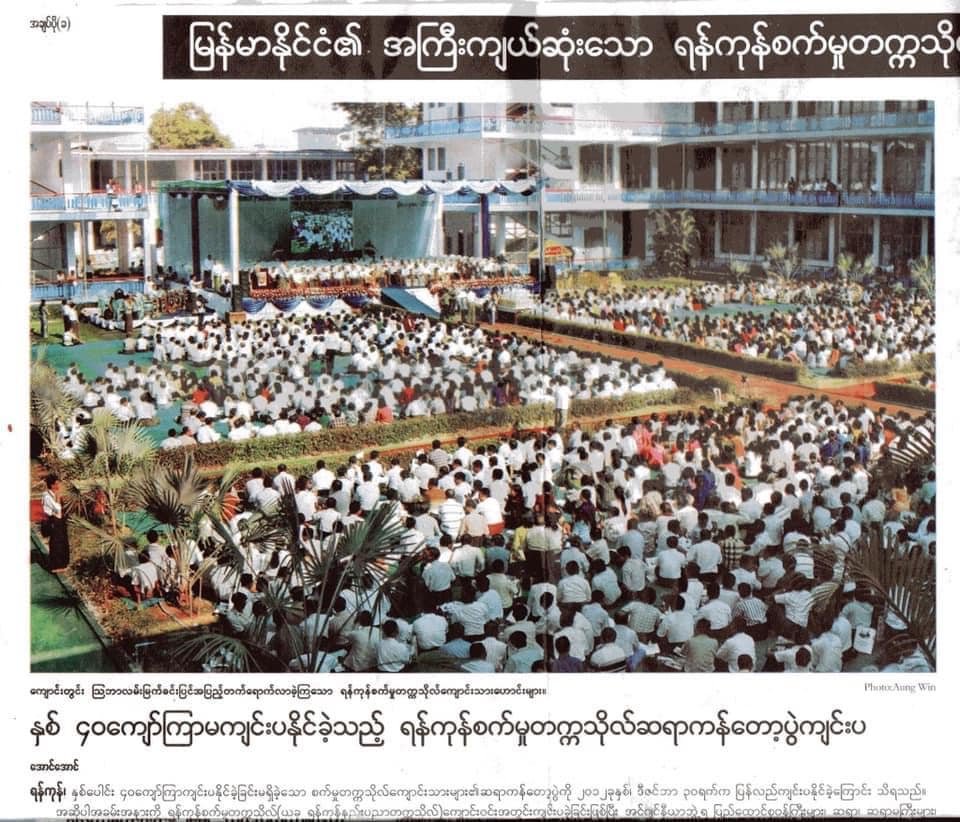
2019 — 1969 နှစ် ဘွဲ့ရ အင်ဂျင်နီယာများ ရဲ့ ရွှေရတု မနက်ပိုင်း — ကြို့ကုန်း မှာ ဆရာပူဇော်ပွဲ 2019 — Golden Jubilee of Graduation for RIT 69ers Reunion and Saya Pu Zaw Pwe at Gyogone Campus
Early civilizations celebrate seasonal changes such as the Winter Solstice and the Vernal Equinox.
Stonehenge, Yule Tide, and the sighting of Sirius (in conjunction with the floods of River Nile) have fascinated a wide spectrum of people.
December
December used to be the 10th (and not the 12th and last) month as implied by “Dec”. It has its fair share of religious and social events. It is time for some companies to have the annual shut down. It is time for classic and new stories about Christmas.
‘White Christmas” by Bing Crosby was the best selling single for many years.
“Blue Christmas” by Elvis Presley has been digitally manipulated to feature a duet with Lisa Marie.
Ma Khin Khin Kyu (Ann, A67) e-mailed me with a YouTube link to “iPhones & IPads sending Merry Christmas”.
Thanks to Sayas and alums for sending e-greetings.
Feedback
Roman Year
U Zaw Min (Standing 2nd from Right)
Dear Ko HM,
Happy holidays to you and your family.
Keep up your good work. We never cease to learn something new from our writings.
Latest one being December from the Latin “Dec” for December. To quote a Burmese saying, “Tha De Ma Mu, Gu Ma Myin”. It never crossed my mind to connect the Latin ‘Dec’ for 10 to December. Now that you got me thinking, Latin Sept (7), Oct (8) and Nov (9) stood for September, October and November.
I have read that the Roman year used to start in March (spring time), when the Roman Senate completed the budget for the year and the legions were sent out to fight the enemy. Someone got the bright idea to send the legions out in January to catch the barbarians in their winter camps. The senate completed the budget by January so that the legions could march out during the winter and January became the start of the year.
15 Teoh Siblings (Named alphabetically from Albert to Oscar)
9 Siblings (My Cousins)
My 7 Siblings
Other 7 Siblings (U Tin Tut to Daw Tin Saw Mu)
Seven Siblings
ICS U Tin Tut
U Tin Tut
First Burmese to become ICS by invitation.
Served as Foreign Minister, Brigadier of a Reserve Army, Journalist and Publisher.
Perished when a bomb (placed under his car) exploded. There were investigations, but no conclusive results were reported.
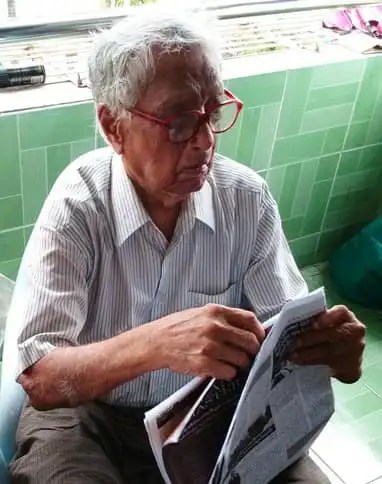
Dr. Thane Oke Kyaw Myint posted photos and articles about his Ba Gyi (e.g. The Empty Tomb).
“Ba Gyi Aung Nyar Dei” (a famous short story by Minthuwun (Saya U Wun) has implicit references to U Tin Tut.
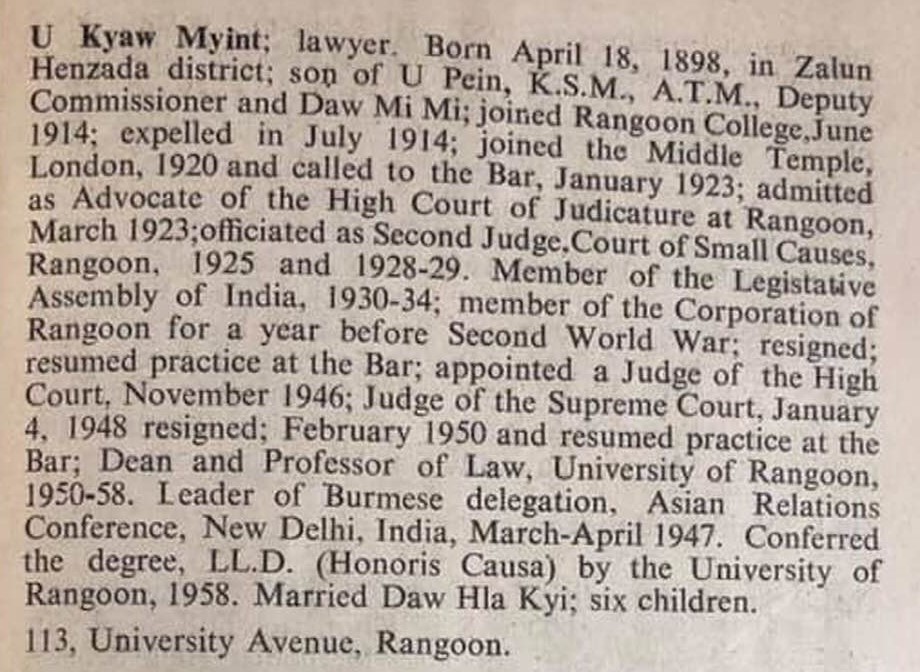
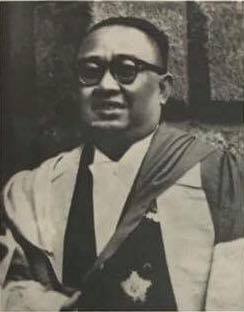
U Kyaw Myint
Brief Bio of U Kyaw Myint
Barrister, Judge of Supreme Court, Head of Tribunal that tried Galon U Saw, Dean of the Faculty of Law, Politician, Head of private Law firm that defended several people accused by the BSPP government).
Stood first in Burma from Central with distinctions in all subjects. Sadly, he was expelled from the University of Rangoon for attending his mother’s funeral and earned the ire of the Principal and his father. His saga is recounted in a series of posts by his son Dr. Thane Oke Kyaw Myint.
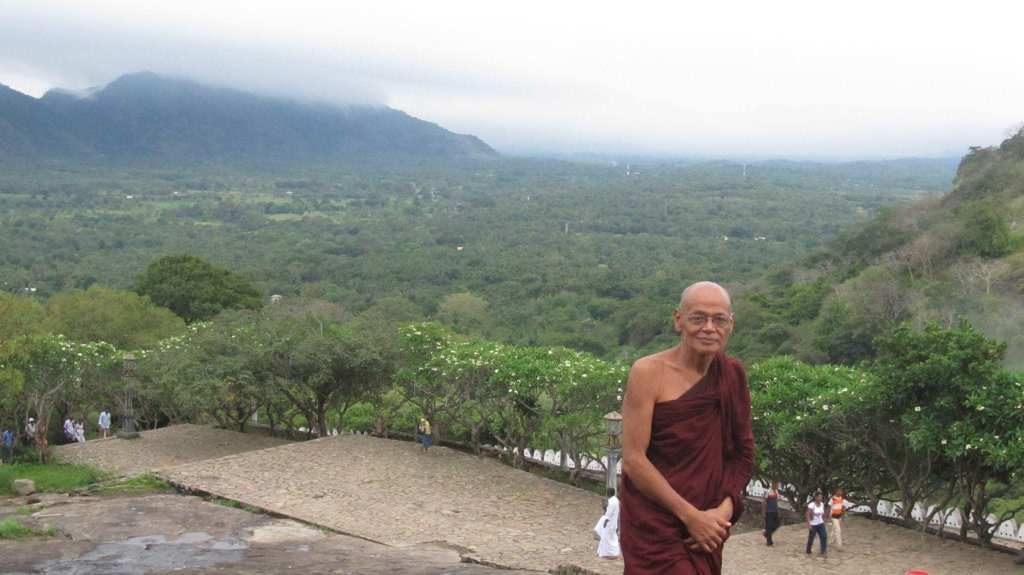
Dhamma friend of my beloved parents. They built Dat Paung Zon Aung Min Gaung pagoda and supported “Mon” Sayadaw U Thilawanta.
U Myint Thein
Chief Justice of the Union of Burma
On March 2, 1962, a Coup D’etat took place. Arrested along the Prime Minister, Cabinet Ministers, several Sawbwas and high ranking officials. During his detention, he was allowed only one day off to attend the funeral of his spouse Daw Phwa Hnin (an early Burmese female to be called to the Bar in the UK).
Ambassador (e.g. to China).
Outstanding author and translator.
Pen name : “MMT” (for Maung Myint Thein). His works were heavily censored.
Dr. Htin Aung
Dr. Htin Aung
Principal of Rangoon College & as first native Rector of Rangoon University
Prolific writer covering history, folklore and several topics
“Burmese Drama” and “Thirty Burmese Tales” were prescribed texts.
Daw Khin MyaMu
Lecturer in Burmese
Thamadu Myo Wun (family court judge)
Expert in Kyauk Sar (stone inscriptions)
Spouse : Burmese Professor U E Maung
Her handwritten manuscripts were not published due to lack of fonts, and were ultimately lost
Daw Khin Saw Mu
Daw Khin Saw Mu
Early student of Sayagyi U Pe Maung Tin (Pali scholar, who successfully proposed the establishment of a separate Burmese Department).
Khit San Poet
Spouse : ICS U Ba Tint
Children : Daw Khin Saw Tint (RIT English, bilingual writer); U Nay Oke (St. Paul’s, TED-x InyaLake speaker, Tuition saya, Chair of the Myanmar Board for organizing the 5th ILF (Irrawaddy Literary Festival).
Errol Than Tun / Bobby / Myo Tun / Ashin Pannagavesaka : Itinerant Bhikku — See Posts
Harold Than Tun / Nyunt Tun (GBNF) : Soccer selected for Rangoon Division in High School
Archie Than Tun / Aye Tun : Vocalist
Ka Ka (GBNF) : youngest son
Demise
Uzin Bobby Myo Tun (A69) posted:
Our beloved father U Than Tun, age 98, passed away peacefully on 22-07-2018, 8:05 p.m. at his grandson’s home, Bldg #3, Rm.#13, Aungzabu Str. Kyee-Pwar-Yay Housing Estate, Thingangyun Township, Yangon.
Funeral time at Yay-way crematorium on Tuesday 24th July 2018 will be announced later.
Errol Than Tun (Bobby)
Bobby 1Bobby 2Bobby 3
He studied twice in the UK — first in high school on B.O.C Scholarship and later for his Masters.
He won Essay Contests conducted by Dawlay’s Circle of the Guardian Newspaper.
He was asked to proofread and edit columns for Dawlay’s Circle by P. Aung Khin (who took over from the original Dawlay : Daw Khin Swe Hla).
He was also asked to be a judge at the Scrabble tournaments ran by Guardian.
2. U Than Tun (A65, GBNF)
Nephew of Sayadaw U Silananda
Older brother of U San Maung (A70)
3. U Than Tun (GBNF)
Father of Daw Khin Swe Oo & U Wynn Myint Aung (EC76)
1968 : David Levy’s wager with Don Michie (Pioneer in Machine Intelligence, U of Edinburgh) joined by two other Computer Experts from the USA
Levy beat several Chess Programs / Computers
1978 : Levy won the wager
World Champion Programs
Belle : by Ken Thompson, UNIX co-creator
Deep Thought (CMU) : Received Master Rating; Beat Levy
Deep Thought (CMU)
Ph.D students : Designed special chips for Chess. Improved Search & Processing of Decision Tree
Chess experts : Created Data base of Chess Strategies. Analyzed Chess Games. Suggested improvements for hardware and software
The team was recruited by IBM to develop Deep Blue. Three remained for the Challenge to be the Human World Champion
Deep Blue (IBM)
1997 : Garry Kasparov (then World Champion) beat Deep Blue by 4 – 2
1998 : Deep Blue beat Kasparov by 3.5 – 2.5 Kasparov made unexpected errors (especially in the final game)
IBM retired Deep Blue
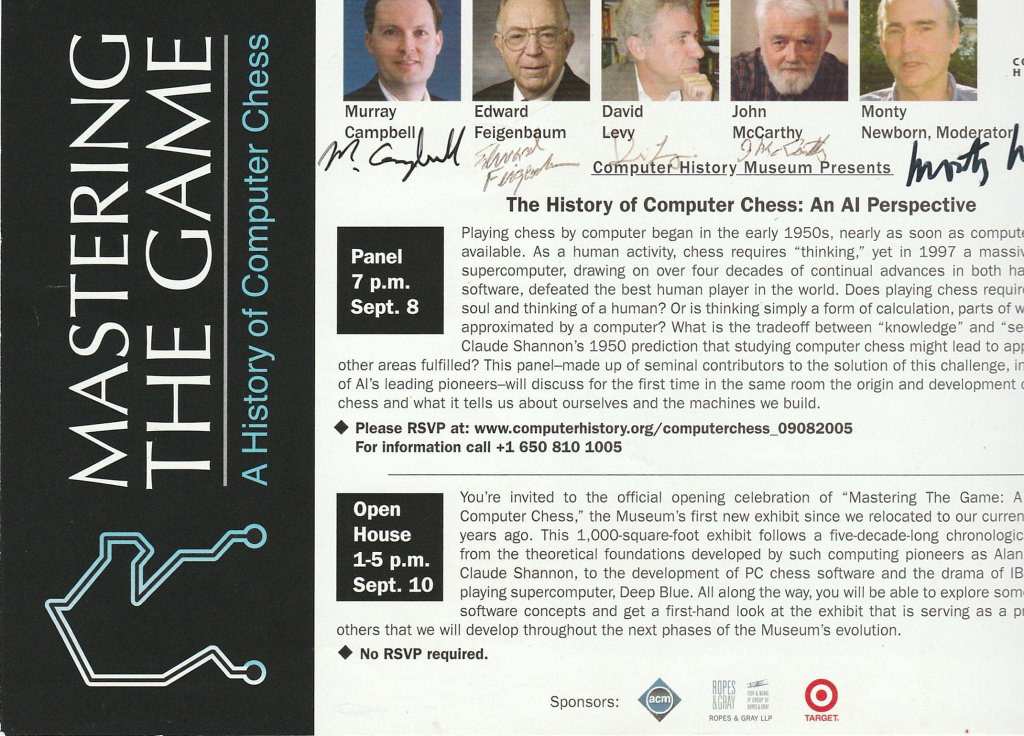
Computer History Museum
Exhibit on “History of Computer Chess”
I attended the Panel Discussion at CHM by (Prof Ed Feigenbaum / Expert Systems, Monty Newborn / Organizer of Computer Chess Tournaments, Murray / Member of Deep Thought and Deep Blue, …)
CHM
Remarks
After retirement, Kasparov became Coach of Magnus Carlsen (Triple World Champion for Classic Chess, Rapid Chess and Blitz Chess).
Kamma is a Pali word meaning action or doing. In its general sense kamma means all good and bad intentional actions whether mental, verbal or physical (thoughts, words and deeds). In the Buddhist teachings, all physical (kãrya kamma), verbal (vacî kamma) and mental (mano kamma) actions are known as the three kammas. All beings perform these three kammas at all waking hours. All their work, great or small, is performed by means of these three kammas. These three kammas become inert when a person is asleep. In the case of a dead person, the three kammas cease to function as far as that body is concerned.
In its ultimate sense, kamma means all moral and immoral volition. The Buddha says: “O Bhikkhus, I declare that volition (cetanã) is kamma. Having volition, one acts by body, speech and thought” (Aînguttara Nikãya).
When any action of thought, word or body takes place, volition determines or causes its concomitants to perform their respective functions simultaneously. For this reason, volition is predominant in all actions. Involuntary, unintentional or unconscious actions, though technically deeds, do not constitute kamma, because volition, the most important factor in determining kamma, is absent. Thus, the real nature of action (kamma) of man is mental.
According to Abhidhammã, 29 types of consciousness (Citta) consisting of (i) 12 types of immoral consciousness (akusala citta) and (ii) 8 types of moral consciousness (kusala citta) from among the 54 types of mundane consciousness (kãmãvacara citta) pertaining to the sentient realm, (iii) 5 types of moral consciousness (kusala citta) pertaining to the realms of form (rüpãvacara citta or jhãnas), and (iv) 4 types of moral consciousness (kusala citta) pertaining to the formless realms (arüpãvacara citta or jhãnas), are called kamma because they have the power to produce their due effects quite automatically, independent of any external agency.
The eight types of supramundane consciousness (lokuttarã citta) are not regarded as kamma because they tend to eradicate the roots of kamma; in them, the predominant factor is wisdom (paññã) while in the mundane, it is volition (cetanã).
Inherent in kamma is the potential of producing its due effect.
Every volitional action is inevitably accompanied by its due effect just as every object is accompanied by its shadow. Kamma is action and vipãka, fruit or result, is its effect. If kamma is likened to a seed, then the fruit, arising from the tree, is vipãka, effect or result. As kamma may be good or bad, so may vipãka be good or bad. As kamma is mental, so vipãka, too, is mental; it is experienced as happiness or misery, according to the nature of the kamma seed. The concomitant material conditions may be advantageous (ãnisamsa) such as prosperity, health and longevity, or disadvantageous (ãdinava) such as poverty, ugliness, disease, short life-span, etc.
As surely as water seeks its own level, so does kamma, given opportunity, produce its inevitable result not as reward or punishment, but as an innate sequence. From a Buddhist standpoint, happiness and misery are not rewards and punishments assigned by a supernatural, omniscient power to one that has done good or evil. The sequence of action and effect is a natural law of kamma.
There are inequalities and many different destinies of human beings in the world. For example, one perishes in infancy and another lives to the age of eighty or more, one is sick and infirm and another healthy and strong, one is a millionaire and another a pauper, one is handsome and another ugly, one is brought up in luxury and another in misery, one is a genius and another a half-wit.
What is the cause of these inequalities? The Buddha’s reply is: “All living beings have actions (kamma) as their own, their inheritance, their congenital cause, their kinsman, their refuge. It is kamma that differentiates beings into low and high states” (Majjhima Nikãya).
According to Buddhism, the disparities that exist in the world are not due to blind chance. They are due, to some extent, to heredity and environment, and, to a greater extent, to kamma which includes not only the present kamma, but also the proximate or remote past kamma. While Buddhism teaches that kamma is the chief cause of inequalities in the world, it does not teach fatalism or the doctrine of pre-destination.
In the Aînguttara Nikãya, the Buddha states: “If anyone says that one must reap according to his deeds, in that case there is no religious life nor is an opportunity afforded for the entire extinction of sorrow. But if anyone says that which one reaps accords with one’s deeds, in that case there is a religious life and an opportunity afforded for the entire extinction of sorrow.”
Thus, Buddhism does not hold the view that everything is due to past kamma. Kamma is not fate. Kamma is not irrevocable destiny imposed upon us by some unknown power to which we must helplessly submit ourselves. The past influences the present but does not entirely control it, for kamma of the past as well as the present are in effect in the present. The past and present influence the future. One’s action (kamma) of a later day may modify the effects of one’s action (kamma) of a former day.
One may at any moment change for the better or for the worse. In Buddhism, therefore, man has a certain amount of free will, and there is almost every possibility to mould one’s kamma. If this were not so, what possibility would there ever be of a man’s getting free from all kamma forever. It would be perpetually self-continuing energy that could never come to an end.
What is the cause of kamma? Ignorance (avijjã), not knowing things as they truly are, is the chief cause of kamma. Dependent on ignorance arise kammic activities. Associated with ignorance is its ally, craving (tanhã), the other root cause of kamma. Evil actions are conditioned by these two causes. All good deeds of a worldling, though associated with the three wholesome roots of generosity (alobha), goodwill (adosa) and knowledge (amoha), are nevertheless regarded as kamma because the two roots of ignorance (avijjã) and craving (tanhã) are dormant in him.
Who is the doer of kamma? Who experiences the effects? Volition (cetanã) is itself the doer. Feeling (vedanã) is itself the reaper of the fruits of action. Apart from these pure mental states there is none to sow and none to reap.
Venerable Buddhaghosa writes in Visuddhimagga: “No doer is there who does the deed, Nor is there one who feels the fruit, Constituent parts alone roll on, This indeed is right discernment.”
Where is kamma? Kamma is not stored anywhere within or without the body. It is not stored somewhere in this fleeting consciousness or in any other part of the mind or the body. But dependent on mind and matter kamma rests, manifesting itself at the opportune moment. Thus, kamma is an individual force, and is transmitted from one existence to another.
Buddhism teaches that there is no permanent soul, no eternal, immortal soul that directs one’s action. So, if there is no soul, what is it that is reborn? The answer is kammic energy: the actions we have done. These actions do not disappear unless or until they have produced their effects. So each being has body and mind as a result of actions they did in the past or in the present, and thus this kammic action goes on and on.
Kamma may be classified in many ways. Kamma is classified into four kinds according to the time at which results are produced: 1. kamma that produces results in the same life-time (Ditthadhammavedaniya kamma); 2. kamma that produces results in the next life (Upapajjavedaniya kamma); 3. kamma that produces results in any one (or more) of successive births and is indefintely effective (Aparãpariyavedaniya kamma); (These first three types require auxiliary causes such as circumstances, surroundings, etc., to produce an effect.) 4. and, kamma that does not produce any result (Ahosi kamma).
The timing of the results of kamma depends upon which thought-moment is associated with the thought-processes (cittavîthi) of volition (cetanã). According to Abhidhammã one thought-process is completed at the expiration of seventeen thought-moments, consisting of seven initial thought-moments followed by seven javana states (at which point an action is judged whether it be moral or immoral, and kamma is performed) and subsequently by votthapana (determining consciousness) and two Tadãlambana (registering consciousness).
Of the seven javana thought-moments, the effect of the first javana thought-moment is the weakest in potentiality, and is manifested in this life (Ditthadhammavedaniya kamma). If it does not operate in this life, it becomes ineffective (Ahosi kamma).
The next weakest is the seventh javana thought-moment; its effect is reaped in the subsequent birth (Upapajjavedaniya kamma). This, too, becomes ineffective (Ahosi kamma) if it does not operate in the next rebirth.
The effect of the five intermediate javana thought-moments (Aparãpariyavedaniya kamma) may take place at any time in the course of one’s wanderings in life continua (Samsãrã) until the final emancipation. No person – not even the Buddha and Arahants – is exempt from this kamma.
Kamma is also classified into four kinds according to its particular function (kicca): 1. Janaka (Reproductive) kamma which conditions the next rebirth; 2. Upatthambhaka (Supportive) kamma which assists or maintains the results of already-existing kamma; 3. Upapilaka (Counteractive) kamma which suppresses or modifies the result of the reproductive kamma; and 4. Upaghãtaka (Destructive) kamma which destroys the force of existing kamma and substitutes its own resultants.
Again, it is the last (seventh) javana thought-process – Janaka (Reproductive) kamma – that determines the state of a person in his/her subsequent birth. As a rule, the last javana thought-process depends on the general conduct of a person. In exceptional cases, perhaps due to favorable or unfavorable circumstances, at the moment of death a good person may experience a bad last javana thought and a bad person a good one. The subsequent birth will be determined by this last javana thought-process, irrespective of the general conduct. This does not mean that the effects of the past actions are obliterated. They will, in turn, produce their inevitable results at the appropriate moment.
o assist and maintain or to weaken and obstruct the fruition of this reproductive (Janaka) kamma, another past kamma may intervene, being supportive (Upatthambhaka kamma) or counteractive (Upapilaka kamma), respectively.
The reproductive (Janaka) kamma can be totally annulled by Upaghãtaka (Destructive) kamma which is a more powerful opposing past kamma, that, seeking an opportunity, may quite unexpectedly operate; it is more powerful than the above two in that it not only obstructs but also destroys the whole force of existing kamma.
There is another classification of kamma according to the priority of effect: 1. Garuka (Weighty or serious) kamma which produces its effects for certain in the present life or in the next (On the moral side, these weighty actions are the jhanas, while on the immoral side, they are heinous crimes (ãnantariya kamma) namely, matricide, parricide, the murder of an Arahant, the wounding of the Buddha, and the creation of a schism in the Sangha); 2. Ãsanna (death proximate) kamma which is the action that one does or recollects – mentally or physically – immediately before the moment of death and it determines the conditions of the next birth; 3. Ãcinna (habitual) kamma which is action that one performs and recollects constantly, and in the absence of death-proximate kamma, produces and determines the next birth; and 4. Katattã kamma which is the last in priority of results and is the unexpended kamma of a particular being that has followed him/her through the continua of kappas (Samsãrã), and it conditions the next birth if there is none of the above kammas to operate.
Kamma is further classified according to the place in which the results are produced: (1) Immoral (akusala) kamma that produces its effects in the plane of misery: Immoral (akusala) kamma is rooted in greed (Lobha), anger (Dosa) and delusion (Moha). There are ten immoral (akusala) actions (kamma): • killing (pãnãtipãtã), • stealing (adinnãdãnã), • sexual misconduct (kãmesu micchãcãrã) {these three are committed by deed}, • lying (musãvãdã), • slandering (pisunãvãcã), • harsh language (pharusãvãcã), • frivolous talk (samphappalãpa) {these four are committed by word}, • covetousness (abhijjhã), • ill will (vyãpãda), and • false view (micchãditthi) {these three are committed by mind}. (2) Moral (kusala) kamma which produces its effects in the plane of the world of desires: There are ten moral (kusala) actions (kamma): • alms-giving (dãna), • observance of five or eight precepts (sîla), • practicing meditation (bhãvanã), • reverence (apacãyana), • service (veyyãvacca), • sharing of merit (pattidãna), • rejoicing in others’ good actions (pattãnumodanã), • hearing the doctrine (dhammasavana), • expounding the doctrine (dhammadesanã), • and, forming correct views (ditthijukamma). (3) Moral (kusala) kamma that produces its effects in the realms of form (Rupa): It is of five types, which are purely mental actions (meditation) leading to the five states of rüpa jhãna. (4) Moral (kusala) kamma which produces its effect in the formless realms: These are four types of purely mental actions (meditation) leading to four types of moral consciousness (arüpa jhãna).
Kammasakatã Sammã-ditthi: Right understanding of the truth about the fact that in the case of beings only the two things – namely, good and bad actions done by them – are their own possessions that always accompany them throughout their life continua, wherever they may wander in Samsãrã.
1. Sabbe sattã kammasakã: Only the volitional good or bad actions done by all sentient beings are their own possessions that always accompany them wherever they may wander in Samsãrã.
2. Sabbe sattã Kamma dãyãdã: All beings are the heirs of their own kamma (good or bad actions). The kamma performed by beings are always theirs in their future existences. Only Kamma is inherited by beings. The effects of one’s kamma always accompany one in many existences yielding good or bad results at the opportune moments. One can never get rid of that kamma, but one has to enjoy or suffer its results under appropriate circumstances.
3. Sabbe sattã Kamma yoni: All beings are the descendants of their own kamma. With regard to the present good and evil results, one’s own kamma performed in the present existence with wisdom and knowledge or otherwise as well as one’s own wholesome kamma such as alms-giving, morality, etc., and unwholesome kamma such as killing beings, etc., performed in past existences are the primary causes (parents) of good and evil results.
4. Sabbe sattã Kamma bandhü: Kamma alone is the real relative that all beings can rely on through their life continua in Samsãrã. Parents, brothers, relatives, etc, whom we love and rely upon, can be loved and relied upon for only a short period, i.e., before our death. One’s own physical, verbal and mental kamma are one’s constant companions who accompany one in future existences, wholesome kamma giving happiness and prosperity. Thus, one’s wholesome kamma alone is one’s real relative who should be esteemed and relied upon.
5. Sabbe sattã Kamma patisaranã: Kamma alone is the real refuge of all beings. Here, refuge means reliance upon or taking shelter for protection against troubles and dangers. Unwholesome kamma will lead one to be reborn to the lower world where one has to suffer grievously. Performing wholesome kamma will lead one to be reborn as a man or deva, and save him from the lower worlds in the future existences.
In Buddhism, there are four kinds of taking refuge for the future: (i) taking refuge in the Buddha, (ii) taking refuge in the Dhamma, (iii) taking refuge in the Sangha, and (iv) taking refuge in one’s own wholesome kamma.
This is explained by the following example. All worldlings who indulge in sensual pleasures resemble sick persons who, to be cured, would take refuge in the chief physician (the Buddha), in good medicines (the Dhamma), in the assistant physicians (the Sangha) and in following the physician’s directions (physical, verbal and mental wholesome kamma).
The three refuges, Buddha, Dhamma and Sangha, exist only during the Buddhasãsana. They do not exist outside the Buddhasãsana.
The refuge of wholesome kamma exists both within and outside the Buddhasãsana. We can never be free from kamma that is operating all the time in this universe as well as in other innumerable universes. For this reason, kamma is our refuge throughout our life-continua in Samsãrã.
6. Yam kammam karissanti kilayãnam vã pãpakam vã tassa kammassa dãyãdã bhavissanti: Whatever good or bad actions are done by beings bodily, verbally or mentally, they become the heirs of their kamma.
Provide service / expertise usually free (with volition)
May receive indirect compensation (e.g experience, appreciation)
The Battle of Alamo in Texas : fought by Davy Crockett and the Volunteers from Tennessee
Peace Corps
UNV (United Nations Volunteers) extended to Online Volunteers
Volunteers for Medical Research
Volunteers for UCC Project
Volunteers for fighting the pandemic Front line medical workers Donors for the prevention and treatment Food (Rice …)
Volunteers for Associations, Foundations …
My Volunteer work
Hla Min
Helping SPHS Librarian (in Fourth Standard)
RIT English Newsletter
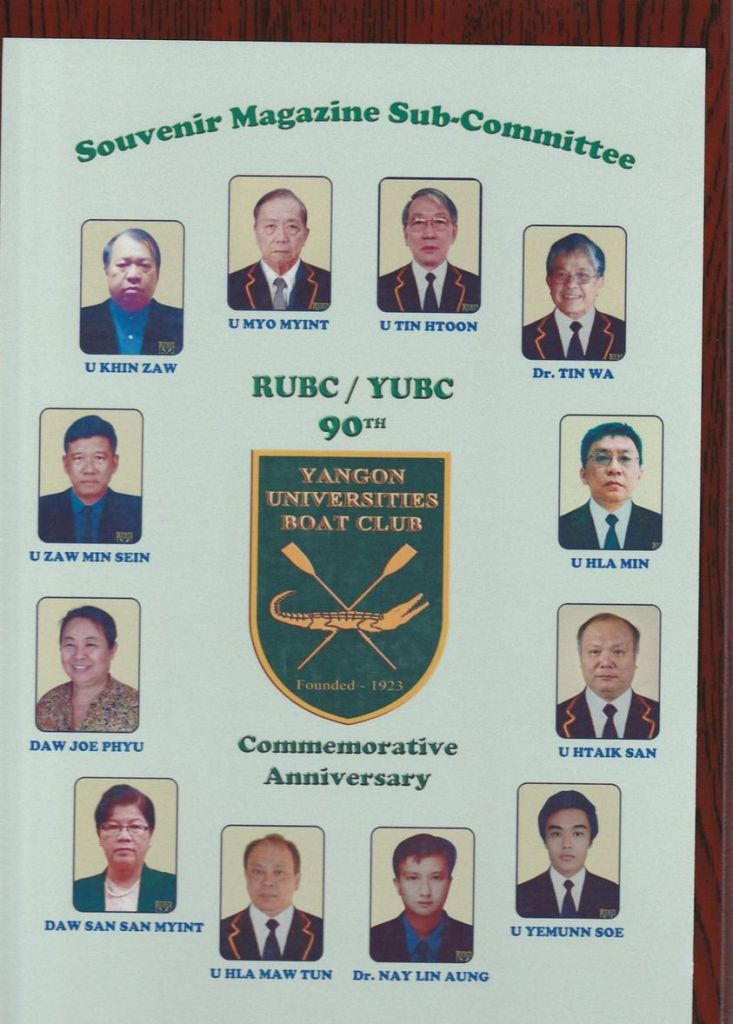
RUBC (Treasurer, Vice Captain, Contributing Editor for 90th Anniversary Issue, Memories of RUBC series of articles)
RIT EE Association (Class rep, Joint Secretary, Secretary, Hlyat Sit Sar Saung)
UCC (Lecture Guides, Training Materials, Memories of UCC series of articles)
RU (Golden Jubilee in 1970, Gangaw Myay Tekkatho Yar Pyay, series of articles)
Contributor and/or Editor
Burmese Language Project (National Foreign Language Center)
Encyclopedia of Asian American Folklore and Folklife
RIT Alumni International Newsletter
BAPS Newsletter
Dhammananda Newsletter
Materials for TBSA Summer Dhamma Camp
Editor
Dhamma talks by Sayadaw U Silananda
Three books by Sayadaw U Jotalankara
Two books by Saya U Aung Zaw (Computer)
Contributor
Swel Daw Yeik Sar Saung for 2002, 2007 and 2010
Swel Daw Yeik Magazine for 2014 (Shwe YaDu)
Computing
Docent, Computer History Museum
Volunteer, SF Bay Area ACM Chapter
Admin / contributor
hlamin.com Life Long Learning RIT Updates Memories
Lectures
BARB / MARB
UCSY
Dawei Nga Gyan Pyan Kyaung
Translator / Interpreter
TMC
Several sayadaws
Several articles
Several Kabyars
____
Overviewof my Post “Volunteer (1999 – present)
Who would appreciate the spouse and family supporting my 26 years as volunteer messenger, editor and organizer for RIT Alumni (e.g. web site, newsletter, Facebook groups, SPZPs)?
Thanks for the support and understanding. I have posted the following:
Countdown to the Reunion : 64 posts
Post Reunion : 36 posts
RIT Alumni International Newsletter and Updates (1989 – present)
Micro Reunion and/or PZP
Mini Reunion and/or PZP
Reunion and/or PZP
Grand Reunion and/or PZP
News, articles and photos by Sayas and Alumni
Class of 69
Health Care Funds
Photo Albums (for trips down memory lane
1999 to present
1999 Started “RIT Alumni International Newsletter”
2000 First RIT Grand Reunion and SPZP in San Francisco, USA Commemorative web pages (thanks to KMZ / U Khin Maung Zaw) 64 Countdown to the Reunion posts 36 Post-Reunion posts Commemorative Issue of the Newsletter by U Hla Min and team with my “SAYA PUZAW PWE” poem on the Front Page
2002 Second RIT Grand Reunion and SPZP in Singapore Commemorative Issue of “Swel Daw Yeik Sar Saung” by Saya U Moe Aung and team Reprinted my “SAYA PUZAW PWE” poem as Back Cover
2004 Third RIT Grand Reunion and SPZP in Yangon Mild earthquake did not rattle the attendees
2007 Fourth RIT Grand Reunion and SPZP in Singapore Commemorative Issue of “Swel Daw Yeik Sar Saung” by Saya U Moe Aung and team Contributed a poem titled “SWE DAW YEIK“
2010 Fifth RIT Grand Reunion and SPZP in Singapore Commemorative Issue of “Swel Daw Yeik Sar Saung” by Saya U Moe Aung and team Contributed an article : Sad and short clip — EE sayas
2012 Sixth RIT Grand Reunion and SPZP in Yangon True “Home Coming” in the Gyogone Campus Special publication : History of University Engineering Education in Burma/Myanmar by Saya U Aung Hla Tun and team (Ko Ohn Khine and I prepared the supplemental CD for the book) Special publication: Selected RIT Cartoons Commemorative Issue of “Swel Daw Yeik Magazine” by U Saw Lin and team Reprints: Limited number of vintage RIT Annual Magazines
2013 Swel Daw Yeik Foundation Contributions for various projects Health care for the sayas and sayamas “Saya Geha” as long term project
2014 Shwe YaDu 50th Anniversary of the opening of RIT in 1964 Planted 50 Swel Daw Bins Paved Shwe YaDu lane and set up Swel Daw Yeik benches Translated Saya U Moe Aung’s Shwe YaDu Lann poem Commemorative Issue of “Swel Daw Yeik Magazine” by Saya U Moe Aung and team (Contributed an article : “Recollections of a 69er”)
2015 RIT Alumni Reunion in Los Angeles Several follow-up gatherings in San Francisco Bay Area
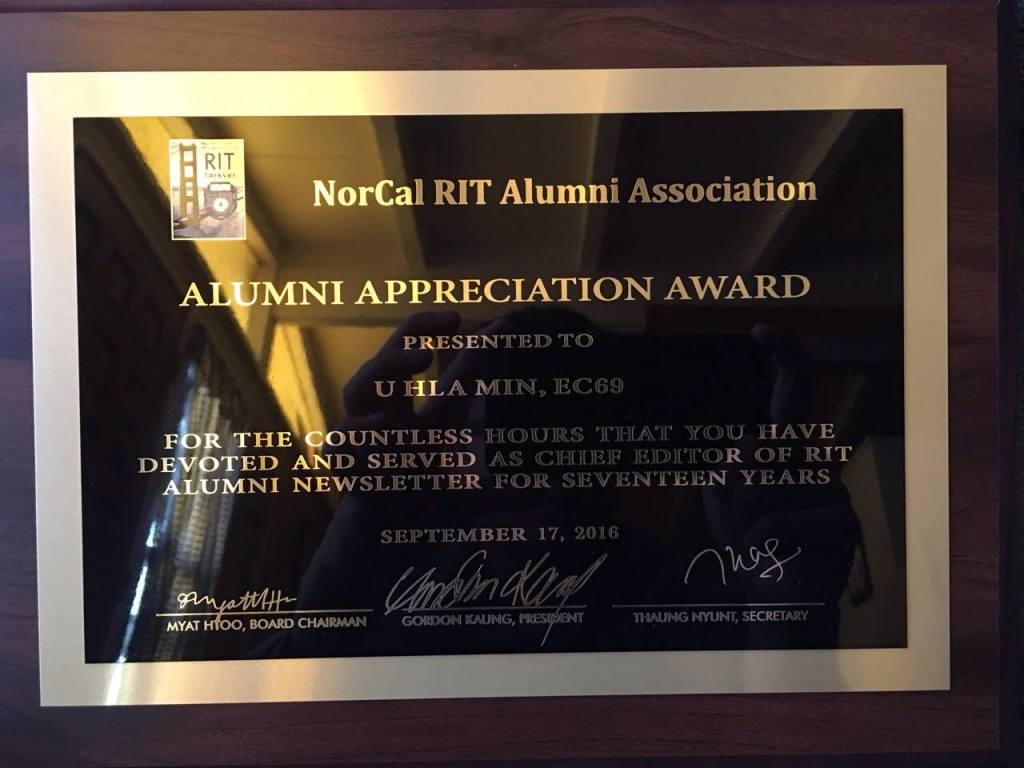
2016 RIT/YIT/YTU Alumni Association (Known as RITAA) Seventh RIT Grand Reunion and SPZP in Yangon 10000+ attendees Free food and fun (all day and all night long) Platinum Jubilee for the Class of 69 Hosted by some 69ers for their friends (in their sunset) Attended SPZP-2016 and Platinum Jubilee of the Class of 69 Soonkway at Half Moon Bay Monastery (organized by U Maurice Chee) Received Alumni Appreciation Award from alumni worldwide Annual Dinner by Northern California RIT Alumni Association Received plaque signed by Saya U Myat Htoo (Chair, BOD), U Kaung Kaung Oo (Gordon, President), and U Thaung Nyunt (Secretary)
2018 Wrote “Trivia” posts (later dropped “Trivia” in the titles) lifelonglearning140.wordpress.com (Archive / Raw Posts) hlamin.com (Paid Personal Web Site) Attended Acariya Pu Zaw Pwe of ICST/UCSY
2019 Completed two decades as Editor of RIT Alumni International Newsletter and Updates Visit to Singapore and Myanmar Moderator, RU Centennial FB Group Panelist at the 5th Irrawaddy Literary Festival in Mandalay Attended Golden Jubilee of Graduation at Gyogone Campus, and the Reunion Dinner / Entertainment organized by U Aung Min and team Attended Arcariya Pu Zaw of ICST/UCSY
2020 Invited as Guest for the PSA (Professional Speakers’ Association) 2020 Tour to Upper Myanmar (Mostly) Stay-at-home due to Pandemic Translated Kabyars for “Poetic Art Series“ Videos broadcast daily (starting August 18, 2020) Countdown to RU Centennial On a sad note, the SPZP was cancelled due to the pandemic. Saya U Ba Than could not invite his former students and colleagues to the Annual Birthday Soon Kway. However, Saya was wished by his siblings and relatives via Zoom meetings. His brother U Tin Htoon (A60) compiled a Photo Album / Book (with the help of Henry Kao / Htaik San) for the Life and Achievements of Saya. The Book was not delivered by the regular Post Office Services. Saya U Tin Htut offered to send the Book via DHL. He also pledged to donate a copy of the Book to YTU Library.
2021
Continue posting two Videos daily
2022 – present
Update posts
Swel Daw
Ideas from Tekkatho Moe War, Maung Sein Win (Padeegone), Maung Nyunt Htay (Ah Htet Min Hla)
You were the victim of a superstitious power monger willing to crush “Pretenders to the Throne” animate and inanimate.
Without a just and fair trial, you were condemned to death.
When one Swel Daw Bin was axed Two magically reappeared
When two Swel Daw Bins were hacked Four appeared to baffle the tormentors
With each atrocious act Swel Daw Bins rebounded and redoubled
The ADHAMMA authorities persisted and ruthlessly rooted all Swel Daw Bins from the Land of the Bearers/Defenders of DHAMMA
Why? Why? Why?
Swel Daws do not have destructive power or desire to exploit They do not have LOBA, DOSA, and MOHA They simply display pristine, beauty and elegance They embody the principles of trust, integrity, and unity of mentors and mentees students, teachers, and Loke Tha’s They provide shade, calm and tranquillity to those seeking rest & peace of mind
With the dawning of the Pwint Linn Era Fifty majestic Swel Daw Bins bloom gallantly along side the famed Shwe YaDu Lann with pleasing Shwe YaDu Benches
There have been tears of sorrow when Swel Daws were banished from the Land
Now there are tears of joy with many artifacts bearing your name
BIT (Burma Institute of Technology) was opened at the Gyogone Campus in 1961.
The degree offered was B.Sc. (Engg).
Saya Dr. Aung Soe (C61), Saya U Maung Maung Win (M61) and Saya Dr. San Tint (EE61) were fledgling sayas at BIT.
Saya Dr. Tin Win (M62), U Aye (62) and Bohmu Myint Thein Lwin (EE62) were some students who attended the Final Year classes at BIT.
BIT was renamed as RIT (Rangoon Institute of Technology). The official name change took place in 1964. The degree was renamed as B.E.
We are not sure if “BIT Rangoon” was considered as an alternative to RIT. IIT (Indian Institute of Technology) has several campuses. The five oldest IIT campuses and their establishment dates are: (a) IIT Kharagpur IITKGP 1951 (b) IIT Bombay IITB 1958 (c) IIT Kanpur IITK 1959 (d) IIT Madras IITM 1959 (e) IIT Delhi IITD 1963 [founded in 1961]
AIT (Asian Institute of Technology) was supposedly started as a school for SEATO (South East Asian Treaty Organization).
Several states (Massachusetts, Illinois, California, …) in USA are known for their Institutes of Technology. Sayagyi Dr. Freddie Ba Hli received his Sc.D. in EE from MIT. He was an informal adviser to Sayagyi Dr. Aung Gyi and Sayagyi U Min Wun, who were among the first three engineering undergraduates to be chosen under the “TWINNING PROGRAM” initiated by Sayagyi U Ba Hli, first native Dean of the Faculty of Engineering, Rangoon University.
RIT was renamed as YIT (Yangon Institute of Technology) and then YTU (Yangon Technological University).
During the “Adhamma Era”, classes were relocated to far away places, and “Swel Daw Bins” were decimated. The A to G Halls were “transformed” into make-shift quarters. Wall clocks stopped. Bushes sprang up. A video of that time brought tears and anger, and the notion that “we might not live to see our alma mater in its former glory for decades to come”.
With the dawn of the some-what “Pwint Linn Era”, our alma mater rose from the ashes. Per request from H.E. U Aye Myint (EP 72), the alumni — young and old, near and far — provided physical, monetary, and spiritual support to help the alma mater in every way possible.
The first true “Home Coming” took place in December 2012. There were tears of joy. 3000 copies of the commemorative Swel Daw Yeik Magazine (not just Sar Saung) were sold out in a couple of days. Limited reprints of the 23 RIT Annual Magazines were also sold out. Autographed copies of “Selected RIT Cartoons” were also sold out. Some copies of “History of University Engineering Education in Burma/Myanmar” may still be available.
There were six Annual Magazines published by RUESU (Rangoon University Engineering Student Union). Saya U Moe Aung learned and refined his publication skills as an editor/publisher of the magazine. The student unions and all professional organizations were banned following the coup d’eat in March 1962. Censorship increased with subsequent regimes.
We now have an official alumni association.
The Seventh RIT Grand Reunion and SPZP held in 2016 was grander. Free food and entertainment were provided the whole day.
Thanks to the sayas and alums for keeping the RIT Spirit (Swel Daw Yeik Spirit) alive and well.
Memoriesof SPZP-2000
SPZP-2000 Organizers include
Saya Allen Htay (C58, GBNF) wrote “Brother, can you afford US 500$?”
Ko Benny Tan (M70), Golden Sponsor & co-chair of Working Committee, designed memorabilia : SPZP-2000 Banner, Mug, T-shirt, Calculator/clock
Ko Maurice Chee (M75), co-chair of Working Committee, Financial Controller, Publisher of commemorative issue of “RIT Alumni Newsletter”
Committee members from Northern California & Southern California took care of the planning and execution of the main event and supplementary picnic
Ko Khin Maung Zaw (EC76), designed and implemented htto://www.ex-rit.org; instrumental in getting the sayas and alumni world-wide get reconnected
I wrote 64 “Countdown to the Reunion” and 36 “Post-Reunion” articles for the ex-rit web site and RIT Alumni International Newsletter.
A commemorative issue of RIT Alumni International Newsletter was published with Yours Truly as Chief Editor, Ko Henry Lim and Saya U Thein Aung as Associate Editors.
Saya U Nyo Win (M65), Saya U Myat Htoo (C68), Saya U Thein Aung (Met 72) … made sure that the event was “not out of control”
Hired professionals (Photographers and Videographers) to record the event
[Later] The VHS tape was converted to DVD
Feel free to see the DVDs, the commemorative issue of “RIT Alumni International”, 64 “Count down to the Reunion”, 36 “Post Reunion”, Photo albums …
It was the first day of the first class at Architecture Department. Saya U Shwe was teaching Basic Drawing to a class of twenty odd students. We did nothing that day except drew lines free hand. Straight lines, curved lines, lines at an angle, lines with unique character, lines with attitude, lines, lines, and just lines . . . . all day. For those who selected Architecture as their first choice among majors available at RIT, that was fun. For the rest, it was a nightmare and set the tone for what to expect in the next few years as a Student Architect.
In the following days we migrated to drawing plan, elevation, and section of any chosen object. Any object you can see well enough in your minds’ eyes to draw it correctly. One of my classmates, Ko Kyaw Myint, whose family ran a popular café, chose to draw section of a Chinese pao (Pauk-Si) with interesting fillings inside. The class had a good laugh. He is now a successful businessman in Rangoon.
Our batch was a unique one. We were the first batch of the new system at that time (1979). After matriculation, two years of Regional College and a diploma in a technical field, we still had to sit for an entrance exam to get into RIT. Never mind what different technology path you went through during the second year of Regional College, here we were at the famed Institute of Technology in Rangoon.
The process by which raw space is turned into a comfortable living or working environment is a fascinating and difficult one, not entirely dissimilar to the process of becoming an architect. There were moments of great joy punctuated by ones of exhaustion and despair when you can’t seem to get the right configuration for the plan you are working on or can’t quite grasp the combination of mass and void to shape the space you want. But at the end of each day, there was progress, and at the end of many weeks, there was something beautiful and meaningful on the drawing sheets or as a model where form matches function. Our teachers were there to guide us through this process and help us understand what 20th Century Architecture is (Saya U Myo Myint Sein), how form follows function (Saya U Hla Myint), what Urban Design really is (Saya Dr. Kyaw), why less is more (Saya Dr. Lwin Aung), and what it means to be an Architect in Burmese society (Saya U Win Htein).
Classes were not only held in our design studios, Nway-Aye (Warm-Cold), a favorite café on campus, was also used as our satellite class-room from time to time as students and teachers discussed various matters and debated architectural issues endlessly.
Soccer was also a part of our culture though teams selected from much larger talent pool consistently beat up Architecture team. On one occasion, Ma Hlaing Maw Oo (Maw Oo Hoke) promised to dance at the Fresher Welcome dinner if we can score a goal against the team we were playing. The other team cooperated happily so that we get to see her perform. Saya Dr. Koung Nyunt opened up our eyes with his weekly lectures and slide-shows on Landscape Architecture. The department library had limited resources, up-to-date books and technical magazines. We all benefited a lot from Dr. Koung Nyunt’s recent return from Japan to not only share his experience, but his collection of slides and books.
A lot of our Sayas’ homes became our gathering places. These on campus gatherings at Saya Dr. Lwin Aung, Saya U Hla Myint, and Saya Dr. Koung Nyunt’s houses were filled with laughter…. and we learned something from each event. Bonds between student architects and architect-teachers were formed which last for decades. Some went on to form partnerships in architecture practice.
We also had close ties with other departments. Dr. Win Tin (EE) had an electronics club whose members were our close friends: Ko Kyin Shein (EE 81?), the late Ko Myo Aung (EE83), Ko Thu Ta (EE82), and Ko Ye Gaung (EE82, currently in San Jose). Dr. Win Tin’s group provided electronics and acoustic wizardry to campus wide events where our Association of Student Architects usually took care of the transformation of ordinary campus settings into one of festive environment.
During this time some former architecture students had especially close ties to the school and had positive influence on the students’ design philosophy and style. Two Architects stood out among the trend setters at that time: Ko Khun Tha Myint and Ko San Oo, who later joined the faculty. Both are now doing extremely well in Myanmar. Ko Khun Tha as a businessman, and Ko San Oo as the founder of Design 2000. Ko Khun Tha headed up Architects Cooperative (I am sketchy on the exact name of the organization) with Saya U Kyaw Thein who taught fifth year Design Studios and Acoustics.
Architects’ Co-op prospered for many years until the mid-eighties. A lot of former Co-op architects have went on to become quite successful in various parts of the country: Ko Myint Han (81), Ko Sai Yee (82), and Ko Kyaw Than Oo (82) in Mandalay for instance.
After a few years in the private industry, I left Burma for a job in Australia as an architect. I fell in love with CAD while working on the design-build team for an award-winning college complex. I later came to the Grad School of Architecture at UCLA in Los Angeles. That’s where I became a programmer in CAD, and then later in Internet technologies and databases (around 1995). I am now so removed from architecture that the only design I do at work is E-Commerce applications and infrastructure design as I run the E-Commerce and Travel group at Walt Disney Internet Group. But my heart is still in Architecture and Design. I caught up with some of the classmates in Rangoon last year.
Association of Myanmar Architects (AMA) has been in place since 1996, headed up by Saya U Hla Than, Sayama Daw Min Thet Mon, Ko Myo Tun (Bobby), Ko Myint Han, Ko Nay Zin Latt (80) and Ko Nyunt Win Lay (82) among many others. AMA publishes a newsletter regularly, and organizes lectures, tours, and competitions. In the spirit of competition I believe our new blood of student architects are better prepared to take on the world. Recent news of gaining recognition at international level is quite encouraging for the young Burmese architects. Back in November 1999, they were looking to raise funds and find enough talent to form a new private School of Design. I am not sure if AMA has made progress on that front. I hope that we can somehow manage to help this going.
I’d like to second Mr. Ivan Lee’s suggestion. As we juggle our busy professional and personal schedules spending time on the congested freeways/subways, I’d like to urge you to think of how we can work together to take advantage of this tremendous talent and experience pool we have here.
I’d like to think that this reunion is just the beginning of more fruitful endeavors to come and that we’d be able to put together something solid and plan for the future at the reunion.
Editor’s Note
Many years ago, a teenager boldly challenged me to a game of Junior Mastermind. His father had multiple talents: a bilingual writer, translator, poet with famous pen names such as Mya Zin, Po Yaza, and Epsilon, an MPA from Harvard, Technical Advisor to National Planning, an accomplished Bridge player, a maestro in Vipassana meditation, and the Auctioneer in the “Myanmar Gems Emporium”. His mother was a teacher well liked by her students. That teenager, now married to a famous Myanmar movie actor, is the web master of a prime e-commerce site. The couple will be in town for the Reunion. Despite a busy schedule, Ko Thet Win kept his promise [given several months back] to write a special article for our web site. Ko Thet Win is a Double Architect : first, an Architect for buildings, now, an Architect for Computers. His spouse completed the Los Angeles Marathon. She and her daughter would sing and dance at events.
around the world in 80 days (a remarkable feat for his time)
He inspired people to transform most of his wishes into reality.
He sent three men from a Cape in Florida to orbit the moon, and returned them safely to earth.
A century later — around Christmas of 1968 — Apollo 8 with Frank Borman, James Lovell and Bill Anders made Verne’s dream a reality. The space ship was launched from Cape Canaveral (later renamed Cape Kennedy), which is within striking distance of the spot chosen by Vernes.
In July 1969, Apollo 11 with Neil Armstrong, Michael Collins and Buzz Aldrin landed in Tranquility Bay on the Moon.
When President John F. Kennedy proclaimed, “Before this decade is out, we will send men to the moon and then bring them back safely to earth”, there was no substantial plan to support his dream.
Wernher von Braun, a German rocket scientist, and his team were given a “level of trust” to work on the NASA project.
It would need baby steps : Mercury, Gemini & Apollo projects to have one, two and three astronauts to man the space ships.
It was not clear how to implement the important phase. e.g. How can a direct hit to the moon cause a safe return to earth? Folklore said that an engineer scribbled on his lunch bag a “spider” landing on the moon and returning. His dream resulted in the design of the Lunar Module. The rest is history.
The take away is that “If you can dream, others can fulfill [your dream].”
My Early Dream
My dream — more than two decades ago — was to get the sayas and alumni get reconnected electronically (virtually) and physically (face-to-face).
In 1999, we founded the “RIT Alumni International Newsletter” and ex-rit.org website.
With the help of countless sponsors and volunteers, the First RIT Grand Reuion and Saya Pu Zaw Pwe (SPZP) was held in San Francisco, California, USA in October 2000.
SPZP-2000 Organizers
Seven SPZPs have been held USA in 2000, Singapore in 2002, 2007 and 2010, Yangon in 2004,2012, 2016.
SPZP-2020 was cancelled due to the pandemic.
My Recent Dream
It was to compile and publish a story of our beloved land, our ancestors, mentors prime movers; those who helped build the “Rice Bowl of Asia”; those who dragged it to LDC (Least Developing Country) status; unsung heroes who tried to overcome the “Adhamma Era” and rebuild the nation into former glory.
I have written numerous articles / posts.
2500+ posts can now be read from my web site — hlamin.com
I have broadcast 220+ educational videos.
We request Volunteers (paid or unpaid), Subject Matter Experts, Editors, Proofreaders, Presentation Gurus, Sponsors, Contributors & Supporters to help implement my Dream.
@hmin3664
YouTube Channel for my videos
U Khin Maung Zaw (KMZ, EC76) wrote :
Dreaming and creating inspiration for others to be able to fulfill your dreams are two different animals, if you will, by themselves. I, like many others, have dreams but we do not have your dedication, perseverance and drive to inspire others,
As I have said many times here, my hats off to you, I am very proud to be considered your friend, and informal pupil. And to your significant other (Ma Sein Yie) to take care of you/look after you and your sons while you would be deep into these projects. Please convey my regards to your family members