Author: Hla Min (Lifelong Learner)

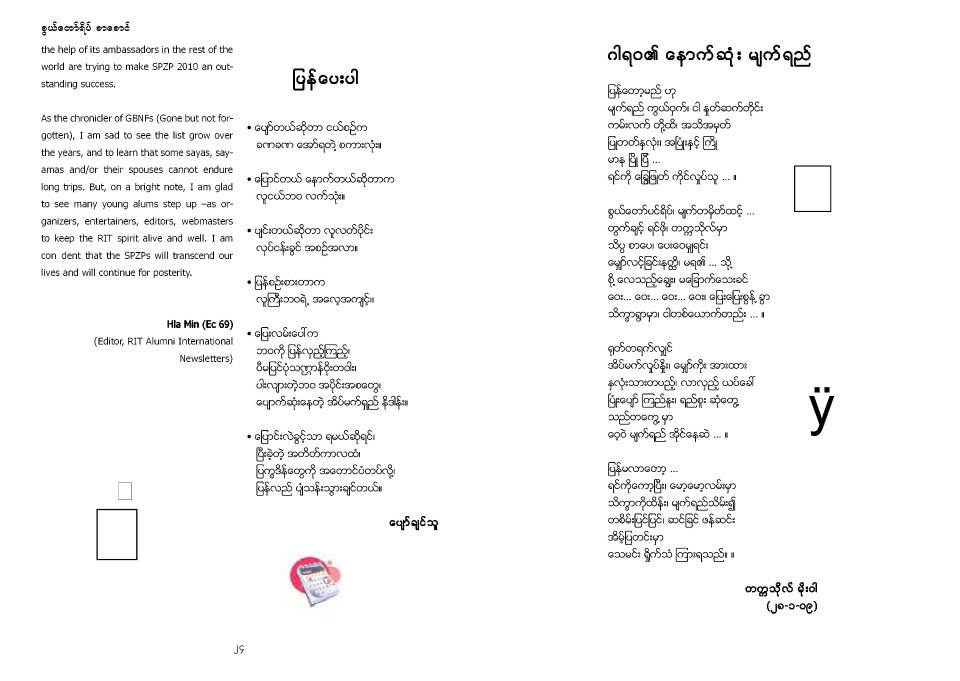
  • My heart aches and Tears well in my eyes …

    My heart aches and Tears well in my eyes …

    by Tekkatho Moe War

    Updated : June 2026

    Tekkatho Moe War

    ရင်ထဲမှာဆို့ပြီး မျက်ရည်ဝဲမိသည်.,…

    ငယ်ရွယ်စဉ်ကာလ က ချစ်သူနှင့် ကွေကွင်းခဲ့ရ၍ မျက်ရည်လွယ်လွယ်နှင့် မဝဲ…။

    ရွယ်စဉ်ကာလက မိဘနှင့် စောစီးစွာ ခွဲခွာသွားရ၍ အငိုအရှိုက် မလွယ်ခဲ့…။

    ယခု မူကား…..ဘ၀ နှင့် ယှဉ်လာတော့…..

    ရင်ထဲမှာ ဆို့ ပြီး မျက်ရည်ဝဲမိသည်…..

    အ ကြောင်းမှာ……

    သည်နေ့ မနက် ဘုန်းကြီး ငါးပါး အား ဒံပေါက် ဆွမ်းကပ်၊ ပရိက္ခရာ လှူဖွယ် ၀တ်ထုမြား လှူဒါန်း ပြီး ပရိတ် တရား တော် များ နာယူ သည်။

    ထို့နောက် ပတ်၀န်းကျင် ရှိ မိတ်သင်္ဂဟများနှင့် ဆွေမျိုးတို့ထံ သို့ ဒံပေါက် ဗူးများ အပို့ ခိုင်းလိုက်သည်။

    အိမ်ဆောက် နေဆဲ နေရာ တွင်ရှိနေ သော ပန်းရံ ၊ ဆေးသုတ် ၊ လက်သမား အလုပ်သမား အားလုံး အတွက်လည်း တစ်ယောက်တစ်ပွဲ ကျ ( တစ်ဗူးကျ) ပို့လိုက်သည်။ တ မြန်နေ့ကပဲ အလုပ်သမားတွေကို ကြို တင် မှာထားပြီး သား ၊ ထမင်းဗူး တွေယူမလာ ခဲ့ကြ နှင့်….

    နောက်တစ်နေ့ကျ ဒံပေါက် ပို့ ပေးမည် ဟု……

    အလုပ်သမားတွေက နားမ ထောင်။ ထမင်းဗူး တွေ ယူမြဲယူလာသည်။

    အ ကြောင်း မေးကြည့်လိုက်တော့…..

    မိမိ တို့ရဲ့ သား သမီး ဘယ်တုန်းကမှ ဒံပေါက် မစားဖူး လို့ အိမ်ကိုသယ်ပြီး ကျွေးချင် လို့ပါတဲ့…..။ မိမိတို့ က အိမ်ကယူလာတာကိုပဲ စားကြမှာ တဲ့။

    မိဘ မေတ္တာ ဘာ နဲ့ များ နှိုင်းလိုပါ သေးသလဲ ?

    စာရေးသူ ရင် ထဲ ဆို့ ပြီး မျက် ရည် ဝဲ မိ သည်။

    [မှတ်ချက်။ ။ ၂၀၁၃ခု ဧပြီလတွင် ရေးခဲ့သည့် စာစုအား ပြန်ဖေါ်ပြခြင်းဖြစ်၏ ]

    [ဒု မှတ်ချက်။ ယခုလတ်တလော ၂၀၂၂ခု အနေအထားအရ ဒံပေါက်အစား ကြက်ဥကြော် ၂လုံး ဟူ၍ ပြင်ဆင်ရေးသားလျှင် ပိုမိုအံဝင်မည်လား..]

    Translated by Hla Min

    My heart aches and Tears well in my eyes …

    In our younger days, tears would not fall easily even when one is forsaken by a lover.

    Later, even when one’s parents passed away (especially untimely), one sensed grief and might shed a few tears.

    A few years back (in April, 2013) we told the workers (masons, carpenters, painters …) not to bring their lunch boxes the following day, since we would be offering requisites (robes, medicine, Nawakama, Soon) and that they would have Dan Bauk (Birayani).

    The next day, the workers brought their lunch boxes as usual.

    Asked “Why?”

    They replied, “We want to take back Dan Bauk to feed our children, who have never eaten such delicacy.”

    My heart ached (thinking of the hard lives of the workers and their families).

    Tears were ready to roll down. (There were Tears of Sorrow followed by Tears of Joy – appreciating the metta and cetana of parents.)

    Note for the revised article: Should we substitute Dan Bauk with Two Eggs?

    Editor’s Notes

    Due to the pandemic, the former Rice Bowl of Asia is facing food shortage.

    Due to misdirected policies, the purchasing power of Burmese Currency has declined.

    Thanks to Ko Htoo and Ko Hta, many starving families have temporary relief in the form of Food Coupons (e.g by Mg Mar Ga, Shwe Zin Ma and their supporters).

    I earlier translated Saya’s article about the K1000 (gratitude gift) by his mother-in-law to purchase a bowl of Khauk Swe.

    Feedback

    Saya U Moe Aung wrote :

    Dear Ko Hla Min

    As a matter of fact, I really cherished the article you’ve rendered into English recently. By the way, DanBauk is Briyani or, Birayani, as per your usage above?

    Excellent rendition, cheers!!

    Book Present from Tekkatho Moe War

    Posts

    • EE Sayas
    • Poem
    • Tekkatho Moe War
    • Translation
    • U Moe Aung
  • Arzani Nay

    Arzani Nay

    by Hla Min

    Updated : June 2026

    July 19

    • Celebrated in Burma as Arzani Nay (Martyrs’ Day).
    • On July 19, 1947, Bogyoke Aung San & several ministers were gunned down.

    Memories of my cousin

    Daw Myint Thwe
    This image has an empty alt attribute; its file name is image-13.png
    Daw Myint Thwe
    • Daw Myint Thwe (Betty, now GBNF) was born on July 19, 1934.
    • She was celebrating her birthday on July 19, 1947 when the sad news were announced via the sirens. The birthday celebration was put on hold.

    Arzanis

    Bogyoke Aung San
    Arzani Nay
    • Bogyoke Aung San — Untimely death at the age of 32
    • Thakin Mya — Minister without Portfolio; “Deputy Prime Minister”; Leader of AFPFL faction
    • Deedok U Ba Cho — Journalist; Publisher
    • Mahn Ba Khaing — saved Bogyoke from the British police
    • Sao San Htun (Mongpawn Sawbwa) — died the following day at the hospital
    • U Ba Win — Elder brother of Bogyoke; Father of Dr. Sein Win
    • U Razak — Early graduate from National College; Principal of National School in Mandalay
    • ICS U Ohn Maung — Was asked to give a presentation on behalf of Saw San Po Thin
    • Yebaw Ko Htwe — Body guard of U Razak

    Absentees & Survivors

    • Three ministers (U Tin Tut, U Kyaw Nyein & Saw San Po Thin) did not attend the meeting on July 19, 1947.
    • U Tin Tut became a victim of political assassination shortly after Independence. He was already assigned to be Burmese Ambassador of the United Kingdom.
    • U Kyaw Nyein and U Ba Swe led Ti Mye (တည်မြဲ Stable AFPFL faction). They lost the No-confidence motion against U Nu and the Thant Shin (သန့်ရှင်း Clean AFPFL faction). The AFPFL split led to Caretaker Government (pseudo Coup d’etat).
    • Saw San Po Thin was on a tour of duty.
    • According to Phaw Kaung ဖေါ်ကောင် Ba Nyunt, he could not find U Nu (Speaker of the Chamber of Deputies) at his office.
    • A few ministers (Pagan U Ba Gyan, U Aung Zan Wai, Pyaw Bwe U Mya …) who were seated at the far side of the meeting table escaped.
    • U Ba Gyan is the elder brother of U Ba Shan (Secretary of Maths Curriculum Committee). He sat down on the floor but was holding the edge of the table. He had a gunshot wound on a finger.
    • U Aung Zan Wai was a signer of the Pinlon (Panlong) Agreement.
    • Pyaw Bwe U Mya’s spouse is a distant cousin of Bogyoke. His plan to have more security at the Secretariat was turned down by Bogyoke.
    • Bogyoke’s body guards include Natmauk Phone Kyaw (writer) and Bo Tun Hla (Tekkatho Nay Win, writer & actor). Bo Tun Hla and Deputy Secretary U Tin Ohn were in an adjoining room in the Secretariat. Dr. Tin Wa (son of U Tin Ohn) was interviewed by BBC Burmese program.

    Family members & relatives of Arzanis

    • U Aung San Oo, Aung San Lin (GBNF) and Daw Aung San Suu Kyi — children of Bogyoke
    • Dr. Khin Hla Cho & Daw Khin Myint Cho (UCC) — grand children of Deedok U Ba Cho
    • Daw Myint Myint Khaing (Maths Sayama) — daughter of Mahn Ba Khaing. She transcribed the tapes for the book about Saya U Ba Toke. Her spouse Dr. Khin Maung Swe (Tekkatho Maung Thin Char) interviewed Saya and wrote the book.
    • Sao Hso Holm & Sao Khai Pha — sons of Sao San Tun. Sao Hso Holm was First Class English Honors and had two Law degrees. He was a regular columnist for WPD Supplement on Modern Burmese Writings. In 1962, the Sawbwas requested his legal services. He was detained by the Revolutionary Council. After serving in the Education Ministry, he and his family migrated to Australia.
    • Saya Dr. Sein Win (Maths) — son of U Ba Win
    • U Tin Myint (GBNF) & U Hla Kyi — sons of U Razak. Both are Geologists and Old Members of RUBC.
    • Saya U Tin Maung Thein (EE), Francis & Saya Dr. Min Myint (Chem) — sons of U Ohn Maung
    • Daw Nge Ma Ma Than (UCC) — niece of Bogyoke & U Ba Win; She became a Prisoner of Conscience.

    Arzani Beikman / Martyrs’ Mausoleum

    In our younger days, we walked to Shwe Dagon Pagoda on Saturdays.

    We would occasionally stop by at the “Arzani Beikman” (Martyr’s Mausoleum). Nine Oke Gu’s were on display. Four Oke Gus flanked on each side of Bogyoke’s Oke Gu.

    Near the Beikman were two more Oke Gu’s : one for ICS U Tin Tut and another for Bo Sein Hman.

    Dr. Thane Oke Kyaw Myint’s article about the “Empty Tomb” mentioned that his Bagyee U Tin Tut was cremated at the special crematorium set up at Kyandaw Cemetery and that his ashes were scattered into a river.

    Fast forward.

    The “attempted massacre of Chung Doo Wan and his party” was carried out by three North Korean agents.

    One set of bombs did not go off and thus spared the lives of the Burmese contingent led by Minister U Aung Kyaw Myint. U Soe Min, Deputy Director of Myanmar Ah Than TV, was hit by shrapnel, but he survived. The award winning Kyemon reporter, who switched duties to cover the event, was killed.

    The higher authorities dictated the design of the new Arzani Beikman. No roofs were placed on top of the monolithic “Gu”. Some architects posted about their role in the project.

    Several writers noted that the then Number One never attended the ceremonies. A few hinted that he was a member of the Thakin Ba Sein faction of AFPFL and had some grudges for those from the Thakin Mya faction. He banned horse racing for the public and closed the Rangoon Turf Club. He supposedly had fun (e.g. attending derbies) most July in UK.

    Protocol change

    Over the years, the protocol changed. The families of the fallen leaders were no longer invited to State functions and dinners.

    First tier leaders did not attend the Martyrs’ Day functions. Only Second tier leaders showed up as token of duty.

    The family members of the Arzanis were not allowed time to pay physical respect. They were given time only to lay the “Lwan Thu Pann Khwe”.

    At one time, the public was barred from paying respect, and those who tried were detained.

    The Martyr’s day regained importance during the Pwint Linn era,

    Articles, books and documentaries

    I have read several articles (e.g. by Tekkatho Nay Win).

    I read the earlier edition of the book “Who killed Aung San?” by Kin Oung (former Naval Officer living in Australia). His father U Tun Hla Oung arrested Galon U Saw. His father-in-law U Thaung Sein (then Secretary of Insein Prison, later Justice) kept watch of U Saw so that U Saw and his team can be tried by a Special Tribunal headed by U Kyaw Myint (father of Dr. Thane Oke Kyaw Myint).

    I saw the BBC’s production titled, “Who REALLY killed Aung San?”

    Dr. Thane Oke Kyaw Myint wrote: On the BBC Programme, U Kin Oung, was interviewed. He is the author of three editions of “Who killed Aung San”. The fourth edition was more comprehensive as he had access to government documents thanks to freedom of information act. The last version was titled “Eliminate the Elite”.

    Kin Oung’s book

    Notes

    • I wrote “AUNG SAN” for Bogyoke’s Centennial in 2015.
    • Bo Tun Hla (Tekkatho Nay Win, Bogyoke’s PSO) wrote memoirs in the Arzani Nay Supplement.
    • The articles in Kyemon and several posts on the Internet groups reiterated the values of the fallen leaders.
    • Thakin Mya was considered as Deputy Prime Minister.
    • Deedok U Ba Choe was a distinguished journalist and a “Hin Lay Oh”.
    • Daw Marie Hla Taw drove Bogyoke to Mahn Ba Khaing’s place (preventing Bogyoke’s arrest by the police). Mahn Ba Khaing helped Bogyoke get back to the safe area.
    • Sao San Htun was hospitalized. He passed away (the following day) on July 20, 1947. There is a hospital in Taunggyi named in his honor.
    • U Ba Win was a dedicated teacher. He entered politics late to support Bogyoke (his younger brother & former student). His son Dr. Sein Win served as Prime Minister of the Burmese Government in exile.
    • U Razak (Principal) was highly regarded by staff & students of Amyotha Kyaung (National High School). Several sayadaws from Mandalay nominated him to be Minister of Education.
    • Ko Htwe (U Razak’s yebaw) was gunned down by the assassins during their exit.
    • According to Dr. Tin Wa, his father U Tin Ohn was in an adjoining room in the Secretariat. U Ohn Maung (who was in the room earlier) was requested by Bogyoke to make a presentation.
    • Per Dr. Thane Oke Kyaw Myint, gun shots were fired at his father’s house. The family members laid low and were not hurt. U Kyaw Myint was then Head of the tribunal that tried Galon U Saw. It was another episode in the “Who killed Aung San?”
    • Mounting evidence — from declassified documents — suggest the involvement of several British politicians and officers in the murder of Arzanis.
    • July 19, 1947 was a Dark Moment in the history of Burma. July 7 and July 8, 1962 would join as Dark Moments in Burma.

    Posts

    • Anniversaries
    • AUNG SAN
    • Dark moments in Burma
    • The Empty Tomb
    • U Kyaw Myint
  • Birthday Party in 2016

    Birthday Party in 2016

    by Hla Min

    Updated : June 2026

    Maurice Chee (M75) organized the party

    Dear Alumni (far and near)

    We are organizing a milestone birthday (soonkway) and appreciation celebration for our alumni icon U Hla Min at Theravada Buddhist Society of America (TBSA), Half Moon Bay on August 20, 2016 from 9:00AM to 3:00 PM.

    I will be sponsoring my signature Indian (Chicken) and Chinese (baby back spare rib ) Dan Pauk, Benny (Mohingar), Saya Maung Maung (samosa), Daw San San Swe (Chin-Paung-Kyaw), Ko Hla Kyi (Bannana Dessert), Ko Gordon Kaung and Lillian Kaung (a tray of desserts).

    You are welcome to sponsor, contribute and volunteer to help with the event.

    To provide adequate foods, please send in your RSVP to mcmauchee@gmail.com by August 7, 2016.

    Please come and join us to celebrate this special day with a mindful and cheerful party and we look forward to seeing you all to show our appreciation to U Hla Min for taking care of RIT newsletter as Chief Editor for the past seventeen years.

    Saya U Tin Htut will be flying in from Los Angeles to attend the RIT mini-gathering. Saya was a member of the Organizing Committee for SPZP-2000. He is a co-founder and Past President of BASES.

    Event address

    Theravada Buddhist Society of America (TBSA)
    17450 S. Cabrillo Highway, CA 94019
    Half Moon Bay
    CA 94019
    U.S.A
    Phone: 650-712-9165

    I have been asked whether they can bring friends and family members to Ko Hla Min’s birthday celebration at TBSA, Half Moon bay, on August 20, 2016. The answer is Yes, per the Myanmar tradition any ah hlu ah tan is open to all well beings (alumni, non-alumni, friends and dhamma friends of Ko Hla Min).

    With metta,
    Maurice Chee, M75

    Appreciation

    From Saya U San Tun (Sain Fone Wong, M59)

    Dear U Hla Min,

    We regret that we will not be able to join the celebration of your birthday at the Theravada Buddhist Society of America on August 20, 2016.

    There is no doubt that the attendance will be large and all the Burmese foods will be mouth-watering and delicious. We are sure all the attendees will have a good time and leave the celebration venue with a fond memory.

    We admire you for all the good deeds and sacrifices you have been doing over the past decade for the benefits to oversea Burmese immigrants not only in the bay area, Southern California, the United States and over various parts of the world. Keep up the good work!

    We expect to meet you at the annual Nor Cal RITAA dinner on September 17,2016. We wish you a happy birthday and our best regards to your beloved Daw Sein Yee.

    Sain Fone & Sylvia

    From Salim Mayet (M67)

    Dear U Hla Min,

    Wish you a very happy birthday. I admire you for all the hard work you have been doing for more than a decade to keep us informed about RIT sayagyis, sayamas and other members. Thank you.

    Salim Mayet (M 67)

    From Daw Mai Khin Nyunt (Rosie, ChE71)

    Dear Ko Hla Min,

    (a) May I wish to your beloved grand daughter “Grace”.

    HAPPY 2nd BIRTHDAY AND MANY MORE TO COME

    No doubt that she will become a smart little adorable girl. My grandson will be two years in coming Sept. He gives us hope and happiness. Each and every movement is interesting and adorable for us. I’m sure you and Ma Sein feel the same.

    (b) Many Happy Returns of the Day. Wish you could spend your life per your wish with Dhamma, family and friends.

    Have a nice and memorable gathering.

    With Metta,

    Rosie

    From Saya U Khin (Lucien Chen, RIT English, Taipei)

    Dear Hla Min,

    I have been an ardent “fan” of your RIT Newsletter updates ever since you included me in your mailing list at the suggestion of Des Rodgers many many years ago.

    You have made a great contribution to the RIT community by bringing the RIT alumni, sayas and sayamas together through your reports, messages, photos, etc. in the RIT Newsletter and also through your persistent efforts in carrying on the good work against all odds. Who is going to fill your shoes after you retire?

    I spent the best years of my life (1964 ~ 1968) at the RIT and I cherish the good old days I had at the RIT with my former colleagues at the English Department such as Saya Desmond Rodgers, Saya U Win Mra, Saya U Joe Ba Maung, Saya Sao Kangyi (deceased), Saya U Kyaw Lwin Hla, Sayama Daw Yin Yin Mya (Terry), Sayama Daw Charity Sein U, Sayama Daw Khin May Lwin (Muriel), Sayama Daw Tin Tin Oo (Toni), Sayama Daw Khin Saw Tint (Anne), among others; my former colleagues at other engineering departments and non-engineering departments such as Saya U Tin Maung (Civil), Saya U Christopher Maung (Civil), Saya Allen Htay (civil), Saya Dr K.C. Khoo (Chemical), among others; and my former students Tin Tin Myint (Emma), Khin Phyu Latt (Christine), Tin Tin Hla (Su Tin), Sai Kham Sang, Pamela Myo Min, George Lim, among others.

    I hope you will have a great time at the birthday party that will be hosted in your honor on August 20th at Half Moon Bay, California, by your former classmates, colleagues, sayas and sayamas.

    I shall also be wishing you a happy birthday in absentia from this part of the world, and hope you will have many happy and healthy returns of the day in the years to come.

    Sincerely yours,
    Lucian Chen (Saya U Khin)

    From Saya U Tin Htut (M60, Los Angeles)

    Yes, I will be glad to join you all in the celebration.

    Tin Htut

    From Saya U Maung Maung (George, ChE66) and spouse

    Dear Ko Hla Min,

    See you at the Half Moon Bay Monastery this Saturday.

    Thanks for your dedication and untiring effort in keeping us all in touch with alumni all around the world.

    Also wishing you the very best on your Birthday and many more to come.

    Best regards,
    George & Eng Eng Chan

    From Benny Tan (Yu Beng, M70) and Angelina

    Dear Ko Hla Min,

    You’ve spent years sharing your amazing memories and wonderful writing ability with all of us from RIT, YIT, etc.

    I like to thank you for sharing your wonderful RIT spirit and making a positive difference for so many people. Time is the most precious thing and you have generously shared your time and talents with all of us year after amazing year.

    Congratulations and all the best to you on your milestone birthday. May you live long, happy and healthy and may all your dreams and wishes come true.

    All the best,
    Benny and Angelina Tan

    From Gordon Kaung (M83) and Lillian Kaung (EC83)

    Hello Saya Hla Min:

    We wish you the happiest of B-days, and many many more to come!

    We will bring a bottle of premium iNapaWine for you and ama to enjoy at your B-day (we know ama will definitely enjoy our premium wine to stay healthy, and take good care of you).

    With lots of metta,
    Gordon and Lillian Kaung
    Wine Maker

    From Saya Dr. Chris Lee (L Tin Htun, EE59)

    Dear Ko Hla Min:

    From reading the recent emails in your “Update”, tomorrow will be a great “Happy Birthday Bonanza Party” for you. It will surely be a fun, exciting and memorable event for all attendees.

    We wish you a wonderful Happy Birthday and many many more returns.

    Best regards,
    Chris and Pam Lee

    U Myint Soe (M79)

    He emailed me three photos.

    U Soe Thu (C98)

    He e-mailed me the Group Photo taken in front of U Silananda Hall at Dhammananda Vihara, Half Moon Bay.

    U Chan Min, who rowed for the Institute of Economics, became a monk at Dhammananda Vihara after his retirement. His crew members include U Htin Kyaw (Peter) and U Soe Thinn. He also attended the computer classes at UCC in Rangoon.

    From U Tha Aung (M79) & Daw Kinsa Maw-Naing (ChE79)

    Dear Ko Hla Min,

    Happy Birthday and to say thank you for all your efforts in keeping RIT alumni connected globally. Even though we don’t have much to say, we always follow your updates.

    May you have a happy healthy long life and lots of ku-tho.

    With metta from Tha Aung & Kinsa

    Editor’s notes :

    Appreciate your work hosting mini reunions in Canada and for volunteering as SPZP2016 representatives. Sayamagyi Daw Tinsa Maw-Naing was my English teacher in I Sc(A).

    From Saya U Htun Aung Kyaw (ChE67)

    Happy Birthday Ko Hla Min and cutie pie!

    I appreciate all you hard work and dedication to RIT Alumni newsletter.

    Sorry I cannot attend the event.

    Thanks for your appreciation

    Dear Sayas and Colleagues,

    It is truly amazing to be appreciated by sayas and alumni. The following are examples.

    Sayagyi Dr. Aung Gyi & Daw Emma called from Canada to wish my Cutie Pie and me. They also sponsored “Tohu Thoke တို့ဟူးသုတ်” for the attendees. Sayagyi sent Maurice his congratulatory message for me to be read at the soon kyway gathering. See the following section for details.

    Saya U Tin Htut flew in from Southern California.

    Ko San Lin (M 87, “Maung Lu Pay”) took time off from work to attend the soon kyway.

    Ko Kyaw Myint (M 83) delegated his “Flower shop” to his assistant to attend the soon kyway.

    Ko Myint Soe (M79), who recently had knee surgery, requested Ko Aung Myint Oo (EC 84) to give him and his spouse a ride to the soon kyway.

    Due to tight multiple schedules, Angelina & Benny Tan (M 70) came in separate cars so that Benny can have more time with his sayas and colleagues.

    Saya U Tin Maung Nyunt (M 60) will celebrate his 80th birthday in December. Saya only drive local short distance, so he asked Ko Thein Naing (Patrick) to give him a ride.

    Daw Mu Mu Kin, spouse of Saya Allen Htay, had tears in her eyes. She said that Saya would wish to be at the RIT mini-gatherings. She gave me silk neck ties that were bought (but never worn) by Saya. She shares the birthday on August 18 with my Cutie Pie.

    Maurice ordered a genericcake to celebrate Daw Mu Mu Kin, Ko Myint Swe (EP 74) and other August born.

    Maurice hand crafted a custom “birthday greetings” card with extracts from the birthday greetings from the RIT updates. The messages from Saya Dr. San Hla Aung, Ko Tha Aung & Ma Kinsa Maw-Naing came in too late to be incorporated into the gigantic card.

    Maurice spent countless days organizing the event. Following the tradition of his late father Uncle U Wah Kyu, he also prepared custom birayani (dan bauk ဒန်ပေါက်).

    Charlie Tseng (EC70) and Diana Tseng (ChE71) ordered two large birthday cakes.

    The full list of food donors and sponsors is maintained by Maurice.

    Johnson Lim (cousin of Robert San Lin) needs a human walking “cane” (his beloved spouse). They are regular food donors at most events.

    Daw Kyu Kyu Lin (T75) rarely attends gatherings. She made an exception this time. She brought “Kyee Oh See Kyet ကြေးအိုးဆီချက်”. She also gave a ride to two Textile grads: Ko Than Htay (T75) and Ma Bibsu (T76).

    Sayama Daw Khin Khin Chit Maung rarely attends gatherings. She made an exception this time. She and Saya U Myo Min fetched Saya U Tin Htut (her elder brother) at the air port and also brought him to the Half Moon Bay monastery.

    Gordon Kaung (M 83) and Lillian Kaung (EC 83) drove close to 3 hours from Napa. They also brought a bottle of iNapa Premium wine and desserts.

    Saya U Myat Htoo (C68) spent a decade or so as President of TBSA (Theravada Buddhist Society of America) at Half Moon Bay monastery. Today was a sort of “welcome back” for him and Ma Ku (Daw Hnin Maung Maung).

    Saya U Maung Maung (George, ChE 66) is a Past President of NorCal RIT Alumni Association and a founding member of RIT Alumni International. He and Daw Eng Eng (sister of Saya U Myat Thwin, ChE 66) brought samoosa.

    There were a few young and not so young alumni at the event. They include Ko Soe Thu (C98) and Ma Thandar.

    Saya U Nyo Win (M65) and spouse were caught in the traffic.

    Saya U Thein Aung (Met72) and Sandra (M76) brought their daughter.

    Dr. Myint Thein (M73) talked about his “Htaik Htar ထိပ်ထား” Daw Nyo Nyo Win (T73) and provide examples of “Applied English” (e.g. “air cut” for stroke).

    Award

    This image has an empty alt attribute; its file name is 637-a.jpg
    Award

    Received appreciation award for helping the sayas and alumni to get connected via the RIT Alumni International Newsletter and Updates since 1999.

    It was the second award from the RIT Community.

    I received the first award at SPZP-2000 along with Maurice and KMZ.

    Posts

    • Alumni
    • Gatherings
    • Kye Zuu
    • Memories
  • Jubilees & More

    Jubilees & More

    by Hla Min

    Updated : June 2026

    Jubilees

    • Silver Jubilee (25th Anniversary)
    • Golden Jubilee (50th Anniversary)
    • Diamond Jubilee (75th Anniversary, 60th for Coronation)
    • Centennial (100th Anniversary)
    • Sesquicentennial (150th Anniversary)
    • Bicentennial (200th Anniversary)
    • Tricentennial (300th Anniversary)
    Golden Jubilee Present from KMZ

    Rangoon Institute of Technology (RIT)

    • The Faculty of Engineering was briefly known as Burma Institute of Technology (BIT) after moving to the Gyogone Campus.
    • In 1964, under the then new Education System, BIT was renamed as RIT.
    • RIT became an autonomous institute with its own Rector.

    SPZP and Alumni Activities

    • Saya Pu Zaw Pwe is a noble tradition.
    • I am honored to be a core organizer of the First RIT Grand Reunion and SPZP in San Francisco, California, USA in October 2000.
    • I have supported the subsequent SPZPs and several RIT-related projects and activities.

    Last Journeys

    • I am honored to have been a Master of Ceremonies for the Last Journeys of Dr. Htay Lwin Nyo and Sayadaw U Silanandabhivamsa.
    • I was also requested to give eulogies.

    Jubilees

    Rangoon University

    • It was established in December 1920 with two constituent colleges : Rangoon College and Judson College.
    • Saya U Pe Maung Tin served as the first native Principal of Rangoon College.
    • Saya Dr. Htin Aung served as the first native Rector of Rangoon University.

    RU Golden Jubilee

    • The RU Golden Jubilee was celebrated in 1970.
    • Saya Dr. Aung Gyi and Saya U Thet Lwin are among the core organizers of the RU GJ Celebrations.
    • I had a minor role as a volunteer for the “Zay Committee”.
    • RIT Ah Nu Pyinnyashins took part in the Entertainment Program. The “Htee Yein” and “Swel Daw Yeik Ah Nyeint” were attractions. The term “Swel Daw Yiek” became synonymous with RIT and the engineering schools which preceded RIT.
    • The Commemorative Magazine reprinted Bogyoke Aung San’s translation of “Invictus”. The Magazine also had an account of U Hla Maung, who graduated with B.Sc. (Engg) degree in 1928.

    RU Centennial

    • It was celebrated in 2020.
    • Saya U Moe Aung (Tekkatho Moe War) and fellow authors (e.g. Shwe Ku May Hnin) have published “Collections of Poems and Articles” to commemorate RU Centennial.

    Myanmar Engineering Education

    • Engineering Education in Burma started in 1924.
    • The History of Myanmar Engineering Education Project compiled and published HMEE-2012 in time for SPZP-2012. Saya U Aung Hla Tun was the Team Leader.
      U Ohn Khine (M70) and I compiled the CD Supplement for the book.
    • HMEE-2018 is a follow up Project to revise the HMEE-2012 book and publish new material (e.g. History of the Engineering Departments). However, after Saya’s demise, the project is in limbo.
    • The 90th Anniversary was celebrated in 2014.
    • The Centennial was celebrated in 2024.

    Rangoon Institute of Technology

    • The New Education System which made RIT an autonomous Institute with was established in November 1964.
    • Saya U Yone Moe served as the first Rector of RIT. He was succeeded by Saya Dr. Aung Gyi in 1971.
    • In 1964, there were eight Engineering Departments : (1) Architecture (2) Chemical (3) Civil (4) Electrical (5) Mechanical (6) Metallurgy (7) Mining (8) Textile.
    • Supporting Departments were established at RIT. They include (1) Burmese (2) Chemistry (3) English (4) Geology (5) Physics.
    • For some time, there were Visiting Lecturers from USSR and selected Departments of other Universities and Institutes.
    • RIT was renamed as YIT (Yangon Institute of Technology). YIT in turn became YTU (Yangon Technological University).
    • The Golden Jubilee was celebrated in 2014.
    • The 60th Annivrrsary was celebrated in 2024.

    RIT Spirit

    • The sayas and alumni are known for the “RIT Spirit” which survived the brutal crushing in the Adhamma Era.
    • RIT was considered a Dying Breed. The school was branded as “Thabone Kyaung”. The Swel Daw Bins were banished from the Gyongone Campus. Several equipment were taken away to set up a Military Engineering school at DSA.
    • The alumni wanted to pay back the metta and cetana of their mentors.
    • The First RIT Grand Reunion and Saya Pu Zaw Pwe was held in California, USA in October 2000. I wrote the “SAYA PU ZAW PWE” poem. It has been reprinted in several RIT-related publications.
    • The subsequent World Wide SPZPs were held in Singapore (in December 2002, April 2007 and December) and in Yangon (in December 2004, December 2012 and December 2016).
    • Swel Daw Yeik Foundation was established in 2013.
    • The Shwe YaDu Celebrations were held in 2014.
    • RITAA is helping YTU in several ways. It is helping to raise the fund for YTU Library Modernization Project (which is a requirement to get YTU accredited at the Regional level and beyond).

    Stories to illustrate the RIT Spirit

    • I am an amateur historian and a folklorist.
    • I have a dream to compile stories to illustrate the friendly and indomitable RIT Spirit.
    • I will use the articles that were contributed to the RIT Alumni Newsletter and Updates.
    • Sayas and alumni could provide new and old stories (e.g. published in the various Magazines, Sar Saungs, Thadin Zin, Wall Posters, Cartoon Box, Exhibitions).
    • While we have reasonably good health and memory, we plan to pay back to our alma mater.

    My Facebook Pages and Web sites

    I have three kinds of Facebook Pages :

    • One for my acquaintances
    • One for family members, relatives and close friends
    • One for knowledge sharing (e.g. Life Long Learning) and/or archiving my posts

    Not all postings are of equal importance. They can be grouped as follows:

    • News & Updates
    • SPZP-2012 : Count down and Event
    • Shwe YaDu Golden Jubilee Celebrations
    • SPZP-2016
    • Swel Daw Yeik Foundation
    • Alumni Associations in Myanmar & California
    • History of Myanmar Engineering Education
    • Memoirs (e.g by U Zaw Min Nawaday (EP70) & U Ohn Khine (M70))
    • Golden Jubilee (GJ) Magazine published by the Class of 70 & 71
    • 69ers
    • Class Photos
    • Brief History of the RIT Departments by Sayagyis
    • Excerpts from the archives of SPZP-2000
    • Successors of RIT (e.g. YIT, YTU)
    • Where are they now?
    • GBNF : Sayas and alums

    Hope the postings will be of interest to historians — professional or amateurs.

    I have two web sites.

    SPZP and Alumni Activities

    Paying respect to Sayas for their metta and cetana is a tradition that is unique to Burma/Myanmar.

    The tradition is alive and well.

    There have been SEVEN world wide SPZPs :

    • SPZP-2000 (US)
    • SPZP-2002, SPZP-2007, SPZP-2010 (Singapore)
    • SPZP-2004, SPZP-2012, SPZP-2016 (Yangon)
    • SPZP-2020 (scheduled for December 26, 2020 in Yangon) was canceled due to COVID-19 pandemic

    Many alumni are active in the following:

    • SDYF (Swel Daw Yeik Foundation)
    • RITAA (RIT-YIT-YTU Alumni Association)
    • MES (Myanmar Engineering Society)
    • MEC (Myanmar Engineering Council)

    HMEE Projects

    • “History of Myanmar Engineering Education” was published in time for SPZP-2012.
    • The project’s initiators included Saya U Soe Paing, Sayagyi U Ba Than and several sayas and alumni. See Acknowledgement in the Book.
    • Saya U Aung Hla Tun (GBNF) and team (including me) compiled the book.
    • The draft for the first two sections were prepared by Saya U Soe Paing & team.
    • U Ohn Khine (M70) translated Section 1 and summarized Section 2. His work have been revised by Saya U Soe Paing.

    Saya U Aung Hla Tun suggested that the Book should be revised/updated (e.g. every five years or so).

    YTU Library Modernization Project

    • The project was established as a requirement for the Accreditation of YTU.
    • Donations — large and small — came in. An alumnus had made monthly donation of One Lakh kyats for over two years.
    • U Khin Maung Tun (T78), Daw Myint Myint (C69), Saya Dr. Myo Khin (C70) and Daw Mya Nwe (Winsome, C73) and Saya U Tin Htut (M60) donated K100 Lakhs (or more) for the Project.
    • Thanks to Ma Nan Khin Nwe (83 Intake) and the fund raising team. The team had periodically published the list of donors.

    Health Care

    • There were several HCF (Health Care Funds).
    • The balance of “Steeve and Helen Kay Health Care Fund for RIT sayas and sayamas” has been handed over to Swel Daw Yeik Foundation.
    • The balance of “U Khin Maung Tun’s family for providing Vision Care to eligible sayas and sayamas” have been handed over to Swel Daw Yeik Foundation.
    • SDYF provides limited financial assistance to eligible RIT sayas & sayamas for health care (e.g. hospitalization, frequent visits to clinics).
    • SDYF also provides Annual Medical and Vision Checkup for eligible sayas & sayamas.

    RIT related Facebook pages and web sites

    • RIT Updates
    • Swel Daw Yeik Foundation
    • RIT-YIT-YTU Alumni Association
    • Google Group for Combined 1st BE Intake of 64 and 65
    • Google Group for RIT Updates
    • hlamin.com
    • lmyanmar2021.wordpress.com
    This image has an empty alt attribute; its file name is spz-01.jpg
    SPZ 1
    This image has an empty alt attribute; its file name is spz-02.jpg
    SPZ 2

    Last Journeys

    • I had the opportunity to serve as Master of Ceremonies at two last journeys.
    • The first was for Dr. Htay Lwin Nyo (EP 74), part time Professor at San Jose State University. Ko Khin Maung Zaw (EC76) set up the commemorative web pages on http://www.ex-rit.org. I have excerpted some in my Trivia posts.
    • The second was for Sayadaw U Silanandbhivamsa, Rector of the International Theravada Buddhist University.
    • I volunteered as Book Committee member and Contributing Editor for “Paying Homage to Saya U Silanananda.
    • There is a 2-set DVD of Saydaw’s last journey and can be found as a supplement for the Commemorative book.

    Simple Joys of Living and Paying Back

    • We are deeply honored to the sponsors, donors,volunteers, and well-wishers for the soon kyway on August 20, 2016 at Half Moon Bay monastery.
    • Special thanks to sayas and alumni near and far who took special time to express their appreciation to the messenger turned amateur historian.
    • We are simply following the practice of our beloved philanthropic ancestors who donated for the construction and maintenance of hospitals, schools, pagodas, zayats, free dispensaries.
    • I have donated thousands of hours trying to get the sayas and alumni get connected electronically and physically, and also share my experience as a Life Long Learner.
    • Ko Thaung Sein (Steeve Kay, EC70, Multiple Golden Sponsor of SPZPs) said, “Do not retire. Re-tire.” He mentioned that if we can serve the sayas and alums for two decades, we should be satisfied since RIT is a dying breed.
    • I have completed 26 years as a founder and editor of RIT Alumni International Newsletter.
  • RIT Days (1965 – 70)

    by Zaw Min & Ohn Khine

    Updated : June 2026

    Editor : Hla Min

    Ko Zaw Min (EP70)

    Zaw Min (Standing 2nd from Right)
    • Matriculated from St. Albert’s High School, Maymyo in 1964.
    • Had a very high ILA (Intelligence Level Aggregate)
    • Admitted to the first ever 1st BE as Roll Number One.
    • Selected RIT Luyechun for the 1965 Summer Camp at Inlay.
    • His outspoken remarks about the Camp drew the ire of higher authorities.
    • Graduated with Electrical Power in 1970.
    • After working in the industry, he moved to the USA.
    • Studied Electronics in the USA
    • Added “Nawaday” to his name.
    • Shared his memories of RIT to the Google group of “the Combined Intake of 1st BE for 1964 and 1965”.

    Ko Ohn Khine (M70)

    Ohn Khine
    • Matriculated from St. Peter’s High School, Mandalay in 1964.
    • Took a combination of Science and Arts subjects
    • Had good ILA score to be admitted to RIT.
    • Graduated with Mechanical Engineering in 1970
    • Worked for Heavy Industries Corporation
    • Created and maintained the the Google group of “the Combined Intake of 1st BE for 1964 and 1965”.
    • Volunteer for SPZP-2012, SPZP-2016, HMEE-2012, HMEE-2018, Swel Daw Yeik Foundation and several RIT-related activities.
    • Gave me rides during my visits to Yangon.
    • Co-author
    • Filled the “missing pieces” in Ko Zaw Min’s accounts.

    Ko Hla Min (EC69)

    Hla Min
    • Matriculated from St. Paul’s High School in 1963.
    • Stood 7th in the whole of Burma
    • Received Collegiate Scholarship
    • Top in the Science Option of I.Sc.(A) examination
    • Admitted to the first ever 2nd BE in November 1964 as Roll Number One.
    • Selected Luyechun for the Inlay Khaung Daing Camp in the Summer of 1965
    • Graduated with Electrical Communications in 1969.
    • Started the “RIT Alumni International Newsletter” in 1989 and have maintained it for 26 years.
    • Administrator or Moderator of selected Facebook pages.
    • Own web site
      hlamin.com
    • Had the honor to edit the draft version of “Memories by Ko Zaw Min Nawaday & Ko Ohn Khine” which was first posted as Google Docs for the Combined 1st BE Intake of 64 and 65.
    • Published the edited document as a series of articles in “RIT Alumni International Newsletter and Updates”.

    Introduction

    Intakes in 1964

    There were three intakes at the Rangoon Institute of Technology (RIT) when the new education system started in 1964. Eligible students were admitted to the 1st BE, 2nd BE and 3rd BE classes. They are also known as

    • Class of ’70 (1st BE Intake in 1964)
      Matriculates were admitted using the ILA
    • Class of ’69 (2nd BE Intake in 1964)
      Those who had passed I.Sc.(A) with Science Option were admitted in order of merit
    • Class of ’68 (3rd BE Intake in 1964)
      Those who had passed I.Sc.(B) with Science Option were admitted in order of merit

    The RIT Rector was U Yone Mo and the Registrar was U Soe Thein.

    The Class of ’70

    It comprised of the first year intake students in 1964. There were 494 registered students, of which 67 were female. Most graduated in 1970. Some took sabbatical for a year or two. A few left RIT before graduation. The GBNF (Gone But Not Forgotten) reached 138 at the end of May 2025.

    Matriculates entered the first ever 1st BE classes. ILA (Intelligence Level Aggregate) was used for the vetting of applicants. In the system, a score of 1 to 20 was assigned to map the marks for each subject. The ILA score (rather than the raw marks) was used to determine the eligibility of the students admitted to an institute.

    Under the old education system, matriculates had to attend I.Sc. (A) classes. There were restrictions on the subjects taken at Inter classes to be eligible for Faculty of Engineering, Faculty of Medicine, etc. For example, one must pass the I.Sc. with at least 50 marks in Maths, Physics and Chemistry to attend the 1st Year Engineering Classes (3rd BE in the new system).

    Under the new education system, there were no restrictions on the subjects taken in Matric exam. As such, many students who passed Matric with combined Science and Arts subjects and even those with pure Arts subjects were able to attend RIT. For example, Ko Ohn Khine passed the Matric exam with an odd combination of Maths, Chemistry and Geography.

    Posts

    • 1st BE (1964 – 65)
    • 2nd BE (1965 – 66)
    • 3rd BE (1966 – 67)
    • 4th BE (1967 – 68)
    • 5th BE (1968 – 69)
    • 6th BE (1969 – 70)
  • Burmese Music

    Burmese Music

    by Khin Zaw

    Updated : June 2026

    U Khin Zaw (“K”), Director, Burma Broadcasting Service

    U Khin Zaw

    Article written in 1958

    What is Burmese music like? To ears accustomed only to Western music, ours may at first be a little disconcerting. It may seem more like a medley of spontaneous, unrelated sounds than a careful composition. And its rhythmic patterns may be hard to follow at first hearing. But I think that if you will listen to some of it a few times—and the Burmese Folk and Traditional Music record in the Ethnic Folkways Library offers a good sampling—you will discover that ours is actually a fully developed musical art. Historically, the traditions of Burmese music go back at least fifteen hundred years. For we know from a fascinating description in a Chinese chronicle of the year 802 A.D. that our musical instruments, and compositions for them, were already highly perfected at that time.

    To begin with the fundamentals, let us first analyze our Burmese scale. It sounds as though it might have quarter tones and microtones, but actually it does not. It is the same as your European diatonic scale, but with this difference, that the fourth and seventh notes are both “neutral,” so that the succession of notes is different. The makers of our early instruments did not provide for the accidentals in an octave. Yet our music does modulate from the tonic to the dominant—say, from C major to G major—and frequently from the tonic to the subdominant — C major to F major, and back again. But we have no F sharp, or B flat. What we do is to put our F halfway between F natural and F sharp, and our B halfway between B flat and B natural.

    Since we do not have the chromatic scale, our music may sound a bit flat to Westerners. Another basic point of difference is its essentially two-dimensional nature. The development of harmony has given Western music enormous depth. Because our instruments were not suitable for harmony, our music has instead developed a complexity of pure melodic patterns. You derive your musical satisfaction from marching in depth with chords. We have to get ours by going in the single file of notes, twisting and turning in graceful patterns. Even our drums play tunes. Thus our putt waing, a circle of tuned drums, is not merely for percussion, but plays a melody itself.

    The rhythmic systems of Burmese music may have been determined by the nature of our language, which is not accentual but tonal. Rhythm in English depends largely on differences of emphasis on the syllables in the words and the words in the sentence. Burmese verse depends rather on the schematic arrangement of words with certain sounds recurring at fixed points. This means that timing and caesuras have great importance. In fact, in our singing the caesuras are even more important than the syllables or words in each measure. Often the singer keeps time with a pair of tiny bells and a small clapper in his hand.

    The most usual time in our music is a simple duple or a simple quadruple beat. In the duple, the bells and the clapper go alternately. In the quadruple there is a rest on one or the other of the middle beats. No great importance is attached to the variation. In one and the same piece the quadruple may sometimes change into the duple, or become faster or slower. But never must a musician get out of rhythmic time. So far as I am aware, compound time has never been used in our music.

    Turning to the instruments which are now most in use, we must give pride of place to the graceful, boat-shaped harp, the thirteen-stringed saung kauk (see Plate 23 in art section). The Burmese orchestra is called a saing. Its ensemble includes the picturesque putt waing, with the player seated in his circle of drums, a circle of gongs (the kyee waing), the big putt ma drum, cymbals, clappers, and wind instruments such as the hnè (like an oboe) and the palwé (a bamboo pipe). The saing accompanies our stage performances (zat pwès), our ritual dances (nat pwès), and others of the many festal occasions that enliven Burmese life.

    Even though Buddhist doctrine has sometimes frowned on music as appealing to the senses, we Burmese must be one of the most music-loving peoples in the world. Folk music is very much alive in our villages, where several interesting kinds of drums are especially popular.

    The bucolic dohpat (which can be heard on Side II, Band 4 of the Folkways record) presides over village roisterings and goes along with itinerant singers. The pot-shaped ozi, boon companion of the bamboo flute, may be trusted to go off on such a spree of tune and rapid rhythm as to make one’s limbs twitch to dance. The big bongyi (Side II, Band 3) is lord of the paddy fields, where its thundering rhythm eases the toil of those who are transplanting the rice. The byaw drum (Side I, Band 2) has its day in such home ceremonies as our almsgivings and shinpyu head-shavings.

    Our classical music is far more elaborate than the instinctive rural drumming and singing, and scholars usually divide it into six main categories, most of which are represented on the Folkways record. But I must not risk tiring you with too many strange names and will say only that these classical compositions are usually songs, ranging in theme and tone from simple lyrics to courtly measures eulogizing the king or the royal city and solemn chants composed in adoration of Lord Buddha.

    One of the most important events in the history of Burmese music—and all Burmese culture for that matter— was the second conquest of Siam by King Hsinbyushin in 1767. It is pleasant to think that although our wars with Siam were generally motivated by the Siamese king’s white elephants, we brought back something which was by no means a white elephant to us! Craftsmen, entertainers, musicians, dancers numbering many hundreds were imported from Siam to Burma, and they brought about a vast augmentation of our culture. New life and new forms were infused into our theater, our classical dance style is far closer to that of Siam than, say, to that of India, and a principal type of our classical song, the yodaya (Side I, Band 3 and Side II, Band 8), takes its name from Ayuthia, the old capital of Thailand.

    In the years following this Thai “invasion,” there lived a remarkable man named U Sa, a veritable Leonardo da Vinci, who was poet, musician, playwright, soldier, diplomat, and statesman all combined. In a long lifetime, he was constantly creating and adapting new literary, dramatic, and musical forms, and over two hundred of our finest songs are attributed to him. Another important school of classical music comes down to us from the Mons; their beautiful songs were long ago enshrined in a collection called the Mahagita.

    Finally, some of the purest and oldest forms of our traditional music are preserved in the propitiatory rituals of rural Nat worship. As Dr. Htin Aung explains in his essay, these spirits from the old animist cults have been welcomed into Buddhism, and the country folk still honor them with wayside shrines, or by hanging a coconut turbaned with a piece of red and white cloth from the king post of the house, to which offerings of fruit or cooked rice are made with music and dancing.

    Now what has been happening to Burmese music since the radio and the cinema have vastly magnified the influence of Western music upon us? For my purist taste, far too much! But, to speak for the other side — and I fear they are numerous — let me bring in the views of my much admired and musically learned friend Ko Thant of Mandalay.

    Ko Thant is scornful of our Burmese instruments because they lack the precision of the Western ones. But does he stop to consider that, in a sense, their very precision has made a slave of the instrumentalist? Our Burmese players attain extraordinary virtuosity with their crude instruments — making them the slaves — and achieve the most subtle shadings in moving from one note to the next. And because they do not read from a written score, but play entirely from memory, our musicians create the music anew at each playing, with full scope for the expression of personal art.

    Ko Thant likes the strict discipline of the Western orchestra and condemns the free-for-all of the Burmese saing. He rails at Sein Beda for tuning a recalcitrant drum in the middle of a concert. Ile does not realize that this really does not matter, that Western music is a compound, whose object is harmonious coalescence, whereas ours is a mixture, the pleasure lying in the artful mixing of sounds. A European listens for the total effect of all, a Burmese for the individual effect of each voice in the orchestra.

    In our music, accompaniment to singing does not mean a harmonic background to vocal melody, but a partnership in patterns. In and out of the framework of musical time and melodic direction provided by the instruments, the vocal part weaves another, related pattern and direction. So long as they keep to the framework, both singer and player may embellish and improvise. It is skill in weaving sounds, rather than voice production, which determines the quality of the singer.

    Ko Thant maintains that music is an “international language” and that we should allow Western instruments and melodies to overwhelm us so that our musicians may speak the same musical tongue as the rest of the world. But does not this idea stem from a basic misconception of the nature of art? Is not the individual voice the really important thing? And will not the community of world culture be far richer and more stimulating if each regional culture seeks to develop its own traditions?

    And since we already have improvisation in our music do we really need Western jazz and popular songs? But perhaps that question has already been answered: we have them. As long ago as 1940, Daw Than E wrote this little sketch on that subject:

    An old-fashioned Burmese gentleman was visited by a radio salesman. He settled down expectantly as the set was hooked up; perhaps he would hear the soothing strains of a song from the Mahagita. But what came out shocked him; he looked puzzled. “That’s Johnny, the Burmese yodeller,” explained the salesman, “the public adores Johnny; the new trend in Burmese music, you know. Oh, you’ll hear wonderful things with this set. To give you an idea, there’s Good Morning Tin Tin singing Thama-wa-yama to the tune of John Brown’s Body and Eingyipa to a rumba called Mañana mañana. They have Bei mir bist du schoen and Isle of Capri with Burmese words and even the old favorites like Good King Wenceslas —-that’s a duck of a tune —and Come to the Savior, make no delay . . .” At this point the old Burmese gentleman became unconscious.

    Yes, we have been flooded with Hawaiian guitars, hillbilly banjos, and Harlem saxophones. Where will it end? As director of broadcasting in Burma I am trying to fight the menace. There are good modern pieces in the Burmese vein still being produced, and a number of popular songs based on our own folk tunes have become hits. And to preserve our old music—since little of it has been written down—we have been making tapes of the best classical pieces and folk songs.

    For certainly our Burmese music is worth preserving, just as Gujarat painting, Khmer architecture, Chinese porcelain, and Mayan sculpture are worth preserving. The tragedy in those cases is that the art of the craftsmen has been lost. We cannot let that happen. We must not hope vainly for the evolution of a style that will be neither Burmese nor Western. Rather, we must go back to the purest traditions of our own music—relearn them, safeguard them, and present them to the world in a way the world can understand. For there is a strange beauty in the remote flowering of Burmese music

    Updates

    K & family members
  • May

    May

    by Hla Min

    Updated : May 2025

    Background

    • 3rd month of the old Roman Calendar
    • 5th month of the Gregorian Calendar.
    • Has 31 days

    Events

    May 1

    • May Day in some countries

    May 5

    • Cinco de Mayo
    • Holiday in Mexico
    • Celebrated by Mexican Americans

    Second Sunday in May

    • Mother’s Day (in the USA)

    Miscellaneous

    • April flowers bring May flowers (Saying)

    SPHS (May 1963)

    • The Matriculation Only examination was held in May 1963
    • In the previous years, the examination was for High School Final and Matriculation (combined). Those who matriculated are eligible to study at the university.
    • SPHS students were outstanding in the Matriculation of 1963.
      There were five in the Top Five, seven in the Top Ten and ten in the Top Twenty. The following were awarded Collegiate Scholarship.
      Khin Maung U (First)
      Min Oo (Second)
      Myo San (Freddie, Third, GBNF)
      Nyunt Wai (Victor, Fourth)
      Thein Wai (Fifth)
      Hla Min (Seventh)
      Aung Kyaw Zaw (Johnny, Ninth)
      Maung Maung Kyi (Eleventh, GBNF),
      Aung Thu Yein (Brownie, Thirteenth, GBNF)
      Khin Maung Zaw (Frank, Seventeenth)
    Top Matriculates from SPHS63
  • 1963 – Present

    1963 – Present

    by Hla Min

    Updated : June 2026

    Events

    Many events are covered in my posts & Newsletter Updates.

    The following are some highlights for 1963 – 2025.

    • Spent five years studying at RIT.
    • Have spent 26 years paying back to my alma mater and my mentors.
    • Thanks to my family members for their support.

    1963

    Matric Exam

    • Took Matric Only exam in May
    • Stood 7th in the whole of Burma. Honored at a ceremony at St. Paul’s High School.
    7th in Burma
    • Won the Collegiate Scholarship of 75 kyats a month
    Scholarship Winners
    • OPA invited us to the Annual Dinner on June 30.
    OPA Dinner
    • A newspaper clipping describing the Dinner is shown below. From R to L : Khin Maung U, Min Oo, Myo San, Nyunt Wai, Thein Wai, me & Maung Maung Kyi
    • SPHS had five in the Top Five, seven in the Top Ten and ten in the Top Twenty in the Matric exam of 1963. Myo San (Freddie, 3rd), Maung Maung Kyi (11th) and Aung Thu Yein (13th) are now GBNF.
    • All our SPHS teachers except Saya Beatson (Physics, Boy Scout) are GBNF. Saya became a monk.

    Inter A

    • Attended the last ever I.Sc.(A) classes at Leik Khone.

    Rowing

    • Joined Rangoon University Boat Club with fellow Paulians Maung Maung Kyi (GBNF), Kyaw Wynn and Willie Soe Maung (GBNF). Our crew was Runners up for the Senior Novices. We were awarded Full Green.
    • Citing Security Concerns, the RUBC 40th Anniversary Regatta was canceled. Following the 7th July Anniversary protests, the University courses except Medicine & Engineering were suspended. The hostel students were ordered to return to their homes.
    • Sithu U Tin (President, GBNF) decided not to cancel the RUBC 40th Anniversary Dinner at Orient Hotel in Kandawgyi. Several members are now GBNF.

    1964 – 1969

    • The I.Sc(A) exam was held at the High Schools.

    RIT

    2nd BE
    • Attended first ever 2nd BE class at Rangoon Institute of Technology in November 1964.
    • I was admitted as the Top student based on the I.Sc(A) exam marks.
    Luyechun

    Luyechun

    • Selected Luyechun in 2nd BE. Attended the Inlay Khaung Daing Camp in the summer of 1965 along with Ko Sein Shwe, Ma Khin Than Myint Tin and Ko Zaw Min.
    • The Luyechun program was started in the summer of 1964 with students from 7th to 10th Standards. In 1965, the program also included students from Universities & Institutes.
    • Some Luyechuns — Kyaw Sein Koe (IM1), Khin Aye Than (Chemistry), Tun Naung (Dental), Than Sit (Sagaing) and Aung Kyaw Nyunt (Myingyan) — are now GBNF.

    Associations

    • Served as Joint Secretary, Secretary & Magazine Committee member of the RIT EE Association
    RIT EE Association
    • Served as the last ever officially elected Treasurer and Vice Captain of Rangoon University Boat Club. The higher authorities abolished the Bye laws and prevented me from becoming RUBC Captain.

    Writing

    • Started free lance writing (article, poem, translation …)
    • Published the poem “Men on the Moon” in Guardian newspaper in July 1969. USIA sent a copy of the poem to NASA and the astronauts.
    Men on the Moon

    Graduation

    • Graduated with B.E (EC).
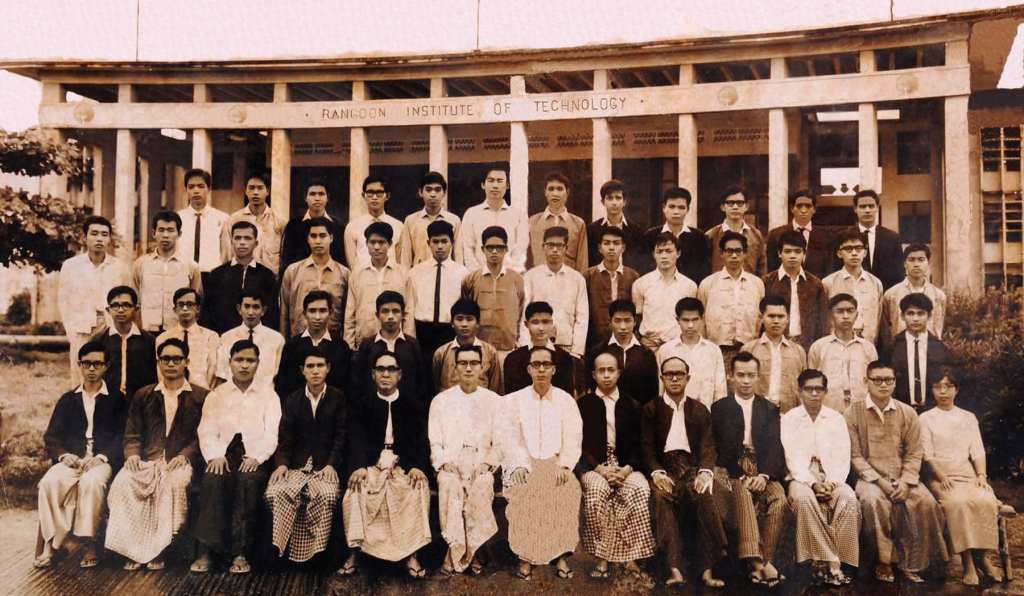
    • Of the 13 classmates, 12 graduated. Kyaw Soe, Aung Thu Yein, Chit Tin & Oo Kyaw Hla are now GBNF.
    EE69

    1970 – 1998

    Work

    UK
    • Universities’ Computer Center (UCC) : Computer Engineer, Sr. Systems Programmer, Business Application Manager
    UCC Course
    • Department of Computer Science (DCS) : Senior Lecturer
    • Institute of Computer Science and Technology (ICST) : Associate Professor
    • Tech Companies in the Silicon Valley : Member, Senior Member & Principal Member of Technical Staff

    Publications & Projects

    • Articles & translations in Guardian, Working Peoples’ Daily (WPD), Forward Magazine, Veda ဝေဒ Magazine, and Pan ပန် Magazine.
    • Assisted Saya Dr. Chit Swe’s projects including High School Mathematics, Children’s Treasury of Knowledge (CTK), Team of System Specialists (TOSS)
    • Wrote Computer Science, Programming & Lecture guides and UCC manuals with Saya U Soe Paing and Saya U Aung Zaw (GBNF).
    U Soe Paing
    • Per request from U Myint Sein (Principal, BARB), I assigned Ko Win Latt and Ko Zaw Tun Veda projects and supervised them. Their programs are used by Veda sayas, students & practitioners.
    With Veda Sayas

    1999

    Newsletter

    Newsletter
    • Started “RIT Alumni International Newsletter”
    • It started with the news and photos of some gatherings back in Burma. (a) 30th Anniversary of the Graduation of the Class of 69 — reported by Ko Daniel Tint Lwin and Ma Saw Yu Tint (Alice)
      (b) Mini-gathering with Sayagyi Dr. Aung Gyi and other sayas and senior alumni — reported by Saya U Soe Paing

    2000

    SPZP-2000

    SPZP-2000
    • First RIT Grand Reunion and SPZP in San Francisco, USA in October 2000
    • Commemorative web pages (thanks to KMZ)
    • Commemorative Issue of the RIT Alumni International Newsletter by me and team
    My Poem
    • 64 Countdown to the Reunion posts
    • 36 Post-Reunion posts

    2002

    SPZP-2002

    • Second RIT Grand Reunion and SPZP in Singapore
    • Commemorative Issue of “Swel Daw Yeik Sar Saung”
    • by Saya U Moe Aung and team
    • Reprinted my “SAYA PUZAW PWE” poem as Back Cover

    2004

    SPZP-2004

    • Third RIT Grand Reunion and SPZP in Yangon
    • Mild earthquake did not rattle the attendees

    2006

    Three Gatherings in Sydney

    • Visited Sydney, Australia to attend three gatherings
    • RIT Alumni Dinner organized by Saya U Hla Myint, Saya U Myo Win (GBNF) & team
    RIT Gathering
    • UCC Alumni Gathering hosted by Saya U Aung Zaw (GBNF) and Daw Kyawt
    UCC Gathering
    • BOB Gathering at Olympic Park organized by Dr. Thann Naing (Bonnie Kywe)

    2007

    SPZP-2007

    SPZP-2007
    • Fourth RIT Grand Reunion and SPZP in Singapore
    • Commemorative Issue of “Swel Daw Yeik Sar Saung” by Saya U Moe Aung and team
    • Contributed a poem “SWE DAW YEIK”

    UCC Gathering

    • UCC gathering in Yangon hosted by Saya U Soe Paing & Daw Saw Yu Tint
    • Ko Soe Myint & Ma Nge are now GBNF.
    UCC Gathering

    2010

    SPZP-2010

    • Fifth RIT Grand Reunion and SPZP in Singapore
    • Commemorative Issue of “Swel Daw Yeik Sar Saung” by Saya U Moe Aung and team
    • Contributed an article : Sad and short clip — EE sayas

    2012

    SPZP-2012

    SPZP-2012
    • Sixth RIT Grand Reunion and SPZP in Yangon
    • True “Home Coming” in the Gyogone Campus
    • Special publication : History of University Engineering Education in Burma/Myanmar by Saya U Aung Hla Tun & team (Ko Ohn Khine & I compiled the CD supplement for the book)
    • Publication: Selected RIT Cartoons
    • Commemorative Issue of “Swel Daw Yeik Magazine” by U Saw Lin & team
    • Limited reprints of 23 RIT Annual Magazines

    2013

    SDYF

    SDYF
    • Swel Daw Yeik Foundation
    • Contributions for various projects
    • Health care for the sayas and sayamas

    Soon Kyway

    • For Golden Jubilee
    • Gifts from KMZ, Zaw Tun & Kyu Kyu

    2014

    RIT Shwe YaDu

    GJ of Admission
    • 50th Anniversary of the opening of RIT in 1964
    • Planted 50 Swel Daw Bins
    • Commemorative Issue of “Swel Daw Yeik Magazine” by Saya U Moe Aung & team (Contributed an article : “Recollections of a 69er”)
    • Paved Shwe YaDu lane and set up Swel Daw Yeik benches
    • Translated Saya U Moe Aung’s Shwe YaDu poem

    2016

    SPZP-2016

    • RIT/YIT/YTU Alumni Association
    • Seventh RIT Grand Reunion and SPZP in Yangon
    • 10000+ attendees
    • Free food and fun (all day and all night long)
    • Platinum Jubilee for the Class of 69
    • Hosted by some 69ers for their friends (in their sunset)

    Appreciation Awards

    • Soonkway at Half Moon Bay Monastery (organized by U Maurice Chee)
    HMB
    • Received Alumni Appreciation Award from alumni worldwide
    Award 1
    • Annual Dinner by Northern California RIT Alumni Association
    NorCal RITAA
    • Received plaque signed by Saya U Myat Htoo (Chair, BOD), U Kaung Kaung Oo (Gordon, President), and U Thaung Nyunt (Secretary)
    Award 2

    Gatherings

    • Attended SPZP-2016 and Platinum Jubilee of the Class of 69
    SPZP-2016

    2017

    Post-SPZP

    • Attended Post-SPZP2016 Gatherings

    DTM

    • Awards : Distinguished Toastmaster

    2018

    UCC & ICST

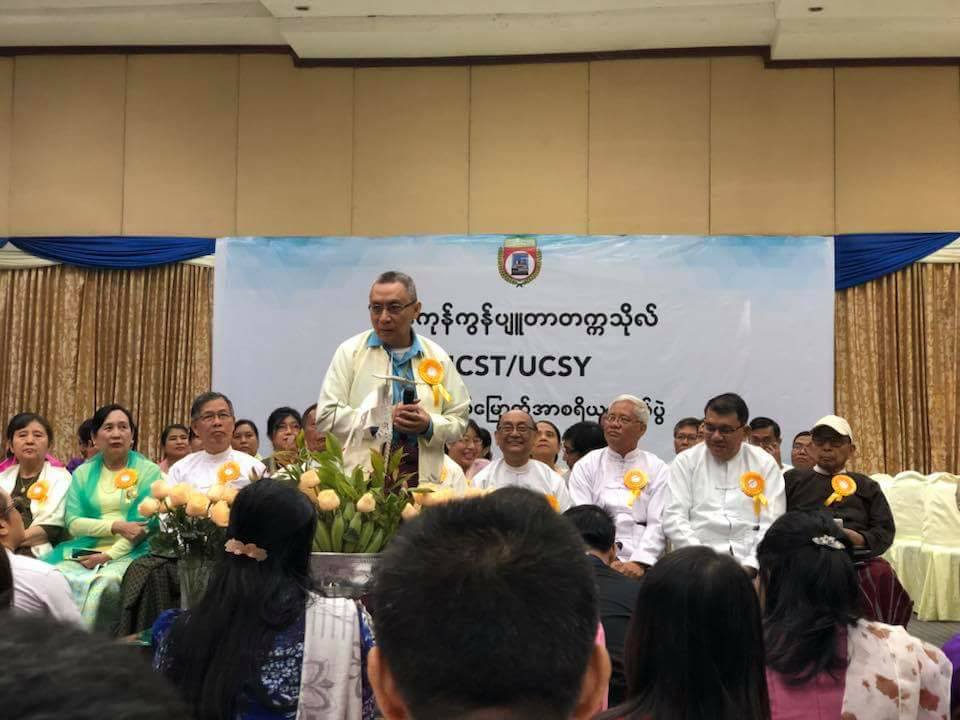
    • Attended 5th Acariya Pu Zaw Pwe of ICST/UCSY
    • Memories of UCC : 40+ posts
    • Trivia : 2000+ posts
    • Archived and revised posts in hlamin.com

    2019

    69er GJ

    • Golden Jubilee of Graduation of the Class of 69

    ILF

    • Panelist, 5th Irrawaddy Literary Festival

    2020

    • PSA Tour in Jan 2020
    • After announcement of pandemic in Feb 2020, many social activities were paused.

    2021 – 2023

    Visits

    • Short visits (e.g Singapore, Malaysia)

    NorCal RITAA

    • Some social activities were resumed.

    2024

    Visits

    • Short visits to Thailand and Laos
    • Attended EE85 Reunion as Guest of Edward Saw (Yu Ket).

    Celebrations

    • NorCal RITAA celebrated Centennial of Engineering Education in Burma & 60th Anniversary of RIT
    • Saya U Nyunt Htay, Mg Mar Ga & team organized the recording of video messages of some sayas & sayamas. They can be accessed from YouTube channel & website of NorCal RITAA.

    2025 – 2026

    Hla Min
    • Still have good physical & mental health.
    • Updating posts in my website
    • Posts for RIT Updates
    • Posts for Old Paulians
    • Posts for Old Burma Group

    Thanks

    • My ancestors
    My Beloved Father
    My beloved parents
    My parents & Mother-in-law
    • Family members
    • သင်ဆရာ၊ မြင်ဆရာ၊ ကြားဆရာ
    • Benefactors
  • Daw Myint Thwe

    Daw Myint Thwe

    by Hla Min

    Updated : June 2026

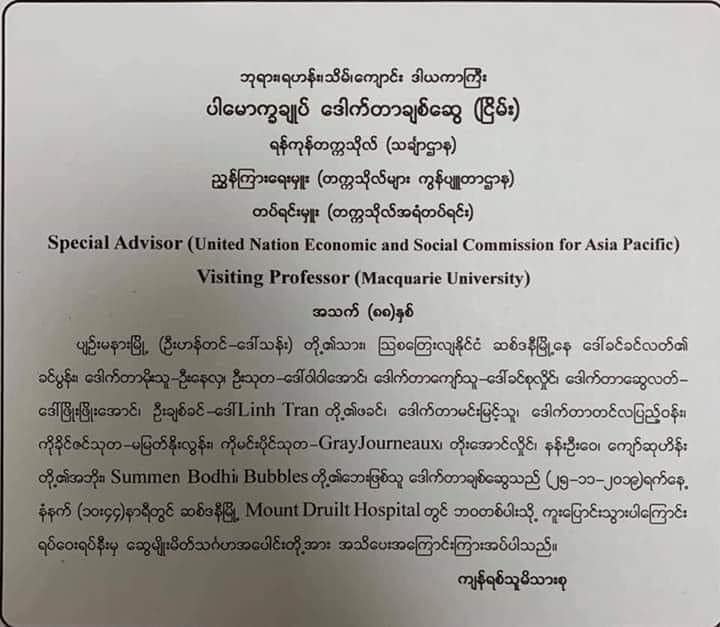
    She passed away peacefully in Sydney, Australia.

    Daw Myint Thwe (Center)

    Spouse : Saya Dr. Freddie Ba Hli (GBNF)

    Daw Myint Thwe (Seated 3rd from Right)

    Fourth of nine siblings : Saya U Tin U (C), Saya U Ba Than (M, GBNF), Dr. Daw Win Hlaing (Ruby), Dr. Myo Tint (GBNF), U Tin Htoon (A60), Saya U Myo Min (UCC), U Thaung Lwin (EC66), Daw Cho Cho Hlaing

    Daw Myint Thwe (Seated 2nd from Right)

    Children : Ma Tin Tin Hlaing (UCC) & Ko Htay Aung (EC80, UCC), Ko Tha Hlaing (EC83, UCC), Min Thet Tun (GBNF)

    Daw Myint Thwe (2nd row; 3rd from Left)

    Service

    Daw Mya Mya Win (Alison) gave a eulogy.

    Daw Myint Thwe (Seated Center)
    Betty 1
    Betty 2
    Betty 3
    Betty 4
    Betty 5

    Birthday

  • Electrical Engineering Sayas

    Electrical Engineering Sayas

    by Hla Min & U Myo Kyi

    Updated : June 2026

    1965 – 66

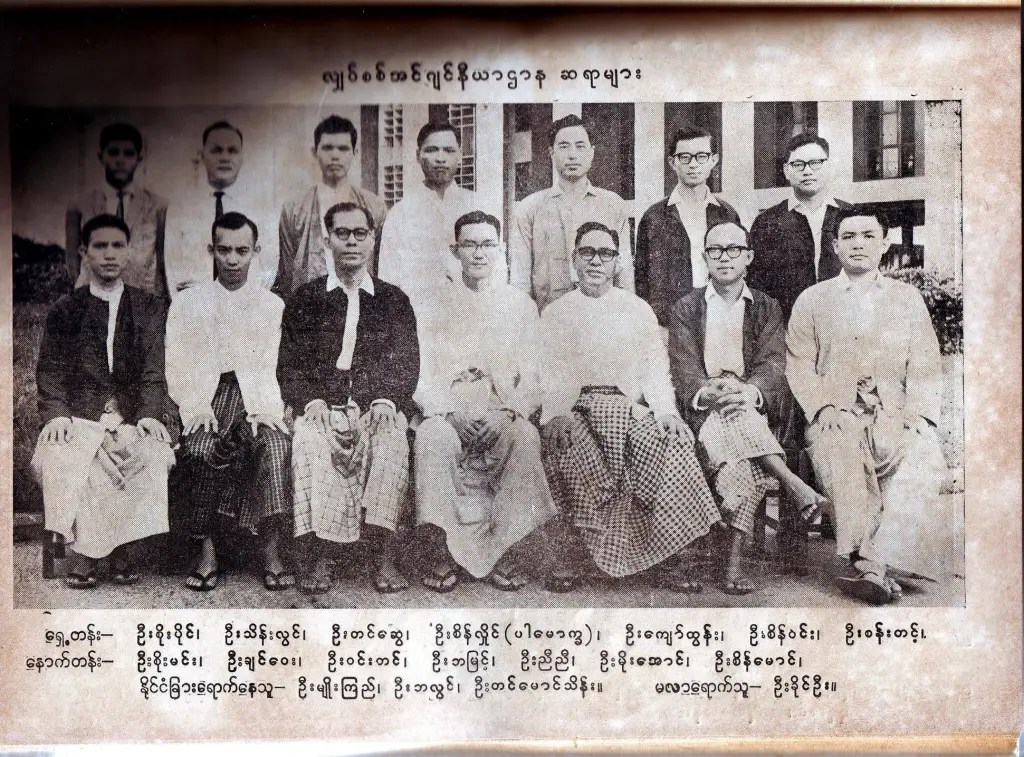
    EE Sayas

    Seated : U Soe Paing, U Thein Lwin (GBNF), U Tin Swe (GBNF), U Sein Hlaing (Professor, GBNF), U Kyaw Tun (GBNF), U Sein Win (GBNF), U San Tint (GBNF)

    Standing : U Soe Min (GBNF), U Chin Way (GBNF), U Win Tin, U Ba Myint, U Nyi Nyi (GBNF), U Moe Aung, U Sein Maung

    Studying abroad : U Myo Kyi, U Ba Lwin, U Tin Maung Thein

    Absentee: U Khine Oo

    U Myo Kyi
    U Ba Lwin
    U Tin Mg Thein

    Associated Article

    I wrote “A short and sad clip : EE Sayas” for the commemorative issue of Swel Daw Yeik Sar Saung for SPZP-2010. Saya U Moe Aung suggested the title of my article.

    Sayagyis & senior sayas

    Source : Saya U Myo Kyi (EE59)

    U Moe Aung
    SPZP

    1. U Kyaw Tun 1950 – 1971 (started teaching at BOC College)

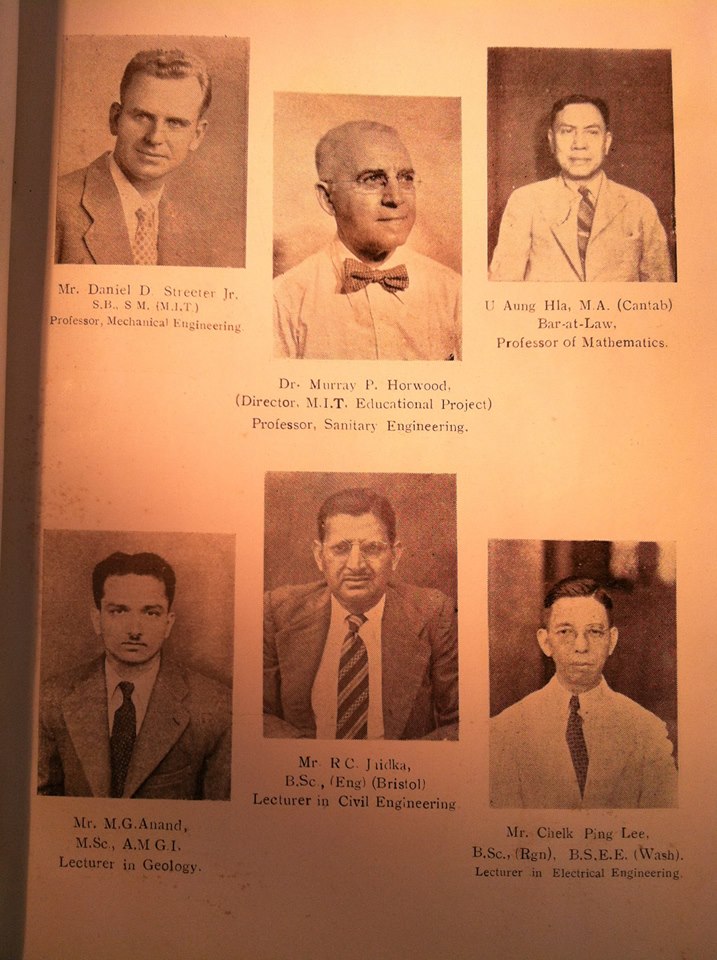
    C Ping Lee


    2. U C Ping Lee 1950 – 1952
    3. U Sein Hlaing 1954 – 1986
    4. U Tin Swe 1954 – 1998
    5. Dr. Freddie Ba Hli (Part time) 1959
    6. U Htin Paw 1958 – 1959
    7. U Ba Nyunt 1958 – 1959
    8. Dr. A. E. Guile (Colombo Plan) 1959 – 1960
    9. U Myo Kyi 1959 – 2002
    10. Dr. Ba Lwin 1959 – 1994
    11. U L. Tin Htun 1959 – 1960
    12. Teoh Chin Koon 1959 – 1960
    13. U Sein Win 1960 – 1994
    14. Dr. San Tint 1961 – 2002
    15. Mr. Zagarosky (Russian) 1962 – 1963
    16. Dr. Ba Myint 1963 – 2000
    17. U Sein Maung 1963 – 1994
    18. U Khine Oo 1963 – 1996
    19. Dr. Win Tin 1963 – 1990
    20. U Moe Aung 1963 – 1990
    21. U Chin Way 1963 – 1968
    22. U Soe Min 1963 – 1965
    23. U Nyi Nyi 1963 – 1965
    24. U Thein Lwin 1964 – 1972
    25. U Soe Paing 1964 – 1971
    26. U Tin Maung Thein 1965 – 1990
    27. U Tin Shwe (Ashin Wi thu ta) 1966 – 1996
    28. Daw Mya Mya Than 1968 – 2003
    29. U Than Lwin 1970 – 1994
    30. U Kyaw Lwin 1970 – 1991
    31. U Tin Win 1972 – 1980
    32. U Thein Dan 1973 – 1997
    33. U Khin Soe 1973 – 1982
    34. Daw Khin Aye Win 1973 – 2009
    35. Daw Nyunt Nyunt Yee 1973 – 2000
    36. U Kyaw Aung (U Kyin Phyuu) 1973 –
    37. U Aung Than (U Ah Chun) 1973 – 2004
    38. Daw Khin Swe Oo 1974 – 2002
    39. U Clement Sadhana 1976 – 2010
    40. Daw Than Than Win 1976 – 2012
    41. Daw Khin Tint 1981 – 2008
    42. U Myint Oo 1982 – 1990
    43. Daw Khin Ma Ma Soe 1982 – 2008

    U Sein Maung
    U Ba Myint
    U Khine Oo
    U Soe Paing
    Daw Mya Mya Than
    U Thein Dan
    U Tin Win
    U Ko Ko Kyi
    Daw Khin Aye Win

    Editor’s Notes

    • U Kyaw Naing (Sin Gwan, EC70) is GBNF.
    • U Ko Ko Kyi (EC72) later worked in Malaysia and Canada.

    More EE Sayas (Electronics and Power)

    • U Win Khaing Moe
    • U Maung Maung Latt
    • Daw Lei Lei Yee
    • Daw Khin Sandar Tun
    • Daw Khin Lay Wai
    • Daw Zin Mar Oo
    • Daw Khaing Khaing Kyaw
    • Daw Thazin Phyu
    • Daw Myint Myint Lwin
    • Daw Lei Lei Win
    • Daw Thidar Than (1)
    • Daw Mya Mya Aye
    • Daw Myint Myint Than
    • Daw Tin Tin Naing
    • Daw Sint Sint Win
    • Daw Thandar Naing
    • Daw Khin Swe Lwin
    • Daw Myint Myint Mon
    • Daw Nilar Aung
    • U Zaw Min Naing
    • Daw Moe Nilar
    • Daw Khin Moe Yee
    • Daw Kaythi Khaing
    • Daw Ah Tar Mon
    • Daw Ni Ni Thein Htay Pe
    • Daw Thidar Than (2)
    • U Thein Htay
    • U Tun Oo
    • Daw Aye Aye Mar
    • Daw Ni Ni Win
    • Daw San Myint Yee
    • U Aung Naing
    • Daw Naing Naing Maw
    • U Ananda
    • Daw Lei Lei Sein
    • Daw Min Min Myat
    • Daw Thi Thi Soe
    • Daw Mar Mar Lwin
    • Daw Su Myat Htut
    • Daw Win Lein Aye
    • Daw Han Thu Lwin
    • Daw Yin Yin Htwe
    • Daw Naing Naing Win
    • Daw Khin Kyu Kyu Win
    • Daw Cho Cho Aung
    • Daw Tin Tin Aye
    • Daw Ni Mar Nwe Aung
    • Daw Ei Ei Khin
    • Daw Kyaaw Khin
    • U Zaw Min Aung
    • Daw Aye Thinn Naing
    • Daw Nwe Ni Aye
    • U Soe Naing
    • Daw Phyu Phyu Moe
    • Daw Marlar Kyaw
    • Daw Aye Aye Thinn

    EE Association (1965 – 66)

    This image has an empty alt attribute; its file name is ee-association-2.jpg
    EE Association for 1965-66

    Seated : Ma Pwint Than, Ma Yi Yi Aung, U Sein Win (Vice President), U Kyaw Tun (President), Ko Shwe Win (Secretary), Ma Mya Mya Than, Ma Mo Mo Yi

    Middle row : Ko Thein Swe, Ko Soe Than, U Sein Maung (Auditor), U Soe Paing, U San Tint, U Moe Aung (Treasurer), U Thein Lwin, U Soe Min

    Last row : Ko Nyunt Pe, Ko Ye Win, Mehm Ye Win, Ko Kyaw Swe Win, Ko Hla Min, Ko Myo Myint, Ko Hla Thaung, Ko Aung Khin, Ko Soe Win, Ko Tin Than

    I served as a EC member.

    Hlyat Sit Sar Saung (1965 – 66)

    This image has an empty alt attribute; its file name is ee-magazine-1.jpg

    Seated : Ma Mo Mo Yi, Ma Than Yi (Associate Editor), U Moe Aung (Chief Editor), U Kyaw Tun (Patron), Ko Ye Win (Secretary), Ma Yi Yi Aung

    Standing : Ko Sann Oo (Associate Editor), Ko Thein Tun, Ko Hla Min, Ko Myo Myint (Associate Editor), Ko Soe Tha, Ko Soe Win, Mehm Ye Win

    I served as a member.

    Saya U Sein Win (GBNF)

    • Younger brother of Dr. Tin U (Medical Superintendent, Rangoon Children’s Hospital) and Dr. Saw Lwin.
    • Top student at the University of Michigan.
    • His friends called him “Khone Swa Khone Swa” referring to his brisk walking style.
    • Lecturer in the Department of Electrical Engineering.
    • When EE Department was reorganized, he served as Professor of EP.
    • Saya is an absent minded Professor. He married late. One day, he drove Sayagadaw to Bogyoke Market. He taught (or discussed with) his students for quite some time and almost forgot to pick up Sayagadaw. There are variations on this anecdote regarding the place (e.g. Hledan Zay).
    • He served as Technical Advisor for UCC. He worked closely with U Win Htein (Purdue University, EE at PWD, GBNF) for the design & maintenance of the Electrical Systems (including Motor Alternator, Diesel Generator, Air conditioning) at UCC.
    • Line Judge at the RUBC (Rangoon University Boat Club) Regattas.
    • President, RIT Swimming Association; He stays fit by swimming regularly (even when he was visiting Singapore on a business trip).
    • He has a vast knowledge. Saya Dr. San Hla Aung (C58) remembers Saya U Sein Win discussing about Civil Engineering and other subjects.

    Updates

    • Several senior sayas — U Kyaw Tun, C Ping Lee, U Sein Hlaing, U Tin Swe, U Sein Win, U Thein Lwin, Dr. San Tint, U Soe Min, U Chin Way, U Nyi Nyi, U Tin Shwe, Daw Mya Mya Than, U Kyaw Naing, U Kyaw Lwin, Daw Nyunt Nyunt Yee, U Khin Soe — are GBNF.
    • Some — U Moe Aung, U Tin Win, U Thein Dan — have medical problems.