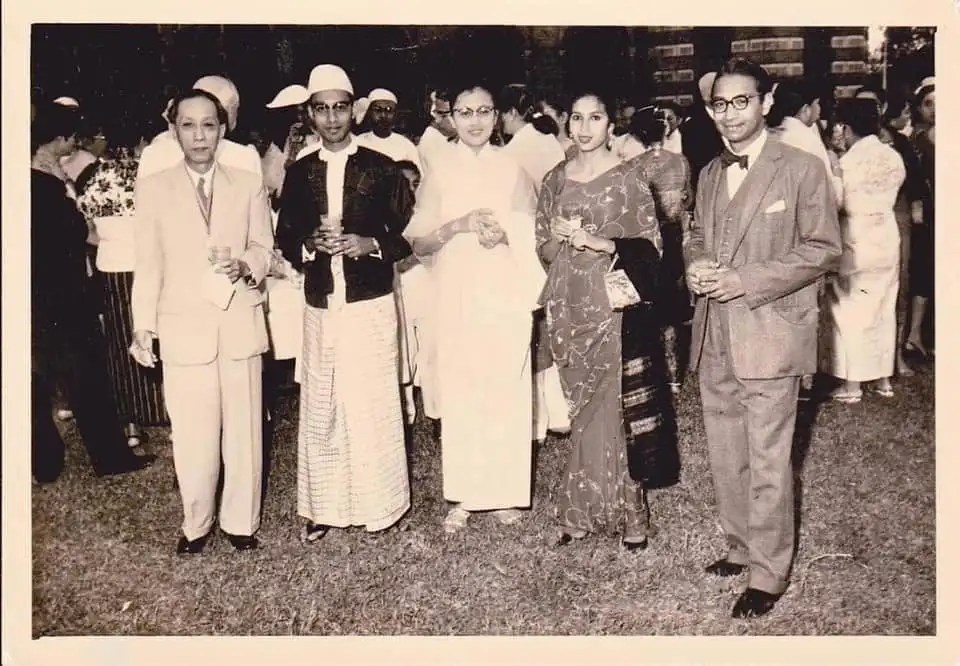
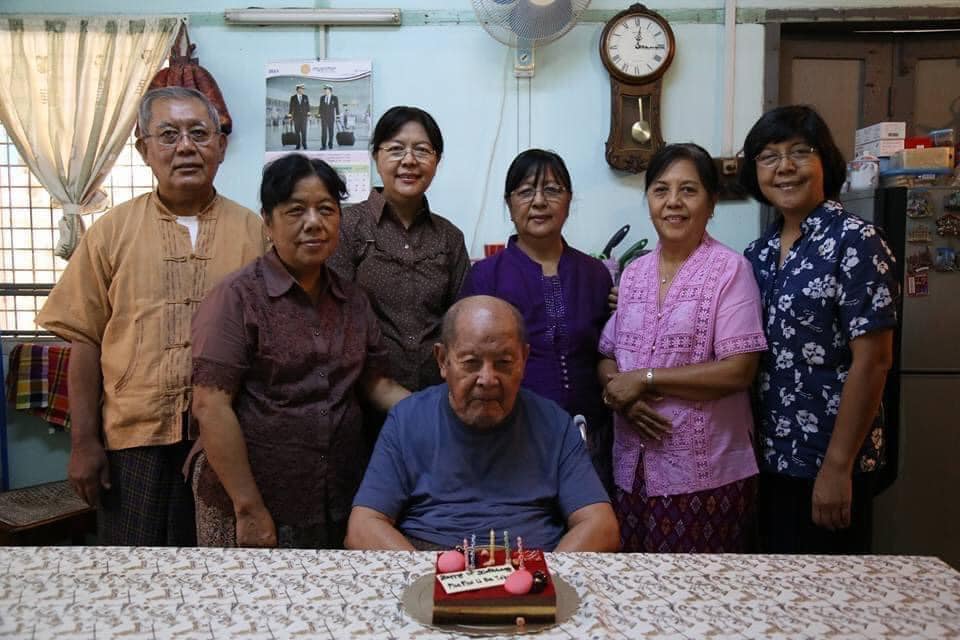
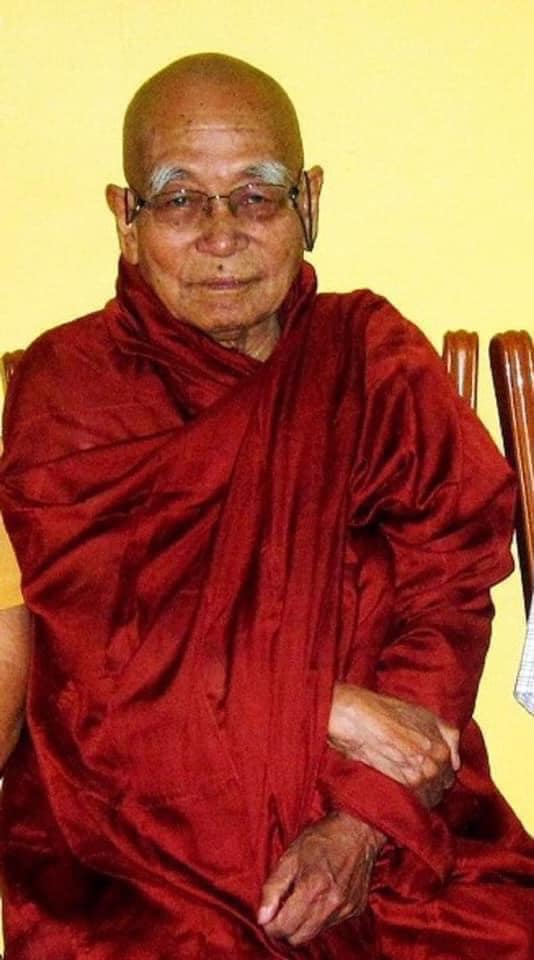
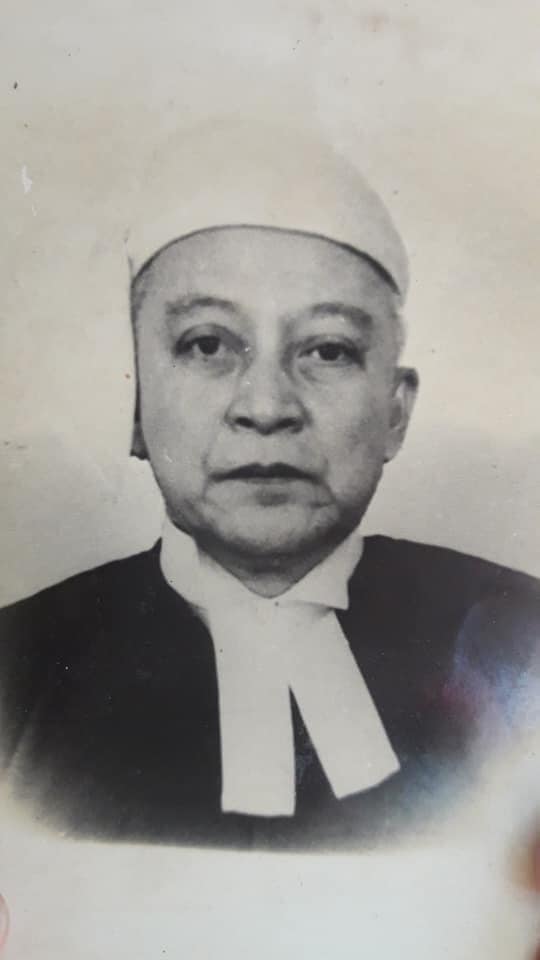
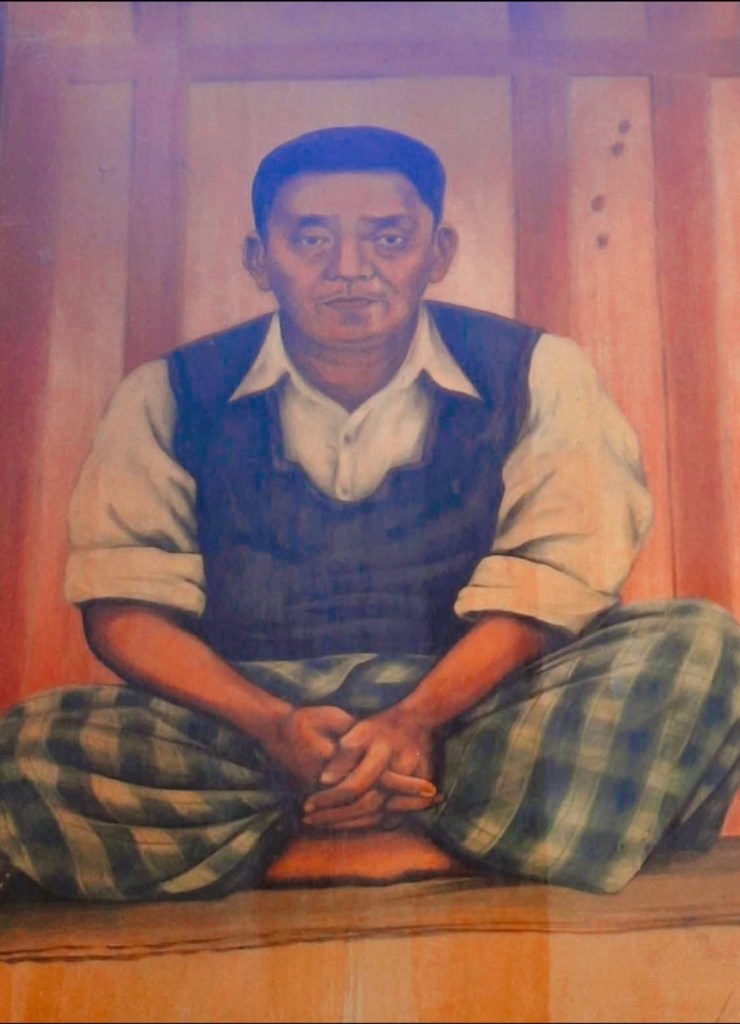
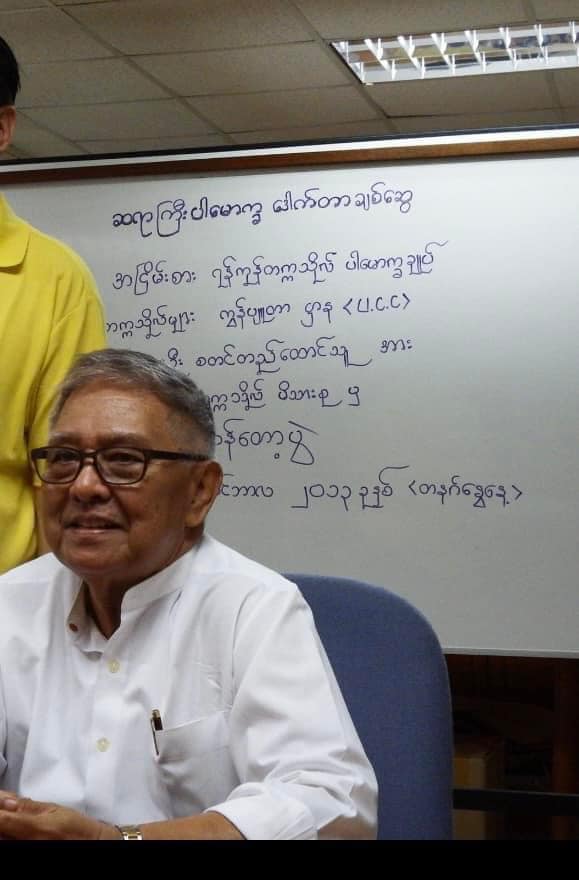
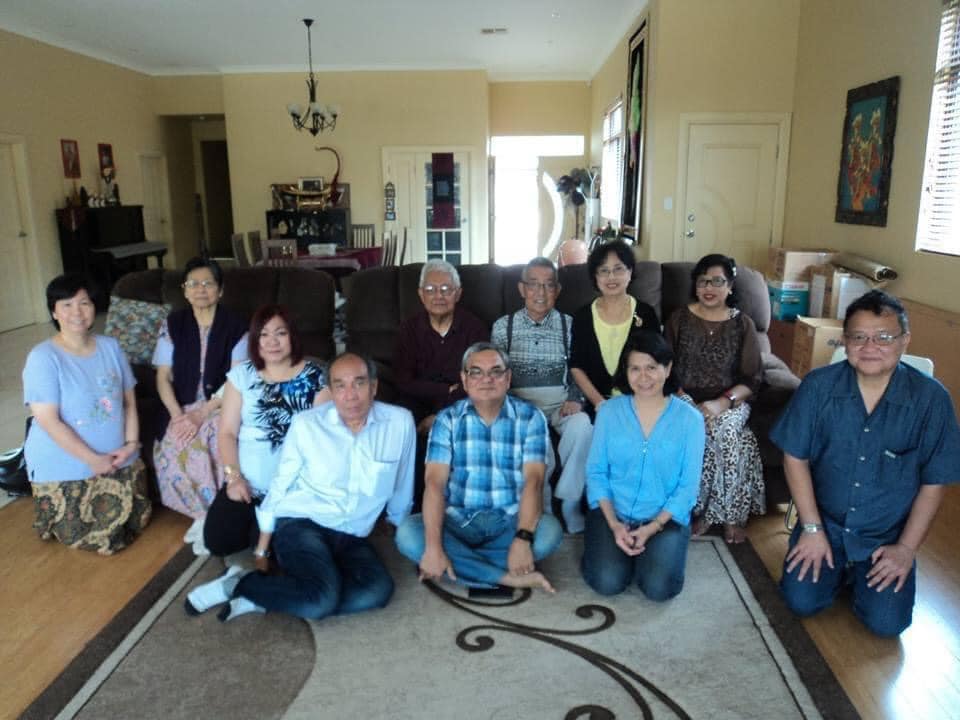
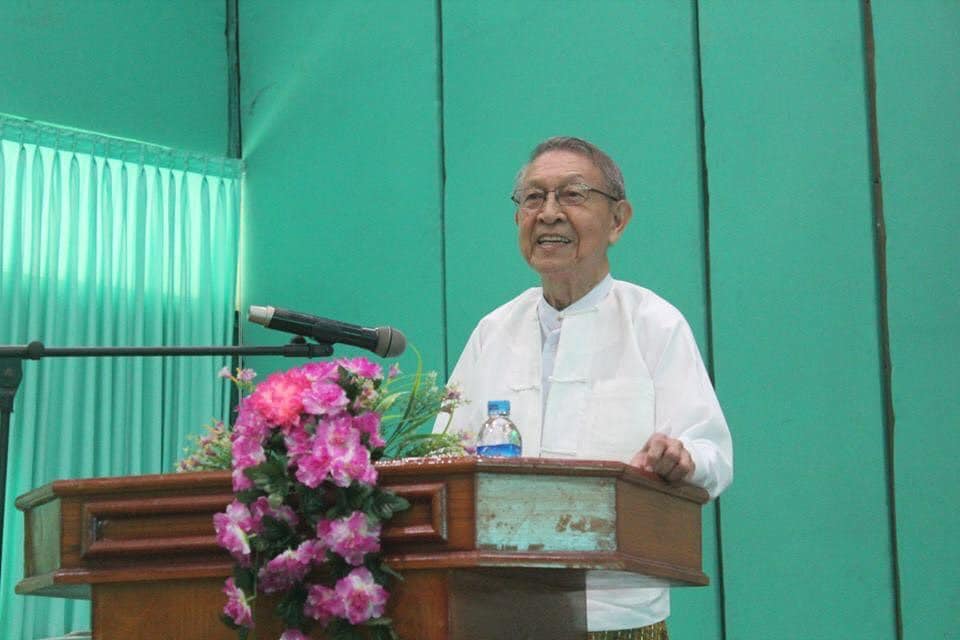
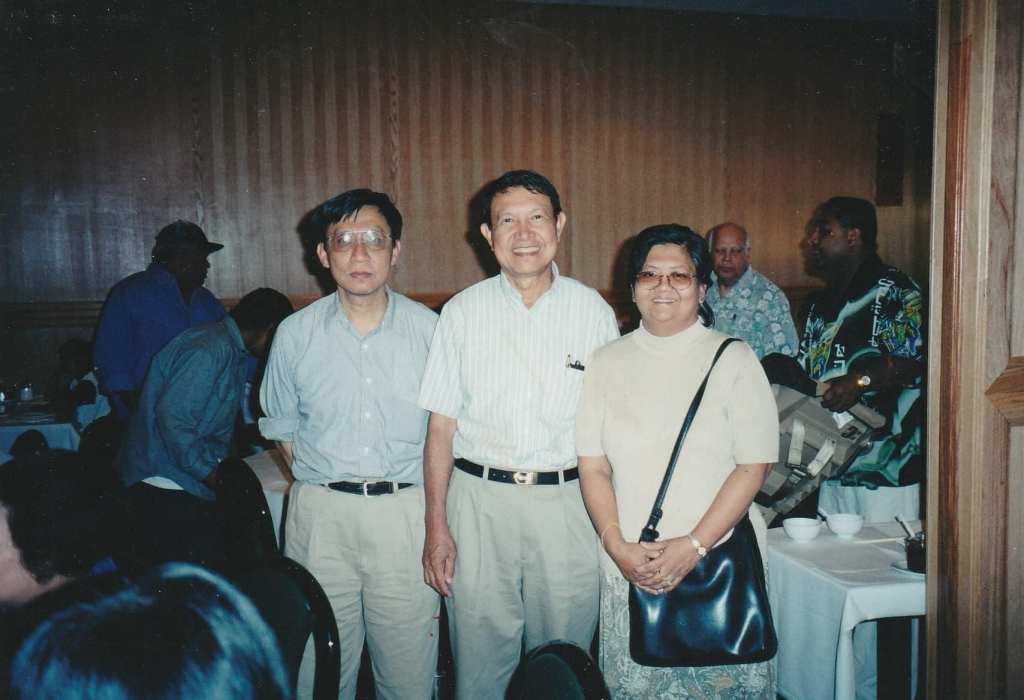
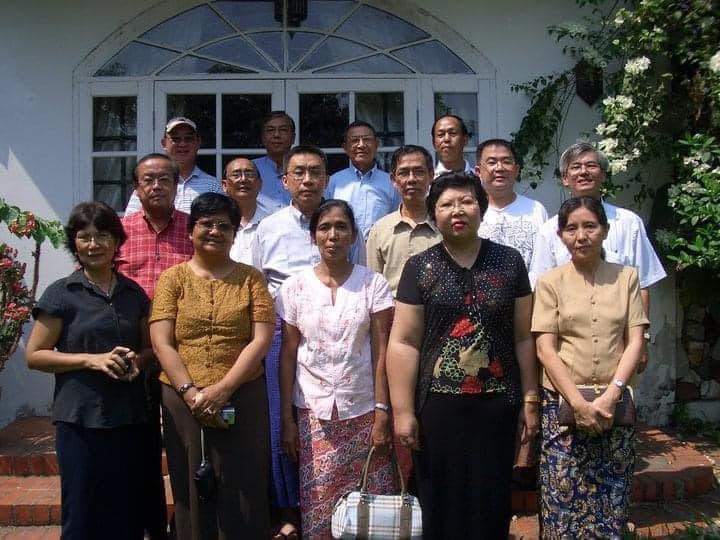
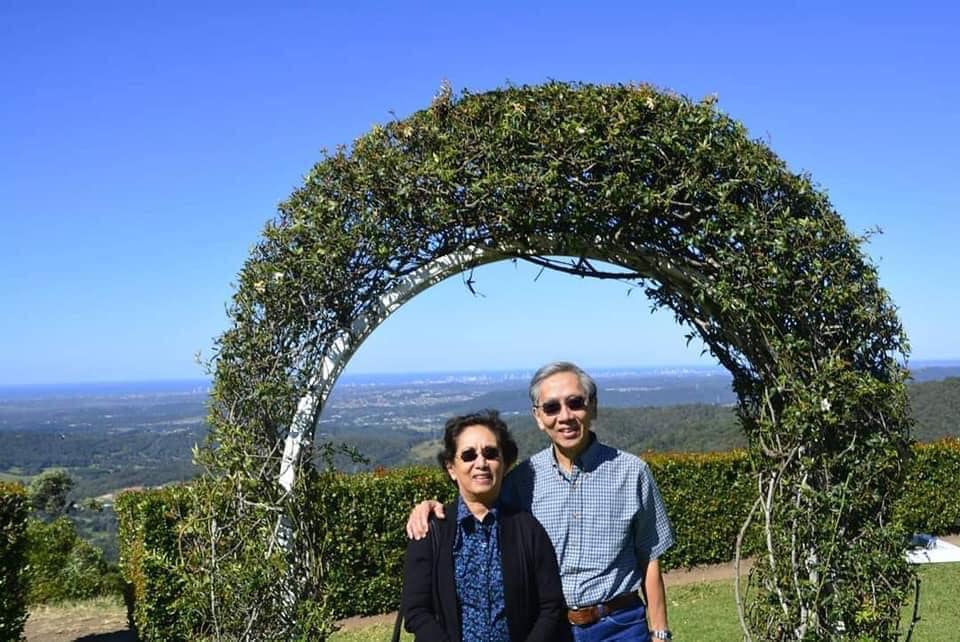
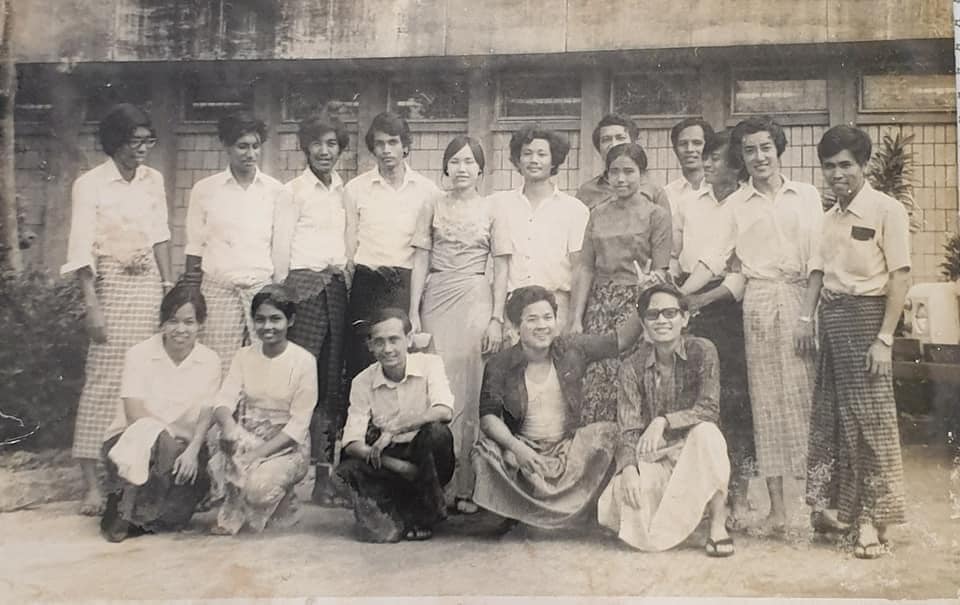
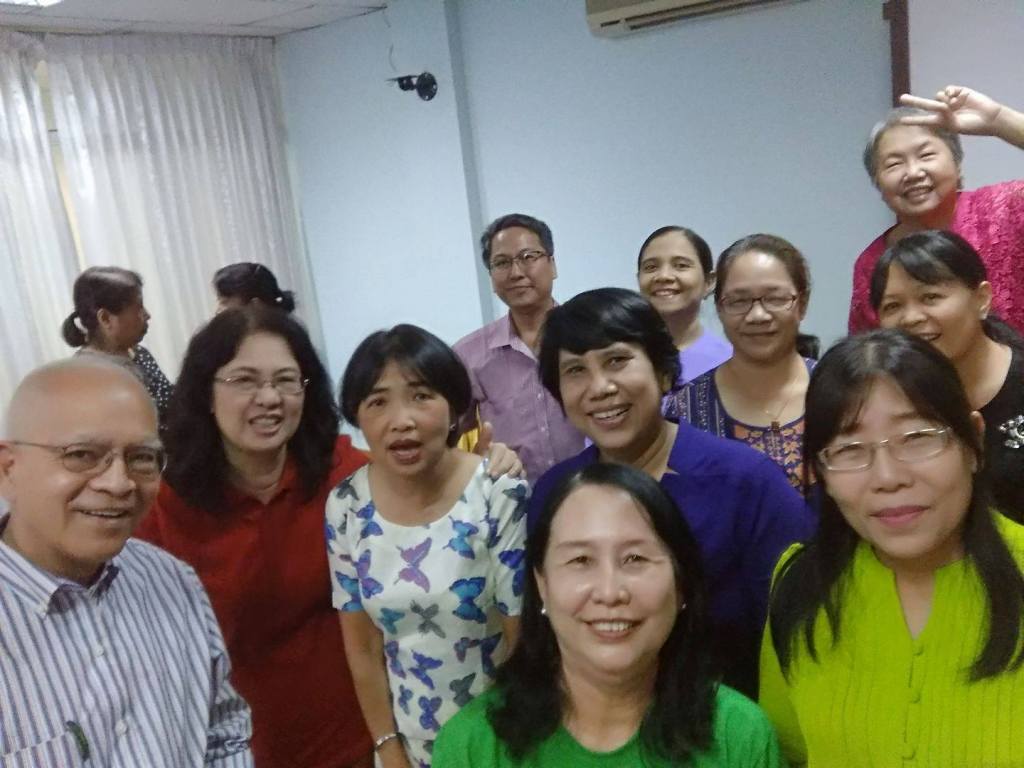
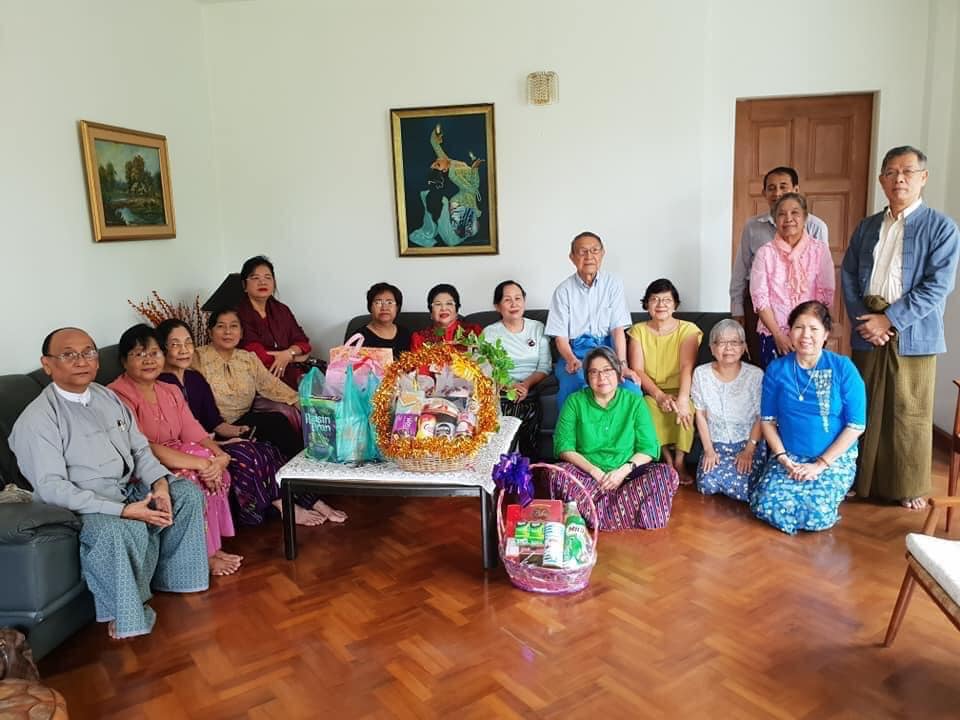
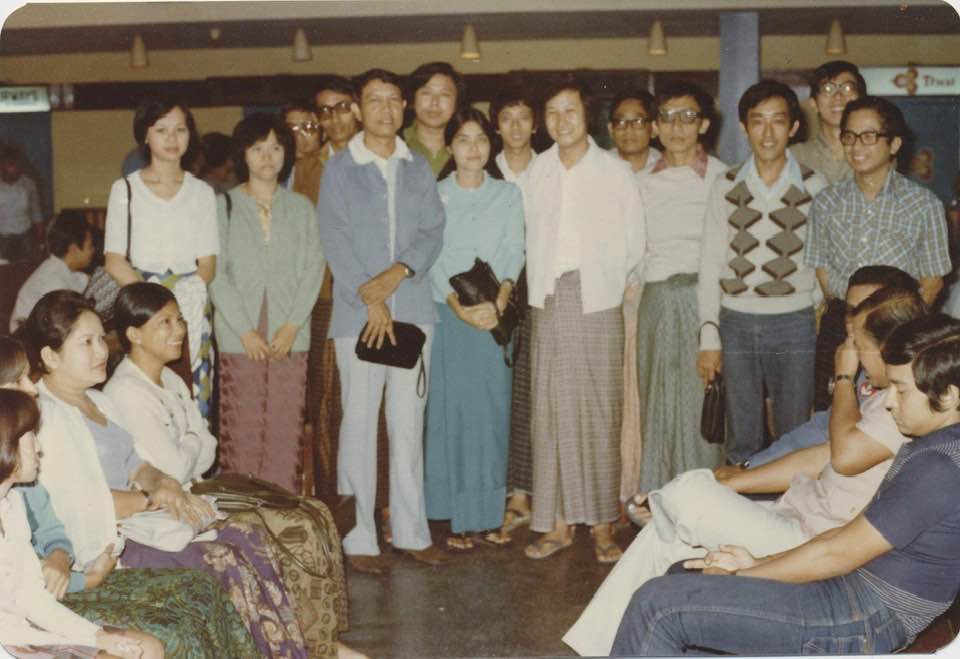
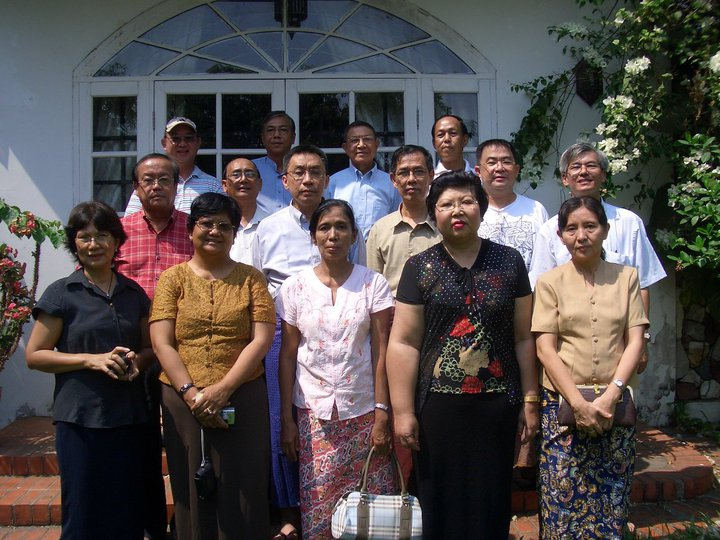
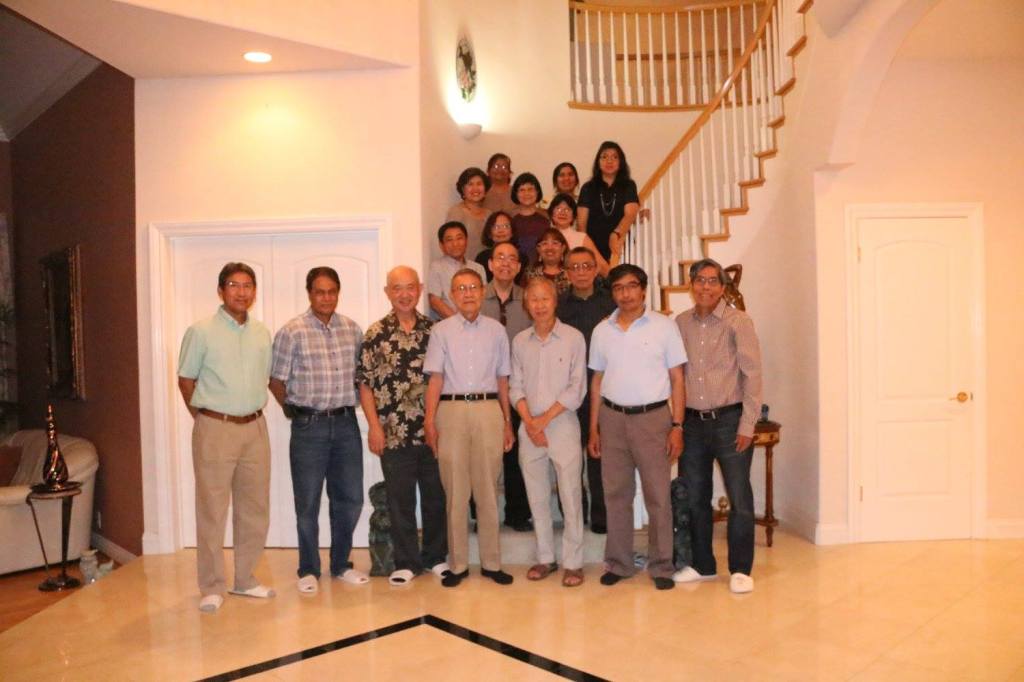
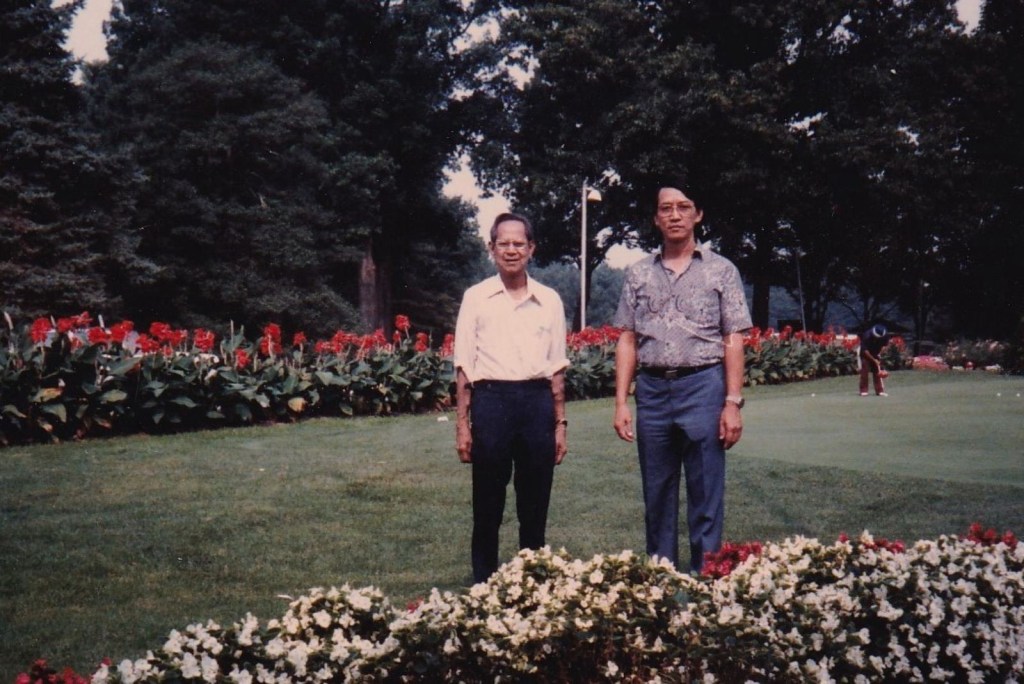
Hla Myint Thein (Maurice Chee, M75) — Worked in Singapore and USA; Founding member of RIT Alumni International and served as Treasurer; Core Organizer of SPZP-2000 and served as co-Chair of the Working Committee, Financial Controller, Logistics Guru and Publisher of the commemorative issue of “RIT Alumni International Newsletter”; Past President of BAPS; Donated books to YTU Library and also coordinated the book donations by others (Daw Mu Mu Kin, Victor Wong) Founding member of NorCal RITAA and served as Vice President.
Ba Htoo — Started the Resistance ahead of March 27 in 1945
Ba Htoo Myo — Named after Ba Htoo; Had training centers for the army
Hla Htoo, Col., FRCR, senior radiologist Burma Army Medical Corp (BAMC), one of the first radiologists to pass the Fellowship of the Royal College of Radiology exam.
Khin Khin Htoo — Author
Khin Maung Htoo — Vocalist
U Myat Htoo (C68) — RIT Saya; Founding member of RIT Alumni International, and NorCal RITAA; Past President of TBSA and BADA.
Myat Htoo Razak, Dr. — RUBC Gold; Father: U Tin Myint
Myint Htoo — Justice
Yahandar Hnit Pokko Htoo Myar — Book by Dhammacariya U Htay Hlaing.
Ba Min — Saya; UC Berkeley alumnus; Mathematics; Astronomy
Ba Myaing — Saya; SPHS
Ba Myint — Pro-Rector, YTU
Ba Myint — Pyinnya Mingyi
Ba Nyein — Advisor, BSPP Government
Ba Nyein, Kyar — Boxing; Checkers
Ba Nyunt — Saya; History Professor
Ba Nyunt (EE58) — Saya; RIT; MOGE
Ba Oo — Sons : Eddie (Tin Aung Moe), Reggie (Tekkatho Aye Maung)
Ba Oo — “Tiger” Scrabble
Ba Pe, Dr. — Medical Doctor
Ba Pu, Dr. — Medical Doctor; Son : Peter
Ba Sein, Thakin — AFPFL
Ba Shin — Bohmugyi; Burma History Commission
Ba Shwe — Colonel
Ba Soe — Gyobinkauk; Brother : Hla Soe
Ba Swe, Kyargyi (Dawei Ba Swe) — Served as Interim Prime Minister when U Nu took sabbatical; Led the Stable AFPFL faction
Ba Swe, Yangon — Writer,;Sharpshooter; Credited as o shooter of Galon U Saw
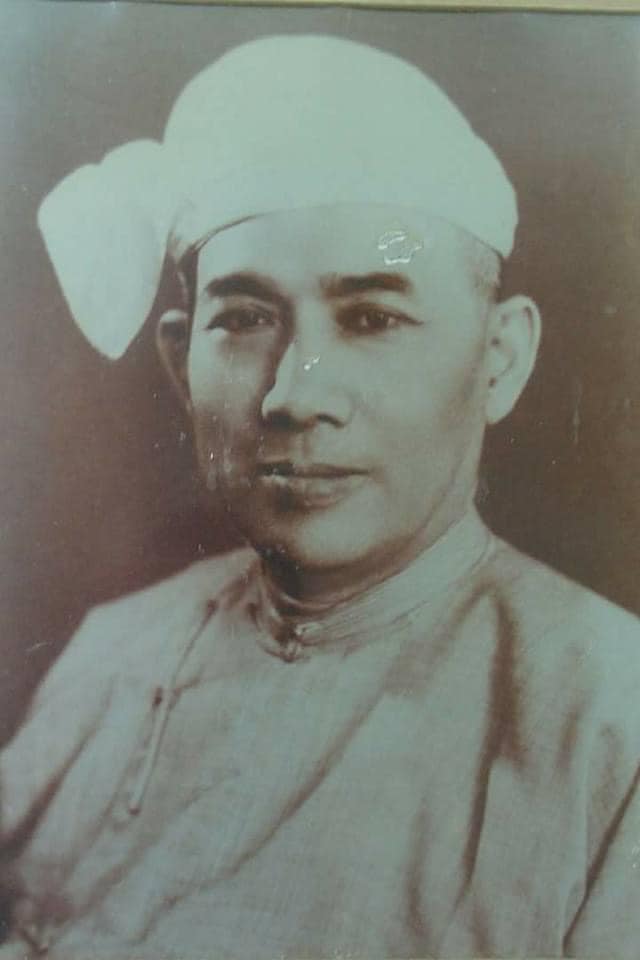
U Ba Than
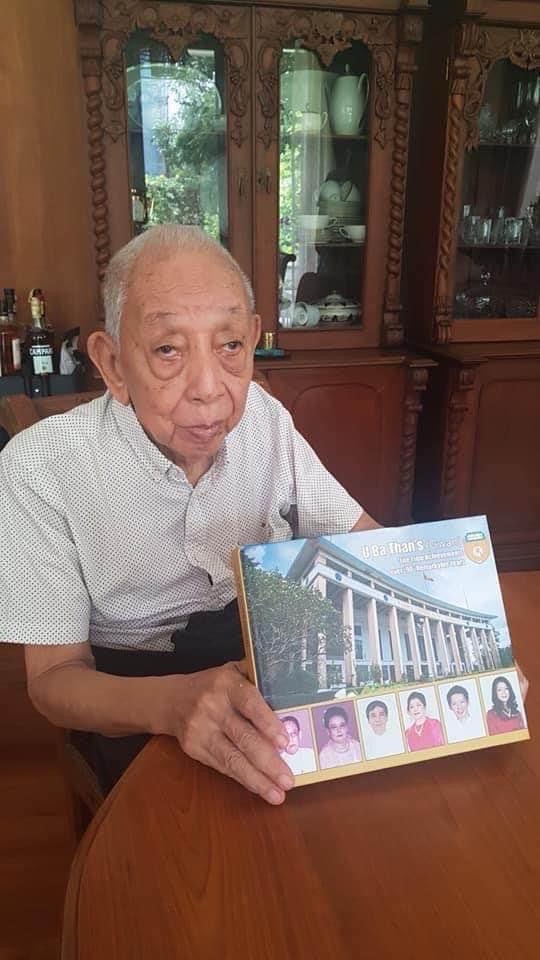
Ba Than — Saya; Alumnus of Imperial College, University of London; Retired as Professor and Head of Mechanical Engineering; Proud supporter of HMEE project; Donated rare photos to HMEE project and MES; Donated back all the Garawa money that he received from the SPZPs and mini-PZPs; Offers soon kway on or around his birthday (October 2nd) and invites his former colleagues and students; Per request from his grandson, he wrote his Memoirs; U Tin Htoon (younger brother) compiled a Photo Album / Book for his 90th birthday in October 2020
Dr, Ba Than
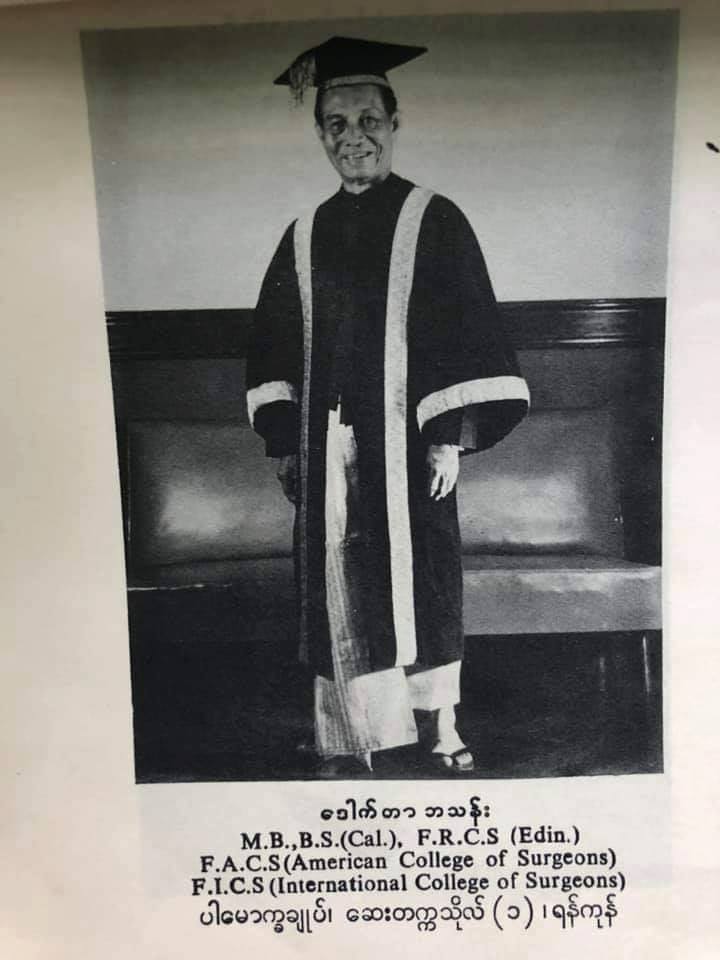
Ba Than, Dr. — Police Surgeon; Rector of Institute of Medicine; Excellent soccer player and Harpist; Founder of “Zwe Ah Nyeint”; Stayed behind when the British evacuated Burma; Ran a hospital during the Japanese occupation with assistants including Dr. Maung Maung (father of U Maung Maung Kyi (SPHS63)) and Dr. Myint Swe; Children : Georgie, Kitty, Amy
Ba Than, Saung — Icon in Burmese music.; eight obituaries (one by each spouse).
Ba Than, Dhammika — Retired army officer and author
Ba Than — Founding member of the Kone The Gyi Myar Ah Thin (aka Burmese Chamber of Commerce); Son : U Chit Po Po (M69)
Ba Than — Son : Cyril (Than Hla)
Ba Than — Son : Kyaw Zwa Than (Jaws)
Ba Than — Physical Education, Palmistry
Ba Than Aye (Myo Myint Lay, GBNF) — UCC, Army
Ba Than Chain — UCC
Ba Than Haq — Saya; Pro-Rector, RASU
Ba Thaung — Burma Trade; Son : U Thaung Win
Ba Thaung — Son : George (Maung Maung Win)
Ba Thaung, Thakin — Author, Co-founder of Dobama Asi Ah Yone
Ba Thaw — Writer, Pa Lait Ah Yay Shi Ta Oo
Ba Thaw, Bohmu — Maung Thaw Ka, Chief Editor, Forward Magazine
Ba Thein — Children: Peter, Than Than Nwe
Ba Thein — Son: Glen / Dr. Zaw Mon
Ba Thein (Atlanta) — Pen name of Dr. Myint Thein (M73)
Ba Toke — Saya; Mathematics Professor; Rector of MASU; Burma Olympics Team Leader
Ba Tu — Daughter : Pearl (Pale)
Ba U, Dr.– President of the Union of Burma; Wrote “My Burma”
Ba Wai — Table Tennis
Ba Win — Arzani; Brothers: Aung Than, Bogyoke Aung San; Son: Dr. Sein Win
Names with Ba in middle and end
Aung Ba
Kyaw Ba
Shwe Ba
Ben
Benedict — Brother; SPHS
Benjamin Kyle — Myint Soe
Benny Tan (M70) — Tan Yu Beng; Golden Sponsor
Benny Tan
Bo
Bo Aung Kyaw
Bo Aye
Bo Zaw Win
Bo Bo (C69, GBNF) — Saw Yan Naing
Bo Bo — Father : Hla Maung
Bo Bo Han (Tony Hundley) — Vocalist; Siblings : Mary, John
Bo Bo Kyaw Nyein — Father: Kyaw Nyein
Bo Dwe — Father: Hla Maung
Uzin Bo Gyi (A59)
Bo Gyi (A59, Uzin) — Co-founded Architects Incorporated with Tin Htoon (A60) and Aung Kyee Myint (A60); Their office became a gathering place for artists such as Paw Oo Thet, Director Win Pe, U Khin Maung Yin (A60); The three amigos later joined PWD; Designed the Mausoleum for Bogyoke Kadaw Daw Khin Kyi, and the higher authorities neglected him after that; Gave up playing the piano, modeling buildings, and drinking to become a permanent monk.
Bo Gyi (Chief Justice)
Bo Gyi — Justice, Vice-Chancellor of RU; Children : Sein Hla, Dr. Daw Khin Kyi, Tint Swe
Bo Gyi, Sandaya— Pianist; composer
Bo Gyi — Brothers: Robert Guy, Bo Lay
Bo Gyi — Father: Hla Maung
Bo Kyi (SPHS) — Drummer; Brother : Bo Ni
Bo Lay, Dr. — Deputy Minister; Translated several Veda texts into Burmese
My beloved parents. For us, every day is “Father’s Day” and “Mother’s Day“.
Raised seven children & several grand children.
Passed away in their 80s.
For a long time, I was among the lucky ones to have both parents. Now, I am among the unlucky ones to have lost both parents.
Took care of my two sons when they were young
Sad to say, they did not live long enough to see my grand children.
Let Oo Saya
During my school days, my parents gave me 25 pyas as pocket money. They wanted to make sure that I study hard.
In Standard VI(D) and Standard VII(D), Ms. Amelia Kyi (“Miss Hong Kong“, mother of U Win Kyi (RUBC Gold)) taught us English. We had to take weekly tests. She would fine 25 pyas to those who fail in a test. She would give 50 pyas to those who do well in a test.
My parents would give bonus prizes only when I did well in the final examinations.
They would buy us typewriters : Remington for English and Olympia for Burmese.
They also gave me a Raleigh bicycle, a Yashika Mat camera, and Cashprizes (100 Kyats for passing a Government exam and 100 Kyats for each Distinction).
They would also provide us books : several types of dictionaries, Myanmar Swel Sone Kyan စွယ်စုံကျမ်း၊ Reader’s Digest, Student’s Companion, A book for Idioms, Grammar (e.g. Wren and Martin), the King’s English (by Fowler and Fowler), “How and Why”, Fun with Mathematics, Classics Illustrated, …, Saya Mauk ဆရာမောက် (Bedin ဗေဒင်), Cheiro (Palmistry), …, Second World War.
Uncles and Aunts
My uncles & aunts were like my adopted Parents.
They had private libraries. There was a set of Encyclopedia Britannica, books by Dale Carnegie (“How to win friends and influence people”, “Five minute biographies”) and more.
They allowed me to play their piano and games (Badminton, Table Tennis, Carrom, Bridge).
Uncle U Thet Toe would take us to Inya Lake for swimming followed by a feast of Buthee Gyaw ဘူးသီးကြော်
Uncle U Than Lwin would take me to the Recreation Center in the Main Campus (e.g. to meet Saya Dr. Than Tun) and to the Faculty of Social Science & Library (e.g. to meet Saya U Khin Maung Kyawe (Jimmy) and Sayama Daw Myint Myint Khin (Hazel)).
A Zillion Thanks
Dear beloved parents, uncles, aunts and teachers, “I’m sure you will be in the good abodes. I want to thank you for your unbounded love and for your exhortation that “Every thing that’s worth doing is worth doing well” “.
Second Generation
My beloved spouse and I tied the knot in June 1973 in front of our parents (my father, my mother and her mother) and elders including Sayagyi Dr. Chit Swe (Founder and Director of Universities’ Computer Center).
All my siblings are alive and well.
My spouse had lost five family members.
Her father passed away in his mid 50s.
Her mother passed away in her late 80s.
Her elder brother passed away in his early 50s.
Her younger brother passed away in his early 60s.
Her nephew passed away in his late 30s.
She volunteered for social and religious events. She wrote several articles for Dhammananda Newsletter with the pen name “Neik Ban Zaw“.
She encouraged me to pay back to our parents, mentors, alma mater, society and our beloved land.
Ah Phwa and Hmyee Ma
With her support, I served for 27!years as Chief Editor of “RIT Alumni International Newsletter” and as an organizer of activities (including RIT Grand Reunion and Saya Pu Zaw Pwe).
I have written 2500+ posts in my Facebook pages and hlamin.com
Third Generation
I have two loving sons.
The elder is a Senior Industrial Engineer.
The younger is a Senior Software Engineer.
Fourth Generation
I have two kind, loving and intelligent grandchildren. They excel in Academic, Sports & Social Relations.
Son-in-law of Dr. Freddie Ba Hli (GBNF, Former Advisor of National Planning) & Daw Myint Thwe (GBNF)
Spouse : Tin Tin Hlaing (UCC)
Son & Daughter
He volunteered as an interpreter for the meditation courses conducted in Sydney Australia & Sasana Yeik Thar in Yangon.
Memories of Ko Htay Aung
Introduction
I was born without knowing that I would have to live my early life next to the big BIT facade and that I would also become an engineer.
I had played inside, outside, and on top of the BIT roof, but I was unaware of what the engineering students were learning inside.
Then, one day, I made a long hard decision to become an engineer instead of a medical doctor, because I like the noise, the smell, and the science of the machinery better than having to face the sobs, the sighs and the anguish of the sick and dying people at the hospital. (Over the years I’ve learnt that sickness, aging and death are part and parcel of life; so I don’t have much objection now.)
Besides, I had met too many engineers and had seen so many role models as I grew up in the BIT/RIT compound in Gyogon.
My late father is the elder brother of late Prof. U Sein Hlaing (Elec). My family moved to Gyogon and lived together with him in BIT compound when BIT was opened in 1961. My first neighbour in BIT was late Saya U Kyaw Tun and family.
When my family moved in to live in BIT compound, I was studying KG at St. Paul’s High School opposite the Secretariat Building. (SPHS later become No. 6 Botataung State High School). I survived the traveling between Gyogon and Botataung for the next decade to come until I finished the 10th standard. Catching the No.8 Hino bus to go to high school in the city became a daily routine.
Gyogon
Gyogon is about 9 miles (14.4 km) away from the Rangoon city center. It is rather very close to Insein town. BIT compound is surrounded by some living quarters and the Veterinary Institute in North, a huge suburb from Kyike-Kala (Aung-Theikdi) to Thamaing College (where other engineering student hostels were established from the 1969 SEAP Games Village) with the Shwedagon pagoda above the skyline in South, a vast open bush land with “9th mile” Chinese cemetery towards the Prome Road in the East, and the Insein Road, a small Agricultural Research Institute, the BPI factory, the Gyogon train station on the West.
The Rangoon Airport is not too far away in the North East corner so the entire air space above the compound is also occupied 24 hours a day. I got so much used to the roar of the turbo jet engines that they didn’t wake me up in the middle of the night. Fortunately, the planes never hit the huge BIT facade or the tall concrete water tank tower. The big sharp “thunder-bypass” discharge spikes on the roof top might have scared them away.
BIT to RIT
I remembered one day that a few people were working on the BIT facade. Then I realized they were removing the “Burma” stone scriptures from the facade and replacing with “Rangoon” so it became RIT from then on.
Tennis
During the summer holidays and any other holidays (if not raining), I used to play tennis in the RIT compound. There are several tennis courts (one provided for staff) in the compound. At night time, the Sayas tennis court would light up to play a few matches among Sayas and family members. Some Sayas who I remembered playing there regularly were Dr. Aung Gyi (Civil), U Aung Khin (Mech), U Myo Myint Sein (Arch), U Kyin Soe (Mech), U Tin Hlaing (Mech), Dr. Tin Hlaing (Mech), U Aung Than (Mining), U San Hla Aung (Civil), Dr. Aung Soe (Civil), Dr. Khin Maung Win (Petroleum), Dr. Saw Pyu (Metallurgy), U Win Kyine (Petroleum), Dr. Thaung Lay (Metallurgy), U Thein Lwin (Elec), U Tin Htut (Mech), Dr. Tin Win (Mech), U Tu Myint (Mech), etc. The tennis court was next to Saya Dr. Aung Gyi’s family house so we got all necessary supplies with their compliments. A Russian Saya who played there sometimes would also bring a nice Russian tea for every player to enjoy.
I also enjoyed riding bicycle inside the RIT compound as there were long and hard concrete roads connecting the staff residences and the main class room buildings. Some open big water drains (Myaung) ran along those roads too so it wasn’t very nice to fell into the drain and dragged the bicycle along the drain.
There were other sporting venues provided in the compound for all students and staff and family to play, including a weight-lifting room (next to the student dinning hall), a huge indoor badminton room with 2 courts, fields for basketball, volleyball, football, hockey, and also a 400 meter track and field ground. We would also use the hill top unoccupied Rector’s (green) residence as a Kids’ Karate Club. The main assembly hall in front of the RIT facade would be used to conduct indoor boxing, judo, karate, weight lifting competitions too. Sometimes, Burmese and English movies would be showed regularly in the hall too so the whole neighborhood could come along to watch the movies. I also enjoyed watching other arts events (A-Nyeint & Lu-Pyet shows) conducted by elder engineering students.
I had learned to swim at the very early age not because the RIT swimming pool was there (well almost) but because our family friend took us to the Inya lake for swimming lessons. Later on, I continued to swim at the Universities’ Swimming Pool at Thaton Road near University Ave. I still remembered one university student (might be from RIT) who brought along a “live” frog and put it in the swimming pool water just to learn “How to swim a frog swim (breaststroke)” from the real master! (The pool supervisor had to pour more chlorine immediately into the filter just to make sure no disease would spread from the frog.)
When it rains, it pours in Rangoon. So the lower land in the RIT compound would sometimes become a flooded paddy field. It was a blessing in disguise for Agricultural Engineering students; they have a chance to drive a tractor and cultivate the land. The land was so wild that I would easily find lots of leeches (or vice versa). Frogs and snails came out of nowhere. The bush would also grow very tall if not cleared up quickly. Of course, the snakes were there too all the year round. Snakes would find quiet dark places around (and even inside) the houses to shed their skin every year. Some people who lived around the RIT compound loved to eat them too.
Food
There were some food shops available in the compound. One can enjoy Burmese, Chinese, and Indian food. For students, the shops were there to spend their time sitting and chatting around the tea pot. For staff and families, they were very handy while living remotely inside the compound away from the usual amenities.
Landmark
Another interesting landmark in the RIT compound was the septic tank system where almost every medical student in Rangoon had to come to look at the system as part of their public health study. They were also told about the air pollution over the RIT compound, especially in the evenings, when the gas from the fermented-rice was released into the air from the BPI factory in order to produce methylated spirit (that’s what we were told anyway).
First twist of fate
It was in 1974 when I had to make that big and painful decision to become an engineer while many of my high school class mates went on to study medicine.
The first day of the first year at RIT was quite exciting for me although there’s nothing new for me to see the surrounding. I was very anxious to find out what it would take me to become an engineer in the next 6 years to come.
Second twist of fate
Since there were about 500 fresher students who came to RIT from all over the country, the students were grouped into 4 sections according to their alphabetically sorted names.
That was the second twist of fate for me as it determined who I would meet and make new friends in the section with similar sounding names, e.g. lining up with 3 other Htay Aung’s but luckily we didn’t look the same!
These 4 sections were maintained during the 1st and 2nd years while we learned basic engineering and related disciplines. The class rooms in which we took lectures were either inside the main building or in the extended bamboo-palm sheds on the West or in smaller buildings along the Eastern side of the main building.
My friends would sometimes pick me up at home before the class began to save me from walking to the class room. I was ridiculed sometimes that I couldn’t even take a bus or hire a taxi from my home to go to the class. During the lunch hours or longer breaks during the day or in the exam seasons, friends would follow me home to have a rest or finish assignments or go through together the “last minute what ever it means” memory juggling before the many exams.
Third twist of fate
The third twist of fate happened in the 3rd year when I needed to decide what kind of engineer I’d really like to become. I had decided to take the electrical engineering major (with obvious influence) and learned more specific disciplines for the next two years.
Fourth twist of fate
Another twist of fate was waiting for me in the 5th year to choose whether to specialize in Electronic or Electrical Power engineering fields. I had chosen the Electronic Engineering and finished the study by 1980.
Subjects
The subjects taught in RIT to make someone with a high school science background to become an Electronic Engineer in the 1970s were listed below. Not that I remembered all of it but for the sake of recollection. There was one industrial training session during the summer in the 5th year and a 6 months thesis work in the final year.
The subjects include English, Burmese, Mathematics, Physics, Chemistry, Political Science, Workshop Practice, Engineering Drawing, Engineering Mechanics, Electrical Circuits, Strength of Materials, Fields & Materials, Electrical Measurements, Engineering Thermodynamics, Electronics, Electromechanics, Computer Programming, Electrical Machines, Industrial Electronics, Networks, Lines & Antennas, Linear Systems, Control Systems, Microwave Techniques, Electrical Communications Systems, … and Thesis.
Graduation
Those who made it through these 6 long years or more were eventually commemorated in person or remotely (A-Way-Yauk) in the 16th RIT Convocation held on the Saturday, the 16th of January, 1982, in the Rangoon Arts & Science University (RASU) Convocation Hall. We missed a chance to proudly walk down the infamous “graduation” center lane right behind the RIT facade to be cheered. (Usually, at any other time, you’d be jeered if you braved to walk down that graduation lane!)
According to the 16th RIT Convocation Program, the number of graduates were:
1 M.E. (Civil, Water Resources & Development Engg)
Looking back now over these years at RIT, after twisting my fate at least four times, I always wondered whether I’d really changed my fate or it’s just my fate that had guided me to make sure that I’d be an engineer. I didn’t get much chance to apply most of the engineering knowledge except the Computer Programming and the industrial training at the Universities Computer Centre (UCC) from my 5th year study.
It spun me off to learn more Computer Science subjects at UCC in Hlaing Campus during the mid 1980s.
I’ve re-wired myself as a Master of Software Engineering engineer at the University of Technology, Sydney (UTS).
Do I need to re-wire or un-wire once more when I finally get retired? May be back in RIT? Only time will tell.
With this, I pay my respect and tribute to all Sayas and friends as well as neighbors from BIT/RIT, near and far, living or gone.
Supervised students in Burma, Thailand and Australia
Alumnus of Mandalay University, Imperial College (London University), Glasgow University, Liverpool University
Dr. Chit Swe 1Dr. Chit Swe 2Dr. Chit Swe 3
ဦးစိုးပိုင် — U Soe Paing
Co-founder, UCC
Retired as UN Expert
Alumnus of Stanford University, Southampton University
Hosted UCC-RIT gatherings
U Soe Paing 1U Soe Paing 2U Soe Paing 3
ဦးမျိးမင်း — U Myo Min
Co-founder, UCC
Worked for IBM (UK), Nangyang Institute (Singapore), Seagate, Connors
Gold medalist, I. Com
Gold medalist, B.Com (Accounting)
Chartered Accountant (UK)
Alumnus of Rangoon University, Lancaster University
U Myo Min 1U Myo Min 2
ဦးကိုကိုလေး (ကွယ်လွန်) — U Ko Ko Lay (GBNF)
Co-founder, UCC
Professor, Department of Computer Science
Professor of Information Technology, ICST (Institute of Computer Science and Technology)
Alumnus of Stanford University, Lancaster University
U Ko Ko Lay
အထွေထွေ General
Dr. တင်မောင် (ကွယ်လွန်) — Dr. Tin Maung (GBNF)
Succeeded Dr. Chit Swe as Director of UCC
Retired as Rector of ICST
Alumnus of Rangoon University, Queen Mary College
Dr. Tin Maung
Dr. ထွန်းအောင်ကျော် — Dr. Tun Aung Gyaw
Member of Generation Zero, UCC
Former Associate Professor of Hardware Technology, ICST
Alumnus of RIT, RU and UIUC
Give seminars and tutorials on Artificial Intelligence and Natural Language Processing
Dr. Tun Aung Gyaw
ဦးလှမင်း — U Hla Min
Member of Generation Zero, UCC
Former Associate Professor of Software Technology, ICST
Alumnus of RIT, RU and Rice University
Lifelong Learner
U Hla Min 2U Hla Min 2U Hla Min 3U Hla Min 4U Hla Min 5U Hla Min 6
Dr. ကျော်သိန်း (ကွယ်လွန်) — Dr. Kyaw Thein (GBNF)
Succeeded Dr. Tin Maung as Rector of ICST
Alumnus of Rangoon University, Southampton University
Dr. Kyaw Thein (Rightmost), Dr. Pyke Tin (2nd from Kept)
Dr. ပိုက်တင် — Dr. Pyke Tin
Succeeded Dr. Kyaw Thein as Rector of ICST
Alumnus of Rangoon University, Monash University
UCC Activities
UCC 1UCC 2
UCC မိသားစု — UCC Reunions
Gatherings hosted by U Soe Paing and alumni in Burma, Singapore, Australia and USA
40th Anniversary of UCC
30th Anniversary of ICST
UCC သကြင်္န — UCC Thingyan
UCC Dana for Thingyan
Dobat
UCC Donlaba
UCC သင်တန်း — UCC Courses
Degree and Diploma courses
Certification
Training
Gathering in Sydney Sayas Dr. F Ba Hli, Dr. Chit Swe, U Myo Min, U Aung Zaw, Dr. Kyaw Thein — Four are GBNFMICT ParkUCC 3UCC 4UCC 5UCC 6UCC 7UCC 8UCC 9UCC 10UCC 11UCC 12
U Win Tin (Left) took me to several events at Aung San Stadium
Burma Athletic Association (BAA) has a stadium to host
Soccer games
Track and Field
(Later) Indoor games
It was renamed Aung San Stadium to honor Bogyoke Aung San.
Games
League Championship (for First Division teams) : The lowest teams are relegated to the Second Division. They are replaced by the Top Finishers of the Second Division.
Dunlop KnockOut Tournament
Inter State and Division (ISD) Tournament : Shan States won the inaugural tournament in 1952. Suk Bahadur was a star player and later became Captain of the Burma Selected. He was also selected as an Asian All Star.
Stands
My uncle U Win Tin (GBNF) would take me to watch soccer matches.
Watched selected matches (e.g. Dunlop Trophy) & some International matches (e.g. 2nd SEAP Games).
The Northern and Southern Stands cost about fifty pyas. Provided limited scope and vision, but have roofs.
Grand Stand costs about five kyats. Rare treat to watch from the Grand Stand (especially near the center line).
The Open Stand opposite the Grand Stand is a compromise for about K1.50. Had to carry umbrella or wear raincoat for matches during the Rainy Season.
Events
It was the main venue for the SEAP Games hosted by Burma in 1961 and 1969.
We had to march with the Marching Band from St. Paul’s High School (SPHS) to the Aung San stadium to perform Drill as part of the “Education Day” Celebrations. Dennis Stevens (brother of my classmate George Stevens) played the Big Drum. Twin brothers Bo Kyi and Bo Kyi were the drummers. Jerry Hin Hwa, Orlando Thein, Win Maung and Bernard Taylor played selected musical instruments.
2. Badminton
Burma Selected
Sagaing Kyi Nyunt : Burma Champion in Singles and Doubles; Won medals in SEAP and Asian Games
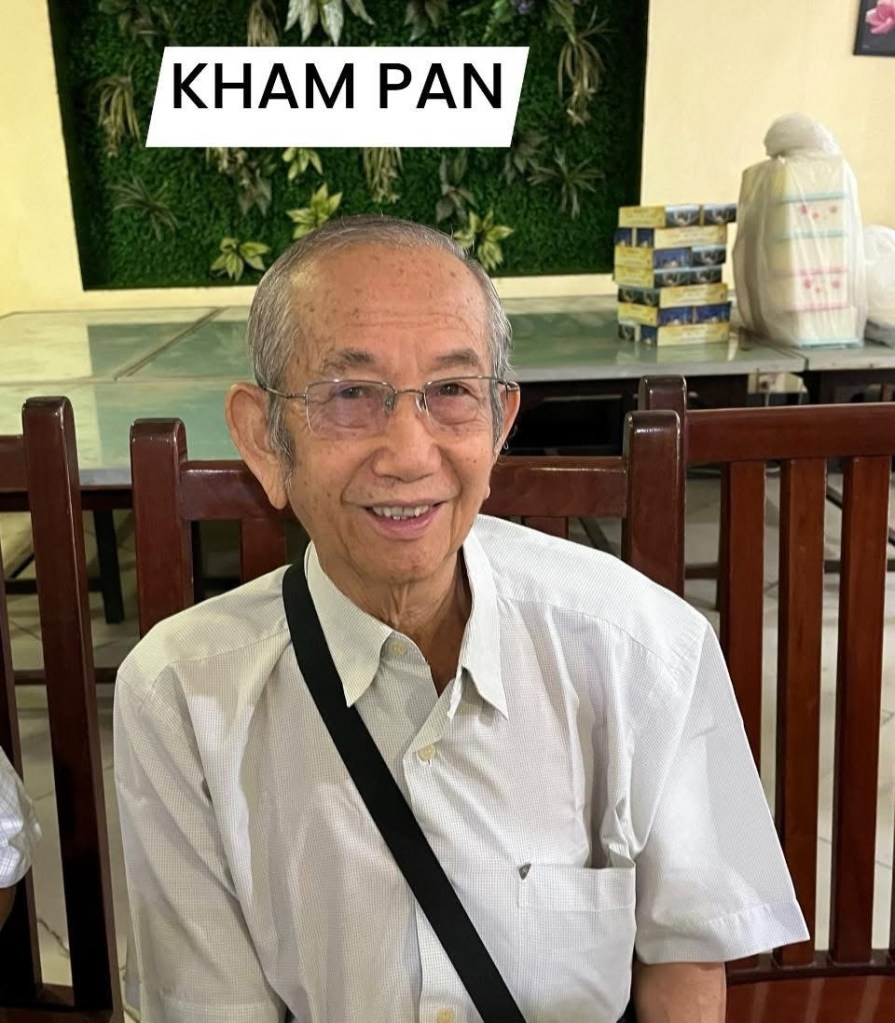
Sai Kham Pan : No. (2) in Singles; Doubles Champion with Kyi Nyunt; Led RIT to Inter-Institute Championship
Kham Pan
RIT Badminton
RIT Badminton
Myint Kyi (GBNF), Bishnu Shahi (GBNF), Khin Maung Nyo, Tommy Shwe (GBNF) represented RIT in Badminton
RIT Team
Saya U Thein Lwin (EE, GBNF) was President of RIT Badminton Association
RIT won the Inter-Institute Trophy. The team was led by Sai Kham Pan.
Kham Pan would bring back shuttle cocks, which were still good but discarded at the Burma Selected Training Camp, for his hostel mates.
Due to tight schedules for some tournaments overseas, Kham Pan had to take books along to study for the examinations. Had excellent foot work and strong wrists. Needed training partners at RIT. Myint Sein (M69) was his partner in training and competition. Khin Maung Win (Sargalay, EP69) was his reliable training partner; he would be given 10+ bonus points for the 15 point game.
3. Basketball
RIT, RASU & Burma Selected
U Thein Han (RIT Maths, elder brother of Khin Khin Kyu (A67)) was Burma Selected in his student days.
U Soe Win (EP69, GBNF) was Captain of the RIT Basketball team. Tommy (69er, GBNF) was a member of the team.
Lyo Kyin Sein (Mabel Lee, T69) represented RIT in Basketball.
San San Myint (Helen, T69) rooted for the RASU Basketball team & Sam Wu, who played not only for RASU, but also for Black Cat and the Burma Selected. They live in Fremont, California.
Birth of Basketball
Basketball was invented by James Naismith (born in Canada) at YMCA in Massachusetts, USA in 1861.
He later wrote the rules for the game.
Basketball Championships
The Basketball championships include
NCAA Tournament (“March Madness”) : College teams are organized into Four Regions (each with Seeds 1 to 16); The Knock out tournament has First round, Second round, Third round (Sweet sixteen), Quarter finals, Semi finals (Final Four) and Finals.
NBA Post-season (late April to mid June) : Eight teams each from the Eastern Conference and Western Conference are seeded 1 to 8. The tournament consists of First round, Second round (Conference semi-finals), Conference Finals and NBA Finals. Boston Celtics had won the most NBA titles to date. In 2019, Toronto Raptors became the first Canadian team to win the NBA title.
Summer Olympics : 1992 Barcelona Olympics featured the “Dream Team” from US. The team comprised of Larry Bird (Boston Celtics) & Magic Johnson (Los Angeles Lakers) as Captains; Michael Jordan & Scottie Pippen of the Chicago Bulls; Karl Malone & John Stockton of Utah Jazz; Patrick Ewing (New York Knicks); David Robsinson (San Antonio Spurs); Charles Barkley (Philadelphia 76er); Chris Mullin (Golden State Warriors); Clyde Drexler (Portland Trailblazers) & Christian Laettner (Duke University). Chuck Daley (Detroit Pistons) was the Head Coach. Mike K (Duke University) was an Assistant Coach.
World Championship.
Players
The five-on-five (with five players on each team) is the most common.
The five players are usually called Point Guard (PG), Shooting Guard (SG), Small Forward (SF), Power Forward (PF) and Center (C).
There are variations such as the “Small Ball Lineup” which substitutes a Center with another Guard or Forward.
Back Court
The Back Court is made up of a Point Guard & a Shooting Guard.
Point Guard handles the ball and usually distributes it to open players. Earvin “Magic” Johnson and Steph Curry are some of the well-known Point Guards who helped their teams win multiple NBA titles.
Shooting Guard is an excellent scorer. Michael Jordan led Chicago Bulls to six NBA Championships (with two 3-repeats). Klay Thompson, “Splash Brother” of Steph Curry, is a Shooting Guard and an excellent defender.
Front Court
The Front Court is made up of a Small Forward, a Power Forward & a Center Forward.
Scottie Pippen, as Small Forward, helped Michael Jordan win six Championships.
Kevin Durant, as Small Forward, helped Golden State Warriors win back-to-back titles in 2017 and 2018. He won Finals MVP award for both years.
Dennis Rodman, rebounding Champion, was Power Forward on three Chicago Bulls Championship teams. He also won two NBA titles with the Detroit Pistons.
Draymond Green, as Power Forward, helped Golden State Warriors win NBA Championships in 2015, 2017, 2018 and 2022.
Wilt Chamberlain, famed Center, scored 90+ points in a single game.
Bill Russell (Center, Boston Celtics) won 11 NBA titles as player and coach. The Most Valuable Player (MVP) Trophy is named after him.
Techniques
The techniques evolve over the years.
The “Triangle Offense” of the Chicago Bulls gave over to the “Small Line-up” without a “true” center.
3-point shooting from beyond the arc now make or break games.
Some teams play two Centers. Some use three or even four guards at a time.
2025 NBA Finals is being played with two teams, which had not won a Title. Oklahoma City Thunder’s old team was Seattle Supersonics. OKC would not acknowledge the Supersonics Title as its own. Indiana Pacers made to the Finals 25 years ago.
4. Body Building & Weightlifting
Kaya Bala ကာယဗလ Members
Commander Maung Maung : First Mr. Burma (Maung Bama မောင်ဗမာ)
U Ba Kun (Maung Bama) : became a movie actor
Dr. Kyaw Sein (M65) managed the RIT Weightlifting & Body Building Team.
Thein Aung (Met72) won Mr. RIT in 1968.
Thein Aung
5. Boxing
Rangoon University Boxing Club
The club was founded (or re-established) by
Myint Khine (Norman, SPHS57, C63)
Tin Wa (SPHS57)
San Aung (Sonny, St. Albert’s 58, formerly SPHS)
Hla Ngwe Tin (Frankie, SPHS59)
and their friends.
Boxing Champions
Myint Khine (Norman, Civil)
Tin Wa (Chemistry)
San Aung (Sonny) — became UBA Senior Pilot
Hla Ngwe Tin (Frankie, Physics Hons)
Myint Thein (RASU Chemistry)
Maung Maung Thaw (RIT Class of 70)
Burma
Kyar Ba Nyein, Thein Myint, Tin Tun and Stanley Majid are some boxers who represented Burma in international competitions (SEAP, Asian Games, Olympics).
“Kyar ကျား” stands for “Tiger” as well as “Checkers”. Per his request, Ludu Daw Ah Mar wrote about Kyar Ba Nyein in her book “Mandalay Thar and Mandalay Thu” but only after Kyar Ba Nyein’s death. Kyar Ba Nyein competed in International competitions and was a certified referee and judge. He founded a club and coached young boxers (which later became champions). He also sponsored Myanmar Let Hway matches.
World
Rocky Marciano is the only undefeated Heavyweight Champion. He inspired Sylvester Stallone to make “Rocky Balboa” movies.
Muhammad Ali won the 1960 Olympics Light Heavyweight title as Cassius Clay Junior. He became “Louisville Lip” for predicting the round in which his opponent will be knocked out. He beat Sonny Liston to become the World Heavyweight Champion. He was stripped off his title for refusing to join the Draft. He was Champion thrice. He had Parkinsonism and ailments attributed to having taken many blows to his head. There are books about “I am the Greatest”. He is known for “Float like a butterfly. Sting like a bee” and for lighting the Olympic Torch in 1996 Olympics held in Atlanta, Georgia, USA.
6. Gymnastics
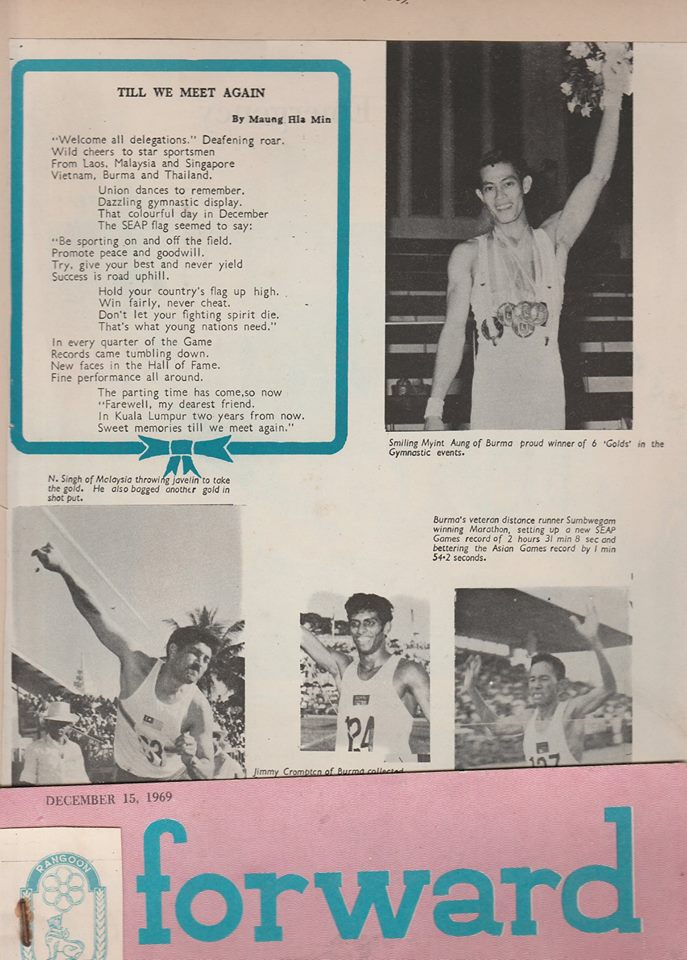
U Myint Aung Won several Golds in SEAP
Competition
Men : Individual & Team
Women : Individual & Team
Highlights
Men : Japan, China …
Women : Soviet, USA …
Olga Kolbert
Nadia Commenchi
Simon Biles
7. Hockey
here are two kinds of Hockey :
Field Hockey
Ice Hockey
Field Hockey
In our younger days, TheinbyuGround was used for Field Hockey.
Suk Bahadur (Captain of the Burma Soccer Team) and Dr. Harry Saing (Htut Saing, Past Captain and Gold of RUBC, Pediatric Surgeon of “Ma Nan Soe – Ma Nan San” fame as Chief Assistant to Dr. Pe Nyun) also excelled at hockey.
Rangoon University and later the All Universities and Institutes had hockey teams.
For some time, India and Pakistan were power houses in hockey. Several nations have overtaken them.
RIT Hockey
According to Ko Khin Maung Zaw (KMZ, EC76), he was the last defender of the RIT Hockey team. Ko Thura Thant Zin (RUBC Gold, Past President of BASES, M76) was the goalkeeper.
The photo of some RIT Hockey players in the 70s was provided by KMZ.
Standing L-R: Thein Lwin (EP77-CA/USA), Tin Myint (), Pyo Win (M76), Htay Aung (M76-Aus??), Saya U Tin Hlaing (M), Tin Oo Thein (C7x-Australia), Khin Maung Zaw (EC76-WA/USA), Thein Htun Aung (EC76-CA/USA), ??, Ebrahim Mehta (Met76-NY/USA)
Sitting L-R: Thein Zaw (??), Moe Zaw, Soe Aung (M75-CA/USA), Moosa Mehta (EC73-WA/USA), Win Bo (EC76-TX/USA), Nay Win (EP7?-??), Dudley Moore, Win Aung Nyunt @ Cho Pi (EP76-GBNF)
Ice Hockey
NHL (National Hockey League) is made up of ice hockey teams from US and Canada.
A game is played over three periods of 20 minutes each. A tied game will go into overtime.
At any given time, six players from a team are on the ice. Typically, there is a goalkeeper, two backs, two wings and a center forward. Power plays occur when a player is penalized for a specified period.
The teams vie for Stanley Cup.
8. Judo
Myint Lwin (Charles) : University, Burma
Tin Maung Aye : University, Burma
Most Champions are from the Army
9. Rowing
Tin Htoon (S) and Harry Saing (B) won Venables Bowl for Coxless Pairs at 1958 ARAE Regatta in Calcutta
Tin Htoon (S), Harry Saing (B), Victor Htun Shein (2), Sunny Teng (3) and Sein Htoon (Cox) won Willingdon Trophy for Coxed Fours at 1960 ARAE Regatta in Colombo
Phyu Lin, Htaik San & younger generation won medals in FEARA
10. Sailing
Rangoon Sailing Club
The Club was located in Inya Lakes.
Some members represented Burma in SEAP Games.
Some RUBC Old Members also joined the Sailing Club.
Gold medal winners
U Maung Maung Lwin : Commodore of the Sailing Club; former Weightlifting Champion
Dr. Richard Yu Khin : Also excelled in Swimming
Dr. Khin Thein (Victor Thein Maung)
Dr. Tun Thein (George Thein Maung)
Silver medal winners
U Tin Htoon (Past Captain and Gold of RUBC)
U Hla Khin (Navy)
Leading females
Shirley Thein Maung
Rosie Thein Maung
Editor’s Notes :
Dr. Richard Yu Khin (GBNF) had two Facebook pages. One was exclusively for Sailing.
11. Soccer
Introduction
Shwe Yoe (Scott, author and teacher) introduced soccer to Diocesan Boys High School.
Some not so young people abroad remember “U Thant (UN Secretary General), and the once “Soccer Power House in South East Asia (and beyond)” when they hear the name “Burma”. Burma won the Asian Games soccer.
Outstanding Footballers
Suk Bahadhur (Asian Selected) : Forward turned Midfielder; Played for Shan States, Army and Burma
MaungMaung (Asian Selected) : Midfielder
Khin Maung Tun (Asian Selected) : Goalkeeper
Tin Aung (Asian Selected) : Goalkeeper
Auro (Customs)
Aung Khin (RU)
Aye Maung (BAF)
Aye Maung (PWD)
Ba Pu (Mandalay)
Chan Tha (RU)
Collegian Nay Win (RU)
Gale (Railways)
Gwan Shein (Army)
Hla Htay (Irrawaddy, Customs)
Hla Tin (Kee)
Htoo War
John Tint (RIT)
Kenneth Shein (RU, Railways)
Ko Ko Gyi (Tenessaarim, Customs)
Kyaw Htin (RIT, PWD)
Kyaw Min (Navy)
Maung Maung (RU)
Pe Khin
Soe Myint (RU)
Soe Myint Lwin (RIT, EPC)
Than Soe (Suttee, Municipal)
Tin Aung Moe
Tin Han (Railways)
Toe Aung (Dio)
Tun Kyi (RU, Railways)
Tun Wain (Tenessarim, Customs)
Vernon Stiles (Tin Tun, Army)
First Division
The First Division matches are played at Aung San Stadium. The teams include Rangoon University, Burma Railways, Customs, Army, Navy and several others. The bottom teams in the League get relegated to Second Division the following year.
Inter State and Division
The Inter State and Division (ISD) Soccer tournament was established in 1952. Shan States with Suk Bahadhur won the inaugural tournament.
Mandalay (with Ba Pu), Tennessarim (with Ko Ko Gyi), Irrawaddy (with Hla Htay) became Contenders and/or Champions. Many players were recruited by the First Division teams and some became Burma Selected.
RU Soccer
For several years, Rangoon University First Eleven competed as a First Division team at the Aung San Stadium.
Saya Nyein (Diocesan Alumni) was RU Coach. He gave an interview to the BERB team for the Diamond Julibee of Rangoon University.
Than Win (Captain of RU football) studied in the US and served as a Director of SPED (Sports and Physical Education Department) or equivalent. His spouse retired as Professor of Botany Department, RU.
Some early players include
Chan Tha : Engineer, Past Captain of RUBC & Captain of the Prome Hall team [mostly engineers]
Tun Kyi (Engineer)
Nay Win, Collegian (Academy winner)
Kenneth Shein : Father of Pale / Pearl
Tint Lwin
U Chan Tha’s team won the Inter-Hall Soccer Trophy for three consecutive years. U Tin Swe (EE53, GBNF) was a star player.
RIT soccer
U Myo Myint Sein (A58) was a well-known soccer player.
Kyaw Sint (Edward, T70) was among the preliminary members for Burma Selected, when his career was cut short by a “vicious tackle” by Tin Han.
Kyaw Htin (C67), Soe Myint Lwin (EP68, GBNF), John Tint, and James Tint played for [youth and/or senior] National Soccer Teams.
Khin Maung Lay (T68), Myo Nyunt (C69), Myint Sein (Jabu), pKhin Maung Lay (Mutu, M70), and Sai Thein Maung (C70) are some who represented RIT in soccer.
Maung Maung (Burma) was RIT Sports Officer.
RIT Saya Soccer Team
by Saya U Soe Paing
Reading about the communications from Richard Khoo (Dr. Aung Soe, C61) and seeing the list of Sayas in the 1966-67 handbook brings back memories of our soccer team.
As I remember it was from 1964 to 1968 or 1969. We played against
the senior students of different majors Civil, Mechanical, Electrical etc.
the sayas at GTI and Natmauk Technical Institute
the Burma Air Force officers.
We also played in the annual tournament for RIT Staff. The staff teams are
the Sayas
Workshop staff
Lab staff
Hostel staff and
the youth team from the RIT compound.
As I remember these were the people in the team.
1. Goalkeepers: Richard Khoo (Civil), Maurice Kyaw Zaw (Chemistry), & Sein Myint/Ah Sein (Petroleum)
2. Defenders: Ko Maung Maung Than (Textile), Ko Aung Soe (Math), Ko Aung Hla Tun (Met), Ko Sann Tint (Elect), Christopher Maung (Civil), U Tin Swe (Elect), Ko Tin Win (Mech).
3. Midfielders: Ko Tin Maung Nyunt (Agri), Desmond Rogers (English), Ko Khine Oo (Elect), Ko Maung Maung Win (Mech), Ko Tin Hlaing II (Mech).
4. Forwards: Ko Pike Htwe (Chemistry), Ko Aung (Math), Ko Tin Hlaing I (Agri), Ko Soe Min (Elect), Ko Kyin Soe (Auto) & myself (Elect).
We rarely practiced but we enjoyed playing the games. We split games with the GTI sayas & the Air Force officers. We beat the Natmauk sayas and we won more than we lost in the RIT staff tournament. But I am sure we lost more than we won against the final year students. Would appreciate comments on this; especially on the names I missed in the team.
Soccer Tournaments
Many people in Myanmar follow the World Cup, Premium League, European Cup … in addition to the soccer tournaments (Asian Games, SEA Games, …) in which Myanmar compete.
12. Swimming
Burma Selected Swimmers / Divers
Aung Khine Cho (Attended UCC)
Aung Than (Freestyle)
Aye Kyaw (Joined Navy)
Chit Soe (became Diplomat)
Derek Lynsdale (Backstroke)
Htay Aung (Swimming, Water Polo)
Maung Kyi (Breaststroke)
Mya Thee (Free style; became Coach)
Nanda Kyaw Zwar (Butterfly)
Nyunt Soe (became Coach)
Oscar Thwin
Philip Smythe (Diving; Moved to Australia)
Richard Yu Khin (excelled in Yachting)
Thet Win (Diving; Became Sports Officer)
Tin Maung Ni (SEAP & Asian Games Gold Medalist; Competed in Olympics)
Willie Huie (Breaststoke)
William Smythe (Diving; Moved to Australia)
Elizabeth Smythe
Marlar Swe
Mary Soe
Polly Ba San
Sally Soe
Sylvia Thwin
Dr. Richard Yu Khin wrote :
I was on the swim team with Tin Maung Ni who is a gentleman. Ten of us were trained by Mr. Matsuda who was on the Japanese national swim team. Mr. Matsuda was manager of a Japanese company in Rangoon. He made us swim six 50 metres sprints, with one minute interval. The time difference for the 1st and 6th sprints — the decline curve should be limited. This was the first time we had scientific training in swimming. Tin Maung Ni was the only Asian, other than Japanese, to win a gold medal in swimming at the Asian Games. The US Embassy provided a goodwill tour of USA for Tin Maung Ni. He is from the Kachin State.
Dr. Richard Yu Khin wrote :
Swimmers trained by Mr. Matsuda in 1959 include Derek Lynsdale (backstroke), Aye Kyaw (Hla Yee Yee’s cousin) and Willie Huie (breast-stroke). A few years ago saw photo of Thet Win at Kokine Swimming Club, and Aung Than who is working as swim coach in Bangkok. Derek Lynsdale’s mother was a Lecturer at Rangoon University who moved to a university in East Africa subsequent to military coup in 1962. Aye Kyaw was Tin Maung Ni’s deputy in the Burma Navy.
Ba Than Nyunt wrote :
(U) Tin Maung Ni won Gold medals not only in SEAP games but also in two successive Asian Games. If my recall is right, he is from Bhan Maw, Kachin State.
13. Table Tennis
Terms
Table Tennis is also known as “Ping Pong”.
The term “Ping Pong Diplomacy” is used for jump starting the “strained relations” between China and US. The friendly Ping Pong matches preceded the diplomatic talks.
Saya Mao Toon Siong
Saya Mao
Saya Mao Toon Siong (M62) was Burma Champion in both Singles and Doubles.
Competed in the Table Table World Championship held in Beijing in 1961.
Served as Coach of the Burma National Team.
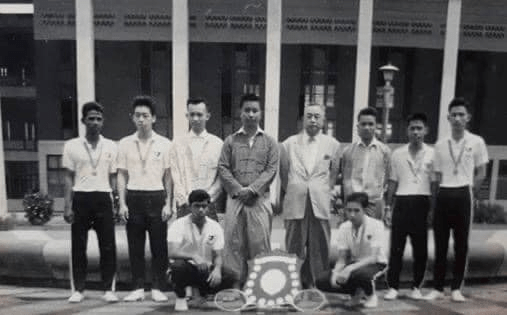
Managed the RIT Table Tennis teams, which won the Inter-Institute Trophy. The Inter-Institute Trophy winners include U Maung Maung (67, Sin Gyi, good Chess player), U Win Myint (EE67), and U Stanislau Lou (M67, see photo).
Taught us Thermodynamics.
Attended SPZP-2016 in Yangon, and also paid respect to Sayagyi U Ba Than. Saya U Tin Htut, Saya U Tin Win (Bago) … also visited Sayagyi that day. Saya said that he would send me a “good” copy of the group photo.
After moving to the US, Saya continued playing Table Tennis.
Ba Wai
Champion in the next generation
Stan Liou
Stan was a member of the Inter-Institute Trophy winning team.
Founding member of NorCal RITAA and served as Chair, BOD (Board of Directors).
Changes
Changes in the equipment (e.g. size of bat, texture [using pimples]) and the rules.
In the early days, most players used the “handshake” grip. Later, players used the “pen holder” grip.
There used to be games of 21 points.The winner is decided over the best of three (or five).
In recent tournaments, the game is shorted to 11 (or so) points. The winner is decided over the best of seven.
Stan Liou
14. Tennis
Tennis Court
Tennis courts are provided by RU, RIT & Organizations (e.g. at Theinbyu Court).
Some homes have Tennis Courts and often produce good Tennis players at the University and National level.
Outstanding Tennis Players
Joe Ba Maung : National Champion in Singles; National Champion in Mens’s Doubles with Than Lwin; National Champion in Mixed Doubles with Ruby Kha; Taught English at RIT; Transferred to Railways & oversaw the Burma Railways Sports programs
Than Lwin : Succeeded Joe Ba Maung as National Champion
Tin Si & Khin Si
Pe Than Maung
Thein Tun (Robert)
Biak Cin
Maung Maung Lay (Ah Pu Lay)
Than Htut
Aung Htay
Khin Maung Aye
Tin Aung Cho
Mu Mu Khin (Daphne Tha Doke)
Joy Hla Pe
Jacqueline Tun Shwe
Daw Ruby Kha (Mixed Doubles)
RIT Tennis
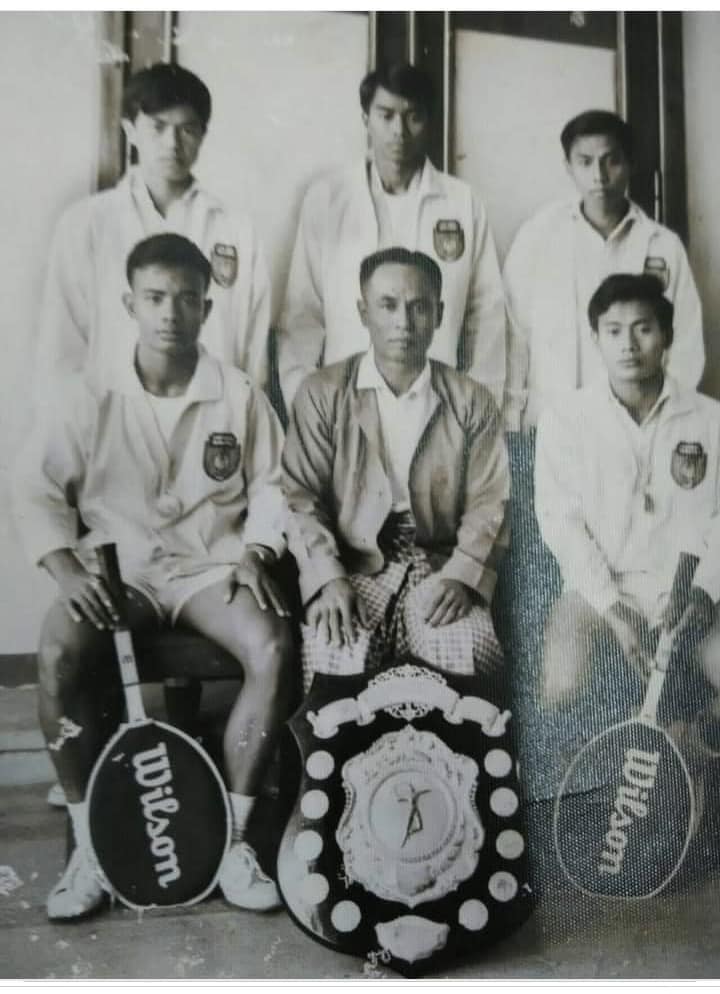
RIT Tennis
Kyaw Sint (E Tai, T70, GBNF) National Junior Champion in high school. University First Eleven in soccer.
Soe Tha (EC67)
Tun Kyi (M67, GBNF)
Kyaw Nyunt (M69, GBNF)
James Than (70)
Htin Myaing (A66)
Several sayas (Dr. Aung Gyi, U Tin Hlaing, U Tu Myint) played Tennis.
International
The US Tennis Federation sent some players (Stan Smith, Bob Lutz) to Burma to hold Tennis Clinics and Exhibition Matches (with selected Burmese Tennis stars).
Rod Laver (“Rocket”) won two “True” Grand Slams: First time as an Amateur Second time as a Professiona Won all four Grand Slam Tournaments (Australian Open, French Open, Wimbledon, and US Open) in the same Calendar year.
Some (e.g. Andre Agassi) won Career Grand Slam.Won the four Tournaments at different times in their career, but not in the same Calendar year.
Pete Sampras has many Wimbledon titles (played on the Grass Court). He has more Grand Slam titles than Andre Agassi, but he never won the French Open (played on the Clay Court).
Novak Djokovic currently holds the World Record for the most Grand Slam titles. He beat the records set by Roger Federer & Rafael Nadal.
“Who is the Greatest Of All Times (GOAT)?” varies with the sports writers and players spanning several generations.
15. Thaing
It is a generic name for Burmese/Myanmar Martial Arts.
It comprises of
Bando (unarmed combat Thaing)
Banshay (armed combat Thaing).
There are various schools of Thaing.
One famous school was started by Saya U Pyi Thein. He is familiar with the other martial arts. He translated/adapted a book on selected martial arts around the world. An unconventional one is called “Naga Ngway Thaing” where the practitioner “emits” a “horrible” smell that can knock out people.
U Chit Than succeeded U Pyi Thein as head of their Thaing movement.
Some Thaing sayas are experts in other disciplines.
U Po Kyaw Myint was a University Lecturer in Burmese. His pen name is Myan Sar Gon Kyaw Myint.
U Mya Thein is a lawyer. He also starred in the movie “Thadin Kyut Tat Myee” along side Jolly Swe.
U San Maung taught Academy Nyunt Win for “Bando Lugalay Hnit Thuzar”. He also performed stunt in several movies.
U Min Din was a high school Luyechun. He volunteered for the Thaing demos at YTU and other schools.
Saya U Tin Maung Nyunt (M60) served as President of the RIT Thaing Association. Dr. Tun Aung Gyaw (EC69) served as Joint Secretary.
There is also a school called “Thaing Byaung Byan” (literally meaning “Reverse Thaing”).
Dr. Khin Maung U (SPHS63) wrote :
Had a chance to treat “Thaing Byaung Byan” U Maung Lay in Wards 19&20, Yangon Hospital, in the 1970s. Can’t recall his illness. His school of martial arts handle and weapons (e.g., sticks, spears, etc.) in an eccentric manner (i.e., not in a balanced manner, holding one side longer than the other), and by so doing, confuses the usual martial arts fighters.
16. Track and Field
Once upon a time, Burma was known as a power house of athletics in SEAP games.
Burma placed first in the 2nd SEAP Games held in December 1961 at Rangoon, Burma.
Burma also dominated in the 1969 SEAP Games.
Some competed in the Asian Games and in the Olympics.
Male Track and Field stars
1969 SEAP Games
Kyaw Mra and Kyaw Khin (Hurdles)
Soe Mra, Win Mra and Maung Maung Mra (Pole vault)
Myee Tun Naw : Burma & SEAP Champion for Marathon
Shin Bwe Gan : Burma & SEAP Champion for 5000 and 10000 meters; Runner up in the early Marathons, and eventually ended as a Champion
Jimmy Crampton (SPHS) : Burma & SEAP Champion for 800 m & 1500 m
Soe Aung : Won 100m and anchored 4 x 100m relay in 2nd SEAP Games
Tun Mra & Tun Naung / Noel Tin : Won Gold in 4 x 100m relay
Sai Thein Maung (RIT) : Sprint (RIT, Inter-Institute)
Female Track and Field stars
Gracie Carr (100m & long jump)
Tin Pu
Khin Htay
Jennifer Tin Lay (Javelin and shot put)
Than Than
Weik Pan (Marathon)
Inter-school Tournaments
In the early days, there were T&F competitions as part of the Annual Sports (e.g. in SPHS), Inter-school Tournaments and Inter-Institute Tournaments. Some (e.g. Jimmy Crampton) went on to shine as Burma Selected. A few (e.g. Kyaw Mra, Kyaw Khin) later chose to become National Coach.
It is sad to learn that many students would not (or could not) give some time to train and excel in sports in addition to being good in their studies.
KMZ wrote :
Jimmy Crampton is an OP, Old Paulian. If my memory serves me one of his running partners was non other than our own Dr. Rafiul Ahad, ex-UCC.
Rafiul was chosen for the preliminary team for Burma. He placed third in the hurdles. His coach was Kyaw Khin (Old Paulian, and Burma Champion in hurdles and 1500m).
17. Volleyball
Kyaw Nyunt, Tin Maung Swe, Kyaw Han, Than Soe, Tha Din, Ohn Shein : Burma Selected
Ko Aye, Shwe Kyaw : RU & BIT
Orson, Edison, Khin Kyaw Nyein : RIT
Aye Thein, Maung Maung, Myint Maung : RIT EE
18. Weightlifting
U Zaw Weik : Competed in the Olympics; Co-founded Burma Olympic Committee
U Aung Gyi : World Record in Snatch for Flyweight Division in the early 1970s; Competed in World Championship & Munich Olympics
Dr. Kyaw Sein, Khin Win, Jimmy Kyin, Thein Aung, Ohn Khin : RIT Weightlifting and Body Building
19. Yachting
U Maung Maung Lwin (SEAP Gold)
Dr. Richard Yu Khin (SEAP Gold)
Dr. Khin Thein / Victor (SEAP Gold)
Dr. Tun Thein / George (SEAP Gold)
Htoo Aung Gyi (SEAP Gold)
U Tin Htoon (SEAP Silver)
U Hla Khin (SEAP Silver)
Dr. Shirley Thein Maung (Burma)
Dr. Rosie Thein Maung (Burma)
20. All-round Athlete
Memories of Ko Aung Khin
by Ko Zaw Min Nawaday (EP70)
Ko Aung Khin was in his second half of his 5th year class (either Mech or Agri, not sure) when we entered RIT in Nov 1964. One good thing about Hostel life in those days is, your dining table mates were selected for you at random.
I was blessed to be at the same dining table with Ko Aung Khin in the May ‘ 65 semester, when he was starting his final year and I got to know him. Ko Aung Khin played on the RIT B soccer team that year, and in the basketball finals against A&S, at the RC center, we cheered for him.
Again in Nov ’65, I remember cheering him play on the RIT volleyball team against A& S.
Best of all, I was among the few RIT fans sitting in front of the high jump pit at the Universities Sports day January 1966, and we cheered as he out jumped Mg Mg Mra of A & S to take the gold.
Years late, 1975, I saw him again when I went to the tractor repair shop at 9th mile for help in repairing our tractors in our factory. He was the second in command at that place then. Last time I saw him was at the bus stop in Kamayut late 1975. I was rushing to get on the No 8 bus and I heard ” Pyai Pyai Pou “. Turned around and there he was, standing and smiling at me.
I really like to know where Ko Aung Khin is now. Maybe Emma Myint may know. She and Tin May Soe were among the RIT girls taught how to play volleyball by Ko Aung Khin back in 1964/65.
Editor’s Notes :
During our RIT days, Saya U Maung Maung Than (Tex) was Chair of the RIT Sports Council.
RIT Selected were awarded certificates.
I received a certificate for representing RIT in Rowing.
I remember Ko Aung Khin receiving five (or more) certificates. He represented RIT in Track and Field, soccer, basketball, volleyball, and hiking.
21. Sports & Studies
In the early days, there were several people who were excellent in their studies and in their hobby sports.
For example, Dr. Harry Saing (Htut Saing, Pediatric Surgeon, GBNF) served as Captain of RUBC. He won with U Tin Htoon (A60) the Venables Bowl for Coxless Pairs in 1958 ARAE (Amateur Rowing Association of the East) Regatta in Calcutta. He won with U Victor Htun Shein, U Sunny Teng, U Tin Htoon (A60) and U Sein Htoon (M63) the Willingdon Trophy for Coxed Fours in the 1960 ARAE Regatta in Colombo. He was Burma Selected in Hockey and Cricket, and represented the Faculty of Medicine in T&F and soccer. He assisted Dr. Pe Nyun (Dick San Pe, Pediatric Surgeon, Past Captain and Gold of RUBC) for the first ever operation in Burma to separate conjoined twins (Ma Nan Soe and Ma Nan San). He later taught at the University of Hong Kong, and also served as Patron for the Hong Kong Rowing Club. Per his wishes, his ashes were scattered in the waters near the Hong Kong Rowing Club.
Even in our days, there were several people who were good in sports and studies. Htay Aung (M69), Sai Kham Pan (EP69), Wunna Sithu (EC71), and Victor Aung Myin (M72) are some examples.
Class of 69
Aung Gyi Shwe & Khin Than Myint Tin competed in Track and Field.
Soe Win was Captain of RIT Basketball. Han Sein & Tommy are team members.
Sai Kham Pan was Burma Selected in Badminton. He also led the RIT team to Inter-Institute Championship. Myint Sein & Bishnu are team members.
Htay Aung was Burma Selected in Water Polo. He also led the RIT Swimming & Water Polo teams. Sein Myint, Jimmy Kyin, Win Maung, Hla Kyaing, Swan Kong & Han Sein are team members.
Class of 70
The Class of 70 was represented in RIT and/or Inter-Institute by the following :
Source : Ohn Khine (M70) and Zaw Min Nawaday (EP70)
Sai Thein Maung (100m, Triple Jump, RIT Goalkeeper, organizer of Intake of 64 & 65)
Shein Kee Gae GBNF Track & Field (Long Distance runner)
Saw Mg Mg Htwe Track & Field (still running long distance races)
Oo Myint (Mn) Track & Field
Win Naing Track & Field
Lei Lei Chit (Ch) Track & Field
Nan Khaming (A) Track & Field
Maung Maung Thaw (E) Track & Field, and Boxing
RIT Sports Stars
Aung Khin (M66) is a multiple-sports athlete. He won the Inter-Institute High Jump by beating the Burma selected from RASU. He also represented RIT in soccer, volley ball, basketball and hiking.
Khin Maung Lay (Henry, T68) and Victor Aung Myin (M72) are also star athletes.
22. Sports Coverage
Before the advent of TV and the Internet, one has to follow sports via radio and newspapers.
Won a ticket from my “Morals and Manners” class teacher to see 1960 Rome Olympics Documentary at Thamada (President) Cinema. Armin Harry (Germany) won the 100m and 200m. Rafer Johnson (US) won the Decathlon. Abebe Bikila (Ethiopia) won the Marathon while running bare foot. He would successfully defend his title in 1964 Tokyo Olympics.
I was able to watch the 1972 Munich Olympics on a color TV.
Fast forward. … Usain Bolt retired as the “fastest man”.
Hope we will see well-rounded student athletes in Myanmar again.
Aung Win (C87) wrote :
Jennifer Tin Lay is still working as sport instructor in International School Myanmar near my home. Teachers of Myanmar (mostly female teachers) cannot guide students to do sports activities. Hardly expect again for well-rounded student athletes.No block selected.
23. Olympics
Origin
Modern Olympics was a revival of the ancient games held every four years at Olympia.
The four year interval is called an Olympiad. The ancient Greeks use Olympiad instead of years when describing dates.
Pierre de Coubertin created the International Olympic Committee (IOC) in 1894.
IOC selects a city or cities to hold the Summer Olympics and the Winter Olympics. The two Olympics are interlaced.
There were no Olympics in 1940 and 1944. Berlin Olympics was held in 1936. London Olympics was held in 1948.
2020 Olympics scheduled for Tokyo was postponed to July 2021 due to COVID-19.
2024 Olympics was held in Rio de Janerio.
2028 Olympics will be held in Los Angeles
Drama in the Olympics
Summer Olympics has its share of drama.
Berlin Olympics (1936)
The 1936 Summer Olympics was held in Berlin and was attended by Adolf Hitler (who promoted the supremacy of the Aryan race). Jesse Owens, a black athlete from the USA, won four Gold medals : 100m, 200m, 4 x 100m relay, and Long Jump.
The drama occurred in the Long Jump event. Jesse Owens was having some problems in the Long Jump when the German competitor Lang advised him to leave about six inches gap behind the broad to prevent overstepping and getting disqualified. Jesse took the advice, regained his poise and went on to win the Long Jump Gold. It was a mark of true sportsmanship.
Note : Jesse Owens later “took back” the story. Since there was not much media coverage, there is no proof or disproof.
Munich Olympics (1972)
Mark Spitz (USA) won seven Gold medals in record time in swimming : 100m & 200m Freestyle, 100m & 200m Butterfly, 4 x 100m Freestyle relay, 4 x 200m Freestyle relay, and 4 x 100 Medley relay. Saved energy by skipping the trials of selected relay events.
Olga Kolburt (USSR) was awarded a couple of Perfect Ten in Gymnastics.
Eleven Israeli athletes were kidnapped (shown live on TV) and murdered by Black September. Mossad took several years to track down & decimate Black September.
Boycotts
USA boycotted the 1980 Olympics held in Moscow.
USSR retaliated with a boycott of the 1984 Olympics held in Los Angeles.
Olympians
Some Olympians went on to have illustrious careers.
Johnny Weissmuller, swimming champion, gained fame as Tarzan in the movies.
Cassius Marcellus Clay Jr., Light Heavyweight Boxing Champion, went on to become Mohammad Ali, three time World Heavyweight Boxing Champion.
Media Coverage
During my SPHS days, there was no television in Burma.
I received a ticket from Brother Austin as a prize to see the “1960 Rome Olympics” documentary at Thamada (President) cinema.
I was in the UK and was fortunate to see the 1972 Munich Olympics on a Color television.
24. RU Sports
Sports Council
Rangoon University used to have a Sports Council. It awards Varsity Blue and Half Blue to the selected athletes.
In our days, U Maung Maung Than (T, GBNF) chaired the RIT Sports Committee. Certificates were presented to the RIT sportsmen and sportswomen at the Annual gathering.
25. RIT Sports
Sports Committee
Chaired by U Maung Maung Than (Tex, GBNF); Later became Rector of YTU
Committee would organize an Annual Dinner where Certificates were awarded to the students who had represented RIT in the various sports.
Received a certificate for Rowing.
Ko Aung Khin (M66) received six certificates.
Inter-Institute Championships
Over the years, RIT won several Inter-Institute Championships. They include
Badminton
Chinlon
Rowing
Soccer
Swimming and Water Polo
Table Tennis
Tennis
Track and Field (Cross Country)
Weight lifting & Body building
News and photos are covered in several of my posts.
26. World Cup
Started as a challenge between selected European soccer clubs and South American soccer clubs.
Several boycotts in the early years.
Number of entries for World Cup was expanded initially to 16 teams, and later 24 and 32 teams.
There will be 48 teams on or before 2026 World Cup to ensure a larger participation from all continents.
Jules Rimet Trophy
The trophy (named after the founding President) was won outright by Brazil, after winning the World Cup three times in
Sweden (1958) with a youngster named Pele
Chile (1962) with Garrincha — born with deformed feet — joining Pele
Mexico (1970) with Pele as the Best Player
FIFA World Cup Trophy
Trophy which succeeded the Jules Rimet Trophy is handed over to the winner during the presentation. Winner only takes home a replica.
Brazil won the Trophy twice, making it the only nation with five World Cup Titles.
Germany is second with four titles, but got knocked off in World Cup 2018.
Won the World Cup as a player and as a manager
Mario Zagallo (Brazil) : 1958 and 1962 as a player, 1970 as Manager
Franz Beckenbauer (Germany) : 1974 as Captain, 1990 as Manager
Didier Deschamps (France) : 1998 as Captain, 2018 as Manager
Youngest Teenager to score in a Final
Pele (Brazil, 1958) is the youngest teenager to score in a World Cup Final. He was 17 years old.
Youngest Team to win World Cup
Brazil (1970) is the youngest team to win the World Cup
World Cup 2018
France (2018) is the second youngest team to win the World Cup. Mbappe (France, 2018) is the second youngest teenager to score in a World Cup Final. He was 19 years old.
50 players in World Cup 2018 were born or raised in France.
Video Assistant Referee (VAR) was employed in World Cup 2018.
Team Sports
Soccer is a team sports
Many star players fail to win the World Cup. Puskas (Hungary, 1954) Johan Kruff (Netherlands, 1970) Ronaldo (Portugal) has not won yet
Transformation
Soccer has transformed from a highly offensive game — with Just Fontaine (France) scoring 13 goals to win the Golden Boot — to a mostly defensive game albeit with smart counter-attack game. Henry Kane scored 6 goals in 2018 World Cup. His closest challengers scored 4 goals, and the number of assists was used for the tie-breaker.
In our younger days, most soccer teams used 2-3-5 (two backs, three mid-fielders & five forwards). Then came 3-4-3, 4-2-4, 4-3-3, 4-3-2-1 (with lone striker) and 5-3-2.
Viewing games
We once tried to join a crowd on or near the German Embassy compound showing a movie of the then World Cup match. It is now common to join “watch parties” for interesting matches if one does not want to see on the smart devices and the large screen TVs alone.
U Khin Maung Zaw (EC76, UCC) wrote :
In many sports, the street smart is one of ingredients if you will in addition to the skills and talent, practice and experience to become a successful.
There was an interesting article on the current crops of successful young footballers coming out of Paris suburbs. Many of these suburbs are economically challenge, inhabited by immigrants especially from African nations. Quite a few of these players could not even find their place in the French National Team and ended up playing for one of their parents’ nations.
It is also interested to note that as the many European countries transformed from somewhat monolithic to multi-culture societies their National teams started to reflect this trend.
His name literally means “remain on a [fishing] net”.
Grapevine says that Saya’s mother had a few miscarriages.
When Saya was conceived, his mother wanted to make sure that the child would be born safe and sound.
She performed a “Yadaya” ယတြာ (or ritual) requiring someone close to her hold a “net” ပိုက်and “catch” ဖမ်းthe baby (in her imagination).
He received his Ph.D from Monash University, Australia. The dissertation is based on Stochastic Processes (and related topics).
For many years, he served as Reviewer for research papers.
I had the opportunity to audit his course on “Linear Programming” course and learn his teaching style.
I also worked with him and others from the various Mathematics Departments (e.g U Tin Hlaing, U Sein Min, U Soe Nyunt) on the “new” High School Mathematics Project.
ICST
UCC evolved into DCS (Department of Computer Science), ICST (Institute of Computer Science and Tehcnology) and UCSY (University of Computer Studies Yangon).
Saya Dr. Tin Maung was the inaugural Rector of ICST. His successors include Dr. Kyaw Thein and Dr. Pyke Tin.
The photo was taken at the 5th Acariya Pu Zaw Pwe of ICST and UCSY.
She wanted Saya Chit (Dr. Chit Swe) to be a Yahan (temporary monk) at a monastery in Sagaing Hills.
Some monastery compounds are named after the towns in Irrawaddy Delta.
Ko Myint Oo and I offered to be temporary monks with Saya Chit.
Ordination
There are two phases to become a monk :
(a) Novitiation (ရှင်ပြု Shin Pyu) or “Lower Ordination” to become a “Ko Yin” (ကိုရင် novice)
(b) “Thane Wyn” or “Higher Ordination” in a Sima (သိမ် Thane) to become an Upazin ဥပဇင်း
At least five monks are needed to conduct the “Higher Ordination”.
In Yangon, the ceremony takes 15 – 30 minutes.
The final part is an Exhortation by the Preceptor. As Mentor to the newly ordained monk, the Preceptor shares his knowledge and gives advice.
When the Preceptor learned that Saya Chit is a renowned Professor and the Founder/Director of UCC, he gave “extra” attention by exhorting for “close to three hours”. Sayadaw enjoyed illuminating Saya Chit.
Since I could barely squat, I was “offered” a pillow to rest my knees and I was allowed to “kneel down” on the pillow.
Tourist Guide for a day
After a week of monkhood, we returned to our lay life sans (without) our hair.
Ko Myint Oo is a social animal. He knew two Guides from “Tourist Burma”. At least one of them was new. They had a reasonably tough assignment. They had to guide an American student (in his senior year at a New York University) trying to write a first-hand report about the Buddhist artifacts in Mandalay and Sagaing.
The Guides requested help from Ko Myint Oo. Ko Myint Oo shunted and in a moment I became a volunteer tourist guide explaining (to the best of my knowledge) Buddhism & rites and rituals.
The Eagle made a soft descent And perfect rendezvous Does not the module represent A fantasy come true
To travel through that cold void space To have that faith in science To face death squarely in the face Yes, man acted with defiance
Man set foot on an alien world In July Sixty Nine That small step from the bravest man Was a giant leap for mankind
The walk in one sixth gravity Rock samples from the moon Three men who spoke with brevity For science what a boon
No event can ever equal That sublime unique mission The Apollo’s triumph will make the people Extend their own vision
Are we not brothers here on earth So let us all unit There will be heaven here on earth If we all cease to fight
The Apostle Of Non-violence by Hla Min
Gandhiji
A man of true principle With spirit invincible He sacrificed his pleasures Faith and freedom were his treasures
No arms did he carry No threats made him tarry No torture or prison Could change his decision
He led all protests Despite threats and arrests All races and creeds Revered his deed
He could not see his dreams come true The whole world grieves his loss too Though he cared not for fame His name will indeed remain In history, O Great Gandhiji
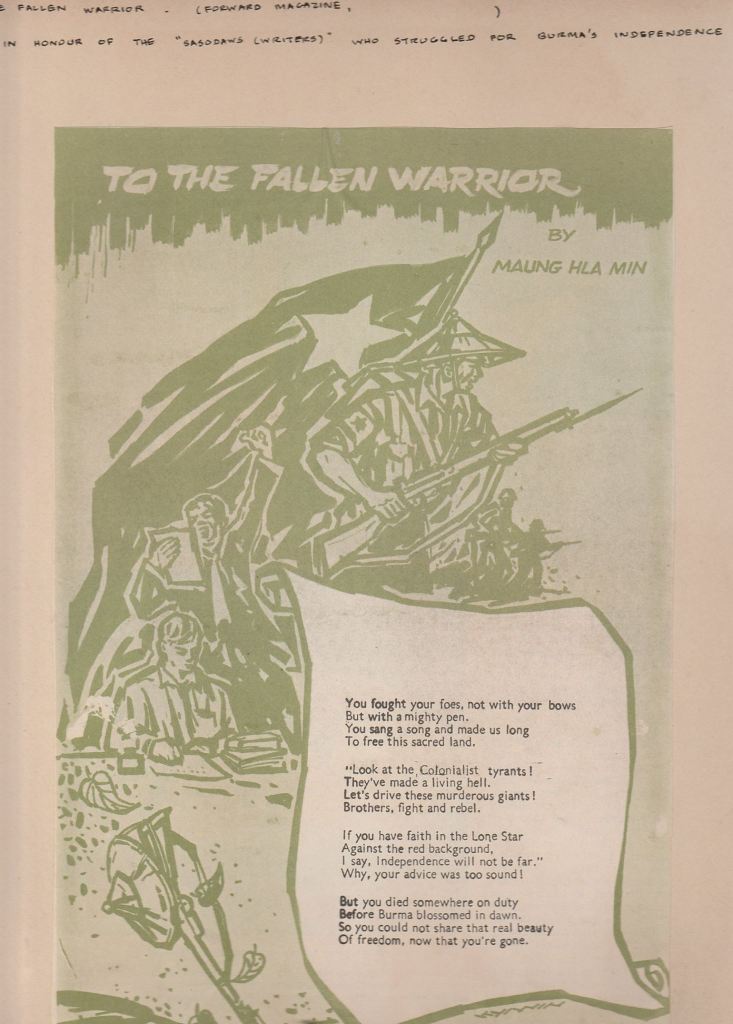
To The Fallen Warrior by Hla Min
To the fallen warrior
You fought your foes not with your bows But with a mighty pen You sang a song and made us long To free this sacred land
“Look at the colonialist tyrants They’ve made a living hell Let’s drive these murderous giants Brothers, fight and rebel
If you have faith in the Lone Star Against the red background I say Independence will not be too far” Why your advice was too sound
But you died somewhere on duty Before Burma blossomed in dawn So you could not share the real beauty Of freedom now that you’re gone
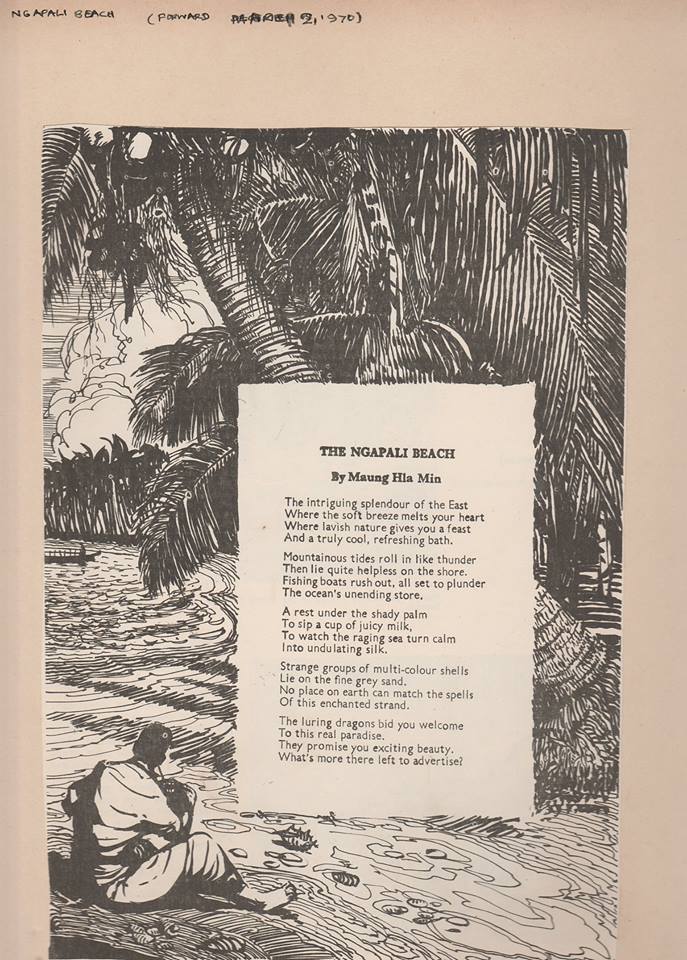
The Ngapali Beach by Hla Min
Ngapali
The intriguing splendor of the East Where the soft wind melts your heart Where lavish nature gives you a feast And a truly cool refreshing bath
Mountainous tides roll in like thunder Then lie helpless on the shore Fishing boats rush out all set to plunder The ocean’s unending store
To sit under a shady palm To drink a cup of juicy milk To see the raging waters turn Into undulating silk
A variety of multi-colored shells Lay on the fine grain sand No place on earth can match the spell Of this enchanted strand
The luring dragons bid you “Welcome” To this real paradise There’s lots of fun, excitement, beauty What’s more there left to advertise?
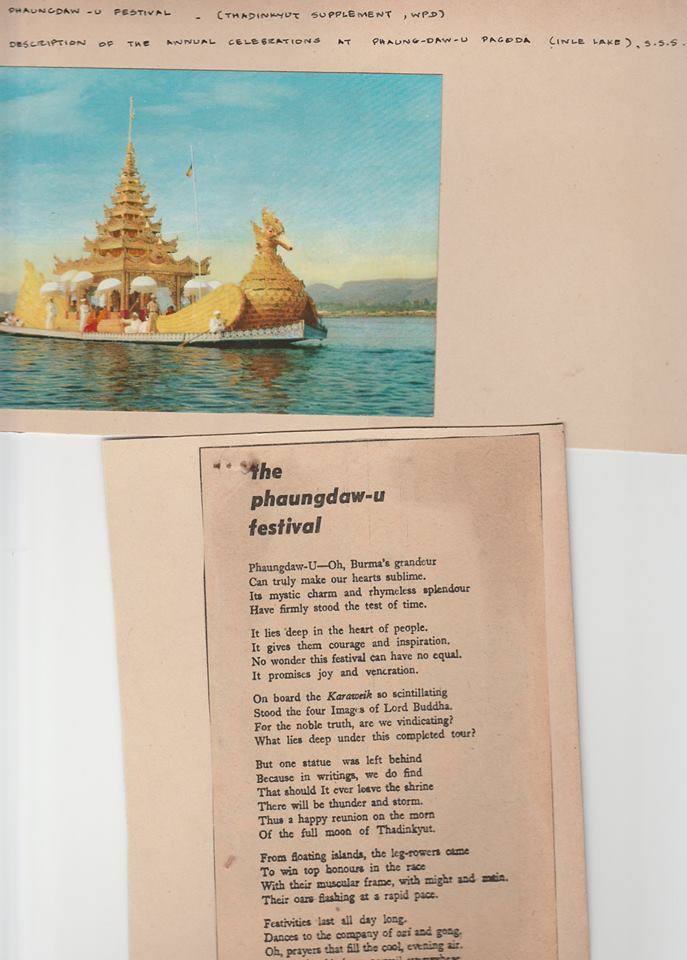
The Phaungdaw-u Festival by Hla Min
Phaungdaw-u
Phaungdaw-u, oh Burma’s grandeur Can truly make our hearts sublime Its mystic charm and rhyme-less splendor Have firmly stood the test of time
It lies deep in the heart of people It gives them courage and inspiration No wonder this festival has no equal It promises joy and veneration
On board the Karaweik so scintillating Stood the four images of Lord Buddha For the Noble Truth are we vindicating? What lies deep under the completed tour?
But one statue was left behind Because in writings we do find That should it ever leave the shrine There will be thunder and storm Thus a happy reunion on the morn of the full moon of Thadinkyut
From floating islands the leg rowers came To take part in the race With their muscular frame, with might and main Their oars flashing at a rapid pace
Festivities last all night long Dances to the company of ozi and gong Oh, prayers that fill the cool evening air May loving kindness prevail everywhere
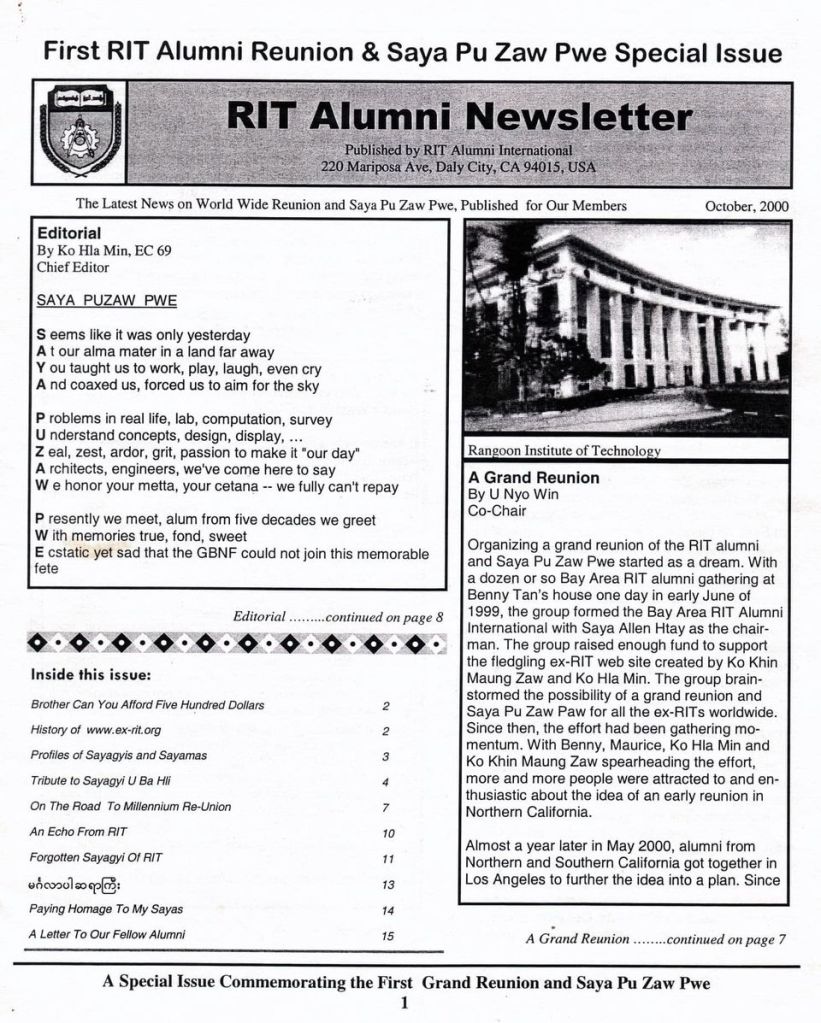
SAYA PUZAW PWE by Hla Min
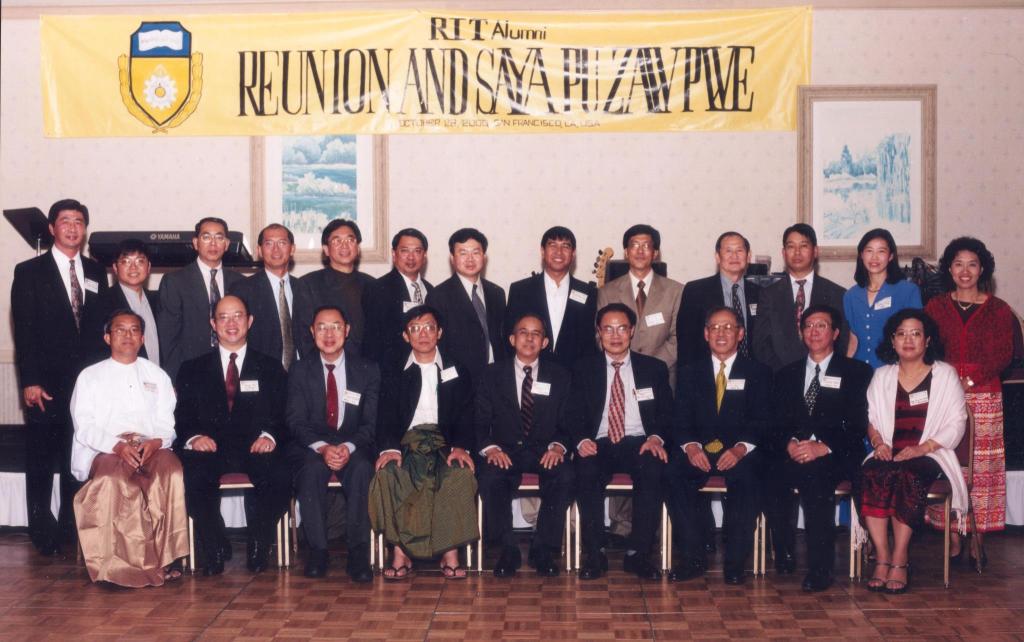
SPZP-2000 Organizers Poem
Seems like it was only yesterday At our alma mater in a land far away You taught us to work, play, laugh, even cry And coaxed us, forced us to aim for the sky
Problems in real life, lab, computation, survey Understand concepts, design, display, … Zeal, zest, ardor, grit, passion to make it “our day” Architects, engineers, we’ve come here to say We honor your metta, your cetana — we fully can’t repay
Presently we meet, alum from five decades we greet With memories true, fond, sweet Ecstatic yet sad that the GBNF could not join this memorable fete
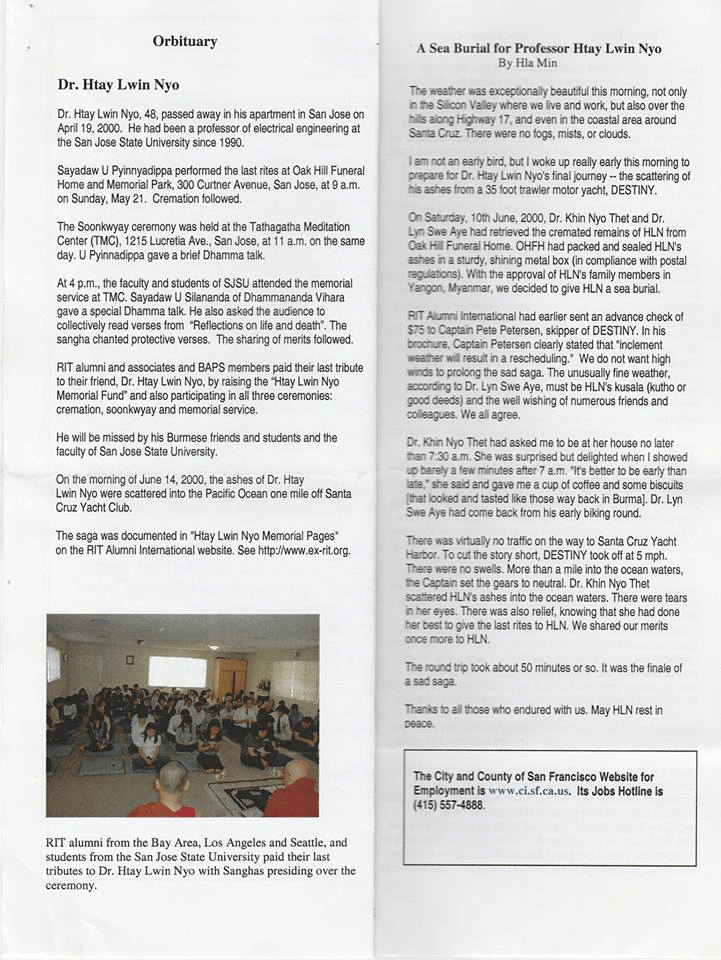
HTAY LWIN NYO By Hla Min
Htay Lwin NyoArticles about HLN
Tribute to Dr. HTAY LWIN NYO (ex-rit, ex-ucc) Part-time Professor, EE, SJSU (1951 July – 2000 April)
He was a genius, a researcher, a friend Teaching was his passion to the very end A jack of all trades, a doctorate of one You name it, he knows it! there’s a lot he has done
Long ago he gave away a patent for a dollar With a heart so big and true, real worthy of a scholar Invest, movie script, cook, paint, car repair, … Never showed off wealth and prizes; he’s a gem so rare
News of his death — alone at home — rocked throughout the land Young, old were shocked, but they all flocked to give a helping hand On this day in May of Y2K we pray from the bottom of our heart
“Htay Lwin Nyo, we’re proud to say that though you’ve passed away you’ve done a huge part to unite kindred spirits your legacy is here to stay.”
Summary
Men On The Moon — In honor of Apollo 11 mission in July 1969
The Apostle of Non-violence — For the Centennial of Mahatma Gandhi
To The Fallen Warrior — Scholars who fought for Burma’s Independence
The Ngapali Beach — Vacation with friends; Vacation with family; Guest lecturer at Shwe Wah Gyaing Luyechun Camp in 1988
The Phaungdaw-u Festival — Inlay Khaung Daing Luyechun Camp in 1964; Vacation with friends; Vacation with family
SAYA PUZAW PWE — Written for the First RIT Grand Reunion and Saya Pu Zaw Pwe in San Francisco in October 2000
HTAY LWIN NYO — Written for an alumnus of RIT and UCC who passed away unexpectedly in San Jose, California