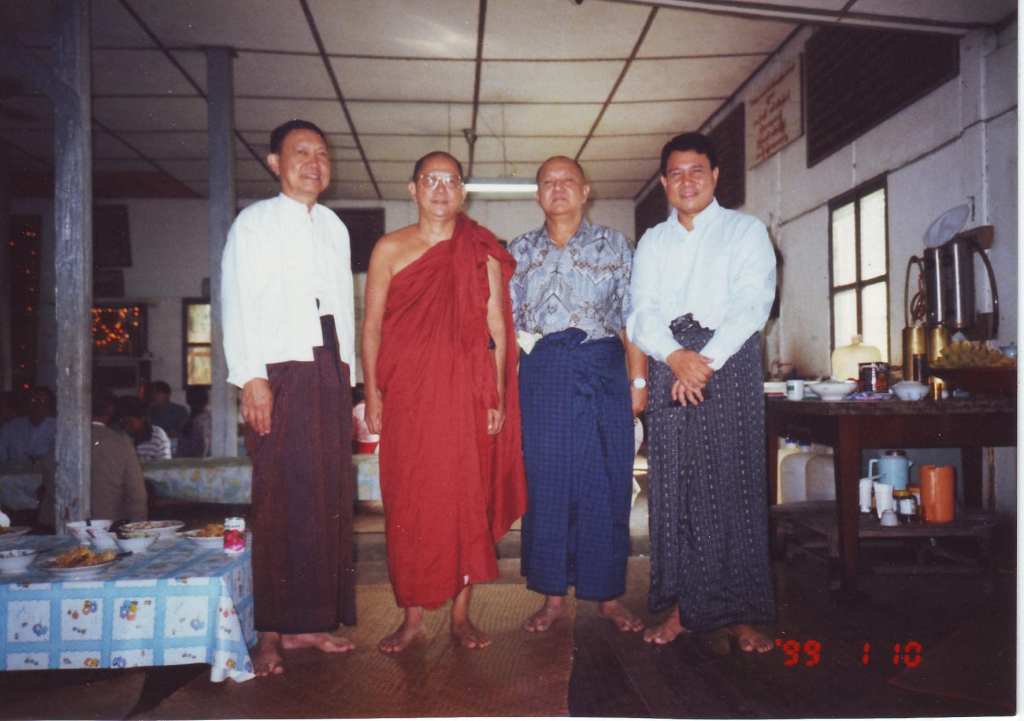
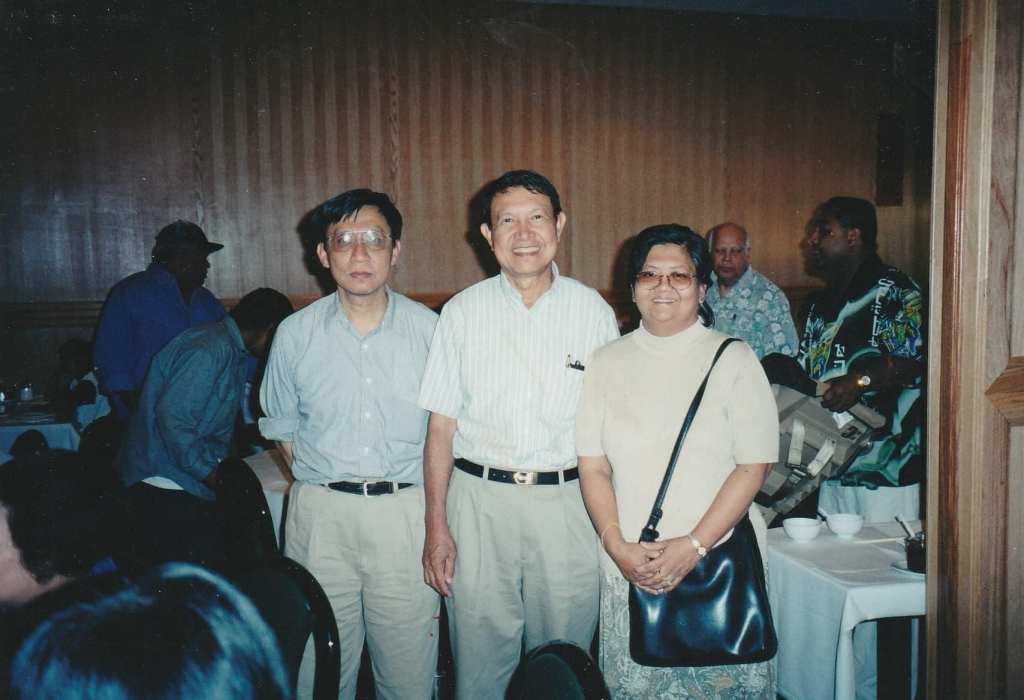
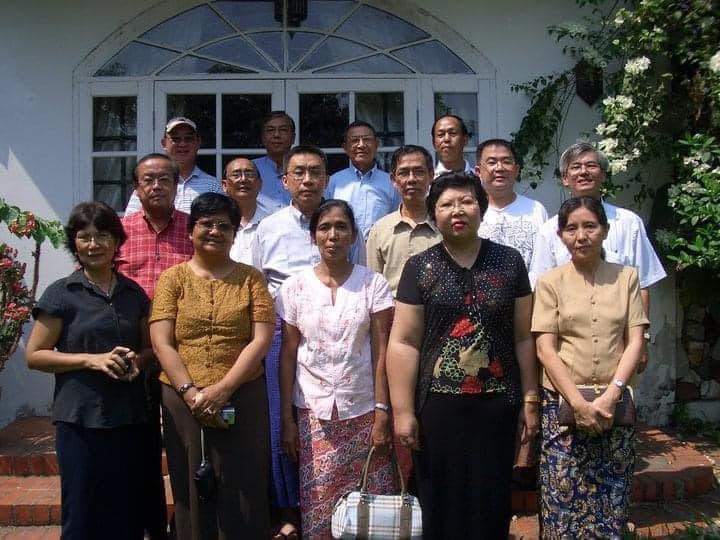
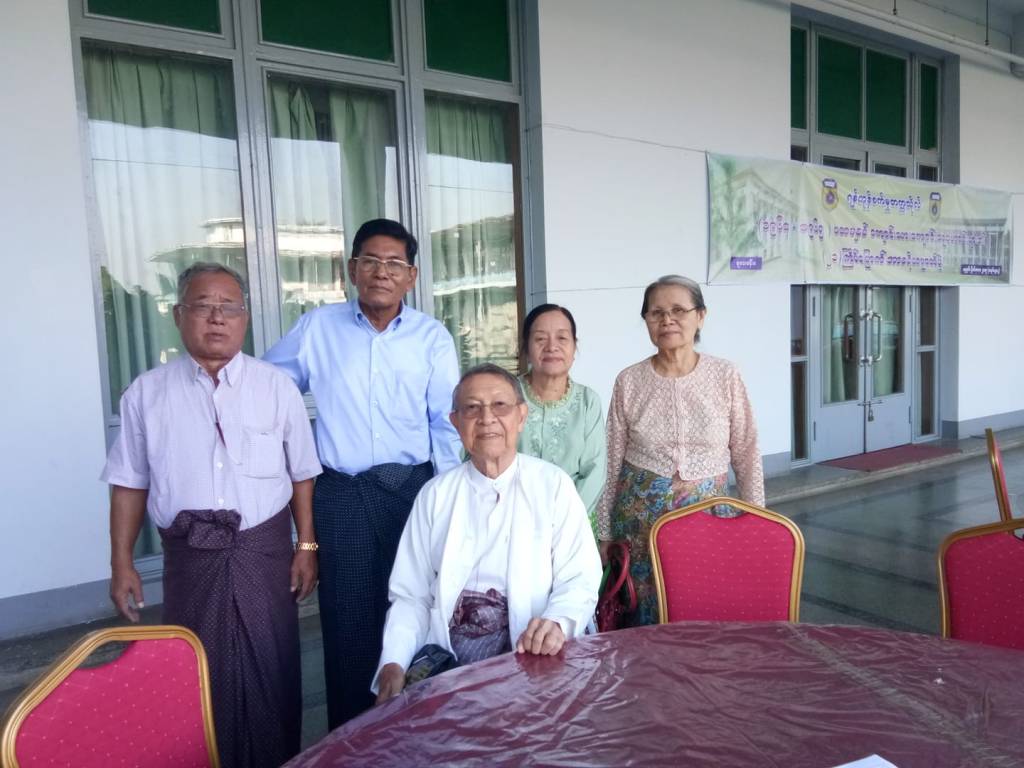
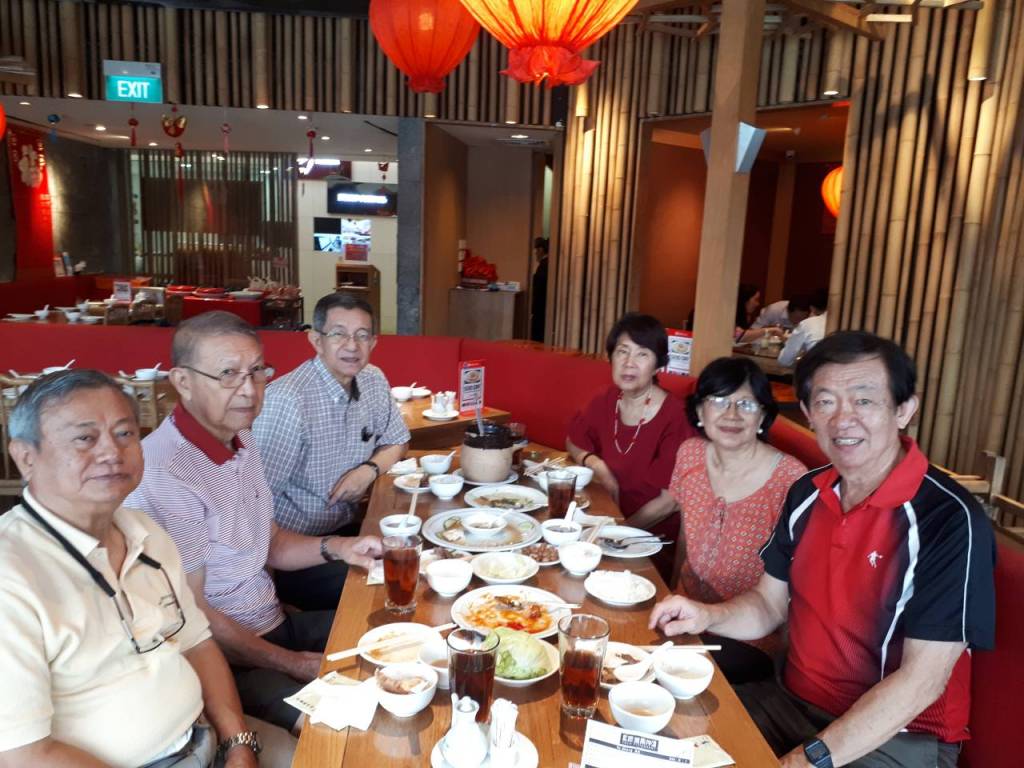
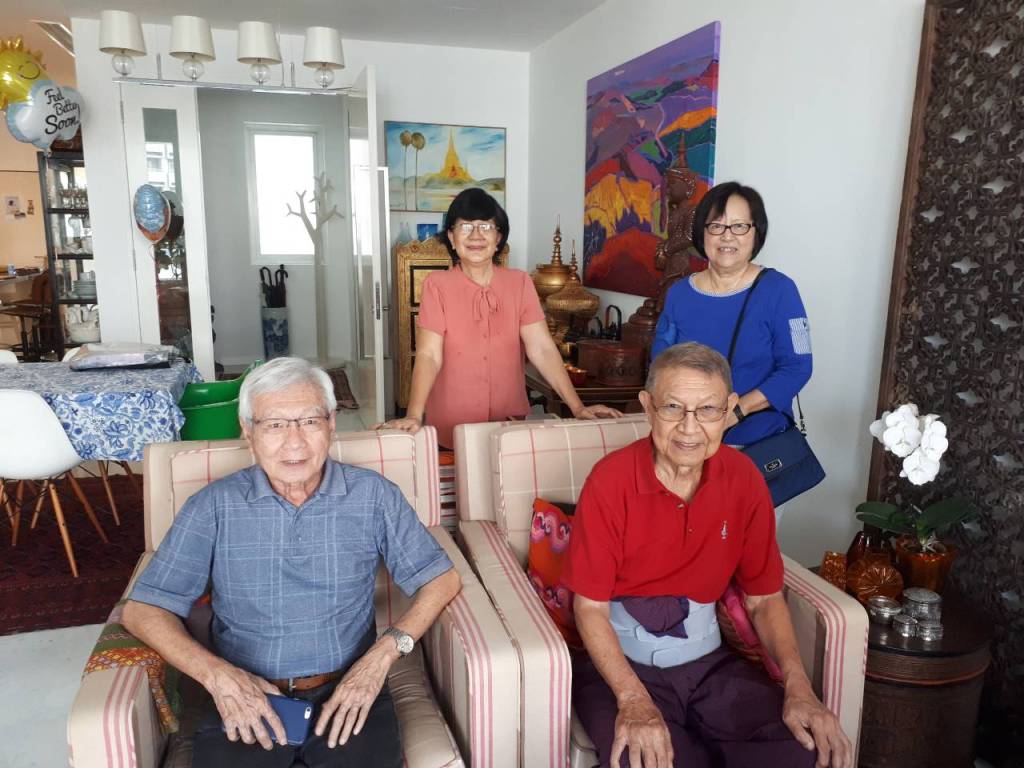
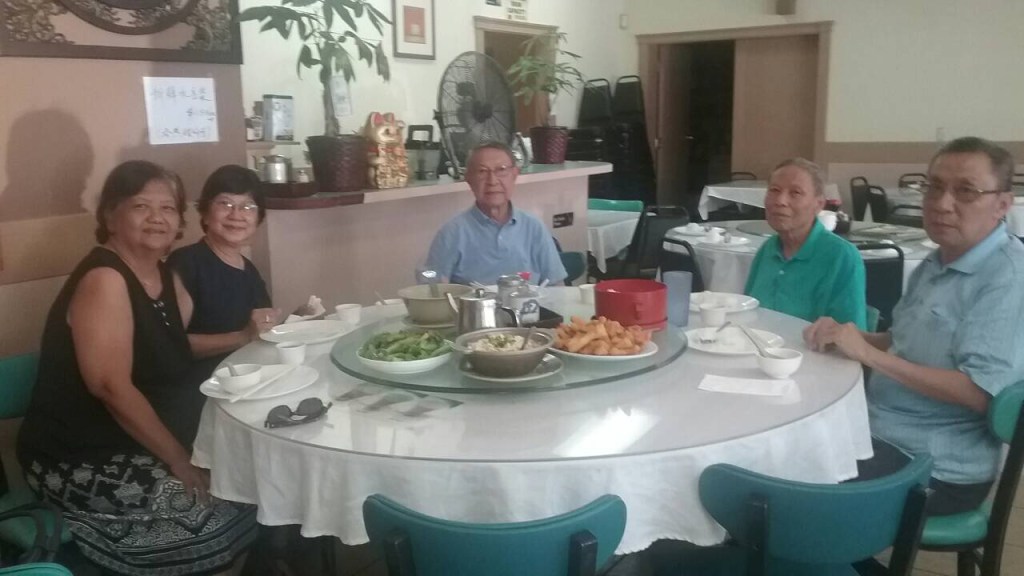
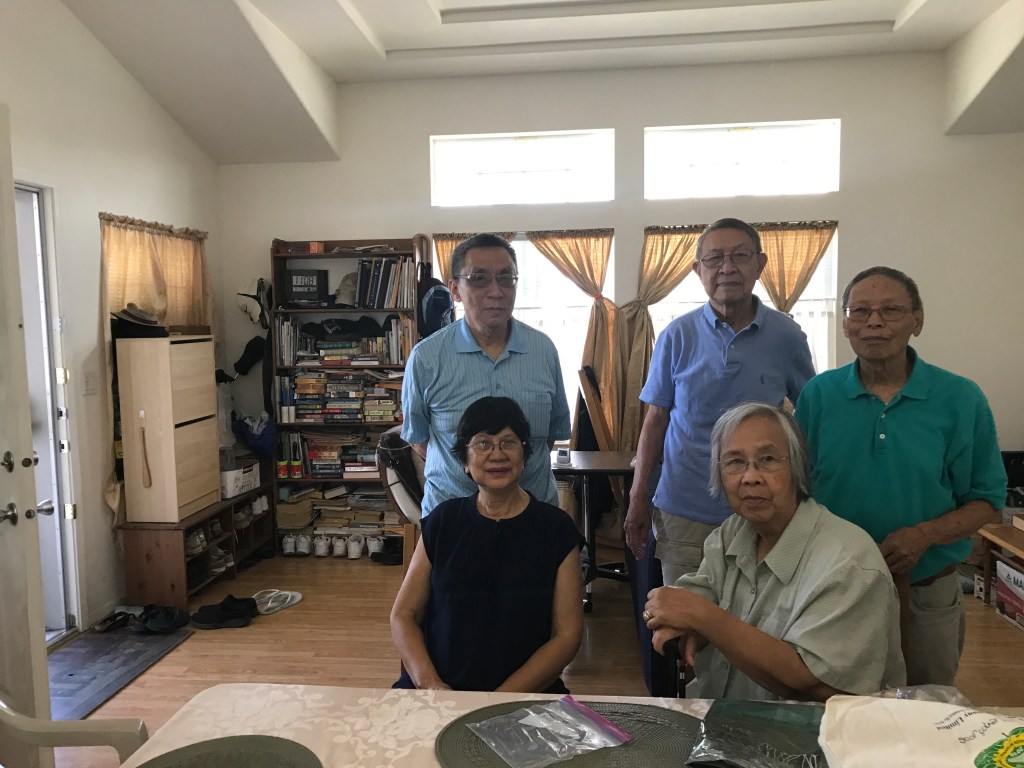
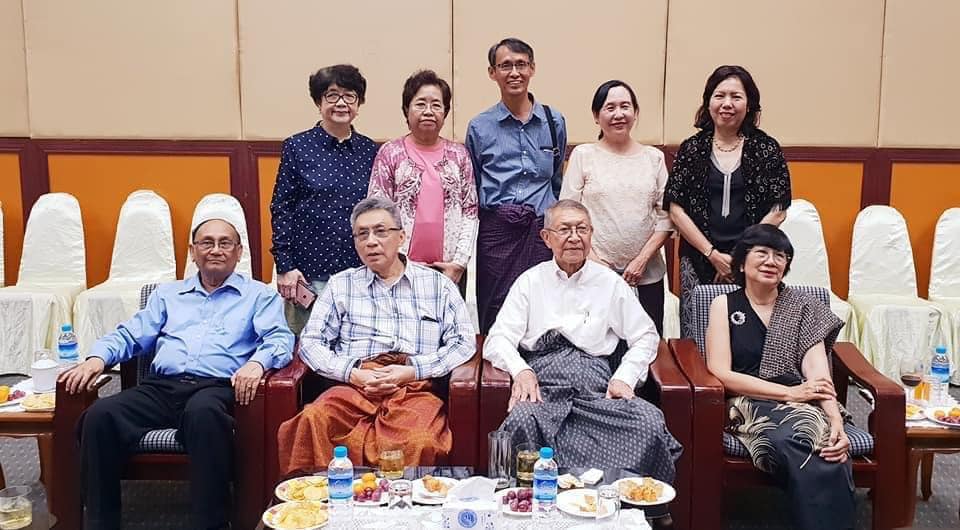
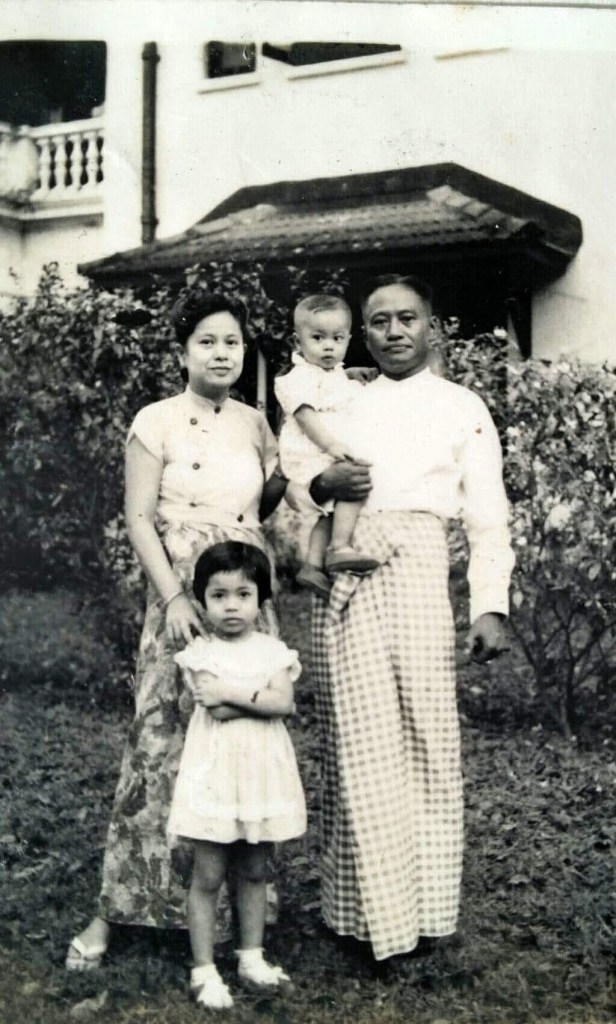
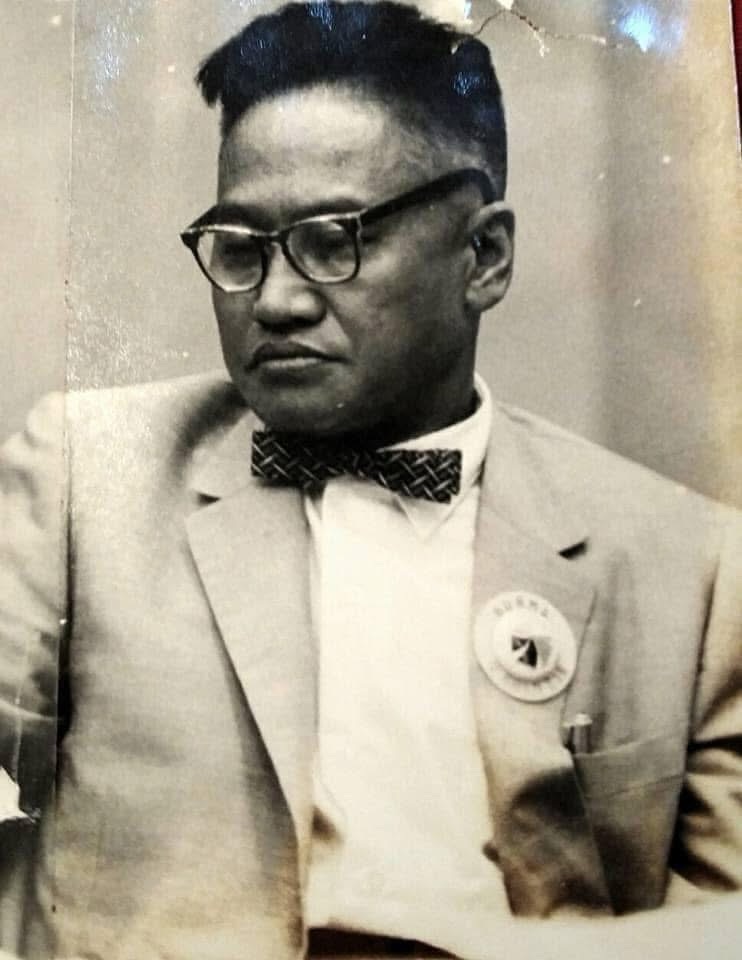
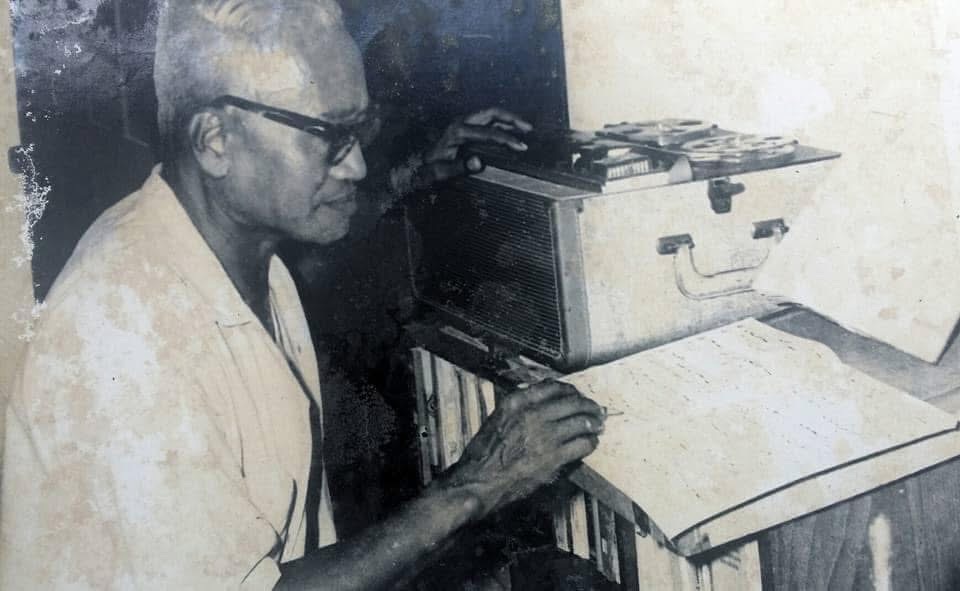
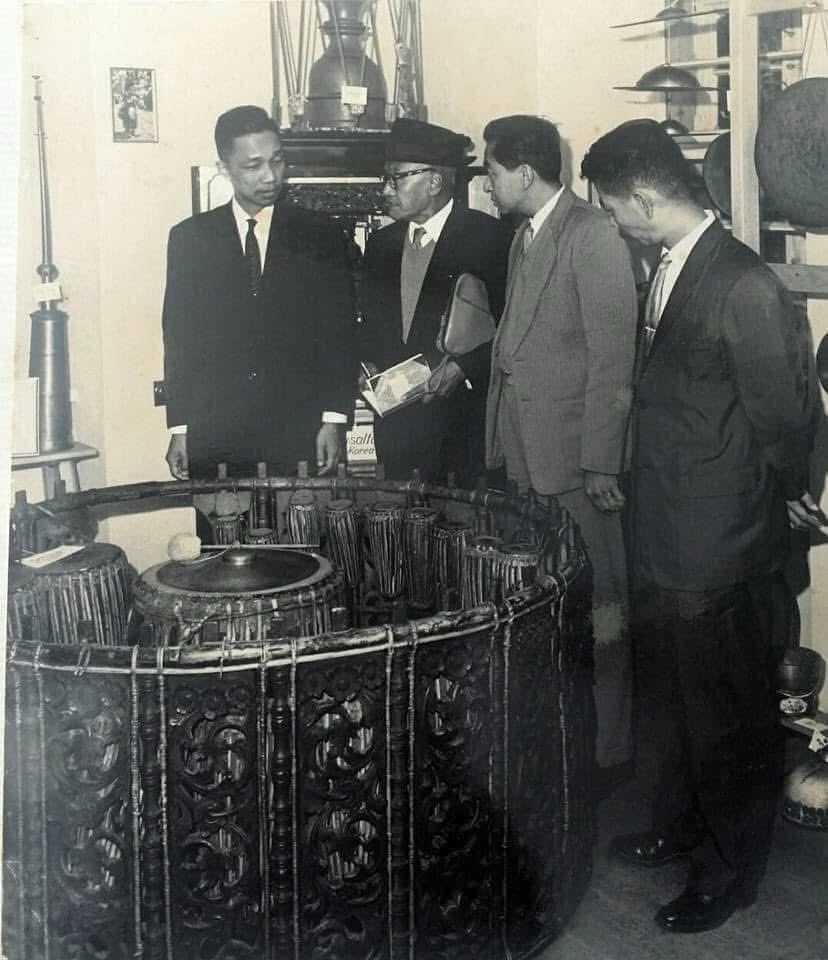
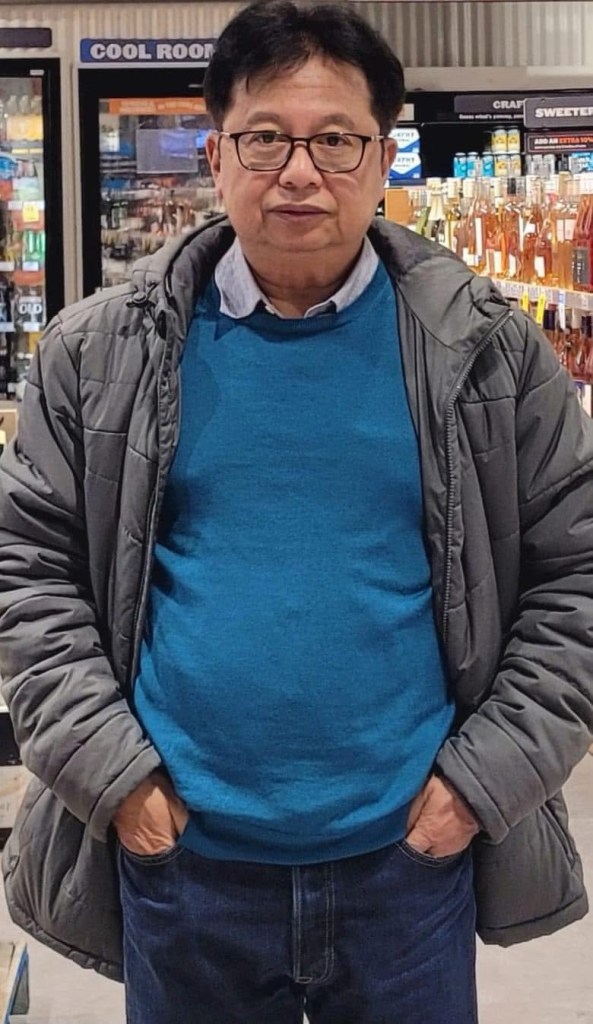
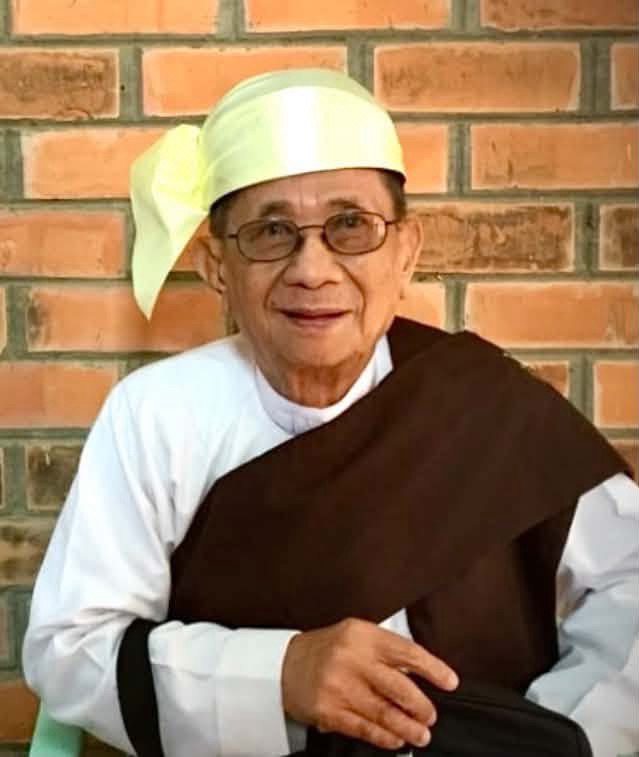
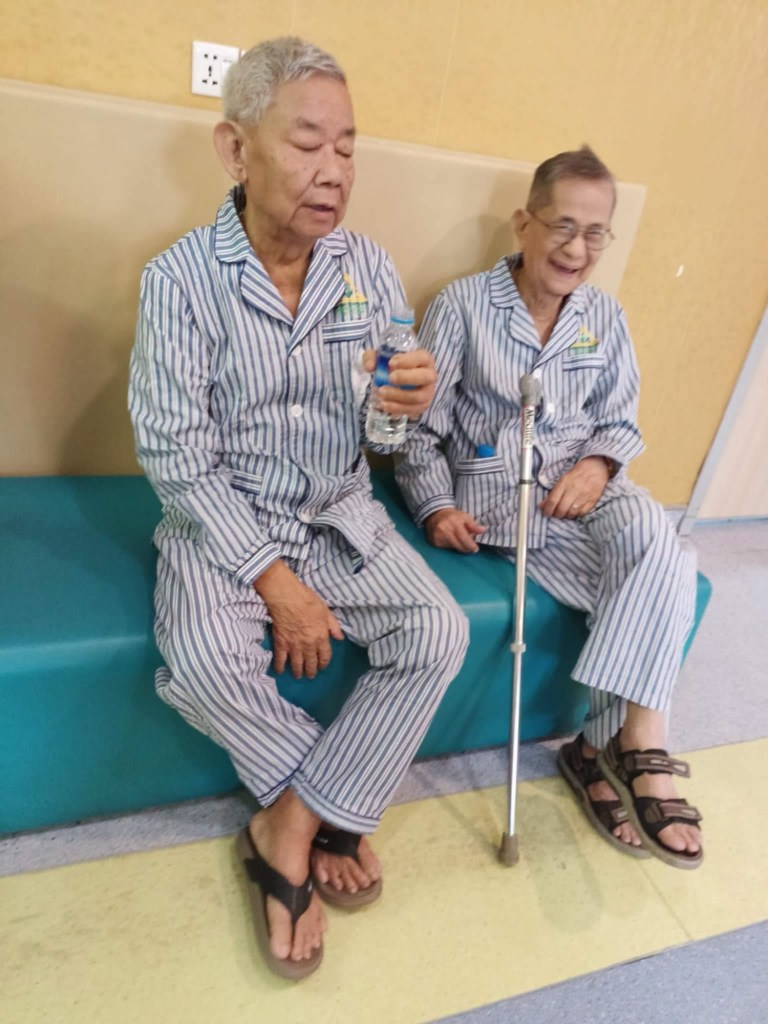
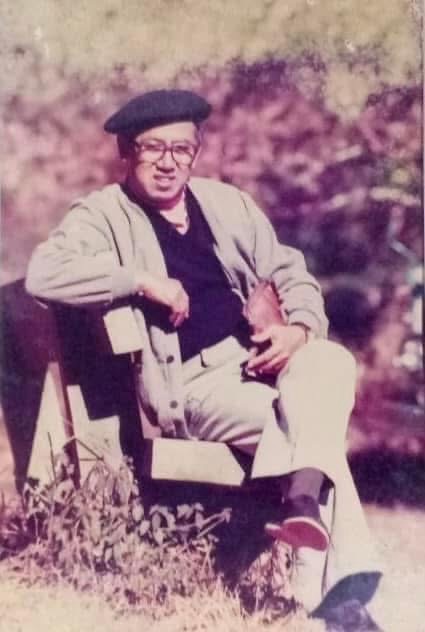
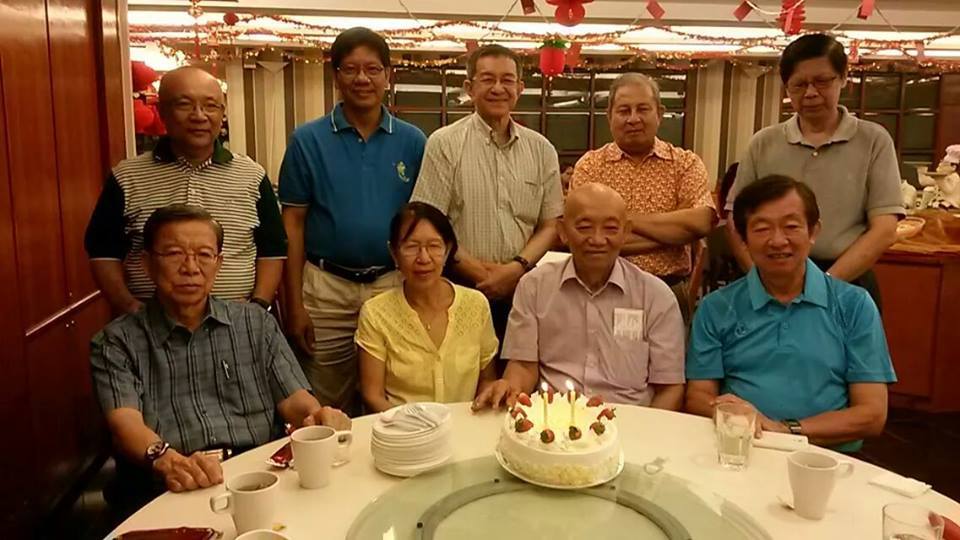
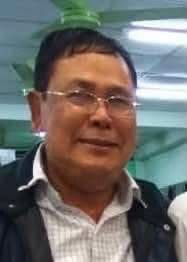
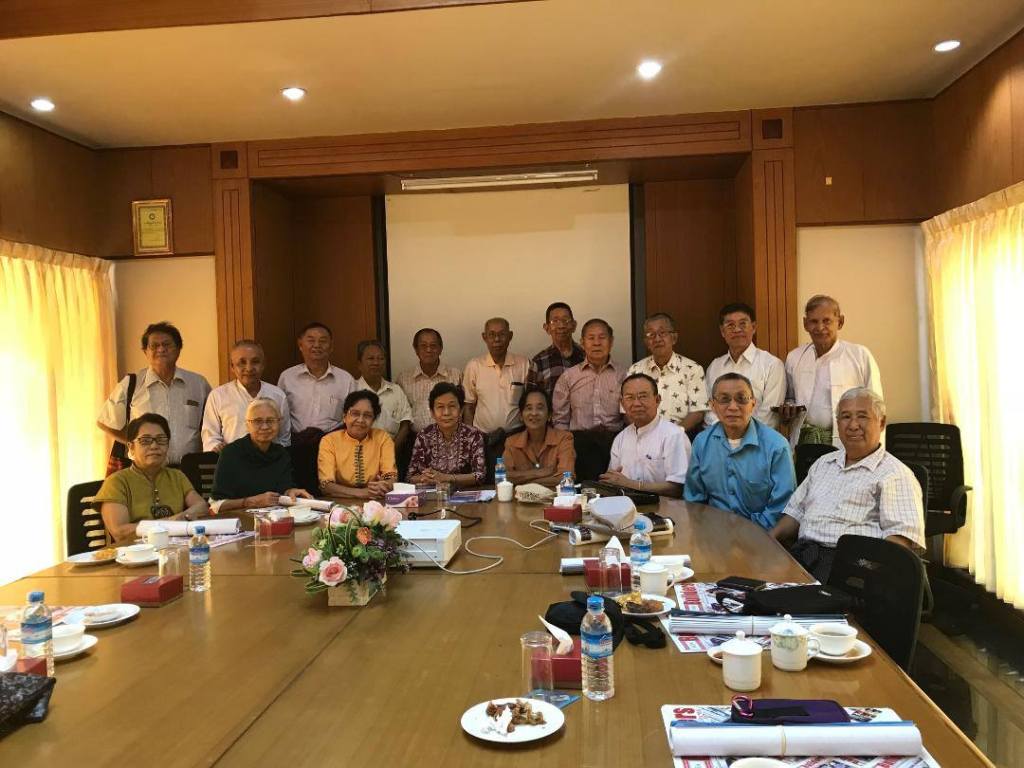
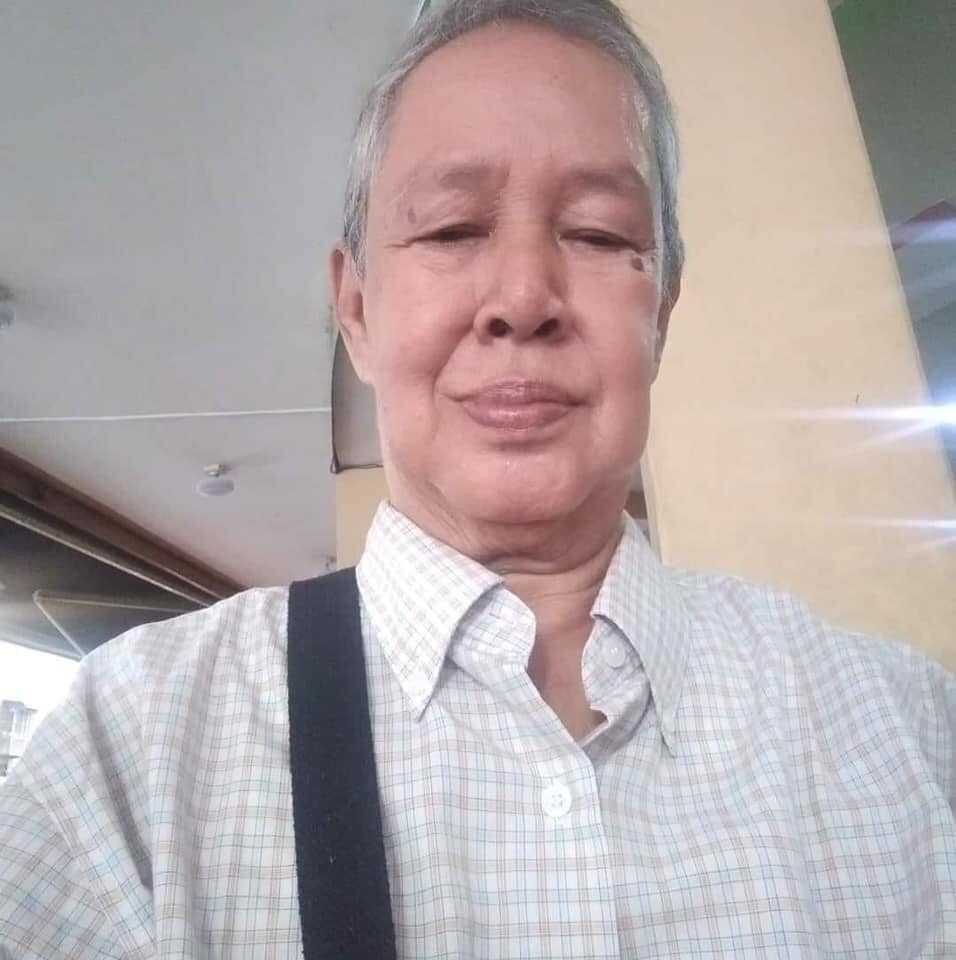
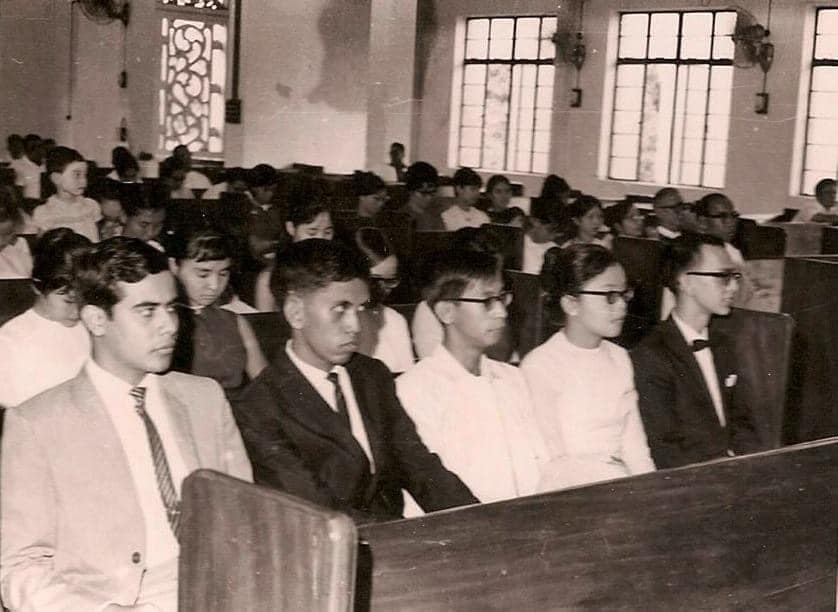
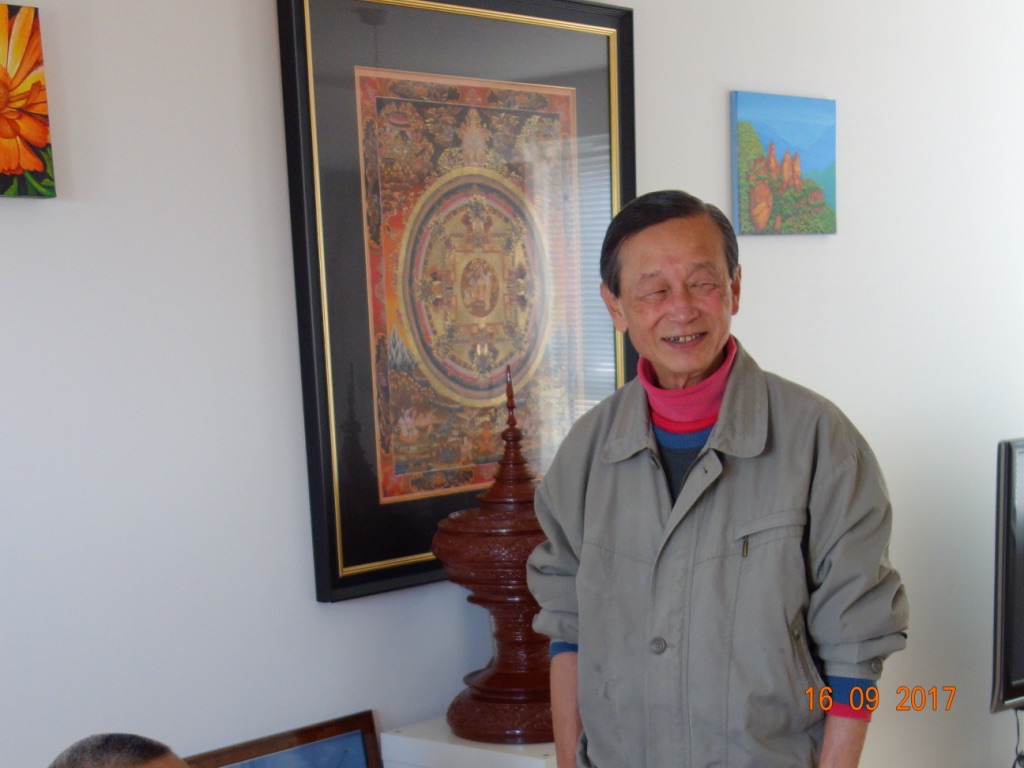
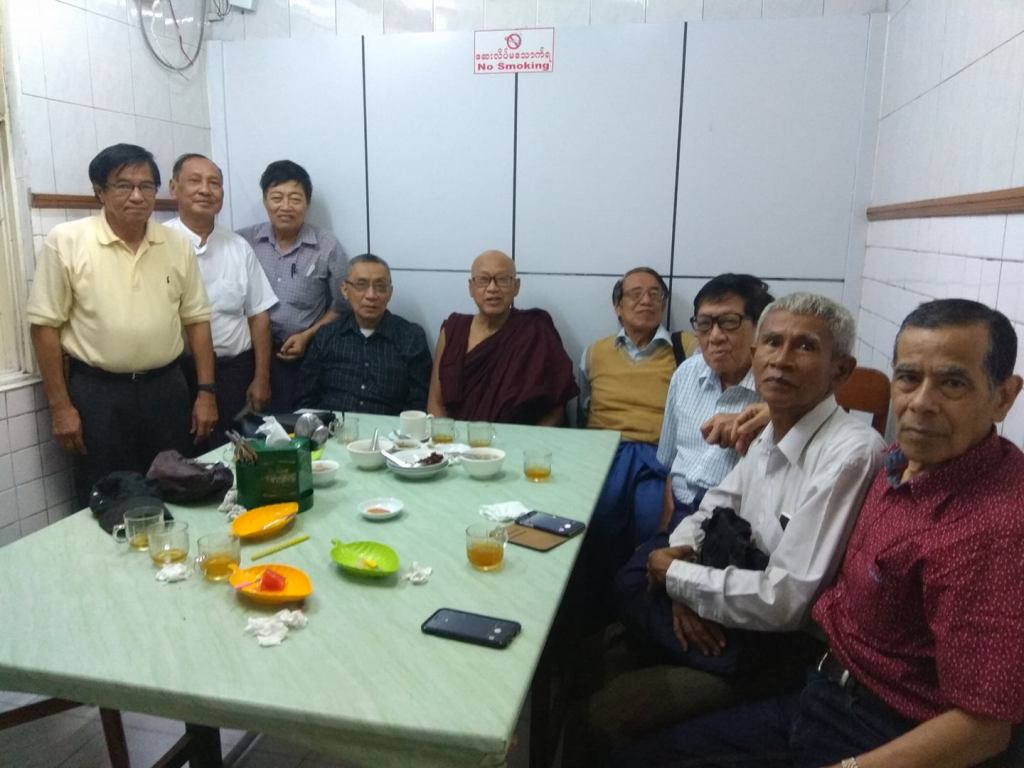
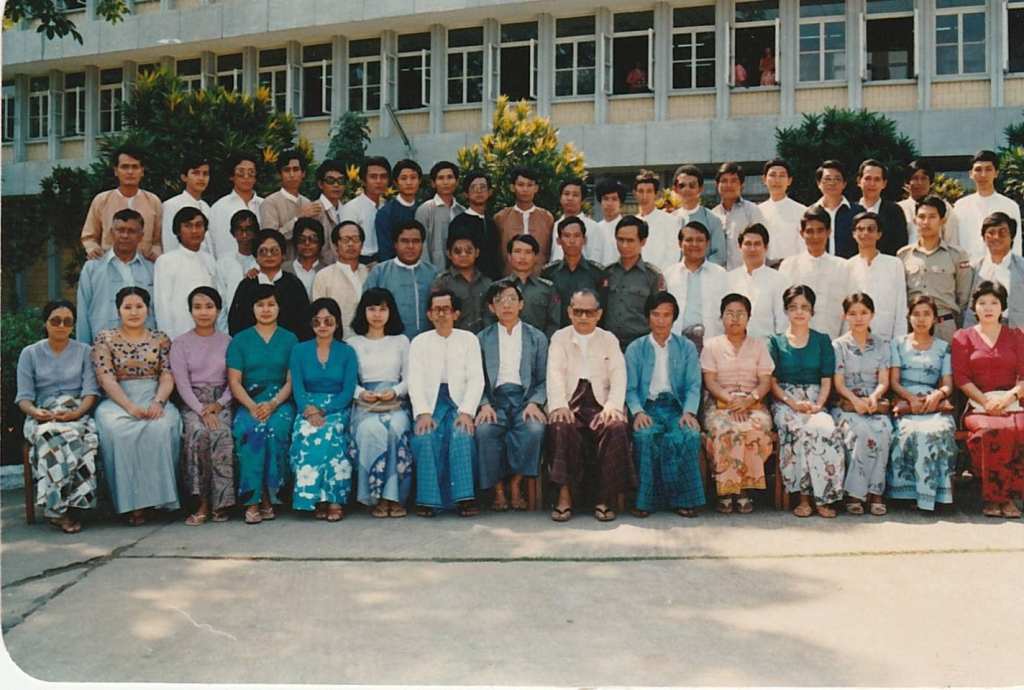
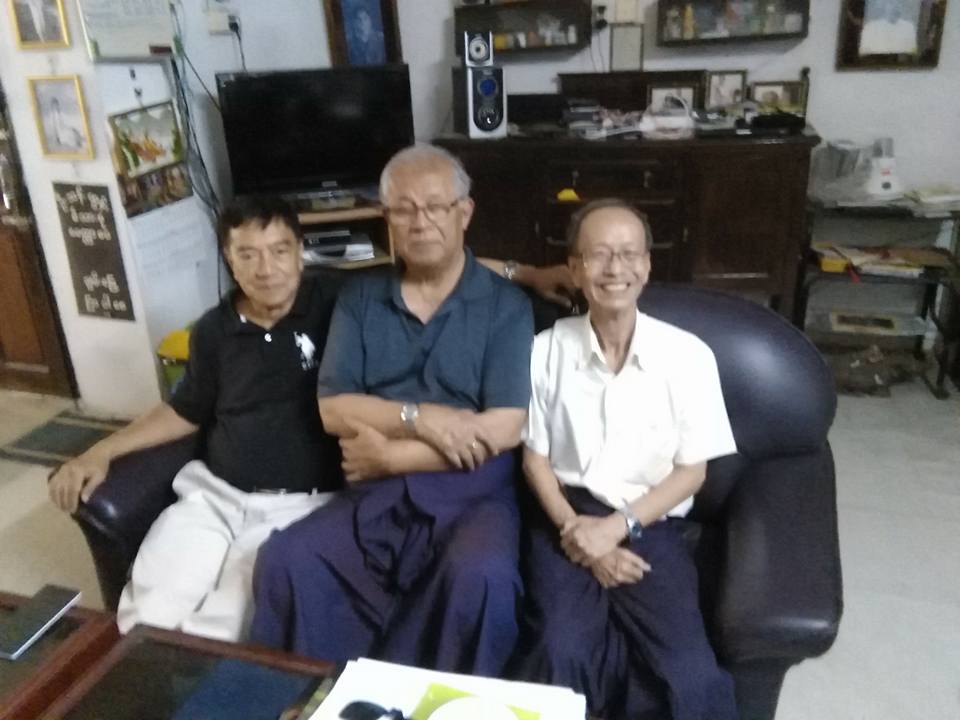
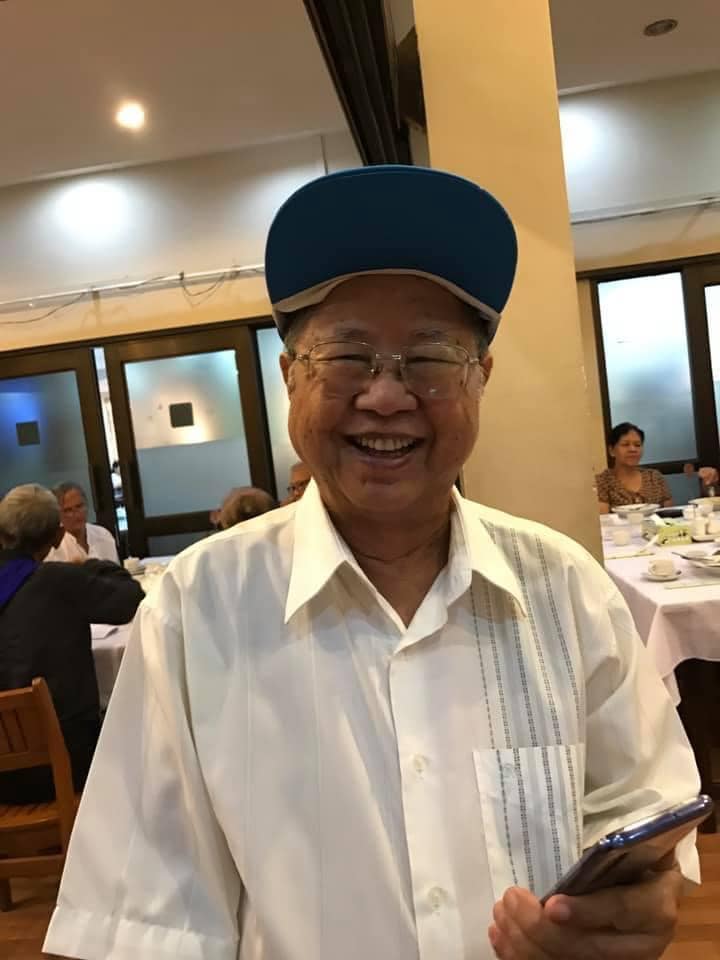
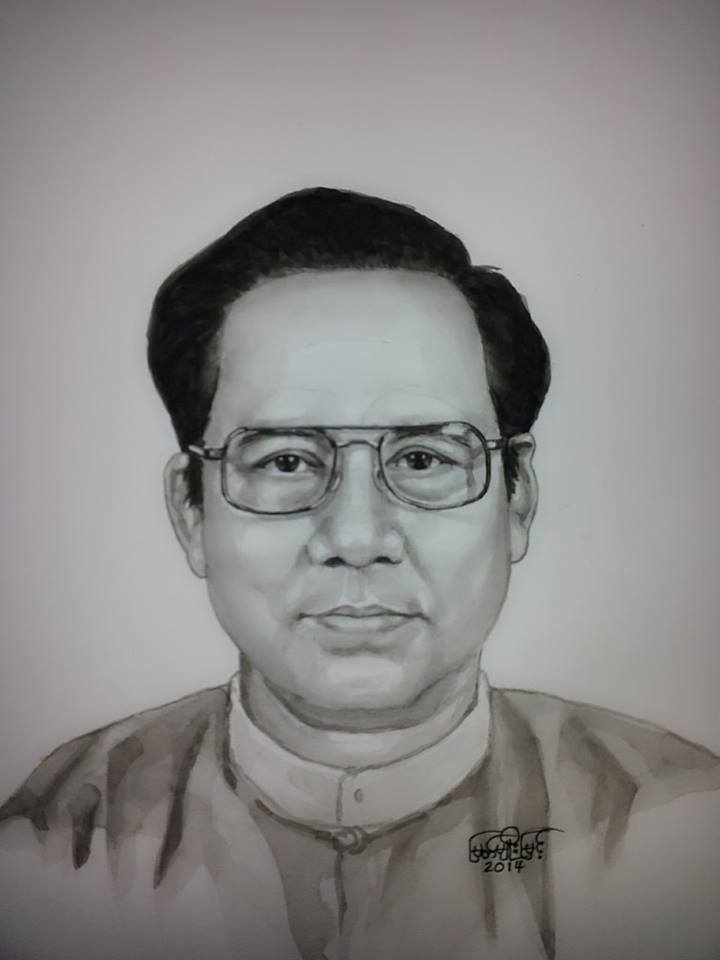
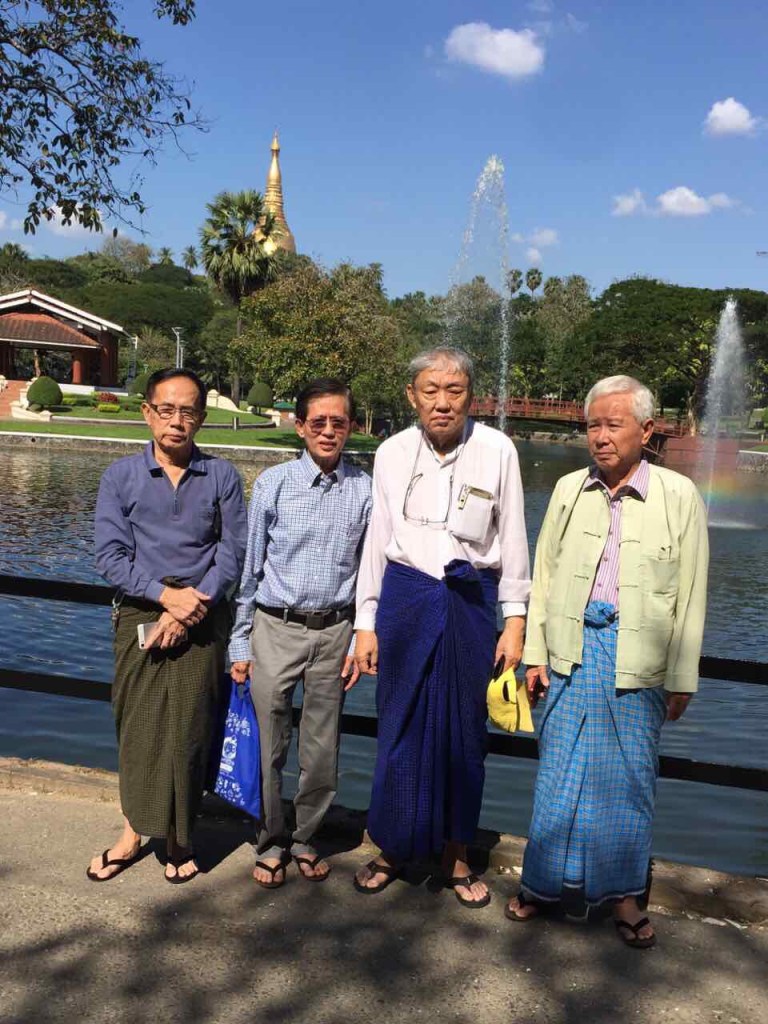
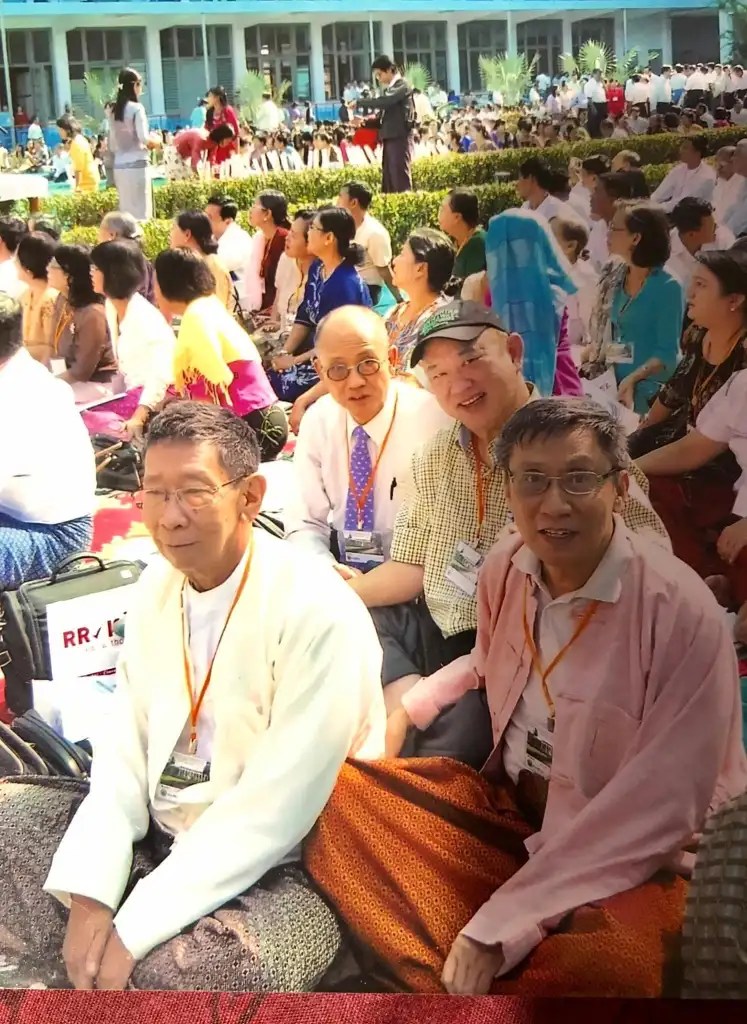
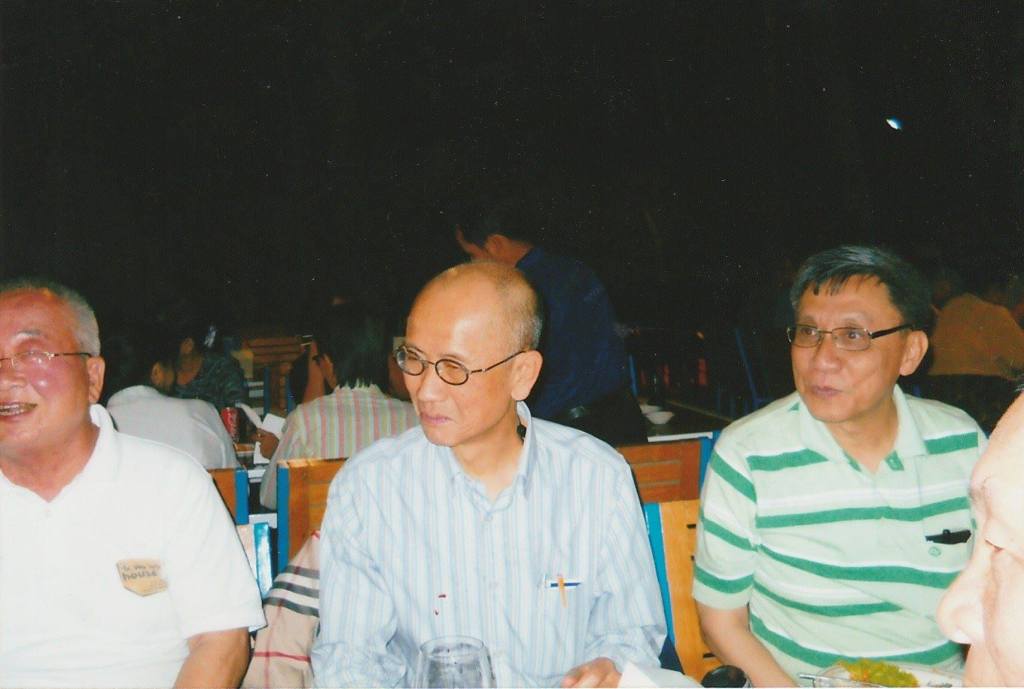
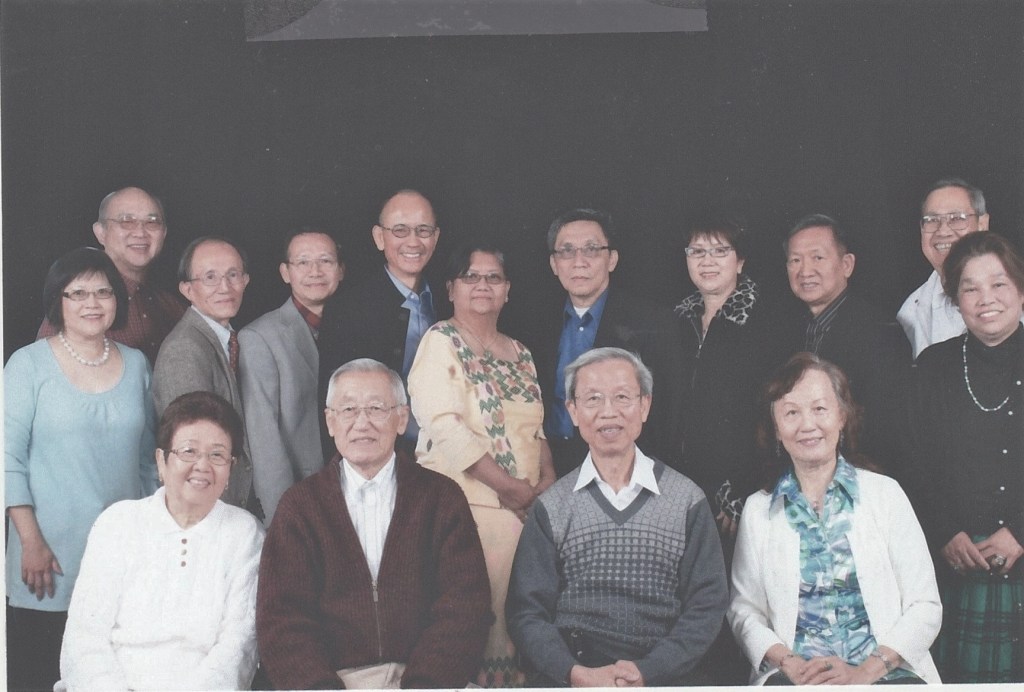
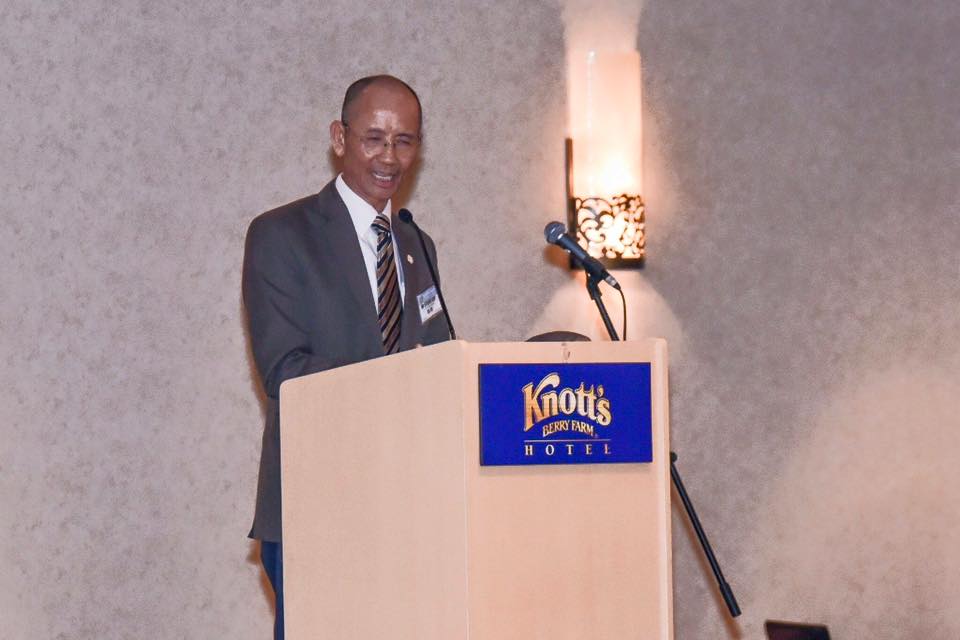
U Soe Paing, U Win Paing (U Wara), Dr. Myo Paing, U Kyaw Paing
Family
Parents : ICS U Paing & Daw Oo Yin
Siblings : Dr. Myo Paing, U Win Paing (Sayadaw U Wara, GBNF), U Kyaw Paing
Spouse : Daw Saw Yu Tint (T69)
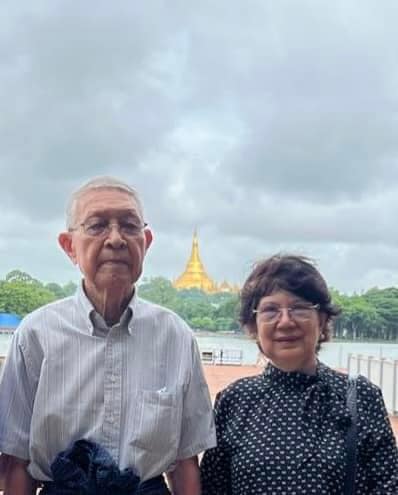
U & Mrs. Soe Paing
Children : Two sons & One daughter
Grandchildren : 3
Education & Work
He matriculated from St. Paul’s High School in 1956. He stood 13th in Burma and won the Collegiate Scholarship.
At the Convocation of 1958, he won two Gold Medals — one for the Highest Total Marks in I.Sc.(A) and I.Sc.(B); and another for Joint Highest Marks in Mathematics for I.Sc.(A) and I.Sc.(B).
He received a States Scholarship to study BSEE and MSEE at Stanford University.
He joined the RIT Electrical Engineering Department as Assistant Lecturer.
RIT EE
He helped Sayagyi Dr. Chit Swe found Universities’ Computer Center. He transferred to UCC as Systems Manager in charge of Systems Division. He later also managed the Operations Division.
He received M.Sc.(Computer Science) from Southampton University in UK.
He worked for UNDP Projects in several countries.
Mentor
He was my mentor at RIT and UCC. He allowed U Aung Zaw (GBNF) and me to co-author Texts, User Guides and Manuals for use at UCC.
HMEE
He was an early supporter of the HMEE project. He prepared a draft for the HMEE book and handed it to Saya U Aung Hla Tun (GBNF) & team. He and U Ohn Khine (M70) translated Section 1 of the HMEE Book and summarized Section 2 of the book.
Posts
Post from March 2011
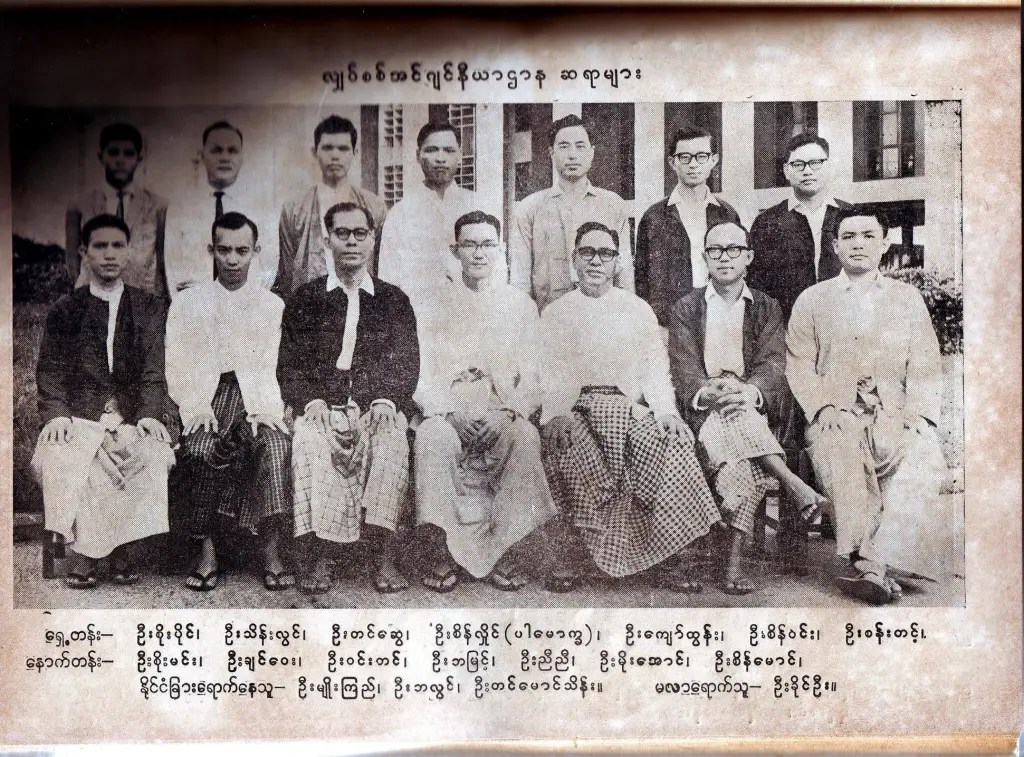
I went to the University Central Library and managed to get scanned photos from the Engg Student Annual Magazines 51-52, 52-53, 56-57 and 60-61. Photos include photos of Sayas, students of that year. From these when can know about the Sayas at that year. We can also identify the students at that year.
U Sein Hlaing (Prof EE) was a final year student in 1951-52 and became an A/L starting 1952-53. Saya U Tin Swe was a student in 1951-52 and 52-53. He was a member of the Eng Student Union and the victorious Prome Hall football team. Ex-Burma Selected Footballer U Chan Tha (Chief Engineer, Roads, Rangoon Municipal) was the Captain. U Khin Si (husband of RIT Finance Officer Daw Yin Yin Htway and part time lecturer Textile) and U Tin Si (U Khin Si’s brother and tennis doubles partnership that won RU as well as national championships) were members of the Prome hall team.
The 1956-57 magazine contains photos when the new Leik Khone Engineering Buildings were inaugurated in 1956 Nov by the Prime Minister at that time U Ba Swe.
In the 1952-53 magazine I found out that Mr. Robert Hole (ex-EE, Highways, PWD, PWC, CC; uncle of Percy Maung Maung and uncle Bobby to me) was the English editor. I called Uncle Bobby and requested him to write something about his engineering student days, his teachers and fellow students. He agreed and asked for about three weeks time.
I need to go back and to the UCL to get more info from the RIT handbook 1966-67 and photos from the Hlyat Sit Sar Saung.
U Ba Than has donated some of his Engineering College photos to the MES library and I need to go there to check up on the photos.
Post from May 2000
The mention of RIT, BIT, and BOC college in the first newsletter bring back memories of our good old days in Rangoon University. Although we did not graduate from Rangoon University, we had a really great two and a half years there before we went for studies aroad under government scholarship.
Our first year 1956-1957 was in Yankin College. Yankin was a campus of RU for first year science students. It is now Yankin State High School No. XX? Hteedan was for the 1st year arts students. Our second year I.Sc. was at the RU campus itself which we refer to as Main. The Arts students have classes at Judson. That time the new Social Science Building (now Institute of Economics) was completed. We had our second year ISc exams in that new building.
Then it is our 1st year B.Sc. Engineering course at the new Faculty of Engineering in Prome Road (now Institute of Medicine I). We attended for six months till December 1958. That campus was designed and built especially for the Faculty of Engineering. Civil, Electrical, Mechanical Departments were there but Chemical, Textile, etc. were in the old BOC building at the back.
The 1st year classes were from 7 to 9 a.m. for Mathematics. We then have a one hour break and we start the engineering courses at 10 a.m. We usually have a snack during the break at a small cafe between Tagaung and Prome Halls. Those halls were only for engineering students then. The mathematics (Pure & Applied) lecturers were from India hired under contract. We had three engineering courses: Building Materials taught by Mr. Tan Ba Hli (the Dean of Engineering himself). Heat Engines taught by U Aung Khin. Principles of Electrical Engineering taught by U Kyaw Tun. We had EE lab with Ko Htin Paw and Ko Ba Nyunt as lab instructors. We also had engineering drawing with Ko San Hla Aung and Allen Htay (for Chem, Tex, etc.) as instructors.
Those were the days when Rangoon University was one of the best universities in SE Asia and Asia. It also had a really nice campus.
RIT Saya Soccer Team
Reading about the communications from Richard Khoo (Dr. Aung Soe, C61) and seeing the list of Sayas in the 1966-67 handbook brings back memories of our soccer team.
As I remember it was from 1964 to 1968 or 1969. We played against (i) the senior students of different majors Civil, Mechanical, Electrical etc. (ii) the sayas at GTI and Natmauk Technical Institute (iii) the Burma Air Force officers.
We also played in the annual tournament for RIT Staff. The staff teams are the Sayas, Workshop staff, Lab staff, Hostel staff and the youth team from the RIT compound.
As I remember (other Sayas & graduates may correct me) these were the people in the team.
Goalkeepers :
Richard Khoo (Civil)
Maurice Kyaw Zaw (Chemistry),
Sein Myint/Ah Sein (Petroleum)
Defenders :
Ko Maung Maung Than (Textile)
Ko Aung Soe (Math)
Ko Aung Hla Tun (Met)
Ko Sann Tint (Elect)
Christopher Maung (Civil)
U Tin Swe (Elect)
Ko Tin Win (Mech)
Midfielders :
Ko Tin Maung Nyunt (Agri)
Desmond Rogers (English)
Ko Khine Oo (Elect)
Ko Maung Maung Win (Mech)
Ko Tin Hlaing II (Mech)
Forwards :
Ko Pike Htwe (Chemistry)
Ko Aung (Math)
Ko Tin Hlaing I (Agri)
Ko Soe Min (Elect)
Ko Kyin Soe (Auto)
myself (Elect)
We rarely practiced but we enjoyed playing the games. We split games with the GTI sayas & the Air Force officers. We beat the Natmauk sayas and we won more than we lost in the RIT staff tournament. But I am sure we lost more than we won against the final year students. Would appreciate comments on this; especially on the names I missed in the team.
Payeik Kyee ပရိတ်ကြီးaka Paritta Pali ပရိတ္တပါဠိ and Protective Verses Collection of eleven Protective Verses is recited in part or full by monks, novices, and lay people.
Pali ပါဠိ — Language of discourse in Theravada Buddhism
Theik Kha သိက္ခာ — Practice
Thamane Kyaw သာမဏေကျော် — Pen name of Sayadaw U Dhammika ဦးဓမ္မိက , who won the prestigious award of Thamane Kyaw (Distinguished novice scholar) in his youth.
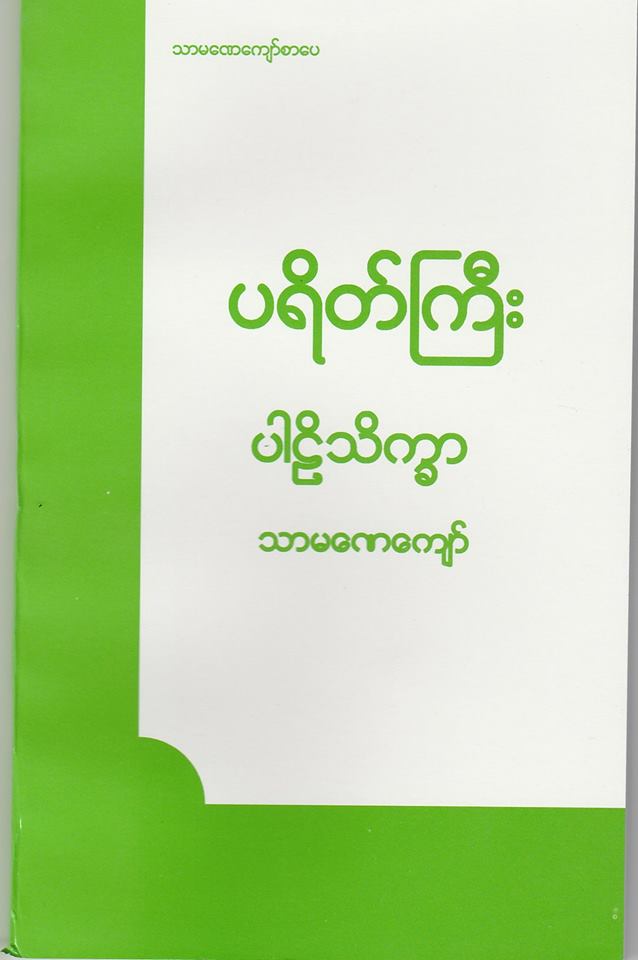
Payeik Kyee Pali Theik Kha ပရိတ်ကြီးပါဠိသိက္ခာ— The book discusses Pali terms, phrases & grammar.
Payeik Kyee Pali Theik Kha
For a comprehensive treatment on Protective Verses, refer to the epic work by “Thabyekan Sayadaw” သပြေကန်ဆရာတော် and a treatise by U Jotalankara ဦးဇောတလင်္ကာရ (Dhammanda Vihara, Half Moon Bay, California, USA).
Qualification: BS (Stanford), MS (Stanford), MSc. Computer Science (Southampton)
Department: Electrical Communications Position: Assistant Lecturer, (Jan 1964 to March 1971) Reason for Leaving: Joined Universities’ Computer Center in April 1971.
Engineering Alumni: Attended First Year Faculty of Engineering, Rangoon University from June to December, 1958. Reason for Leaving: Awarded State Scholarship to study in USA.
Occupation: Data Processing Adviser (Retired)
Organization: United Nations
Updates
Saya was my mentor at RIT and UCC.
He offered me and Saya U Aung Zaw (UCC, GBNF) to be his co-authors. We wrote programming texts, manuals and guides.
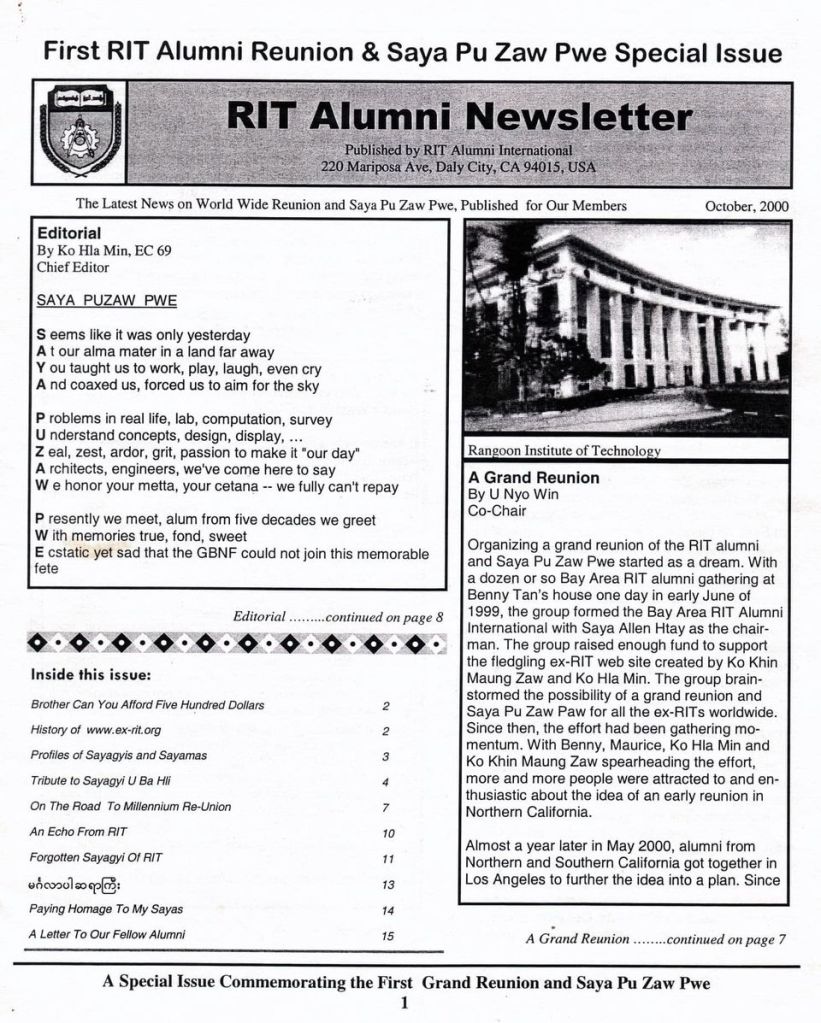
Saya was a prime mover to get the “RIT Alumni International Newsletters” and http://www-ex-rit.org started.
Saya would mention that I am a “Shay Hmi; Nauk Hmi. ရှေ့မှီ၊ နောက်မှီ”
Sayagadaw added: “Bay Hmi ဘေးမှီ as well’.
Saya wrote articles for the RIT Newsletter and selected journals & magazines. They can be accessed via SCRIB-D
He also gave an interview for MASTAA
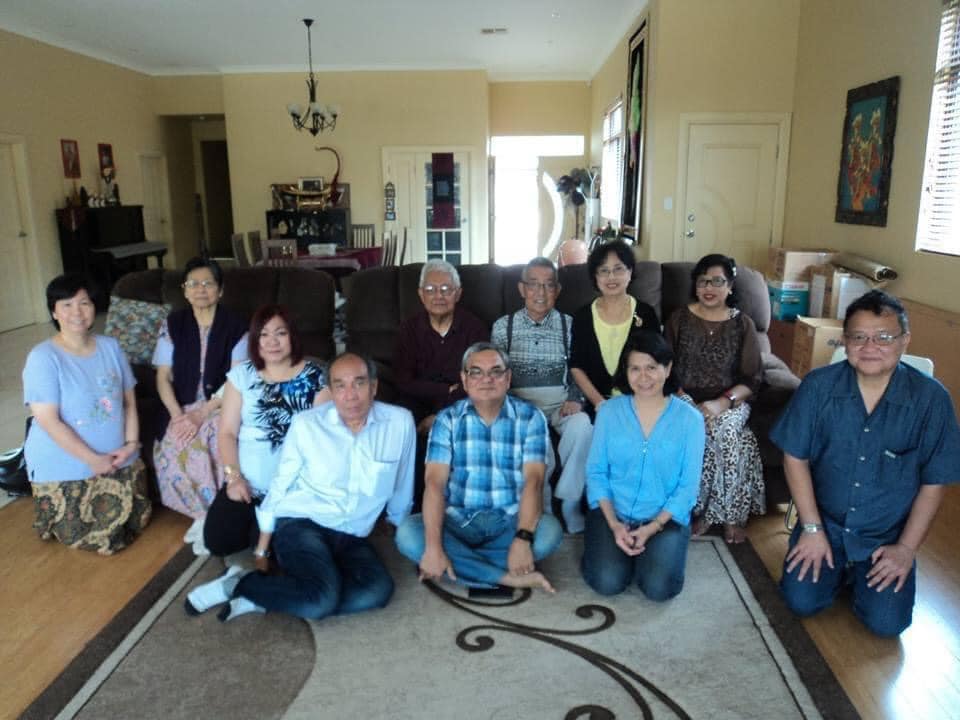
UCC Gathering at Saya’s House
SP 2
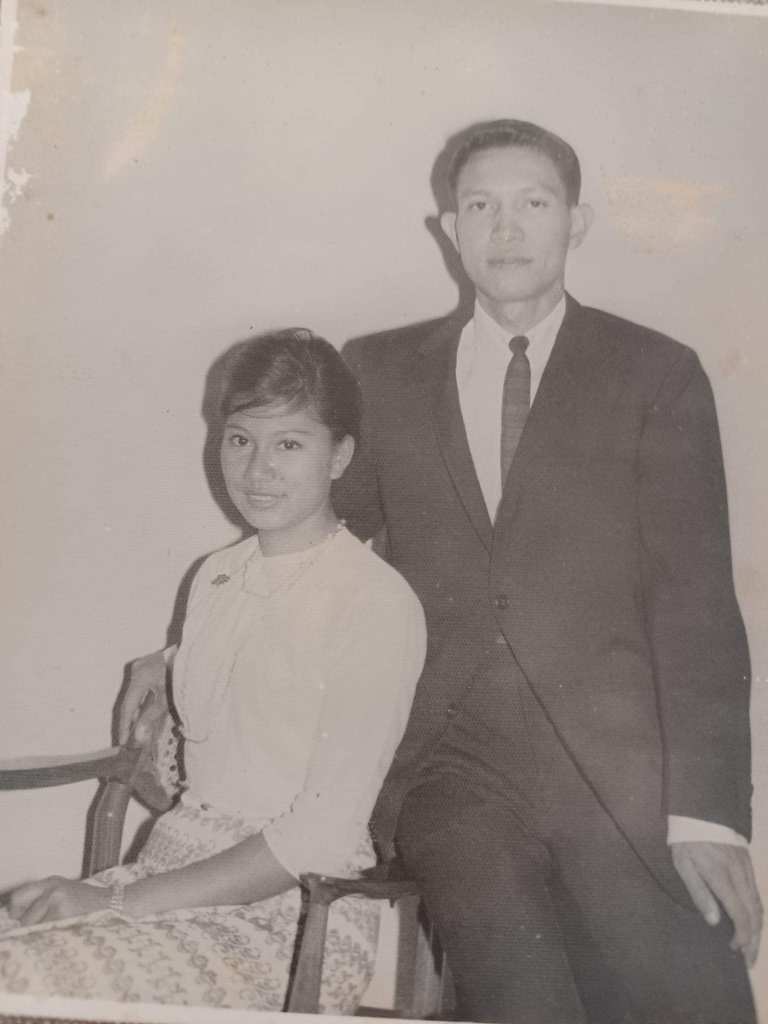
Lovely Couple
SP 3
Acariya Pu Zaw Pwe
SP 4
RIT alumni in Singapore
With U Tu Myint, Daniel Tint Lwin, James Than With U Tint Swe & Vilma Khaing
Visit to California
With Saya U Tin Mg Nyunt, U & Mrs. Hla MinWith U & Mrs. Tin Mg Nyunt
UCC Gathering at MICT Park
With UCC Alumni
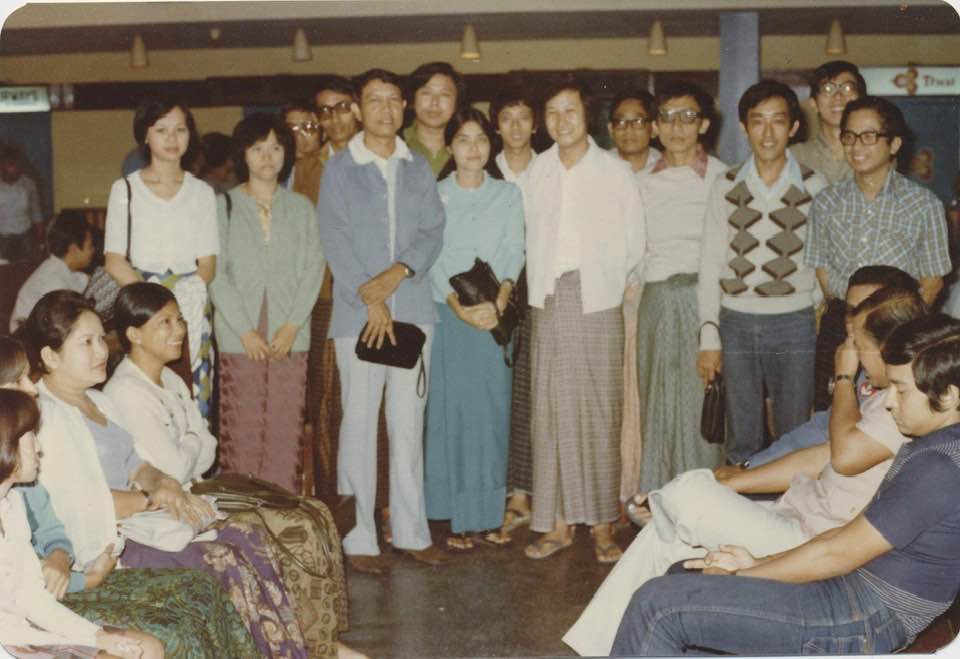
Leaving for UN Assignment
At Mingalardon airport
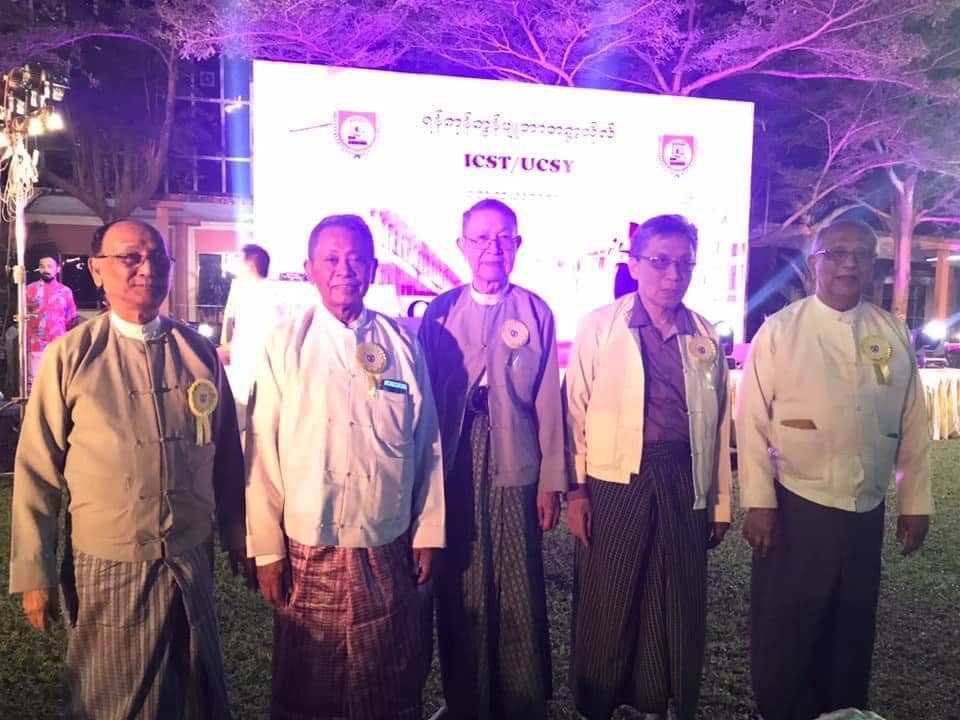
ICST Pu Zaw Pwe
U Thein Oo, Dr. Pike Tin, Saya U Soe Paing, U Hla Min, Dr. Kyaw Thein
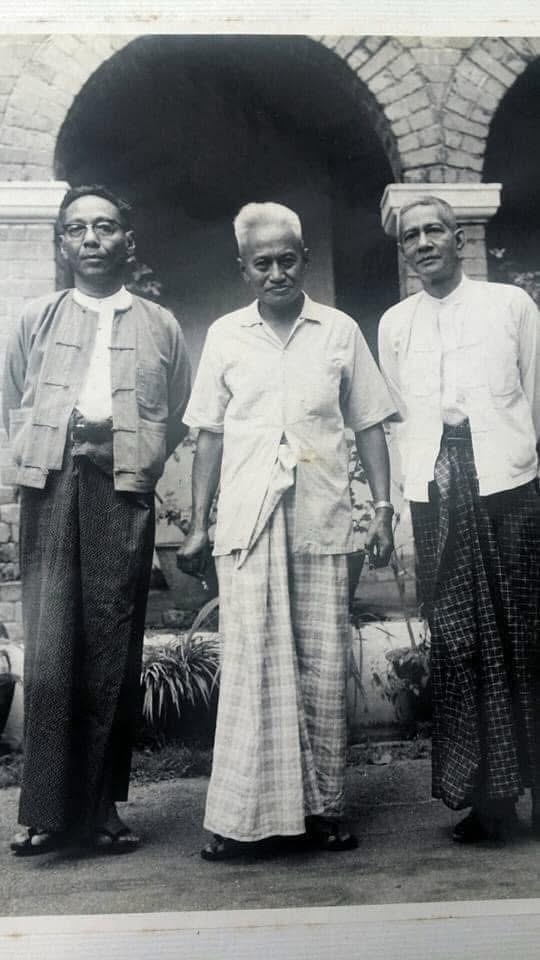
Dr. Pe Nyun, U Khin Maung Wint, Dr. Pe Thein, U Tin U
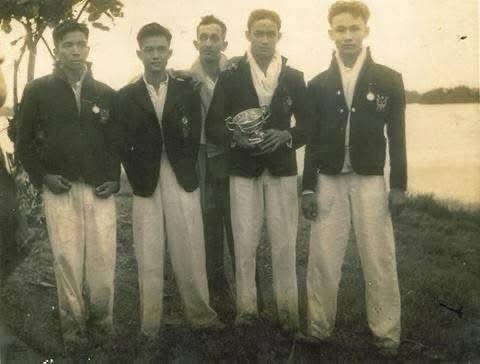
They represented RUBC at the 1948 Independence Day Regatta at Kandawgyi.
Dr. Pe Nyunt — Pediatric Surgeon; Lead, Operation of Ma Nan Soe & Ma Nan San; Passed away in Canada
U Khin Maung Wint — Colonel
Dr. Pe Thein — Minister of Health and Education; Professor
U Tin U — Civil Engineer (expert on Structures & Construction); Past Captain of RUBC & RGC; Passed away after his 96th Birthday
RUBC crew at Independence Day Regatta
U Mya Maung (B. Com, Entrepreneur)
အမျိုးသားရုပ်ရှင်
Siblings : U Sein Tin (GBNF), U Mya Maung (GBNF), Saya U Tin Htut (M), Daw Kyi Kyi Chit Maung (GBNF), Daw Si Si Chit Maung, Dr. Yi Yi Chit Maung (Ph.D), Dr. Than Toe (GBNF), Sayama Daw Khin Khin Chit Maung (RIT English, UNICEF)
Mya Maung
Dr. Myo San / Freddie (SPHS63, Surgeon)
Third in Burma in 1963
Siblings : Freddie Ba San (GBNF), Ivy Ba San, Elsie Ba San
Freddie Ba SanFreddie & Sisters
U Myint Thin (M71)
Matriculated from SPHS in 1965
RIT Luyechun
Passed away in Singapore
Brother : Dr. Nyan Win (SPHS60)
Myint ThinOldies in Singapore
U Than Po (M75)
Composer
Zat Saya
Pianist
Pattala
Vocalist
SPZP Entertainment
Than Po
Musicians
U Than Po, Daw Cho Cho Yin
GBNF for the Class of 69
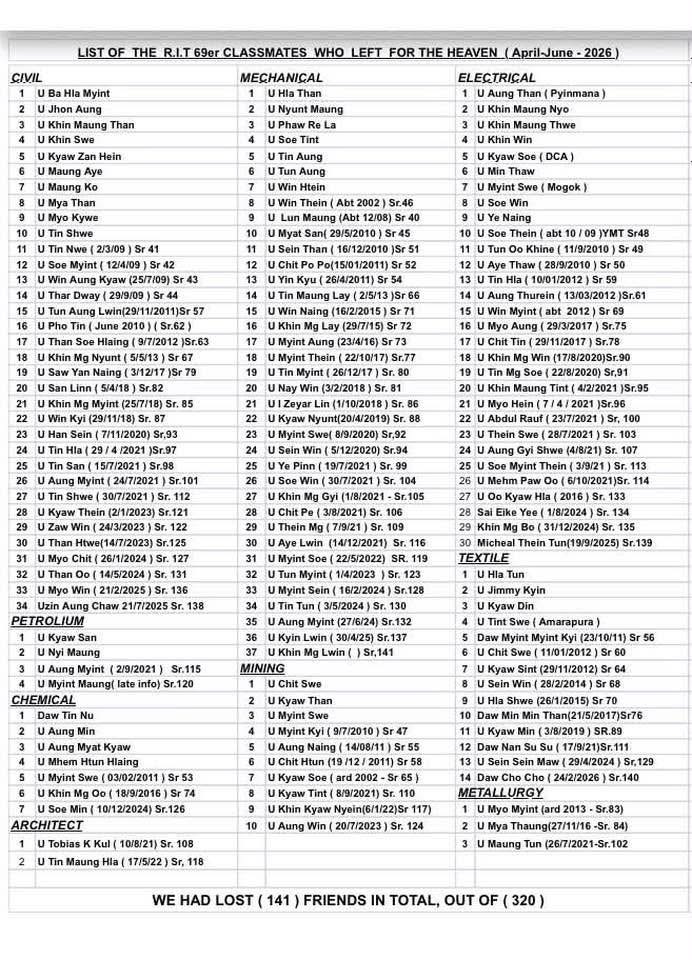
U Aung Min (M69) and team maintains the GBNF list of the Class of 69.
About 320 students entered the first ever 2nd BE. The list includes a few seniors who took sabbatical in their study and ended up as our classmates.
The GBNF list has 146 members. The photo in this post shows 141.
45% of our former classmates have passed away.
69er GBNF
EC69ers
Six EC69ers have passed away :
U Kyaw Soe (DCA)
U Aung Thu Yein (Brownie, Schlumberger)
U Aung Thu Yein
U Chit Tin (MOGE)
U Chit Tin & Maung Kabar
U Oo Kyaw Hla (Canada)
Sai Aik Yee (MOGE)
Mehm Ye Win (PTC)
Two GJs
69ers chose to have two Golden Jubilees (in consideration of the Decline of Health of members) : the first in 2014 to celebrate the admission to RIT, and the second in December 2019 to celebrate the graduation of most members in 1969.
Win Thein Zaw (Min69)Tint Swe (Zigone)
GBNF for the Class of 70
U Ohn Khine (M70) and team maintains the GBNF list of the 1st BE Intake of 1964 / Class of 70.
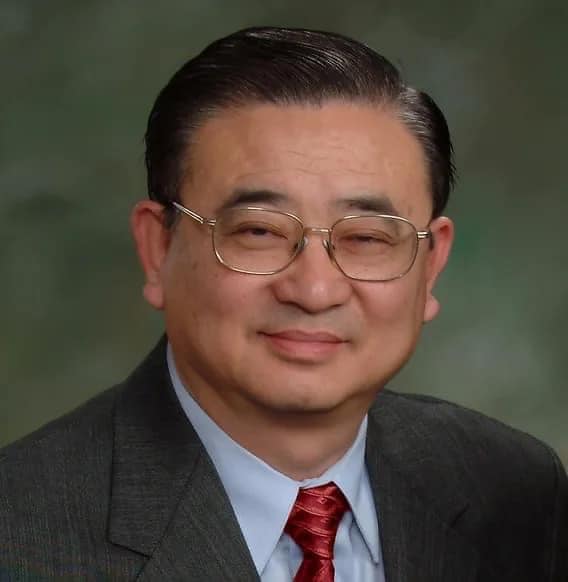
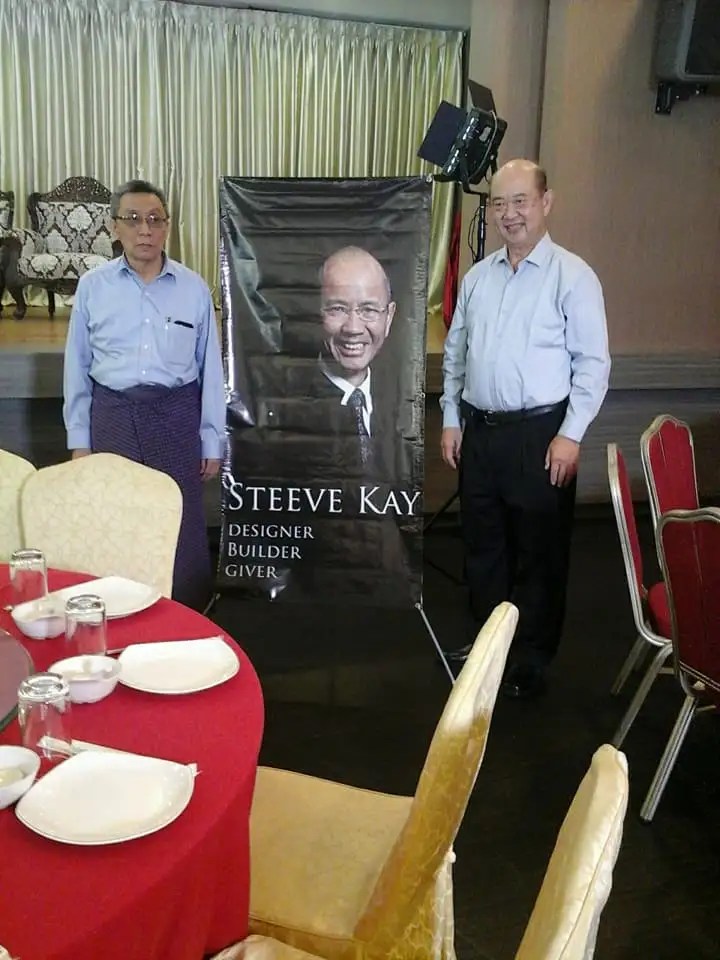
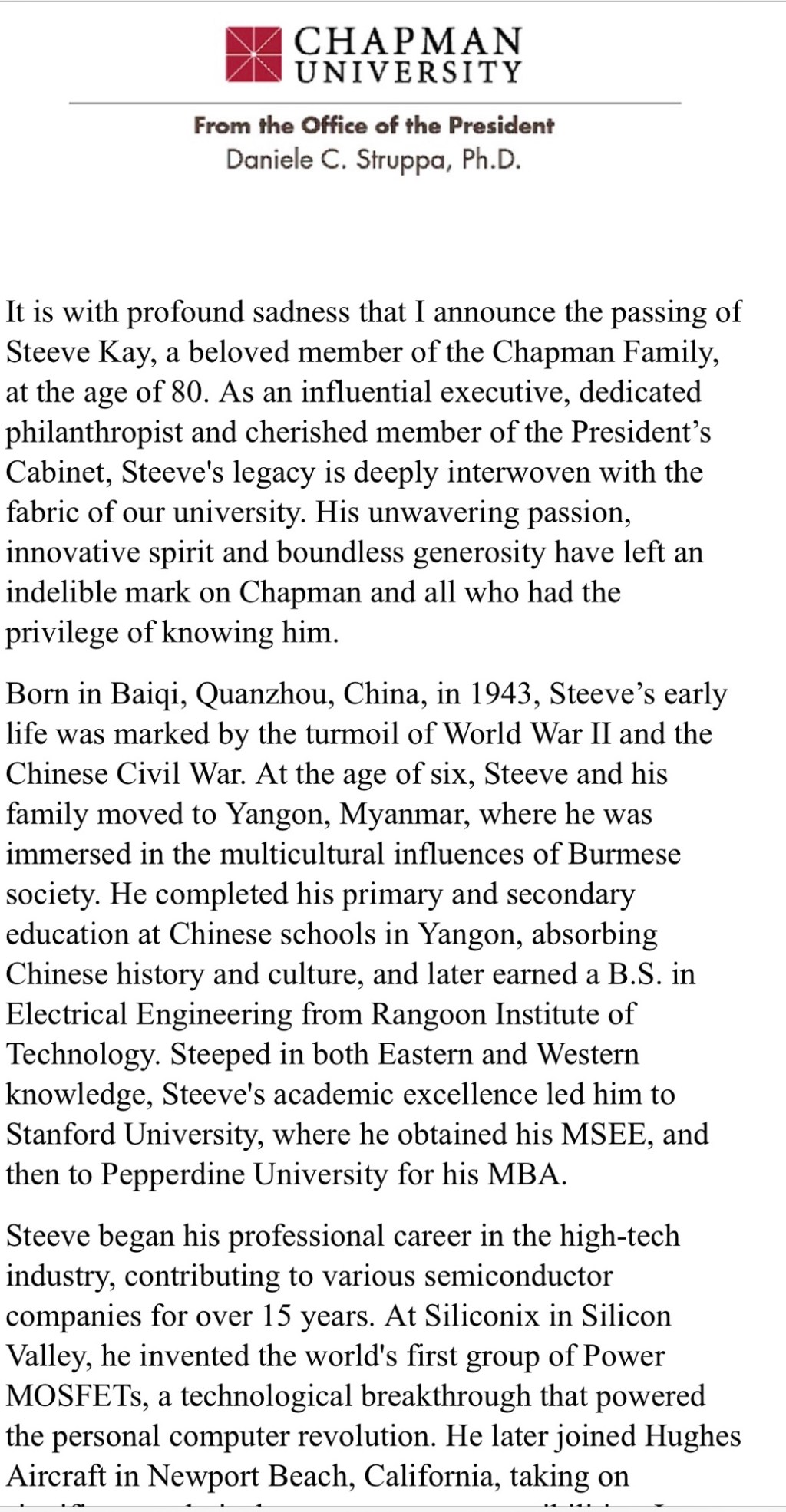
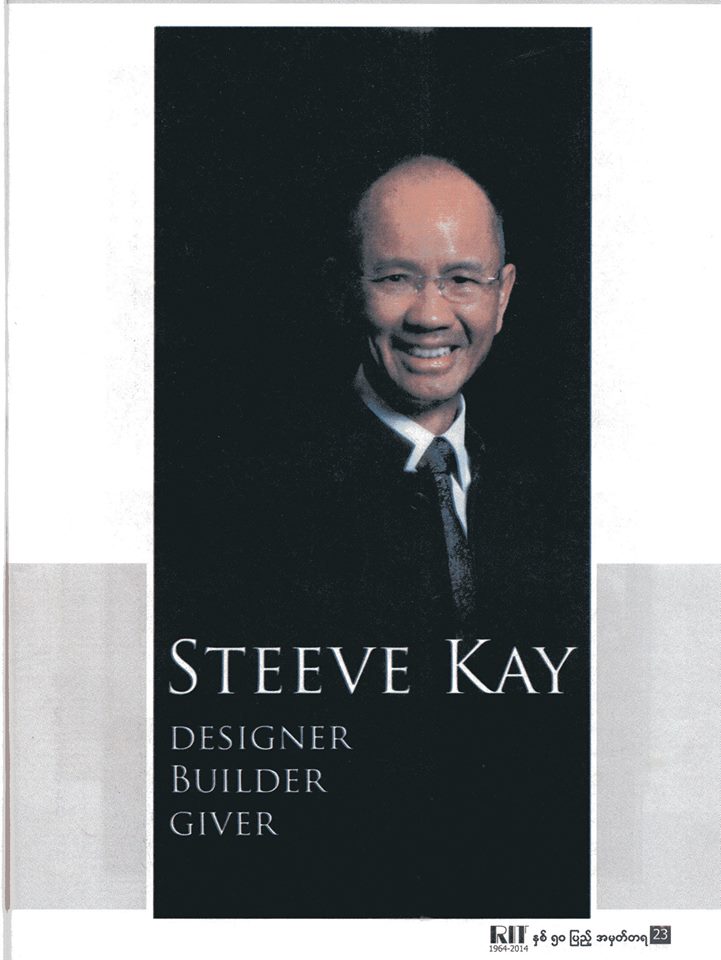
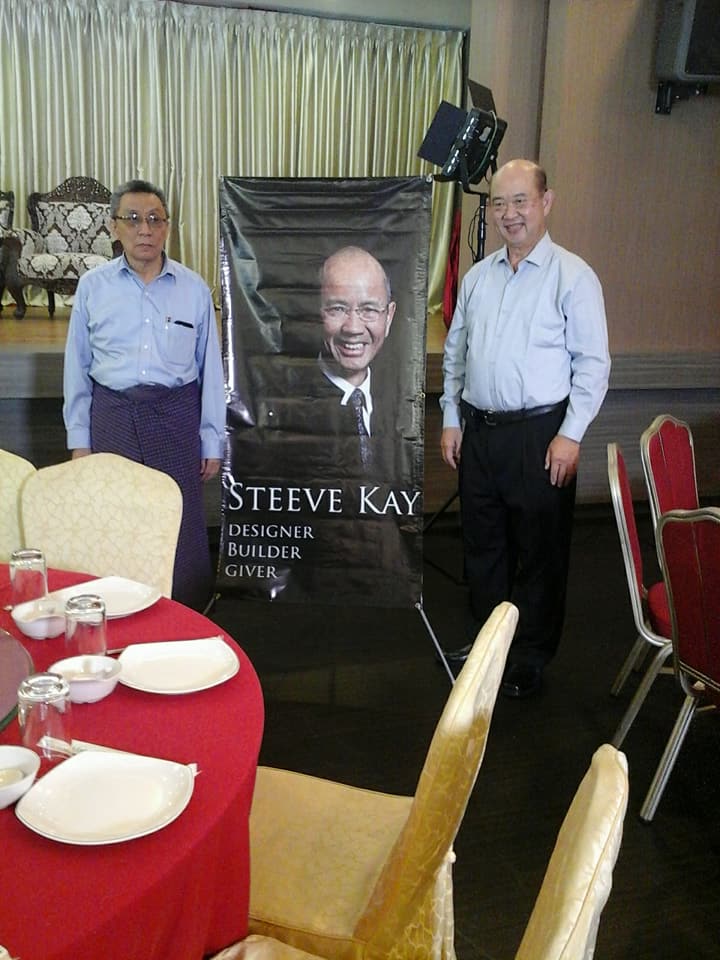
Tommy Shwe, Cho Aye, Peter Pe and Thaung Sein (Steeve Kay) were among the Top Ten students from the class. They are now GBNF.
Tommy ShweSteeve Kay (Thaung Sein)Cho Aye
Over 450 students entered the first ever 1st BE.
Soe Win (EC70, UCC, PTC) is a recent GBNF.
Soe Win
GBNF from Other classes
U Than Tun (A65)
Saya U Kyaw Sein (M65)
Saya U Myo Win (M65)
Saya U Tin Shwe (EP66)
Saya Dr. Koung Nyunt (A67)
U Tun Aung / Jeffrey (EC68)
U Soe Myint Lwin (EP68)
Sayama Daw Mya Mya Than (EP68)
…
GBNF from PPBRS
Most of my sayas and sayamas from PPBRS have passed away.
Daw Khin Khin Aye / Teacher Ah Mar was Principal of PPBRS
U Kyaw Zaw & Daw Khin Khin Aye
Among my PPBRS classmates, Myo Set (son of actor Tha Gaung Gyi သာဂေါင်ကြီး) was the first to pass away. He perished in a car accident.
Myint Sein (Veda) and Myat Hla Sein (Movie Tech) are among the recent GBNF from PPBRS.
Myint Sein Myat Hla Sein
GBNF from SPHS
SPHS Sayas
Most of my sayas and sayamas from SPHS have passed away.
Sayadaw Beatson (Physics, Boy Scouts) is a recent GBNF
Among my SPHS classmates, Min Thaw (Gilbert, SPHS63) is among the early ones to pass away.
Dr. Myo San (Freddie), Aung Thu Yein (Brownie), Tin Tun, Maung Maung Kyi, Aung Kyi (Arthur Kyi), Khin Maung Bo (Alan Saw Maung), Aung Chaw (Victor), Aye Ngwe (Edwin Ngwe), Dr. Freddie Sein, Dr. Aung Thwin, Shwe Zan Aung are among the GBNF from SPHS63.
Myo San (Freddie)Maung Maung Kyi Soon Kyaw by Kyaw Wynn
69er GBNF
The GBNF list maintained by U Aung Min (M69) contains 146 of my RIT classmates.
18 succumbed to Covid.
Some had medical problems.
Khin Maung Win (Sargalay)
GBNF from UCC & ICST
Several of my sayas, colleagues and former students have passed away.
CO Hla Min (Pauk Si) is an early GBNF from UCC.
U Aung Zaw, Daw Nge Ma Ma Than, U Maung Maung Lay (Ah Ba), U Aung Myint and U Maung Maung Gyi are among the recent GBNF from UCC.
Dr. Chit Swe & U Aung ZawDr. Tin Maung & Daw Nge Ma Ma ThanU Maung Maung Lay & U Maung Maung GyiCO U Hla Min, U Aung Myint, U Aung Zaw
Tone Kyaw တုံးကျော်
One should have Samvegha (sense of urgency) after hearing the sad news. When my namesake Hla Min (Pauk Si, SPHS64, EP70) passed away in his mid-thirties, we were shocked since he seemed strong and did not wear jackets (mandated for UCC employees entering the Computer Room). He would often be seen in sport shirts. He passed away with a few months of being diagnosed with liver problem. The consultant doctor was Dr. Min Lwin (Maurice Hla Kyi, SPHS64, IM71). Ko Pauk Si was not a drinker, but other causes inflicted his liver. I became a Tone Kyaw when two government departments where I had given Guest Lectures on Computers and Applications tried to send me “Lwan Thu Pan Khwe” လွမ်းသူ့ပန်းခွေ
U Han Sein (C69) became a Tone Kyaw when the Organizers of the 30th Anniversary of Graduation inadvertently listed him in the GBNF list of the Class of 69. The organizers were unaware that U Han Sein was detained by the authorities after the 8-8-88 event. He resurfaced two decades later with the declaration of Amnesty.
Han Sein
Saya Dr. Tin Hlaing (M63) became a Tone Kyaw when his namesake Saya Dr, Tin Hlaing (formerly of Maritime Studies) passed away. Some alumni had to revoke the wrong announcement.
Dr. Tin Hlaing
Saya U Lin (M66) became a Tone Kyaw when Mg Mar Ga inadvertently announced his demise (instead of Saya U Lay Aung’s death).
Served as Foreign Minister, Brigadier of a Reserve Army, Journalist and Publisher.
Perished when a bomb (placed under his car) exploded. There were investigations, but no conclusive results were reported.
Dr. Thane Oke Kyaw Myint posted photos and articles about his Ba Gyi (e.g. The Empty Tomb).
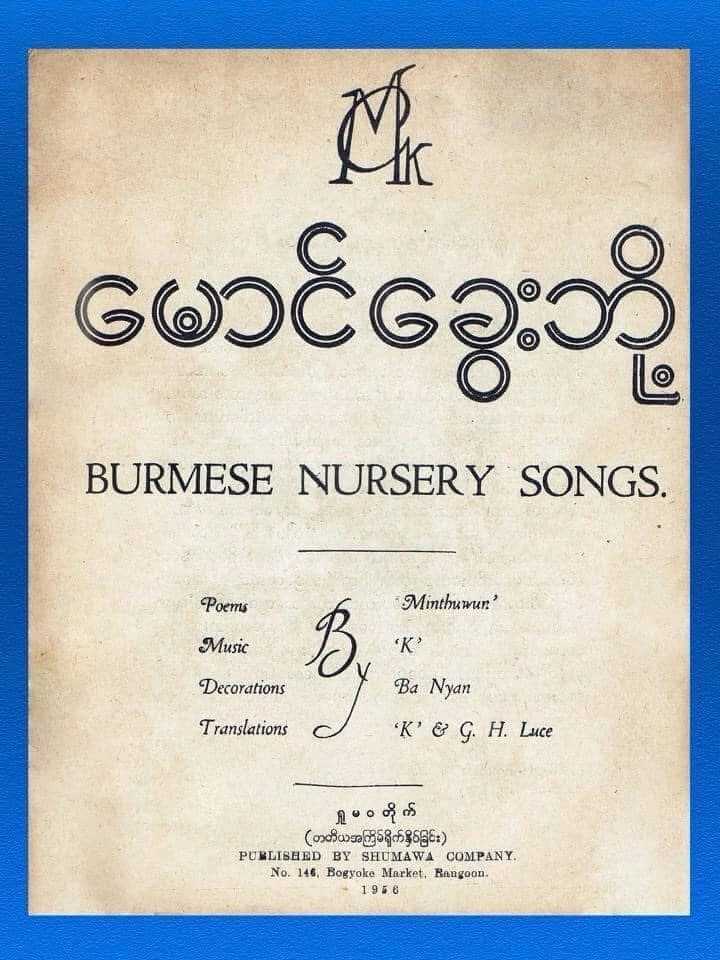
“Ba Gyi Aung Nyar Dei” ဘကြီးအောင်ညာတယ် (a famous short story by Minthuwun (Saya U Wun) has implicit references to U Tin Tut.
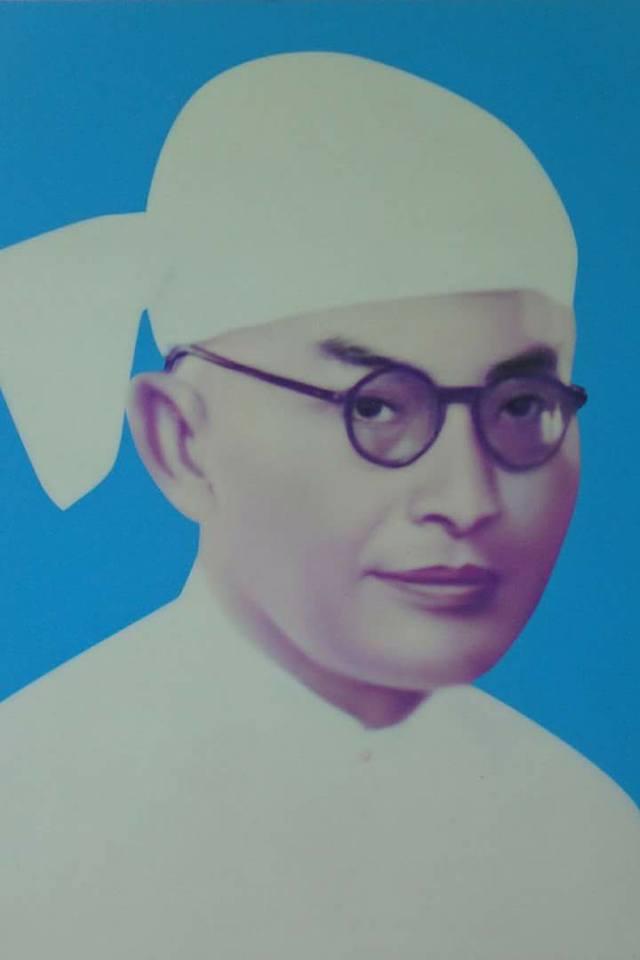
U Kyaw Myint
U Kyaw Myint
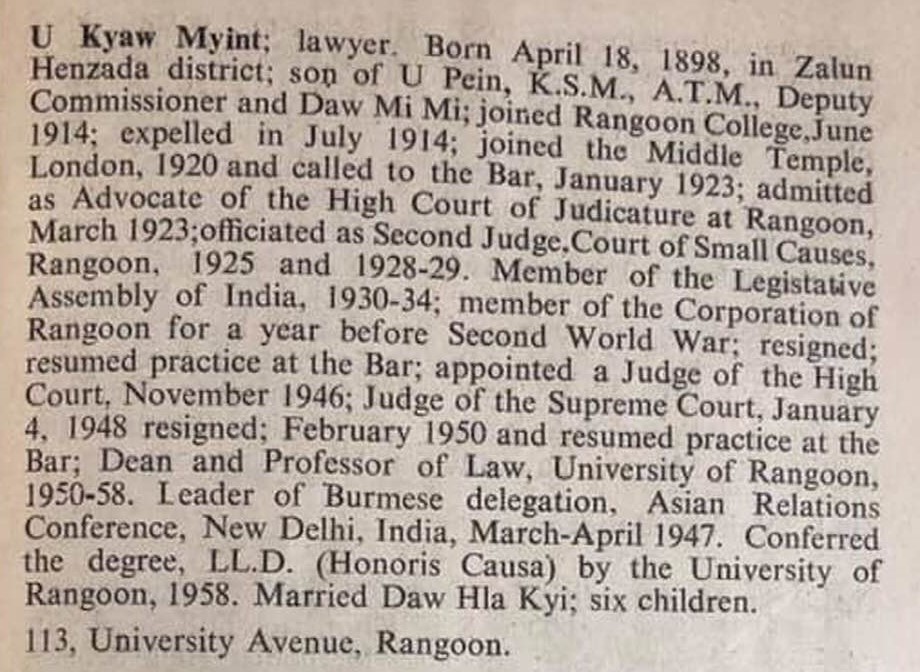
Barrister, Judge of Supreme Court, Head of Tribunal that tried Galon U Saw, Dean of the Faculty of Law, Politician, Head of private Law firm that defended several people accused by the BSPP government).
Stood first in Burma from Central with distinctions in all subjects. Sadly, he was expelled from the University of Rangoon for attending his mother’s funeral and earned the ire of the Principal and his father. His saga is recounted in a series of posts by his son Dr. Thane Oke Kyaw Myint.
Dhamma friend of my beloved parents. They built Dat Paung Zon Aung Min Gaung pagoda and supported “Mon” Sayadaw U Thilawanta.
Brief Bio of U Kyaw Myint
U Myint Thein
Chief Justice of the Union of Burma
On March 2, 1962, a Coup D’etat took place. Arrested along the Prime Minister, Cabinet Ministers, several Sawbwas and high ranking officials. During his detainment, he was allowed only one day off to attend the funeral of his spouse Daw Phwa Hmi (an early Burmese female to be called to the Bar in the UK).
Ambassador to China
Outstanding author and translator
Pen name : “MMT” (for Maung Myint Thein). His works were heavily censored.
Dr. Htin Aung
Dr. Htin Aung
Principal of Rangoon College
First native Rector of the Rangoon University
Prolific writer covering history, folklore and several topics
“Burmese Drama” & “Thirty Burmese Tales” were prescribed texts
Daw Khin MyaMu
Lecturer in Burmese
Thamadu Myo Win (family court judge)
Expert in Kyauk Sar (stone inscriptions)
Spouse : Professor U E Maung
Her handwritten manuscripts were not published due to lack of fonts, and were ultimately lost
Daw Khin Saw Mu
Daw Khin Saw Mu
Early student of Sayagyi U Pe Maung Tin
Khit San Poet
Spouse : ICS U Ba Tint
Children : Daw Khin Saw Tint (RIT English, bilingual writer) and U Nay Oke Tint (St. Paul’s, TED-x InyaLake speaker, successful tuition saya, Chair of the Myanmar Board for organizing the 5th Irrawaddy Literary Festival)
Some are unfortunate to lose one or both parents in their youth.
Some are fortunate to have one or both parents in their 90’s and beyond.
A few had a parent over 100.
Mother of Ivan Lee (M69)
Ivan is a Golden Sponsor for SPZP-2000 & SPZP-2007. He is an early supporter of the first RIT web site. He is a major donor for the 69er Health Care Fund.
He lost his father when he was young. His mother raised the children and also managed to stay healthy beyond the Century mark.
Ivan e-mailed us when his mother turned 100. It had the birthday card sent to his mother from the 43rd US President George W. Bush.
Ivan e-mailed again when his mother turned 101. It had the birthday card sent to his mother from the 44th US President Barack Obama.
We heard sad news from Ivan the following year. His mother passed away at the age of 102. She was alert until the final days. She played two hours of Mah Jong daily.
Let Oo Saya လက်ဦးဆရာ
I am fortunate to have parents who lived beyond 80, but not fortunate enough to have them around to see and appreciate my posts.
My Parents
My beloved mother
She lost her mom a few days after her birth. She made up for her loss by giving her metta (unbounded love) and cetana to the children and grandchildren. She kept a list of all the birthdays and anniversaries, and would be usually the first to wish. Even though she had maids, she would get up early & prepare breakfast for us. She also supervised the homework of her children, nephews and nieces.
I paid homage to her in my Newsletter & Updates for SPZP-2000.
My beloved father
My beloved father
He was a youth when he was given only three months more to live by the then best doctors in Rangoon. He had a Near Death Experience. His younger brothers cried thinking that he had died.
My dad told his brothers : “I was walking happily along a bund when a holy man stopped me and said, “Young man, you have to do sasana work. Do not go beyond this point.” Sensing that I was reluctant to end my walk, the man pushed me.”
Luckily, an indigenous medicine man named “Ga Doke Saya Gyi” treated my dad and even parted some of his medical knowledge.
He built pagodas starting with Dat Paung Zon Aung Min Gaung Pagoda (ဓာတ်ပေါင်းစုံအောင်မင်းခေါင်စေတီ). His photo hangs in the Hall along with his grandparents who who bought the land where the pagoda was built.
He also helped renovate pagodas.
I paid homage to him in my Newsletter & Updates for SPZP-2000.
My parents
My parents
During my school days, they gave me 25 pyas as pocket money. They wanted to make sure that I study hard. They would give bonus prizes only when I excelled in the exams.
They provided us :
Remington English typewriter
Olympia Burmese typewriter
Dictionaries
Myanmar Swel Sone Kyan (Encyclopedia)
Reader’s Digest Magazine & Books
Student’s Companion
A book for Idioms
Grammar : Wren and Martin
King’s English : Fowler & Fowler
How and Why
Fun with Mathematics
Classics Illustrated
Junior Classics Illustrated
Bedin : Saya Maukဆရာမောက်
Palmistry : Cheiro
History : Second World War
Sports equipment
Bicycle
Scooter
Car
My Myees
My beloved parents would have smiled to hear my grand daughter say, “Who’s your doctor? What happened?” after I returned from a clinic. She added, “Don’t worry. I’ll take care of you. I love you.”
Two lovely grand children
She must have inherited the loving kindness of her great grand parents.
She won the Super Reader and Scholastic Achievement Awards. She loves Swimming, Soccer, Basketball, Singing, Playing music, Dancing and Painting.
My grand son is athletic. He plays competitive Soccer. He loves Cycling, Kung Fu, Basketball, Swimming, Piano and Video Games. He is sociable.
Poem and Song
I would like to share a poem and a variant of a song that I learnt in my youth.
Father (Poem)
Be kind to your father For when you were young Who loved you as friendly as he He caught the first accent That fell from your tongue And joined in the heavenly glee.
Be kind to your father For now he is old His hair intermingled with grey His footsteps are feeble Once fearless and bold Your father is passing away.
The version that we learned at school use archaic words like Thee, Thou, Thy and Locks. I have replaced them by the current usage : You, You, Your and Hair.
Mother (Song)
M is for the mercy she possesses O means only that she’s growing old T is for her tender sweet caresses H is for her heart of purest gold E means every thing she’s done to save me R means right and right she’ll always be
Put them all together They spell MOTHER A word that means a world to me.
M is for the million things she gave me O means that I owe her all I owe T is for the tears she shed to raise me H is for the hands that touch and hold E means every thing she taught me R means rare and special she’ll always be
Put them all together They spell MOTHER A word that means a world to me.
In some countries, there is Mother’s Day and Father’s Day.
For us, everyday is Mother’s Day, Father’s Day and Parent’s Day.
Dear beloved parents, I’m sure you will be in the good abodes. I want to thank you for your unbounded love and for your belief “Every thing that’s worth doing is worth doing well”.
Conventional wisdom says, “Pyauk thor thu shar hlyin tway. Thay thor thu kyar hlyin mae.” ပျောက်သောသူ ရှာလျှင်တွေ့။ သေသောသူ ကြာလျှင်မေ့။ One may find a lost person. One tends to forget those who have passed away.
Unconventional wisdom says, “We should maintain GBNF (Gone But Not Forgotten) lists as part of the Written History of our beloved alma mater, our mentors and colleagues.”
We use GBNF in the “RIT Alumni International Newsletter” and in my Posts. Other posts may provide additional information for the entries in the GBNF (by period or year) posts.
Others use RIP (Rest in Peace), and BFHA (Bound For Higher Abode)
First RIT Website
U Khin Maung Zaw (KMZ, EC76) set up three GBNF pages on ex-RIT.org web site :
GBNF for sayas and sayamas
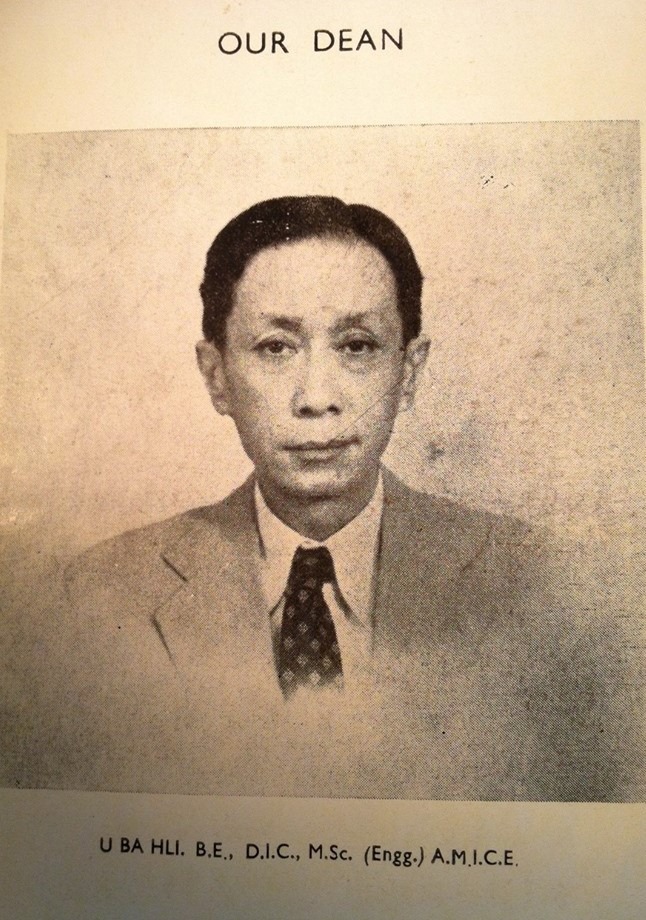
U Ba Hli
GBNF for alumni
GBNF for spouses
I used GBNF in the last stanza of my poem “SAYA PU ZAW PWE” for SPZP-2000. The poem was reprinted as the Back Cover of Swel Daw Yeik Sar Saung for SPZP-2000. It was only reprinted by the Class of 69 and Combined 1st BE intake of 64 and 65.
Poem for SPZP-2000
GBNF by School & Class
GBNF for the Class of 69
U Aung Min (M69) reported 146 entries in the GBNF list of the Class of 69. About 320 students entered the first ever 2nd BE. The list includes a few seniors who took sabbatical in their study and ended up as our classmates. 45% of our former classmates have passed away.
69ers GBNF
Six EC69ers have passed away :
U Kyaw Soe (DCA)
U Aung Thu Yein (Brownie, Schlumberger)
U Aung Thu Yein
U Chit Tin (MOGE)
U Chit Tin & Maung Kabar
U Oo Kyaw Hla (Canada)
Sai Aik Yee
Mehm Ye Win
Due to the decline of health, the 69ers chose to have two Golden Jubilees : the first in 2014 to celebrate the admission to RIT, and the second in December 2019 to celebrate the graduation of most members in 1969.
GBNF for the Class of 70
U Ohn Khine (M70) reported 151 entries in the GBNF list of the Class of 70.
Tommy Shwe, Cho Aye, Peter Pe and Thaung Sein (Steeve Kay) were among the Top Ten students from the class. They are now GBNF.
Tommy ShweSteeve Kay (Thaung Sein)Cho Aye
Over 450 students entered the first ever 1st BE.
GBNF from PPBRS
Most of my sayas and sayamas from PPBRS have passed away.
U Kyaw Zaw & Daw Khin Khin Aye
Among my PPBRS classmates, Myo Set (son of actor Tha Gaung Gyi) was the first to pass away. He perished in a car accident. Myint Sein (Veda) and Myat Hla Sein (Movie Tech) are among the recent GBNF from PPBRS.
Myat Hla Sein
GBNF from SPHS
Most of my sayas and sayamas from SPHS have passed away. Sayadaw Beatson (Physics, Boy Scouts) is a recent GBNF
SPHS SayasUzin Beatson
Among my SPHS classmates, Min Thaw (Gilbert, SPHS63) is among the early ones to pass away. Dr. Myo San (Freddie), Aung Thu Yein (Brownie), Tin Tun, Maung Maung Kyi, Aung Kyi (Arthur Kyi), Khin Maung Bo (Alan Saw Maung), Aung Chaw (Victor) are among the GBNF from SPHS63.
Myo San (Freddie)Maung Maung Kyi Soon Kyaw by Kyaw Wynn
69er GBNF
The GBNF list maintained by U Aung Min (M69) contains 146 of my RIT classmates. 18 succumbed to Covid. Some had medical problems.
Khin Maung Win (Sargalay)
GBNF from UCC & ICST
Several of my sayas, colleagues and former students have passed away.
CO Hla Min (Pauk Si) is an early GBNF from UCC. U Aung Zaw, Daw Nge Ma Ma Than, U Maung Maung Lay (Ah Ba), U Aung Myint and U Maung Maung Gyi are among the recent GBNF from UCC.
Dr. Chit Swe & U Aung ZawDr. Tin Maung & Daw Nge Ma Ma ThanU Maung Maung Lay & U Maung Maung GyiCO U Hla Min, U Aung Myint, U Aung Zaw
Tone Kyaw တုံးကျော်
One should have Samvegha (sense of urgency) after hearing the sad news. When my namesake Hla Min (Pauk Si, SPHS64, EP70) passed away in his mid-thirties, we were shocked since he seemed strong and did not wear jackets (mandated for UCC employees entering the Computer Room). He would often be seen in sport shirts. He passed away with a few months of being diagnosed with liver problem. The consultant doctor was Dr. Min Lwin (Maurice Hla Kyi, SPHS64, IM71). Ko Pauk Si was not a drinker, but other causes inflicted his liver. I became a Tone Kyaw when two government departments where I had given Guest Lectures on Computers and Applications tried to send me “Lwan Thu Pan Khwe” လွမ်းသူ့ပန်းခွေ
U Han Sein (C69) became a Tone Kyaw when the Organizers of the 30th Anniversary of Graduation inadvertently listed him in the GBNF list of the Class of 69. The organizers were unaware that U Han Sein was detained by the authorities after the 8-8-88 event. He resurfaced two decades later with the declaration of Amnesty.
Han Sein
Saya Dr. Tin Hlaing (M63) became a Tone Kyaw when his namesake Saya Dr, Tin Hlaing (formerly of Maritime Studies) passed away. Some alumni had to revoke the wrong announcement.
Dr. Tin Hlaing
Saya U Lin (M66) became a Tone Kyaw when Mg Mar Ga inadvertently announced his demise instead of Saya U Lay Aung.
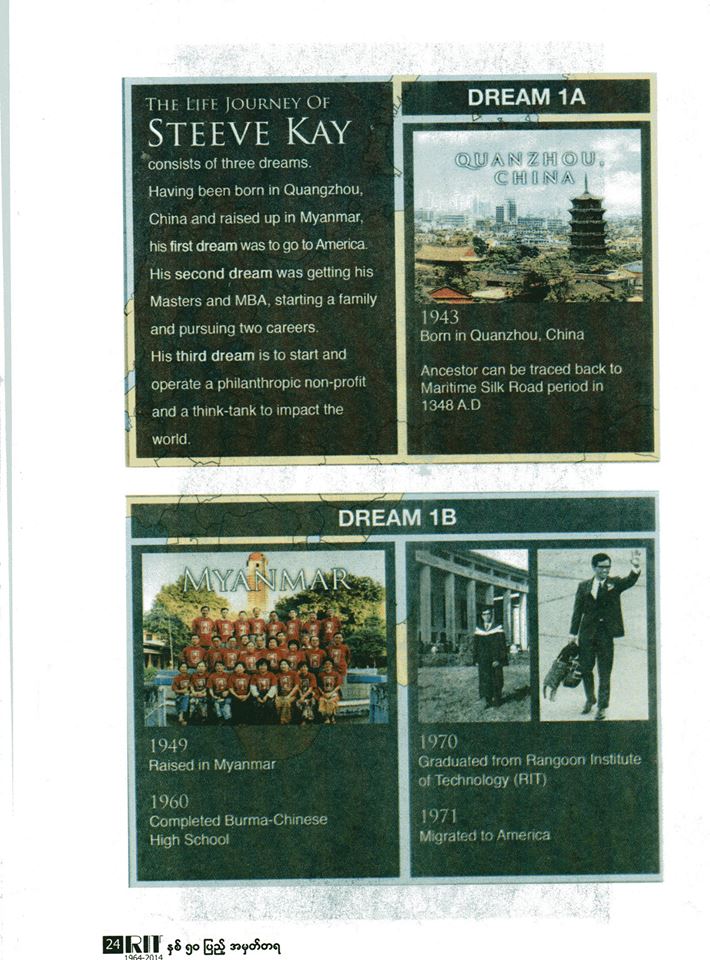
Attended Hwa Kyone. Sponsored publication of Hwa Kyone Centennial Magazine
Attended GTI briefly
Took Language Courses
Matriculated with Distinctions in Maths, Physics & Chemistry.
Admitted to 1st BE in Nov 1964 with Roll No. 8
Graduated with Electrical Communications in 1970
Moved to USA
Successful careers as IC Designer, CEO of QTC, Entrepreneur, Philanthropist
Never forgot his Roots, Alma Mater, Mentors & Motherland. He sang “Shwe Mi” at 2015 RIT Alumni Reunion in Los Angeles.
Special Name
An administrator entered the name as Steeve (instead of Steve). He appreciated the name for being special.
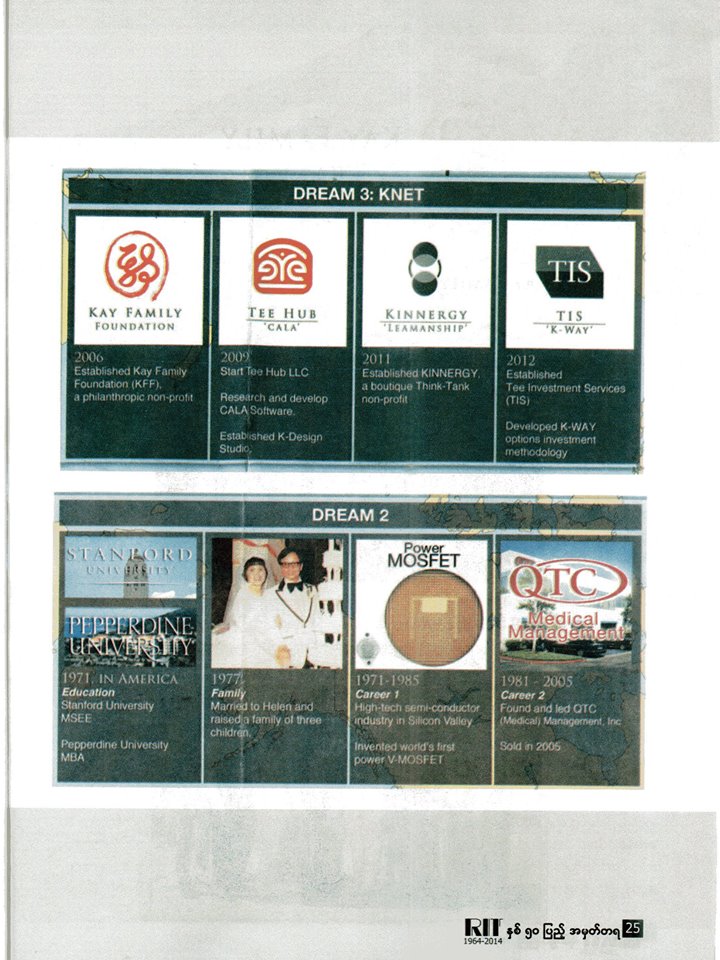
Education
MS from Stanford University
MBA from Pepperdine University
Work & Experience
S 1S 2S 3S 4
Electronics Engineer : Designer of Power IC Chip
Co-founder & CEO, QTC Management : His sister Dr. Lay Kay had patents for processing disability claims & requested Steeve to found QTC.
After private investors showed interest in his company, he retired but continued to lead a multiple-purpose career
Visiting places of the world’s leading religions
Incubating projects of young professionals
Supporting education (e.g. as trustee of UC Irvine & selected Colleges)
Maintaining diverse business portfolio
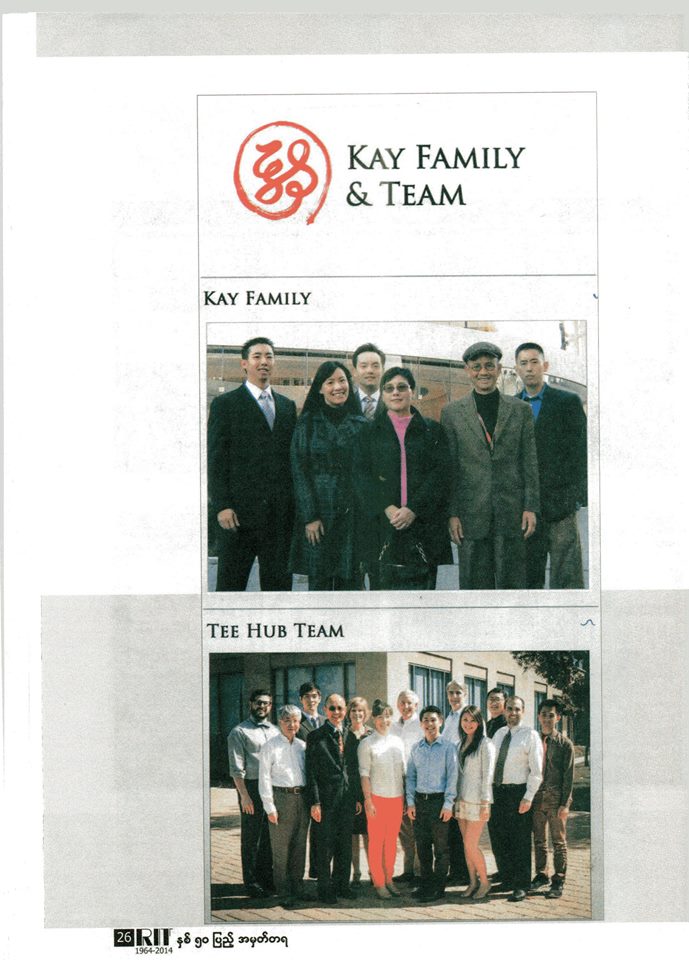
Helping those in need (via Kay Family Foundation & CABA)
Continue paying back the metta & cetana of his mentors as Golden Sponsor of RIT Reunion & Saya Pu Zaw Pwes, Helen and Steeve Kay Health Care Fund for the RIT Sayas and Sayamas.
From the SPZP-2000 Archives
RIT Poet Laureate Ko Hla Min:
I must admit that I was suffering from a Monday morning “hangover”, having been intoxicated with emotional overdose over the reunion weekend [in October 2000].
Judging from the post-reunion emails I read, I am not alone. What a reunion!
By all measures, it was a success and did satisfy the alumni’s tremendous pent-up desire to reconnect with each other after many decades of separation. The dedication of the members of the organizing committee is second to none.
With the assistance of his lovely wife, Benny Tan devoted practically full-time to this project for several months. I had a first-hand experience to see how meticulous he was when he was designing the RIT T-shirt. It came out a winner!
I do appreciate the sensitivity the organizing committee displayed in making this event non-religious and non-political. Otherwise, it would have been very difficult for me to attend. The only regret is that I failed to locate the whereabouts of my buddy Ko Aung Min of Taunggyi (ME 70). I heard he went to Singapore, but so far my search has ended in “no find”.
Now that the grand reunion is over, everybody is slowly recovering from the “hangover”. The big question is who would go to Singapore in 2002, and how do we go about doing it?
With best regards, Steeve Kay (Ko Thaung Sein)
Sponsor / Host of Gatherings
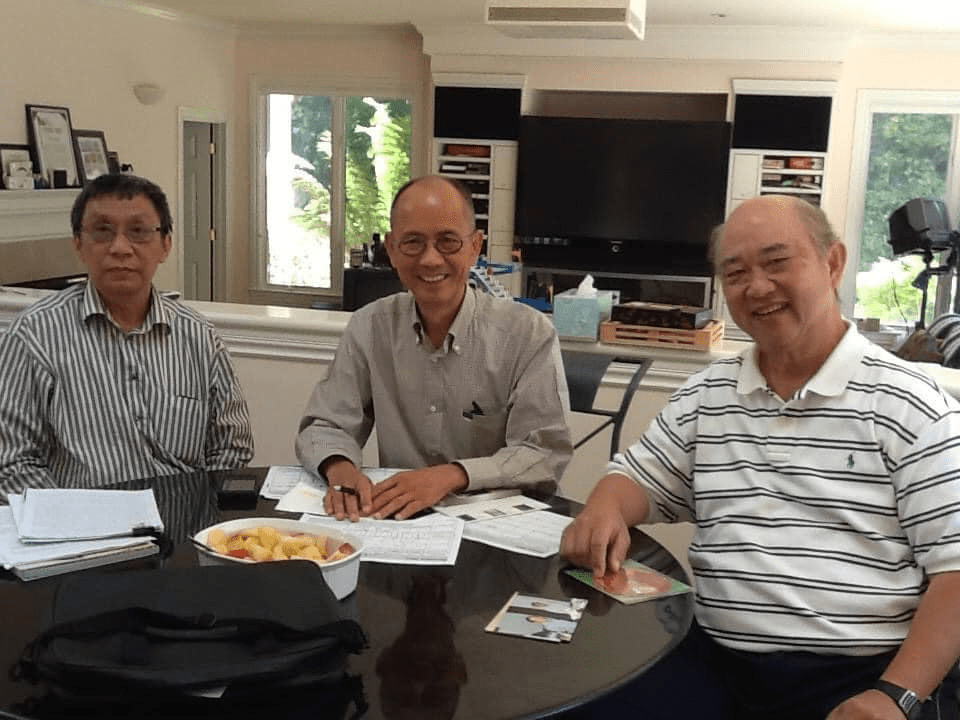
Steeve (Center) at Benny’s houseSPZP-2012Steeve (Center) in Yangon
SPZPs (starting with SPZP-2000 in US)
40th Anniversary of “Arrival in US”
Celebrating 40th Anniversary of Arrival in USA
Celebrating the Success of QTC
Acariya Pu Zaw Pwe(s) for the Combined 1st BE Intake of 64
2015 RIT Alumni Reunion in Los Angeles
2015
Special PZP and Reunion in Yangon (after doctors advised against Long Trips)