Mr. Salvitore was working as a Chemist in the USA.
Received a book as Christmas present from his supervisor. A chapter was “Dhammapada”. After reading it, Samvega (sense of urgency) crept in.
Quit his job. Left for Burma to be ordained as a Buddhist monk. Became “U Lokanatha”.
Wrote “I became a Buddhist. My supervisor remained a Christian.”
Was from a devout Catholic family. Elder brother was a Priest.
My paternal grand mother offered a monastery for U Lokanatha in Bawdigone (Windermere), Rangoon.
Practiced Dhutanga. Preached & took Dhamma Dhuta missions to India and Ceylon.
Passed away in Maymyo in 1966.
Ashin Ananda
(Latvian monk)
Fled Communist Rule
Rev. Friedrich V. Lustig’s mentor was the Buddhist Archbishop of Latvia and Lithuania. When the Communists invaded their country, they sought refuge in Burma. The government provided them a monastery in the “Ah Le Pyit Sa Yan” of Shwe Dagon Pagoda.
Moke Seit
Known as “Moke Seit Phone Gyi” for his beard. Came for alms to our parent’s house in Windermere Road.
After his mentor’s demise, he became Buddhist Archbishop of Latvia & Lithuania.
Ashin Ananda
Shaved his beard
Ordained as a Theravada monk with the title “Ashin Ananda”
Laureate Poet & Translator. Wrote poems in English. Translated selected Burmese poems into English.
In July 1969, he gave my poem “Men on the Moon” to Mr. Hall (USIS) to be forwarded to Apollo 11 astronauts. Gave a copy to the Guardian newspaper for publication.
Men on the Moon
U Thilawuntha (Mon Sayadaw)
Built pagodas worldwide
Mon Sayada
Dat Paung Zon Aung Min Gaung Sayadaw U Thilawunta (fondly known as “Mon Sayadaw”) built pagodas in Burma/Myanmar, USA, Canada, New Zealand, South Africa and several other countries.
In the ’50s, Sayadaw visited the United Nations and U Thant. He built the first Burmese pagoda in the Allegheny mountains near New York.
First pagoda in USA
During his visit to California, Sayadaw would spend time with his devotees such as Russell Wolfe (Santa Cruz) and U Aung Myint (Donald, Milpitas).
Sayadaw U Zeya
Monastery in Las Vegas
Las Vegas has some monasteries including Thai monasteries supported by members of the Royal Family.
Sayadaw resided at a Thai monastery and rose up in the ranks. Gave dhamma talks in Thai, English & Burmese. Several devotees offered him a monastery.
In May 2013, several dhamma friends in the Bay Area rented a van to attend “Htee Tin Pwe” of the pagoda inside U Zeya’s monastery compound.
Donated for two Nagas at the Las Vegas Monastery in memory of our parents and in-laws.
Engineers & Architects
Dr. Lwin Aung (A59)
Dr. Lwin Aung
Entered monk-hood after retirement
Was Professor of Architecture and Pro-Rector of YTU
Volunteered as a Consulting Architect for the construction of dhamma buildings
Due to health, he left monk-hood after several vassa.
U Bo Gyi (A59)
U Bo Gyi
Founded “Architect Incorporated” with U Tin Htoon (A60) & U Aung Kyee Myint (A60)
Later joined PWD along with his partners
Designed Mausoleum for Daw Khin Kyi, and was shunned by the higher authorities.
Hobbies : music (piano) and modeling (sculpture)
He is now GBNF.
U Han Nyo (Met60)
He helped conduct meditation retreats in Southern California and Mexico.
U Myo Tun (A69)
U Myo Tun
Ashin Pannagavesaka
Won prizes for essays under the name “Errol Than Tun”
Made dhamma duta mission to Vietnam
Was Dhamma Librarian for Moulmein Pa Auk Tawya Monastery
Edited Pa Auk Sayadaw’s books
Taught English to Dhammacariya Sayadaws
U Aung Chaw (C69, SPHS63)
U Aung Chaw
Ashin Ukkamsa
Resided in Sagaing
Later moved to the Irrawaddy Delta region
Met him in 2018 when he came to Yangon. Attended some breakfast gatherings by the 69ers. Kyaw Win (SPHS63) offered soon to Sayadaw at Shwe Ba Htamin Saing, and also offered Nawakamma.
U Wara (Win Paing, ChE70, SPHS64)
U Wara
Younger brother of Saya U Soe Paing (EE, UCC)
Entered monkhood after the Final Year ChE exam
Chief Resident Sayadaw, KabaAye Sun Lun Gu Kyaung
Was Taik Oke Sayadaw for Sayadaw U Vinaya
He is now GBNF
U Jotika (EE73)
Prolific writer and an outstanding Dhamma Lecturer
Spent vasa at Taung Pu Lu Kaba Aye monastery in Boulder Creek
Revisited US about a decade ago
Frequently visited Singapore and other neighboring countries
Ashin Pannobhasa (M91)
Met him in SF Bay Area with his mentor (Sayadaw from Myanmar).
Born in April 1966 Thursday (2nd Waning day of Kason 1328 BE) in Pyapon, Irrawaddy Division.
After finishing his Mechanical Engineering degree from Yangon (Rangoon) Institute of Technology he received higher ordination as a Bhikkhu or a monk at the age of 24 in the Ordination Hall, Pyapon Mahasi Sasana Yeiktha under the preceptor of Venerable U Vannita, Pyapon Mahasi Sayadaw, Pyapon Mahasi Sasana Yeiktha on 27th July 1991.
Chief Resident Monk at a monastery in Seattle, Washington
According to the Theravada (Way of the Elders) Tradition, there have been six Buddhist Councils.
The Fifth Buddhist Council was held in Mandalay, Burma. The Pali Canon was enshrined in Stone Inscriptions ကျောက်စာ by the team led by ရသေ့ကြီးဦးခန္တီ
The Sixth Buddhist Council was held at Kaba Aye (World Peace) Pagoda, Rangoon, Burma from 1954 – 1956. The Presiding Sayadaws include Nyaung Yan Sayadaw (ညောင်ရမ်းဆရာတော်) Ma Soe Yein Sayadaw (မစိုးရိမ်ဆရာတော်) Mahasi Sayadaw (မဟာစည်ဆရာတော်) and Mingun Tipitaka Sayadaw (မင်းကွန်းတိပိဋကဆရာတော်)
Nyaung Yan SayadawSangha Maha Nayaka for Sixth Buddhist Council
Tipitaka တိပိဋက
It is a Pali term. It is commonly rendered as “Three Baskets” :
Vinaya (Monastic rules of conduct) ဝိနည်း
Sutta (Discourses) သုတ္တန်
Abhidhamma (Ultimate reality) အဘိဓမ္မာ
Buddhist Councils သံဂါယနာ
U Silananda
According to the Theravada tradition, there are six Buddhist Councils.
The First, Second and Third Councils were held in India.
The Fourth Council (which recorded the teachings on palm leaves) was held in Ceylon.
The Fifth Council was held in Mandalay, Burma. U Khanti inscribed the Tipitaka on marble slabs. It was featured as the World’s Largest Book in Ripley’s “Believe it or not”.
The Sixth Council was held in Rangoon, Burma. Tipitaka was reconfirmed and published as printed texts. Selected Pali texts were also translated into Burmese.
First Buddhist Council
Source : U Silananda
Date : 3 months and 5 days (Sasana Era)
Place : Rajagaha (India)
King : Ajasattha
Leader : Mahakassapa Thera
Number of Monks : 500
Duration : 7 months
Accomplishment : Collected, examined, classified, and recorded orally the Buddha’s Teachings
Born on February 13, 1915. February 13 is also known as “Khalay Mya Nay” (Childrens’ Day).
Zartar name : Htain Lin
Preferred name : Aung San rhymes with Aung Than (his elder brother).
Alternate names : Thakin Aung San, Bo Teza
Spouse : Daw Khin Kyi
Children : Aung San Oo, Aung San Lin (GBNF), Aung San Suu Kyi
Received Bachelor of Arts (BA)
Secretary, Rangoon University Students Union
Editor, Oway Magazine; Translated “Invictus”
Expelled from RU for refusing to disclose the author of “Hell Hound At Large”
Quit studying for Bachelor of Law (BL) to concentrate on politics
Architect of Burma’s Independence
Assassinated on July 19, 1947.
Public Mourning at Jubilee Hall
Laid to rest at Mausoleum near Shwe Dagon Pagoda
I wrote the following for Bogyoke Aung San’s Centennial Celebration in the San Francisco Bay Area.
AUNG SAN (Feb 13, 1915 – July 19, 1947)
AUNG
A — Architect of Burma’s Independence; He signed the Aung San – Atlee Agreement. It led to the Nu — Atlee Agreement that gave Independence.
U — University Student Leader; He served as Chief Editor of the Oway Magazine. He refused to name the author of “Hell Hound Turned Loose”. He was expelled, resulting in the 1938 Universities Student Strike. He translated “Invictus“.
N — National Unity & Solidarity Proponent; He organized the Panlong (Pinlon) Agreement. The agreement was signed on February 12, 1947.
G — Gone but not forgotten; He was a General, but he promised to step down after Independence. He was gunned down at the tender age of 32.
SAN
S — Showed leadership & personal sacrifice; He wore torn uniforms. He ate Pebyoke and Nanbya.
A — Anti Fascist People’s Freedom League (AFPFL); He was a Co-founder.
N — National Planning Advocate; He displayed Nationalism and Patriotism by deeds and not words.
(2) Some Firsts in the History of Burma
Based partly on the compilation of Sayagyi Minthuwun
(1) Sao Shwe Thaik served as the first President of the Union of Burma. Burma gained Independence on January 4, 1948. He was succeeded by Dr. Ba U and Mahn Win Maung. Coup d’etat took place before Sama Duwa Sinwa Naung could take office. Sao Shwe Thaik’s son passed away during the Coup.
(2) U Nu served as the first Prime Minister of the Union of Burma. He was also the last Prime Minister before the fateful Coup d’etat on March 2, 1962.
Dawei U Ba Swe was Prime Minister for some time when U Nu took a break.
(3) Dr. Shaw Loo was the first doctor to study medicine in the West.
(4) Mekkhaya Mintha (Prince) & Mr. Lane translated Dr. Samuel Johnson’s Dictionary into Burmese.
(5) Yaw Mingyi U Pho Hlaing was the first Burmese author to write about Science and Technology.
(6) Arzani U Razak was one of the first to graduate from Ah Myo Tha Kaw Leik (National College). He served as Principal of the National School in Mandalay. He was Minister of Education in Bogyoke Aung San’s Cabinet. He was assassinated on July 19, 1947.
(7) Phan Chet Wun U Shwe Oh was the first Burmese engineer.
(8) Sayadaw U Ottama was the first Political Prisoner in Burma. “U Ottama Pan Chan ဦးဥုတ္တမ ပန်းခြံ” is a park named in his honor.
SayadawU Wisara was another famous Political Prisoner. “U Wisara Kyauk Taing ဦးဝိစာရကျောက်တိုင်” was erected in his honor.
(9) Phwa Oo Zun (Mandalay native) was the first Burmese female to perform Social Service for the public. She established the Home for the Aged. Details can be found in Ludu Daw Ah Mar’s book “Mandalay Thar & Mandalay Thu”.
(10) U Nyi Pu (brother of Daw Khin Myint, A1 U Tin Nwe, U Maung Maung Soe and A1 U Tin Maung) was the first leading male actor in a Burmese movie. The siblings and their extended families founded several film companies. U Nyi Pu founded Maha Weikzahto Film. The “Thamankyaw” movie was shot and produced at U Nyi Pu’s studio. The crew consisted of A1 Than Htut (Director), A1 Thein Htut (Cinematographer), Than Win (T70, Author), Toe Nyunt, Ko Myint (Min70), Sai Wunna, Win Hlaing, Myo Thant, Toe Chit, Bo Ba Ko, Min Naung & Nwe Nwe Mu.
(11) London Art U Ohn Maung founded a company to produce Burmese films and served as a Director.
(12) Kyaw Soe won the inaugural award for Best Male Actor.
Note: The awards are known as “Shwe Sin Yoke Su ရွှေစင်ရုပ်ဆု”. The winners prefix their names with “Academy”.
(13) Kyi Kyi Htay won the inaugural award for the Best Female Actor. She won the award several more times.
(14) Aung Tun Lay won the inaugural award for the Best Child Actor.
(15) U Kyauk Lone (U Aung Gyi) won the inaugural award for the Best Male Supporting Actor.
(16) Daw May Nwe won the inaugural award for the Best Female Supporting Actor.
(17) U Thu Kha won the inaugural award for the Best Director. He also wrote, acted and sang. My translation “Still So Young” of his short story was published in the Sunday Supplement of Working People’s Daily. I received K50 for the translation. U Thu Kha received an honorarium of K50 for his short story.
(18) Sein Beda was the first Saing Saya ဆိုင်းဆရာ to perform overseas.
(19) James Hla Kyaw wrote the first Burmese novel “Maung Yin Maung Ma Mae Ma မောင်ရင်မောင်မမယ်မ”.
(20) Independent Daw San was the first Burmese female Journalist.
(21) Dr. Ba Maw was the first Burmese lecturer at the Department of English at the University of Rangoon. He became Adhipati အဓိပတိ during the Japanese Occupation.
(22) Professor U Pe Maung Tin was the first Principal of the University of Rangoon. He was Professor of Oriental Studies (including Pali). He proposed to have a separate Department for Burmese. Three outstanding students — ICS U Sein Tin (Theikpan Maung Wa), U Thein Han (Zawgyi) and U Wun (Minthuwun) — founded the “Khit San Sar Pay ခေတ်စမ်းစာပေ” movement.
(23) Tekkatho Tun Naung (BDS, Luyechun) was the first vocalist of the Stereo Khit (Era). Others include Accordion Ohn Kyaw and Min Min Latt. Former performers of BBS Local Talent and Variety Show became professionals.
(24) Mee Bone Byan U Kyaw Yin was the first aerial acrobat to perform stunts from a Hot Air Balloon. He was featured in a text book that we studied in Middle School.
(25) U Kyi built the first robot.
(26) Great Po Sein founded the first Nei Hlei Zat Tha Bin (နယ်လှည့်ဇာတ်သဘင် roving troupe for performing plays). His sons Kenneth Sein and Thet Thet Sein also performed.
(27) Dr. / Sir Mya Bu, who studied in France and Germany, served as the first Burmese Chief Justice of High Court.
(28) U Ba Hli served as first native Dean of Engineering at Rangoon University.
(29) Dr. Tin Hlaing founded the Department of Atomic Energy and served as the first Director General.
(30) U Ba Galay (U Shwe Ta Lay) was the first Burmese Cartoonist.
(31) Sithu U Kaung served as the first President of Burmese History Commission. The History Commission was later merged with the Burmese Language Commission. He is the father of U Thaw Kaung, Dr. Daw Yee May Kaung and Daw Kyi May Kaung.
(32) Dr. Chit Swe is the Computer Pioneer in Burma. He founded the Universities’ Computer Center (UCC) with the help of Saya U Soe Paing, Saya U Myo Min and Saya U Ko Ko Lay (GBNF). He served as the Director of UCC in addition to the Maths Professorship. He established the academic and training courses at UCC with the help of Professor Dr. Harry D. Huskey (Past ACM President) and visiting professors from US, US and Europe. He enabled the academic courses at UCC to have degrees conferred by the Department of Mathematics at RASU. He became Rector of RASU. He never lost his passion about UCC and the dissemination of Computer Science and Applications.
(33) Dr. Tin Maung (son of Saya U Kar) succeeded Dr. Chit Swe as Director of UCC. During his tenure, DCS (Department of Computer Science) and ICST (Institute of Computer Science and Technology) were established. U Tun Aung Gyaw (EC69) and I were members of “Generation Zero” at UCC. We taught at UCC, DCS and ICST.
(34) U Raschid (also known as M. A. Raschid) served as the first President of Ba Ka Tha (ဗကသ All Burma Students’ Union). He was also President of Ta Ka Ta (တကသ RU Student Union). He served as a Minister in the AFPFL ဖဆပလ Government.
(35) Chit Oo Nyo, a prolific writer, wrote the first book to play “Kyar” (ကျား Checkers).
(36) Hajeema Pyinmana Daw Pu was the first female to win Lu Hmu Htoo Chun Su Pathama Sint (လူမှုထူးချွန်ပထမဆင့် First Class for Distinguished Social Service). She donated for the founding of some hospitals. She is the mother-in-law of Saya U Ba Than Haq (Retired Professor of Geology and Pro-Rector of RASU)
(37) Bohmu (Major) Daw Khin Ohn Mya (also known as writer Mya Marlar) was the first recipient of the Florence Nightingale Award for outstanding Nursing.
(38) U Win Myint (Mandalay) was the first Burmese to donate his body.
(39) U Thant succeeded Daj Hammerjold as UNSG (United Nations Secretary General). He was the Third UNSG and the first UNSG from Asia. He served two terms. “U Thant Ah Yay Ah Khin” is a sad event in the history of Burma.
(40) Daw Aung San Suu Kyi was the first Burmese to receive the prestigious Nobel Peace Prize.
MinthuwunMinthuwun and family
Saya Minthuwun (U Wun)
Retired Professor of Burmese at Rangoon University
Head of the Translation Department
Compiler of the Myanmar Abhidan (Burmese Dictionary)
Co-compiler of the Japanese-Burmese Dictionary
Visiting Professor of Burma at Osaka University at the invitation of Professor Harada (“Chit Mann Nwe ချစ်မန်းနွယ်”)
Co-founder of “Khit San Sar Pay”
Laureate Poet
Saya is the father of Edgar Wun (U Nyan Soe), Peter Wun (U Htin Kyaw, former President of Myanmar) and Rosalind Wun (Daw Htar Cho)
(3) Pioneers and/or record holders
Computer Ah Sa UCC Ga
I wrote 30+ posts on “Memories of UCC”. A summary was published in the Commemorative Magazine for the 30th Anniversary of the founding of ICST.
Sayagyi Dr. Chit Swe founded UCC (Universities’ Computer Center) with the help of Saya U Soe Paing, Saya U Myo Min, and Saya U Ko Ko Lay (GBNF). They also led TOSS (Team Of System Specialists), which helped the computerization of various government departments and organizations.
Dr. Tin Maung (GBNF) succeeded Dr. Chit Swee as Director of UCC. During his tenure, DCS (Department of Computer Science) and ICST (Institute of Computer Science and Technology) were opened. He served as the Rector of ICST.
U Soe Paing wrote “Computer Ah Sa UCC Ga” in a computer magazine in Myanmar. It was re-posted in “Mandalay Gazette”, a publication based in Los Angeles.
Burmese Movies
A1 U Tin Nwe is the eldest of the four brothers. He and his youngest brother U Tin Maung founded A1 Film. Several of his descendents are Directors and Actors. His grandchildren include A1 Than Htut, A1 Thein Htut, Thamankyar Ko Myint (Min71) and Sai Wunna.
U Nyi Pu, the second brother, founded his own film company called ” Maha Weikkzado Films”.
U Maung Maung Soe (U Tin Pe), the third brother, founded “Maung Maung Soe Film”. He is the grand father of Ma Pyi Aye (Rosalind, A66) and Ma Khin Than Nu (Glory, EC70).
U Kyaw Zaw (PPBRS) and U Nay Win (British Burma) studied cinematography in US.
U Tin Yu is the son of Daw Khin Myint (eldest daughter of Myanmar Ah Swe founders). For the Yoke Shin Centennial, he gave interviews about his uncles (notably A1 U Tin Maung) and his career (as a cinematographer, assistant director and full-fledged director). Than Win (T70, son-in-law) wrote the novel for Thamankyar.
U Mya Maung (brother in law of U Tin Yu) founded Mya Zaw Films. His children include Peggy Mya Maung, Winnie / Win Mar (Academy winner), Ted / Toe Nyunt (Shwe Gaung Byaung), Rosebelle / Sandar (Academy winner) and Mya Zaw.
Tipitaka Sayadaw
Sayadaw U Vicittacara is the first Burmese to appear in the “Guiness Book of World Records” for his phenomenal memory. Sayadaw recited 8000+ pages of Tipitaka : Vinaya (Monastic rules of conduct), Sutta (Discourses), and Abhidhamma (Ultimate Reality) at the Sixth Buddhist Council held at KabaAye from 1954 – 56.
Lexicographers
Reverend Judson and his team
U Tun Nyein
Dr. Ba Han
U Ohn Pe (Tet Toe)
U Hoke Sein (Pali, English, Burmese)
Minthuwun (Burmese, Japanes)
Sixth Buddhist Council Team (e.g. Sayadaw U Silananda)
Medical Research
BMRI (Burma Medical Research Institute) was founded by Dr. Mya Tu.
It later became DMR (Directorate of Medical Research)
His successors include Dr. Aung Than Ba Tu, Dr. Khin Maung Tin and Dr. Daw May May Yi.
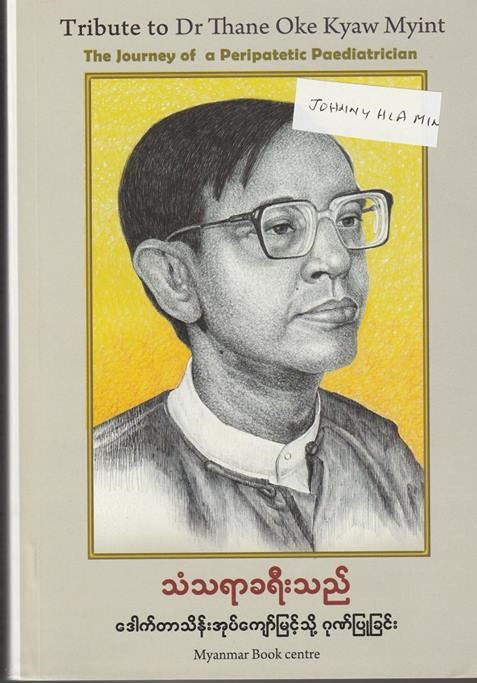
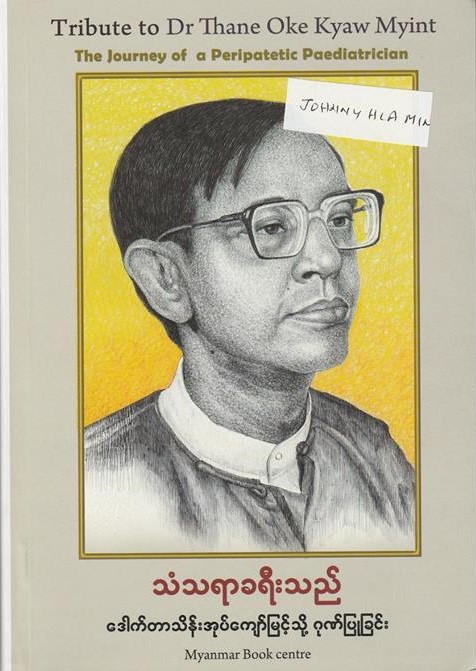
Details of the early and/or prominent doctors/educators have been written by Saya Dr. Thane Oke Kyaw Myint (SPHS60) and Dr. Nyunt Wai (Victor, SPHS63).
U Ba Hi and his son Dr. Freddie Ba Hli
Sayagyi U Ba Hli was the first native Dean of the Faculty of Engineering, Rangoon University. He also taught Civil Engineering courses. He was the driving force (with the support of Professor Horwood of MIT) behind the “Twinning Program” with prestigious universities in US and UK.
Dr. Freddie Ba Hli (Sc.D from MIT) was the first Director General of UBARI (Union of Burma Applied Research Institute). He also taught part-time at the Electrical Engineering Department. Heblater served as a Board Member for UCC.
UN Delegation
Before becoming the 3rd Secretary General of United Nations, U Thant was the Permanent Representative of the Burmese Mission to the UN. He was preceded and succeeded by Mr. James Barrington (ICS and RUBC Gold).
U Thant was the unanimous choice following the Soviet Union’s veto of Dr. Ralph Bunche (prominent Black diplomat), and the USA’s veto of the “Trioka” (proposed by USSR). Burma was a co-founder of the “Non Aligned Movement” to balance the USSR and USA Blocs.
The Permanent Secretary post was later renamed as Ambassador to the United Nations.
Early NativeProfessors
Dr. Maung Maung Kha (Physics), Dr. Hla Myint (Economics) and Dr. Tha Hla (Geology) did their doctorates in the UK. Upon their return to Burma, they helped replace the non-Burmese (mostly British and some Indian) professors from Rangoon University. They also served as Rector of Rangoon University.
Cartoonists
Prominent cartoonists include U Ba Gyan, U Heng Soon, U Pe Thein, U Aung Shein, U Kyaw San, U Sein, and U Ba Htwe.
RIT Cartoon Box was established by U Myint Pe (M72) under the Patronage of Saya U Khin Maung Phone Ko (C64), Saya U Aung Myint (Pet69, GBNF). Four generations maintained the RIT Cartoon Box.
Cartoons were displayed along U Ba Gyan Street during the Tazaungdaing Festival.
Translation & Adaptation
There have been adaptations as well as “direct translation” of works from English to Burmese.
James Hla Kyaw’s novel was based on the Count of Monte Cristo.
Shwe Oo Daung’s U San Shar and U Thein Maung are the Burmese counterparts of Sherlock Holmes & Dr. Watson.
Mya Than Tint (BA, BL) & Thakin Ba Thaung are distinguished translators.
Sports
U Zaw Weik was the first Burmese to compete in Olympics as a member of the British Empire team (governing India and Burma). He co-founded the Burma Olympic Council.
U Aung Gyi (flyweight) was the first Burmese weight lifter to set/break an Olympic record.
Some Burmese Champions who competed in the Olympics include Maung Maung Lwin (Yatching), Tin Maung Ni (Swimming), Myee Tone Naw (Track and Field), Thein Myint (Boxing) and 1972 Munich Olympics Soccer Team.
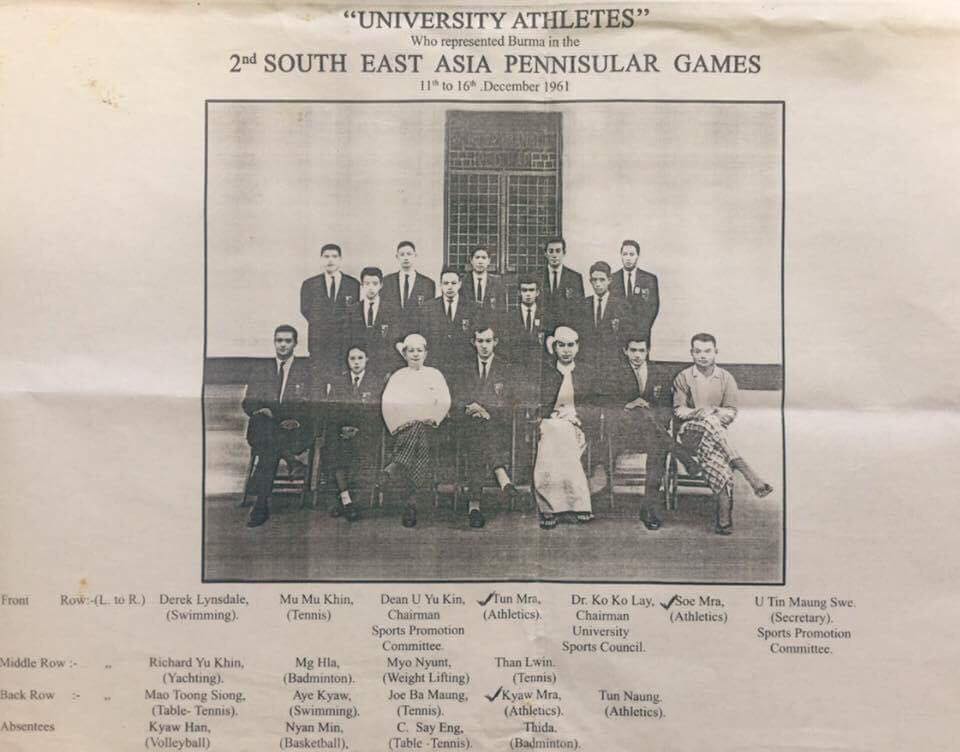
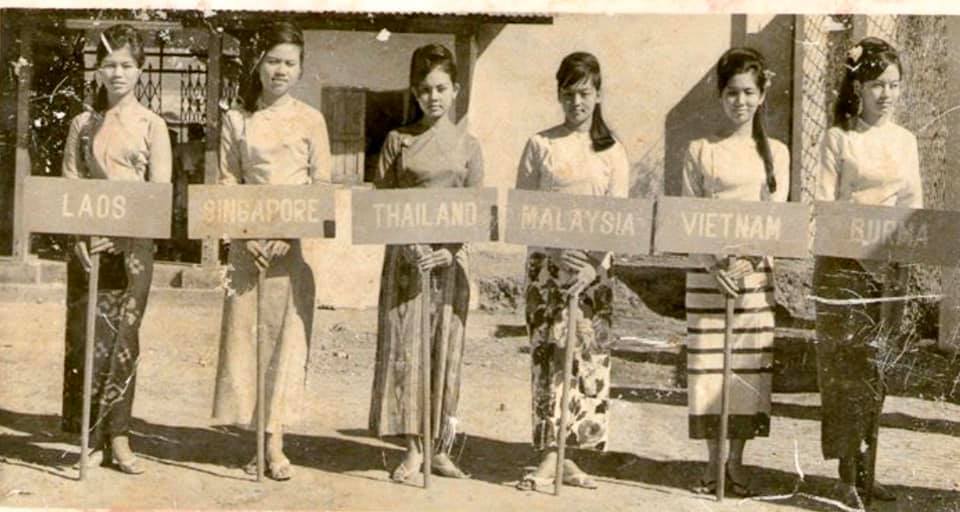
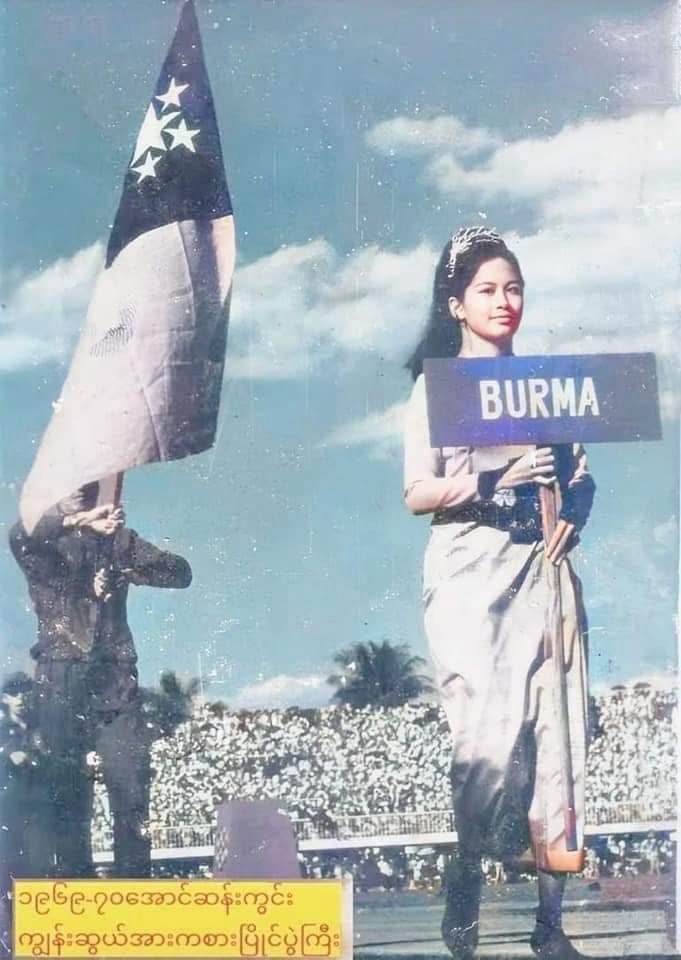
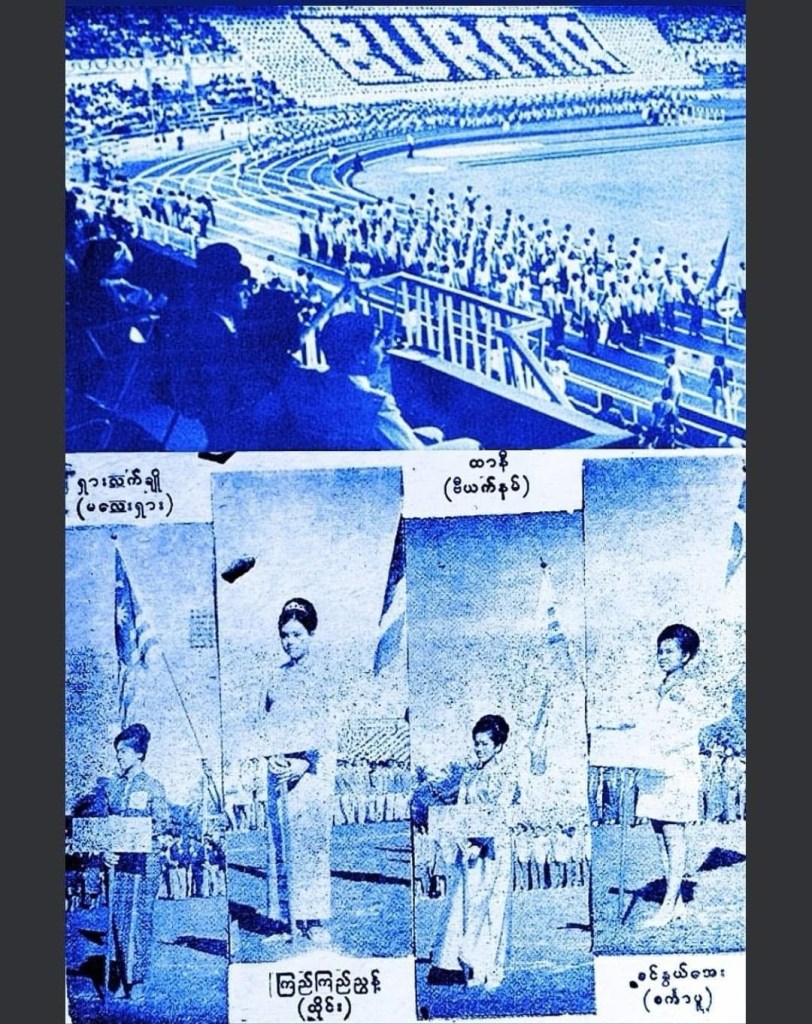
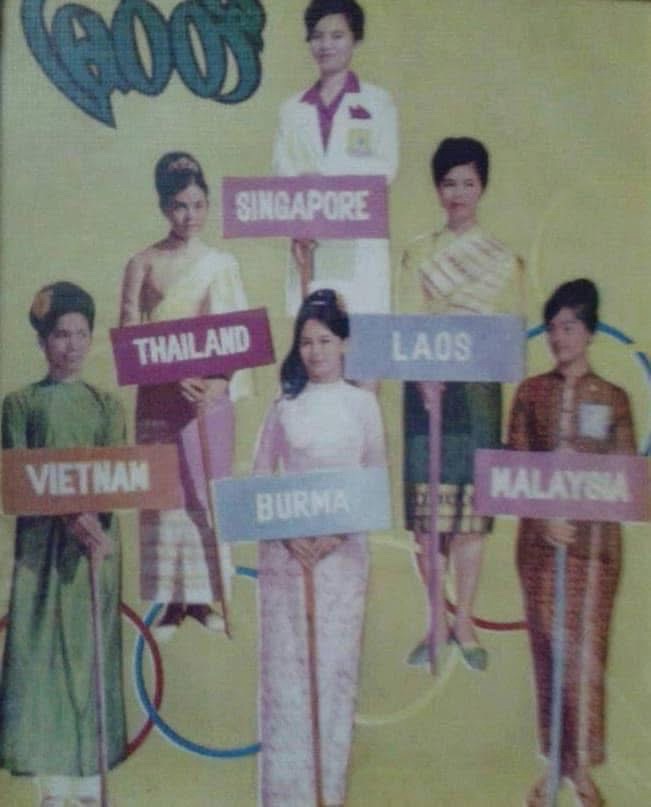
Several students of Rangoon University represented Burma in the First SEAP Games in Bangkok in 1959, and the Second SEAP Games held in Rangoon in December 1961. I have posted a photo provided by Dr. Richard Yu Khin (MEHS61, GBNF) who won a Gold Medal in Yachting.
Tun Mra (4×100 meters relay), Kyaw Mra (hurdles, GBNF) and Soe Mra (Pole vault) won medals at the 2nd SEAP Games. Their younger brothers Win Mra, Maung Maung Mra and Aung Mra also also excellent Pole Vaulters. Kyaw Mra became National Coach for Track and Field.
Education
There have been several “New” Education Systems.
When the Universities which were forced to close following the Anniversary Celebrations in July 1963, the higher authorities decided to reorganize the Rangoon University as a number of autonomous Institutes.
The Faculty of Engineering underwent two name changes: first to BIT (Burma Institute of Technology) in 1961 and then to RIT (Rangoon Institute of Technology) in November 1964. The degrees conferred became B.E. and B.Arch under the then new Education System. U Yone Mo became the first Rector of RIT. U Soe Thein became the Registrar.
World wide Saya Pu Zaw Pwe
The first RIT Grand Reunion and Saya Pu Zaw Pwe was held in San Francisco, California, USA in October of 2000. I am honored to be a member of the RIT Alumni International that hosted SPZP-2000.
I founded the RIT Alumni International Newsletter and have served as its Editor and Content Provider for 26 years. I have repaid the metta and cetana of my mentors.
There have been seven RIT Grand Reunion and SPZPs (also known as World Wide SPZPs). They are
SPZP-2000 : USA in October 2000
SPZP-2002 : Singapore in December 2002
SPZP-2004 : Yangon in December 2004
SPZP-2007 : Singapore in April 2007
SPZP-2010 : Singapore in December 2010
SPZP-2012 : Yangon at the Gyogone Campus in December 2012 (True Home Coming). The Reunion dinner was held at MICT Park
SPZP-2016 : Yangon in December 2016. A free All Day Event at the Gyogone Campus with exhibitions, and two stages.
Note : SPZP-2020 was cancelled due to the COVID-19 pandemic.
For SPPZ-2000, I served as Chief Editor for the commemorative issue of “RIT Alumni International Newsletter”.
For SPZP-2002, SPZP-2007 and SPZP-2010, Saya U Moe Aung (Tekkatho Moe War) served as Chief Editor of the commemorative issue of “Swel Daw Yeik Sar Saung”. He also served as Chief Editor of the commemorative issue of “Swel Daw Yeik Magazine” for Shwe YaDu 2014 and SPZP-2016.
U Saw Lin (C71, GBNF) served as Chief Editor of “Swel Daw Yeik Magazine” for SPZP-2012.
Other special publications for SPZP-2012 are
HMEE-2012 (History of Myanmar Engineering Education) by Saya U Aung Hla Tun and team. I was a member. U Ohn Khine and I compiled a CD supplement for the book.
Selected RIT Cartoons by U Myint Pe (M72) and fellow cartoonists
Associations
The Student Unions and most associations were not allowed to function for five or so decades.
With the Pwint Linn Era, some progress was made.
Swel Daw Yeik Foundation
Swel Daw Yeik Foundation (SDYF) was founded in 2013 to help the sayas and students — past, present and future — of our beloved alma mater. U Khin Maung Tun is the President and main donor.
SDYF has provided
Annual Medical Check up of eligible sayas and sayamas
Limited financial assistance for sayas and sayamas needing (a) hospitalization (b) frequent visits to clinics (c) long term care
SDYF helped with Shwe YaDu Celebrations in December 2014.
RITAA
RIT-YIT-YTU Alumni Association (RITAA) was founded on March 13, 2016. Since there was a length limitation for naming, BIT (which was technically a renaming of the “Faculty of Engineering” of the University of Rangoon) was left out of the Association’s name.
RITAA became a major sponsor for SPZP-2016.
RITAA is a major force in the implementation of “YTU Library Modernization” Project.
U Myo Aye is the current President. U Tin Latt, who led the Association before the first AGM (Annual General Meeting), is the Vice President.
(4) Burmese Female Scholars
The list is partly based on a special broadcast by BBC, which covered the early Burmese female scholars that studied for their Masters and Doctorates (mostly in the UK and the US). Additional details are provided by friends and relatives (including Dr. Thane Oke Kyaw Myint, Dr. Yan Naing Lwin, Dr. Kyaw Tint, Dr. Richard Yu Khin and Uncle U Thein Han).
Masters
Daw Mya Sein (History)
Daw Ma Ma Khin (Nutrition)
Daw Khin Khin Gyi (Education)
Arts
Dr. Thinn Kyi (Geography) — aunt of Ko Theikdi
Dr. Thaung Blackmore (History) — aunt of Dr. Richard Yu Khin
Dr. Yi Yi (History)
Dr. Khin Hla Han (History) — daughter of Saya U Thein Han (Zawgyi)
Education
Dr. Khin Mya (Education)
Dr. Saw Yi (Education)
Dr. K Mya Yi (Education)
Social Science
Dr. Khin Nyo Nyo (Eco/Commerce)
Dr. Khin Ohn Thant (Eco/Commerce)
Dr. Yi Yi Chit Maung (Commerce) — sister of Saya U Tin Htut
Dr. Kyi May Kaung (Political Economics) — daughter of Sithu U Kaung
Dr. Khin San Yi (Eco/Commerce)
Political Science, Literature, Library Science & Journalism
Dr. Emma Ba Yoke Nyunt Han (Political Science)
Dr. Khin Mya Kyu (Literature)
Dr. Khin Lay Myint (Literature, French) — daughter of Journal Gyaw Ma Ma Lay
Dr. Khin Thet Htar (Library Science) — compiled magnum opus of Health Professionals in Burma (with her spouse Saya Dr. Mya Tu)
Dr. Marjarie Tin Nyo (Journalism) — daughter of Nation U Law Yone
Science
Dr. Linsday (Zoology)
Dr. Yi Yi (Botany)
Dr. Mya Mya Nu (Zoology, Ornithology)
Dr. Yin Yin Nwe (Geology, Earth Science)
Dr. Hla Hla Sein (Mathematics)
Dr. Mya Mya Than (Botany)
Dr. Khin Mya Mya (Physics)
Dr. Khin Sein (Botany)
Medicine
Dr. Khin Khin Kyi (1) (Pharmacology)
Dr. Khin Khin Kyi (2) (Microbiology)
Dr. Khin Ma Gyi (Pharmacology)
Dr. San Yi (Physiology)
Dr. Marlar Maung (Microbiology)
Some countries offer C.Sc. (Candidate of Science).
Dr. Thane Oke Kyaw Myint added :
Although not doctorates, first in their fields:
Dr. Daw Saw Hsa, FRCS, surgery Dr. Daw Yin May, FRCS, FRCOG, FRCP (only Burmese Doctor to be conferred fellowships from three different colleges).
Fields of study of medicine:
Dr. Daw Khin Kyi Kyi (pharmacology) Dr. Daw Khin Kyi Kyi 2 (microbiology) Dr. Khin Ma Gyi (pharmacology)
Dr. Daw San Yi (physiology)
Dr. Daw Marlar Maung (microbiology) younger sister of Alumnus Khin Maung Maung (Burma Navy) (SPHS 1960)
Prof. Daw Phae (Mrs. Yu Khin) microbiology
Prof. Daw Myint Myint Khin, BA English, FRCP Edin: Professor of Medicine writer and poet, Medical educationalist
Prof. Daw Hla Kyi, FRCOG, MMSA. She was the only OB-GYN with Master of Midwifery of the Society of Apothecaries.
Dr. Yan Naing Lwin wrote :
Daw Hla Hla Sein — who taught Mathematics at RIT and is a sister of Daw Myint Myint Sein (M70) — received M.A in math from University of Indiana, Bloomington, Ind . and Ph.D. in mathematics from University of Illinois , U-C. She passed away about 2 years ago in Pasadena, Ca.
Mimi Aung – received her BS & MS degrees in EE from University of Illinois, U-C. She has been the program manager for NASA Mars helicopter project at JPL – Pasadena.
Doris Chan – received her BS , MS & Ph.D. degrees in EE from University of Illinois, U-C. Currently at BAE systems.
Angel Chan – received her BS in Chemistry & Biology from Western Illinois University Ph.D. in Material Science & MD degrees from University of Illinois, U-C Currently at John Hopkins University
Dr. Kyaw Tint wrote :
Daw May Su, received Master of Science in Nuclear Physics. Based on my conversation with her, I noticed her University was in London, but could not recall the name. She passed away in Northern California several years ago.
There is also another lady named Dr. Khin Mya Mya, PhD in Physics, I think from Australia in 1970s.
Dr. Daw Khin Sein of Botany was my English teacher of proficiency course at IFL. Her high school was in Darjeeling and the PhD was most likely from Britain.
U Thein Han wrote :
Professor Daw Kyu Kyu Swe, MBBS, MRCOG, Mandalay Medical College (spouse of Professor Dr. Pe Thein).
(5) Dr. Chit Swe
Dr. Chit SweSaya Chit in 2006
Saya passed away in Sydney, Australia in 2019.
The following is one of several articles I wrote about Saya.
Still So Young And Passionate: Saya Chit
Saya Chit (Dr. Chit Swe) is 88 years young, but he still has an active mind and has a desire to payback to Myanmar.
Until a few years back, Saya was supervising Burmese students in Australia with their research and theses.
Saya studied at Mandalay University. His contemporaries include Saya Di (Dr. Maung Di) and Tekkatho Phone Naing (U Khin Maung Tint, who supposedly based his characters on his friends).
Saya did his studies at Imperial College (University of London) and the University of Liverpool in the UK.
During his studies at Imperial College, Saya U Ba Than (Retired Professor of Mechanical Engineering, RIT) was his room mate.
Saya was Head of Mathematics Department at the Institute of Economics when he proposed to the Ministry of Education to acquire a computer for research and teaching. Saya Nyi Nyi requested Saya Chit to extend the scope of his proposal to cover selected universities and institutes. The UCC project was born.
It would take several years before UNDP would approve to fund the UCC project. UNESCO would act as the Executing Agency.
Mandalay Hall
Saya Chit succeeded Saya U Ba Toke as Professor of Mathematics Department at RASU. Saya recruited volunteers to help plan for the implementation of UCC. Saya received permission to use Mandalay Hall as the temporary home for UCC.
Saya Chit, Saya Paing (U Soe Paing), Saya Myo (U Myo Min), Saya Lay (U Ko Ko Lay, GBNF) and several others conducted courses on Computer Fundamentals & Programming, Systems Analysis and Design, and Numerical Methods.
Thamaing College Campus
UCC moved over to Thamaing College Campus as a neighbor to RC2 (Regional College Two). Saya Chit became the Founder and Director of UCC. Saya Paing, Saya Myo and Saya Lay became Managers in charge of Systems Division, Applications Division, and Operations Division.
Note : After reorganization, Applications Division was split into Business Applications Division and Scientific Applications Division.
Saya’s Vision
Saya was a pioneer and an advocate of “Technology Transfer”, “Leapfrogging Technology”, “Knowledge Sharing”, and TOSS (Team of System Specialists).
Saya is modest. During a trip to Chauk Htat Yone (Six Storey Office), the admin would “ignore” Saya Chit and would pay respect to U Myint Oo (his student and volunteer assistant), who was well dressed and was carrying a suitcase.
Saya insisted a Component in the UCC Project Plan to invite the elite Computer Scientists and Practitioners including
(a) two Past Presidents of the prestigious ACM (Association of Computing Machinery) : Professor Harry Huskey (UCSC) and Professor Anthony Ralston (SUNY Buffalo),
(b) a future ACM Turing Award Winner (considered as the Nobel Prize for Computing) : Professor Michael Stonebraker (UCB) to UCC and jump start courses in Computer Science and Applications.
Misconception
Saya thought that I had served as an Editor for a newspaper. I had written articles, poems and translations for Guardian, WPD (Working People’s Daily) newspapers and Forward Magazine.
Upon learning that I was an RIT graduate volunteering for the UCC Project Maung Thaw Ka (Bohmu Ba Thaw, Chief Editor of Forward Magazine, GBNF) suggested that I should join his staff.
In my 3rd BE, editors from NAB (News Agency Burma) headed by Tet Toe (U Ohn Pe, Chief Editor) invited me to join their staff.
My parents supported my hobbies, but they wanted to make sure that I have a good education and a decent job.
I became a writer for Saya’s projects:
High School Mathematics Curriculum Development
Children’s Treasury of Knowledge (CTK)
Planning for computerization of Government Departments
Team of System Specialists (TOSS).
Saya believed in me and gave the opportunity to take challenges.
Life After UCC
After UCC, Saya served as Rector of RASU, but his passion for his “Dream Child” and his care for his former students never diminished.
After retirement, Saya taught at Assumption University — formerly known as ABAC (Assumption Business and Accounting College) — in Bangkok, Thailand.
Saya later relocated to Sydney, Australia. Several Burmese there completed their doctorates under his supervision.
Reunion With Saya In Australia
In June 2006, I visited Sydney, Australia to attend several gatherings:
RIT alumni gathering headed by Saya U Hla Myint (Charlie, M65) and Saya U Myo Win (Melvin, M65, GBNF)
UCC alumni gathering at Saya Zaw’s house where we paid homage to Saya Chit and Saya Dr. Freddie Ba Hli (National Planning Adviser & Board Member of UCC)
Old Paulians gathering at Olympic Park organized by Dr. Thann Naing (Bonnie Kywe, SPHS66, Geology70)
Saya’s Present
Saya asked me to give a lecture or seminar to interested young people in Sydney. He then presented me with his hat. I hope that Saya’s hat can “transfer” his brilliant thinking into my head.
Visits
In the past years, Saya visited Singapore and Myanmar and shared his wisdom, knowledge and experience.
He has minor health problems, but his mind is sharp as ever.
(6) U Tin Tut & his siblings
U Tin TutU Kyaw MyintDr. Htin Aung
Many know about the accomplishments of the four brothers :
ICS U Tin Tut (First ICS by invitation, former Foreign Minister, Brigadier General of Reserve Army, Journalist)
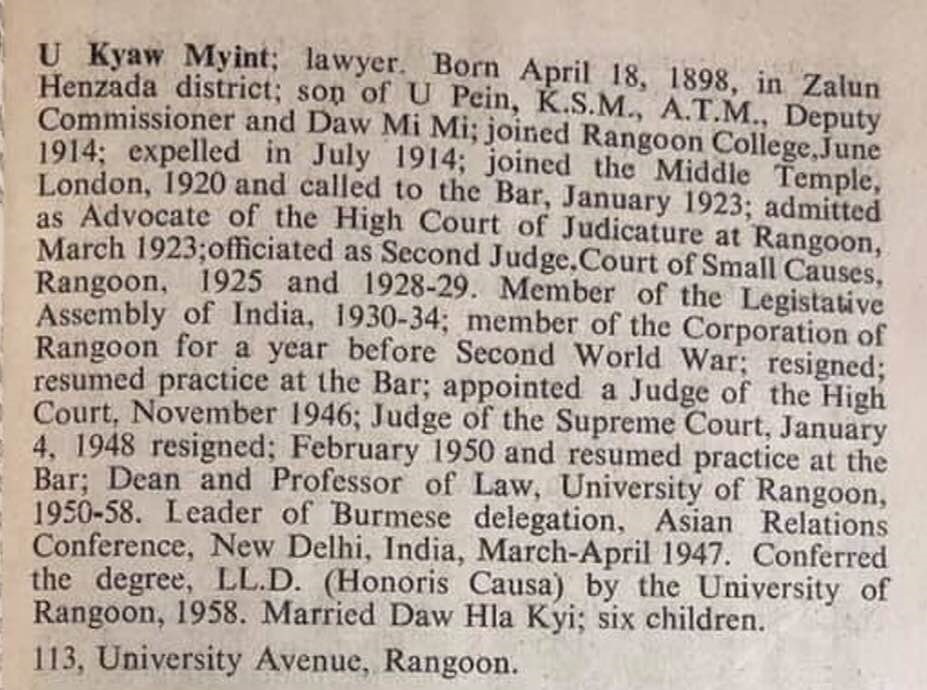
U Kyaw Myint (Barrister, former Judge & Dean of the Faculty of Law, Chair of the Tribunal that tried Galon U Saw)
U Myint Thein (Former Chief Justice of the Union of Burma, former Ambassador to China, author and translator)
Dr. Htin Aung (former Chancellor of Rangoon University, prolific writer)
Their three sisters had accomplishments of their own.
Daw Khin Mya Mu (Lecturer in Burmese, family court judge and decipher of stone inscriptions, spouse of Burmese Prof U E Maung)
Daw Khin Saw Mu (Poet, mother of Sayama Daw Khin Saw Tint & U Nay Oke Tint, featured in TEDx talk by U Nay Oke)
Daw Tin Saw Mu (Lecturer in English)
Sayama Daw Khin Saw Tint (bi-lingual author) wrote an article about her mother Daw Khin Saw Mu and her aunts.
Dr. Thane Oke Kyaw Myint wrote :
Before independence, Burma had only a High Court and the Supreme Court was in New Delhi. After independence, there was Supreme Court in Burma. My father was High Court Judge during the British rule but became one of the first Supreme Court Judges. Just as the Chief Justice of the Union is considered as equal to the Prime Minister, Supreme Court Judges were equal to cabinet ministers. Both my father and his brother had the Burmese flag on their cars, opened only when they are in the car. All Supreme Court judges and Chief Justice had “Honorable” in front of their names just like with cabinet ministers.
Dr. Htin Aung was the first Burmese to be appointed as Head of Rangoon College. When the College was changed to become a university he became the first Rector of Rangoon University.
U Tin Tut became the first ICS by nomination. After him, candidates had to take an exam to be eligible for ICS training in UK.
A list of ICS appears in the autobiography of U Ba Htay ICS.
(7) U Thant
U Thant succeeded Daj Hammerjold as the Secretary General of the United Nations.
At the Centennial Birthday Celebration for U Thant held in the San Francisco Bay Area, I was a guest speaker.
Ko Tin Maung Thant, U Thant’s son, was a couple of years senior at the Private Primary Boundary Road School. He left the school to join his father (then Permanent Secretary of the Burmese Delegation to the United Nations). Sadly, he passed away unexpectedly during his visit to Burma. His funeral service was grander than that of Commodore Than Pe (Minister of Health and Education), the first member of the Revolutionary Council.
U Thant’s mother told U Thant to study only for two years at the University of Rangoon and then come back and work. He became a Saya at the Pantanaw National School. For accreditation requirements of the school, he asked U Nu to be the Principal. Later, U Nu (leader of AFPFL and Prime Minister) asked U Thant to help the party and the government in various capacities.
U Thant won essay and translation competitions in his youth. He had excellent communication skills (reading, writing, speaking).
In finding a successor to Hammerjold, the two big powers USA and USSR could not agree. USSR refused to accept USA’s candidate. USA refused to accept USSR’s proposal of Troika.
As a compromise, they agreed to have U Thant (who hailed from Burma, a co-founder of the Non-Aligned Movement) as the Interim UNSG. The General Assembly later ratified him as the Third UNSG.
Sad for Burma, only U Aung Tun, Deputy Minister of Education, was at the Mingaladon airport to pay respect to U Thant’s body. He was dismissed.
What followed is another Dark Moment in the History of Burma.
(8) U Ba Kyi
He is an internationally renowned artist. He was a saya at the Institute of Education.
His painting was displayed on the then new Mingalardon International Airport.
He spent 49 days in Sabbath before drawing paintings for “Illustrated History of Buddhism” written by Mahagandayone Sayadaw Ashin Janakabhivamsa.
The book was published by YMBA (Young Men’s Buddhist Association). The English translation was published as a Supplement.
With permission from YMBA, Sayadaw U Silanandabhivamsa and his devotees (mostly from the Theravada Buddhist Society of America) printed the book with the contents in both Burmese and English.
An Arts Professor from Standford University wanted to use the book in his course, but unfortunately the book was published for Dhamma Dana (free distribution) and did not have an ISBN.
Saya’s talent was to translate selected Burmese songs into English such that the English version can be sung to the original tune.
He translated and sang “Hne Yauk Hte Nay Chin De နှစ်ယောက်ထဲနေချင်တယ်” composed by Saya Myoma Nyein and made famous by Mar Mar Aye) to the accompaniment on the violin by Saya Dr. Maung Maung Kha.
Saya also translated “Kaba Ma Kyei” (National Anthem of the Union of Burma).
Saya translated precisely the chorus of a famous song “Hna yauk hte nay gin de”.
Darling Only two we will live dear On the high crest Of the Mount Everest And the Sahara Desert Driest without water To the North Pole May be freezing cold Where the sun will never never grow With all my heart and soul Only two darling We will go
He translated the verse while was invigilating.
Dr. Maung Maung Kha used to accompany U Ba Kyi’s vocals with his violin at the functions (mostly at Rangoon University Ah Nu Pyinnya Ah Thin”).
(9) U Thittila
Sayadaw U Thittila (1896 – 1997) was Ovadacariyato Sangha Maya Nayaka, trustees of renowned pagodas.
He is an Outstanding teacher and writer.
He played an important role in reviving Buddhism in India and propagating the study of Abhidhamma.
He was very modest. He rarely talked about his many achievements.
Achievements
He was Patamagyaw scholar of all Burma in 1918. He stood first among the 5000+ candidates.
He was Panyattisasanahita in 1923. He was among the 4 out of 150 entrants who passed the toughest monastic exam.
He studied Sanskrit in India. He studied English in India and England.
He lectured in 25+ countries including US, UK, and France.
Translation
He translated Vibhanga (second of the seven Adbhidhamma texts) from Pali to English. It was published by the Pali Text Society (PTS) in 1969 with the title “The Book of Analysis”.
Essential Themes of Buddhist Lectures
Collection of unconnected individual talks given between 1938 and 1983.
Part 1 : Introductory articles or Talks of Buddhism (10 lectures)
Part 2 : Talks involving Sila in particular (5 lectures)
Part 3 : Talks involving Samadhi in particular (12 lectures)
Part 4 : Talks involving Panna in particular (4 lectures)
Part 5 : Talks dealing with Buddhism in general (12 lectures)
(10) Family of First in Burma in Matriculation
Four generations (with five members) stood First in Burma in Matriculation.
U Hoke Sein : Compiler of the Pali-English-Burmese Dictionary
U Saw Hlaing : Son of U Hoke Sein
Dr. Cherry Hlaing (Than Than Tin) : Daughter of U Saw Hlaing; Stood first in the Matriculation exam in 1964. She was Luyechun from IM(1).
Started as Option of Economics Department in the Faculty of Social Science
Became a separate department
Later : department in the Institute of Economics
Sayas
Saw William Paw : Professor and Head of Department; Chair, Rangoon University Sports Council; Succeeded Sithu U Tin as President of RUBC; During my tenure as Treasurer of RUBC, I had to see him frequently.
Dr. Khin Maung Kyi : Attended RU as a monk. Known for his debates and writings. Taught at Commerce Department and later headed the Research Department. Performed Research in Malaysia & Singapore. During my visit to Singapore, I had to see Saya and gave him the package presented by Saya U Myo Min (UCC)
Dr. Khin Maung Kyawe (Jimmy) : Became DG of BERB. First met him when my uncle Saya U Than Lwin (Eric) took me to the Social Science Library. Uncle Eric taught Economics and also served as Librarian. He would give rides to the sayas including Saya Jimmy.
U Maw Than : Auditor General. Used APL in his studies.
Dr. Mya Than taught and/or did research at the Institute of Economics, Singapore and Thailand. Before going for further studies, he taught at PBRS (Private Boundary Road School). Spouse : Daw Kyi May Kaung
Daw Yi Yi Myint and Daw Hla Myint : Attended UCC courses prior to their studies in the USA
U Mya Thein (GBNF) : Transferred to UCC as Business Application Programmer/Analyst. Retired as Manager of Business Applications at UCC. Also taught at ITBMU.
U Thein Oo : Transferred to UCC as Business Application Programmer/Analyst. Taught at UCC, DCS and ICST. Co-founder, MCI. Founder, Ace
U Khin Nyo : RUBC; Became Registrar, Mawlamyine College / University
Alumni
U Myo Min : First in I.Com in 1960; First in B.Com (Accounting) in 1962; Chartered Accountant (UK); Systems Analyst (IBM UK); Per request from his mother and Dr. Chit Swe, he came back to Burma to help co-found UCC. In April 1971, he joined UCC as Manager of Business Applications. Taught classes at UCC and the Institute of Economics. Moved to Singapore and then to USA. Passed Thingyo examination.
Dr. Yi Yi Chit Maung : First in B.Com (Management) in 1962; Studied in Canada; Retired in USA
U Kyi Soe : Secretary, CGA (Commerce Graduate Association); Rowed for Eco; Attended UCC; Worked for MOC
Uzin Kondannadhaja (“George” Chan Min) was the de facto leader for the Institute of Economic Rowing teams (including Htin Kyaw and Soe Thin). Worked for EPC and found soul mate (Engineer). Attended courses at UCC. Moved to the USA. After retirement, he decided to become a monk. For the transition, he asked me to be a temporary monk with him for a week. He resides at Dhammananda Vihara in Half Moon Bay, California. Per request from his brother Dr. Patheda Tin, he spent one vassa at the Chan Myei Yeiktha in Springfield, Illinois.
U Kun Pe, U Kyi Khin and U Ohn Myint : Classmates of Uzin Chan Min; Accountant / Auditor; Volunteer for social and religious organizations in SF Bay Area
U Than Maung Maung : Worked for UCC and TSC; Moved to the US
General
Per request of Ko Kyi Soe, I taught Mathematics of Finance & related topics at a course conducted by CGA
I succeeded U Myo Min as Business Application Manager at UCC
Abhidhamma Newsletter Volume 1 Number 3 (April 1999) Adviser: Venerable U Silananda Editor: Maung Tin-Wa (Ph.D.) Editorial Board: James Cameron, U Aye Cho, Aung Khin (M.D.). Marc F. Lierberman (M.D.), Yan Naing Lwin (Ph.D.), Sarah E, Marks, Tin Than Myint (M.D.), Bach Dong Nhut, U Han Nyo, Phil Rohrer, Larry Rosenberg, Anna Spievogel (M.D., Ph.D.), Tin Myo Than (M.D.), Hla N. Tin (Ph.D.), Rita Adelman BGraphic Designer: Scott Jordan Transcribing and Word Processing: Pat McMahon Published by the Abhidhamma Study Group of Dhammachakka Meditation Center, Berkeley, C.A.
Note : Comments in italics are provided by Hla Min.
I have written many articles on the History of Computerization in Myanmar. ** Most can be read from SCRIB-D.
However many people have not read them. MASTAA has requested me do an interview. ** It is tentatively planned for July 19, 2020 (at 10 PM. EST). It will be morning in Yangon, Myanmar.
Facts are very important because there are some people who want to twist them to their advantage. Especially since the project was very successful in introducing computers and computer education in the country.
I was with the project right from its inception. ** Sad to report that Saya Dr. Chit Swe and U Ko Ko Lay have passed away.
I would like to go over the facts.
When and how I got involved in UCC Computer project
Took programming and DP courses at Stanford University.
Around 1962, there was no CS Department or CS courses. ** Professor George Forsythe later founded and Chaired the CS Department at Standford.
Computer programming was given by Mathematics Department as part of Numerical Analysis
Introduction to Data Processing was given by Industrial Engineering Dept
Worked as part time computer operator for the Stanford Computation Center.
Joined Electrical Engineering Department, RIT as Assistant Lecturer in January 1964, RIT was closed. As part of the staff development program, I gave lectures to Elect Engg staff on computers and programming.
Ko Nyi Nyi (Instructor in Elect Eng Dept) told Dr Chit Swe, Head of Maths Dept at the Institute of Economics who was preparing to start a project with the assistance of the UN to install a computer.
Dr Chit Swe and U Hla Myint (Maths Dept) came to recruit me to assist them in the computer project.
Immediately agreed and joined the project preparation team.
Ko Nyi Nyi and Dr. Than Htaik (Chem Eng Dept) also joined the team.
At that time Unit Record Machines using punched cards (both IBM and ICL) were used in Burma by the Railways, Central Economics and Statistics Department (CSED), Records Office Burma Army.
At one point all the Unit Record Machines were centralized in one place (Burma Machines Corporation??) and then decentralized again. ** Per U Thein Han, IBM unit record machines were used in the first Demonatization. The machines were set up in Rangoon University (e.g. Convocation Hall).
Burma Railways wanted to replace their Unit Record Machines with a computer and was requesting funds from the government. ** However, the nationalization followed by tight control of foreign exchange caused the request to be denied.
Preparation for the UCC project(1965 – 70)
The UNDP in Yangon and the Goverment agreed to explore the possibility of having a UNDP funded UNESCO executed project of installing a computer at the Institute of Economics.
In 1965 Dr Abou Taleb from Egypt visited Burma at the Institute of Economics for one month as a UNESCO consultant on the formulation of the project. He had discussions with the project team, the concerned persons at the Directorate of Higher Education and other government departments, UNDP personnel and managers of IBM (** U Aung Khin) and ICL (** U Kyaw Tha).
Dr Abou Taleb prepared a report that was submitted to the UNESCO and UNDP.
Around 1968 UNDP mission composed of Professor Owens of Columbia University and Mr Talbot of UNDP HQs came to Burma (Institute of Economics) to write a project proposal for the UNDP/UNESCO Computer Project. The mission had discussions with the project team, the concerned persons at Higher Education and other government departments, UNDP personnel and managers of IBM and ICL.
The report and the project proposal were submitted to UNDP, UNESCO and the Government.
It was agreed to implement the UNDP funded, UNESCO executed Computer project.
The project document for the UNDP/UNESCO Universities’ Computer Center Project was signed in 1970.
Preparation for the establishment of UCC
In 1969 the project preparation team office moved to the Maths Department, RASU.
The Government decided to establish the Universities’ Computer Center directly under the Department of Higher Education.
A new building was to be constructed for the Center on the Hlaing Campus.
The project preparation team started to develop the organizational structure, budget, as well as the design for the building.
Ko Tun Aung Gyaw (UTAG) joined the project preparation team.
A temporary office / room was given to the project preparation team on the 3rd /top floor of the RASU Maths Dept. The Maths department still provided the logistics support. Saya U Maung Maung Tin of the RASU Maths Department was extremely helpful to the project preparation team.
The UCC organization structure consists of the Director at its head advised by the Board of Management. Under the Director are three technical divisions: Operations, Systems, Applications and an Administrative Support Section. One Manager heads each division.
Operations division consists of the Computer Operations section and the Data Preparation section.
Systems Division consists of the Systems Hardware section and the Systems Software section.
Applications Division consists of the Scientific Applications section and the Business Applications section.
The UCC organization structure was approved by the government and the Board of Management was formed.
Dr. Chit Swe was appointed Director of UCC in addition to his duties as Professor.
The Board of Management was formed with Dr Nyi Nyi, Deputy Minister, Ministry of Education as Chairman and Dr. Chit Swe as Secretary. The members include U Thet Tun, DG of CSED; U Win Pe, Research Dept, Planning; U Nyunt Maung, Dy Director, Finance; Dr Khin Maung Kyi, Inst of Economics, Dr Aung Gyi, RIT; etc
The UCC building on Hlaing Campus was to be designed and built by the Public Works Corporation. It was designed by the Chief Architect U Aung Myint. The team also met my high school and Stanford friend Ko Ko Lay who was a structural engineer there.
Ko Myo Min returned from the UK after studying as a Charted Accountant and working (** as Systems Analyst) at IBM UK.
Ko Ko Lay, Ko Myo Min and other volunteers joined the project preparation team. The volunteers are Ko Win Myint (Gyi) etc.
The three managers were recruited.
I transferred to UCC from RIT as Systems Engineer/Manager of the Systems Division of UCC on April 1971.
Ko Ko Lay transferred from Public Works/Construction Corporation as Manager of the UCC Operations Division.
Ko Myo Min joined as Manager of the Applications Division.
1st April 1971 is considered as the start of UCC.
The first batch of other staff were recruited and appointed. UTAG and Johnny Hla Min joined as Maintenance Engineers.
UCC was given a temporary office on the third floor of the Mandalay Hall.
The project preparation team organized courses in computers, programming and applications for the staff of Universities and government departments.
Choice of the computer
In October 1970, Dr Chit Swe went to UNESCO, Paris to participate in the selection of the computer for the project.
ICL 1900 series was chosen over IBM.
IBM was only willing to supply the IBM 360 and not the recently introduced IBM 370.
Dr Chit Swe then went on to London for discussions with ICL. ICL gave a more powerful version 1902S for the same price.
Installation of the Computer and start of UCC
In 1972 UCC moved to its new building on Thamaing Campus.
The site preparation for the computer and environmental equipment started.
A firm from the UK was subcontracted by ICL to do the site preparation.
The ICL 1902S computer was delivered and moved into the computer room to start the installation process.
ICL resident Maintenance Engineer Gaber Khalef (Egypt) and the ICL resident Software Expert Ian Shearer (UK) arrived and took up their responsibilities.
Acceptance trials for the ICL 1902S started on 25 February 1973, and formally completed on 8 March.
Professor Huskey arrived on 4 March and took part in the acceptance of the ICL 1902S.
The original UCC organization was meant to be minimal and mainly for a one shift per day start.
However due to the Census and more than expected use, volunters were paid minimum salary wages (which can be authorized by the Director) used to do the required support work.
Computer Use
The Board of Management decided to process the 1973 Population Census on the UCC computer.
Training of the Census Programmers conducted at UCC.
Alic Heinrici (UK, the ICL FILAN (ICL Census Tabulation system)) expert came from September to November to train Census and UCC Programmers in FILAN to be used in Census Tabulation.
The processing of the Burma Population Census started in May 1974.
The data entry was done in the Census Dept (old Rowe Co. Building) with over 100 rented keypunches from IBM.
The morning shift (8:00am – 4:00pm) was reserved for UCC. The evening shift (4:00pm – 12:00am) and night shift (12:00am-8:00am) were reserved for Census processing. At the start the Census processing did not take the two shifts.
Saturdays were reserved for Maintenance and the center was closed on Sundays.
ICL experts and UCC senior staff designed the Census Processing System containing Sequence and Completeness check (PLAN), Consistency checks (FORTRAN), Tabulation (FILAN).
UCC staff also supervised the processing.
Burma Railways, Central Economics and Statistics Department (CSED)/(CSO), Records Office Burma Army (ROBA) converted some of their Unit Record Machines applications on to the computer. Railways passenger and goods statistics; CSED Health and Trade Statistics; ROBA Miltary records.
RIT final year students implemented projects. Civil Engg: Structural Engineering, Astronomical Calculations, Electrical: Power System Analysis, Electronic Circuit Analysis.
Computer Education
The project preparation team organized courses in computers, programming and applications for the staff of Universities and government departments. (1971)
Preparations start for the MSc Computer Science and Postgraduate Diploma in Automatic Computing (DAC) to be given under the Mathematics Department, RASU. (1973)
Start of the MSc Computer Science and DAC courses. (1974)
There were three options under the MSc course : Computer Systems, Computer Oriented Operations Research Techniques and Computational Mathematics. Coursework plus dissertation/thesis.
DAC course was 2 years part-time from 7:00 am to 9:00 am.
Entrance Aptitude Tests for all applicants meeting the University requirements for post graduate studies.
The six months part time course (the predecessor to the full time 4 months course ) was started for the staff of the government departments and universities in 1976. It consisted of Introduction to Programming with FORTRAN, Mathematics and Statistics, COBOL Programming, Systems Analysis & Design.
The UCC Staff and visiting experts taught most of the courses. However Maths sayas helped out in the MSc and DAC courses. U Hla Myint and Dr Kyaw Nyunt in Computational Mathematics; U Soe Nyunt and Dr Pike Tin in OR courses.
Paid and unpaid volunteers were expected to attend the courses according to their ability and wishes.
Expert Services
The University of California at Santa Cruz(UCSC) was given the expert subcontract under the project. Professor Harry D. Huskey Chairman of the Department of Computer Science at UCSC and the well known pioneer in computers (in the development of the first electronic computer ENIAC at the University of Pennslyvania) was the coordinator of the contract. ** He co-authored the first Computer Handbook. His students include Nickaus Wirth (inventor of Pascal and Modula). He is a Past President of ACM and a Fellow of ACM, IEEE and CHM.
The UCSC expert subcontract was to provide four long term (4x12m) experts and a few short term (1m) experts, in addition to yearly visits by Professor Huskey.
Long Term Experts : Mr Sheldon Bachus (Systems Analysis & Design, 1973) Dr. Malcolm Atkinson (Computer Science Expert, 1974) Dr. Paul Keogh (Operations Research Expert, 1974) Mr. Bjorn Hustaad (Simulation, 1977)
Short Term Experts : World renowned people able to visit and give lectures for one month.
Professor Anthony Ralston Professor and Head of the Computer Science Department of the State University of New York (SUNY) in Buffalo, NY USA , and Past President of the Association for Computing Machinery (ACM) came as a one month short term expert in Computer Science. He introduced Structured Programming to UCC, Burma and even to the long term expert in Computer Science. (1975).
Professor Foreman Acton of Princeton University, Princeton NJ USA came as a one month short term expert in Numerical Analysis and conducted training courses .(1975)
Professor Peter Wegner of Brown University, Providence, Rhode Island came as a one month short term expert in Computer Science and conducted training courses in Automata Theory.(1975)
Professor Wilde of Stanford University, Operations Research (1976)
Professor Leon Lasdon of University of Michigan, Operations Research (1976).
Professor Michael Stonebraker, University of California (Berkeley), INGRES Relational Database, Database 1977)
UN Experts
Dr. Shafeek Saleeb(Egypt) arrived to take up his assignment as Chief Technical Adviser of the UCC project. (1974)
Mr. Jan Rademaker (Netherlands) arrived to take up his assignment as an associate expert in Computer Applications under the UCC project. (1975)
Further Development
More memory, 2 disk drives and card reader supplemented by the Census project.
For scientific and engineering applications a flat bed Calcomp plotter was acquired.
For teaching purposes Professor Huskey advised to get an on line time sharing mini computer system like most American Universities. A PDP-11/70 mini computer system was acquired.
Prof Huskey also lectured on micro processors and micro computers. UCC decided to get a microcomputer for trying out. Chose Cromemco (** System Three). Very good except for the 8” disk drive problems. A lot of experience gained.
Government relaxed on buying microcomputers for the govt departments. Many acquired Cromemco and started their applications on microcomputers.
Since UCC is to be used mainly for training the Board proposed the establishment of a National Computer Center for use by government departments.
Magazines and Periodicals published by the Faculty of Engineering (1946 to 1964)
Engineering students as well as teaching staff expressed their knowledge on Science and technical subjects and also their philosophies and narrative skills by writing technical articles, poems and short stories in the periodicals and magazines published by the faculty.
By going through these articles, one could clearly see the reflection of the activities of the students and staff of our Faculty of Engineering (later Institute of Technology). It was also one of the main source of information for this brief history of engineering education.
There were not many publications during the 1940 to 1964 period. Only five issues could be found. “Engineering Student Journal” was the first to be published in 1940-41 academic year. A proper magazine came out in 1951-52 academic year named “Rangoon University Engineering Students’ Union Annual Magazine”.
RUESU formed a magazine committee at the students’ annual mass meeting to be able to publish an annual magazine. Chief editor was Ko Maung Maung Aye (2nd year), secretary was Ko Ohn Ghine (2nd year). Teaching staffs were named as consultants. Mr. Cutter Pearl acted as consultant editor. See Appendix B for the list of magazine committee members.
RUESU took care of everything from financial matters up to the printing of the magazine. Motto of the magazine was “to shape knowledge with our hands”, and the main objective of publishing the magazine was to be able for the students to achieve the talent of expressing the significant features of the subject(s) that they regarded as interesting.
The magazine was bi-lingual (Burmese and English) and had 168 pages. It was printed at “Aung Meit Set” printing house.
The annual magazine came out in 1952-53 academic year also. Chief Editor was Ko Maung Maung Lay (3rd year), secretary was Ko Kyaw Win (2nd year), and consultant editor was Mr. C. Ping Lee [father of Dr. Win Aung (M 62)]. A contest for short story, poem and article was included in this magazine. It was bi-lingual and had 138 pages. It was printed at “Setkyarwalar (Universe)” printing house on Inya Road. See Appendix B for a list of committee members and winners of the contest.
In the foreword of the 1956-57 annual magazine, it was stated thus: “It was a sad thing that the annual magazine could not be published for three years after 1952-53 academic year. We had tried our utmost to overcome whatever difficulties we faced and finally we could hand the magazine to you”. To overcome the shortage of capital, advertisements had to be included in the magazine.
Ko Myo Aung was chairman of the magazine committee and Ko Kyaw Hoe was chief editor and publisher. The consultant editors were U Maung Maung Gyi (later professor of Burmese department) and U Ngwe Thein (later lecturer of Engineering Geology of Mining department) for Burmese and English sections respectively. The magazine was bi-lingual and had 108 pages. Photos of the newly opened Engineering College on Prome Road were included in the magazine.
There were no annual magazines after 1956-57 academic year. Only in 1960-61 academic year, the magazine could be published again. Publisher was Ko Ne Tun and editor in chief was Tetkatho Moe War (U Moe Aung, Electrical Engineering department). U Kyaw Tun (Lecturer, Electrical department), and U Aung Khin (Lecturer, Mechanical department) were consultant editors. See appendix B for a list of members.
The magazine was printed at Myo Nyunt Press House. It was a bi-lingual with 160 pages. It was the last magazine published with the name of “Rangoon University Engineering Students’ Union Annual Magazine”. After the publishing of 1960-61 annual magazine, there were no magazines up till 1965.
Engineering Education around the 1950 period
To get a clear picture of the engineering education at the faculty of engineering, Rangoon University, excerpts from an article written by Dr. Aung Gyi is included. Dr. Aung Gyi was an Inter Science and Engineering student from 1948 to 1952. He served as Rector of Rangoon Institute of Technology from 1971 to 1978. The following are excerpts from his article.
“I was an engineering student and then became one of the teaching staff at a later date. I matriculated in 1949 and entered the University of Rangoon and stayed in Ava Hall and took what we called in those days the Intermediate of Sciences (I. Sc.) courses. The courses were: English, Burmese, Physics, Chemistry and Maths (pure and applied maths). We needed to take these courses for two years in order to go to the engineering studies. I remember having a great time in the first year as we did not have to take the exam at the end of the first year for some unknown reason. But we had to take the exam at the end of the second year for all the subject matters that were taught to us for the whole two years. It was a tough examination at the end of the second year as we had to study a lot. We had physics and chemistry exam papers, two maths papers, English and Burmese papers, physics lab practical exam and chemistry lab practical exam within a period of 15 to 20 days in the hot month of March. Only about 60% of the students passed through the first time. The passing grade for each subject was 40%. Fortunately the University authorities in those days were understanding and kind enough to give the failed students what they called compartmental examination again in May/June for the failed subjects. Given a second chance like that, a lot of students passed the exam this time around. The Faculty of Engineering admitted the students, including the students who passed the ISc exam under the compartmental system, with a passing grade of at least 40% for each of I. Sc. subjects and the average grade for all the subjects combined of 50%.
I was quite fortunate to have good teachers in my I. Sc. days. I remember that Saya U Than Tin gave good lectures in physics. Saya U Thein Nyunt was good as well in teaching us chemistry. Needless to say the experiments that I had to do in physics and chemistry labs were interesting as they were all new to me. The maths teachers I remember were Professor U Aung Hla, Sayagyi U Kar, Sayagyi U Ba Toke, two Indian lecturers with the same last name Chowdhury, I forgot their first names. One Chowdhury was bald headed and the other had a lot of hair. They were teaching, I think, under contract with the Rangoon University. These very good teachers, I had to say, gave me a good foundation in maths. The English teachers were very good too. They were Saya U Kan Gyi and Sayama E. Kan Gyi. The only Burmese teacher I remember was Saya U Hla Maung who could make a boring topic into an interesting lecture. I owe a lot of gratitude to these wonderful teachers.
I joined the first year engineering class in 1951-52 academic year, having satisfied the entrance requirements of the Faculty of Engineering mentioned above. The academic year, I think, was from June to February with about one month break in October. So far as I know there was a “new course engineering” at the Faculty of Engineering right after the World War II. I do not know what the entrance requirement for this new course was.
I stayed in Prome Hall like most of the other engineering students in those days, as it was situated close to the B.O.C. College of Engineering building where we had classrooms, laboratories and workshop for our engineering courses. A few engineering students however stayed in Tagaung Hall which was in the same Prome road campus of the Rangoon University as Prome Hall. Both of these hostels were timber buildings and they could easily get burnt down, but I was happy to see that they are still standing there when I last visited Yangon in 2010. These two Halls gave accommodations to all engineering students, even to some students from Rangoon at that time, as there were vacancies and as the total engineering student population was not that big. If my guess is correct, I think there were about 350 to 400 students for 4 years of all engineering disciplines, out of which there were about 75 first year engineering students. The system in place at that time was in such a way that the students had to take common courses in the first two years and branched out into different disciplines of choice, starting from 3rd year.
I remember that as first year engineering students, we still had to take maths classes from 7:00 am to 9:00 am at the main campus where we had taken the I. Sc. courses. I remember getting up early in the morning in Prome Hall, and taking a walk along the road what we called as “Padaukpin Lane” or “Thaton Lane”, and through Thaton Hall and Ava Hall, for the mathematics classes at the main campus. All of us then rushed back to B.O.C. College of Engineering from the main campus after 9:00 am to take the engineering classes, which included lectures, practical laboratory work, workshop practice, and drawing classes, starting from 10:00 am. We normally finished our classes around 4:00 pm. The total contact hours of learning for engineering students were about 30 hours per week. If my memory is correct, it was difficult to get an engineering degree in 6 years after matriculation. Somewhere along the way some of us failed for one reason or the other, and had to repeat a class. The passing grade for each subject, which included workshop training at the engineering faculty was 40% and the average passing grade for all the subjects combined was 50%. When I passed my 1st year engineering in April/May 1952, I noticed that about 15% of my classmates were left behind to repeat the 1st year engineering.
I do not remember all of my teachers at that time. I can only recall that Saya U Num Kok was in charge of 1st year engineering drawing, Saya Jaidka taught us “building materials and construction”. Saya Ketrapal gave lectures and practical laboratory training in “ heat engines”. Sayagyi U Kyaw Tun and/or Saya C. Ping Lee taught us “electrotechnology” in the classroom and in the laboratory. In addition to the lectures, laboratory work and drawing, all of us had to take workshop trainings in carpentry, blacksmith, welding and in machine shop. The medium of teaching was English. We were also encouraged to take some practical training with some engineering organization during the summer vacation. I am not quite sure, but I think Ko Chit was an assistant at the blacksmith shop, and U Ba Sein was an assistant in the electrical lab. I think Mr. P Davies was the workshop superintendent. The classrooms, laboratory facilities, the workshop facilities that I attended were good and adequate. The library I visited some time was full of engineering books, magazines and journals. I could imagine that with its qualified teaching staff and good teaching facilities, the Faculty of Engineering was producing the qualified engineers needed by the country at that time.
I do not know what the total number of teachers we had at the Faculty of Engineering at that time. I could guess that the student/teacher ratio was about 20:1 from the number teachers and from the number of students I had seen. I noticed that there were few Burmese nationals teaching staff at the Faculty, and most of the teachers were from India and UK. It seems that right after the World War II, there was shortage of qualified teaching staff from Burma at higher education/University level as a whole. Sayagyi Professor U Ba Hli was Dean of the Faculty of Engineering, and I believe he received his post graduate degree from a British University. He was quite far-sighted and tried to broaden and improve the engineering education by having some kind of twinning arrangements with not only a British University but also with Massachusetts Institute of Technology USA (M.I.T.). I remember as a student hat there was a visiting Professor called Professor Horwood from M.I.T. at the Faculty, and I think he gave us lectures on sanitary engineering. Sayagyi U Ba Hli must have planned to increase the number of engineering disciplines that were given at the Faculty from civil, mechanical and electrical engineering to other disciplines as well, such as Mining, Chemical, Metallurgy, Textile engineering and Architecture. I understood that this plan came into fruition in 1954/55. He must have also planned to send the Burmese nationals to UK, USA, and other countries for further training so that they could be appointed as qualified teaching staff at the Faculty at a later date. I therefore take this opportunity to put on record that a big credit is due to the late Sayagyi U Ba Hli for his contribution to the improvement of engineering education in Myanmar.
After attending the 2nd year engineering class from June 1952 to September 1952, I went straight to MIT on a state scholarship to continue my studies. Saya U Min Wun and I went together to MIT and joined the academic session, starting from September 1952. We met Dr. Freddie Ba Hli at MIT, who was already studying for his Ph.D in electronics or electrical engineering. He was one of the nicest and helpful persons that I have ever met in my life. He gave us briefings and guidance so that we were able to assimilate into the American education system and American way of life without any difficulty. He also helped with our home works when we had some difficulties in the beginning. I am forever grateful to him for his kind help. I am sure U Min Wun feels the same. Saya U Khin Aung Kyi, Saya U Sein Hlaing, U Percy Lao, U Win Htein, U Kyaw Min, Robin Aw, U Kyaw Thein, U Aung Kywe, U Aung Myint and U Sein Hla came to MIT for further studies at a later date. U Percy Lao later became Rangoon City Engineer (water and sanitation). U Win Htein who is an architect became a Rangoon City Building Engineer. The late U Kyaw Min became a free lance architect (and also taught part-time at the architecture department for some time). All these three professionals taught some time at RIT. I do not know what happened to Robin Aw. The late U Kyaw Thein was an engineer at the Construction Corporation and later became a lecturer at the Civil Engineering department at RIT. U Aung Kywe was a Director (water and sanitation) at the Construction Corporation. U Aung Myint became the Chief Architect at the Construction Corporation. U Sein Hla was an engineer at the Construction Corporation and later became the Registrar at RIT under Rector U Yone Moe. Later more batches of Burmese students came to MIT when I was no longer there. I am describing all these things to point out the fact that the standard of engineering education in Burma at that time was quite good. None of us had to go through the entrance exam to get into MIT. They trusted our grades and our education standard. Maybe the visiting Professor Horwood from MIT was quite impressed with the Faculty of Engineering and put a good word for us to the MIT admission authorities.
Now I would like to touch upon the extra-curricular activities of the students from 1949 to 1952 when I was one of the University students in Rangoon. As mentioned in the beginning, all the extra-curricular activities were in sports; in artistic and literary related activities; in activities of various students’ associations, societies and clubs according to their respective aims. Good and adequate facilities were available for these activities at the Rangoon University campus, except for swimming. But Inya Lake was available for the students for swimming and rowing. There were competitions in sports such as soccer, tennis, table tennis, badminton, basket ball, volley ball, track and field, swimming, rowing, boxing, weight-lifting, and body building (Mr. University). There was University soccer team which was quite good and competing nationally at Aung San stadium. There were annual dinners of various hostels with anyeints and concerts participated by outside professional artists. There were separate annual concerts, stage shows and anyeints by the talented students also. There were students’ magazines published every year with articles and poems by the students.
I will not go into details of all the various students’ associations, societies and clubs, as there were so many of them. But I would like to mention briefly about the hostel life, that I had experienced at that time. Every hostel had what we called social and reading club. There was an adequate room reserved for this club at the ground floor of the hostel. In general, newspapers, popular magazines, a chess board, a carom board and a table tennis were provided so that the hostel students could read, play chess, play carom board, and play table tennis and socialize to get to know each other well. Even without the social and reading club, all the hostel students ended up knowing each other well sooner or later, as they met each other almost everyday at the hostel and at the dining hall. The hostel students were in general well behaved. I hardly saw the Warden or Hall Tutors at Ava Hall and Prome Hall, as there were very few student problems which needed attention of the Warden or Hall Tutors.
Based upon my experience, I feel that these extra-curricular activities and hostel life gave the opportunities to the students to broaden the knowledge of the different parts of Myanmar; and they also created a better understanding of the different culture, food, habit, dresses, dialects etc. of the country. Most of the students developed life-long friendships through these activities which contributed to well-beings of these students throughout their lives. Sports activities also taught the students about hard work, cooperation, team work, competition, winning and losing. The extra activities also triggered, developed, and enhanced the hidden talents of some of the students. These activities therefore formed part of the University education of the students, in addition to the education that they received from the classrooms. Another benefit of these activities was the bonding and a better understanding, which developed between the students and the teachers who were involved in these activities”.
Editor’s notes
With the support of Sayagyi U Ba Than & Saya U Thaw Kaung, Chief Librarian of the RU Central Library, Saya U Soe Paing compiled materials. Most articles and correspondences from the early periods were in English. Based on Saya U Soe Paing’s work, the editorial team headed by Saya U Aung Hla Tun, former Editor-in-chief of RIT Annual Magazines and also a National Literary Award winner, wrote the book in Myanmar/Burmese.
U Ohn Khine and I prepared the CD Supplement for the book. It included photos (too many to be incorporated into the book), bio of Sayas and sayamas, articles for the SPZPs, and excerpts from my Updates.
First school established by the De La Salle Brothers in Burma.
Built in Moulmein (1860)
Photos taken during my visit to the school (2016)
Clock Tower, boarding house upstairs, exam hall below
St. Patrick’s HS, Moulmein
Photos taken during my visit
St. Pat 1St. Pat 2St. Pat 3Entrance
Memories
Our class photoV B
Our class photoVII Std
Class teacher Bro. Sebastian. I met Bro Sebastain during our first year at Leikkone in 1958-59 while he was attending BAed.
Ko Ko Lay (UCC) first row, sitting second from left. U Aye (M62), second row, sitting second from right. B. Singh (RU goalkeeper) third row, first from right, Myo Lwin (M63), third row third from right.
Absentees : Kyaw Win (M62), Peter Gale.
Bro Canice was Bro Director, House Master Mr. E. Swarris, House Capt. Dr. Aung Myin (Eye, passed away in UK around 2018), U Win Naing (MS pulp and paper)(CRO) third row, fourth from right, U Aye, third row, third from right.
Our matriculation class 1955-56
Bro Austin, Bro Director, Bro Wilfrid, Class teacher, U Tun Shwe, Myanmar Sar, Mr. DeMonte, Moral and Manners.
Peter Gale, Dr. Thet Lwin (Statistics), B. Singh (RU goalkeeper), medical doctors Dr JK Sinha (UK), Dr Rafi, Dr Rajani Vora, India, Capt. Aung Myint, Capt Ya Kyaw, Myo Lwin (M63), Kyaw Win (M62), John Ba Maung, Russian Lecturer (IFL)
Prof. Khin Zaw (Chemistry), Saw Alfred Keh (Preacher after graduation, son of pre-WW2, RU footballer Washington Keh), U Kyi Win (BPI), U Aye among others.
St Patrick’s HS football team of late 40s and early 50s
During 1948-49, St Pat’s team beat all other Schools’ Combined team. Some of the team members were-
Bernard Henry – Goalkeeper,
R. S. Pathy, Tin Aye — Fullbacks,
Pway Ain (Htay Aung), Jimmy Innes, Tin Ngwe (Mid-field),
Rama (Rightwinger), Khine Thein,SV Lingham, Jimmy Sein (Tint Swe), B. Boudville (Left winger).
Later Pway Ain (Htay Aung) played for RU, Jimmy Sein (Tint Swe) played for Prome Hall and RU. Jimmy Innes played for Customs FC in Rangoon first div.
Many played in Friends Union FC in Moulmein first div.
St Patrick’s Alumini, Ko Ko Gyi, Tenasserim division and Burma selected footballer.Standing second from L Pway Ain(Hyay Aung)) and Jimmy Sein(Tint Swe) seated second from L, were from St Patrick’s HS football teamB.Singh back row, fifth from L in black goalkeeper jersey, the tall guy was from St Patrick’s HS, he was also a Tenasserim Division player. He was my classmate in St Pat.
Dennis Mackey (C73) wrote
Thanks for this piece as part of your “Work in Progress”.
Below are photos and notes that I posted on my FB page and on St. Patrick’s HS, Moulmein FB public group page.
De La Salle Schools — St. Pat (Moulmein), St. Paul’s (Rangoon), St. Peter’s (Mandalay), St. Albert’s (Maymyo), St. Columban’s (Bhamo), St. Joseph’s (Loikaw), DLS (Twante)
Private schools were nationalized on April 1, 1965
U Aye represented RU & BIT in Volleyball. He graduated with Mechanical Engineering in 1962. He worked for HIC and FAO.