Definitions and Usage of words may change with time.
Computer Early days : One who computes e.g. the six females who worked on ENIAC Later : Machine which can process data / information …
Compiler Early days : One who compiles e.g. historical records Later : Software to translate a programming language into machine language
Bit Early days : small piece e.g. drill bit Later : Binary digit
Confusion in the 1970s The book “Anatomy of a Compiler” was sent to the Institute of Medicine (instead of UCC or RU Library). The book “Compiler Construction of Digital Computers” was sent to the Public Works Department (instead of UCC or RU Library)
March 27, 1945 Early days : Taw Hlan Yay Nay (Resistance Day) to honor all those who fought for Independence Later : Tatmadaw Nay (Armed Forces Day)
Taung Thu Le Tha Mar Nay (Peasant’s Day) တောင်သူလယ်သမားနေ့ Early days : January 1 Later : March 2
Lost in Translation Physician ဆရာဝန်was translated as “Yupa Beda Pyinnya Shin” ရူပဗေဒပညာရှင် (Physicist)
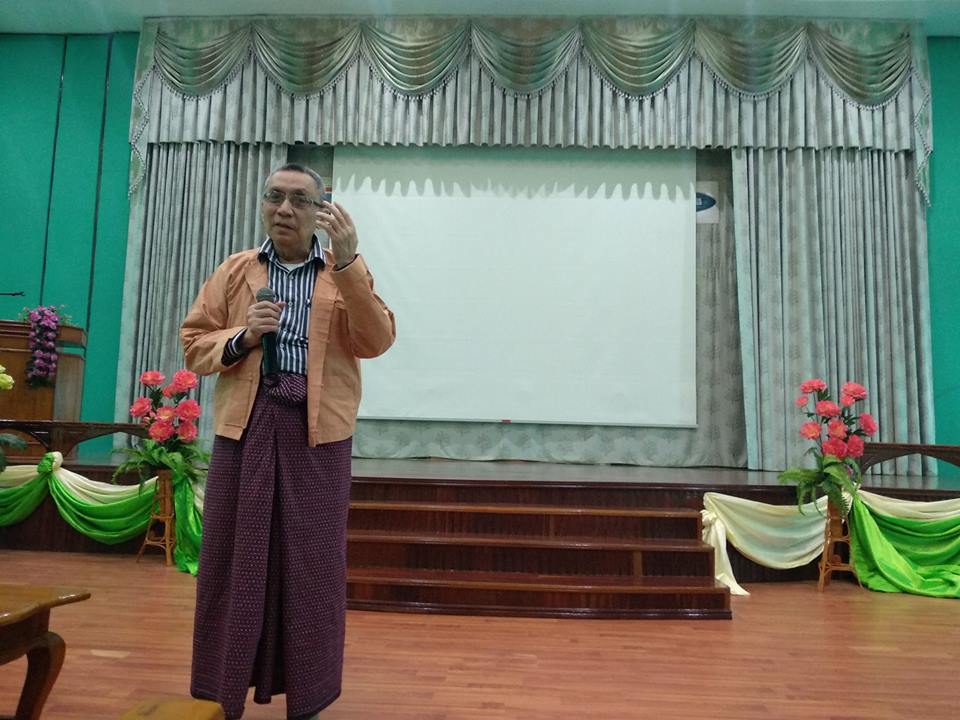
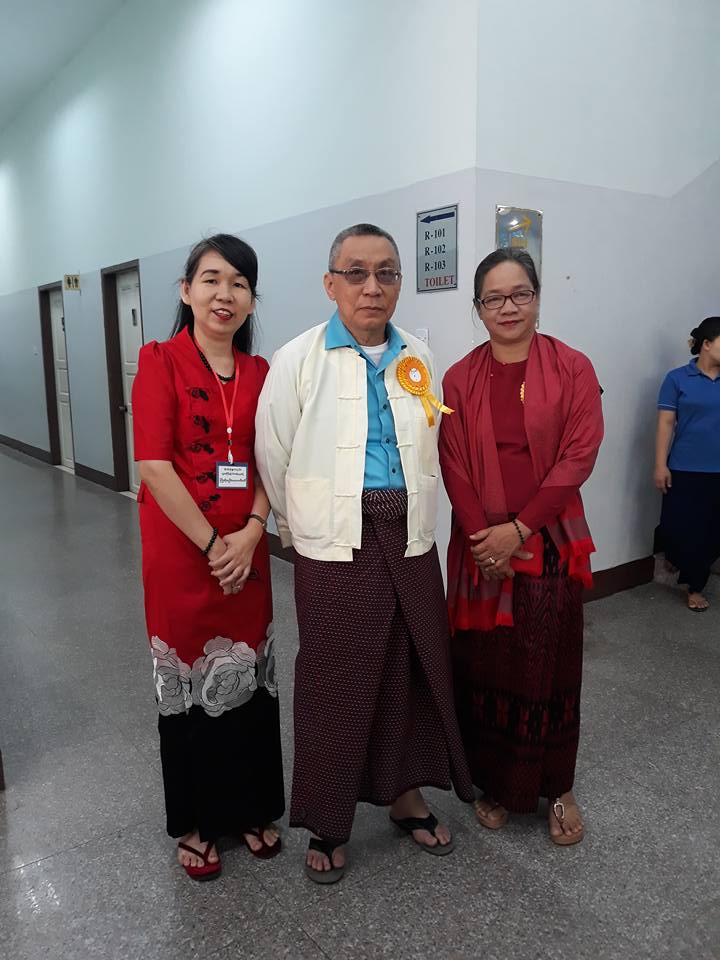
Traveled as a guest and volunteer mentor with members of the Myanmar Professional Speakers Association (PSA).
Got to know professionals with different expertise.
The members held “Sar Pay Haw Pyaw Pwe” (SPHPP) စာပေဟောပြောပွဲ at selected cities from January 5 to January 11, 2020.
(Optional) Some members had a day of rest at Inlay. Two PSA members conducted a Training Seminar for the employees of the Inlay hotel.
January 5, 2020
Left Yangon by Chartered Bus for Nay Pyi Taw နေပြည်တော်
SPHPP at Lei Way လယ်ဝေး
January 6, 2020
SPHPP at MICC-2 at Nay Pyi Taw
Left for Mandalay
Met Prof. Dr. Khin Maung Maung ဒေါက်တာခင်မောင်မောင် (Chair, Department of Physics and Astronomy, University of Mississippi, SPHS69, RASU Class of 73) who was giving lectures at Mandalay University.
January 7, 2020
SPHHP at Mandalay University မန္တလေး
Left for Pyin Oo Lwin ပြင်ဦးလွင်
SPHHP at Pyin Oo Lwin Town Hall Sponsor : Point Sunflower Group Pyinnya Dana
January 8, 2020
SPHPP at University of Technology, Yatanarpon Cyber City ရတနာပုံ
Left for Shwe Bo ရွှေဘို
SPHPP at Wet Let ဝက်လက်
January 9, 2020
SPHPP at Shwe Bo University
Left for Meiktila မိတ္ထီလာ
SPHHP at Meiktila Business Group
January 10, 2020
SPHPP at Meiktila University
Left for Taunggyi တောင်ကြီး
January 11, 2020
SHPP at Southern Shan States Chamber of Commerce (SSSCCI) in Taunggyi
Most people spend one third of their lives sleeping.
Some try to sleep 8 hours a day because they are told that it is necessary to refresh the body and the mind.
Some say that the number of hours of sleep vary with age. Children need to sleep longer. Adults may sleep less.
My late uncle slept about four hours a night, but he took a power nap. He lived up to his 80’s.
A friend of mine sleeps four hours a night. He is active at work, church, Toastmasters and play competitive ice hockey.
Some say that the quality of sleep is more important than the quantity of sleep.
Too much sleep might make a person sluggish.
Some develop a rhythm for sleeping. They go to bed at the same time every day, and get up at the same time every morning.
Those who work on different shifts might encounter sleep problems.
During youth , some may not feel drastic effect of 24-hour, 36-hour or more duty. The Navy SEALs have to spend sleepless nights during their training / certification.
Before you sleep, turn off your smart phone and place the alarm clock away from the bed.
Some can sleep easily — like a log. They can sleep on trains, planes, and beaches.
Some find it hard to fall asleep. (Insomnia). Counting sheep or reading books do not help them fall asleep.
Some may have breathing problems during Sleep. (Apnea) They may be prescribed breathing apparatus.
Some have dreams, but they cannot recall them.
Some may have nightmares, and wake up.
A few perform Sleep Walk. (Somnambulism)
There are Sleep Study Projects. Monitor brain activities and physiological factors
Dr. Nyunt Wai (SPHS63) wrote :
“Ma Eik Ma Nay Ah Thet Shay” မအိပ်မနေအသက်ရှည်
Editor’s Notes
Pauk Kyaing ပေါက်ကျိုင်းwas advised to follow :
“Thwar Bar Myar Khayee Yauk”သွားပါများ ခရီးရောက်
“May Bar Myar Sagar Ya” မေးပါများ စကားရ and
“Ma Eik Ma Nay Ah Thet Shay”.
Skipping sleep for one night allowed Pauk Kyaing to avert a death threat and become a King.
Saya Dr. Chit Swe founded UCC (Universities’ Computer Center) with the help of Saya U Soe Paing, Saya U Myo Min and Saya U Ko Ko Lay (GBNF).
The UCC staff and students address the founding members as Saya Chit, Saya Paing, Saya Myo and Saya Lay.
U Soe Paing
U Soe Paing
Transferred from RIT EE Department to UCC as Manager of Systems Division.
He managed Computer Engineers, Technicians and System Programmers.
He later also served as Manager of Operations Division.
He retired from UN after working for projects in several countries.
U Myo Min
He was a Gold Medalist for I. Com and B. Com (Acct).
He received C A (Chartered Accountant) and worked as Systems Analyst at IBM UK.
He returned to Burma to help establish UCC.
He joined UCC as Manager of Applications Division.
He later taught at Nang Yan Institute in Singapore.
He retired as Principal of Seagate and Connors.
He is studying the impact of AI on Buddhist Studies.
U Myo Min
U Ko Ko Lay
He was a classmate of U Soe Paing at St. Paul’s High School and Stanford University.
He transferred from PWD to UCC as Manager of Operations Division.
After reorganization of UCC, he served as Manager of Scientific Applications Division.
He became Professor at the Department of Computer Science, RASU.
He later served as Professor of Information Technology at ICST.
He is now GBNF.
U Ko Ko Lay
Projects of Dr. Chit Swe
Saya Chit
I have written about Saya Chit in several of my posts. He is a Pioneer and a believer of Life Long Learning, Knowledge Transfer, Leapfrogging Technology and the Talents of the Burmese sayas and students. He is my mentor. More importantly, he allowed me to work on most of his projects (including Preparation for the UCC Project, High School Mathematics Curriculum Change, Children’s Treasury of Knowledge, and Team of System Specialists).
Vision
Saya Chit ensured that there would be a component in the UCC Project to invite short term and long term Computer Scientists and Educators to UCC. Professor Harry D Huskey (Past ACM President and a Computing Pioneer) was given the sub contract to help with the academic and professional courses being given at UCC.
Saya Chit made sure that the post-graduate diploma (DAC) and post-graduate Computer Science courses were given under the “Mathematics Department” until a separate CS Department could be opened.
Passion
Saya Chit served as Director of UCC in addition to being Professor of Mathematics.
He moved back to RASU, but never lost his passion about his pet baby UCC.
Saya retired as Rector of RASU. He then relocated to Bangkok, Thailand and Sydney, Australia. He continued advising graduate students in Thailand and Australia.
To the very end, Saya was still passionate about UCC, Computers and Education in Burma and beyond.
He passed away in Sydney.
Dr. Tin Maung
He was a Mathematics Lecturer at RASU. He succeeded Dr. Chit Swe as Director of UCC.
He retired as Rector of ICST.
Dr. Tin Maung
DCS
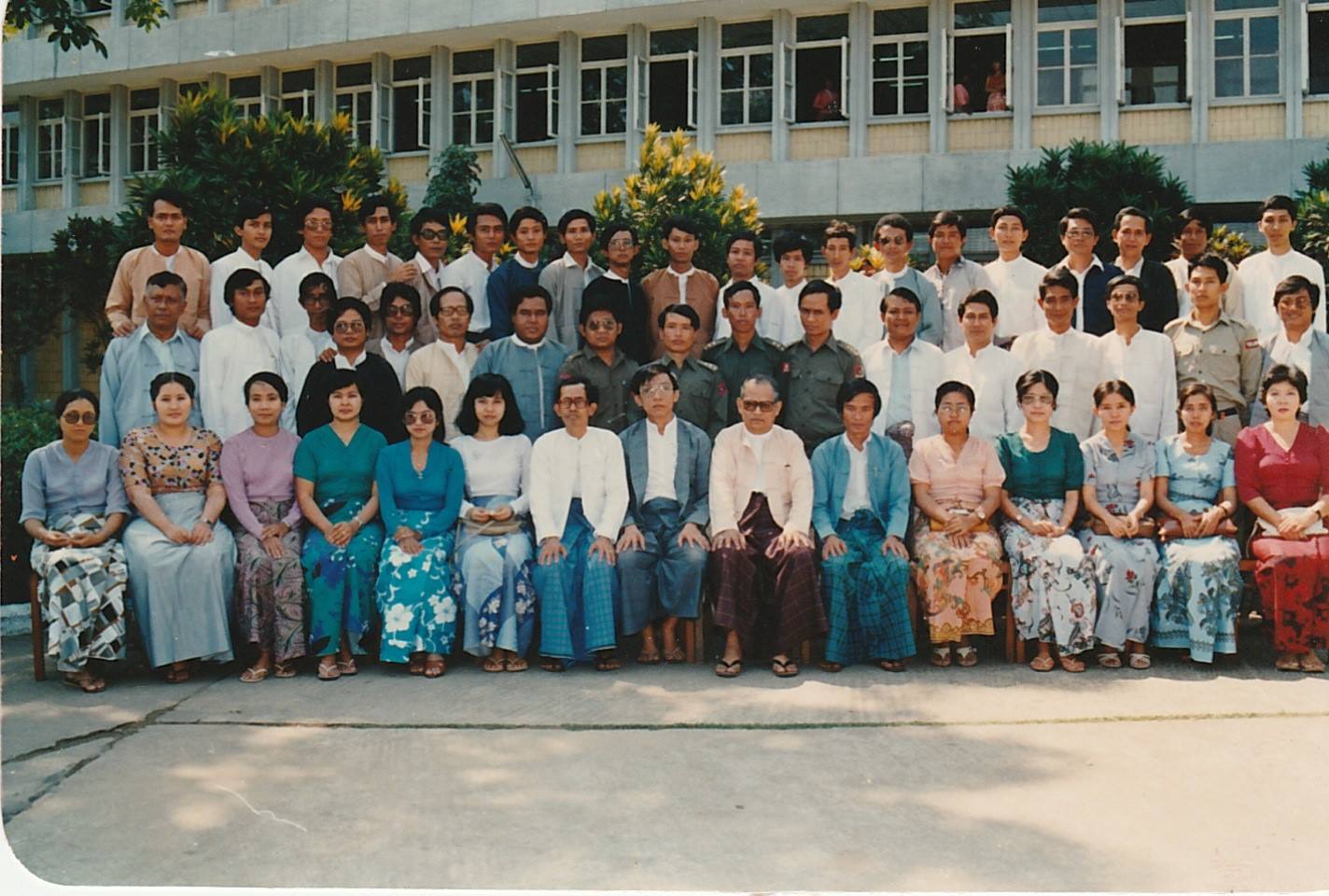
During his tenure, the Department of Computer Science (DCS) was established under RASU.
Saya U Ko Ko Lay (GBNF, brother of U Than Htut M67) was Professor.
U Tun Aung Gyaw served as Associate Professor.
I was a Lecturer.
ICST
The Institute of Computer Science and Technology (ICST) was established in 1988 with Saya Dr. Tin Maung as Rector.
There were initially four Departments :
Hardware Technology (with U Tun Aung Gyaw as Associate Professor and Head)
Software Technology (with me as Associate Professor and Head)
Information Systems (with Saya U Ko Ko Lay as Professor and Head)
Computational Mathematics
30 students were admitted to the first B.Sc (Computer Science) course.
15 students were admitted to the first B.Sc. (Computer Technology) course.
ICST later became UCSY (University of Computer Studies Yangon).
Gatherings
There have been gatherings to
celebrate the 40th Anniversary of the founding of UCC
celebrate the 30th Anniversary of the founding of ICST
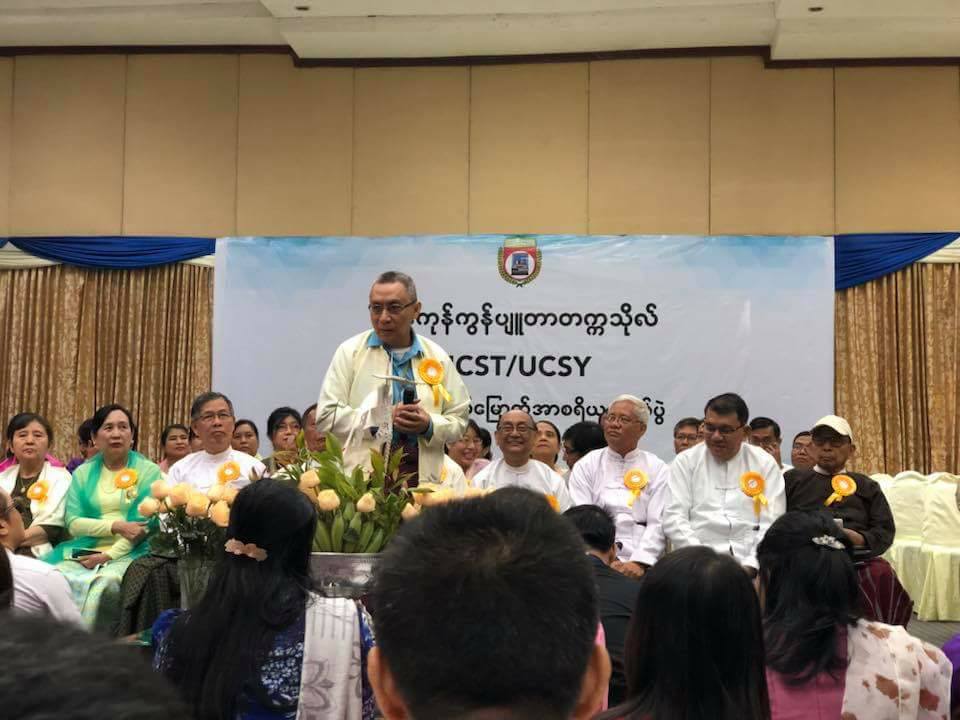
5th Acariya Puzaw Pwe of ICST/UCSY in January 2018
6th Acariya Puzaw Pwe of ICST/UCSY in December 2019
In January 2018, I was invited as the Generation Zero Member to attend the ICST/UCSY hosted the 5th Acariya Puzaw Pwe and give a short speech.
ICST PZPUCSYAt ICST
During my visit to Yangon in January and February of 2018, I spent almost three whole days writing “Memories of UCC”. I had provided Word and PDF files, but the UCSY sayamas suggested that I should submit a shorter version for the commemorative magazine for the 30th Anniversary has come out.
Has the largest number of alumni. Many worked in Myanmar. Some worked overseas, but returned to Myanmar after retirement.
During the Adhamma Era, there was no Alumni Association in Myanmar. The Alumni in the US & Singapore set up Alumni Associations and hosted Reunion and Saya Pu Zaw Pwes in 2000 (USA) & 2002 (Singapore).
Yangon hosted SPZP-2004 in December 2004 as a piggy-back to the ASEAN Engineering Conference. The mild earth quake did not deter the attendees.
There were hopes that Yangon could continue to hold SPZP in 2006 and beyond. The change in the political climate in Myanmar dashed the hopes. Singapore Alumni hosted SPZPs in April 2007 & December 2010. The two year interval between the SPZPs went up to two and a half years.
U Aye Myint (EP72) never forgot his roots and his alma mater. Requested help from the sayas and alumni to help our beloved alma mater to former glory. Initiated the process to have engineering classes reopen at the Gyogone Campus and also to make a true Home Coming for the attendees of SPZP-2012. There were tears of joy from the alumni. The Garawa ceremony was held at the Gyogone Campus. The Reunion Dinner and Entertainment Program was held at MICT Park.
SPZP-2012
Around SPZP-2012, Sayagyi U Aung Khin and Sayagyi U Ba Than served as Patrons of the newly formed Mechanical Engineers Association.
All Mech Gathering
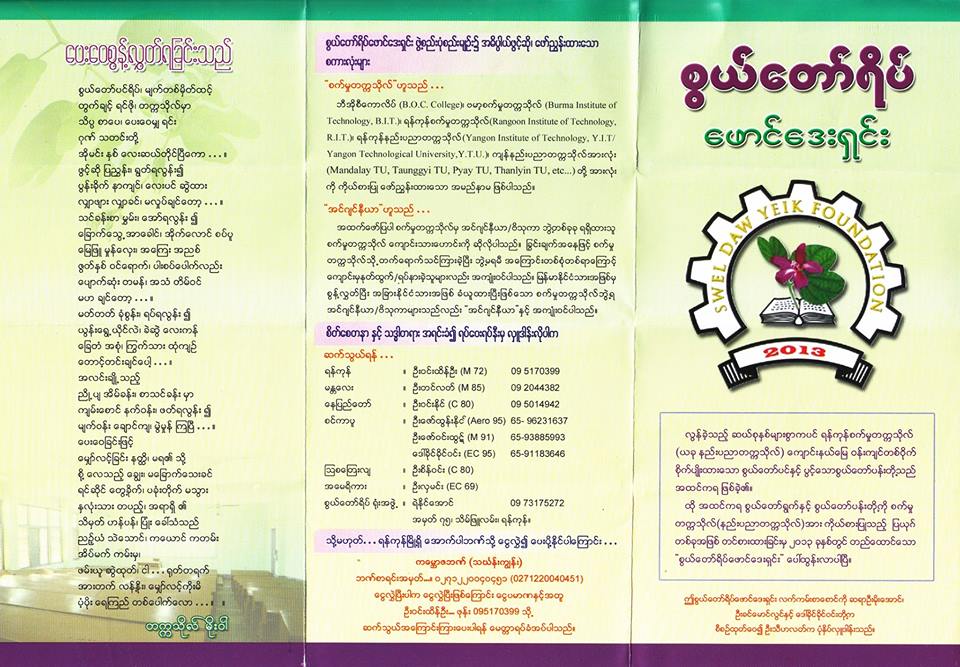
Saya U Moe Aung (Tekkatho Moe War) and team had discussions before, during and after SPZP-2012 to form Swel Daw Yeik Foundation with the objective of helping eligible sayas. SDYF was established in 2013.
SDYF
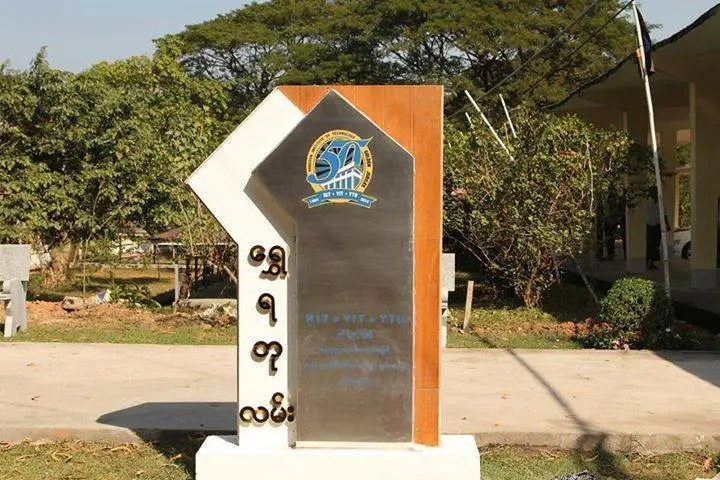
Shwe YaDu celebrations were held in 2014 with the planting of 50 Swel Daw Bins. Shwe YaDu benches were donated by alumni in Myanmar and overseas.
Shwe YaDu
RITAA helped host SPZP-2016. It was an All-Day Event at the Gyogone Campus. There was free food (for Breakfast, Lunch & Dinner) and entertainment.
SPZP-2016
In early 2016, the bye-laws of RITAA (RIT-YIT-YTU Alumni Association) were developed and approved by core volunteers. The Association was registered. A Working Committee with U Tin Latt as President was formed to help short term projects. Annual Membership costs K12000. Life Membership costs K60000.
Fund raising was led by U Wynn Htain Oo and Daw Nan Khin Nwe.
RITAA
In 2018, the first Annual General Meeting of RITAA elected Executive Committee members for the 2018 – 2020 term with U Myo Aye as President. He succeeded U Tin Latt, who served as Interim President before the AGM was called.
RITAA is a true Alumni Association. Although sayas and alums served as President and Executive Committee members in Myanmar Engineering Society (MES), MES is not an Alumni Association. MES is not even an NGO. It is simply an NPO.
Singapore
Has the largest alums outside of Myanmar. The RIT Alumni in Singapore helped organize three SPZPs in December 2002, April 2007, and December 2010.
SPZP-2002
Saya U Moe Aung (Tekkatho Moe War, EE63) chaired SPZP-2002 and SPZP-2010. He and his team published the commemorative issues of “Swel Daw Yeik Sar Saung” for SPZP-2002, SPZP-2007, and SPZP-2010. After retirement, Saya moved back to Myanmar. He is Patron of SDYF & RITAA.
U Nyan Win Shwe (William, M72) chaired SPZP-2007.
Organizers for the SPZPs include Saya Dr. Tin Hlaing (M63), Saya U Tin Hlaing (ChE65, GBNF), U Tint Lwin (Daniel, M69), Sayama Daw Tin Tin Myint (ChE70), Saya U Aung (C70), Saya U Tin Lin (ChE72), Saya Dr. Soe Thein (C75), U Moe Myint (M76), and Ko Maung Aunt (M).
The Singapore Alumni lent helping hand for the SPZPs in Yangon. Ko Zaw Tun Naing (Aero95) was the point of contact in Singapore for SPZP-2012.
There used to be Civil and Electrical Engineering web sites for the Singapore RIT Alumni.
Dr. Soe Thein volunteered as Web Master for the SPZP-2007 web site and the Singapore Civil web site. He moved back to Myanmar.
Thailand
There is no Alumni Association in Thailand.
Several sayas including U Ba Toke and U Khin Aung Kyi taught in Thailand. Dr. Win Tin served as Associate Dean at Assumption University. U Sein Maung (EE63), U Tin Shwe (EP66, GBNF) and many others taught at Assumption University & Rengsit University.
Some alumni such as U Win Hlaing (C68) also taught in Thailand.
Saya U Aung Myaing (ChE72) & Daw Gyn Yu (ChE72) hosted micro-gatherings for the sayas and alumni visiting Bangkok especially for medical check up and treatment.
Ko Aung Myaing, Ma Gyn Yu, Bagyee Myat Myo Myint
Australia
There is no formal RIT Alumni Association in Australia.
The alumni participate in Myanmar Engineering Association of Australia (MEAA). U Thet Tun (M75) and U Sein Win (C80) are Past Presidents of MEAA.
Sydney 2006
The alumni in Sydney used to have a picnic and a dinner every year.
Sayas in Australia
U Thit (Met, GBNF)
U Myo Win (M, GBNF)
U Hla Myint (Charlie, M)
U Maung Maung Win (M)
Daw Yin Yin Mya (English)
Alumni in Australia
Win Boh (Robert, EC69)
Surinder Singh (EP)
Htay Aung (Victor, EC80)
Sein Tin (Johnny, EC75)
Sai Aung Thurein (EC74, GBNF) and Khin Swe Oo (EP74)
Phyu Phyu Latt (Christine, A70) and Aye Win Hlaing (La La, Abel, EP)
Sein Win (C80) and spouse
Thet Tun (Henry, M75)
Htun Aung Kyaw (EC73)
Tha Hlaing (EC83)
George Peters (C73)
Tin Aung Win & Dorothy Kyaw Tun
Wint Khin Zaw (A79)
New Zealand
Saya Dr. Koung Nyunt (A67, GBNF), Stanley Saw (Myo Lwin, M71), & Dennis Mackey (Kyaw Thu, C73, now in Canada) used to report RIT Alumni Activities in New Zealand.
Kogyi Koung
Saya U Aung Myint (M69) lives in Singapore & New Zealand.
Patrick Saw & his spouse are alumni.
Japan
Taing Oke
U Thein Ngwe (Ko Thein Tokyo, ChE76) founded RITAJ (RIT Alumni in Japan). He was helped by U Win Myint (EC83) for some time. He mentioned that there are younger alumni in Japan, but they are not active in RITAJ.
Saya Dr. Taing Oke (ChE69) is still teaching in Japan.
After retirement, Saya Dr. Myo Khin (C70) consulted three Japanese companies. He traveled several times to Myanmar on business trip. He helped find jobs for young engineers. He is undergoing rehab to treat Stroke. Spouse : Daw Winsome (Mya Nwe, C73)
U Win Myint (EC83)
Myo KhinWinsome & Myo Khin
Canada
U Tha Aung & Daw Kinsa Maw Naing organized alumni gatherings in Canada. They later worked on projects in Myanmar.
Sayas in Canada
Dr. Aung Gyi (Rector)
Dr. Aung Gyi
U Aung Khin (M)
U Aung Khin
U Kyaw Myint (T)
Des Rodgers (English)
U Ko Ko Kyi (EC72)
Alumni in Canada
U Kyaw Thu (Dennis Mackey, C73)
U Htay Aung (C69)
U Htein Win (Chauk Pay, M70, RIT swimming, water polo & rowing)
U Aung Lwin (Jasper Wu, C70, RIT rowing)
U Aung Myint Thwin (C76, GBNF)
U Tha Aung (M79)
Daw Kinsa Maw-Naing (ChE79)
U Zaw Oo (M)
UK
U Nyi Nyi (EE63, Saya, GBNF)
U Myint Khine (Norman, C63)
Daw Tin Tin Win (Yvonne)
Daw Khin May Than (ChE72)
Khin May Than
Dr. Aung Shein (C72, Saya)
U Nyunt Aung (C73)
Daw Sandar Bo (C73)
Daw Aye Aye Than (Pauk Pauk)
Daw Saw Yu Tint (Alice) often visits UK to see her daughter and grandchild.
Taiwan
Saya U Khin (Lucien Chen, RIT English)
Saya Dr. Nyo Win (K H Chen, M65) worked in the USA and Taiwan. He travels regularly to Taiwan.
Two siblings of Roland Chen (U Kyi Aung, ChE73, USA) are in Taiwan. The three siblings donated Shwe YaDu benches.
Benedict Sia (U Myat Swe, M75) — Donated K2 Lakhs for YTU Library Modernization project. Life member of ARITA.
Benedict
USA
RIT Alumni International
SF Bay Area Alumni
Alumni in the USA formed “RIT Alumni International” with the main objective of hosting SPZP-2000.
SPZP-2000
Founder/members include
Saya Allen Htay (C58, GBNF)
Saya U San Tun (M59)
Saya K C Chiu (ChE63)
U Myint Lwin (Henry, C63, GBNF)
Saya U Nyo Win (M65)
Saya U Maung Maung (George, ChE66)
Saya U Myat Htoo (C68)
U Hla Min (EC69)
Benny Tan (M70)
Saya U Thein Aung (James, Met 72)
Maurice Chee (M75)
U Khin Maung Zaw (KMZ, EC76)
Gordon Kaung (M83)
But, it was dormant for some time.
NorCal RITAA
Northern California RIT Alumni Association was formed over a decade ago
Saya U Maung Maung (George, ChE66) served as President. Successors : Gordon Kaung (M83), U Aung Myint Oo (EC84) and U Tin Maung Win (C76).
Stan Liou(M67)served as Chair of the Board of Directors (BOD). Succesor : Saya U Myat Htoo.
Alumniin Northern California
Some may have relocated.
There are varying degrees of activity.
Some were active as members of EC (Executive Committee) and BOD (Board of Directors), but then they decided to take a break.
Some donated money, but due to schedule conflicts, they might not make it to the AGM (Annual General Meeting), Dinner, Picnic and ah hoc gatherings (e.g. welcoming visiting sayas and alumni).
Some might have dropped in once or twice out of curiosity or because of “Ah Nar Dei” attitude.
Alex Khoo (Aung Kyaw, C80) : Younger brother of Henry Khoo (EC67). Attends most gatherings and also provide food dana.
Alfred Yaung (Sein Yaung, M67) : Attends some gatherings. Make donations to NorCal RITAA. He felt sad when his beloved spouse Daw Pa Pa — sister of U Nyunt Tin (M70) — passed away. U Nyunt Tin introduced him to a Dhamma friend. They ended up being soul mates & partners in Vipassana Meditation.
Aik Kyu (Steven Wang) : Attended some gatherings, but does have time to commit to be an EC or BOD. Invited NorCal RITAA members to meet his mother, who was visiting her children. He & his siblings donated a Dhamma Room at Mudita Shwe Kyaung in memory of their parents.
* Saya Allen Htay (C58, GBNF) is a founding member & President of RIT Alumni International. I have written several posts about his life & legacy. His article, “Brother, can you spare US $500?” is a classic for SPZP-2000. In Saya’s memory, Daw Mu Mu Kin donated Saya’s books to YTU Library. She also provided Scholarships for eligible YTU students.
Saya Allen Htay (GBNF)
Anthony Ng (Aye Tun, M76) : Top fund raiser for several social & religious organizations in the SF Bay Area. Jokingly said that he had to buy a lot of raffle & dinner tickets from other organizations. Took part in the monthly luncheon for the Retirees in the Bay Area.
Audrey Wong (Yi Yi Khaing, C84) : Volunteered her culinary expertise for the Picnic (second day optional event) at SPZP-2000. Donated $300 per year to NorCal RITAA for the past two years. Organizer for the retreats at Norfolk, California
Aung Htet Naing (Aaron) : Inactive
Aung Kyin : Inactive.
Aung Myint Oo (EC84) : President of NorCal RITAA.
Aung Zaw Maung (Pet78) : was EC & BOD of Theravada Buddhist Society of America (TBSA). Was Editor of Dhammananda Newsletter and Web Master of TBSA web site.
Aye Aye Myint : cousin of Audrey. Attends some gatherings. Her daughter won scholarship provided by NorCal RITAA.
* Benny Tan (Yu Beng, M70) : Founding member of RIT Alumni International. Hosted several meetings at his house. Chaired Working Committee of SPZP-2000. Designed Banner. Negotiated with Embassy Suites for the gathering and his suppliers for the mementos (Mug, Calendar/Clock, Tee shirt). Multiple Golden Sponsor for the SPZPs. Major donor for the activities of the Combined 1st BE Intake of 64 and 65. Past President of BAPS. Now taking a break to have quality time with his six grand children. Took part in the monthly luncheon for the Retirees in the Bay Area.
Benny (Right)
Bony (C02) : Joint Secretary, NorCal RITAA
Charlie Tseng (EC70) & spouse Diana Tseng (ChE71) : Attended gatherings. Took part in the monthly luncheon for the Retirees in the Bay Area.
Darren Lee (M62, GBNF) : passed away on December 21, 2108. Attended 2018 Summer Picnic hosted by NorCal RITAA.
David Ko (Tin Myint, M67, GBNF) : was Golden Sponsor for SPZP-2000. Donated $3000 for SPZP-2012. Hosted a table at 2015 NorCal RITAA Dinner to invite sayas & guests from Southern California. Donated to selected monasteries in the SF Bay Area. Employed several Burmese for his company (which he has sold).
Dennis Chee (Thein Tun Aung, EP75) : EC member of NorCal RITAA. Visited Yangon and gave talks on “Traffic Signals and Control”.
Dennis S. Lin (San Naing, M83) : Some gatherings were held at “Burma Kitchen” run by Dennis and his spouse.
Diana Tseng (ChE71) :,She and Charlie ordered two Birthday Cakes for me at the Soon Kway Gathering at Dhammananda Vihara (Half Moon Bay, California) in August 2016 hosted by Maurice Chee.
Edward Saw (Yu Ket, EC85) : Treasurer / Auditor of NorCal RITAA. Runs the MailChimp to inform alumni in the SF Bay Area. Gave me rides (e.g to Southern California to attend the BASES Dinner, a Kathein and a Literary Talk).
George Chan (Maung Maung, ChE66)
* George Chan (Maung Maung, ChE66) : Founding member of RIT Alumni International. Founder & Past President of NorCal RITAA. Provided $500 as seed money for the “Training Component” of the YTU Library Modernization Project. He is classmate & brother-in-law of Saya U Myat Thwin.
Gordon Kaung (M83)
* Gordon Kaung (Kaung Kaung Oo, M83) : Youngest founding members of RIT Alumni International. Founded Mechanical Solutions. He & spouse Lillian (EC83) founded iNapa Winery. Hosted several gatherings at their winery. Provided tour to visiting sayas (including Sayagyi Dr. Aung Gyi, U Tin Myint, U Win Kyaw, U Nyunt Htay). Completed two terms as President of NorCal RITAA, but stayed on as BOD. During the Napa wild fires in 2017, they had to move out for three weeks. Luckily, there was no damage. They had another scare in 2019. There were some damages.
Han Win Chou : Inactive
Hein Hein : Inactive
Henry Chee (Myint Lwin, C63, GBNF) : good vocalist. Had to take care of his spouse and son who had medical problems.
Hin Lok Kung (Win Myint, RIT Table Tennis) and his team mates “Sin Gyi”, Stan Liou & Myat Lwin won the Inter-Institute Championship. Their coach was Saya Mao Toon Siong, former National Champion for Singles and Doubles.
Hla Kyi (C) : founding member of a non-profit to provide health care in Myanmar.
Hla Kyi (EC77) : EC member for NorCal RITAA. Volunteered to distribute fruits from his neighbors.
Hla Min
* Hla Min (EC69) : Jack of all trades and Master of some. Founding member of RIT Alumni International & NorCal RITAA. Chief Editor of RIT Alumni International Newsletter for 26 years. Has a website hlamin.com
Hla Tin : He & his spouse were active in the first term of NorCal RITAA.
*!James Wu (Thein Aung, Met72, Mr. RIT68) : co-emcee of SPZP-2000. Associate Editor for the commemorative issue of “RIT Alumni International Newsletter” for SPZP-2000.
Joe Chow (Thein Zaw, Ah Yoke, EC68, GBNF) : Good vocalist & dancer. Spouse is a niece of U San Tun. He is a cousin of U Num Kok’s spouse.
John T Lee (Tin Myint, M69, RIT Table Tennis, GBNF) : His friends call him “Tan Choy”. Luyechun in 4th BE.
John Yeo (Aung Thein, M71, GBNF) : attended the lunch gathering for Retirees. Cancer survivor.
* K C Chiu (Dr. Tin Aung, ChE63, moved to Southern California) : Past President of BEA, which merged with BASTS into BAPS.
Kenneth Kay : Took videos of some Gatherings
Khin Hnin Yee : attended some gatherings, but was not active in the Alumni organizations.
Khong Him Chan (Win Maung, T70) : attended some gatherings, but was not active in the Alumni organizations.
* Kim Hong Chen (Dr. Nyo Win, M65) : founding member of RIT Alumni International & NorCal RITAA. Organizer for SPZP-2000. BOD of NorCal RITAA
Ko Ko Zin (M84) : founding member of NorCal RITAA. Treasurer of NorCal RITAA for two terms. Now Auditor. Spouse : Thida Kaung (sister of Gordon)
Kyaw Myint (M83) : founding member of NorCal RITAA. He was Auditor of NorCal RITAA.
Kyaw Paw Oo : Younger brother of U Kyaw Teza (Terrence). He is inactive.
Kyaw Than (Maung Maung, EC85) : Inactive
Kyaw Win : Inactive
Kyi Kong Tham (U Kyi, C63) : attended some gatherings.
Kyi Shane (M83) : volunteered for selected monasteries in the Bay Area. Attended & helped most Nar Yay.
Kyu Kyu Lin (T75, Bawlone, Volleyball) : donated to NorCal RITAA.
Leigh K Lin (Wah Wah, EC83) : spouse of Dennis. They own “Burma Kitchen”.
Lilian Kaung (EC83) : spouse of Gordon. They own iNapa Winery. She is also an IT Professional.
Linda Shieh (Yee Yee) : an agent for an Insurance & Financial Company. She donated to NorCal RITAA.
Mabel Lee (Lyo Kyin Sein, T69, Basketball) : spouse of John T Lee (GBNF). They attended some gatherings.
Mao Toon Siong (M62, Burma Table Tennis Champion and Coach) : competed in the World Championship for Table Tennis in Peking.
* Maurice Chee (Hla Myint Thein, M75) : founding member of RIT Alumni International & NorCal RITAA. Co-chair of the Working Committee for SPZP-2000. Financial Controller, Logistics Manager & Publisher of the commemorative issue of RIT Alumni International Newsletter for SPZP-2000. Past President of BAPS. Treasurer of RIT Alumni International. Past Vice President of NorCal RITAA. Organizer of monthly lunch gathering for Retirees in the Bay Area. He occasionally provided Dan Bauk (Chicken or Beef) to the Retirees.
Maung Maung Shwe : Inactive
Maung Yit (Maung Maung Win, Moe Ma Ka, EC93) : helped with the FB and web site.
May Than Htay (ChE92) : spouse of Maung Yit. They donated $1500 for the YTU Scholarship offered by NorCal RITAA.
Moon Lee : Inactive
* Myat Htoo (C68) : founding member of RIT Alumni International & NorCal RITAA. Co-emcee for SPZP-2000. Chair of BOD at NorCal RITAA. Past President of TBSA, where he served for a decade. Past President of BADA. Played ukelele and sang his parody “Lost Neik Ban (RIT version)”.
Myint Myint Thein (C74) : volunteered at several monasteries in the Bay Area and beyond. Leader of the Chanting Group. Donated to her class.
Myint Myint Yee (ChE73) : volunteered at several monasteries in the Bay Area. Spouse : U Tun Shwe. They donate food at selected events. They moved to Virginia.
Myint Soe (M79) : attended gatherings; donated to NorCal RITAA.
Myint Swe (EP74) : Secretary of NorCal RITAA for two terms. Current Vice President. He and spouse San San donated to the YTU Scholarship Fund of NorCal RITAA.
Myint Thein (Ba Thein Atlanta, M73) : His writings are fun to read.
Myint Wai (Met74) : was active in American Burmese Cab Drivers Association. Has relocated.
Ni Ni Sein (EC83) : donated $1000 for the Scholarship Fund.
Nilar Myint : Inactive
Nyunt Than (M86) : founding member of NorCal RITAA. Past Associate Secretary. Past President of BADA.
Patrick Chin (Patrick Fong, C70) : attended some gatherings (e.g. welcoming Sayagyi Dr. Aung Gyi). Younger brother of Henry (U Nyan Shein), who was a Patron for TDS.
Patrick Ho (EE72) : brother of Diana.
Philip Thwin (Mya Thwin, EP75) : attended some gatherings.
Pyone Wynn : Inactive
Raymond Shia : Inactive
Robert Thein (M72) : Past President of Kusalakari Association. Visited YTU and donated some equipment.
Roland Chen (Kyi Aung, ChE73) : Provided class photos to the RIT web site. Donated to NorCal RITAA
Ronald K Lwee (Lin Kyi, C74) : Inactive
Saya U San Tun
Sain Fone Wong (San Tun, M59) : Head of Automobile Engineering (sub-department of Mechanical). Worked for Bectel Corporation until he retired. Past President of BEA. Close to Saya U Aung Khin. They traveled to China at the time when Saya U Kyaw Myint was working for UN.
San Lin (Maung Lu Pay, M87) : founding member of NorCal RITAA. Auditor. Blogger.
San San Swe (EC74) : founding member of NorCal RITAA. Displays her culinary expertise at the gatherings (especially Face-to-face meetings at their home).
Sandy Ma (C80) : Inactive
Shark Moon Lam (C67, GBNF) : attended some gatherings. He rowed for RIT.
Shin Hwa Ho (Hla Kyaing, M69, RIT Swimming & Water Polo). Met him at the welcome lunch for Dicky Tan (Win Naing, GBNF)
Stan Liou (M67, RIT Table Tennis) : founding member of NorCal RITAA. Past Chair of BOD. Active with his other Alumni Association. He, Ko Win Myint, “Sin Gyi” and Myat Lwin (GBNF) won the Inter-Institute Championship. Saya Mao Toon Siong, Burma Selected & National Coach, managed the RIT team.
Susan Tan Luo : Inactive
Win Myint, Stan & Hla Min
Than Shwe : Inactive
Than Soe (M63) : RUBC Gold; Elder brother of Saya Dr. Koung Nyunt (A67, GBNF)
Thein Shwe : Inactive
Thanda Aye : helped the Fund raising team. Now busy with work and child.
Thaung Nyunt (M86) : founding member of NorCal RITAA. Past Secretary & VP.
Thin Thin Naing : Inactive
Tin Kyaw : attended some gatherings.
U Tin Maung Nyunt
Tin Maung Nyunt (M60) : donated $500 for “Training Component” of the YTU Library Modernization Project.
Tin Shwe (C) : Inactive
Tint Lwin Oo : Inactive
Trixie Tan : Met her at the Soon Kyway by Ko Aung Myaing & Ma Gyn Yu
Tun Shwe (ChE72) : Volunteer for selected monasteries in the Bay Area. He & spouse Myint Myint Yee were food donors. Excellent videographer. Moved to Virginia.
Tun Shwe (Standing Rightmost)
Victor Win (Ne Win Myint, ChE66, GBNF) : Past President of BADA. Member of Complete Count Committee at 2010 US Census.
Victor (C), George (R)
Walter Tan (M70) : founding member of NorCal RITAA. Past BOD.
Walter Thein-yu Tham : Inactive
William Hsiao : Inactive
Willy Chow (Wai Lin) : Inactive
Win Htut : I met him last at the SF Bay Area Talk. Took picture together with Aw Pi Kye.
Yo Shu (Yee Yee Win, EC74) : classmate of Myint Swe & San San Swe. Attended some gatherings & made donations.
Zaw Lwin (Andrew, M87) : EC member in TDS. Classmate of Eng Shwe & San Lin. They have gatherings to welcome their classmates visiting the SF Bay Area.
Zaw Min (EP70, moved to Nevada) : Wrote a long article covering 1st BE to Final Year. The missing pieces were filled by Ohn Khine.
BAPS, BASES, East Coast Gathering, NJ Reunions
Some alumni participate in BAPS (in Northern California) and BASES (in Southern California).
Saya Dr. Nyo Win, Benny Tan and Maurice Chee are Past Presidents of BAPS.
Saya U Tin Htut and U Tin Htway are co-founders & Past Presidents of BASES. U Tun Aung (Jeffrey), Saya Dr. Chris Lee (L. Tin Tun), Saya Dr. Tin Win, U Khin Maung Lay (Henry) U Thura Thant Zin and U Tin Nwe (Milton) are Past Presidents.
Los Angeles hosted the 2015 Alumni Gathering. Steeve Kay (EC70, Chair of KFF) was the matching sponsor for US $30,000. Saya Dr. Tin Win, Saya U Tin Htut, U Khin Maung Lay and U Thura Thant Zin were core Organizers. U Htaik San (Henry) helped with interviews.
Two mini-gatherings (one in DC area, and another near Niagara Falls) were held for the RIT Alums in East Coast.
Ivan Lee (Khin Maung Oo) has hosted RIT-UCC gatherings for several years. The last gathering was on June 30, 2018. Ivan co-founded MASTAA,
Other Countries
Some alumni are known to have worked or resided in other countries :
Botswana : Aung Khin (A69) & Tin Tin Hla (A70) worked there. They moved to Seattle.
Brunei : Ye Lin Oo
Cambodia : Chit Po Po’s spouse (Dr. Daisy Saw) worked there
China : Saya U Kyaw Myint (M/Auto)
Germany : Nyunt Nyunt Wai, Phyo
Iran : Oscar Sharazee & Aye Win Hlaing worked there
Jamaica
Kuwait : Saya U Soe Paing was UN Advisor
Malaysia : Dr. Kyaw Sein, Dr. Khin Maung Win, U Ko Ko Kyi
Qatar : Tin Maung Lay
Russia : Phyo, Tin Maung Lay
Saudi Arabia : Khin Maung (Hasan)
Updates
Sayagyis
U Aung Khin, Dr. Aung Gyi, U Myo Myint Sein are some Sayagyis who are 90+ years young.
GBNF
Several sayas and alumni are GBNF.
Ko Aung Min (M69) & team maintain the GBNF list for 69ers
Ko Ohn Khine (M70) & team maintain the GBNF list for 1st BE Intake of 64
Occasionally receive Sad News / Obituary.
Due to Privacy concerns, we may not receive Sad News in a timely fashion. In some cases, we receive Confirmation after a few months.
Residency
Some sayas and alumni may have relocated (especially after retirement).
In Samatha, one chooses a “Meditation Object”. In the early days, some practitioners chose a white or colored disk (Kasina) as a Meditation Object. By fixing one’s eyes and thoughts on the Meditation Object, one can develop Concentration.
Some practitioners chose “Ana Pana” (Out-breath and In-breath). For example, one can note the direction, direction and hardness/softness of the breath.
One may attain one level of more Jhana (Absorption).
Vipassana
Vipassana means
various ways of seeing
seeing things as they truly are.
A practitioner may choose a Primary Object for the meditation session. Depending on the tradition of the Mediation Master, the Primary Object can be a nostril, nge dait (part of the head), abdomen, or the body (e.g. touching the mat or floor).
Then, one practices one of the “Four Foundations of Mindfulness” by being aware of the Kaya (Physicality), Vedana (Feelings), Citta (Mind) and Dhamma (General artifacts for meditation).
One may practice Meditation using one of four postures.
One may be able to experience
Nama and Rupa
Anicca, Dukkha, Anatta
Stages of development ultimately leading to Liberation.
In the West, some people try Meditation
to experience relaxation and tranquility
as an alternative medical treatment (allowed by some Health Insurance).
Miscellaneous
Covered in books and podcasts
Slips, falls and accidents may be caused by “slight loss of attention”
According to a historian from Smithsonian Institution, “There is no single history. There are parallel (often competing) histories.
I volunteered as a Docent for Computer History Museum (CHM) in Moutain View, California.
I was a member of the HMEE (History of Myanmar Engineering Education) project. Ko Ohn Khine (M70) and I compiled the CD supplement for the HMEE-2012 book.
Journey
I am continuing on my journey as a Life Long Learner, freelance writer, translator and editor.
I served at the Last Journey for Sayadaw U Silananda and Dr. Htay Lwin Nyo.
Colleges
Those senior to us attended Yankin and Hteedan Colleges.
Leik Khone held engineering classes before the Faculty moved to Gyogone Campus in 1961.
In 1962 and 1963, Leik Khone held I.Sc. classes.
In 1964, Leik Khone started offering 1st MB classes.
Volunteer Service
I have served as a volunteer for five decades.
Infounded “RIT Alumni International Newsletter” in 1999 and served as its Chief Editor for 26 years.
I have paid back to UCC and RIT as a messenger and organizer.
My Toastmasters Journey
I joined District 4 of Toastmasters International. When District 4 became too big, it was reorganized into two smaller Districts.
I became a member of District 101.
I completed Distinguished Toastmaster (DTM) under the Old System.
DTM 1DTM 2
Mr. Robert Hole
He was the English Editor for RUESU (Rangoon University Engineering Students Union) Annual Magazine. He is the father of Sayama Daw Gilmore Hole (UCC) and uncle of U Percy Maung Maung (classmate of Saya U Soe Paing at St. Paul’s High School and Stanford University).
Saya asked Mr. Robert to write for the “History of University Engineering Education in Burma/Myanmar”. Mr. Robert asked three weeks.
Sad to say, Mr. Robert did not complete his assignment.
During my visit to Yangon, Gilmore invited UCC alumni to a mini-gathering at her house. We learned from Gilmore that her father had “memory retention problem”.
That is one reason I am sharing my memories before my memory declines.
History
It is appreciated in some countries.
In the USA, there are many museums (with Docents) and historical societies (with Historians).
I volunteered as a Docent at the Computer History Museum (CHM) for a couple of years. I learned that CHM has an “Oral History” Project to record interviews of pioneers, researchers, and notable people. CHM also had live presentations: individuals and/or panels with a moderator.
We understand that there are pressing issues (e.g. rebuilding the alma mater and our beloved motherland to their former glory), but we also need to have historical facts compiled (in writing or in interviews) and preserved.
Passion
A 1000+ mile journey starts with a simple first step. The journey to a printed book or an e-book started with my first Trivia post.
I did not start writing Chronicles or compiling a Knowledge base. I did not have an outline. I was just trying to please my beloved spouse, selected sayas and friends that I would put down my stories (that I heard or learned from Thin Sayas, Myin Sayas and Kyar Sayars) into writing. If the stories can enrich someone’s life, that will be a bonus.
If one has time and energy there are tons of information in the world, but one must be aware that they may be misinformation and materials that not subject to review and proof reading. Thanks to my reviewers, I have managed to keep the typos, inconsistencies and errors quite low. I also learn something new with each comment.
Some friends who are experts or advanced practitioners in astrology said, “You can never really retire. You have a conjunction of Mercury, Venus and Saturn in one Yathi (Rasi) and they are conjunction with Sun in the Tenth House. You will have the benefits as well as disadvantages of those planets. For example, you can never have an easy life and you will be a server of many people. Be careful of your health. If you stay healthy, you will feel pride and happiness to see your work get appreciated.”
The journey will continue as long as I have a reasonably good memory and health.
RU
Rangoon University was opened in December 1920 with Rangoon College and Judson College as affiliated colleges.
In the mid and late 50’s, the Yankin College and the Hteedan College served the First Year Intermediate classes. The Pure Science, Engineering and Medical students attended Yankin College. The Arts and Social Science students attended Hteedan College.
After completing the I.Sc. classes, the engineering students attended BOC College for their main subjects and took some courses (e.g. Mathematics) at the Main Campus.
Later, the engineering students attended Leik Khone (Dome) and its extensions for their main subjects and spent some time (e.g. workshop) at BOC College.
Leik Khone
Saya U Tin Htut (M60) and U Tin Htoon (A60) were the last batch of Engineering students to attend classes at Leik Khone.
In mid-1963, we attended I.Sc.(A) classes at Leik Khone. Those aspiring to become medical doctors take the “A” option. Those aspiring to become engineers and scientists take the “B” option.
Our teachers for our I.Sc.(A) classes included
Daw Tinsa Maw-Naing (English) — mother of Kinsa Maw-Naing
Daw Khin Kyi Kyi (English)
Daw Po (Burmese) — sayama at the 1965 Inlay Luyechun Camp; retired as Professor of Burmese
U Khin Zaw (Maths) — later headed Maths Department at Worker’s College
Mr. Chowdry (Maths)
Daw Khin Ma Ma (Maths) — Sayama and her spouse U Soe Nyunt taught Maths at DSA
U Min Than Thaung (Physics) — RUBC Gold; retired as Rector of Long Distance Learning
Daw Khin Khin Su (Physics)
Daw Khin Khin Aye (Chemistry)
Gyogone Campus
Russia’s gift for the Gyogone Campus was compensated in rice, since Burma was then known as the “Rice Bowl of Asia“.
Russia provided visiting Lecturers. Some sayas speak reasonably good English. Others (e.g. teaching courses in the Agri sub-department of Mechanical Engineering) needed interpreters to conduct their courses.
Saya U Tin Maung Nyunt (M60) visited Sayagyi U Ba Than after returning from his post-graduate studies in the USA. He was waiting to join Yezin College. Sayagyi asked him if he would like to join the Agri sub-department. The Agri students were happy with the teaching and practice of Saya U Tin Maung Nyunt. Saya also served as President of RIT Thaing Club.
Most Russian sayas were good chess players. They helped Ko Aung Than and Ko Maung Maung to form the RIT Chess Club. They conducted Lightning Chess tournaments.
Mr. Lazarov rowed as Timing Stroke for the RIT Eights team, which won the Inter-Institute Eights Trophy. The team consisted of L. Than Myint, U Ohn Hlaing (Elmo, GBNF), U Kyaw Lwin (George, GBNF), U Thaung Lwin, U Myo Myint, U Than Htut, U Htain Linn and U Tin Aung (Victor, GBNF).
Name Change
Folklore says the name BIT (Burma Institute of Technology) was changed to RIT (Rangoon Institute of Technology), so that engineering schools could be set up at Mandalay. Note that IIT (Indian Institute of Technology) uses IIT for all its campuses, but qualifies it with the Campus name.
Saya Dr. Koung Nyunt (A 67, GBNF) mentioned that he was a participant and/or witness in the “physical” changing of the names (BIT to RIT) on the building.
Contributions
Many years ago, I asked a journalist how he could write a weekly column. He replied, “As long as one have friends and there are things to see, it’s not difficult to write even daily.”
For more than five decades, I have offered volunteer service to various organizations.
Paying back to RIT
I started “RIT Alumni International Newsletter” in 1989. I asked at least three times if someone wanted to take over as the volunteer messenger, writer and editor. Even my fiercest critics would not step up. I completed 26 years of my service to my alma mater, mentors and colleagues. The smiles on the faces of my former teachers, and occasional pat on the back by my colleagues give me “second wind” and the energy to “go the extra mile.”
Messenger
For over two decades, I served as a messenger for the RIT sayas, alumni and community.
In the early days, many sayas and alumni provided me with articles, news, and photos.
The idea of getting reconnected electronically and physically was novel. There were several hundred who accessed the first RIT web site designed and maintained by KMZ.
Some traveled a long way (from Burma, Thailand, Singapore, Japan, Australia, and New Zealand) to attend the First RIT Grand Reunion and Saya Pu Zaw Pwe in October 2000.
Some sayas and alumni became GBNF (Gone But Not Forgotten). Some saw a decline in their health.
With the event of social media, the number of RIT related pages grew. There are many silent readers and few active contributors.
Being a messenger is not easy. When an alumni asked me to relay the demise of Ko Victor Win, I double checked before posting the news. Then, someone who is near and dear to Mrs. Victor claimed that Ko Victor was hospitalized, but had not passed away. After some confusion, the sad news was confirmed.
Some sayas and alumni want privacy. They do not want the news of their visits or failing health to be relayed. We have to respect them.
There are many posts by sayas, alumni and friends. I have re-posted only a sample of their works.
As my mentors said, “The message is much more important than the messenger.”
Paying back to UCC
During a visit to Yangon, I spent three days writing “Memories of UCC.” My former student Phyu Phyu Kyaw (USA) called, “You should take time off and enjoy your stay in Burma. You can continue writing when you get back to the USA. I suggest that you should spend two nights and three days in Bagan. She pledged air ticket and hotel stay as Garawa.”
It was my second trip to the ancient city. Things have changed a lot since my quick trip to Bagan and Nyaung Oo many years ago.
I saw tourists taking photographs of the ancient shrines. I saw some driving motor cycles to get around the area and beyond (e.g. to Mount Popa). Some who are short of time take the Package Tour with a tourist guide.
I wrapped up “Memories of UCC” by archiving them in PDF and Word form. I also summarized the long article to a length that can be incorporated into the Special Issue published by UCSY (University of Computer Studies in Yangon).
Sharing Trivia and Knowledge
Upon my return to the USA, I started writing Trivia posts based on what I learned from my Thin Saya, Myin Saya and Kyar Saya.
I was happy when I hit the 100 mark. It was like completing a lap in a long race.
Reviewers and Contributors
Saya Dr. Aung Gyi suggested topics to be covered in the book. Saya wanted us to present the RIT Spirit.
Dr. Thane Oke Kyaw Myint added memories of his father, uncles and aunts. I knew more about the seven siblings :
U Tin Tut
U Kyaw Myint
U Myint Thein
Dr. Htin Aung
Daw Khin Mya Mu
Daw Khin Saw Mu
Daw Tin Saw Mu
I also learned about Dr. Thane Oke Kyaw Myint’s former students who are Professors and Distinguished Authors.
Dr. Nyunt Wai (Victor, SPHS63, Fourth in Burma in Matriculation) added many entries to the “Names” series. He added the names of medical professionals, artists, writers, and statesmen.
Dr. Khin Maung U (SPHS63, First in Burma in Matriculation) shared his writings on Medical Research and Dhamma.
U Khin Maung Zaw (SPHS70, EC76) provided feedback for the RIT, UCC and SPHS posts.
U Ohn Khine (St. Peter’s, M70) sent me selected photos from the CD Supplement of HMEE-2012. He maintains the GBNF list of the Class of 70.
U Aung Min (M69) is Chair of the 69er HCF (Health Care Fund) and a core organizer of the 69er Gatherings. He maintains the GBNF list of the Class of 69.
Dr. Richard Yu Khin (MEHS61, Gold Medalist in 2nd SEAP Games for Yachting, GBNF) wrote about swimmers and the Japanese coach. He also shared photos :
MEHS 61
University Athletes who represented Burma in 2nd SEAP Games.
He has two Facebook pages.
One is about Sailing. He won Gold for Yachting in the 2nd SEAP Games held in Rangoon, Burma.
Another is about his former classmates, neighbors, Economics, …
Toastmasters International
I joined Toastmasters International over a decade to hone my Public Speaking and Leadership skills. Prepared speeches, Impromptu speeches, Listening and evaluation are important in communications.
I completed DTM (Distinguished Toastmaster). I also volunteered as Club Ambassador.
I was a member of five Toastmasters Clubs (not concurrently). Although all clubs follow the general guidelines, they tweak the meeting agenda.
My last club was founded by Silicon Valley Entrepreneurs. Its specialty was to hold a mini “Pitch Practice” on the first meeting of every month and a full Pitch Practice on the middle month of every quarter. One has to state the problem, solution, the differentiators and finally ask for cooperation or funding (as appropriate). All in two minutes or less.
There are currently no Toastmasters clubs in Myanmar. In our younger days, there was a Rotary Club which had a public speaking component.
There have been TEDx talks in Myanmar for three years or so. One organizer is the daughter of U Sann Aung (M74, GBNF).
In 2008, three women set the record by placing First, Second and Third in the “World Championship of Public Speaking”. It has been a decade since there was a woman Champion. The winner and third place winner were from the USA. The runner-up was from China.
In the past few years, the winners were from Asia (India, Sri Lanka, Singapore) and the Middle East.
Awards from District 101
Toastmasters International is based in US.
District 4 (which I joined several years ago) grew too big to warrant splitting into two districts. The clubs mostly north of Highway 101 remained in District 4. The clubs mostly south of Highway 101 fall under District 101.
The following are from the “Fall Conference of District 101 Toastmasters”.
I won four awards.
DTM (Distinguished Toastmaster)
Leadership Excellence
Advanced Leader Silver
Triple Crown
Toastmasters Meetings
As an Ambassador for Toastmasters, I attended meetings at several clubs.
Most clubs follow the three part format :
Prepared Speeches
Table Topics (Impromptu Speeches)
Evaluation
Some clubs occasionally have special meetings
Marathon Speeches
Table Topics Only Meeting
Round Robin Evaluation
Themed Meeting
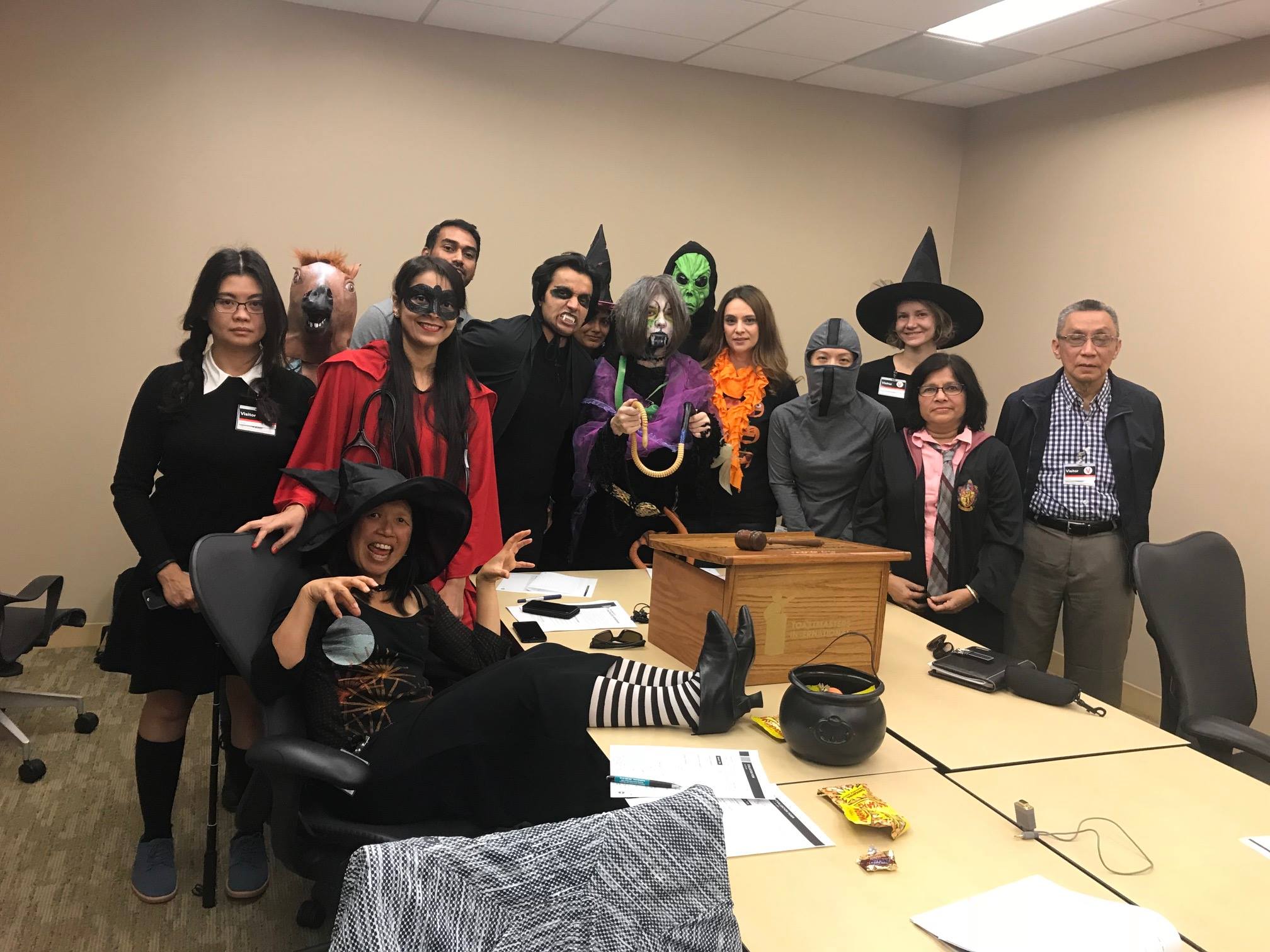
At one club, members wore Halloween costumes. The speeches also cover Halloween (or similar topics).
Halloween themed meeting
The Ambassador is asked to take one or more roles at the meeting.
Speaker
General Evaluator
Speech Evaluator
A report about the visit is provided to the District.
As an incentive, one who makes 10 or more visits is given a pass to attend the “breakfast meeting” on the day following the main Conference.
Toastmasters International
The mission statement reads, “We empower individuals to become more effective communicators and leaders.”
It
was founded by a former administrator of YMCA. With headquarters in
California, it has members worldwide. The first international conference
outside of the Americas will be held this August in Kuala Lumpur,
Malaysia. The conference crowns the “World Champion of Public Speaking”.
There
are closed clubs (sponsored by companies and corporations) and open
clubs (with little or no restrictions to join or visit).
One can visit several clubs before deciding to become a member.
In the old system, the communication track consisted of 4 levels (a) CC – Competent Communication (b) ACB – Advanced Communicators Bronze (c) ACS – Advanced Communicators Silver (d) ACG – Advanced Communicators Gold.
Her gentle exhortation: “Eyes have you and you see not. Ears have you and you hear not.”
Ancestors
Thanks to my philanthropic ancestors
Donated in cash and kind for building and/or restoring pagodas, schools, hospitals & monasteries
Offered food, e.g Sa Tu Ditha at Shwe Dagon Tabaung Festival
Provided medicine, e.g for burns)
Gave stipend, e.g to bright but needy students
I am following their footsteps by giving back to my beloved land, mentors, benefactors & alma mater
Family Members
My spouse
Thanks to my family members
They supported my volunteer work for several decades.
My beloved spouse wrote articles for Dhammanda Newsletter with the pen name “Neikban Zaw”.
My niece Dr. Khine Zin Oo gave me a surprise gift: tripod with remote control.
Poets & Artists
Thanks to the contributors of “Poetic Art”.
Tekkatho Moe War : Saya U Moe Aung
Saya Moe
Okpo Maung Yin Maung : Saya U Aung Myaing
Okpo & Bagyee
Maung Nyunt Htay (Ah Htet Min Hla) : Saya U Nyunt Htay
Nyunt Htay
Win Myint (M72) : U Win Myint
Bagyee Myat Myo Myint : U Myo Myint
Miscellaneous
Thanks to Dr. Khin Maung U, Dr. Nyunt Wai, Dr. Thane Oke Kyaw Myint, several sayas, colleagues, friends and literary lovers for contributing and/or reviewing my posts.
Saya U Htun Aung Kyaw (ChE67, SPHS61) posted the list of videos with the links. He also commented on optimization of the talks.
U Tin Aung Win (Oscar, M69, Sacred Heart63) gave me rides to the Golden Jubilee celebrations — Saya Pu Zaw Pwe in the morning and Reuinion Dinner in the evening — in 2019. See my posts for a more comprehensive list of those who provided me transportation,
U Htun Aung (EP70) and spouse Daw Pwint Than (EP71, High school Luyechun in 1964 and 1965) gave me a dhamma book at SPZP-2016.
Saya Dr. Kyaw Tint (Physics, Author) was a Science Scholar, Past President of BADA, and is an entrepreneur. He provided info on Science Scholars and selected topics.
U Ye Sint taught Physics in Myanmar before moving to USA. He was Vice President, Board of Director, Contributing Editor of “Dhammananda Newsletter” and “Paying Homage to Sayadaw U Silandabhivsmsa” book at TBSA. He gave book presents to me.
Eddie Shein (U Aung Kyaw Myint) matriculated from SPHS and graduated from RIT. His hobbies include Palmistry & Astrology. He invited us to the wedding reception of his daughter (specialist medical doctor in Australia). It was a mini-reunion of alumni from SPHS and RIT.
U Maung Maung Kyi (my classmate at SPHS & Leik Khone, my crew mate at RUBC and Best Man at my wedding) and his spouse Daw Khin May Than (ChE72) hosted us at Ogmore-by-the-sea in Wales, UK.
U Win Latt authored WinHoro at UCC under my supervision. He has a Master in Computer Science. He runs a software company named SysMagic. He worked in Myanmar, Singapore & Thailand. He hosted me during my first visit to Singapore and treated us during my visit to Bangkok in 2024.
Saya U Aung Zaw (UCC, CSO, Author) gave me two of his books : “Bawa and Dhamma”, and “Cetana Thi Thar Kan”. He studied M.Sc. (Computer Science) at Southampton University, UK. He taught CS at UCC, Assumption University in Bangkok and at a college in Sydney, Australia.
U Aung Myint (UCC, SPHS64, Physics) transferred from RIT EE Lab to UCC Systems Division. He was Maintenance Engineer and a victim of the 33 question survey following 8-8-88. He taught Courses (e.g Programmable Logic Controllers). He and his son took us to Tanyin / Syriac to visit the Yay Le Phaya and Thabawa Dhamma Yeik Tha. His hobbies include Palmistry and Astrology. He wrote Bedin programs on the ICL 1902S computer at UCC.
U Ngwe Soe (Silver, UCC, AGTI, Japanese Diploma, Physics) was among the young UCC employees. He did sea faring briefly before working for projects around the world. He showed us around Singapore. He and his spouse Daw Nu Nu Yee hosted us for two nights at their home in Jahore, Malaysia. Ma Nu is the sister of U Khin Maung Thwe (RIT69er, GBNF).
U Hlaing Myint (UCC, CS) is the nephew of Saya Dr. San Tint (retired Professor of EC / Electronics, YTU). He helped with the maintenance of my car in the early days at UCC. He gave me rides in his newest car during my previous trip to Yangon. He was an eligible bachelor for a long time. He is now a proud father.
Saya U Aung Myaing (ChE72, Poet) is contributor and coordinator of “Poetic Art”. He recorded several songs (including “Till the end of the world”). His son gave him software for video editing. He and his spouse Daw Gyn Yu (ChE72) hosted sayas and alumni visiting Bangkok (especially for medical checkup).
Sayar Khin Maung Oo (Master Mariner) taught in Myanmar and Malaysia. He and his spouse Daw Tin Tin Win provide volunteer service (e.g shopping, cooking) for Myanmar crew members (notably those who do not have visas to get off their ships at the Port of Houston, Texas).
U Win Thein (Padamyar Winhtein) stood first in his Mathematics Major class in 1966. He wrote for magazines and journals (pen name : Maung Nyo). He is a Moderator for “Fun with Learning” FB Group.
U Sann Tun Ni (Las Vegas) owns a sushi business. He worked for Heavy Industries, and as a Tourist Guide (for Japanese) before moving to USA. He is a Gawpaka at the Las Vegas monastery.
Dr. Myint Tun (Henry Cho Tun, SPHS60) scored the highest marks in I.Sc(A) and I.Sc(B) Combined. He urged me to “Carry On”.
Saya U Min Wun (GBNF) was Professor and Head of Civil Engineering at RIT and Member of the Myanmar Pyetkadein Ah Kyan Pay Ah Phwe. Saya retired from Caltans at the tender age of 80 to have time for meditation. He was interviewed by the newspaper and Internet TV in Southern California. Saya wrote several articles for RIT Alumni International Newsletter.
U Khin Maung Myint (M71) rowed for RIT. He stays active by running and mountaineering.
SMART Group of Companies (U Kyaw Kyaw Hlaing and team) for hosting me twice during my visit to Myanmar from November 2019 to January 2020.
Admin and Moderator
Sagar Pariye Dr. Nyunt Wai (SPHS63, Fourth in Burma)
MARB U Kyaw Myint, Dr. Aung Myin Bo
Team Old School IT U Kyaw Zeya
YUBC Old Members U Zeyar Linn
Swel Daw Yeik U Khin Maung Lwin
Gangaw Taw Yar Pyie (RU Centennial) Dr. Nyi Thet Lwin, U Aung Mon
P.B.R.S Group U Aye Maung Than, U Mya Hlaing
Friends of Sayar Khin Maung Oo U Khin Maung Oo
SF Bay Area Myanmar Community and Cultural Center U Cho Oo, U Kyaw Kyaw Soe
Fun with Learning Padamyar Winhtein, U Khin Maung Zaw
Saya U Soe Khaw (Min) and Saya U Tin Maung Nyunt (Mech) at TMC, San Jose, California
BS from University of California Berkeley
MS from Minnesota School of Mining
Upon his return from USA, he was assigned to the Department of Mining Engineering at BOC College to teach part-time and to act as Head of the Department.
He was succeeded by Saya U Soon Sein as full-time saya and Head.
U Soe Khaw worked at the Ministry of Mines.
After retirement, he worked for UN assignments overseas.
He then migrated to the USA.
He was a Patron of selected monasteries in the San Francisco Bay Area.
He was healthy even in his early 90s.
When his spouse passed away, he offered Soon at TMC. The group photo shows Dhamma friends.
Soon Kyway for Mrs. Soe Khaw
Last Journey
Saya U Tin Maung Nyunt (M60) wrote :
U Soe Khaw, (RIT Part-time Lecturer – Mining), passed away peacefully on February 14, 2018 at 4:45 pm per Michael Khaw, his son.
Ph 408-737-0238. 1082 Noriega Ave, Sunnyvale, Ca 94086
Memorial Service
Date : February 24, 2018 (Sunday) Time : 10:30 AM Place : Tathagata Meditation Center (TMC) 1215 Lucretia Avenue San Jose, CA 95122 Contact : 1 (408) 977 0300 or 1(408) 294 4536
Soon offering : 11:15 AM Lunch for guests : 11:30 AM Dhamma talk : 12:30 PM