Category: Publication

  • Men on the Moon

    Space Race

    • In 1957, USSR launched the Sputnik.
    • Soon, Yuri Gagarin became the first cosmonaut to orbit the earth.
    • USA was left behind in the Space race.

    NASA

    • NASA (National Aeronautics and Space Administration) was formed.
    • President Kennedy’s historic speech :
      “Before the decade is out, we will send men on the moon and bring them safely to earth”
      gave momentum to the NASA projects.
    • Mercury Project and Gemini Project were followed by Apollo project.
    • The Apollo 1 fire (causing the death of three astronauts) caused a set back.
    • In December 1968, Apollo 8 orbited the Moon.
    • Apollo 9 and Apollo 10 tested the Lunar Module and the critical systems.
    • In July 1969, Apollo 11 made President Kennedy’s dream a reality.

    My Poem

    • My poem was submitted by my mentor Ashin Ananda to USIS/USIA
      (which forwarded my poem to NASA)
    • The poem was published in the Guardian Dailly.
    • The Eagle is the code name for the Lunar Module.
    • The three men are
      Neil Armstrong [Mission Commander],
      Michael Collins [Command Module Pilot], and
      Buzz Aldrin [Lunar Module Pilot]

    MEN ON THE MOON

    The Eagle made a soft descent
    And perfect rendezvous
    Does not the module represent
    A fantasy come true

    To travel through that cold void space
    To have that faith in science
    To face death squarely in the face
    Yes, man acted with defiance

    Man set foot on an alien world
    In July Sixty Nine
    That small step from the bravest man
    Was a giant leap for mankind

    The walk in one sixth gravity
    Rock samples from the moon
    Three men who spoke with brevity
    For science what a boon

    No event can ever equal
    That sublime unique mission
    The Apollo’s triumph will make the people
    Extend their own vision

    Are we not brothers here on earth?
    So let us all unite
    There will be heaven here on earth
    If we all cease to fight

    Poem
  • Moving vs. Stationary

    Poem by Tekkatho Moe War

    Tekkatho Moe War
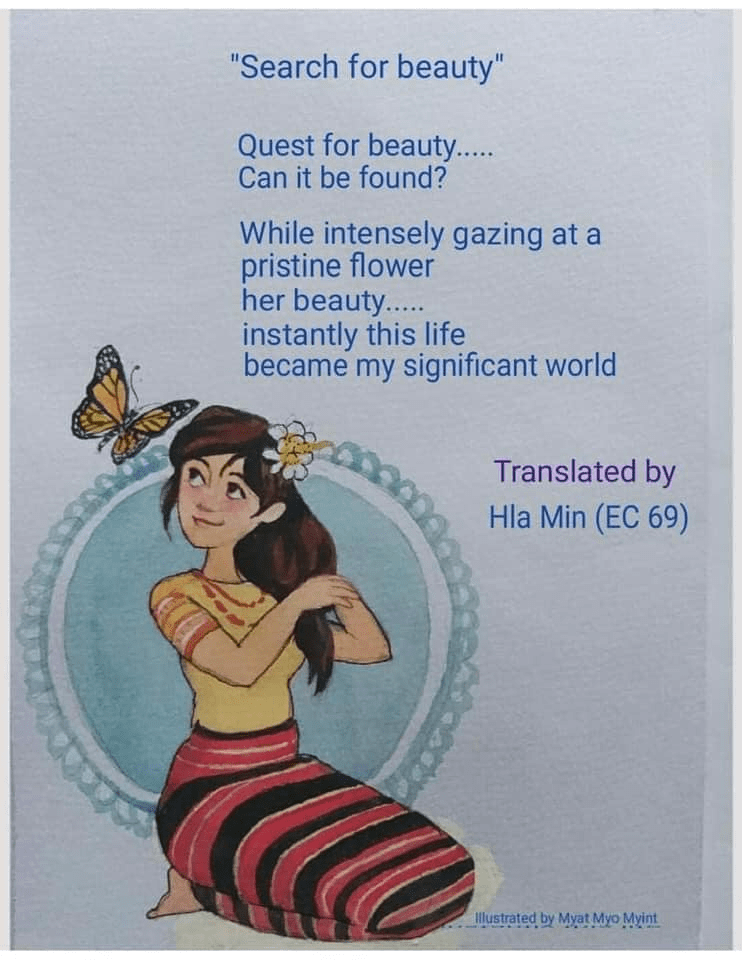
  • Search for beauty

    From “Poetic Art Series”

    Poem : Tekkatho Moe War

    Poem by Tekkatho Moe War

    Translation : Hla Min

    Translation by Hla Min

    Illustration : Bagyee Myo Myint

    Organizer : Okpo Maung Yin Maung

  • Books (3)

    • Process of Consciousness and Matter
    • The Buddha’s Prescription
    • Emptying the Apple Rose Seat
    • Nyaung Kan Aye
    • Settling Back Into The Moment
    • What the Buddha Taught
    • The Buddha And His Teachings
    • Buddhism in a Nutshell
    • The Triple Gem
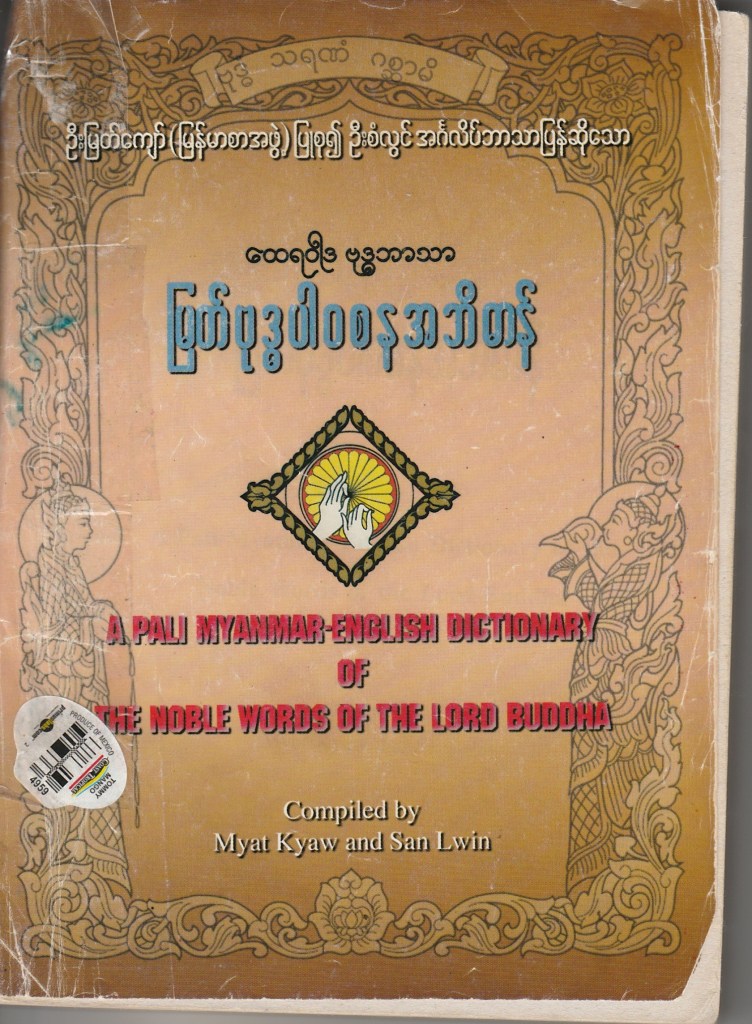
    • A Pali-Myanmar English Dictionary of the Noble Words of the Lord Buddha

    Process of Consciousness and Matter

    This image has an empty alt attribute; its file name is rewata-1.jpg

    Process of Consciousness and Matter
    Subtitle : The Philosophical Psychology of Buddhism
    By Sayadaw Rewata Dhamma
    Completed : 2004
    Last book by Sayadaw
    Publisher: Triple Gems Publication

    The book is intended for all serious students of the Abhidhamma.

    It serves as supplement to Bhikkhu Bodhi’s book “A Comprehensive Manual of Abhidhamma”, and treats various important aspect in more detail – in articular the process of consciousness and matter.

    Preface by Sayadaw U Silanandabhivama, Rector of the International Theravada Buddhist Missionary University, Yangon

    Acknowledgement by Sayadaw Dr. Ottaranyana, Birmingham Buddhist Vihara, UK

    Introduction

    Chapter I : CONSCIOUSNESS AND ITS FACTORS

    CHAPTER II : PROCESS CONSCIOUSNESS (CITTA VITHI)

    CHAPTER III : MIND-DOOR COGNITIVE PROCESS (MANODVARA VITHI)

    CHAPTER IV : ABSORPTION JAVANA IN THE MIND-DOOR PROCESS (APPANA JAVANAVARA MANODVARA VITHI)

    CHAPTER V : PROCESS OF MATTER

    The Buddha’s Prescription

    • A Selection of Dhamma Talks by Dr. Rewata Dhamma
    • Editor : Yann Lovelock
    • Dhamma dana : Triple Gem Publications
    • Three sections
    • Section 1 : Historical Perspectives
    • Emperor Asoka
    • Arahanat Upagutta
    • The Contribution of Buddhism to the World of Art & Architecture
    • Buddhism in Myanmar Today
    • Sangha & State
    • Section 2 : Active Buddhism
    • Monastic and Lay Buddhism
    • Teaching for the Many
    • Transferring Merit for the Dead
    • The Buddhist Concept of Loving Kindness
    • The Fundamental Forces of the Mind
    • The Human & Environmental Crisis
    • Bliss through Buddhism
    • Social Change and Individual Change
    • The Buddha’s Prescription
    • Buddhism and Social Justice
    • Section 3 : Interfaith Dialogue
    • Traditional Wisdom and Modern Knowledge
    • What I Expect of Friendship with Christians
    • Sunyata and Kenosis
    • Bibliography
    • Myanmar Monasteries

    Emptying the Rose-apple Seat

    • Subtitle : A day-to-day guide to Buddhist meditation methods as taught by a renowned meditation master
    • Author : Aggamahapandita Bhaddanta Dr. Rewata Dhamma
    • Foreword by Joseph Goldstein
    • Dhamma Dana by Triple Gems Publication
    • Aspiring to the Practice
    • Aspiration
    • The First Step
    • The Refuges
    • Eradicating the Defilements
    • Offerings
    • The Time of your Life
    • Meditation Practices
    • 1. An Overview
    • The Forty Meditation Objects
    • 2. Basic Factors
    • Signs
    • Temperament
    • Hindrances
    • Three Stages of Development
    • Absorption
    • Five kinds of Ability
    • Higher Knowledge
    • 3. Concentration Practices
    • Getting Started
    • Sitting Position
    • Walking
    • 4. Concentration Subjects
    • The Kasinas
    • The Recollections
    • a) Awareness of Respiration
    • b) Recollection of the Virtues of the Buddha
    • c) Mindfulness of Death
    • e) Meditation on the Impurities
    • f) Meditation on the Four Elements
    • g) Developing the Four Illimitables
    • A Ten Day Course in Insight Meditation
    • First 9 days
    • Instruction
    • Dhamma Talk
    • Day Ten
    • Instruction
    • Meditation : Developing Loving Kindness
    • Pali Glossary
    • Bibliography
    • Abbreviations

    Nyaung Kan Aye

    The Message of Satipatthana

    Author : Nyaung Kan Aye Sayadaw Ashin Eindaka
    Distributor : Nyaung Kan Aye Sasana Yeiktha, 2000

    Contents

    • PART I
    • The First Discourse on the Life of the Late Ven. Mahasi Sayadaw
    • The Historic Life of Mahasi Sayadaw and Vipassana Method Expounded in Satipatthana Sutta Part (2)
    • Meditate the Satipatthana as in Kuru Country
    • The Message of Sattipattana
    • PART II
    • Satipatthana Sermon for Overcoming Defilements (1)
    • Satipatthana Sermon for Overcoming Defilements (2)
    • Satipatthana Sermon for Overcoming Grief (1)
    • Satipatthana Sermon for Overcoming Grief (2)
    • PART III
    • Okasa Supplication Which is the A, B, C of Buddhism And Keeping the Precepts
    • Satipatthana to Free from Lamentation (1)
    • Satipatthana to Free from Lamentation (2)
    • Satipatthana to Free from Lamentation (3)
    • PART IV
    • Discourse on Satipatthana for the Extinction of Suffering (1)
    • Satipatthana for the Extinction of Suffering (2)
    • Satipatthana for the Extinction of Mental Suffering (1)
    • Satipatthana for the Extinction of Mental Suffering (2)
    • PART V
    • How to win Magga Nana Citta by Satipatthana (1)
    • How to win Magga Nana Citta by Satipatthana (2)
    • How to attain Nibbana by Satipatthana (1)
    • How to attain Nibbana by Satipatthana (2)

    Settling Back Into The Moment

    A meditator’s inspirational guide

    Selected text from THE EXPERIENCE OF INSIGHT, Joseph Goldstein

    First Edition : 1991
    Pocket Edition : 1995
    Revised Edition : 2002

    Samples

    • Most people are circling around, driven by ignorance and desire, unaware of the possibility of getting off this wheel of samasaras, the wheel of greed and hatred.
    • When we learn to let go, the lighter the mind becomes.
    • The whole development of awareness comes from experiencing things with a silent mind, not with our thoughts and concepts about them.

    What the Buddha Taught

    By Dr. Walpole Rahula

    • First published in 1959
    • by [Rev. Dr.] Walpola Rahula
    • Foreword by [Professor] Paul Demieville
    • Eight Chapters
      1. The Buddhist Attitude of Mind
      2. The First Noble Truth : Dukkha
      3. The Second Noble Truth : Samudiya : ‘The Arising of Dukkha”
      4. The Third Noble Truth : Nirodha : ‘The Cessation of Dukkha”
      5. The Fourth Noble Truth : Magga : ‘The Path”
      6. The Doctrine of No-Soul : Anatta
      7. ‘Meditation’ or Mental Culture : Bhavana
      8. What the Buddha taught and the World Today
    • Selected Texts
    • Abbreviations
    • Selected Bibliography
    • Glossary

    The book has been translated into several languages including Myanmar.

    The Buddha And His Teachings

    • Author : NARADA MAHA THERA
    • VAIJIRARAMA, COLOMBO
    • First Edition : 1964
    • 4th Enlarged Edition : 1980
    • Introduction
    • Part I : THE BUDDHA
    • 14 Chapters
    • 1. The Buddha — From Birth to Reunciation
    • 2. His Struggle for Enlightenment
    • 3. The Buddhahood
    • 4. After the Enlightenment
    • 5. The Invitation to Expound the Dhamma
    • 12. The Buddha’s Ministry
    • 13. The Buddha’s Daily Routine
    • 14. The Buddha’s Parinibbana (Death)
    • Part II : THE DHAMMA
    • THE TEACHINGS OF THE DHAMMA
    • Chapters 15 – 44
    • 15. What is Buddhism?
    • 16. Some Salient Characteristics of Buddhism
    • 17. The Four Noble Truths
    • 18. Kamma
    • 35. The Way to Nibbana (I) — Morality
    • 36. The Way to Nibbana (II) — Concentration
    • 37. Nivarana or Hindrances
    • 38. The Way to Nibbana (III) — Insight
    • 39. The State of an Arahant
    • 40. The Boddhistta Ideal
    • 41. Parami — Perfections
    • 42. Brahmavihara — The Sublime States
    • 43. The Eight Worldly Conditions (Atthalokadhamma)
    • 44. The Problems of Life

    Buddhism in a Nutshell

    • Narada Thera (Vaijarma, Colombo, Sri Lanka) published the book in 1933.
    • In 1970, Sayadaw published a revised edition.
    • Sayadaw full permission to Sayagyi U Hla Maung of the Buddhist Sasana Council to reprint ALL his publications reserving the copyright.
    • There are 11 (short) chapters and an appendix.

    The Triple Gem

    • The Triple Gem
    • by Venerable U Pyinnathiha
    • wrote the book in London, UK, 1988
    • revised the book in New Jersey, US, 2002
    • Contents
    • Foreword by Ven. Dr. Hammalaa Saddhatissa
    • The Three Main Views
    • What is Buddhism?
    • Who is the Buddha?
    • The Attributes of the Buddha
    • Dhamma (The Teachings of the Buddha)
    • The Attributes of the Dhamma
    • The Sangha (The Community of Noble Disciples)
    • The Attributes of the Sangha

    Note :

    The Dhamma dana distribution by Triple Gems Publication includes “The Triple Gem” and “The Way to Social Harmony”.

    A Pali-Myanmar English Dictionary of the Noble Words of the Lord Buddha

    Compilers:

    Burmese entries: U Myat Kyaw

    English entries: translated from Burmese by U San Lwin

    Publisher : Myanmar Sar Ah Phwe

    Excerpts

    katayuga – n. first of the four ages into which a world era is divided; age of filial piety and justice. See also yuga.

    kalasampatti – n. golden age; good times.

    This image has an empty alt attribute; its file name is img_20190910_0001.jpg
  • Sharing and Caring Blossoms in Myanmar

    ဒါနပန်းဝေ မြန်မာပြေ

    By Hla Min, Aung Myaing and Bagyee Myat Myo Myint

    ကိုးဗစ်ကာလမှာ ပြသခဲ့သော မြန်မာတို့၏ ဒါနစိတ်ဓာတ်ကို ဂုဏ်ပြုသည့် ကဗျာပါ။
    ဒါနဟာ ပစ္စည်း ပညာ လုပ်အား မျှဝေလှူဒါန်းခြင်း နှင့် အဓိကအားဖြင့် အခက်အခဲကာလတွေမှာ တဦးကိုတဦး ကူညီစောင့်ရှောက်ခြင်းတို့ဖြစ်ပါသည်။

    In honor of Dana spirit of the people of Myanmar, demonstrated in COVID19 pandemic, Hla Min(EC69), Aung Myaing(ChE72) and Myo Myint(M73), alumni of Rangoon Institute of Technology(now known as Yangon Technological University) present the following poem and attached paintings to Myanmar in particular and the whole world in general.
    Dana covers sharing and caring:
    Sharing one’s assets(wealth,
    knowledge,volunteer work..)with those in need,
    Caring about fellow citizens especially in
    times of crises.

    “ဒါနပန်းဝေ မြန်မာပြေ”

    အမိရင်ခွင်ထဲ
    အူဝဲပေါက်စန
    ကြားရစကားစု
    “ပြုပြုသမျှ ကုသိုလ်အဖို့ဘာဂကို
    အမျှ အမျှ အမျှ ယူတော်မူကြပါ။
    သာဓု သာဓု သာဓု”
    မျက်လုံး ကလယ်ကလယ်
    လူမမယ်အူဝဲ
    အသဲထဲမှာ
    စွဲကာသွားရ
    “အမျှ အမျှ အမျှ
    သာဓု သာဓု သာဓု”
    ဤအခြေခံ စိတ်ဓာတ်
    တဖျတ်ဖျတ်တောက်နေ
    အမိမြေမှာ
    ဒါနမျိုးစုံ
    ပြုကြကုန်၏။
    ပစ္စည်းလို ပစ္စည်း။
    လုပ်အားလို လုပ်အား။
    ပညာလို ပညာ။
    လိုသူတွေကို
    ပိုသူတွေက ဒါနပြု
    တုမရသည့် ကုသိုလ်တွေ
    အမျှဝေ မောင်းထု
    ကောင်းမှု အဖို့ဘာဂ အဝဝကို
    အမျှ အမျှ အမျှ
    သာဓု သာဓု သာဓု။

    အုတ်ဖို မောင်ရင်မောင်
    Rangoon Institute of Technology
    27th June 2020

    (English version)

    “Sharing and Caring Blossoms in Myanmar”

    First words heard
    as a toddler
    embraced in a mother’s breast
    “For all our meritorious deeds
    we share our merits to all beings, saying
    Ah Hmya, Ah Hmya, Ah Hmya
    (responded in unison)
    Thadu, Thadu, Thadu
    (Well done, Well done, Well done)
    Sparkling innocent eyes
    gentle cries
    the infant
    gets the learning and lifelong impact
    of the words Ah Hmya and Thadu
    deep down in the heart.
    This fundamental spirit
    is ubiquitous and shining
    in our motherland
    manifested by
    various forms of Dana (Sharing and Caring)
    Donation of possessions
    Offering volunteer works
    Dissemination of knowledge
    The needy gets help
    from those who can afford
    Incomparable wholesome deeds
    shared physically, verbally and mentally
    to the pleasant ringing of a gong
    We joyfully proclaim
    “We share all our merits
    Ah Hmya, Ah Hmya, Ah Hmya
    (and respond in unison)
    Thardu Thadu Thadu”
    Translated by
    Hla Min
    Rangoon Institute of Technology
    27th June 2020

  • Books by Tun Tun (Mining)

    ထွန်းထွန်း (သတ္တုတွင်း) ရဲ့ စာအုပ်များ

    စက်မှုတွင်းထွက် ကုန်ကြမ်းများ Industrial Minerals

    မြေရှားတွင်းထွက်များ Rare Earth Minerals

    ရွှေရတု မောင်နှံ GJ Couple

    စက်မှုတက္ကသိုလ် ရောင်းရင်းများ With RIT Alumni

  • Dhammapada

    Background

    • The Dhammapada is a collection of verses
    • They cover the teachings of the Buddha
    • The Pali text has been translated in various languages

    U Lokanatha

    U Lokanatha
    • U Lokanatha (Italian Buddhist Monk) was a Chemist in the US.
    • He received a book from his supervisor as a Christmas present.
    • The book contained a chapter on Dhammapada.
    • After reading Dhammapada, he decided to quit his job and become a Buddhist monk.

    Narada Thera’s Version

    • Subtitle: PALI text & translation with stories & notes
    • Author : Narada Thera
    • Editions: 1st edition (1963), 4th Edition (1993)

    Contents

    The Pali alphabet

    Preface

    Chapters

    1. The Twin Verses
    2. Heedfulness
    3. Mind
    4. Flowers
    5. Fools
    6. The Wise
    7. The Worthy
    8. Thousands
    9. Evil
    10. The Rod or Punishment
    11. Old Age
    12. The Self
    13. The World
    14. The Buddha
    15. Happiness
    16. Affection
    17. Anger
    18. Impurities or Taints
    19. The Just or Righteous
    20. The Way or the Path
    21. Miscellaneous
    22. Woeful State
    23. The Elephant
    24. Craving
    25. The Bhikkhu or the Mendicant
    26. The Brahmana

  • Shwe Ku May Hnin

    SF Bay Area Talks

    In addition to the Annual San Francisco Bay Area Literary Talks, there are also ad hoc talks by visiting Sar Yay Sayas and Sayamas.

    Brief Bio

    • Matriculated from Shwe Ku
    • Attended Rangoon University for two years as part of the agreement for Teachers’ Training
    • Returned to the University after teaching for several years and graduated.
    • Gave me the book “Nga Doh Khit Ka Tekkatho” at the San Francisco Bay Area Talk.
    This image has an empty alt attribute; its file name is shwe-ku-may-hnin-2-1.jpg
    • EC Member of the RU Literary Club (1959 – 60)
  • Saddhamaransi Sayadaw

    by Hla Min

    Updated : May 2025

    Saddhamaransi Sayadaw U Kundala

    • Senior disciple of Mahasi Sayadawgyi
    • Outstanding meditation teacher
    • Made Dhamma Duta missions abroad (until his health forced him to stop going on long, tedious trips).
    • His biography (which covers to the age of 85) and his works can be found in http://www.saddhamaransi.org/

    The Nine Essential Factors Which Strengthen the Indiriya of a Vipassana Meditating Yogi (Volume 1)

    • Author : Ashin Kundalabhivamsa
      Mahasi Nayaka, Kamatthanacariya Sadhhammaramsi Center Sayadaw
    • Translator and Publisher: [Dr. Daw] Khin Mya Mya [Ph.D]
      Singapore
      Later relocated to US

    Contents

    • Biography of Sayadaw U Kundalabhivamsa
    • Preface
      
    • Chapter 1 : The Vipassana Bhavana
    • (a) Vipassana meditation
    • (b) How to note the Kaya
    • (i) How to note the mind objects
      
    • Chapter 2 : First Factor Which Strengthen the Indiriya of a Vipassana Meditating Yogi
    • (a) The benefits of Vipassana meditation
    • (b) How difficult it is to have a chance to practise Vipassana meditation
    • (c) The ability of the yogi to direct his mind on the nature of cessation of phenomena
      
    • Chapter 3 : Second Factor Which Strengthen the Indiriya of a Vipassana Meditating Yogi
    • (a) How to note respectfully and penetratively
    • (b) How to note to be right at the present
    • (g) How to note to overcome the Upekkha Vedana
      
    • Chapter 4 : Third Factor Which Strengthen the Indiriya of a Vipassana Meditating Yogi (Part 1)
    • (a) The ability of the yogi to note continuously
    • (b) The first Samphajhana instruction
    • (c) The second Samphajhana instruction
    • (d) The third Samphajhana instruction
      
    • Chapter 5 : Third Factor Which Strengthen the Indiriya of a Vipassana Meditating Yogi (Part 2)
    • (a) The fourth Samphajhana instruction
    • (b) The fifth Samphajhana instruction
    • (c) The sixth Samphajhana instruction
    • (d) The seventh Samphajhana instruction
      
    • Chapter 6 : Fourth Factor Which Strengthen the Indiriya of a Vipassana Meditating Yogi
    • (a) The suitable meditation center
    • (g) The suitable posture
      
    • Chapter 7 : Fifth Factor Which Strengthen the Indiriya of a Vipassana Meditating Yogi
    • (a) The cuases of his attaining the Samadhi
    • (d) Two types of individuals whose finding of Dhamma is slow
      
    • Conclusion
      
    • Quick reference from Pali to English Language
  • Dr. Thane Oke Kyaw Myint

    This image has an empty alt attribute; its file name is tokm.jpg

    U Ba Kyi’s Painting

    Dr. Thane Oke Kyaw Myint (SPHS60, IM1 67) had a replica of U Ba Kyi’s painting of Kisagotami in his office in the Children’s Hospital. It helped him in consoling parents who lost their child.

    Our Families

    Our families were close Dhamma friends and supporters of Dat Poung Zon Aung Min Gaung Pagoda and Mon Sayadaw U Thilawuntha.

    He took care of my sons when they were young.

    Writings

    He contributed posts about the Seven Siblings

    • U Tin Tut
    • U Kyaw Myint
    • U Myint Thein
    • Dr. Htin Aung
    • Daw Khin Mya Mu
    • Daw Khin Saw Mu
    • Daw Tin Saw Mu

    He chronicled the Medical pioneers and/or his mentors.

    Book

    He acknowledged the success of his colleagues and former students.

    He air-mailed me a book (compiled and published by his colleagues and former students) from Australia. The postage cost a lot more than the price of the book.

    Sad Loss of Manuscripts

    Before U E Maung [Professor of Burmese, University of Rangoon] died, he asked me to bring out exercise books with writings by [my paternal aunt] Daw Khin Mya Mu. In the books were transcript of many “Kyauk sar” and translation into Burmese of hundreds of stone scriptures from all over Burma. When I asked him why they were not published, he told me that no printing press [in those days] have fonts for the ancient writings. [Thus] they were all unpublished.

    The sad thing was when Dr. Htin Aung [Rector, University of Rangoon, Ba Dway] left Burma, he had also left not only his books but drafts of books he wanted to finish and publish, mainly in history.

    U E Maung donated his house and belongings to Tipitaka Sayadaw. When he passed away Dr. Tha Hla was given the task of selling the property and have as cash donation for Sayadaw. We were not informed but later on when I asked, I was told that except for some books, the handwritten documents were not saved anywhere. Felt very sad about losing the handwritten books.

    Only some books were chosen to be donated to the Burmese Department of Rangoon University.

    Classmates from Std. VII(A) in SPHS

    This image has an empty alt attribute; its file name is tokm-viiia.jpg

    The photo was taken in Std VIII (A) in SPHS (St. Paul’s High School).

    Many have now retired.

    The photo was annotated mainly by Dr. Thane Oke Kyaw Myint with minor revisions by me.

    The teachers include Brother Peter, Brother Gerald, U Nyunt Maung and Mr. George Chapman.

    Front Row:
    Robert Ba Maung (Chief Engineer, Mercantile Marine, now living in Liverpool), Commander Myint Ngwe (Burma Navy DSA 6th. batch), Robert Gale@Khin Maung Oo (BE (EC), Biomedical engineer BPI, now in Charlotte, North Carolina), Dr. Khin Zaw (PhD (Moscow), Retired Rector, Institute of Education, third cousin of TOKM), Wilbert Hoe@Dr. Thein Myint (Senior Ophthalmologist London)

    Second Row:
    Dr. Harry Kyaw Tun (DDS – Dental Surgeon studied in East Germany but now in united Germany after the fall of the Berlin Wall), Dr. Ho Shak Lim (FRCP, Senior Physician Hong Kong), Dr. Kyaw San Win (Retired Medical Superintendent, Yangon Orthopedic Hospital), Dexter@Thaung Lwin (BE (EC), Senior IT Engineer IBM Rangoon & Singapore, Retired, Past Captain and Gold of RUBC), Dr. Myo Aung Khin (Retired Manager, Immunization Programme, Dept. of Health)

    Third Row:
    Prof. Saw Naing (Professor of Medicine, IM1), Tin Maung Aye (Deputy Director General, Ministry of Foreign Affairs, younger brother of Dr. Aye Maung Than, DSMA), Col. Hla Myint@Michael (OTS 31st.batch, Retired Colonel (Infantry) & Chief of Security (Police, Secretariat)), Home Ministry), Dr. Myint Tun@Henry Cho Tun (PhD Birmingham, in Chemistry residing in LA, winner of Matthew Hunter Medal RASU), Prof. Min Lwin (Professor in Orthopedics), Dr. Herbert Liou (Hong Kong)

    Fourth Row:
    Prof. Than Toe (Rehabilitation & Physical Medicine. RGH), Lt. Cmdr. Aung Shwe (Burma Navy)

    Last Row:
    Myo Myint (BE (EC), RUBC Gold, Mathematical Genius, Retired from PPIC, elder brother of Dr. Ba Han Texas), Than Htut (BE (Mech), RUBC Gold, Heavy Industries & Defense Industries), Mor Eng Way@Aye Ngwe (Retire d. Senior Radiologist, Former Commander. US Navy, Walter Reed Hospital), Nyunt Tin@ George Chiong (Retired Prof of Paed. Anesthesiology, Chicago – he is the second of four brilliant Chiong brothers, the eldest Chiong Boo Chiong @ Dr. Hla Shwe, Ph.D in Nuclear Physics, College Dean)