Dr. Nyunt Wai wrote : I’m no painter or a poet. Just occasional excursions to these fields. And I’m not a visiting Professor. Had to apply for this job in Malaysia just like any other expatriate from India or Bangladesh. So I’m no 3 “P”s. This reminds me of “No 3 P policy” of the now extinct Yahoo group Alumni-Myanmar-medical-institutes founded by Saya Johnny Thane Oke Kyaw-Myint, which served well as a lively forum for us until the advent of Facebook.
Dr. Thane Oke Kyaw Myint wrote : Yes AMIM was a tight small group of us. Those who became friends then remain now as close friends. On FB, there is short attention as well as being bombarded by posts that we have no interest in.
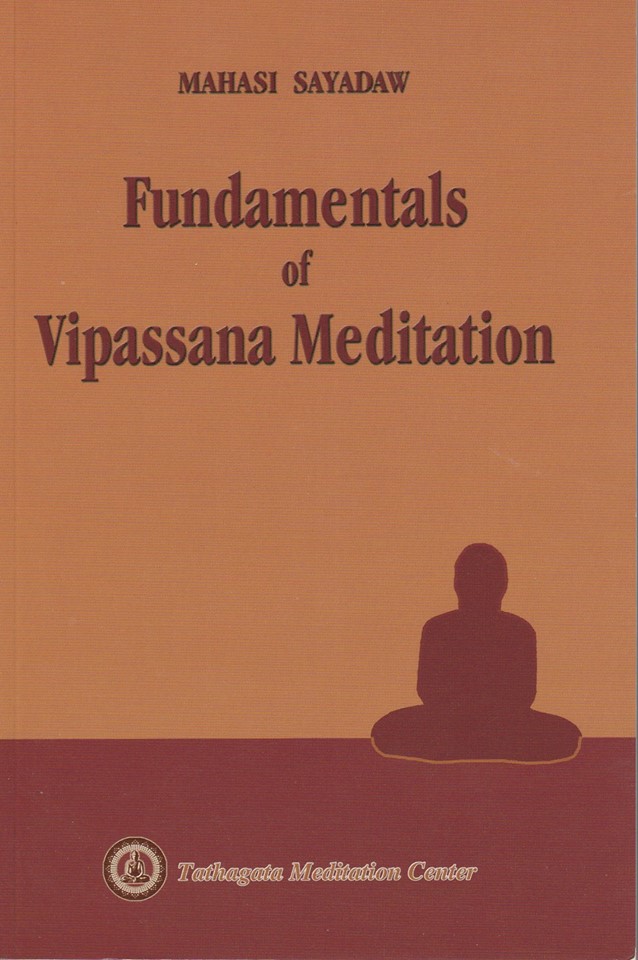
Primary Author : Mahasi Sayadaw Translator : Maung Tha Noe Editor: Sayadaw U Silananda Original Publisher : Dhammachakka Meditation Center, 1991 Republished with other sources : Tathagata Meditation Center
Other sources included the book “Instructions to Meditation Practice” by Mahasi Sayadaw “Benefits of Walking Meditation” by Sayadaw U Silananda “Guidance for Yogis at Interview” by Sayadaw U Pandita “An Interview with Mahasi Sayadaw” by Thamanaykyaw, translated by U Hla Myint
The Eagle made a soft descent And perfect rendezvous Does not the module represent A fantasy come true
To travel through that cold void space To have that faith in science To face death squarely in the face Yes, man acted with defiance
Man set foot on an alien world In July Sixty Nine That small step from the bravest man Was a giant leap for mankind
The walk in one sixth gravity Rock samples from the moon Three men who spoke with brevity For science what a boon
No event can ever equal That sublime unique mission The Apollo’s triumph will make the people Extend their own vision
Are we not brothers here on earth So let us all unit There will be heaven here on earth If we all cease to fight
The Apostle Of Non-violence by Hla Min
Gandhiji
A man of true principle With spirit invincible He sacrificed his pleasures Faith and freedom were his treasures
No arms did he carry No threats made him tarry No torture or prison Could change his decision
He led all protests Despite threats and arrests All races and creeds Revered his deed
He could not see his dreams come true The whole world grieves his loss too Though he cared not for fame His name will indeed remain In history, O Great Gandhiji
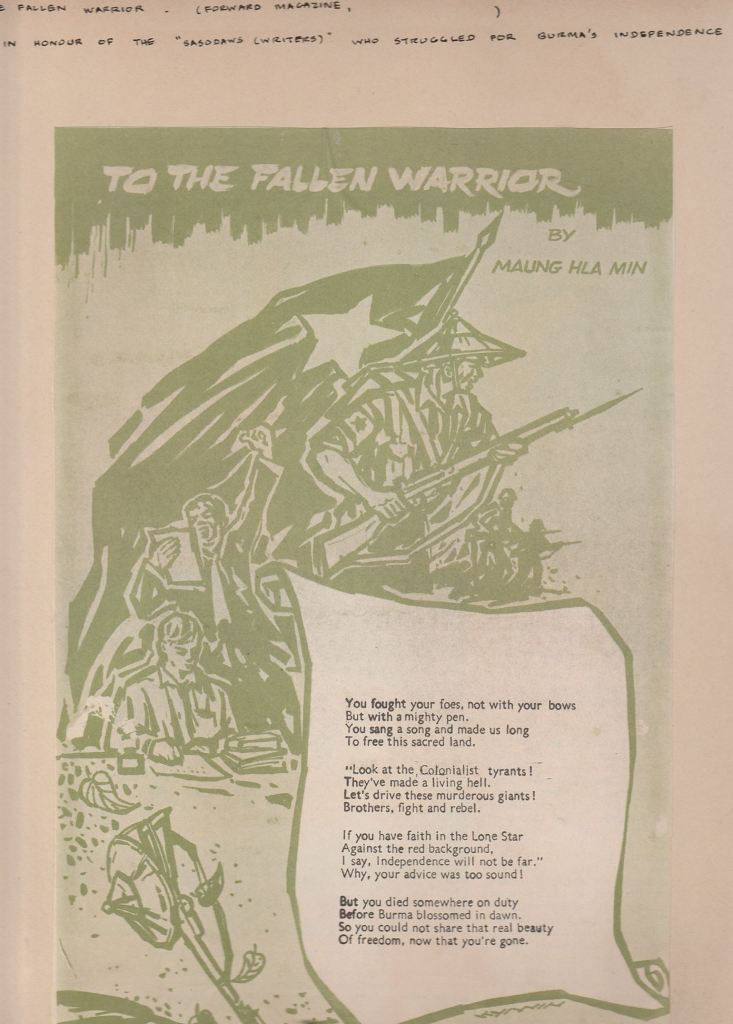
To The Fallen Warrior by Hla Min
To the fallen warrior
You fought your foes not with your bows But with a mighty pen You sang a song and made us long To free this sacred land
“Look at the colonialist tyrants They’ve made a living hell Let’s drive these murderous giants Brothers, fight and rebel
If you have faith in the Lone Star Against the red background I say Independence will not be too far” Why your advice was too sound
But you died somewhere on duty Before Burma blossomed in dawn So you could not share the real beauty Of freedom now that you’re gone
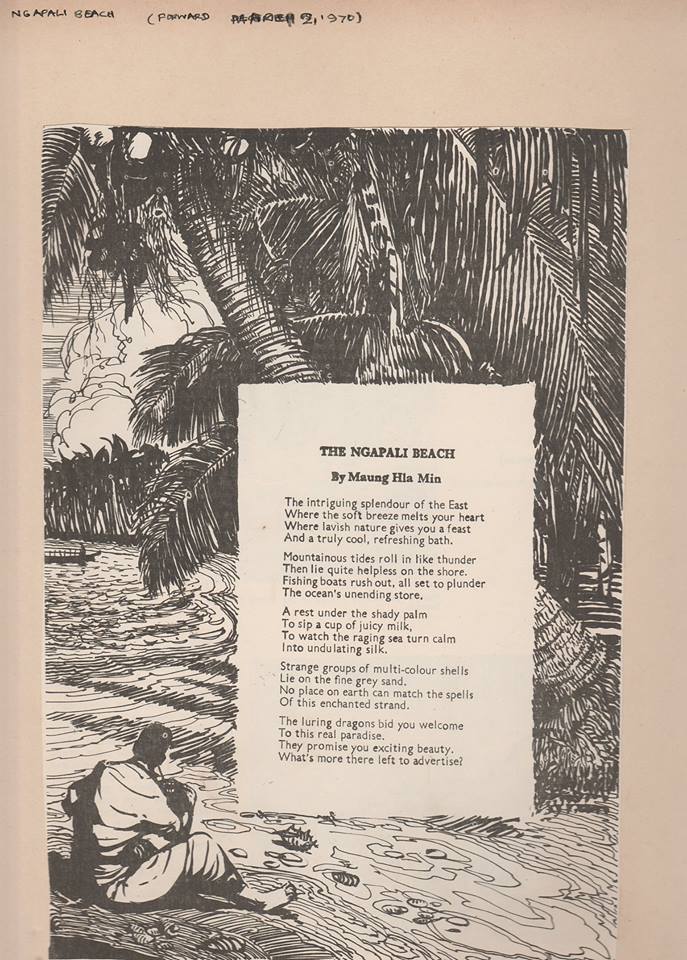
The Ngapali Beach by Hla Min
Ngapali
The intriguing splendor of the East Where the soft wind melts your heart Where lavish nature gives you a feast And a truly cool refreshing bath
Mountainous tides roll in like thunder Then lie helpless on the shore Fishing boats rush out all set to plunder The ocean’s unending store
To sit under a shady palm To drink a cup of juicy milk To see the raging waters turn Into undulating silk
A variety of multi-colored shells Lay on the fine grain sand No place on earth can match the spell Of this enchanted strand
The luring dragons bid you “Welcome” To this real paradise There’s lots of fun, excitement, beauty What’s more there left to advertise?
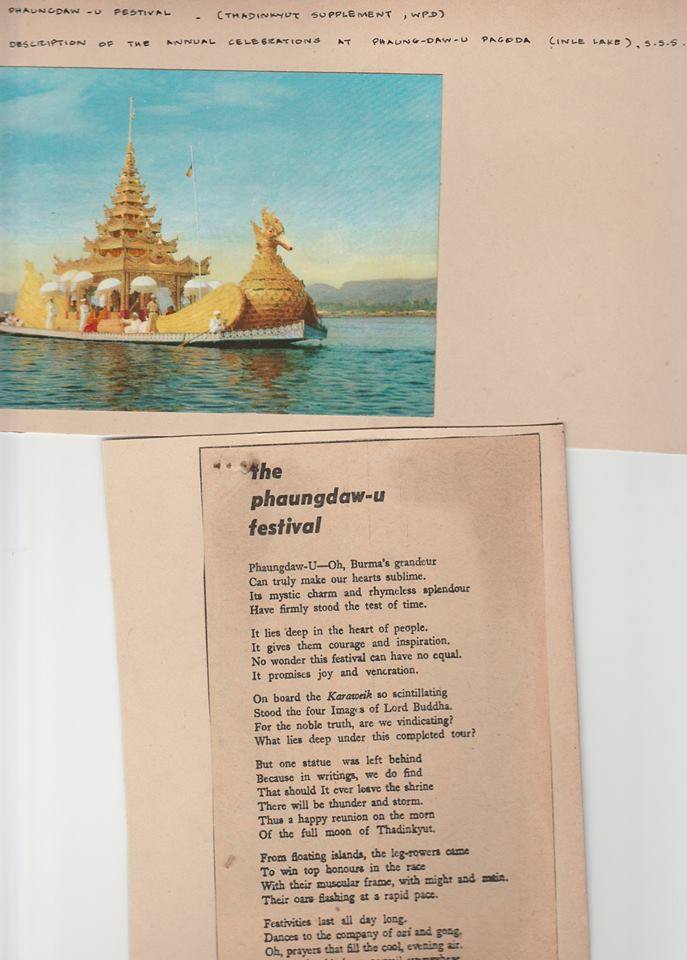
The Phaungdaw-u Festival by Hla Min
Phaungdaw-u
Phaungdaw-u, oh Burma’s grandeur Can truly make our hearts sublime Its mystic charm and rhyme-less splendor Have firmly stood the test of time
It lies deep in the heart of people It gives them courage and inspiration No wonder this festival has no equal It promises joy and veneration
On board the Karaweik so scintillating Stood the four images of Lord Buddha For the Noble Truth are we vindicating? What lies deep under the completed tour?
But one statue was left behind Because in writings we do find That should it ever leave the shrine There will be thunder and storm Thus a happy reunion on the morn of the full moon of Thadinkyut
From floating islands the leg rowers came To take part in the race With their muscular frame, with might and main Their oars flashing at a rapid pace
Festivities last all night long Dances to the company of ozi and gong Oh, prayers that fill the cool evening air May loving kindness prevail everywhere
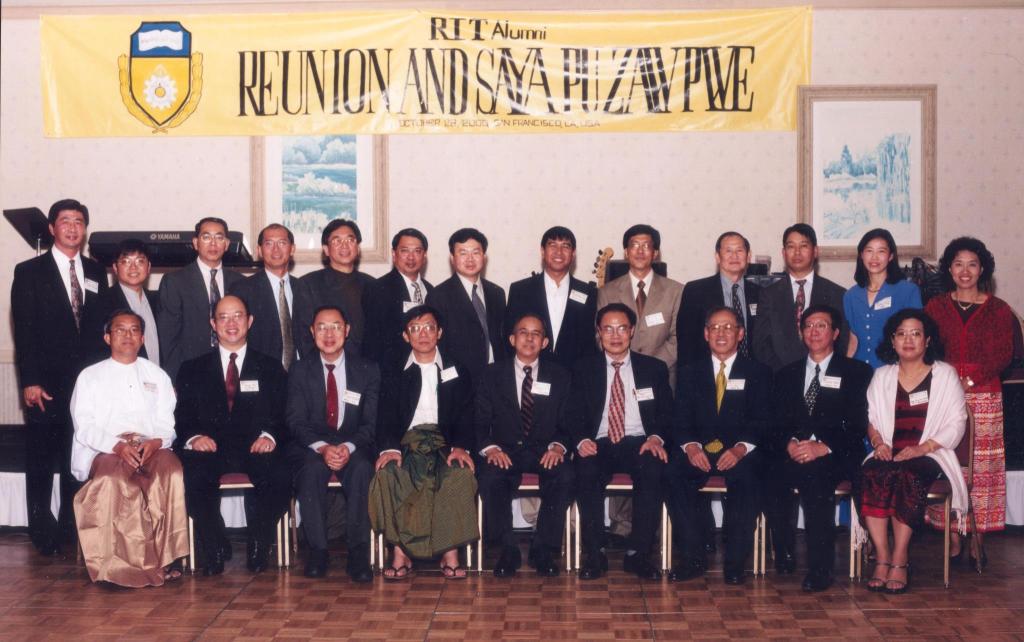
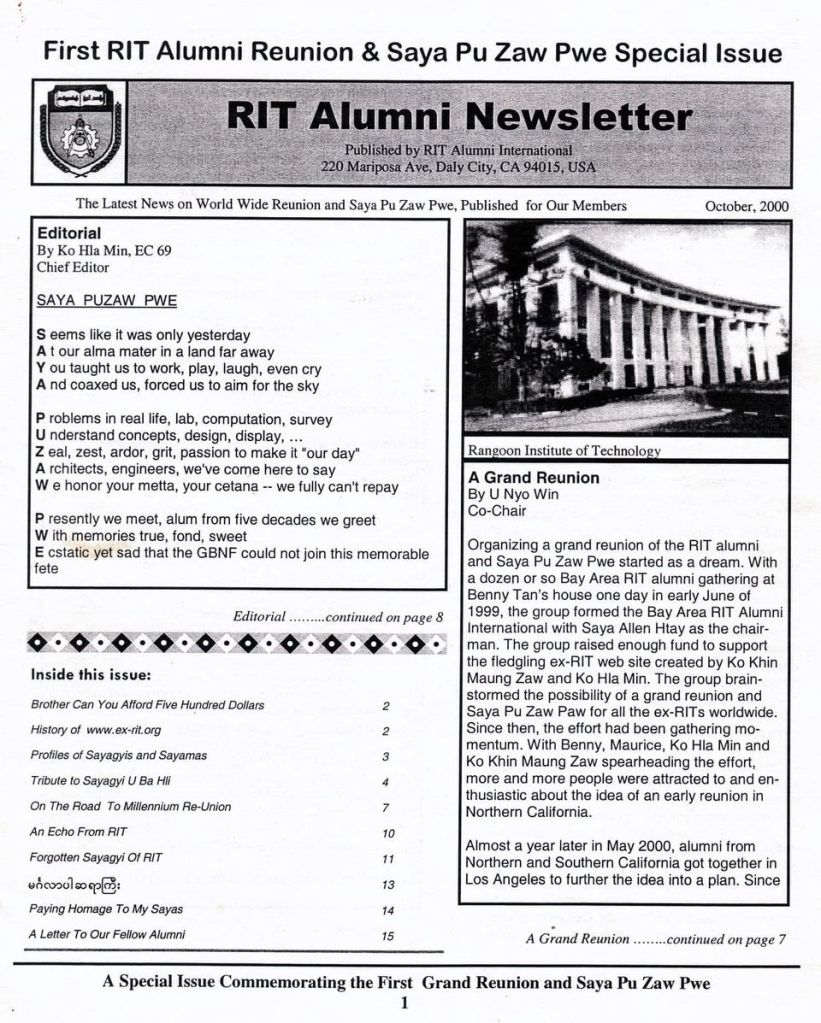
SAYA PUZAW PWE by Hla Min
SPZP-2000 Organizers Poem
Seems like it was only yesterday At our alma mater in a land far away You taught us to work, play, laugh, even cry And coaxed us, forced us to aim for the sky
Problems in real life, lab, computation, survey Understand concepts, design, display, … Zeal, zest, ardor, grit, passion to make it “our day” Architects, engineers, we’ve come here to say We honor your metta, your cetana — we fully can’t repay
Presently we meet, alum from five decades we greet With memories true, fond, sweet Ecstatic yet sad that the GBNF could not join this memorable fete
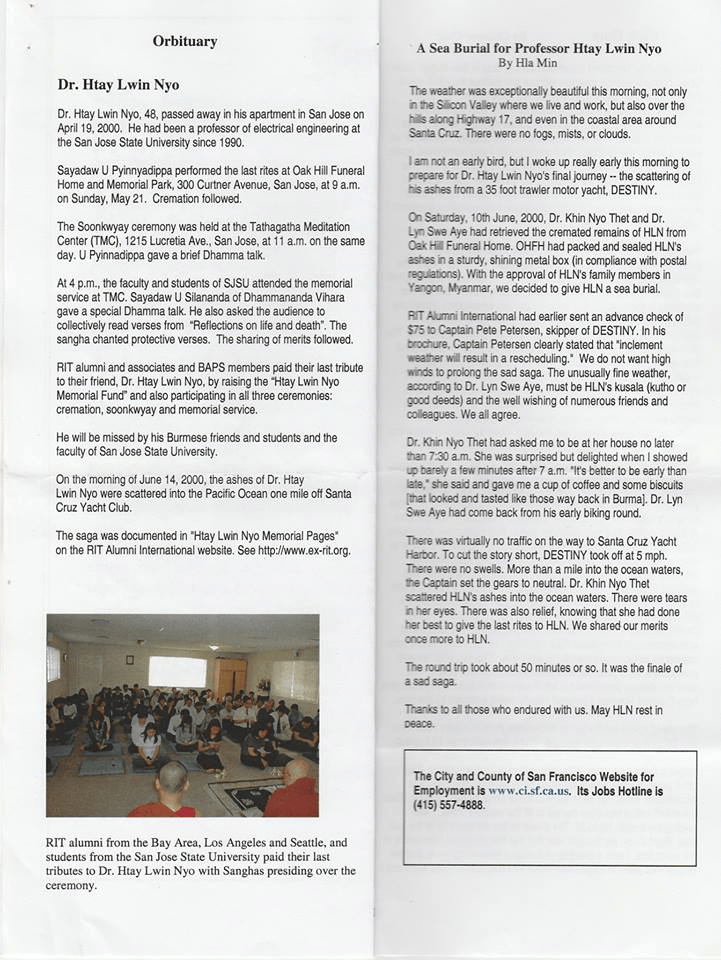
HTAY LWIN NYO By Hla Min
Htay Lwin NyoArticles about HLN
Tribute to Dr. HTAY LWIN NYO (ex-rit, ex-ucc) Part-time Professor, EE, SJSU (1951 July – 2000 April)
He was a genius, a researcher, a friend Teaching was his passion to the very end A jack of all trades, a doctorate of one You name it, he knows it! there’s a lot he has done
Long ago he gave away a patent for a dollar With a heart so big and true, real worthy of a scholar Invest, movie script, cook, paint, car repair, … Never showed off wealth and prizes; he’s a gem so rare
News of his death — alone at home — rocked throughout the land Young, old were shocked, but they all flocked to give a helping hand On this day in May of Y2K we pray from the bottom of our heart
“Htay Lwin Nyo, we’re proud to say that though you’ve passed away you’ve done a huge part to unite kindred spirits your legacy is here to stay.”
Summary
Men On The Moon — In honor of Apollo 11 mission in July 1969
The Apostle of Non-violence — For the Centennial of Mahatma Gandhi
To The Fallen Warrior — Scholars who fought for Burma’s Independence
The Ngapali Beach — Vacation with friends; Vacation with family; Guest lecturer at Shwe Wah Gyaing Luyechun Camp in 1988
The Phaungdaw-u Festival — Inlay Khaung Daing Luyechun Camp in 1964; Vacation with friends; Vacation with family
SAYA PUZAW PWE — Written for the First RIT Grand Reunion and Saya Pu Zaw Pwe in San Francisco in October 2000
HTAY LWIN NYO — Written for an alumnus of RIT and UCC who passed away unexpectedly in San Jose, California
Laughter is the best medicine — feature in Reader’s Digest
Need less nerves to smile than to frown
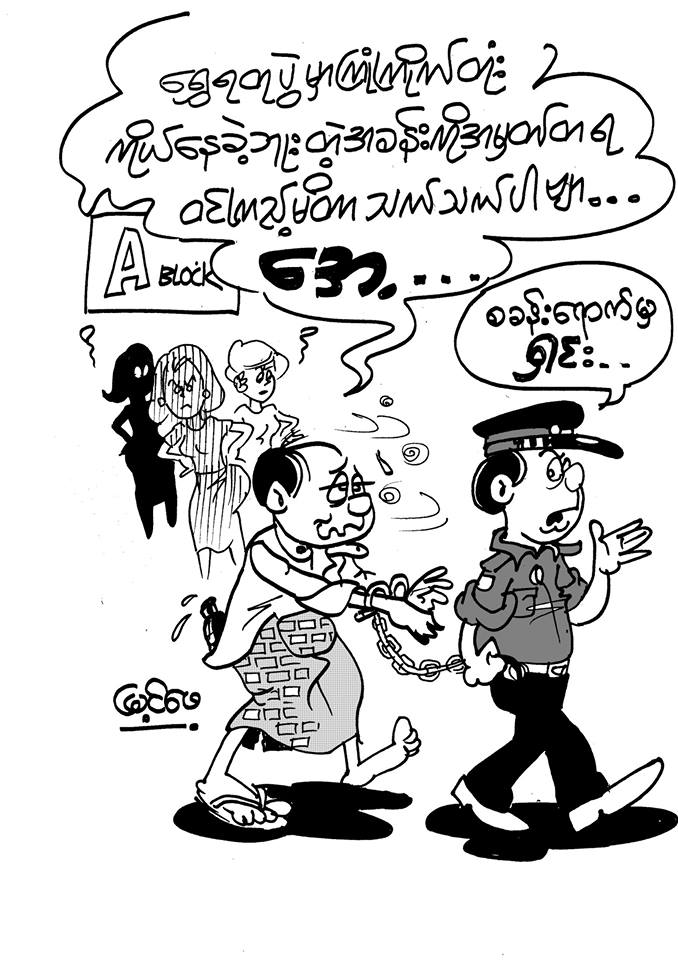
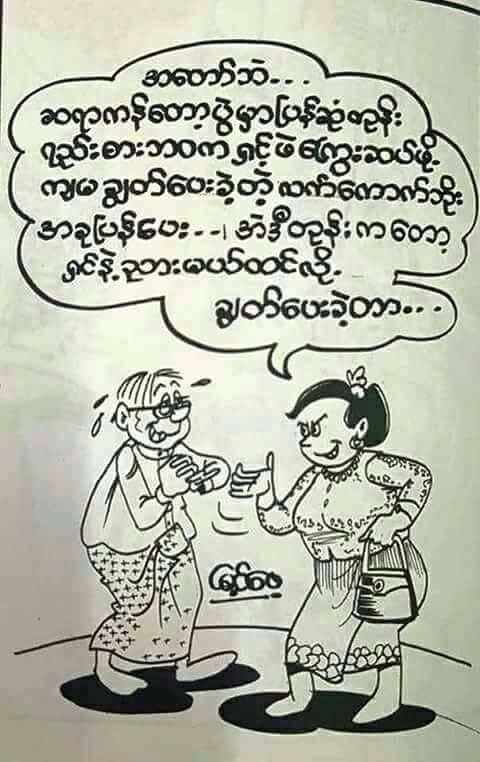
A cartoon a day keeps the blues away
Comics & Cartoons have no age boundaries
Comics
During our times, we read
Beano
Dandy
Topper
Beezer
Film Fun
Joke & Humor book(s) : D. S. Saluja had 200+
Annual & Special Edition
Can be bought from book shops like Smart & Mookerdam
BSPP era saw the publication of Shwe Thway & Teza
Early Cartoonists
Published in newspapers, magazines & books
To name a few
Shwe Ta Lay
U Ba Gyan
U Heng Soon
U Aung Shein
U Pe Thein
U Than Kywe
U Ba Htwe
U Kyaw San (“Ka Sa”) …
The “Cartoon Festival” was held in U Ba Gyan Street (around Tazaung Daing).
In the mid 1950s, there was a rift between the two factions of AFPFL. Some cartoonists took sides and a “price war” started. The cartoons, which sold for 60 pyas were then given away at bargain prices (any where between 10 and 50 pyas).
About a decade ago, my spouse paid K10,000 for a copy of “old” cartoons published in the Rangoon Times. Some are political satire.
RIT Cartoon Box
Started by U Myint Pe (M72) & team with the Patronage of Saya U Khin Maung Phone Ko (“Phone Ko”, C64) and Saya U Aung Myint (Kyant Ba Hone, Pet69)
Myint Pe (Center)
“Phone Ko” was known for his Vietnam cartoons
U Khin Maung Phone Ko
“Kyant Ba Hone” looked like “Nick Kelly”, but the contents are different.
Ko Kyant (3rd from Left)
Maintained by three (or more) generations of Cartoon Boxers
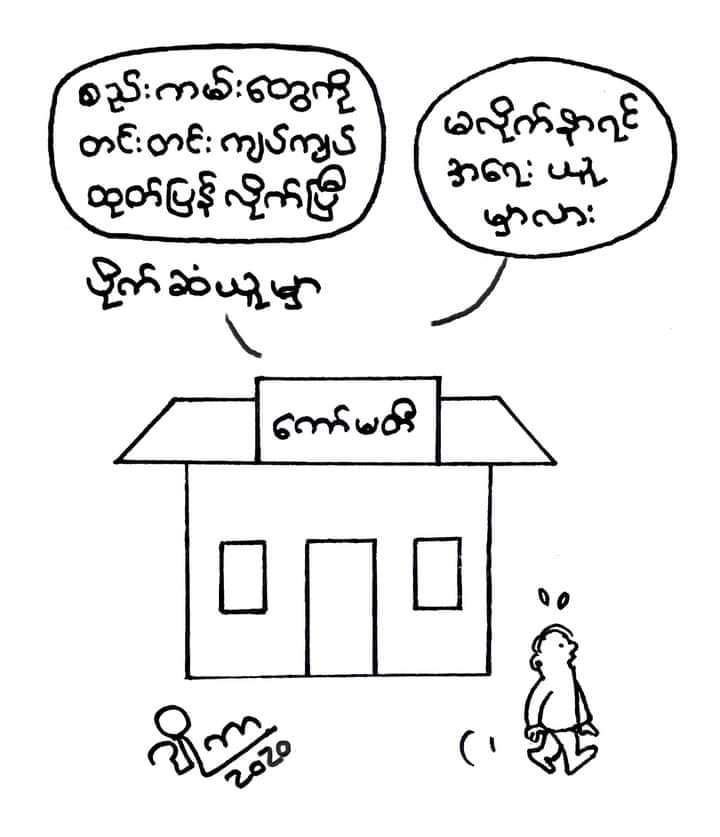
Cartoon Box was “ordered to close” after 1988
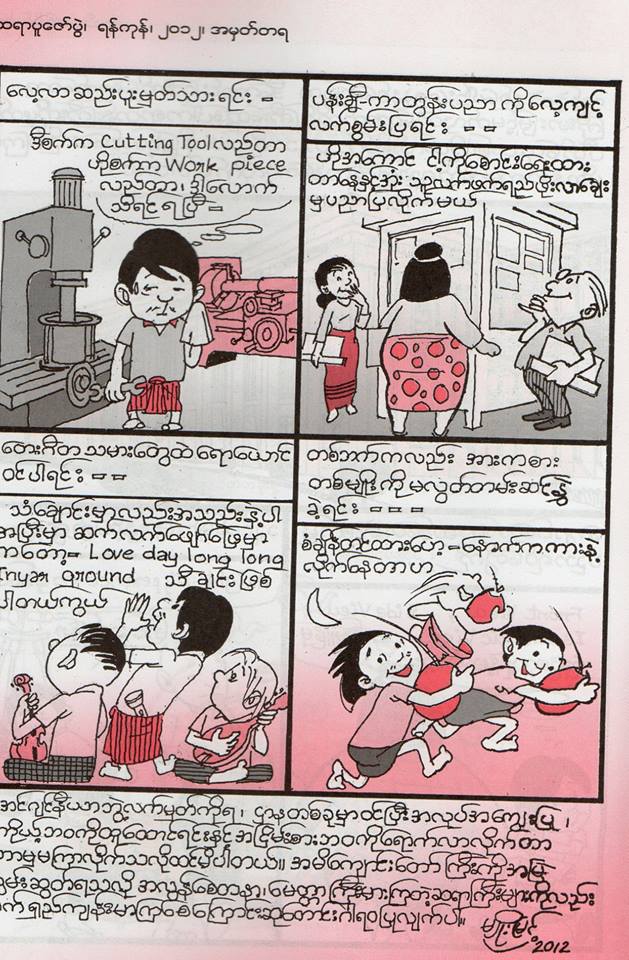
History of the Cartoon Box is published in the Swel Daw Yeik Magazine for SPZP-2012
Collection of RIT Cartoons was published in time for SPZP-2012
Pamphlet of RIT Cartoons distributed at Shwe YaDu in 2014 and SPZP-2016
Some (e.g. “Aw Pi Kye”) became professional cartoonists and exhibited their works in Myanmar and beyond (e.g. Asian Cartoon Exhibition)
RIT Main Gate was named “U Lu Paw” (at the suggestion of Ko Win Thein (M67))
U Myint Soe (C68, GBNF) & U Myint Thein (M69, GBNF) are fondly called Maung Kabar
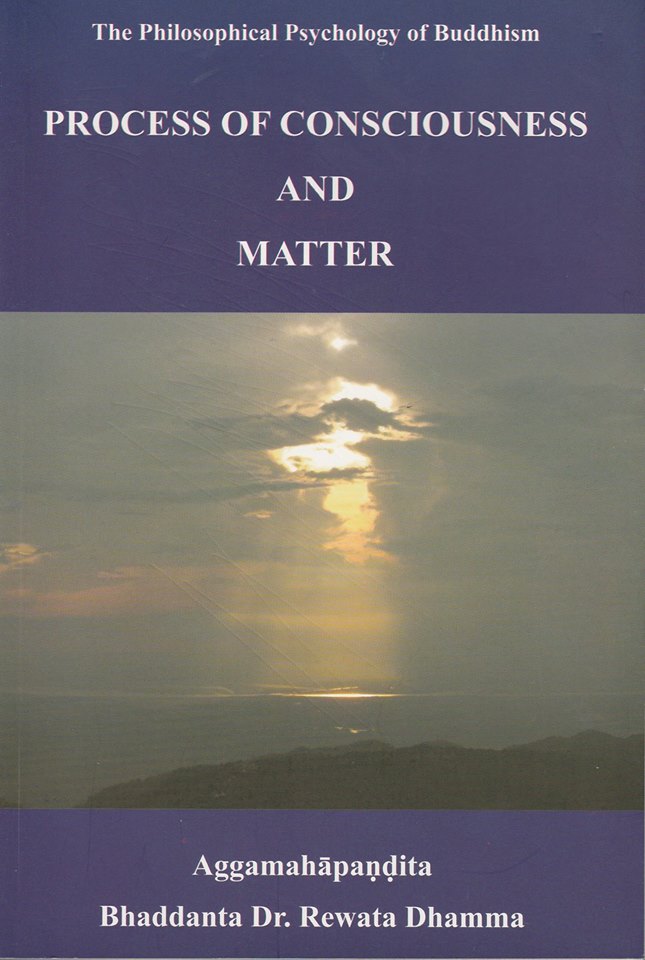
Process of Consciousness and Matter Subtitle : The Philosophical Psychology of Buddhism By Sayadaw Rewata Dhamma Completed : 2004 Last book by Sayadaw Publisher: Triple Gems Publication
The book is intended for all serious students of the Abhidhamma.
It serves as supplement to Bhikkhu Bodhi’s book “A Comprehensive Manual of Abhidhamma”, and treats various important aspect in more detail – in articular the process of consciousness and matter.
Preface by Sayadaw U Silanandabhivama, Rector of the International Theravada Buddhist Missionary University, Yangon
Acknowledgement by Sayadaw Dr. Ottaranyana, Birmingham Buddhist Vihara, UK
Introduction
Chapter I : CONSCIOUSNESS AND ITS FACTORS
CHAPTER II : PROCESS CONSCIOUSNESS (CITTA VITHI)
CHAPTER III : MIND-DOOR COGNITIVE PROCESS (MANODVARA VITHI)
CHAPTER IV : ABSORPTION JAVANA IN THE MIND-DOOR PROCESS (APPANA JAVANAVARA MANODVARA VITHI)
CHAPTER V : PROCESS OF MATTER
The Buddha’s Prescription
A Selection of Dhamma Talks by Dr. Rewata Dhamma
Editor : Yann Lovelock
Dhamma dana : Triple Gem Publications
Three sections
Section 1 : Historical Perspectives
Emperor Asoka
Arahanat Upagutta
The Contribution of Buddhism to the World of Art & Architecture
Buddhism in Myanmar Today
Sangha & State
Section 2 : Active Buddhism
Monastic and Lay Buddhism
Teaching for the Many
Transferring Merit for the Dead
The Buddhist Concept of Loving Kindness
The Fundamental Forces of the Mind
The Human & Environmental Crisis
Bliss through Buddhism
Social Change and Individual Change
The Buddha’s Prescription
Buddhism and Social Justice
Section 3 : Interfaith Dialogue
Traditional Wisdom and Modern Knowledge
What I Expect of Friendship with Christians
Sunyata and Kenosis
Bibliography
Myanmar Monasteries
Emptying the Rose-apple Seat
Subtitle : A day-to-day guide to Buddhist meditation methods as taught by a renowned meditation master
Author : Aggamahapandita Bhaddanta Dr. Rewata Dhamma
Foreword by Joseph Goldstein
Dhamma Dana by Triple Gems Publication
Aspiring to the Practice
Aspiration
The First Step
The Refuges
Eradicating the Defilements
Offerings
The Time of your Life
Meditation Practices
1. An Overview
The Forty Meditation Objects
2. Basic Factors
Signs
Temperament
Hindrances
Three Stages of Development
Absorption
Five kinds of Ability
Higher Knowledge
3. Concentration Practices
Getting Started
Sitting Position
Walking
4. Concentration Subjects
The Kasinas
The Recollections
a) Awareness of Respiration
b) Recollection of the Virtues of the Buddha
c) Mindfulness of Death
e) Meditation on the Impurities
f) Meditation on the Four Elements
g) Developing the Four Illimitables
A Ten Day Course in Insight Meditation
First 9 days
Instruction
Dhamma Talk
Day Ten
Instruction
Meditation : Developing Loving Kindness
Pali Glossary
Bibliography
Abbreviations
Nyaung Kan Aye
The Message of Satipatthana
Author : Nyaung Kan Aye Sayadaw Ashin Eindaka Distributor : Nyaung Kan Aye Sasana Yeiktha, 2000
Contents
PART I
The First Discourse on the Life of the Late Ven. Mahasi Sayadaw
The Historic Life of Mahasi Sayadaw and Vipassana Method Expounded in Satipatthana Sutta Part (2)
Meditate the Satipatthana as in Kuru Country
The Message of Sattipattana
PART II
Satipatthana Sermon for Overcoming Defilements (1)
Satipatthana Sermon for Overcoming Defilements (2)
Satipatthana Sermon for Overcoming Grief (1)
Satipatthana Sermon for Overcoming Grief (2)
PART III
Okasa Supplication Which is the A, B, C of Buddhism And Keeping the Precepts
Satipatthana to Free from Lamentation (1)
Satipatthana to Free from Lamentation (2)
Satipatthana to Free from Lamentation (3)
PART IV
Discourse on Satipatthana for the Extinction of Suffering (1)
Satipatthana for the Extinction of Suffering (2)
Satipatthana for the Extinction of Mental Suffering (1)
Satipatthana for the Extinction of Mental Suffering (2)
PART V
How to win Magga Nana Citta by Satipatthana (1)
How to win Magga Nana Citta by Satipatthana (2)
How to attain Nibbana by Satipatthana (1)
How to attain Nibbana by Satipatthana (2)
Settling Back Into The Moment
A meditator’s inspirational guide
Selected text from THE EXPERIENCE OF INSIGHT, Joseph Goldstein
Most people are circling around, driven by ignorance and desire, unaware of the possibility of getting off this wheel of samasaras, the wheel of greed and hatred.
When we learn to let go, the lighter the mind becomes.
The whole development of awareness comes from experiencing things with a silent mind, not with our thoughts and concepts about them.
What the Buddha Taught
By Dr. Walpole Rahula
First published in 1959
by [Rev. Dr.] Walpola Rahula
Foreword by [Professor] Paul Demieville
Eight Chapters 1. The Buddhist Attitude of Mind 2. The First Noble Truth : Dukkha 3. The Second Noble Truth : Samudiya : ‘The Arising of Dukkha” 4. The Third Noble Truth : Nirodha : ‘The Cessation of Dukkha” 5. The Fourth Noble Truth : Magga : ‘The Path” 6. The Doctrine of No-Soul : Anatta 7. ‘Meditation’ or Mental Culture : Bhavana 8. What the Buddha taught and the World Today
Selected Texts
Abbreviations
Selected Bibliography
Glossary
The book has been translated into several languages including Myanmar.
The Buddha And His Teachings
Author : NARADA MAHA THERA
VAIJIRARAMA, COLOMBO
First Edition : 1964
4th Enlarged Edition : 1980
Introduction
Part I : THE BUDDHA
14 Chapters
1. The Buddha — From Birth to Reunciation
2. His Struggle for Enlightenment
3. The Buddhahood
4. After the Enlightenment
5. The Invitation to Expound the Dhamma
…
12. The Buddha’s Ministry
13. The Buddha’s Daily Routine
14. The Buddha’s Parinibbana (Death)
Part II : THE DHAMMA
THE TEACHINGS OF THE DHAMMA
Chapters 15 – 44
15. What is Buddhism?
16. Some Salient Characteristics of Buddhism
17. The Four Noble Truths
18. Kamma
…
35. The Way to Nibbana (I) — Morality
36. The Way to Nibbana (II) — Concentration
37. Nivarana or Hindrances
38. The Way to Nibbana (III) — Insight
39. The State of an Arahant
40. The Boddhistta Ideal
41. Parami — Perfections
42. Brahmavihara — The Sublime States
43. The Eight Worldly Conditions (Atthalokadhamma)
44. The Problems of Life
Buddhism in a Nutshell
Narada Thera (Vaijarma, Colombo, Sri Lanka) published the book in 1933.
In 1970, Sayadaw published a revised edition.
Sayadaw full permission to Sayagyi U Hla Maung of the Buddhist Sasana Council to reprint ALL his publications reserving the copyright.
There are 11 (short) chapters and an appendix.
The Triple Gem
by Venerable U Pyinnathiha
wrote the book in London, UK, 1988
revised the book in New Jersey, US, 2002
Contents
Foreword by Ven. Dr. Hammalaa Saddhatissa
The Three Main Views
What is Buddhism?
Who is the Buddha?
The Attributes of the Buddha
Dhamma (The Teachings of the Buddha)
The Attributes of the Dhamma
The Sangha (The Community of Noble Disciples)
The Attributes of the Sangha
Note
The Dhamma dana distribution by Triple Gems Publication includes “The Triple Gem” and “The Way to Social Harmony”.
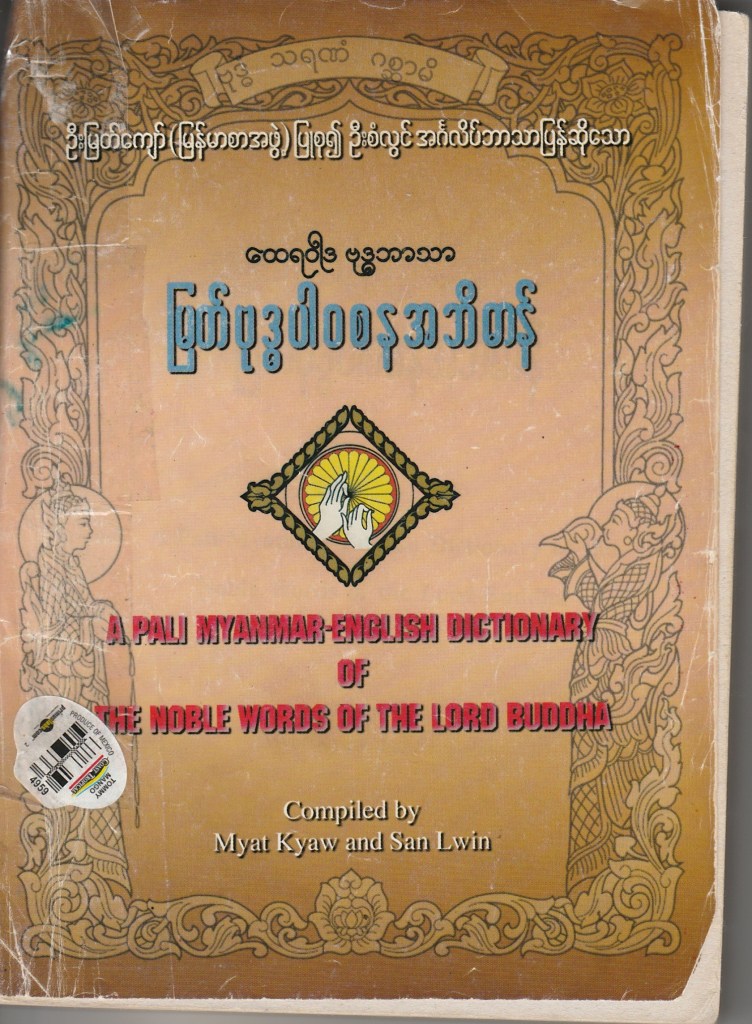
A Pali-Myanmar English Dictionary of the Noble Words of the Lord Buddha
Compilers:
Burmese entries: U Myat Kyaw
English entries: translated from Burmese by U San Lwin
Publisher : Myanmar Sar Ah Phwe
Excerpts
katayuga – n. first of the four ages into which a world era is divided; age of filial piety and justice. See also yuga.
It is rendered as Training or Practice. The Myanmar call it Theik-kha.
Three Sikkha
Buddhist studies describe three Sikkha
Sila (Morality) သီလ
Samadhi (Concentration) သမာဓိ
Panna (Wisdom) ပညာ
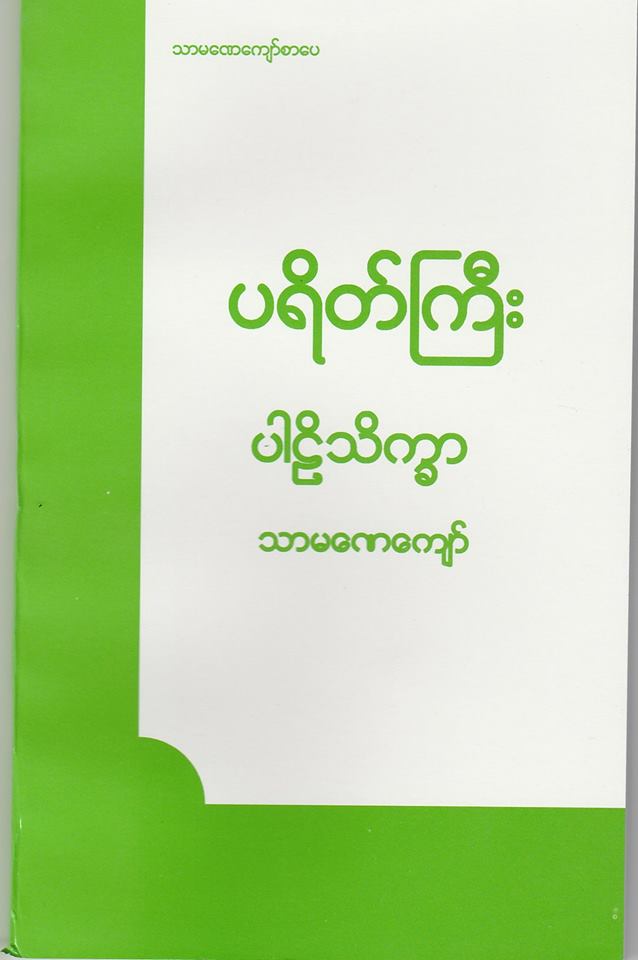
Pali Sikkha ပါဠိသိက္ခာ
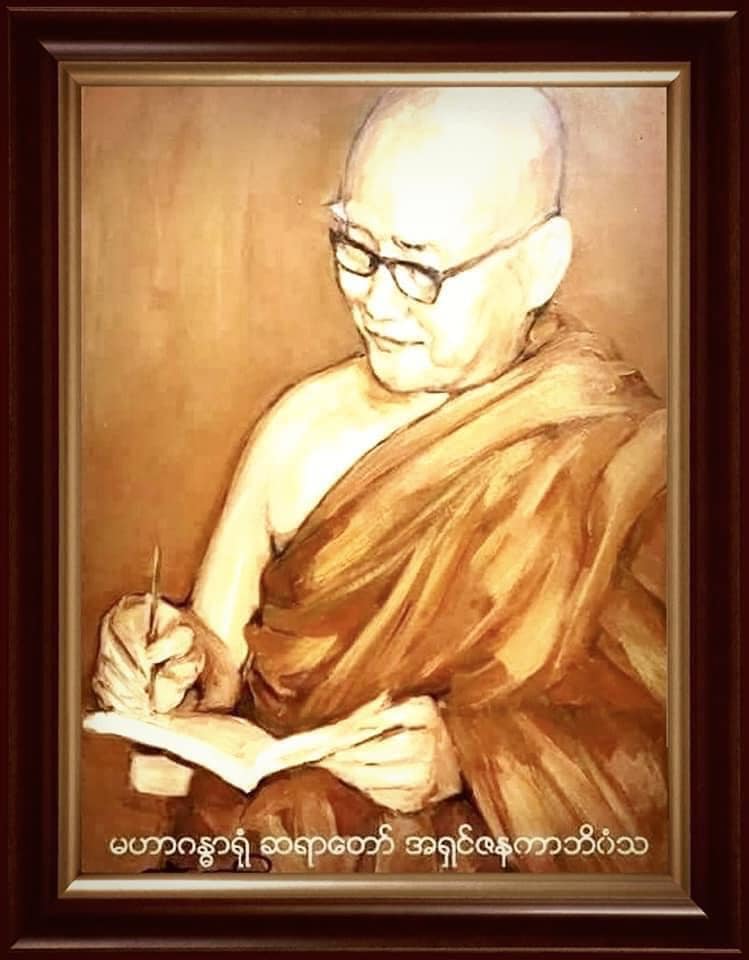
Mahagandayone Sayadaw (Ashin Janakabhivamsa) authored several texts including Pali Sikkha (Practice using Pali words and phrases).
Mahagandayone Sayadaw
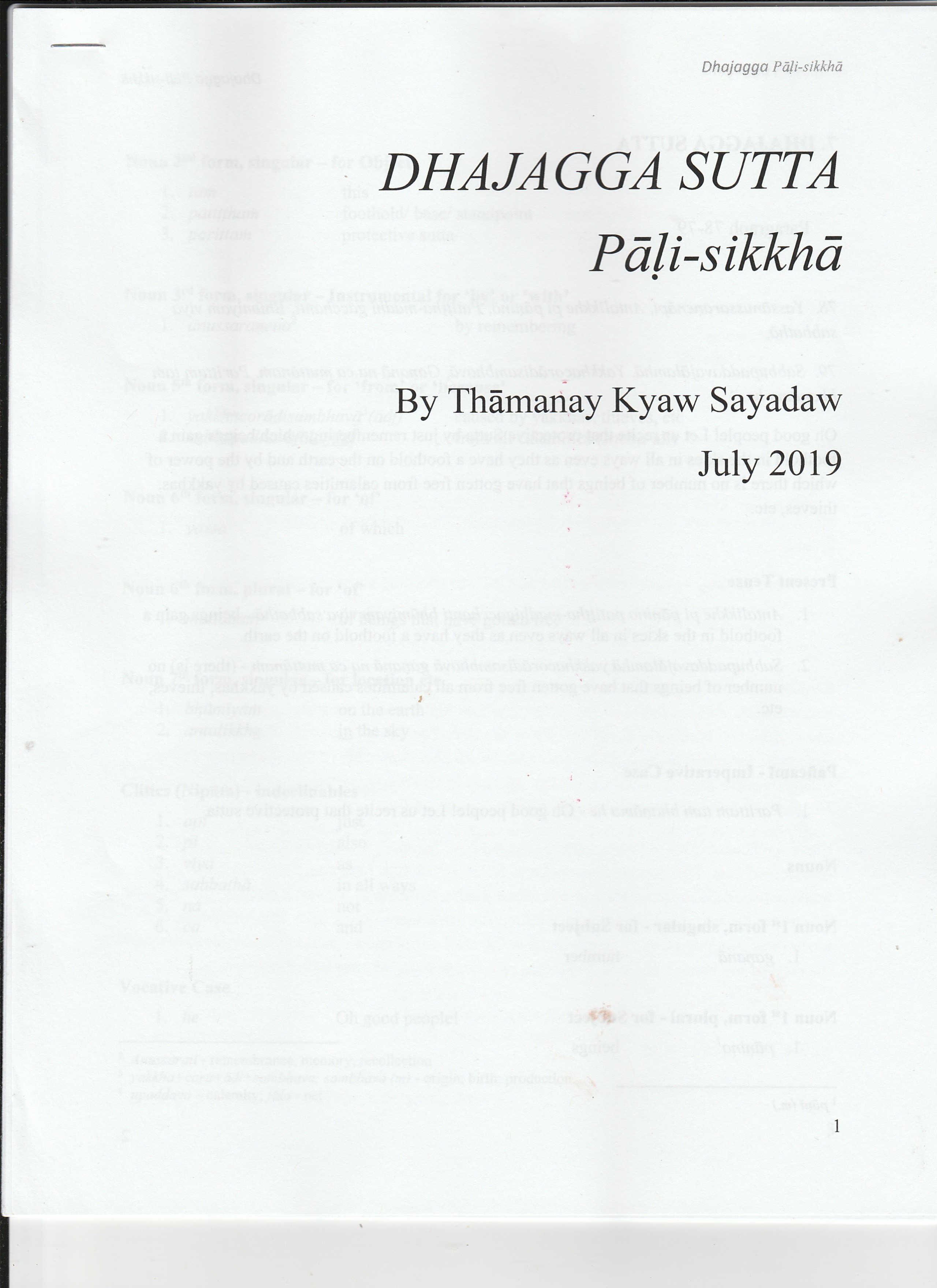
Tharmanay Kyaw Sayadaw (U Dhammika) wrote and taught Paritta Seik-kha (Practice using words and phrases from the eleven suttas) in both Myanmar and English. Sayadaw’s objective is to help people (outside Myanmar who do not have time to study Pali grammar) to read and understand Pali texts such as the Protective Suttas and Dhammapada.