Soon, Yuri Gagarin became the first cosmonaut to orbit the earth.
USA was left behind in the Space race.
NASA
NASA (National Aeronautics and Space Administration) was formed.
President Kennedy’s historic speech : “Before the decade is out, we will send men on the moon and bring them safely to earth” gave momentum to the NASA projects.
Mercury Project and Gemini Project were followed by Apollo project.
The Apollo 1 fire (causing the death of three astronauts) caused a set back.
In December 1968, Apollo 8 orbited the Moon.
Apollo 9 and Apollo 10 tested the Lunar Module and the critical systems.
In July 1969, Apollo 11 made President Kennedy’s dream a reality.
My Poem
My poem was submitted by my mentor Ashin Ananda to USIS/USIA (which forwarded my poem to NASA)
The poem was published in the Guardian Dailly.
The Eagle is the code name for the Lunar Module.
The three men are Neil Armstrong [Mission Commander], Michael Collins [Command Module Pilot], and Buzz Aldrin [Lunar Module Pilot]
MEN ON THE MOON
The Eagle made a soft descent And perfect rendezvous Does not the module represent A fantasy come true
To travel through that cold void space To have that faith in science To face death squarely in the face Yes, man acted with defiance
Man set foot on an alien world In July Sixty Nine That small step from the bravest man Was a giant leap for mankind
The walk in one sixth gravity Rock samples from the moon Three men who spoke with brevity For science what a boon
No event can ever equal That sublime unique mission The Apollo’s triumph will make the people Extend their own vision
Are we not brothers here on earth? So let us all unite There will be heaven here on earth If we all cease to fight
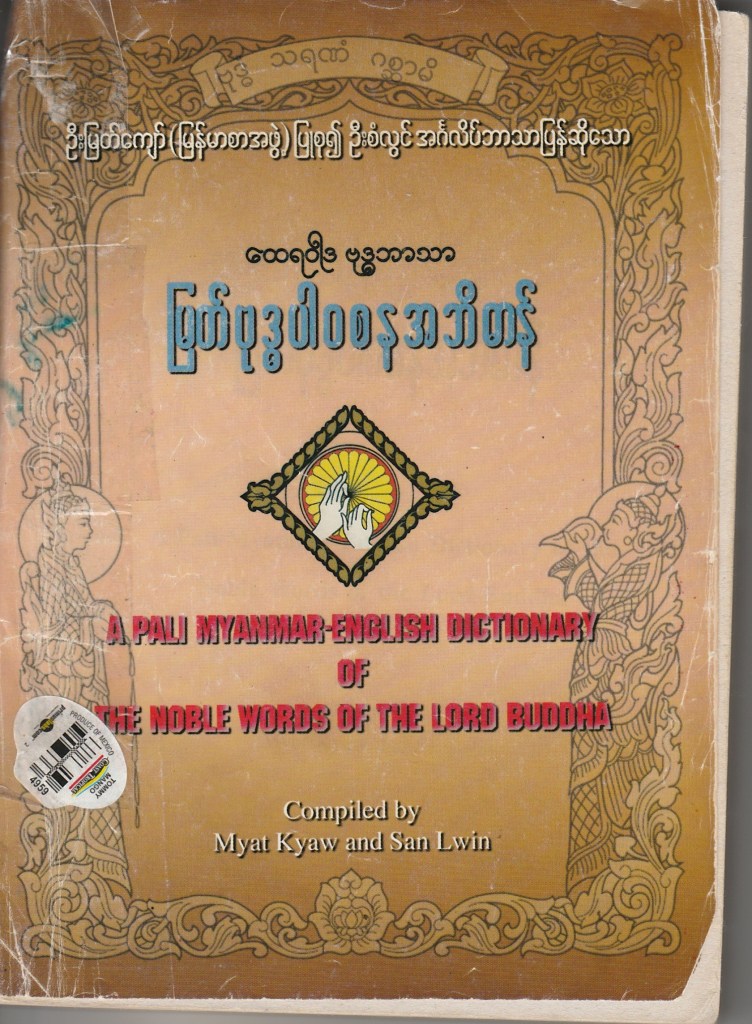
A Pali-Myanmar English Dictionary of the Noble Words of the Lord Buddha
Process of Consciousness and Matter
Process of Consciousness and Matter Subtitle : The Philosophical Psychology of Buddhism By Sayadaw Rewata Dhamma Completed : 2004 Last book by Sayadaw Publisher: Triple Gems Publication
The book is intended for all serious students of the Abhidhamma.
It serves as supplement to Bhikkhu Bodhi’s book “A Comprehensive Manual of Abhidhamma”, and treats various important aspect in more detail – in articular the process of consciousness and matter.
Preface by Sayadaw U Silanandabhivama, Rector of the International Theravada Buddhist Missionary University, Yangon
Acknowledgement by Sayadaw Dr. Ottaranyana, Birmingham Buddhist Vihara, UK
Introduction
Chapter I : CONSCIOUSNESS AND ITS FACTORS
CHAPTER II : PROCESS CONSCIOUSNESS (CITTA VITHI)
CHAPTER III : MIND-DOOR COGNITIVE PROCESS (MANODVARA VITHI)
CHAPTER IV : ABSORPTION JAVANA IN THE MIND-DOOR PROCESS (APPANA JAVANAVARA MANODVARA VITHI)
CHAPTER V : PROCESS OF MATTER
The Buddha’s Prescription
A Selection of Dhamma Talks by Dr. Rewata Dhamma
Editor : Yann Lovelock
Dhamma dana : Triple Gem Publications
Three sections
Section 1 : Historical Perspectives
Emperor Asoka
Arahanat Upagutta
The Contribution of Buddhism to the World of Art & Architecture
Buddhism in Myanmar Today
Sangha & State
Section 2 : Active Buddhism
Monastic and Lay Buddhism
Teaching for the Many
Transferring Merit for the Dead
The Buddhist Concept of Loving Kindness
The Fundamental Forces of the Mind
The Human & Environmental Crisis
Bliss through Buddhism
Social Change and Individual Change
The Buddha’s Prescription
Buddhism and Social Justice
Section 3 : Interfaith Dialogue
Traditional Wisdom and Modern Knowledge
What I Expect of Friendship with Christians
Sunyata and Kenosis
Bibliography
Myanmar Monasteries
Emptying the Rose-apple Seat
Subtitle : A day-to-day guide to Buddhist meditation methods as taught by a renowned meditation master
Author : Aggamahapandita Bhaddanta Dr. Rewata Dhamma
Foreword by Joseph Goldstein
Dhamma Dana by Triple Gems Publication
Aspiring to the Practice
Aspiration
The First Step
The Refuges
Eradicating the Defilements
Offerings
The Time of your Life
Meditation Practices
1. An Overview
The Forty Meditation Objects
2. Basic Factors
Signs
Temperament
Hindrances
Three Stages of Development
Absorption
Five kinds of Ability
Higher Knowledge
3. Concentration Practices
Getting Started
Sitting Position
Walking
4. Concentration Subjects
The Kasinas
The Recollections
a) Awareness of Respiration
b) Recollection of the Virtues of the Buddha
c) Mindfulness of Death
e) Meditation on the Impurities
f) Meditation on the Four Elements
g) Developing the Four Illimitables
A Ten Day Course in Insight Meditation
First 9 days
Instruction
Dhamma Talk
Day Ten
Instruction
Meditation : Developing Loving Kindness
Pali Glossary
Bibliography
Abbreviations
Nyaung Kan Aye
The Message of Satipatthana
Author : Nyaung Kan Aye Sayadaw Ashin Eindaka Distributor : Nyaung Kan Aye Sasana Yeiktha, 2000
Contents
PART I
The First Discourse on the Life of the Late Ven. Mahasi Sayadaw
The Historic Life of Mahasi Sayadaw and Vipassana Method Expounded in Satipatthana Sutta Part (2)
Meditate the Satipatthana as in Kuru Country
The Message of Sattipattana
PART II
Satipatthana Sermon for Overcoming Defilements (1)
Satipatthana Sermon for Overcoming Defilements (2)
Satipatthana Sermon for Overcoming Grief (1)
Satipatthana Sermon for Overcoming Grief (2)
PART III
Okasa Supplication Which is the A, B, C of Buddhism And Keeping the Precepts
Satipatthana to Free from Lamentation (1)
Satipatthana to Free from Lamentation (2)
Satipatthana to Free from Lamentation (3)
PART IV
Discourse on Satipatthana for the Extinction of Suffering (1)
Satipatthana for the Extinction of Suffering (2)
Satipatthana for the Extinction of Mental Suffering (1)
Satipatthana for the Extinction of Mental Suffering (2)
PART V
How to win Magga Nana Citta by Satipatthana (1)
How to win Magga Nana Citta by Satipatthana (2)
How to attain Nibbana by Satipatthana (1)
How to attain Nibbana by Satipatthana (2)
Settling Back Into The Moment
A meditator’s inspirational guide
Selected text from THE EXPERIENCE OF INSIGHT, Joseph Goldstein
Most people are circling around, driven by ignorance and desire, unaware of the possibility of getting off this wheel of samasaras, the wheel of greed and hatred.
When we learn to let go, the lighter the mind becomes.
The whole development of awareness comes from experiencing things with a silent mind, not with our thoughts and concepts about them.
What the Buddha Taught
By Dr. Walpole Rahula
First published in 1959
by [Rev. Dr.] Walpola Rahula
Foreword by [Professor] Paul Demieville
Eight Chapters 1. The Buddhist Attitude of Mind 2. The First Noble Truth : Dukkha 3. The Second Noble Truth : Samudiya : ‘The Arising of Dukkha” 4. The Third Noble Truth : Nirodha : ‘The Cessation of Dukkha” 5. The Fourth Noble Truth : Magga : ‘The Path” 6. The Doctrine of No-Soul : Anatta 7. ‘Meditation’ or Mental Culture : Bhavana 8. What the Buddha taught and the World Today
Selected Texts
Abbreviations
Selected Bibliography
Glossary
The book has been translated into several languages including Myanmar.
The Buddha And His Teachings
Author : NARADA MAHA THERA
VAIJIRARAMA, COLOMBO
First Edition : 1964
4th Enlarged Edition : 1980
Introduction
Part I : THE BUDDHA
14 Chapters
1. The Buddha — From Birth to Reunciation
2. His Struggle for Enlightenment
3. The Buddhahood
4. After the Enlightenment
5. The Invitation to Expound the Dhamma
…
12. The Buddha’s Ministry
13. The Buddha’s Daily Routine
14. The Buddha’s Parinibbana (Death)
Part II : THE DHAMMA
THE TEACHINGS OF THE DHAMMA
Chapters 15 – 44
15. What is Buddhism?
16. Some Salient Characteristics of Buddhism
17. The Four Noble Truths
18. Kamma
…
35. The Way to Nibbana (I) — Morality
36. The Way to Nibbana (II) — Concentration
37. Nivarana or Hindrances
38. The Way to Nibbana (III) — Insight
39. The State of an Arahant
40. The Boddhistta Ideal
41. Parami — Perfections
42. Brahmavihara — The Sublime States
43. The Eight Worldly Conditions (Atthalokadhamma)
44. The Problems of Life
Buddhism in a Nutshell
Narada Thera (Vaijarma, Colombo, Sri Lanka) published the book in 1933.
In 1970, Sayadaw published a revised edition.
Sayadaw full permission to Sayagyi U Hla Maung of the Buddhist Sasana Council to reprint ALL his publications reserving the copyright.
There are 11 (short) chapters and an appendix.
The Triple Gem
The Triple Gem
by Venerable U Pyinnathiha
wrote the book in London, UK, 1988
revised the book in New Jersey, US, 2002
Contents
Foreword by Ven. Dr. Hammalaa Saddhatissa
The Three Main Views
What is Buddhism?
Who is the Buddha?
The Attributes of the Buddha
Dhamma (The Teachings of the Buddha)
The Attributes of the Dhamma
The Sangha (The Community of Noble Disciples)
The Attributes of the Sangha
Note :
The Dhamma dana distribution by Triple Gems Publication includes “The Triple Gem” and “The Way to Social Harmony”.
A Pali-Myanmar English Dictionary of the Noble Words of the Lord Buddha
Compilers:
Burmese entries: U Myat Kyaw
English entries: translated from Burmese by U San Lwin
Publisher : Myanmar Sar Ah Phwe
Excerpts
katayuga – n. first of the four ages into which a world era is divided; age of filial piety and justice. See also yuga.
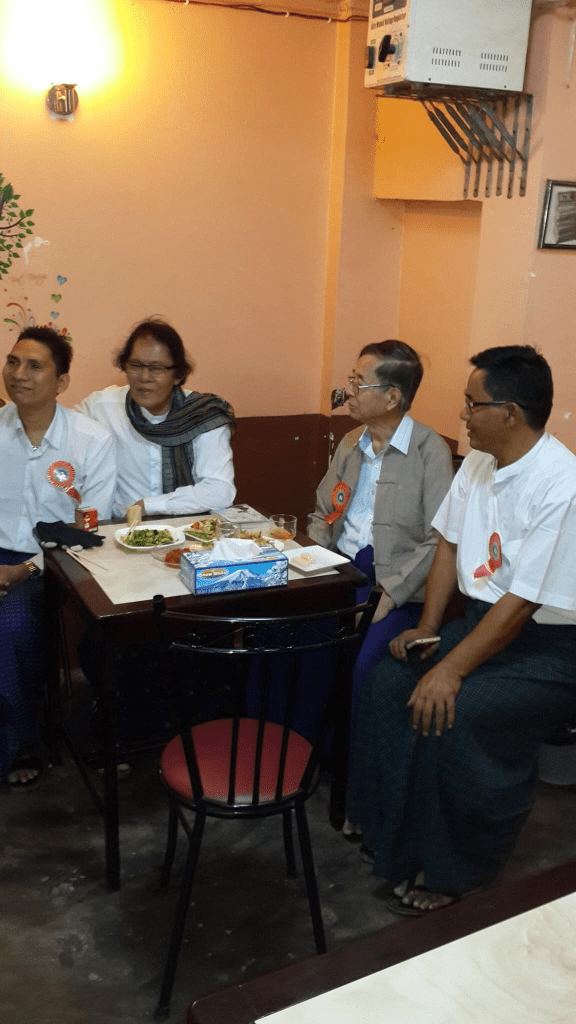
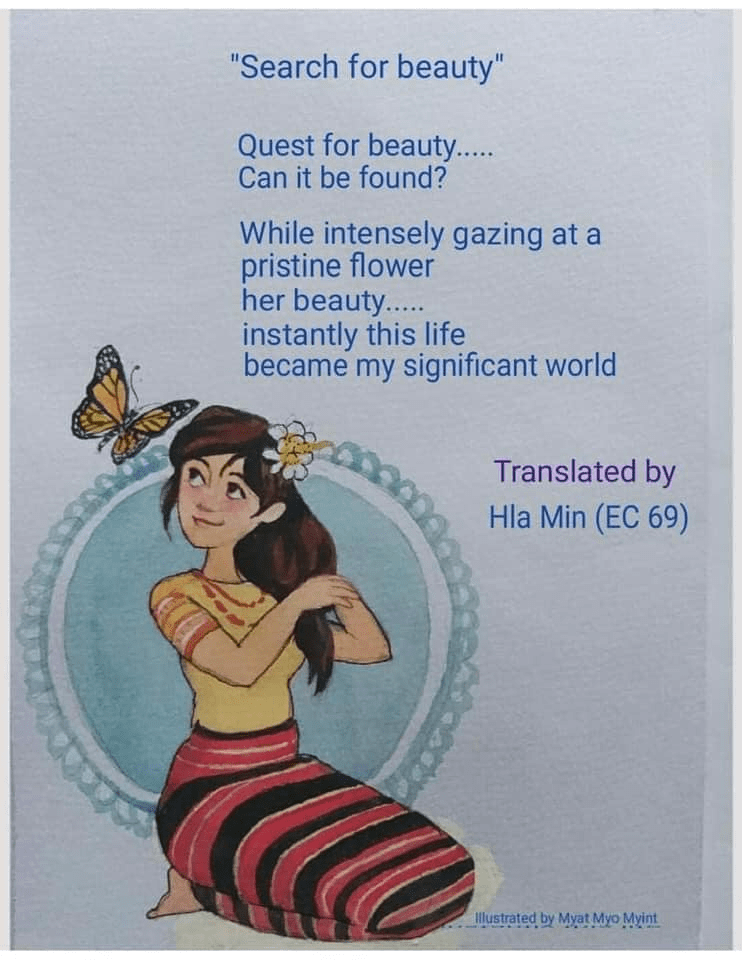
In honor of Dana spirit of the people of Myanmar, demonstrated in COVID19 pandemic, Hla Min(EC69), Aung Myaing(ChE72) and Myo Myint(M73), alumni of Rangoon Institute of Technology(now known as Yangon Technological University) present the following poem and attached paintings to Myanmar in particular and the whole world in general. Dana covers sharing and caring: Sharing one’s assets(wealth, knowledge,volunteer work..)with those in need, Caring about fellow citizens especially in times of crises.
အုတ်ဖို မောင်ရင်မောင် Rangoon Institute of Technology 27th June 2020
(English version)
“Sharing and Caring Blossoms in Myanmar”
First words heard as a toddler embraced in a mother’s breast “For all our meritorious deeds we share our merits to all beings, saying Ah Hmya, Ah Hmya, Ah Hmya (responded in unison) Thadu, Thadu, Thadu (Well done, Well done, Well done) Sparkling innocent eyes gentle cries the infant gets the learning and lifelong impact of the words Ah Hmya and Thadu deep down in the heart. This fundamental spirit is ubiquitous and shining in our motherland manifested by various forms of Dana (Sharing and Caring) Donation of possessions Offering volunteer works Dissemination of knowledge The needy gets help from those who can afford Incomparable wholesome deeds shared physically, verbally and mentally to the pleasant ringing of a gong We joyfully proclaim “We share all our merits Ah Hmya, Ah Hmya, Ah Hmya (and respond in unison) Thardu Thadu Thadu” Translated by Hla Min Rangoon Institute of Technology 27th June 2020
The Pali text has been translated in various languages
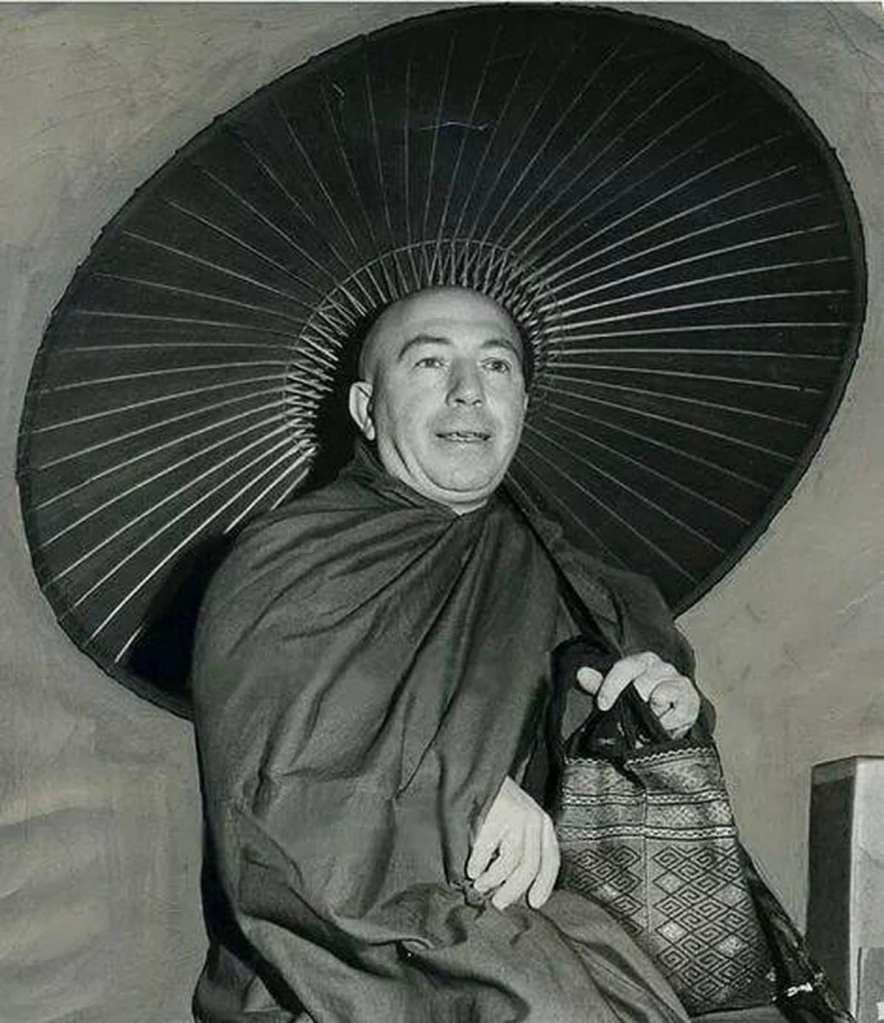
U Lokanatha
U Lokanatha
U Lokanatha (Italian Buddhist Monk) was a Chemist in the US.
He received a book from his supervisor as a Christmas present.
The book contained a chapter on Dhammapada.
After reading Dhammapada, he decided to quit his job and become a Buddhist monk.
Narada Thera’s Version
Subtitle: PALI text & translation with stories & notes
Author : Narada Thera
Editions: 1st edition (1963), 4th Edition (1993)
Contents
The Pali alphabet
Preface
Chapters
1. The Twin Verses 2. Heedfulness 3. Mind 4. Flowers 5. Fools 6. The Wise 7. The Worthy 8. Thousands 9. Evil 10. The Rod or Punishment 11. Old Age 12. The Self 13. The World 14. The Buddha 15. Happiness 16. Affection 17. Anger 18. Impurities or Taints 19. The Just or Righteous 20. The Way or the Path 21. Miscellaneous 22. Woeful State 23. The Elephant 24. Craving 25. The Bhikkhu or the Mendicant 26. The Brahmana












 HlaMin