Category: Language

  • Pali Scholars

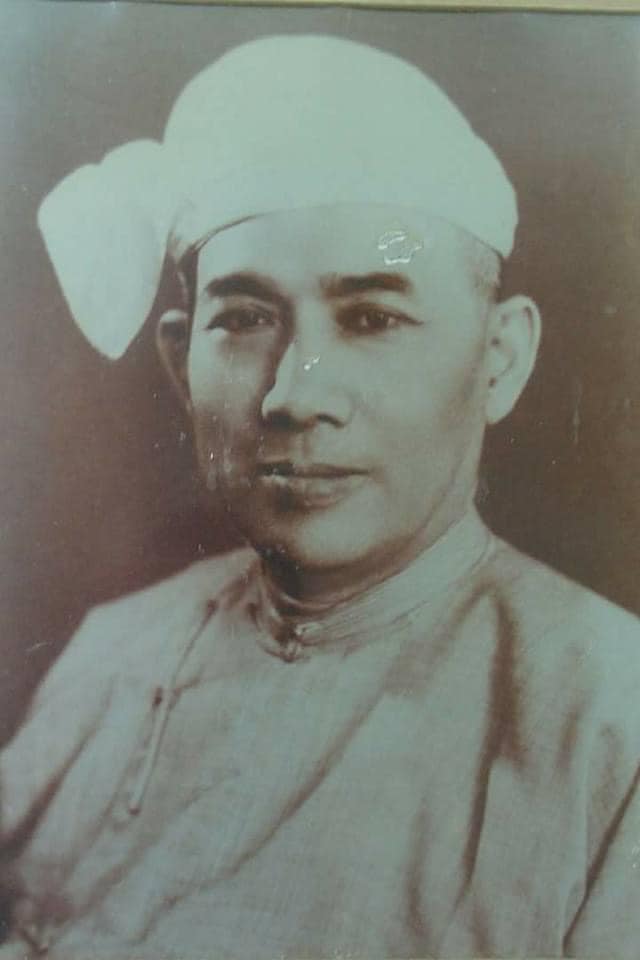
    U Pe Maung Tin

    U Pe Maung Tin

    He is the first native Professor of Pali and Burmese. He successfully proposed the opening of the Burmese Department at Rangoon University.

    His works include

    • Translation of Visuddhimagga
    • The Expositor (Atthasalai)
    • Burmese Grammar
    • Glass Palace Chronicle (co-author)

    †U Thitthila

    U Thitthila
    • Sayadaw did missionary work in UK. He came back to Burma and taught at the Pali Department for several years before continuing his missionary work abroad.
    • Sayadaw also translated for Pali Text Society (PTS).

    U Shwe Zan Aung

    U Shwe Zan Aung
    • He translated a Buddhist text for Pali Text Society (PTS).

    U Aung Than

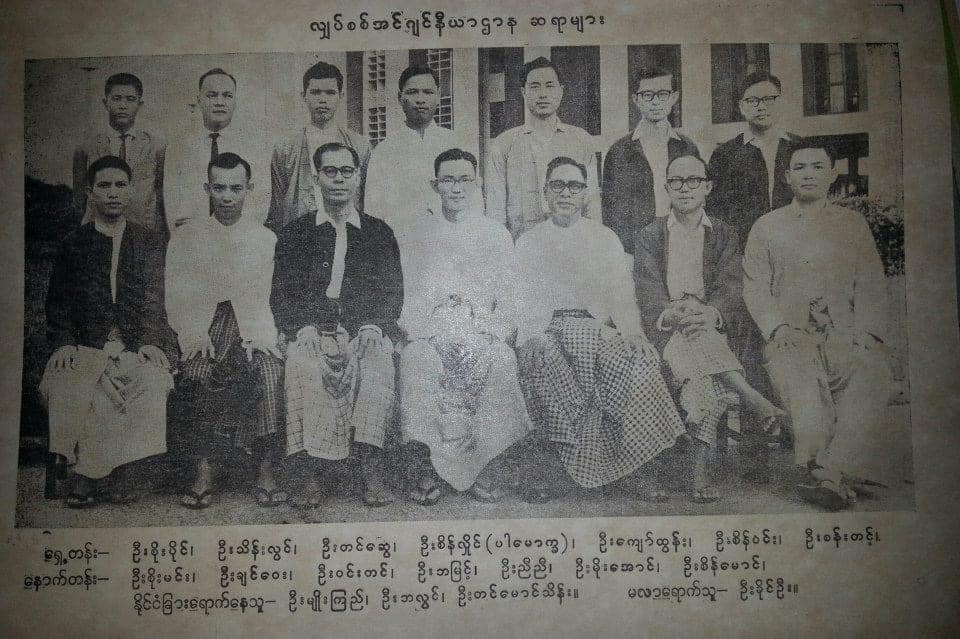
    • He was Pali Professor. He was also Commander of the Rangoon University Training Corps.

    U Tin Lwin

    • Pali Professor
    • Also taught at IMBTU.
    • Co-authored the translation of Maha Buddhavamsa (Life Story of the Buddha) by Tipitaka Sayadaw U Vicittasarabhivamsa).

    U Silanandabhivamsa

    U Silananda
    This image has an empty alt attribute; its file name is paritta-pali.jpg
    Protective Suttas
    • He served as Chief Compiler of the Tipitaka Pali-Myanmar Dictionary for the Sixth Buddhist Council.
    • Served as an external examiner for the Pali Department.
    • Chief Resident Monk of Dhammananda Vihara.
    • He wrote books in Burmese and English. “Paritta Pali & Protective Verses” was published by a Thai Devotee as a birthday present for Sayadaw.
    • First Rector of IMBTU

    U Hoke Sein

    Pali Burmese Dictionary
    • He spent over a decade to compile and refine the Pali-English-Burmese Dictionary. U Hoke Sein, son U Saw Hlaing, grand daughter Dr. Cherry Hlaing and two great grand children all stood first in their respective Matriculation examination.

    Mr. Balwant Singh

    • He took Pali Honors.
    • He is RUBC Gold,
    • He was forced to retire as Commissioner of Pegu Division.
    • Joined the United Nations and served as a Security Expert.

    Venerable Nyanatiloka
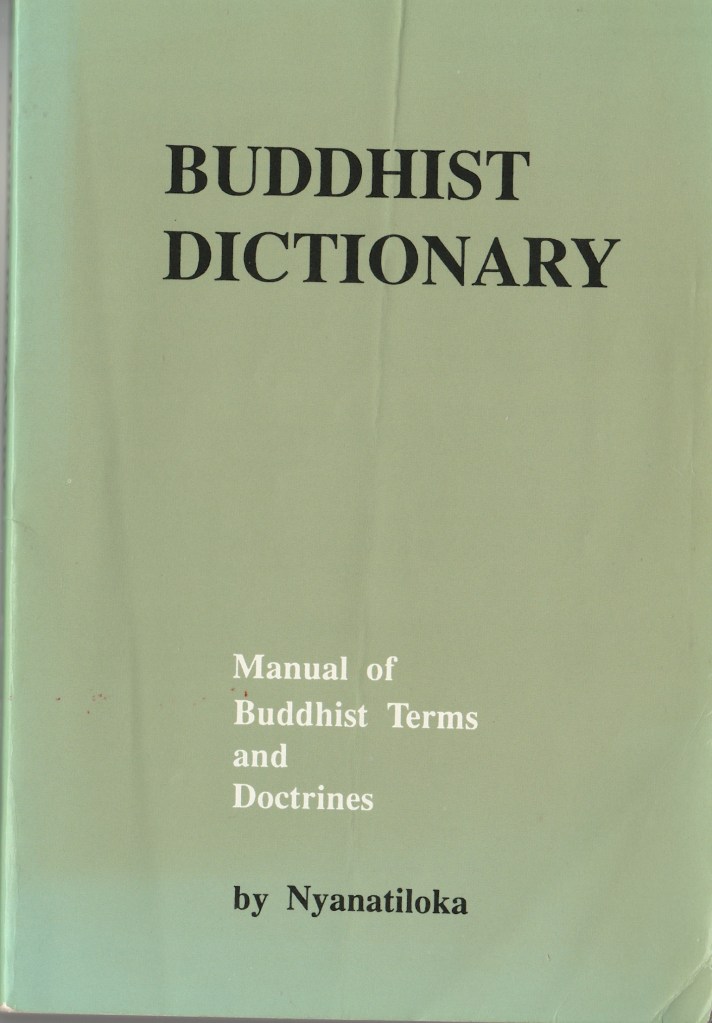
    Buddhist Dictionary
    • He compiled “Buddhist Dictionary”.

    U Myat Kyaw & U San Lwin

    This image has an empty alt attribute; its file name is pali-eng-bur.jpg
    • U Myat Kyaw compiled a book of Buddhist terms.
    • U San Lwin translated into English.
    • The book was published by Myanmar Sar Ah Phwe.
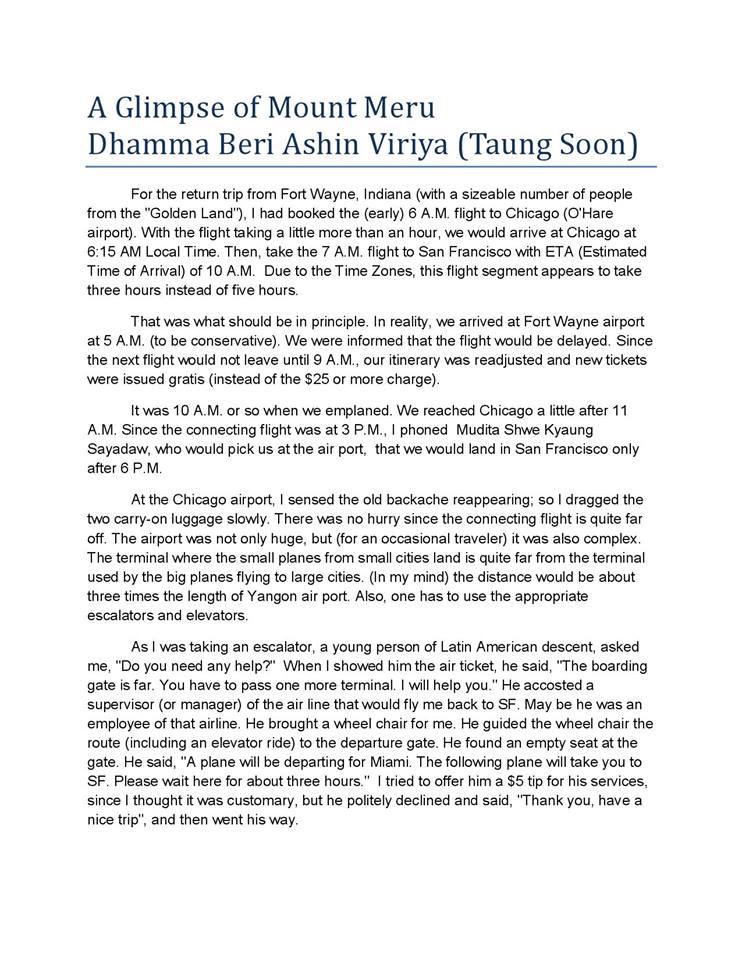
  • A Glimpse of Mount Meru

    Author : Dhammaberi Sayadaw

    Translator : Hla Min

  • Lwan Pyay Aung

    Poem

    • Poem by Saya U Nyunt Htay (Met73)
    • Composed for SPZP-2012
    • Published as back cover of a souvenir

    Translation
    by Hla Min

    • One cannot forget the history and sweet memories of one’s alma mater, and one feels that most alumni — near and far — still yearn for the good old days.
    • In front of A Hall, B Hall [C, D, E, F, Halls] friends would tease and prank, yet do no harm. They do not care to find weaknesses in others, and will remain loyal friends. In front of Uttra (North or G) Hall — usually in the evenings — aspiring Ah Nu Pyinnya Shins serenade with love songs aided by guitars, harmonicas and violins.
    • Hear the bells in Building One, Two [Three] ringing once more. Many rush to the classrooms [some spend time on the corridors to enjoy the belles go by]. At night, some “count the numbers” (perhaps playing cards, or actually studying and doing home work).
    • RIT students do not feel outnumbered by RASU [with Burma selected] or Eco at any kind of sports [soccer, volleyball, basketball, swimming, water polo …]. RIT has staunch loud-voiced fans [like “Ajala” Moe Hein].
    • Assembly Hall hosted not just presentations and debates. It also is the home of Geeta See Sar [Musical Evening Extravaganza] with outstanding musicians, composers, vocalists and dancers. Swel Daw Yeik Troupe and Ah Nyeint, Pyazat, … melt our hearts.
    • Cartoon Box [former telephone kiosk] nurtured many cartoonists to share their humor, satire and ideas with the readers searching for Sacca (Truth).
    • Aw Bar Lann (precious memories to the graduates attending the graduation ceremony) is known not also for applause but also for the tongue-in-cheek comments and unruly claps and shouts to the unwary treading the Lann.
    • “Nwe Aye”, “Aung Theik Pan”, “Kan Thar Ya”, “U Chit” …
      Memories from those who spend six years or more.
    • As the examinations near, most try their best [by borrowing books and notes from their friends, by attending crash sessions] to pass the hurdle. On the desks are notes [not neat and tidy] scattered all over. Times and systems change, but most RITians are able to decide the essentials (“Ah Hnit”) from the inessentials (“Ah Kar”).
    • Swel Daw Yeik
      One can never forget the history and [priceless] memories.
  • Beauty

    Beauty 1

    Poem by
    U Aung Myaing

    U Aung Myaing

    “အလှ”

    မပြီးသေးတဲ့ ပန်းချီ

    ဆက်မသိသေးတဲ့ သီချင်း
    ရင်တွင်းပျောက်နေဆဲကဗျာ

    နာကျင်နေဆဲ

    ဝေဝါးဆဲမှာ
    “ငယ်ရွာ” ကိုပြန်ပြေး
    “ငယ်သွေး” ကိုပြန်တွေ့
    “ငယ်ငွေ့” ကို ရှိုက်ရှူ
    “ငယ်မူ” ပြန်တခဏ
    ခေတ္တ အလှ မိန်းမောမိ။
    ထာဝရ အလှ ဘယ်မှာရှိ။

    Translation
    by Hla Min

    “BEAUTY “

    Unfinished painting
    Suspended song writing
    Poem, briefly disappeared from my heart
    Still anguished
    Still fuzzy
    (Mind) wanders back to “childhood home”
    Rediscover “old flame”
    Breathe again “Childhood feeling”
    “Act like young self” for a while
    Immersed in transient beauty
    Where does permanent beauty exist?

  • Dictionary

    Type

    Dictionaries come in various sizes and flavors.

    • Hardcover
    • Softcover
    • Pocket sized
    • Desk top
    • Abridged
    • Unabridged
    • Student Edition
    • Advanced Learners’ Dictionary
    • Technical Dictionary
    • Domain-oriented Dictionary (e.g Music)
    • Thesaurus (in Dictionary form)
    • On-line Dictionary
    • Visual Dictionary
    • Free Dictionary (e.g. Wiki-dictionary)
    • Oxford English Dictionary (OED)
    • Chambers’ Dictionary
    • Merriam-Webster Dictionary
    • Funk & Wagnall’s Dictionary
    • Jones’ Pronouncing Dictionary
    • Bilingual Dictionary (e.g French & English)
    • Trilingual Dictionary (e.g Pali, English & French)
    • Scrabble Dictionary
    • Crossword Puzzle Dictionary
    • Rhyming Dictionary
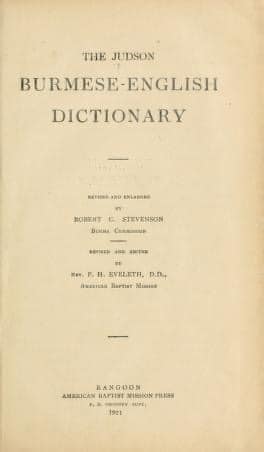
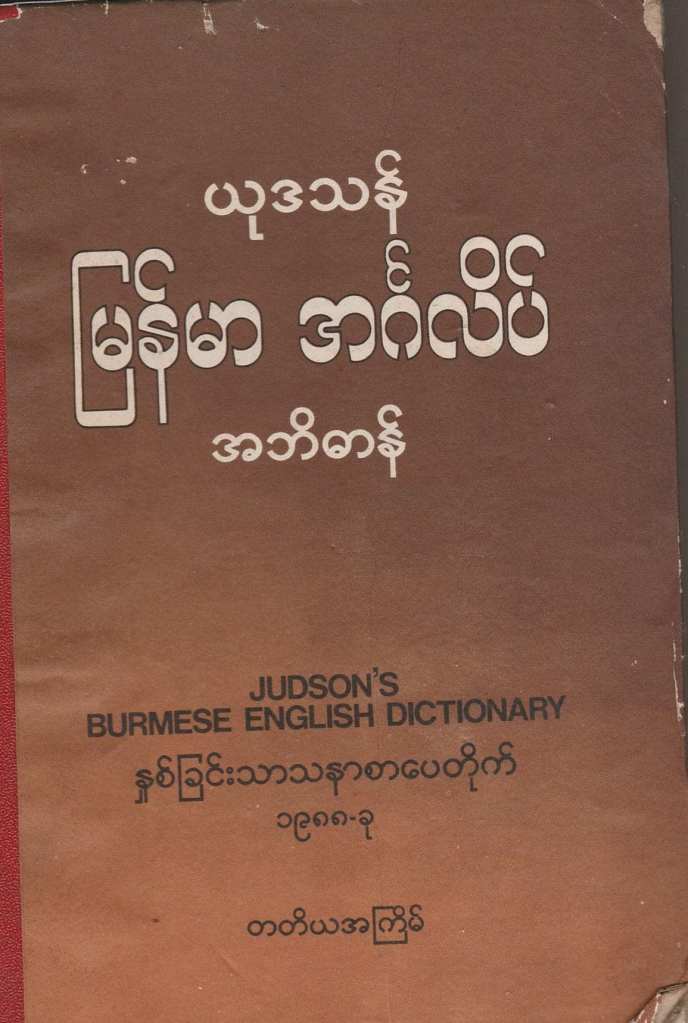
    • English to Burmese Dictionary (e.g. Judson)
    • Burmese to English Dictionary (e.g. Judson)
    • Pali-English, Pali-Burmese and Pali-English-Burmese Dictionary

    Coverage

    A dictionary may cover

    • meaning
    • usage
    • etymology (origin and evolution) of words
    • synonyms
    • antonyms

    Usage

    One looks up a dictionary when one knows the word but is not sure of its meaning and usage.

    One looks up a thesaurus when one has an idea or concept but needs to choose an appropriate word from a list of synonyms and antonyms. Dr. Mark Roget compiled a thesaurus based on his classification scheme.

    Visual Dictionary and Visual Thesaurus allows one to see the relations and links of words and concepts.

    With the advent of computers and Internet, dictionaries are provided in most Word Processing Systems.

    Vocabulary

    An early study said that an average person learns about 20 new words every year.

    By subscribing to “Word of the Day” from Merriam-Webster or by listening to “Word for the Wise” from NPR (National Public Radio), one can learn 300+ new words every year.

    Lexicon

    The old dictionaries are also known as Lexicon. The compilers are known as Lexicographers.

    Lexicon is an early card game for building words. Scrabble is a later and more popular word forming game. The word challenge in Scrabble is processed using a Dictionary (e.g. Chambers or Jones’ Pronouncing Dictionary).

    Lexicographers

    Judson & Team

    Judson 1
    Judson 2
    Judson 3

    U Tun Nyein

    U Tun Nyein

    U Hoke Sein

    U Hoke Sein 1
    U Hoke Sein 2

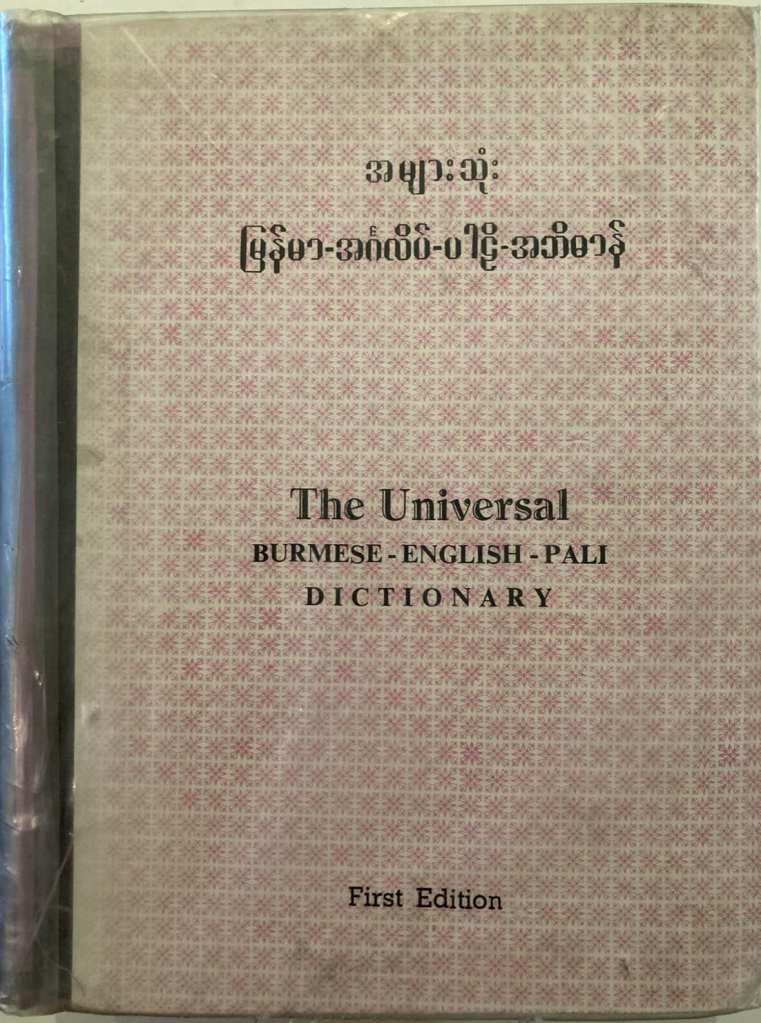
    U Myat Kyaw & U San Lwin

    U Myat Kyaw & U San Lwin

    U Nyatiloka

    Nyatiloka

    U Silananda

    U Silananda

    Minthuwun (U Wun)

    Minthuwun

    Dr. Ba Han

    Dr. Ba Han

    Tet Toe (U Ohn Pe)

    Yet Toe
  • National Foreign Language Center

    NFLC

    There is a National Foreign Language Center (NLFC) at the University of Maryland (College Park).
    It used to provide free (or limited) access to Federal employees and eligible educators to study languages (e.g. French, Chinese, Arabic).

    For a number of years, it chose from among the languages used by minorities to add introductory level courses to its library.
    One year NFLC decided to develop Listening and Reading Comprehension for basic Burmese.
    It sent request to professors, scholars and Burmese associations to help with the project.

    I was accepted to be the Language Advisor for the Burmese project.
    The Listening Comprehension consists of broadcasts (e.g. Win Pe Lwai Eik).
    The Reading Comprehension consists of short articles (e.g. Ayotha Pyinnya Wun U Po Kyar).

    Specific fonts and browsers were needed to read the script for the Listening and Reading Comprehension.
    English translations were provided. My task was to ensure the quality (e.g. correctness of the translation).
    Exercises were provided.

    As a contributor to the project, I had access to LangNet.
    NFLC no longer offers free access. Individuals and groups can subscribe to its courses for nominal fees.

  • Parts of Speech

    by Hla Min

    Updated : May 2025

    English

    In our younger days, we were taught that there are eight parts of speech in the English language.

    A Noun is a name of a person, place, thing, or concept.
    A noun may be classified as Proper noun, Common noun, Collective noun or Abstract noun.

    A Verb usually describes an action or a process.
    A verb may be Transitive or Intransitive.

    Instead of repeating a noun several times, we may use Pronouns.
    A pronoun stands for a Noun.
    Grammar books will give classification such as Person and Number of a Pronoun.
    When we speak, the first person is the one who speaks; the second person is the one being spoken to, and the third person is some other being referenced.
    If there is only one person, we say it is singular. If there is more than one, we say it is plural.
    In English, the term “You” may be both singular and plural.

    There are Modifiers.
    An Adjective usually modifies a Noun or Pronoun.
    An Adverb usually modifies a Verb.

    There are Connectors.
    A Conjunction (such as And or But) connects two parts of a Sentence (which is constructed using the parts of speech, and makes “complete sense”.)
    A Preposition adds information such as position (e.g. in, on, upon, under) and time (e.g. before, after).

    There are words to express Mood (e.g. surprise).
    They are also called Exclamation or an Interjection.

    Notes

    There are two techniques :
    Synthesis (combining the parts of speech)
    and
    Analysis (breaking down into the parts of speech).

    Pali language has only four parts of speech.

  • Student & Teacher

    Roles

    • I was a student.
    • I was a student of some of my students.
    • I was a teacher.
    • I was a teacher of some of my teachers.

    Garawa

    • My mother asked me to pay respect to my KG teacher (Daw Kywe) annually.
    • I pay respect to my Thin Sayas, Myin Sayas and Kyar Sayas.

    Some Sayas and Sayamas

    • Ms. A Benjamin (SPHS)
    • Mrs. Amelia Kyi (SPHS)
    • Brother Anthony (SPHS)
    • Dr Anthony Ralston (UCC)
    • Brother Austin (SPHS)
    • U Aung Zaw (UCC)
    • U Ba Than (RIT)
    • U Ba Myaing (SPHS)
    • U Ba Myint (RIT)
    • Mr. Beatson (SPHS)
    • Daw Bo Mei (PPBRS)
    • Mr. Cecil DeCruze (SPHS)
    • Dr. Chit Swe (UCC)
    • Daw Cho (PPBRS)
    • Mr. Choudhury (RU)
    • Brother Clementian (SPHS)
    • Daw Collin (PPBRS)
    • Mr. Des Rodgers (RIT)
    • Daw Essie (PPBRS)
    • Dr. Foreman Acton (UCC)
    • Mr. George Chapman (SPHS)
    • Daw Grace (PBRS)
    • Dr. Harry D Huskey (UCC)
    • U Hla Myint (RIT)
    • U Htay Myint (SPHS)
    • U Htwe (SPHS)
    • Mr. Johnny Myo (SPHS)
    • Brother Joseph (SPHS)
    • Sao Kan Gyi (RIT)
    • U Khin (RIT)
    • Daw Khin Khin Aye (PPBRS)
    • Daw Khin Kyi (RU)
    • Daw Khin Ma Ma (RU)
    • U Khin Zaw (RU)
    • U Ko Ko Lay (UCC)
    • Daw Ku Paw (PPBRS)
    • U Kyaw Khin (SPHS)
    • Dr. Kyaw Nyunt (RU)
    • Dr. Kyaw Thein (RU)
    • U Kyaw Tun (RIT – EE)
    • U Kyaw Tun (RIT – Chem)
    • U Kyin Soe (RIT)
    • Daw Kywe (PPBRS)
    • Mr. Lewis (SPHS)
    • Dr. Malcolm P. Atkinson (UCC)
    • U Maung Maung Win (RIT – Mech)
    • U Min Wun (RIT)
    • U Moe Aung (RIT)
    • U Myo Min (UCC)
    • U Nge (SPHS)
    • Daw Nyein (RIT)
    • U Nyunt Maung (SPHS)
    • U Pe Tin (SPHS)
    • Dr. Peter Wegner (UCC)
    • Dr. Pike Tin (RU)
    • Daw Po (RU)
    • Dr. San Tint (RIT)
    • U Sein (SPHS)
    • U Sein Hlaing (RIT)
    • U Sein Maung (RIT)
    • U Sein Shan (RIT)
    • U Sein Win (RIT)
    • U Shwe Hlaing (RIT, UCC)
    • U Soe Lwin (RIT)
    • U Soe Paing (RIT, UCC)
    • Daw Su Su (RU)
    • Mehm Than Thaung (RU)
    • Dr. Thaung Myint (RIT)
    • U Thein Aung (Eco)
    • U Thein Lwin (RIT)
    • U Thit (RIT)
    • Mr. Tims (SPHS)
    • U Tin Nyunt (Eco)
    • Daw Tinsa Maw Naing (RU)
    • U Tin Swe (RIT)
    • Dr. Tin Win (RIT)
    • U Tun Shwe (RIT)
    • Mrs. Violet Boudville (SPHS)
    • U Win Mra (RIT)
    • Brother Xavier (SPHS)
    • Daw Yi Yi (PPBRS)

    EE Sayas
  • Joys of Life

    • Good Health
      Diet
      Exercise
      Good Sleep
      Rest / Vacation
      Meditation / Contemplation

    • Mobility
      No need for walking aid
      Not bed-ridden
    • Vision
      No need for eye glasses
      Correction via simple treatment / surgery
      No reliance on special eye drops, magnifying glasses …
    • Hearing
      No need for hearing aids
      Correction via simple treatment /surgery
    • Memory
      Good Long term memory
      Good Short term memory
      No Dementia or Alzheimer’s disease

    • Critical Thinking
      Reasoning
      Decision Making

    • Vitamin F
      Friendship,
      Fellowship,

    • Vitamin M
      Mother,
      Myee,

    • Contentment
      Avoid being a Perfectionist
      Not setting unrealistic Goals
      Realist (rather than Optimist or Pessimist)
    • Alobha
      Non-greed
      Sharing of resources / Philanthropy

    • Adosa
      Non-hatred
      Loving Kindness / Unbounded Love
      Compassion / Sympathy / Empathy
      Altruistic Joy

    • Amoha
      Non-delusion
      Data processing
      Information processing
      Knowledge processing
      Cultivate Wisdom

    Comments

    U Aung Myaing (ChE72) wrote :

    မျက်စိ အရှုံး နားအဆုံး တဲ့။အဓိပ္ပာယ်ကို စူးစမ်းခဲ့တယ်။ အဓိက သံသရာလွတ်ကြောင်းတရားတော်တွေနဲ့ ဒီအဆိုအမိန့် ဆက်စပ်နေပါတယ်။ က်စိမကောင်းလို့ စာမဖတ်နိုင်တော့ရင် စိတ်ရှိတိုင်း မလေ့လာနိုင်တော့တာမို့ ဘဝမှာ “ရှုံး” ပြီလို့ သတ်မှတ်လိုက်တယ်။ ဒါပေမယ့် နားကောင်းသေးတော့ လုံးဝ ဆုံးတာမဟုတ်သေးဘူး။ တရားတော်တွေကို ကြားနာလို့ရသေးလို့။ ဒါပေမယ့် နားလည်းမကြားတော့ဘူးဆိုရင်တော့ တရားတော်တွေကို ဖတ်လို့လည်းမရ။ ကြားနာလို့ မရတော့ ဘဝဆုံးပြီပေါ့။ ကျနော့် ညာဘက်မျက်လုံးက ဆယ်နှစ်ကျော်ကြာ ဆေးထိုးဆေးကုတဲ့ကြားက AMD Age-related Macular Degeneration ဖြစ်သွားတယ်။မှုန်ဝါးဝါးဘဲမြင်ရတယ်။ စာဖတ်မရဘူး။ ဘယ်ဘက်ကို သုံးလတစ်ကြိမ် checkup လုပ်ပြီး ထိန်းသိမ်းနေရတယ်။ စာဖတ်တာ လျှော့လိုက်ရတယ်။ နားကတော့ အလွန်ကောင်း။ တရားတော်တွေကို ကောင်းကောင်းနာကြားနိုင်သေးတယ်။ မရှုံးတရှုံး မဆုံးသေးတဲ့ ဘဝ။

    Notes by Hla Min :

    Most have Cataracts removed from one or both eyes. A few had Full or Partial transplant of the Cornea. Some had Retina Tear repaired. Glaucoma and several other factors can cause impaired Vision.

    Saya U Ba Toke played soccer and was active in the RU Sports Council. In his 70s and early 80s, Saya took weekly walks from his house to the Shwe Dagon pagoda. Aging gradually restricted Saya’s mobility, hearing and eye sight. Saya passed away on December 2, 2020 (the day following the RU Centennial), but a few days short of his Centennial Birthday.

    When Saya U Moe Aung encountered problem with his knee during a trip to Upper Burma to attend Ah Hlu of a Khamee Khamet, he composed a poem on “Stationary & Movement” with philosophical musings about Life, Illness and Death. A surgery relieved Saya from the use of wheel chair, but as a high school goalkeeper he values Mobility, Agility & Strength.

    Sayagadaw appreciated Saya U Moe Aung’s “Poem Gift” on her birthday.

    Bagyee Myat Myo Myint gave “Pon Tu” of the then Marla Hall Thu as a birthday present for his beloved spouse.

    Ko Aung Min (M69) used the term Vitamin F in an invitation to the 69er Annual Dinner and Entertainment.

    Saya U Moe Aung wrote :

    Actually, before suffering from knee pain, I had cataract removed from my left eye some 30 or so years back (couldn’t recall which year) and then from my right eye after a lapse of about 10 years. But, I was lucky, so to speak, that up till the present, haven’t yet encountered any problem whatsoever except the need to change the power lens for a better viewing focus.

    U Aung Min (M69) wrote :

    I had right eye cornea transplantation 19 years ago, but unsuccessful .
    Again cataract removal on left eye
    It’s OK up to now.

  • Definitions and Jokes

    Generalist versus Specialist

    A generalist is a person who knows less and less about more and more until he/she practically knows nothing about everything.
    A specialist is a person who knows more and more about less and less until he/she practically knows everything about nothing.

    Optimist, Pessimist and Realist

    An optimist sees a glass as “Half full”.
    A pessimist sees the same glass as “Half empty”.
    A realist tries to figure the direction (of the water) before commenting as either “Half Full” or “Half Empty”.

    RIT Jokes

    Set Hmu [Maung] Thein Aung

    U Thein Aung (M72) presents the differentiation with U Thein Aung (Met72).
    I am Set HmuMaung Thein Aung.
    I am Maung Thein Aung studying Set Hmu (Mechanical Engineering).
    He is Set Hmu MaungThein Aung.
    He is Thein Aung, who won Set Hmu Maung (Mr. RIT with Sa Lwei Thaing) in 1968.

    Ba La Gyi vs. Ba Lar Gyi

    During his RIT days, U Thein Aung (Met72) was “Ba La Gyi” (full of strength and prowess).
    Lately, he has become “Ba Lar Gyi” (nothing notable left).

    Kar Ku La Thin Char

    Saya U Aung Myint (Pet69, Kyant Ba Hone) drew a cartoon:

    “Ah Ba, Kar Ku La Thin Char (Calculus) is fascinating.
    If you differentiate a La Da, you get a Sargalay.
    If you integrate a Sargalay, you get back a La Da“.

    At a 69er gathering, Daw Saw Yu Tint (T69) greeted U Khin Maung Win (EP69) as Sargalay.
    He replied, “I am no longer Sargalay. I have became a La Da.”

    Saya U Sein Win

    He is an alumnus of the University of Michigan, USA. He retired as Professor of Electrical Power Department at YTU. He was Technical Advisor for the UCC Project.

    Saya left his brand new spouse at Hledan Zay and had a hair cut. He went back to RIT, and had a long discussion with his students. The students asked, “How is Sayagadaw?” Saya’s reply : “Let’s end the discussion. It’s past time I should have picked her up at the Zay”.

    Einstein

    • In our younger days, there were jokes about Sir Isaac Newton.
    • Later, there were jokes about Albert Einstein.
    • It is possible that someone made or modified a joke about an absent minded professor and then attributed to a famous person.

    Einstein (1)

    It was raining.
    Einstein took off his hat and hid it in his coat.
    A student asked “Why?”
    Einstein’s reply : “My hat is new and can be damaged. But my head cannot be damaged by the rain.”

    Einstein (2)

    A ticket inspector boarded a train.
    Einstein searched for his pockets.
    The inspector said, “You need not show me the ticket. You are Einstein.”
    Einstein’s reply : “I do not know which stop I should get down.”

    Einstein (3)

    Einstein was carrying a stack of books.
    He collided with a beautiful student.
    The books fell down.
    The student collected the books and returned them to Einstein.
    Einstein asked, “Which way was I going?”
    The student replied, “You were going towards the school.”
    Einstein felt relieved. “Then, I must had my lunch at home.”