Category: Buddhism

Sayadaws, Suttas, Terms

  • Kamma

    Kamma

    by Khin Maung U

    Updated : June 2025
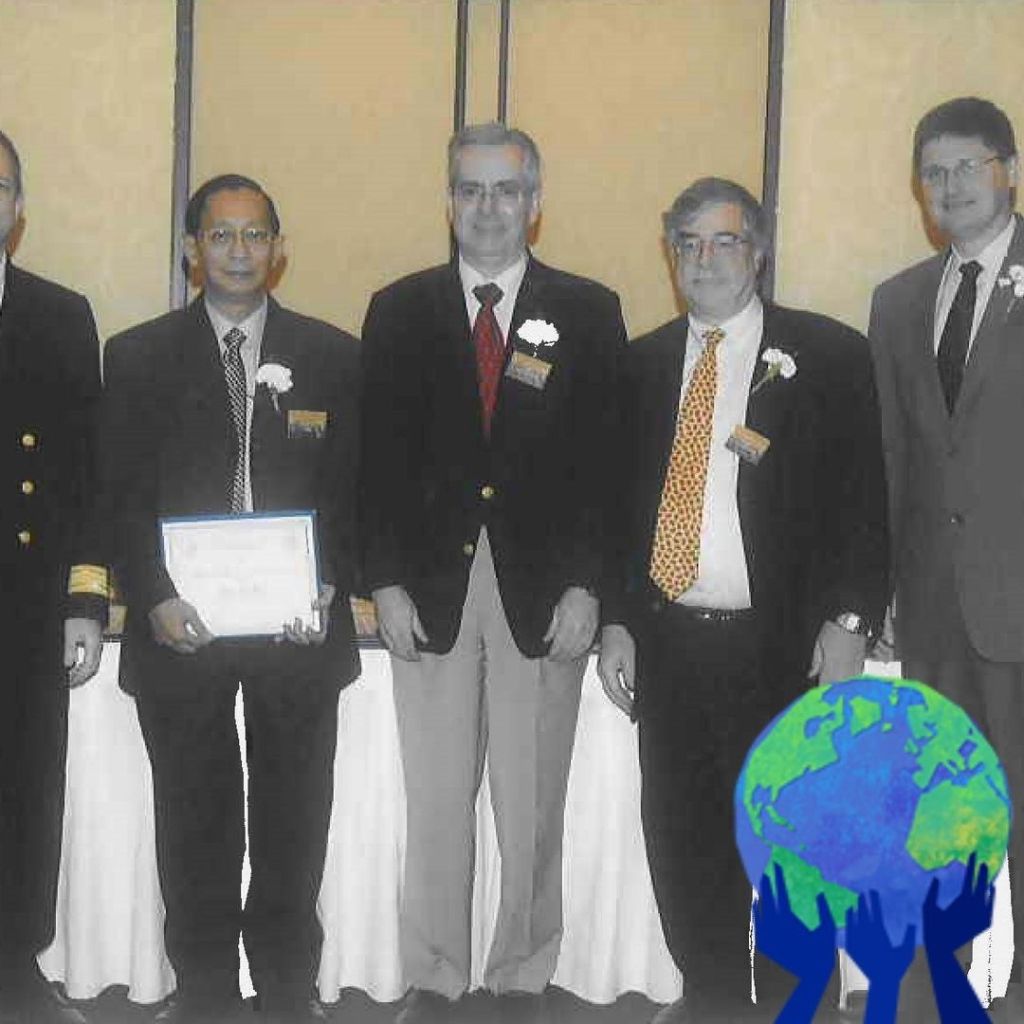
    Dr. Khin Maung U

    First published in Ashin Kelatha Journal in 1999.

    by Dr. Khin Maung U

    Kamma is a Pali word meaning action or doing. In its general sense kamma means all good and bad intentional actions whether mental, verbal or physical (thoughts, words and deeds). In the Buddhist teachings, all physical (kãrya kamma), verbal (vacî kamma) and mental (mano kamma) actions are known as the three kammas. All beings perform these three kammas at all waking hours. All their work, great or small, is performed by means of these three kammas. These three kammas become inert when a person is asleep. In the case of a dead person, the three kammas cease to function as far as that body is concerned.

    In its ultimate sense, kamma means all moral and immoral volition. The Buddha says:
    “O Bhikkhus, I declare that volition (cetanã) is kamma. Having volition, one acts by body, speech and thought” (Aînguttara Nikãya).

    When any action of thought, word or body takes place, volition determines or causes its concomitants to perform their respective functions simultaneously. For this reason, volition is predominant in all actions. Involuntary, unintentional or unconscious actions, though technically deeds, do not constitute kamma, because volition, the most important factor in determining kamma, is absent. Thus, the real nature of action (kamma) of man is mental.

    According to Abhidhammã, 29 types of consciousness (Citta) consisting of (i) 12 types of immoral consciousness (akusala citta) and (ii) 8 types of moral consciousness (kusala citta) from among the 54 types of mundane consciousness (kãmãvacara citta) pertaining to the sentient realm, (iii) 5 types of moral consciousness (kusala citta) pertaining to the realms of form (rüpãvacara citta or jhãnas), and (iv) 4 types of moral consciousness (kusala citta) pertaining to the formless realms (arüpãvacara citta or jhãnas), are called kamma because they have the power to produce their due effects quite automatically, independent of any external agency.

    The eight types of supramundane consciousness (lokuttarã citta) are not regarded as kamma because they tend to eradicate the roots of kamma; in them, the predominant factor is wisdom (paññã) while in the mundane, it is volition (cetanã).

    Inherent in kamma is the potential of producing its due effect.

    Every volitional action is inevitably accompanied by its due effect just as every object is accompanied by its shadow. Kamma is action and vipãka, fruit or result, is its effect. If kamma is likened to a seed, then the fruit, arising from the tree, is vipãka, effect or result. As kamma may be good or bad, so may vipãka be good or bad. As kamma is mental, so vipãka, too, is mental; it is experienced as happiness or misery, according to the nature of the kamma seed. The concomitant material conditions may be advantageous (ãnisamsa) such as prosperity, health and longevity, or disadvantageous (ãdinava) such as poverty, ugliness, disease, short life-span, etc.

    As surely as water seeks its own level, so does kamma, given opportunity, produce its inevitable result not as reward or punishment, but as an innate sequence. From a Buddhist standpoint, happiness and misery are not rewards and punishments assigned by a supernatural, omniscient power to one that has done good or evil. The sequence of action and effect is a natural law of kamma.

    There are inequalities and many different destinies of human beings in the world. For example, one perishes in infancy and another lives to the age of eighty or more, one is sick and infirm and another healthy and strong, one is a millionaire and another a pauper, one is handsome and another ugly, one is brought up in luxury and another in misery, one is a genius and another a half-wit.

    What is the cause of these inequalities? The Buddha’s reply is:
    “All living beings have actions (kamma) as their own, their inheritance, their congenital cause, their kinsman, their refuge. It is kamma that differentiates beings into low and high states” (Majjhima Nikãya).

    According to Buddhism, the disparities that exist in the world are not due to blind chance. They are due, to some extent, to heredity and environment, and, to a greater extent, to kamma which includes not only the present kamma, but also the proximate or remote past kamma. While Buddhism teaches that kamma is the chief cause of inequalities in the world, it does not teach fatalism or the doctrine of pre-destination.

    In the Aînguttara Nikãya, the Buddha states: “If anyone says that one must reap according to his deeds, in that case there is no religious life nor is an opportunity afforded for the entire extinction of sorrow. But if anyone says that which one reaps accords with one’s deeds, in that case there is a religious life and an opportunity afforded for the entire extinction of sorrow.”

    Thus, Buddhism does not hold the view that everything is due to past kamma. Kamma is not fate. Kamma is not irrevocable destiny imposed upon us by some unknown power to which we must helplessly submit ourselves. The past influences the present but does not entirely control it, for kamma of the past as well as the present are in effect in the present. The past and present influence the future. One’s action (kamma) of a later day may modify the effects of one’s action (kamma) of a former day.

    One may at any moment change for the better or for the worse. In Buddhism, therefore, man has a certain amount of free will, and there is almost every possibility to mould one’s kamma. If this were not so, what possibility would there ever be of a man’s getting free from all kamma forever. It would be perpetually self-continuing energy that could never come to an end.

    What is the cause of kamma? Ignorance (avijjã), not knowing things as they truly are, is the chief cause of kamma. Dependent on ignorance arise kammic activities. Associated with ignorance is its ally, craving (tanhã), the other root cause of kamma. Evil actions are conditioned by these two causes. All good deeds of a worldling, though associated with the three wholesome roots of generosity (alobha), goodwill (adosa) and knowledge (amoha), are nevertheless regarded as kamma because the two roots of ignorance (avijjã) and craving (tanhã) are dormant in him.

    Who is the doer of kamma? Who experiences the effects? Volition (cetanã) is itself the doer. Feeling (vedanã) is itself the reaper of the fruits of action. Apart from these pure mental states there is none to sow and none to reap.

    Venerable Buddhaghosa writes in Visuddhimagga:
    “No doer is there who does the deed,
    Nor is there one who feels the fruit,
    Constituent parts alone roll on,
    This indeed is right discernment.”

    Where is kamma? Kamma is not stored anywhere within or without the body. It is not stored somewhere in this fleeting consciousness or in any other part of the mind or the body. But dependent on mind and matter kamma rests, manifesting itself at the opportune moment. Thus, kamma is an individual force, and is transmitted from one existence to another.

    Buddhism teaches that there is no permanent soul, no eternal, immortal soul that directs one’s action. So, if there is no soul, what is it that is reborn? The answer is kammic energy: the actions we have done. These actions do not disappear unless or until they have produced their effects. So each being has body and mind as a result of actions they did in the past or in the present, and thus this kammic action goes on and on.

    Kamma may be classified in many ways.
    Kamma is classified into four kinds according to the time at which results are produced:
    1. kamma that produces results in the same life-time (Ditthadhammavedaniya kamma);
    2. kamma that produces results in the next life (Upapajjavedaniya kamma);
    3. kamma that produces results in any one (or more) of successive births and is indefintely effective (Aparãpariyavedaniya kamma);
    (These first three types require auxiliary causes such as circumstances, surroundings, etc., to produce an effect.)
    4. and, kamma that does not produce any result (Ahosi kamma).

    The timing of the results of kamma depends upon which thought-moment is associated with the thought-processes (cittavîthi) of volition (cetanã). According to Abhidhammã one thought-process is completed at the expiration of seventeen thought-moments, consisting of seven initial thought-moments followed by seven javana states (at which point an action is judged whether it be moral or immoral, and kamma is performed) and subsequently by votthapana (determining consciousness) and two Tadãlambana (registering consciousness).

    Of the seven javana thought-moments, the effect of the first javana thought-moment is the weakest in potentiality, and is manifested in this life (Ditthadhammavedaniya kamma). If it does not operate in this life, it becomes ineffective (Ahosi kamma).

    The next weakest is the seventh javana thought-moment; its effect is reaped in the subsequent birth (Upapajjavedaniya kamma). This, too, becomes ineffective (Ahosi kamma) if it does not operate in the next rebirth.

    The effect of the five intermediate javana thought-moments (Aparãpariyavedaniya kamma) may take place at any time in the course of one’s wanderings in life continua (Samsãrã) until the final emancipation. No person – not even the Buddha and Arahants – is exempt from this kamma.

    Kamma is also classified into four kinds according to its particular function (kicca):
    1. Janaka (Reproductive) kamma which conditions the next rebirth;
    2. Upatthambhaka (Supportive) kamma which assists or maintains the results of already-existing kamma;
    3. Upapilaka (Counteractive) kamma which suppresses or modifies the result of the reproductive kamma; and
    4. Upaghãtaka (Destructive) kamma which destroys the force of existing kamma and substitutes its own resultants.

    Again, it is the last (seventh) javana thought-process – Janaka (Reproductive) kamma – that determines the state of a person in his/her subsequent birth. As a rule, the last javana thought-process depends on the general conduct of a person. In exceptional cases, perhaps due to favorable or unfavorable circumstances, at the moment of death a good person may experience a bad last javana thought and a bad person a good one. The subsequent birth will be determined by this last javana thought-process, irrespective of the general conduct. This does not mean that the effects of the past actions are obliterated. They will, in turn, produce their inevitable results at the appropriate moment.

    o assist and maintain or to weaken and obstruct the fruition of this reproductive (Janaka) kamma, another past kamma may intervene, being supportive (Upatthambhaka kamma) or counteractive (Upapilaka kamma), respectively.

    The reproductive (Janaka) kamma can be totally annulled by Upaghãtaka (Destructive) kamma which is a more powerful opposing past kamma, that, seeking an opportunity, may quite unexpectedly operate; it is more powerful than the above two in that it not only obstructs but also destroys the whole force of existing kamma.

    There is another classification of kamma according to the priority of effect:
    1. Garuka (Weighty or serious) kamma which produces its effects for certain in the present life or in the next (On the moral side, these weighty actions are the jhanas, while on the immoral side, they are heinous crimes (ãnantariya kamma) namely, matricide, parricide, the murder of an Arahant, the wounding of the Buddha, and the creation of a schism in the Sangha);
    2. Ãsanna (death proximate) kamma which is the action that one does or recollects – mentally or physically – immediately before the moment of death and it determines the conditions of the next birth;
    3. Ãcinna (habitual) kamma which is action that one performs and recollects constantly, and in the absence of death-proximate kamma, produces and determines the next birth; and
    4. Katattã kamma which is the last in priority of results and is the unexpended kamma of a particular being that has followed him/her through the continua of kappas (Samsãrã), and it conditions the next birth if there is none of the above kammas to operate.

    Kamma is further classified according to the place in which the results are produced:
    (1) Immoral (akusala) kamma that produces its effects in the plane of misery: Immoral (akusala) kamma is rooted in greed (Lobha), anger (Dosa) and delusion (Moha). There are ten immoral (akusala) actions (kamma):
    • killing (pãnãtipãtã),
    • stealing (adinnãdãnã),
    • sexual misconduct (kãmesu micchãcãrã)
    {these three are committed by deed},
    • lying (musãvãdã),
    • slandering (pisunãvãcã),
    • harsh language (pharusãvãcã),
    • frivolous talk (samphappalãpa) {these four are committed by word},
    • covetousness (abhijjhã),
    • ill will (vyãpãda), and
    • false view (micchãditthi)
    {these three are committed by mind}.
    (2) Moral (kusala) kamma which produces its effects in the plane of the world of desires: There are ten moral (kusala) actions (kamma):
    • alms-giving (dãna),
    • observance of five or eight precepts (sîla),
    • practicing meditation (bhãvanã),
    • reverence (apacãyana),
    • service (veyyãvacca),
    • sharing of merit (pattidãna),
    • rejoicing in others’ good actions (pattãnumodanã),
    • hearing the doctrine (dhammasavana),
    • expounding the doctrine (dhammadesanã),
    • and, forming correct views (ditthijukamma).
    (3) Moral (kusala) kamma that produces its effects in the realms of form (Rupa): It is of five types, which are purely mental actions (meditation) leading to the five states of rüpa jhãna.
    (4) Moral (kusala) kamma which produces its effect in the formless realms: These are four types of purely mental actions (meditation) leading to four types of moral consciousness (arüpa jhãna).

    Kammasakatã Sammã-ditthi: Right understanding of the truth about the fact that in the case of beings only the two things – namely, good and bad actions done by them – are their own possessions that always accompany them throughout their life continua, wherever they may wander in Samsãrã.

    1. Sabbe sattã kammasakã: Only the volitional good or bad actions done by all sentient beings are their own possessions that always accompany them wherever they may wander in Samsãrã.

    2. Sabbe sattã Kamma dãyãdã: All beings are the heirs of their own kamma (good or bad actions).
    The kamma performed by beings are always theirs in their future existences. Only Kamma is inherited by beings. The effects of one’s kamma always accompany one in many existences yielding good or bad results at the opportune moments. One can never get rid of that kamma, but one has to enjoy or suffer its results under appropriate circumstances.

    3. Sabbe sattã Kamma yoni: All beings are the descendants of their own kamma.
    With regard to the present good and evil results, one’s own kamma performed in the present existence with wisdom and knowledge or otherwise as well as one’s own wholesome kamma such as alms-giving, morality, etc., and unwholesome kamma such as killing beings, etc., performed in past existences are the primary causes (parents) of good and evil results.

    4. Sabbe sattã Kamma bandhü: Kamma alone is the real relative that all beings can rely on through their life continua in Samsãrã.
    Parents, brothers, relatives, etc, whom we love and rely upon, can be loved and relied upon for only a short period, i.e., before our death. One’s own physical, verbal and mental kamma are one’s constant companions who accompany one in future existences, wholesome kamma giving happiness and prosperity. Thus, one’s wholesome kamma alone is one’s real relative who should be esteemed and relied upon.

    5. Sabbe sattã Kamma patisaranã: Kamma alone is the real refuge of all beings.
    Here, refuge means reliance upon or taking shelter for protection against troubles and dangers. Unwholesome kamma will lead one to be reborn to the lower world where one has to suffer grievously. Performing wholesome kamma will lead one to be reborn as a man or deva, and save him from the lower worlds in the future existences.

    In Buddhism, there are four kinds of taking refuge for the future:
    (i) taking refuge in the Buddha,
    (ii) taking refuge in the Dhamma,
    (iii) taking refuge in the Sangha, and
    (iv) taking refuge in one’s own wholesome kamma.

    This is explained by the following example. All worldlings who indulge in sensual pleasures resemble sick persons who, to be cured, would take refuge in the chief physician (the Buddha), in good medicines (the Dhamma), in the assistant physicians (the Sangha) and in following the physician’s directions (physical, verbal and mental wholesome kamma).

    The three refuges, Buddha, Dhamma and Sangha, exist only during the Buddhasãsana. They do not exist outside the Buddhasãsana.

    The refuge of wholesome kamma exists both within and outside the Buddhasãsana. We can never be free from kamma that is operating all the time in this universe as well as in other innumerable universes. For this reason, kamma is our refuge throughout our life-continua in Samsãrã.

    6. Yam kammam karissanti kilayãnam vã pãpakam vã tassa kammassa dãyãdã bhavissanti: Whatever good or bad actions are done by beings bodily, verbally or mentally, they become the heirs of their kamma.
  • Buddhist Councils

    Buddhist Councils

    by Hla Min

    Updated : June 2025

    According to the Theravada Buddhist tradition, there are six Buddhist Councils. The last two were held in Burma.

    Mandalay

    Ripley’s “Believe it or not” named U Khanti Kyauksar (inscriptions) of the Fifth Buddhist Council (Synod) held in Mandalay as the “Largest Book” in the world.

    The Council was held to celebrate the 2400th Year in Sasana Era.

    King Mindon was the Sponsor.

    Kaba Aye

    U Nu & Sir U Thwin were prime movers for the Sixth Buddhist Council, which was held to celebrate the 2500th Year in Sasana Era.

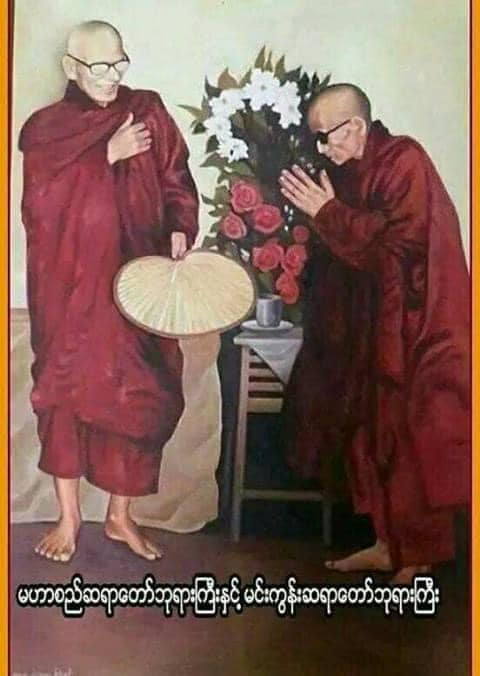
    Mahasi Sayadaw မဟာစည်ဆရာတော် acted as the Questioner.

    Mingun Sayadaw မင်းကွန်းတရာတော် acted as the Reciter & Responder.

    Mahasi & Mingun Sayadaws

    The Guinness Book of World Records listed Tipialkadara Sayadaw Ashin Vicittathara as having an outstanding memory — the best at that time [in 1954]. Sayadaw served as the Chief Reciter (a la Ashin Upali and Ashin Ananda at the First Buddhist Council) at the Sixth Buddhist Council held at KabaAye (World Peace) Pagoda in Rangoon, Burma from 1954 – 1956.

    Sayadaw could memorize, recall, and give exposition on 8027 pages of the Buddhist Scriptures known as Tipitaka [“Three Baskets”] :

    • Vinaya – Rules of monastic conduct
    • Sutta – Buddha’s discourses
    • Abhidhamma – Ultimate reality)

    He took the 2nd – 5th Tipitakadara examinations and passed with distinction in both oral and written parts. Sayadaw served as an examiner for the first Tipikadara examination. Sir U Thwin requested him to take the examination. The rest is history.

  • Anattalekhana Sutta

    Anattalekhana Sutta

    by Hla Min

    Updated : June 2025

    Atta and Anatta

    Some early religions talked about reincarnation (transmigration of atta, atman, soul). In contrast, Buddhism discusses rebirth and no-soul (anatta).

    Sutta

    The Buddha delivered “Anattalakkhana Sutta” as a follow-up sermon to the “Taya Oo” to his five disciples led by Ashin Kondanna. The Sutta’s title literally means “No-self characteristic discourse”.

    Buddha taught that “each of the five khandas (aggregates) are subject to impermanence (anicca), and suffering, unsatisfactoriness, or misery (dukkha) and thus unfit for identification with a self”.

    The five disciples became enlightened after listening to the Sutta. They became members of the (Paramatta) Sangha, the third of the Triple Gems.

    Books

    Book

    There are many books on the Sutta including the one by Mahasi Sayadaw explaining the relevance of the Sutta to Vipassana meditation.

    There is also an English translation of the Sutta by Saya U Pe Maung Tin.

  • U Lokanatha

    U Lokanatha

    by Hla Min

    Updated : June 2025

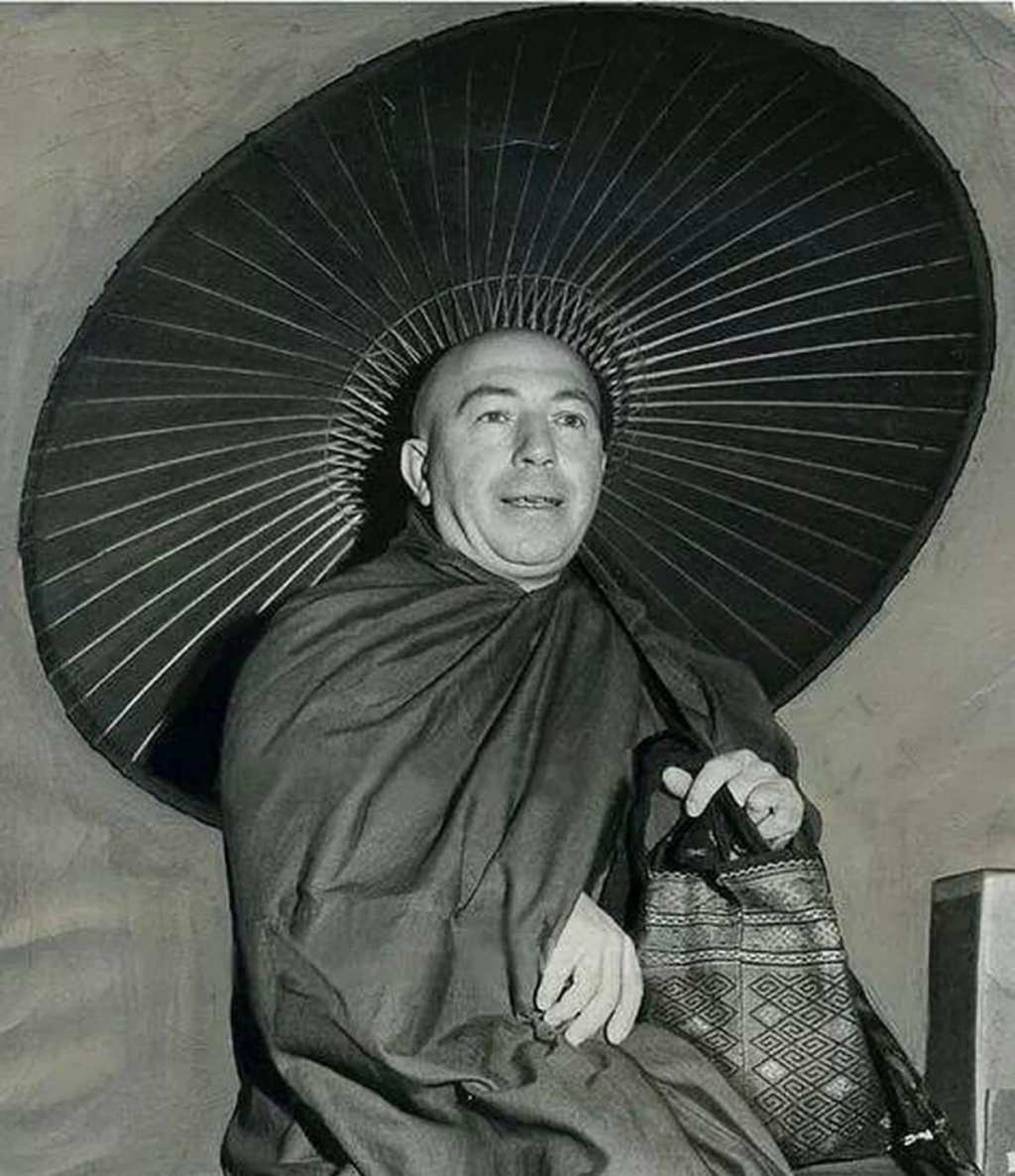
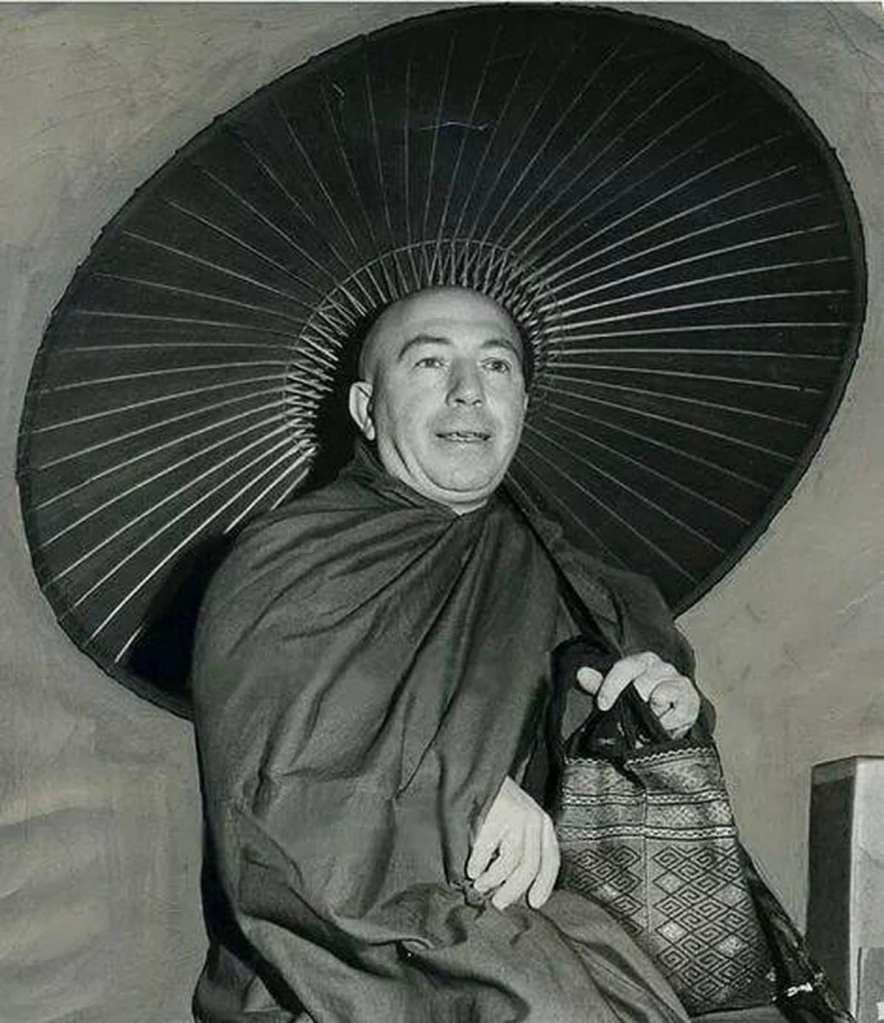
    ဦးလောကနာထ Venerable U Lokanatha

    ** အီတာလျံ-အမေရိကန် ဘုန်းတော်ကြီး Italian-American monk

    * (ယခင်)

    USA မှာ Chemist

    ခရစ်စမတ် အတွက် supervisor ထံ မှ စာအုပ်တအုပ် လက်ဆောင် ရ Received a book as Christmas present from his supervisor

    ဓမ္မပဒ Chapter ဖတ်ပြီး နောက် ရဟန်းဝတ် ဘို့ ဆုံးဖြတ် After reading the chapter on Dhammapada, he decided to become a monk

    * မြန်မာပြည်၊ အိန္ဒိယ နဲ့ သီဟိုဠ် မှာ သာသနာပြု He did Sasana work in Burma, India and Ceylon

    * မေမြို့ မှာ ပျံလွန် He passed away in Maymyo

  • Mahasi Sayadaw U Sobhana

    Mahasi Sayadaw U Sobhana

    by Hla Min

    Updated : June 2025

    Mahasi Sayadaw မဟာစည်ဆရာတော်

    • U Sobhana ဦးသောဘန
    • Renowned Meditation Master and author
    • Questioner at the Sixth Buddhist Council ဆဌသံဂါယနာ held at Kaba Aye, Rangoon, Burma
    Mahasi (2nd from Right) & Mingun (Right)
    Mahasi & Mingun Sayadaws
    • Chief Resident Monk of Mahasi Sasana Yeiktha မဟာစည်သာသနာ့ရိပ်သာ
    • Mentees : Sayadaws U Pandita, U Kundala, U Janabhivamsa and many meditation teachers

    Practical Vipassana Meditation Exercises

    • by The Venerable Mahasi Sayadaw
    • Talk given to his disciples on their induction into Vipassana Mediation at Sasana Yeikhta Meditation Center, Yangon, Myanmar
    • Translated from the Myanmar language by U Nyi Nyi
    • Original Publisher : The Buddhasasanuggaha Association, Yangon, Myanmar
    • Dhamma dana distribution : Tathagata Meditation Center, San Jose, California
    • 22 pages
    • Vipassana (Insight Meditation)
    • understand correctly the nature of the psycho-physical phenomena taking place in the body
    • rupa : material qualities
    • nama : acts of consciousness or awareness
    • breathing : vayodhatu (the element of motion)
    • yogi should behave as if he were a weak invalid
    • noting (at all times)
    • physical object of attention and the mental act of noting occur as a pair
    • relaize all phenomena are anicca, dukkha, and anatta
    • experience nana (knowledge) : path, fruit, liberation
    • INITIAL DOUBT

    Dhammacakkappavatttana Sutta

    • The Great Discourse on the Wheel of Dhamma
    • Teacher : The Venerable Mahasi Sayadaw
    • Translator : U Ko Lay
    • Sukhi Hotu Dhamma Publication 1998
    • PART I
    • Preface to the Discourse
    • The Date of the Discourse
    • Three Kids of Introduction
    • PART II
    • Sensuous gratification is base and vulgar
    • Dittadhamma Nibbana Vada
    • A low, common practice
    • PART III
    • Elaboration of the Eightfold Path
    • PART IV
    • Truth of Suffering (Dukks Sacca)
    • PART V
    • Samudaya Sacca
    • PART VI
    • Nirodha Sacca
    • PART VII
    • Sacca Nana with regard to Dukka Sacca
    • Kicca Nana with regard to Dukka Sacca
    • Kata Nana with regard to Dukka Sacca
    • PART VIII
    • When the Buddha did not admit Enlightenment
    • Acknowledgement of Buddhahood
    • Concluding statement

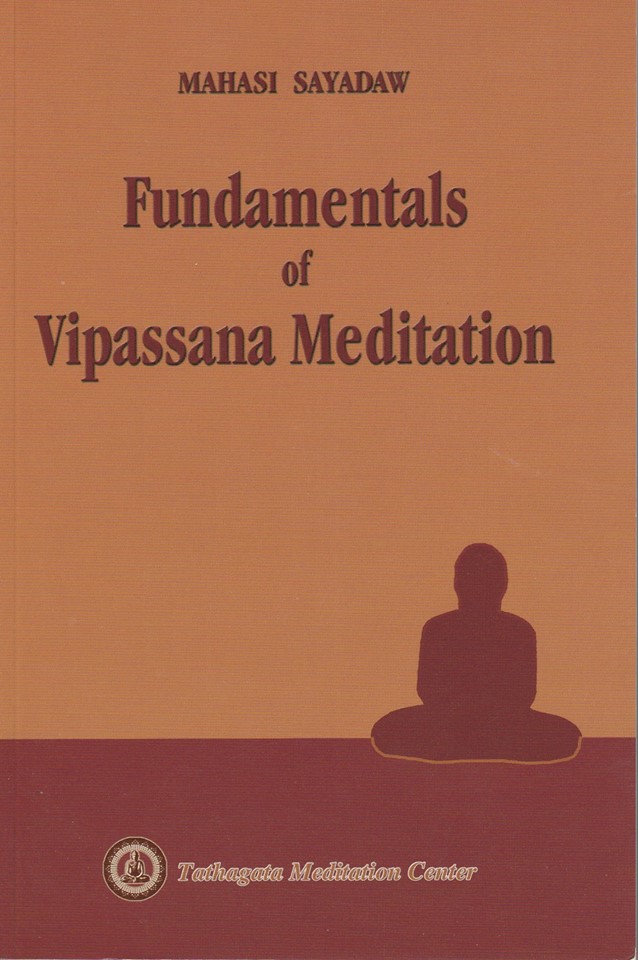
    Fundamentals of Vipassana Meditation

    Book by Mahasi Sayadaw

    Primary Author : Mahasi Sayadaw
    Translator : Maung Tha Noe
    Editor: Sayadaw U Silananda
    Original Publisher : Dhammachakka Meditation Center, 1991
    Republished with other sources : Tathagata Meditation Center

    Other sources included the book
    “Instructions to Meditation Practice” by Mahasi Sayadaw
    “Benefits of Walking Meditation” by Sayadaw U Silananda
    “Guidance for Yogis at Interview” by Sayadaw U Pandita
    “An Interview with Mahasi Sayadaw” by Thamanaykyaw, translated by U Hla Myint

  • Process of Consciousness and Matter

    by Hla Min

    Updated : June 2025

    Subtitle : The Philosophical Psychology of Buddhism

    By Sayadaw Rewata Dhamma

    Completed : 2004

    Last book by Sayadaw

    Publisher: Triple Gems Publication

    The book is intended for all serious students of the Abhidhamma.

    It serves as supplement to Bhikkhu Bodhi’s book “A Comprehensive Manual of Abhidhamma”, and treats various important aspect in more detail – in articular the process of consciousness and matter.

    Preface by Sayadaw U Silanandabhivama, Rector of the International Theravada Buddhist Missionary University, Yangon

    Acknowledgement by Sayadaw Dr. Ottaranyana, Birmingham Buddhist Vihara, UK

    Introduction

    Chapter I : CONSCIOUSNESS AND ITS FACTORS

    CHAPTER II : PROCESS CONSIOUSNESS (CITTA VITHI)

    CHAPTER III : MIND-DOOR COGNITIVE PROCESS (MANODVARA VITHI)

    CHAPTER IV : ABSORPTION JAVANA IN THE MIND-DOOR PROCESS (APPANA JAVANAVARA MANODVARA VITHI)

    CHAPTER V : PROCESS OF MATTER

  • U Jotalankara

    U Jotalankara

    by Hla Min

    Updated : June 2025

    Highlights

    U Jotalankara
    • Received higher ordination as a monk at the Neikbeinda Monastery in Pyay / Prome.
    • Completed one part of the Tipitaka Examination.
    • Dhamma Duta missions in Japan, US, Jamaica, Canada, Taiwan …
    • Joined U Silananda at the Dhammanada Vihara (then in Daly City, California).
    • In 2007, he succeeded U Silananda as Chief Resident Monk of Dhammananda Vihara, Half Moon Bay, California.

    Publications

    He has published books in

    • Myanmar
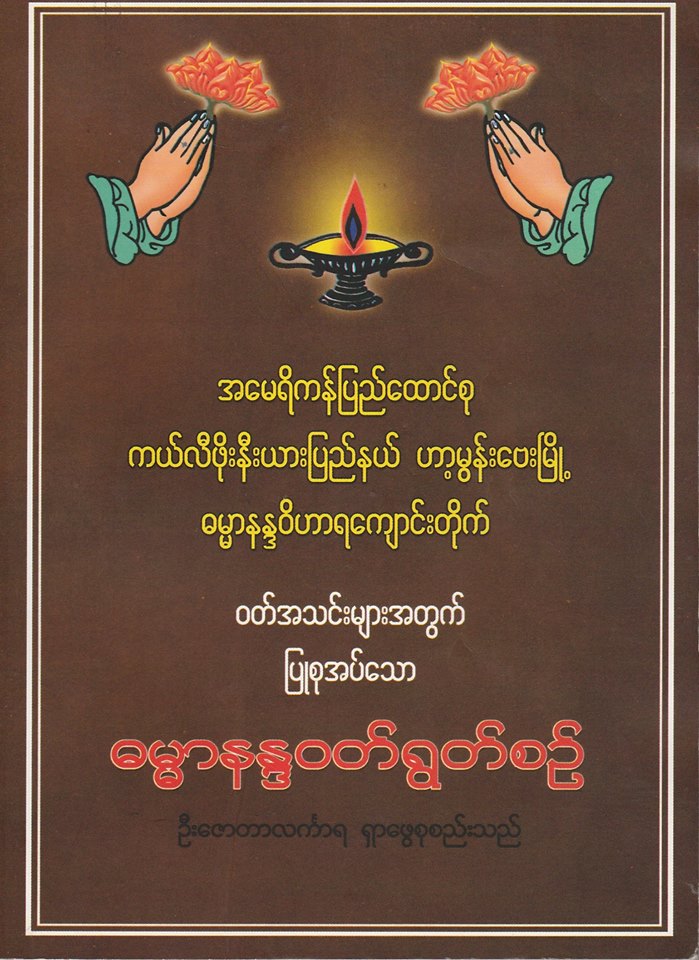
      e.g. Book for Chanting/Recitation
    • English
      e.g. The Basic Teachings of Theravada of Buddhism (edited by Hla Min and Don Johnson)
    • Japanese
      e.g. Translation of selected works of U Silananda

    Book for Dhamma Chanting

    This image has an empty alt attribute; its file name is dhamma-chanting-1.jpg
    Chanting

    The Basic Teachings Of Theravada Buddhism

    • Author: U Jotalankara (Dhammananda Vihara, Half Moon Bay, California, USA)
    • Editors: Hla Min and Don Johnson
    • First edition : June 2004
    • Foreword by Ven. Sayadaw U Silanandabhivamsa
    • Fifteen chapters
    • 1. Program of worshiping
    • 2. Explanation of words
    • 3. Benefits and stories of taking refuges and precepts, and offering food, flowers, etc.
    • 4. The discipline or duties of laypersons (Gihi-vinaya)
    • 5. What is the teaching of the Buddhas?
    • 6. Cultivating Good
    • 7. Purifying One’s Mind
    • 8. The For Divine Abodes (Brahama-viharas)
    • 9. Vipassa-bhavana, Insight or Mindfulness Meditation
    • 10. The Four Noble Truths & Four Noble Persons
    • 11. The Teaching to the Kalamas
    • 12. The Pali Alphabet in Roman Characters
    • 13. Program of Chanting (Paritta — Eleven Protective Suttas — and other Suttas)
    • 14. First two sermons of the Buddha & the Program of Chanting to Consecrate a Buddha Image & Ovada-patimokha
    • 15. Program of Novice Ordination
    • This book has been used in the Summer Dhamma Camps at Dhammananda Vihara
    • He has written Dhamma books in Myanmar, English, and Japanese. Some books were compiled from his articles in the Dhammananda Newsletter published by the Theravada Buddhist Society of America (TBSA).
    Book 2

    Theravada Buddhist Novice Ordination and Monk Ordination

    • Author : U Jotalankara
    • Editor : James Rives, Ph.D.
    • First Edition : August, 2008

    Two kinds of ordination

    • Pabbajja : to become a novice (samanera)
    • Upasambada : to become a monk (bhikkhu)

    Novice Ordination

    Three steps of novice ordination

    1. shaving off the hair of the head
    2. putting on robes
    3. giving the Three Refuges

    The procedures for the second and third steps of novice ordination

    1. Paying homage to the Three Gems
    2. Handing robes to the teacher
    3. Asking for the robes from the teacher and putting them on
    4. Requesting a novice ordination
    5. Requesting the Ten Novice-precepts with the Three Refuges
    6. Paying homage to the Buddha
    7. Taking the Three Refuges
    8. Taking the Ten Precepts of a Novice
    9. Choosing a teacher to be the candidate’s preceptor
    10. Reply of the preceptor
    11. Reflecting on the use of the Four Requisites
    12. Reflecting on the repulsiveness of the body

    Ten conditions for expulsion from Novice-hood

    Ten punishments

    Monk Ordination

    Five fulfilling conditions for becoming a monk

    1. Perfections of a person
      Eleven categories of disqualified persons
    2. Perfection of an assembly
    3. Perfection of the Sima (“Thane”)
      Two kinds of Sima
    4. Perfection of the Motion
    5. Perfection of the Kammavaca

    The procedure of monk ordination

    • 1. Choosing the candidate’s preceptor
    • 2. Stating the ownership of alms-bowl and robes
    • 3. Giving temporary names
    • 4. Ordering the candidate to go and stand outsie the Sangha
    • 10. Reciting the Natti and Kammacvaca
    • 15. The new monk’s special request

    The procedure of monk ordination for two candidates

    The 227 Training Rules

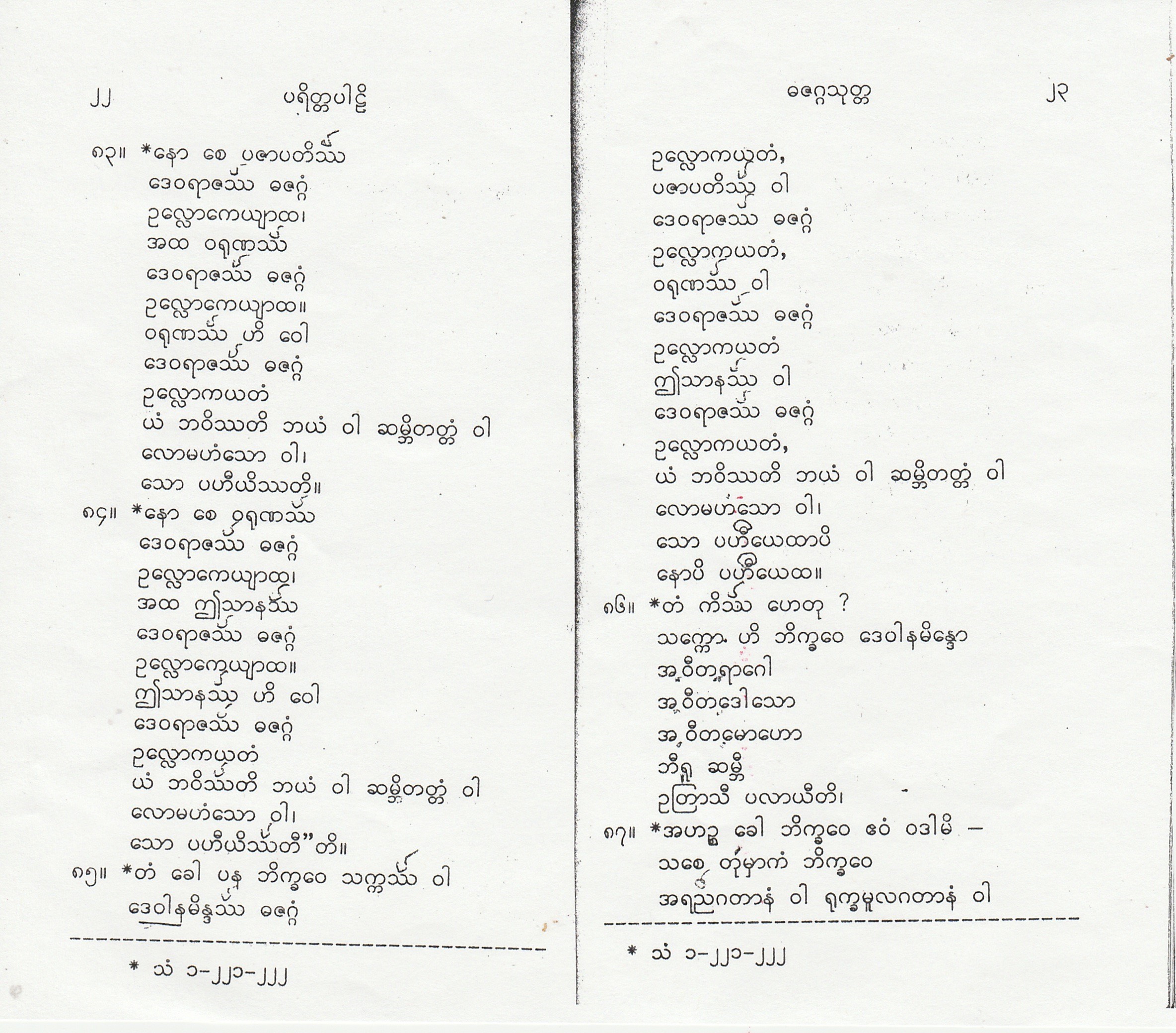
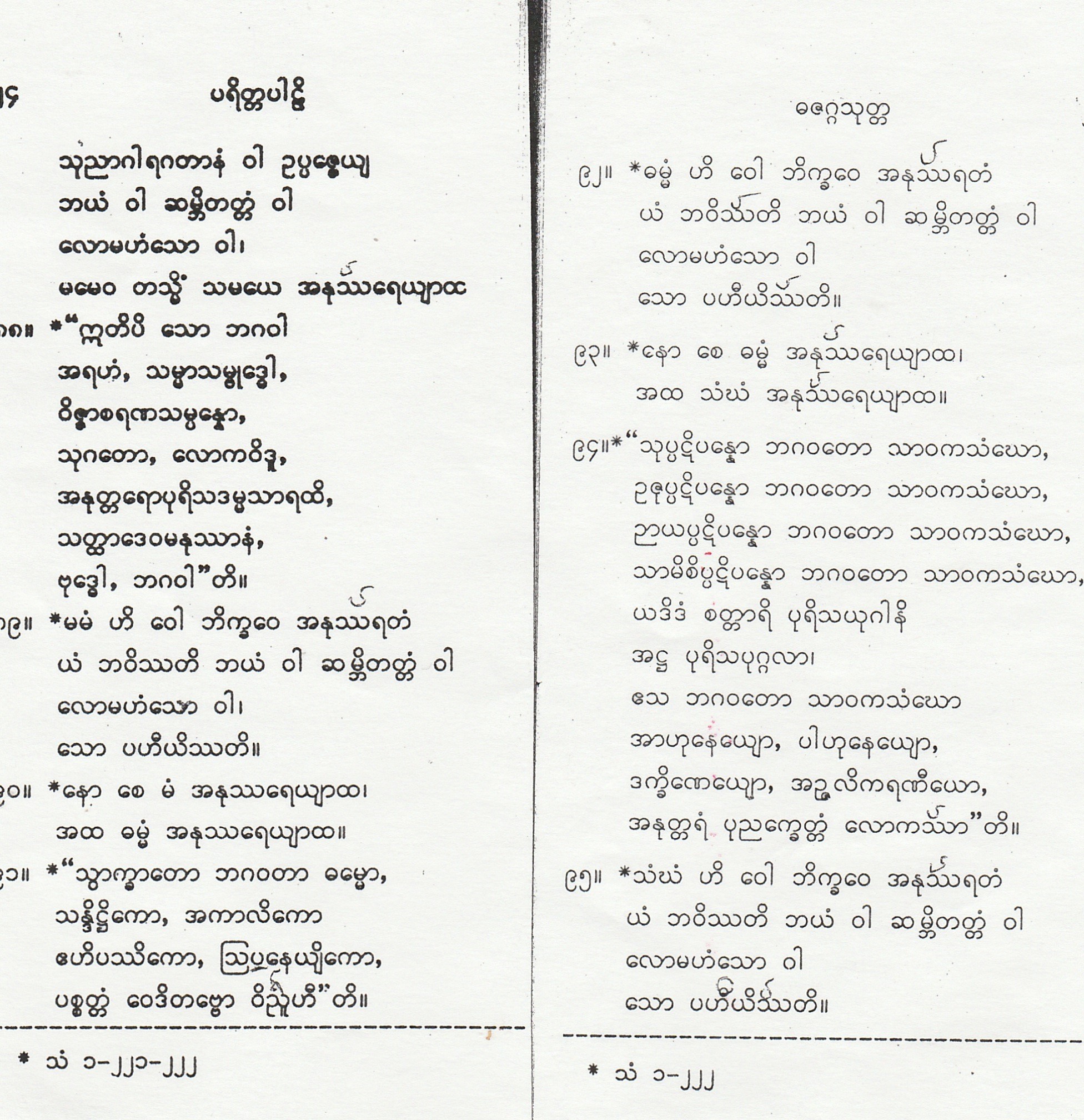
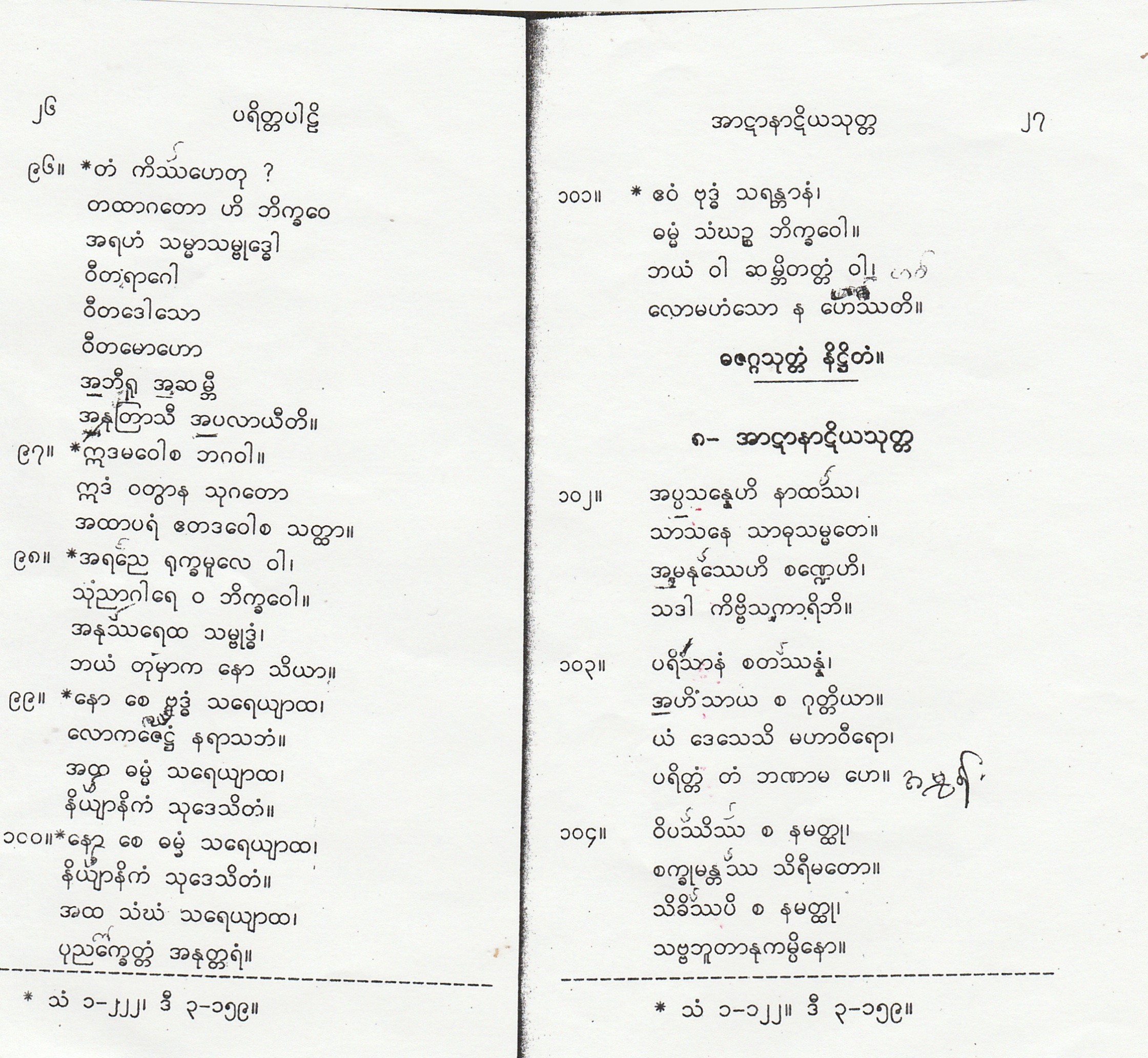
  • Dhajagga Sutta

    Dhajagga Sutta

    by Hla Min

    Updated : June 2025

    Paritta

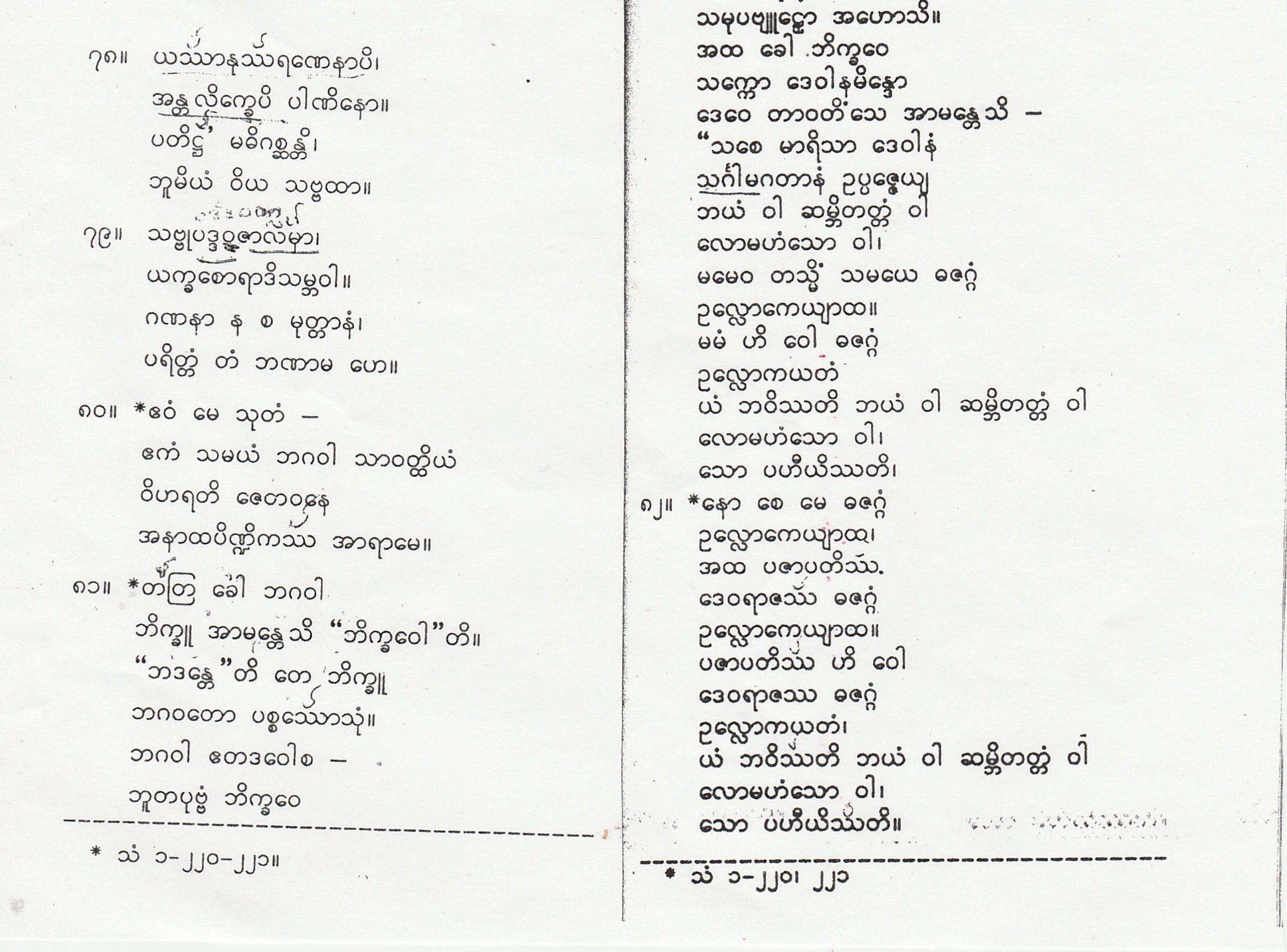
    Dhajagga ဓဇဂ္ဂ

    Dhajagga stands for Banner / “Ta Gun”

    Dhajagga Sutta ဓဇဂ်သုတ်

    • 7th Sutta in Paritta Pali (Protective Verses)
    • Exhortation from Cakka (“Thakyar Min” သိကြားမင်း) to his soldiers preparing for the battle with the Asuras အသူရာ
      “If you have fear or trepidation, try to catch the sight of my banner (if that’s possible) or that of the other Deva-Kings: Pajapati, Varuna, and Isana. For when you have caught sight of the banners, whatever fear, or trepidation there is will disappear.”
    • Buddha ဗုဒ္ဓ said,
      “Because of the Lobha လောဘ Dosa ဒေါသ and Moha မောဟ in the Deva-Kings, fear or trepidation may not disappear. So, monks, if you feel fear and trepidation in the wilderness, … or an empty building, you should recollect the following: Nine qualities of the Buddha, Six qualities of the Dhamma, Nine qualities of the Sangha

    Pali (in Burmese Script)

    This image has an empty alt attribute; its file name is pp-20-21.jpg
    Script 1
    This image has an empty alt attribute; its file name is pp-22-23.jpg
    Script 2
    This image has an empty alt attribute; its file name is pp-24-25.jpg
    Script 3
    This image has an empty alt attribute; its file name is pp-26-27.jpg
    Script 4
  • Dr. Nandamalabhivamsa

    Dr. Nandamalabhivamsa

    by Hla Min

    Updated : June 2025

    Dr. Nandamalabhivansa
    • Succeeded U Silanandavhivamsa as Rector of ITBMU (International Theravada Buddhist Missionary University).
    • Gave courses and sermons.
      Many are available as MP3.
    • Taught Abhidhamma in Myanmar and beyond.
    • Fundamental Abhidhamma Part I was first taught in 1997 at Maryland, USA. The book was edited by Dr. Khin Maung U (First in Burma in the Matric exam of 1963). The second edition was published by the Center of Buddhist Studies (CBS), Sagaing Hills in 2005.
    • Fundamental Abhidhamma Part II was published by the Center of Buddhist Studies (CBS), Sagaing Hills in 2007.

    Fundamental Abhidhamma Part I

    • By Dr. Nandamalabhivamsa
    • First edition : June 1997
    • Editor : Dr. Khin Maung U
    • Myanmar-Buddhist Meditation Society, Baltimore, Maryland, USA
    • Second, extended edition : January 2005
    • revised : November 2005
    • Center for Buddhist Studies (CBS), Sagaing Hills, Sagaing, Myanmar

    Contents

    The History of Abhidhamma

    (1) Why is it called Abhidhamma?
    (2) Who is the author?

    (8) The role of Abhidhammattha sangaha
    (9) The role of Vibhavani
    (10) Ledi Sayadaw
    (11) Paramatthadipani, the critic of Vibhavani

    This image has an empty alt attribute; its file name is abhidhamma-1.jpg
    Part One

    The Fundamental of Abhidhamma

    Chapter 1 : Citta
    Chapter 2 : Cetasika
    Chapter 3 : Rup (Matter)
    Chapter 4 : Pikinnaka (Miscellaneous)
    Chapter 5 : Vithi : Mental Process

    Fundamental Abhidhamma Part II

    This image has an empty alt attribute; its file name is abhidhmma-2.jpg
    Part Two
    • By Dr. Nandamalabhivamsa
    • Version Dec 2007
    • Center for Buddhist Studies (CBS)
    • Mahadubodhayon Monastery, Sagaing Hills, Sagaing, Myanmar

    Contents

    • Chapter 5 : Vithi
      Mental Process
    • Chapter 6 : Vithimutta
      Passive Mental Process
    • Chapter 7 : Paccayasangaha
      Compendium of Causality
    • Chapter 8 : Kammatthana Sangaha
      Meditation Subject

    Pathan Myat Dethana

    This image has an empty alt attribute; its file name is book-4.jpg
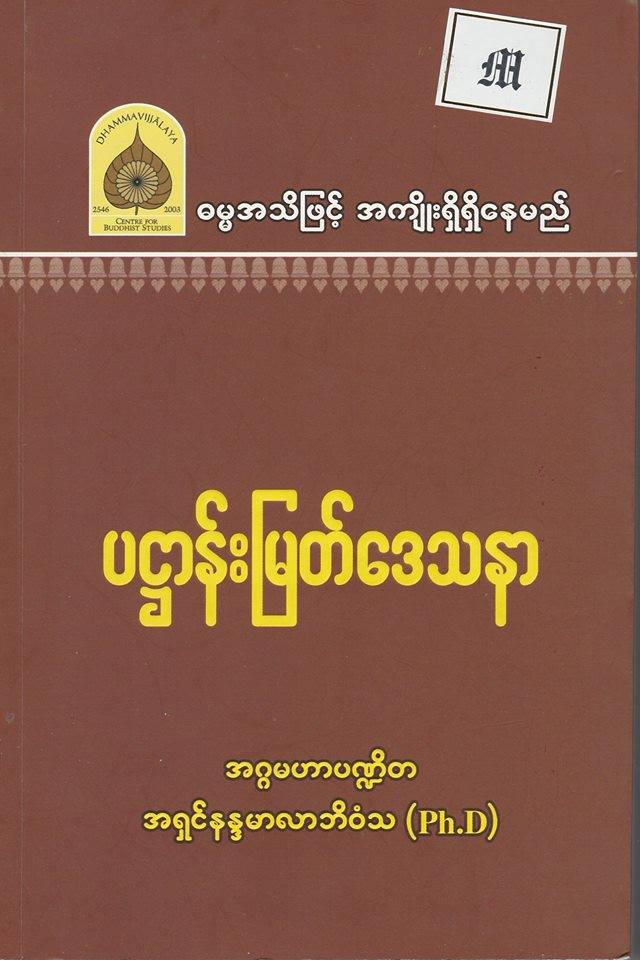
    • “Pathan Myat Dethana” by Dr. Nandamalabhivamsa (Rector of ITBMU).
    • U Ye Sint gave me the book as Dhamma Dana.
  • Mon Sayadaw

    Mon Sayadaw

    by Hla Min

    Updated : June 2025

    U Thilawunta (1912 – 2011)

    This image has an empty alt attribute; its file name is mon-sayadaw.jpg
    Mon Sayadaw
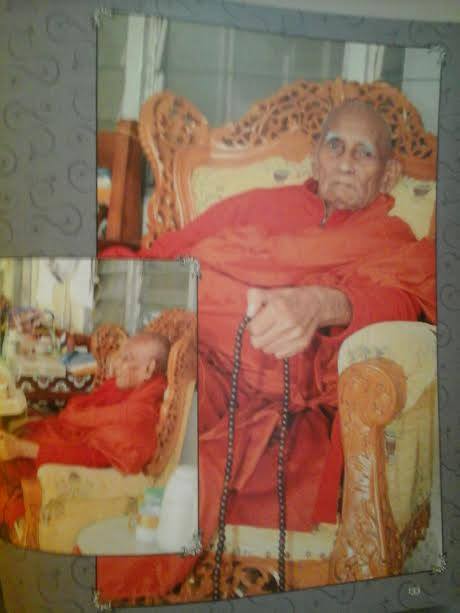
    • Known fondly as “Mon Sayadaw မွန်ဆရာတော်”
    • Dat Paung Zon Sayadaw ဓာတ်ပေါင်းစုံ ဆရာတော် from 1949

    DPZ Pagoda

    • In 1948, my father, his siblings and dhamma friends (e.g U Kyaw Myint) built the Dat Paung Zon Pagoda and Monastery.
    My parents
    • My elder brother was ordained as a novice. He volunteered as a Construction Helper.

    DPZ Sayadaw

    • He served as the Chief Abbot of the Dat Paung p Aung Min Gaung monastery on Windermere Road, Rangoon, Burma from 1949.

    Trip to USA

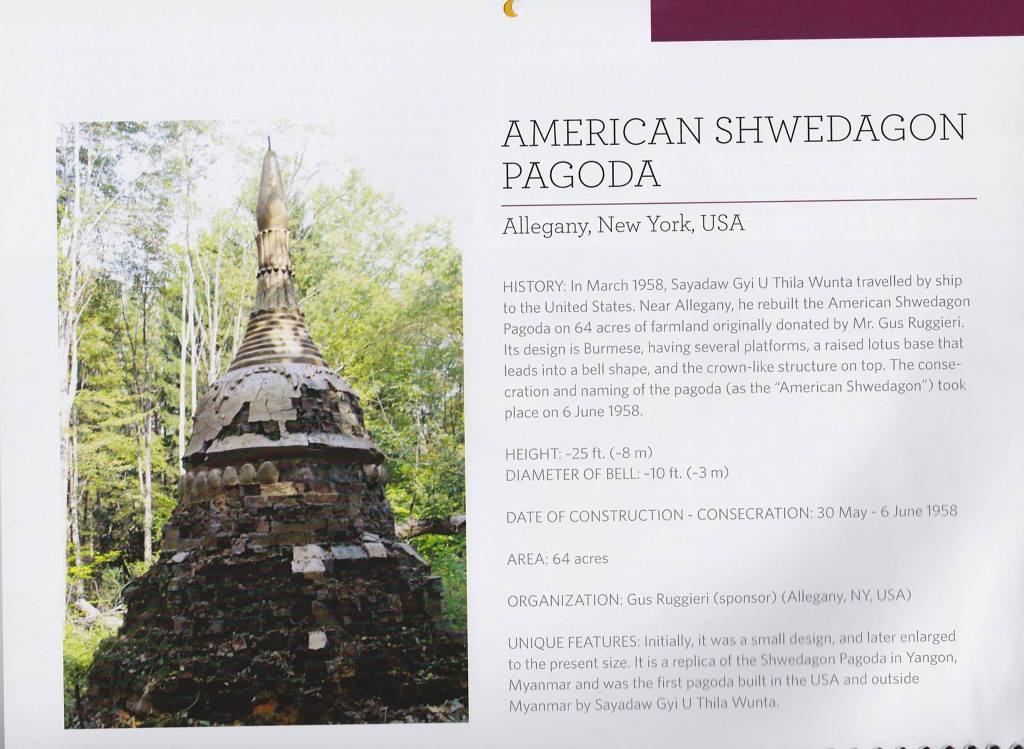
    Pagoda in Allegheny
    • At the invitation of U Thant, Sayadaw traveled to the US (via the ocean liner – predating the days of air travel) and built a pagoda on the Allegheny Mountains.

    Ananda Bodhi

    • In 1958, Leslie Dawson, Canadian of Irish and Scottish descent, asked Mon Sayadaw to be his mentor.
    • Dawson traveled to Bodh Gaya, India to rejoin the Sayadaw and received ordination as a samanera (novice monk).
    • He continued on to Burma where he was ordained as Anandabodhi bhikkhu at the Shwedagon temple, Rangoon (21 Dec 1958).
    • Ananda Bodhi had followers in Canada and New Zealand, most of whom have visited Sayadaw and the Dat Paung Zon pagoda. Two of them also ordained as Buddhist monks with Mon Sayadaw as preceptor.
    • Ananda Bodhi became a Tibetan Master with the name Namgyal Rinpoche in 1971, but continued to preach dhamma from Theravada, …

    Pagodas around the world

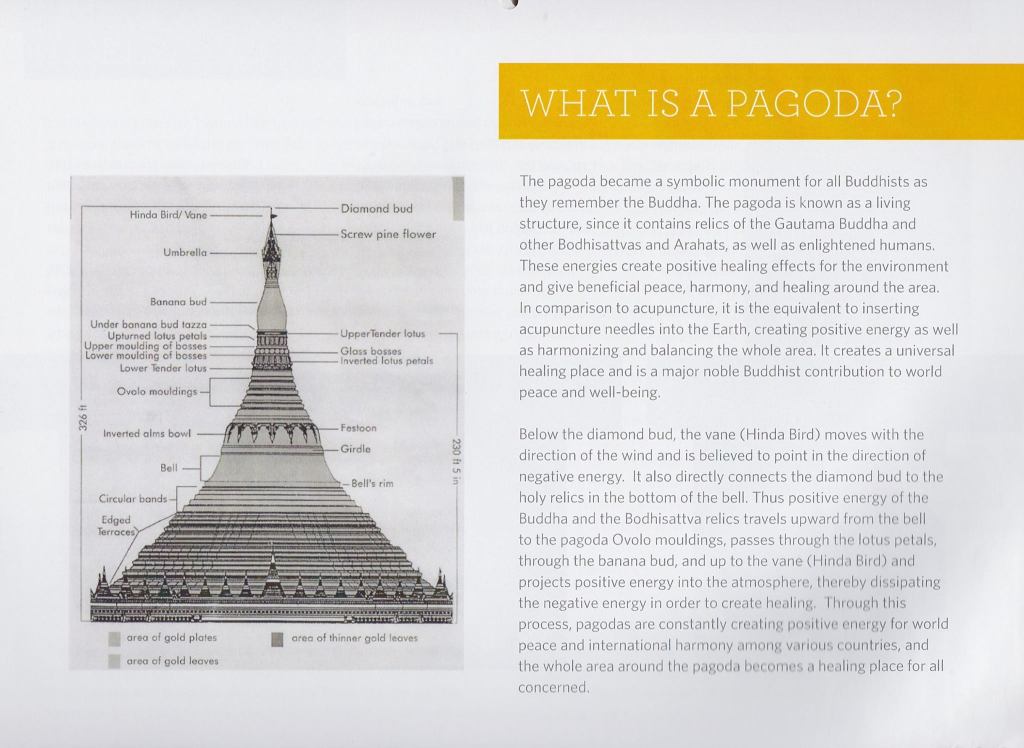
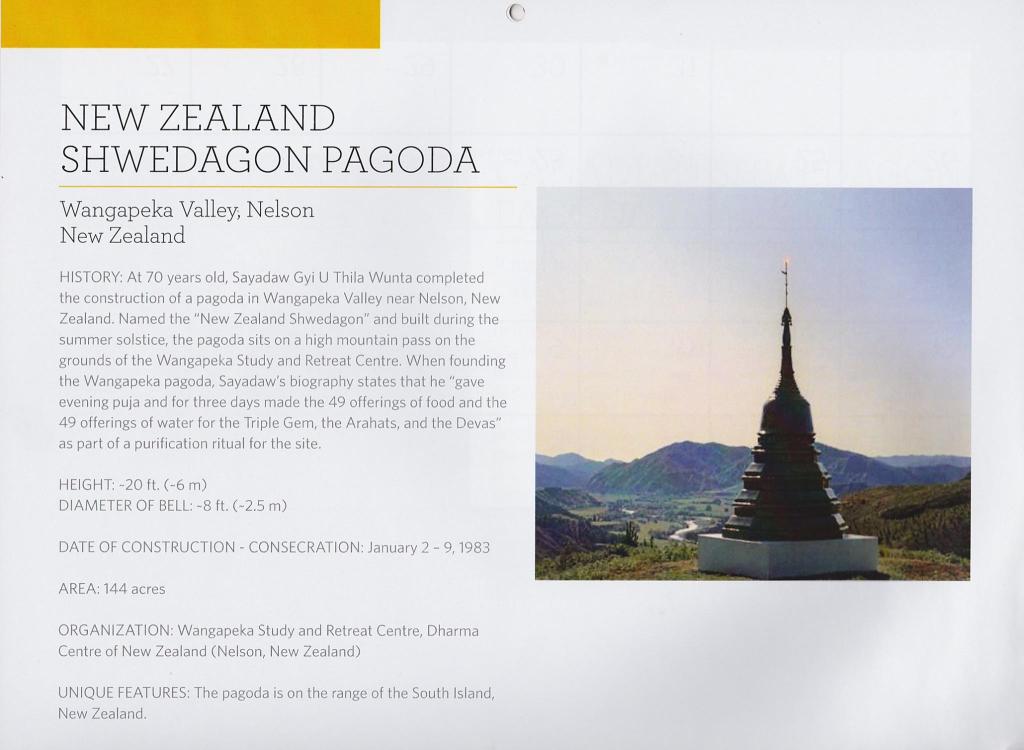
    Mon Sayadaw built pagodas in the several countries including USA, Canada, New Zealand, and South Africa.

    DPZ 1
    DPZ 2
    DPZ 3
    DPZ 4
    DPZ 5
    DPZ 6

    Suggested Reading

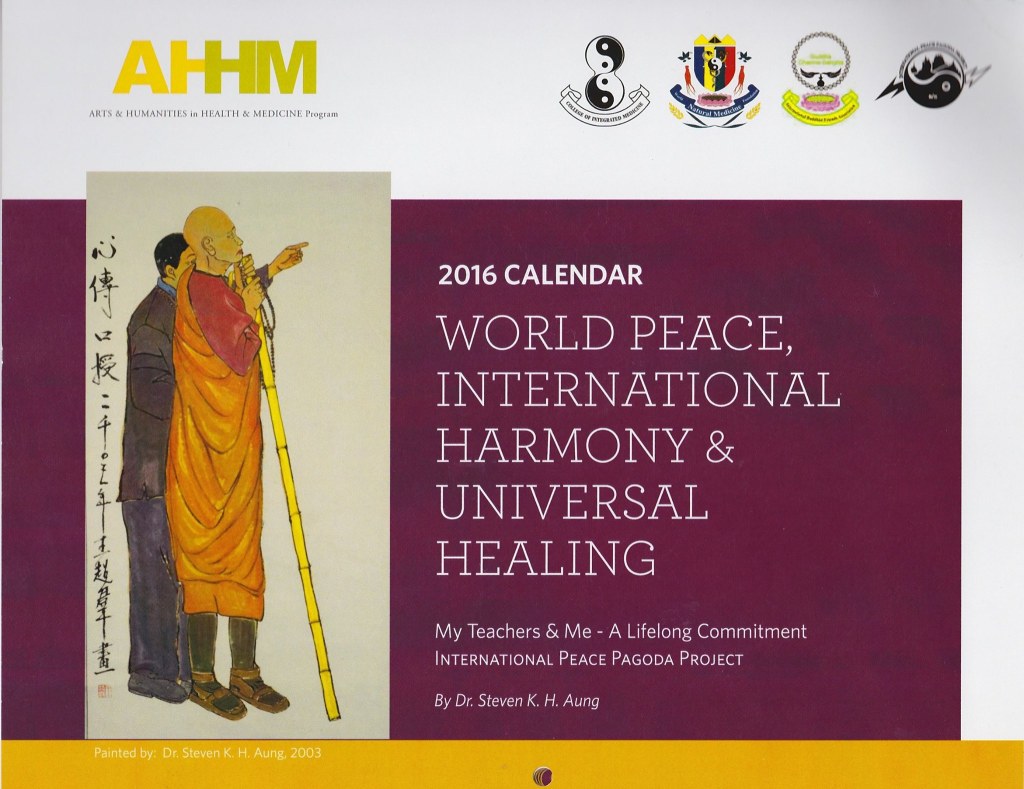
    Details of Sayadaw’s dhamma duta missions can be found in the official biography (in Burmese and English) and the web pages of his disciples (e.g Dr. Steven K H Aung).