Category: Buddhism

Sayadaws, Suttas, Terms

  • TMC

    TMC

    by Hla Min

    Updated : July 2025

    Tathagata Meditation Center

    • Founded by devotees (mostly Vietnamese) of Sayadaw U Silanandabhivamsa.
    • Located at 1215 Lucretia Street, San Jose
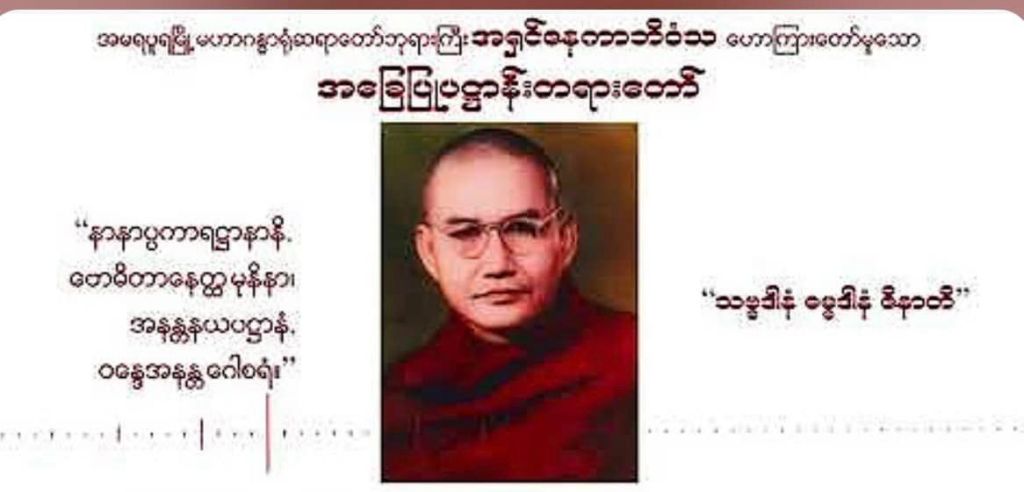
    • Sayadaw U Silananda gave a talk “The ten meanings of Tatagatha”
    U Silananda

    History & Activities

    For the history and activities of the meditation center, please visit

    http://www.tathagata.org/

    TMC Dining Hall

    • In the dining hall, there is an album about Sayadaw U Silanandabhivamsa’s early years in the US (e.g. meditation retreat at a church, dhamma classes at a Zen Buddhism Temple).
    • There are also photos about the Summer Camp for children and young adults.
    • There are two cabinets of books: one for dhamma dana distribution, and another for sale.

    Newsletter

    • The “Dhamma Bell Newsletter” was edited by volunteers (U Theikdi & Maureen O’Brien).
    • It was published quarterly.
    • It featured dhamma talks given at TMC and also recipes (e.g. vegetarian spring rolls).

    Sayadaws

    Panditarama Sayadaw

    Panditarama Sayadaw
    • Sayadawgyi conducted Annual Meditation Retreats.
    • Later, he assigned Sayadaws to conduct the Retreats on his behalf.

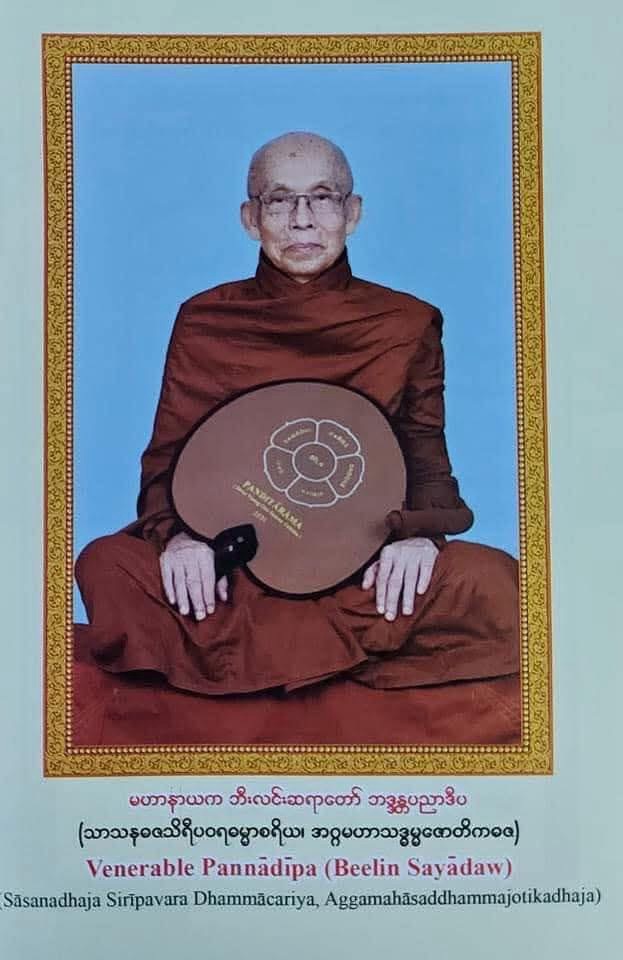
    Beelin Sayadaw

    Beelin Sayadaw
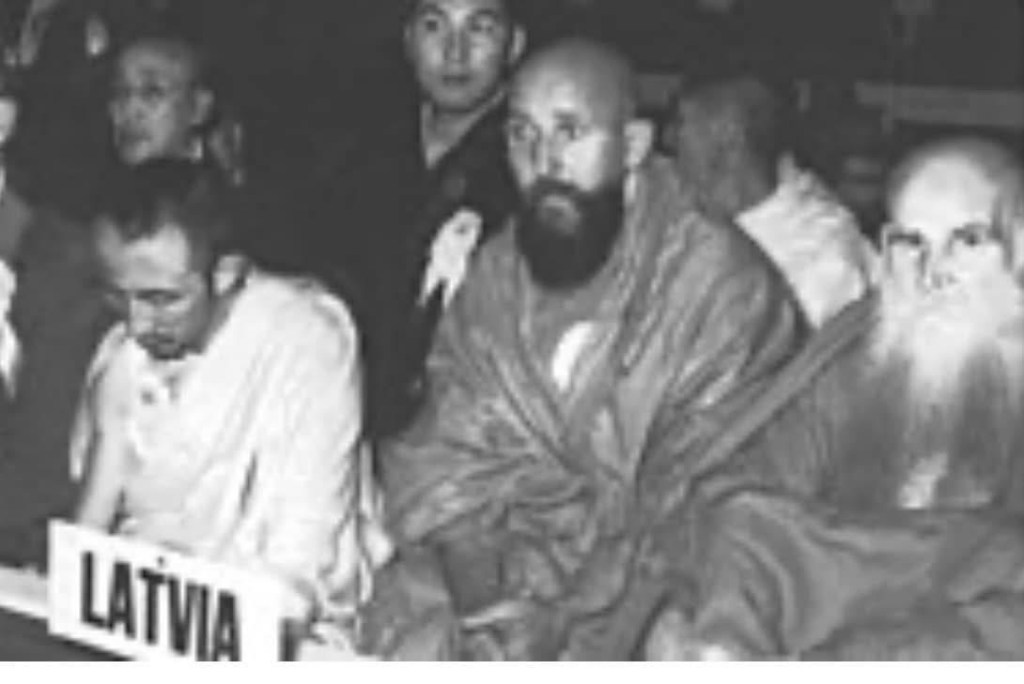
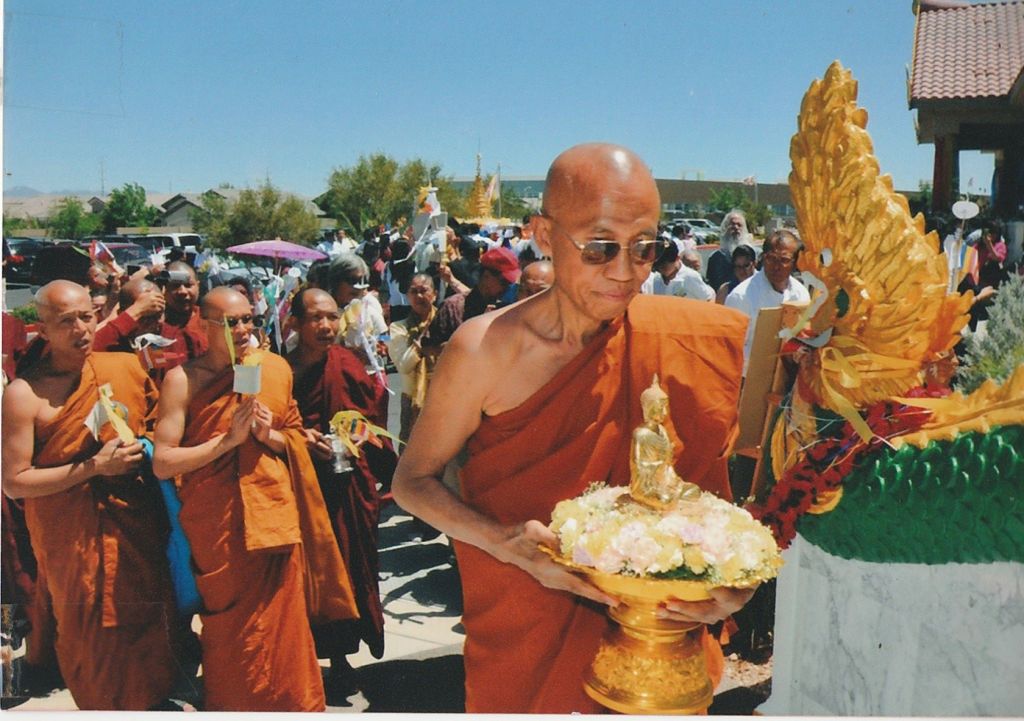
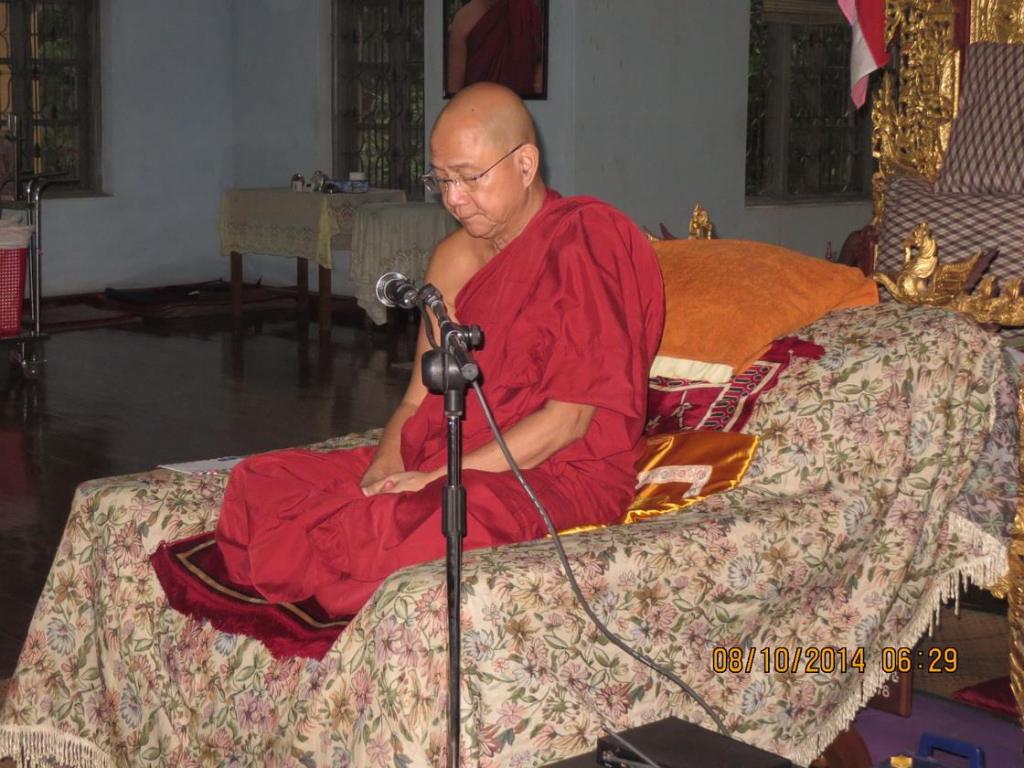
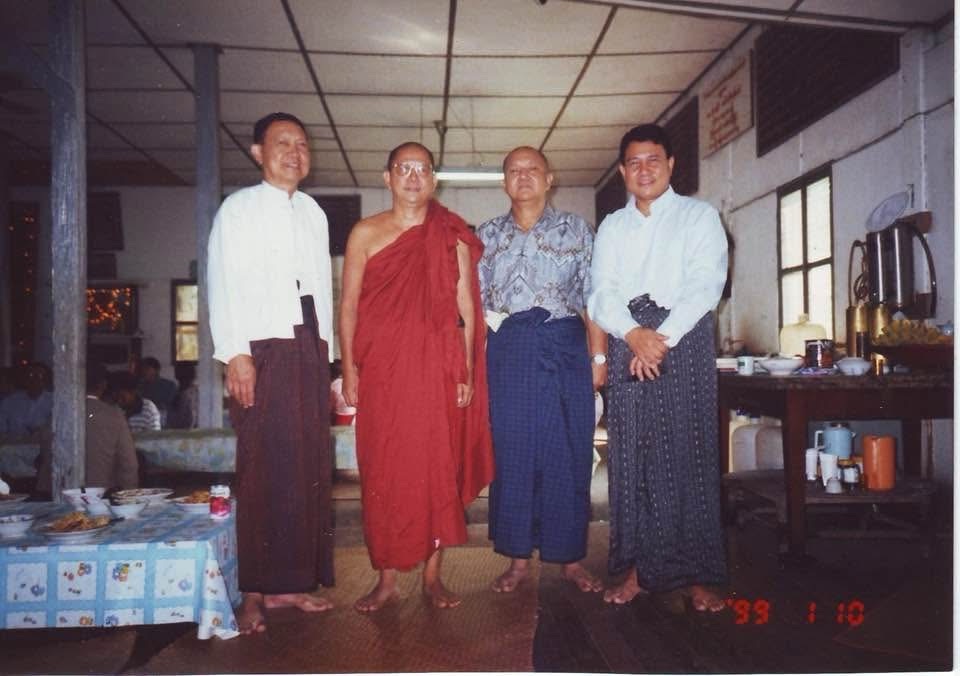
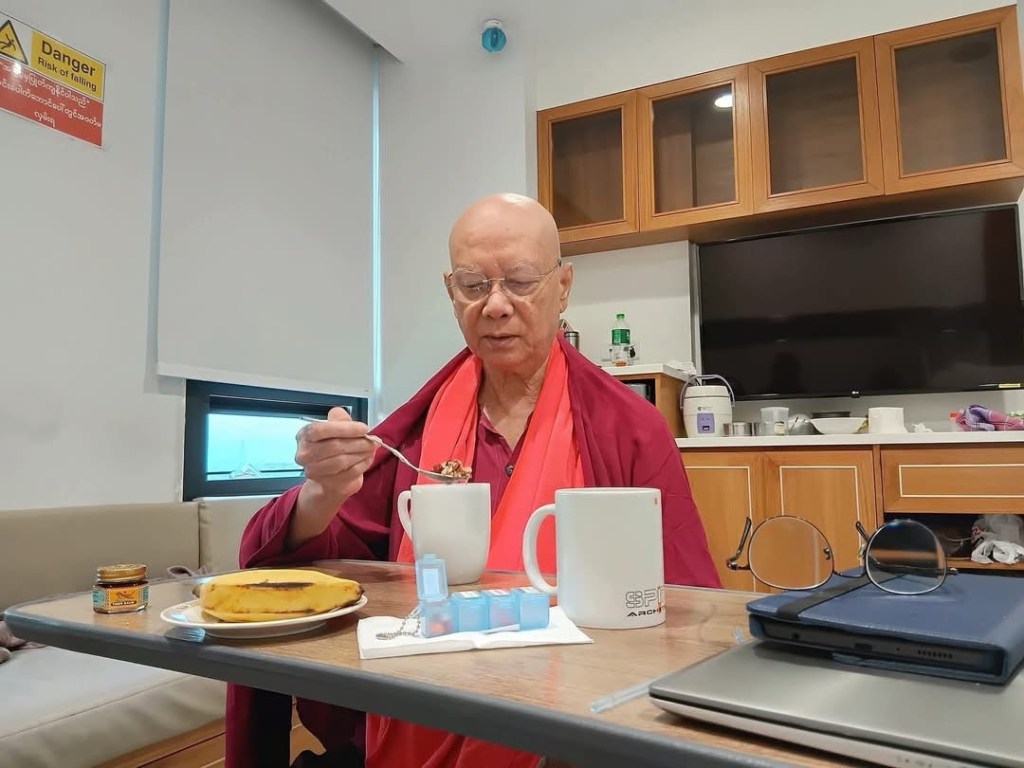
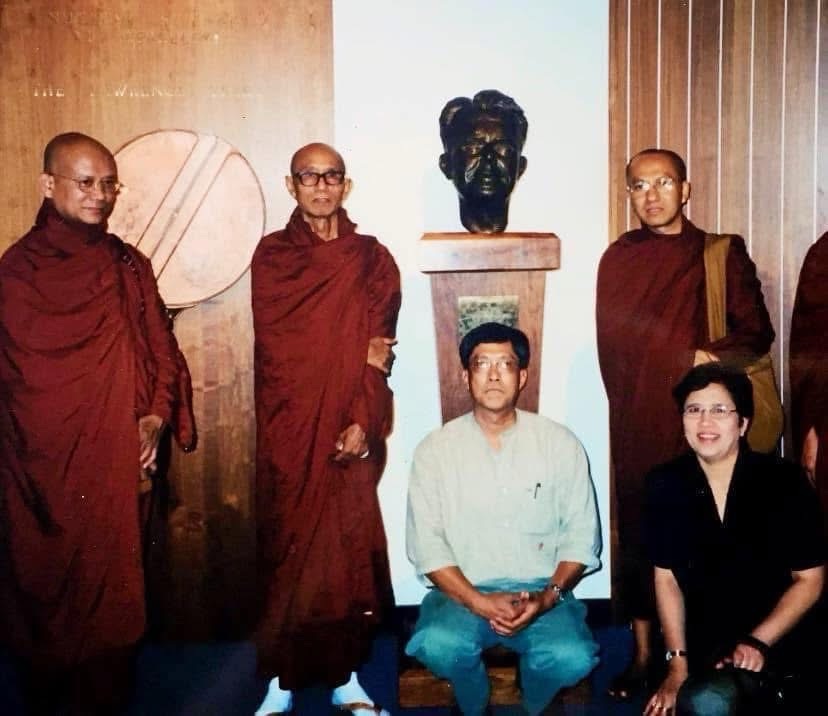
    • Spent over a decade as Chief Resident Sayadaw at TMC
    • Back in Myanmar, Sayadaw resided at Hse Mile Gone and Panditarama
    • Passed away on June 18, 2025.
    • TMC will have a ceremony on July 19, 2025 starting at 2 PM to honor Beelin Sayadaw.

    U Dhammika (Tharmane Kyaw Sayadaw)

    • Sayadaw taught Pali courses at TMC
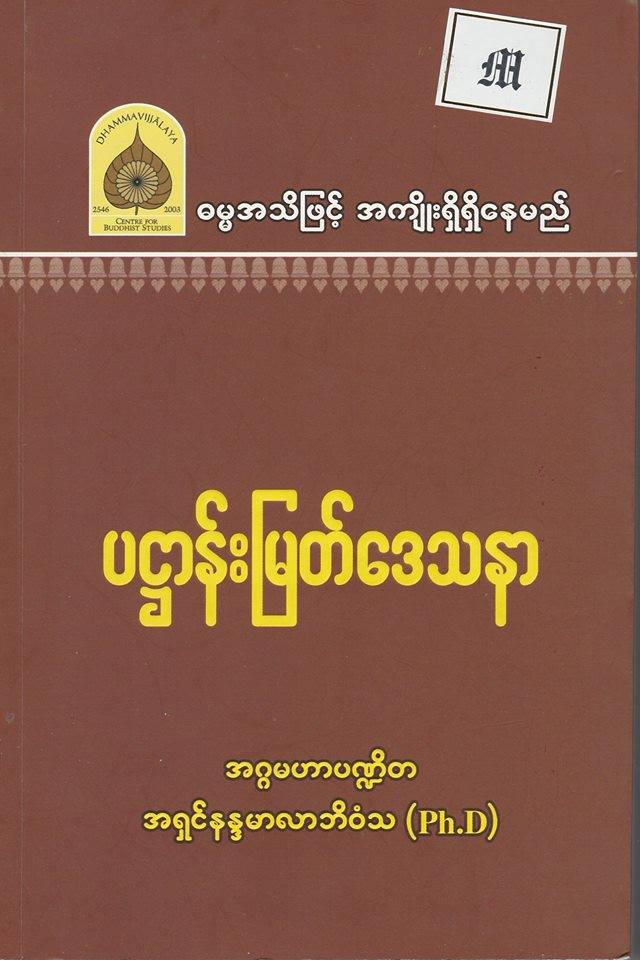
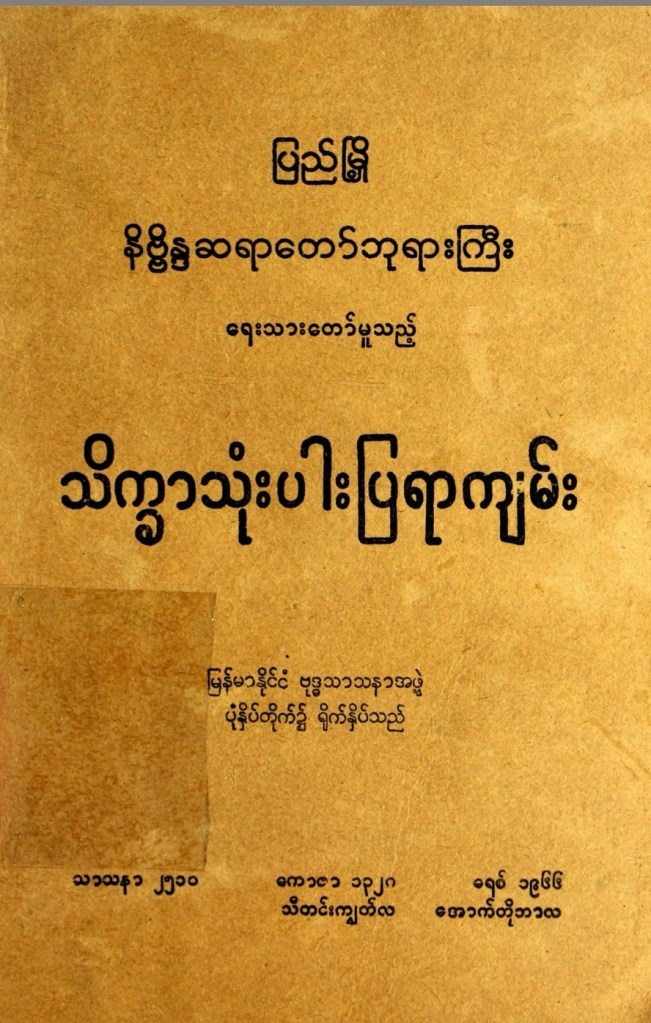
    • He wrote “Pali Sikkha ပါဠိသိက္ခာ” (Practicing Pali) texts.
    Pali course

    U Thuzana

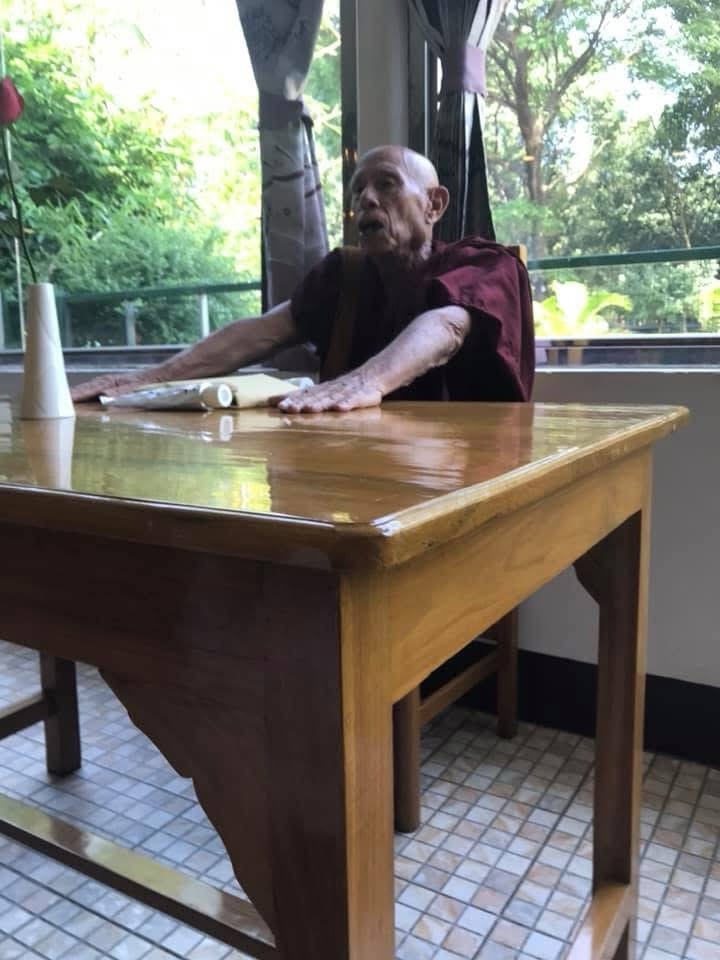
    • Current Chief Resident Monk of TMC
    U Thuzana
  • Sayadaws & Priests

    Sayadaws & Priests

    by Hla Min

    Updated : July 2025

    Former Classmates

    SPHS
    • Edwin David (SPHS, GBNF)
      served as Priest of St. Mary’s Cathedral.
    • Bernard Taylor (SPHS) was a Missionary in Phillipines. Came back to Upper Burma.
    • Anthony Lourdes (SPHS) was the third classmate to become a Father (Catholic Priest).
    • Aung Chaw (Victor, SPHS63, C69) became Ashin Ukkamsa after retirement. First monastery was in Sagaing Hills. Current monastery is in Thone Gwa, Delta region.
    Uzin Aung Chaw
    • Phillip Ba Maung (different section of SPHS63) passed away as a monk.
    • Myo Tun (Bobby, Errol Than Tun, Dio, A69) became Ashin Pannagavesaka after retirement. Was Dhamma Librarian, Editor & Interpreter at Mawlamyaing Pa Auk Monastery. Taught English to selected monks and youths in various cities
    Uzin Bobby

    Other Sayadaws

    • U Win Paing (SPHS64, ChE70) became U Wara after taking his final exam. Was တိုက်အုပ် for many years at the Kaba Aye Sun Lun Gu Kyaung. He succeeded U Vinaya as Chief Resident Monk. He is now GBNF.
    U Wara
    • Sayadaw U Jotika (EP73)
      is a prolific writer.
    U Jotika
    • U Bo Gyi (A59) became a monk after retiring from PWD. Cast aside by higher authorities for designing the Mausoleum for Daw Khin Kyi. He is now GBNF.
    Uzin Bo Gyi
    • U Han Nyo (Met60) became monk in the USA. Resided in monasteries in New York, California & Mexico.
    • Saya Beatson (Physics, Boy Scout Master, SPHS) became a monk. Myo Nyunt (Harry Kyaw), Atom Hla and other Paulians offered Soon to Sayadaw during his trips to Yangon. He is the lone remaining Saya from our SPHS days.
    Uzin Beatson
    • Younger brother of Dr. Saw Tin (Maths, GBNF) became a monk. He was in California for a Sima Consecration (သိမ်သမုတ်ပွဲ)
    • Per KMZ, a young alumnus became Seattle Sayadaw. Met the Sayadaw when he was showing his mentor (from Myanmar) in the SF Bay Area.
    • After retirement as Pro-Rector, Saya Dr. Lwin Aung (A59) spent several vasa as a monk. He returned to Lay Order due to medical concerns.

    Posts

    • De La Salle Schools
    • Higher Ordination
    • Sayadaws
    • Vinaya
  • Beelin Sayadaw

    Beelin Sayadaw

    by Hla Min

    Updated : July 2025

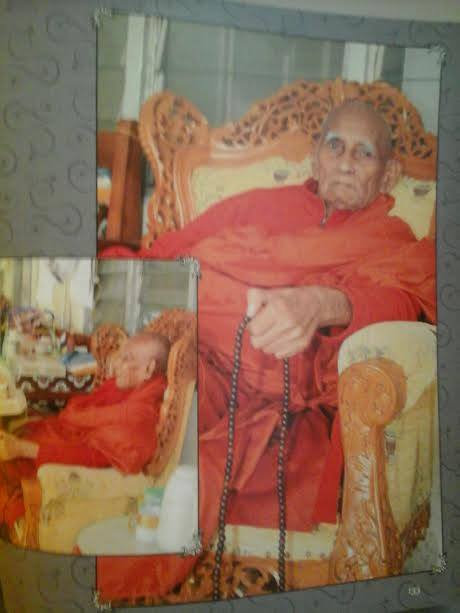
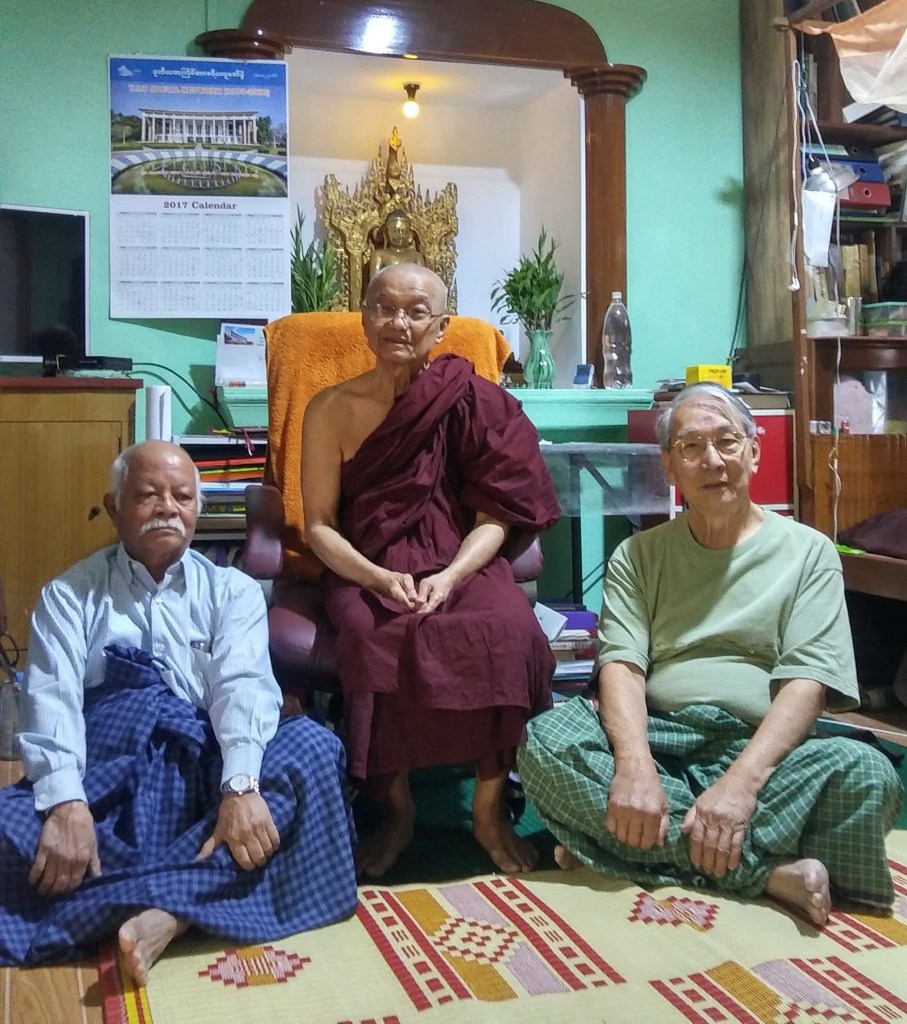
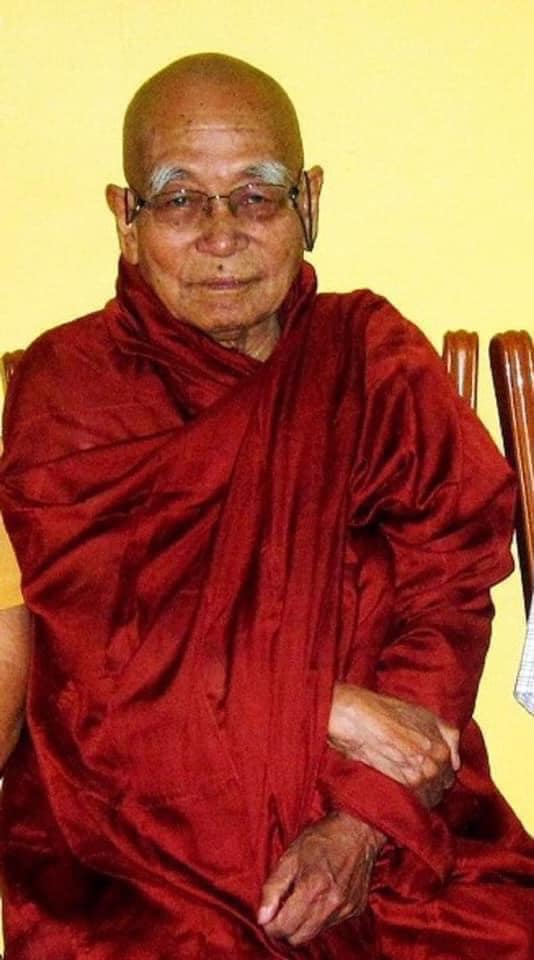
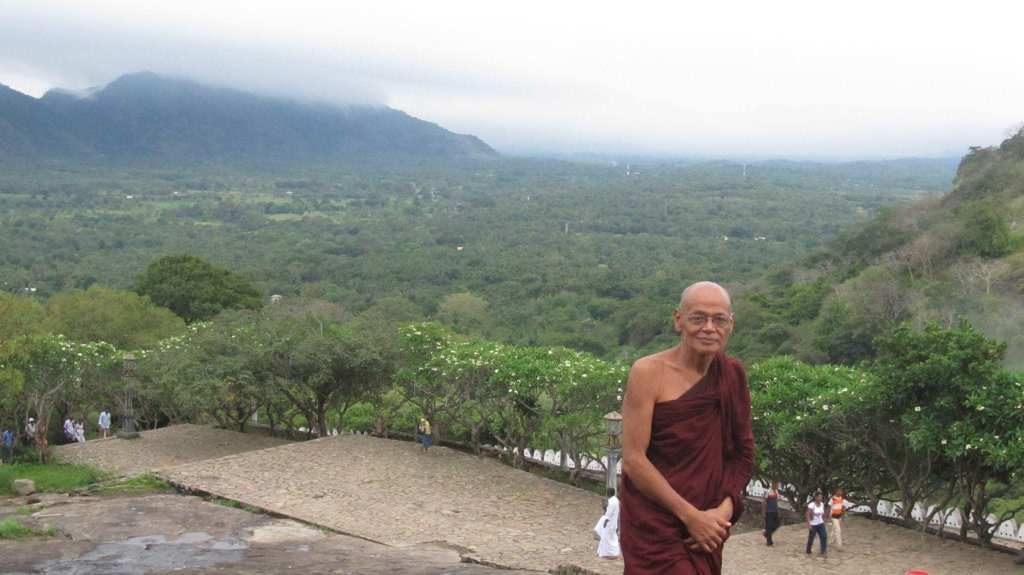
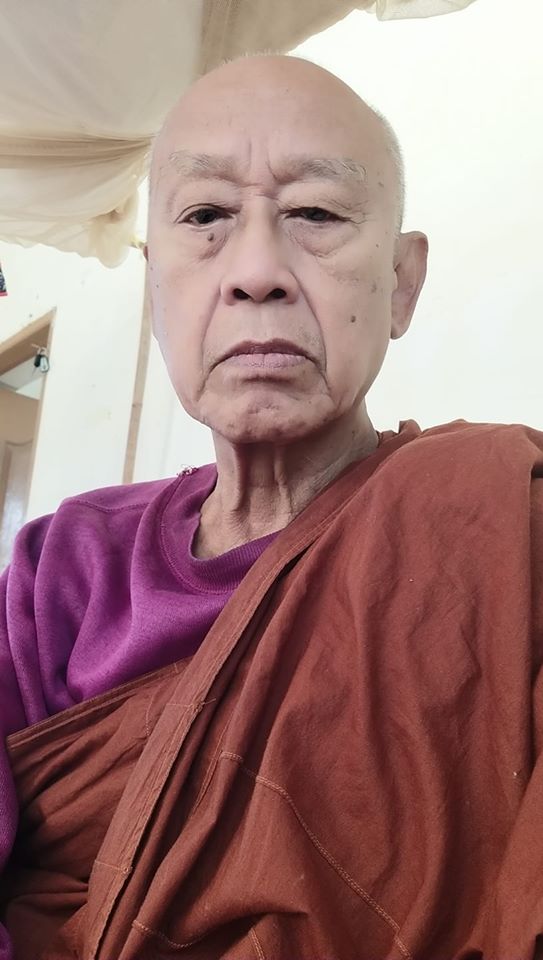
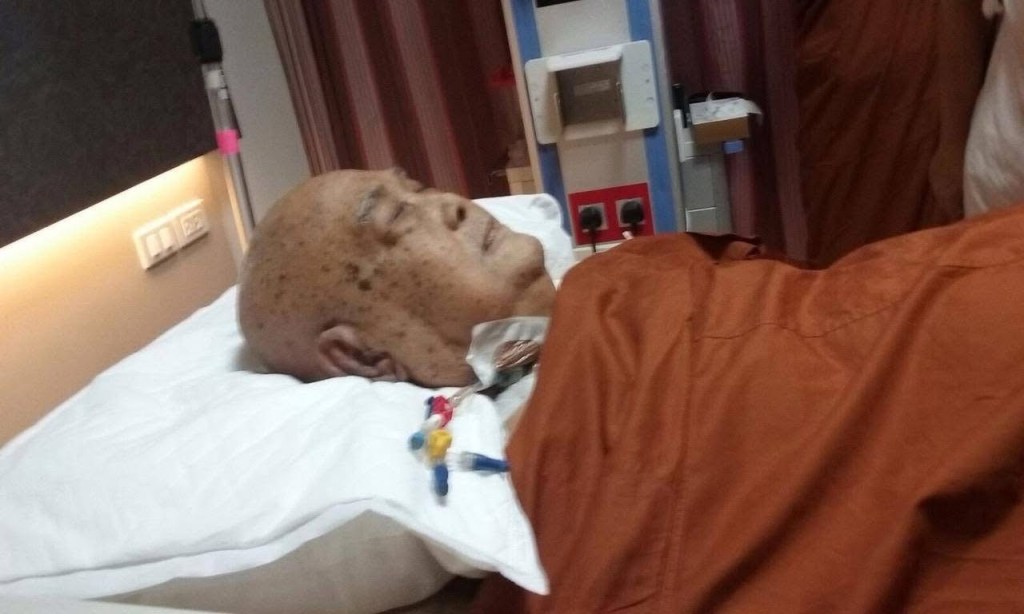
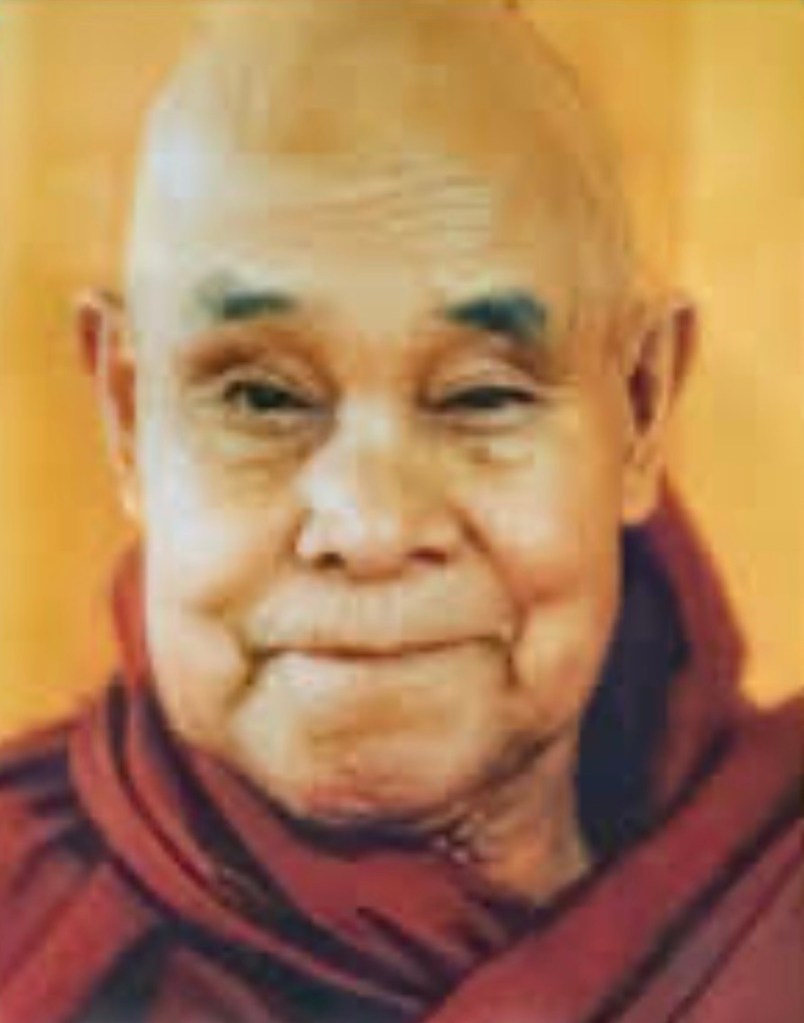
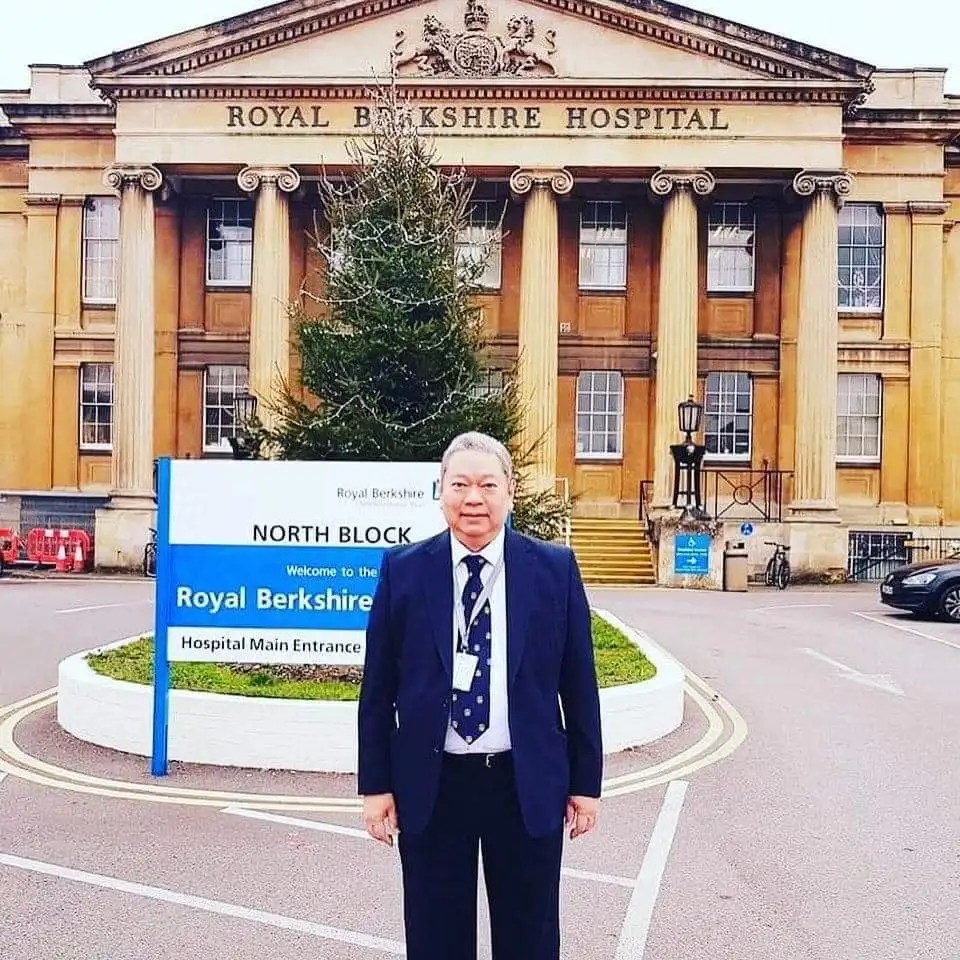
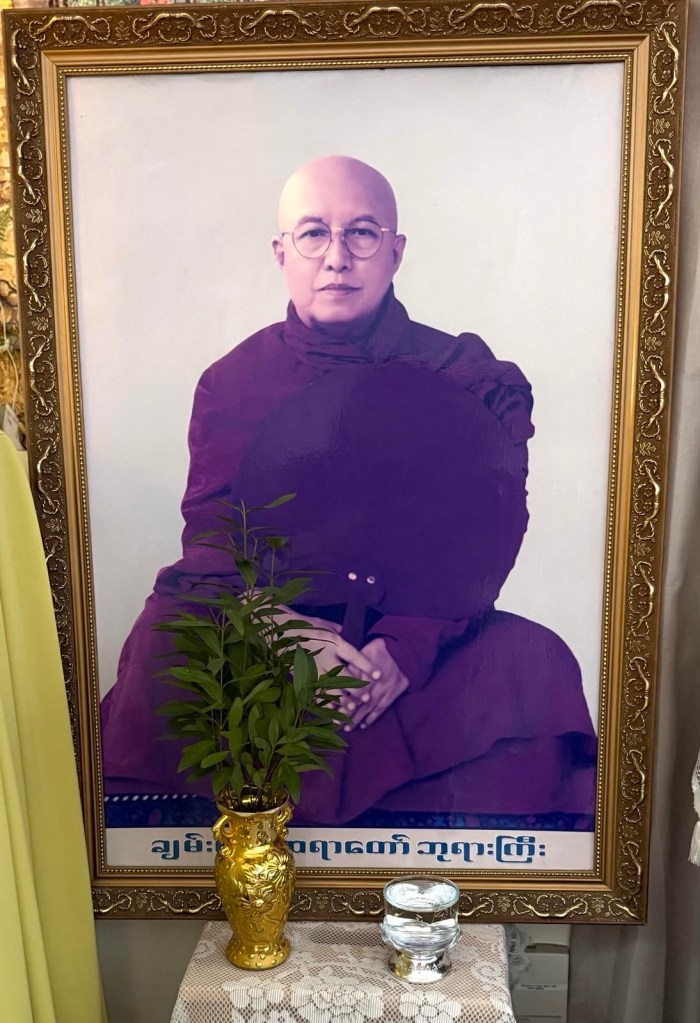
    U Pyinnyadipa ဘီးလင်းဆရာတော်ဦးပညာဒီပ

    • Patron, Panditarama Monastery
    • Former Chief Sayadaw, Hse Mile Gone Monastery
    • Former Chief Sayadaw, Tathagata Meditation Center, San Jose, California, USA
    • Passed away in Yangon on June 18, 2025
    Beelin 1
    Beelin 2
    Beelin 3
    Beelin 4
    Beelin 5
    Beelin 6

    Memories

    • I was Interpreter for some of Sayadaw’s dhamma talks at TMC.
    • Sayadaw published dhamma books.
    Book
    • Visited Sayadaw at the Hse Mile Gone monastery and at the Shwe Taung Gone monastery

    Posts

    • Dhamma Books
    • Sayadaw
    • Tathagata Meditation Center
    • Vipassana Meditation
    Beelin 2
    • I was Interpreter for some of Sayadaw’s talks (at TMC)
  • Dhammapada

    Dhammapada

    by Hla Min

    Updated : June 2025

    Prelude

    • Collection of Pali verses (that refer to Buddha’s teachings).
    • Translated by several Pal Scholars.
    • Some Dhammapada books also cover short stories related to the verses.

    Narada Thera

    This image has an empty alt attribute; its file name is dhammapada-3.jpg
    • The Dhammapada
    • Subtitle: Pali text & translation with stories & notes
    • Author : Narada Thera
    • Preface

    Chapters

    • The Twin Verses
    • Heedfulness
    • Mind
    • Flowers
    • Fools
    • The Wise
    • The Worthy
    • Thousands
    • Evil
    • The Rod or Punishment
    • Old Age
    • The Self
    • The World
    • The Buddha
    • Happiness
    • Affection
    • Anger
    • Impurities or Taints
    • The Just or Righteous
    • The Way or the Path
    • Miscellaneous
    • Woeful State
    • The Elephant
    • Craving
    • The Bhikkhu or the Mendicant
    • The Brahmana

    Venerable Buddharakhitta

    This image has an empty alt attribute; its file name is dhammapada-1.jpg

    The following verses are from the book by Venerable Buddharakkhita.

    Verse 182

    Hard it is to be born a man;
    hard is the life of mortals.
    Hard is it to gain the opportunity
    of hearing the Sublime Truth,
    and hard to encounter
    is the arising of the Buddhas.

    Verse 183

    To avoid all evil,
    to cultivate good,
    and to cleanse one’s mind —
    this is the teaching of the Buddhas.

    Verse 184

    Enduring patience
    is the highest austerity.
    “Nibbana is supreme,” says the Buddhas.
    He is not a true monk
    who harms another,
    nor a true renunciate
    who oppresses others.

    Myanmar & English

    • U Thittila’s Translation (in Burmese)
    • Venerable Buddharakkhita’s Translation (in English)
    This image has an empty alt attribute; its file name is dhammapada-2.jpg

    Frequently Quoted Verse

    • The following Dhammapada verse is frequently quoted by Sayadaws and writers.

    Not to do any evil, to cultivate good, to purify one’s mind, – this is the Teaching of the Buddhas.”

    • It seems simple (at the basic level), but it also has a deeper meaning (at the metaphysical level).
    • The explanations may refer to Abhidhamma to expound what “kusala” (wholesome deeds) and “akusula” (unwholesome deeds) are.
    • References may also be made to the three “Seikhas” : sila (morality), sammadhi (concentration), and panna (wisdom).
    • Bhavana practices such as samatha (tranquility meditation) and vipassana (insight meditation) are needed to calm and purify the mind.

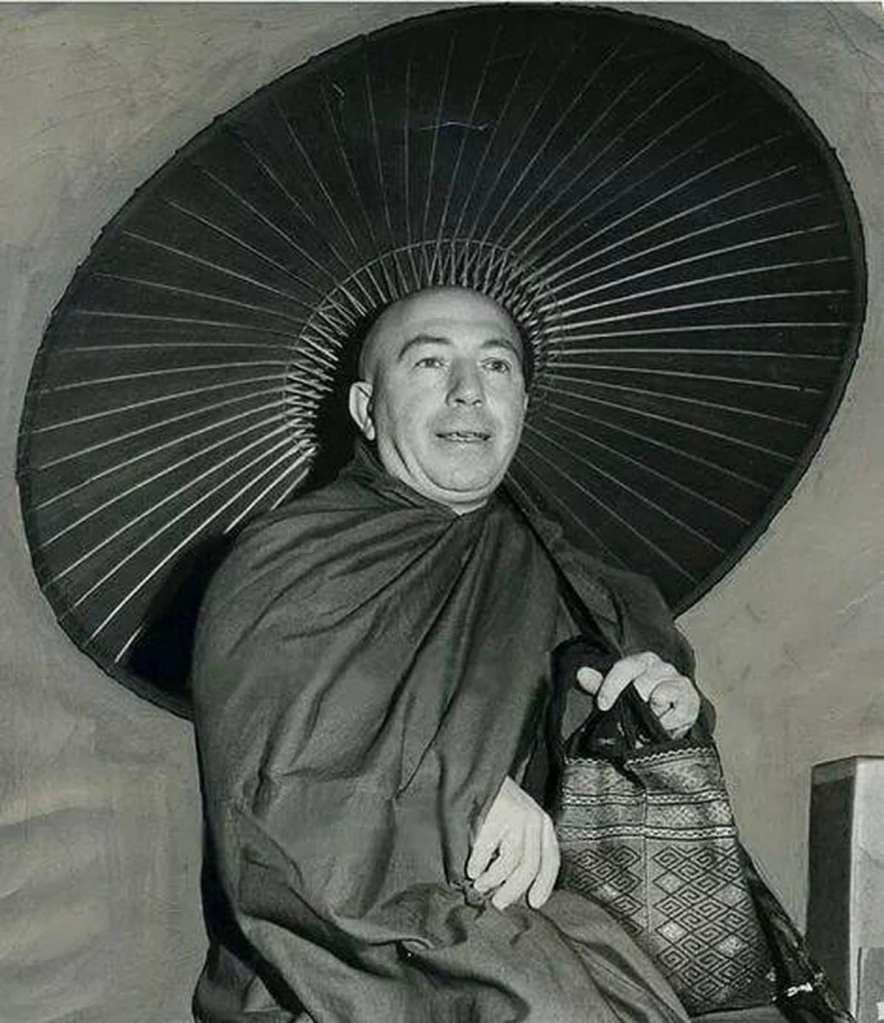
    U Lokanatha – Italian Buddhist Monk (1897-1966)

    U Lokanatha
    • Chemical Analyst in the US
    • Received a book from his supervisor as Christmas present. The book had a chapter on Dhammapada.
      After reading the verses, a deep impulse (which resonated with his scientific inquiring mind) led him to pursue Buddhism & become a Buddhist monk.
    • He was from a devout Catholic family. His elder brother was a Priest.
    • Sayadaw spent considerable time at the Bawdigone monastery (donated by my paternal grandmother) on Windermere Road, Rangoon, Burma.
    • He practiced Dhutanga.
    • He also preached. Sunlun U Vinaya was interpreter for some of the talks.
    • Dhamma Dhuta missions to India and Ceylon
    • His booklet, “Why I became a Buddhist”, had considerable influence on the leader of the “Untouchables” in India.
    • His dhamma duta work can be found in the articles in Wikipedia and some Buddhist web sites.
  • Visuddhimaggarasa

    Visuddhimaggarasa

    by Hla Min

    Updated : June 2025

    Vissudimagga

    ဝိသုဒ္ဓိမဂ္ဂ

    • The Path of Purification
    • Translated from Pali into English by Bhikkhu Nyanamoli

    Vissudimaggasara

    ဝိသုဒ္ဓိမဂ္ဂသာရ

    • The Essence of the Path of Purification
    • It is an abridged version of Vissudimagga
    • By Dr. Ottara Nyana

    THE PATH OF PURIFICATION

    • Vissudhimaggarasa
    • An abridged edition of Bhikku Nyanamoli’s translation by :
    • Dr. Ottara Nyana
    • Head of the Birmingham Buddhist Vihara, UK
    • Publisher : Triple Gems Publication
    • First edition : 2011
    • PART I : VIRTUE (Sila)
    • Chapters 1 – 2
    • PART II : CONCENTRATION (Samadhi)
    • Chapters 3 – 13
    • PART III : UNDERSTANDING (Panna)
    • Chapters 14 – 23
    • Index

    Posts

    • Buddhism
    • Dhamma Books
    • Pali
    • Sayadaws
  • Memories of U Silananda

    Memories of U Silananda

    by Hla Min

    Updated : June 2025

    U Silananda
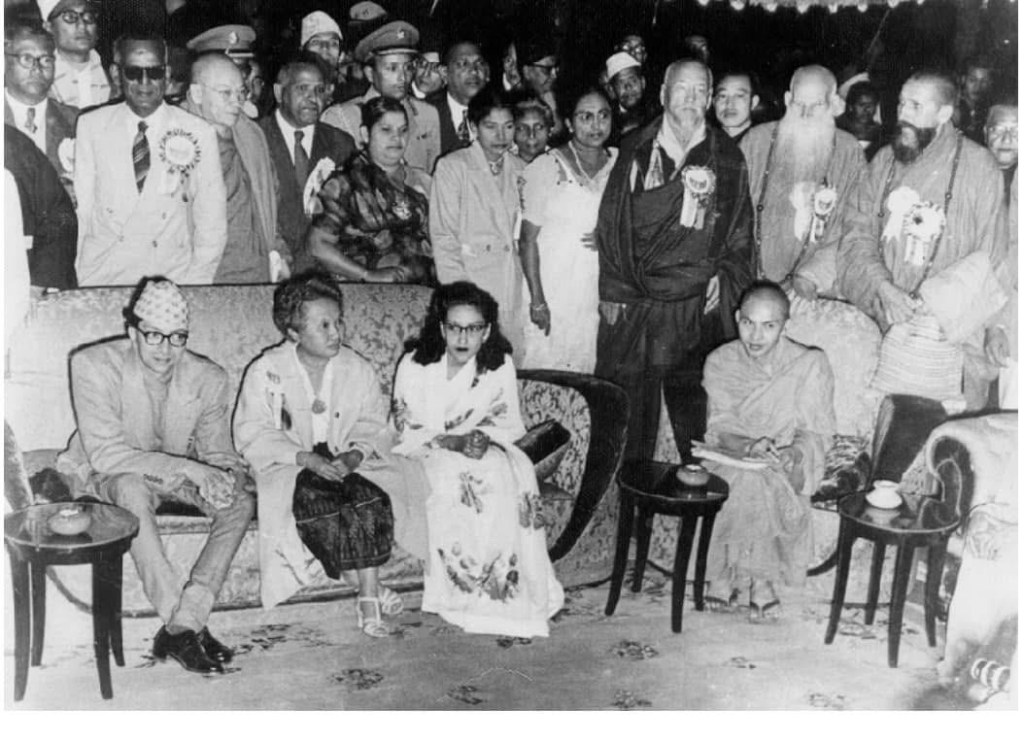
    • First Rector of ITBMU (International Theravada Buddhist Missionary University)
    • Passed away on August 13, 2005.
    • I served as Master of Ceremony at the Service.
    • I carried the Box of his Ashes and accompanied Saya U Myat Htoo (C68, President of TBSA) for the Scattering of the Ashes near Golden Gate Bridge, San Francisco.

    Publication

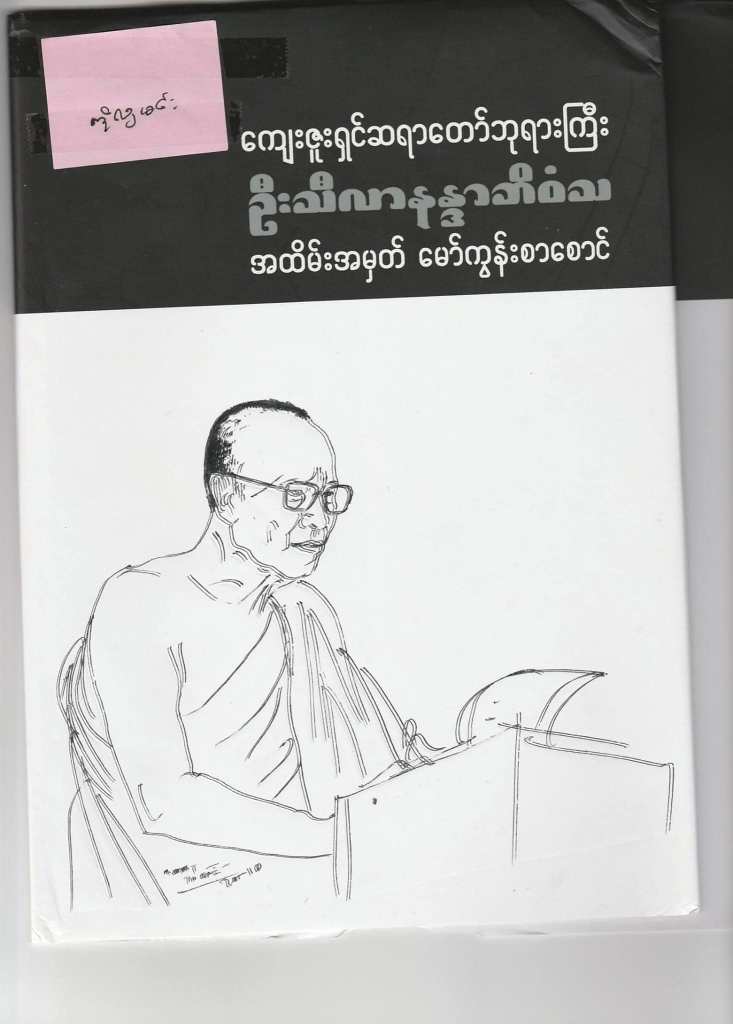
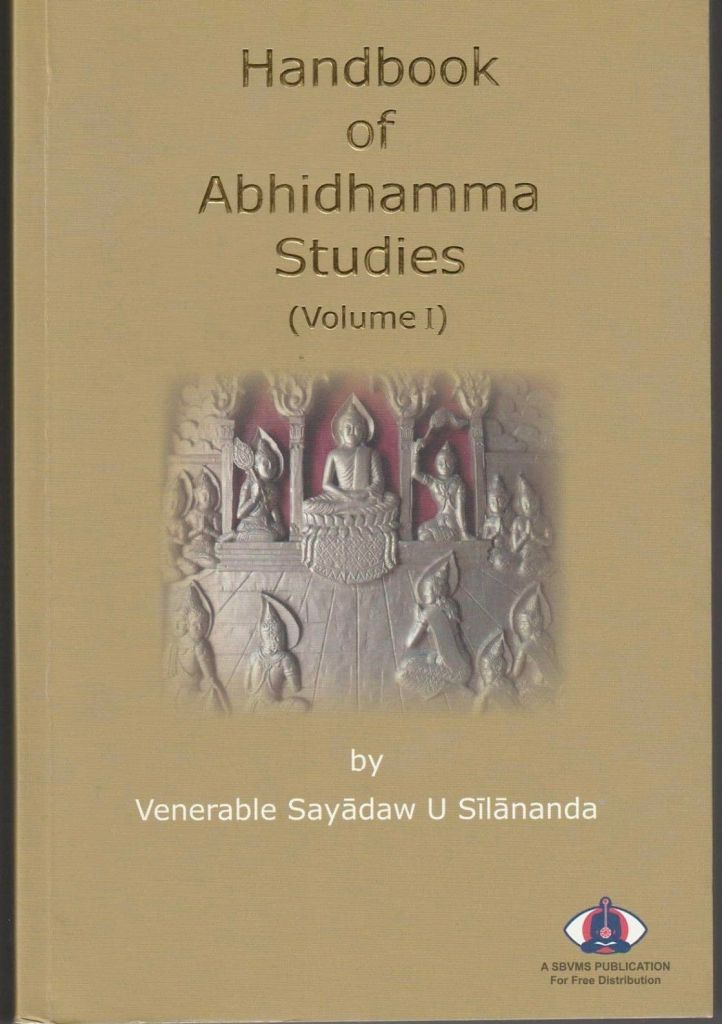
    • Book in memory of U Silananda
    • I was a member of the Committee & Contributing Editor
    Book

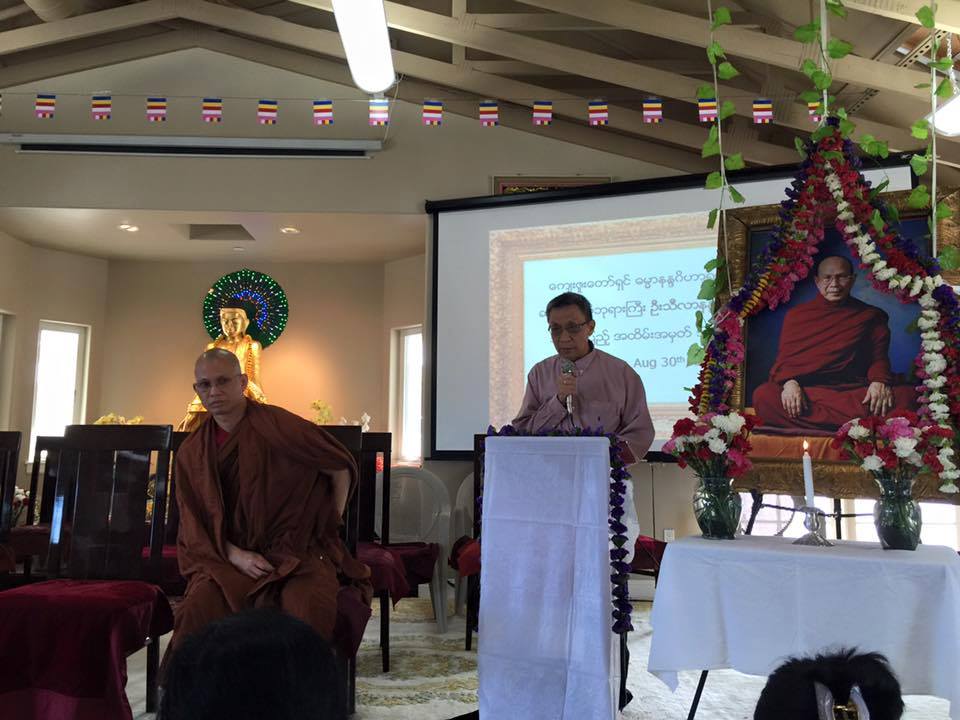
    August 30, 2015

    • Attended 10th Anniversary of Sayadaw U Silananda’s demise
    • Dhammanda Vihara, Half Moon Bay
    Invitation

    Ceremony

    C 1
    C 2
    C 3
    C 4
    C 5
    C6
    C 7
    C 8
    C 9
    C 10

    Posts

    • Abhidhamma
    • Dhamma Publications
    • Sayadaws
    • Trail blazers
    • TBSA
  • Sayadaws

    Sayadaws

    by Hla Min

    Updated : June 2025

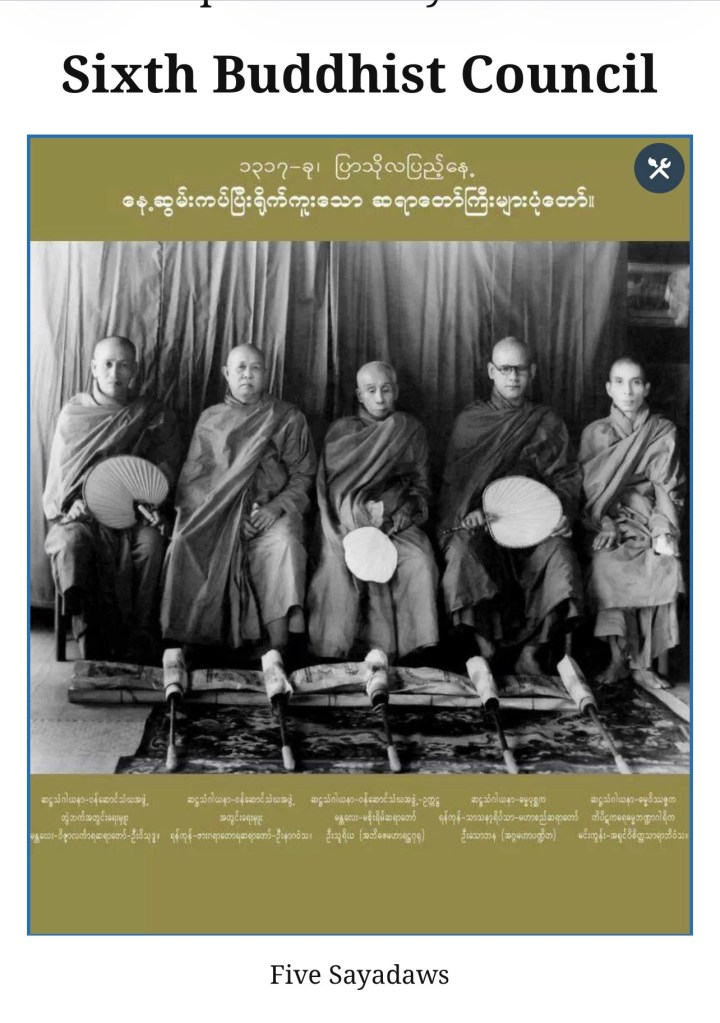
    Sixth Buddhist Council

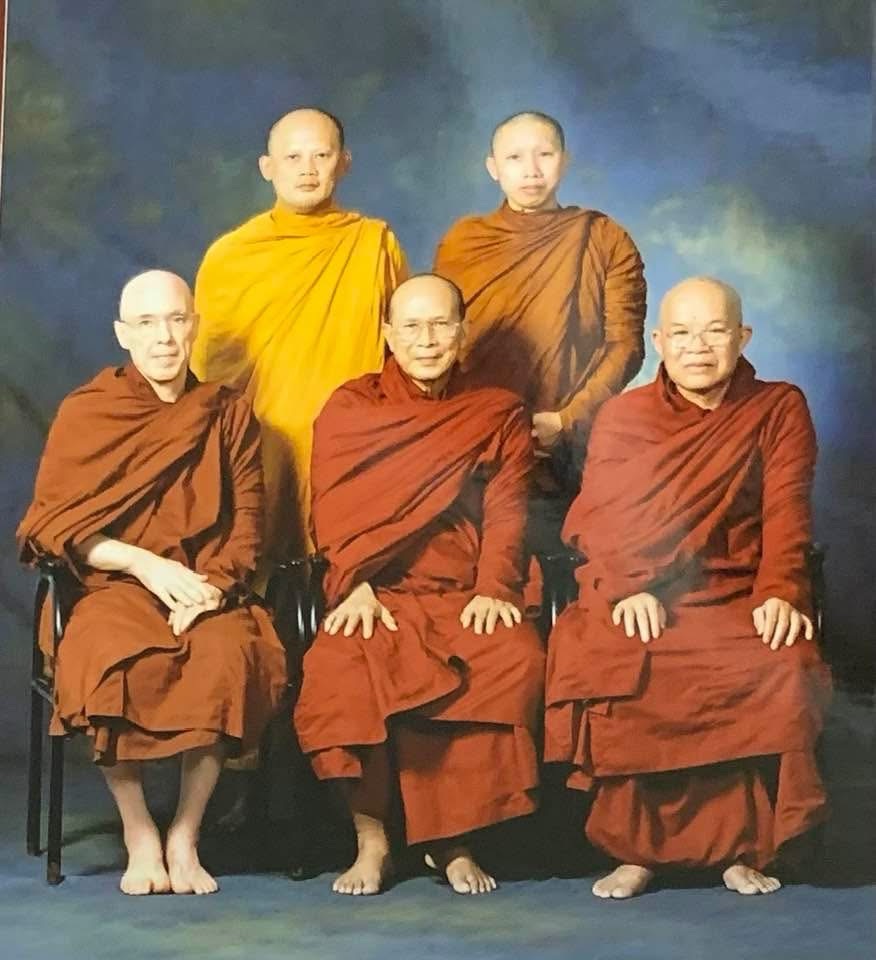
    Five Sayadaws

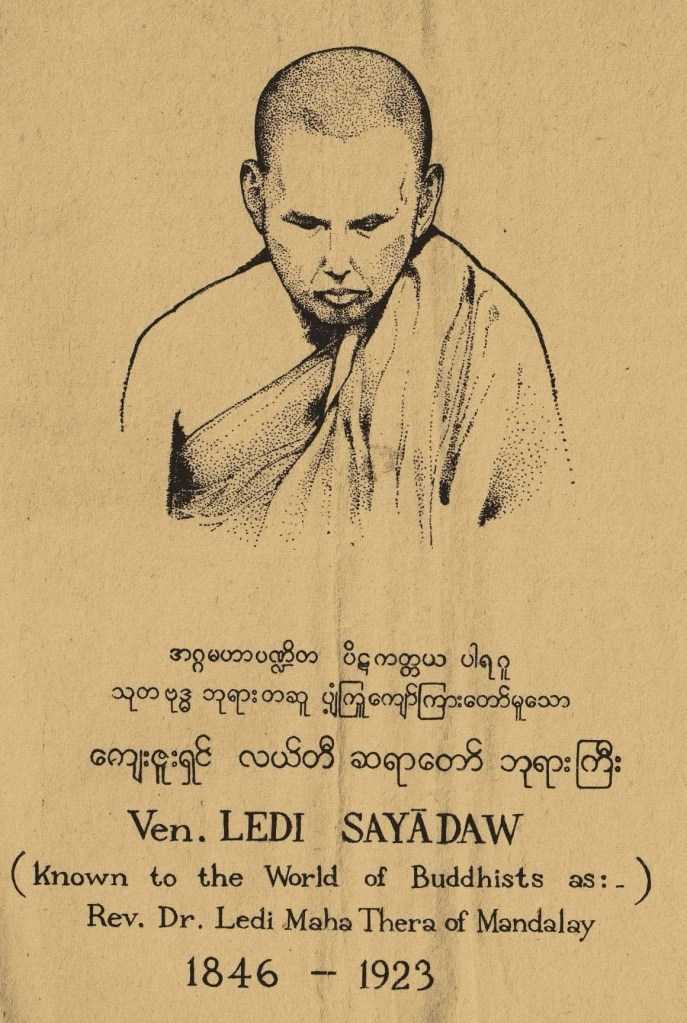
    Maha Thera Ledi Sayadaw U Nyana Daza

    • Prolific writer, an outstanding lecturer, and a teacher of teachers
    • Lay people in Burma were not known to teach Vipassana meditation
    • The Ledi tradition has a lineage of Vipassa teachers who are not ordained monks:
      Sayagyi U Thet,
      Sayagyi U Ba Khin,
      Sayagyi S. N. t

    Mingun Jetawun Sayadaw U Narada (1868 – 1955)

    • Credited as one of the major revivers of Vipassana meditation
    • Went to one Mingun Sayadaw, who presumably had studied meditation under Thee Gon Sayadaw, and asked for guidance.
      Was told to study Sattipattha (from the Scriptures) deeply and then practice meditation
    • Prominent disciples : Mahasi Sayadaw and Taung Pulu Sayadaw

    Sayadaw U Thittila (1896-1997)

    • Did missionary work in UK
    • Came back to Burma and taught at the Pali Department for several years before continuing his missionary work abroad
    • Lectured in 25+ countries (including US, UK, France)
    • Ovadacariya to Sanagha Maya Nayaka, trustees of renowned pagodas
    • Outstanding teacher and writer
    • Played an important role in reviving Buddhism in India and propagating the study of Abhidhamma
    • Very modest; rarely talked about his many achievements
    • Patamagyaw scholar of all Burma (1918) : selected from among 5000 candidates
    • Panyattisasanahita (1923) : among the 4 out of 150 entrants who passed the toughest monastic examination
    • Studied Sanskrit in India; English in India and England
    • Translated Vibhanga (second of the seven Adbhidhamma texts) from Pali to English : published by the Pali Text Society in 1969 under the title of The Book of Analysis

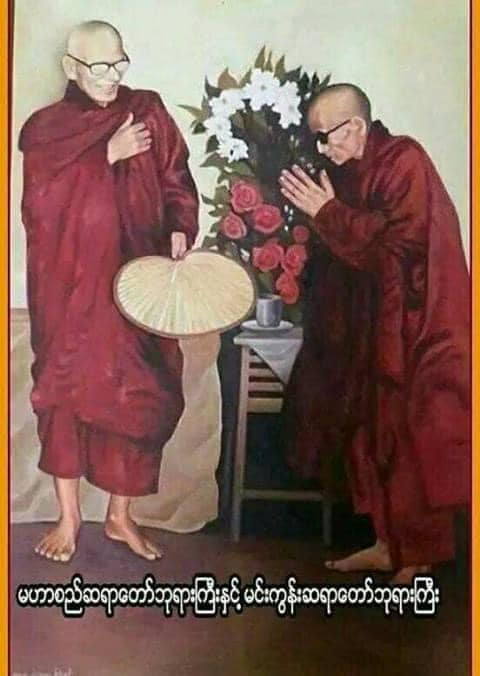
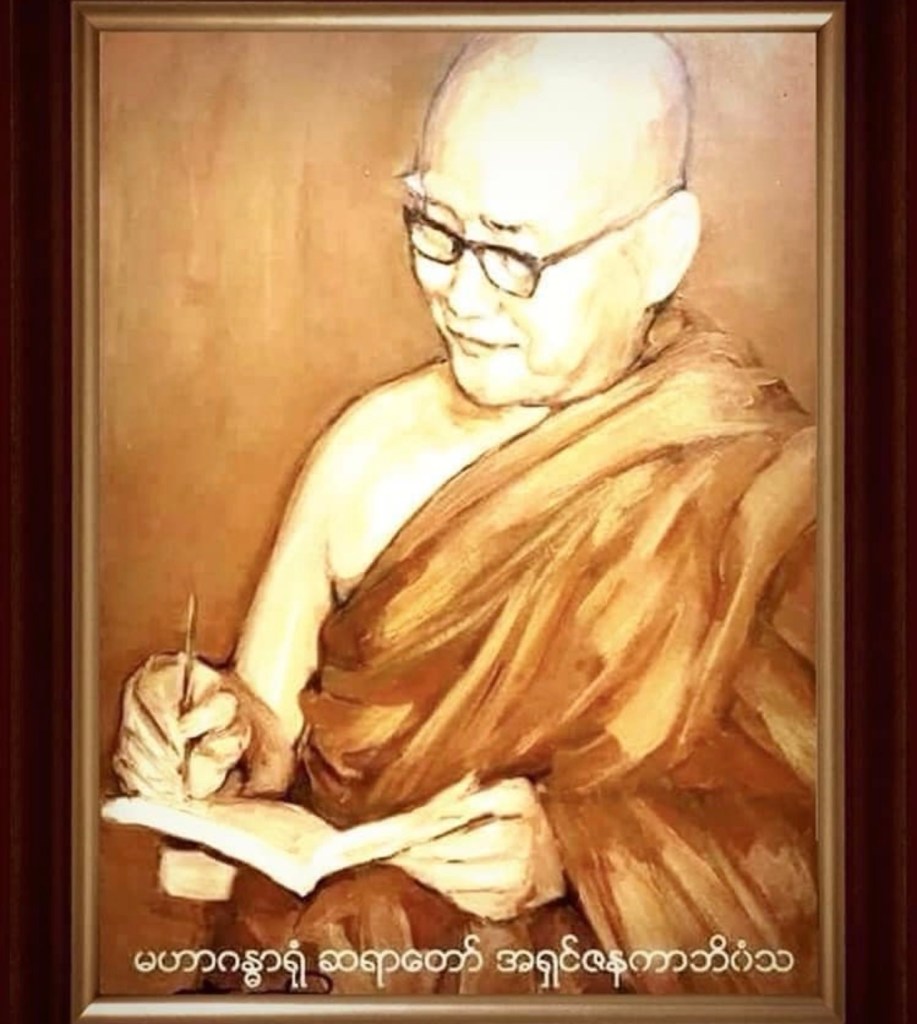
    Mahagandaryone Sayadaw Ashin Janakabhivamsa

    • Wrote several books in Pali and Burmese
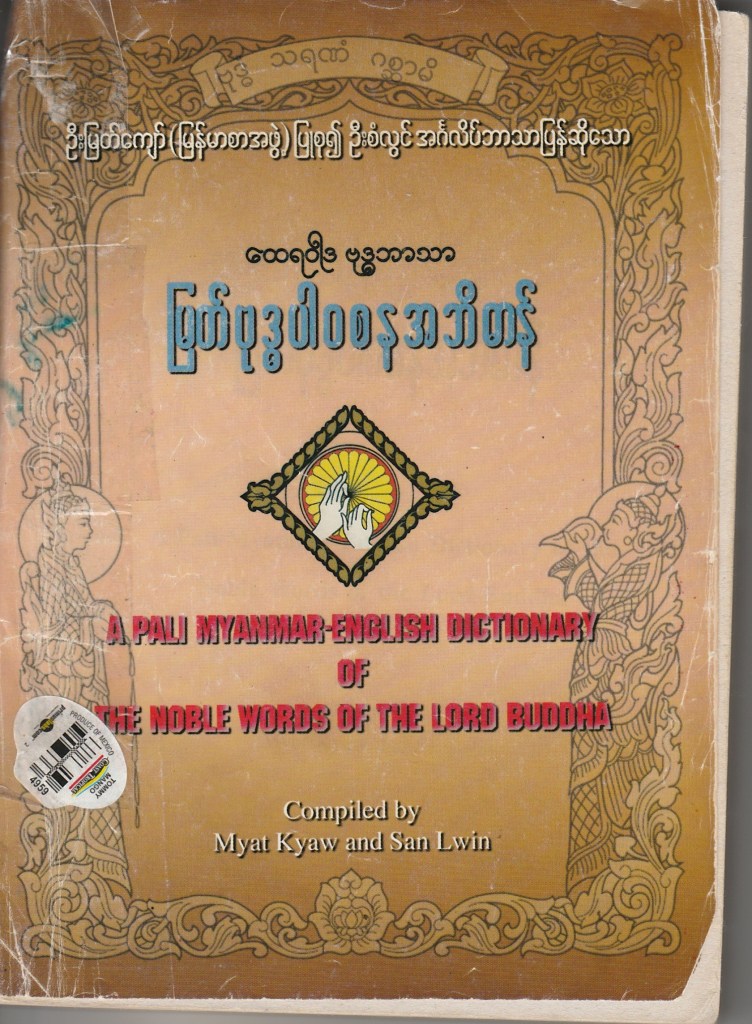
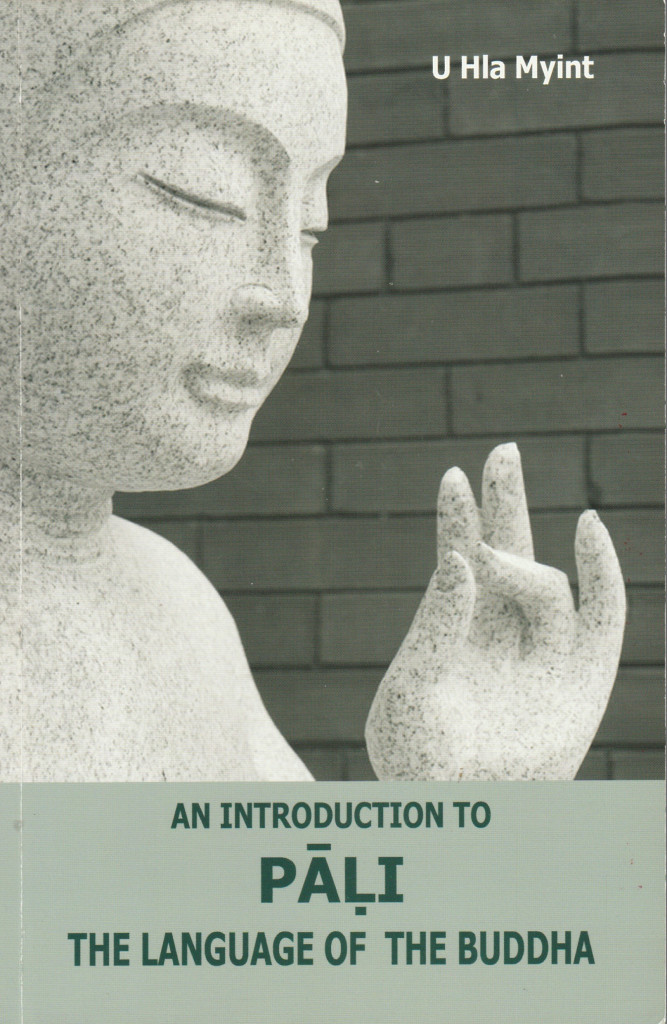
    • Several of his students including Thamane Kyaw Sayadaw and U Hla Myint are teaching “Pali Sikkha (Training)” to lay persons without overwhelming with Pali Grammar

    Mahasi Sayadaw U Sobhana

    Mahasi & Mingun Sayadaws
    Mahasi Sayadaw
    • Renowned Meditation Master and author
    • Served as Questioner at the Sixth Buddhist Council held at Kaba Aye, Rangoon, Burma
    • Chief Resident Monk of Mahasi Sasana Yeiktha
    • Mentees : Sayadaws U Pandita, U Kundala, U Janabhivamsa and many meditation teachers

    Panditarama Sayadaw U Pandita

    • Senior disciple of Mahasi Sayadawgyi
    • Renowned Meditation Master and author
    • Succeeded Mahasi Sayadaw U Sobhana at Sasana Yeiktha
    • Established Panditarama

    Saddhamaransi Sayadaw U Kundala

    • Senior disciple of Mahasi Sayadawgyi
    • Outstanding meditation teacher
    • Made Dhamma Duta missions abroad (until his health forced him to stop going on long, tedious trips).
    • His biography (which covers to the age of 85) and his works can be found in http://www.saddhamaransi.org/

    Chanmyay Sayadaw Ashin Janakabhivamsa

    • Practiced vipassana meditation with the instruction of Mahasi Sayadawgyi in 1953-54
    • Served as Palipatiwisodhaka (editor of Pali scriptures) at the Sixth Buddhist Council.
    • Meditation teacher at the Sasana Yeiktha from 1967 – 1977.
    • Member of Mahasi Sayadaw’s Dhamma Dhuta Mission to Europe and US in 1978 – 80
    • Established the Chanmyay Yeiktha Buddhist Meditation Center in Myanmar
      chanmyay.org
      Branches in several countries (e.g. US, Singapore, Australia)

    Mingun Tipitaka Sayadaw Ashin Vicittathara

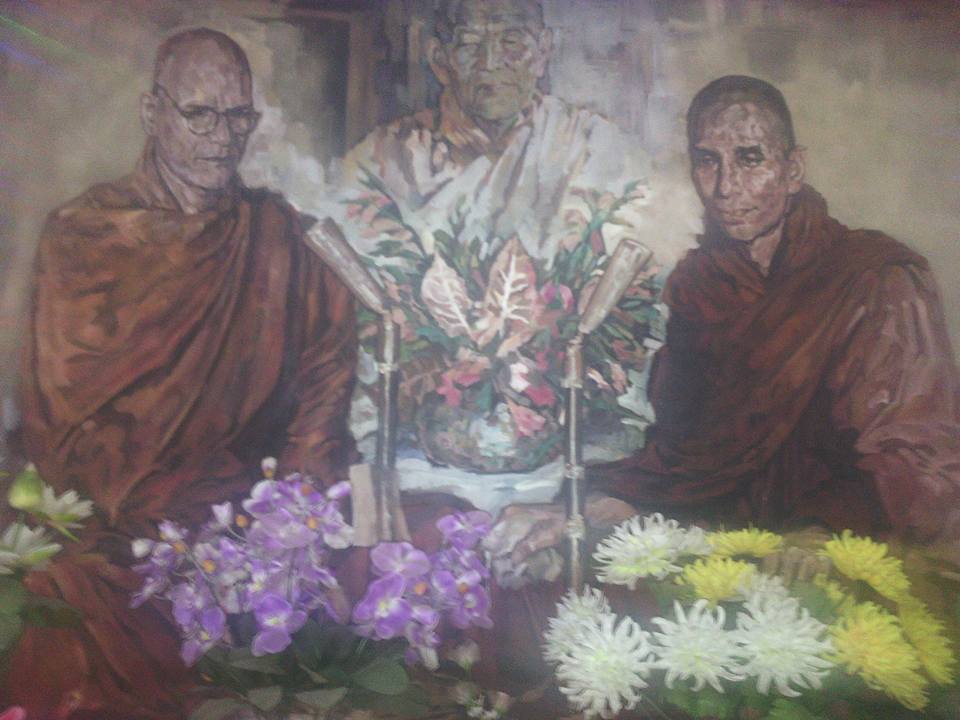
    Two Sayadaws at Sixth Buddhist Council
    • The Guinness Book of World Records listed Sayadaw as having an outstanding memory — the best at that time [in 1954].
    • Served as the Chief Reciter (a la Ashin Upali and Ashin Ananda at the First Buddhist Council) at the Sixth Buddhist Council held at KabaAye (World Peace) Pagoda in Rangoon, Burma from 1954 – 1956.
    • Could memorize, recall, and give exposition on 8027 pages of the Buddhist Scriptures known as Tipitaka [“Three Baskets”] :
      Vinaya – Rules of monastic conduct
      Sutta – Buddha’s discourses
      Abhidhamma – Ultimate reality)

    Mogok Sayadaw U Vimala (1899 – 1962)

    • Renowned Vipassana meditation master
    • 500 (or more) audio tapes of Sayadaw’s recordings have been transcribed into books (some e-books), and CDs
      Available at the Mogok Vipassana Meditation Centers
    • Featured in “Yahanda Hnit Poke Ko Htoo Myar” book by Dhammacariya U Htay Hlaing

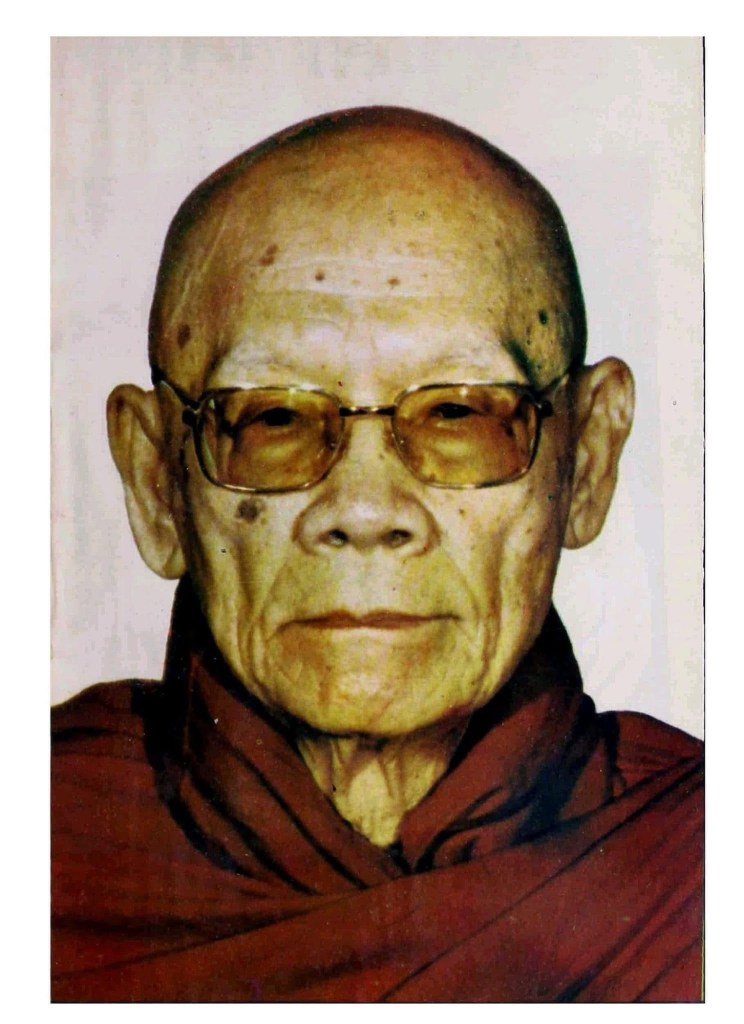
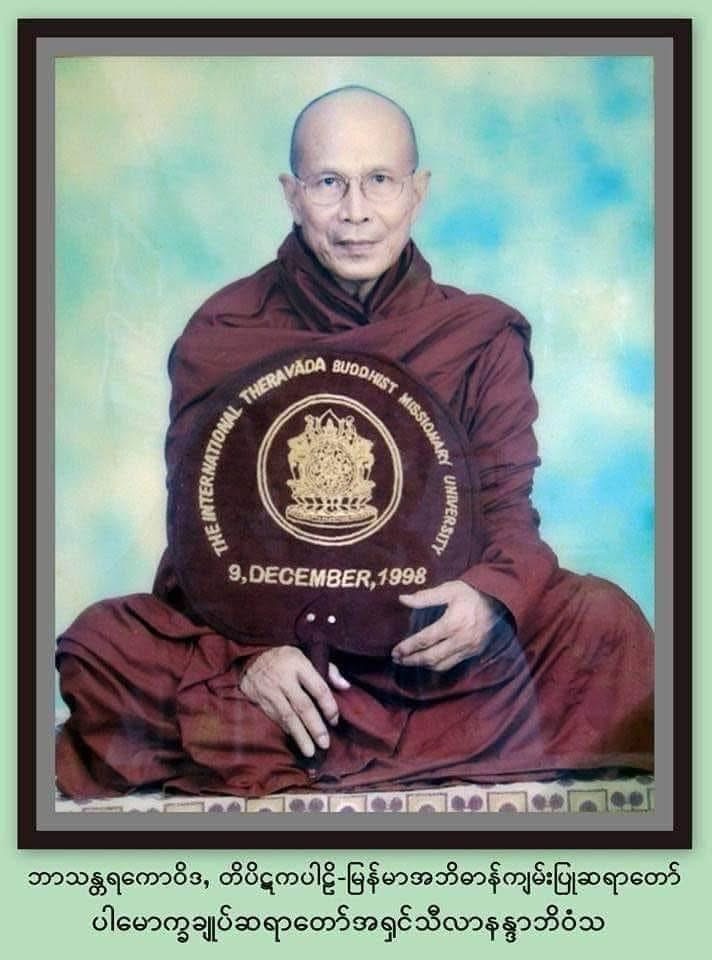
    Dhammananda Sayadaw U Silanandabhivamsa

    • External examiner for the Pali Department
    • Rector of ITBMU
    • Chief Resident Monk of Dhammananda Vihara
    • Spiritual Advisor of several monasteries and meditation centers
    • Wrote books in Pali, Burmese and English
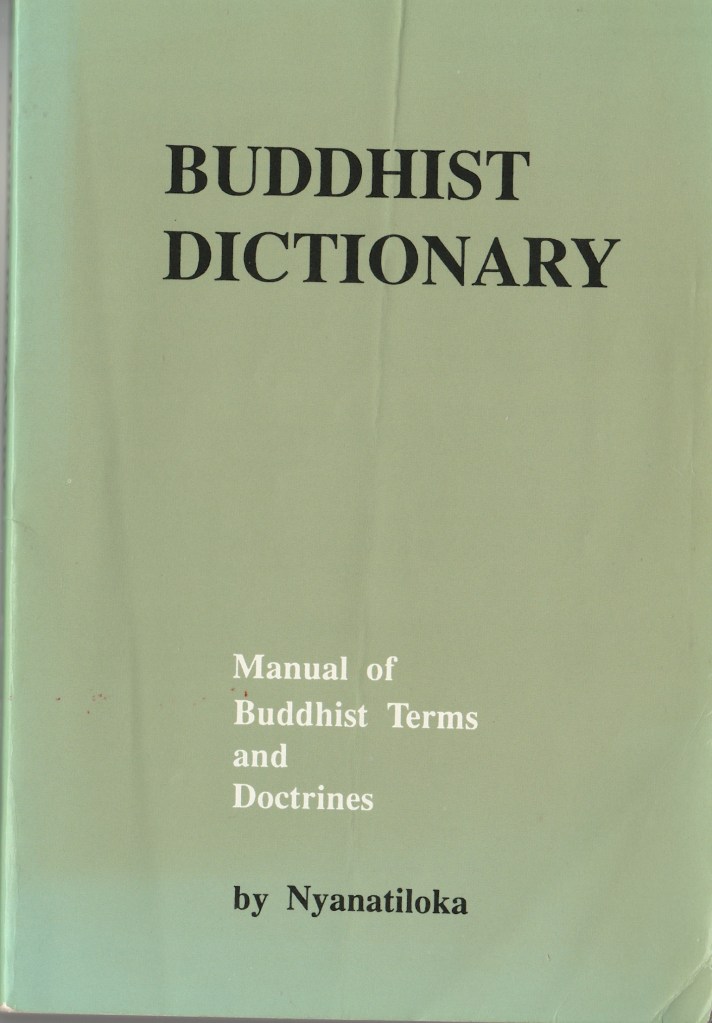
    • Served as Chief Compiler of the Tipitaka Pali-Myanmar Dictionary for the Sixth Buddhist Council.

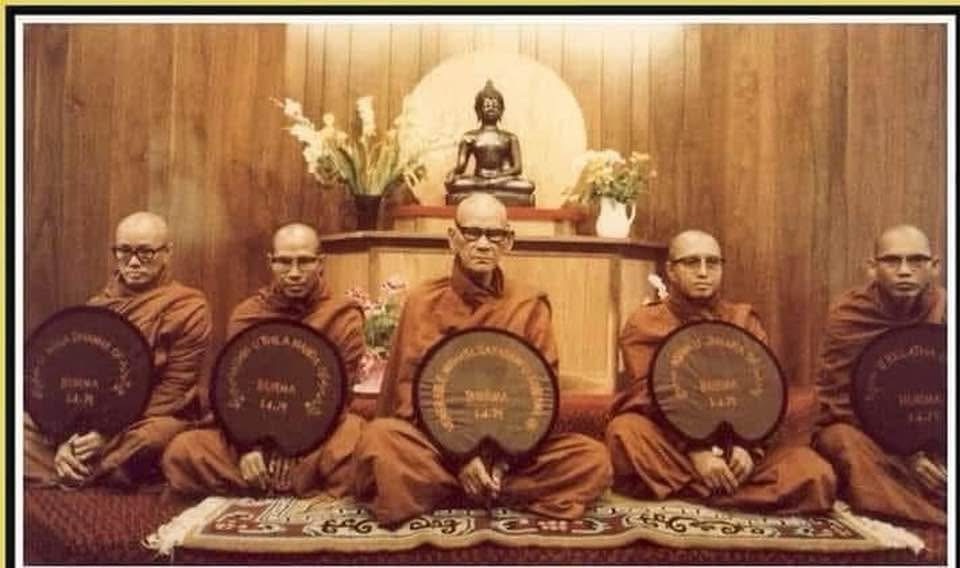
    In April of 1979, Mahasi Sayadawgi made a Dhamma Duta mission to the US. At the request of the devotees, Sayadawgyi agreed to leave behind Sayadaw U Silanandabhivamsa and Sayadaw U Kelasa as “trail blazers” for the promulgation, preservation, and the promotion of Sasana.

    There were no Burmese Buddhist monasteries and/or temples, but the Sayadaws were determined to sacrifice their blissful lives back in their homeland to do whatever they can to do the Sasana work.

    This image has an empty alt attribute; its file name is taya-oo-2002-a.jpg
    This image has an empty alt attribute; its file name is taya-oo-2002-b.jpg
  • Sayadaw

    Sayadaw

    by Hla Min

    Updated : June 2025

    Mahasi & Mingun

    Usage

    • Senior monk or the Chief resident monk of a monastery. Often used together with “U”. e.g Sayadaw U Sobhana
    • A distinguished sayadaw may be referred to as Sayadawgyi as a sign of reverence.
    • The terms “sayadaw” and “sayadawgyi” originally corresponded to the senior monks who taught the former Burmese kings. They may be influential teachers of the Buddhist Dhamma and also outstanding meditation practitioners. They usually are Abbots of monasteries or monastery networks with a large number of resident monks and a lay following.

    Honorific Terms

    • Several honorific terms exist for Buddhist monks, reflecting their achievements and number of Vassa spent.
    • The given name is extended with Prefixes, Suffixes and Titles

    Prefix

    • Achan (used in Thailand)
    • Ashin အသျှင်
    • Baddhanta ဘဒ္ဒန္တ
    • Bhikkhu ဘိက္ခူ
    • Maha Thera မဟာထေရ
    • Oo ဦး၊ ဥူး
    • Sayadaw ဆရာတော်
    • Sayadawgyi ဆရာတော်ကြီး
    • Shin ရှင်
    • Upazin ဥပဇင်း
    • Uzin ဦးဇင်း
    • U ဦး၊ ဥူး
    • Thera ထေရ
    • Venerable

    Suffix

    • [A]bhivamsa” အဘိဝံသ
      Pass “Set kyar thi ha Dhammacariya” examination before age 26
    • Lankara လင်္ကာရ
      Pass Lankara dhamma exam as a novice
    • Pa hta ma gyaw ပထမကျော်
      First in the “Pa hta Ma Pyan” examination
    • Thi ro ma ni သိရောမဏိ
      Finished 9 “kyans” in a single year
    • Wun tha ka ဝံသက
      First in the “Set kyar thi ha Dhammacariya” examination

    Title

    Some monks may highlight their accomplishments

    • Dhammacariya ဓမ္မာစရိယ
      Dhamma lecturer
    • Thamane Kyaw သာမဏေကျော်
      Stood first in the Lankara examination
    • Pali Paragu ပါဠိပါရဂူ
      Completed the examination in Pali
    • Agga Maha Pandita အဂ္ဂမဟာပဏ္ဍိတ
      Senior sage
    • Tipitaka Dara တိပိဋကဓရ
      Completed Three Baskets — “Vinaya”, “Sutta”, and “Abhidhamma”
    • Dwee Pitaka Dara ဒွိပိဋကဓရ
      Completed Two Baskets
    • [informal] “Ta Pone Saung” တပုံဆောင်
      Completed One Basket
    • [informal] “Hna Pone Khwair Saung” နှစ်ပုံခွဲဆောင်
      Completed “Vinaya”, “Sutta” and the first part of “Abhidhamma”

    U Vicittasarahhivamsa

    A monk may be addressed by

    • his given Dhamma name
      e.g. U Vicittasara
    • a qualified name,
      e.g. U Victtasarabhivamsa (with the suufix -abhivamsa)
    • by the name of his monastery
      e.g. Mingun Sayadaw
    • title
      e.g. Tipitakadara
    • and the combination
      e.g. Tipitakadara Mingun Sayadaw U Vicittasarabhimvamsa

    Venerable Mingun Sayadaw U Vicittasarabhivamsa, served as “Chief Respondent” at the Sixth Buddhist Council (1954 – 1956) in Yangon,

    He earlier passed the Tipitaka Examination with Distinctions in all subjects.

    The Guinness Book of World Records recognized his memory and the feat of reciting 8000+ pages of the Pali Canon.

    Thus, he could be addressed in several ways “

    • Mingun Sayadaw
      Reference to his home monastery at Mingun
    • U Vicittasara
      Name given at the Ordination
    • U Vicittasarabhivamsa
      Passed the Mandalay Setkya Thiha examination before age 26
    • Sayadaw U Vicittasarabhivamsa
      Chief Resident Monk
    • Mingun Sayadaw U Vicittasarabhivamsa
      Chief Resident Monk of a monastery in Mingun
    • Tipitaka Sayadaw U Vicittasarabhivamsa
      Passed Tipitaka examination
    • Tipitakadhara Dhammabhandakarika Sayadaw U Vicittasarabhivamsa
      First monk to be awarded the titles Tipitakadhara (“Bearer of the Tipitaka) and Dhammabhandakarika (“Treasurer of the Dhamma”).

    Posts

    • Buddhist Councils
    • Phenomenal Memory
    • Triple Gems
  • Abhidhamma

    Abhidhamma

    by Hla Min

    Updated : June 2025

    Abhidhamma Newsletter
    Volume 1 Number 3 (April 1999)
    Adviser: Venerable U Silananda
    Editor: Maung Tin-Wa (Ph.D.)
    Editorial Board: James Cameron, U Aye Cho, Aung Khin (M.D.).
    Marc F. Lierberman (M.D.), Yan Naing Lwin (Ph.D.),
    Sarah E, Marks, Tin Than Myint (M.D.), Bach Dong Nhut,
    U Han Nyo, Phil Rohrer, Larry Rosenberg,
    Anna Spievogel (M.D., Ph.D.), Tin Myo Than (M.D.),
    Hla N. Tin (Ph.D.), Rita Adelman
    BGraphic Designer: Scott Jordan
    Transcribing and Word Processing: Pat McMahon
    Published by the Abhidhamma Study Group of Dhammachakka Meditation Center, Berkeley, C.A.

  • Kamma

    Kamma

    by Khin Maung U

    Updated : June 2025

    Dr. Khin Maung U

    First published in Ashin Kelatha Journal in 1999.

    by Dr. Khin Maung U

    Kamma is a Pali word meaning action or doing. In its general sense kamma means all good and bad intentional actions whether mental, verbal or physical (thoughts, words and deeds). In the Buddhist teachings, all physical (kãrya kamma), verbal (vacî kamma) and mental (mano kamma) actions are known as the three kammas. All beings perform these three kammas at all waking hours. All their work, great or small, is performed by means of these three kammas. These three kammas become inert when a person is asleep. In the case of a dead person, the three kammas cease to function as far as that body is concerned.

    In its ultimate sense, kamma means all moral and immoral volition. The Buddha says:
    “O Bhikkhus, I declare that volition (cetanã) is kamma. Having volition, one acts by body, speech and thought” (Aînguttara Nikãya).

    When any action of thought, word or body takes place, volition determines or causes its concomitants to perform their respective functions simultaneously. For this reason, volition is predominant in all actions. Involuntary, unintentional or unconscious actions, though technically deeds, do not constitute kamma, because volition, the most important factor in determining kamma, is absent. Thus, the real nature of action (kamma) of man is mental.

    According to Abhidhammã, 29 types of consciousness (Citta) consisting of (i) 12 types of immoral consciousness (akusala citta) and (ii) 8 types of moral consciousness (kusala citta) from among the 54 types of mundane consciousness (kãmãvacara citta) pertaining to the sentient realm, (iii) 5 types of moral consciousness (kusala citta) pertaining to the realms of form (rüpãvacara citta or jhãnas), and (iv) 4 types of moral consciousness (kusala citta) pertaining to the formless realms (arüpãvacara citta or jhãnas), are called kamma because they have the power to produce their due effects quite automatically, independent of any external agency.

    The eight types of supramundane consciousness (lokuttarã citta) are not regarded as kamma because they tend to eradicate the roots of kamma; in them, the predominant factor is wisdom (paññã) while in the mundane, it is volition (cetanã).

    Inherent in kamma is the potential of producing its due effect.

    Every volitional action is inevitably accompanied by its due effect just as every object is accompanied by its shadow. Kamma is action and vipãka, fruit or result, is its effect. If kamma is likened to a seed, then the fruit, arising from the tree, is vipãka, effect or result. As kamma may be good or bad, so may vipãka be good or bad. As kamma is mental, so vipãka, too, is mental; it is experienced as happiness or misery, according to the nature of the kamma seed. The concomitant material conditions may be advantageous (ãnisamsa) such as prosperity, health and longevity, or disadvantageous (ãdinava) such as poverty, ugliness, disease, short life-span, etc.

    As surely as water seeks its own level, so does kamma, given opportunity, produce its inevitable result not as reward or punishment, but as an innate sequence. From a Buddhist standpoint, happiness and misery are not rewards and punishments assigned by a supernatural, omniscient power to one that has done good or evil. The sequence of action and effect is a natural law of kamma.

    There are inequalities and many different destinies of human beings in the world. For example, one perishes in infancy and another lives to the age of eighty or more, one is sick and infirm and another healthy and strong, one is a millionaire and another a pauper, one is handsome and another ugly, one is brought up in luxury and another in misery, one is a genius and another a half-wit.

    What is the cause of these inequalities? The Buddha’s reply is:
    “All living beings have actions (kamma) as their own, their inheritance, their congenital cause, their kinsman, their refuge. It is kamma that differentiates beings into low and high states” (Majjhima Nikãya).

    According to Buddhism, the disparities that exist in the world are not due to blind chance. They are due, to some extent, to heredity and environment, and, to a greater extent, to kamma which includes not only the present kamma, but also the proximate or remote past kamma. While Buddhism teaches that kamma is the chief cause of inequalities in the world, it does not teach fatalism or the doctrine of pre-destination.

    In the Aînguttara Nikãya, the Buddha states: “If anyone says that one must reap according to his deeds, in that case there is no religious life nor is an opportunity afforded for the entire extinction of sorrow. But if anyone says that which one reaps accords with one’s deeds, in that case there is a religious life and an opportunity afforded for the entire extinction of sorrow.”

    Thus, Buddhism does not hold the view that everything is due to past kamma. Kamma is not fate. Kamma is not irrevocable destiny imposed upon us by some unknown power to which we must helplessly submit ourselves. The past influences the present but does not entirely control it, for kamma of the past as well as the present are in effect in the present. The past and present influence the future. One’s action (kamma) of a later day may modify the effects of one’s action (kamma) of a former day.
    One may at any moment change for the better or for the worse. In Buddhism, therefore, man has a certain amount of free will, and there is almost every possibility to mould one’s kamma. If this were not so, what possibility would there ever be of a man’s getting free from all kamma forever. It would be perpetually self-continuing energy that could never come to an end.

    What is the cause of kamma? Ignorance (avijjã), not knowing things as they truly are, is the chief cause of kamma. Dependent on ignorance arise kammic activities. Associated with ignorance is its ally, craving (tanhã), the other root cause of kamma. Evil actions are conditioned by these two causes. All good deeds of a worldling, though associated with the three wholesome roots of generosity (alobha), goodwill (adosa) and knowledge (amoha), are nevertheless regarded as kamma because the two roots of ignorance (avijjã) and craving (tanhã) are dormant in him.

    Who is the doer of kamma? Who experiences the effects? Volition (cetanã) is itself the doer. Feeling (vedanã) is itself the reaper of the fruits of action. Apart from these pure mental states there is none to sow and none to reap.

    Venerable Buddhaghosa writes in Visuddhimagga:
    “No doer is there who does the deed,
    Nor is there one who feels the fruit,
    Constituent parts alone roll on,
    This indeed is right discernment.”

    Where is kamma? Kamma is not stored anywhere within or without the body. It is not stored somewhere in this fleeting consciousness or in any other part of the mind or the body. But dependent on mind and matter kamma rests, manifesting itself at the opportune moment. Thus, kamma is an individual force, and is transmitted from one existence to another.
    Buddhism teaches that there is no permanent soul, no eternal, immortal soul that directs one’s action. So, if there is no soul, what is it that is reborn? The answer is kammic energy: the actions we have done. These actions do not disappear unless or until they have produced their effects. So each being has body and mind as a result of actions they did in the past or in the present, and thus this kammic action goes on and on.

    Kamma may be classified in many ways.
    Kamma is classified into four kinds according to the time at which results are produced:
    1. kamma that produces results in the same life-time (Ditthadhammavedaniya kamma);
    2. kamma that produces results in the next life (Upapajjavedaniya kamma);
    3. kamma that produces results in any one (or more) of successive births and is indefintely effective (Aparãpariyavedaniya kamma);
    (These first three types require auxiliary causes such as circumstances, surroundings, etc., to produce an effect.)
    4. and, kamma that does not produce any result (Ahosi kamma).

    The timing of the results of kamma depends upon which thought-moment is associated with the thought-processes (cittavîthi) of volition (cetanã). According to Abhidhammã one thought-process is completed at the expiration of seventeen thought-moments, consisting of seven initial thought-moments followed by seven javana states (at which point an action is judged whether it be moral or immoral, and kamma is performed) and subsequently by votthapana (determining consciousness) and two Tadãlambana (registering consciousness).

    Of the seven javana thought-moments, the effect of the first javana thought-moment is the weakest in potentiality, and is manifested in this life (Ditthadhammavedaniya kamma). If it does not operate in this life, it becomes ineffective (Ahosi kamma).

    The next weakest is the seventh javana thought-moment; its effect is reaped in the subsequent birth (Upapajjavedaniya kamma). This, too, becomes ineffective (Ahosi kamma) if it does not operate in the next rebirth.

    The effect of the five intermediate javana thought-moments (Aparãpariyavedaniya kamma) may take place at any time in the course of one’s wanderings in life continua (Samsãrã) until the final emancipation. No person – not even the Buddha and Arahants – is exempt from this kamma.

    Kamma is also classified into four kinds according to its particular function (kicca):
    1. Janaka (Reproductive) kamma which conditions the next rebirth;
    2. Upatthambhaka (Supportive) kamma which assists or maintains the results of already-existing kamma;
    3. Upapilaka (Counteractive) kamma which suppresses or modifies the result of the reproductive kamma; and
    4. Upaghãtaka (Destructive) kamma which destroys the force of existing kamma and substitutes its own resultants.

    Again, it is the last (seventh) javana thought-process – Janaka (Reproductive) kamma – that determines the state of a person in his/her subsequent birth. As a rule, the last javana thought-process depends on the general conduct of a person. In exceptional cases, perhaps due to favorable or unfavorable circumstances, at the moment of death a good person may experience a bad last javana thought and a bad person a good one. The subsequent birth will be determined by this last javana thought-process, irrespective of the general conduct. This does not mean that the effects of the past actions are obliterated. They will, in turn, produce their inevitable results at the appropriate moment.

    o assist and maintain or to weaken and obstruct the fruition of this reproductive (Janaka) kamma, another past kamma may intervene, being supportive (Upatthambhaka kamma) or counteractive (Upapilaka kamma), respectively.

    The reproductive (Janaka) kamma can be totally annulled by Upaghãtaka (Destructive) kamma which is a more powerful opposing past kamma, that, seeking an opportunity, may quite unexpectedly operate; it is more powerful than the above two in that it not only obstructs but also destroys the whole force of existing kamma.

    There is another classification of kamma according to the priority of effect:
    1. Garuka (Weighty or serious) kamma which produces its effects for certain in the present life or in the next (On the moral side, these weighty actions are the jhanas, while on the immoral side, they are heinous crimes (ãnantariya kamma) namely, matricide, parricide, the murder of an Arahant, the wounding of the Buddha, and the creation of a schism in the Sangha);
    2. Ãsanna (death proximate) kamma which is the action that one does or recollects – mentally or physically – immediately before the moment of death and it determines the conditions of the next birth;
    3. Ãcinna (habitual) kamma which is action that one performs and recollects constantly, and in the absence of death-proximate kamma, produces and determines the next birth; and
    4. Katattã kamma which is the last in priority of results and is the unexpended kamma of a particular being that has followed him/her through the continua of kappas (Samsãrã), and it conditions the next birth if there is none of the above kammas to operate.

    Kamma is further classified according to the place in which the results are produced:
    (1) Immoral (akusala) kamma that produces its effects in the plane of misery: Immoral (akusala) kamma is rooted in greed (Lobha), anger (Dosa) and delusion (Moha). There are ten immoral (akusala) actions (kamma):
    • killing (pãnãtipãtã),
    • stealing (adinnãdãnã),
    • sexual misconduct (kãmesu micchãcãrã)
    {these three are committed by deed},
    • lying (musãvãdã),
    • slandering (pisunãvãcã),
    • harsh language (pharusãvãcã),
    • frivolous talk (samphappalãpa) {these four are committed by word},
    • covetousness (abhijjhã),
    • ill will (vyãpãda), and
    • false view (micchãditthi)
    {these three are committed by mind}.
    (2) Moral (kusala) kamma which produces its effects in the plane of the world of desires: There are ten moral (kusala) actions (kamma):
    • alms-giving (dãna),
    • observance of five or eight precepts (sîla),
    • practicing meditation (bhãvanã),
    • reverence (apacãyana),
    • service (veyyãvacca),
    • sharing of merit (pattidãna),
    • rejoicing in others’ good actions (pattãnumodanã),
    • hearing the doctrine (dhammasavana),
    • expounding the doctrine (dhammadesanã),
    • and, forming correct views (ditthijukamma).
    (3) Moral (kusala) kamma that produces its effects in the realms of form (Rupa): It is of five types, which are purely mental actions (meditation) leading to the five states of rüpa jhãna.
    (4) Moral (kusala) kamma which produces its effect in the formless realms: These are four types of purely mental actions (meditation) leading to four types of moral consciousness (arüpa jhãna).

    Kammasakatã Sammã-ditthi: Right understanding of the truth about the fact that in the case of beings only the two things – namely, good and bad actions done by them – are their own possessions that always accompany them throughout their life continua, wherever they may wander in Samsãrã.

    1. Sabbe sattã kammasakã: Only the volitional good or bad actions done by all sentient beings are their own possessions that always accompany them wherever they may wander in Samsãrã.

    2. Sabbe sattã Kamma dãyãdã: All beings are the heirs of their own kamma (good or bad actions).
    The kamma performed by beings are always theirs in their future existences. Only Kamma is inherited by beings. The effects of one’s kamma always accompany one in many existences yielding good or bad results at the opportune moments. One can never get rid of that kamma, but one has to enjoy or suffer its results under appropriate circumstances.

    3. Sabbe sattã Kamma yoni: All beings are the descendants of their own kamma.
    With regard to the present good and evil results, one’s own kamma performed in the present existence with wisdom and knowledge or otherwise as well as one’s own wholesome kamma such as alms-giving, morality, etc., and unwholesome kamma such as killing beings, etc., performed in past existences are the primary causes (parents) of good and evil results.

    4. Sabbe sattã Kamma bandhü: Kamma alone is the real relative that all beings can rely on through their life continua in Samsãrã.
    Parents, brothers, relatives, etc, whom we love and rely upon, can be loved and relied upon for only a short period, i.e., before our death. One’s own physical, verbal and mental kamma are one’s constant companions who accompany one in future existences, wholesome kamma giving happiness and prosperity. Thus, one’s wholesome kamma alone is one’s real relative who should be esteemed and relied upon.

    5. Sabbe sattã Kamma patisaranã: Kamma alone is the real refuge of all beings.
    Here, refuge means reliance upon or taking shelter for protection against troubles and dangers. Unwholesome kamma will lead one to be reborn to the lower world where one has to suffer grievously. Performing wholesome kamma will lead one to be reborn as a man or deva, and save him from the lower worlds in the future existences.

    In Buddhism, there are four kinds of taking refuge for the future:
    (i) taking refuge in the Buddha,
    (ii) taking refuge in the Dhamma,
    (iii) taking refuge in the Sangha, and
    (iv) taking refuge in one’s own wholesome kamma.

    This is explained by the following example. All worldlings who indulge in sensual pleasures resemble sick persons who, to be cured, would take refuge in the chief physician (the Buddha), in good medicines (the Dhamma), in the assistant physicians (the Sangha) and in following the physician’s directions (physical, verbal and mental wholesome kamma).

    The three refuges, Buddha, Dhamma and Sangha, exist only during the Buddhasãsana. They do not exist outside the Buddhasãsana.

    The refuge of wholesome kamma exists both within and outside the Buddhasãsana. We can never be free from kamma that is operating all the time in this universe as well as in other innumerable universes. For this reason, kamma is our refuge throughout our life-continua in Samsãrã.

    6. Yam kammam karissanti kilayãnam vã pãpakam vã tassa kammassa dãyãdã bhavissanti: Whatever good or bad actions are done by beings bodily, verbally or mentally, they become the heirs of their kamma.