The course in Burmese is available in CD and MP3 tapes.
The course is English is available as a 3-volume book.
Abhidhamma Course (in Burmese)
Abhidhamma (Burmese)
Sayadaw U Silananda gave a course at Dhammananda Vihara (then in Daly City) over several weekends.
Saya U Tin Maung Nyunt (M60) completed the course.
Some devotees converted the 26 tapes into MP3 format.
Ko Jeffrey (from Fremont) loaded them onto an MP3 player, and offered them as dhamma dana to students taking Abhidhamma courses.
Handbook of Abhidhamma Studies
Three Volumes by Venerable Sayadaw U Silananda
Transcription by Sarah E Marks
Abhidhamma (English)Back cover
Dr. Nandamalabhivamsa
Dr. Nandamalabhivamsa
He succeeded U Silanandabhivamsa as Rector of IMBTU
He taught Abhidhamma in Myanmar and beyond.
Fundamental Abhidhamma Part I was first taught in 1997 at Maryland, USA. The book was edited by Dr. Khin Maung U (First in Burma in the Matric exam of 1963). The second edition was published by the Center of Buddhist Studies (CBS), Sagaing Hills in 2005.
Fundamental Abhidhamma Part II was published by the Center of Buddhist Studies (CBS), Sagaing Hills in 2007.
Fundamental
Fundamental Abhidhamma
Part I
By Dr. Nandamalabhivamsa
First edition : June 1997
Editor : Dr. Khin Maung U
Myanmar-Buddhist Meditation Society, Baltimore, Maryland, USA
Second, extended edition : January 2005
revised : November 2005
Center for Buddhist Studies (CBS), Sagaing Hills, Sagaing, Myanmar
Contents
The History of Abhidhamma
(1) Why is it called Abhidhamma? (2) Who is the author? … (8) The role of Abhidhammattha sangaha (9) The role of Vibhavani (10) Ledi Sayadaw (11) Paramatthadipani, the critic of Vibhavani
Ashin Garudhamma teaches two courses at the monastery in Spady, Fremont.
One is Pali.
The other is Abdhidhamma.
Gary dhamma
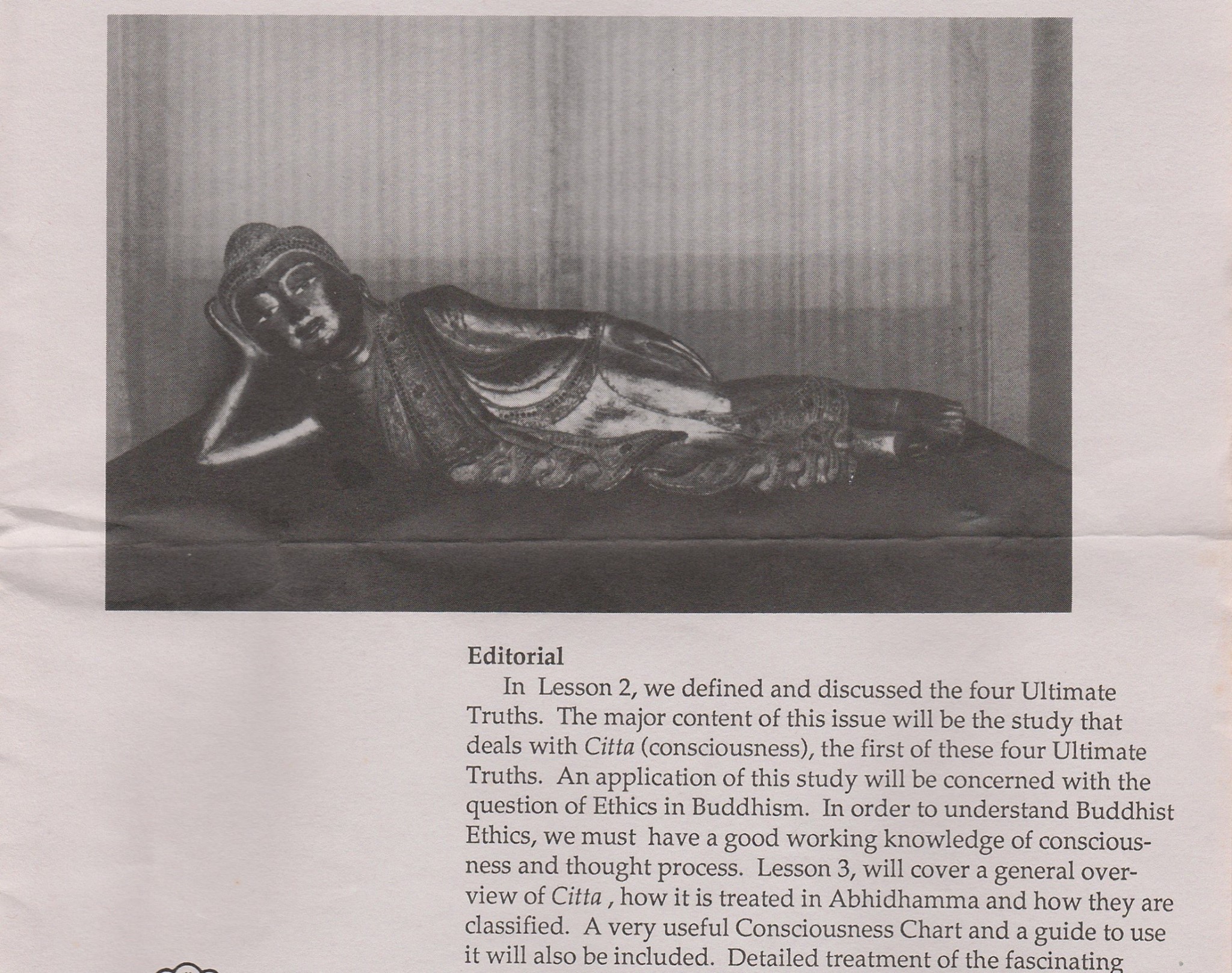
Abhidamma Newsletter (1999)
Sayadaw U Silanandabhivamsa was Patron of Dhammachakka Meditation Center, Berkeley, C.A.
Abdhidhamma Newsletter was published by the Abhidhamma Study Group of DMC.
Abhidhamma Newsletter
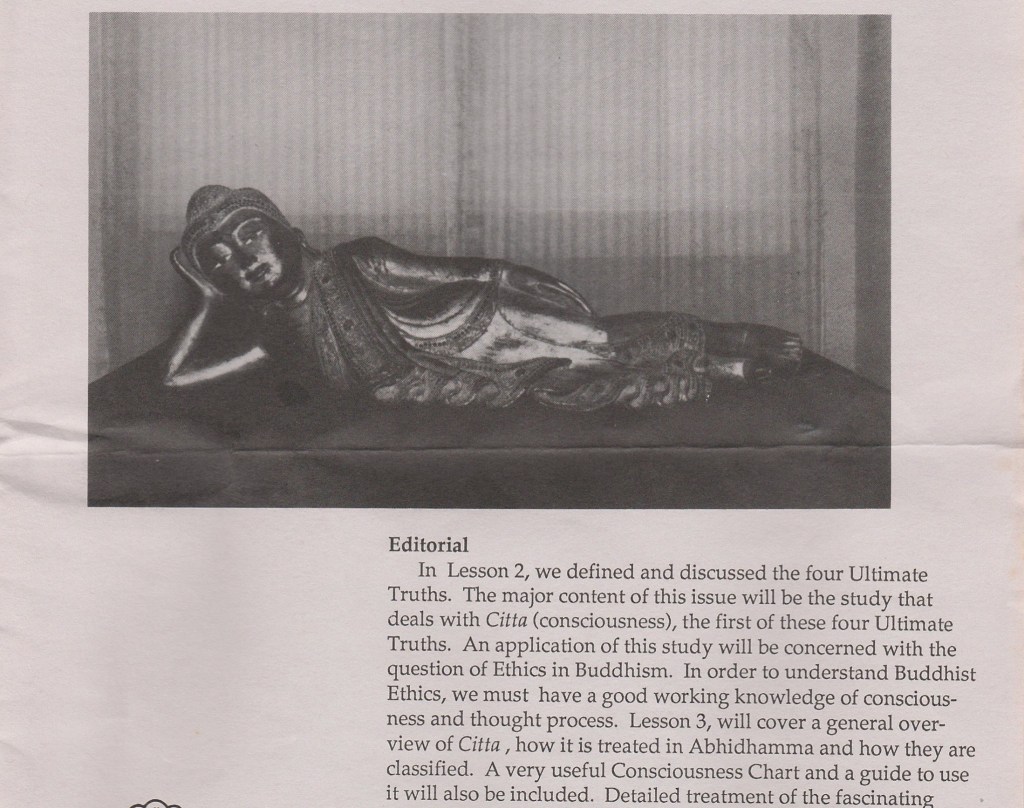
Abhidhamma Newsletter Volume 1 Number 3 (April 1999) Adviser: Venerable U Silananda Editor: Maung Tin-Wa (Ph.D.) Editorial Board: James Cameron, U Aye Cho, Aung Khin (M.D.). Marc F. Lierberman (M.D.), Yan Naing Lwin (Ph.D.), Sarah E, Marks, Tin Than Myint (M.D.), Bach Dong Nhut, U Han Nyo, Phil Rohrer, Larry Rosenberg, Anna Spievogel (M.D., Ph.D.), Tin Myo Than (M.D.), Hla N. Tin (Ph.D.), Rita Adelman Graphic Designer: Scott Jordan Transcribing and Word Processing: Pat McMahon Published by the Abhidhamma Study Group of Dhammachakka Meditation Center, Berkeley, C.A.
According to the Theravada (Way of the Elders) Tradition, there have been six Buddhist Councils.
The Fifth Buddhist Council was held in Mandalay, Burma. The Pali Canon was enshrined in Stone Inscriptions ကျောက်စာ by the team led by ရသေ့ကြီးဦးခန္တီ
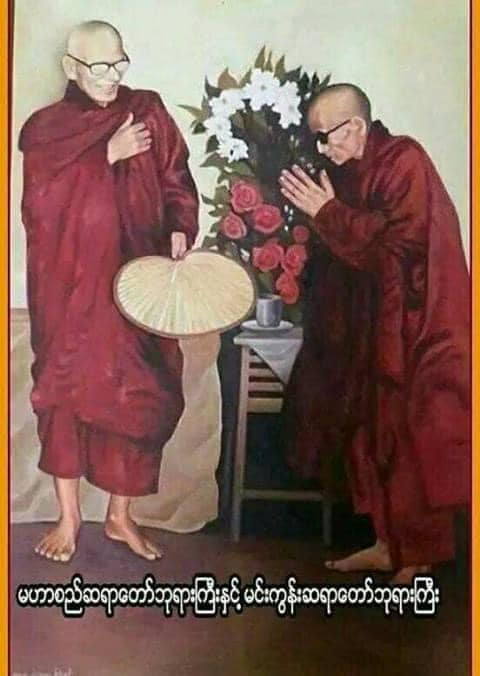
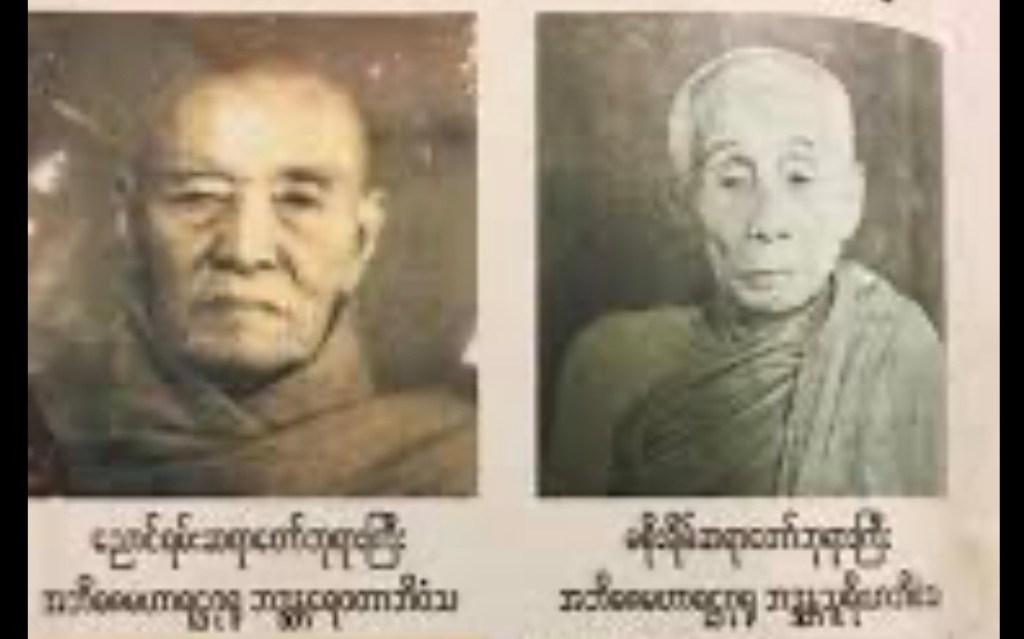
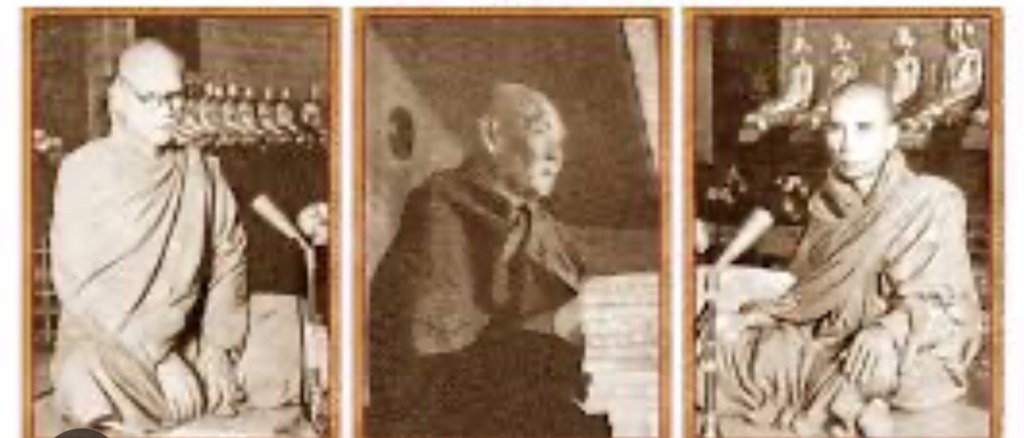
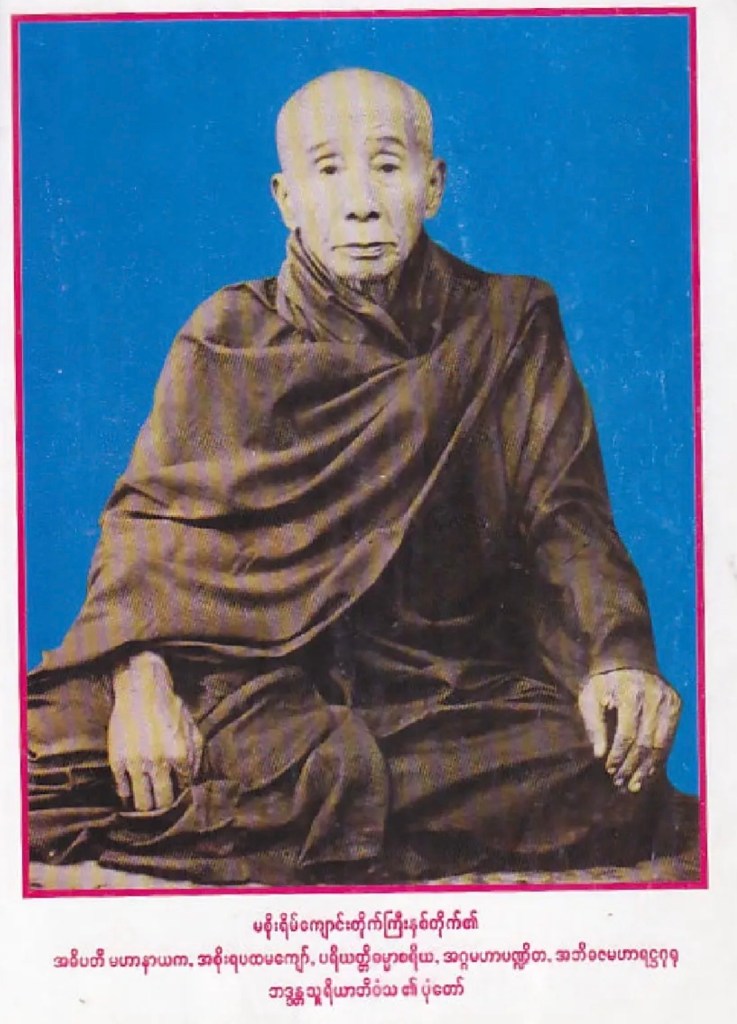
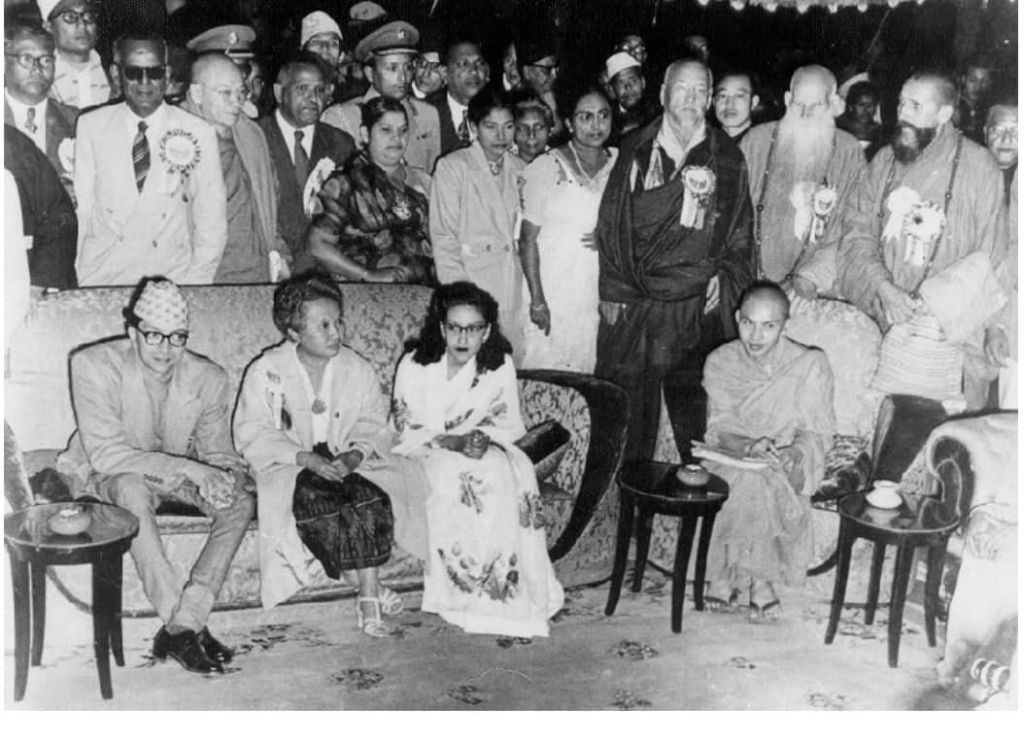
The Sixth Buddhist Council was held at Kaba Aye (World Peace) Pagoda, Rangoon, Burma from 1954 – 1956. The Presiding Sayadaws include Nyaung Yan Sayadaw (ညောင်ရမ်းဆရာတော်) Ma Soe Yein Sayadaw (မစိုးရိမ်ဆရာတော်) Mahasi Sayadaw (မဟာစည်ဆရာတော်) and Mingun Tipitaka Sayadaw (မင်းကွန်းတိပိဋကဆရာတော်)
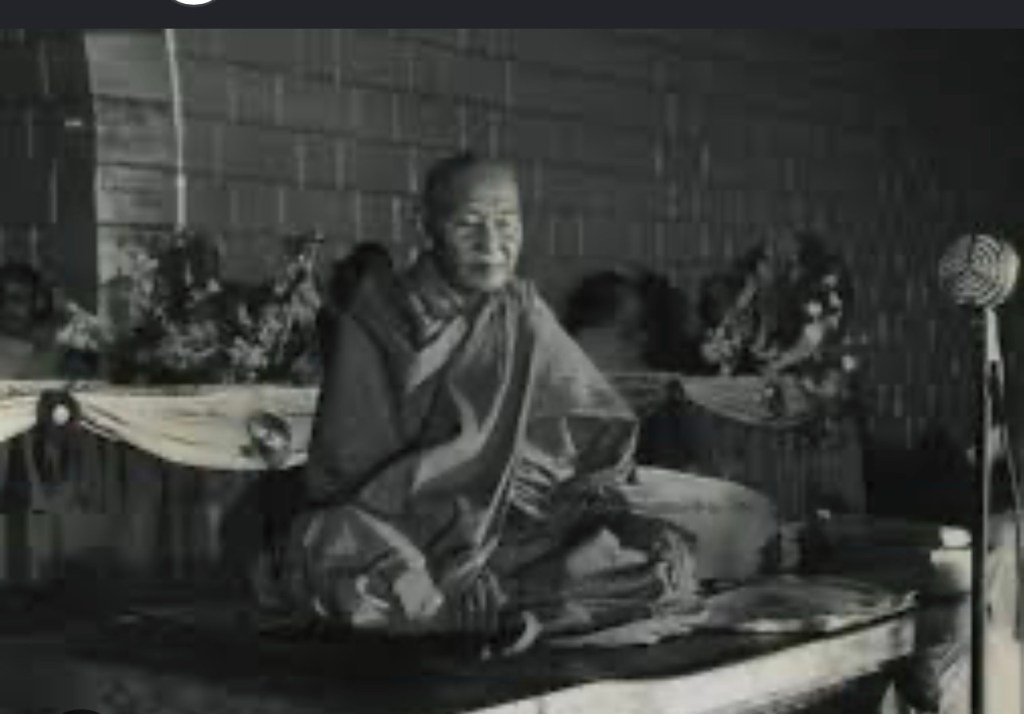
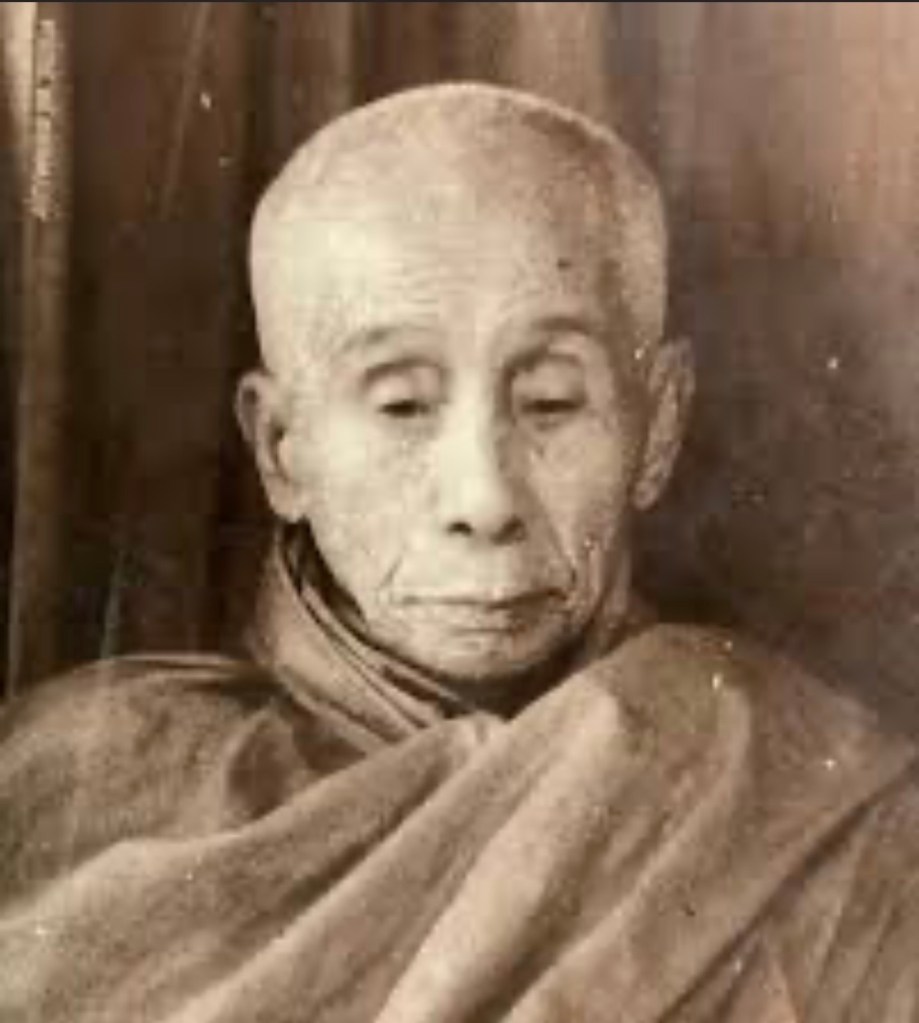
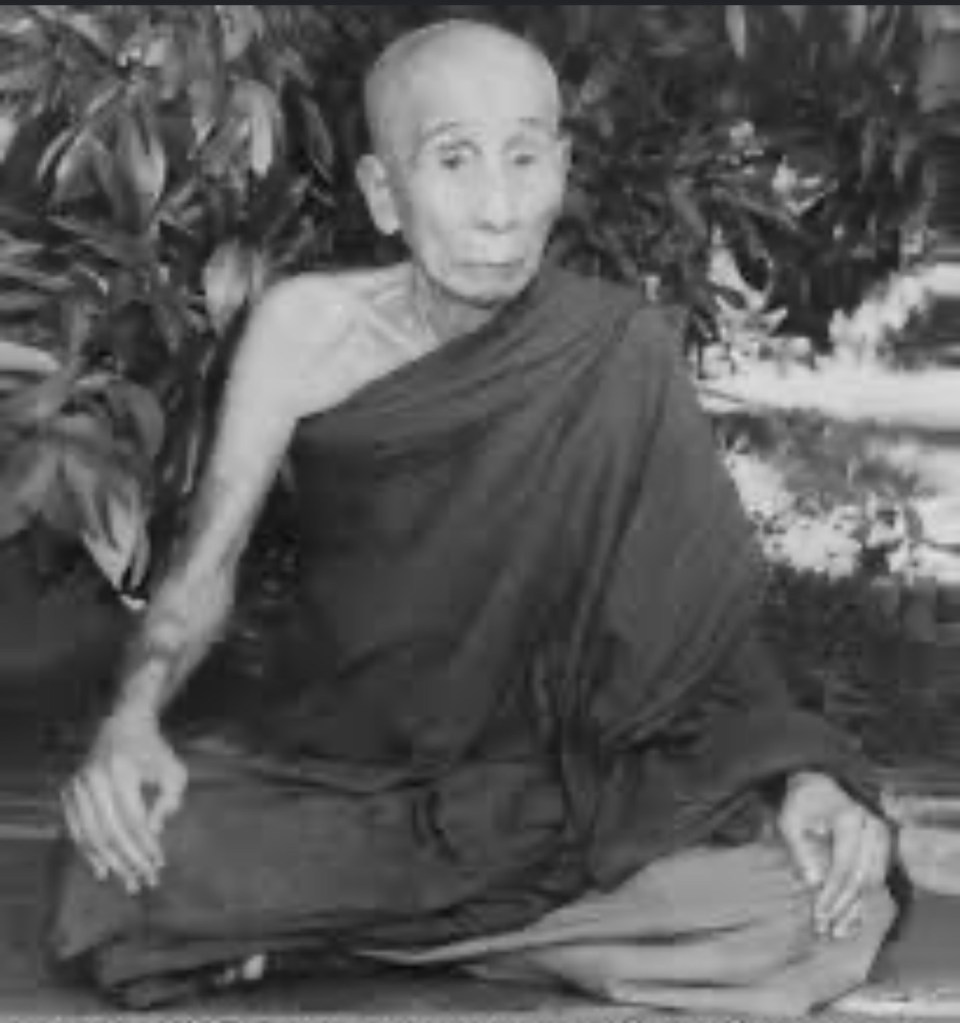
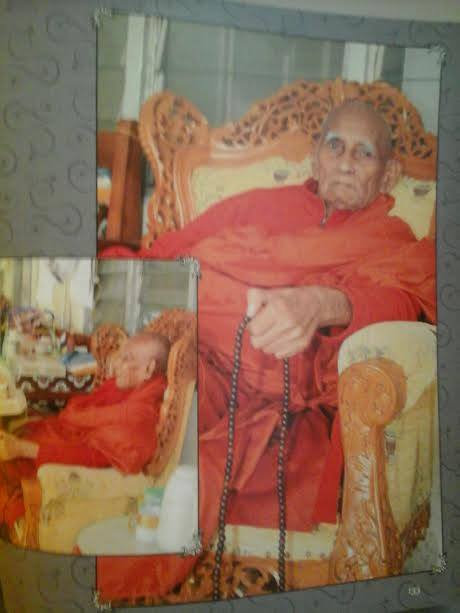
Nyaung Yan SayadawSangha Maha Nayaka for Sixth Buddhist Council
Tipitaka တိပိဋက
It is a Pali term. It is commonly rendered as “Three Baskets” :
Vinaya (Monastic rules of conduct) ဝိနည်း
Sutta (Discourses) သုတ္တန်
Abhidhamma (Ultimate reality) အဘိဓမ္မာ
Buddhist Councils သံဂါယနာ
U Silananda
According to the Theravada tradition, there are six Buddhist Councils.
The First, Second and Third Councils were held in India.
The Fourth Council (which recorded the teachings on palm leaves) was held in Ceylon.
The Fifth Council was held in Mandalay, Burma. U Khanti inscribed the Tipitaka on marble slabs. It was featured as the World’s Largest Book in Ripley’s “Believe it or not”.
The Sixth Council was held in Rangoon, Burma. Tipitaka was reconfirmed and published as printed texts. Selected Pali texts were also translated into Burmese.
First Buddhist Council
Source : U Silananda
Date : 3 months and 5 days (Sasana Era)
Place : Rajagaha (India)
King : Ajasattha
Leader : Mahakassapa Thera
Number of Monks : 500
Duration : 7 months
Accomplishment : Collected, examined, classified, and recorded orally the Buddha’s Teachings
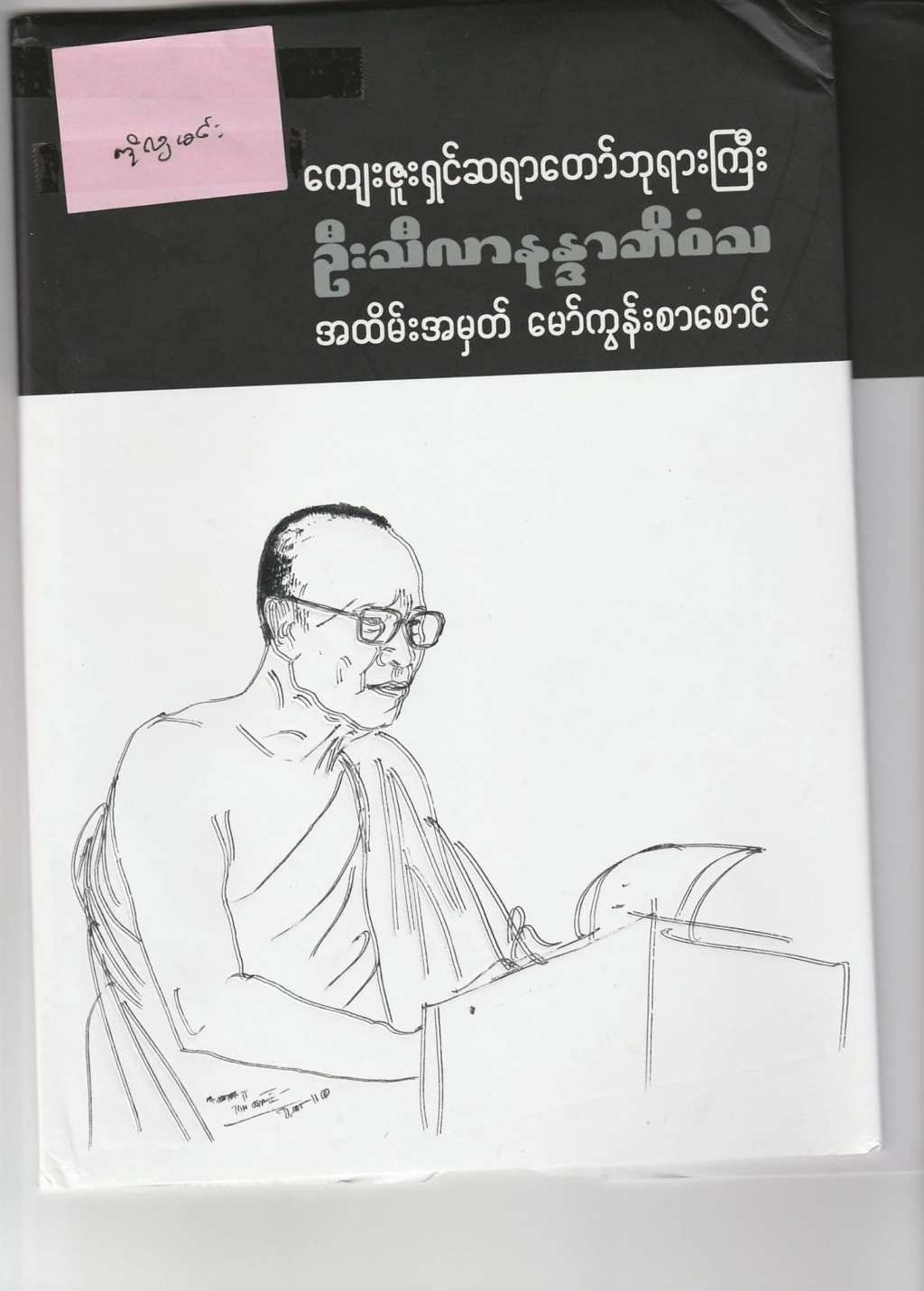
I served as member of the Committee to publish a book to honor Sayadaw U Silanandabhivamsa.
I was a Contributing Editor.
U Silananda
Libraries
Many monasteries have libraries with texts in Pali, Burmese/Myanmar & English. Some have indexed the library collection.
It is difficult if not impossible to read all the books in a library.
Libraries in Monasteries (Northern California)
Dhammananda Vihara Half Moon Bay
Kuthalakari, Fremont
Mettananda Vihara, Oakland (formerly at Fremont & Castro Valley)
Mudita Shwe Kyaung, Hayward
Tathagata Meditation Center, San Jose
Training and Teaching Centers
Mingalar Byu Har (မင်္ဂလာဗျူဟာ), Dhamma Byu Har (ဓမ္မဗျူဟာ), Dhammacakka Society (ဓမ္မစကြာအသင်းအဖွဲ့ ), Pathan Sar Thin Taik (ပဌာန်းစာသင်တိုက်) and the various training and teaching centers have helped sustain, promote, and propagate Sasana.
Theravada Canon
Theravada means “Way of the Elders”.
At the First Buddhist Council and at the subsequent Councils, the sacred texts are reaffirmed. The Teachings are not added, deleted, or modified.
Burma hosted the Fifth & Sixth Buddhist Councils.
Sayadaw U Silanandabhivamsa initiated two projects: one to digitize the marble slabs inscribed during the Fifth Buddhist Council in Mandalay, and the other to compile a CD of the Tipitaka texts that were re-affirmed at the Sixth Buddhist Council in Rangoon/Yangon.
The Pali-Myanmar Tipitaka Dictionary was compiled under the guidance of the Sayadawgyis (e.g. Mahasi Sayadaw) and the [then young] Sayadaws (e.g. U Silananda). Myanmar translations of the Tipitaka texts were published by the Department of Religious Affairs.
Mahagandaryone Sayadaw U Janakabivamsa
He wrote texts for both the sanghas and the lay people. They include
Ba Tha Thway ဘာသာသွေး
Yadana Gone Yi ရတနာ့ဂုဏ်ရည်
A Na Gut Thar Tha Yay အနာဂတ်သာသနာရေး (Future of the Dispensation)
Ko Kyint Abhidhamma ကိုယ်ကျင့်အဘိဓမ္မာ (Abhidhamma in Daily Life)
Shin pone shin kyint wut ရှင်ပုံ ရှင်ကျင့်ဝတ် (rules for the samanera/novices)
The Illustrated History of Buddhism (with drawings by Sayagyi U Ba Kyi)
Dhamma Recording
Tape Recorders
In the 50’s and 60’s, the Burma Broadcasting Service (BBS) used mostly Ampex tape recorders for high fidelity.
The general public used less expensive brands such as Akai, Grudig and Sony for recording.
Sixth Buddhist Council
During the Sixth Buddhist Council (1954 – 1956), BBS broadcast the sessions where Mahasi Sayadaw served as the Questioner and Mingun Tipitaka Sayadaw served as the Reciter/Expositor.
The archives are being offered as dhamma dana in Audio CD and MP3 formats.
Kudos to those who are trying to preserve, practice, and propagate the Sasana (Teachings of the Buddha).
Teachings of Sayadaws
Individuals and organizations have provided access to their dhamma archives.
Sun Lun Sayadaw
Recordings (dhamma talks, kammavaca, …) of Myingyan Sun Lun Gu Kyaung Sayadaw U Kavi were made by his disciples. They can be downloaded from the Sun Lun web site.
Mogok Sayadaw
U Sway Tin and his team recorded 500+ talks of the Mogok Sayadaw U Vimala. They also transcribed the tapes for distribution as books. The advances in technology make possible the redistribution of the archives as Audio CDs, MP3s, and e-Books.
Dhammananda Sayadaw
Recordings of Sayadaw U Silananda (Abdhidhamma, “Words of the Buddha”, …, dhamma talks given at the meditation retreats) were made by his disciples at Dhammacakka Center, Theravada Buddhist Society of America (TBSA), Tathagatha Meditation Center (TMC), and Zen Buddhist Temple. Some works are available as Audio CDs, MP3s and books. I was honored to edit the dhamma talks (transcribed by Sayadaw U Osadha) before presenting them to SayadawU S ilananda for final review and editing. The book was published in 2003 by the Malaysian yogis organized by Pauline Chiong.
Taya Oo
TMC Publications
Tathagata Meditation Center
TMC was founded by the Vietnamese disciples of Sayadaw U Silananda.
TMC is located at 1215 Lucretia Avenue, San Jose, CA 95122
Conducts several long-term meditation retreats per year.
Used to offer two week-end retreats for months when there are no long-term retreats.
Holds summer classes : one for children and the other for young adults.
Published several books for Dhamma Dana distribution. They include teachings by Mahasi Sayadaw, U Pandita, U Silananda, and books to study Pali.
Pali
For the past few years, U Dhammika-bhivamsa (Tharmanay Kyaw) taught Pali courses using selected Suttas to interested yogis to have an appreciation of Buddha’s teachings without delving into the details of Pali grammar.
The course materials were prepared by Som Tu (Director of TMC, Retired executive in Technology) under the guidance of Thamanay Kyaw Sayadaw.
Reference Books
I used to volunteer as Translator/Interpreter for Meditation Retreats at Tathagata Meditation Center (TMC).
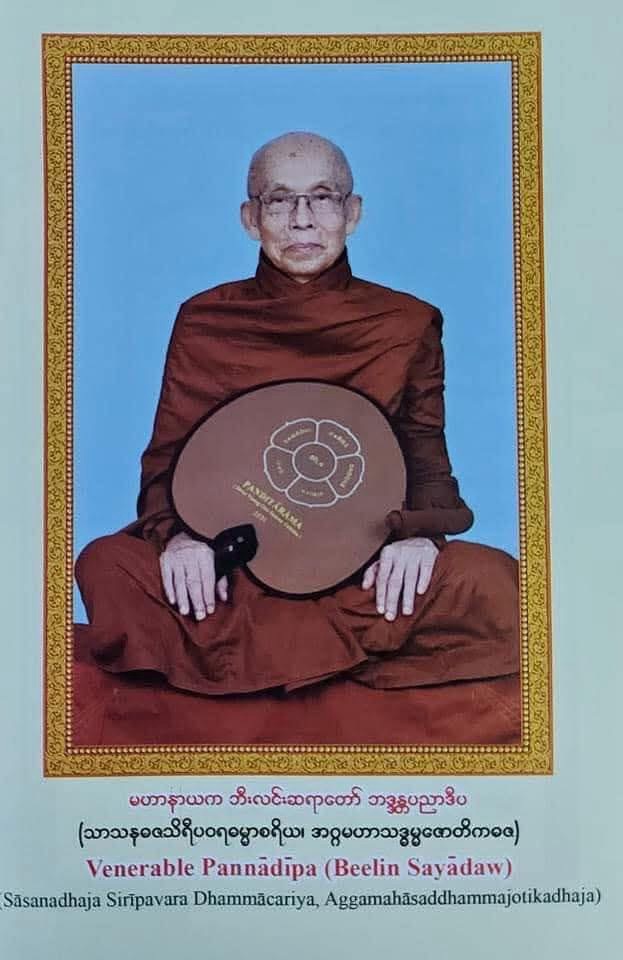
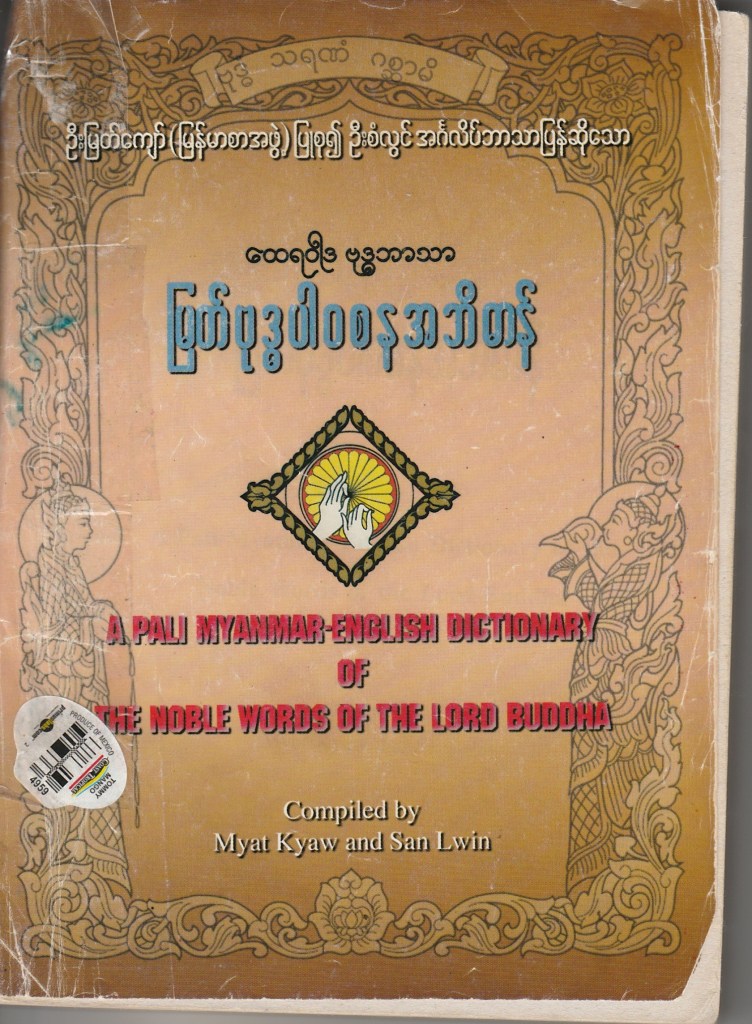
Beelin Sayadaw U Pannadipa (then Resident Sayadaw at TMC, currently Padana Nayaka Sayadaw at Panditarama Shwe Taung Gone in Yangon) gave me the book “A Pali Myanmar-English Dictionary of the Noble Words of the Lord Buddha”.
The book was compiled by U Myat Kyaw (Myanmar Sar Ah Phwe) and translated into English by U San Lwin.
TMC gave me the book “Buddhist Dictionary” by Ven. Nyantiloka.
It is subtitled “Manual of Buddhist Terms and Doctrines”.
The first edition was published in 1946.
The third revised & enlarged edition was edited by Ven. Nyanaponika in 1970.
Intro to Pali
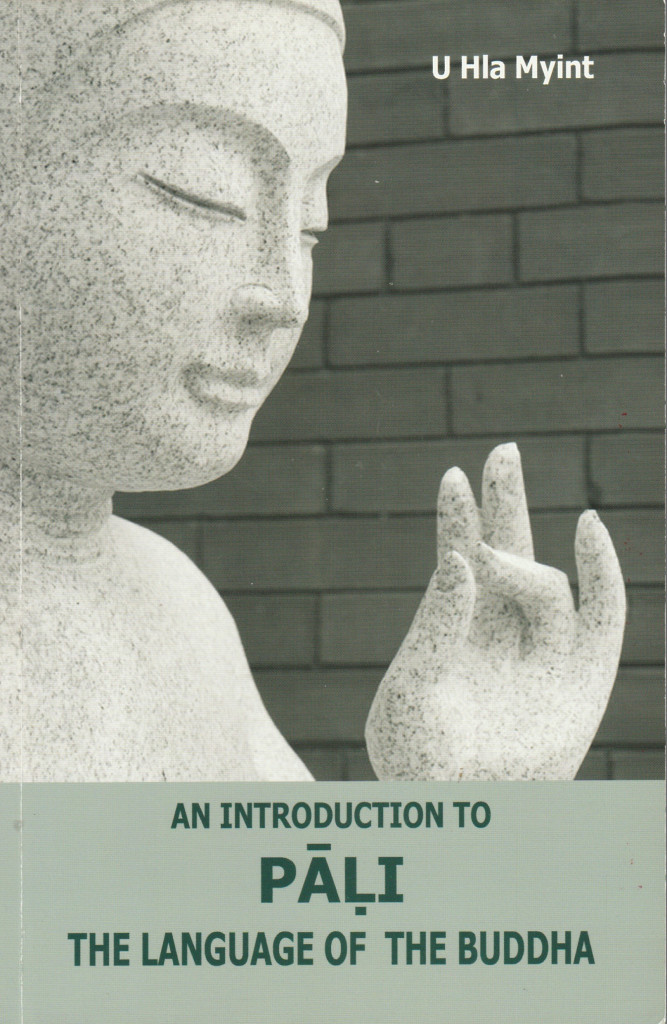
U Hla Myint, who had passed Dhammacariya & several monastic exams as a monk, gave me a PDF version of his manuscript “An Introduction to Pali” for study and review. The book is available as Dhamma Dana distribution from TMC.
He studied Pali under the guidance of Mahagandayone Sayadaw U Jananabhivamsa (one of the greatest Pali scholars in the 20th century) and with the outstanding teachers U Vijaya-lankara and U Dhamika-bhivamsa (with pen name “Thamanay Kyaw”).
He studied English under the guidance of Sayadaw U Pandita-bhivamsa and with the eminent teachers such as U Aung Myat Thut, U Aye Maung and U Hla Maung.
He has written, translated and edited several books for TMC.
Triple Gem Publications
Founder Members
Harry Than Htut (Canada)
U Htay Aung (Victor, Australia)
Dr. Maung Maung Lwin (UK)
U Tin Htoon (USA)
Daw Tin Tin Myint (Emma, Singapore)
Sample Publications
Emptying the Rose-Apple Seat A day-to-day guide to Buddhist meditation methods as taught by a renowned meditation master by Aggamahapandita Bhaddhanta Dr. Rewata Dhamma Foreword by Joseph Goldstein
The Buddha’s Prescription A selection of talks and essays by Dr. Rewata Dhamma
Inward Path Publisher
Background
IPP is in Penang, Malaysia.
Aims at disseminating the noble teachings of Wisdom and Compassion of the Buddha to a wide segment of readers through the printing of Dhamma books and booklets.
Dhamma Dana
Inward Journey Books (free Dhamma books) include the following :
One Truth Only A Compilation of Passages from Mahasi Sayadaw’s discourses
The Way to the Happiness of Peace Understanding the Basics of Insight Meditation By Sayadaw U Pandita
Paritta Pali and Protective Verses A Collection of Eleven Protective Verses & An English Translation By Sayadaw U Silananda
Volition An Introduction to the Law of Kamma By Sayadaw U Silananda
No Inner Core An Introduction to the Doctrine of Anatta By Sayadaw U Silananda
Idriya The Nine Causes which Sharpen the Controlling Faculty of a Vipassana Meditating Yogi By Sayadaw U Kundala
Vipassana Bhavana Basic Principles of Mindfulness Meditation By Sayadaw U Kundala
Time and Priceless Treasures of Thabyekan Sayadaw Compiled by Tharmanay Kyaw
Triple Gems Publications, in collaboration with Suki Hoti Publications, have made available dhamma dana books. See the relevant postings.
Theravada Web Sites
Thanks to the websites (such as those listed below), the Teachings of the Buddha and His disciples can easily be studied, practiced, and propagated.
In the dining hall, there is an album about Sayadaw U Silanandabhivamsa’s early years in the US (e.g. meditation retreat at a church, dhamma classes at a Zen Buddhism Temple).
There are also photos about the Summer Camp for children and young adults.
There are two cabinets of books: one for dhamma dana distribution, and another for sale.
Newsletter
The “Dhamma Bell Newsletter” was edited by volunteers (U Theikdi & Maureen O’Brien).
It was published quarterly.
It featured dhamma talks given at TMC and also recipes (e.g. vegetarian spring rolls).
Sayadaws
Panditarama Sayadaw
Panditarama Sayadaw
Sayadawgyi conducted Annual Meditation Retreats.
Later, he assigned Sayadaws to conduct the Retreats on his behalf.
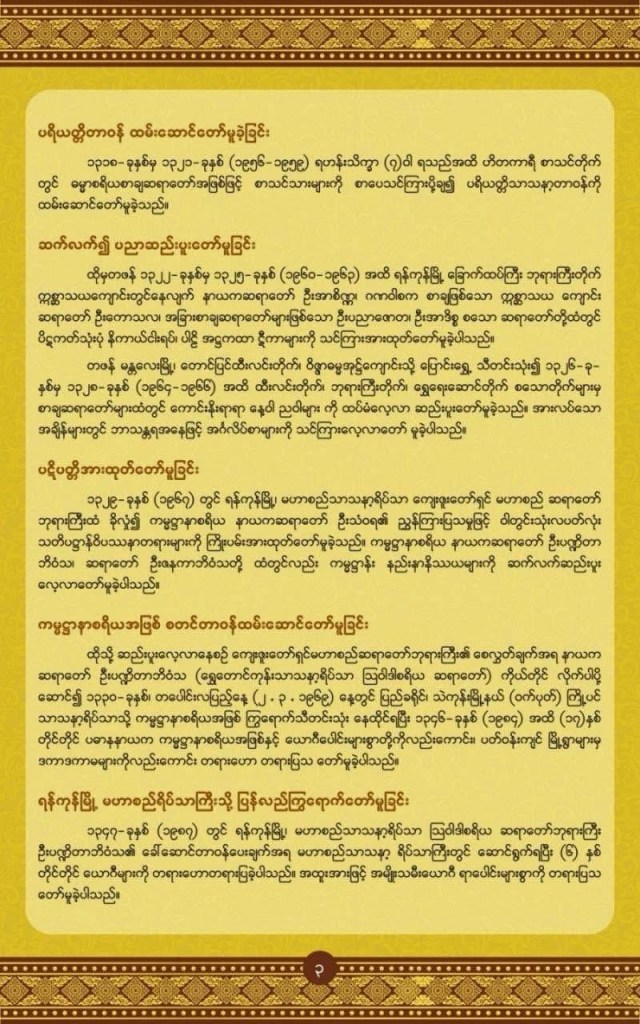
Beelin Sayadaw
Beelin Sayadaw
Spent over a decade as Chief Resident Sayadaw at TMC
Back in Myanmar, Sayadaw resided at Hse Mile Gone and Panditarama
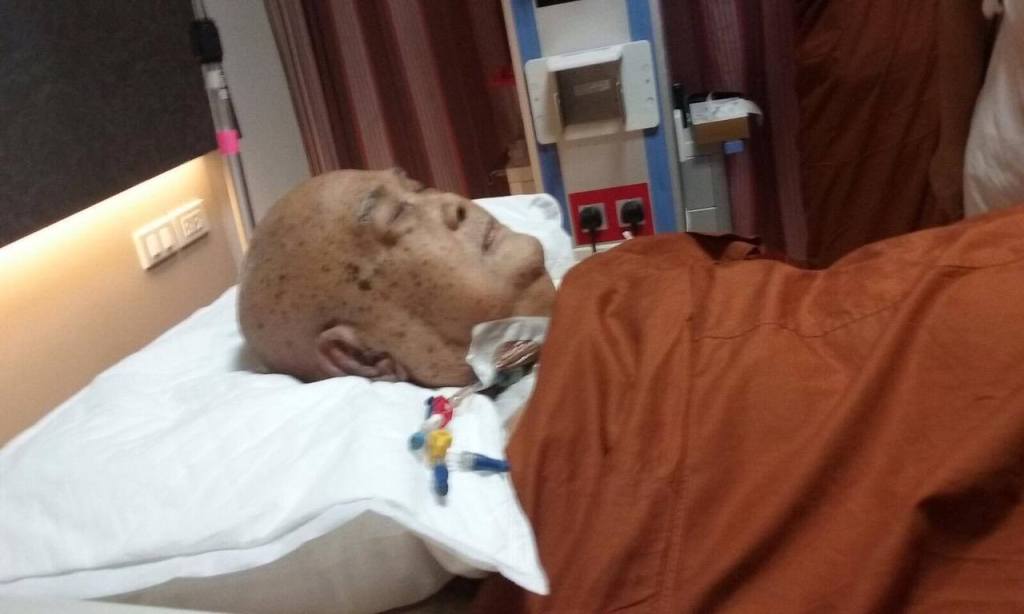
Passed away on June 18, 2025.
TMC held a ceremony on July 19, 2025 to honor Beelin Sayadaw.
U Dhammika (Tharmane Kyaw Sayadaw)
Sayadaw taught Pali courses at TMC
He wrote “Pali Sikkha ပါဠိသိက္ခာ” (Practicing Pali) texts.
Collection of Pali verses (that refer to Buddha’s teachings).
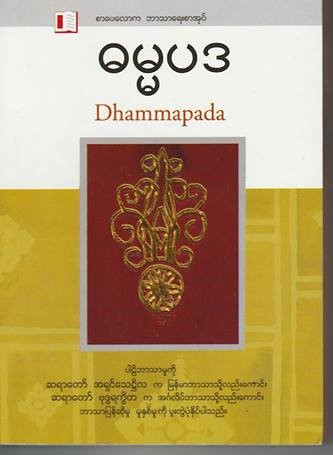
Translated by several Pali Scholars.
Some Dhammapada books also cover short stories related to the verses.
Narada Thera
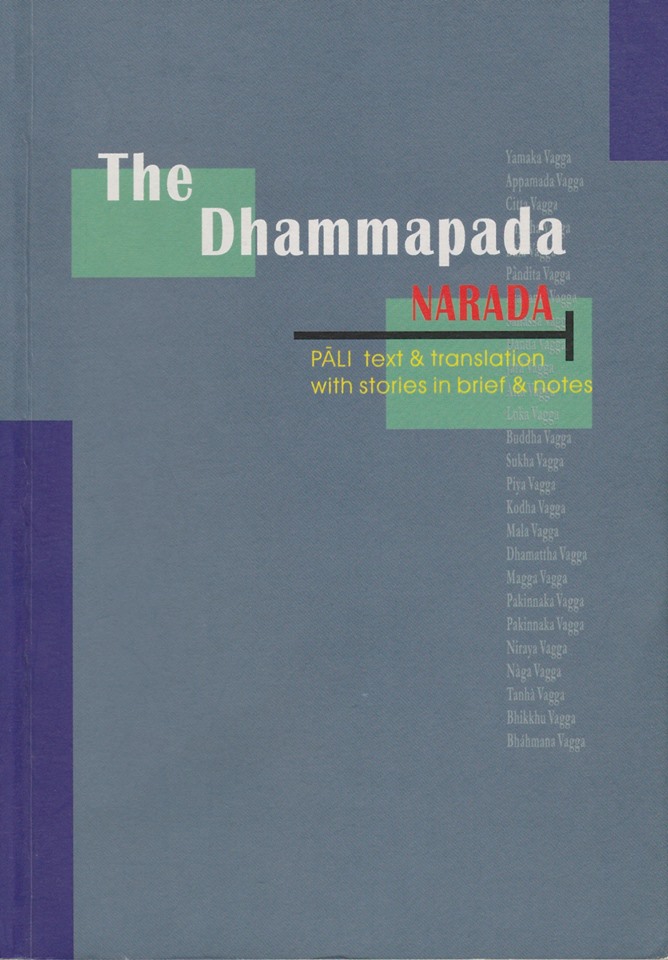
Dhammapada by Narada Thera
The Dhammapada
Subtitle: Pali text & translation with stories & notes
Author : Narada Thera
Preface
Chapters
The Twin Verses
Heedfulness
Mind
Flowers
Fools
The Wise
The Worthy
Thousands
Evil
The Rod or Punishment
Old Age
The Self
The World
The Buddha
Happiness
Affection
Anger
Impurities or Taints
The Just or Righteous
The Way or the Path
Miscellaneous
Woeful State
The Elephant
Craving
The Bhikkhu or the Mendicant
The Brahmana
Venerable Buddharakhitta
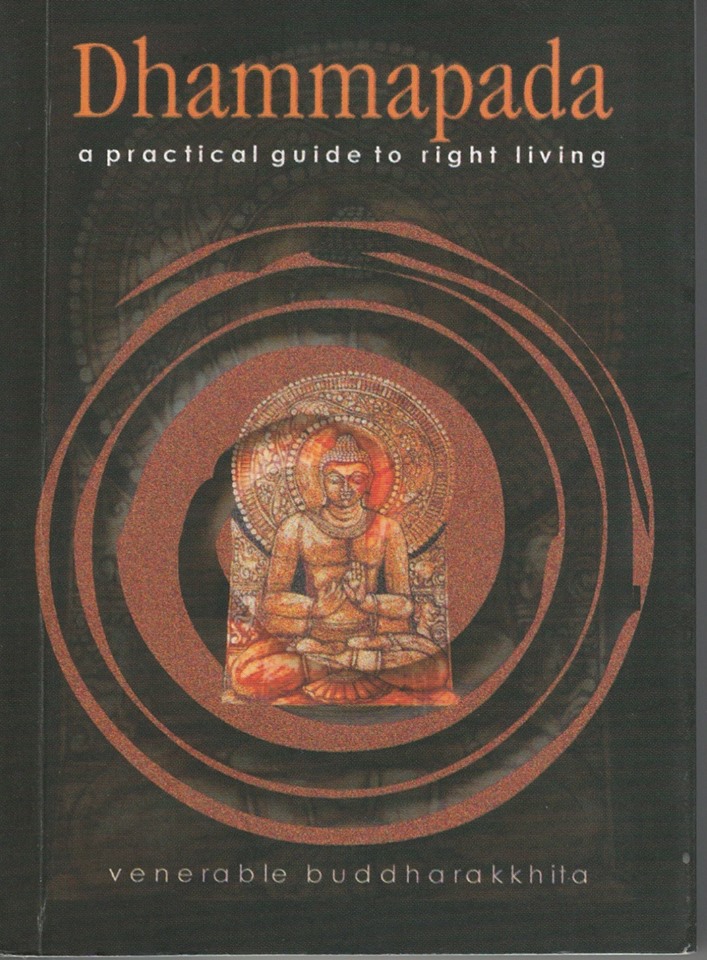
Dhammapada by Ven. Buddharakkhita
The following verses are from the book by Venerable Buddharakkhita.
Verse 182
Hard it is to be born a man; hard is the life of mortals. Hard is it to gain the opportunity of hearing the Sublime Truth, and hard to encounter is the arising of the Buddhas.
Verse 183
To avoid all evil, to cultivate good, and to cleanse one’s mind — this is the teaching of the Buddhas.
Verse 184
Enduring patience is the highest austerity. “Nibbana is supreme,” says the Buddhas. He is not a true monk who harms another, nor a true renunciate who oppresses others.
Myanmar & English
Dhammapada in Burmese and English
U Thittila’s Translation (in Burmese)
Venerable Buddharakkhita’s Translation (in English)
Frequently Quoted Verse
The following Dhammapada verse is frequently quoted by Sayadaws and writers.
“Not to do any evil, to cultivate good, to purify one’s mind, – this is the Teaching of the Buddhas.”
It seems simple (at the basic level), but it also has a deeper meaning (at the metaphysical level).
The explanations may refer to Abhidhamma to expound what “kusala” (wholesome deeds) and “akusula” (unwholesome deeds) are.
References may also be made to the three “Seikhas” : sila (morality), sammadhi (concentration), and panna (wisdom).
Bhavana practices such as samatha (tranquility meditation) and vipassana (insight meditation) are needed to calm and purify the mind.
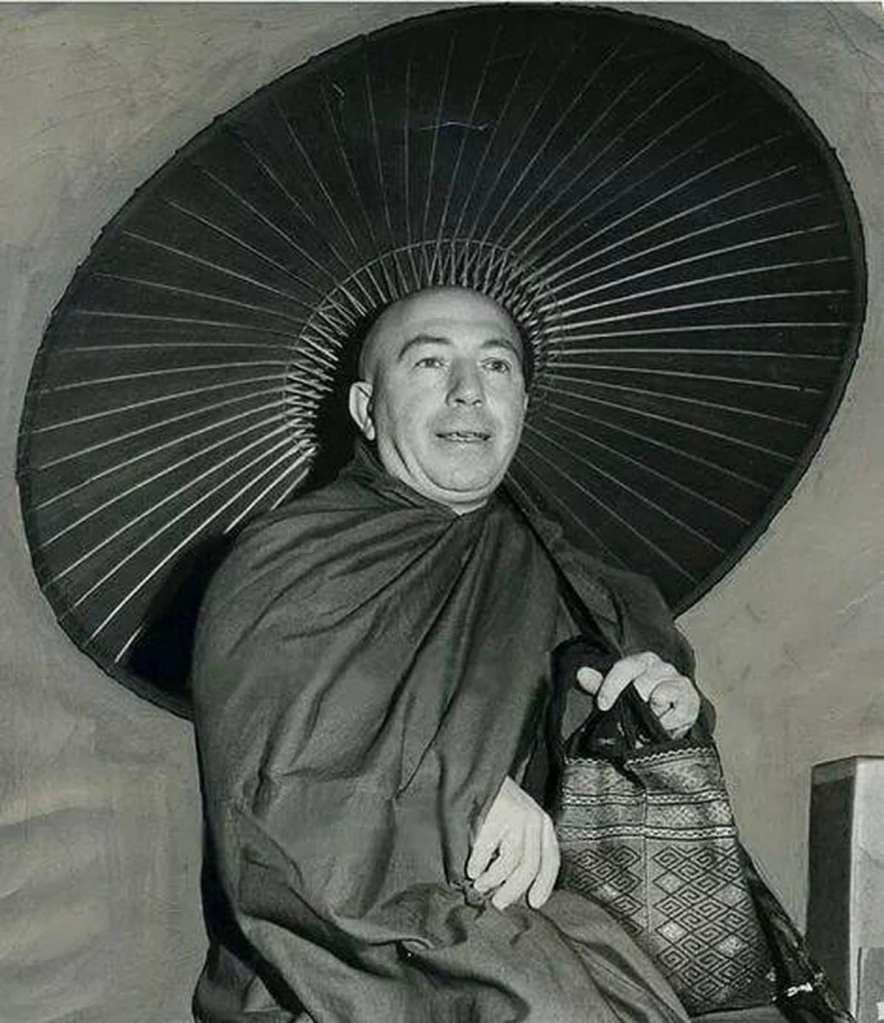
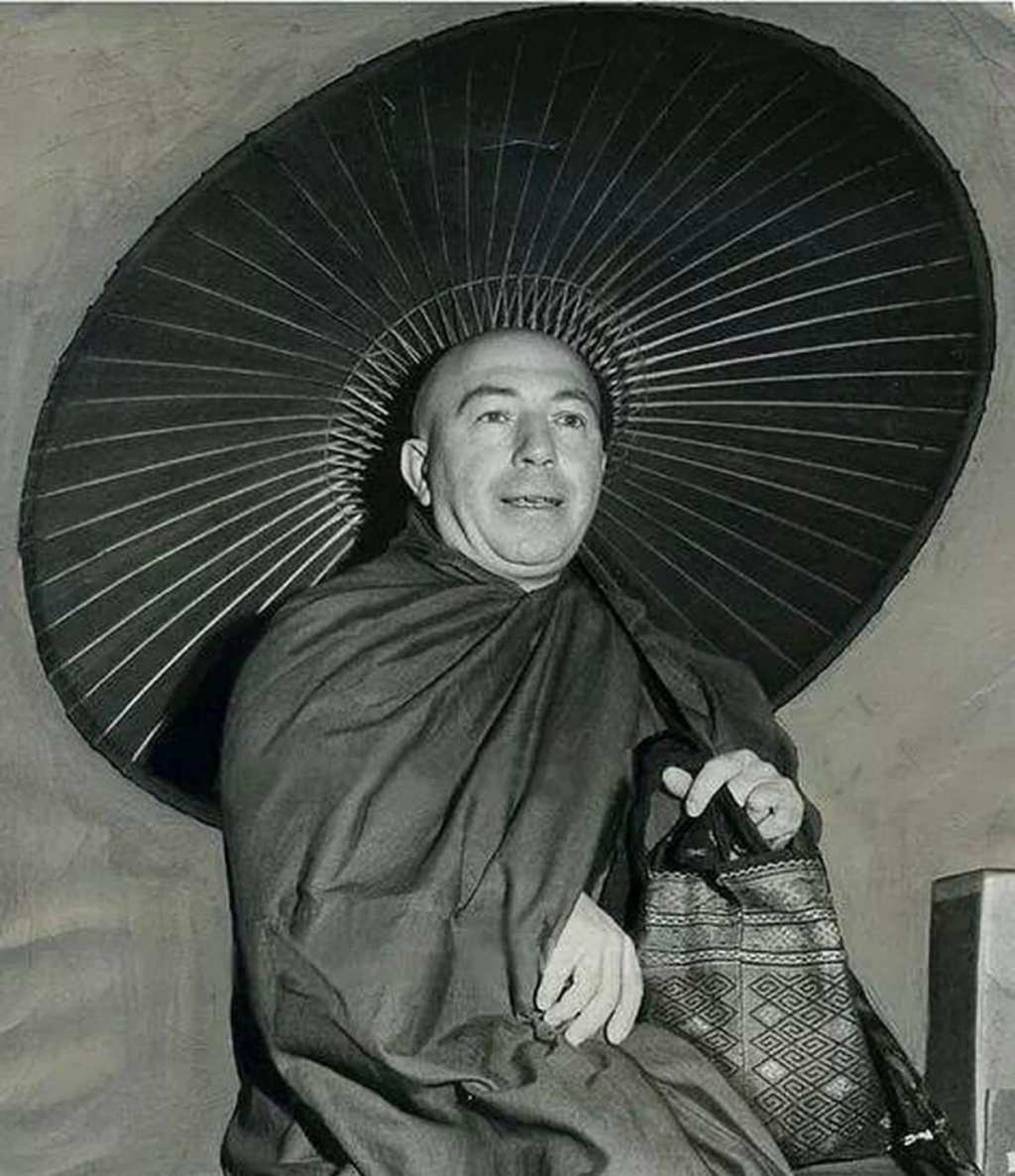
U Lokanatha – Italian Buddhist Monk (1897-1966)
U Lokanatha
Chemical Analyst in the US
Received a book from his supervisor as Christmas present. The book had a chapter on Dhammapada. After reading the verses, a deep impulse (which resonated with his scientific inquiring mind) led him to pursue Buddhism & become a Buddhist monk.
He was from a devout Catholic family. His elder brother was a Priest.
Sayadaw spent considerable time at the Bawdigone monastery (donated by my paternal grandmother) on Windermere Road, Rangoon, Burma.
He practiced Dhutanga.
He also preached. Sunlun U Vinaya was interpreter for some of the talks.
Dhamma Dhuta missions to India and Ceylon
His booklet, “Why I became a Buddhist”, had considerable influence on the leader of the “Untouchables” in India.
His dhamma duta work can be found in the articles in Wikipedia and some Buddhist web sites.
Mr. Salvitore was working as a Chemist in the USA.
Received a book as Christmas present from his supervisor. A chapter was “Dhammapada”. After reading it, Samvega (sense of urgency) crept in.
Quit his job. Left for Burma to be ordained as a Buddhist monk. Became “U Lokanatha”.
Wrote “I became a Buddhist. My supervisor remained a Christian.”
Was from a devout Catholic family. Elder brother was a Priest.
My paternal grand mother offered a monastery for U Lokanatha in Bawdigone (Windermere), Rangoon.
Practiced Dhutanga. Preached & took Dhamma Dhuta missions to India and Ceylon.
Passed away in Maymyo in 1966.
Ashin Ananda
(Latvian monk)
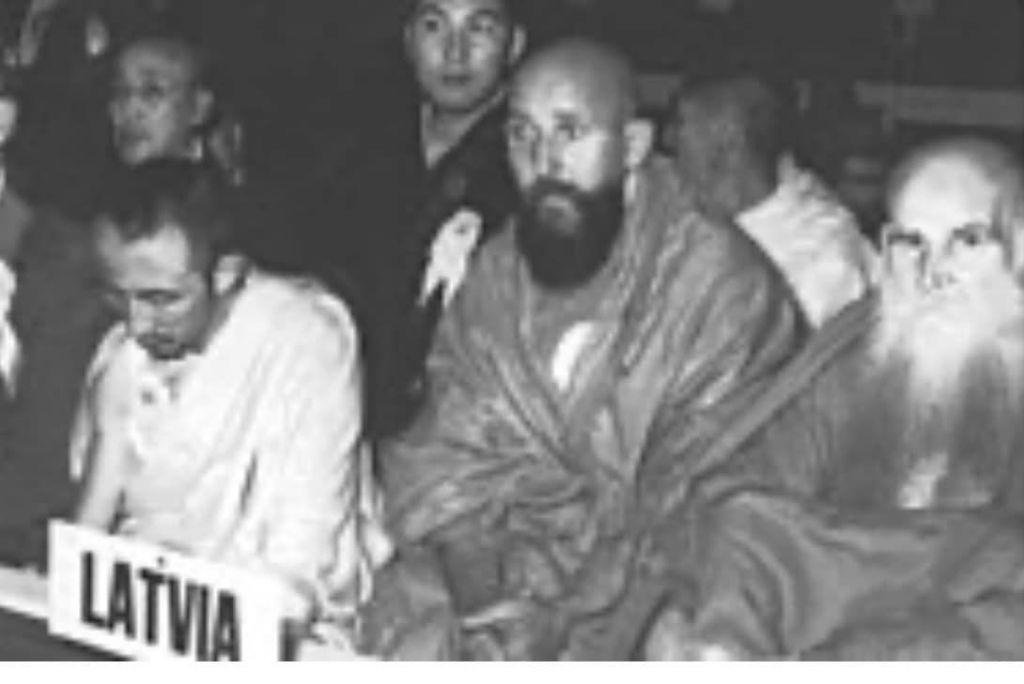
Rev. Lustig With his mentor
Fled Communist Rule
Rev. Friedrich V. Lustig’s mentor Rev. Tonison was the Buddhist Archbishop of Latvia and Lithuania. When the Communists invaded their country, they sought refuge in Burma. The government provided them a monastery in the “Ah Le Pyit Sa Yan” of Shwe Dagon Pagoda.
Moke Seit
Known as “Moke Seit Phone Gyi” for his beard. Came for alms to our parent’s house in Windermere Road.
After his mentor’s demise, he became Buddhist Archbishop of Latvia & Lithuania.
Ashin Ananda
Shaved his beard
Ordained as a Theravada monk with the title “Ashin Ananda”
Laureate Poet & Translator. Wrote poems in English. Translated selected Burmese poems into English.
In July 1969, he gave my poem “Men on the Moon” to Mr. Hall (USIS) to be forwarded to Apollo 11 astronauts. Gave a copy to the Guardian newspaper for publication.
Men on the Moon
U Thilawuntha (Mon Sayadaw)
Built pagodas worldwide
Mon Sayadaw
In early 1949, my father and his siblings donated 5 acres and built Dat Paung Zon Aung Min Gaung Pagoda in Windermere Road. My elder brother helped with the construction as a Koyin.
Sayadaw U Thilawunta (fondly known as “Mon Sayadaw”) was invited by my father and his dhamma friends to be the Chief Resident Monk of DPZ monastery.
He built pagodas in Burma/Myanmar, USA, Canada, New Zealand, South Africa and several other countries.
In the ’50s, Sayadaw visited the United Nations and U Thant. He built the first Burmese pagoda in the Allegheny mountains near New York.
First pagoda in USA
During his visit to California, Sayadaw would spend time with his devotees such as Russell Wolfe (Santa Cruz) and U Aung Myint (Donald, Milpitas).
Sayadaw U Zeya
Monastery in Las Vegas
Las Vegas is known for its Casinos and Recreation.
Las Vegas also has some monasteries including Thai monasteries supported by members of the Royal Family.
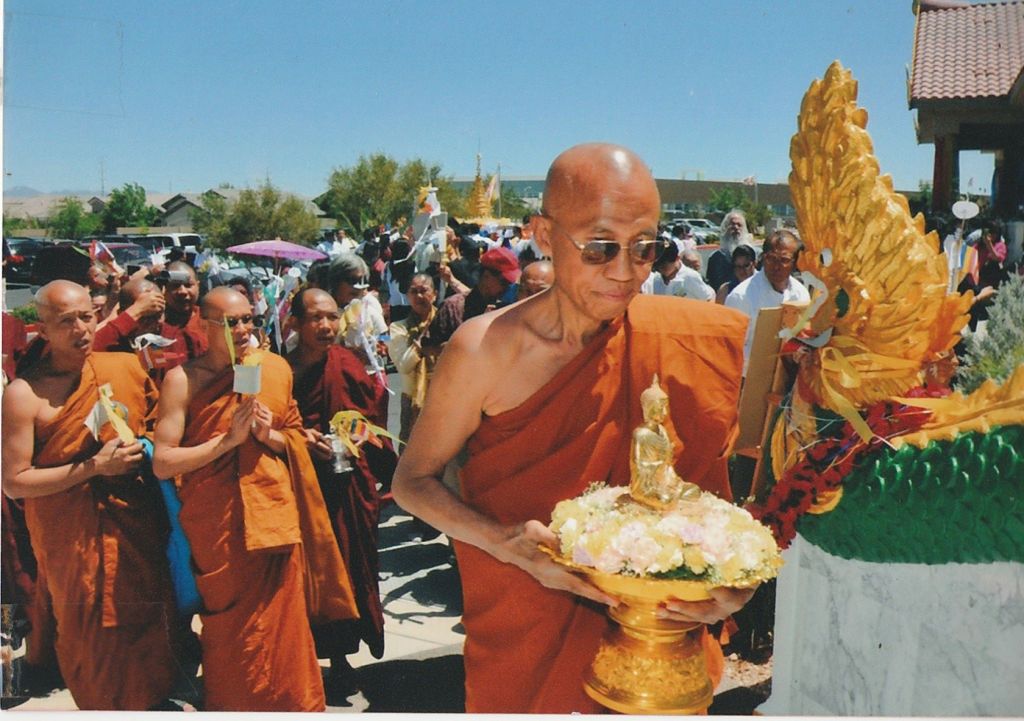
Sayadaw U Zeya resided at a Thai monastery and rose up the ranks. Gave dhamma talks in Thai, English & Burmese. Several devotees offered him a monastery.
In May 2013, several dhamma friends in the Bay Area rented a van to attend “Htee Tin Pwe” of the pagoda inside U Zeya’s monastery compound.
Donated for two Nagas at the Las Vegas Monastery in memory of our parents and in-laws.
Engineers & Architects
Dr. Lwin Aung (A59)
Dr. Lwin Aung
Entered monk-hood after retirement
Was Professor of Architecture and Pro-Rector of YTU
Volunteered as a Consulting Architect for the construction of dhamma buildings
Due to health, he left monk-hood after several vassa.
U Bo Gyi (A59)
U Bo Gyi
Founded “Architect Incorporated” with U Tin Htoon (A60) & U Aung Kyee Myint (A60)
Later joined PWD along with his partners
Designed Mausoleum for Daw Khin Kyi, and was shunned by the higher authorities.
Hobbies : music (piano) and modeling (sculpture)
He is now GBNF.
U Han Nyo (Met60)
He helped conduct meditation retreats in Southern California and Mexico.
U Myo Tun (A69)
U Myo Tun
Ashin Pannagavesaka
Won prizes for essays under the name “Errol Than Tun”
Made dhamma duta mission to Vietnam
Was Dhamma Librarian for Moulmein Pa Auk Tawya Monastery
Edited Pa Auk Sayadaw’s books
Taught English to Dhammacariya Sayadaws
U Aung Chaw (C69, SPHS63)
U Aung Chaw
Ashin Ukkamsa
Resided in Sagaing
Later moved to the Irrawaddy Delta region
Met him in 2018 when he came to Yangon. Attended some breakfast gatherings by the 69ers. Kyaw Win (SPHS63) offered soon to Sayadaw at Shwe Ba Htamin Saing, and also offered Nawakamma.
He is now GBNF.
U Wara (Win Paing, ChE70, SPHS64)
U Wara
Younger brother of Saya U Soe Paing (EE, UCC)
Entered monkhood after the Final Year ChE exam
Chief Resident Sayadaw, KabaAye Sun Lun Gu Kyaung
Was Taik Oke Sayadaw for Sayadaw U Vinaya
He is now GBNF
U Jotika (EE73)
After graduation, ဦးနေဒွန်း became a monk
Bilingual author
An outstanding Dhamma Lecturer
Spent vasa at Taung Pu Lu Kaba Aye monastery in Boulder Creek
Revisited US about a decade ago
Frequently visited Singapore and other neighboring countries
Ashin Pannobhasa (M91)
Met him in SF Bay Area with his mentor (Sayadaw from Myanmar).
Born in April 1966 Thursday (2nd Waning day of Kason 1328 BE) in Pyapon, Irrawaddy Division.
After finishing his Mechanical Engineering degree from Yangon (Rangoon) Institute of Technology he received higher ordination as a Bhikkhu or a monk at the age of 24 in the Ordination Hall, Pyapon Mahasi Sasana Yeiktha under the preceptor of Venerable U Vannita, Pyapon Mahasi Sayadaw, Pyapon Mahasi Sasana Yeiktha on 27th July 1991.
Chief Resident Monk at a monastery in Seattle, Washington
Myingyan Sunlun Gu Kyaung Sayadaw U Kavi (ဆရာတော်ဦးကဝိ)
U Kavi
Biography and dhamma talks
Myingyan SunLun
First KabaAye Sunlun Gu Kyaung Sayadaw U Vinaya (ဆရာတော်ဦးဝိနယ)
U Vinaya
Early devotees of Sayadaw include U Khin Maung Latt, Daw Khin Myo Chit, U Thein Nyunt and U Win Pe
Wrote a book “The Yogi & Vipassana (Buddhist Meditation : The Sunlun Way)”
Passed away in his late 90s
Book by U Vinaya
“The Yogi and Vipassana” BUDDHIST MEDITATION : THE SUNLUN WAY Author : Sunlun Shin Vinaya Publisher : Sunlun Buddhist Meditation Center 7 1/2 Mile, Prome Road, KabaAye P.O., Rangoon
CONTENTS The Yogi and Vipassana (Page 1 – 18) The Sunlun Way of Mindfulness (Page 19 – 33) Explanatory Notes for Beginners and Those Proceeding Along the Sunlun Way of Vipassana (Page 34 – 50)
KabaAye Sunlun Gu Kyaung Sayadaw U Wara
(ဆရာတော်ဦးဝရ)
U Wara
U Win Paing won Golf trophies (some with his younger brother U Kyaw Paing).
Meditated at KabaAye Sunlun.
He gave away his Golf Set. Entered monkhood after the Final exam for Chemical Engineering in 1970.
Served as Taik Oke Sayadaw of Kaba Aye Sunlun Gu Kyaung for nearly four decades.
Succeeded Sayadaw U Vinaya as Chief Resident Monk.
Passed away on August 26, 2021
Siblings : Dr. Myo Paing (Medical Research & Malaria), U Soe Paing (RIT EE, UCC co-founder, UN), U Kyaw Paing (Lawyer, Entrepreneur, Champion Golfer)
U WaraObituaryFour Paing Brothers
Vipassana Retreats
KabaAye Sunlun Gu Kyaung
Kyauk Pa Daung
Pyin Sar
Hong Kong
Devotees / Yogis
U Khin Maung Latt and Daw Khin Myo Chit hosted early meditation retreats. Their son Dr. Khin Maung Win (Maths) later published “Notes on Vipassana Meditation”
U Win Pe authored an early document on Sunlun Meditation
U Thein Nyunt & family; Tekkatho Shwe Yi Win (Mrs. Khin Maung Win); U Soe Myint
U Aung Thaw & family; Dr. Myo Thaw & Dr. Thinn Thinn
U Tin Htut & Daw Min Min
UCC
Yahan Khan
In the 1970s, the staff and students of Universities’ Computer Center hosted “Donlaba Yahan Khan” for Thingyan at selected monasteries.