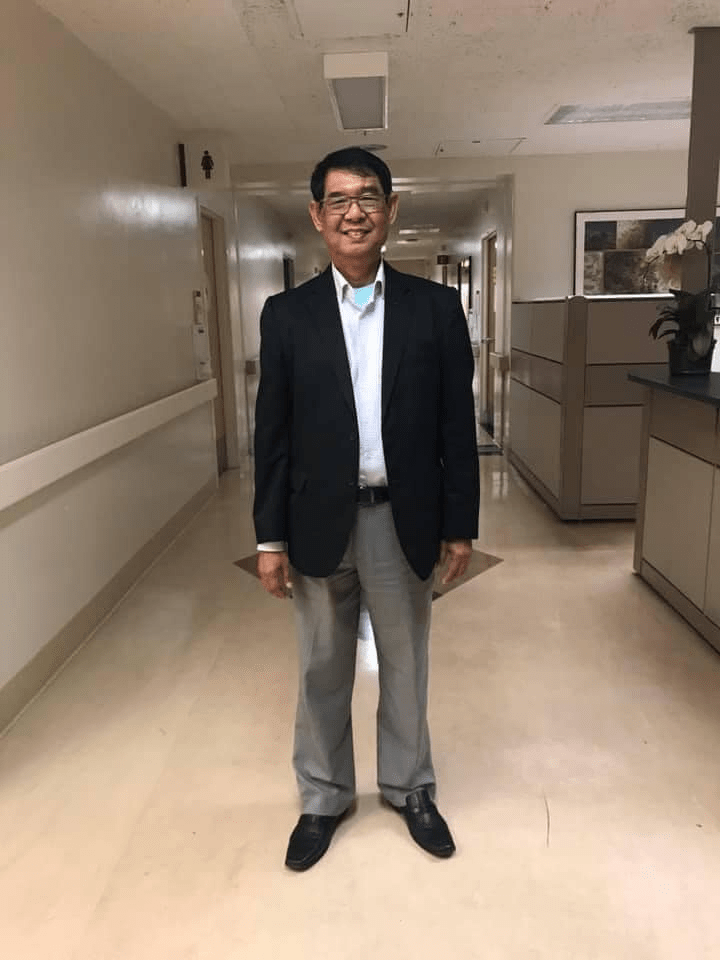
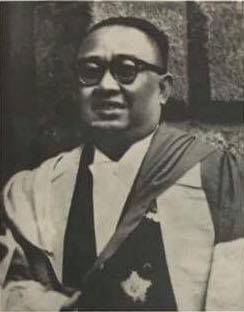
By Dr Maung Maung Nyo
Preamble
I arrived in Mongton (Different spellings: Mongtong, Mongtung, Mai Tone, Maing Ton) safe and sound, though weary from the long day’s journey at the end of August or in September 1962. MA Mr Mahmood and Warrant Officer Nyunt Maung came to 5th Buregt Officers Mess at Mongton and welcomed me. They said, ”Tat-Hmu (Commanding Officer), your house is ready for you in the hospital compound. We have even spread the bed sheet over the bed and everything is ready. Please move to your house today.” “OK, then. Ask your Yebaws (Soldiers) to carry my suitcases to my house “, I said and saluted Major Tin Shwe saying, “Thank you, Major. I won’t be staying in your Mess, but I’ll come back for the company.” I then followed my two Assistants to my house in the hospital compound. It was just about 5 minutes walk. I was thus settled in No. 7 Field Hospital as the Officer Commanding and General Duty Medical Officer (GDMO) for the Mongton Station, both for the army as well as for the civilians.
Mongton
It was a small Shan town in the Eastern Shan State situated east of the Salween River in the Kengtung District in our times, now part of the Mongsat (Monghsat) District. It was composed of about a few hundred households, maybe about 300 to 500 in the 1960s. It’s about 50 to 60 miles from the Thai-Burma Border Boundary Post No. 1. A fair-weather road led from Mongton to Ponparkyin (Poongparkheng) about 40 or 50 miles away. The latter was only 9 miles away from the border post (Stone Pillar) and a road led directly to Chiang Mai in Thailand. There was a small village called Monghan (Monywang) on the way. There were two or three old Buddhist Cedi (Pagodas) to mark the march of Burmese troops to Siam(Thailand) during the reign of King Sinbyushin in the 18th century.Mongton is situated on flat land beside a stream called Nam Yin Stream. There were water mills on the stream and scores of paddy fields fed by the stream beside it. High mountains walled the city almost on three sides except the southeast. It’s a valley and it was very hot during summer from March to June. It also rained very heavily during the rainy season from June to October. Winter was not so cold.During my time in Mongton, about 200 Thais came to work for the timber mill to build a multimillion-dollar project of military barracks and offices. Brigadier-General Aung Gyi used to visit Mongton to see the development there. A civilian hospital and a primary school were already built-in Mongton for the people of Mongton although no civilian doctor was posted yet. The people were mostly Shan plus a few Lahu. Affordable people from Mongton sent their children to schools in Mongpan, Mongnai and Loilem, mostly to Loilem as there was a Saint Anne Convent High School in Liolem. Captain Ko Lay who welcomed me at Mongsat and escorted me to Mongton married a belle from Mongton. She was a school teacher there.
No. 7 Field Hospital
It was established to look after the health of army personnel in the Mongton, Mongsat region after repulsing the KMT forces from the area in the early 1950s. Captain Maung Thin or Captain Eddie Miller was the first to serve there alone. Maung Thin looked after the army personnel as well as the civilians there for over three years alone away from his family that was left behind in Burmaproper. He asked for transfer back to Burma, but there was no one to take his place. He was so depressed that he shot himself and got injured in the abdomen. Only then he was airlifted to Maymyo BMH and transferred. “Was his wound serious?” I asked Major Kyaw Nyunt who told me about him. “Of course No. It was a self-inflicted wound and I had to replace him”, Major Kyaw Nyunt told me. He was also left for about two years after which he was replaced by Captain Aung Khine who was again replaced after 3 years by Captain Mya Thaw. He was now in Mandalay on temporary duty and I was replacing him. Captain Mya Thaw had been here for more than 3 years. He used to visit his wife in Mandalay once every year on his own order as he was the Officer Commanding the No. 7 Field Hospital. I was to inherit this hospital from him to be transferred to the No. 232 Medical Battalion. I remember he wrote Dr Gordon Seagrave’s words in his office as follows:“In a hospital as in an army, orders must be explained and they must be followed to the letter. Only then would the hospital discipline and functions be properly performed…”(This may not be the exact words, but it carries this sense or meaning.)The No. 7 Field Hospital had a medical Commanding Officer with one medical assistant (MA) under him. There was a Staff Nurse and midwife for women patients attached from the civil hospital. There were male nursing assistants altogether numbering about a dozen or so. On the administrative side there were a Warrant Officer (WO II) and a Sergeant-Clerk (SC), the WO looked after the soldiers guarding the hospital and doing the regimental duties whereas the SC did the office works with a few assistants. There were about 32 or 33 people, sometimes up to 40 for special occasions, serving the whole hospital. It was well equipped for emergency medical and surgical needs in the front line, but there was no provision for women and children’s health. It’s up to the medical officer to decide and deliver. There were about 25 beds for in-patients, an operating theatre, a mortuary, a medical store and a mess or common room for all. It was not bad for a front line hospital to work. I was the boss of everything there; just that I must work 24 hours a day, 7 days a week; no company, no colleagues, no club, no girlfriend or wife.
Former medical officers in charge of the No. 7 Field Hospital in Mongton:
(1) Captain, later Major Tin Oo M.B., B.S. (Rgn), DTM&H (London), ZeyakyawHtin, Thiripyanchi, Mentioned in Dispatches under Brigadier Kyaw Zaw
(2) Captain Maung Maung Thin LMP, Movie Actor Maung Thin, National Literary Prize Winner for Short Stories
(3) Captain, later Lt-Colonel Eddie Miller M.B.,B.S.(Rgn), DTCD (Wales)
(4) Captain, later Colonel Kyaw Nyunt M.B.,B.S.(Rgn) Director of Medical Services, Burma Army
(5) Captain later Colonel Aung Khaing M.B., B.S. (Rgn) C No.131 Medical Battalion Mandalay
(6) Captain Mya Thaw later Colonel,M.B.,B.S.(Rgn)
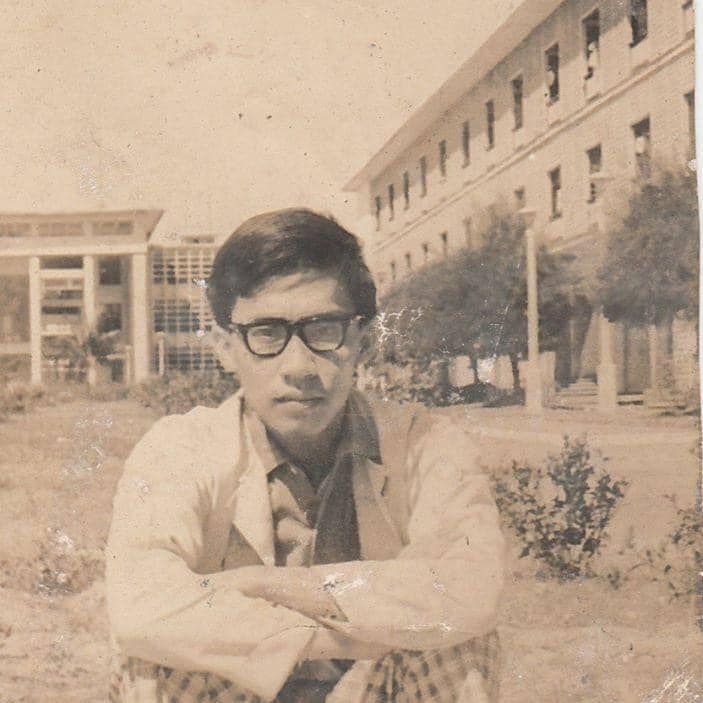
(7) Captain later Major Professor Maung Maung Nyo M.B., B.S.(Rgn), Ph.D.(London), M.A.(Michigan State), M.D., FOMERAD (USA)
My Routines at the Hospital
I always woke up at about 6.00 AM and did the morning exercise mostly skipping and push-ups for about half an hour. Then I took a shower and breakfast prepared by a batman, mostly fried rice or Mohinga and coffee. Sometimes I ate Shan noodle or Htamin-Chin (Shan Sour Rice), but I avoided eating uncooked food like Shan Pickled Pork.(Once, the Thai contractors hosted the Burmese military officers to enjoy Ranong Dance and drinks. They fed us with foods that included Wet-Tha-Chin (Pickled Pork) to be eaten raw. Many people suffered from diarrhea the next day and I had to treat them, some with intravenous drips and chloramphenicol. I was fortunate that I did not eat it.)Then, I changed into military uniform, took my stethoscope and went to the hospital OPD ( Called Medical Inspection Room, MI Room in the Army Parlance). I would see the patients from 8.00 AM to 10.00 AM. I would admit serious cases, mostly high fevers or injuries and gunshot wounds. Then, I would see the patients already admitted to the hospital, mostly medical ones. Only a few surgical cases were there. Then I would go to the adjacent Hospital Office to look after the numbers or accounts- admissions, discharges, rations, pays, expenditure, soldiers’ leaves and so on. I would write necessary report that ranged from daily to yearly reports etc. Or I may have to write emergency report asked by the higher authorities and Eastern Command.From 12.00 noon or so I went back to my house, took lunch prepared by my batman. It included the hospital food to check and my own personal meal cooked by the Hospital Kitchen. We were provided with 4 cooks capable of cooking first-class European Food or Byriani (Dan-Pauk). Then I would walk to the 5th Buregt Officers Mess and had a game of billiards. Sometimes they asked me to join them for lunch if I had not already eaten. At about 2.00 PM I did minor operations in the operating theatre like draining of abscess, setting a fracture, removing the cyst, removing a bullet from the gunshot wounds etc. I also made a detailed examination and history writing of the patients admitted in the morning. New patients were seen at all times.I came back from the hospital at about 4.00 PM, rested for about half an hour, changed for shorts and canvas shoes and then played volleyball with Yebaws in the hospital compound. I usually gave a bottle of lime juice about 2.50 Kyat per bottle to share with all the players after the game. Then, I would take a shower, walked in the town with infantry officers if they were going or rested in my house and had dinner. I did not drink at that time. At night I read or went to the 5th Buregt Officers Mess and played billiards. I would stop my game and went to the hospital for any patient coming as I was on 24 hours duty a day. I was fully occupied throughout the day until I went to sleep at 10.00 PM or later. The hospital had its own generator for electrical supply from 6.00 PM to 10.00 PM every night regularly. The generator started again if there was any patient or operation at night. The whole town had no electrical supply. All the town refrigerators were run by kerosene oil until I left in 1963. But, they made ice creams to sell!Visit to Thai-Burma BorderOne day, Major Tin Shwe asked me,” Saya, do you like to see the Thai-Burma Boundary near Pon Par Kyin? We’re going there.” “Yes, I wish to. But who would look after the hospital?” I answered.” Don’t worry. It’s only for a week. Your MA can look after it very well. He was looking after it before you were here. Captain Mya Thaw used to leave like this. Come along. It’s a rare opportunity.” Thus I happened to visit the Thai-Burma Boundary Marker near Pon Par Kyin. I followed the footsteps of the old Burmese soldiers from Anyar (Upper Burma) marching to Chiang Mai and Ayutthaya in the 18thcentury.It was the end of Monsoon and we’re marching south from Mongton. As usual, we rode the Dodge Jeep that was sturdy and roadworthy. We had a company of troops to escort us. I was wearing the beret cap with bright insignia and my epaulets bore bright copper bars indicating my rank. “Saya, take off your beret cap and wear this one. And remove your brass bars from your epaulets”, so saying Major Tin Shwe gave me a field hat without any bright emblems, and I changed my cap. I loosened the epaulets and let them fall over my shoulders. Suddenly there were no more shining objects visible on me.“That’s better. Those shining objects attract attention from the snipers. We also will disembark from the Dodge and walk on foot for now to prevent ambush. Don’t worry. I have sent scouts ahead of our convoy”, Major Tin Shwe told me. He was a valiant soldier fighting the insurgents in Arakan, Tavoy and Pegu Yoma before being sent here. He was awarded a Thura Title (Military Cross for Valour) for defeating the Karen insurgents in the Tenasserim Division. He led a company of 100 soldiers in attacking the Karen stronghold well protected by big guns and hundreds of soldiers. He conquered them with a loss of one soldier and a few injuries to the dozen deaths and many wounded of the enemy. The KNDO retreated in this battle. He was an Arakanese having joined the Burma Army since the Japanese Occupation of Burma.Near Monghan, we met some UMP (Union Military Police) troops going from Monghan to Mongton. A UMP Captain saluted us and said,” We had a fight with SSA (Shan State Army) troops just now. No one was injured and they fled. That’s why we are walking. Don’t worry Bohmu, we have just cleared the area of Shan rebels. I salute you”. We acknowledged his report by smiling and waving our hands. The UMP troops were an independent paramilitary unit at the time and soon to be absorbed into the Burma Army.We stopped near a Cedi (Pagoda) marking the march of old Burmese troops to Chiang Mai. This cedi was of the Konbaung type and it was ruined, but we could easily discern all its marks, paintings and writings. There was a stream near by and Major Tin Shwe said,” Look! Saya. The old Burmese Army was full of wisdom. They camped near the stream where water was easily available. In our times we camped straddling the stream. See it at Monghan camp.” It’s true the Monghan Army Camp was built over the Monghan stream, fencing a large area on either side of the stream, building necessary bunkers and huts to accommodate about 30 soldiers (a Platoon). The Monghan platoon commander welcomed us warmly by saluting Major Tin Shwe and me. He fed us with steamed glutinous rice, fried vegetables and chicken. I examined his troops and gave the necessary treatment. I injected all of them with TAB vaccine, Tetanus Toxoid or DTPP vaccine. I distributed multivitamin tablets as a morale booster. The BPI’s green multivitamin tablets were sent to me in thousands at the time. I also deliver choloroquine and Pyrimethamine or Fansidar tablets to prevent and treat malaria that was rampant in the region. I incised two soldiers who had septic abscess from hunting. The whole camp was happy with our visit.We moved on after about two hours in Monghan to Pon Par Kyin. Captain Kyin Saing came to us at the half way to welcome us. Major Tin Shwe was well liked by his officers and men in the 5th Buregt having spent his life with the battalion for over a decade. Captain Kyin Saing was a small chap about 55 Kilograms by weight and 5 foot 3 or 4 inches in height. But, he was very brave. He would defend his camp for over 5 to 7 days against the constant firing of the more numerous rebels without seeing any reinforcement or food. Ultimately he broke through the encircling insurgents with ten or fifteen men and attacked them from the camp’s outside while soldiers inside also fired. Only then the insurgents left leaving behind several of them dead. He was awarded a Thura title later.We arrived in the Pon Par Kyin military camp at about 2 or 2.30 PM. Captain Kyin Saing reserved two bunkers for us to sleep safely. Major Tin Shwe and I had two beds (Camp cots) arranged parallel in the bunker with plenty of food and drinks. He and his officers joined us until we slept. Other visitors were also well looked after. We visited the Pon Par Kyin market the next day, as it was the market day. In Shan State, each town or village had a market day on every 5th day. Only then we could see the sellers of all sorts and buyers. There would not be any people in the market on other days of the week.We saw plenty of Thai and local Shan goods and foods in the market. The Shan here could speak Thai. We saw the portrait of the Thai King adoringly kept in Shan houses.We went to the Thai-Burmese borders the next morning. It was only 9 miles away and so we took breakfast only at the border as a kind of picnic. The boundary pillar was well preserved and we took photographs. Captain Kyin Saing talked about with pride how the Burmese Military Attache in Bangkok Colonel Thein Doke saluted the Burmese Flag flying on the pole of the Boundary Pillar and at his camp in Pon Par Kyin when the latter led the Thai delegation into Burma. He led the troop in welcoming the military attaché and delegates into Pon Par Kyin and how they were impressed with his military parade. Captain Kyin Saing was half Chinese having been born and brought up in Lanmadaw in Rangoon, but he joined the Burma Army when it tried to repel the KMT troops in 1955.He was a high school graduate of the Central State High School of Lanmadaw District.I did my medical duties well in Pon Par Kyin too.
Interesting Cases and Events at Mongton
1. One day, a Lahu male about 25 years of age was brought to my OPD with a bloated face covering both eyes. He had a fever and was delirious. It had been for about 3 days now since he fell from his horse about 1 week ago. They ha paid respects to the Spirits and had taken medicine from the indigenous Shan healer without any improvement. They thought he was punished by the earth goddess (Myay Kaing) as he became incoherent and blind. I examined him thoroughly and found him to be suffering from cellulitis of the face and possible septicemia as the face was red, swollen with blepharitis (inflammation of the eyelids). I found a few inflamed bruises on the shoulders and back possibly from the fall from the horse. The cervical (neck) lymph glands were also enlarged and tender. His pupils reacted to light and deep tendon reflexes were a bit brisk indicating increased neuronal reaction. I told Maung Lu, interpreter for Lahu and Shan, to tell the patient and his relatives,” It’s due to severe infection, not due to the wrath of earth goddess. I’ll give all necessary treatment now and admit the patient in the hospital for further investigation and treatment. I’ll say tomorrow if he will live that I believe.” I gave him crystalline penicillin injection immediately, applied tetracycline ointment to his eyes, cleaned and dressed the wounds, gave Piriton injection and analgesics. I repeated the treatment every 4 hours and his swelling and fever subsided in about 12 hours. By the next morning he was feeling better, able to see and speak. He was discharged after 5 days. He came back to me after one month, not for any treatment, but to present me with a leg of deer he shot. I said to him” Thank you”, but did not take the leg, I gave it to the hospital kitchen to cook for patients. In Mongton, the antibiotics were very powerful as it was virgin land for those potent drugs. The people had never been exposed to the drugs.2. One day, Captain Ko Lay told me whether I could see his aunt-in-law as she was suffering from Hton-Na Kyin-Na after menopause. I asked him to take her to my hospital and examined her. She was about 40 years of age, very fair, good looking, about 5 foot 4 inches in height and weighed about 100 pounds. She complained of tingling and numbness in all limbs and she was afraid that she might be suffering from leprosy. She was a religious vegetarian and ate only the white glutinous rice and mustard pickle with few soy beans salts. Naturally she was suffering from Vitamin B 1 deficiency and all 4 limbs were showing signs of peripheral neuritis. Her heart might also be affected as it was weak. I therefore told Captain Ko Lay,” It’s not leprosy. It’s due to severe Vitamin B 1 deficiency,. I’ll treat her effectively starting from now. It’ll be cured soon.” Then I gave her Aneurine Injection prepared by the Takeda Pharmaceutical Company. I got them as samples. I also gave all other supportive measures like minerals and good nutrition. I dared not use B 1 Injection of BPI as it produced shock and death. Professor U Aye told us not to use it. He wrote it in the Burma Medical Journal that I kept with me. I fed her more soybeans preparation and ground nuts and to eat eggs as it’s still vegetarian. She improved in about a week. I urged her to eat meat and nuts too. She became so attractive again that a bachelor old major visited her frequently (to court her?) before I left.4. Actually, Captain Ko Lay’s first daughter was partly born (Delivered) by me. I gave Khin Than Myint a few prenatal capsules during her pregnancy and I remember doing some prenatal examination, but she did not come to me regularly, She called a traditional midwife to her home for delivery that night, but at about midnight I was informed that the labor was difficult and the baby did not come out, so requested me whether I could help. I went to their home that was only about a few minutes’ walk, found her exhausted and pale. So I gave a drip of glucose saline and examined her. The presentation was normal vertex , cervix was open, but there was no episiostomy (Incision of the birth canal). So, I did episiostomy and managed to deliver. Her first daughter came out nicely.e was the first child of Captain Ko Lay and his wife Teacher Nang Khin Than Myint of Mongton.4. Actually, Captain Ko Lay’s first daughter was partly born (Delivered) by me. I gave Khin Than Myint a few prenatal capsules during her pregnancy and I remember doing some prenatal examination, but she did not come to me regularly, She called a traditional midwife to her home for delivery that night, but at about midnight I was informed that the labour was difficult and the baby did not come out, so requested me whether I could help. I went to their home that was only about a few minutes’ walk, found her exhausted and pale. So I gave a drip of glucose saline and examined her. The presentation was normal vertex , cervix was open, but there was no episiostomy (Incision of the birth canal). So, I did episiostomy and managed to deliver. Her first daughter came out nicely.5. Another woman was not so lucky. It was about 4.00 AM in the morning and the Staff Nurse told me there was a case of difficult labor in the Naung Par Yin village close to Mongton. In fact both are continuous, Mongton was on the south side of our hospital and Naung Par Yin village was on the north side, both on the north bank of the Nang Yin Stream. I told her,” Bring her and admit her.” I then asked the corporal in charge of the generator to start the engine for lights. I examined the pregnant lady on the operating table, but I could not hear any foetal heart sounds. I asked her whether she was really pregnant, her husband vouched for it. So I put an intravenous glucose saline drip and waited. I asked my Staff Nurse to take BP and pulse every 15 minutes and to report me for anything unusual. I was reading about stillbirths and the management of difficult labor. She came to me at about 6.00AM and said, “ Bogyi, this thing came out from her.” It was a desiccated (dry) foetus (Lu Chauk). “Oh, this is a case of stillbirth, a desiccated foetus.” I walked to the operating theatre, called the husband and wife that they had good luck and would be rich as her pregnancy had terminated by delivering a Lu-Chauk to be respected and taken care of. They were happy and went away with that dry foetus. I knew how people were superstitious in Burma and Shan State.6. One afternoon I was playing billiards at the 5thBuregt Officers Mess and my MA came to inform me of the arrival of a severe case of paralysis from the Thai-Burma border, not from Pon Par Kyin, but from Mongyawn or Mekyin (?). It took about 3 days to reach Mongton. I followed him to my hospital and saw the patient on the examining couch in the OPD. He was a sergeant, about 40 years of age, single, 5 foot 8 inches in height, about 150 pounds weight and he could not move both legs. He looked a bit wasted and thin for his body. There was mild fever, the regular pulse at about 80 per minute, pale yellowish skin. He could not move right leg totally but could move left leg a little bit. I found his right buttock warm, tender and full. There were no deep reflexes on the right side. “What happened to you Saya?”, I asked. In the army, non-commissioned officers were addressed as Saya. It may mean Sergeant or Corporal. Sayagyi means a Warrant Officer. “Nothing serious happened to me. I just slipped on climbing back to the barrack one night and then I could not move the whole limbs, both sides. Are the bones broken?” “No, but I’m not sure yet. Have you got weight loss, chronic cough and night sweats before?” I asked. “No, Bogyi”, he replied. “Are you married?” “No, Bogyi.”“We don’t have an X-Ray machine here to determine bone injury. But I’ll try examining you under general anaethesia to determine the exact cause. My hunches include bone fracture, joint dislocation, TB, muscle paralysis, a septic abscess. I’m more in favor of acute abscess becoming subacute due to low-grade fever and fall. Did you take any injection in here?” “ Yes, about a few days before I fell.” I therefore put him under Pentothal (Barbiturate) drip adjusting the dosage by his body weight. I found his right buttock full of pus that I drained. I gave a lot of antibiotics to him, strepto-penicillin injection and EUSOL dressing and drainage daily. He recovered from abscess after a week, but he could not move his right leg. I, therefore, sent him to BMH, Maymyo for physiotherapy treatment and he completely recovered after two or three months. I later found out that he took intramuscular penicillin injection from his platoon medical corporal that was not aseptic. He took it as a preventive measure after visiting the Thai brothel near the Thai-Burma border. He got injection abscess after all. I had a hunch for it as my friend Dr Muriel Yi Yi Myint got it in 2ndMB class after she was injected by a friend in Mandalay.7. Once, a mother from 5th Buregt took her son to me complaining of his falling from her house Veranda while playing and now unable to move his left shoulder. He was about ten years of age, grimacing and holding his left hand with his right hand. “Are you feeling pain?” I asked him. “Yes, Bogyi”, he replied. I examined him gently but thoroughly and found the left clavicle fractured neatly. I told his mother,” He has a fractured left clavicle. There is no X-Ray to confirm it, but I’m sure of it. I can set the fracture in POP (Plaster of Paris) and he must remain in it for two months. I’ll remove the POP and check again then. Do you agree for setting the fracture by me?” She said “Yes” and I applied the POP in the figure of eight fashion after a reduction of the fracture and realignment. He could go on doing daily chores including attending the classes albeit his left upper limb was bent at elbow joint and slung from the neck by a bandaged. I removed the POP after 8 weeks and I found it to be completely healed. I met both the son and mother in DSGH again in 1969 and they said the fracture site did not give any problem and her son had been admitted to the Defence Services Academy. I was sure his clavicle had united well.8. One day a mother from the 5th Buregt took her 7 years old son to me complaining for him of difficulty in breathing and fever. I found him suffering from enlarged tonsils and also saw a white mucous patch on the tonsils. I gave antibiotics, throat gurgle and expectorants to clear his throat. I was suspecting acute tonsillitis with diphtheria, as 2 or 3 school children complained of similar symptoms in a few days. Many followed. I gave them Pencillin injection and DTPP vaccine. But the vaccine ran out and I asked for more from Rangoon Army Medical Store. It did not send more vaccines and fortunately, there was no fatality and the disease took a natural decline. I thought it was diphtheria as I saw the white or bluish membrane covering the tonsils and children cyanotic, I just gave DTPP injection and penicillin. Maybe it was just penicillin-sensitive sever acute tonsillitis. Major Saw Lwin who was in charge of the Army Medical Store at the time said later that they did not have enough DTPP vaccine and that it was the duty of the civilian Health Department to take responsibility. They informed it dutifully.9. Then, after some time in Mongton I came across cases of children having slight fever for 3 or 4 days and later they had paralysis of either upper limb or lower limb. I suspected acute poliomyelitis as it was clean cut motor paralysis involving one or two limbs after a slight fever or malaise. But I was told by Professor Dr U Myint Soe and Public Health teachers that Burmadid not have overt clinical poliomyelitis cases due to constant sub-clinical infections giving permanent immunity to the disease. Any way I treated them as cases of poliomyelitis and referred them as such to Rangoon and Mandalay. Later it was confirmed that acute monoplegic poliomyelitis did occur especially in the Shan State. I thus learned that one must always have an open mind about occurrence of common or rare diseases irrespective of what the textbooks or teachers say.10. One day at about 6.00 PM while I was going to exercise my MA came to me and said,” Bogyi, There is a patient badly injured just now. Would you please come and see?” I said “Yes” and followed him to the OPD. He was the Burmese superintendent of the Thai Timber Mill. He was bleeding profusely from the right hand covered with a blood stained cloth. He was moaning and could not answer me. “Saya Mahmood, put a dextrose saline drip now and I will examine.” So saying, I examined him. He was about 25 years of age, well built and about 5.5 feet in height. He was conscious, but suffering from severe pain. An old man of about 50 said,” Doctor, he went to the lake for fishing. We heard an explosion and he fell unconscious from it. We just carried him here immediately.” I found his blood pressure low, but the bleeding had stopped as we tied a tourniquet above the elbow. He had some blast injury on the chest and face, but not serious. I gave him an injection of Omnapon (Morphine) for pain and examined him.They used dynamite to explode in the lake and this explosion stunned the fish in the water. They caught (Netted) the fish while floating on the water. Now, his explosive compound detonated in his hand and he was injured seriously having partially cut all his five fingers of the right hand. All the fingers were dangling. “What can you do, Doctor?” the Thai-Burmese interpreter from the Thai Timber Mill asked me.” Normally, this type of injury should be treated by a hand surgeon to maintain his hand’s usefulness. For now, I will do the initial treatment by cleaning and dressing, then tying all the torn muscles. Then when they heal we could send him to Sao San Htun Hospital in Taunggyi for further treatment and appraisal. You may take him to Chiang Mai or Bangkok if you like”, I replied. “Please treat here, our company will pay for the cost”, he said. “OK”, I assured him.I cleaned and dressed him under Pentothal anesthetic drip. I tied the torn tendons and muscles taking care to be correct to perform their normal functions. I also stitched the torn blood vessels and nerves. He was given broad-spectrum antibiotic in the saline drip. Blood was given later. He recovered from injury in about two weeks, but he could not move the fingers of his right hand freely. I, therefore, suggested him to go to Sao San Htun Hospital. I wrote a reference letter to it. I asked Drs Thein Nyunt and Zaw Win to tell me what they did. The patient came back after about a month able to use his right hand. He said nothing big was done. When I passed through Taunggyi on leave Dr Thein Nyunt told me the patient’s right hand was well- healed and they just gave physiotherapy hand exercises. Dr Zaw Win congratulated me for tying the torn tendons and muscles immediately as it enhanced healing and normal functions. Dr Win Maung, the Consultant Anaesthetist, however, warned me not to use Pentothal drip for anaesthesia as it may make patient sleep forever. He advised me to use cocktail anaesthesia (A mixture of largactil, pethidine, atropine and ephedrine in dextrose saline drip) or ether in the future that I did. I was glad for the patient and for my self as being able to save a patient’s right hand. I did not take any money for treating him.
Tazaungdaing Lighting Festival
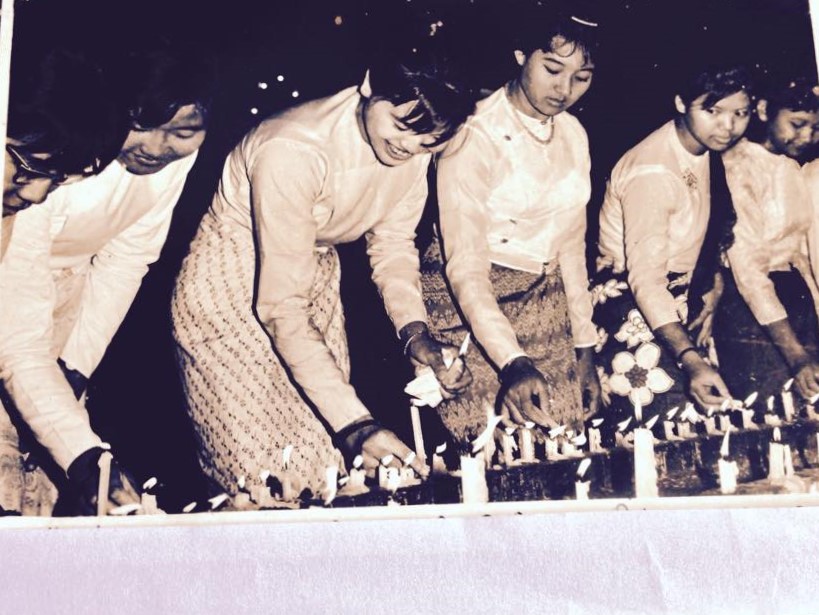
In November at the end of rainy season, people in Mongton celebrated the Tazaungdaing lighting festival. They went to the monastery and pagodas to pay homage to Buddha and submitted Swoon (Meal) to the Sanghas. At night they lighted their homes and streets. There was a public gathering in the town’s square and traditional Shan dances like legendary Keinari Keinara and Toenaya Dances were performed. Many teenagers and young adults sent Mee-Bone-Pyan (Fire balloons) to the sky. A few vendors sold Shan snacks like steamed rice, Shan noodles and fried vegetables to be taken with plain Shan tea. It’s a feast for the local people. The Shan people celebrate Tazaungdaing more than Thadingyut, more so in Taunggyi.
Good Fortune
One day in February or March 1963 Colonels Maung Maung Aung and Kyaw Sein Tun flew into Mongton airstrip that was newly built to take patients to BMH, Maymyo. They were visiting my hospital as they heard that I was doing fine and people were talking about me treating all kinds of patients. They were pleased to see the hospital, outpatients as well as inpatients. They said my hospital was comparable to any good district hospital in Burma with Civil Surgeons and more doctors and nurses. I gave them a good lunch in both English and Burmese dishes cooked by my excellent cooks. They praised the meals too. Colonel Kyaw Sein Tun looked after the transfer of non-medical staff and soldiers.Then, Colonel Maung Maung Aung told me, “Ko Nyo, I know you are popular and happy here. But I have to transfer you now to Lashio as there are some problems between the Major and Captain MO (Medical Officer) serving with him. You can fly with us in the Otter Plane after this meal.” I said, “It’s OK by me, but I’m worried for the patients and hospital.” Colonel Mya Din who had just come to command the 5th Buregt and Station Commander said,” Please leave him here for the time being as our Regiment is in the process of reorganizing amid increased enemy activities. Send his replacement first and I’ll send him to Lashio by the first flight.”
Post-amble / Envoi
I lived and worked in Mongton for about 9 or 10 months only, but I thought I was there. I gained a lot during my stay there. I remember the following:
(1) I managed a hospital on my own as an independent unit looking after all kinds of patients and diseases.
(2) I became very friendly with the infantry officers of the Burma Army and I understand their behaviors and antics due to their background, training and complexes. But they are basically good patriotic people.
(3) I have self-discipline to control my thinking and activities and I never deviate from my established goal that I to go abroad for further study. That made me indifferent to money and sex.
(4) I was promoted to Captain a few months in Mongton and people thought I was very smart. It gave me a good image among the officers. (In fact, my promotion was based on a time scale. If no crime or misdemeanor is committed you would be promoted.)
(5) I learned a lot of medicine outside the curricular teaching and I had to depend on my common sense and reading the medical literature.
(6) Captain, later Colonel Kyaw Nyunt M.B.,B.S.(Rgn) Director of Medical Services, Burma Army was a literary medic.
(7) I had self-confidence more than before for my future. That made me always cheerful.
Dr Maung Maung Nyo
12. 02 .2009