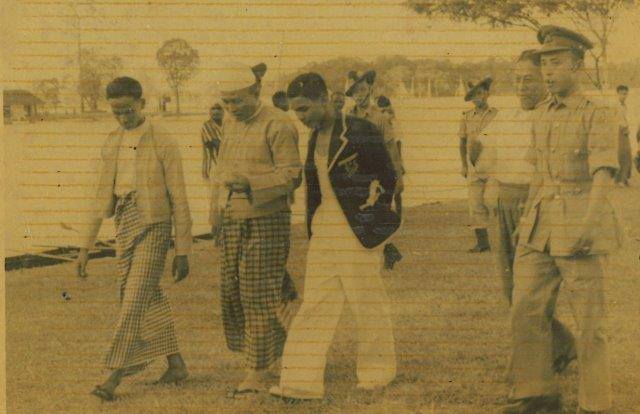
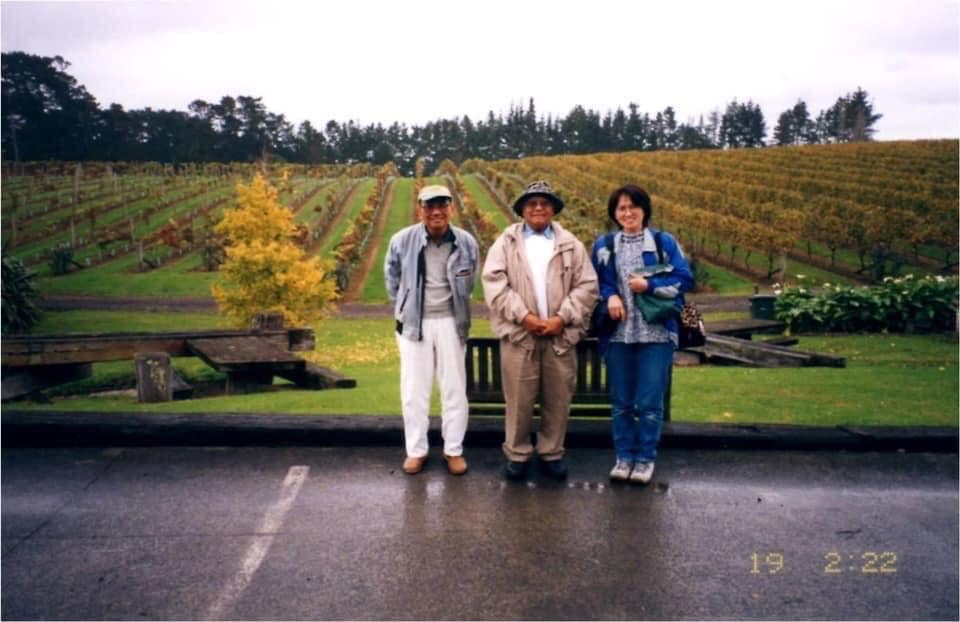
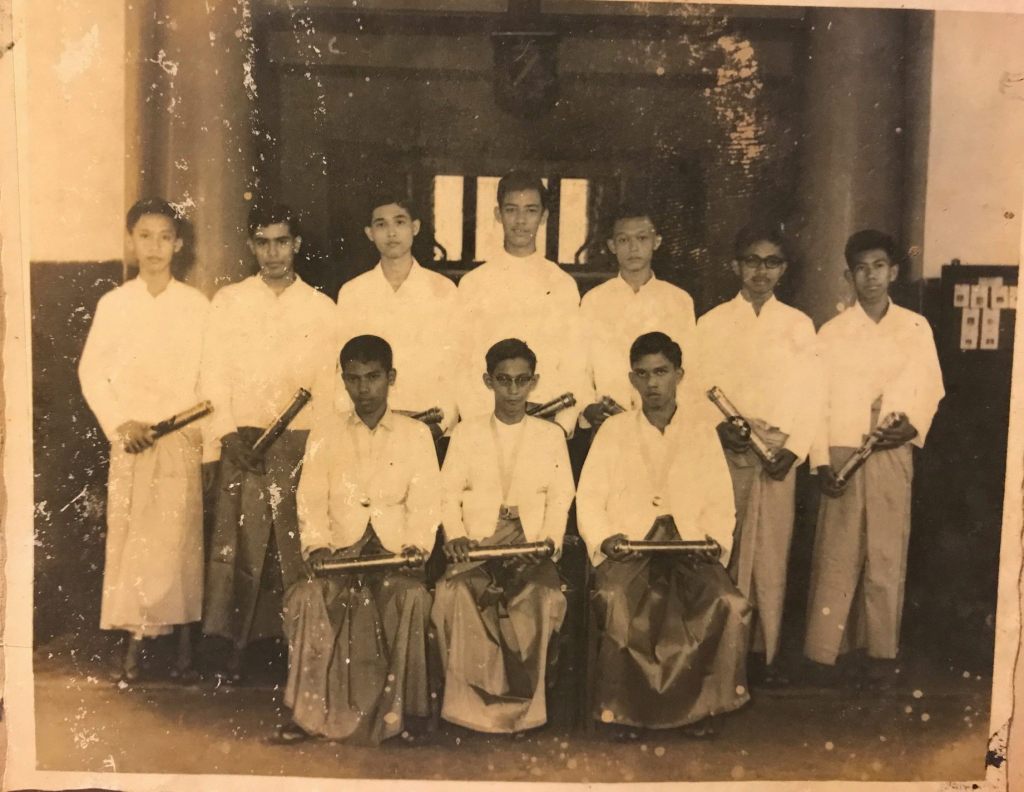
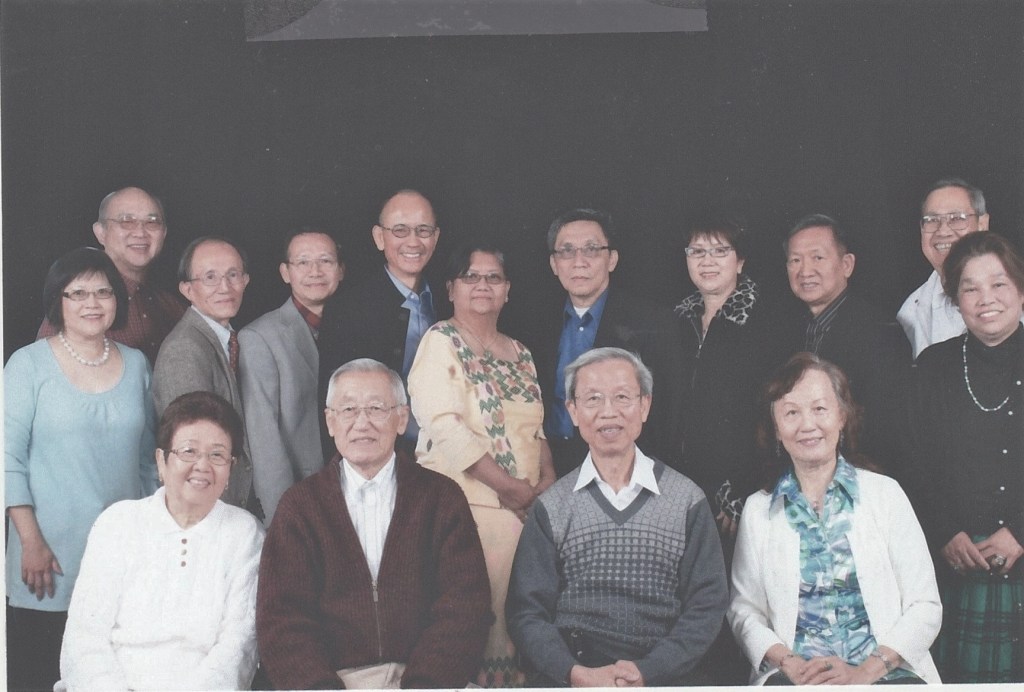
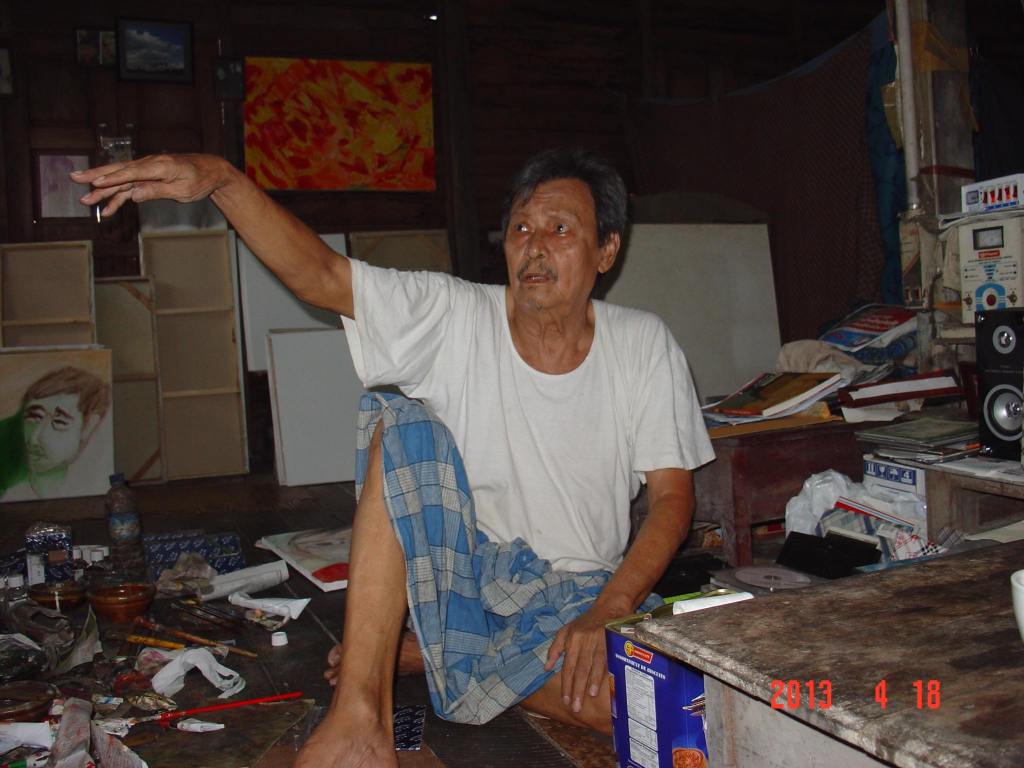
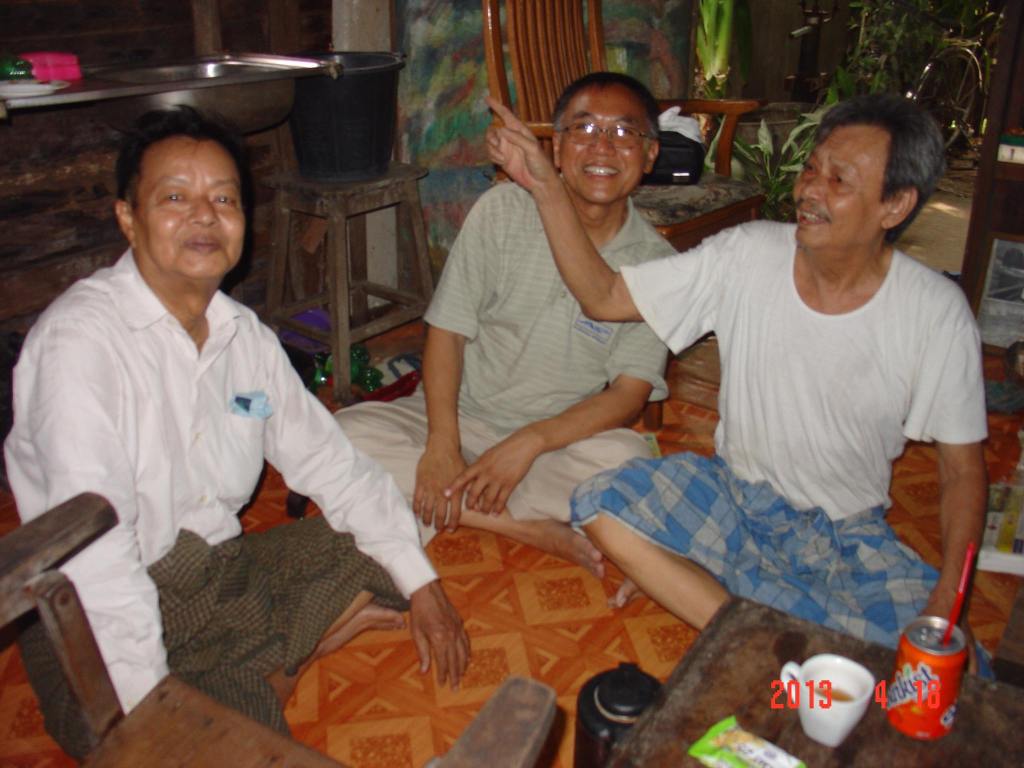
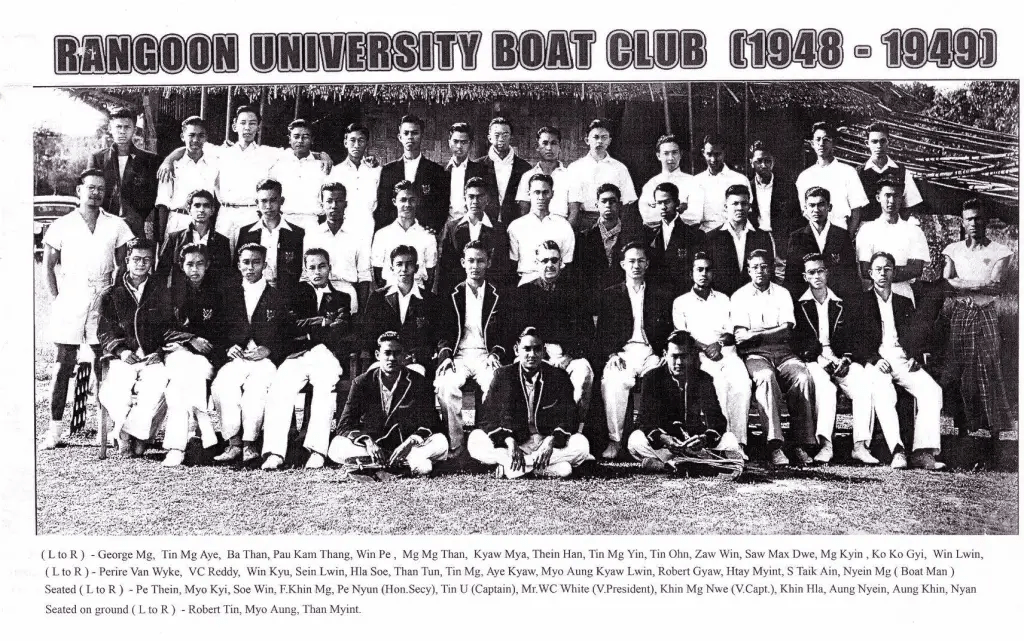
When Rangoon University reopened in 1946, three siblings — Dr. Pe Nyun (Dick), Dr. Pe Thein (Tom) and their elder sister — attended RU along with U Tin U.
RUBC Fours
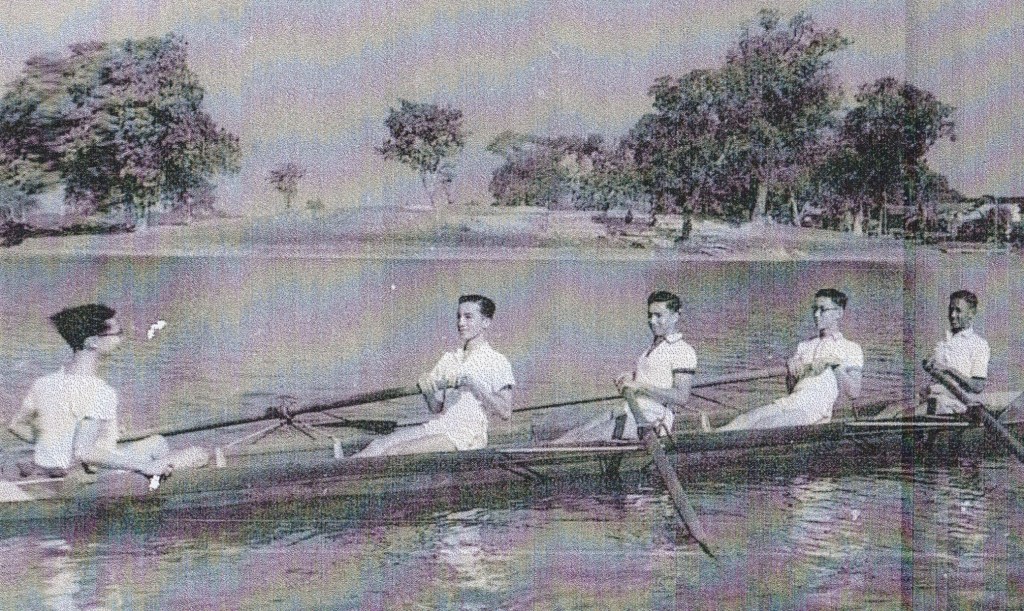
Pe Nyun, Pe Thein, Khin Maung Wint / Bobby Tin (son of Architect U Tin) and Tin U represented Rangoon University Boat Club at the 1948 Independence Day Regatta at Kandawgyi and became RUBC Gold.
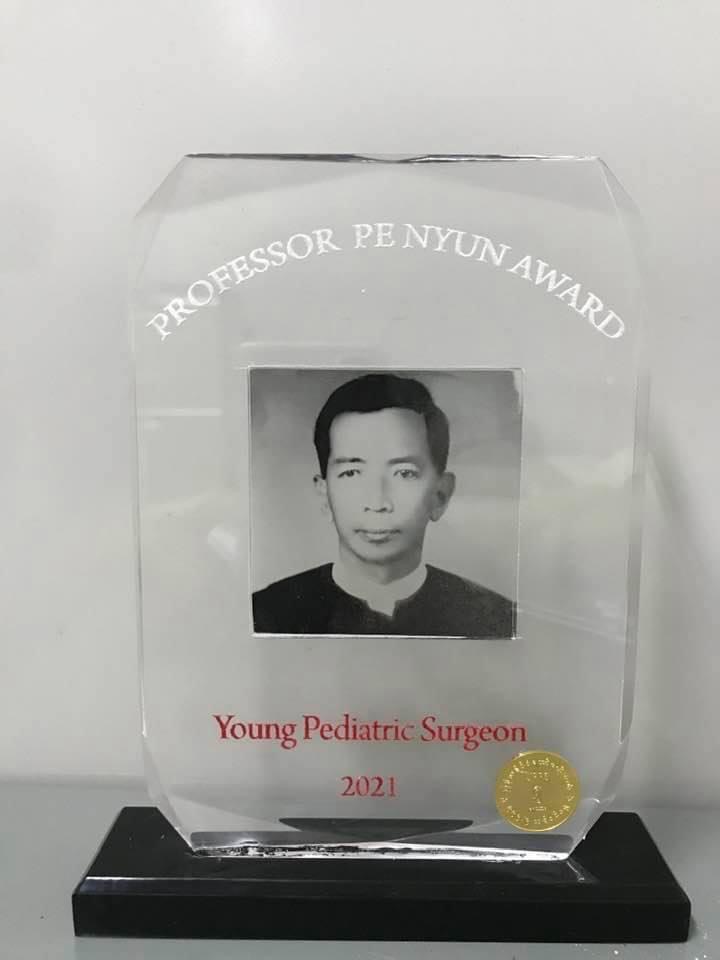
Dr. Pe Nyun
Award for Young Pediatric Surgeon
Secretary and later Captain of RUBC.
Chief Pediatric Surgeon at Rangoon Children Hospital.
Leader of the team that operated on conjoined twins (Ma Nan Soe & Ma Nan San).
Moved to Canada.
He is now GBNF.
His family established an award in his memory.
Dr. Pe Thein
Professor
(Later) Minister of Health & Education.
He is now GBNF.
Spouse : Professor Dr. Kyu Kyu Swe.
U Tin U
Oldest & Most Senior Past Captain of RUBC
Past Captain of Rangoon Golf Club.
Received BSCE from University of Oregon and MSCE from Yale University.
Taught part-time at Civil Engineering
Worked for private companies
Advisor at PWD.
Spouse : Dr. Khin Kyi Nyunt is a Nutritionist researcher. She passed away in November 2019.
(2) U Maung Maung Than Tun
U Maung Maung Than Tun
He was the oldest Past Captain alive.
He is now GBNF.
He and his younger son Aung Khine form the First Father & Son at RUBC to be Captain & Gold.
His older son Hla Maw Tun is Past Secretary & Gold. He is VP of OMA.
(3) Father & Son
U Sein Htoon and U Zeyar Linn
U Sein Htoon
Graduated with B.Sc.(Engg) in 1963.
Past Captain & Gold of RUBC.
Cox of the RUBC team that won the Willingdon Trophy for Coxed Fours at the ARAE (Amateur Rowing Association of the East) Regatta in Colombo, Ceylon in 1960.
Past President of the Burma Rowing Federation.
Boat Club
U Zeyar Linn
Graduated with B.E (Mech) in 2001.
RUBC Captain/Gold (1996)
Record
U Sein Htoon & U Zeyar Linn have the honor to be the Second Father-Son pair of RUBC Captain and Gold.
(4) RUBC Captains
RUBC was founded in 1923. U Ba Tun served as the first Captain.
RUBC Captains
A group photo of the RUBC Captains were taken in 1963-64.
Tha Htin (1931-32)
Tun Thoung (1932-33)
Aye Maung (1935-36)
Khin Maung Bo (1939-40)
C. H. Chan (1940-41)
Kyaw Thein (1947-48)
Tin U (1948-49)
W. Ohn Pe ( 1950-51)
Chan Tha (1952-53)
Mg Mg Than Tun (1953-54)
Myo Tint (1955-56)
Tin Htut (1956-57)
Harry Saing (1957-58) — absentee
Than Nyun (1958-59)
Tin Htoon (1959-60)
Han Tin (1960-61)
Tin Wa (1961-62) — absentee
Sein Htoon (1962-63)
Thaung Lwin (1963-64)
(5) RUBC Magazine Committee
40th Anniversary
Sithu U Tin (President)
U Po Zon (Vice President)
U Tin Htoon (Past Captain; ARAE Champion in 1958 & 1960)
90th Anniversary
U Tin Htoon (Chair)
U Myo Myint (Vice Chair)
U Htaik San (Secretary)
U Hla Min (Contributing Editor) : wrote Prelude to each section; contributed three articles
90th Anniversary
(6) RUBC Crew in 1954
Crew 1
(7) Coxed Eights
In 1956, Sir Arthur Eggar (Life President) attended the Annual Regatta. He posed with the RUBC crew that won the President’s Challenge Cup for Inter-Club Coxed Eights
President’s Cup Winners
Lazarus (Soviet Lecturer) was Timing Stroke of the Engineering crew that won the Inter-Faculty Coxed Eights trophy. Ohn Hlaing (Elmo), Kyaw Lwin (George) and Tin Aung (Victor) are now GBNF.
RIT Eights
(8) RUBC Regatta
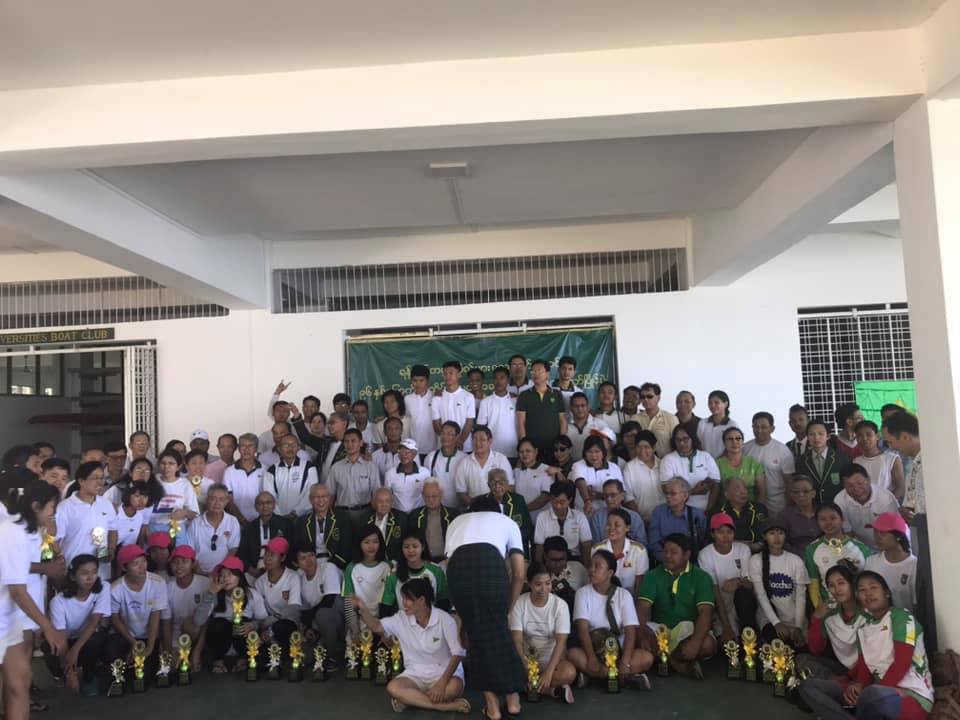
Attended the Regatta for 95th Anniversary in 2018
95th Anniversary
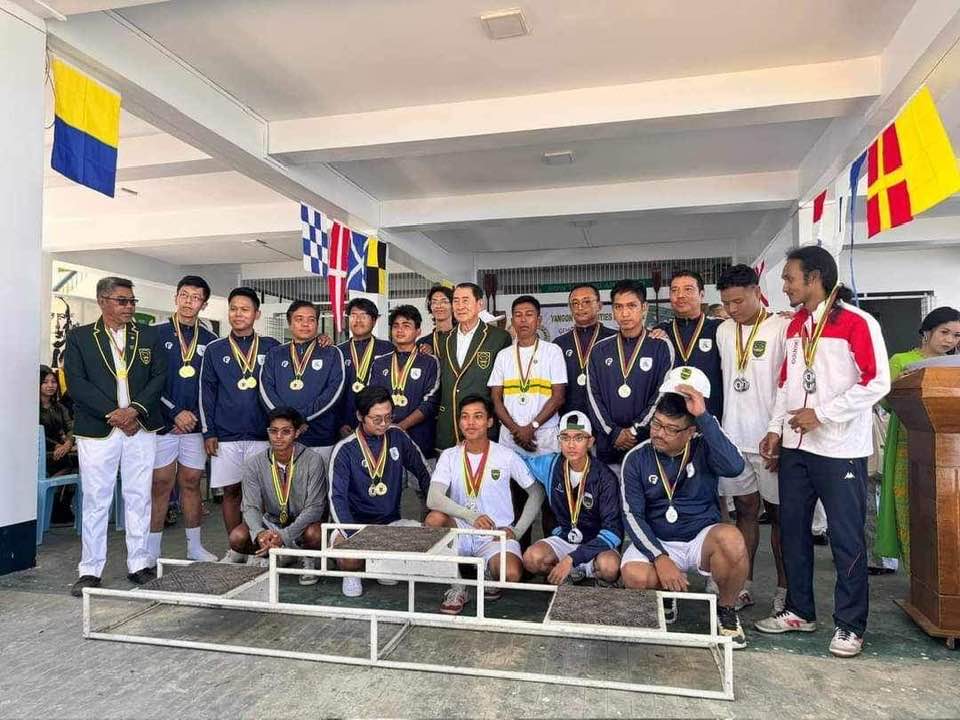
U Tin Htoon and U Tun Aung (George) represented the Old Members from overseas at the RUBC Centennial Celebrations in 2023.
Regatta
(9) Boat Club in late 1960s
RIT 69ers visited Inya Lake and RUBC
Chit Po Po, Win Naing (Dicky) and Sein Tun are RUBC members.
Win Naing (Dicky), Yi Pinn (Maung Maung Kaung), Nay Win, Chit Po Po & Khin Maung Gyi are now GBNF.
(10) RASU Rowing in 1967
Saya Micky (U Thein Aung, RUBC Gold) managed the RASU Rowing teams.
Nyan Taw (Dicky, RUBC Gold) & crew mates are seen with the trophies
(11) Reunions
Wedding
Date : December 12, 2017.
Host : U Maung Maung Than Tun and family
Event: Wedding of U MMTT’s grand daughter (daughter of U Hla Maw Tun, Past Secretary)
Attendees include U Tun Shein (Willy, RUBC Gold), Dr. Than Nyunt (George, Past Captain & Gold), U Tin Htoon (A60, Past Captain & Gold).
Lunch Gathering
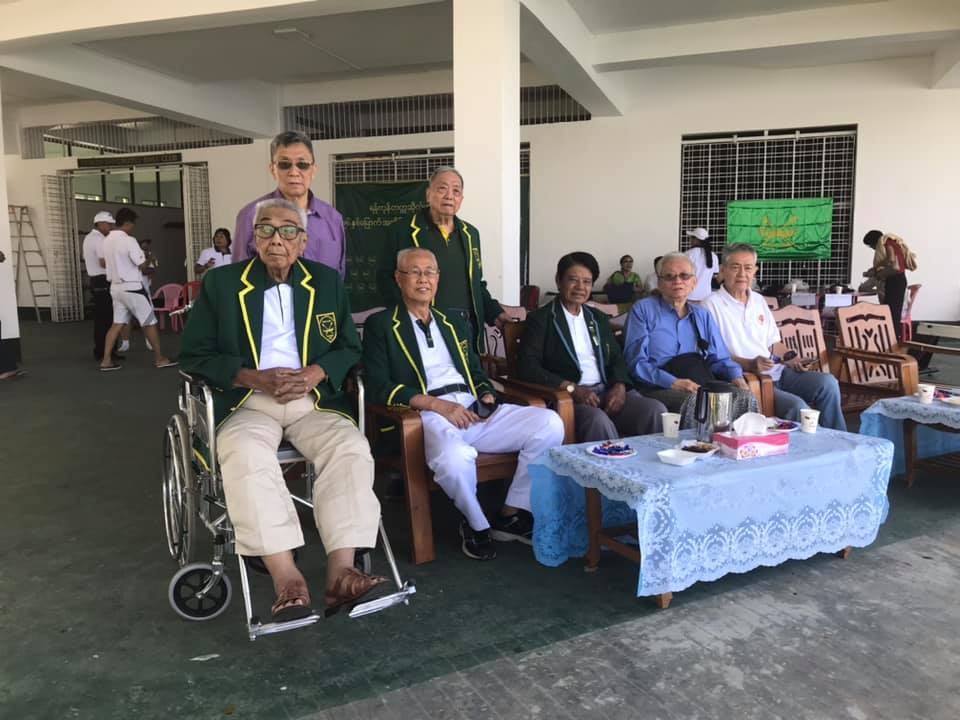
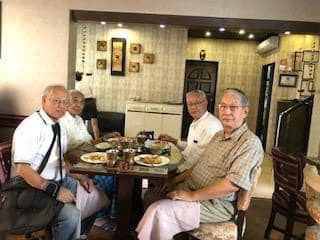
U Tun Shein (Willie, RUBC Gold) hosted a lunch gathering for Saya U Tin Htut (M60, RUBC Captain & Gold, US), U Tin Htoon (A60, RUBC Captain & Gold, US) and U Maung Maung Than Tun (Retired Ambassador, RUBC Captain & Gold).
U Tin Htut coxed the Old Paulians crew, which won the Senior Novices event in 1954. The crew comprised of Tun Shein (Stroke), M. Hla Min (SPHS Saya), Than Nyun (George, retired minister), and Sao Hso Holm (Bow, son of Arzanee Sawbwa).
Four of the five crew members became RUBC Gold. Two became RUBC Captains.
(12) U Chan Tha
U Chan Tha
Multi-sports athlete
Past Captain & Gold of RUBC
Captain of the Prome Hall Soccer team, which won Inter-Hall Trophy for successive years
Represented RU and SAMB in soccer
(13) Old Crocs from our days
Aye Ko
Aye Lwin (GBNF)
Aung Lwin (Jasper, C70)
Bonnie Kun Lone (GBNF)
Chan Min (George) — Uzin
Chit Po Po (M69, GBNF)
David (Cycling)
Dicky Tan (Win Naing, M69, GBNF)
Dicky Taw (Dr. Nyan Taw, SPHS63)
Dennis Tun Thoung (Dr. Mehm Tin Thaung)
Edward Tai (Kyaw Sint, T70, GBNF)
Frankie Ohn (Dr. Hla Ngwe Tin, SPHS59)
Frederick Thetgyi (M69)
Freddie Tun Thoung (Dr. Mehm Thein Thaung)
George Ba Thaung (Maung Maung Win, GBNF)
George Htoon Pay (Aung Tun Oo, George D Smithers, M71)
Received his doctorate from Japan. Also found his love life “Moe Moe”.
Due to the immigration laws in Myanmar and Japan, the family finally decided to move to Auckland, New Zealand.
Organizer for RIT events in New Zealand.
Wrote articles for RIT Alumni International Newsletter
One article is about two Forgotten Songs from RIT. One song is a favorite of Saya U Tha Tun (Head of Department). Another song is about a Belle Ma Ma Q & her fans (sayas and alumni).
Wrote a photo essay on Kyaik Hti Yo Development. Saya U Min Wun wrote a supplement article for the Project.
Wrote a letter to the Thagyar Min to second his favorable opinion on Naw Louisa Benson (Miss Burma & movie actress).
Wrote about some paintings.
Quoted Reverend F Lutvig (Ashin Ananda, Laureate Poet) in his articles.
He passed away, but “Moe Moe” kept contact with Daw Phyu Phyu Latt (Christine, A70) and other alumni in Australia.
Forgotten Songs of RIT
by Kogyi Koung
First Song
It was one afternoon in the early May of 1963. Someone was singing a prewar semi-classic song from the second floor of RIT main building. In 1963, RIT buildings were relatively new and that semi-classic song caused a little bit of discomfort for the freshmen [equivalent to 3rd BE] located on the first floor. The song continued as, (. hmain: njou. njou. sain: lou. je . njou pja ji hmaung che . to: dan: kalei: nanbei: ga swe . e:di jwa be: kwe…)
The meaning is: Dull and gloomy cloud override at the horizon; Indistinct brown and dim bluish vision of a wood jetting out from that end is my village … *Note: The title of the song is ‘Htamin: mjein mjein sa: me’ i.e., “Enjoying the meal with relish” . The duet song was first performed by prewar famous singers Ou’ O: Ba Thaung and Sein Party. Later many other singers have rendered their own versions of the song.
We saw an old man singing the song while he was painting watercolor on a huge art paper. He was painting the landscape described in the song. Amazingly the picture was full of life and the song was telling the story. Everybody stopped in front of his office on the second floor and looking with wonder and singing with him.
After a while we asked him, “Sayagyi, who are you and which department do you belong to?” He replied, “I am U Tha Tun, Head of the Department of Architecture”. Oh, my God! How stupid that we, the freshmen of Architecture, don’t even know the head of our department. As time passed, we learned more about ‘The Great U Tha Tun’.
When we became senior students, U Tha Tun’s health deteriorated so much that Saya U Myo Myint Sein (Raymond, A58) stepped up as a ‘Kagemusha’ [Japanese for “shadow-warrior”]. UMMS, as acting head, took care of everything about the department. Young and energetic Saya UMMS found that it was not easy to steer the department as Captain of Architecture’s Flag Ship. There were lots of problems for a relatively young department in RIT.
One such problem occurred during our final year. Two of the most experienced Sayas of architecture left the department and went abroad [for enhancing their careers]. They were (a) Saya U Sein Maung (with elegant moustache) has long experience in Rangoon City Development Corporation. He taught each and every detail of the development of Rangoon. (b) Saya M.B. Raschid (son of U Raschid, minister of many affairs under Prime Minister U Nu). He taught with all his professional experience and perfect pronunciation of King’s Burmese with ‘zagaboun’ proverbs. Sometimes he corrected our broken Burmese.
Saya UMMS, Head of the department, not only had lost his right and left hand men, but also there was a danger that the notorious Koung Nyunt and Kyaw Thein (both A67) might not finish their Architecture degrees.
After a long struggle, Saya UMMS stabilized the flagship of Architecture and its direction. A pioneer of the Architecture of RIT, Professor U Myo Myint Sein handed over the headship to Dr. Maung Kyaw in early 80’s. In the late 80’s Dr. Lwin Aung (A59) took over.
Second Song
For creative and original works, Architects cannot design during the office hours. It is also true [to a lesser degree] for the students of architecture. During the lectures and tutorial hours we [as students] have to follow what they have taught. After school hours [mostly after 4 or 5 pm], we start to create and test our design ideas. Note that for other students and staff of RIT, such periods are the pleasure and relaxation time.
There were only a few girls in Architecture, but the one in our studio is especially alluring beauty and glamorous face. She was so popular that she became known as the queen of the student-architects. We called her Ma Ma Q.
Most of the evenings many senior students and young eligible bachelors and/or sayas visit our studio. Some stay late into the evenings. At that time we sang a song named ‘Saga: ta’ kathou’ i.e., Language University, by Khin Yu May.
Because in the song, one part said ‘dage lar te. Ko Ko. kwe ja hmar ba lou lou’ i.e., really coming Ko Ko, out of sight he is sth in the air.
Ma Ma Q didn’t know the meaning, but the visiting Ko Kos were annoyed by our song. They politely requested us to stop singing. At that time the notorious KN and KT asked ‘hse’ kjei:’ i.e., extortion money about 2-3 kyats from the Ko Kos and went to U Chit tea shop. This continued for days and weeks.
When the Ko Kos are not visiting our studio, we sang the following song, instead of Ma Ma Q. i.e., Third Song. (Note. Extract from Shwe Kyi: nyo song by Daw Ngwe Myaing) ‘Diga nei. nya hpjin. lar ma te. so: joun ya hmar lar: akou Kja.ma ne. ne: te. Shwe kyi: nyo Shwe kyi: nyo Shwe kyi: nyo’ “To-night coming you said so, may I believe Ako.. Near the blessed golden crow, golden crow, golden crow…”
Article (Sept/Nov 2000)
With all of those excellent works and flying colours for Saya Pu Zaw Pwe, your organizing committee is a living history of RIT. Our Sayas, Sayamas and Saya-Gyis have contributed their unlimited knowledge to affect and benefit our lives. Many of our Sayas and colleagues have sent their thanksgiving letters to your web site.
I feel guilty in staying quietly at a corner of the Southern Hemisphere. Actually I am busy, because of my article ‘Wanna Migrate to New Zealand, 3/15/00’ that you published on the ex-rit web site. After that article, I got many inquires/contacts by e-mail and direct phone calls, especially from SE Asia. In July there are 133 migrants and in September 28 migrants are now in Auckland, and expecting another over 50 in November 2000. All speak the common language “Burmese” with their own native accents. Now I know our Sayas and colleagues speak “King’s Burmese” in RIT.
I would like to honor my Sayas with a poem from our forefathers-cum-engineers how they had built a city.
Title: ‘SHWE PYI GYI’ (Golden Capital City)
Sweet sound of drums and silver bells Coming from the Palace Can be heard reverberating in the air And I can see the palace roofs, The graduated turrets and buildings Encompassed by haze. And, my dear girl, I can still faintly see The silhouettes of a high pagoda Reaching nearly to the clouds And of super-imposed roofs (i.e., pyathat) Oh my dear, don’t you hear A melodious sound of small bells Coming from the golden monastery? Our golden capital city must be near. (By U Ku: 1827-1895 Translated by Rev. Friedrich V. Lustig)
Dear Sayas and colleagues,
We see not only the Panoramic Photo of golden capital city of our ancient time, but can hear the sound-scape with audio-visual scene. Silhouettes effect of high pagoda in the haze has shown the air perspective of city skyline. We try to sketch the imaginary scene of ancient city in the architectural studios of RIT in the middle of 60’s. The discussion topic of ‘Ancient City Skyline’ is not only interested by the architectural students, but also from various students of other departments from RIT.
This is the starting point to form the ‘RIT Photographic Club’. According to my diary, first general meeting was chaired by Saya U Myo Myint Sein on Saturday, 1 May 1965 at the Department of Architecture. The general meeting selected Professor U Myo Myint Sein as President of RIT Photographic Club and the author as the secretary.
After forming the executive committee, the club took part in various activities and many outstanding photographers from the club took major prizes from Burma Photographic Society and Myawadi Magazine. e.g., Ko San Aung, M74 is the owner of the famous ‘Photo Lab USA’, (i.e., initials for U San Aung) in Yangon is originally from this club. Kjei: zu: tin: bar-de, many thanks for my Sayas and colleagues
Koung Nyunt (Auckland, New Zealand).
Letter to Tha-gyar-min
by Kogyi Koung
Date: Thursday, 14 April 2011 (3:40pm. Thin-gyan Akya-ne.) P.O. Box; Top of the never used RIT water tower Ashe. Jo. Koun (East Gyogone): RIT Compound, Insein, Rangoon, Burma
Dear Your Majesty the Sovereign of Tawadein dha တာဝတိံသာ
As from the beginning of 1960’s our RIT is like the last paradise on earth, with all enjoyments, teachings, preaching, learning, playing sports and friendship never sails away. Kogyi Koung recollects the stories at the time of 60’s RIT and retold the fairy-tales to our Bushido-Burmans at gatherings in Auckland, NZ. However, the young generations of Maha Bandoola do not believe the stories, and they whispered by themselves that Kogyi Koung is now ‘Yin yin galay Yuu-nay-pyi-de’ ယဉ်ယဉ်ကလေး ရူးနေ ပြီတဲ့
Your Majesty the Tha-gyar-min-gyi please take this message to Tawadein dha and explain to my late Sayas and colleagues there, that my stories are not fabricated.
I have the evidences. For example, I have sent a message to RIT alumni update (February 6, 2010) as follows,
Dear U Hla Min,
It is sad news for our elder brothers at RIT, especially those who reside at E and F block during the beginning of 60’s.
A term called “Ma-pyo: mashi.ja ne he.” မပြောမရှိကြနဲ့ဟေ့ was coined at that time. When I visited my elder brother [U Than Soe, M63] at E block (when I was at Leik-khone I.Sc). I heard somebody shout “Ma-pyo: mashi.ja ne he.” Then I looked outside. Everybody lined up at corridor and they were looking at a far side on top of the entrance hall that is attached to a two story house.
I could not believe my eyes. She was a beauty queen, who had Miss Burma two times excising physical training on the porch. I noted down in my diary and the rallying cry “Ma-pyo: mashi.ja ne he.” She is Naw Louisa Benson Craig. Now she has left our brothers’ heart at age 69.
Yours etc. (“Ma-pyo: mashi.ja ne he.”)
When I retold that story here at Auckland, everybody laughed like ‘Wa:lone kwe:aung ye kya de”. I said it is not a joke. I have evidence.
Also, Kogyi Koung explained about the following, written by Maung Maung Hla, a Karen pastor in Rangoon who was close to Naw Louisa during her youth, remembered her aloud : “She had a little mole on her cheek and she had a kind heart. She was also a very good singer.”
This statement has no evidence.
However, Tha-gyar-min-gyi if you find Naw Louisa at Tawadein dha, please ask if what I wrote is true?
Architecture Students and Staff
I have an old group photo taken about the end of 1963, and all the known information are printed. Inside the brackets are where about of the person [at the time of the post].
Top of the photo:
Department of Architecture Rangoon Institute of Technology 1963 ~ 64
Bottom of the photo:
Front row, L to R
Jim Lim (3rd. Year) [?]
Ma Khin Khin Kyu (Ann, 1st.Year) [San Francisco, California, US]
U Myo Myint Sein B.Arch (Rgn) M. Arch (Mch) [Los Angeles, California, US]
U Tha Tun B.Sc, F.R.I.B.A. (Fellowship of Royal Institute of British Architects), A.A. Dip (Lond.), A.M.T.P.I.(Associate Member of Town Planning Institute), F.I.B.A., Head of Department [Deceased on 13 September 1974]
U Yone Mo B.Sc (Hon) Rgn, B.Sc (Engg)Lond, A.C.G.I, A.M.I. Mech.E, A.M.I.Loco.E, Principal [Deceased]
Mr. S. Ozhegov, Cand. Of Arch, Master of Fine Arts, UZBEK, U.S.S.R [Moscow]
Miss Rosalind Maung (Ma Pyi Aye, 2nd Year) [Rangoon]
Htin Myaing (Ben, 2nd Year) [New York, US]
2nd. Row, L to R
Tun Thein (1st Year) [Los Angeles, California, US]
Tin Aung (2nd Year) [Melbourne, Australia]
Yaco B.E. Mayet (3rd Year) [?]
Than Tun (3rd Year) [Rangoon]
Sonny Chin (2nd Year) [?]
Hla Thein (1st Year) [New York, US]
E. I. Jeewa (3rd Year) [?]
Aung Pa Win (1st Year) [Chicago, Illinois, US]
Back Row, L to R
Aung Kyaw Min (3rd Year) [Rangoon]
M. (Ku?) hlgh (2nd Year) [?]
Than Htike (3rd Year) [Warsaw, Poland]
William Chen (2nd Year) [?]
C. E. Munnee (1st Year) [?]
Koung Nyunt (1st Year) [Auckland, New Zealand, GBNF]
Kyaw Thein (1st Year) [Deceased 22 April 2001]
Absentees:
Win Myint (1st Year) [Rangoon]
Win Naing (1st Year) [?]
Note:
1st Year B. Arch, 10 students (8 passed and 2 failed) 2nd Year B. Arch, 5 students (3 passed and 2 failed) 3rd Year B. Arch, 6 students (3 passed and 3 failed) Several Architecture students failed in of a subject from other departments. There was no moderation. If one gets 49% or less of the grade, the student has to repeat all subjects next year.No block selected.
Editor’s Note :
I cannot find the photo mentioned by Kogyi Koung.
The early sayas and sayamas of the Architecture Department include :
U Thar Tun (GBNF)
Pi-thu-kar Kyaw Min (GBNF)
U Myo Myint Sein (USA)
U Bilal Raschid (USA)
Dr. Maung Kyaw (GBNF)
Dr. Lwin Aung (Retired as Pro-Rector)
Artist/Bagyee Aung Soe
U Maung Maung
U Sein Maung (Stanley Ba Pe)
U Maung Maung Phone Myint
Dr. Koung Nyunt (GBNF)
U Hla Than (Retired as Rector)
Daw Min Thet Mon (Pamela Myo Min, Retired Professor)
Dr. Kyaw Win, former Director of Medical Services, Burma Army Medical Corp (BAMC) and Retired Myanmar Ambassador to the Court of St. James (UK), passed away at home, in Rangoon, on 29th. October 2010. He was 72 years old.
To many of us, he was never seen as senior physician, the Director of BAMC an oncologist or an international expert on malaria, but as U Lay Kyaw ဦးလေးကျော် an uncle who looked after us and our families who lived in Inya Road and University Avenue in Rangoon. Not just as children and teenagers, when a fair number of us entered medical school and later worked in the health services, he was a teacher and mentor to many generations of medical graduates from all three medical schools in Burma.
U Lay Kyaw was the son of U Po Sa ဦးဖိုးစ who founded the very first bank in Rangoon owned by a Burmese. (U Rae Kyaw Thu ဦးရဲကျော်သူ opened the first bank in Rakhine some years earlier to do commerce with India).
He went to UK to do postgraduate studies and successfully obtained MRCP (Edin) and DTM&H (London) on his own expense. On his return he decided to join BAMC as a physician, posted to Base Military Hospital (BMH), Maymyo. He was later posted to No. 2 base Military Hospital, Rangoon where he served as the Chief Physician for many years. He was later elected a Fellow of the Royal College of Physicians, (FRCP) Edinburgh.
During this period, U Lay Kyaw pioneered in two very important areas of medicine: together with Lt. Col. Aye Pe and Dr. U Myo Tint, he started the services in oncology which was open to all patients with malignancies, both civilian and from the army without any discrimination. He standardized chemotherapy regimes in Burma, procured chemotherapeutic agents through the Medical Corp but again for use by all patients attending the Oncology Clinic. U Lay Kyaw also started with his colleagues a weekly tumor clinic where cases are reviewed by the team. All of us in pediatrics will never forget his kindness and care in helping us in looking after patients with childhood malignancies. We benefited so much from the oncological services in 2 BMH, as he provided not only his technical expertise but also shared with us his limited resources of equipment and medicine.
When increasing numbers of drug resistant malaria were reported, U Lay Kyaw initiated a team to tackle this major health problem in our country, working closely with the Malaria Institute in Rangoon with Dr. Barua, Dr. Franco Tin, and Prof. U Aung Than Batu and his team from Department of Medical Research. A systematic approach to management of severe forms of malaria as well as preventive measures were standardized and adhered to in Burma. It was his initiative to introduce Artemetha (Ging Hou Zou) as part of the anti-malaria armamentarium. His efforts in visiting Kew Gardens in London to identify Artemetha species growing in Burma helped Burma in no longer being dependent on importation of Artemetha and its extracts from China. Later, the active alkaloid Artemesanine, was extracted from local species and used as drug of choice for drug resistant malaria.
Dr. Kyaw Win was considered as one of world’s most renowned expert in Malaria and provided advice the World Health Organization Geneva on issues related to malaria. He was also the author of numerous articles both on malaria and cancer therapy.
He left the medical services to serve as the Myanmar Ambassador to the Court of St. James, London.
Spouse : Daw Kyi Kyi Chit Maung (eldest sister of Prof. Than Toe) Children : Dr. Htut Kyaw Win, Aung Kyaw Win and Aye Sandar Kyaw Win.
U Lay Kyaw will be very much missed not only by his immediate family but by all of us, members of his extended family now living in many countries.
Photo (at the beginning of the article) : U Lay Kyaw as the Ambassador in London during the exhibitions of paintings and art works by Burmese artists.
Dr. Ye Myint wrote :
I worked with him for 2 years at 2, Military Hospital for 2 years. He wrote a chapter about Rickettsial Diseases in First edition of Oxford Textbook of Medicine (major large reference textbook in UK). He was Editor in chief for First Textbook of Internal Medicine in Myanmar. And published research papers in many medical journals.
From Prof. U Mya Tu’s Who’s Who in Health & Medicine in Myanmar
570 Kyaw Win, Brig. General (Retd) Dr. U, M.B., B.S. (Rgn); D.T.M. & H. (Eng.); M.R.C.P. (Edin.); F.R.C.P. (Edin.); F.A.C.T.M. (Australia); SAMA 1883; Physician (Internal Medicine); son of U Po Sa and Daw Kin Lay; born 03 January, 1938 in Yangon; spouse Daw Kyi Kyi Education: Faculty of Education Practicing School (TTC) 1947-53; matriculated 1953; Faculty of Medicine, University of Rangoon, M.B., B.S., 1960; D.T.M. & H (Eng) 1962; Royal College of Physicians, Edinburgh, M.R.C.P., 1964; Royal College of Physicians, Edinburgh, F.R.C.P., 1978. Career: House Surgeon, Yangon General Hospital, 1960-61; Demonstrator in Pathology, Faculty of Medicine, University of Rangoon, 1961-62; Postgraduate training in UK, 1962-64; Consultant Physician, Base Hospitals, Burma Army Medical Corps, 1964-88; Director of Medical Services, Ministry of Defence, 1988-95; Ambassador Extraordinary & Plenipotentiary of Myanmar to Canada, 1995-99; Ambassador Extraordinary & Plenipotentiary to United Kingdom of Great Britain and Northern Ireland, 1999 to date; Ambassador Extraordinary & Plenipotentiary to Kingdom of Sweden and Ambassador Extraordinary and Plenipotentiary to Kingdom of Norway, 2000 to date. Special Mention: Currently Part-time Advisor on SE Asia Programmes of the Welcome Foundation in London and the Friedland Foundation in U.S.A. Honours / Awards: Fellowship, Royal Society of Tropical Medicine and Hygiene, 1962; Fulbright-Hays Senior Fellow; Research Fellow / Visiting Lecturer, Harvard Medical School, 1974-76; Naing Ngan Daw Sit Hmu Htan Tazeik; Naing Ngan Daw Aye Chan Tha Yar Ye Tazeik; Tat Ma Daw Gon Du Saung Amu Htan Tazeik; Kut Ke Hmu Tazeik; Sit Hmu Htan Gaung Tazeik; Myanmar Academy of Medical Science Oration, 2002. Membership of Societies / Associations / Committees: Myanmar Medical Association; Royal Society of Tropical Medicine; New York Academy of Sciences; American Association for Advancement of Science; Fellow, Australasian College of Tropical Medicine, 1995; Member, National Health Committee, 1989-95; Member, National Olympic Committee, 1992-95. Conferences / Study Tours / Training: Fulbright-Hays Fellowship, Harvard School of Public Health, U.S.A., 1975-76; Has attended many WHO Conferences, International Congresses for Tropical Medicine, Malaria and Drug regulation; Japanese-German Cooperative Symposium on Protozoan Diseases, Japan, 1989; International Congress for Infectious Diseases, Canada, July 1990; International Conference of Drug Regulatory Authorities, Ottawa, Canada and Geneva, Switzerland, Oct. 1991; Western Pacific Congress for Infectious Diseases, Pattaya, Thailand, 1992; Malaria Control Meeting for Asia and Pacific Regions, New Delhi, India, 1992; Expert Review Group Global Strategy for Malaria Control, Geneva, Switzerland, 1992; Ministerial Meeting Conference on Global Strategy for Malaria Control, Amsterdam, Netherlands (as WHO Expert Review Group), Oct-Nov 1992; WHO Task Force Meeting on Antimalarial Drug Use in Tropical Regions, Bangkok, Thailand, Apr-May 1993; Meeting on Application for Artemisinin, Geneva, Switzerland, Sep-Oct 1993; Brazilian Congress on Tropical Diseases, Salvador, Brazil, Mar 1994; Meeting on Effective Usage of Drugs for Malaria in South East Asia Region, Hanoi, Vietnam, May 1994; Alternate Representative of Myanmar, United Nations General Assembly, New York, Sep 1996-98; Representative of Myanmar to the United Nations Conferences on Environment and Biodiversity, Montreal, Canada, Sep 1995-97; WHO Informal Consultation on Antimalarial suppositories, Geneva, May 1995; WHO Task Force on improved used of antimalarial in South East Asia, Ho Chi Min City, Vietnam, Nov 1996; 14th International Congress of Tropical Medicine, Nagasaki, Japan, Dec 1996; Meeting on Rational use of Qing-Han-Hsu and its derivatives, Annecy, France, Apr 1998; Lectured and conducted seminars at various medical schools in Ottawa, St. Johns (New Foundland), and Vancouver, Apr 1995-Apr 1999. Areas of research interest: Anti-malaria drugs (Artemesinin); pathophysiology of cerebral malaria. Publications: Kyaw-Win, Tin-Ohn & Marlar-Than (1968). Scrub Typhus in Burma, 1967. Union of Burma J. Life Sci. 1: 209-211; Kyaw Win, Ye Thwe, Khin Mg Mg Than et. al (1985). Alternative drug regimens for multidrug resistant falciparum malaria. Burma med. J. 31(1) Suppl.; Kyaw Win, Ye Thwe, Khin Maung Maung Than et. al (1985). A clinical experience with Artemether, a Quinhosu derivative in the treatment of malaria. Burma Med. J. 31(1); Suppl.; Kyaw Win, Ye Thwe, Khin Mg Mg Than et. al (1986). The role of mefloquine in the prevention and treatment of malaria. Paper presented at the 33rd Burma Medical Conference, 1986; Kyaw-Win, Ye-Thwe, Marlar-Than, et al. (1989). The efficacy of Artemisinin derivatives in the treatment of cerebral malaria. Myanmar Military Research Programme. Paper read at the Japanese-German Cooperation Sympoasium, July 1989; Kyaw-Win, Marlar-Than et al. (1989). The efficacy of Artemisinin derivatives plus mefloquine in the treatment of cerebral malaria. Abstract, Medical Research Congress, Department of Medical Research, Yangon, 18 Dec 1989; Kyaw-Win, Ye-Thwe, Marlar-Than et al. (1990). Progress in antimalarial drug trials. Abstract, 2nd Western Pacific Congress on Infectious Diseases and Chemotherapy., 11-14 Dec 1990; Kyaw-Win, Marlar-Than et al. (1991). Response to new drug regimen in man of multidrug resistant uncomplicated falciparum malaria. Advanced Knowledge on Malaria in South East Asia. 23: Suppl 4: 111-115; Kyaw-Win, Marlar-Than et al. (1991). A comparative study of Mefloquine, Artesunate and Halofantrine in treatment of uncomplicated falciparum malaria. Abstract, Medical Research Congress, Department of Medical Research, Yangon, 17-20 Dec 1991; Tin Shwe and Kyaw Win. (1991). Iron, Desferrioxamine and Malaria infection (Review Article). Myanmar Medical Journal 36 (1-4): 66-69; Kyaw-Win, Marlar-Than, Ye-Thwe et. al (1991). Comparison of combinations of parenteral artemisinin derivatives plus oral mefloquine with intravenous quinine plus oral tetracycline for treating cerebral malaria. Bull. Wld Hlth Org. 70(6): 777-782; Kyaw-Win, Marlar-Than et al. (1992). Factors associated with adverse outcome in adult cerebral malaria. Abstract, Myanmar Medical Conference, 16-20 Jan 1992, Myanmar Medical Association; Kyaw-Win, Marlar-Than et al. (1992). Artesunate and artemether in combination with mefloquine in Myanmar. Abstract, 13th International Congress for Tropical Medicine and Malaria, Pattaya, Thailand, Nov 29 – Dec 4, 1992; Myint-Oo, Tin-Oo, Kyaw-Win and Marlar-Than (1993). Nucleoside permeability and antimalarial action of Nitrobenzyl-thio-inosine in combination with purine antimetabolite. J. Myanmar Military Med. 2(1): 8-13; Kyaw-Win, Marlar-Than et. al (1993). Regional differences in mefloquine response rates in uncomplicated falciparum malaria. J. Myanmar Military Med. 2(1): 14-18; Kyaw Win and Tin Shwe. (1993). Clinical trials of I/M Artemether and I/V and oral Artesunate in the treatment of falciparum malaria in Myanmar. DMR Bulletin 7 (4): 1-15; Kyaw-Win, Marlar-Than et. al (1994). Comparing the efficacy of mefloquine-artesunate combination with mefloquine alone in uncomplicated falcuparum malaria. Myanmar Hlth Sci.Res. J. 6(1): 4-10; Kyaw-Win, Marlar-Than, Ye Thwe et. al (1996). The use of Purified Immune African IgG as an adjunct to i.m. Artemether in the treatment of Cerebral Malaria in South-East Asia. Jap. J. Trop. Med. Hyg. 24 (Suppl. 1): 33-37; Tin Shwe, Kyaw Win , Ko Ko Hla (1998). Clinical trials of I/M artemether, I/V and oral artesunate in the treatment of falciparum malaria in Myanmar . Myanmar Medical J. 42 (3,4): 6-10; Chief Editor and contributing author. Textbook of Internal Medicine, 1st, 2nd, and 3rd Editions, Published by the Myanmar Medical Association; Contributing author, Oxford Textbook of Medicine, 2nd and 3rd Editions (1966), Oxford University Press, England; Kyaw Win, (2002). Man against (pathogenic) microbes through the ages. Myanmar Academy of Medical Science Oration, 16 August 2002, Myanmar Academy of Medical Science, 27, Pyidaungsu Yeik Tha Road, Yangon; Recreation: golf; music.
The academic year started around October 9th for our final year. Ko Aye Win Hlaing (“La La”, Abel, EP 65 intake), picked me up at the central train station, and took me to his home for dinner. Afterwards, he drove me to the RIT hostels. I had again applied for hostel accommodation paired with Ko Cho Aye (M). We got lucky and were assigned single rooms at F Block, which had bathrooms attached. That was great. No more going to the common bathrooms or showers. I was in F-10 and Ko Cho Aye was in F-9. Sai Aung San (Met) my room mate from 3rd year and Sai Maung Lin (Ag) were in F-1 and F-2.
Rowing
At the Boat Club, Ko Aung Lwin (Jasper, C) got me to be accepted as a “Half Green”. No more rowing wooden tubs for me. I had now advanced to the “Shells”, after doing the required Clinker outings. Ko Aung Lwin told me he was putting me on the RIT Eights crew. We set out to do a practice run, I was assigned position number 6, on the stroke side. George Htoon Pay (Aung Tun Oo, M, 65 intake), was the Cox that guided the boat and shouted out commands. The distance for the Eights competition was 2000 meters, the distance from the University Boat club to Dubern beach. We rowed out to Dubern Beach and from there, rowed back as if we were in competition with another boat. Half way back, I began to tire and did not put enough power into my strokes. The Cox, who was watching, yelled out “Number 6”. I tried to put power into my strokes but soon slacked off again. “Number 6” the Cox yelled again.
The next day, we were to compete against RASU as part of the Inter-Institute competition. Ko Aung Lwin (C) told me he was putting me into reserves. That was the closest thing at RIT that I came to achieving something in sports. Unfortunately, due to my own fault, I did not get the chance to represent RIT.
In rowing, you were supposed to put the oar into the water at right angles to the water surface. If you put the oar at another angle with the water surface, the oar would slice into the water, unbalancing the boat. We called it “Dip Yike”(or “Catch Crab”). Normally, it could happen if you get very tired and could not control your oar, or if for some reason you were not paying attention. If somebody did a “Dip Yike” during competition, the boat would become temporarily unbalanced and lose momentum. In most cases, your boat was almost sure to lose the race if that happened.
Ko Aung Lwin (C) was right to replace me. I did not have the stamina to go the distance. The irony was that my replacement, an experienced “Full Green”, did a “Dip Yike” at the very start of the race against RASU. The RIT boat was left standing at the starting place while the RASU crew rowed away to victory. For a “Dip Yike” to happen at the very first stroke, that person, my replacement, must not have been paying any attention.
In the second half of the year, I teamed up with 65 intake students on a “Fours”. I was in the number 2 position, stroke side. The distance for the “Fours” competition was 1000 meters. We were in competition against a “Fours” crew from RASU for the Monsoon regatta. It was not an Inter-Institute competition. It just happened that all of us were from RIT and the other crew from RASU. We were leading by a boat length when we were about 150 meters from the finish line. We heard clapping and shouts of “RIT” “RIT”. It was a female “Eights” crew from the Inst of Economics, sitting in their boat and cheering us. Suddenly, our boat shook and shuddered as one of us had a “Dip Yike”. We lost the race. After the race, our Number 3, on the bow side, told me he turned to look to see who were clapping and cheering and dipped his oar improperly, causing the “Dip Yike”.
Saya U Thein Aung (Micky Tan, SPHS59, Physics, RASU), who was running the Boat club, brought a Laung Hle. The Laung Hle had a leak and he had it repaired. Ko Myo Khin (C, one yr senior in 64), asked for permission to take the Laung Hle out for a trial. He recruited me, Ko Yit Moe (C65 intake) and two others from RIT and the five of us rowed the Laung Hle out to the center of the lake. A Laung Hle is difficult to keep in balance, but probably due to the fact that there were only 5 of us, it glided in the water smoothly and in perfect balance. Unfortunately, the leak had not been repaired properly and the Laung Hle started to sink. We could here a big “Wah Ha Ha Ha” from the people looking at us from the Boat club, jeering at us when the Laung Hle sank. Luckily, a rescue row boat came out from the nearby Yacht club and threw us a line. They towed the Laung Hle to the Yatch club side, across the water from the University boat club while we swam along beside the towed Laung Hle. It was dark when we reached land and had to walk around to get back to the Boat club.
Track and Field & Some Rum
I also had another Kauk Yoe Mee project. I tried to compete in the 400 meters race at RIT. In the heats, I ran for 300 meters looking at the heels of the great RIT athlete Ko Mg Mg Thaw (EP). After 300 meters, my stamina gave out. Sayagyi U Mg Mg Than (T, President of RIT Track and Field association) commented that I was able to run only 300 meters since I had only trained to run 300 meters during practice. I was supposed to run 500 meters in practice if I wanted to compete in the 400 meters.
Although my efforts came to nought, Sayagyi U Mg Mg Than invited me to a cocktail party that he was giving for the RIT Track and Field athletes at his house. Ko Yit Moe (C 65 intake), Ko Oo Myint (Mn), Ko Zaw Win (M or Mn) were there. Female athletes, Ma Nang Kam Ing (A), Ma Lei Lei Chit (Ch) were probably there together with Ma Nyunt Nyunt Shwe (E, from Moulmein, about 3 years junior).
For the first time in my life, I had a hard drink (Rum). I had drunk only beer before. After the party, I was walking back to the hostels with Ko Yit Moe when he started to stagger. I put my left arm around his waist, put his right arm around my neck and grasped it with my right hand. We walked like that until we reached D Block, Ko Yit Moe’s home Block. He could not climb up the stairs so I lifted him up in my arms and carried him all the way up to the 3rd floor and put him on his bed. Coming back to my room in F Block, someone told me Ko Oo Myint (Mn) was getting loud and boisterous in front of the main RIT building. Since we had drank together, I somehow felt responsible and went there, but found that Ko Zaw Win (?) had used reverse psychology to calm Ko Oo Myint (Mn) down without incident.
Study Hard
During our final year, all of us studied hard. We knew that we must learn as much as possible about the subjects that were taught in our final year so that we may be able to work without any problem after we graduated. In addition, Ko Win Thein (EP, GBNF) and I would go to “Ava House” bookstore on Sule Pagoda road and scrounged around for good technical books. I managed to get my hands on a good book. It was about industrial controls, which I found to be very helpful when I started working.
Doing these extra studies also created a disappointment for me. I had bought a book from the central book shop titled, “Principles of Automatic Controls” and had gone through all the problems in it. There was, however, one problem that I could not solve. It was about a Motor- Generator Control set up. We had been taught the “Ward – Leonard Motor Generator Control System” by Sayagyi U Tin Swe in RIT. This set up was different. I passed over it thinking it was not relevant since we were not taught that type of system. Got an unpleasant surprise at the finals when this exact problem was asked. That turned out to be the only problem I could not solve for that subject. I felt like a person that had a winning lottery ticket and did not know about it.
No time for relaxation
After the last day of the finals, I thought of relaxing with my friends for a few days before leaving. That was not to be.
My eldest brother Saya U Myo Min (Geology Dept. ,RASU) showed up that very evening and told me to pack up and leave immediately. Perhaps he was afraid that I might again be falsely accused of stirring up trouble, like at the time of the unexpected school closing in December 1969 when someone made a false report to the school authorities that I was going around the hostels stirring up the students. He gave me money to rent a Bo Bo Aung (higher priced taxi). Ko Cho Aye (M) helped put all my belongings on it. So it was with great sadness that I bade my final good bye to the RIT Hostels that had been my home away from home for the past 5 plus years.
Conclusion
I have no regrets for the way I had spent my time at RIT. Not studying much during my first two-three years, getting involved in one activity after another, being a “Jack of all trades and Master of none” in sports. The only thing I regretted doing was that incident where I got physical with the student from the 66 intake, which I wished I had never done.
I had entered RIT as a wild eyed teenager, just becoming 17 years of age the month I entered, and now I was leaving as a mature grown man.
The life I had at RIT was very memorable. In my eyes, I can still see the Sayas, the Sayamas and our friends as they were then. The laughter that we had together is still echoing in my ears. It is a part of my memory that will remain with me until the sun sets on my life.
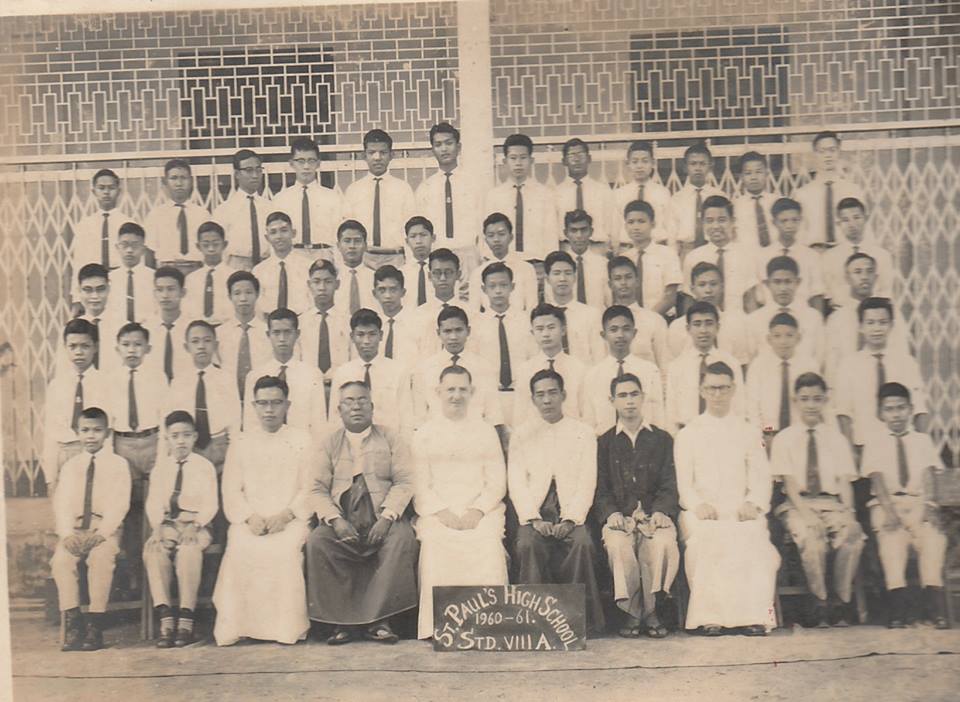
Classmates in Standards VIII A, IX A and X A at St. Paul’s HS
Myo San (3rd row, 5th from left)
Stood third in Burma in the Matric of 1963 and won Collegiate Scholarship.
Myo San (Seated right)
Mastered phonetics and read lots of English books.
One would not be surprised that he scored distinctions in English, Maths, Physics and Chemistry.
A little bit older than me and that might have given him an advantage.
Gave me a quiz. “How do you pronounce GHOTI?” I gave an answer which he corrected as “FISH”. He had read George Bernard Shaw, who posed the quiz as a lesson on the eccentricity of English.
GH is phonetically equivalent to F as in ROUGH. O is phonetically equivalent to I as in WOMAN. TI is phonetically equivalent to SH as in ATTENTION. Thus, GHOTI is phonetically equivalent to FISH.
Became a surgeon
Stress caused him to take early retirement.
He had mini-reunion with SPHS63 classmates. In the photo, the three (seated) — Freddie, Alan and Tin Tun — are now GBNF.
During our first and second years, we were wild eyed students, partially overwhelmed by the imposing buildings and the college level classes.
Our outlook changed when we started our third year. We felt we were experienced students who knew their way around. During the first month of the school year, we would sometimes cut classes to go to RASU. Ko Win Htut (C), Ko Kyaw Phone Myint (M), Ko Nyunt Mg San (C), Ko Myo Khin (C, one year senior), Ko Tin Aye (M) were in that group. In addition, our 64 intake group of Ko Kyaw Phone Myint (M), Ko Nyunt Mg San (C), Ko Phone Thwin (Mn), Ko Win Htut (C), teamed up with Ko Myo Khin (C), Ko Tin Nwe (C, GBNF), Ko Min Thaw (E, GBNF), Ko Win Htein (A, GBNF), Ko Chit Po Po (M, GBNF), Ko Htin Aung (C), from the one year senior group and we could be seen sitting in the pathway leading to U Tin Maung’s shop, talking and laughing loudly.
In addition, with my room mate that year in C block, Sai Aung San (Met), I even traveled to MC2 a couple of times during school hours. I gave that up since the distance to travel was very long and was not worth it to satisfy a fleeting interest. I also remember going to Prome hall with Sai Aung San to eat the Sa Dhu Dee Thar given there for Tazaungdaing. That was the only night male students could get inside the Hostel compound after 6pm. The compound held three women’s hostels, Tagaung, Prome and another hostel that I have forgotten the name of. Needless to say, we avoided the Tagaung Hall, where our sisters were staying.
Sai Aung San and I were both goalkeepers. He was RIT B selected during out first year. We took turns in minding goal in Inter Block games. By a strange coincidence, his sister and mine were room mates at Tagaung Hall that year.
One thing different about playing football in our third year was that I no longer trained hard to better myself. I was content to use my angle cutting skills to keep the score down. In one Inter Block game, I was tending goal for C Block. A player from the opposing team, a final year student, ran up to me after I had caught the ball and threw himself to the ground. I thought it was strange he would do that. After the game, Ko Naing Win (M, GBNF), who was watching the game, remarked to me that I had “hacked” the other man down viciously. Since he was watching from a distance, he had no way of knowing what really happened. I told Ko Naing Win I did not even touch the other guy and that he threw himself down. Only much later did I learn that the person who threw himself to the ground did it to show someone who was watching from G Hall what a bad person I was, hitting him viciously. I was quite dismayed some people would go to such lengths to discredit me.
In addition to the Inter Block competition, Inter Department competition was held. I tended goal for the Electrical Dept.. We played against Civil Dept. in the finals and lost 0-1. I still remember the goal I let in (my fault again). Ko Kyaw Htin (C67, Burma Youth and Universities selected), kicked in a free kick from about 18 yards. I didn’t even need to jump to get the ball. As I was catching the ball, Ko Myo Nyunt (C69, RIT selected), rushing in, yelled out to frighten me. Distracted for a split second, I dropped the ball and he tapped it into the net. After that debacle, I knew I did not possess the mental toughness, confidence and concentration needed to be a good goalkeeper. A couple of years later, when the Universities team was visiting Maymyo, Ko Soe Myint Lwin (EP 68) told me he will ask the Universities coach, Saya U Nyein, to let me be the goalkeeper for the game against the Maymyo Selected if I wanted to play. I told him I did not want to play. He asked me if I was afraid, and I remember telling him that I was. I just did not trust myself to play flawlessly after the game against the Civil Dept.
Track and Field
The only other RIT sponsored activity I took part in our third year was to participate as an EC on the Track & Field Association. Saya Mr Num Kok (C) was the president and Ko Henry Khin Mg Lay (T68, nickname “Kywe Gyi”) was the secretary. The good thing about being in that T&F association was that Ko Henry liked to have meetings, which were held at Mr Num Kok’s residence and Mrs Num Kok would serve great cookies, which we greatly enjoyed eating. Being an EC member, I got to sit in the RIT tent at the annual Inter Institute Track & Field meet.
Sai Thein Maung (C) got golds in 100 meters and Hop Step and Jump. Helen Pershad (Ch 72, younger sister of Ma Tin Tin Nwe (Ch)), got the first ever women’s gold medal for RIT in the ladies high jump competition. Watching the women’s high jump, we could not help noticing a beautiful student from the Institute of Education among the participants. She was Marjorie Duncan, later to become Mrs U Win Mra. Ko Oo Myint (Mn) and Ko Aung Gyi Shwe (Ep, one year senior), got silver medals in Javelin and 200m respectively.
Time outside RIT
Third year also meant spending more time outside RIT. I remember going to Hnin Si Gone Bo Bwar Yeiktha နှင်းဆီကုန်းဘိုးဘွားရိပ်သာ fun fair with Ko Myo Khin (C, senior to us in 1964), and Ko Nyunt Mg San (C), stopping by at the stall ran by Ma Than Than Yi (T71). I believe Ma Than Than Yi’s parents (“Han Tha Aye ဟံသာအေး Nylon”) were the principal sponsors of that event.
Sometimes, I would go to Ko Nyunt Mg San’s house in Inya Myaing on weekends and his mother would prepare lunch for us. Ko Nyunt Mg San’s mother, Daw Daw Nyunt, was a classmate of my mother at the Mandalay ABM school back in their high school days (late 1920s). Knowing I loved Hta Ma Nae, Ko Nyunt Mg San would bring it to RIT for me to eat whenever Hta Ma Nae ထမနှဲ was made in his home. Ko Nyunt Mg San accompanied me to Maymyo on one of the holiday school closures but I do not remember which year that happened.
Summer Training
We all started summer training after the half yearly exams in March. It was decision time for me. Since summer training was a requirement for graduating from RIT, I had to submit my resignation from UTC. It was the first of many decisions I had to make regarding what I would have loved to do, and what I really had to do for practical reasons.
I believe Ko Han Tha Myint was with us when we opted to go to the Post and Telecom for our training. We were first sent to the P & T storage facility at Botahtaung, next to the main exchange at Pansodan and then to the long distance interface exchange in Maung Taw Lay Lan. Lastly, we had to go to the wireless relay station in Toe Gyaun Gale. The bad thing about going there was once we got there, the train back to the central Yangon station did not come until about 3.30pm
Kauk Yoe Mee
I also had another of my Kauk Yoe Mee ကောက်ရိုးမိုး projects in our third year. I took lessons in playing the Myanmar Guitar. I was so impressed by the way Ko “Guitar” Than Myint (M) played the Myanmar Guitar that I signed up for lessons taught by Guitar Ko Mya Gyi in Myenigone. After 5 months, Ko Mya Gyi’s assessment of me was “rough player”. I had tried to do something I did not have the aptitude for. I didn’t even know how to distinguish a note so that I did not know whether my guitar needed tuning or not.
Football Competition at Aung San Stadium
All of us had something to cheer for when we went to Aung San Stadium in May 1967 for the finals of the Opening Cup competition. The finalists were Universities and P&T. Universities team won 1-0, the winning goal being scored by John Tint (M72, Universities and Burma Youth Selected). John Tint entered RIT as a Mechanical engineering student in October 1966.
After the Final Exams
After the final exams, I took a trip to Rakkhine with Ko Sein Win (EC) and Ko Han Thar Myint (EC).
After coming back from the Rakkhine trip, Ko Kyaw Phone Myint (M), Ko Nyunt Mg San (C) and Ko Han Kyu Pe (A, GBNF), came with me to visit Maymyo. Arriving in Mandalay, I found that my father’s Say Gan ဆေးခန်း was locked, and we decided to go and spend the night at Ko Ye Myint’s (EP, 65 intake) home at the Mandalay University compound. Ko Ye Myint (EP) is Sayagyi U Ba Toke’s son. His mother, Sayagadaw Aunty Khin, was very kind and welcomed us warmly. The next day, we picked up my brother’s car (which was stored at my father’s place), and with Ko Win Htut (C) we went to the Sagaing hills.
A funny incident happened while we were exploring Oo Min Chauk Sae in the Sagaing hills. Ko Win Htut yelled out in fright while we were going into the pitch dark man made caves, thinking he met a “Tha Ye သရဲ”. Turned out to be Ko Kyaw Phone Myint who had entered from another entrance. Ko Win Htut treated us to lunch at his parent’s house, which was just around the corner from my father’s Say Gan. Ko Win Htut drove us to Maymyo in my brother’s car since I did not have a driver’s license at that time. Ko Win Htut stayed at his parent’s Maymyo house, which was about 10 minutes walk from my house. The rest of my friends stayed with me at my house. I had been taught how to drive by our driver in my high school days, using the army jeep while my father wasn’t looking. Apart from that, I had no experience in driving. Ko Kyaw Phone Myint showed me some fine points about driving during his stay in Maymyo.
We spent time going around Maymyo. I remember going to Anisakan အနီးစခန်း Falls, about 7 miles outside the city limits, where you had to go down a gorge for about 800 feet to reach the mid section of the waterfalls. Anisakan was not just one waterfall. It was a series of waterfalls, some low, some high. By going down 800 feet, following a mountain footpath, we had arrived at the middle of the series of waterfalls. We tried to follow the waterfalls upwards by wading through the rushing waters and climbing up the falls against the current. We gave no thought to the fact that had we lost our footing, we could be swept down the waterfalls. Luckily, we reached a fall that was too steep to climb and we had to turn back. The things we did in those days, I would not do now even if I get the chance to do again.
Fourth BE (1967 – 68)
We felt we were veteran students when we entered the fourth year classes. After all, if we had been at RASU, that would have been the final year.
We had Sayagyi U Ba Than for “Strength of Materials”. Back in our third year, we had all been “stressed” and “strained” by this subject. After listening to Sayagyi U Ba Than’s first lecture, we knew we had nothing to be afraid of. Sayagyi U Ba Than had a unique way of teaching. He would go through the text book, word by word, and explained everything slowly and calmly in very clear terms. If I have to vote for the best lecturer at RIT during our days, Sayagyi U Ba Than has my vote. I have no doubt all the Sayas and Sayamas taught with Cetana in their hearts. Perhaps it was due to our inattentiveness or lack of some fundamental understanding that prevented us from fully understanding what was being taught. With Sayagyi U Ba Than, for some reason, everything he taught registered in our minds.
Saya U Maung Maungg Win (M) and Saya U Soe Paing (E) were two other Sayas that were also excellent teachers (in my opinion). Of course there may have been other Sayas in other disciplines that were excellent teachers but I have no way of knowing.
Years later, after I got married, I was told about the kind “Uncle Gwan” that lived next door to my wife’s house in Windermere. My wife told me her parents bought that house from “Uncle Gwan”. Imagine my surprise when I found out that “Uncle Gwan” was Sayagyi U Ba Than. Many years later, in the USA, I met and became very good friends with Sayagyi U Ba Than’s younger brothers, U Tin Htoon (A60) and U Myo Min (B.Com, Chartered Accountant, former Manager at UCC). U Myo Min is married to Sayama Daw Khin Khin Chit Mg (English), who turned out to be my wife’s classmate since Kindergarten at St John’s Convent. U Tin Htoon (A60) mentioned to me he had designed the house that my In-Laws bought from Sayagyi U Ba Than.
Tazaungdaing
I was the Ah Saung Athwin Ye Hmu အဆောင်အတွင်းရေးမှူး for C and D blocks for that year. A decision was made to have a “Sa Dhu Dee Tha စတုဒီသာ” for Tazaungdaing. We wanted to have it done near the RASU campus in Kamayut (in order to attract students from other Institutes), but the final decision came down with the Shwe Dagon Phaya Yin Pyin Daw as the venue. Ko Tha Htay (M), Ko Aung Min (Ch) and I took care of asking for donations from the hostel students.
Ko Kyaw Win Maung (Ch) worked hard to ensure things get done in the Paun Mont Ohn Noe San ပေါင်မုန့်အုန်ူနို့စမ်း preparation. I don’t know the details so I hope Ko Kyaw Win Maung (Ch) will write about them. Ma Tin Tin Hla (A) took charge of buying the coconuts, with Ko Mg Mg Swe (M) showing the way (using the RIT truck) to the market that sells coconuts wholesale. After the Sa Dhu Dee Tha, we spent the night on the Phaya Yin Pyin and waited for the Ma Tho Thin Gan မသိုးသင်္ဃန်း to be presented to the Sangha သံဃာ
Need Anger Management?
The next day, I did something that I regret doing to this day. I got physical with a student from the 2nd yr class. He was putting up a cartoon critical about the behavior of some student volunteers that worked at the previous night’s event. I did something I should never have done, hitting that student with my fists. I was totally wrong to do this sort of thing. If I have the chance to redo things in my life again, this is one thing I would have liked to correct. But, unfortunately, what’s done is done and the past can never be undone. The Registrar, Saya U Hla, was very understanding, and called a meeting of both parties in his meeting room. Our 64 intake students sat down with the 66 intake students, with Saya U Hla and Sayagyi Dr Aung Gyi (C) mediating and resolving the issue. Sayagyi Dr Aung Gyi told me to count to 100 the next time I got angry so that my anger would die down. Unfortunately, that would not have worked with me. I had waited over 2 hours to get my hands on the person responsible for the cartoons. My problem being that once I set my mind to do something, I would do it regardless of the consequences, and even if I had to wait a long time to do so.
This incident came back to haunt me 3 years later when I was about to get married. My wife’s father, a retired Dy. I. G. of Police, asked for a police report on me from his former colleagues in the police force. This incident was mentioned in that report. My wife’s mother, after reading the police report, asked her daughter to call off the wedding. Fortunately (or unfortunately), my wife had the habit of doing the exact opposite of what her mother wished, and went through with her wedding plans.
MAKE RIT BEAUTIFUL
I had another of my Kauk Yoe Mee projects that year. Using my position as Ah Saung Ahtwin Ye Hmu for C and D blocks, I initiated a “make RIT beautiful” drive. With Ko Phone Thwin (Mn), Ko Aung Min (Ch) and others, we started by cleaning up the grass near the pedestrian entrance to RIT from the BPI bus stop. Saya U Myo Win (Agri) came with his tractor and cut down the heavy foliage all the way to the sheds, L1 to L4. Sayagyi U Yone Moe came out to talk to us and mentioned he did not like the way the cactuses that were already growing in the big lawn in front of the Hostels had been planted, since they were not planted uniformly.
Here, I made a mistake. Ko Aung Min (Ch) advised that we should think about planting more cactuses rather than remove the ones that seemed to be planted oddly out of place. I did not take his good advice and tried to remove a cactus tree. I found out the hard way why these plants grow even in desert conditions. It was next to impossible to remove them. So, instead of making RIT beautiful, I created an eye sore by mutilating one of the cactuses.
Pardon My Memory
I do not remember whether the following took place during our fourth year or fifth year. The Inter Institute football tournament was held to include Institutes, Universities and Colleges from the whole country. RIT faced RASU in the semi finals. This competition was held during the summer recess so that not many students were aware of the games.The semi final game was held in Aung San stadium. RIT was the better team, with Ko Khin Mg Shwe on the front left wing, Ko Win Zaw (A), right blender, Sai Thein Maung (C) the goalkeeper and Ko Myint Sein (M), outer right back. Ko Win Zaw thrilled the crowd with his runs down the center of the field. He looked exciting as he ran with the ball, dribbling past opposing players. At times, it seemed no one could stop him. I have no doubt Ko Win Zaw would have been a great Universities selected player had he gone and practiced at the Universities football field under the Universities coach Saya U Nyein. I believe Ko Win Zaw only wanted to play for RIT and did not go. The score was tied 2-2 at full time and the outcome was decided by tossing the coin. Unfortunately, RIT lost the toss and RASU advanced to the finals. In addition, Ko Khin Mg Shwe got a broken rib when a RASU player jumped up and “Knee-ed” him during the match. Going back to RIT, Sayagyi U Maung Maung Than kindly allowed us to ride with the football team on the Hino bus (Sin Phyu Daw Hmee, Kyan Sote).
Electrical Association
Ko La Min (EP) was the secretary of the Electrical association that year. I was an EC member. One day, Ko La Min told me he had been asked by Saya U Moe Aung to publish the Electrical magazine. He asked me to speak out against doing the publication. At the meeting, I argued against publishing the magazine. Saya U Sein Win and Saya U Moe Aung spoke for publishing the magazine. A vote was called for. Only I and Ko Ye Myint (EP, 65 intake) were against it. We lost the vote.
A couple of months later, I asked Ko La Min when the magazine will come out. He said “Never” and told me what he did. He insisted on having his room number as the place where articles can be submitted on the announcement, in addition to Saya U Moe Aung’s room. He put away all, but two of the articles, under his bed. When Saya U Moe Aung asked him for the submitted articles, he showed Saya U Moe Aung only the two he did not throw away under his bed. You cannot publish a magazine with two articles only so that was the end of the Electrical magazine.
Summer Training
For summer training in our fourth year at RIT, I went to the small appliance manufacture and repair departments of the small scale industries. Ko La Min (EP) was with me. At the assembly plant of “Sein” radio in Pazundaung, we were asked to solder the circuit boards for the radios.
For the second part of the training program, we were assigned to the small appliance repair shop located on either Merchant St or Anawratha St, near 38th street. Here, we were shown how to test the electric irons that were sent there for repairs. After a week, the supervisor there told us that although he appreciated our work, he wished we would never get posted to his department after we graduate, since we “worked too hard”.
Research Congress
Summer time also meant attending the “Research Congress” held in the RASU campus. Not that we were interested in any engineering research. Our main interest were the papers presented by well known writers of that era, like Thetkatho Phone Naing.
Don’t even think for a minute that we had any literary interests. Our attention was on the large number of the fairer sex that were listening at those meetings.
Sayas’ Football Team
We also had a football match between the Ah Zaung Thar Yar Ye Athin and the Saya’s team. I did not tend the goal for this match and played in midfield instead. I did something I was not proud of in this game. Sayagyi Dr Aung Gyi and I were running for the ball. Sayagyi was surprisingly swift and beat me to the ball. My animal instincts took over and I pushed Sayagyi to the ground and took the ball away. Sorry, Sayagyi. I know I shouldn’t have done that. I acted really bad that time.
The winning goal was scored by Ko Aung Min (Ch) from a ball I pushed forward. To the onlooker from a distance, it might seem that I passed forward for Ko Aung Min to score. In actual fact, I was taking a shot at goal, the ball fell short and got stuck in the mud. Ko Aung Min was nearby to take advantage of the situation and kicked in the winning goal.
Mathematics Association
Another activity I was involved was as secretary of the Maths Association. The only thing we did was to have a Hoa Pyor Pwe. I don’t remember who the guest speaker was. The only thing I remember is that I had to go and get the Zee Pyaw Ye concentrate and ice for the attendees.
Russian Language Class
During summer training, either in our fourth year or fifth year, Ko Myo Khin (C, one year senior in 64), and I took lessons in Russian language at the Leik Khone in the evenings. Mrs Marinsky was the instructor. Except for a few words of Russian, I don’t remember much except for the song “Sol Nich Nay Druk”.
After the Finals
After the final exams in our 4th year, I took the “Ah Myan” train back to Mandalay. The train started out from Yangon Central Station at 6am and arrived in Mandalay at 6pm. It was like traveling in an RIT train, since a lot of our fellow RIT students were on it. I had the habit of never letting my parents know when I was coming back. I was prepared to find my way around when I got to Mandalay. Since I did not tell my father I was coming, when I went to his Say Gan on 84th St (Zeygyo) near 32nd St, I found the door locked from the outside. It was about 6.30pm and starting to get dark so I decided to go and spent the night at Ko Ye Myint’s (EP, 65 intake) parents’ house in the Mandalay University compound. I jumped into a “Side Car” for the ride to the Mandalay University compound that cost me 3 Kyats. Ko Ye Myint was not at home when I got to his house, but Sayagadaw Aunty Khin warmly welcomed me and made me feel at home. The next day, I took my brother’s car that was in my father’s Say Gan garage and drove to Maymyo.
Fifth BE (1968 – 69)
After the fourth year, it was decision time for us again. We could either take Electrical Communications (EC) or Electrical Power (EP).
My heart said Communications but my brain decided for Power. Employment opportunities for communications graduates were limited so I decided to do what should be done, rather than what I wanted to do. I had to wait another 12 years before I could do what I wanted to do, take Electronics when I continued my studies in the USA.
I was surprised to learn that someone else did the opposite. I met Ko Henry Khoo (EC 67) while attending the mini reunion hosted by Ko Thaung Sein (Steeve Kay, EC70), in December 2011. He had taken the opposite path. He took Electrical Communications at RIT and changed to Electrical Power when he came to USA.
Activities
When the fifth year started, I decided not to get too involved in activities at RIT. Still, I remained as the Secretary of Maths Association at the request of Saya U Sein Shan (GBNF).
One day, Ko Win Zaw (A) reminded me to attend the meeting for the formation of the RIT football association for that year. At the meeting, both Ko Win Zaw (A) and Sai Thein Maung (C) urged me the to be the secretary. The only thing I remember doing as secretary of the RIT football association for our 5th year at RIT was to go around the hostels, asking for donations. RIT had opted to participate in the Insein Township football competition and money was needed to provided transportation for the students to Ywama Stadium from RIT Hostels. Since there was an important game, we had to solicit donations from the students and rented 6 Dodge Jeeps from the Insein-Danyingone Bus Line. After the game, we found that there were only 4 Dodge Jeeps waiting at Ywama Stadium to take us back to RIT. I don’t remember what team RIT played against. I can only recall that RIT lost.
I started two other activities that took me outside RIT. One was to go to the University swimming pool in Kamayut a couple of times a week, with Ko Win Thein (EP) GBNF, Ko Tin Win (EP) and Ko Than Lwin (EP).
Water Polo Match
We also watched RIT play against the Inst. of Medicine 1 in the Water Polo competition. We were loud and boisterous as usual, filling the air with derogatory comments about the Inst. of Medicine. Ko Htein Win (M, nickname Chauk Pe), tended goal for RIT at the shallow end. Ko Win Aung (M) played in the forward position. After RIT scored the first goal, Ko Myo Khin (C, one year senior in 64), jumped into the swimming pool fully clothed. (He was told to get out of the water immediately). But our joy was short lived. At the change of ends after 15 minutes of play, Aung Tun Oo (a) George Htoon Pay (M, 65 intake), took over as deep end goalkeeper for RIT. Inst. of Medicine scored 7 goals against RIT in a space of 15 minutes, Since RIT was losing badly, we stopped yelling bad things about the Inst. of Medicine, but we did not totally shut up. Ko Myo Khin (C) noticed the Saya U Hlaing, the sports- in – charge from the Inst. of Education, was sitting improperly across that pool and his private part was showing. Ko Myo Khin (C) told us to yell “Ha Bac Ko Aing Luu, Ah Htaw Ma Tine, Gor Pwae”. U Hlaing got the message after we had shouted out twice.
Rowing
Another activity that I undertook was to go to the University Boat club. The RIT Rowing Association had Saya U Thein Dan (C) as President and Ko Aung Lwin (Jasper Wu, C), as the Secretary. Saya U Thein Aung (Mickey Tan, Physics, RASU), took care of most things at the Boat club. We formed a novice crew. Ko La Min (EP) was our cox. I was in the Stroke position, Ko Zaw Win (Ch) was No 2, Ko Yit Moe (C, 65 intake), was No 3 and Ko Than Htun Aung (Ch) was in the Bow position. Ko Aung Lwin guided all of us through the steps at the Boat club. As novices, we were only allowed to row wooden tubs. The only race we won was by default when the other crew did not have enough men to compete in the heats for the annual Regatta. We lost the semi-final race against a team from RASU and did not get the chance to participate on Regatta day.
On Regatta day, George Htoon Pay (M, 65 intake), won the single sculls competition. Ko Aung Lwin (C) and another person won the coxless pairs competition. There was also a female novice crew from RIT. Ma Myint Myint Sein’s (M) younger sister, Aye Aye Than (nickname Pauk Pauk) headed that crew of 66 intake students. We used to travel together from RIT to the Boat Club and back.
Ma Pauk Pauk and her daughter stayed overnight at our house in New York (around 1998) when they came for a visit from England (where they were living). Actually, they visited Washington DC first, and Ma Lei Lei Myaing (T, my wife’s classmate from St John’s convent), brought them to our house when they visited New York city.
Cross Lake Swimming
Going to the RUBC almost daily meant I was around when the 2000 meter cross lake swimming eet was held. About 30 to 40 swimmers from RIT took part. Saya U Hla Myint (Charlie, M65) as President of the RIT Swimming Association, was the organizer and supervisor of the event. Non-participants like us, took to the water in flat bottom paddle boats and rowed on the sides of the swimmers, ready to give aid if needed. I was with Ko Win Thein (EP, GBNF) and another person for the event held in our 5th year. We followed the swimmers to Dubern beach and paddled back.
Cross Lake in Final Year
For the event held in our Final year at RIT, which was won by Ko Wunna Sithu (EC71), I was in the paddle boat with Ko Ye Myint (EP) and Ko Mg Latt (M) both 65 intakes. None of us knew how to steer a paddle boat, but we blushed it off as no big deal. We would somehow make it across the water to Dubern beach. Easier said than done. We found ourselves going around in circles in the middle of Inya lake, listening to the laughter and jeers of the people looking at us from the Boat club. Finally, I asked the other two not to paddle and slowly paddled and guided the boat to Dubern beach. We arrived at Dubern beach after the last swimmer had gone ashore. Luck was with us as there was a person who was taking care of getting the boats back to the other side of the lake and we gladly let him take it.
I remember meeting Daw Tin May, wife of the late Sayagyi U Ba Kyi, nationally well known artist and Saya, as we walked up Dubern beach. She was there since her house was being built there at that time. After Ko Ye Myint introduced me to her, I remember her comment “Thi Par Dae, Ah Chaw Myo Tway Bae”.
RIT Magazine
A committee was formed at RIT for the publishing of the RIT Magazine. I was in the sub committee led by Saya U Win Kyaing. Our sub committee was assigned to take care of advertisements. Saya U Win Kyaing decided we should ask for advertisements from foreign embassies. I remember going in Saya U Win Kyaing’s car into the North Korean consulate compound and being ushered out quickly.The only embassy interested in putting an advertisement was the West German embassy. We talked to their cultural secretary and he cut out a cheque for 100 Kyats as payment for the advertisement. Saya U Win Kyaing later told us that he had been instructed not to take advertisements from foreign embassies and we had to send the cheque back.
Saya U Tein Kyi asked us to come to his house (on Attia Road) on weekends so that he may give us submitted articles for us to edit. One article I edited was “Sabe Hna Pwint Hta Yan Kar”, which I found to be very well written with a great story line. That article won the best fiction article award.
When the printing started, I had to go to Pazaundaung in the evenings to check on the progress and edit sample runs of the RIT Magazine for errors. We took turns going there, and as far as I can remember, there were always two of us paired to work together. I might have been paired with Ko Kyaw Win Maung (Ch) but I am not certain.
Ko Cho Aye
At the end of our 4th year at RIT, Ko Cho Aye (M, GBNF) and I agreed to submit as room mates for the 5th year. When the 5th year started, we were on the 3rd floor of D block, facing C Block. Even though we were in different disciplines, Electrical for me and Mechanical for Ko Cho Aye, we still had classes in common. Advance Calculus, Industrial Management and Fluid Mechanics were common to both of us. Saya U Tin Htut taught Industrial Management and I still remember the “Critical Path Method” he taught.
Summer Training
For summer training in our 5th year, we went to ESB. Ko Khin Mg Shwe (EP) and Ko Pyi Soe (EP) were with me. We had to accompany the crews that were sent out on calls at first. Later, we were sent to the Ywama Power Station. At the Ywama Power Station, they had a program ready for us, detailing what we should be taught on each day.
Maymyo
After the summer training was over, I went back to Maymyo. Ko Phone Thwin (Mn), showed up in Maymyo as guest of Ko Win Htut (C). Since Ko Win Htut’s parents’ Maymyo house was quite near to mine, I remember spending time in the evenings, sitting on a little bridge over a stream near Ko Win Htut’s house. with Ko Phone Thwin (Mn) and Ko Win Htut (C) .
One evening, while we were sitting there, a man passed by on a bicycle and called out Ko Phone Thwin’s name. I asked Ko Phone Thwin who he was and was told that this person had been with our 64 batch at RIT and left to attend DSA after the first half of the year. Ko Phone Thwin probably remembers who that person was.
Final Exams and After the Finals
The final exams for the 5th year were held earlier than usual, in August. The reason being that efforts were been made to move the start of the school year to June from November.
After the finals, I went back home. Ko Aye Win Hlaing (EP, 65 intake), came to stay with me for a little while. Ko Ye Myint (EP, 65 intake), who was always with me during holidays, could not come anymore since his father, Sayagyi U Ba Toke, had transferred to RIT on his own volition from his previous position as Rector of Mandalay University.
Classmates include Tin Htoon, Aung Kyee Myint & Victor Pe Win
Loves Classical Music & Modern Art
Directed the movie “Hna Ma Let Shawt Nay Lay Dawt နှမလက်လျှော့ နေလေတော့” . The movie was hard to appreciate by most Burmese. It set the record for the first movie not to have Full House at the First Day First Show. Grapevine says that some foreigners tried to purchase the movie. See comments by Uzin Bobby, Nan Khaming & U Wint Khin Zaw.
His second movie was funded by Collegian Nay Win & Daw Khin Mar Lar. See comments by U Htun Aung.
He would hang around at “Architects Incorporated” (founded by U Bo Gyi, U Tin Htoon & U Aung Kyee Myint) along with fellow artists U Paw Oo Thet and Director Win Pe.
He was a friend of Architecture students. U Aung Khin (A69) posted a picture of him and U Tin Maung Hla (A69er, GBNF) with U Kin Maung Yin.
Kin Maung Yin 2
Feedback
Uzin Bobby Myo Tun (A69)
U Kin Maung Yin was everyone’s friend – one of the most amicable individuals I’ve ever known. He was mentor to many of us student architects of the late 1960s and of the 70s. His versatile talents extended into move-making, authorship and painting. His avant-garde movie “နှမလက်လျှော့နေလေတော့” made six decades ago remains unrivaled to date in the Myanmar movie industry. He immersed himself in modern painting and writing during the last two decades of his life. An icon of the arts, indeed!
U Htun Aung (EP70)
In 1971, I was waiting for the governmental employment living with Demonstrator (civil) and Inlay hostel hall tutor Saya U Khin Mg Tint. One day U Khin Mg Yin came and unexpectedly invited me to accompany him as his aid in movie-making and shooting a film named “Bahman Bazan Akhyaung” (ဘမှန်ဘဇံအကြောင်း). For that film, he was the Director. I was always near him to help for everything he ordered me to do. In those days, from morning to night I was together with him at film shooting sites, especially at Collegian Nay Win and Dar Khin Marlar’s home where most of the indoor scenes of the film had been shot. Also we had to spend much time in making the film at Film upgrading [processing] Studio. The producer of the film was “Momyint Thawdar Film Production” which was owned by Daw Khin Mar Lar, Actor U Nay Win’s spouse. Time taken to shoot that film was nearly three months. Main actors were Collegian Nay Win, Khin Yu May and Aye Aye Thin.
After that film, I was also with U Khin Mg Yin to help reading and editing the directing schedules of the film named “Thway” the Novel written by Journal Kyaw Daw Ma Ma Lay. But that script was not approved by State Film Editing Committee [Censor Board] due to the Fascism hating point of view of the country at that time.
Nang Khaming (A70)
Most people didn’t like the movie Hna ma let shawt nay lay dawt because there was no dialog in the movie except ‘pea pyout’. Most can’t appreciate that kind of movie, but I like that movie and appreciate.
Ko Wint Khin Zaw (A79)
Architect UKMY must be too advanced for the period. I think he directed another movie called “Ba Hman Ba Zan Akyaung” which was appreciated a bit more by some audience.
Cambridge University Home club of Sir Arthur Eggar
RBC (Rangoon Boat Club) Exclusive for Europeans and Anglo-Burmese
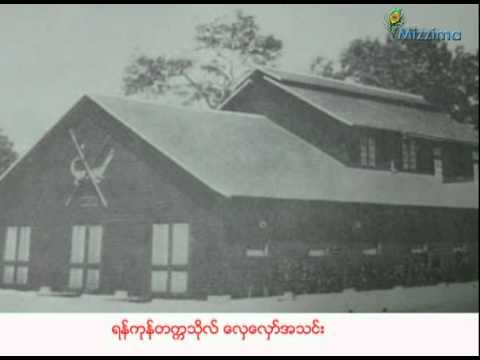
RUBC (Rangoon University Boat Club) : Founded in 1923 by Sir Arthur Eggar (Law Professor, RU); He pledged one-third of his salary for the Clubs operation; He donated a Challenge Cup (Pewter and brooches) for the Senior Novices. U Nyo’ s donation to RU Estate helped build the RUBC Club House; U Nyo donated a Challenge Cup (for the Inter-Club Eights)
RUBC Club HouseRUBC Members
Defense Services Rowing Club Initially from Burma Navy
Marine Youth (Ye Gyaung Lu Nge)
Regattas
Rag Regatta : One day event; Finalists for the Novices race are seeded for Monsoon Regatta
Monsoon Regatta
Annual Regatta
Inter-Varsity, e.g. CURC
ARAE, e.g. Calcutta, Colombo
FEARA, e.g. Hong Kong, Singapore
Challenge Cups
President’s Cup : for Inter-Club Coxed Eights
Prime Minister’s Cup : for Inter-Club Coxed Fours
Commemorative Publications
40th Anniversary Issue (in 1963) : Sithu U Tin, U Po Zon & U Tin Htoon
90th Anniversary Issue (in 2013) : U Tin Htoon (Chair), U Myo Myint (Vice Chair), U Htaik San (Henry, Secretary), U Hla Min (Contributing Editor) …
Sir Arthur’s Autobiography : Reprint funded by selected Old Members
Magazine
RUBC Old Members
They are fondly known as Old Crocs (or Crocodiles).
When RUBC was destroyed due to the ravages of war, the Old Crocs rebuilt the Club and provided physical, financial and spiritual support to the members to compete against the best from neighboring countries.
During our younger days, there is an “Old Members Race” at the Monsoon and Annual Regattas. The contestants range from young Old Members to the iconic Past Champions.
The Old Crocs have their mini-reunions where ever possible. They also share memories of the precious photos (e.g. of U Chan Tha, Jimmy Saw Lwin, …)
Five Captains : U Tin U, Dr. Myo Tint, U Tin Htoon, U Thaung Lwin (Four Brothers) and U Sein Htoon (Cousin, Cox)
U San Maung(Gerald, GBNF)
Past Secretary & RUBC Gold
Club Coach — He would find time from his work as Production Manager of “Amotha Yoke Shin”, and come down to RUBC to mentor the members (especially the aspiring Golds). He would mandate “fixed tub” practice for the members.
Dr. Htut Saing (Harry, GBNF)
Past Captain & Gold of RUBC
ARAE Champion twice
Won Venables Bowl for Coxless Pairs at the 1958 ARAE Regatta in Calcutta with Tin Htoon (A60)
Won Willingdon Trophy for Coxed Fours in the 1960 ARAE Regatta in Colombo with Tin Htoon (A60), Sunny Teng, Victor Htun Shein (GBNF) and Sein Htoon (M63, Cox)
Usually rowed as Box on the RUBC crews. As an exception, he served as Timing Stroke and Coach for the RUBC Eights in 1962. Win Kyi (RUBC Gold, son of Miss Hong) rowed as No. (7). There were seven new Golds in that crew : Myo Tin (William Hone), Htain Linn & Mehm Myo Thaung (Maurice) for the Stroke side, Myo Myint (EC67), Oung Kyaing & Thein Aung (Micky Tan) for the Bow side and Tin Aung (Victor Wu, Cox).
Dr. Pe Nyun (Past Captain and Gold of RUBC) and Dr. Htut Saing were Pediatric surgeons at the Rangoon Children Hospital. They operated on Ma Nan Soe and Ma Nan San.
Continued working and teaching in Hong Kong. He became Patron of the Hong Kong Rowing and Sailing Club. He would fully support the RUBC crews competing in the FEARA Regatta in Hong Kong.
Dr. Thein Toe and Dr. Htut Saing
Reunions
U Tin U, U Maung Maung Than Tun, Saya U Tin Htut, Saya Dr. Than Nyunt (George), U Tin Htoon, Dr. Donald Chan, U Tun Shein (Willie), U Tun Aung (George), U Sein Htoon, Dr. Tin Wa, U Myo Myint, U Thura Thant Zin, U Htaik San (Henry), and several Old Crocs attended Regattas (especially the 90th Anniversary of the founding of RUBC).
Most of them contributed articles, photos and financial support for printing the commemorative issue, and for reprinting Sir Aurthur Eggar’s biography.
Sad to note that there was some disjoint between the really young members (who are busy with the competitions) and the really Old Members (especially who travel from abroad to attend the events).
RUBC 95th Anniversary Regatta
My Journey
Senior Novices Runner-up (in 1963) Myint Soe (Willie Soe Maung, Stroke, GBNF) Kyaw Wynn (3) Hla Min (2) Maung Maung Kyi (Bow, GBNF) Myint Thein (Cox, GBNF)
Honorary Treasurer (1964 – 65)
Vice Captain (1965 – 66)
Contributing Editor for 90th Anniversary Issue (in 2013) Prelude for each section Three articles
Donated for reprint of Sir Arthur’s Autobiography
Memories of RUBC Series in YUBC Old Members Facebook Group
Private Boundary Road School Daw Ku Paw, Daw Kywe, Daw Yi Yi, Daw Khin Khin Aye
St. Paul’s High School Ms. A Benjamin, Mrs. V Boudville, Ms. Amelia Kyi (Miss Hong Kong), Brother Xavier, Brother Austin
I.Sc. (A) Daw Tinsa Maw-Naing, Daw Khin Khin Kyi
2nd BE Mr. Des Rodgers (Primary), Sao Kan Gyi, U Khin, U Win Mra
Saya Des
Saya Des
Our main English Teacher in our 2nd BE Class in 1964 – 65.
Chief Editor of the RIT English Association Newsletter.
Core organizer of debates (in English) between 1st BE and 2nd BE students. e.g. “Money is the Root of All Evils” “Are we happier than our forefathers?”
Played on the RIT Saya soccer team.
Accomplished musician : guitarist and vocalist, a regular on the BBS Variety Show. Would often play with Saya U Win Mra (Burma’s Elvis Presley in his younger days).
Won Singles and Doubles tournaments in Scrabble. Held at Guardian, YMCA and RIT.
Did post-graduate studies in the UK.
Moved to Canada.
Taught “English as a Specialty Language” and other English courses.
Set up a consultancy firm
Published a book on English words that have been “selected” from contemporary news media and magazines. I helped catch some typos (which would go into an amendment).
Conducted on-line courses to students (mostly outside Canada).
Published two books.
The first book selected words from the contemporary publications (news media and magazines), provided definitions and usage. Synonyms and antonyms are given.
Sent his book by air mail. Sadly, I received only the envelope. So he sent a second time using registered/insured option. The mailing costs are prohibitive. Cost more than the sales price of the book.
E-mailed back typos in the book to Saya. They will be corrected in a future edition.
Before the advent of digital cameras and smart phones, it was not simple and cheap to take photos (let alone process them).
Black & White Photos
In my younger days, I had a Box Camera, and later Yashica Mat.
Unlike my uncle and a cousin brother who are experts in developing films (in a dark room), I had to pay 25 to 50 pyas per print at a Studio (e.g. Ahuja).
Photographers
Later, there emerged freelance & professional photographers (e.g. Maung Maung Nhyat & his brothers, Dat Pone San Aung, Dhatu Kyaw Lynn, Maung Maung Soe).
Only those who won contracts had permission to take official photos at the Convocations. It was not compulsory to take and pay for the photos. Some, who did not order the photos, found their photos being displayed as examples of “Do not walk like this” and similar fun messages.
Captions
During our younger days, SPHS had Annual Photo Shoots.
A Group Photo cost One Kyat (without Captions) and K 1.50 (with Captions).
It is not easy to identify people in photos without captions.
In most FB Groups, there are individual photos and group photos (e.g. fresher welcome, farewell, graduation, newspaper clippings). Only a fraction has captions and dates.
Some photos serve as a reminder of those that are Gone But Not Forgotten (GBNF).
Color Photos
In the early days, Color photos had to be sent abroad for processing.
Our wedding photos in 1973 were taken with the color film bought by my elder brother during his trip overseas. The film was sent (for processing ) to a friend who was studying in Australia.
The color photos fade over time.
Advances in Technology
Kodak (an Industry Leader in Film Technology) went bankrupt.
Most phones have one or more cameras. Even children can take reasonably good photos. The photos can be edited (e.g. crop, color-adjusted).
Warning : Some unscrupulous people have doctored photos and presented them as evidence of news.
Htein Win
It took a long time for him to publish books about the Dark Moments in Burma.
First Book
Book 1Book 2
Took photos of the U Thant Ah Yay Ah Khin mostly from a saya’s house in the Main Campus. Gave photos to some friends and to an organization overseas (for storage).
With the Pwint Linn era, he was able to get back the archived photos from overseas. Managed to get articles from some of the participants in the Ah Yay Ah Khin. He published the book about the Ah Yay Ah Khin.
Ko Khin Maung Zaw bought a copy of the book from Myanmar and then mailed it to me.
Second Book
In November 2019. I was invited to attend the 5th Irrawaddy Literary Festival in Mandalay. Met Ko Htein Win who had a book stall at the Festival. He gave me an autographed copy of the book about 8-8-88.