Magazines and Periodicals published by the Faculty of Engineering (1946 to 1964)
Engineering students as well as teaching staff expressed their knowledge on Science and technical subjects and also their philosophies and narrative skills by writing technical articles, poems and short stories in the periodicals and magazines published by the faculty.
By going through these articles, one could clearly see the reflection of the activities of the students and staff of our Faculty of Engineering (later Institute of Technology). It was also one of the main source of information for this brief history of engineering education.
There were not many publications during the 1940 to 1964 period. Only five issues could be found. “Engineering Student Journal” was the first to be published in 1940-41 academic year. A proper magazine came out in 1951-52 academic year named “Rangoon University Engineering Students’ Union Annual Magazine”.
RUESU formed a magazine committee at the students’ annual mass meeting to be able to publish an annual magazine. Chief editor was Ko Maung Maung Aye (2nd year), secretary was Ko Ohn Ghine (2nd year). Teaching staffs were named as consultants. Mr. Cutter Pearl acted as consultant editor. See Appendix B for the list of magazine committee members.
RUESU took care of everything from financial matters up to the printing of the magazine. Motto of the magazine was “to shape knowledge with our hands”, and the main objective of publishing the magazine was to be able for the students to achieve the talent of expressing the significant features of the subject(s) that they regarded as interesting.
The magazine was bi-lingual (Burmese and English) and had 168 pages. It was printed at “Aung Meit Set” printing house.
The annual magazine came out in 1952-53 academic year also. Chief Editor was Ko Maung Maung Lay (3rd year), secretary was Ko Kyaw Win (2nd year), and consultant editor was Mr. C. Ping Lee [father of Dr. Win Aung (M 62)]. A contest for short story, poem and article was included in this magazine. It was bi-lingual and had 138 pages. It was printed at “Setkyarwalar (Universe)” printing house on Inya Road. See Appendix B for a list of committee members and winners of the contest.
In the foreword of the 1956-57 annual magazine, it was stated thus: “It was a sad thing that the annual magazine could not be published for three years after 1952-53 academic year. We had tried our utmost to overcome whatever difficulties we faced and finally we could hand the magazine to you”. To overcome the shortage of capital, advertisements had to be included in the magazine.
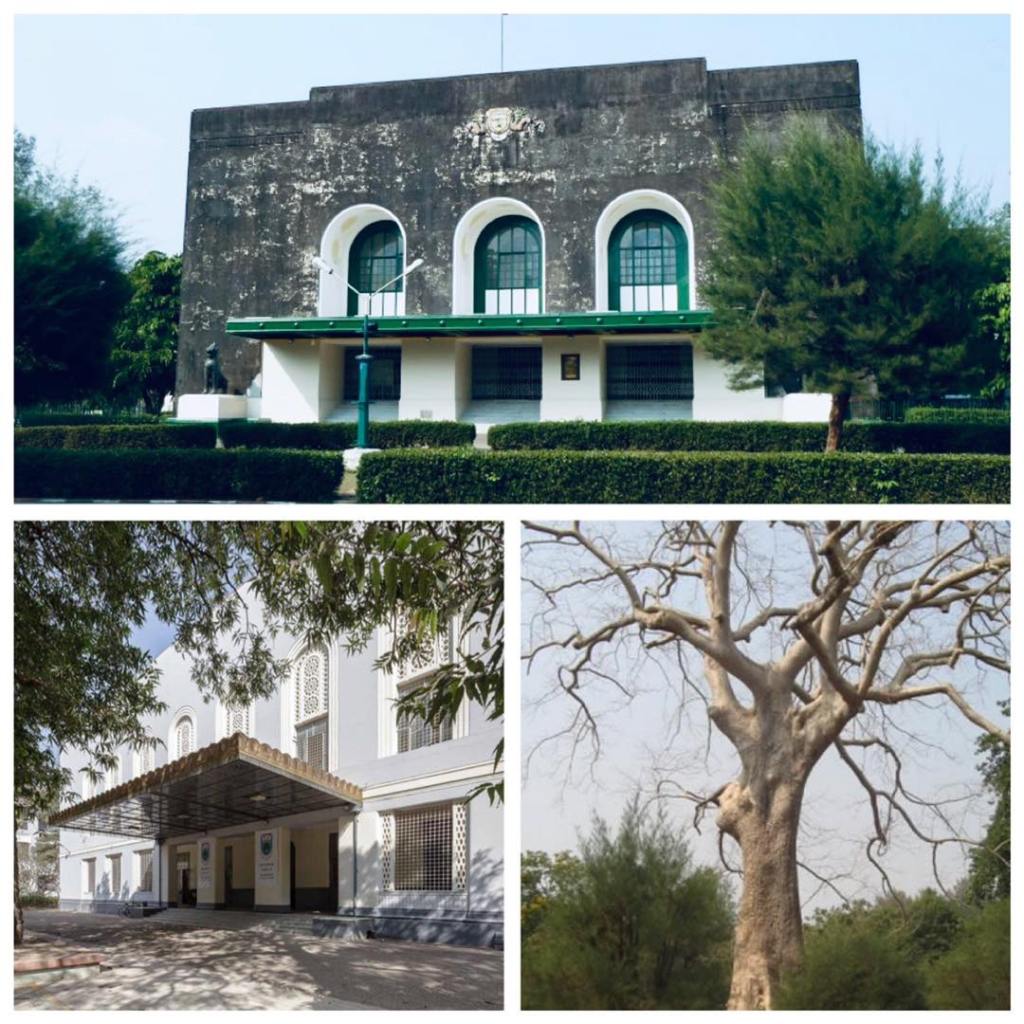
Ko Myo Aung was chairman of the magazine committee and Ko Kyaw Hoe was chief editor and publisher. The consultant editors were U Maung Maung Gyi (later professor of Burmese department) and U Ngwe Thein (later lecturer of Engineering Geology of Mining department) for Burmese and English sections respectively. The magazine was bi-lingual and had 108 pages. Photos of the newly opened Engineering College on Prome Road were included in the magazine.
There were no annual magazines after 1956-57 academic year. Only in 1960-61 academic year, the magazine could be published again. Publisher was Ko Ne Tun and editor in chief was Tetkatho Moe War (U Moe Aung, Electrical Engineering department). U Kyaw Tun (Lecturer, Electrical department), and U Aung Khin (Lecturer, Mechanical department) were consultant editors. See appendix B for a list of members.
The magazine was printed at Myo Nyunt Press House. It was a bi-lingual with 160 pages. It was the last magazine published with the name of “Rangoon University Engineering Students’ Union Annual Magazine”. After the publishing of 1960-61 annual magazine, there were no magazines up till 1965.
Engineering Education around the 1950 period
To get a clear picture of the engineering education at the faculty of engineering, Rangoon University, excerpts from an article written by Dr. Aung Gyi is included. Dr. Aung Gyi was an Inter Science and Engineering student from 1948 to 1952. He served as Rector of Rangoon Institute of Technology from 1971 to 1978. The following are excerpts from his article.
“I was an engineering student and then became one of the teaching staff at a later date. I matriculated in 1949 and entered the University of Rangoon and stayed in Ava Hall and took what we called in those days the Intermediate of Sciences (I. Sc.) courses. The courses were: English, Burmese, Physics, Chemistry and Maths (pure and applied maths). We needed to take these courses for two years in order to go to the engineering studies. I remember having a great time in the first year as we did not have to take the exam at the end of the first year for some unknown reason. But we had to take the exam at the end of the second year for all the subject matters that were taught to us for the whole two years. It was a tough examination at the end of the second year as we had to study a lot. We had physics and chemistry exam papers, two maths papers, English and Burmese papers, physics lab practical exam and chemistry lab practical exam within a period of 15 to 20 days in the hot month of March. Only about 60% of the students passed through the first time. The passing grade for each subject was 40%. Fortunately the University authorities in those days were understanding and kind enough to give the failed students what they called compartmental examination again in May/June for the failed subjects. Given a second chance like that, a lot of students passed the exam this time around. The Faculty of Engineering admitted the students, including the students who passed the ISc exam under the compartmental system, with a passing grade of at least 40% for each of I. Sc. subjects and the average grade for all the subjects combined of 50%.
I was quite fortunate to have good teachers in my I. Sc. days. I remember that Saya U Than Tin gave good lectures in physics. Saya U Thein Nyunt was good as well in teaching us chemistry. Needless to say the experiments that I had to do in physics and chemistry labs were interesting as they were all new to me. The maths teachers I remember were Professor U Aung Hla, Sayagyi U Kar, Sayagyi U Ba Toke, two Indian lecturers with the same last name Chowdhury, I forgot their first names. One Chowdhury was bald headed and the other had a lot of hair. They were teaching, I think, under contract with the Rangoon University. These very good teachers, I had to say, gave me a good foundation in maths. The English teachers were very good too. They were Saya U Kan Gyi and Sayama E. Kan Gyi. The only Burmese teacher I remember was Saya U Hla Maung who could make a boring topic into an interesting lecture. I owe a lot of gratitude to these wonderful teachers.
I joined the first year engineering class in 1951-52 academic year, having satisfied the entrance requirements of the Faculty of Engineering mentioned above. The academic year, I think, was from June to February with about one month break in October. So far as I know there was a “new course engineering” at the Faculty of Engineering right after the World War II. I do not know what the entrance requirement for this new course was.
I stayed in Prome Hall like most of the other engineering students in those days, as it was situated close to the B.O.C. College of Engineering building where we had classrooms, laboratories and workshop for our engineering courses. A few engineering students however stayed in Tagaung Hall which was in the same Prome road campus of the Rangoon University as Prome Hall. Both of these hostels were timber buildings and they could easily get burnt down, but I was happy to see that they are still standing there when I last visited Yangon in 2010. These two Halls gave accommodations to all engineering students, even to some students from Rangoon at that time, as there were vacancies and as the total engineering student population was not that big. If my guess is correct, I think there were about 350 to 400 students for 4 years of all engineering disciplines, out of which there were about 75 first year engineering students. The system in place at that time was in such a way that the students had to take common courses in the first two years and branched out into different disciplines of choice, starting from 3rd year.
I remember that as first year engineering students, we still had to take maths classes from 7:00 am to 9:00 am at the main campus where we had taken the I. Sc. courses. I remember getting up early in the morning in Prome Hall, and taking a walk along the road what we called as “Padaukpin Lane” or “Thaton Lane”, and through Thaton Hall and Ava Hall, for the mathematics classes at the main campus. All of us then rushed back to B.O.C. College of Engineering from the main campus after 9:00 am to take the engineering classes, which included lectures, practical laboratory work, workshop practice, and drawing classes, starting from 10:00 am. We normally finished our classes around 4:00 pm. The total contact hours of learning for engineering students were about 30 hours per week. If my memory is correct, it was difficult to get an engineering degree in 6 years after matriculation. Somewhere along the way some of us failed for one reason or the other, and had to repeat a class. The passing grade for each subject, which included workshop training at the engineering faculty was 40% and the average passing grade for all the subjects combined was 50%. When I passed my 1st year engineering in April/May 1952, I noticed that about 15% of my classmates were left behind to repeat the 1st year engineering.
I do not remember all of my teachers at that time. I can only recall that Saya U Num Kok was in charge of 1st year engineering drawing, Saya Jaidka taught us “building materials and construction”. Saya Ketrapal gave lectures and practical laboratory training in “ heat engines”. Sayagyi U Kyaw Tun and/or Saya C. Ping Lee taught us “electrotechnology” in the classroom and in the laboratory. In addition to the lectures, laboratory work and drawing, all of us had to take workshop trainings in carpentry, blacksmith, welding and in machine shop. The medium of teaching was English. We were also encouraged to take some practical training with some engineering organization during the summer vacation. I am not quite sure, but I think Ko Chit was an assistant at the blacksmith shop, and U Ba Sein was an assistant in the electrical lab. I think Mr. P Davies was the workshop superintendent. The classrooms, laboratory facilities, the workshop facilities that I attended were good and adequate. The library I visited some time was full of engineering books, magazines and journals. I could imagine that with its qualified teaching staff and good teaching facilities, the Faculty of Engineering was producing the qualified engineers needed by the country at that time.
I do not know what the total number of teachers we had at the Faculty of Engineering at that time. I could guess that the student/teacher ratio was about 20:1 from the number teachers and from the number of students I had seen. I noticed that there were few Burmese nationals teaching staff at the Faculty, and most of the teachers were from India and UK. It seems that right after the World War II, there was shortage of qualified teaching staff from Burma at higher education/University level as a whole. Sayagyi Professor U Ba Hli was Dean of the Faculty of Engineering, and I believe he received his post graduate degree from a British University. He was quite far-sighted and tried to broaden and improve the engineering education by having some kind of twinning arrangements with not only a British University but also with Massachusetts Institute of Technology USA (M.I.T.). I remember as a student hat there was a visiting Professor called Professor Horwood from M.I.T. at the Faculty, and I think he gave us lectures on sanitary engineering. Sayagyi U Ba Hli must have planned to increase the number of engineering disciplines that were given at the Faculty from civil, mechanical and electrical engineering to other disciplines as well, such as Mining, Chemical, Metallurgy, Textile engineering and Architecture. I understood that this plan came into fruition in 1954/55. He must have also planned to send the Burmese nationals to UK, USA, and other countries for further training so that they could be appointed as qualified teaching staff at the Faculty at a later date. I therefore take this opportunity to put on record that a big credit is due to the late Sayagyi U Ba Hli for his contribution to the improvement of engineering education in Myanmar.
After attending the 2nd year engineering class from June 1952 to September 1952, I went straight to MIT on a state scholarship to continue my studies. Saya U Min Wun and I went together to MIT and joined the academic session, starting from September 1952. We met Dr. Freddie Ba Hli at MIT, who was already studying for his Ph.D in electronics or electrical engineering. He was one of the nicest and helpful persons that I have ever met in my life. He gave us briefings and guidance so that we were able to assimilate into the American education system and American way of life without any difficulty. He also helped with our home works when we had some difficulties in the beginning. I am forever grateful to him for his kind help. I am sure U Min Wun feels the same. Saya U Khin Aung Kyi, Saya U Sein Hlaing, U Percy Lao, U Win Htein, U Kyaw Min, Robin Aw, U Kyaw Thein, U Aung Kywe, U Aung Myint and U Sein Hla came to MIT for further studies at a later date. U Percy Lao later became Rangoon City Engineer (water and sanitation). U Win Htein who is an architect became a Rangoon City Building Engineer. The late U Kyaw Min became a free lance architect (and also taught part-time at the architecture department for some time). All these three professionals taught some time at RIT. I do not know what happened to Robin Aw. The late U Kyaw Thein was an engineer at the Construction Corporation and later became a lecturer at the Civil Engineering department at RIT. U Aung Kywe was a Director (water and sanitation) at the Construction Corporation. U Aung Myint became the Chief Architect at the Construction Corporation. U Sein Hla was an engineer at the Construction Corporation and later became the Registrar at RIT under Rector U Yone Moe. Later more batches of Burmese students came to MIT when I was no longer there. I am describing all these things to point out the fact that the standard of engineering education in Burma at that time was quite good. None of us had to go through the entrance exam to get into MIT. They trusted our grades and our education standard. Maybe the visiting Professor Horwood from MIT was quite impressed with the Faculty of Engineering and put a good word for us to the MIT admission authorities.
Now I would like to touch upon the extra-curricular activities of the students from 1949 to 1952 when I was one of the University students in Rangoon. As mentioned in the beginning, all the extra-curricular activities were in sports; in artistic and literary related activities; in activities of various students’ associations, societies and clubs according to their respective aims. Good and adequate facilities were available for these activities at the Rangoon University campus, except for swimming. But Inya Lake was available for the students for swimming and rowing. There were competitions in sports such as soccer, tennis, table tennis, badminton, basket ball, volley ball, track and field, swimming, rowing, boxing, weight-lifting, and body building (Mr. University). There was University soccer team which was quite good and competing nationally at Aung San stadium. There were annual dinners of various hostels with anyeints and concerts participated by outside professional artists. There were separate annual concerts, stage shows and anyeints by the talented students also. There were students’ magazines published every year with articles and poems by the students.
I will not go into details of all the various students’ associations, societies and clubs, as there were so many of them. But I would like to mention briefly about the hostel life, that I had experienced at that time. Every hostel had what we called social and reading club. There was an adequate room reserved for this club at the ground floor of the hostel. In general, newspapers, popular magazines, a chess board, a carom board and a table tennis were provided so that the hostel students could read, play chess, play carom board, and play table tennis and socialize to get to know each other well. Even without the social and reading club, all the hostel students ended up knowing each other well sooner or later, as they met each other almost everyday at the hostel and at the dining hall. The hostel students were in general well behaved. I hardly saw the Warden or Hall Tutors at Ava Hall and Prome Hall, as there were very few student problems which needed attention of the Warden or Hall Tutors.
Based upon my experience, I feel that these extra-curricular activities and hostel life gave the opportunities to the students to broaden the knowledge of the different parts of Myanmar; and they also created a better understanding of the different culture, food, habit, dresses, dialects etc. of the country. Most of the students developed life-long friendships through these activities which contributed to well-beings of these students throughout their lives. Sports activities also taught the students about hard work, cooperation, team work, competition, winning and losing. The extra activities also triggered, developed, and enhanced the hidden talents of some of the students. These activities therefore formed part of the University education of the students, in addition to the education that they received from the classrooms. Another benefit of these activities was the bonding and a better understanding, which developed between the students and the teachers who were involved in these activities”.
Editor’s notes
With the support of Sayagyi U Ba Than & Saya U Thaw Kaung, Chief Librarian of the RU Central Library, Saya U Soe Paing compiled materials. Most articles and correspondences from the early periods were in English. Based on Saya U Soe Paing’s work, the editorial team headed by Saya U Aung Hla Tun, former Editor-in-chief of RIT Annual Magazines and also a National Literary Award winner, wrote the book in Myanmar/Burmese.
U Ohn Khine and I prepared the CD Supplement for the book. It included photos (too many to be incorporated into the book), bio of Sayas and sayamas, articles for the SPZPs, and excerpts from my Updates.
On July 19, 1947, Bogyoke Aung San & several ministers were gunned down.
Memories of my cousin
Daw Myint Thwe Daw Myint Thwe
Daw Myint Thwe (Betty, now GBNF) was born on July 19, 1934.
She was celebrating her birthday on July 19, 1947 when the sad news were announced via the sirens. The birthday celebration was put on hold.
Arzanis
Bogyoke Aung SanArzani Nay
Bogyoke Aung San — Untimely death at the age of 32
Thakin Mya — Minister without Portfolio; “Deputy Prime Minister”; Leader of AFPFL faction
Deedok U Ba Cho — Journalist; Publisher
Mahn Ba Khaing — saved Bogyoke from the British police
Sao San Htun (Mongpawn Sawbwa) — died the following day at the hospital
U Ba Win — Elder brother of Bogyoke; Father of Dr. Sein Win
U Razak — Early graduate from National College; Principal of National School in Mandalay
ICS U Ohn Maung — Was asked to give a presentation on behalf of Saw San Po Thin
Yebaw Ko Htwe — Body guard of U Razak
Absentees & Survivors
Three ministers (U Tin Tut, U Kyaw Nyein & Saw San Po Thin) did not attend the meeting on July 19, 1947.
U Tin Tut became a victim of political assassination shortly after Independence. He was already assigned to be Burmese Ambassador of the United Kingdom.
U Kyaw Nyein and U Ba Swe led Ti Mye (တည်မြဲ Stable AFPFL faction). They lost the No-confidence motion against U Nu and the Thant Shin (သန့်ရှင်း Clean AFPFL faction). The AFPFL split led to Caretaker Government (pseudo Coup d’etat).
Saw San Po Thin was on a tour of duty.
According to Phaw Kaung ဖေါ်ကောင် Ba Nyunt, he could not find U Nu (Speaker of the Chamber of Deputies) at his office.
A few ministers (Pagan U Ba Gyan, U Aung Zan Wai, Pyaw Bwe U Mya …) who were seated at the far side of the meeting table escaped.
U Ba Gyan is the elder brother of U Ba Shan (Secretary of Maths Curriculum Committee). He sat down on the floor but was holding the edge of the table. He had a gunshot wound on a finger.
U Aung Zan Wai was a signer of the Pinlon (Panlong) Agreement.
Pyaw Bwe U Mya’s spouse is a distant cousin of Bogyoke. His plan to have more security at the Secretariat was turned down by Bogyoke.
Bogyoke’s body guards include Natmauk Phone Kyaw (writer) and Bo Tun Hla (Tekkatho Nay Win, writer & actor). Bo Tun Hla and Deputy Secretary U Tin Ohn were in an adjoining room in the Secretariat. Dr. Tin Wa (son of U Tin Ohn) was interviewed by BBC Burmese program.
Family members & relatives of Arzanis
U Aung San Oo, Aung San Lin (GBNF) and Daw Aung San Suu Kyi — children of Bogyoke
Dr. Khin Hla Cho & Daw Khin Myint Cho (UCC) — grand children of Deedok U Ba Cho
Daw Myint Myint Khaing (Maths Sayama) — daughter of Mahn Ba Khaing. She transcribed the tapes for the book about Saya U Ba Toke. Her spouse Dr. Khin Maung Swe (Tekkatho Maung Thin Char) interviewed Saya and wrote the book.
Sao Hso Holm & Sao Khai Pha — sons of Sao San Tun. Sao Hso Holm was First Class English Honors and had two Law degrees. He was a regular columnist for WPD Supplement on Modern Burmese Writings. In 1962, the Sawbwas requested his legal services. He was detained by the Revolutionary Council. After serving in the Education Ministry, he and his family migrated to Australia.
Saya Dr. Sein Win (Maths) — son of U Ba Win
U Tin Myint (GBNF) & U Hla Kyi — sons of U Razak. Both are Geologists and Old Members of RUBC.
Saya U Tin Maung Thein (EE), Francis & Saya Dr. Min Myint (Chem) — sons of U Ohn Maung
Daw Nge Ma Ma Than (UCC) — niece of Bogyoke & U Ba Win; She became a Prisoner of Conscience.
Arzani Beikman / Martyrs’ Mausoleum
In our younger days, we walked to Shwe Dagon Pagoda on Saturdays.
We would occasionally stop by at the “Arzani Beikman” (Martyr’s Mausoleum). Nine Oke Gu’s were on display. Four Oke Gus flanked on each side of Bogyoke’s Oke Gu.
Near the Beikman were two more Oke Gu’s : one for ICS U Tin Tut and another for Bo Sein Hman.
Dr. Thane Oke Kyaw Myint’s article about the “Empty Tomb” mentioned that his Bagyee U Tin Tut was cremated at the special crematorium set up at Kyandaw Cemetery and that his ashes were scattered into a river.
Fast forward.
The “attempted massacre of Chung Doo Wan and his party” was carried out by three North Korean agents.
One set of bombs did not go off and thus spared the lives of the Burmese contingent led by Minister U Aung Kyaw Myint. U Soe Min, Deputy Director of Myanmar Ah Than TV, was hit by shrapnel, but he survived. The award winning Kyemon reporter, who switched duties to cover the event, was killed.
The higher authorities dictated the design of the new Arzani Beikman. No roofs were placed on top of the monolithic “Gu”. Some architects posted about their role in the project.
Several writers noted that the then Number One never attended the ceremonies. A few hinted that he was a member of the Thakin Ba Sein faction of AFPFL and had some grudges for those from the Thakin Mya faction. He banned horse racing for the public and closed the Rangoon Turf Club. He supposedly had fun (e.g. attending derbies) most July in UK.
Protocol change
Over the years, the protocol changed. The families of the fallen leaders were no longer invited to State functions and dinners.
First tier leaders did not attend the Martyrs’ Day functions. Only Second tier leaders showed up as token of duty.
The family members of the Arzanis were not allowed time to pay physical respect. They were given time only to lay the “Lwan Thu Pann Khwe”.
At one time, the public was barred from paying respect, and those who tried were detained.
The Martyr’s day regained importance during the Pwint Linn era,
Articles, books and documentaries
I have read several articles (e.g. by Tekkatho Nay Win).
I read the earlier edition of the book “Who killed Aung San?” by Kin Oung (former Naval Officer living in Australia). His father U Tun Hla Oung arrested Galon U Saw. His father-in-law U Thaung Sein (then Secretary of Insein Prison, later Justice) kept watch of U Saw so that U Saw and his team can be tried by a Special Tribunal headed by U Kyaw Myint (father of Dr. Thane Oke Kyaw Myint).
I saw the BBC’s production titled, “Who REALLY killed Aung San?”
Dr. Thane Oke Kyaw Myint wrote: On the BBC Programme, U Kin Oung, was interviewed. He is the author of three editions of “Who killed Aung San”. The fourth edition was more comprehensive as he had access to government documents thanks to freedom of information act. The last version was titled “Eliminate the Elite”.
Kin Oung’s book
Notes
I wrote “AUNG SAN” for Bogyoke’s Centennial in 2015.
Bo Tun Hla (Tekkatho Nay Win, Bogyoke’s PSO) wrote memoirs in the Arzani Nay Supplement.
The articles in Kyemon and several posts on the Internet groups reiterated the values of the fallen leaders.
Thakin Mya was considered as Deputy Prime Minister.
Deedok U Ba Choe was a distinguished journalist and a “Hin Lay Oh”.
Daw Marie Hla Taw drove Bogyoke to Mahn Ba Khaing’s place (preventing Bogyoke’s arrest by the police). Mahn Ba Khaing helped Bogyoke get back to the safe area.
Sao San Htun was hospitalized. He passed away (the following day) on July 20, 1947. There is a hospital in Taunggyi named in his honor.
U Ba Win was a dedicated teacher. He entered politics late to support Bogyoke (his younger brother & former student). His son Dr. Sein Win served as Prime Minister of the Burmese Government in exile.
U Razak (Principal) was highly regarded by staff & students of Amyotha Kyaung (National High School). Several sayadaws from Mandalay nominated him to be Minister of Education.
Ko Htwe (U Razak’s yebaw) was gunned down by the assassins during their exit.
According to Dr. Tin Wa, his father U Tin Ohn was in an adjoining room in the Secretariat. U Ohn Maung (who was in the room earlier) was requested by Bogyoke to make a presentation.
Per Dr. Thane Oke Kyaw Myint, gun shots were fired at his father’s house. The family members laid low and were not hurt. U Kyaw Myint was then Head of the tribunal that tried Galon U Saw. It was another episode in the “Who killed Aung San?”
Mounting evidence — from declassified documents — suggest the involvement of several British politicians and officers in the murder of Arzanis.
July 19, 1947 was a Dark Moment in the history of Burma. July 7 and July 8, 1962 would join as Dark Moments in Burma.
The Matriculation Only examination was held in May 1963
In the previous years, the examination was for High School Final and Matriculation (combined). Those who matriculated are eligible to study at the university.
SPHS students were outstanding in the Matriculation of 1963. There were five in the Top Five, seven in the Top Ten and ten in the Top Twenty. The following were awarded Collegiate Scholarship. Khin Maung U (First) Min Oo (Second) Myo San (Freddie, Third, GBNF) Nyunt Wai (Victor, Fourth) Thein Wai (Fifth) Hla Min (Seventh) Aung Kyaw Zaw (Johnny, Ninth) Maung Maung Kyi (Eleventh, GBNF), Aung Thu Yein (Brownie, Thirteenth, GBNF) Khin Maung Zaw (Frank, Seventeenth)
Fourth of nine siblings : Saya U Tin U (C), Saya U Ba Than (M, GBNF), Dr. Daw Win Hlaing (Ruby), Dr. Myo Tint (GBNF), U Tin Htoon (A60), Saya U Myo Min (UCC), U Thaung Lwin (EC66), Daw Cho Cho Hlaing
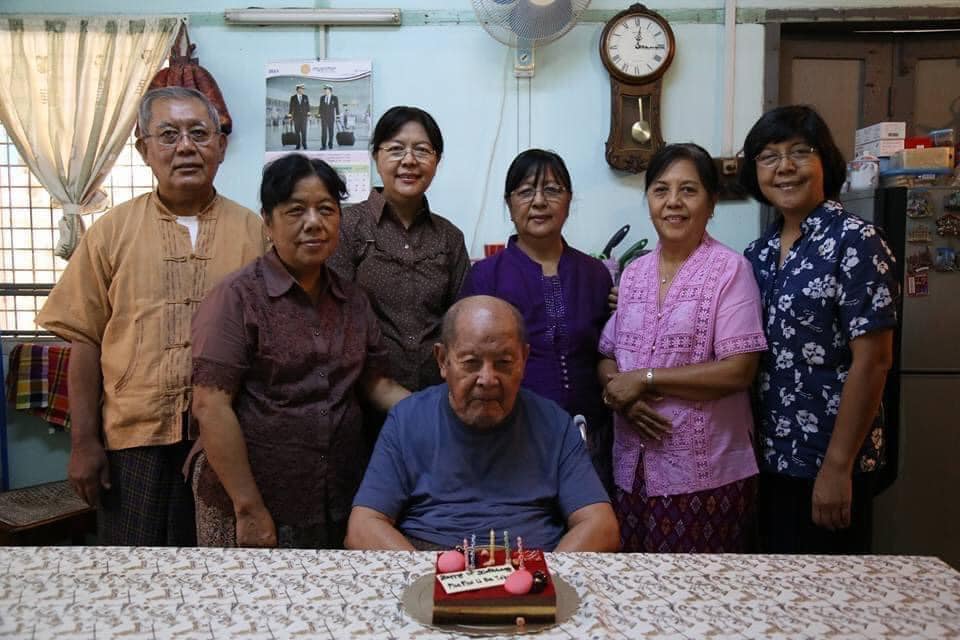
Daw Myint Thwe (Seated 2nd from Right)
Children : Ma Tin Tin Hlaing (UCC) & Ko Htay Aung (EC80, UCC), Ko Tha Hlaing (EC83, UCC), Min Thet Tun (GBNF)
Fifth month in the old Roman Calendar, and it had 30 days. The month was given an extra day and renamed in honor of Julius Caesar.
Seventh month in the Gregorian Calendar.
My father’s birthday
My beloved fatherMy parents
Born on 1st July.
Passed away in his 80s.
Men on the Moon
Apollo 11 Mission
Eagle (Lunar Module) landed in Tranquility Bay on the Moon on July 20, 1969.
Neil Armstrong (Mission Commander) was the first to land on the moon.
Edwin “Buzz” Aldrin (Lunar Module Pilot) was the second to land on the moon.
Michael Collins (Command Module Pilot) circled the Moon and waited for his crew mates to return from the Moon.
I wrote a poem “Men on the Moon”. A copy was sent by Mr. Hall (Information Officer, USIA) to NASA. The poem was published in the Guardian.
Men on the Moon
US Independence
4th of July
Martyrs’ Day
July 19, 1947
Bogyoke Aung San, six ministers, a Secretary and a bodyguard were assassinated.
Translation of Invictus Aung San
Nine Arzanis were gunned down on July 19, 1947. Eight perished that day. One succumbed a day later.
Arzanis
Bogyoke Aung San passed away at the tender age of 32 Children : U Aung San Oo, Aung San Lin (GBNF), Daw Aung San Suu Kyi
Thakin Mya. : Considered as Deputy Prime Minister
Deedoke U Ba Cho : Minister, Journalist ; Grand children : Dr. Khin Hla Cho, Daw Khin Myint Cho
Mahn Ba Khaing : Transported Bogyoke (saved & brought by Marie Hla Taw) back; Daughter : Sayama Daw Myint Myint Khaing
Mong Pawn Sawbwa Sao San Htun : passed away in the hospital on July 20, 1947; has a hospital named after him; Son Sao Hso Holm
U Ba Win : Bogyoke’s elder brother; Son Dr. Sein Win
U Razak : Nominated by monks; Former Principal of National School; Sons U Tin Myint & U Hla Kyi
ICS U Ohn Maung : Dy. Secy; Was asked to report on behalf of his minister; Sons U Tin Maung Thein, Francis & Dr. Min Min
Yebaw Maung Htwe : U Razak’s bodyguard
There are books (e.g. “Who killed Aung San?”, Eliminate the Elite” by Kin Oung) and documentaries (e.g. “Who really killed Aung San?” by BBC program) about the fateful event.
Eliminate the Elite
Dark days in July 1962
According to the newspapers, 17 died on July 7, 1962.
Ko Aung Khin was stuck by a stray bullet as he was returning from RUBC to his home in Windermere Road. He was listed as the 17th victim.
Anniversary celebration of 7th July in 1963 ended with the closure of Universities with the exception of the Faculties of Medical and Engineering.
The revered Student Union was demolished on July 8, 1962.
U Aung Min (M69) and team maintain the GBNF list for 69ers(2nd BE intake in 1964). Over 40% of the 69ers are GBNF. About 20 members succumbed to Covid.
U Ohn Khine (M70) and team maintain the GBNF list for 1st BE intake in 1964. About 140 members are GBNF.
Saya U Ba Than
Saya U Ba Than is Retired Professor of Mechanical Engineering. He was an early supporter of HMEE project. He donated his Garawa money to various charitable associations.
Steeve Kay
Steeve Kay (U Thaung Sein, EC70) is a Multiple Golden Sponsor for SPZP. He is Chair of Kay Family Foundation.
Saya U Min Wun
Saya U Min Wun retired as Professor of Civil Engineering. He was a member of the Myanmar Pyet Ka Dein Ah Phwe. He was advisor for the Regional College Project and Pagan Restoration Project. He passed away in California, USA.
U Wynn Htain Oo (M72) and team occasionally published the GBNF list for M72.
Ma Ma Pat
Ma Ma Pat (spouse of Saya U Myo Myint Sein) passed away unexpectedly on October 2, 2022. Saya Myo celebrated his 91st birthday on October 1, 2022.
Daw Khin Kyi Nyunt, Dr. Peter Khin Tun
Three family members of U Tin U passed away within a few months. Dr. Khin Kyi Nyunt (spouse) — November, 2019 Dr. Peter Khin Tun (elder son) — April 2020 U Tin Tun (son-in-law) — May 2020
Saya U Aung Hla Tun, Retired Associate Professor of Metallurgical Engineering passed away in February 2022. He was Chief Editor of RIT Annual Magazine. He led the History of Myanmar Engineering Education Project. He won the National Literary Award.
Saya U Aung Hla Tun (GBNF)
U Tun Aung (Jefferey, EC68) is a founding member and past President of BASES. He passed away in October 2021.
U Tun Aung (GBNF)
U Soe Myint Lwin (EP68) played Soccer for Burma, RU & RIT. He was EC of the Burma Women’s Soccer Federation. He passed away in 2017.
Memorial Service for U Soe Myint LwinSoon Kwyay Invitation for U Soe Myint Lwin
I Zeyar Lin (69er) passed away in 2018
I Zeyar Linn (69er)Saya H Num Kok Saya H Num Kok
Saya H Num Kok is a Saya of our Sayas. He passed away in Portland, Oregon, USA in his late 90s.
Saya Allen Htay
Saya Allen Htay (C58) is a founding member and President of RIT Alumni International which hosted SPZP-2000. He passed away in California, USA.
Dr. Win Thein
Saya Dr. Win Thein (C58) retired as Professor and Head of Civil Engineering.
U Khin Maung Win (Sid, C58) passed away in USA. He is a classmate of Sayas Allen Htay, Dr. San Hla Aung and Dr. Win Thein.
Class of Civil 1958Han Sein
U Han Sein (C69) represented RIT in Swimming, Water Polo, Diving and Basketball. He was a Prisoner of Conscience for 17 years.
Benedict Sia
U Myat Swe (Benedict Sia, M75) passed away in Taiwan. He is a life member of Alumni Association. He donated a Shwe YaDu bench.
Aung Gyi Shwe
U Aung Gyi Shwe (EE69er) was Secretary of RIT Track and Field Association. He also played soccer and enjoyed weightlifting.
Aye Lwin
U Aye Lwin (M69) was Secretary of RIT Annual Magazine Committee & RIT Mechanical Engineering Association.
Win Thein
U Win Thein (M67) founded Set Hmu Thadin Zin. He was an Organizer for Ah Nu Pyinnya Ah Thinn and several RIT events.
U Khin Maung Myint (John Tint, M72) Burma, RU & RIT passed away in 2020
John Tint
U Thein Lwin (M72) Captain, RIT Soccer passed away in 2022
U Thein LwinKo Thein LwinSoon Kwyay Invitation U Thein LwinM72 GBNF
I felt uncomfortable to be addressed as “Ah Ba”, “Pho Pho” and to be offered assistance (e.g. wheelchair).
I now feel OK to use wheelchair at air ports and to have people assist me when I climb up & down hill slopes. I had a couple of bike rides on dirt roads.
I enjoy senior discounts for trains, buses & restaurants.
I hope that my mental faculties will remain sharp and strong.
Jara (old age) caught even the sport stars like Sayagyi U Ba Toke.
Sayagyi U Ba Toke
Phwa Bet Taw
Saya is a Phwa Bet Taw of Rangoon University and the first Rangoon University Students’ Strike in December 1920.
SPZP-2000
In 2000, Theingi (Saya’s youngest daughter) conveyed us Saya’s wishes to attend SPZP-2000. U Maung Maung Than (M79, Texas) had donated a round trip ticket. Several sayas & alumni donated expenses. Details can be found in “Count down to the Reunion” articles.
SPZP-2000
Birthdays
Saya 2
He celebrates his birthdays with his children, grandchildren & great-grandchildren.
Saya‘s birthday
Longevity
Saya gave a speech in SPZP-2007 about “Longevity”. He visited a house in USSR where the 80+ year old host explained about the noise up stairs. “Don’t worry. It’s my 100+ year old uncle quarelling with his fourth wife. They will make amends.”
Garawa
During my visits to Yangon, I paid respect to Saya.
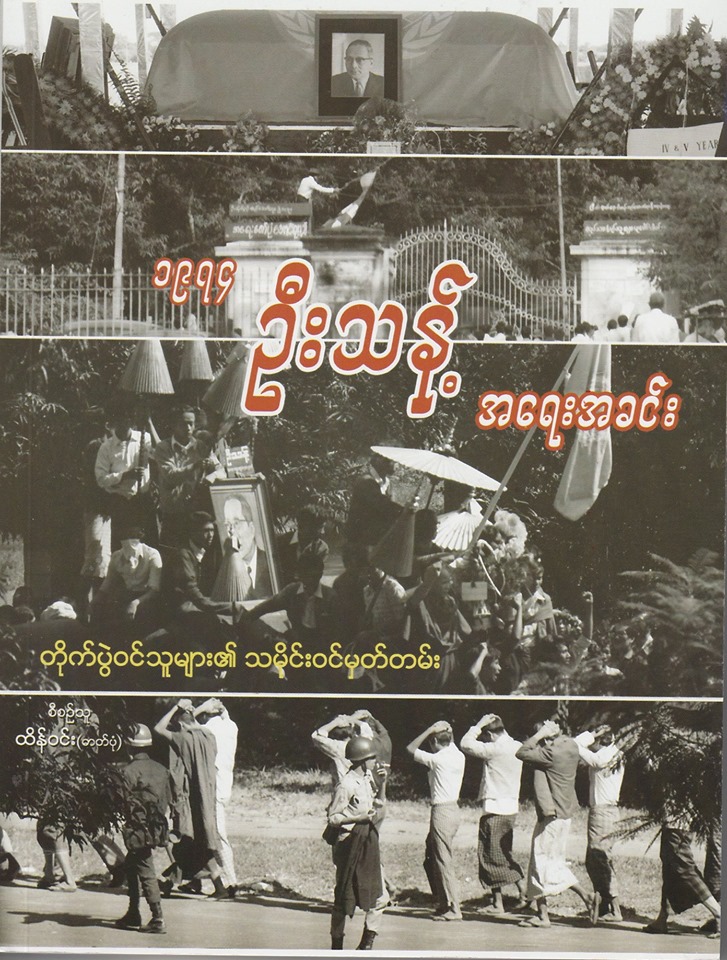
U Ohn Khine (M70) gave me a ride in 2012. Saya gave us autographed book. We enjoyed Sayagyi’s accounts. He was a football star, a leader of the Burma Olympic Delegation, and an excellent teacher. Up to his early 80s, he could walk to the Shwe Dagon pagoda with his friends. In his 90s, Sayagyi lost some mobility, eye sight and hearing, but he was determined to attend SPZPs.
Book
In 2016, Saya’s son U Ye Myint and daughter Daw Thynn Thynn (Pansy) made arrangements to give us rides to and back from Saya’s house.
U Ba Toke
In 2018, I called Ma Theingi and asked about Sayagyi. She mentioned that Sayagyi is healthy but because he had lost most teeth, she has to listen carefully to grasp his message.
Saya passed away on December 2, 2020. It was the day after RI U Centennial. It was a few days short of his Centennial Birthday on December 26.
Requirements for accreditation of YTU (Yangon Technological University) include an excellent library.
Donations poured in from alumni all over the world for the YTU Library Modernization Project.
The following lists some Donations from USA.
BASES & Friends
BASES was founded by Saya U Tin Htut (M60), U Tin Htway (M59), U Tun Tin / David and supporters
Several RIT Sayas and Alumni served as President and EC of BASES.
Saya Dr. Tin Win (M62) & Daw Khin Htar Yee (Lily, T72)
Dr. Tin WinKhin Hta Yee (Lily)
Dr. Tin Win was youngest & among the Brightest of his Class
In 1958, won Gold Medal for Joint Highest Maths Marks in combined I.Sc
After graduation, worked briefly in industry before joining Mech Engg Dept.
Taught us “Strength of Materials” (sequel to Sayagyi U Ba Than’s course)
Received Doctorate from Melbourne University
Moved to USA.
Worked for several companies (including Brown & Root in Texas)
Past President & Advisor of BASES
Interviewed by Myanmar Gazette (Southern California)
Ran LA Marathon to raise fund for SPZP-2007
Organized the 2015 RIT Alumni Reunion in Los Angeles
Lily was Founding Member & Secretary of BEA (Burmese/Bay-Area Engineering Association)
Saya & Lily were core organizers of 2015 RIT Alumni Reunion in Los Angeles (along with Saya U Tin Htut, U Thura Thant Zin and U Khin Maung Lay)
They donated $2500 for the YTU Library Modernization Project
Saya U Tin Htut (M60)
U Tin Htut
Visiting lecturers from the Faculty of Social Science (later Institute of Economics) taught “Industrial Management”.
First Engineering Saya to teach “Industrial Management”
Past Captain & Gold of RUBC
Founded BASES with U Tin Htway (M59) and David Tun Tin (GBNF)
Donated twice — K100 Lakhs first & again K1000 — for YTU Library
Donation
David Tun Tin (GBNF)
Was States Scholar in the USA
Went back to Burma & worked for some time before migrating to the USA
Founded BASES with Saya U Tin Htut and U Tin Htway
Donated $1000 to YTU Library
James Shwe (M76) & Annette Shwe (A75)
James & Annette
Earlier donated towards the expenses of HVAC Design and Implementation.
Donated again $500 for YTU Library.
Helped several alumni by offering internship/job at their company.
Provided scholarship for eligible university students in Myanmar.
Donation
U Khin Maung Lay (Henry, T68)
Secretary of RIT Track & Field
Represented RIT in Track & Field, Soccer and Rowing.
Past President & Advisor, BASES
Master of Ceremonies for BASES & 2015 LA Reunion
Enjoys singing in Burmese, English & Chinese
Helped several alumni by offering internship/job at his company
Donated $1000 to YTU Library
Donation
U Tin Nwe (C68)
Past President of BASES
Donated $1000 to YTU Library
Donation
Daw Htay Htay Than (EC93) & U Saw Win Aung (C87)
Sarina forwarded my e-mail about SPZP-2000 to Steeve Kay, (EC70, her family friend). Steeve contacted his friend Benny Tan (M70) & offered to be the first Golden Sponsor of SPZP-2000.
Sarina and U Saw Win Aung donated $300 to YTU Library.
U Min Lwin (M62)
Classmate of Saya Dr. Tin Win
Donated $1000 to YTU Library
Donation
U Kyaw Sein (Auto68)
Mechanical Engineering Department had two sub-departments: Automobile Engineering & Agricultural Engineering.
U Kyaw Sein donated $1000 to YTU Library.
Donation
Daw May Nwe Yee (Rosie)
Younger sister of Saya Dr. Tin Win (M62)
Faculty member of RIT Chemistry Department
Donated $100 to YTU Library
Donation
Daw Myo Myat Myint (Penny, M70)
Younger sister of Saya Dr. Tin Win and Sayama Rosie
Donated $100 to YTU Library
Donation
U Sonny Kyi (79 Intake)
LA Gathering in 2015
EC member of BASES
Volunteer for 2015 RIT Alumni Reunion in Los Angeles
Donation
U Myint Aung
Responded to Saya Dr. Tin Win’s request for helping YTU
Donated $150 to YTU Library
Donation
Other Donations
Via NorCal RITAA
U Thein Tun Aung (Dennis, EP76)
Donated $500 to YTU Library (via U Wynn Htain Oo).
Donated $500 to NorCal RITAA for the YTU Library Modernization Project.