Blog

  • Vipassana Q & A

    Excerpts from
    “Introduction to Vipassana Meditation”
    by Venerable U Silananda


    Where does the practice of Vipassana come from?

    Vipassana meditation chiefly comes from the tradition of Theravada Buddhism. There are two major divisions of Buddhism in the world today – Mahayana and Theravada. Mahayana tradition developed as Buddhism spread to the Northern Asian countries of Tibet, China, Japan, etc. Theravada tradition stay in Southern Asia and spread to Sri Lanka, Burma (Myanmar), Thailand, Cambodia and Laos.

    What does Vipassana mean?

    The word Vipassana is composed of two parts — vi which means “in various ways” and passana which means “seeing”. So, Vipassana means seeing in various ways.

    What can Vipassana meditation do for me?

    The ultimate purpose of Vipassana is to eradicate mental impurities from your mind altogether. Before that stage, there are the benefits of tranquility, peace of mind and the ability to accept things as they come. Vipassana helps you to see things as they truly are, not as they appear to be. Things appear to be permanent, desirable and substantial, but actually they are not. When you practice Vipassana meditation, you will see for yourself the arising and disappearing of mental and physical phenomena. And you will have clearer comprehension of what is going on in your mind and body. You will be able to accept things as they come to you with less agitation and deal with situations in a more positive way.

    Can Vipassana be applied to daily life?

    You can have awareness of whatever you do whether you are working, walking, doing, etc. It will not be as intense as in a meditation or during a retreat, but a more general awareness. And when you apply mindfulness to problems in your life, you will be able to deal with them more effectively.

    Why should I go to a meditation retreat?

    The intensive practice of a retreat is very beneficial for developing good concentration and quieting the mind. Since concentration is essential for penetrative wisdom to arise, a meditation retreat gives you the best possible opportunity to be able to experience for yourself the true nature of reality.

  • Wiki

    • Wiki supposedly uses an easier “Mark up” than HTML (Hyper Text Mark Up).
    • A web site using Wiki usually allows some access to non-administrators.

    Wikipedia

    • Wikipedia is a collection of encyclopedias (in multiple languages)
      Contributed and managed by volunteers.
    • There are guidelines for Wiki publications such as Wikipedia and WikiMedia.
    • For example, an article for a Wikipedia should have citations, but it should not be a report for one’s research.
    • A reader can challenge an article for correctness, style, structure, and conformance.
    • I suggested and corrected discrepancies in some Wikipedia articles.
  • Word Games

    Word Games

    by Hla Min

    Updated : May 2025

    My elder brother’s wife is feeling sleepy

    • My elder brother’s wife => MAYEE
    • is feeling sleepy => yawn => THAN
    • Combine them => MAYEE + THAN
    • Transpose => MAYAN + THEE => MAYANTHEE မရမ်းသီး (Marion, delicious Burmese fruit)

    “PIN LE DHA MYA” ပင်လယ်ဓားပြ

    • PIN LE => is wide => KYAIR
    • DHA MYA => plunders (takes by force) => TAIK
    • Combine them => KYAIR + TAIK
    • Transpose => KYAIK + TAIR (Love, …) ကြိုက်တယ်

    Pho Thaike’s response

    • Offer from the boss : “If I give you a raise of 5 kyats to your present salary of 20 kyats, will you move to Na Shan?”
    • The response in Mixed Language

    Twenty
    Five
    Toee တိုး

    Pho Thaik ဖိုးသိုက်
    No

    No Go
    Na Shan နရှံ
    Town

  • Terms

    • A : Architecture
    • AFPFL : Anti Fascist Peoples’ Freedom League
    • AFAIK : As Far As I Know
    • AI : Artificial Intelligence
    • BA : Bachelor of Arts
    • BAPS : Burmese American Professional Society
    • BARB : Burma Astro Research Bureau
    • BASES : Burmese American Society of Engineers and Scientists
    • BCS : Burma / Burmese Civil Service
    • BE : Bachelor Engineering (or) Burmese Era
    • BEA : Bay Area / Burmese Engineers Association
    • BIT : Burma Institute of Technology
    • BMH : Base Military Hospital
    • BMRI : Burma Medical Research Institute
    • BPI : Burma Pharmaceutical Industry
    • BS, B.Sc : Bachelor of Science
    • C : Civil
    • Ch : Chemistry
    • ChE : Chemical Engineering
    • CLC : Calcutta Lake Club
    • CRO : Central Research Organization
    • CURC : Calcutta University Rowing Club
    • DCS : Department of Computer Science
    • DMR : Department of Medical Research
    • DTM : Distinguished Toastmaster
    • EC : Electrical Communications; Executive Committee
    • Eco : Economics
    • EE : Electrical Engineering
    • EI : Electrical Inspectorate; Emotional Intelligence
    • EP : Electrical Power
    • EPC : Electric Power Corporation
    • FEARA : Far East Asia Rowing Association
    • GBNF : Gone But Not Forgotten
    • HCF : Health Care Fund
    • HE : His / Her Excellency
    • HMEE : History of Myanmar Engineering Education
    • ICS : Indian Civil Service; Institute of Computer Science
    • ICST : Institute of Computer Science and Technology
    • ILA : Intelligence Level Aggregate
    • IM : Institute of Medicine
    • IP : Intellectual Property
    • IQ : Intelligence Quotient
    • M : Mechanical
    • MA : Master of Arts
    • MASU : Mandalay Arts and Science University
    • ME : Master of Engineering
    • MEHS : Methodist English High School
    • Met : Metallurgy
    • Min : Mining
    • MIT : Massachusetts Institute of Technology
    • MS, MSc : Master of Science
    • MU : Mandalay University
    • OMA : Old Members’ Association
    • OPA : Old Paulians’ Association
    • Phy : Physics
    • PTC : Post and Telecommunications Corporation
    • PWD : Public Works Department
    • RASU : Rangoon Arts and Science University
    • RC : Recreation Center
    • RC1, RC2, RC3 : Regional College One, Two, Three
    • RGC : Rangoon Golf Club
    • RIT : Rangoon Institute of Technology
    • RU : Rangoon University
    • RUBC : Rangoon University Boat Club
    • RUESU : Rangoon University Engineering Students’ Union
    • RUSU : Rangoon University Students’ Union
    • SDYF : Swel Daw Yeik Foundation
    • SMART — Specific, Measurable, Achievable, Realistic, Time-bounded
    • SMS — Simple Messaging System
    • SOA — Span of Attention; Service Oriented Architecture
    • SOAP — Simple Object Application Protocol
    • SOAS — School of Oriental and Asian Studies
    • SPARK : Society for the Promotion and Advancement of Radio Knowledge
    • SPZP : Saya Pu Zaw Pwe
    • SSOT — Single Source of Truth
    • SWOT — Strengths, Weaknesses, Opportunities, Threats
    • T : Textile
    • TBSA : Theravada Buddhist Society of America
    • TMC : Tathagata Meditation Center
    • UBARI : Union of Burma Applied Research Institute
    • UCC : Universities’ Computer Center
    • UN : United Nations
    • UNDP : United Nations Development Program
    • UNESCO : United Nations Educational, Scientific and Cultural Organization
    • UTC : University Training Corps
    • YIT : Yangon Institute of Technology
    • YM : Yegyaw Methodist
    • YMCA : Young Mens’ Christian Association
    • YTU : Yangon Technological University
    • YUBC : Yangon Universities’ Boat Club
    • YUFL : Yangon University of Foreign Languages
  • The Teaching of All Buddhas

    by Dr. Khin Maung U

    The teachings of all Buddhas can be summed up in the following verse (Verse No. 183 in Dhammapada):
    Sabba pāpassa akāranam
    Kusalassa upasampadā
    Sa citta pariyoda panam
    Etam buddhāna sāsanam.

    The English translation is:
    To refrain from all evil,
    To do what is good,
    To purify the mind,
    This is the teaching of the Buddhas.

    To understand the above verse, we should first understand:
    (1) what is meant by evil (bad), and evil (bad) roots
    (2) what is meant by good, and good roots, and
    (3) how we can purify the mind.

    What is evil (bad)?
    The Buddha taught that ten akusalā kamma are bad, namely:
    1. Killing any living creature
    2. Stealing
    3. Sexual misconduct
    (The above three are bodily actions – kāya akusalā kamma)
    4. Lying
    5. Tale bearing
    6. Harsh language
    7. Frivolous talk
    (The above four are verbal actions – vaci akusalā kamma)
    8. Covetousness
    9. Ill will
    10. False views
    (The above three are mental actions – mano akusalā kamma)

    What are bad roots? They are:
    1. Greed (lobha), i.e., desire for sensual pleasures, wealth, rank, etc.
    2. Hatred (dosa), i.e. ill will or anger or resentment of another
    3. Ignorance (moha), or delusion. Ignorance is the primary root of all evil that accompanies greed and hatred. Due to ignorance, a person cannot distinguish between right and wrong.

    What is good?
    Abstaining from the ten akusalā kamma is good, namely:
    1. To abstain from killing any living creature
    2. To abstain from stealing
    3. To abstain from sexual misconduct
    4. To abstain from lying
    5. To abstain from tale bearing
    6. To abstain from harsh language
    7. To abstain from frivolous talk
    8. Absence of covetousness
    9. Absence of ill will
    10. Right understanding

    What are good roots? They are:
    1. Absence of greed (unselfishness or alobha)
    2. Absence of hatred (adosa or metta: loving kindness)
    3. Absence of ignorance (amoha or pannā: wisdom)

    The Buddha taught also that ten kusalā kamma are good. In Abhidhammā, kusalā means meritorious, wholesome or moral; kusalā is so-called because it eradicates evil. All types of kusalā are naturally free from fault and bring about happiness.

    The ten kusalā kamma are:
    1. Generosity (dāna)
    2. Morality (sila)
    3. Meditation (bhāvana)
    4. Reverence (apacāyana): Showing respect to monks and elders
    5. Service: (vēyāvicca): Performing work for the monks, temple or congregation
    6. Sharing (pattidāna): sharing one’s religious merit with others
    7. Taking joy in sharing others’ religious merit (pattānu mōdanā)
    8. Listening to dhamma discourses (dhamma sāvana)
    9. Expounding or discussing the dhamma (dhamma dēsanā)
    10. Taking the right view (ditthiju kamma)

    Mere ceasing from evil actions (bodily, verbal or mental) is not enough.

    A noble effort is needed to replace them by good actions (bodily, verbal or mental, the kusalā kamma) mentioned above, so that the individual – through his good thoughts, words and deeds – helps all his fellow beings.

    How can we purify the mind?
    In the Buddhist philosophy, there are three classes of thought, namely:
    1. consciousness in the plane of sense desire (world desires),
    2. higher grades of consciousness, and
    3. supramundane consciousness.

    Consciousness in the plane of sense desire (worldly desires) is mainly of two types: bad and good.
    1. The consciousness or thoughts that are accompanied by the three bad roots of greed, hatred (ill will) and ignorance) are bad, and lead to bad words and bad deeds.
    2. The consciousness or thoughts that are accompanied by the three good roots of unselfishness, good will and insight, are good, and lead to good words and good deeds.

    To purify one’s thoughts, one does so by purging the three bad roots of greed, hatred and ignorance, and acquiring the three good roots of unselfishness, goodwill and insight.

    This can be performed in three stages, because defilements of the mind exist in three stages:
    1. In the first stage, the defilements lie latent in each of us, not in any way becoming manifest in words or deeds.
    2. In the second stage, when awakened or disturbed by any object – pleasant or unpleasant – these defilements of the mind arise from the latent state up to the level of thoughts, emotions and feelings.
    3. In the third stage, the defilements become so fierce and ungovernable that they produce evil actions in words and deeds.

    To dispel these three stages of defilements of the mind, three stages of development are necessary as follows:

    1. Morality (Sila): In the Noble Eightfold Path (Magga siccā), Right Speech (Samā Vācā), Right Action (Samā Kammanta) and Right Livelihood (Samā Ājiva) come within the category of morality (Sila).
    The development of morality is able to temporarily inhibit the third stage of the defilements. However, the first and second stages of defilements remain unchanged; therefore, these third stage defilements can arise again sooner or later.
    This is called the “temporary putting away” (Tadangapahāna).

    2. Concentration (Samādhi): In the Noble Eightfold path (Magga siccā), Right Effort (Samā Vāyama), Right Mindfulness (Samā Sati) and Right Concentration (Samā Samādhi) come in the category of concentration (Samādhi).
    The development of concentration is able to inhibit the second stage of the defilements, but not the first. The defilements would still arise again, but in this case not too soon, because concentration represents higher mental culture and is more powerful than morality.
    This is called “putting away to a distance” (Vikkhambhanapahāna).

    3. Wisdom (Paññā): In the Noble Eightfold path (Magga siccā), Right View (Samā ditthi) and Right Thought (Samā Sankappa) come in the category of wisdom (paññā).
    Only the development of wisdom or insight (vipassanā paññā) is able to dispel entirely the first stage of the defilements that are unaffected by morality or concentration.
    The stage of the defilements eradicated through wisdom or insight will never arise again.
    It is like cutting a tree by the root; thus putting away by insight is called “the permanent cutting away” (Samucchedapahāna).

  • Speech

    Silence

    • There is a saying, “Speech is silver. Silence golden.”
    • It does not mean we should stay silent all the time.
      If one does not have meaningful things to say, it is better to remain silent rather than rambling or engaging in “frivolous talk”.

    Length of Speech

    The length of a speech varies.

    There are

    • Elevator speeches (lasting less than a minute)
    • Impromptu Speech (e.g. Table Topics lasting one or two minutes)
    • Icebreakers (lasting four to six minutes)
    • Prepared Speeches (lasting a specified time : typically five to seven minutes)
    • TED and TEDx talks (lasting about 18 minutes)
    • Keynote speeches (45 – 60 minutes with Q&A).

    Message and Messenger

    Both are important.

    • The message should have value.
      A speech should provide a “take away” or an “action item”.
    • The audience is more receptive to a well known speaker (e.g. Celebrities).

    Speeches

    • During our younger days, I had a book of the 40+ speeches given by notable people (e.g. Winston Churchill).
    • Rotary Club, Kiwani’s Club and Toastmasters International provide guidance and training for communication.
    • I am a Distinguished Toastmaster (DTM) at Toastmasters International.

    Gettysburg Address

    • President Abraham Lincoln was requested to give a “few appropriate remarks” at Gettysburg.
    • His address consisted of ten sentences.
    • It was delivered in less than two minutes (which was not long enough for the official photographer to record the historic moment).

    CMU

    • Carnegie Mellon University (CMU) is known for “The Last Lecture”, where a Professor presents to an audience (e.g. those present for his forthcoming Retirement).
    • Randy Pausch, who was diagnosed with Cancer, gave an up-lifting “The Last Lecture”. It can be viewed on You Tube. It has also been made into a book.

    Steve Jobs

    • Steve Jobs gave a Commencement Speech at Standford University. It can be viewed on the Internet. In three parts, he connected the dots (e.g. taking a Calligraphy course to the aesthetic Font designs on Apple Computers.
  • Score

    • Soccer
      Early days : Win (2 Marks), Draw / Tie (1 Mark), Loss (0 Mark)
      Later days : Win (3 Marks), Draw / Tie (1 Mark), Loss (0 Mark)
    • Chess
      Win (1 Point), Draw (0.5 point), Loss (0 Point)
    • Examination
      Marks or Grades
      Credit or Distinction
    • Perfect score
      In examination : e.g. 100 out of 100 marks
      In Gymnastics and Diving : e.g. 10 out of 10
    • Value of Twenty
      e.g. “Four scores and seven years ago” (Gettysburg Address by Abraham Lincoln)
    • Music
      Sheet / Composition
  • Perfect

    Perfect

    by Hla Min

    Updated : May 2025

    Parami ပါရမီ

    • Pali word
    • Usually rendered as “Perfection“.

    There are Thirty Paramis:

    • Ten Paramis
    • Ten Upapa Paramis
      Higher grade Paramis
    • Ten Paramattha Paramis
      Highest grade Paramis

    Marks

    In our younger days, a score of 100 marks in an examination is considered perfect.

    Our High School Mathematics teacher Brother Clementian (former Brother Director who continued teaching till his final days) trained us to take an hourly weekly test comprising of three questions. So, most students were on track to complete the three hour Matriculation examination in two hours or less and gain Distinction in Mathematics.

    A score of 100 could not single out Mathematical geniuses like Dr. Min Oo (SPHS63, Second in Burma, Two doctorates in Mathematics from Germany) and gifted scholars and researchers like Dr. Khin Maung U (SPHS63, First in Burma, MD).

    Gymnastics

    1972 Munich Olympics saw all judges gave a young woman gymnast Olga Korbut (Soviet Belarusian) perfect Tens.

    1976 Montreal Olympics saw more perfect Tens for Nadia Comanche (Romanian).

    Some critics wonder how to judge superior performances in the future gymnastic competitions.

    Perfect shapes

    The ancient sages appreciate perfect shapes such as equilateral triangles, squares, regular polygons and the circle.

    Some astronomers felt that the planets should orbit in perfect cycles. To calculate the path of the planets, they hard to resort to the use of epicycles in their models.

    Kepler found out that the planets conserve their energy by following an elliptical path. The planets will need far more effort and energy to maintain the supposedly perfect circular paths.

    An ellipse has two foci, a major axis and a minor axis. It is a supposedly imperfect shape, but the limiting case approaches a circle with a center (for a single focus) and the lengths of the major axis and minor axis being equal.

    High cost for Perfection

    The search for perfection may have some negative effects in research.

    The 90/90 rule says that in the search for the perfect completion of a project, the last 10 percent could take up resources equal to that of the first 90 percent.

    Charles Babbage had excellent ideas for the Difference Engine and the Analytical Engine, but his search for perfection in the design and implementation left both projects incomplete.

    Imperfectly Perfect

    • I am imperfectly perfect.
    • Usually type straight for most of my posts without reference to notes and references.
    • Several readers pointed out the discrepancies and errors.
    • Glad to share my memories, experience and knowledge.
    • Some inquiring minds might transform my writings into high quality texts for posterity.
  • Oct 2017

    Class of 69

    The Class of 69 (mostly M69) paid respect to Sayagyi U Ba Than on October 1, 2017.

    Attendees include

    • U Aung Min
    • U Tin Shein (Chinlon)

    The group attended the birthday celebration ceremony and received blessing from sayargyi. The group handed over garawa birthday gifts that they had collected before and on the monthly breakfast gathering held earlier that day.

    Sayagyi U Ba Than

    He usually performs dana with the “garawa” money he received for his birthday and for attending the SPZPs and mini-SPZPs.

    He has supported various charitable associations for the needy, the sick, the blind, the deaf and dumb, old people and “Nar Ye” . They include

    • Little Sisters for the Poor
    • U Hla Tun Foundation
    • Jivitadana
    • Hnin Si Gone Bo Bwa Yeik Tha
    • Mary Chapman
    • Kyaw Thu Nar Ye (…)
    • Medical Clinics

    On or around October 2 (his Birthday) every year, hevoffers “soon kwyay” at a monastery.

    Soon kwyay was held on October 2, 2017 at Yaw Sayadaw’s monastery . It was attended by sayas, alumni, relatives and friends.

  • Profiles

    • HMEE stands for History of Myanmar Engineering Education project. At one meeting, Saya U Aung Hla Tun requested U Ohn Khine (M70) to co-ordinate with me in getting the profiles of successful alumni in the USA.
    • Many years ago, Edison Paw wrote about some BAPS members. They include U Tin Myint (David Ko, M67, GBNF) and Benny Tan (M70).
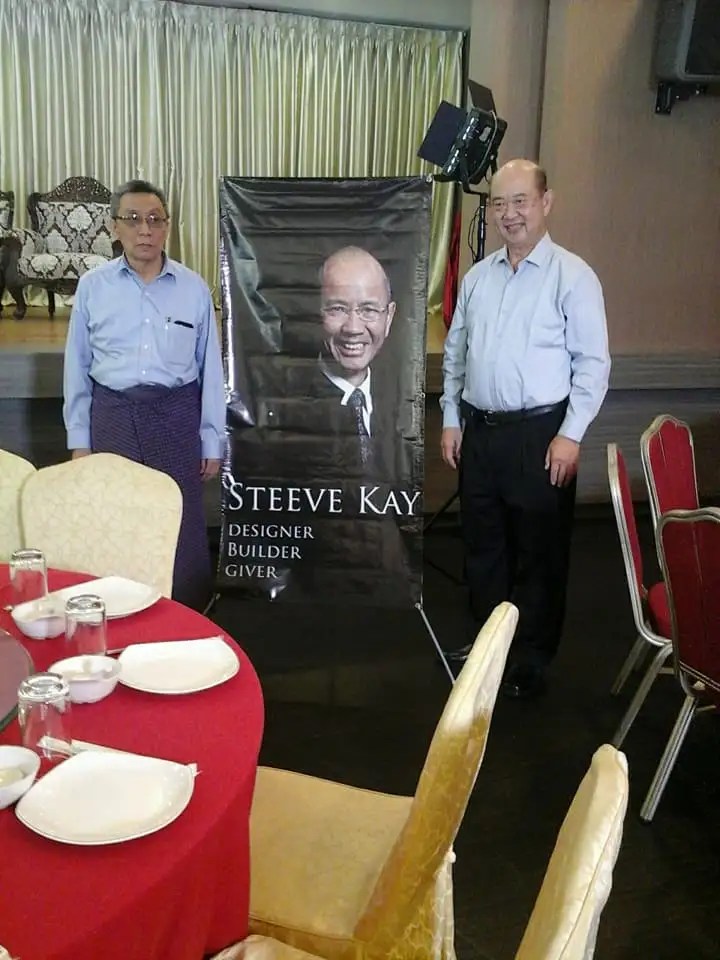
    • In the RIT Alumni International Newsletter, we posted some articles about U Thaung Sein (Steeve Kay, EC70, GBNF) and U Khin Maung Oo (Ivan Lee, M69).
      There were also biographies of some sayas and sayamas, but they need to be updated.
      We welcome readers to enhance existing profiles or submit new profiles.
    U Aung Hla Tun
    Benny Tan