YMCA — Young Men Christian Association It was founded in Britain and then spread to over many countries. Several YMCA’s in the US are credited with (a) the invention of Basketball (b) the invention of Volleyball (c) the promotion of Public Speaking by hiring Dale Carnegie (d) sowing the seeds of Toastmasters International (for Leadership and Public Speaking) via Dr. Ralph Smedley
YMBA — Young Men Buddhist Association It was involved in setting up monastic and/or Vernacular schools (predating the National Schools. It published the “History of Buddhism” by Mahagandayone Sayadaw with illustrations by Saya U Ba Kyi.
Y-junction — a junction type (e.g. two incoming roads merge into one outgoing road)
U Thaung Sein (Steeve Kay, EC70) is a Multiple Golden Sponsor of SPZPs. He told me, “You should not retire. You may re-tire (as in re-threading a tire).We will try to support you and your projects.”
I am retired from working to make ends meet.
Took a few on-line courses (for credit) Too taxing and slow Opted to audit 100+ courses (covering many subjects)
Listen to Blinkist
Listen to Merriam Webster’s Word of the day (WOTD) Podcast
Ride stationary bike for 40+ minutes daily
Write or revise several posts every day.
I am re-tiring as long as my physical and mental health permit.
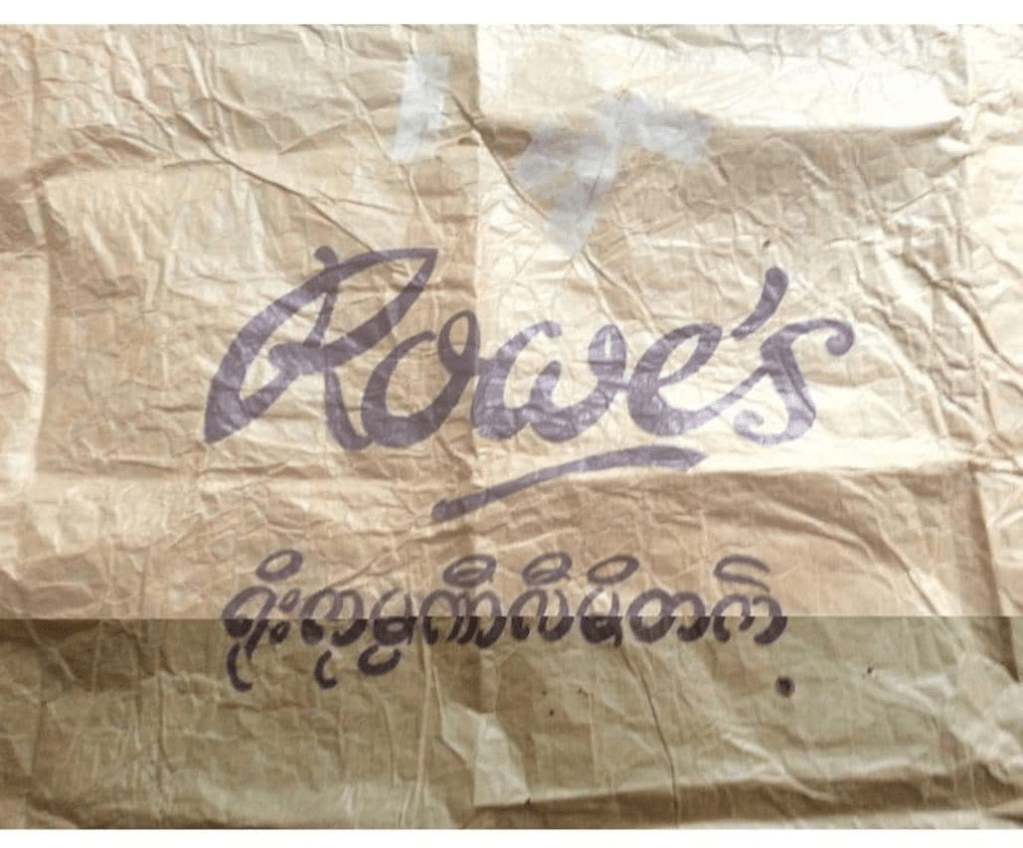
Rowe Co. Ltd.
Before nationalization, Rowe Co. Ltd. was one of the busy shops in Rangoon that offered a wide range of products.
My mom bought a Rayleigh bicycle for me.
Rosie (Mai Khin Nyunt, ChE71) still has a Rowe’s bag.
Serendipity
Some inventions are attributed to Serendipity.
Three notable examples are
Discovery of X-rays by Rontgen
Discovery of Penicillin by Alexander Fleming
3M’s Post-it notes
Three
3-D : Three dimension
3-D Matrix
3-D Model
3-D Photo
3-D Printer
3-layer architecture
Tie
Aequal (in examination result)
Joint champion
Joint winner
Tie Breaker
12-point game in Tennis
Extra holes in Golf
Extra innings in Baseball
Less misses in High Jump and Pole Vault
Lower body weight in Weightlifting
Overtime (selected sports) May need double or more overtime (in Basketball)
Penalty Penalty kicks in Soccer Penalty shootout in Ice Hockey
Terms Some terms (e.g. Class, Intake, HCF) that are used in my posts are defined and elaborated.
Language The are natural languages and programming languages. In our student days, there were only a handful of programming languages. It is important to understand and master concepts.
Meaning Some words have multiple meanings. Meanings change over usage and time. A harmless word in American English might have bad connotation in British English, and vice-versa.
Vocabulary It is advantageous to have a good vocabulary. One may listen to a podcast (e.g. Merriam Webster’s Word of the day).
Luyechun The Ministry of Education ran the “Outstanding Students” program from the Summer of 1964 to 1988.
Class
The term generally refers to the year of graduation.
The Class of 69 refers to the alumni from the academic year 1968 – 69, who graduated in 1969. The Class of 69++ will also include some alumni who took “sabbatical” (“waso”) and graduated a year or two later.
Intake
The term generally refers to the year when the group was admitted to RIT, YIT, or YTU.
Most from the 1st BE Intake of 64 graduated in 1970. Most from the 1st BE Intake of 65 graduated in 1971. The Combined 1st BE Intake of 64 and 65 has held Reunion and Acariya Pu Zaw Pwe for nearly two decades.
Some Intakes unfortunately lost three years of their schooling, since the institute was “closed” for three years (from 1988 to 1990).
Burma Institute of Technology (BIT)
The engineering school moved to the Gyogone Campus in 1961. BIT was still under the aegis of Rangoon University. U Yone Mo was Dean, Faculty of Engineering, Rangoon University.
Note: AIT (Asian Institute of Technology) might have been dubbed SEATO (South East Asian Treaty Organization) School of Engineering (or equivalent).
Rangoon Institute of Technology (RIT)
BIT was renamed as Rangoon Institute of Technology in 1964.
The intention was to have Mandalay Institute of Technology [and more].
Under the then New Education System, RIT became an independent Institute along with other professional Institutes. Rangoon University was renamed as RASU (Rangoon Arts and Science University)
I am not sure why it was not renamed as BIT (Rangoon Campus) a la IIT [Indian Institute of Technology]
Yangon Institute of Technology (YIT)
Another name change occurred to be in line with the “new” Naming Policy to refrain from using names from the Colonial Era.
Note: The Naming Policy did NOT have a grandfather clause. Some “old” books could not be re-published without the name changes. For example, “Trials in Burma” was forced to be re-titled “Trials in Myanmar”.
Yangon Technological University (YTU)
There was another name change to YTU.
It may be to sound similar to NTU in Singapore.
Swel Daw Yeik
It is a synonym for RIT and the engineering schools preceding and succeeding it. The term became established at the Golden Jubilee Celebrations of Rangoon University in 1970, when the Ah Nu Pyinnyar Shins of RIT took part as “Swel Daw Yeik Troupe [Ah Nyeint]”.
During the Adhamma Era, Swel Daw Bins were razed from the so-called “Tha Bone Kyaung” (which is a disparaging term to describe “Thamudaya Kyaung“).
With the dawning of the “Pwint Linn Era“, 50 Swel Daw Bins were planted to commemorate the Shwe YaDu (in 2014).
There are many artifacts with “Swel Daw Yeik” in their name and spirit. They include : Commemorative Swel Daw Yeik Sar Saung Commemorative Swel Daw Yeik Magazine Swel Daw Yeik Foundation (SDYF)
Health Care Fund (HCF)
There are several HCFs. They include :
Steeve and Helen Kay Heath Care Fund for RIT Sayas and Sayamas
U Khin Maung Tun’s Family’s Eye-care for RIT Sayas and Sayamas
SDYF (which now also handles to two funds described above)
Class-wide HCFs (e.g. Class of 69, Class of 70 & 71, Class of 72, and Intake of 83)
There has been some “changes” with to the Health Care of Sayas and Sayamas.
Hospitalization still has the highest priority
Case-by-case consideration for sayas and sayamas who have to visit clinics frequently
Eligible sayas and sayamas (age 60+) can have Annual medical check ups
If funds are available, spouses of eligible sayas and sayamas can also have Annual medical check ups.
Alumni Association of RIT/YIT/YTU (RITAA)
The Association has provided “SAYA’S CORNER”. Tea and coffee are served.
Life membership dues is K60000.
The Association is coordinating the “Library Modernization Project”
Language
There are natural languages (e.g. English, French, German) and programming languages (e.g. Java, Scala).
Context
Noam Chomsky, a famous linguist, defined the Chomsky Hierarchy for languages and grammars.
Natural languages are usually Context Sensitive. A word often has multiple meanings based on the context.
Most programming languages are Context Free.
Language
A language has
Syntax rules for forming well defined constructs Sample syntax : A sentence is a sequence of (a) Subject (b) Verb (c) Object.
Semantics meaning
Pragmatics usage
We had to study English Grammar books (e.g. Wren and Martin) and Myanmar Thaddar by U Pe Maung Tin.
The Burmese language has a structure similar to the Japanese language, but has a structure quite different to the English language.
Kyundaw Kyaung Thoe Thwa Thee (in Burmese)
I School To Go (word for word translation into English is not correct).
I Go To School (slightly different structure is needed for the correct translation).
Meaning
The meaning of words can change with time.
In the early days, a “computer” is a person who computes (e.g. tables for firing artillery). Even in some NASA projects, astronauts ask expert mathematicians (including a black female) to compute trajectories to check against the calculations made by electronic computers in the space capsule.
Also, a “compiler” is a person who compiles data (e.g. historical data).
During our UCC days, several computer books were ordered through the Trade Corporation (and related departments). Some one sent a book “Compiler Construction for Digital Computers” to the Ministry of Construction, and another book “The Anatomy of a Compiler” to the Institute of Medicine.
iPad and iPhone are designed and manufactured by Apple.
The trademark iPad belongs to Fujitsu. Former colleagues of mine worked on Fujitsu’s Intelligent Pad (iPad). The trademark was transferred to Apple.
The trademark iPhone belongs to Cisco, which experimented with “Internet Phone” (or equivalent). The trademark was transferred to Apple.
Vocabulary
Children are not shy and tend to pick up words — often in multiple languages — quickly and easily.
As people grow older, most tend to live within their comfort zone.
Such people probably add only 10 – 20 new words a year.
Effort
To expand or refine one’s vocabulary, one must take extra effort.
In our younger days, we learn from a Reader’s Digest section “It pays to increase your word power” by Wilfred Funk, co-compiler of a dictionary.
We read Vocabulary Books which cover a lesson a day for three to six weeks. We also get tested along the way.
With the rise of Broadcasting and Internet, it is much easier to grow one’s vocabulary.
We can
subscribe to Merriam Webster for “Word of the Day”.
listen to “Word for the Wise” by NPR (National Public Radio).
use “Visual Dictionary” and “Visual Thesaurus”.
Lu Ye Chun
Beginning
The Lu Ye Chun (Outstanding Student) Program was established in 1964.
Eligible students from 7th Standard to 10th Standard were chosen to attend the Ngapali Lu Ye Chun Camp.
The Lu Ye Chuns include
Ko Win Aung (M70)
Ma Pwint Than (EP71)
Ko Kyaw Zaw (EP72)
Ko Win Myint (UCC)
Extension
The Lu Ye Chun Program was extended in 1965 for eligible students from Universities and Institutes.
There were three Camps (a) Inlay Camp for high school and university students (b) Ngapali Camp for middle school students (c) Rangoon “Combined” Camp
Inlay Lu Ye Chun
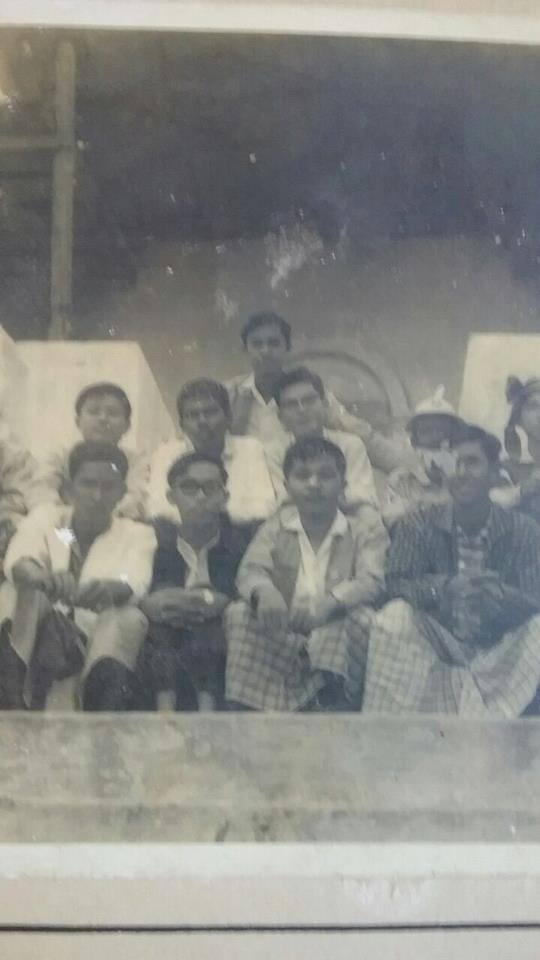
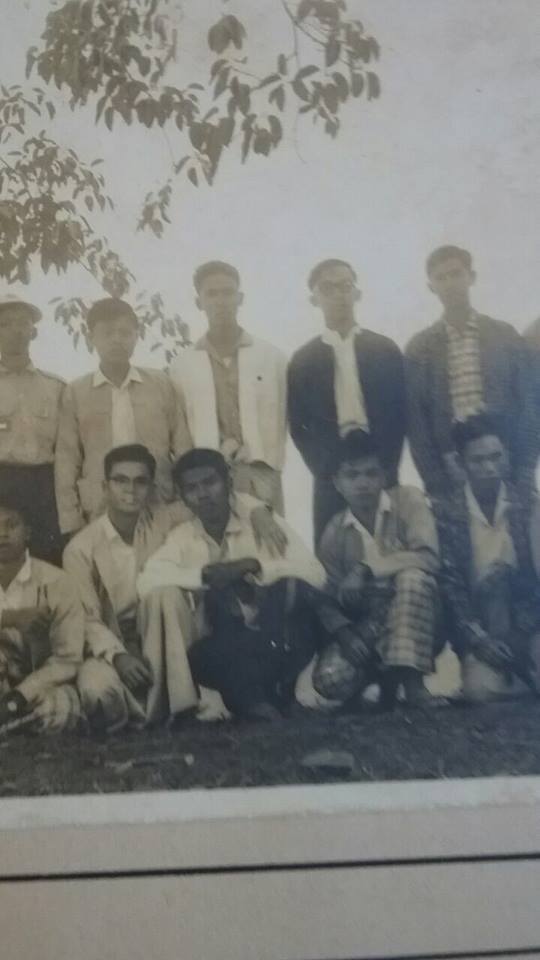
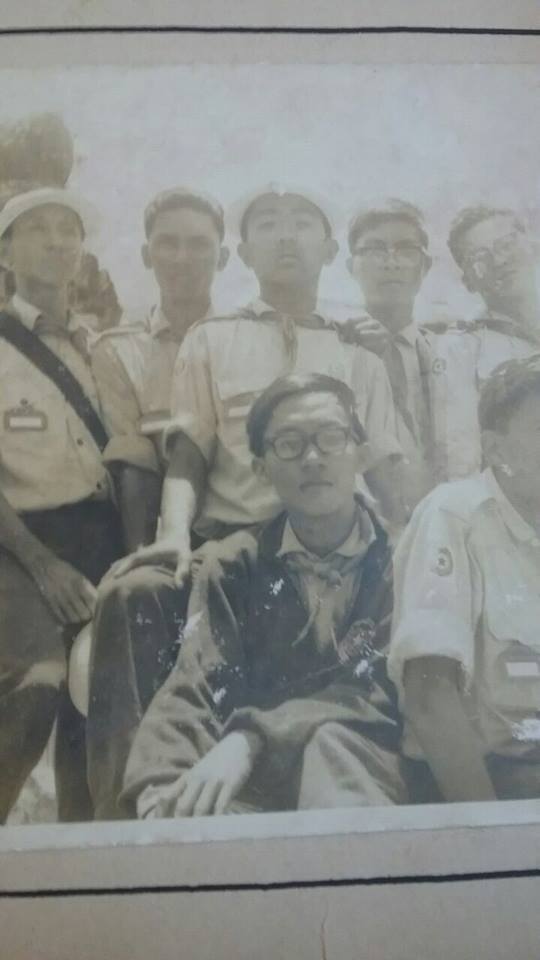
Inlay 1965 aInlay 1965 bInlay 1965 cInlay 1965 d
I was selected as RIT Lu Ye Chun for the Inlay Camp along with Ko Sein Shwe, Ko Zaw Min [Nawaday] and Ma Khin Than Myint Tin (Margaret).
Grapevine says that a 3rd BE student had schedule conflicts to attend the Lu Ye Camp.
As a senior student, Ko Sein Shwe was given one Bar. I received three Stripes. Margaret received two Stripes.
Ko Kyaw Sein Koe (Victor, GBNF), Ma Anita Aye Pe, Ko Khin Maung U and Ma Than Than Tin (Cherry) were selected as Lu Ye Chun for IM(1).
Ko Soe Aung (IM2, elder brother of Ko Soe Myint [UCC], Ko Aung Kyee Myint (Agri), Ko Tun Naung (BDS), Ko Min Oo (Mathematics), Ko Ye Myint (Chemistry), Ko Myint Thein (Physics), Ko Soe Lwin (Physics), and Ko Tin Hlaing (Lay Dwin Thar Saw Chit, Burmese) were Lu Ye Chun for their respective disciplines.
Those from Matriculation include Ko Win Myint, Ko Aung Win, Uttam Singh, and Ma Pwint Than. They joined RIT.
Others include : Ko Aung Shwe (brother of Tekkatho Phone Naing), Ko Than Sit (GBNF), Ko Aung Kyaw Nyunt, Ko Aung Myint, Ko Thein Lwin, and Nelson Kaw.
Multiple Lu Ye Chun
Some were selected Lu Ye Chun for two or more years. They include
Dr. Khin Maung U
Dr. Thynn Thynn Lin
Dr. Pe Thet Khin
Camp Staff
In the beginning some officials from “Lu Nge Ye Yar” served as Camp Commander and staff (for Logistics).
Selected University teachers (e.g. Dr. Daw May May Yi, Daw Po) and High School teachers (e.g. U Aung Gyi, U Khin Aung) were assigned to manage the Lu Ye Chun students. Some (e.g. U Than Tun Aung Hlaing, U Khin Maung Htwe) were chosen to lead some activities (e.g. Volleyball).
A medical doctor (e.g. Naing Tint San) was assigned to take care of the health of the Camp attendees.
Later, Sayagyis (e.g. U Ba Toke) served as Camp Commander.
Visiting Lecturers
U Thein Han (Zawgyi) and Dr. Nyi Nyi are among the Visiting Lecturers for our Inlay Camp.
Many years later, I would be invited to be a Visiting Lecturer at the Ngapali Camp along with Saya U Kyaw Myint (Physics, DHE).
End
The Lu Ye Chun Program ended in 1988.
Reunion
A few years back, a formal Reunion of Luyechuns from 1965 – 1988 took place.
Ko Win Aung and Ma Pwint Than can provide the details.
I met Saya U Aung Win at Yangon SPZP.
I had phone contact with Dr. Uttam Singh (known as Uttam S Gill, NASA).
I had a surprise reunion with Ko Win Myint at the dinner hosted by Ko Wai Lwin and Ko Nyan Tun U for Sayagyi Dr. Aung Gyi and selected sayas attending the SPZP in Yangon. Ko Wai Lwin invited Ko Ohn Khine and me to attend the gathering.
Bogyoke Win Myint was then Deputy Minister of Construction. He told me that he was inspired by Ko Sein Shwe to join RIT and that he had published some books.
I also met Ko Htun Aung, spouse of Ma Pwint Than. All three of us met again at the Exhibition Booth by U Myo Myint. Ko Htun Aung introduced his brother “Maung Hmaing” (author of the RIT incidents).
Teaching is only one aspect. A teacher learns by teaching and receiving feedback from the students. A teacher should be a life long learner.
Learning is another aspect. We should not encourage Rote Learning and mindless repetition. “Learning how to learn” and similar courses propose efficient and effective techniques.
Degree
Liberal education is usually offered at the Bachelor’s level.
A university degree was necessary for getting decent jobs. Now, there are some companies that do not mandate a university degree for selected jobs.
Disciplines
In the beginning, there were no computers and no Computer Science. Among the computer pioneers were engineers, mathematicians, physicists, psychologists, and linguists.
Edgser W. Dijkstra, who won the ACM Turing Award (equivalent of Nobel Prize in Computer Science), had to put “Theoretical Physicist” in his marriage license instead of “Programmer” or “Computer Scientist”.
The same is true for any emerging discipline.
Research and Development transcends multiple disciplines. It requires collaboration.
Main Facebook pages
For relatives and close friends
For not-so-close friends
Life Long Learning
RIT Updates
Member of selected pages
Old Burma
RIT Updates
Lifelong Learning
Hla Min 2024
Myanmar 2024
I used to be a member of the following:
ကံ့ကော်မြေ (ရာပြည့်တက္ကသိုလ်)
စကားပရိယာယ်
စွယ်တော်ရိပ်ဖေါင်ဒေးရှင်း
NorCal RITAA
P.B.R.S Group
RIT 69ers
Team Old School IT
YUBC Old Members
Buddhism Q&A
Proper use of “Like” button
Some users use the “Like” button indiscriminately.
Puzzled to see Likes in an Obituary posting. Shouldn’t one be sad?
Before clicking “Like”, check if the posting is current or old, and determine if the contents are really likeable.
Malware
Malicious software industry is responsible for losses (in down time, data corruption, identity theft) in the billions.
According to one report, the industry is more profitable and safer than the drug dealing.
The penalty of offenders for malicious software is “peanuts” (e.g. little or no jail time) compared to drug dealers (e.g. life imprisonment and death penalty) in most countries.
Option
One should be aware of “opt-in” versus “opt-out” options.
Many do not read “fine print”.
Retire vs. Re-tire
U Thaung Sein (Steeve Kay, EC70) is a Multiple Golden Sponsor of SPZPs.
He told me, “You should not retire. You may re-tire (as in re-threading a tire). We will try to support you and your projects
I am retired from working to make ends meet.
I am re-tiring as long as my physical and mental health permit.
Took a few on-line courses (for credit) Too taxing and slow; Opted to audit 100+ courses (covering many subjects)
Listen to one Blinkist every day
Listen to Merriam Webster’s Word of the day (WOTD) Podcast every day.
Ride stationary bike for 40 minutes every day.
Write or revise several posts every day.
Salutation
Context and culture dependent.
We call some old unrelated people as “Uncle” and “Auntie”.
At St. Paul’s High School, we call our sayas without the formal U. e.g. Saya Sein
I was reprimanded by a reader for writing Saya Aung Khin instead of Saya U Aung Khin or Sayagyi U Aung Khin.
A visiting German wanted to be addressed as “Professor Doctor” (not just Professor or Doctor).
Saya Allen Htay was told not use “Mr” in Netherlands. He was asked to use “Ingr” (for Engineer).
Early surgeons in the UK were not necessarily doctors. So they did not force people to address them as Doctor
People who have Honorary Doctorates usually put “Honoris Causa” (meaning the degree was awarded for esteem).
Speed and Scope of Writing
A friend said, “You write too fast and too much. Slow down.”
A few said, “We have read every post”.
One said, “Cover topics of interest to the general reader, not just engineers and scientists”.
One can please some readers all of the time, and all readers some of the time, but one cannot please every reader all of the time.
I am just disseminating the teachings of Thin Sayas, Myin Sayas, Kyar Sayas
Mega — e.g. 1 MB (Megabyte) = 1024 x 1024 bytes (more than a million). This has roots in using the Binary Number System in computers.
Master — e.g. M.Sc. or M.A.
Medical — e.g. MS (Medical Superintendent)
Medicine — e.g. MD (Doctor of Medicince)
Management — e.g. MIS (Management Information Systems).
MI — Machine Intelligence; Military Intelligence
MIT — Massachusetts Institute of Technology) in the USA. Professor Horwood (MIT) came to the University of Rangoon as a Visiting Professor. Sayagyi U Ba Hli proposed the Twinning Program, and Professor Horwood helped implement on the MIT side by accepting Burmese students for undergraduate and graduate study.
MIT — Mandalay Institute of Technology in Myanmar. BIT (Burma Institute of Technology) was renamed as RIT (Rangoon Institute of Technology) to allow engineering institutes to be opened in Mandalay and other cities.

 HlaMin