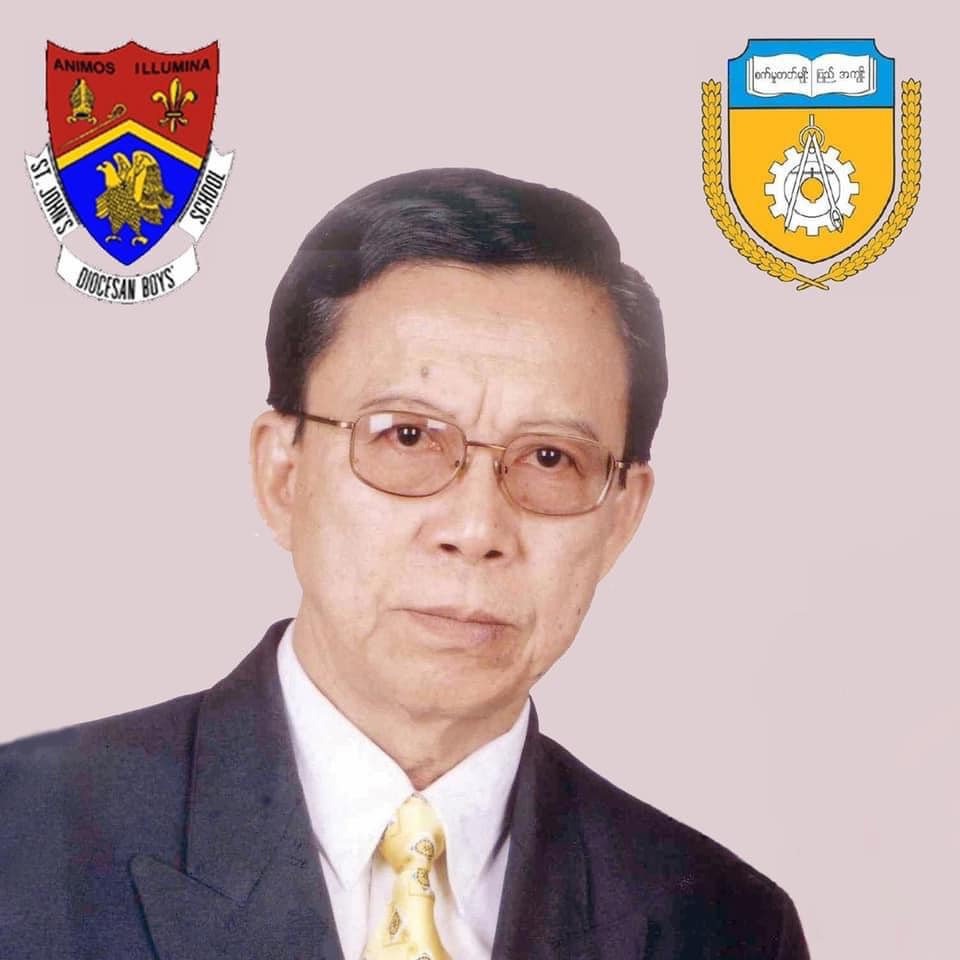
U Khin Maung Zaw (EC76) commented on my post on “Disaster“.
No matter if there is a somewhat connection with the ‘climate change‘ concept, the natural disasters, storms/earthquakes/tsunamis are getting as often and more powerful in the past several years. These has caused severe damaged to many lives, killed, injured, livelihood wiped out among others.
In the United States, the Federal Emergency Management Agency (FEMA), which covers these emergencies have discovered that they alone albeit budget crunch could not handle each and every aspect of the damages, They are now encouraging, and working with local authorities, city/county/state on many aspects of the disaster preparedness and recovery process and procedures.
First, there is a FEMA App on all mobile platforms, where one can go through subscribing Alerts, Anticipate/Prepare for any disasters, Disaster Resources et al. In US, various regions have differing disaster, for example Washington State where I live, we have to be prepared for major earthquakes but not for Hurricanes etc. The local authorities have classes, training sessions, drills on where/how/what/who, the usual five ‘W’s on many possible disasters. My city, Kirkland has multiple levels of CERT, Community Emergency Response Team, classes, trainings, intensive training/classes for leadership levels, regular sync ups/meetings etc.
They are also aware that not all local/state/federal could communicate well in the cases of disasters due to proliferation of different communication equipment and trying to alleviate the issue.
One very interesting discovery they learned from the mega-disasters past couple of years is that the previous assumptions that they had for the preparedness were no longer adequate. The old assumption was that you need to have at least three day supply of food/water/first-aid – basic essentials. In the recent mega-disasters, they discovered that there are many instances no rescuers could get to you for more than a week or so, the new thinking/suggestion is that you need to have at least 2 weeks stock of live essentials. food/water/waste management/radios/batteries etc. There is also a movement where rather than you do it for yourself and/or your family, your neighborhood would pool resources in a commonly accessible area, like one’s spare space in a garage, you could store beds/cots/water tanks/medical supplies for multiple family etc. We live in a place where rain is given so tents/ponchos are a must. Dehydrated food, which could last 25+ years or so could be stored there.The city have all these info, with maps, co-ordinate with all authorities in the case a disaster,
I could go on and on as I went through the very basic level of CERT, and am thinking of week long class/training.
There is a consensus assessment that rescuers could not reached to many victims in major disaster where roads, telecommunication might be devastated. Seattle, Kirkland, Bellevue, Redmond and many other cities in and around Puget Sound, Western Washington where life is way overdue for major earthquake.
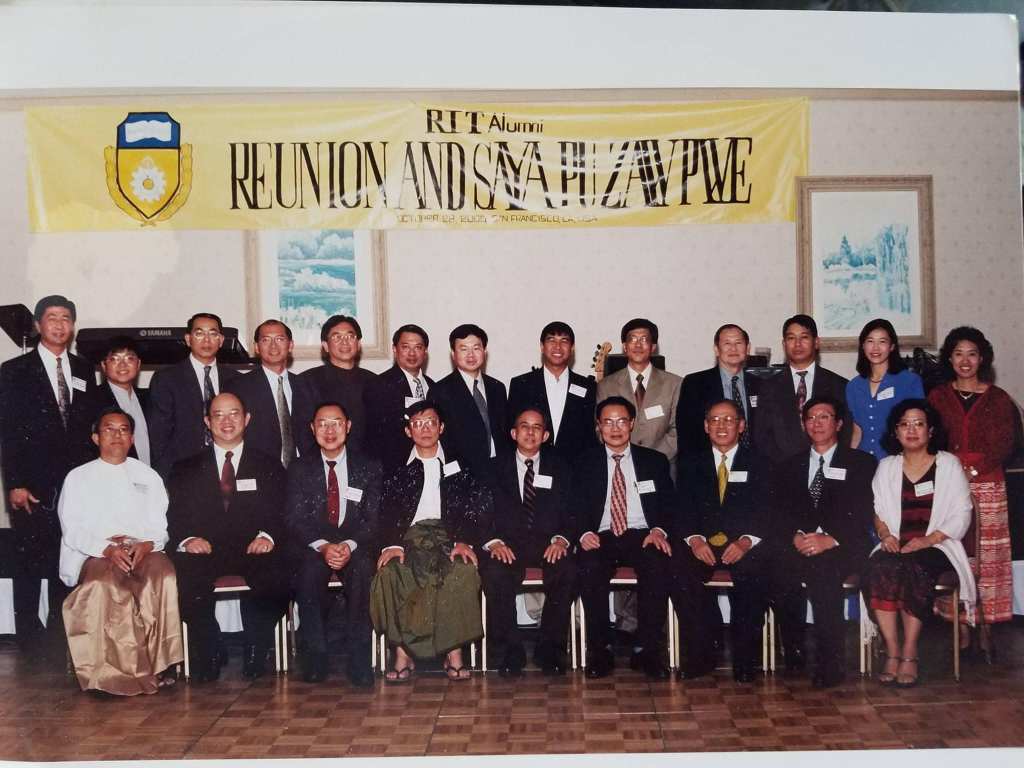
The first ever gathering of RIT Alumni in Singapore took place at NTU Lecture Theatre, Singapore, on 13 April 2001 (Thingyan Eve).
A pamphlet was distributed to all who attended the ceremony full of songs and dances to mark the Burmese new year.
This gathering was also done with the intention to hold a RIT SPZP in Singapore in 2002.
SPZPs in Singapore
Singapore alumni hosted
SPZP-2002 in December 2002
SPZP-2007 in April 2007
SPZP-2010 in December 2010
Monthly Gathering of Seniors
Singapore
U Thein Lwin (EE, GBNF) is an alumnus of Lehigh University, USA. He taught at RIT and Singapore Polytechnic. He is the elder brother of U Myo Myint (ChE from USA), U Kyi Lwin (George, C67), U Tint Lwin (Daniel, M69) and U Thet Lwin (Henry, EE72).
Daw May Than Nwe (GBNF) stood first in Physics Honors in 1962 and joined the faculty as Assistant Lecturer.
Saya & Sayams passed away within a span of a few months.
U Tu Myint (M) studied Bachelor & Masters in the UK. He supervised the M73 students for the Hovercraft Project. He taught at RIT and Singapore Polytechnic.
U Kyaw Sein (M65, GBNF) was a moderator of Engineering Groups in Facebook.
U Tint Lwin (Daniel, M69) is Retired Associate Professor of NTU. He helped the alumni to have meetings at NTU.
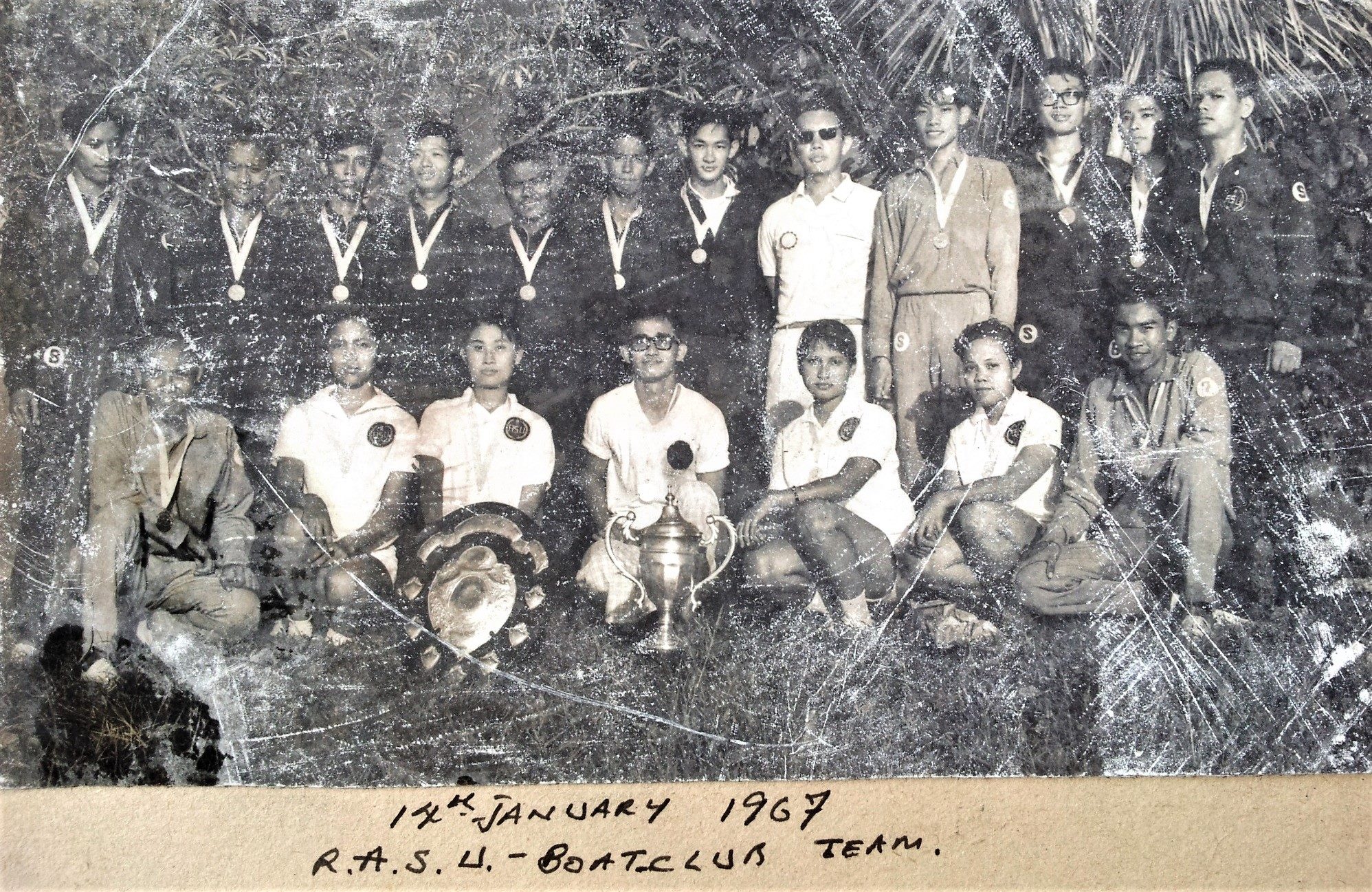
U Myint Thin (M71, GBNF) is RIT Luyechun. He represented RIT in Rowing. He sponsored Sayagyi U Ba Than to attend SPZP-2007 in Singapore.
U Nyan Win Shwe (M72) is a Past President of the Burma Club. He chaired SPZP-2007.
U Tin Aung Win (M73) attends gatherings in Singapore. He joined U Tint Lwin to meet Saya U Ba Than (when he was visiting Singapore for medical check up).
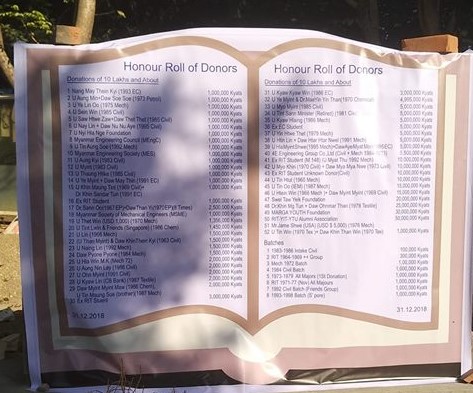
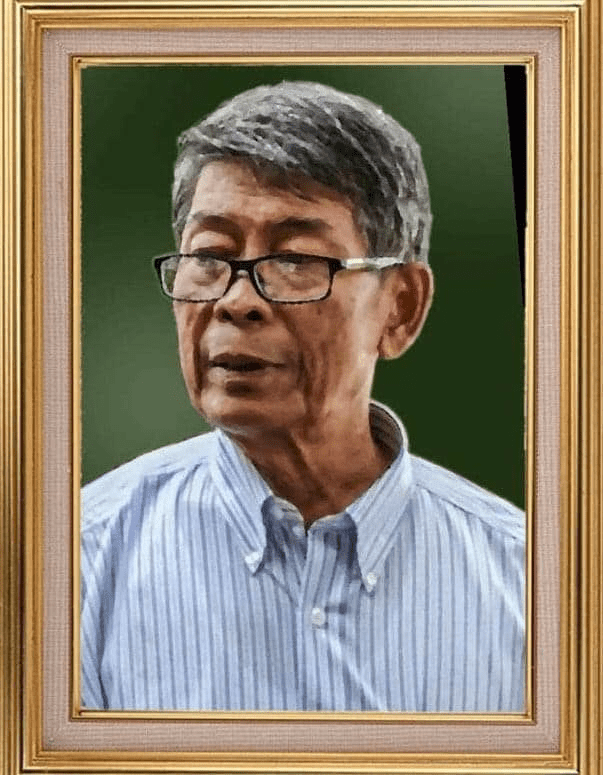
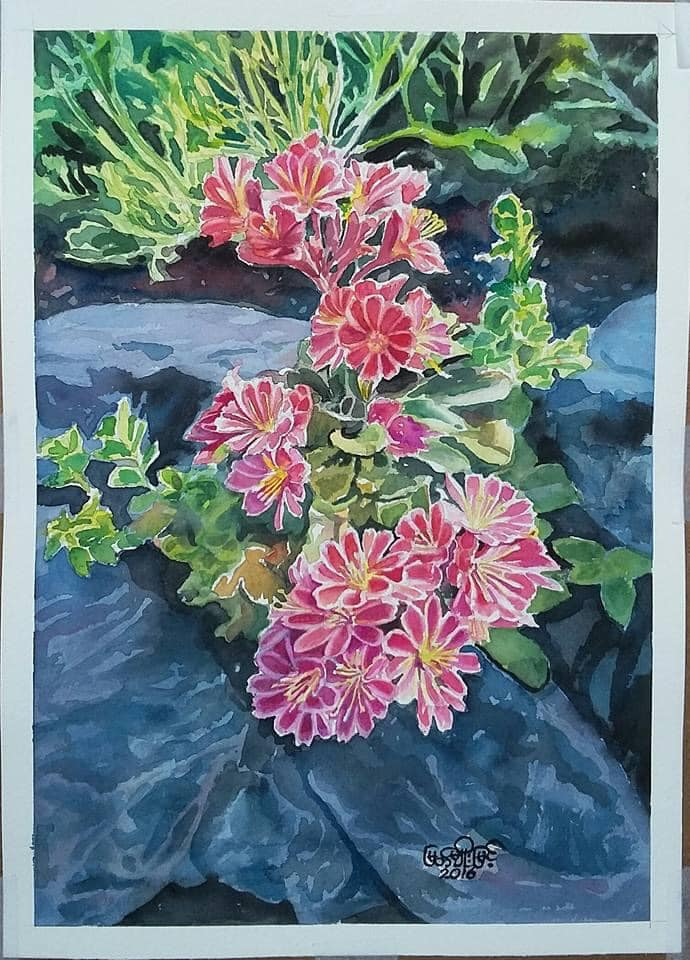
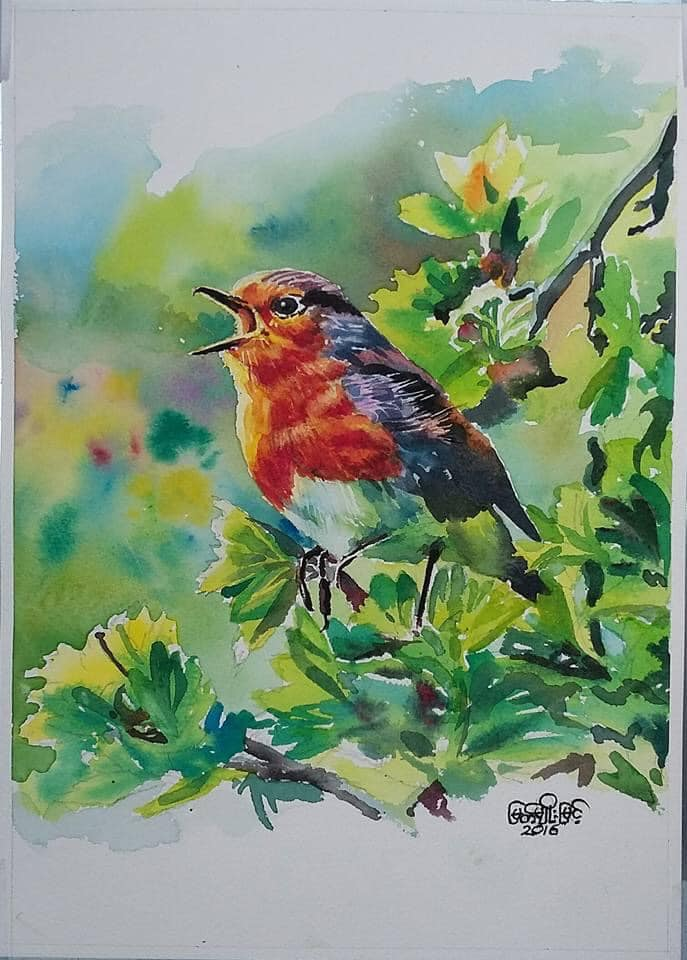
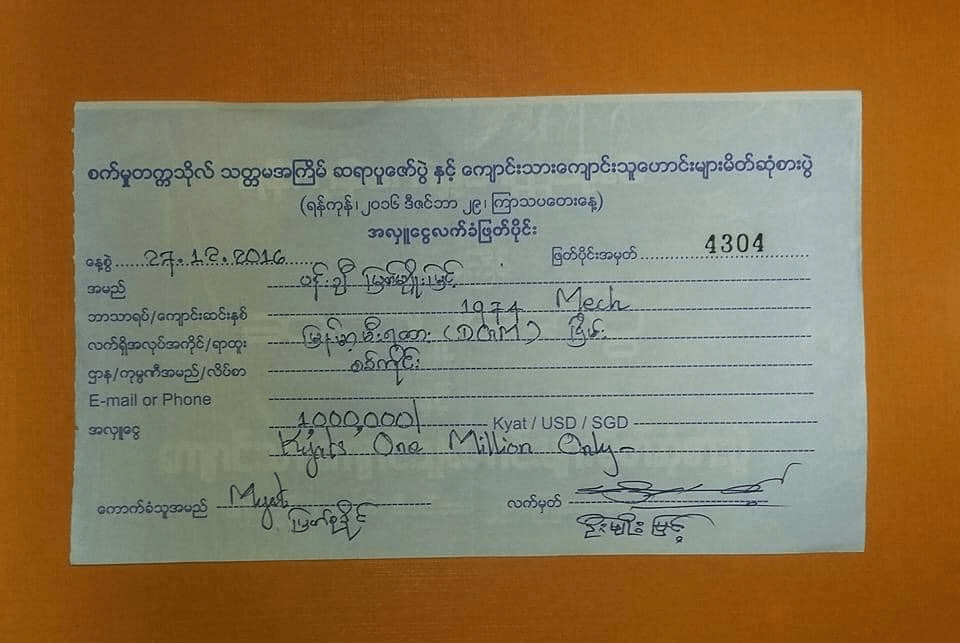
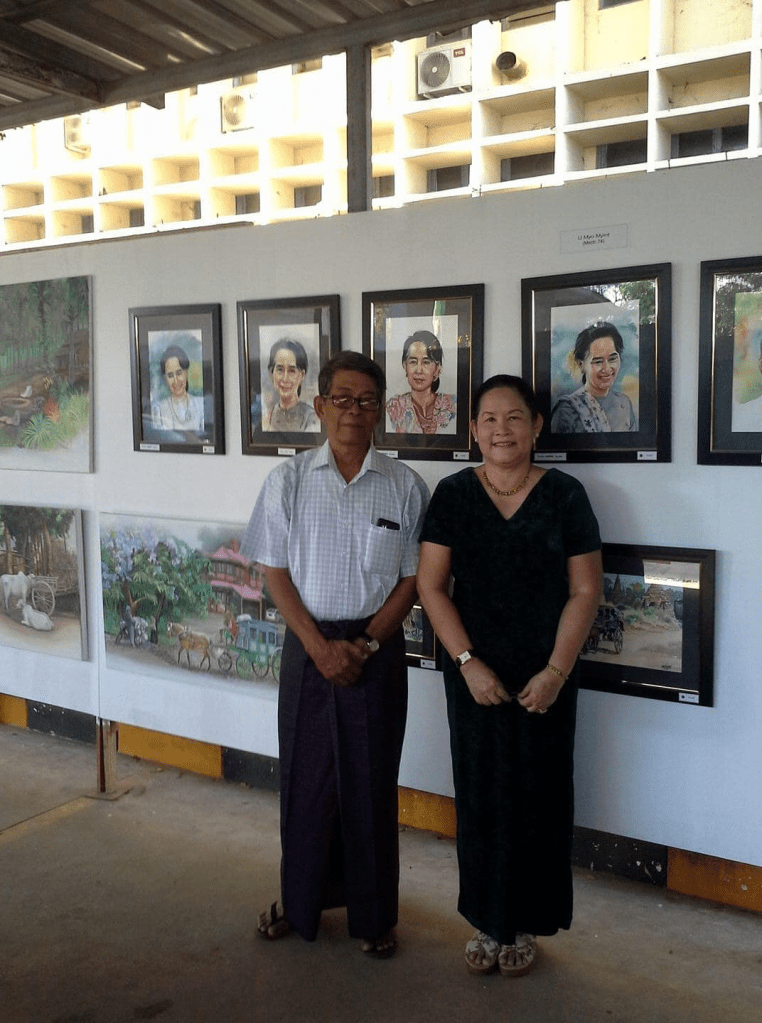
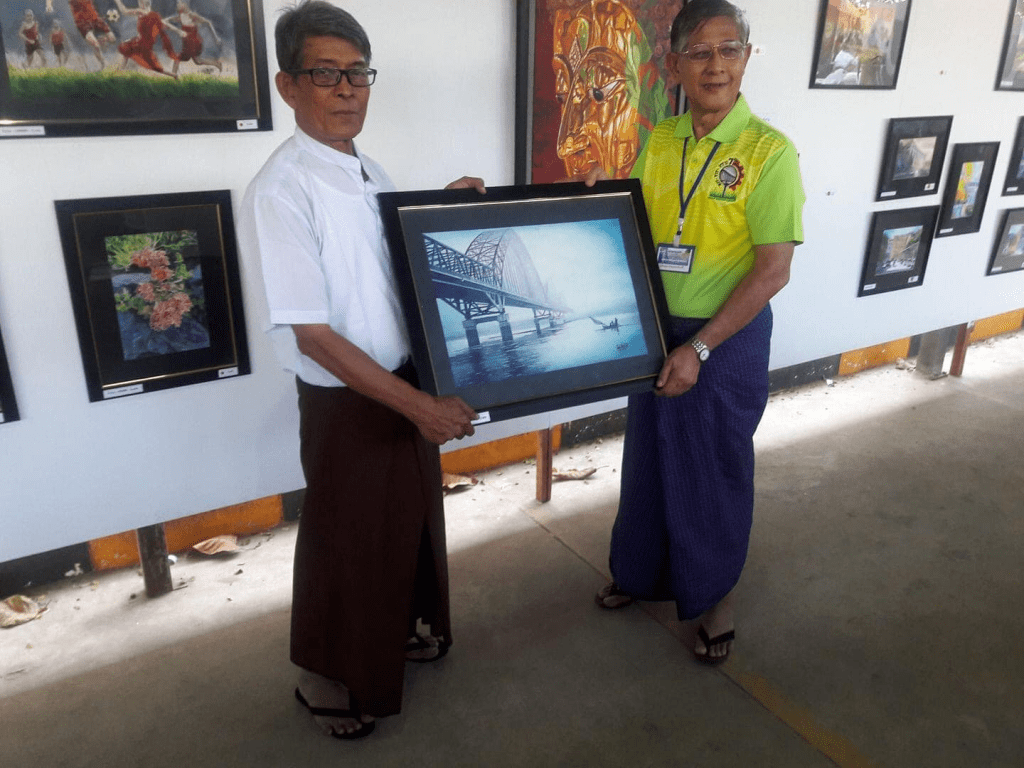
He had an Exhibition at SPZP-2016 and donated to SDYF and YTU Library Project.
DonationGalleryWith U Myint Pe
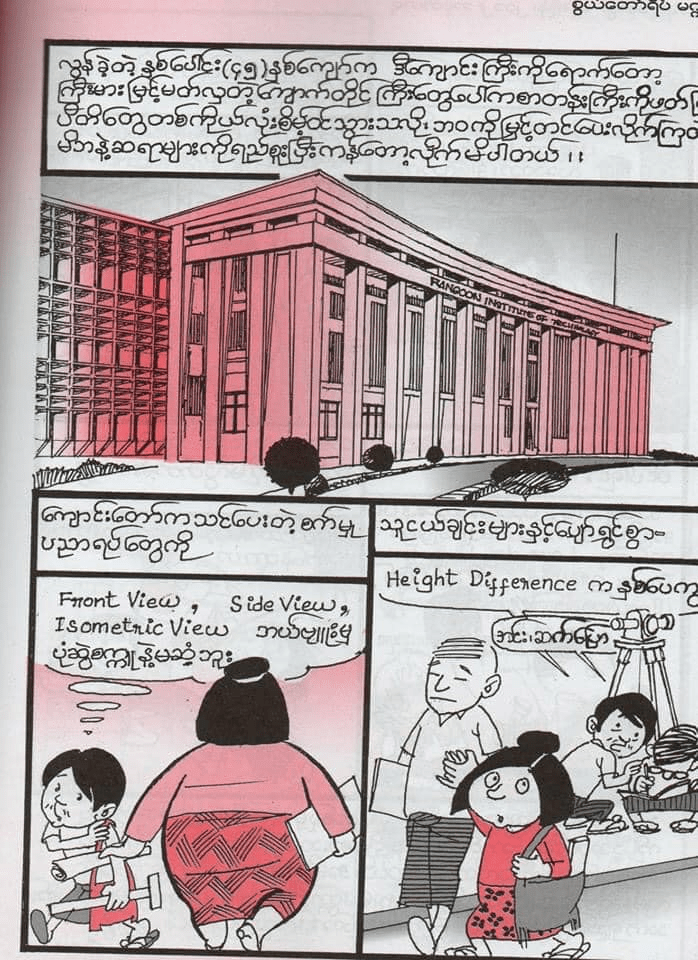
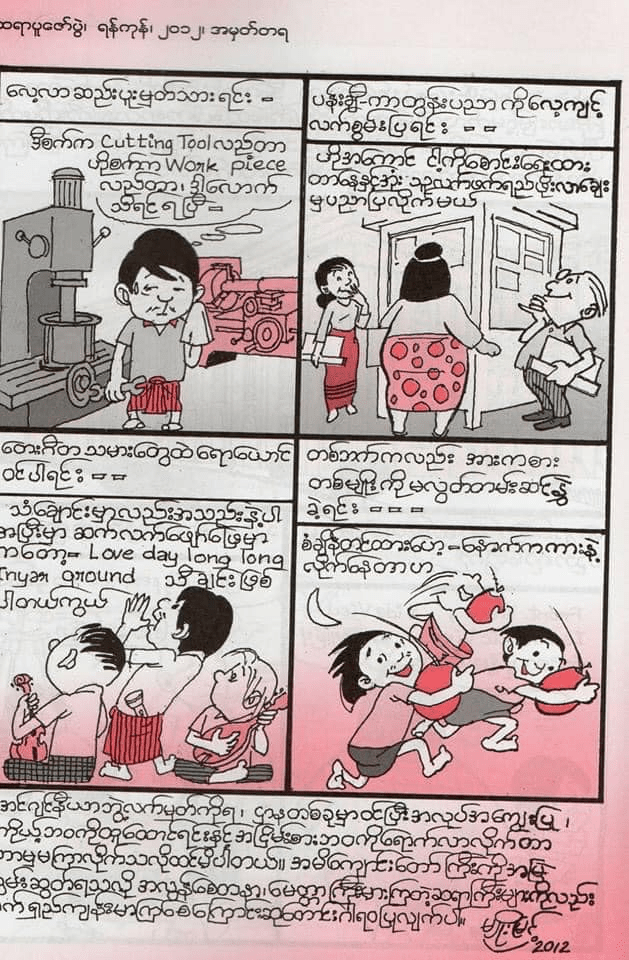
Cartoons
He drew Cartoons.
Cartoon 1Cartoon 2
Design
He designed Covers for RIT Annual Magazines and Swel Daw Yeik Magazines.
Pon Tu’s
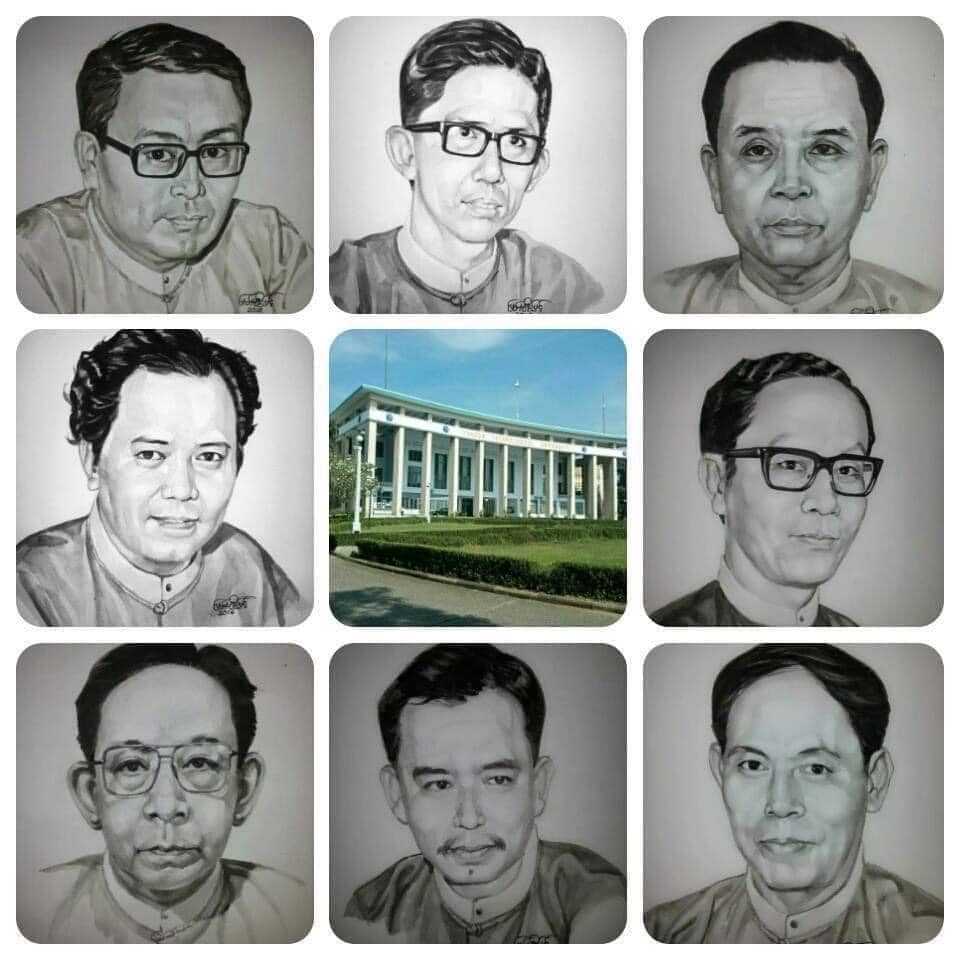
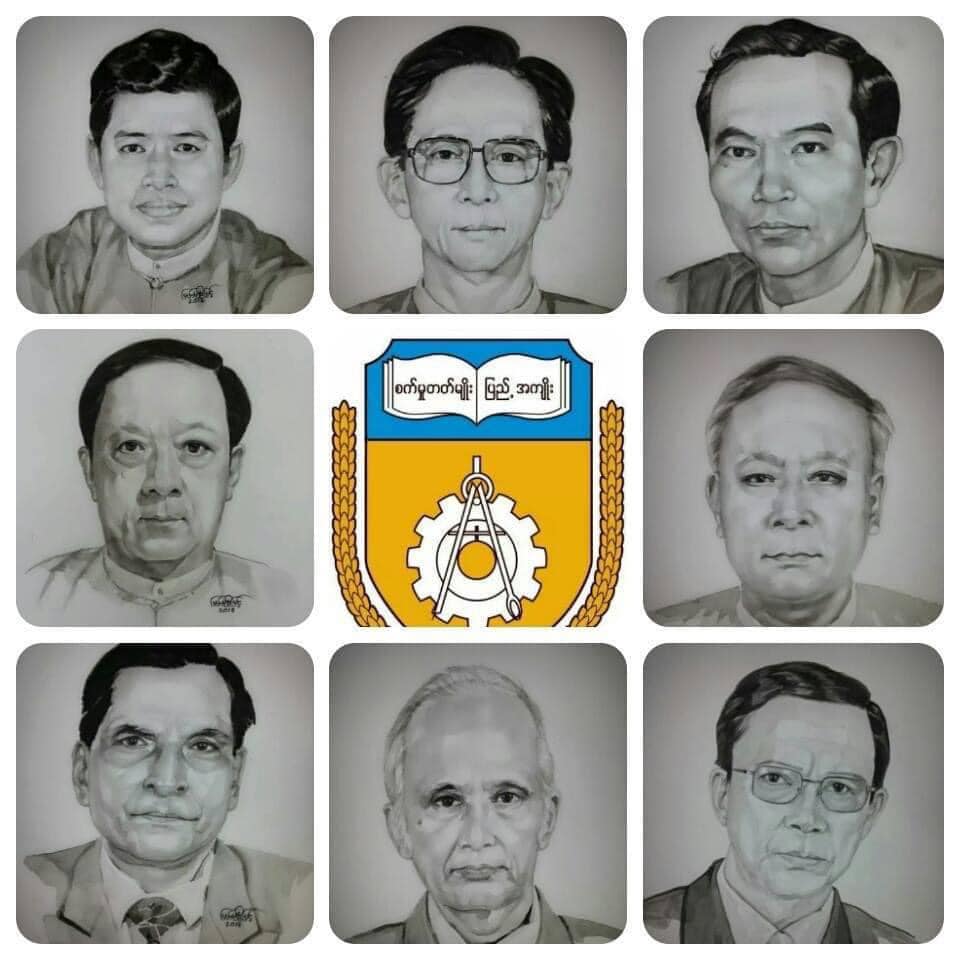
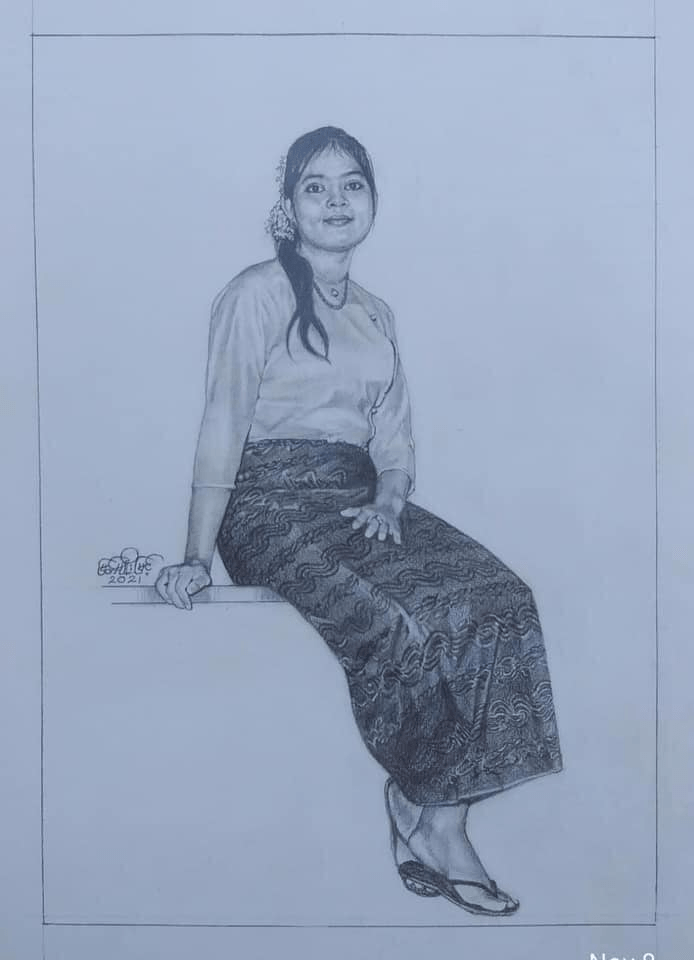
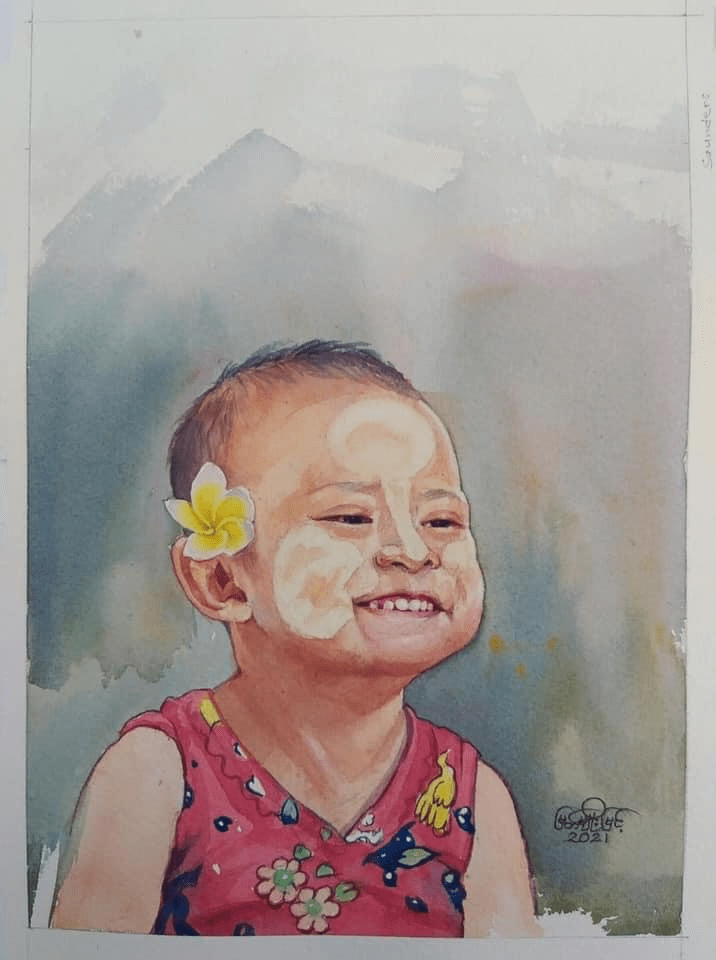
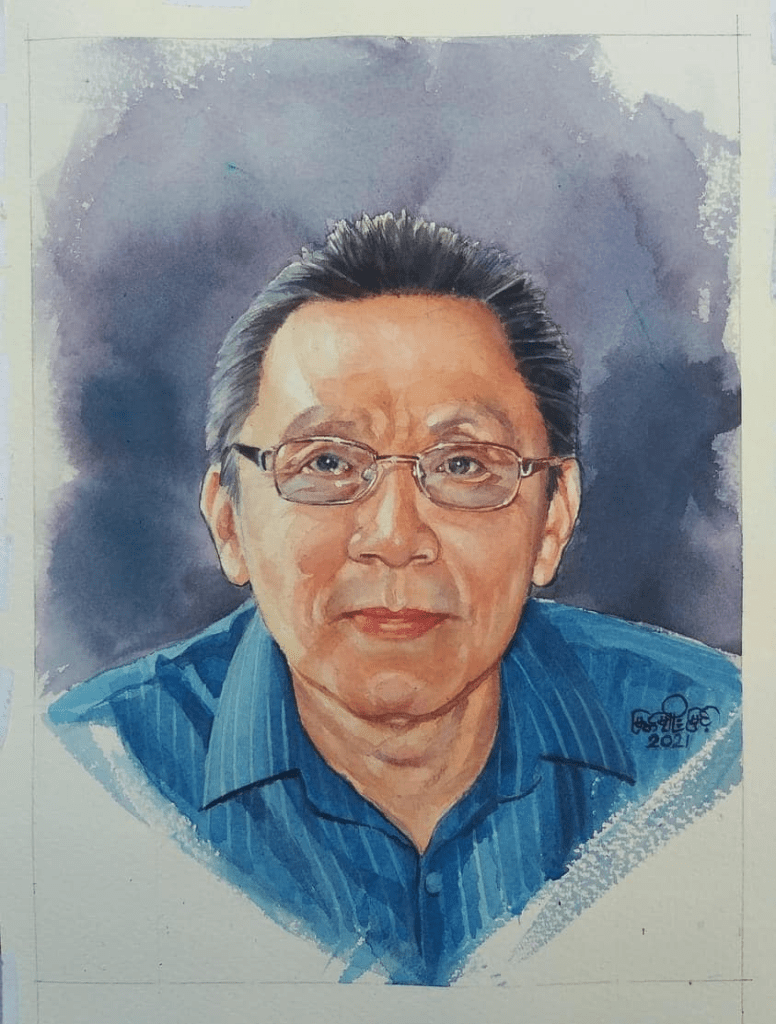
He drew Pon Tu’s of many sayas and sayamas.
He could not find photos of some sayas.
He had to stop when his painting materials ran out.
Pon Tu 1Pon Tu
Most Pon Tus were handed over at RIT gatherings (e.g SPZPs).
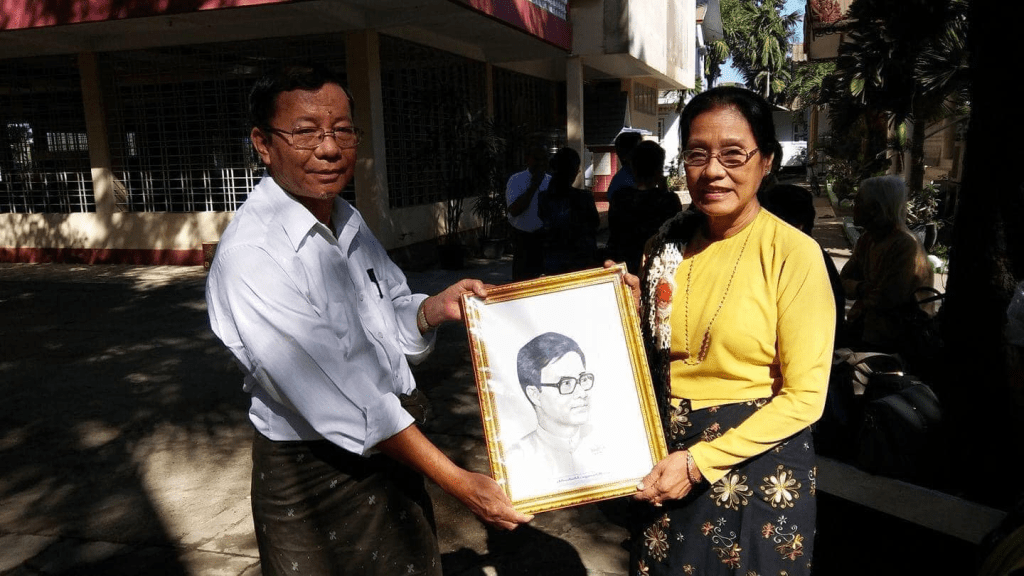
On behalf of Bagyee Myat Myo Myint, Saya U Nyunt Htay (Met73) handed over the Pon Tu of Saya Dr. Khin Maung Win (Met) to Daw Khin Than Nwe (T62, Saya’s spouse).
Pon Tu of Dr. Khin Maung Win (Met)
He also handed over the Pon Tu of Saya Dr. Aung Gyi to Saya at iNapa Winery gathering in 2015.
Saya U Kyaw Sein (M65, GBNF) archived Pon Tu’s. Saya U Tin Lin (ChE72) annotated the Pon Tu’s. He also grouped photos and posted them.
U Kyaw SeinU Tin Lin
Saya U Aung Myaing (ChE72) and team created a Musical Video using the Pon Tu’s and photos to pay homage to the Sayas.
Saya U Aung Myaing (ChE72) and Daw Gyn Yu (ChE72) provided some materials needed for the paintings. They also helped U Myo Myint during his medical check up in Bangkok.
Bangkok
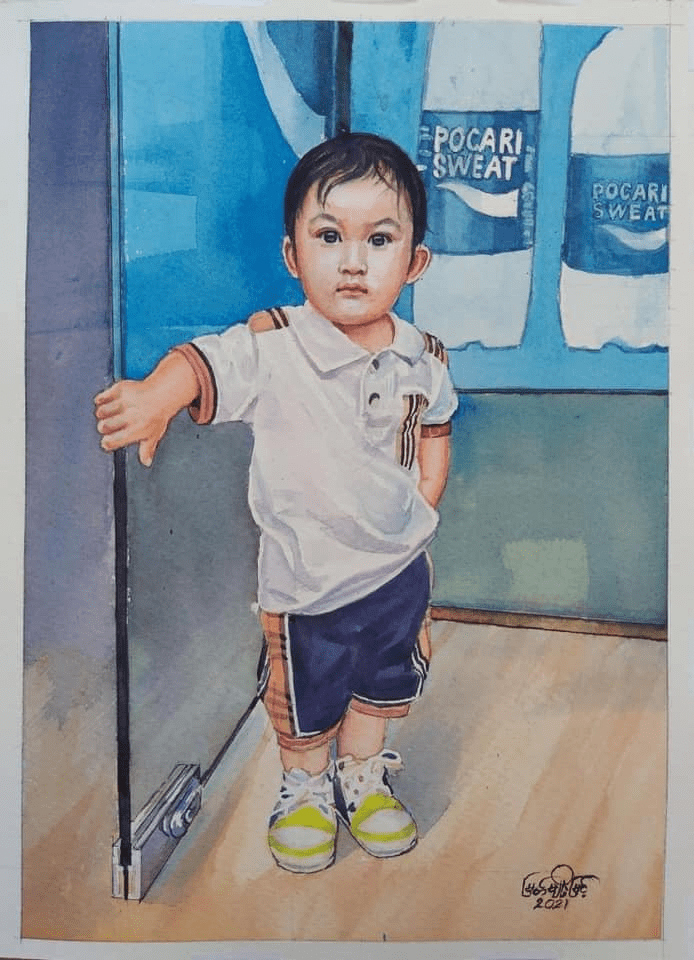
He drew Pon Tu of his spouse as a Birthday present. He also drew Pon Tu of his three Myees.
Happy CoupleBirthday Present for SpouseMyee 1Myee 2
He drew Pon Tu of some alumni (U Wynn Htain Oo, Daw Lei Lei Myaing and me).
Pon Tu of U Hla Min
He was a Volunteer for Mg Mar Ga’s “Eradication of Starvation” project (before the Calamities).
Per Daw Lei Lei Myaing’s request, he donated to specified pagodas and monasteries.
The first Hovercraft was fabricated and submitted as a thesis by 1973 Mechanical students as a partial fulfillment for the Bachelor Of Engineering degree. Their supervisor was Saya U Tu Myint.
Updates
Singapore Oldies
Singapore Oldies
Saya U Kyaw Sein, Saya U Thein Lwin, Sayama Daw May Than Nwe and U Myint Thin (M71) are GBNF.
U Tu Myint retired from Singapore Polytechnic.
John Rao invited me to meet Saya U Tu Myint, U Hla Win & some M73 at a lunch gathering.
Hovercraft Follow up
The next batches submitted thesis on improvement of the first one.
VIP test drive was performed for the Minister for Industry at that time, Col. Maung Cho. The test drive was performed on the lake beside Insein Locomotive Maintenance and Repair Shop. The invention was a success.
U Kyi Aung (Roland Chen, ChE73) had the honor to drive the first ‘Hovercraft’ invented by M73 students. Ironically, further improvement projects were stopped for no reasons.
Additional information
Article by Dr. Myint Thein (M73)
Interview of the Hovercraft team (arranged by Saya U Moe Aung)
Classmates include Tin Htoon, Aung Kyee Myint & Victor Pe Win
Loves Classical Music & Modern Art
Directed the movie “Hna Ma Let Shawt Nay Lay Dawt နှမလက်လျှော့ နေလေတော့” . The movie was hard to appreciate by most Burmese. It set the record for the first movie not to have Full House at the First Day First Show. Grapevine says that some foreigners tried to purchase the movie. See comments by Uzin Bobby, Nan Khaming & U Wint Khin Zaw.
His second movie was funded by Collegian Nay Win & Daw Khin Mar Lar. See comments by U Htun Aung.
He would hang around at “Architects Incorporated” (founded by U Bo Gyi, U Tin Htoon & U Aung Kyee Myint) along with fellow artists U Paw Oo Thet and Director Win Pe.
He was a friend of Architecture students. U Aung Khin (A69) posted a picture of him and U Tin Maung Hla (A69er, GBNF) with U Kin Maung Yin.
Kin Maung Yin 2
Feedback
Uzin Bobby Myo Tun (A69)
U Kin Maung Yin was everyone’s friend – one of the most amicable individuals I’ve ever known. He was mentor to many of us student architects of the late 1960s and of the 70s. His versatile talents extended into move-making, authorship and painting. His avant-garde movie “နှမလက်လျှော့နေလေတော့” made six decades ago remains unrivaled to date in the Myanmar movie industry. He immersed himself in modern painting and writing during the last two decades of his life. An icon of the arts, indeed!
U Htun Aung (EP70)
In 1971, I was waiting for the governmental employment living with Demonstrator (civil) and Inlay hostel hall tutor Saya U Khin Mg Tint. One day U Khin Mg Yin came and unexpectedly invited me to accompany him as his aid in movie-making and shooting a film named “Bahman Bazan Akhyaung” (ဘမှန်ဘဇံအကြောင်း). For that film, he was the Director. I was always near him to help for everything he ordered me to do. In those days, from morning to night I was together with him at film shooting sites, especially at Collegian Nay Win and Dar Khin Marlar’s home where most of the indoor scenes of the film had been shot. Also we had to spend much time in making the film at Film upgrading [processing] Studio. The producer of the film was “Momyint Thawdar Film Production” which was owned by Daw Khin Mar Lar, Actor U Nay Win’s spouse. Time taken to shoot that film was nearly three months. Main actors were Collegian Nay Win, Khin Yu May and Aye Aye Thin.
After that film, I was also with U Khin Mg Yin to help reading and editing the directing schedules of the film named “Thway” the Novel written by Journal Kyaw Daw Ma Ma Lay. But that script was not approved by State Film Editing Committee [Censor Board] due to the Fascism hating point of view of the country at that time.
Nang Khaming (A70)
Most people didn’t like the movie Hna ma let shawt nay lay dawt because there was no dialog in the movie except ‘pea pyout’. Most can’t appreciate that kind of movie, but I like that movie and appreciate.
Ko Wint Khin Zaw (A79)
Architect UKMY must be too advanced for the period. I think he directed another movie called “Ba Hman Ba Zan Akyaung” which was appreciated a bit more by some audience.
I really do like reading your profile of past alumni. It is inspiring as well as very informative. I would like to suggest that you make it a regular feature, maybe in the future. I know you guys are really busy now and do admire for the time and energy you can give to the cause. You all have done a very good job and have my sincere best wishes. Thank you again to all of you.
I’m in awe of many alumni with PhDs and so on. However, I earned my doctorate a very long time ago. In fact, I believe I’m the only one who first got a doctorate before the first degree. I’ll let you in on the secret. It was back in the late 60’s when I was dating Sanda (daughter of the late Saya U Kyaw Tun). Although I was never in Sayagyi’s class, when he was lecturing, he would tell his class that he has two daughters and that he would only marry them off to someone whom has a Ph.D. From then on, whenever we were together and walking along the corridors, someone would say, “here comes Dr. Tin Aung Win”.
As I am leaving Sydney with my wife Sanda (Dorothy) on the 9th of October, 2000, I’m going to miss your countdown series. However, I have printed out most of them, which will enable me to read on the long flight to SF. I’ll be spending time in some countries before I hit SF on the 27th of Oct, and for the mega reunion on the 28th.
Cheers Tin Aung Win
Comments
Saya U Kyaw Tun (President of RIT EE Association)
Sayagyi is a saya of our sayas (including U Sein Hlaing and U Tin Swe).
His elder daughter Elizabeth was my primary school friend. She received her Ph.D. in English in 1994 and worked at Indiana University and/or Purdue University.
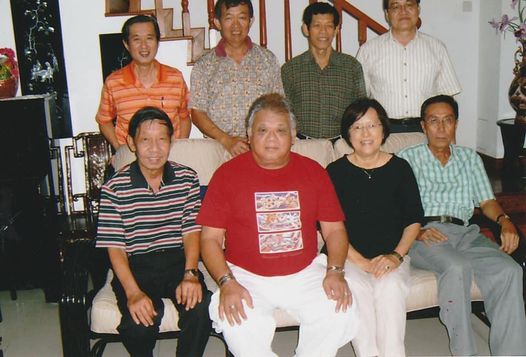
Standing: Saya U Maung Maung (George, ChE66), U Hla Min (EC69), Saya U Thein Aung (James, Met72), Saya Dr. Nyo Win (K H Chen, M65), Saya U Myat Htoo (C68), Benny Tan (Tan Yu Beng, M70)
Seated : U Kaung Kaung Oo (Gordon, M83), Saya Allen Htay (C58, GBNF), Saya Dr. Tin Aung (K C Chiu, ChE63), Maurice Chee (U Hla Myint Thein, M75)
Photographer : U Khin Maung Zaw (KMZ, EC76)
Founding Members
Met at Benny’s house several times
Discussed the formation of “RIT Alumni International” to support the Newsletter and web site
Decided to hold a Grand Reunion and SPZP in October 2000
SPZP-2000
Served as members of the Working Committee and Steering Committee for SPZP-2000
Saya Allen Htay (GBNF)
Saya Allen
Leader of the group
President of “RIT Alumni International”, which organized the First RIT Grand Reunion and Saya Pu Zaw Pwe in San Francisco, California, USA in October 2000.
His classic article, “Brother, can you afford US $500?” was partly responsible for five Golden Sponsors, and the generous donations by sayas and alumni.
Retired three times. His former students U Thein Aung & U Myat Htoo coaxed him to un-retire twice.
Saya Allen’s grandsons
Saya did not recover from a debilitating stroke. Did not live long enough to spend time with his grand children. One grandson had “Allen” as his first name. Another had “Allen” as his middle name.
Saya K C Chiu (Dr. Tin Aung)
Saya K C
Brother of Saya Dr. Aung Soe (C61)
Past President of BEA
After retirement, he relocated to Southern California.
He wrote : In early ‘80, Dr. Tin Win was working in Houston and came to the Bay Area on business trip. Dr. Tin Win was visiting me at home while Lily and I were discussing BEA matter. I believed they were meant for each other. The rest is history.
Saya Dr. Nyo Win (K H Chen)
Saya Nyo
Past President of BAPS
Core Organizer for SPZP-2000
Founding member of NorCal RITAA and served as a member BOD (Board of Directors)
Retired after working in high technology companies in the Silicon Valley & Taiwan
Saya U Maung Maung (George)
Saya George (Left)
Founding member of NorCal RITAA and served as the inaugural President.
Organized a fund raiser for the “Staff Training” component of “YTU Library Modernization”.
Saya U Myat Htoo (C68)
U Myat Htoo
Past President of Theravada Buddhist Society of America (TBSA)
Past President of Burmese American Democratic Alliance (BADA)
Founding member of NorCal RITAA; Served three terms as Chair, BOD of NorCal RITAA
Co-emcee of SPZP-2000
Plays the ukelele and piano. A favorite song is theparody of “Lost Neikban”.
U Hla Min (Life Long Learner)
Hla Min
Completed 26 years as Founder and Chief Editor of “RIT Alumni International Newsletter”
Editor and Content Provider of RIT Alumni websites
Chose to re-tire (re-thread) rather than retire (per Steeve’s suggestion)
Decided to pay back to his alma mater(s): RIT and UCC (per advice of spouse, sayas, colleagues & friends)
Wrote 40+ postings of “Memories of UCC” in three days during his vacation to Myanmar.
Owner, Admin and Moderator of hlamin.com web site & several Facebook groups.
Screenshot
Broadcast 220+ Educational Videos on selected topics. Channel for YouTube is @hmin3664
Benny Tan (Tan Eu Beng)
Benny (Right)
Succeeded Dr. Nyo Win as President of BAPS.
Successful entrepreneur.
Multiple Golden Sponsor of SPZPs.
Designed the banner and mementos for SPZP-2000.
Now spending quality time with six grand children and taking trips & cruises around the world.
Saya U Thein Aung (James)
Set Hmu Maung
Mr. RIT in 1968. His mentor was Commander Maung Maung (Mr. Burma in 1947). A few years back, he handed over the “Sa-Lwe” for Mr. RIT68) to U Wynn Htain Oo (M72).
Co-emcee of SPZP-2000
Contributing Editor for BAPS Newsletter
Associate Editor of the Commemorative Issue of RIT Alumni Newsletter
Maurice Chee(Hla Myint Thein)
Maurice
Succeeded Benny as President of BAPS.
Wore multiple hats for SPZP-2000. Co-Chair of the Working Committee with Benny; Financial Controller; Published the commemorative issue of “RIT Alumni Newsletter”; Did name tags; Coordinated the culinary experts for the follow-up lunch gathering.
Founding member & Past Vice President of NorCal RITAA.
In August 2016, he organized the Soon Kway gathering at Dhammananda Vihara, Half Moon Bay for my birthday and to recognize my volunteer work.
U Khin Maung Zaw (KMZ)
KMZ (Second from Right)UCC-RIT Gathering
Belongs to three circles — St. Paul’s High School, RIT and and UCC — like Saya U Soe Paing and me.
Took the group photo
Designed and implemented http://www.ex-rit.org website, which contributed to the planning & implementation of SPZP-2000. Many contributed to “Count down to the Reunion” and “Post Reunion” pages. I wrote 64 posts for “Count down to the Reunion” and 36 posts for “Post Reunion”.
Was then an eligible bachelor; Worked four 10-hour days & had a three day weekend
His RIT web site was largely responsible for the success of SPZP-2000. Promised to have Version 2.0 of the web (with better features). Could not fulfill his promise.
Luckily for him, he moved to the challenging and lucrative job at Microsoft, and also became blessed with a wonderful family.
U Kaung Kaung Oo (Gordon Kaung)
Gordon (Center)
Youngest member of the group
Founded “Mechanical Solutions” in San Francisco
He and his spouse Lillian Kaung (EC83) later set up iNapa Winery & hosted RIT-related gatherings. The Winery survived two fires.
Founding member of NorCal RITAA; Succeeded U Maung Maung as President
NorCal RIT Alumni Association
Donated Premium Wine bottles for selected events (e.g. the Annul Dinner and Summer Picnic for NorCal RITAA, 2005 RIT Alumni Reunion in Los Angeles).
First Pagoda in the USA Sayadaw U Thilawuntha (Dat Paung Zon Aung Min Gaung, Mon Sayadaw) built the first pagoda in the Allegheny Mountain in the USA. Sayadaw built pagodas in several countries (e.g. Canada, New Zealand)
Food for thought Discussions include effective listening and evaluation, netiquette
First RIT Alumni Web Site Ko Maurice Chee’s post for the donors of the now defunct web site
Robert Floyd Professor without a graduate degree but with tons of talent
Silicon Valley An overview of the birth of Silicon Valley
First Pagoda in the USA
Dat Paung Zon Aung Min Gaung Saya U Thilawunta (also fondly known as “Mon Sayadaw”) built the first pagoda in the USA on the Alleghany Mountains.
The American devotee, who permitted the pagoda to be constructed on his land, passed away.
Grapevine says that there were plans to contact the current owners to ask permission to renovate the pagoda or to relocate the pagoda.
Later pagodas include the ones at Kaba Aye Taung Pulu monastery in Boulder Creek, California.
Pagoda in USA
Food For Thought
Listening, evaluation and feedback are important for effective communication.
The salutations are context and culture dependent.
A visiting Professor from Germany wanted to be addressed as “Professor Doctor”.
Saya Allen Htay told us that he could not use “Mr” during his stay in Netherlands. He was asked to use “Ingr” (based on his profession).
Grapevine says that the early surgeons in the UK were not necessarily doctors, and so they did not force people to address them as Dr.
Some overuse the “Like” button in Facebook. It is puzzling to see many Likes in an Obituary posting.
One should be aware of “opt-in” versus “opt-out” options.
Malicious software industry is responsible for losses (in down time, data corruption, identity theft, …) in the billions. The penalty of offenders is “peanuts” compared to drug dealers in most countries.
“To err is human. To forgive divine.” I like another version. “To err is human. To really goof, use a computer.”
I have made intentional and unintentional errors. Thanks to my colleagues, friends and readers for catching and correcting them.
Word processors also introduce some errors by correcting legal Burmese words and names. e.g. “Nwe” becomes “New” when auto-corrected. A work around is to add such words to a private dictionary for use by the word processor.
Without analysis of context, a program cannot decide whether you meant “goal” (objective) or “gaol” (alternative spelling for jail).
Inconsistencies are not easy to detect. For example, if I write about Saya U Shwe Hlaing for two posts : “Names — Shwe” and “Names — Hlaing”, the contents may not be exactly the same. I use FB for convenience (e.g. getting rapid feedback), but it is not designed for cross-referencing posts.
When I am not sure about an alumnus’s year of graduation or discipline, I use X for “unknown or unsure”. Most of the time, I get corrected by the readers.
There is no “hard and fast” rule for including or excluding names in my posts. The coverage may not be uniform for the names mentioned. My posts are not complete for “Who’s who in Burma and Myanmar?”
I am not consistent in tagging friends in my posts.
U Khin Maung Zaw (EC76) wrote :
One of the issues with Burmese names, is that there are more than one way to spell it in English, like Tun vs Htun. We used to have two ထွန်းအောင်ကျော် (I left U/Ko on purpose of clarity not for the lack of respect). One spells his name as Tun Aung Gyaw; the other as Htun Aung Kyaw. Hence they are been distinguished as TAG and HAK.
I used to have a god-grandmother here in US in the early days – she passed some years back, may her soul RIP. We, myself and U Min Maung (EP68), jokingly told her to make sure she spelled our name MAUNG in her will. Khin Mg Zaw may not be the same as Khin Maung Zaw in legalese.
First RIT Alumni Website
Posted in 1999 by Maurice Chee (Hla Myint Thein, M75)
As the Treasurer of the Bay Area RIT Alumni Group, I am pleased to announce the names of financial supporters whose donations have been helpful in taking care of the RIT Alumni web site maintenance.
Saya U Nyo Win (a) Kim Chen (M65) US$ 120
Saya Allen Htay (C58) US$ 120
Saya U Myat Htoo (C68) US$ 120
Saya U Thein Aung (a) James Wu (Met72) US$ 120
U Benny Tan (M70) US$ 120
U Maurice Chee (M75) US$ 120
U Gordon Kaung (M83) US$120
Saya K. C. Chiu (a) Dr. Tin Aung (ChE63) US$ 120
Saya George Chan (a) U Maung Maung (ChE66) US$ 120
U Hla Min (EC69) US$ 120
U Daniel Tint Lwin (M69, Singapore) US$ 100
U Ivan Lee (a) U Khin Maung Oo (M69, New Jersey) US$ 360
Saya U Soe Paing (EE,), Daw Saw Yu Tint (T69) US$ 120
Note: –
Saya U K. C. Chiu’s donation included U Htin Paw (EE58), Mr. Patrick Chin (M70), and U Kyi Kong Tham (C63)
U Hla Min’s donation included S$50 donated by Saya U Aung Myint (M69, Singapore Polytechnic)
Webmaster’s Note :
The hard cost of hosting the RIT Alumni website with a hosting company is US24.95 per month. This costs does not include time and efforts put in by various people. The initial set up and programming effort took about five to six weekends, remember we do have day jobs. It takes an average of three to ten hours a week for routine content maintenance and program enhancements.
Editor’s Note:
U Khin Maung Zaw designed and maintained the web site. He was then working four 10-hour days and spent nights and weekends to get the sayas and alumni connected virtually and later physically at SPZP-2000. He was one of the eligible bachelors. He was then employed by Microsoft. He also found his true love and set up a loving family. It was a loss for RIT Alumni International.
He is now retired and is providing feedback on my posts.
Professor Robert W (Bob) Floyd (June 8, 1936 – September 25, 2001)
He received his BA at the age of 17, and another BS in 1958 (working and studying part time) from the University of Chicago.
He taught and researched at two prestigious universities : Carnegie Mellon University (CMU) and Stanford University.
He was recommended to by Professor Donald Ervin Knuth (winner of Grace Murray Hopper Award, and ACM Turing Award) to become the Chairman, Department of Computer Science, Stanford University.
Knuth said, “any of the papers he had written could be taken as a doctoral dissertation “. Floyd’s pioneering papers included graph algorithms, compiling techniques, tree data structures, and proof of program correctness.
He supervised several doctoral students.
He was also awarded the prestigious ACM Turing Award, which is considered the Nobel Prize in Computing.
His biography, citation for the ACM Turing Award and the Award Lecture can be read from the ACM web site.
Silicon Valley
In the early days of computing, manufacturers of magnetic devices (core memory, tapes, disks and drums) than silicon [dioxide based] devices. Some said that “Magnetic Valley” might be a more appropriated name than “Silicon Valley”.
Several factors are attributed to the birth and the culture of Silicon Valley.
Professor [later Dean] Frederick Terman joined Stanford University instead of the more established ones in the East because of his health. He is known for (a) encouraging his students such as Hewlett, Packard and the Varian brothers to become entrepreneurs (b) leasing land owned by the University to the fledgling companies (c) making agreements with the companies to hire his students and/or send employees to attend courses at the University.
The oft-told story is about William Shockley (Nobel Prize winner for co-inventing the transistor) and his decision to set up “Shockley Labs”. He was brilliant but not so good at nurturing his employees. This led the “Traitorous Eight (including Robert Noyce and Gordon Moore)” to join Fairchild semiconductors. Noyce and Moore later co-founded Intel (Integrated Electronics) with Andy Grove. The ability to move around companies is a good aspect of the Silicon Valley culture.
The entrepreneurship (initiated by Professor Terman) lives on. Yahoo, Google and several other companies were founded by Stanford alumni.
Some pointed out Harvard, MIT, and Cornell produced early computers (e.g. Mark I) and disciplines (e.g. Time sharing system, AI Lab, Computer Graphics, Machine Vision). Their alumni also founded computer companies (e.g. DEC).