NAPA (in Northern California) is known for its fine wineries.
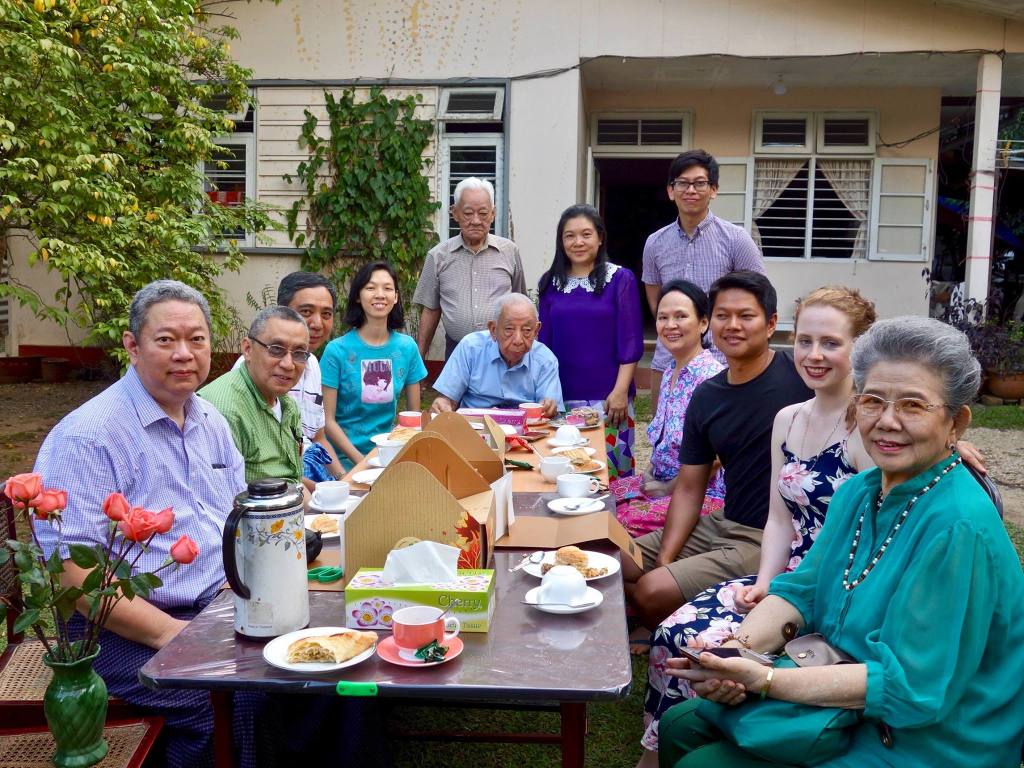
Gordon Kaung (M83), founder of Mechanical Solutions, extended his entrepreneurship by co-founding iNapa Winery with his spouse Lillian (EC83).
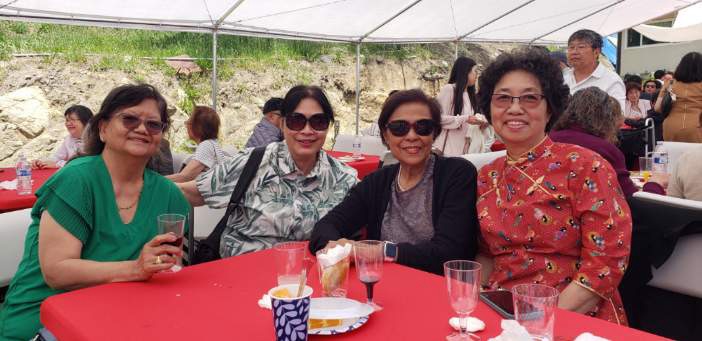
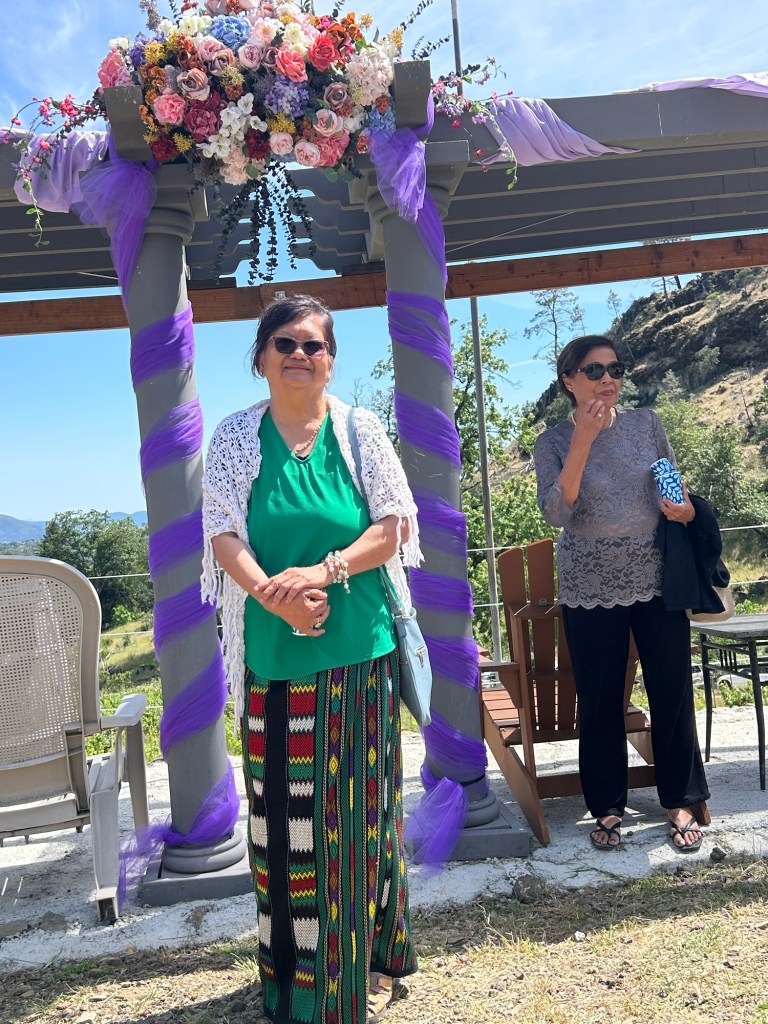
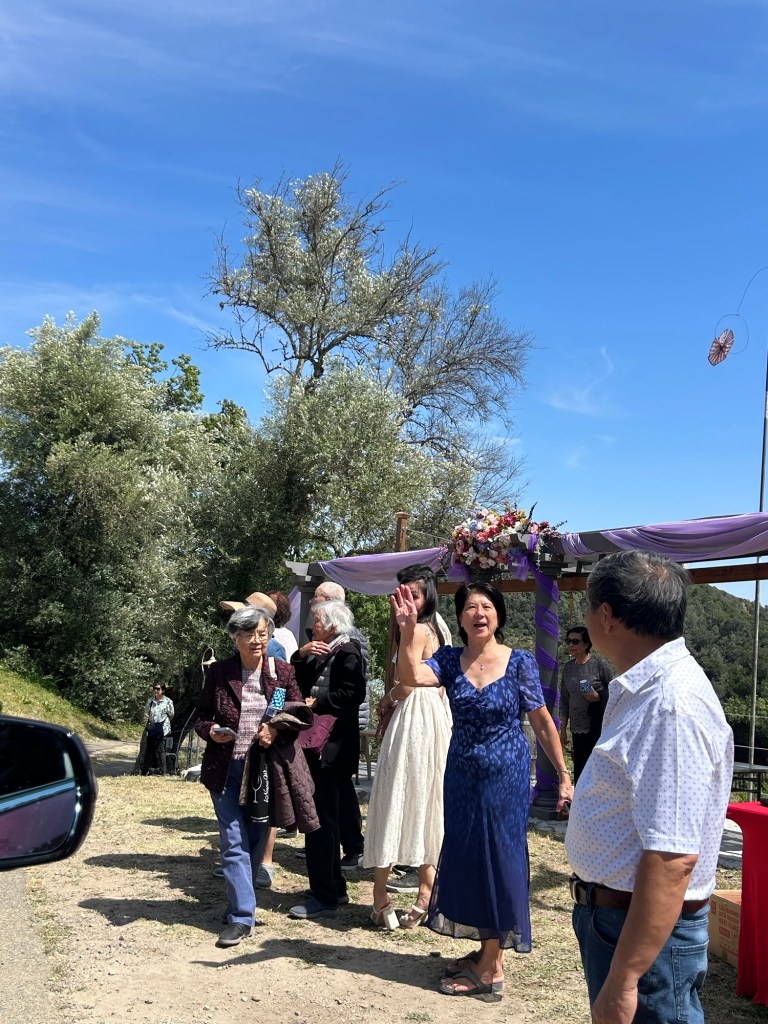
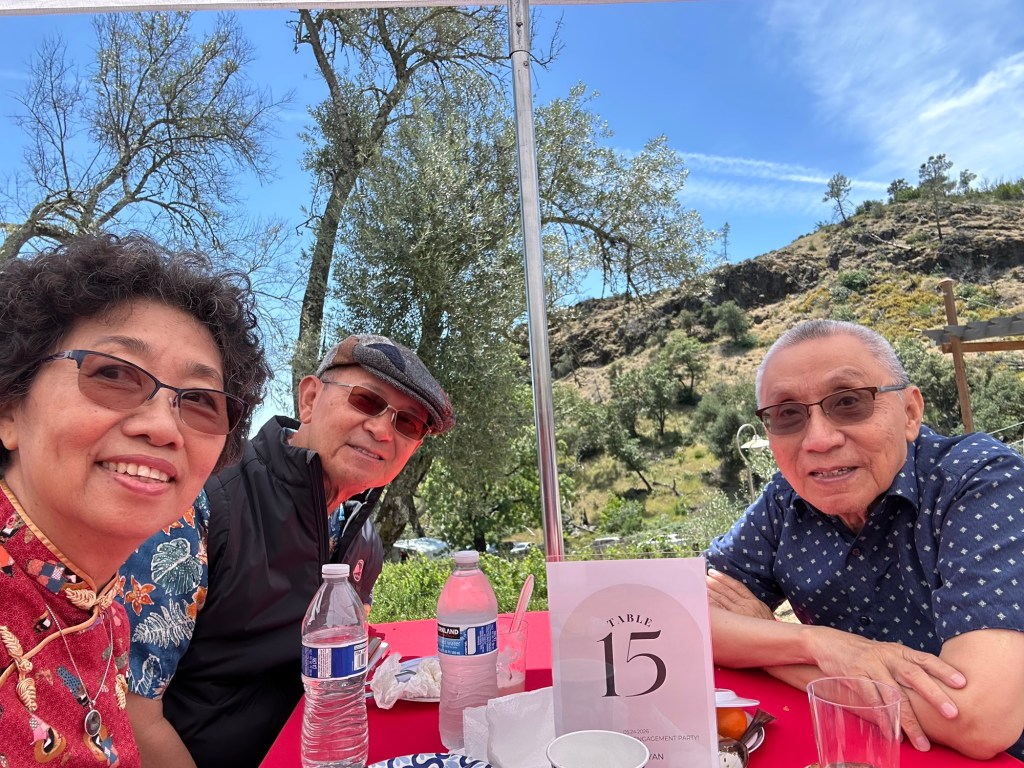
iNapa Winery has hosted several RIT gatherings.
Gathering in 2015
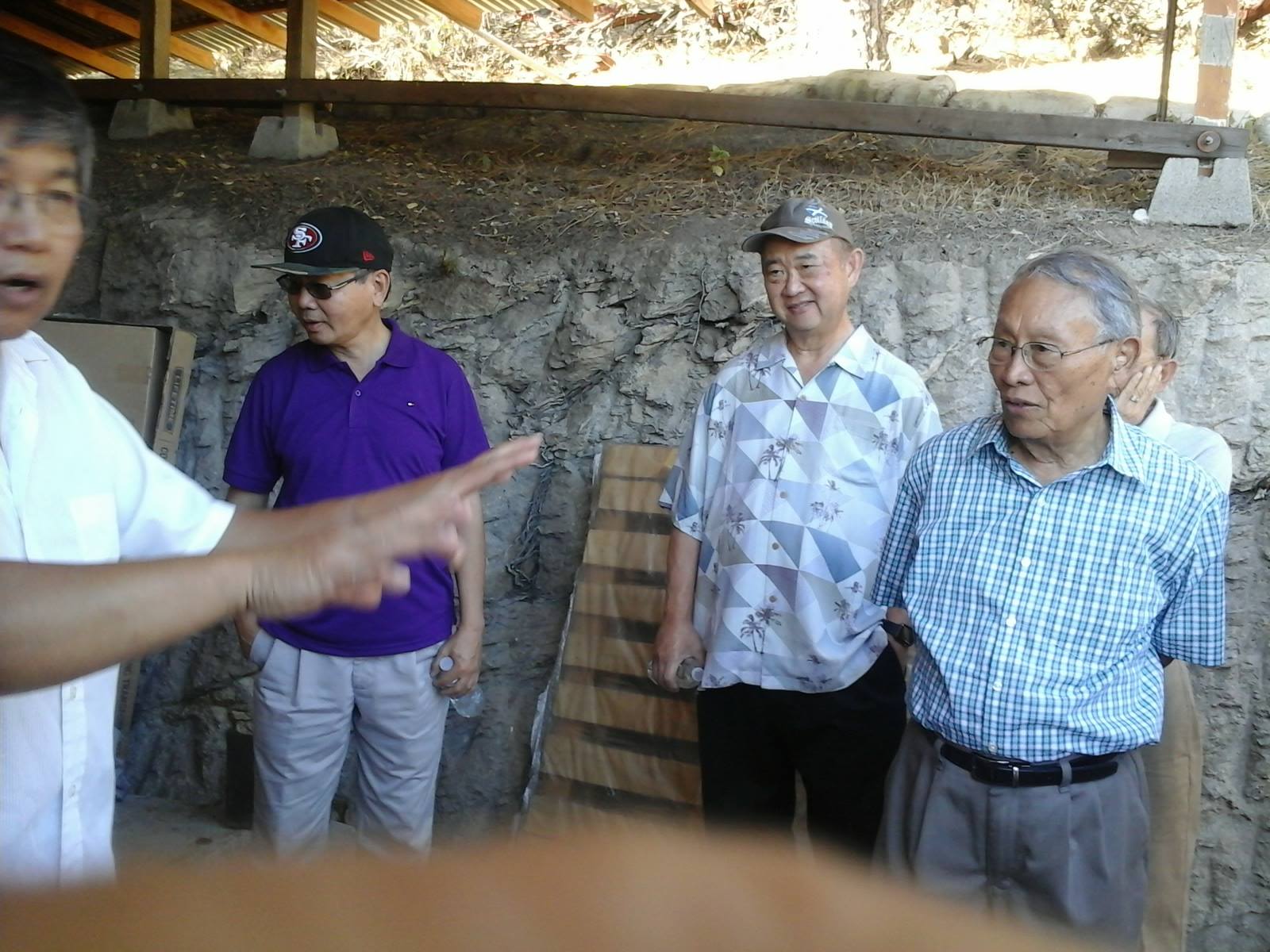
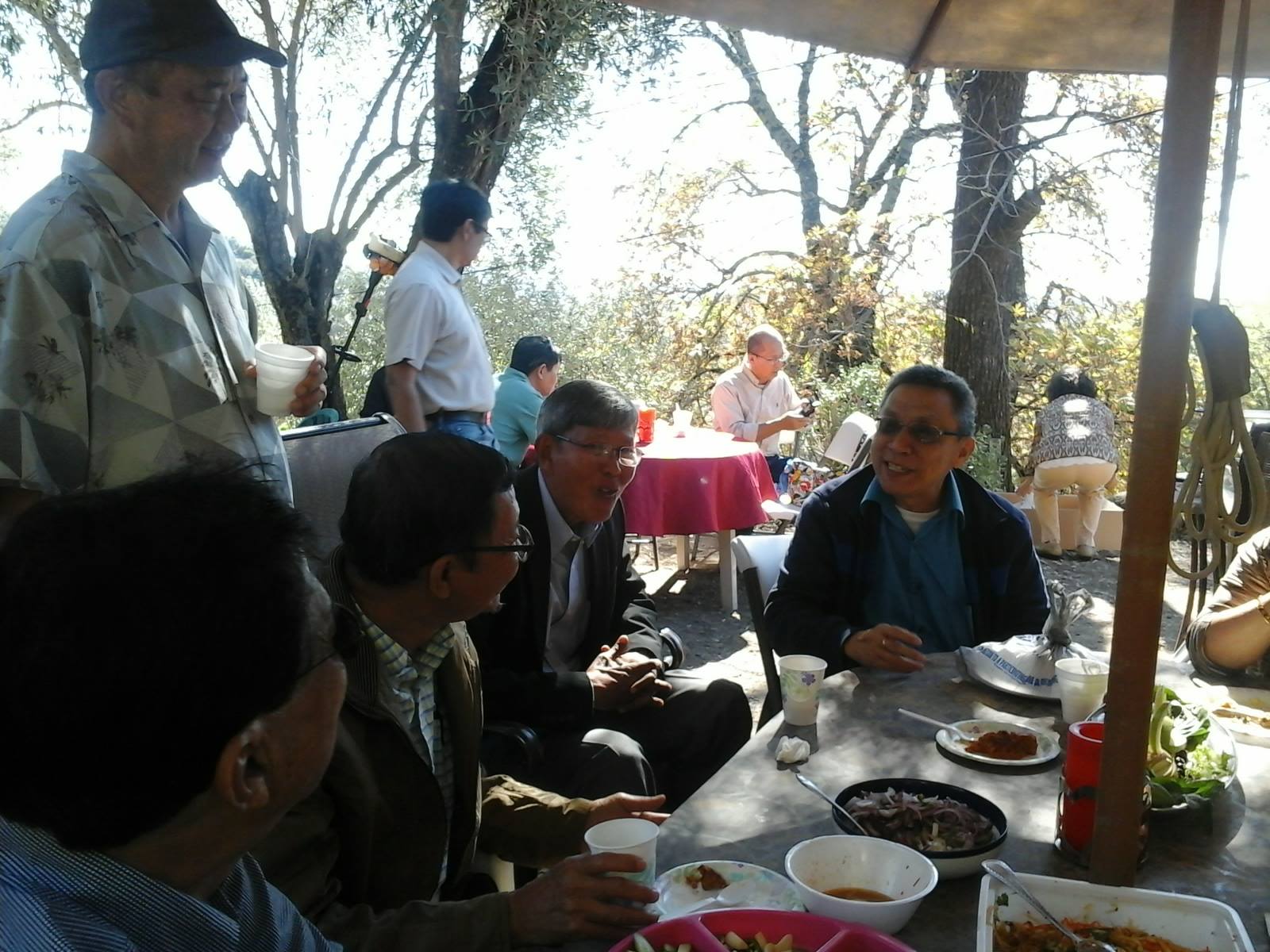
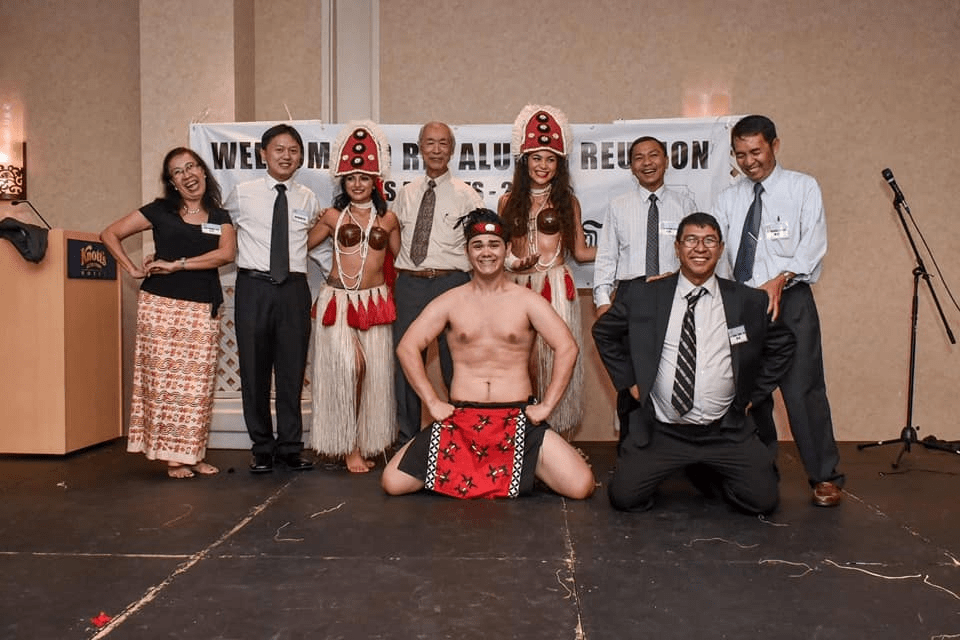
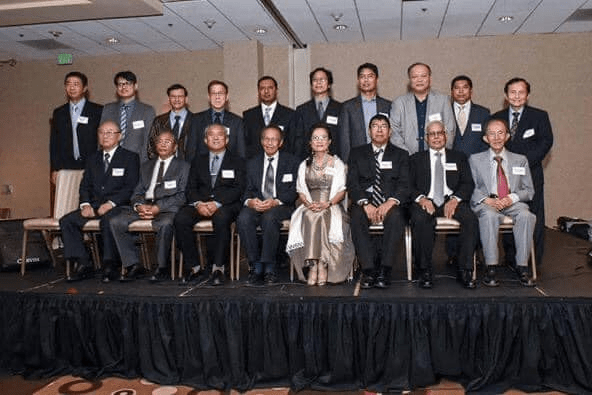
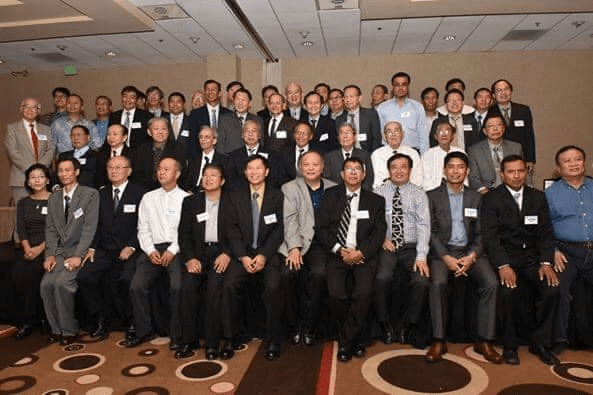
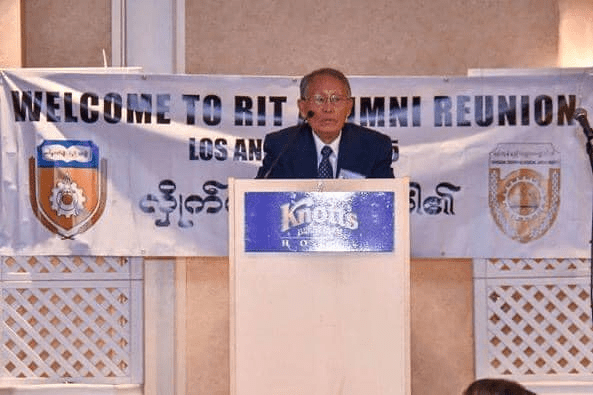
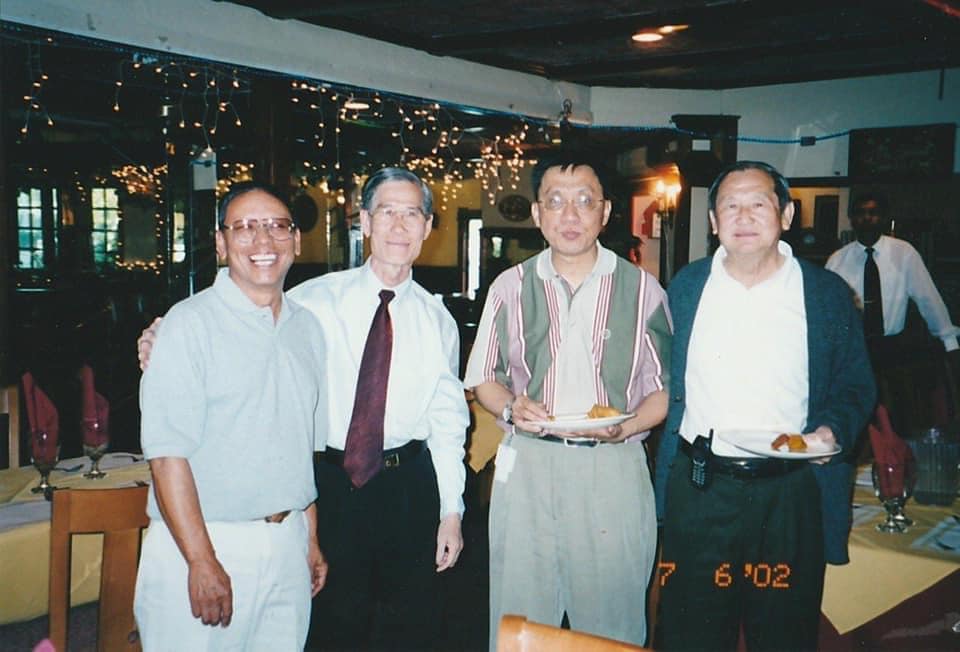
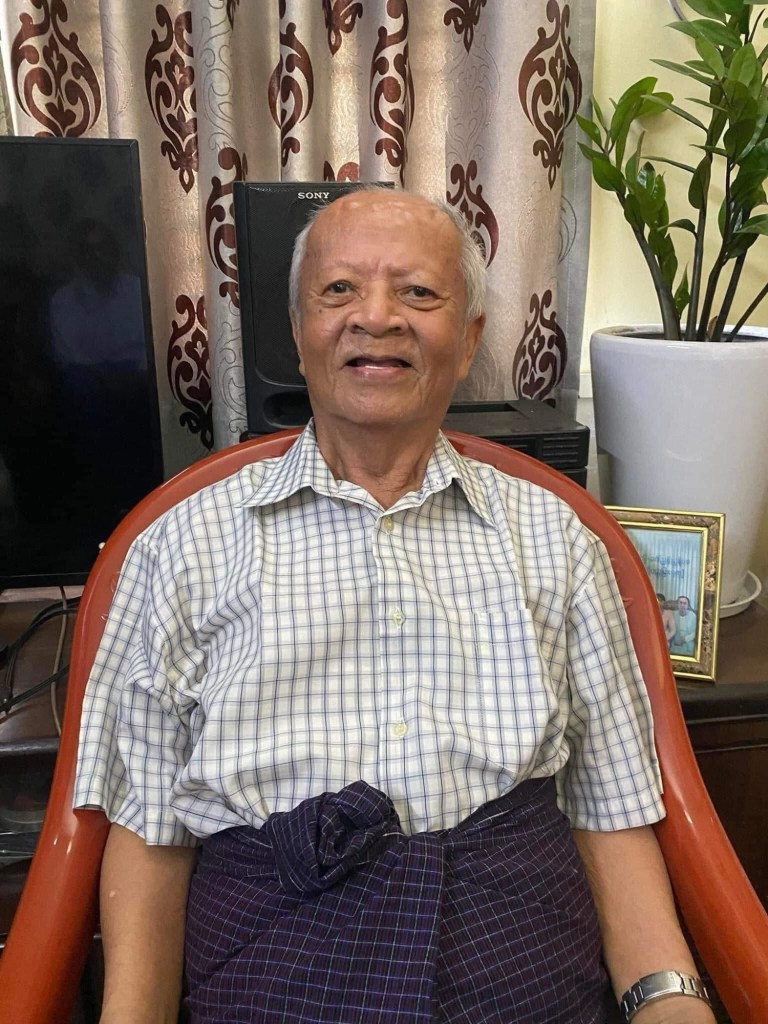
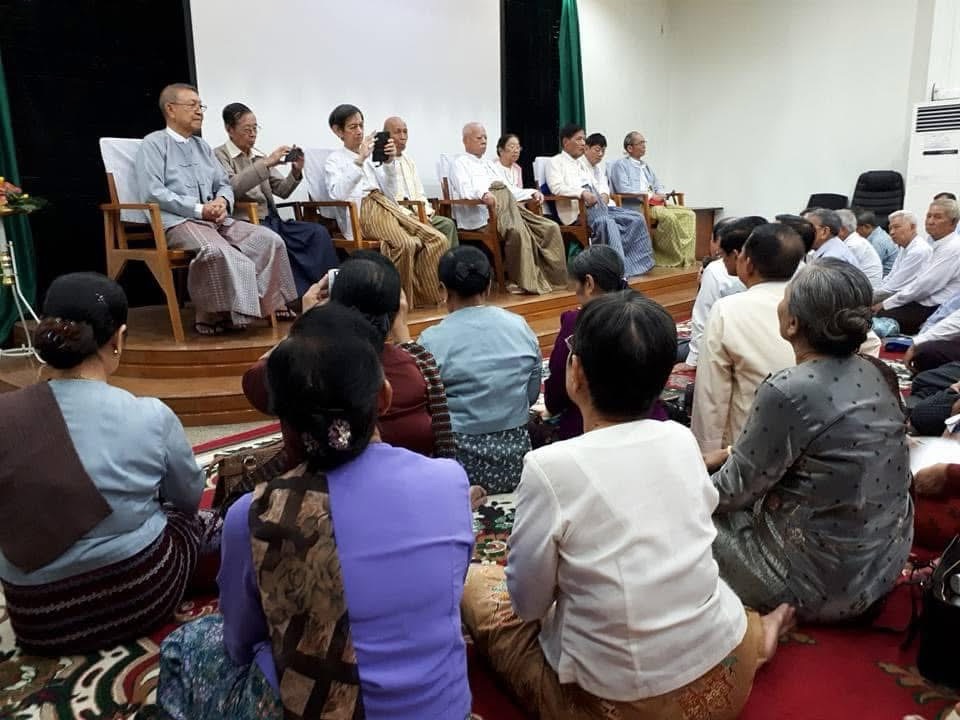
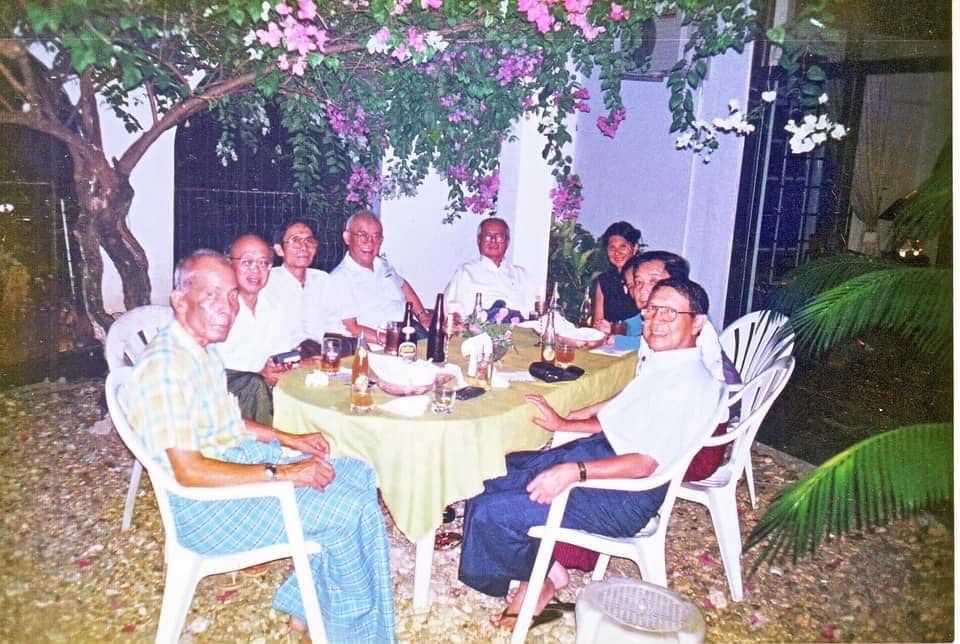
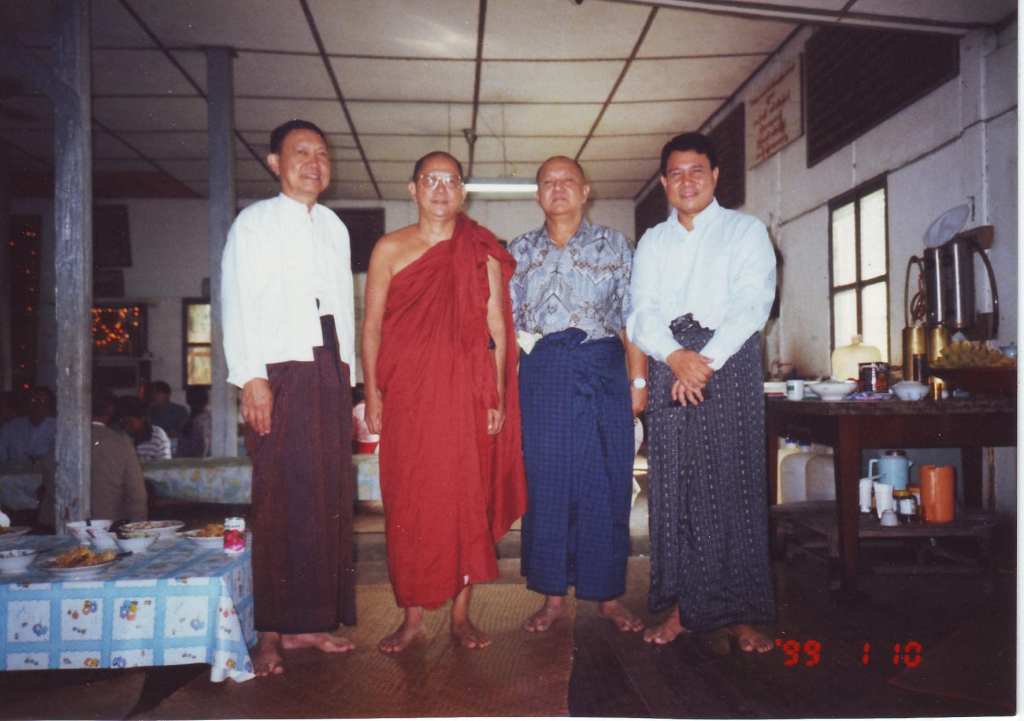
It was a follow up to the 2015 RIT Alumni Reunion in Los Angeles to welcome Sayagyi Dr. Aung Gyi & Daw Emma, Saya U Win Kyaw (Met71), Saya U Nyunt Htay (Met73) and selected guests.
Saya U Myat Htoo (C68) and Ma Ku / Daw Hnin Maung Maung drove Sayagyi Dr. Aung Gyi & Daw Emma from LA to SF Bay Area.
iNapa Winery hosted lunch and dinner gathering. Ko Thiri Nyunt (Met) played Gordon’s keyboard and sang.
Fundraiser Kyan Yay (Sugar Cane Drink) Htamane Food & Desserts
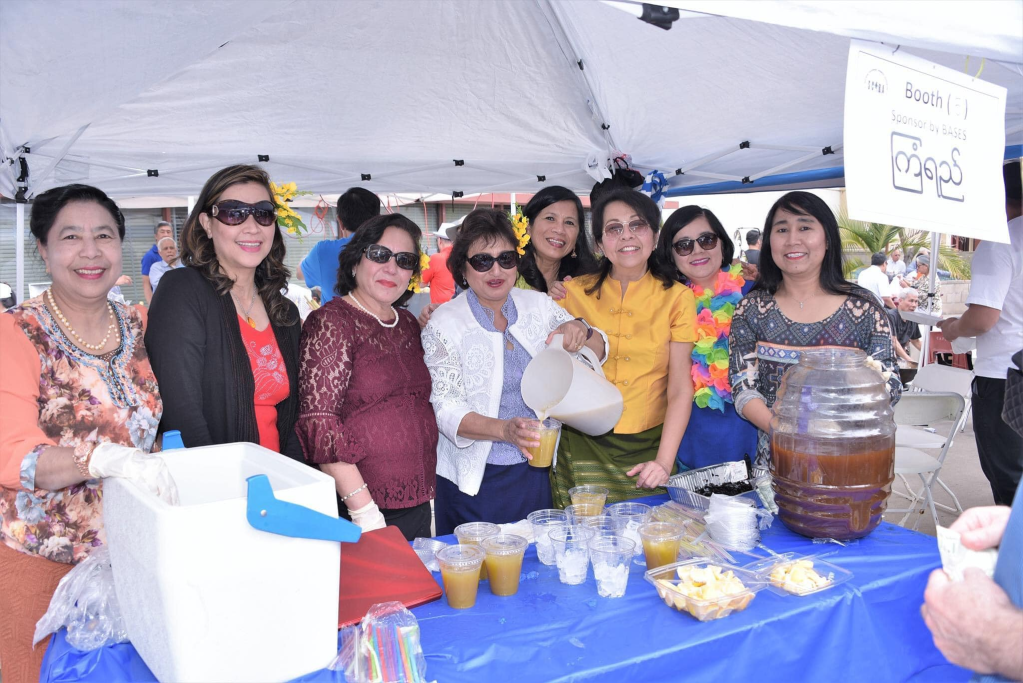
BAP Booth selling Sugar Cane Drink
Annual Dinner & Entertainment
Trips
Helped 2015 RIT Alumni Reunion in Los Angeles
2015 Reunion 12015 Reunion 22015 Reunion 3
Active in Activities sponsored by SCBA (Southern California Burmese Associations)
Notes
Many members are RIT alumni. Some volunteered for SPZP-2000 held in San Francisco.
U Aung Khin (EP68) is Past Vice President
James Shwe (M76) is a Donor and EC.
U Khin Maung Lay (Henry) served as Emcee for BAPS gatherings and 2015 Alumni Reunion. He was Secretary of RIT Track & Field Association. He represented RIT in Soccer, Rowing and T&F. He loves Cooking.
I attended BASES gatherings as Guest of EC and/or Saya U Tin Htut.
Mra Tun (UCC, TAMPS) and Ricky Zaw are guitarists & vocalists. Ricky’s sister is Nyunt Nyunt Zaw (T68, GBNF).
2015 Reunion
NorCal RITAA invited selected BASES EC to the gatherings.
Winner Inn is run by Saya U Ba Than’s family : son Ye Than, daughter-in-law Win Mar Oo, grandson Aung Myo Myint and granddaughter Ei Khine.
U Ba Than
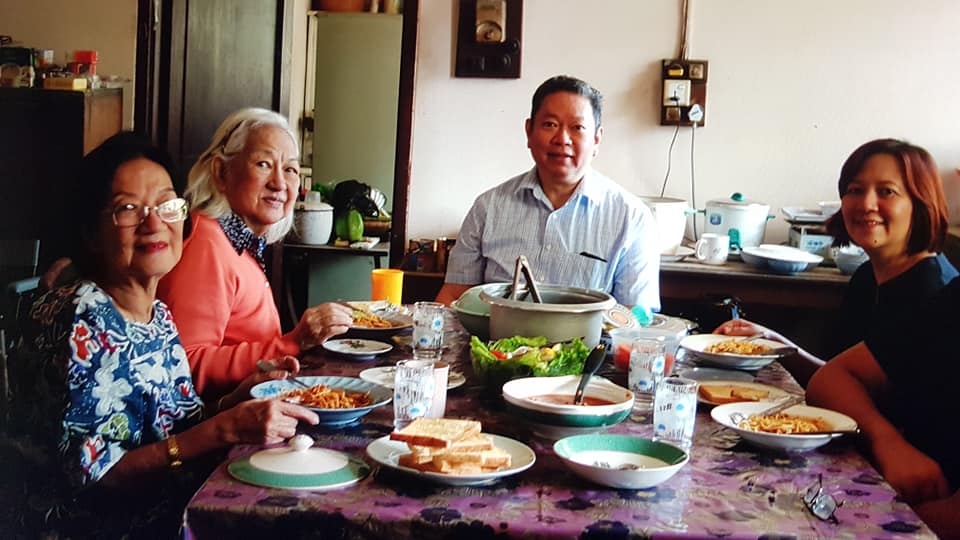
Before the family moved to a new residential home (a little bit further down Than Lwin Road), Saya would entertain his relatives (visiting from abroad), former colleagues and students at Winner Inn.
Gatherings
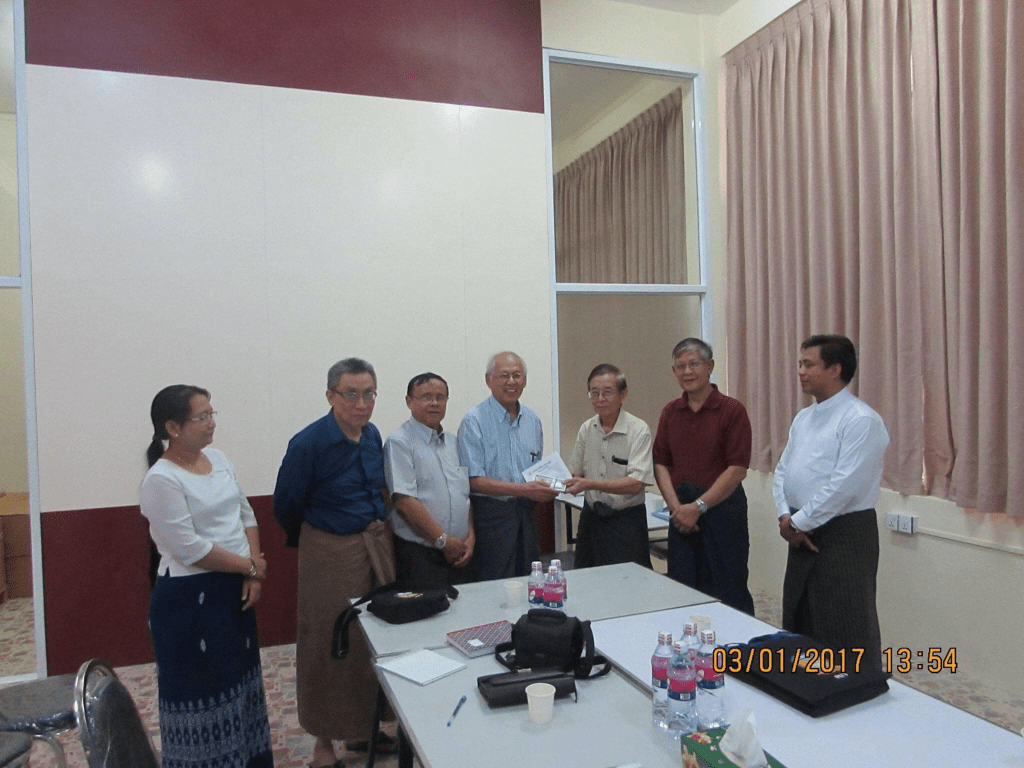
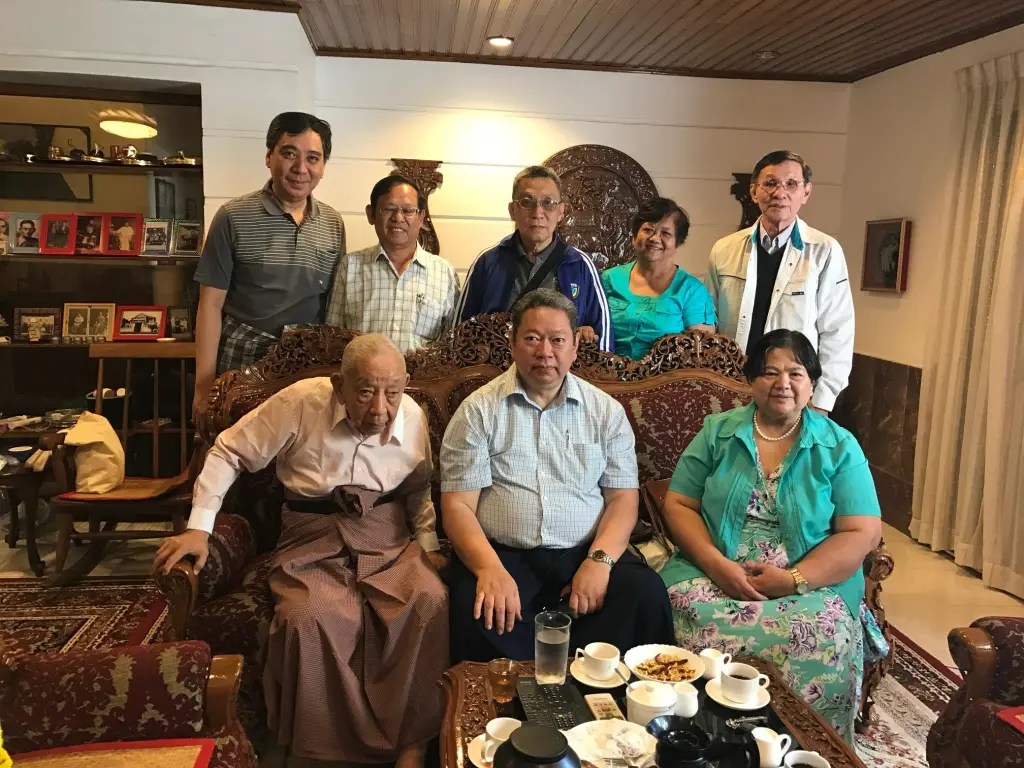
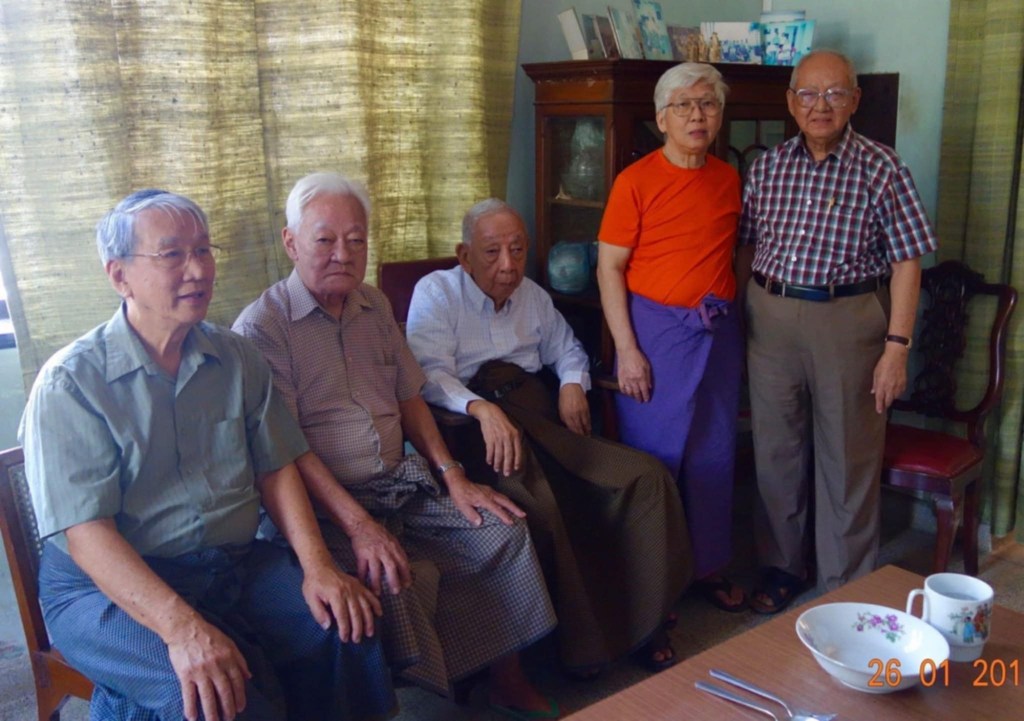
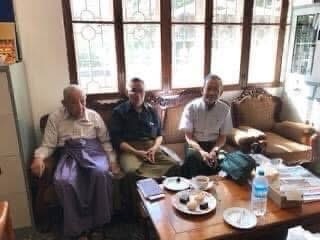
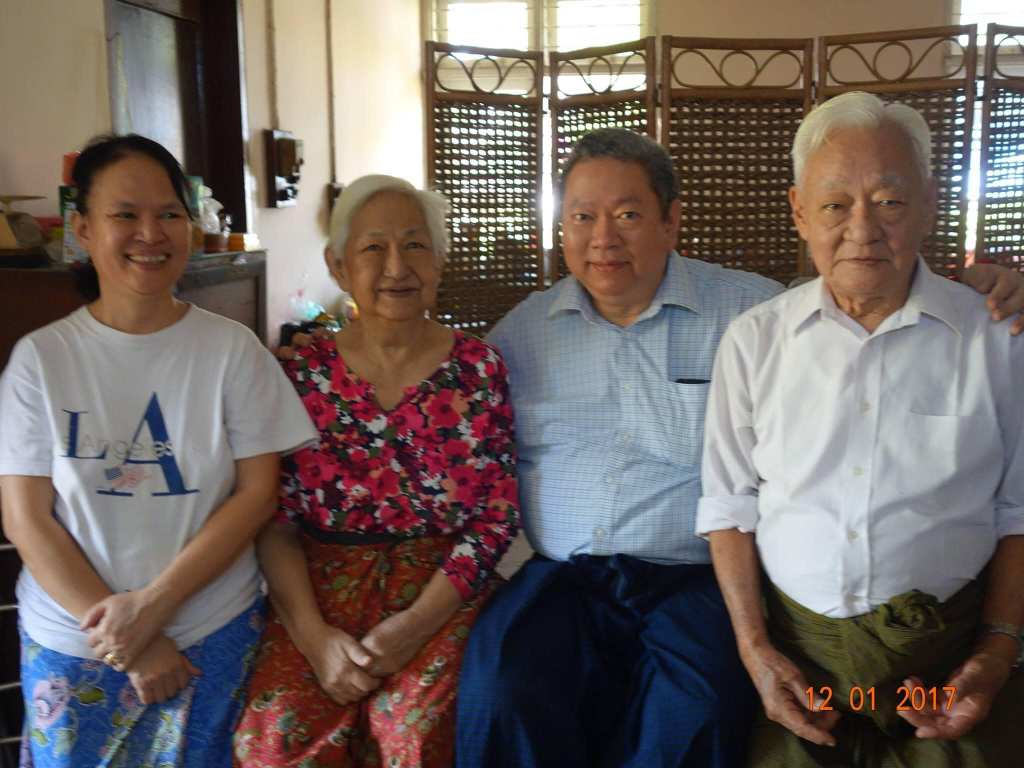
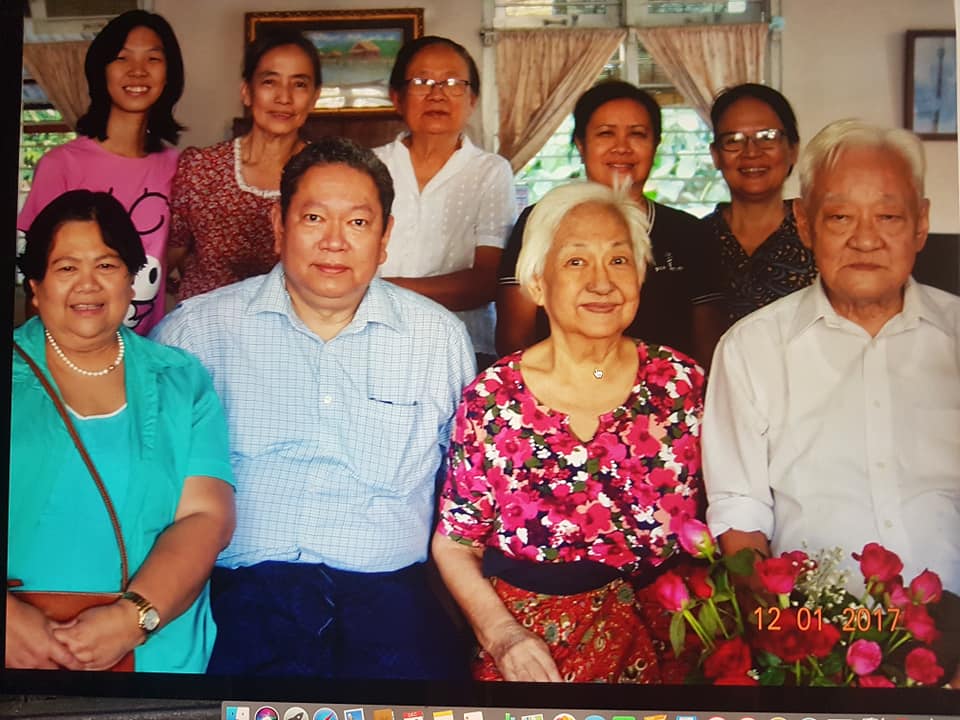
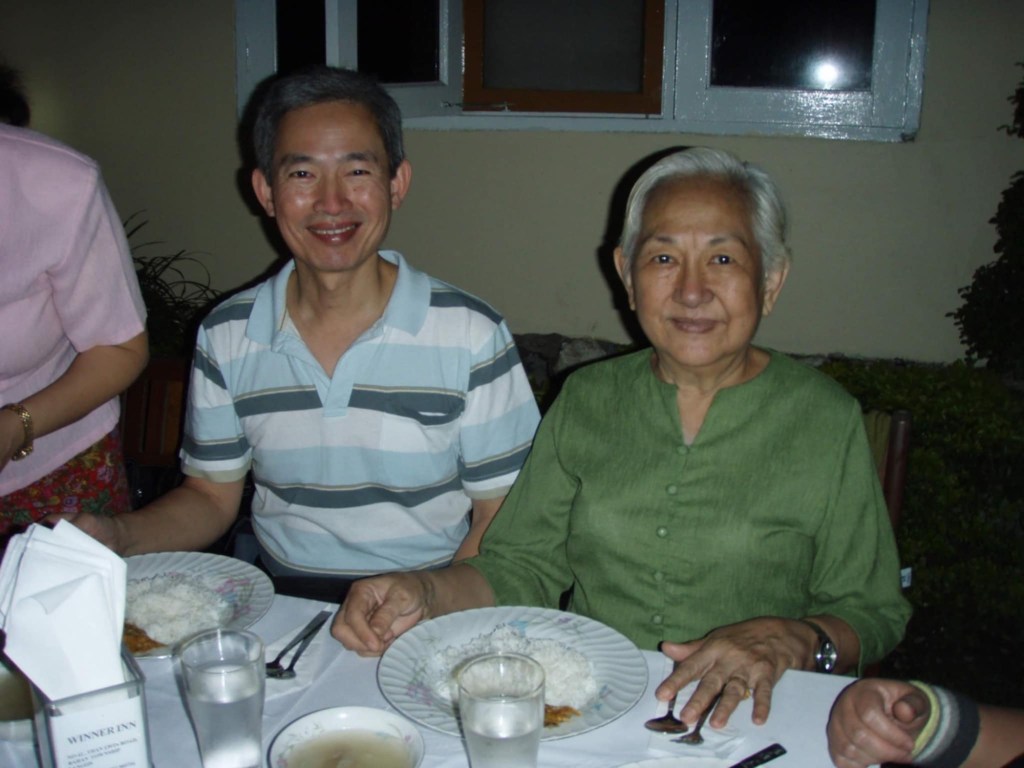
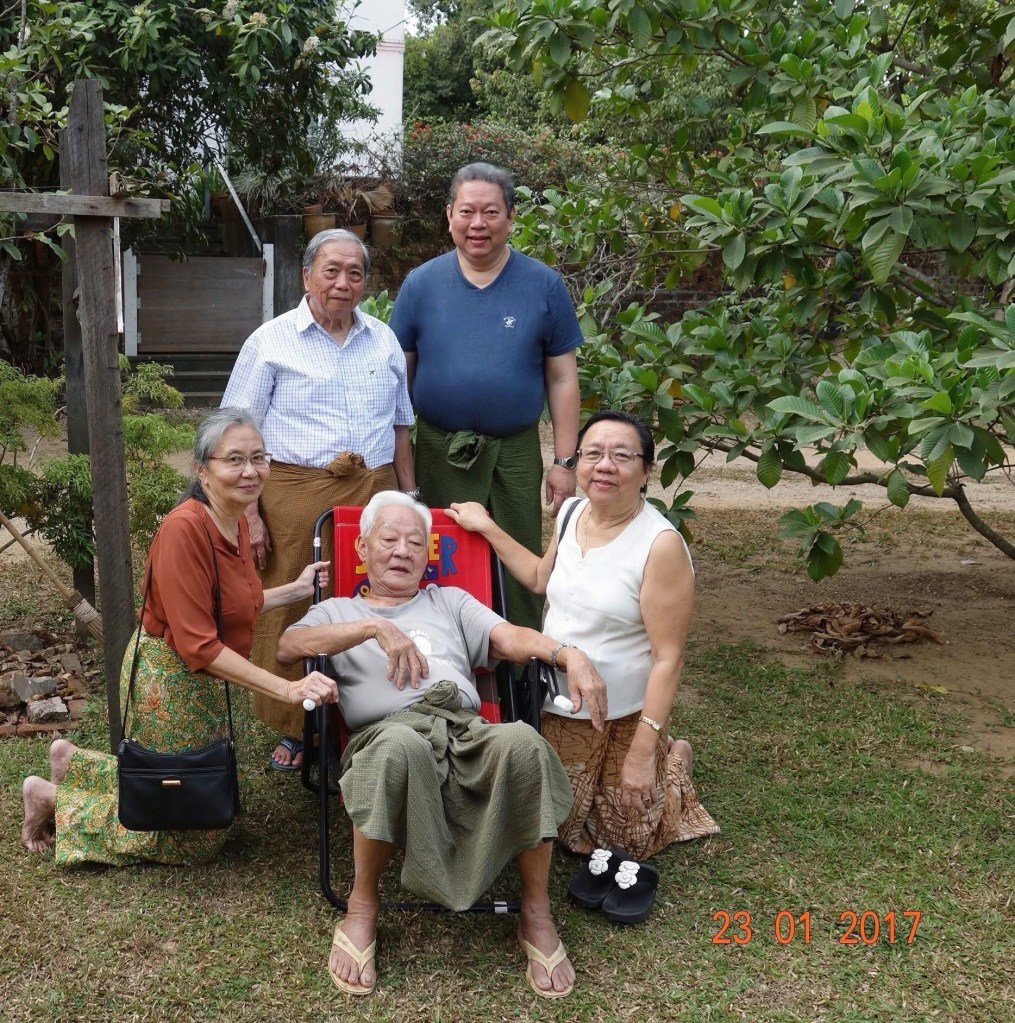
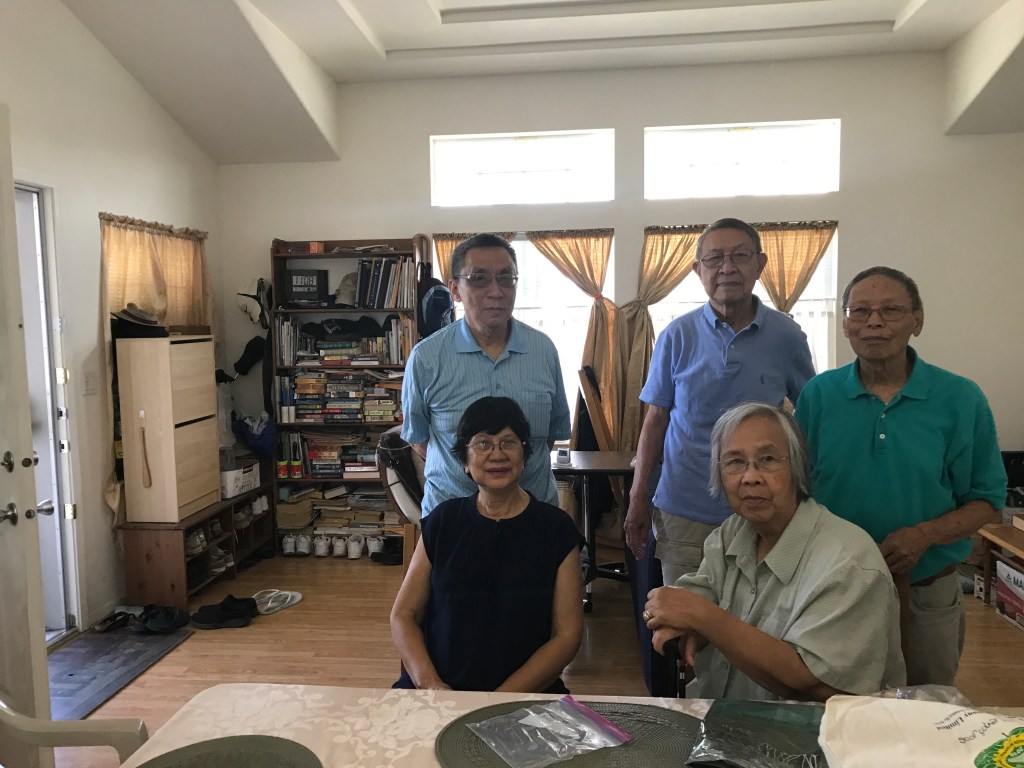
An informal gathering took place at Winner Inn in January 2017. Attendees include Dr. Khin Tun (Peter, GBNF) & Daw Win Mar, U Hla Win, U Aung Moung (GBNF), my spouse and me
U Aung Moung came to see Saya U Ba Than and Daw Win Mar. It’s a small world. Win Mar’s older brother was a childhood friend of U Aung Moung.
Sadly, U Aung Moung passed away in 2018. He was active in HMEE, SDYF and several social and religious organizations. Several monks arranged their own transportation to attend U Aung Moung’s last journey at Yay Way.
Peter, Win Mar, Aung Moung, Hla Win
Dr. Peter Khin Tun (GBNF)
Peter would usually come back to Yangon before January 12 to celebrate his mother Dr. Kyi Kyi Nyunt’s birthday. His father U Tin U is the elder brother of Saya U Ba Than.
Peter would host some celebrations (e.g. engagement party of his elder son Min Ko) at Winner Inn.
Sad to report that Peter was an early victim of Covid and lax UK Hospital policies about PPE. He passed away on April 13, 2020 (which was Easter Monday & start of Thingyan). The sad news is covered in BBC and some UK newspapers.
His spouse Win Mar recovered after two weeks of treatment at the hospital.
On a bright note, Peter was given awards posthumously and the UK hospital systems adopted better procedures.
Matriculated from St. John’s Dio in 1947 and won Collegiate Scholarship
Gold medal in 1949 for Highest Marks in I. Sc. (Combined); Highest overall; Highest for Pure Science
B.Sc (Special) in Mechanical Engineering from Imperial College
Joined RU Faculty of Engineering as Assistant Lecturer
M.Sc in Mechanical Engineering from Imperial College
Promoted to Lecturer
Retired as Professor and Head, Mechanical Engineering
Helped establish the Engineering Library
Early Supporter of HMEE (History of Myanmar Engineering Education); hosted inaugural meeting; donated photo albums to HMEE and MES
Soon Kyway on his birthday; invited former colleagues and students
Passed away soon after his 94th birthday
Family
Father : U Chan Sein passed away around 60
Mother : Daw Cheng Kim lived to be 94; started the elite 90+ club
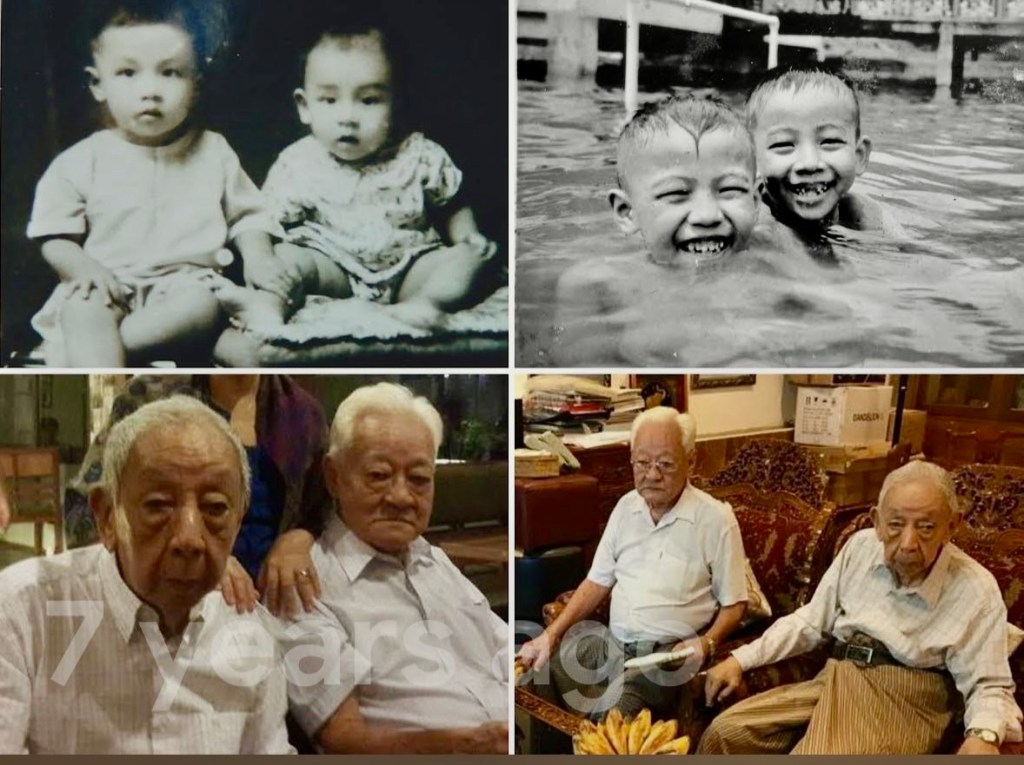
Brothers : Tin U, Ba Than, Myo Tint, Tin Htoon, Myo Min, Thaung Lwin
Sisters : Ruby / Win Hlaing, Betty / Myint Thwe, Cho Cho Hlaing
Spouse : Emerald / Mya Mya
Son : Ye Than
DIL : Lwin Mar Oo
Grandchildren : Aung Myo Myint, Ei Khine
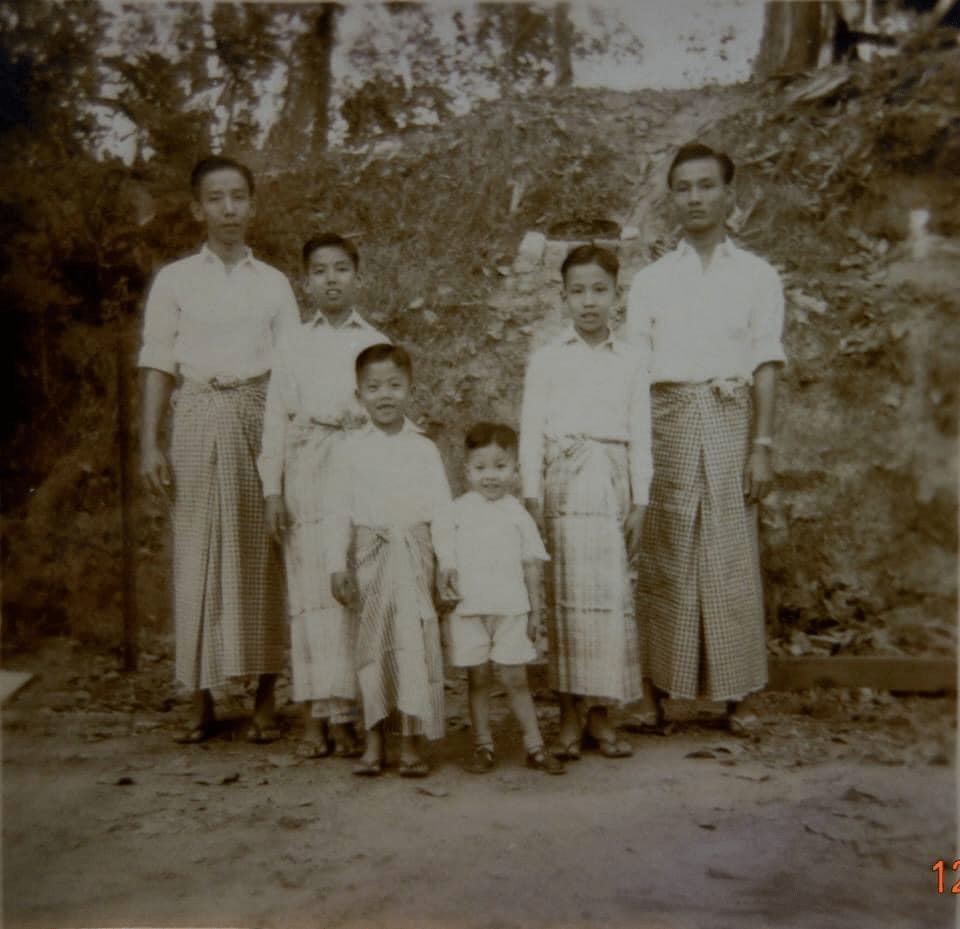
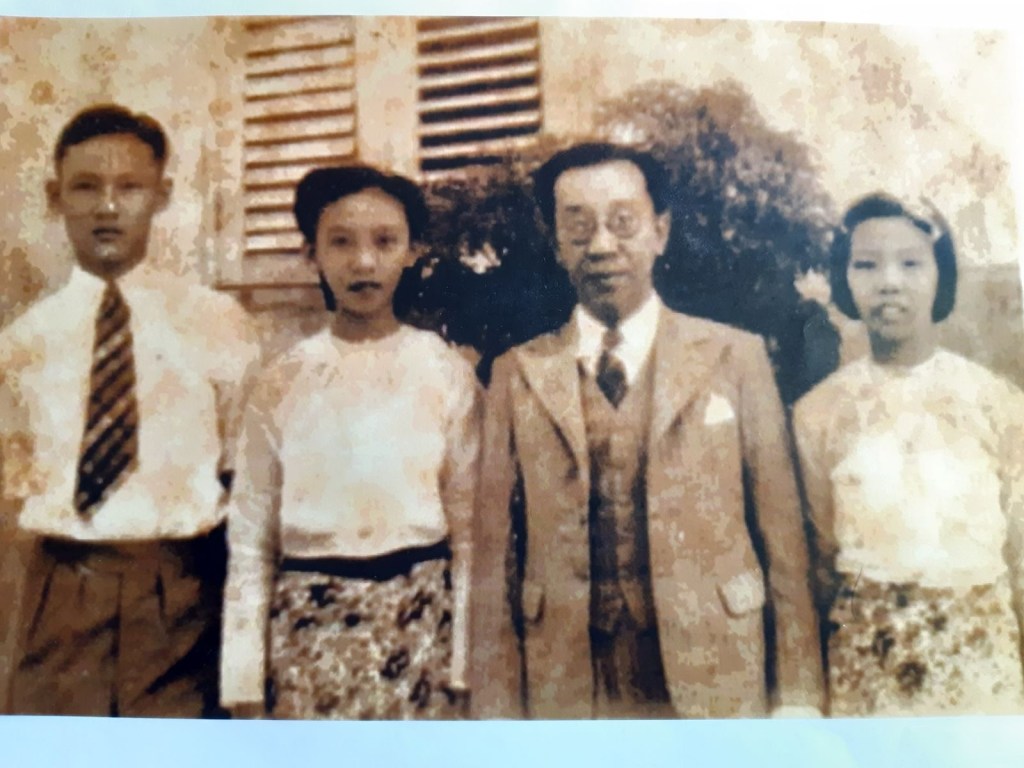
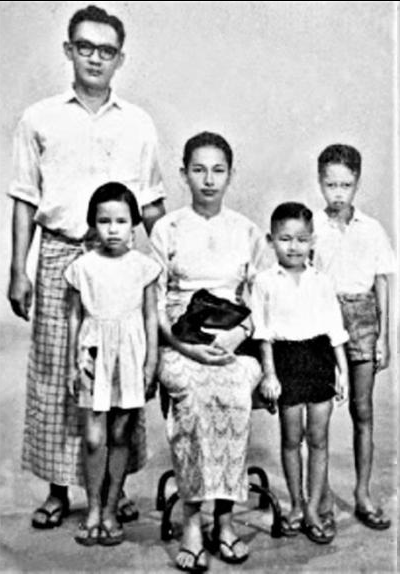
U Ba Than and familyBa Than, Myo Tint, Myo Min, Thaung Lwin, Tin Htoon, Tin U U Tin Htoon, U Tin U, U Ba Than, U Thaung Lwin, Dr. Myo TintU Tin U, Ruby, Father U Chan Sein, BettyWith Relatives
Six Siblings
Six Siblings
U Ba Than (Scholarship Winner in 1947, Gold Medalist for I.Sc in 1949, Alumnus of Imperial College, Retd. Prof. of Mech. Engg) — GBNF
Dr. Daw Win Hlaing (Ruby)
Daw Myint Thwe (Betty, B.Com, Spouse of Dr. F Ba Hli) — GBNF
Dr. Myo Tint (3rd in Burma in 1952, RUBC Captain) — GBNF
U Tin Htoon (A60, RUBC Captain, ARAE Champion, SEAP Silver Medalist in Yachting)
U Myo Min (1st in I.Com & B.Com, Chartered Acct, UCC Co-founder)
U Thaung Lwin (Scholarship Winner in 1960, First in EC66, RUBC Captain)
Daw Cho Cho Hlaing (CRO, German Diploma)
Yahan Khan
Yahan Khan
Birthday Presents
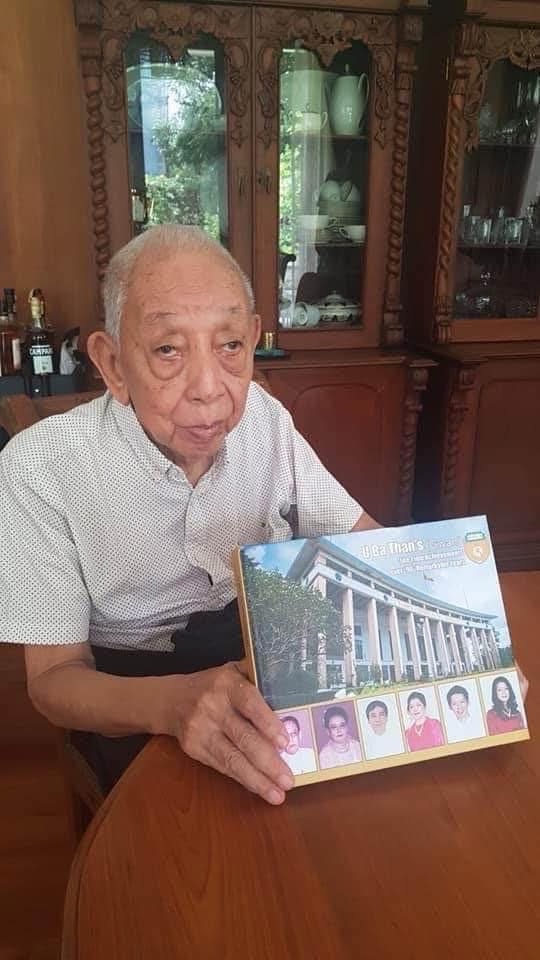
Photo Album for 90th birthday by Tin Htoon & Htaik San
Photo Cards for several birthdays by Tin Htoon & family
With 90th Birthday Present (Photo Album)Young U Ba ThanBirthday Soon Kyway
Garawa
Pay respect to his saya U Ba Toke
His former students (eg. 69ers) pay respect to Saya U Ba Than
At Saya Pu Zaw Pwe with Sayagyi U Ba TokeWith former students, who came to pay respectAt Winner Inn
Dana
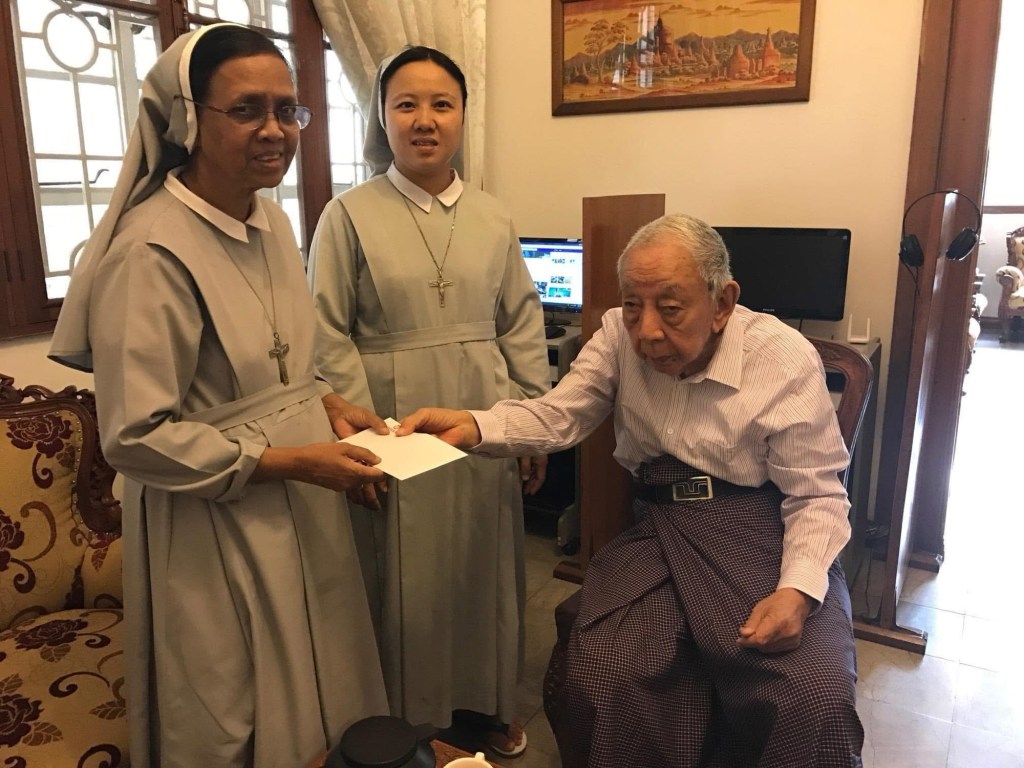
He donated his Garawa money to selected charities.
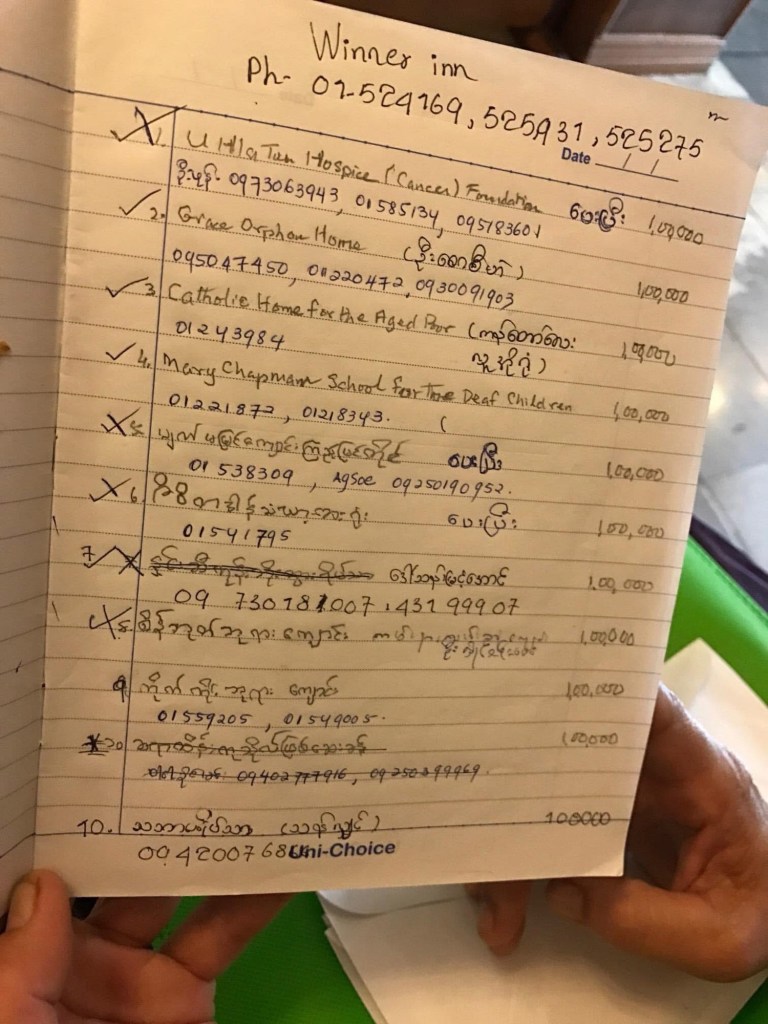
On one occasion, he donated to ten charities.
Double Dana : Donated Garawa money to selected CharitiesPartial List of Donations
Scholar Athlete : BSCE from Oregon State; MSCE from Yale; Past Captain of RUBC; Past Captain of RGC
Survived a Kidnapping (with intent to kill him) : by a former employee
Had good memory and strong hands until his final days
Tin U
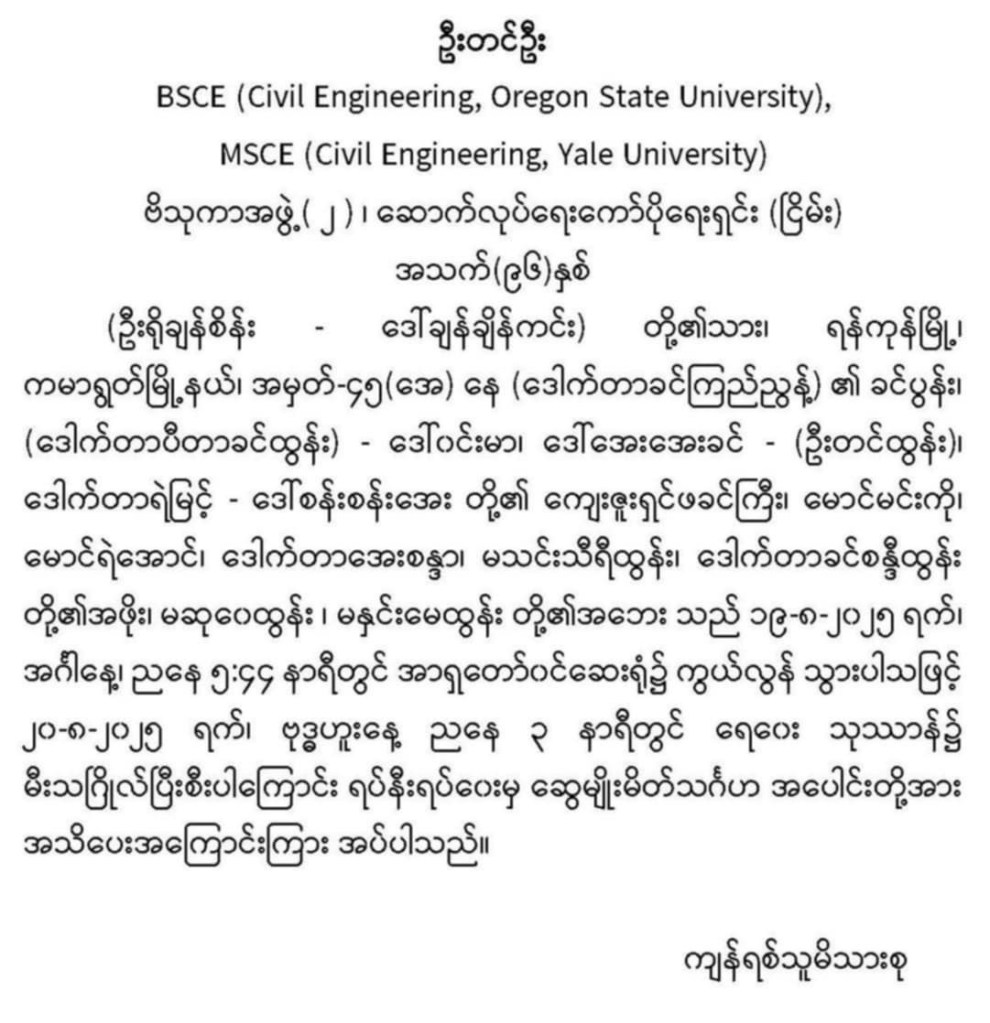
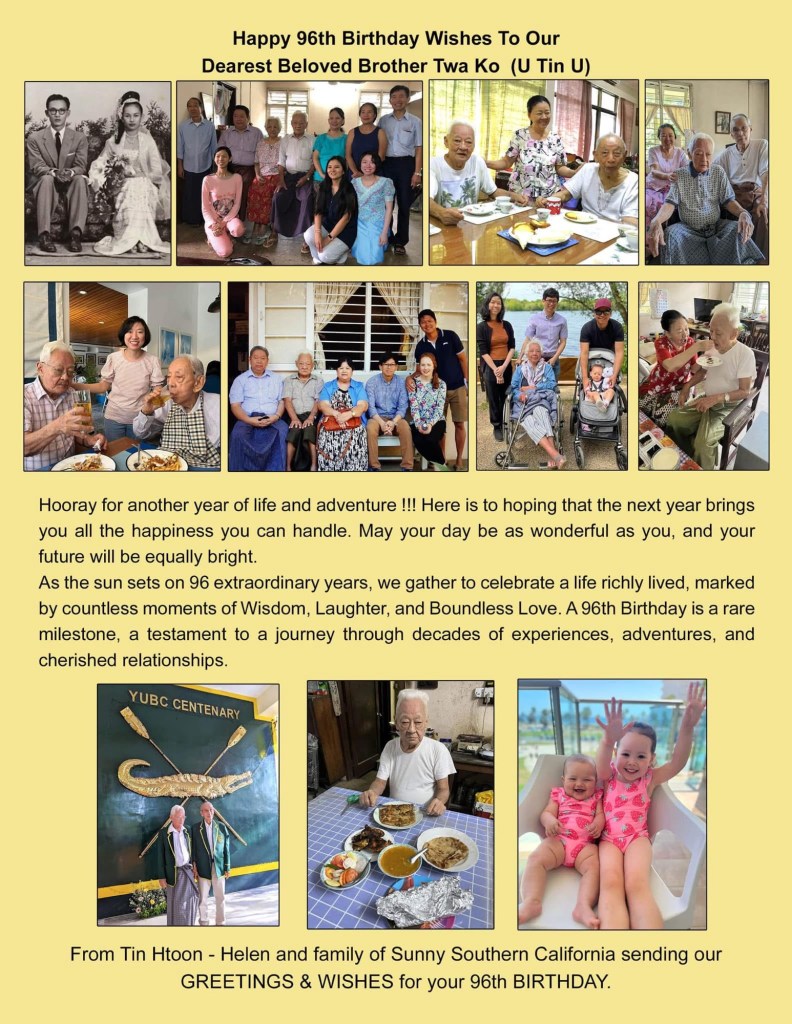
Passed away in Yangon on August 19, 2025
He was 96 years young.
Obituary
Obituary
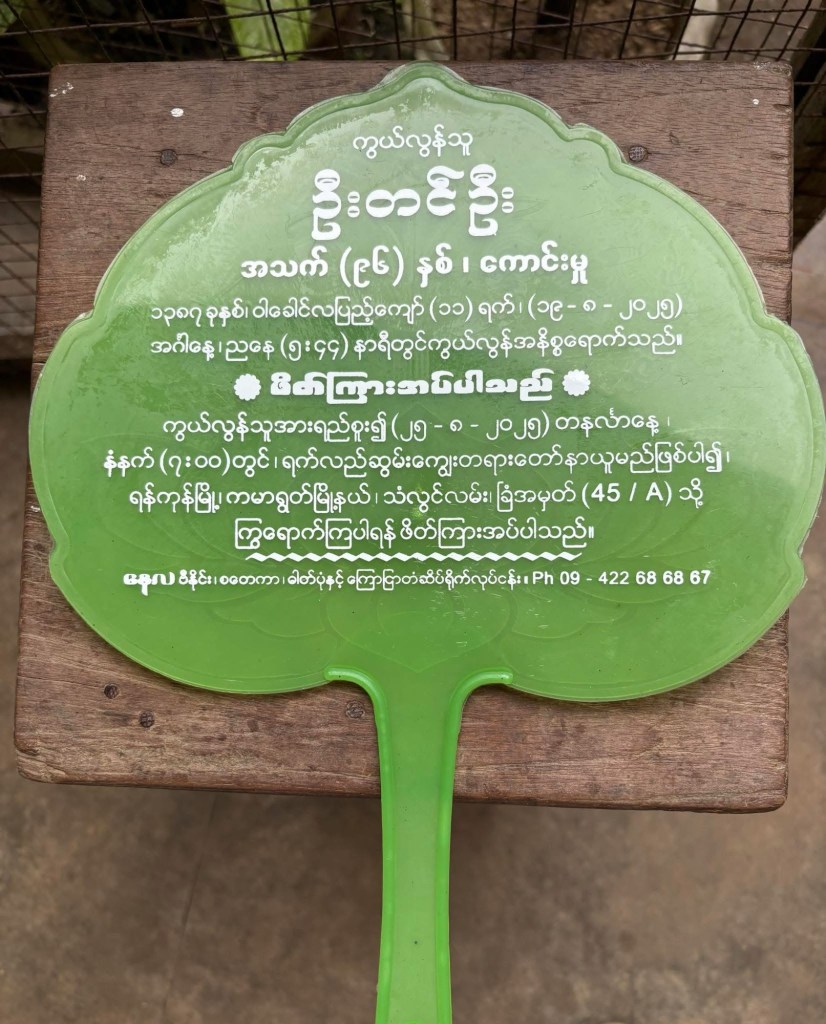
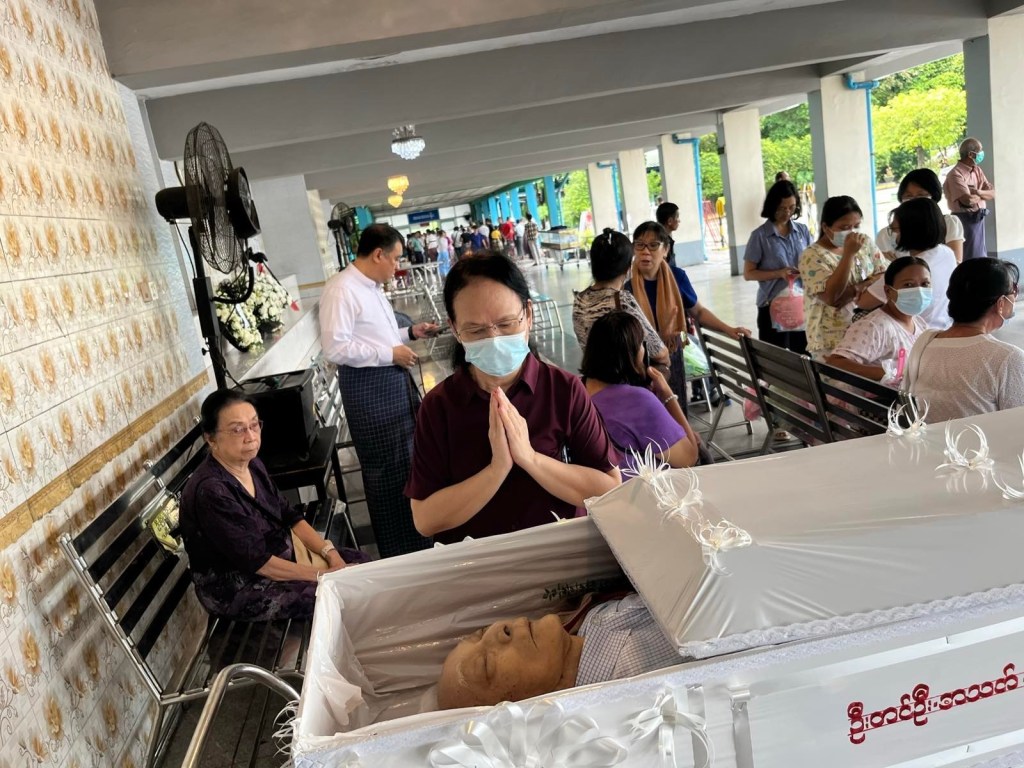
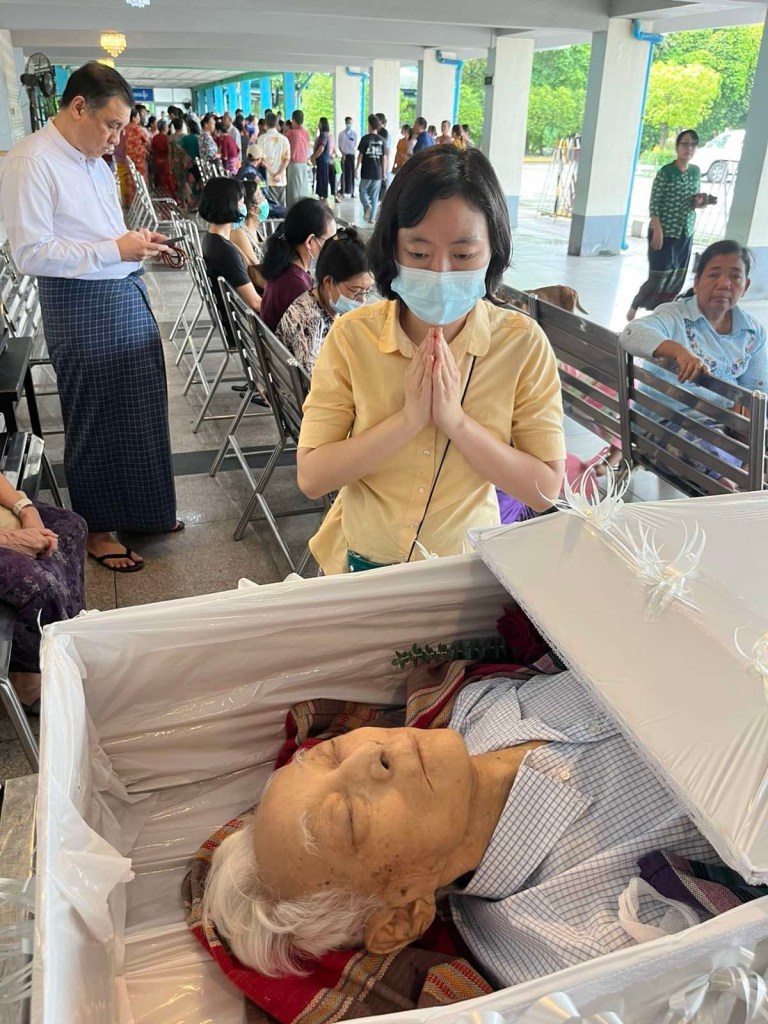
Final Journey
Attended by Family members, relatives and friends
Invitation for Yet Le Soon KywayAye Aye Khin (Daughter)Thin Thiri Tun (Granddaughter)
Academic & Experience
BSCE (Oregon State University)
MSCE (Yale University)
Former Part-time Lecturer, Civil
Former Director, Clark & Grieg
Former Advisor, InterKiln
Former Advisor, PWD Architect Group 2
Oldest & Most Senior Past Captain, Rangoon University Boat Club
Past Captain, Rangoon Golf Club
Former Treasurer, Burma Society of Civil Engineers
Family
U Tin U, Aye Aye Khin, Daw Cherry, Ye Myint, Peter
Spouse
Dr. Cherry 1
Dr. Khin Kyi Nyunt (Cherry) — passed away in November 2019
She did Nutrition Research at BMRI.
Children
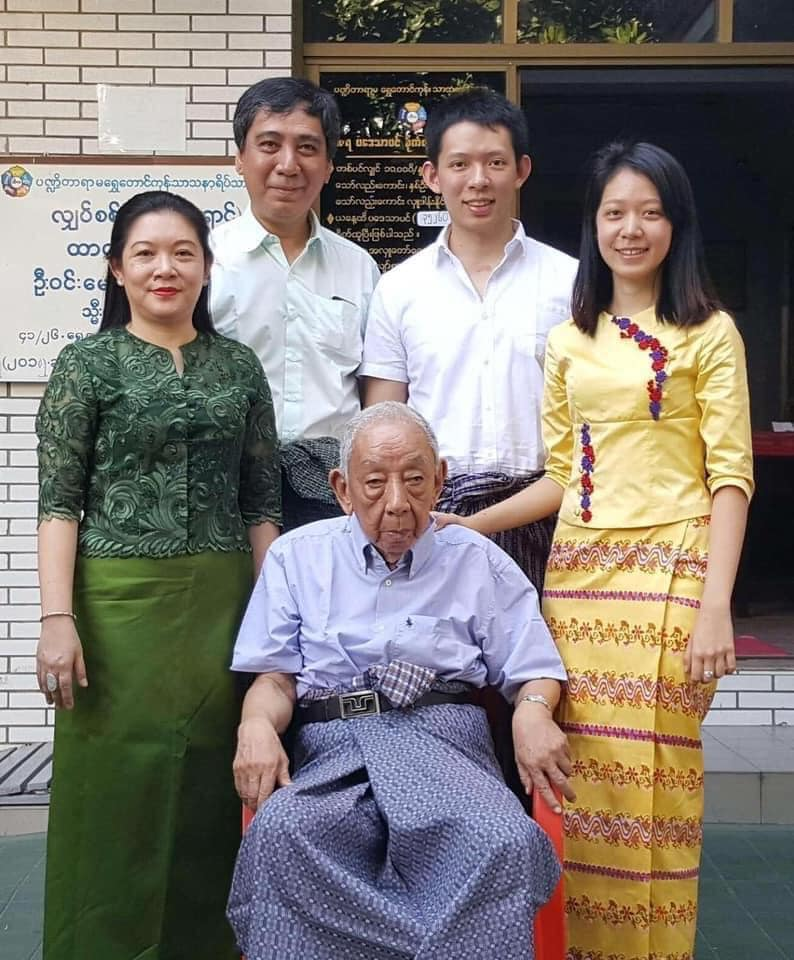
Peter & his mom Dr. Cherry Family & RelativesAye Aye. Dr. Cherry, Dr. Peter, U Tin UFamily & Relatives 2Daw San San Aye, U Tin U, Dr. Ye Myint& Dr. Aye Sandar
Dr. Khin Tun (Peter, MRCP, Former Associate Dean of Oxford University, passed away in April 2020) & Daw Winmar;
Daw Aye Aye Khin (B.Com, CPA) & U Tin Tun (passed away in May 2020)
Dr. Ye Myint (Fellowship training in Intensive Care and Anesthesia, Took care of his father’s health in the final days) & Daw San San Aye
YM 1 YM 2 YM 3
Grandchildren
Min Ko & Prudence
Ye Aung
Dr. Aye Sandar
Thin Thiri Tun
Dr. Khin Sandy Tun
Great Grandchildren
Su Wai Tun
Hnin Wai Tun
Peter, Winmar, Ye Aung, Min Ko
Siblings
U Tin U, Ruby, Father U Chan Sein, BettyBa Than, Myo Tint, Myo Min, Thaung Lwin, Tin Htoon, Tin U U Tin Htoon, U Tin U, U Ba Than, U Thaung Lwin, Dr. Myo TintSix Siblings
U Ba Than (Scholarship Winner in 1947, Gold Medalist for I.Sc in 1949, Alumnus of Imperial College, Retd. Prof. of Mech. Engg) — GBNF
Dr. Daw Win Hlaing (Ruby) — GBNF
Daw Myint Thwe (Betty, B.Com, Spouse of Dr. F Ba Hli) — GBNF
Dr. Myo Tint (3rd in Burma in 1952, RUBC Captain) — GBNF
U Tin Htoon (A60, RUBC Captain, ARAE Champion, SEAP Silver Medalist in Yachting)
U Myo Min (1st in I.Com & B.Com, Chartered Acct, UCC Co-founder)
U Thaung Lwin (Scholarship Winner in 1960, First in EC66, RUBC Captain)
Daw Cho Cho Hlaing (CRO, German Diploma)
Highlights
Matriculated from St. John’s Dio in 1946
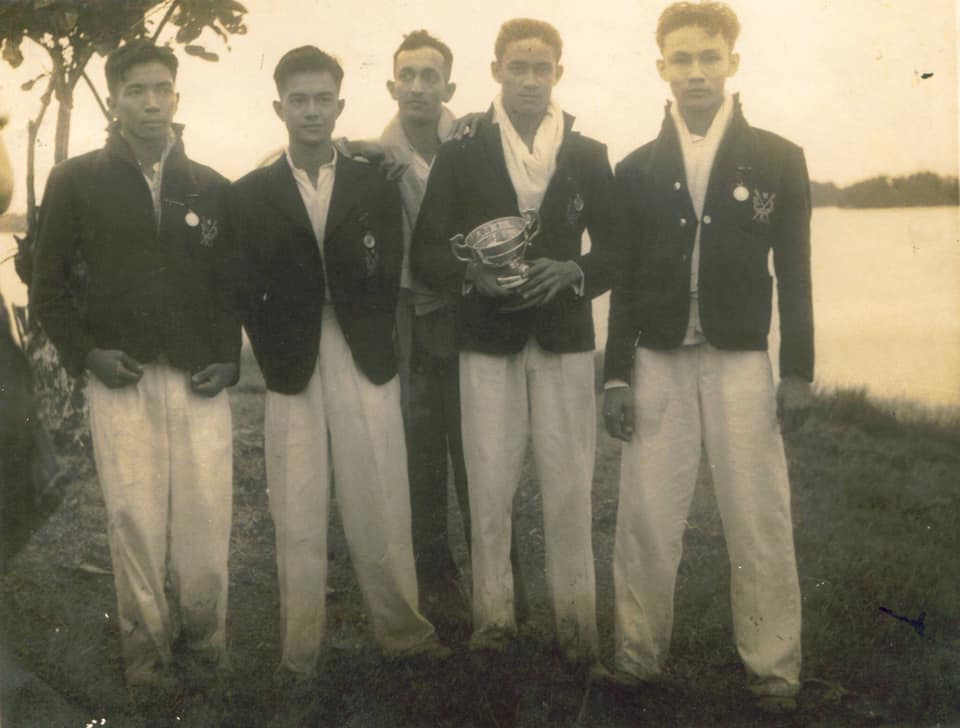
Represented RUBC at the 1948 Independence Day Regatta at Kandawgyi with Pe Nyun, Pe Thein and Khin Maung Wint
1948 Independence Day Regatta
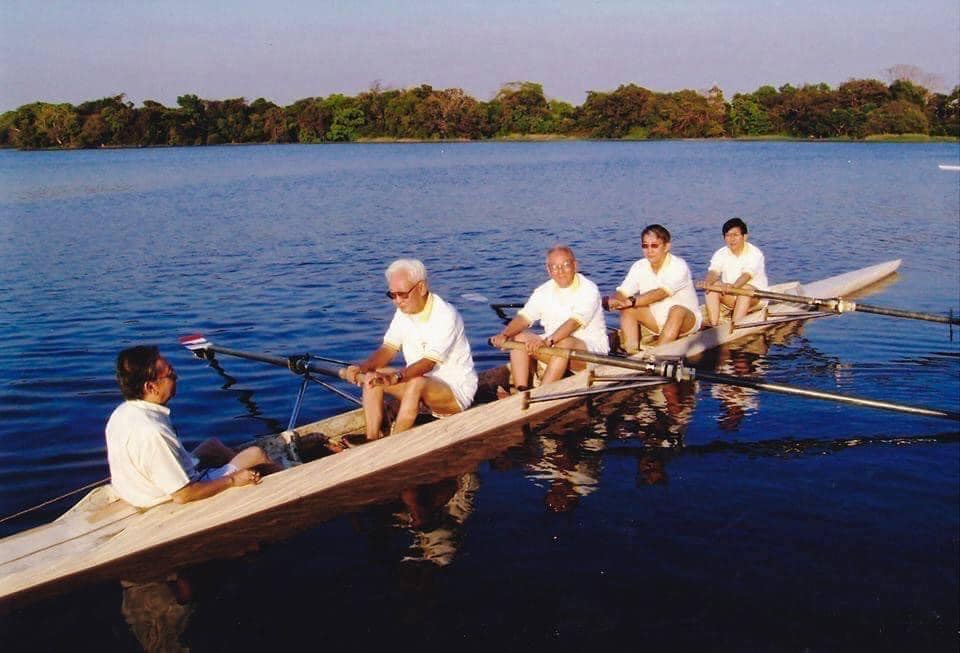
Rowing
Four brothers — Tin U, Myo Tint, Tin Htoon & Thaung Lwin — are RUBC Captain & Gold
Two other brothers — Ba Than and Myo Min — are RUBC Green
Tin U & Thaung LwinRUBC Captains
Photo shows Five RUBC Captains. Sein Htoon (Cox) is a cousin; he is 1960 ARAE Champion
Most Senior Past Captain
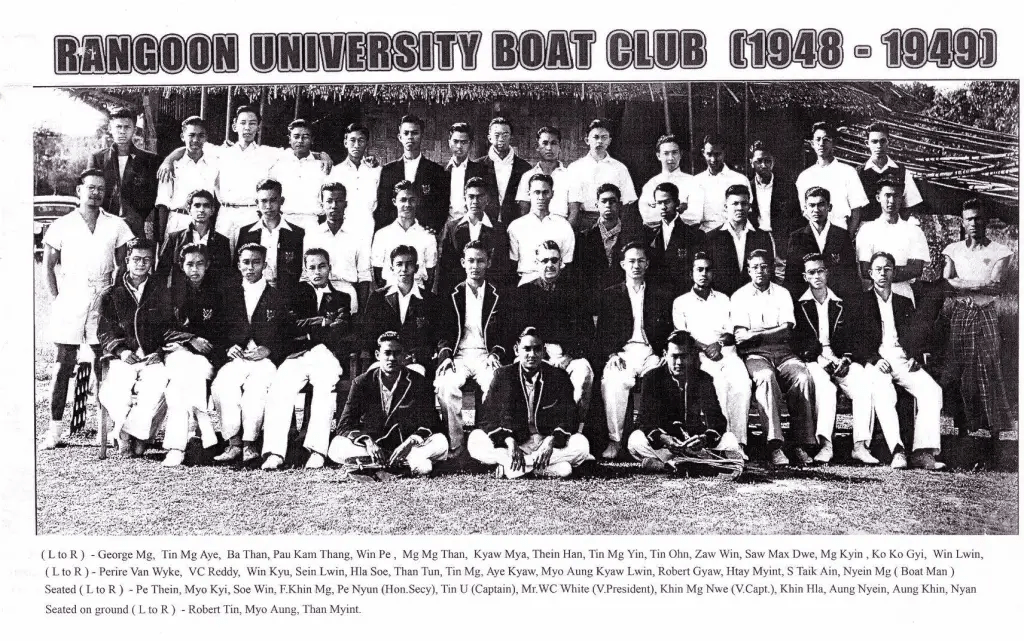
Captain of Rangoon University Boat Club (1948 – 49)
RUBC
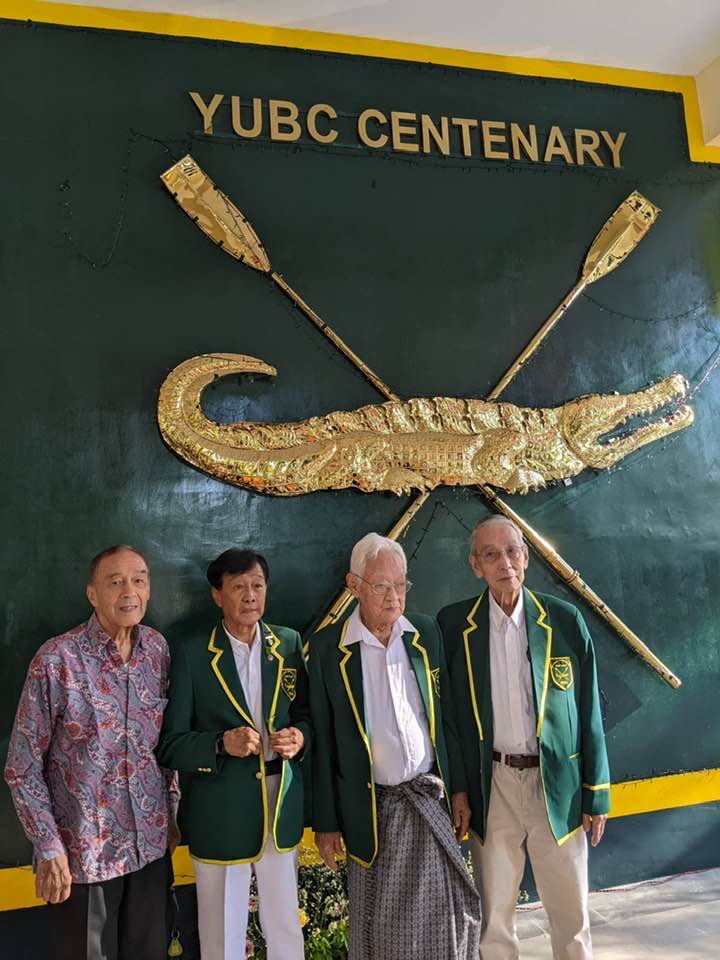
As the Most Senior and Oldest Past Captain of RUBC, U Tin U was invited to open the RUBC Centennial Celebration in 2023
RUBC Centennial
Bridge
Played with friends (e.g Richard Po Ohn)
Played with Uncle and two cousins
Golf
Past Captain, RGC
Played with senior (e.g U Yaw Hlaing) & junior (e.g U Soe Paing) partners until his early 80s
Memories
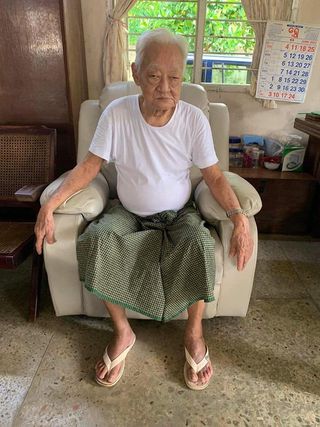
Relaxing in the garden
Tin U
Visit
With Than Htut
Interviews
For RGC (Rangoon Golf Club)
For HMEE (History of Myanmar Engineering Education)
For his grandson Min Ko
Kidnap Survivor
See account by his son Dr. Khin Tun (Peter)
Yahan Khan
Yahan Khan
Garawa
SPZP-2012
SPZP-2012
PWD Architect 2 Group
PWD 1PWD 2PWD 3
Birthday Presents
Photo Album for 90th birthday by Tin Htoon & Htaik San
Photo Cards for several birthdays by Tin Htoon & family
The account about the Association of Engineers in Burma after World War was told by Saya U Tin U and recorded by Saya U Ba Than.
The Association was re-instituted about 1955-56.
President : Sayagyi U Ba Hli (Dean of Engineering, University of Rangoon)
Honorary Secretary : Saya U Soon Sein (Professor, Mining)
Honorary Treasurer : Saya U Tin U (Part time Lecturer, Civil)
U Tin U
U Tin U
Matriculated from St. John’s Dio in 1946.
Attended Rangoon University before going for studies in the USA.
Captain & Gold of Rangoon University Boat Club in 1948. Represented RUBC in the Independence Day Regatta at Kandawgyi in 1948 along with Dr. Pe Nyun, Dr. Pe Thein and Khin Maung Wint (Bobby).
Received BCSE from the University of Oregon and MCSE from Yale University.
Upon his return to Burma, he worked in the industry and taught part-time at the Civil Engineering department.
Past Captain of Rangoon Golf Club
Oldest & Most Senior Past Captain of RUBC
Retired as Advisor of PWD Group.
U Ba Than
U Ba Than
1947 : Matriculated from St. John’s Dio and won Collegiate Scholarship.
1949 : Gold Medal for scoring highest marks in the Intermediate of Science exam
RUBC Full Green
Studied Mechanical Engineering at Imperial College, London University
Joined Faculty of Engineering as Assistant Lecturer
As a requirement for promotion, he did his Masters at Imperial College
Retired as Professor of Mechanical Engineering
Early supporter of HMEE-2012 project. Donated his photo albums. Requested U Thaw Kaung to allow U Soe Paing & team to access the archives of Rangoon University Central Library.
Before the pandemic, he invited former colleagues and students to his Birthday Soon Kyaw at Yaw Sayadaw’s Monastery.
He donated back all of the Garawa Money to various social and religious associations.
He is now GBNF.
Updates
HMEE book was published in December 2012. Copies of the book were donated to Universities’ Central Library and YTU Library.
U Tin U lost his spouse Dr. Daw Khin Kyi Nyunt in November 2019, his elder son Dr. Peter Khin Tun in April 2020 and his son-in-law U Tin Tun in May 2030. He will celebrate his 96th birthday on August 3, 2025.
U Ba Than passed away after his 94th birthday in 2024.
Worked for Joint Venture Corporation (JVC) formed by relatives
Found an advertisement in a newspaper to apply for a Government Scholarship.
Selected to study Agricultural Engineering in USA
Received Masters from Virginia Tech
Came back to Burma on an Ocean Liner with Saya Allen Htay (GBNF), Saya U Soe Paing, Saya U Ko Ko Lay (GBNF) & U Than Pe. They became close friends on the two-month long journey.
M/Agri Saya at RIT
Upon his return, he was assigned to Agricultural Institute in Yezin. Before reporting for duty, he visited RIT.
Sayagyi U Ba Than (GBNF) asked if he would like to join Agri Sub-Department of Mechanical Engineering. Sayagyi said that some students were not at ease following lectures given by visiting Soviet lecturers via interpreters.
President, RIT Thaing
Played Defender on RIT Saya Soccer team
Life after RIT
Worked in Thailand & USA
Attended RIT Alumni Gatherings in USA
Donated $500 for the Training Component of YTU Library Modernization project.
U Tin Maung Nyunt’s Donation
He is a day older than Saya Allen Htay (GBNF). Their birthdays are December 30 & 31.
Monthly Breakfast Gathering with Saya Allen, U Ko Ko Aye (GBNF), Ko Thein Naing (Patrick) and me.
U Tin Maung Nyunt & Saya Allen
Saya U Soe Paing visited him in Milpitas, California. We had a lunch gathering at a restaurant.
U Tin Maung Nyunt 2
He enjoyed Hiking & Tennis, but had to suspend due to Jara and Byadi
Volunteer for establishing Taungpulu Kaba Aye Monastery in Northern California.
He had operations (one quite early and another a few years back).
Seated : U Soe Paing, U Thein Lwin (GBNF), U Tin Swe (GBNF), U Sein Hlaing (Professor, GBNF), U Kyaw Tun (GBNF), U Sein Win (GBNF), U San Tint (GBNF)
Standing : U Soe Min (GBNF), U Chin Way (GBNF), U Win Tin, U Ba Myint, U Nyi Nyi (GBNF), U Moe Aung, U Sein Maung
Studying abroad : U Myo Kyi, U Ba Lwin (GBNF), U Tin Maung Thein
Absentee: U Khine Oo
U Myo KyiDr. Ba Lwin (GBNF)U Tin Mg Thein
Associated Article
I wrote “A short and sad clip : EE Sayas” for the commemorative issue of Swel Daw Yeik Sar Saung for SPZP-2010. Saya U Moe Aung suggested the title of my article.
Sayagyis & senior sayas
Source : Saya U Myo Kyi (EE59)
U Moe AungSPZP
1. U Kyaw Tun 1950 – 1971 (started teaching at BOC College)
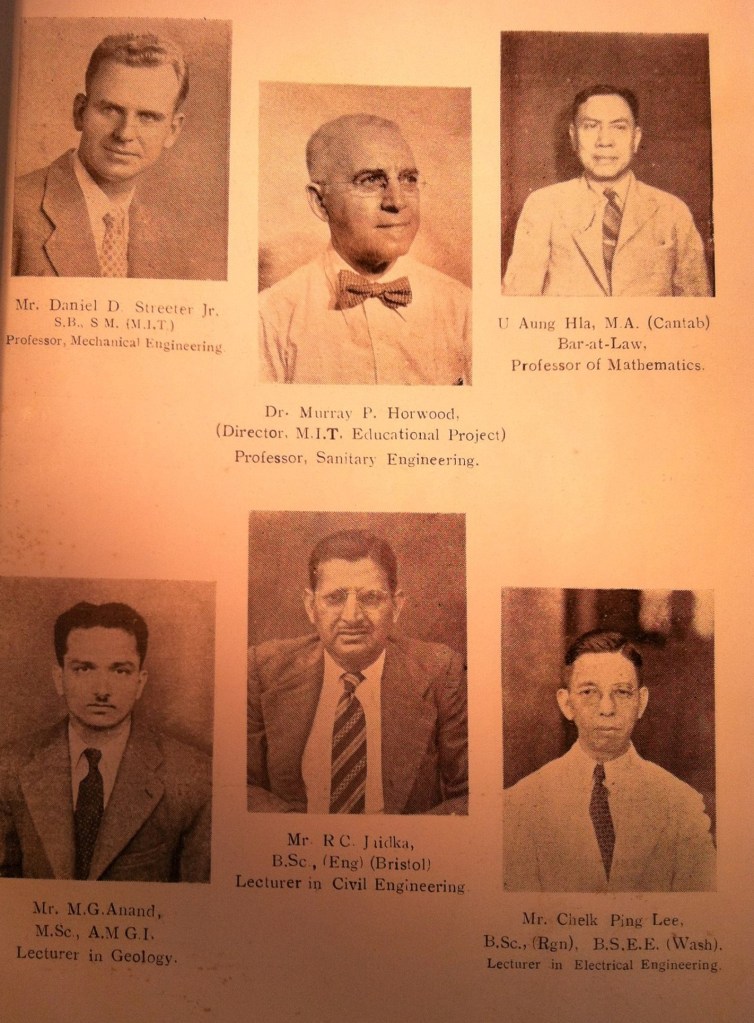
C Ping Lee
2. U C Ping Lee 1950 – 1952 3. U Sein Hlaing 1954 – 1986 4. U Tin Swe 1954 – 1998 5. Dr. Freddie Ba Hli (Part time) 1959 6. U Htin Paw 1958 – 1959 7. U Ba Nyunt 1958 – 1959 8. Dr. A. E. Guile (Colombo Plan) 1959 – 1960 9. U Myo Kyi 1959 – 2002 10. Dr. Ba Lwin 1959 – 1994 11. U L. Tin Htun 1959 – 1960 12. Teoh Chin Koon 1959 – 1960 13. U Sein Win 1960 – 1994 14. Dr. San Tint 1961 – 2002 15. Mr. Zagarosky (Russian) 1962 – 1963 16. Dr. Ba Myint 1963 – 2000 17. U Sein Maung 1963 – 1994 18. U Khine Oo 1963 – 1996 19. Dr. Win Tin 1963 – 1990 20. U Moe Aung 1963 – 1990 21. U Chin Way 1963 – 1968 22. U Soe Min 1963 – 1965 23. U Nyi Nyi 1963 – 1965 24. U Thein Lwin 1964 – 1972 25. U Soe Paing 1964 – 1971 26. U Tin Maung Thein 1965 – 1990 27. U Tin Shwe (Ashin Wi thu ta) 1966 – 1996 28. Daw Mya Mya Than 1968 – 2003 29. U Than Lwin 1970 – 1994 30. U Kyaw Lwin 1970 – 1991 31. U Tin Win 1972 – 1980 32. U Thein Dan 1973 – 1997 33. U Khin Soe 1973 – 1982 34. Daw Khin Aye Win 1973 – 2009 35. Daw Nyunt Nyunt Yee 1973 – 2000 36. U Kyaw Aung (U Kyin Phyuu) 1973 – 37. U Aung Than (U Ah Chun) 1973 – 2004 38. Daw Khin Swe Oo 1974 – 2002 39. U Clement Sadhana 1976 – 2010 40. Daw Than Than Win 1976 – 2012 41. Daw Khin Tint 1981 – 2008 42. U Myint Oo 1982 – 1990 43. Daw Khin Ma Ma Soe 1982 – 2008
U Sein MaungU Ba Myint U Khine OoU Soe PaingDaw Mya Mya ThanU Thein DanU Ko Ko KyiDaw Khin Aye Win
Editor’s Notes
U Kyaw Naing (Sin Gwan, EC70) is GBNF.
U Ko Ko Kyi (EC72) later worked in Malaysia and Canada.
More EE Sayas (Electronics and Power)
U Win Khaing Moe
U Maung Maung Latt
Daw Lei Lei Yee
Daw Khin Sandar Tun
Daw Khin Lay Wai
Daw Zin Mar Oo
Daw Khaing Khaing Kyaw
Daw Thazin Phyu
Daw Myint Myint Lwin
Daw Lei Lei Win
Daw Thidar Than (1)
Daw Mya Mya Aye
Daw Myint Myint Than
Daw Tin Tin Naing
Daw Sint Sint Win
Daw Thandar Naing
Daw Khin Swe Lwin
Daw Myint Myint Mon
Daw Nilar Aung
U Zaw Min Naing
Daw Moe Nilar
Daw Khin Moe Yee
Daw Kaythi Khaing
Daw Ah Tar Mon
Daw Ni Ni Thein Htay Pe
Daw Thidar Than (2)
U Thein Htay
U Tun Oo
Daw Aye Aye Mar
Daw Ni Ni Win
Daw San Myint Yee
U Aung Naing
Daw Naing Naing Maw
U Ananda
Daw Lei Lei Sein
Daw Min Min Myat
Daw Thi Thi Soe
Daw Mar Mar Lwin
Daw Su Myat Htut
Daw Win Lein Aye
Daw Han Thu Lwin
Daw Yin Yin Htwe
Daw Naing Naing Win
Daw Khin Kyu Kyu Win
Daw Cho Cho Aung
Daw Tin Tin Aye
Daw Ni Mar Nwe Aung
Daw Ei Ei Khin
Daw Kyaaw Khin
U Zaw Min Aung
Daw Aye Thinn Naing
Daw Nwe Ni Aye
U Soe Naing
Daw Phyu Phyu Moe
Daw Marlar Kyaw
Daw Aye Aye Thinn
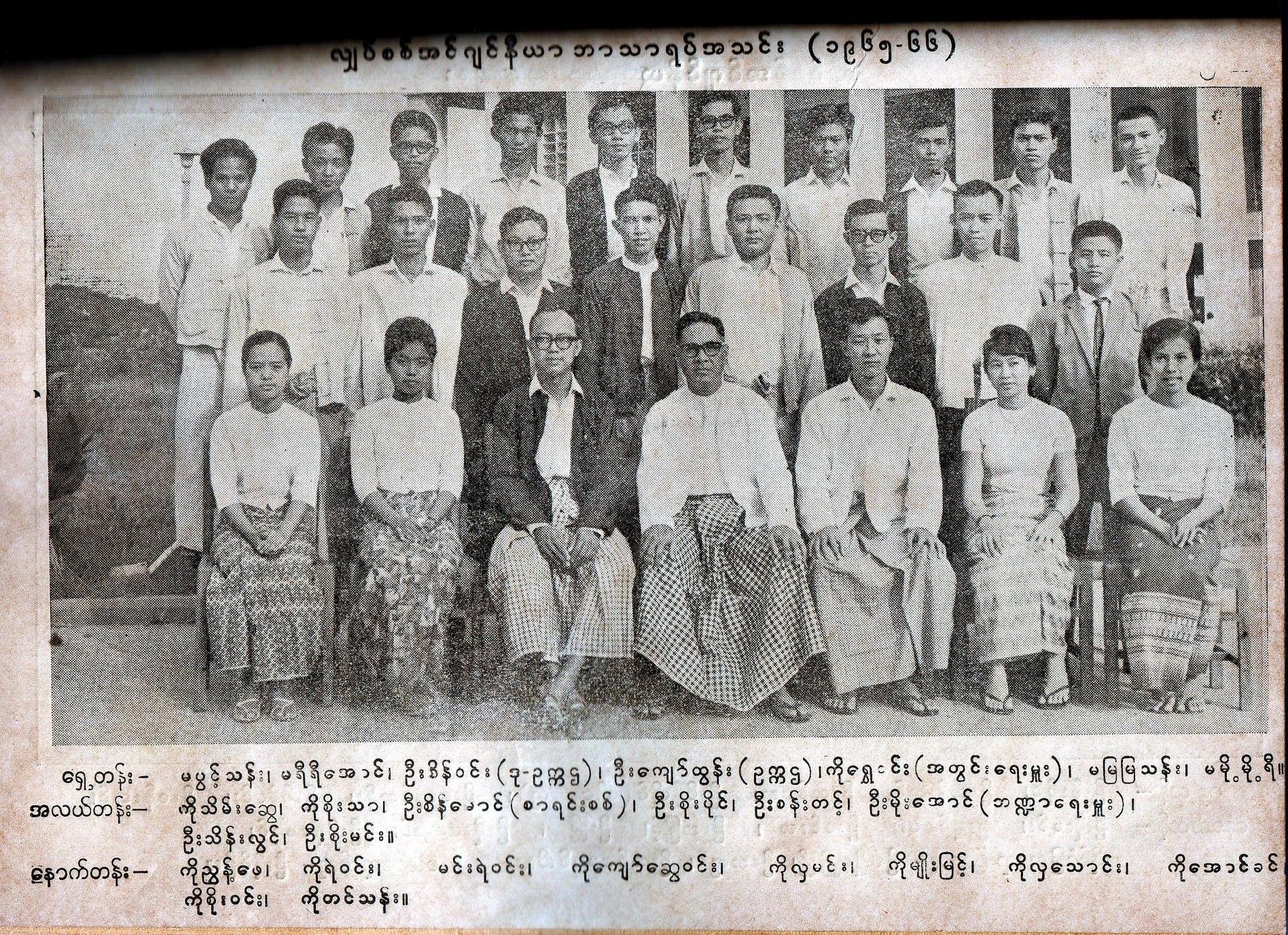
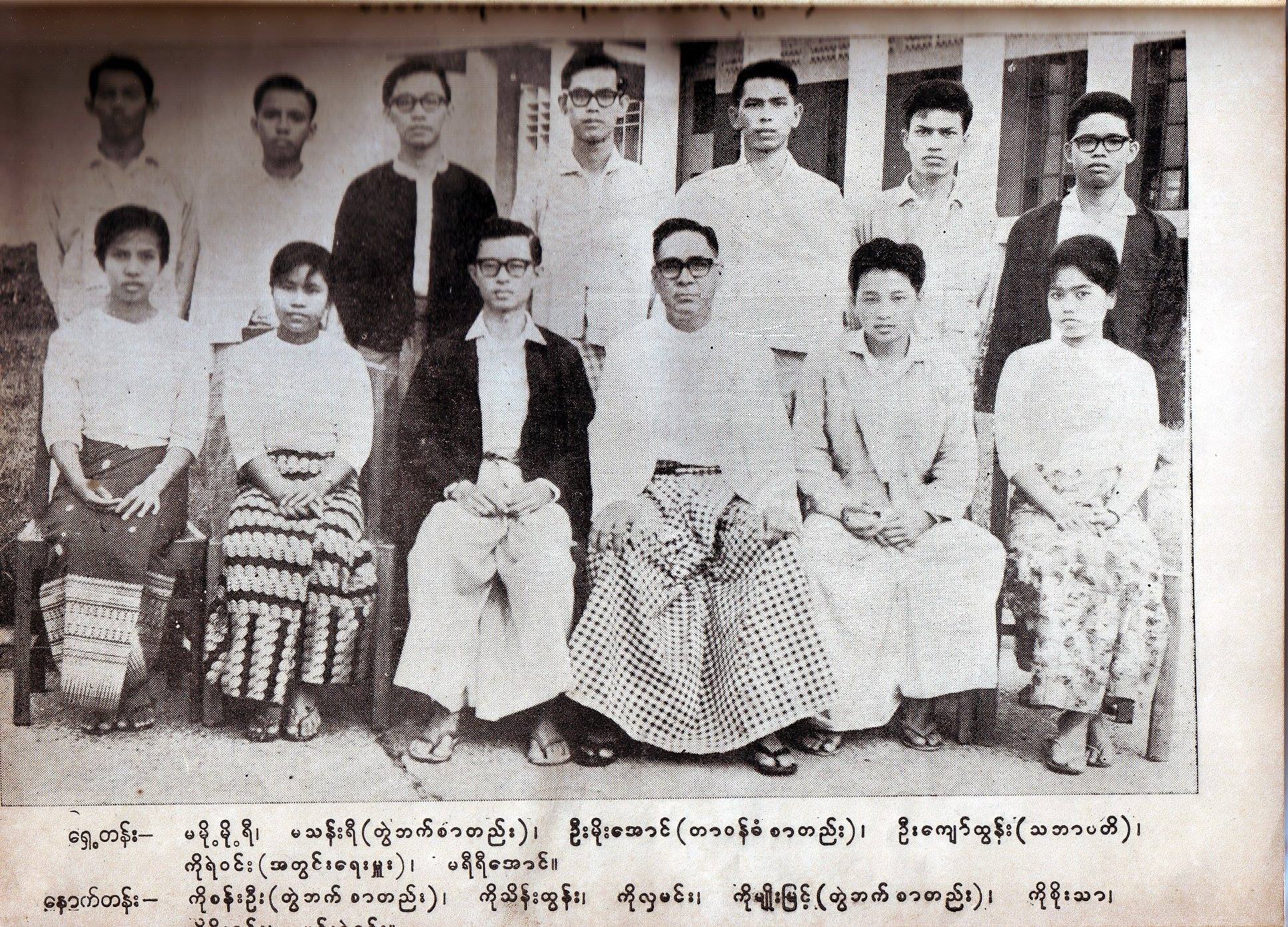
EE Association (1965 – 66)
EE Association for 1965-66
Seated : Ma Pwint Than, Ma Yi Yi Aung, U Sein Win (Vice President), U Kyaw Tun (President), Ko Shwe Win (Secretary), Ma Mya Mya Than, Ma Mo Mo Yi
Middle row : Ko Thein Swe, Ko Soe Than, U Sein Maung (Auditor), U Soe Paing, U San Tint, U Moe Aung (Treasurer), U Thein Lwin, U Soe Min
Last row : Ko Nyunt Pe, Ko Ye Win, Mehm Ye Win, Ko Kyaw Swe Win, Ko Hla Min, Ko Myo Myint, Ko Hla Thaung, Ko Aung Khin, Ko Soe Win, Ko Tin Than
I served as a EC member.
Hlyat Sit Sar Saung (1965 – 66)
Seated : Ma Mo Mo Yi, Ma Than Yi (Associate Editor), U Moe Aung (Chief Editor), U Kyaw Tun (Patron), Ko Ye Win (Secretary), Ma Yi Yi Aung
Standing : Ko Sann Oo (Associate Editor), Ko Thein Tun, Ko Hla Min, Ko Myo Myint (Associate Editor), Ko Soe Tha, Ko Soe Win, Mehm Ye Win
I served as a member.
Saya U Sein Win (GBNF)
Younger brother of Dr. Tin U (Medical Superintendent, Rangoon Children’s Hospital) and Dr. Saw Lwin.
Top student at the University of Michigan.
His friends called him “Khone Swa Khone Swa” referring to his brisk walking style.
Lecturer in the Department of Electrical Engineering.
When EE Department was reorganized, he served as Professor of EP.
Saya is an absent minded Professor. He married late. One day, he drove Sayagadaw to Bogyoke Market. He taught (or discussed with) his students for quite some time and almost forgot to pick up Sayagadaw. There are variations on this anecdote regarding the place (e.g. Hledan Zay).
He served as Technical Advisor for UCC. He worked closely with U Win Htein (Purdue University, EE at PWD, GBNF) for the design & maintenance of the Electrical Systems (including Motor Alternator, Diesel Generator, Air conditioning) at UCC.
Line Judge at the RUBC (Rangoon University Boat Club) Regattas.
President, RIT Swimming Association; He stays fit by swimming regularly (even when he was visiting Singapore on a business trip).
He has a vast knowledge. Saya Dr. San Hla Aung (C58) remembers Saya U Sein Win discussing about Civil Engineering and other subjects.
Update
Several senior sayas — U Kyaw Tun, C Ping Lee, U Sein Hlaing, U Tin Swe, U Sein Win, Dr. Ba Lwin, U Thein Lwin, Dr. San Tint, U Soe Min, U Chin Way, U Nyi Nyi, U Tin Shwe, Daw Mya Mya Than, U Kyaw Naing, U Kyaw Lwin, Daw Nyunt Nyunt Yee, U Khin Soe — are GBNF.
Some — U Moe Aung, U Tin Win, U Thein Dan — have medical problems.
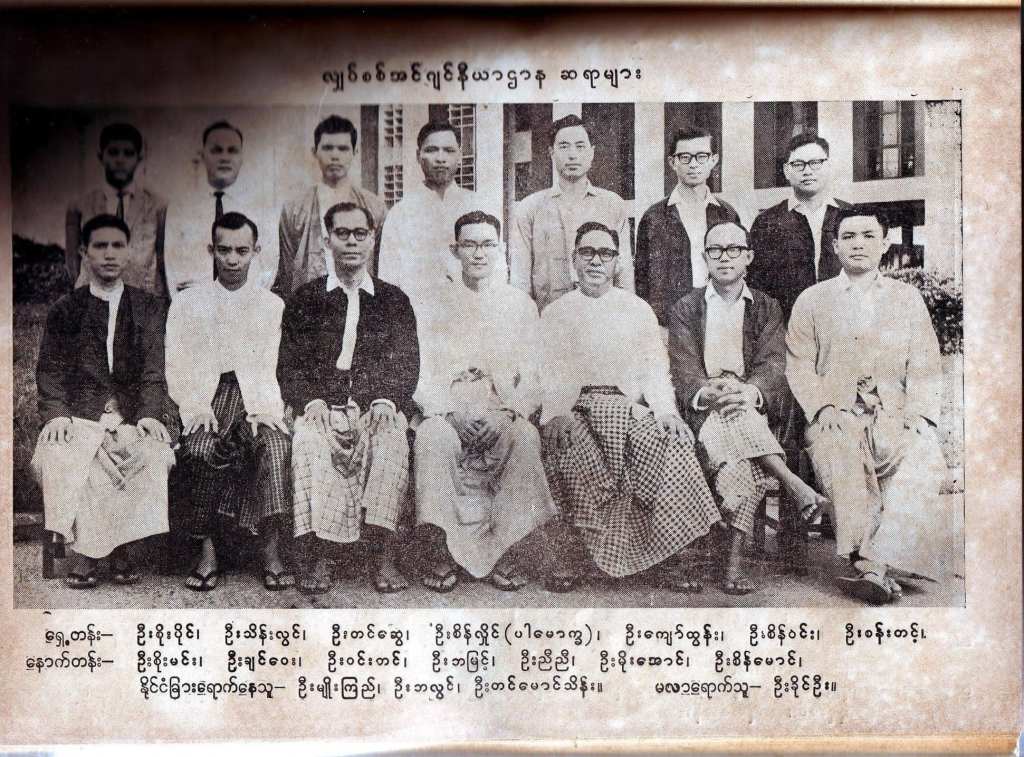
Luyechun (လူရည်ချွန်) for 9th & 10th standards. Present at the first Luyechun Camp was Thinchar Chun (သင်္ချာချွန်) Kyaw Myint (later T72 grad, MARB President)
Metallurgical Engineering
Nyunt Htay 2
Graduated from RIT in 1973 with Metallurgical Engineering
Taught Metallurgical Engineering
Retired as Associate Professor
Wrote articles about the Department, Sayas & Students
Passion
Poetry, writing & editing
Pen name : Maung Nyunt Htay (Ah Htet Min Hla) မောင်ညွန့်ဌေး (အထက်မင်းလှ)
Nyunt Htay 3
Editor, RIT Annual Magazine
Chief Editor, Myanmar Mudita Sar Saung
Myanmar Mudita
Contributor, Poetic Art Series
Co-author, Collection of Swel Daw Yeik Poems
Book of Poems
Family members
Two daughters
Several “Myee” cats
Health
Had a brush with Covid-19 and received support from the alumni and/or SDYF.
Recovered fully
Some sayas, sayamas and 9 Metallurgy alumni (including Maung Tun, 69er) succumbed to Covid.
Memories
Book Presents
Gave me the Myanmar Mudita Sar Saung
Gave me an autographed copy of “Swel Daw Kabyar Collection” by him and four RIT Poets : Saya U Moe Aung, Saya U Aung Myaing, U Win Myint (M72) and U Toee Maung.
2015 RIT Alumni in Los Angeles
Attended the gathering with Metallurgy Saya U Win Kyaw (Met71),
Other Metallurgy attendees include Saya U Thein Aung (Met72), Sayama Dr. Naing Naing Aung (Met91) & Ko Thiri Nyunt (musician).
Gathering at iNapa Winery
At iNapa Winery
Metallurgy sayas and Ko Thiri Nyunt attended the Lunch, Dinner & Entertainment at iNapa winery hosted by Gordon Kaung (M83) and Lillian (EC83).
The attendees paid respect to Sayagyi Dr. Aung Gyi. On behalf of Bagyee Myat Myo Myint, U Nyunt Htay presented a Pon Tu to Sayagyi.
Micro-gathering in 2019
During my visit to Yangon in late 2019, U Nyunt Htay hosted a micro gathering at Shwe Bae.
U Win Kyaw picked me and Saya U Ye Myint (ChE70) to attend the gathering.
Siblings : Dr. Myo Paing, U Win Paing (Sayadaw U Wara, GBNF), U Kyaw Paing
Spouse : Daw Saw Yu Tint (T69)
Children : Two sons & One daughter
Grandchildren : 3
Education & Work
Mmatriculated from St. Paul’s High School in 1956. He stood 13th in Burma and won Collegiate Scholarship.
At the Convocation of 1958, he won two Gold Medals — one for Highest Total Marks in I.Sc.(A) and I.Sc.(B); and another for Joint Highest Marks in Maths for I.Sc.(A) and I.Sc.(B).
Received a States Scholarship to study BSEE and MSEE at Stanford University.
Joined the RIT Electrical Engineering Department as Assistant Lecturer.
Helped Sayagyi Dr. Chit Swe found Universities’ Computer Center.
Transferred to UCC as Manager for Systems Division. He later also managed Operations Division.
Received M.Sc.(Computer Science) from Southampton University in UK.
Worked for UNDP Projects in several countries.
Mentor
My mentor at RIT & UCC.
Allowed U Aung Zaw (GBNF) & me to co-author Texts, User Guides and Manuals for use at UCC.
HMEE
Early supporter of the HMEE project.
Prepared a draft for the HMEE book and handed it to Saya U Aung Hla Tun & team.
He and U Ohn Khine (M70) translated Section 1 of the HMEE Book and summarized Section 2.
Posts
Post from March 2011
I went to the University Central Library and managed to get scanned photos from the Engg Student Annual Magazines 51-52, 52-53, 56-57 and 60-61. Photos include photos of Sayas, students of that year. From these when can know about the Sayas at that year. We can also identify the students at that year.
U Sein Hlaing (Prof EE) was a final year student in 1951-52 and became an A/L starting 1952-53. Saya U Tin Swe was a student in 1951-52 and 52-53. He was a member of the Eng Student Union and the victorious Prome Hall football team. Ex-Burma Selected Footballer U Chan Tha (Chief Engineer, Roads, Rangoon Municipal) was the Captain. U Khin Si (husband of RIT Finance Officer Daw Yin Yin Htway and part time lecturer Textile) and U Tin Si (U Khin Si’s brother and tennis doubles partnership that won RU as well as national championships) were members of the Prome hall team.
The 1956-57 magazine contains photos when the new Leik Khone Engineering Buildings were inaugurated in 1956 Nov by the Prime Minister at that time U Ba Swe.
In the 1952-53 magazine I found out that Mr. Robert Hole (ex-EE, Highways, PWD, PWC, CC; uncle of Percy Maung Maung and uncle Bobby to me) was the English editor. I called Uncle Bobby and requested him to write something about his engineering student days, his teachers and fellow students. He agreed and asked for about three weeks time.
I need to go back and to the UCL to get more info from the RIT handbook 1966-67 and photos from the Hlyat Sit Sar Saung.
U Ba Than has donated some of his Engineering College photos to the MES library and I need to go there to check up on the photos.
Post from May 2000
The mention of RIT, BIT, and BOC college in the first newsletter bring back memories of our good old days in Rangoon University. Although we did not graduate from Rangoon University, we had a really great two and a half years there before we went for studies aroad under government scholarship.
Our first year 1956-1957 was in Yankin College. Yankin was a campus of RU for first year science students. It is now Yankin State High School No. XX? Hteedan was for the 1st year arts students. Our second year I.Sc. was at the RU campus itself which we refer to as Main. The Arts students have classes at Judson. That time the new Social Science Building (now Institute of Economics) was completed. We had our second year ISc exams in that new building.
Then it is our 1st year B.Sc. Engineering course at the new Faculty of Engineering in Prome Road (now Institute of Medicine I). We attended for six months till December 1958. That campus was designed and built especially for the Faculty of Engineering. Civil, Electrical, Mechanical Departments were there but Chemical, Textile, etc. were in the old BOC building at the back.
The 1st year classes were from 7 to 9 a.m. for Mathematics. We then have a one hour break and we start the engineering courses at 10 a.m. We usually have a snack during the break at a small cafe between Tagaung and Prome Halls. Those halls were only for engineering students then. The mathematics (Pure & Applied) lecturers were from India hired under contract. We had three engineering courses: Building Materials taught by Mr. Tan Ba Hli (the Dean of Engineering himself). Heat Engines taught by U Aung Khin. Principles of Electrical Engineering taught by U Kyaw Tun. We had EE lab with Ko Htin Paw and Ko Ba Nyunt as lab instructors. We also had engineering drawing with Ko San Hla Aung and Allen Htay (for Chem, Tex, etc.) as instructors.
Those were the days when Rangoon University was one of the best universities in SE Asia and Asia. It also had a really nice campus.
RIT Saya Soccer Team
Reading about communications from Richard Khoo (Dr. Aung Soe, C61) and seeing the list of Sayas in the 1966-67 Handbook brings back memories of our soccer team.
As I remember it was from 1964 to 1968 or 1969. We played against (i) the senior students of different majors Civil, Mechanical, Electrical etc. (ii) the sayas at GTI and Natmauk Technical Institute (iii) the Burma Air Force officers.
We also played in the annual tournament for RIT Staff. The staff teams are the Sayas, Workshop staff, Lab staff, Hostel staff and the youth team from the RIT compound.
As I remember (other Sayas & graduates may correct me) these were the people in the team.
Goalkeepers :
Richard Khoo (Civil)
Maurice Kyaw Zaw (Chemistry),
Sein Myint/Ah Sein (Petroleum)
Defenders :
Ko Maung Maung Than (Textile)
Ko Aung Soe (Math)
Ko Aung Hla Tun (Met)
Ko Sann Tint (Elect)
Christopher Maung (Civil)
U Tin Swe (Elect)
Ko Tin Win (Mech)
Midfielders :
Ko Tin Maung Nyunt (Agri)
Desmond Rogers (English)
Ko Khine Oo (Elect)
Ko Maung Maung Win (Mech)
Ko Tin Hlaing II (Mech)
Forwards :
Ko Pike Htwe (Chemistry)
Ko Aung (Math)
Ko Tin Hlaing I (Agri)
Ko Soe Min (Elect)
Ko Kyin Soe (Auto)
myself (Elect)
We rarely practiced but we enjoyed playing the games. We split games with the GTI sayas & the Air Force officers. We beat the Natmauk sayas and we won more than we lost in the RIT staff tournament. But I am sure we lost more than we won against the final year students. Would appreciate comments on this; especially on the names I missed in the team.
Updates
Wrote articles about his experiences as a State Scholar, Saya, UCC Co-founder & UN Advisor. They can be read from SCRIB-D.