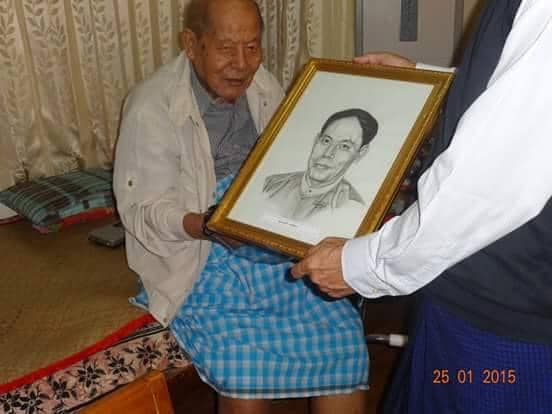
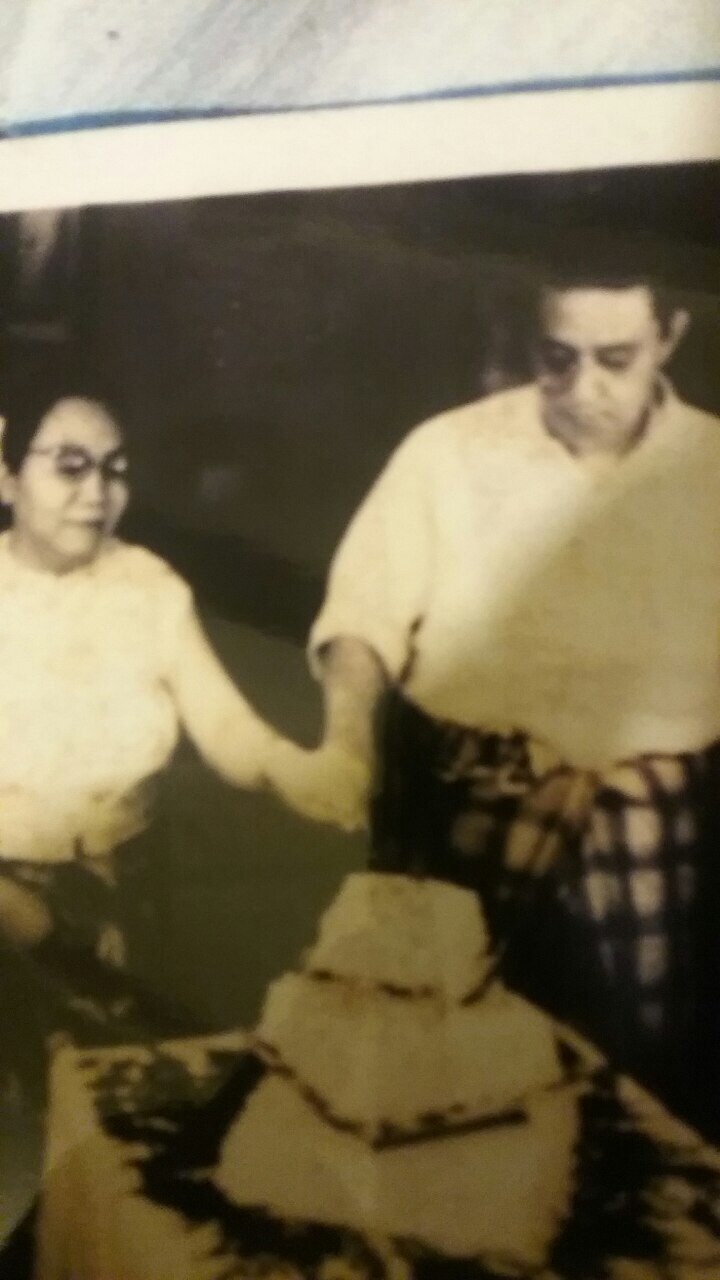
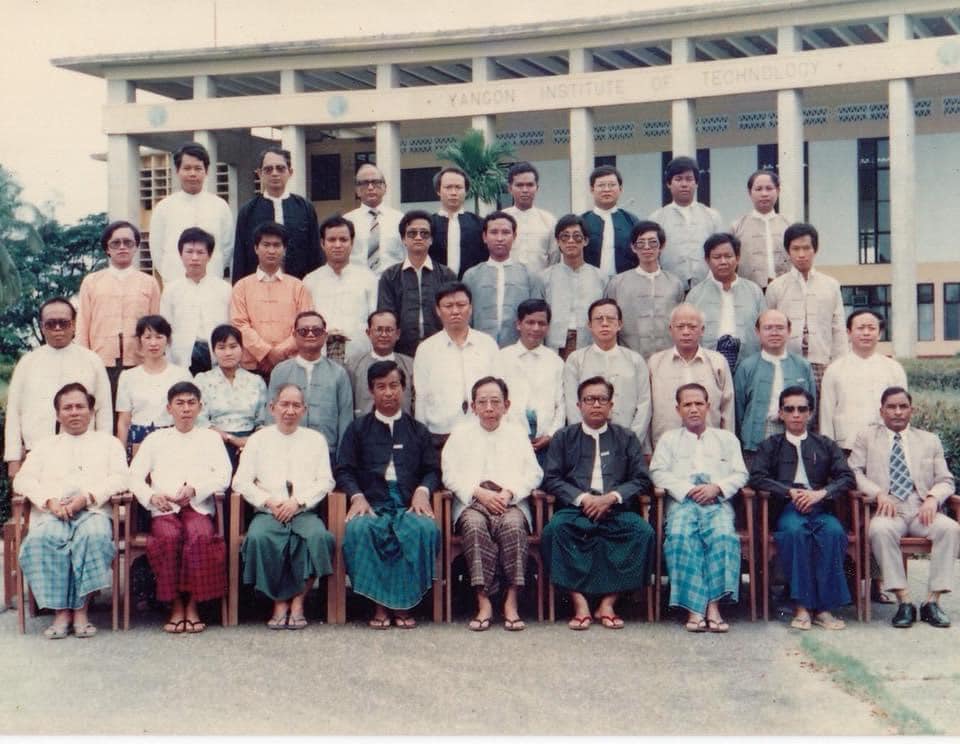
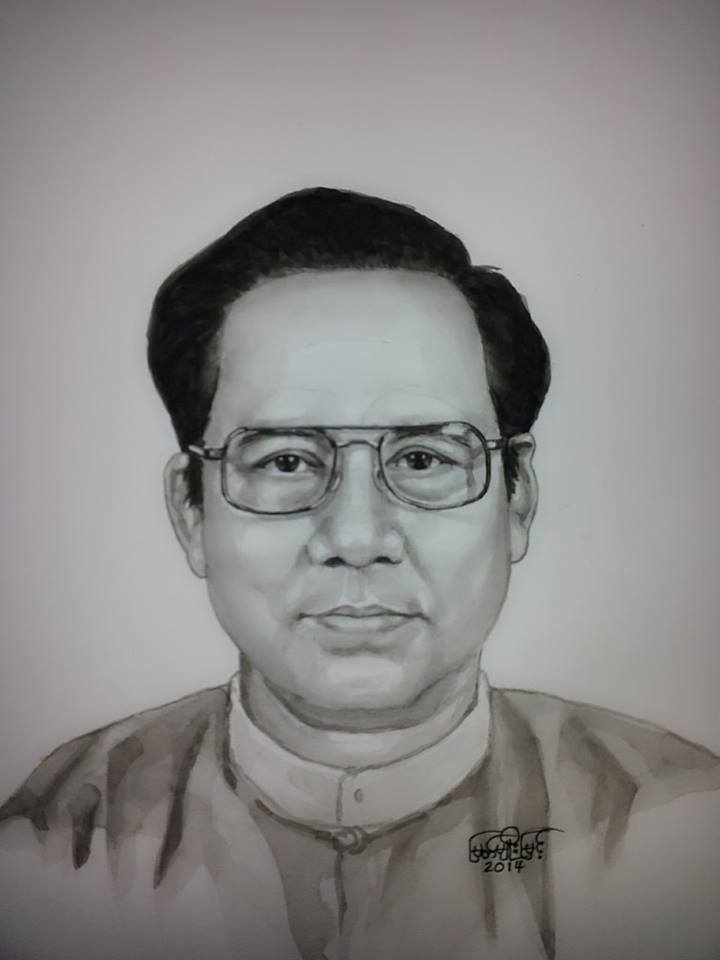
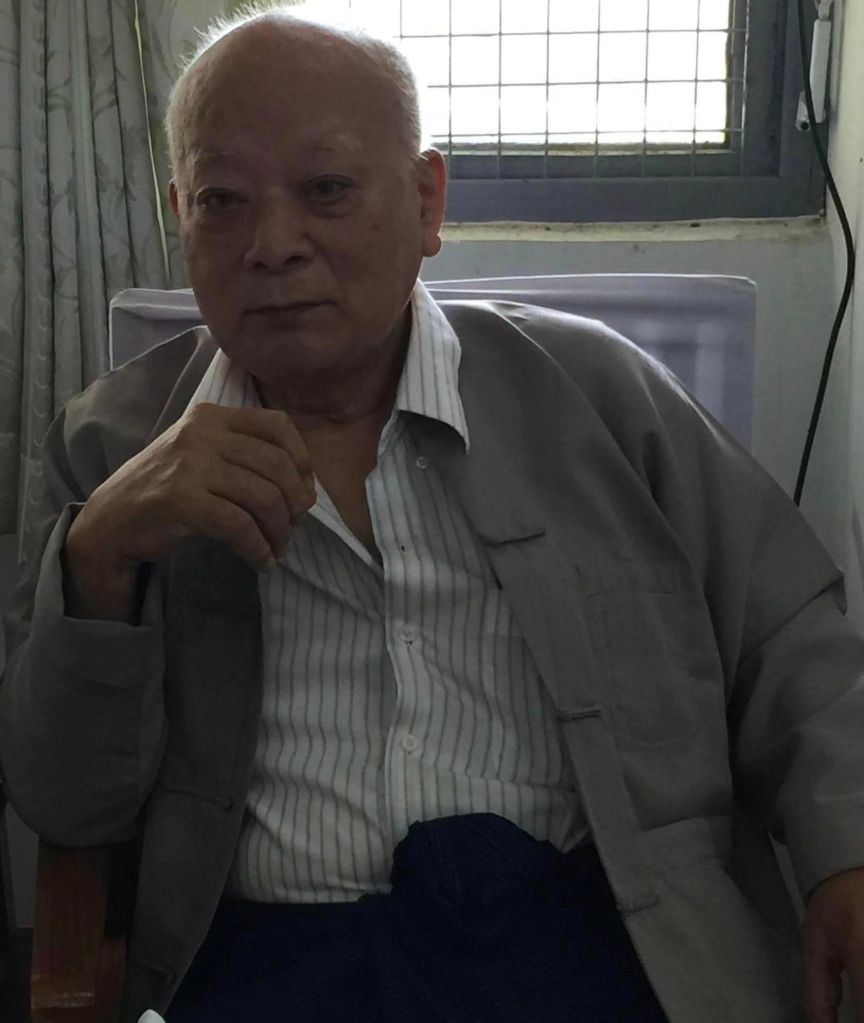
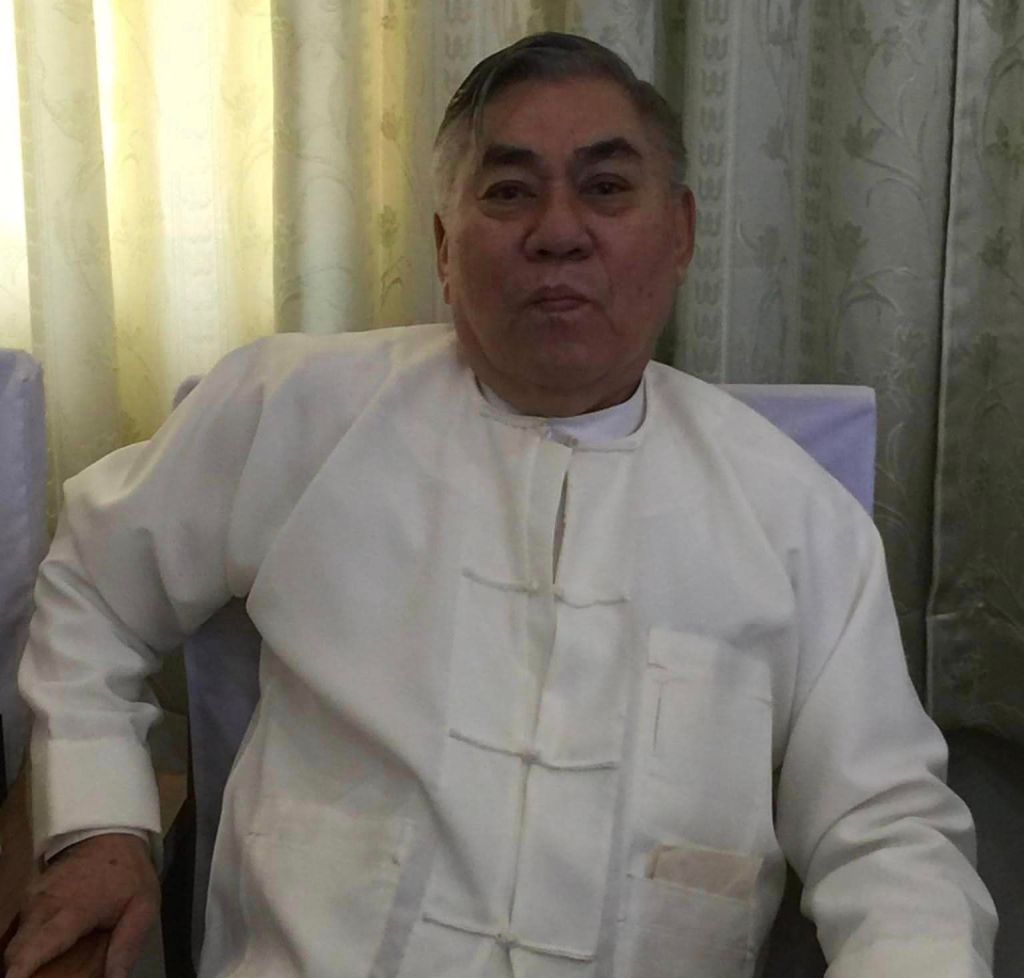
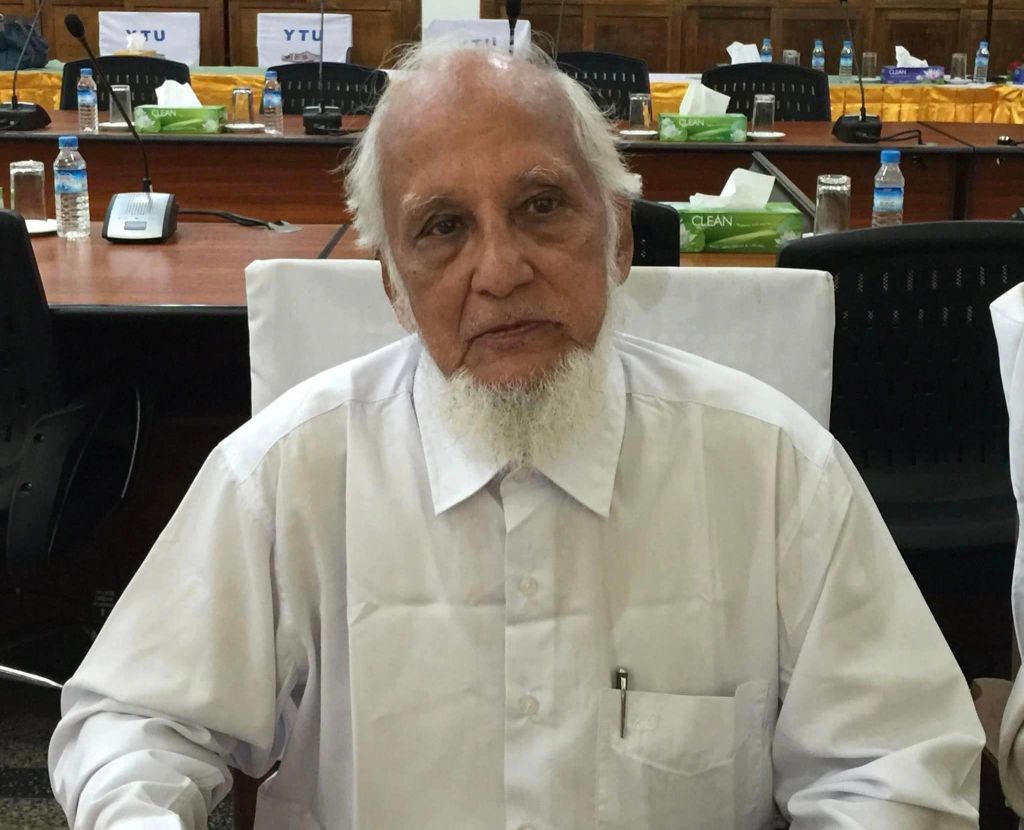
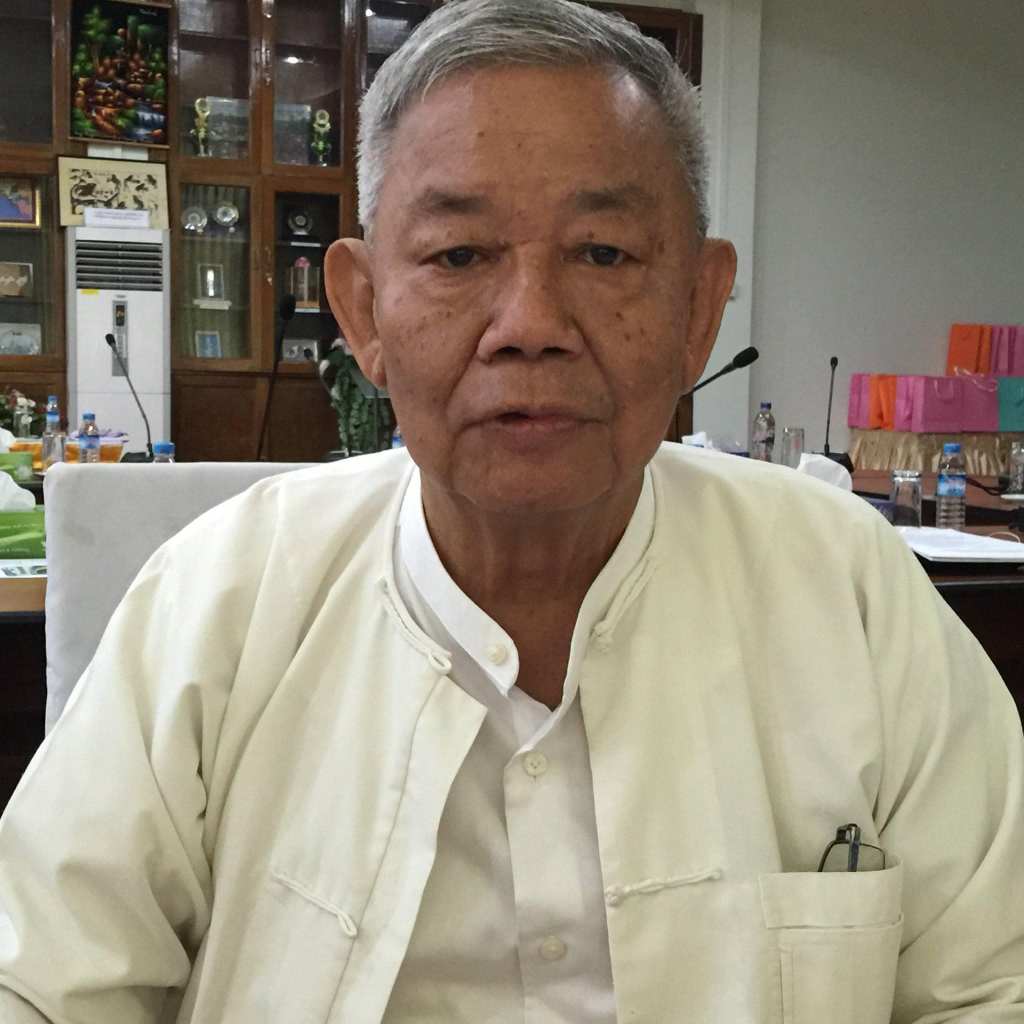
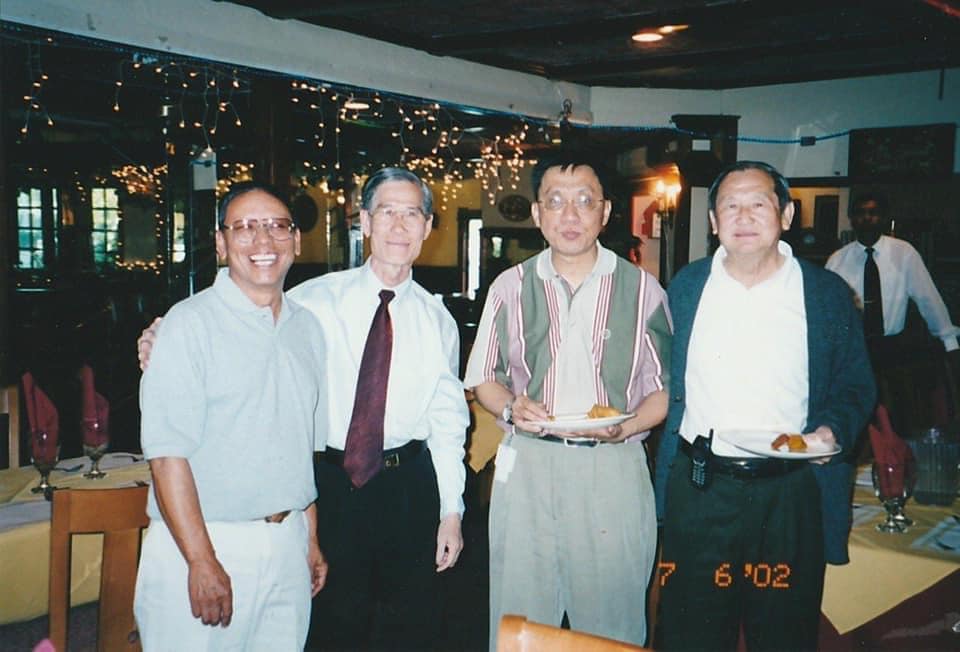
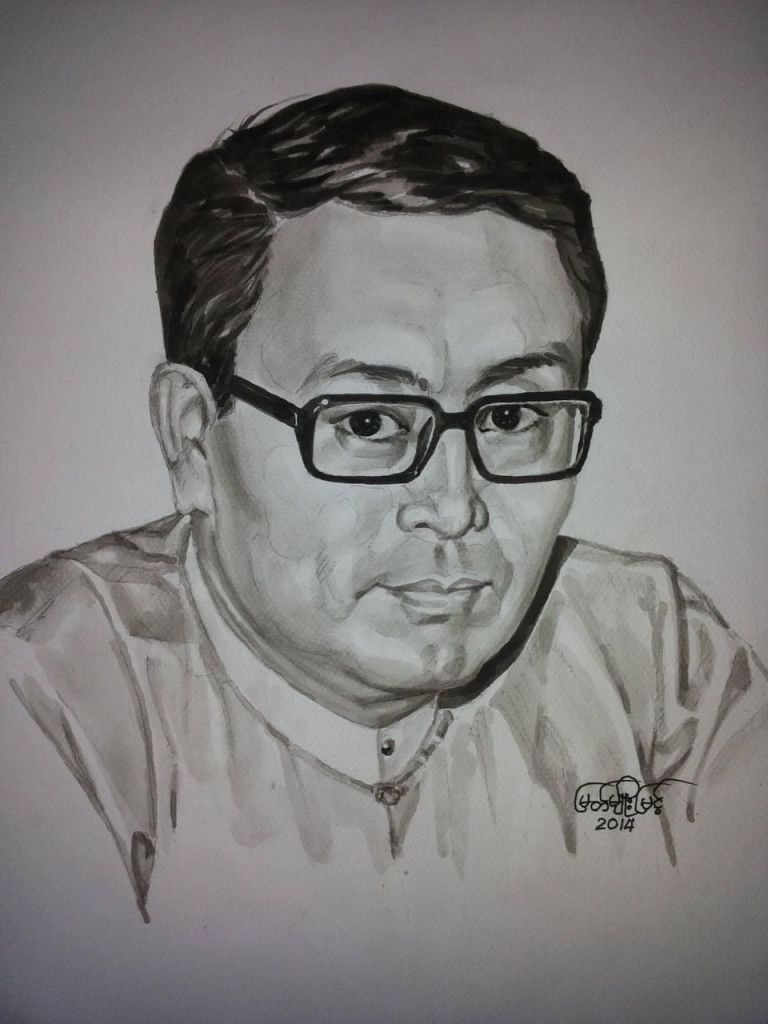
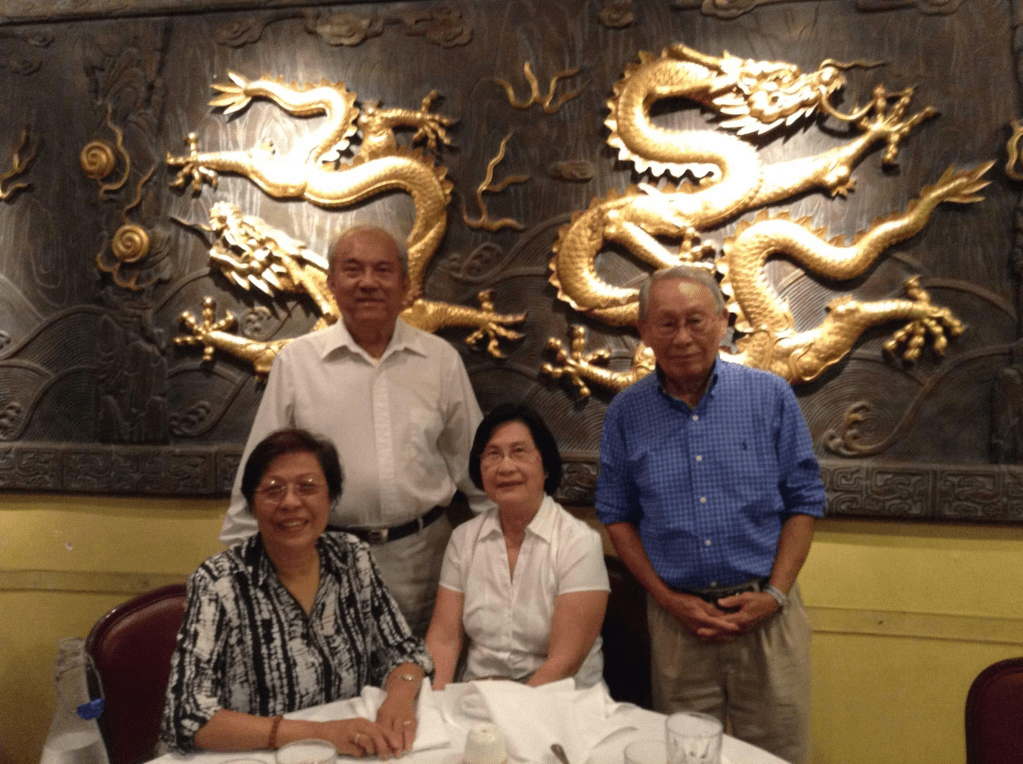
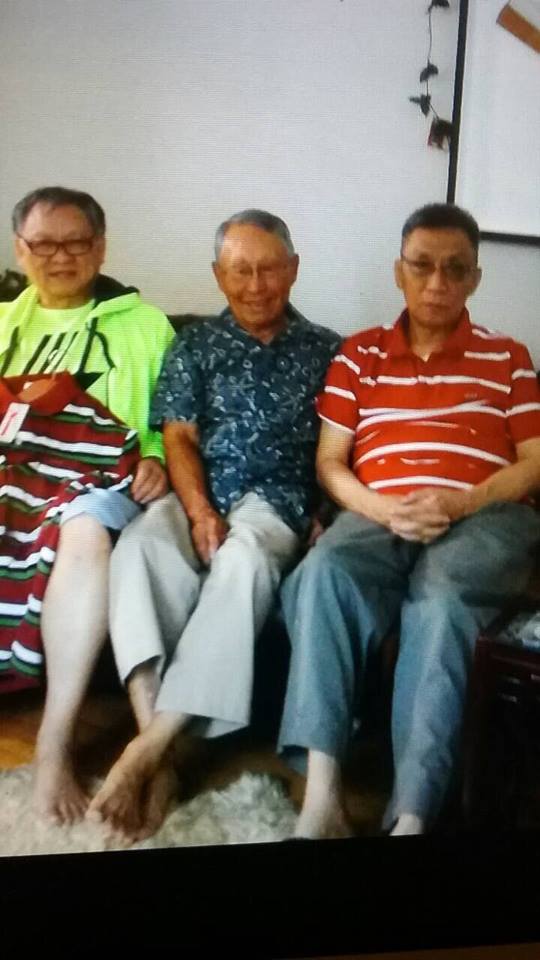
U Ba Than usually visits and pay homage to his saya U Ba Toke at least once every year.
Both are our Sayagyis. Sadly, both have passed away.
January 2017
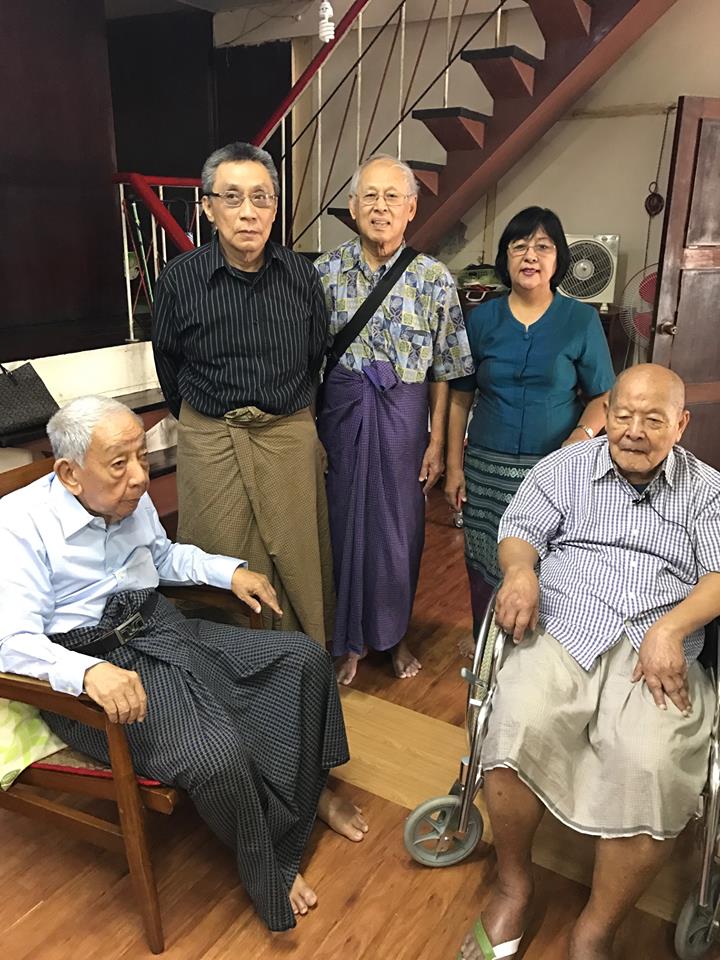
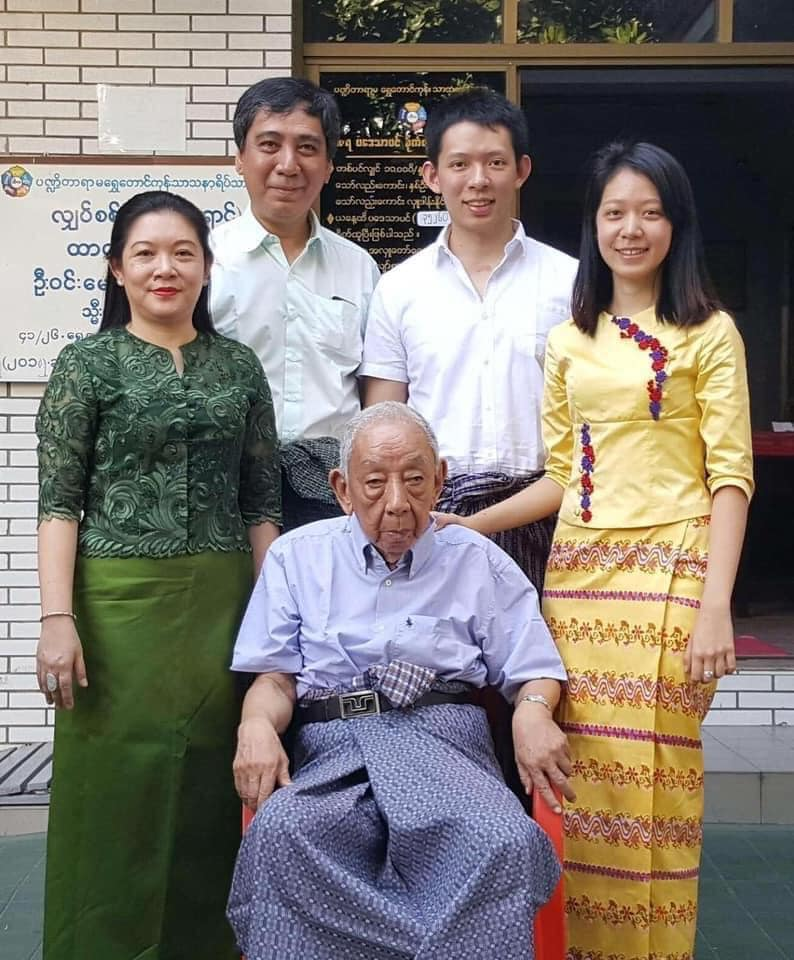
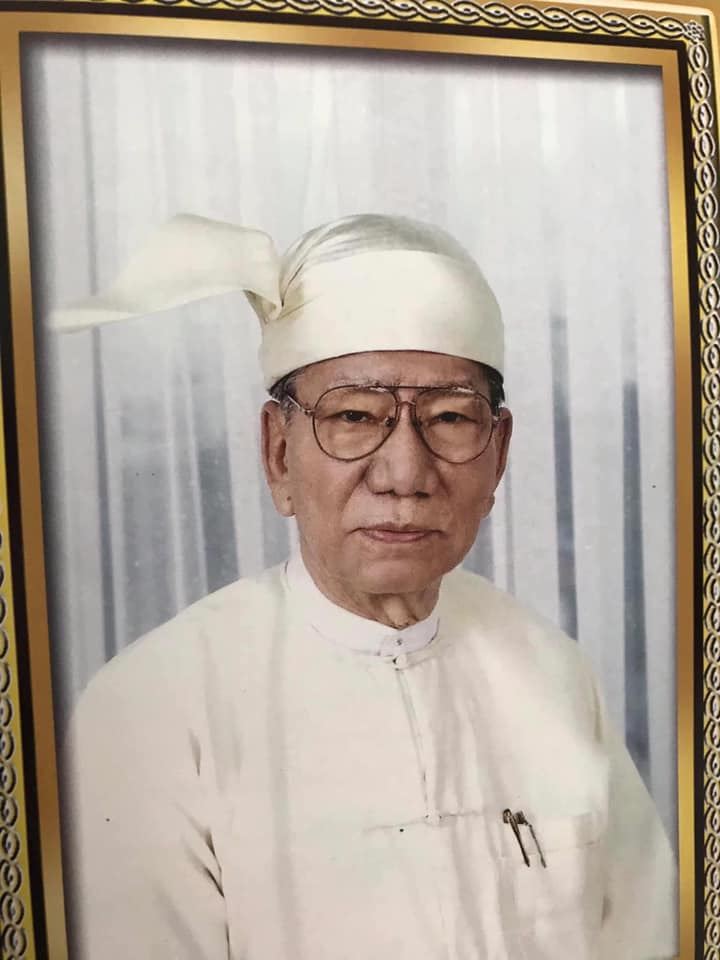
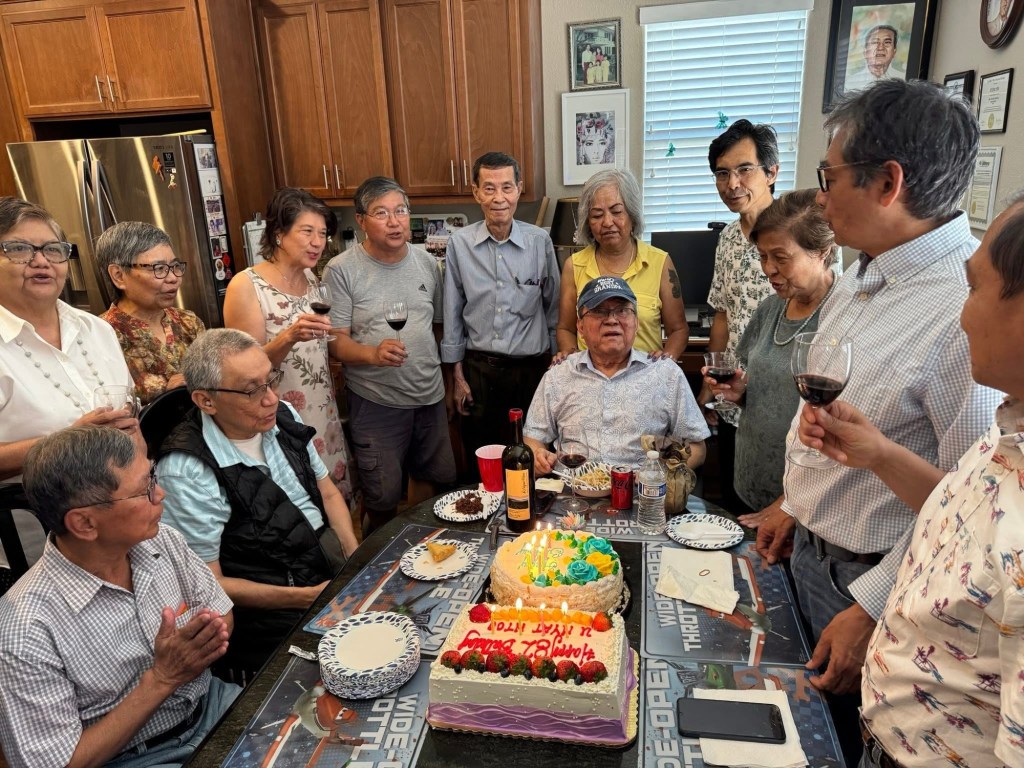
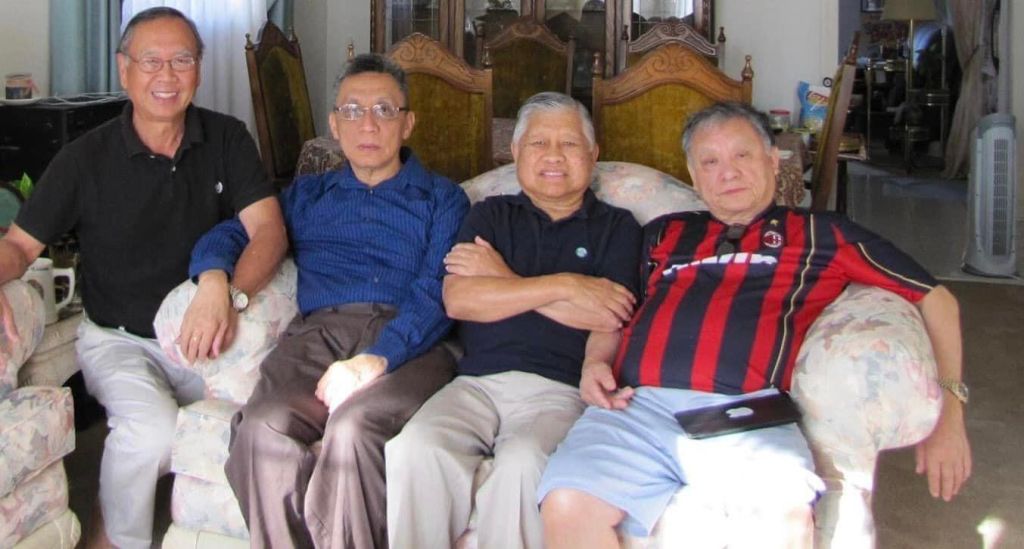
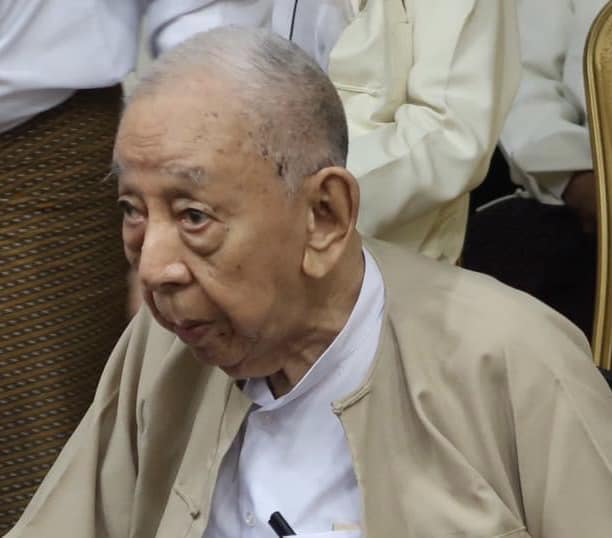
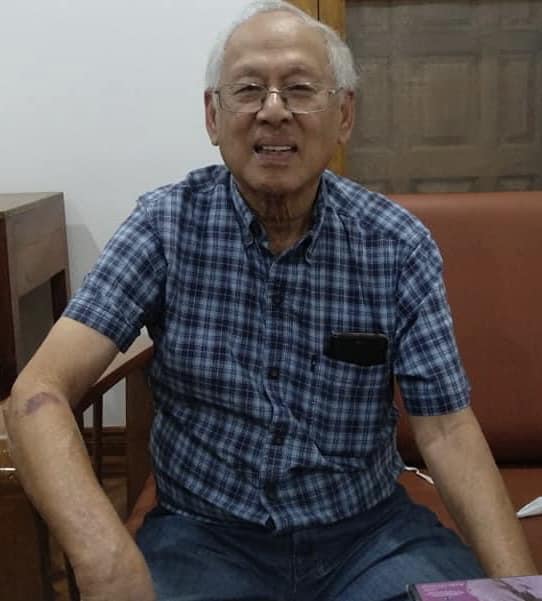
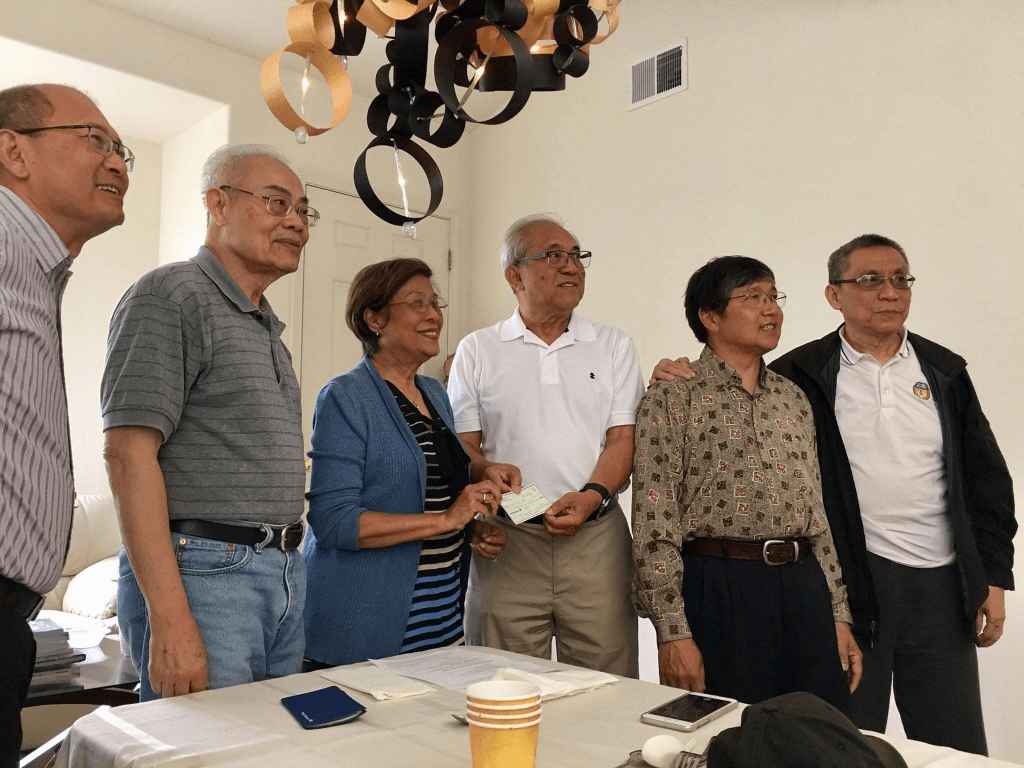
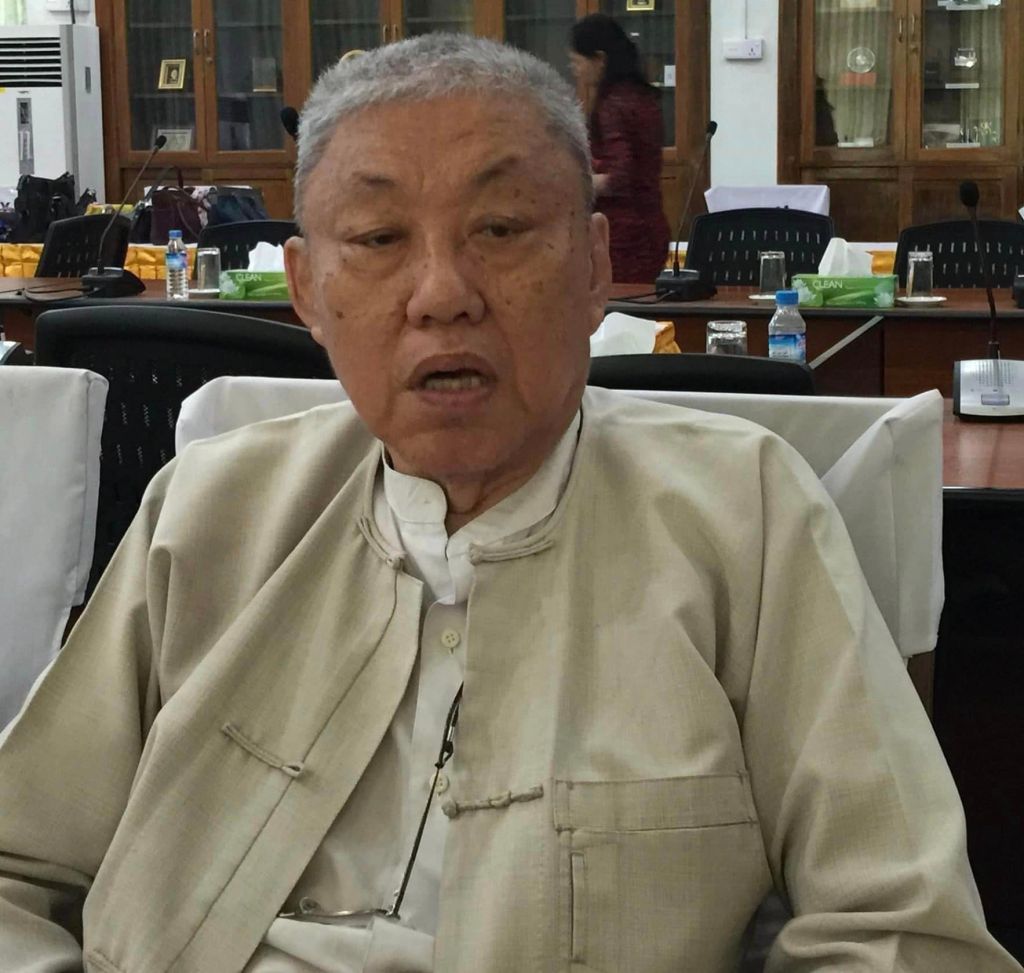
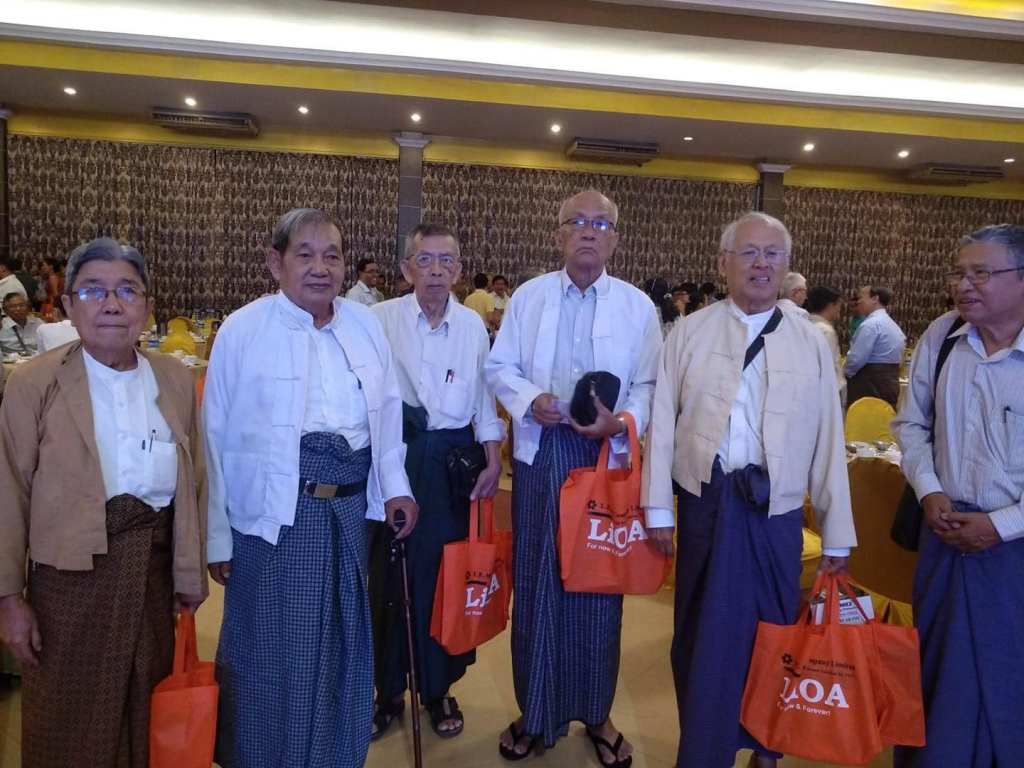
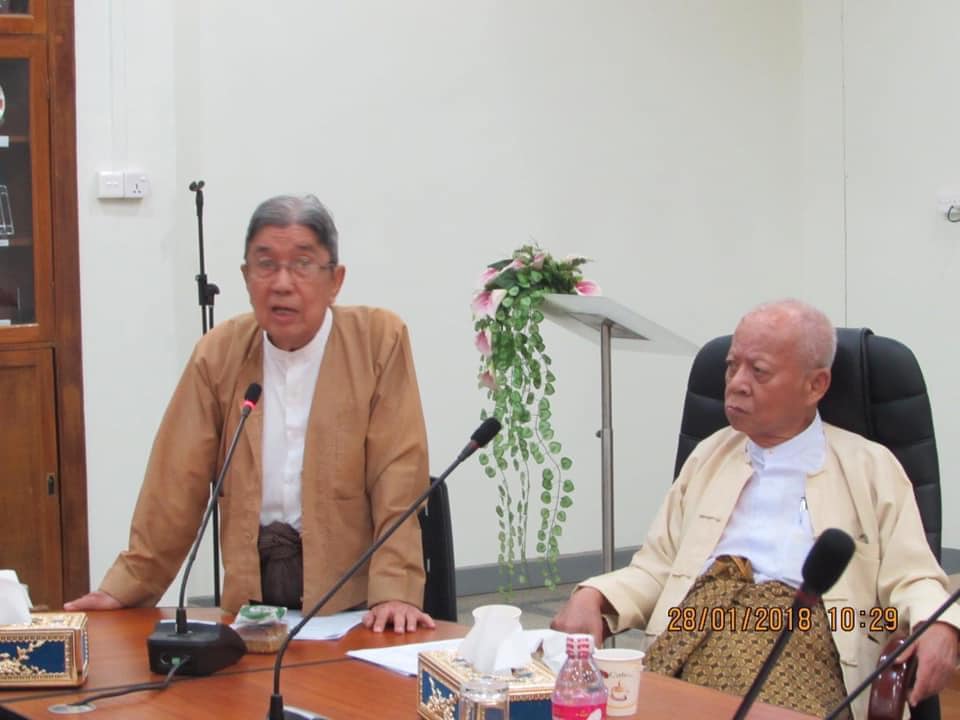
Pansy (Thynn Thynn, ChE 74) asked her daughter & son-in-law to pick up Saya U Ba Than (86 years), Saya U Tin Htut (79 years) and me to see her father Sayagyi U Ba Toke (96 years).
Sayagyi has some problems with mobility & vision, but his mind remains crisp & clear.
He was born on Dec 26, 1920. Rangoon University opened on Dec 1, 1929. They are “Phwa Bet Taws”.
Sayagyi deferred celebrating his birthday so that three of his grandchildren abroad could come back & join the celebration.
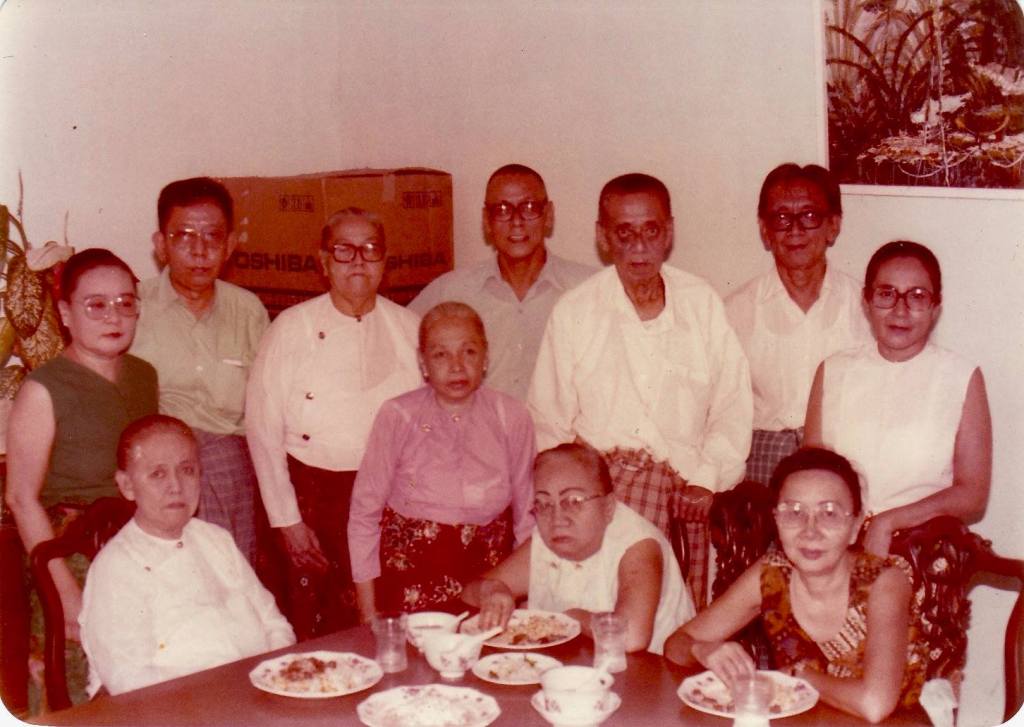
Sayagyi is pre-deceased by his beloved spouse, daughter (Kitty) and son (Soe Win).
He has six remaining children : Betty, Ye Myint, Nellie, Pansy, Tammy & Debbie
Pansy has offered transportation (within Rangoon) to Sayas who want to visit her father
Book
Book
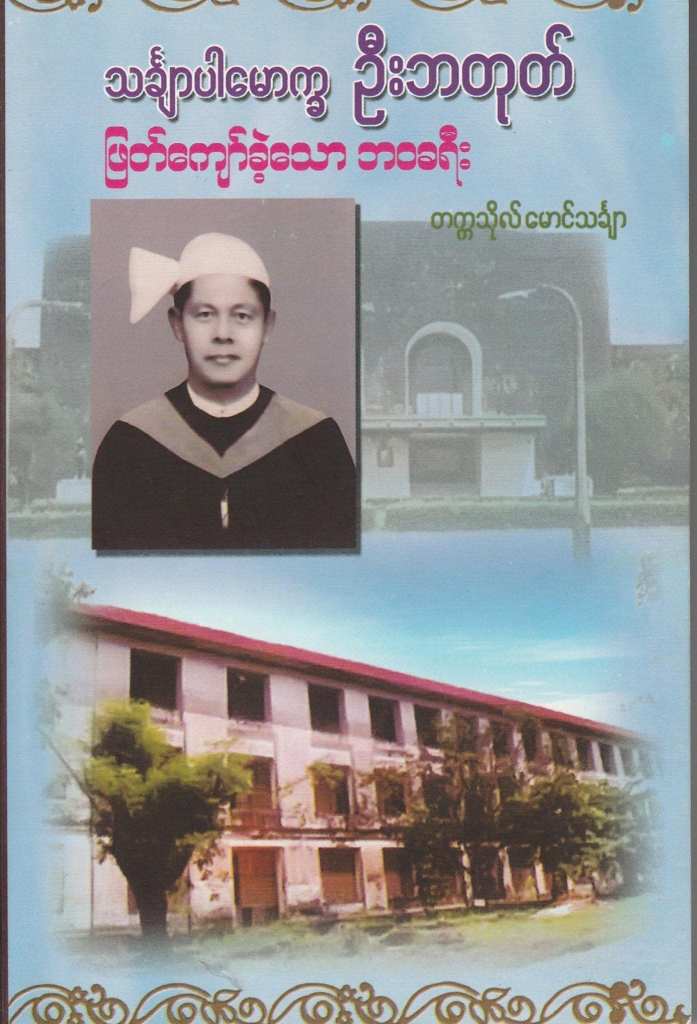
A detailed account of Sayagyi has been covered by Saya Dr. Khin Maung Swe (“Maung Thin Char”).
I received an autographed copy during a previous visit. The book may need a reprint.
Memories
SPZP-2000
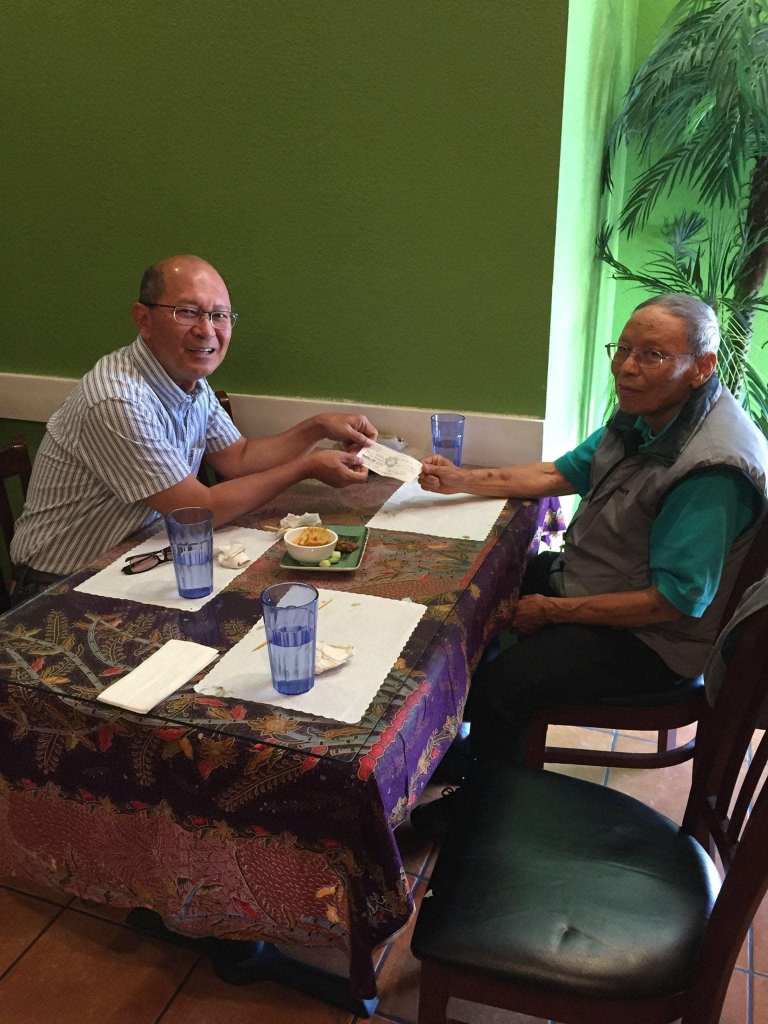
Ko Maung Maung Than (M79, Texas) donated a roundtrip ticket to invite a Saya from Myanmar to attend SPZP-2000.
Debbie (Saya’s youngest daughter) relayed Saya’s wish to attend SPZP-2000.
Ko Zaw Min Nawaday (EP70) offered accommodation for Saya, Ko Ye Myint & spouse.
Several sayas and alumni donated towards Saya’s expenses for the trip. Some offered to show Saya around the SF Bay Area.
SPZP-2000SF Bay Area
SPZP-2007
Saya was asked about Longevity.
Saya recounted his experience in USSR. The host said, “Do not worry about the noise upstairs. It’s my 100+ years young uncle quarreling with his fourth wife. They will make peace soon”.
SPZP-2012 & 2016
Saya needed assistance to attend the SPZPs.
Even some younger Sayas needed wheelchair.
RU Centennial
Due to pandemic, most events were broadcast or held online.
Saya passed away on Dec 2, 2020 — the day after the RU Centennial.
GBNF
Sayagyi U Ba Toke passed away a few days short of his Centennial birthday
I pay respect to သင်ဆရာThin Saya, မြင်ဆရာMyin Saya and ကြားဆရာ Kyar Saya.They taught me all I knew.
I would like to thank my mentors who directly or indirectly taught me Communication (Oral and Written) and Languages (English, Burmese, …)
Last but not the least, a million thanks to my “လက်ဦးဆရာများ Let Oo Sayas” (my beloved parents).
My Parents
Learning English
I fondly remember the days that I had to study
Tom Thumb’s Essays
A Student’s Companion
Oxford English Dictionary (OED — various sizes and editions),
Chamber’s Dictionary (used in Scrabble tournaments)
Rhyming Dictionary
Word Power/Vocabulary in six weeks, 21 days, …
Idioms (present from my uncle)
They helped me improve my writing and communication skills.
Thanks to all the authors, who are my implicit teachers.
Still learning (especially during the “Shelter at Home” due to the COVID-19 Pandemic)
Listen to the daily offering by Blinkist.com
Listen to selected podcasts
Dr. Chit Swe (GBNF) ဒေါက်တာချစ်ဆွေ
Sayagyi was my mentor at UCC.
He invited over renowned computer scientists led by Professor Harry D. Huskey, Pioneer in Computer Hardware, Software and Teaching and mathematicians (e.g. Professor Frank Harary, Expert in Graph Theory) to Rangoon to hold seminars and to design courses in computer science and applications. Michael Stonebraker (then at UC Berkeley) gave a short course on Ingres (an early Relational Data Base Management System) at UCC. A few years back, he won the prestigious “ACM Turing Award” (which is considered as the equivalent of Nobel Prize in Computing).
He taught us to use CPM/PERT (Critical Path Method / Programme Evaluation and Review Technique) for the various projects.
Saya asked me to assist in several of his projects : translator/ reviewer for CTK (Children’s Treasury of Knowledge), editor for “High School Mathematics”, and TOSS (Team Of System Specialists).
Saya passed away in November 2019, but his Legacy as Pioneer for Computer Systems, Application and Education in Burma will last forever.
Sydney 2006
U Soe Paing(EE, UCC) ဦးစိုးပိုင်
U Soe Paing
My mentor at RIT and UCC
He, Saya U Myo Min and Saya U Ko Ko Lay (GBNF) taught degree and diploma courses in computer science. They also conducted courses in computer programming, computer orientation, to name a few.
The sayas asked me to be their assistant.
Saya also allowed Saya U Aung Zaw (GBNF) and me to co-author texts, guides and manuals used at UCC.
Publications
SPZP-2000 Organizers
Guardian Thanks to U Soe Myint (Chief Editor)
Working People’s Daily (WPD) Thanks to U Ko Lay (Chief Editor) and Daw Khin Swe Hla (Editor)
Forward magazine Thanks to Bohmu Ba Thaw (Maung Thaw Ka, Chief Editor) and U Sein Hla (Editor)
Pan magazine Burmese publication
Veda magazine Published by BARB
Swel Daw Yeik Sar Saung Commemorative Issues for SPZP-2002, SPZP-2007 and SPZP-2010 in Singapore Thanks to Saya U Moe Aung (Tekkatho Moe War)
Swel Daw Yeik Magazine Commemorative Issues for SPZP-2012 and Shwe YaDu (2014) Thanks to Saya U Moe Aung (Tekkatho Moe War)
RUBC magazine Commemorate issue for 90th Anniversary of the founding of RUBC
RUBC
BAPS Newsletter Contributing Editor
Dhammananda Newsletter Contributing Editor
Paying Homage to Sayadaw U Silananda Contributing Editor
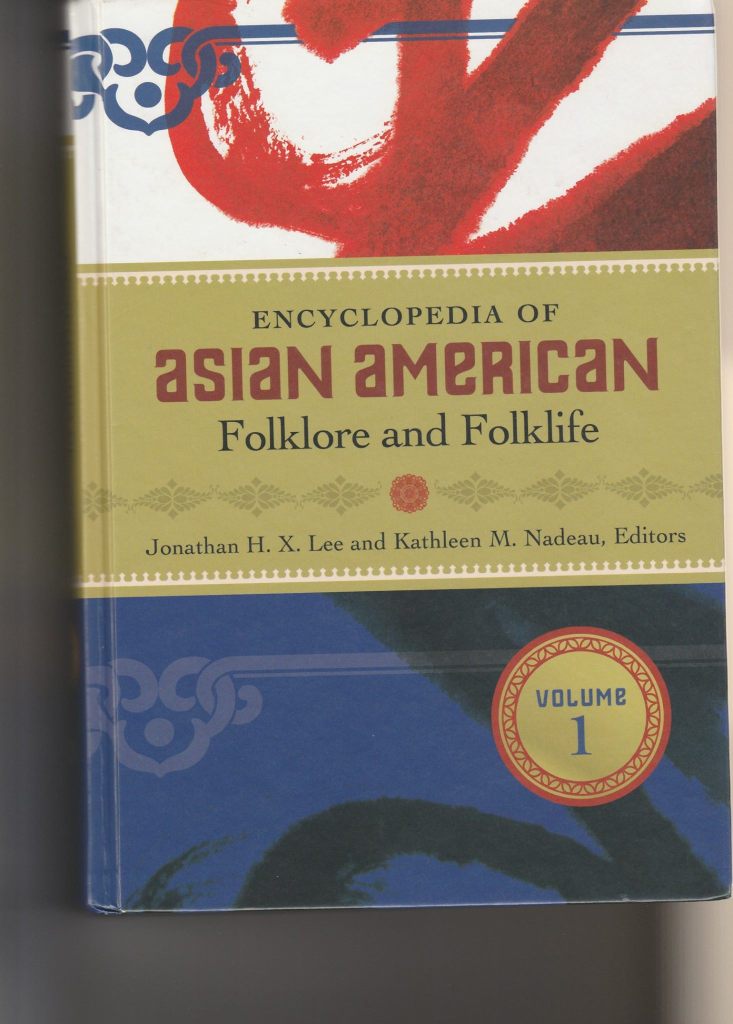
Encyclopedia of Asian American Folklore and Folklife Contributor to the Burmese American section of the 3-volume encyclopedia
Encyclopedia
National Foreign Languages Center Language Expert for the Burmese Language Project (Reading and Listening Comprehension)
RIT Alumni International Newsletter Contributing Editor for 26 years
hlamin.com 3000+ articles
Facebook Owner, Admin or Moderator of selected Facebook Groups
VideoBroadcasts Archived in Facebook and my You Tube Channel
Volunteering
I gained experience by volunteering as
Several organizations in Myanmar and USA
EC, Joint Secretary and Secretary of RIT EE Association
RIT EE Association
Contributing Editor of RIT English Newsletter
Treasurer and Vice Captain of RUBC
Translator / Interpreter at Meditation Retreats
Organizer, SPZP-2000
SPZP-2000
Coordinator, World wide SPZPs in Singapore and Myanmar
Docent at the Computer History Museum (at Mountain View, California
Contributing Editor of the materials taught at the Summer Dhamma Camp at Dhammananda Vihara (at Half Moon Bay
Area Governor, Club Coach, Contest Chair, Test Speaker, Club Ambassador at Toastmasters International
Editor of several publications by Sayadaws (e.g. U Jotalankara) and friends (e.g. U Aung Zaw)
Language expert at National Language Center
Administrator and/or Moderator of selected Facebook Pages
Owner and content creator of selected web sites (e.g. hlamin.com)
Parents and Ancestors
Parents
Last but not the least, my heartfelt thanks to my beloved parents and their philanthropic forebears for instilling me the passion to help humanity in general and to my alma mater. They believed that “Any thing that’s worth doing is worth doing well.”
Pay Back ကျေးဇူးဆပ်
My beloved spouse told me that I should pay back to my alma mater, mentors and my beloved land.
She reminded me that I should take care of my health to enjoy quality time with our Life Savers : Chit Sa Noe and Po Lone.
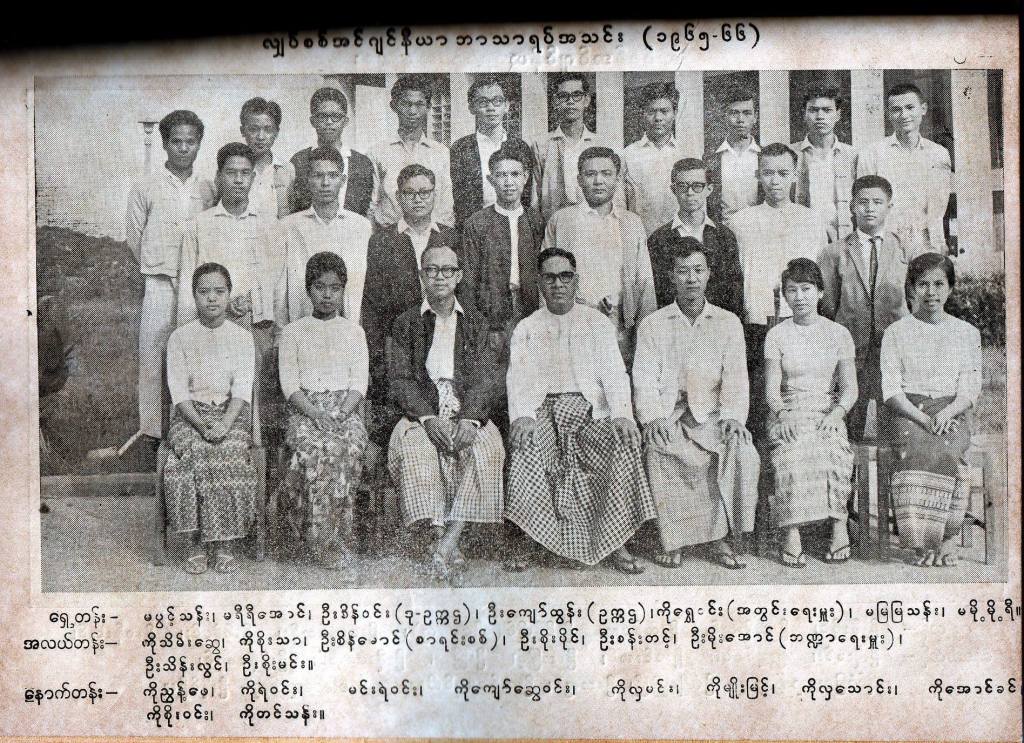
I had paid back to my alma mater RIT where I studied from 1964 – 1969 by volunteering as Messenger and Organizer for 26 years. e.g. For SPZP-2000, I wrote 64 “Countdown to the Reunion” and 36 “Post_Reunion”.
In 2018, I wrote “Memories of UCC”. I wrote a Summary for the magazine to commemorate the 30th anniversary of ICST.
To commemorate the 19th anniversary (in April 2018) for “RIT Alumni International Newsletter” and the 45th wedding anniversary (in June 2018), I wrote several hundred posts covering a variety of topics.
Since then, I have completed 2600+ posts. Revised most of them with feedback provided by my readers including Dr. Khin Maung U, Dr. Nyunt Wai (Victor), Dr. Thane Oke Kyaw Myint & U Khin Maung Zaw.
In April/May 2019, I celebrated 20th Anniversary as Founder-Editor of RIT Alumni International Newsletter
In November 2019, I was invited as a Panelist to the 5th ILF (Irrawaddy Literary Festival) held in Mandalay.
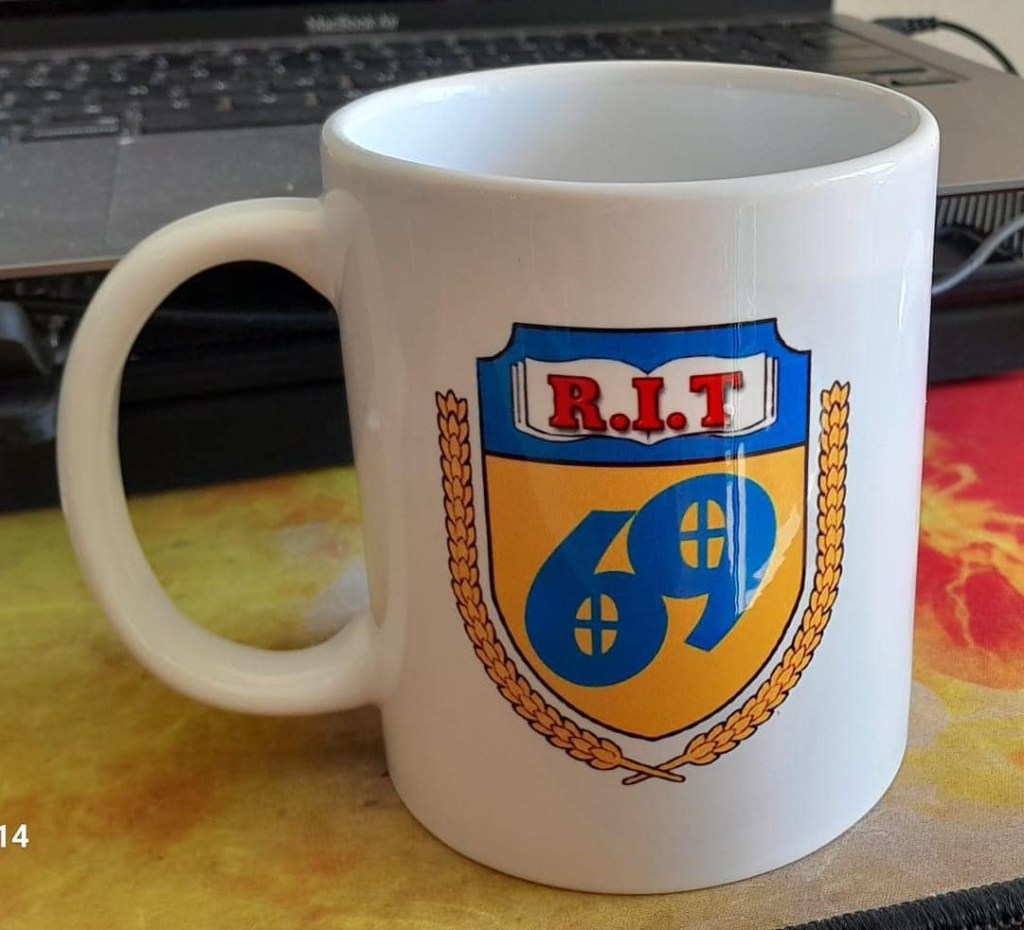
In December 2019, I attended the SPZP and Reunion Dinner of RIT 69er’s Golden Jubilee of graduation.
I was invited to attend the 6th Acariya Pu Zaw Pwe of ICST / UCSY and the Annual mini-gathering of UCC Alumni.
In January 2020, I was invited as a Special Guest for the 2020 PSA (Public Speakers’ Association) Tour to six cities in Upper Myanmar.
I am continuing with adding / revising posts for hlamin.com and share some of them via Facebook pages (e.g. Life Long Learning, RIT Updates, RU Centennial) and my You Tube Channel.
I am a Dreamer. I believe, “If one can dream, others will fulfill.”
Updates
Several of those mentioned in the post are GBNF.
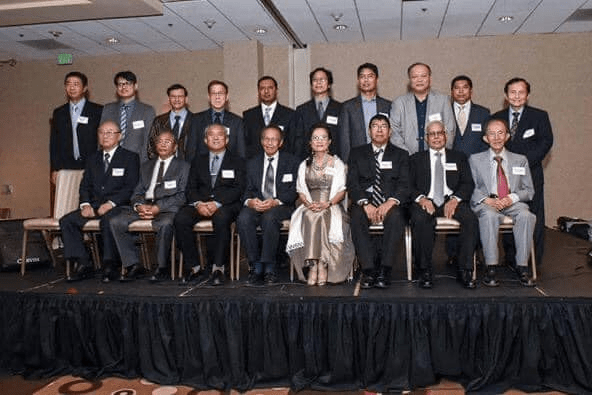
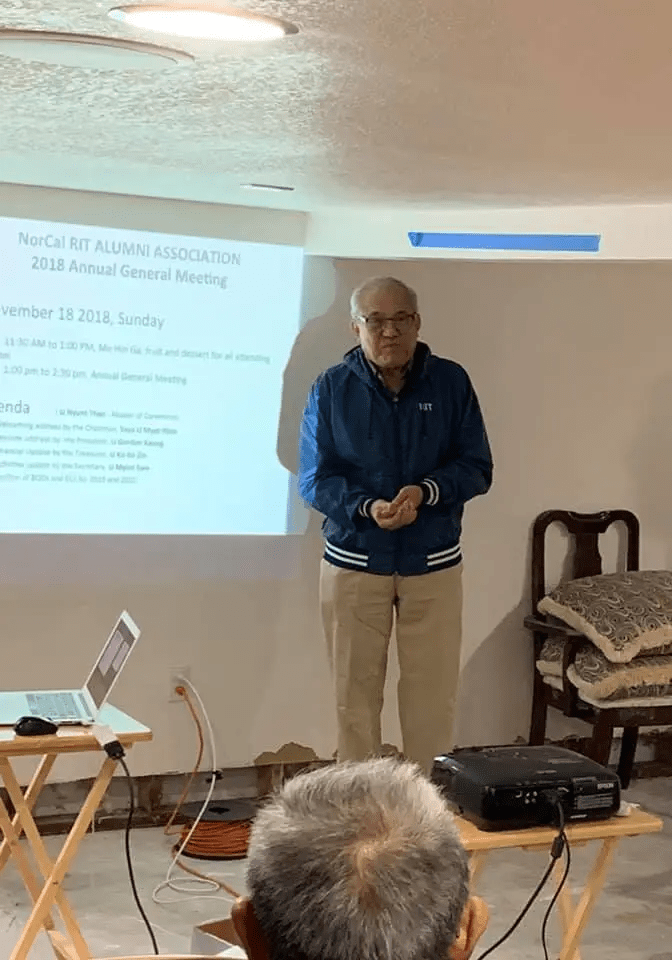
In 2024, NorCal RITAA celebrated the 60th Anniversary of RIT and the Centennial of Myanmar Engineering Education.
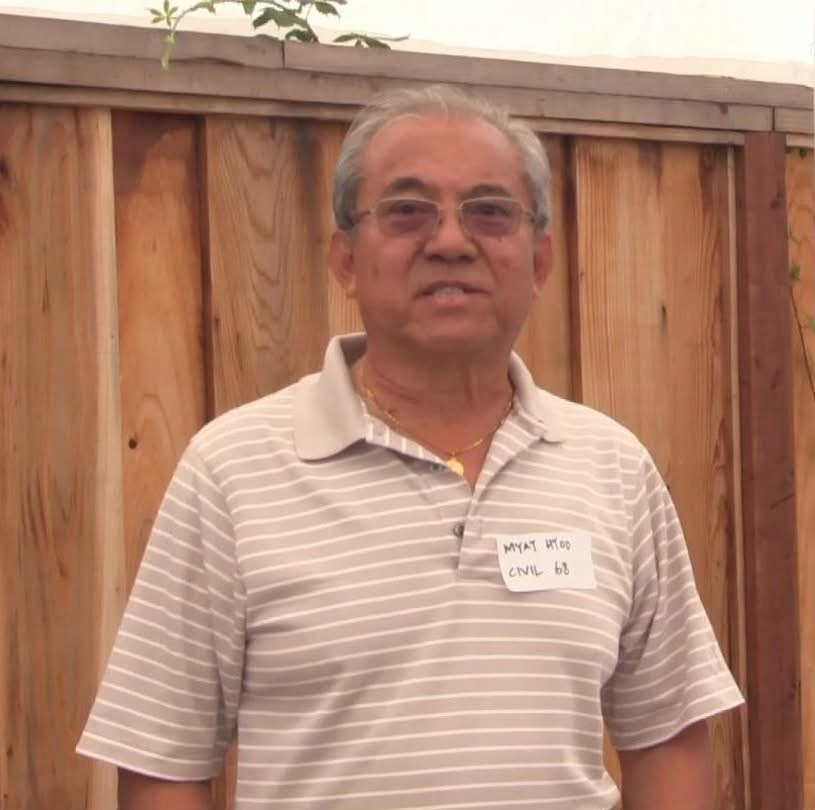
Saya U Myat Htoo (C68) passed away peacefully on June 9, 2026. May he be bound for a higher abode.
University Days
Attended I.Sc at Mandalay University
Graduated with Civil Engineering in 1968
Joined Faculty
Moved to the USA
Retired from CalTran
Spouse : Daw Hnin Maung Maung / Ma Ku
Activities
SF Bay Area Alumni Group
Founding member of RIT Alumni International
SPZP-2000
Master of Ceremonies for SPZP-2000
Wrote about the SPZP-2000 experience in the Post Reunion series.
U Myat Htoo (Right)NorCal RITAA
Founding member of NorCal RITAA
Chair of BOD (Board of Directors)
Hosted NorCal RITAA lunch meetings. He would invite the attendees to take a boat ride on the nearby man-made lake. He would also arrange a karaoke session.
Past President of Burmese American Democratic Alliance (BADA)
President of Theravada Buddhist Society of America (TBSA) for a decade. Led the procession for the scattering of ashes of Sayadaw U Silananda into the San Francisco Bay near the Golden Gate Bridge.
Lost Neikan RIT
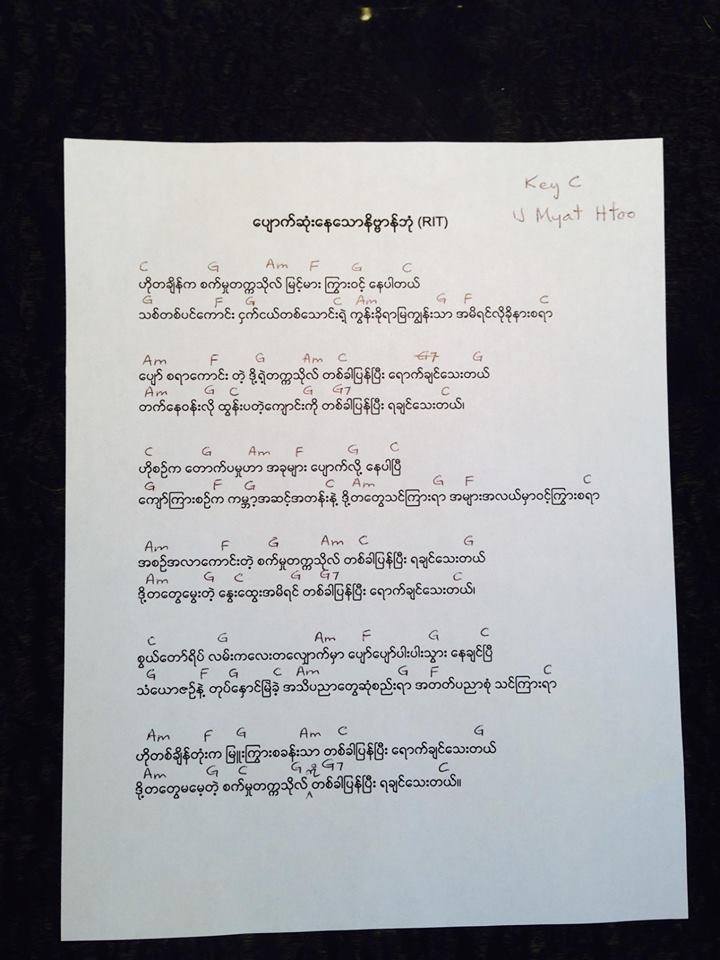
Wrote a parody on “Pyauk Sone Nay Thaw Neikban Bon” (the song by Sai Kham Leik and Sai Htee Saing).
LA Reunion
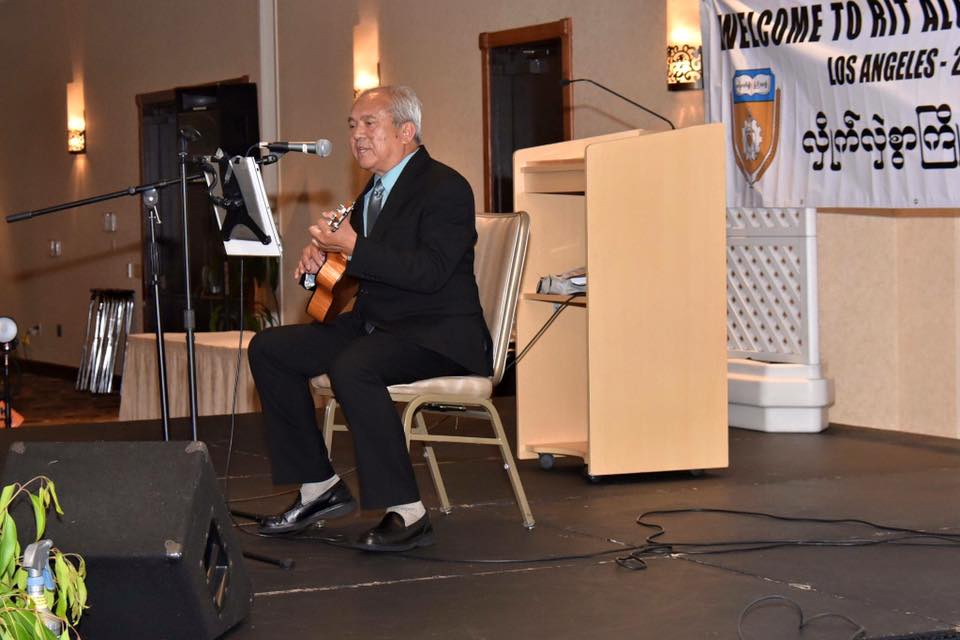
Played the Ukelele and sang the song described above at the 2015 Alumni Reunion in Los Angeles.
Ukelele
Donation
Donated Life Vests to 20 teachers in the town of Paletwa in Chin Special Division, Myanmar.
The teachers risked their lives daily crossing Kaladan river to teach children on the other side of the town.
One teacher was killed in a boat mishap in surging waters during heavy rains. A life jacket would have saved her life.
Golden Jubilee
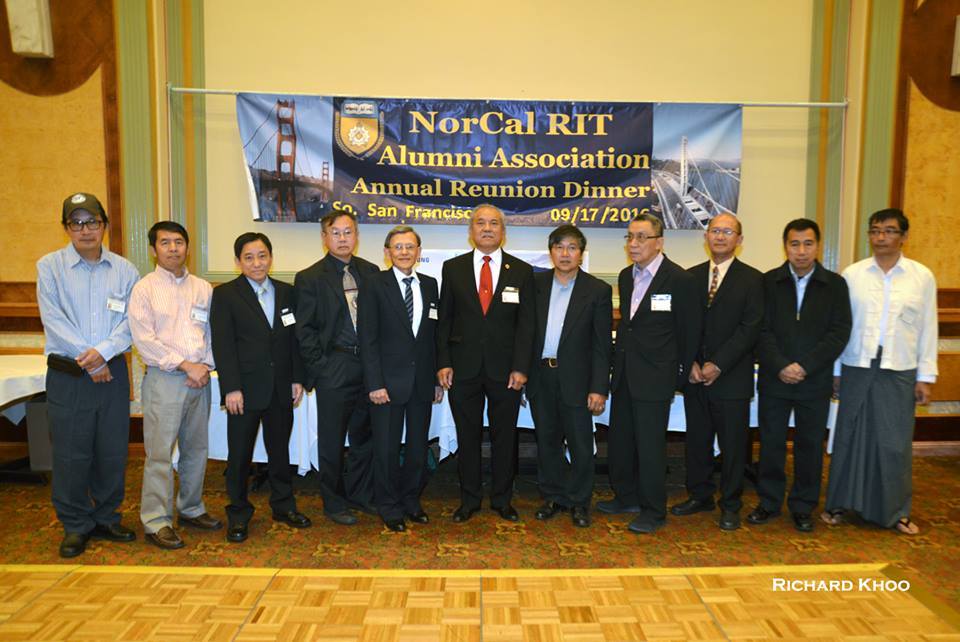
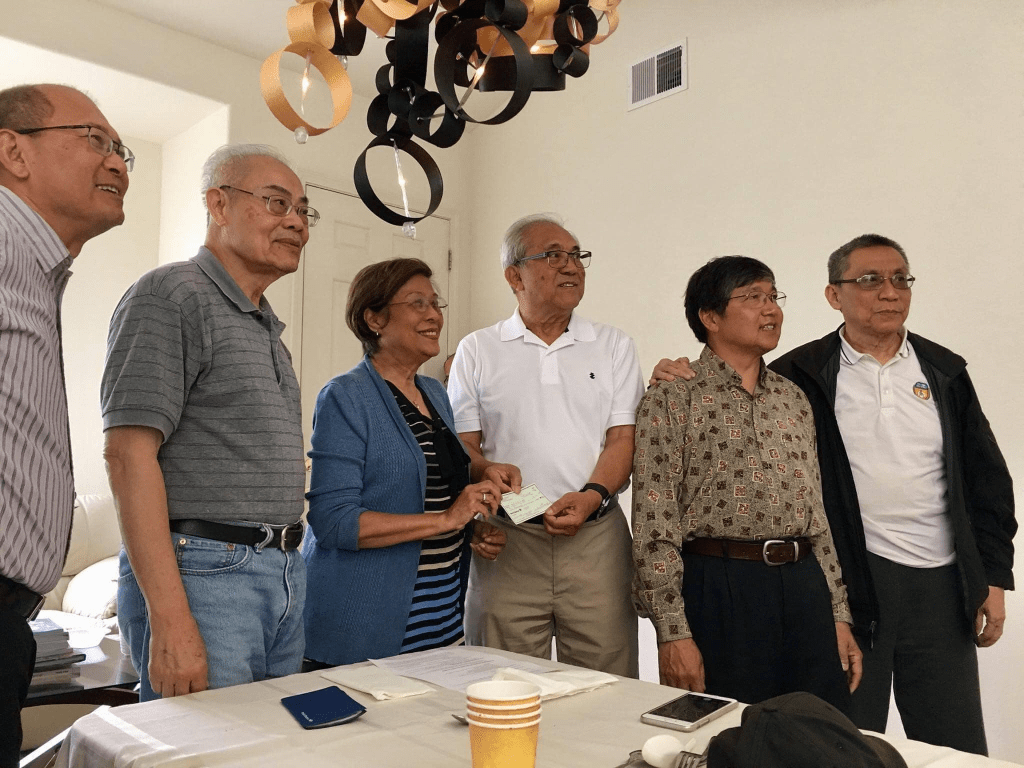
On May 20, 2018, the BOD (Board of Directors) and EC (Executive Committee) members of NorCal RITAA threw a surprise party to celebrate the Golden Jubilee of U Myat Htoo (C68, Chair of BOD) and Daw Hnin Maung Maung (Ma Ku, “Nyima Lay”).
According to Saya, he was the youngest in his family and wanted a younger sibling (preferably a sister).
He found an innocent 9 year old neighbor (and family friend).
Received two Masters : one from RIT, another from Melbourne University
Spouse : Daw Gyn Yu — Myeik Thu & Culinary Expert
Ma Gyn Yu
Son (Min Yu Aung) & daughter (Hnin Yu Aung) — both successful
Taught at Rengsit University
Senior manager at a Refinery in Thailand
After retirement, spending time with his daughter and grandchildren in California, USA.
Activities
Writes with the pen name “Maung Yin Maung (Okkpo)”. Not sure if the name is inspired by the first Burmese novel.
Author & Poet.
Wrote about his sayas (High School & Uni)
Co-author of the “Collection of Poems” by five RIT poets headed by Saya U Moe Aung (Tekkatho Moe War). One poem is about his beloved sweetheart and later his spouse Ma Gyn Yu (ChE72).
Book of poemsPoet
Organizer, Poetic Art Series & Musical Video (O Bei Myat Saya)
Organizer for book donation to the ChE Library & Training Component of YTU Library Modernization Project.
Per U Aung Myaing’s request, Saya U Maung Maung (George, ChE66) organized a fund raiser of US 3000+ for supporting the Training Component of the YTU Modernization Project.
Library
Recorded with the U-70 members at a professional studio. He has posted some of them on Facebook.
He & Daw Gyn Yu have provided assistance to sayas and alumni visiting Bangkok especially for medical treatment.
With Bagyee
Provided materials (paint, paper) to Pon Tu expert Bagyee Myat Myo Myint
Facilitator, Myanmar Association of Chemical Engineers; Knowlege sharing; Financial aid for needy ChE
Nicknames : Saya Maung (ဆရာမောင်), Ba La Gyi (ဗလကြီး၊ ဗလာကြီး)
Mr. RIT (Set Hmu Maung စက်မှုမောင်) in 1968. His mentor was Bohmu Maung Maung (1st Maung Bamar မောင်ဗမာ)
Hand over Salway to U Wynn Htain Oo (M72)
Joined Metallurgical Engineering Department after graduation in 1972
Retired from Lawrence Livermore Lab
Spouse : Daw San San Nyunt (Sandra, M76) : with help from Mech/Auto Saya
Three daughters
Four grand children
Activities
Editor, BAPS Newsletter
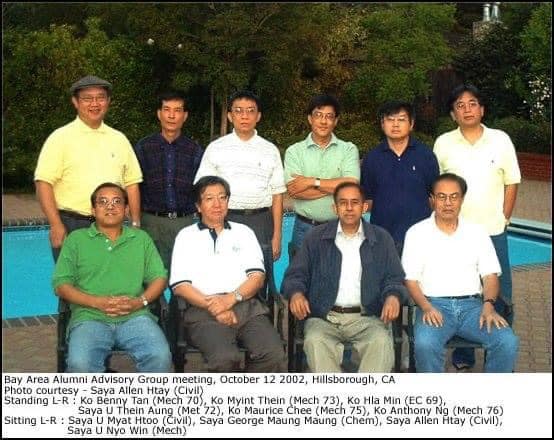
Member, SF Bay Area Alumni Group : Later formed RIT Alumni International
SF Bay Area Alumni Advisory Group
Founding member, RIT Alumni International, which hosted SPZP-2000
SPZP-2000 Organizers
Co-Emcee with U Myat Htoo at SPZP-2000
Associate Editor, Commemorative Issue of RIT Alumni Newsletter
Gatherings
SPZP-2012
SPZP-2012
Pu Zaw Pwe
At Pu Zaw Pwe
With Sayadaw U Jotika (EP73)
With Sayadaw U Jotika (EP73)
Welcoming Sayas, e.g U Soe Paing (EE, UCC)
U Soe Paing
With ChE Sayas & Alumni
Welcoming Saya U Aung Myaing (ChE72) and Daw Gyn Yu (ChE72)
Metallurgical Engineering Reunion
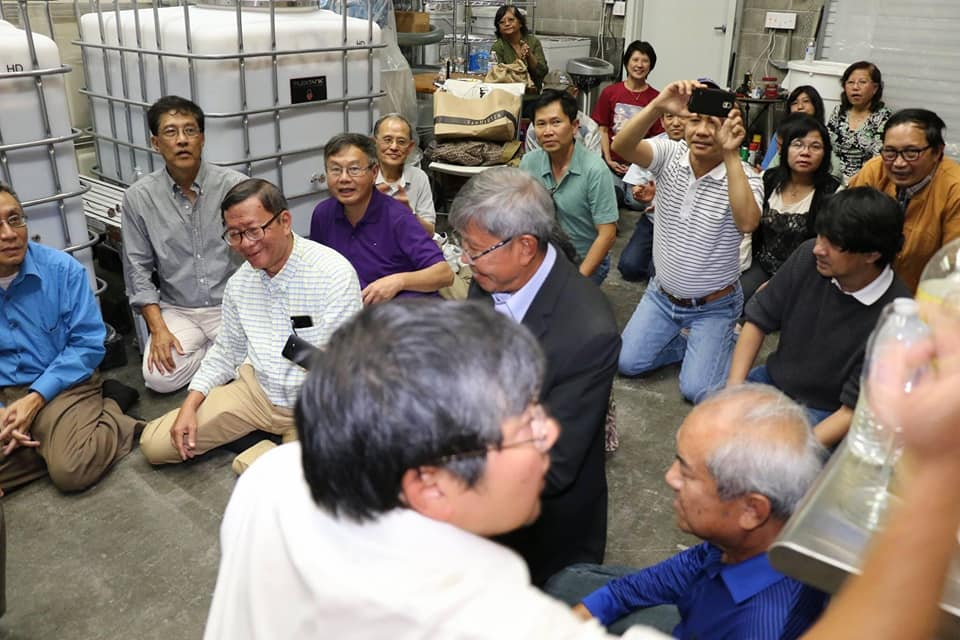
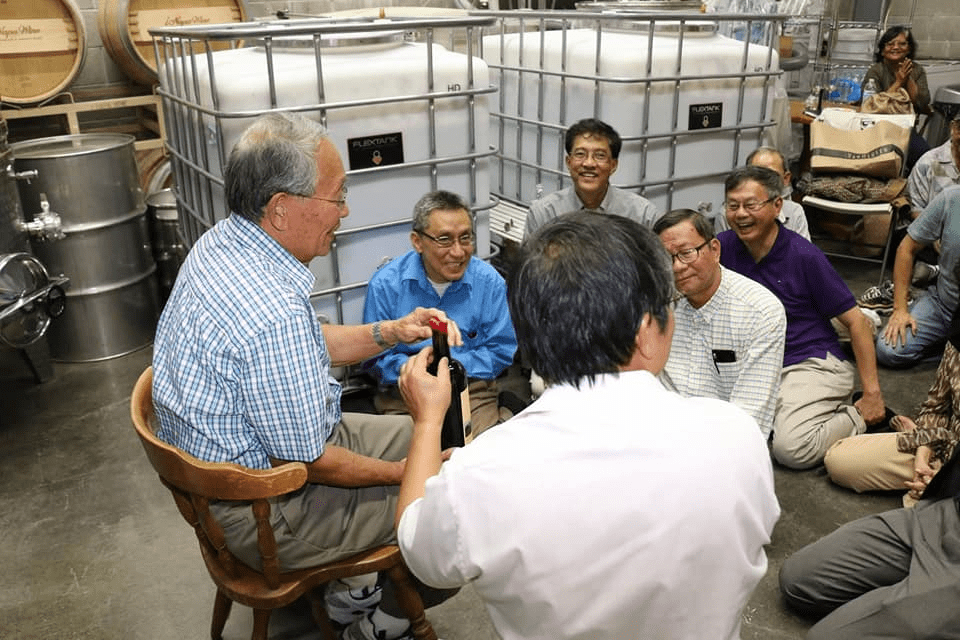
at 2015 RIT Alumni Reunion in LA and iNapa Winery : Saya U Win Kyaw (Met71), Saya U Thein Aung (Met72), Saya U Nyunt Htay (Met73) and Ko Thiri Nyunt (Met)
Gathering at iNapa Winery 1Gathering at iNapa Winery 2Gathering at iNapa Winery 3
Graduated with Architecture from RU Faculty of Engineering in 1958
Masters from University of Michigan
Retired Professor of Architecture, RIT
Wrote articles for SPZP and HMEE
Author & Speaker, USA
President, RU ConBro Association
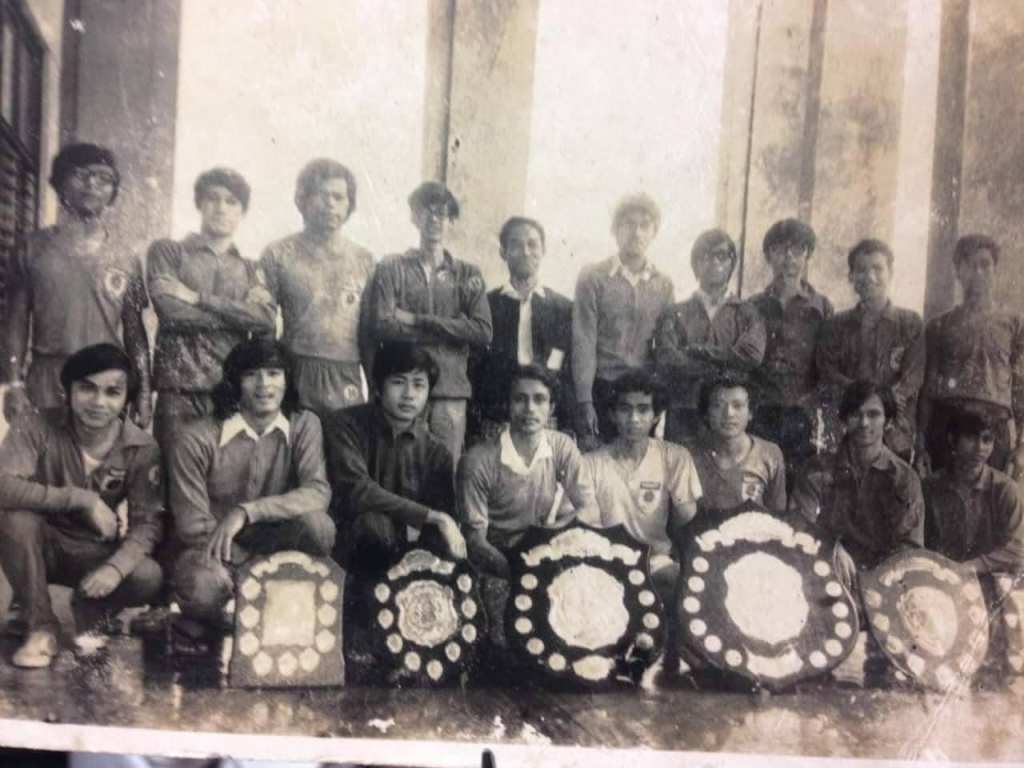
Played Soccer in RU days
U Myo Myint Sein
Good Teacher
I believe in that to be a good teacher one needs to equip oneself to the utmost and to keep ahead of the profession that he loves and adores. Conversation with a number of people outside the teaching profession adheres to the uncommon knowledge that a teacher only needs to prepare his teaching script once only and repeat that throughout his life time! That is a ‘fallacy’, and I have seen many that came into the teaching profession with that kind of an attitude!
Incidentally, I did not join the teaching profession by accident. My freshman year at the Mandalay University, being let loose after a sojourn with the ‘brothers’, at the Catholic School, my freshman class at college appears paradise with beautifully, posh dressed up girls always in the front rows, enticed us to became a little boisterous, whistling and throwing paper ‘rockets’. It was in the chemistry lecture theater that got Dr. Mitra’s attention. He looked up at our group and mumbled a few words and stopped staring at the class. The hall went silent! He then started, “I think a group of boys are not paying attention, I’m sorry to say that I have ‘failed’, please tell me, is it boring?, is it not understandable of what I’m trying say or do you all think that it is just non-sense? Every night I work very hard, to know each of you and think of how I’m going to perform my lecture with the help of the apparatus right here in front of me so that you should not forget what I’m trying to teach you and make you all happy and I repeated to myself that this will be my best lecture!” His last words became very emotional, Head down he began to sob, silently and then he let out “I’m sorry please forgive me, this should not have happened and this will not happen again!”. And he continued with a very, very silent class. Immediately after the class we went to his office and apologized to him of our behavior, of not out of disrespect, just hoping to accrue some pleasure and that we respected him very much and we will never ever do this sort of a thing anymore anywhere. He was happy that we came to see him. In my thoughts ‘I think I want to be a teacher like him’. In the next chemistry class we wrote an apology note to the class, Dr. Mitra glanced at it, cleaned the board, smiled and said thank you.
In ‘Teaching Architecture’, I believe in two things, first equip yourself, next plan a creative highway path for the students to proceed and guide them along to their destinations.
UNDER MY WATCH 1963-1980:
I took over the Department of Architecture in September of 1963. I was shown to my office on the second floor of the main RIT building on the west wing. My office is facing east, located in the center of the west wing, along the corridor. I was introduced to my Department of Architecture by the registrar U Sein Hla, “that’s your Department…!” absent with students at that time and no sign of visible teaching staff per se! Is the Department of Architecture in ‘shambles’? Where is everyone? Almost in the state of disintegration! Disheartened? Not at all, I took it as a great challenge!
It appears that most of the RIT faculty and the registrar himself was aware that I would be joining the RIT Faculty. The TIME magazine’s cover story about my boss MINORU YAMASAKI mentioned that a Burmese architect working on high profile buildings with him. Also in September a write up and a photo of us my boss Yamasaki and I appeared on the front pages of the Yangon news papers. It also mentioned that I will be joining the RIT faculty. I believe they were also very curious of why I came back!
I started to get busy, very busy with the lectures, curriculum, and trying to organize the ‘department!’. Yes there were students, 1st. yr., 2nd.yr and 3rd.yr. Architectural staff?, one Russian lecturer who appears to be conducting the studio courses. Other cognate courses were taught by the Civil, Electrical and Mechanical engineering departments. The other Russian lecturer had left after completing his assignment and we await his replacement while the students are left unattended. I was young and very enthusiastic and accepted the challenge with pride.
As I took on the challenge, ignorant of the political situation of the country and also the administrative challenges, I started to work on refining the curriculum and looking out for recruiting the most important architectural faculty. No one was interested or available locally. Soviet faculty was available on a two year contract, therefore I requested three more to fill the gap. I contacted my good friend Bilal Raschid and he was very willing to help me out as a Part time lecturer. Incidentally after a year I received a letter from my friend in Israel, Hubert Law Yone, a graduate in electrical engineering from Stanford and went to Israel and completed the graduate studies in architecture and working in Tel a Aviv. He wants to join my faculty. I got so excited of having a faculty with diverse knowledge and experience that I straight away requested the ministry to recruit my friend. Nothing happenned for a while and when I put in my queries I was politely told about the “situation’. So I got the message! Don’t rush, study the situation first!.
REFINING & UPGRADING THE CURRICULUM: The Concept of Architectural Education.
The Architecture encompasses many factors. Including: A very creative patronized Art Form combined with Science, Technology, Engineering and the Environment! Therefore in order to meet these basic requirements, a curriculum must be designed to fulfill the demands.
The basic thought on the Architectural studies is to teach and guide the students the subjects of Science, Technology, Engineering and the Environment, and in the Patronized Art Form, mostly guide the students to think and themselves be in control of what their thoughts are on Spaces and Forms, based on the patrons’/clients’ requirements.
Therefore the Curriculum is grouped into courses: a) Sciences, Engineering and Technology. These courses to be catered by our allied Science and Engineering Departments. b) Environment, Creative Art Form. These courses will be conducted by the Architectural Department plus specialized experts from numerous government/private departments, in the form of lectures, seminars, workshops, studios/lab work and field work.
In our Department of Architecture like in most schools of architecture, final year students must prepare a Thesis and defend his work to the Thesis Jury at the end of the term. This is good and preferred by all students of Architecture and planning all over the world. We all have no doubts that this method for us was very good.
The concept of ‘motivational teaching’, comes into play of how to get students involved in their own learning and making things happen. I revised and changed the curriculum on Theoretical and Planning courses with terminal examination into eliminating the examination system and introduced the seminar/workshop system with a ‘Term Paper’ to be submitted at the mid/end of the course. The whole idea behind this is for the students to understand and perceive the reality of ‘learning’, searching, ‘thinking’, analyzing, ‘using’, and ‘making it happen’. After a few lectures/seminars when the students become acquainted with the course work he/she will submit his/her choice of three topics (in consultation with outside departments) and brief the outline to his/her lecturer. After the approval of the selected topic the student will research/study/analyzed and present the term paper outline, chapter by chapter for interaction with the lecturer and the class. At the end of the term it will be finalized and presented as a final Term Paper. This was a big change and a very successful change! It also keeps the faculty to be updating on all aspects.
THE SIX YEAR CURRICULUM:
The first two years were grouped into two categories. 1. Refinement of language Burmese/English, Basic Science and Elementary Engineering, Lab and Workshop. 2. Tools to be used in the development of Spaces and Forms. That is Sketches, Drawing and Drafting, and Delineation etc.
The mid two years are very crucial years where the student is introduced to be creative and encouraged to develop basic Spaces and Forms based on the two years of their learning. Emphasis is put on applied engineering and technological aspects on simple Forms and Spaces.
The final two years are very important. Basically this will be the final assault to proceed on to the real world of architecture. Forty percent of the fifth year is devoted to completion of all engineering requirements and sixty percent of the time is devoted to studio projects and seminars which are mostly related to each other. In the final year the first term forty percent is devoted Planning and Specifications and sixty percent is devoted to studio projects.
Studio courses: The studios are opened twenty four hours, seven days a week and the students are encouraged to work in the studio as much as possible. This is where the interaction between the faculty and students and students to students plus visiting mentors interact. This inter action is driven by virtue of immense ‘desire’ into acquiring and sharing ideas, thoughts, knowledge and experiences which is most beneficial to all students and the staff.
This is the concept for the six year Architectural curriculum. The details are flexible and are geared towards achieving the best goals.
THE FACULTY:
Under my watch there were five Soviet senior lecturers: Mr. Orzegov, Mr. Dorofeiev, Mr. Rodionov, Mr. Ushakov and Mr. Karakovtsky. All of them were able to communicate in English. They all conducted the studio work, drawing, drafting, delineation and project design. Later on Mr. Bilal Raschid joined our faculty and took over senior students’ studio projects. In the mid sixties I recruited U Kyaw, U Lwin Aung and U Hla Myint, followed by U Kyaw Thein, U Koung Nyunt and U Sai Yee Leik. U San Tun Aung took care of the planning courses & the Artist U Aung Soe took care of the life drawing and the allied art courses as part time lecturers. Later in the early seventies we recruited U Hla Than and Daw Min Thet Mun, followed by U Kyaw Win. This took care of our six year courses for the time being. However there was an urgent need to upgrade the qualifications and knowledge of our local faculty to re place the Soviet staff. Due to financial problems State Scholarships was unavailable and foreign scholarship was hard to come by. However we were able to send U Kyaw to Poland, & U Lwin Aung to Russia for Doctoral programs in planning. U Hla Myint to Australia for Architectural Engineering, U Kyaw Thein design & U Koung Nyunt Landscape to Japan. We were offered a nine months training program from England and Japan in lieu of our requested scholarship for an advanced degree program. We had no choice at that time, so we sent Daw Min Thet Mun for interior design to England and U Kyaw Win woodworking technology to Japan. In the mean time I had recruited U Thein Myint a physics graduate as a Lab Assistant with an inclination to coach him to become an acoustics lecturer. He was sent to England to be trained in acoustical studies and on his return he assisted in teaching acoustical courses.
Later in the mid seventies we recruited U Shwe, U Than Tin Aung followed by U Tin Kyi Hlaing. By the mid seventies all the Soviet Staff have return to their Institutions and our faculty members were back with their Ph. D.s and Masters degrees and we were full ahead with our programs manned by our own scholars.
LIBRARY:
Another basic tool are the books and examples of works by other great architects. It should be readily available in need of time when working in the studio. We organized an architectural library with our volunteer staff and students and set up a library next to the studios. In co-operation with our librarian Daw Myint Myint Khin I signed out all the architectural books for our Arch. library. The honor, respect and credit go to our student librarian Ko Win Myint, he ran the library like a professional gaining great respect from our RIT librarian, staff and students alike. We also had a good collection of color slides of American, European and Soviet modern architectural works. The slides were so good that the Soviet lecturers when returning back on home leave, would borrow the slides to present it in their lectures at their Institutes. I donated many slides and two slide projectors to the library.
PRINTING/PHOTOGRAPHIC/LAB/WOODWORK SHOP:
Printing Lab: We inherited a very old blue printing machine, probably seen the BOC Engineering years. However it is in working order and Mr. Darwood the estate draftsman taught U Kyaw Thoung to operate the machine! Later on we bought a new ozalid printing machine and U Kyaw Thoung became an expert on printing.
Photographic Lab: Mr. Orzegov started the dark room in his house for his personal research work and later on with the Soviet Embassy’s donation a photo lab was created in our department together with printers, enlargers and chemicals all set up with a dark room. This lab became very useful to our students for their term paper and thesis report work. Credit goes to U Koung Nyunt for organizing and running the Lab. Again U Kyaw Thoung became an expert in helping the students in preparation for their term paper and thesis reports.
Woodwork shop: Related to the community college program under the ministry of education, our department was responsible for Arts & Crafts and Woodworking Technology courses to be set up in some of the community colleges where teak wood is abundant. The Japanese Government provided the equipment which was set up at the original canteen building opposite our Department building. It would have been an ideal shop for staff and students to make architectural models. However, service staff was not provided by our ministry therefore we were not able to allow students or staff to operate the machines as it can be very hazardous if not handled appropriately. This project was not successful.
Our Lab Staff: We had a good Lab staff that benefited the students and the staff. They assisted the students in the studio work, in preparation of their term papers, reports and theses, including formatting, typing, printing and binding etc. Without our Lab staff field work would not have been as successful as it was. It became a mobile academic entity planned and organized the transportation including lodging, messing and the learning center on site at the field. Credit goes to our lab staff, led by U Thein Myint, U Kyaw Thoung, Naw Ar Mu Cho, Saw Donald, U Nyi Bu and Saw Yaw Tha.
FIELD WORK:
,Field work is very important for the benefit of the profession. Architecture is dynamic entity, always in motion! As sciences and technology advances architectural design concepts virtually becomes more flexible, adaptable and convertible. Therefore field work and surveys of buildings are the essential part of the profession. The Department of Architecture emphasizes on the importance of field work in the three most crucial areas. (1) The Architectural culture, traditional Spaces and Forms, lifestyles and the arts. (2) Survey and measured drawings of classical buildings. Study/research of their architectural values, needs and usages. Analysis of their work and summary of findings. (3) Exploratory mission, prior to working on a term paper or a thesis project a student embarks on this mission to gather all the crucial aspects of his or her interest in the project. Almost all the studies/research, reports and projects performed by the department of architecture are linked to the work performed in the field.
FACULTY PRACTICE:
Internationally most architectural faculty members are encouraged to practice professionally in their profession. This is to acquaint the students linked to the real world of the profession! In the USA I would estimate 50% of the faculty would obtain a license to practice the profession and would have a limited practice. The others who are not interested in the architectural practice would perform studies/research analysis and publication. The faculty is encouraged to at least engage oneself on an allied work. At one time it was publish or perish! I was on the verge of discussing/encouraging our staff, on the topic of engaging oneself on an allied work or private practice when one day I had a knock on my door. It was the Counselor from the Indonesian Embassy. I was surprised to see a foreigner, an Embassy staff at my door! I was trying to explain to him that we were not permitted to see. Suddenly he smiled and said ‘I have been introduced to you by your Ministry and with their blessing I’m here to request your help!’. I verified. The ministry permitted me to help the Embassy for their projects and allows me to personally accept any remuneration according to international standards. That was my first project, followed by the Australian Embassy and the US AID projects. Since I was permitted to practice, I told my staff that they are welcome to practice as long as they do not neglect their responsibilities. It was a good thing for the students and staff.
ARCHITECTURE DEPARTMENT PUBLICATIONS AND PROJECTS:
After a few months at the department I was requested by the education ministry, to submit a conceptual proposal for the Rangoon University Student’ Union at its original site. I submitted a model of the building. The discussion was not what I had expected. Security reasons were given not to go ahead. Architecturally, too western! I was too embedded with American thinking that I had forgotten all about ‘Tradition & Architecture’ that I had been working on. That was a good lesson learned! Immediately I embarked on the study/research program on the cultural and architectural background of the country. The study/research by the department was performed by the faculty and most of the times the students were involved. Field work includes, Pyu, Bagan, Mandalay, Mrauk-U. Inlay etc., assisted by the Archeology Department. Measured drawings on Bagan was printed and published. Research papers were read at the Burma Research Conference. ‘The Monastic Institutions of Later Kon-Boung Period’ and The Classical Houses of Myanmar’ were published in the seventies. The Archeology Department provided funds and two monasteries were repaired. Many projects were performed by the Department of Architecture and is listed in the appendix section of this story. However, I should mention three most important projects. 1. The conceptual proposal for The Master Plan of The Legislative Center & The Peoples Park, Yangon. This was a very important project as the Prime Minister U Sein Win, requested that I personally present this project to U Ne Win, Chairman of the Government. It was a very enriching discussion lasted many hours. The next day I was informed that it was approved for construction. 2. The conceptual proposal for the Ministry of Health, Sports Center for Yangon. 3. The Ministry of Education, Extension Education Center Head Office, Yangon. This projects includes: design, construction and turn over to the Rector.
EXTRA CURRICULAR ACTIVITIES:
In any of the extracurricular activities involving architects, the topic always leads to the exchange of thoughts, be it design or culture. The major event of the year would be the annual dinner. Since our student population was not that much we had organized the dinner and entertainment on the lawn of my house. The students organized everything and the whole department, the friends of the students, mentors and friends of the department were mostly invited. In one of the events U Khin Maung Yin, the architect/artist/movie maker volunteered to show his movie ‘Hna-Ma-Let-Shaut_Nay -Lay_Dawt’, a very arty movie. However, in one of the scenes: early misty very quiet morning village scene the pae-byoke the’ with the basket on her head screaming pae-byoke…pae-byoke…pae-byoke the street with the background of huts came into focus and suddenly the background music of Beethoven’s fifth symphony came out with a bang and the music overpowered the whole audience! The audience went silent and a second later a sarcastic laughter and clapping, with a question “what is this”. It was a great lesson for the students, staff and the visitors! Conflict of cultures: scenes of images and sound, lack of coordination, harmony, rhythm and movements. It shows the sensitivities of the students. Every year the students would have a saya puzaw pwe, all together or class by class. It was an occasion that the students will never pass and surprisingly non Buddhist students also took part in the celebration. Association of Student Architects. Chaired by the Head of the Department and run by the student body. ASA was involved in all occasions. One thing that was very beneficial and useful for the senior students mostly fifth and sixth years who took part in the “bull sessions” I use to have in my house. The students and staff would get together one evening in a year and talk about architecture, design, planning and technology! I was surprised that in the late eighties one of the students reminded me of the ‘bull sessions’ we had at RIT. He says that he could never forget how valuable it was for them all along.
SUMMARY:
This is a story of the Architectural education 1963-1980 in a nutshell. I’m sure that there must have been many important episodes that went unnoticed. Also there must have been many many ‘the good & the bad’. However it must have been miniscule.
I’m glad and proud that I took up the challenge and stayed on at RIT for seventeen years!, and I’m proud of our students with numerous divergent interest: student affairs, politics, business, arts & culture, etc., Now most of them are now leaders and have contributed towards the development of the country in planning cities, neighborhoods, communities, estates, buildings, factories, bridges, dams and most important of all is being involved. Some are even in politics as advisors to the government and also to the opposition party. They have made history and we are proud of them. They are teachers, mentors a motivational entity to the next generation of RIT/YTU/MTU/? alumnus. This is the success of the Department of Architecture. Gone but not forgotten are our devoted staff, Dr. Maung Kyaw, U Hla Myint, U Kyaw Thein, U Sai Yee Leik, U Thein Myint and U Kyaw Thoung. As RIT is always in our minds so also will they be.
I was permitted to resign after paying the government K50,000 to the Union Bank Myanmar. I physically left RIT grounds on the 10th of January 1981. Sad to go but still attached to RIT.
Pon Tu of Saya Dr. Aung GyiSaya U Min Wun and Saya Dr. Aung Gyi at the Welcome Dinner for SPZP-2000
Born on 1st October 1931
Except for loss of hearing, he is healthy.
Attended SPZPs, mini-PZPs and micro-PZPs in Canada, USA, Singapore & Myanmar.
Matriculated in 1949
First group of engineering students selected to study at prestigious universities in the USA under the Twinning Program
BS and MS from MIT
Upon return, he joined the Faculty of Engineering as Assistant Lecturer.
Promoted to Lecturer & Head of Civil Engineering
Doctorate from University of Alberta
Succeeded U Yone Mo as Rector of RIT in 1971
Left for UN assignment.
Later : moved to Canada
Fondly talks about “the best days of his life at RIT”
DAG 2DAG 3
Contributions
Brief bio for SPZP-2000
Keynote at SPZP-2000 : Talked about Health & Emotional Intelligence
Article covering (a) State Scholarship in the USA (b) experience as Professor and Rector (HMEE book has excerpts from the article)
Introduction to the History of Myanmar Engineering Education ( in Supplement CD of HMEE book)
Coconut Episode (Heard at Saya Allen Htay’s house before SPZP-2000. Transformation of a student from a Coconut thief into a respected 3R teacher. Printed version appeared in “Swel Daw Yeik Sar Saung” for a Singapore SPZP.)
Anecdotes on several occasions
Saya and I spent a few days together at Ivan’s house in New Jersey in 2015. Saya would tell us stories from his RIT days.
Ivan, Saya & me
We spent two nights at Saya’s house in Canada during the whirlwind trip hosted by Ivanwith the help of Fred Thetgyi.
At Saya’s house
During my visits to Yangon, I was “Ei Hmyaung” at the gatherings — one for the birthday of Daw Emma and one for welcoming Sayagyis attending SPZP
Worked briefly at Namtu mines before joining Electrical Engineeering Department at Rangoon University
Reunion
Saya of our sayas. His students include Saya U Sein Hlaing and Saya U Tin Swe
Requested C Ping Lee (father of Dr. Win Aung M62) to join EE department. HE U Than Aung asked Saya C Ping Lee (his former student at SPHS) to head Technical & Vocational Training Directorate and to improve curriculum (e.g GTI).
President of RIT Electrical Engineering Association
RIT EE Association
Patron of Hlyat Sit Sar Saung Committee
Hlyat Sit Sar Saung
Taught “Principles of Electrical Engineering” to non-engineering students. Sayas who later taught the course include Sayas U Myo Kyi & U Moe Aung.
Told a class that suitors of his lovely daughters must be doctors (medical or Ph.D). Anecdote was recounted by “Doctor” Tin Aung Win (spouse of Dorothy Kyaw Tun) for SPZP-2000. Saya’s elder daughter Elizabeth (Dr. Daw Tin Nu) has a Doctorate in English.
After retirement, Saya visited Australia
Passed away peacefully in Yangon
Spouse passed away during our RIT days. We attended her memorial service at Saya’s home.
Updates
Several EE sayas are GBNF.
For SPZP-2010, I wrote “A Sad & Short Clip : EE Sayas”.