by Hla Min
Updated : July 2025
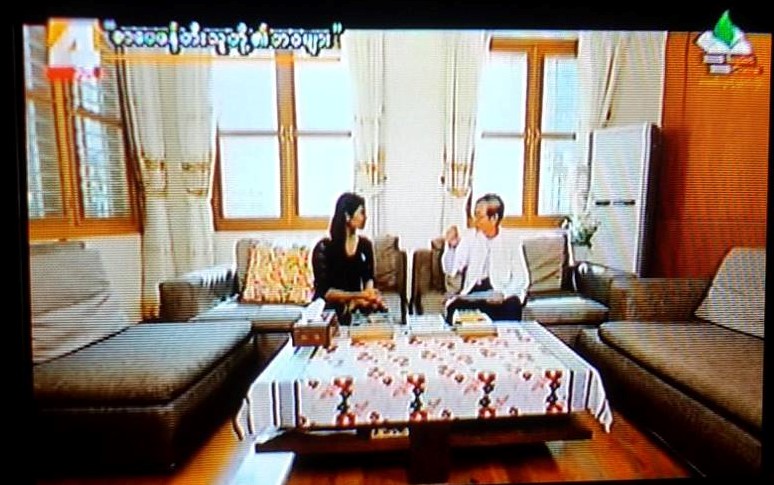
Interview with Tekkatho Moe War

Memories



by Hla Min
Updated : July 2025
by U Myo Kyi & Hla Min
Updated : July 2025
Source : Saya U Myo Kyi (EE59)




by Hla Min
Updated : July 2025



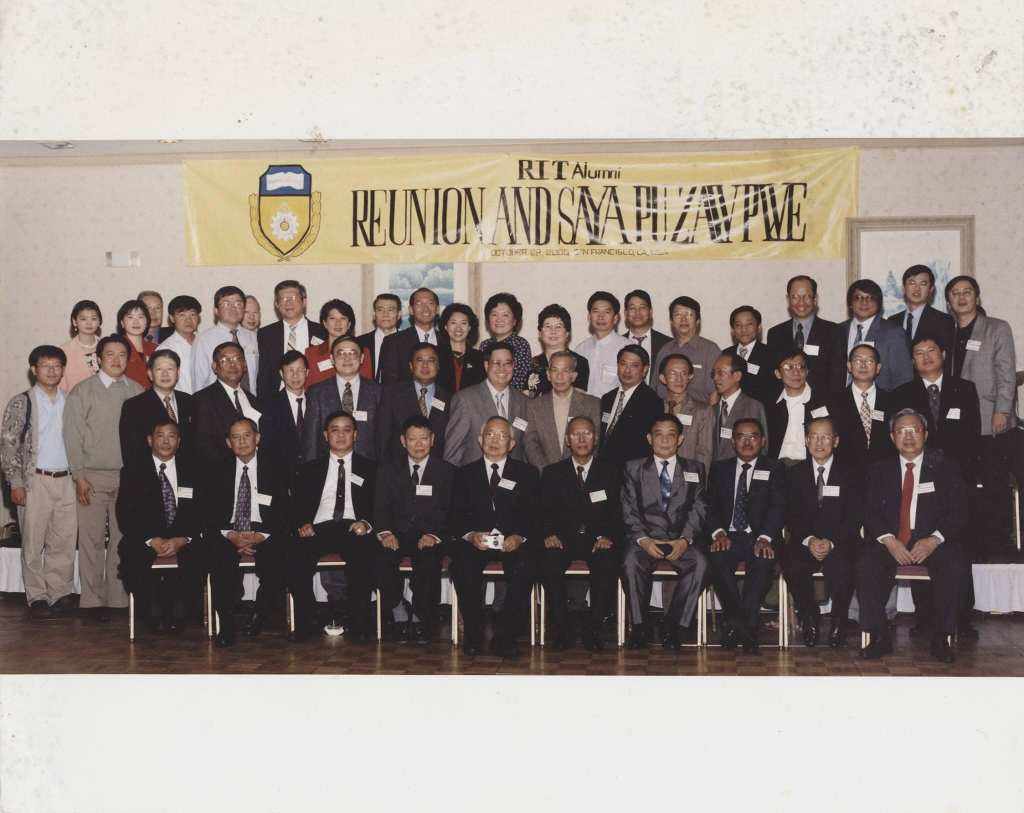
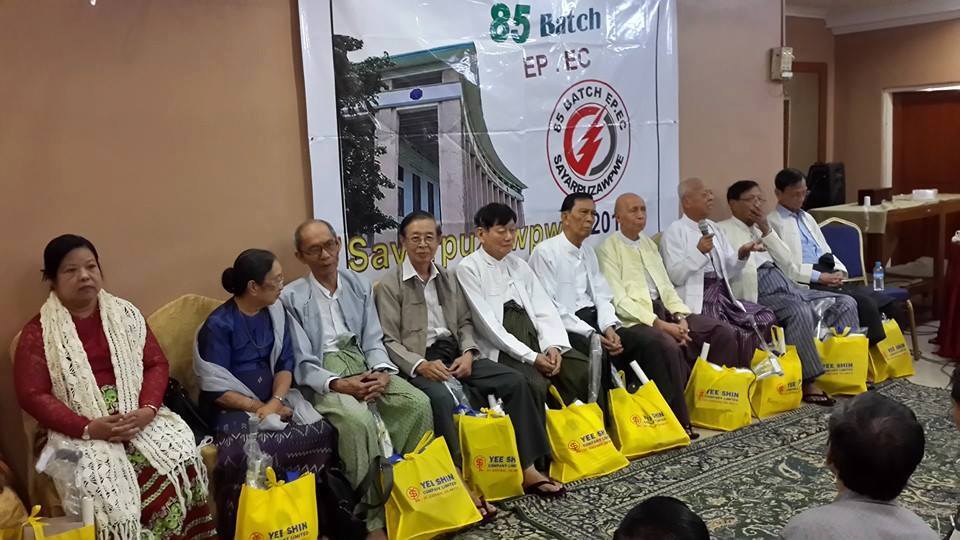
Pu Zaw Pwe is a Noble Tradition that is practiced in Burma.
Thet Kyee PZP is for paying respect to the Elders. The age requirements vary.
Saya PZP is for paying respect to the sayas and sayamas. Some use the term Acariya PZP.
In some places, a Senior Day is held. Transportation, Food, Entertainment and Photo-shoot are provided for Old people of all races and creeds.
Thet Kyee PZP may be held in conjunction with a Festival, e.g Thingyan or Thadinkyut. Buddhists may also pay respect physically to the Elders.
MES organized Thet Kyee PZP for Senior Engineers and Architects.
The All-Mechanical Gathering also had a program to pay respect to Thet Kyee Mechanical Engineers.
Examples :
Combined 1st BE Intake of 64 and 65
M72 (and some other Disciplines)
ICST/UCSY
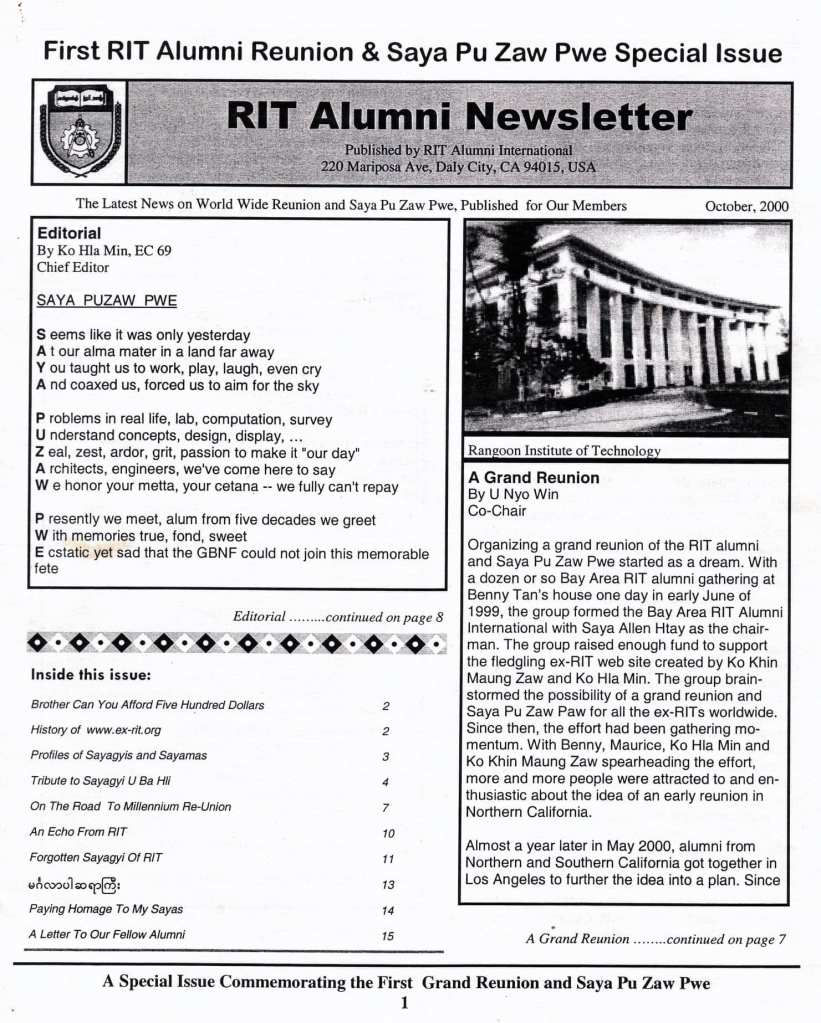
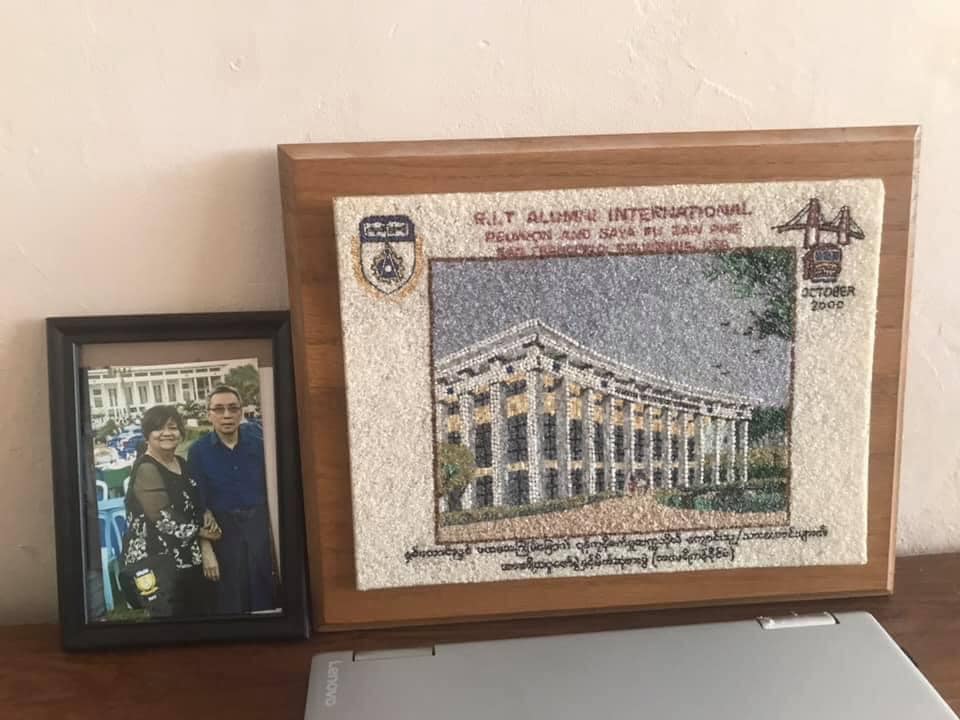
RIT Alumni International hosted the First RIT Grand Reunion and SPZP in San Francisco, California in October 2000. The term SPZP was chosen over Saya Ga Dawt Pwe so that Alumni of different Faith can pay back the Metta and Cetana of their mentors. I am honored to be a Core Organizer of SPZP-2000. I wrote the poem “SAYA PU ZAW PWE”. It was published in the RIT website and the Commemorative Issue of the RIT Alumni Newsletter for SPZP-2000.
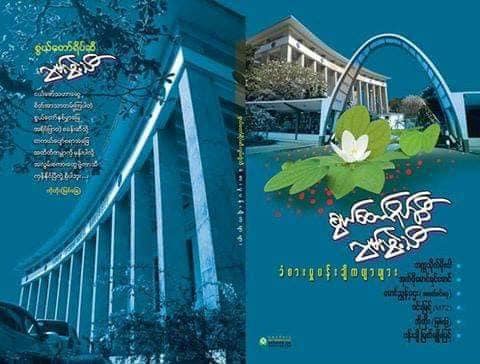
Singapore hosted SPZP-2002, SPZP-2007 and SPZP-2010. Saya U Moe Aung (Tekkatho Moe War) and team published Commemorative Issue of Swel Daw Yeik Sar Saung for the SPZPs. My poem was reprinted on the Back Cover of SDYSS-2002. I wrote a poem “SWE DAW YEIK” for SDYSS-2007. I wrote an article “EE Sayas : A Sad and Short Clip” for SDYSS-2010.
Yangon hosted SPZP-2004, SPZP-2012 and SPZP-2016. Commemorative Issue of Swel Daw Yeik Magazine was published for SPZP-2012 and SPZP-2016. U Saw Lin (GBNF) was Chief Editor of SDYM-2012. Saya U Moe Aung was Chief Editor of SPZP-2016. Several Distinguished Authors (e.g Ma Sandar, Maung Sein Win — Padeegone, N Jar Thaing, Aw Pi Kye) also served as Editors.
Due to the pandemic, SPZP-2020 was canceled.
Some of the Organizers and Volunteers of the SPZPs are GBNF. They include Saya Allen Htay, Ko Saw Lin, Ko Aung Moung, Ko Than Sin Myint and Ko Robin.
Several Sayas are GBNF. They include U Ba Toke, H Num Kok, U Soe Khaw, U Khin Aung Kyi, U Thit, Dr. Mg Mg Win, S Arya, S Kyaw Aye, U Soe Lwin.
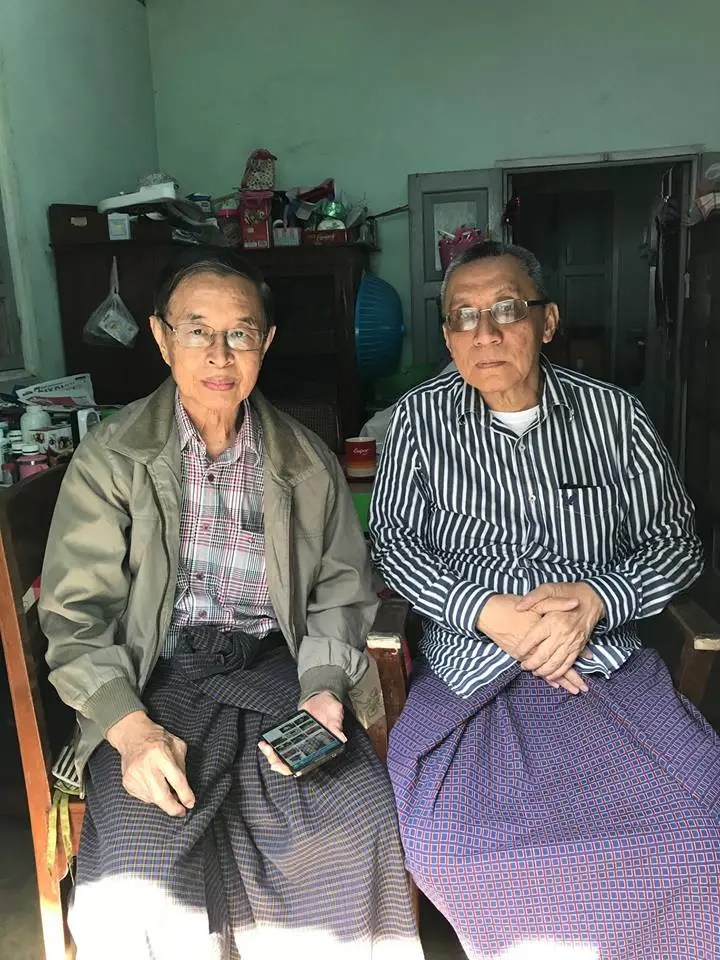
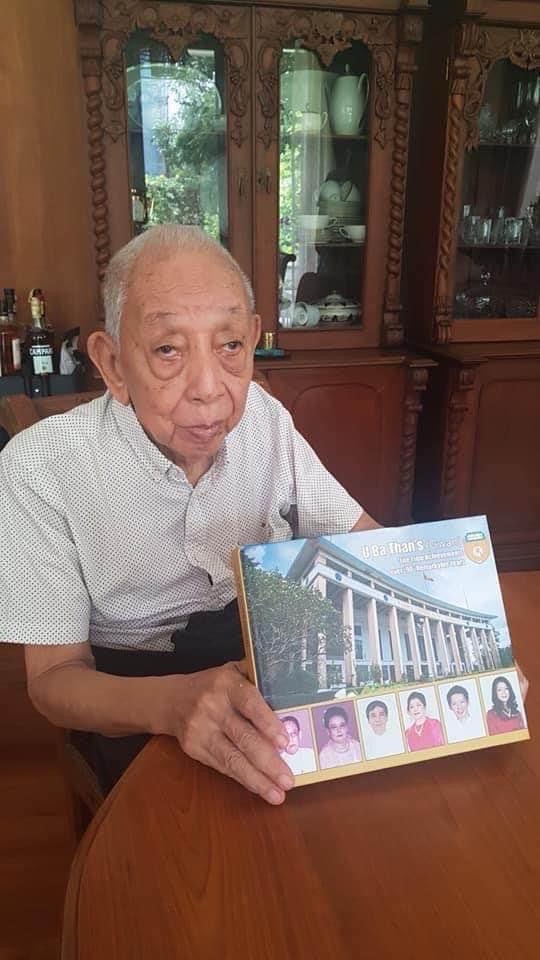
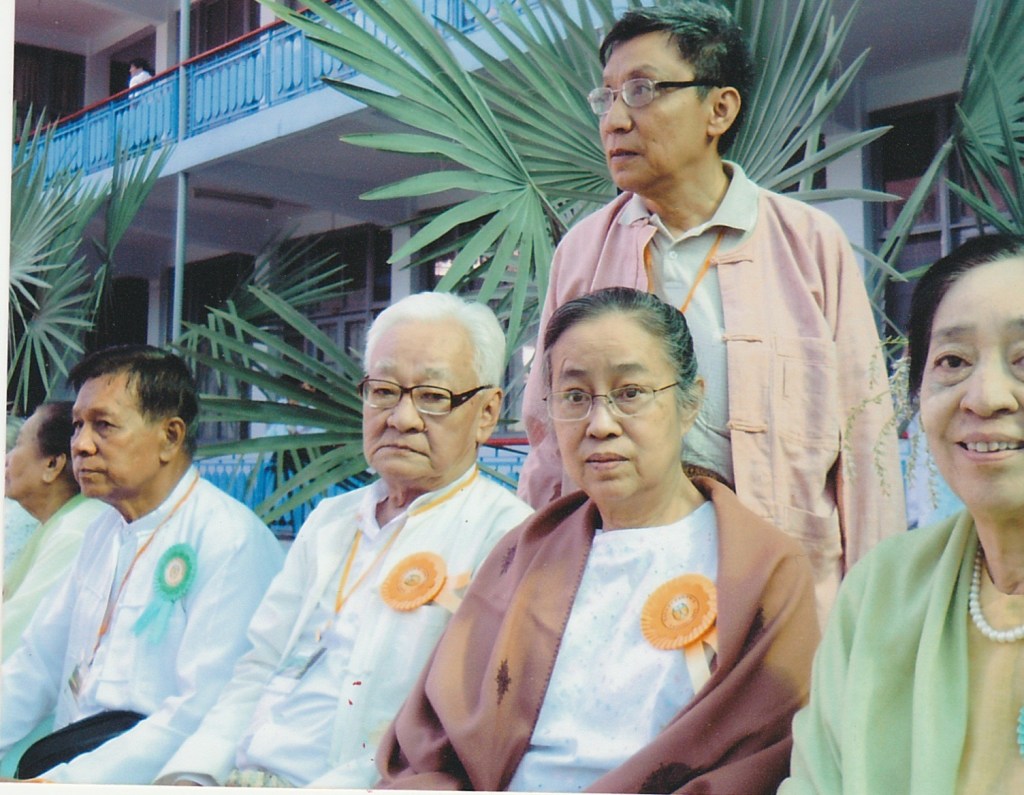
Sayas U Ba Than, U Aung Khin, Dr. Aung Gyi and U Min Win are 90+ years young. Many of our sayas are 80+ years young.
We hope to see SPZPs in the not so distant future (after the Calamities have ended).

by Hla Min
Update : July 2025
The Class of 69 (mostly M69) paid respect to Sayagyi U Ba Than on October 1, 2017.
U Aung Min was the organizer.

The group attended the birthday celebration ceremony and received blessing from sayargyi. The group handed over garawa birthday gifts that they had collected before and on the monthly breakfast gathering held earlier that day.
Sayagyi usually performs dana with the Garawa money he received for his birthday and for attending the SPZPs and mini-SPZPs.
Sayagyi has supported various charitable associations for the needy, the sick, the blind, the deaf and dumb, old people and “Nar Ye” . They include
On his Birthday every year, Sayagyi offers “soon kwyay” ဆွမ်းကျွေး at Yaw Sayadaw’s monastery.
The Soon kwyay held on October 2, 2017 was attended by sayas, alumni, relatives and friends.
by Hla Min
Update : July 2025




by Hla Min, U Tin U & U Ba Than
Update : July 2025
by Hla Min & Kogyi Koung
Update : July 2025
by Kogyi Koung
It was one afternoon in the early May of 1963. Someone was singing a prewar semi-classic song from the second floor of RIT main building. In 1963, RIT buildings were relatively new and that semi-classic song caused a little bit of discomfort for the freshmen [equivalent to 3rd BE] located on the first floor. The song continued as,
(. hmain: njou. njou. sain: lou. je . njou pja ji hmaung che . to: dan: kalei: nanbei: ga swe . e:di jwa be: kwe…)
The meaning is: Dull and gloomy cloud override at the horizon; Indistinct brown and dim bluish vision of a wood jetting out from that end is my village … *Note: The title of the song is ‘Htamin: mjein mjein sa: me’ i.e., “ထမင်းမြိန်မြိန်စားမယ် Enjoying the meal with relish”. The duet song was first performed by prewar famous singers Ou’ O: Ba Thaung and Sein Party. Later many other singers have rendered their own versions of the song.
We saw an old man singing the song while he was painting watercolor on a huge art paper. He was painting the landscape described in the song. Amazingly the picture was full of life and the song was telling the story. Everybody stopped in front of his office on the second floor and looking with wonder and singing with him.
After a while we asked him, “Sayagyi, who are you and which department do you belong to?”
He replied, “I am U Tha Tun, Head of the Department of Architecture”. Oh, my God! How stupid that we, the freshmen of Architecture, don’t even know the head of our department. As time passed, we learned more about ‘The Great U Tha Tun’.
When we became senior students, U Tha Tun’s health deteriorated so much that Saya U Myo Myint Sein (Raymond, A58) stepped up as a ‘Kagemusha’ [Japanese for “shadow-warrior”]. UMMS, as acting head, took care of everything about the department. Young and energetic Saya UMMS found that it was not easy to steer the department as Captain of Architecture’s Flag Ship. There were lots of problems for a relatively young department in RIT.
One such problem occurred during our final year. Two of the most experienced Sayas of architecture left the department and went abroad [for enhancing their careers]. They were (a) Saya U Sein Maung (with elegant moustache) has long experience in Rangoon City Development Corporation. He taught each and every detail of the development of Rangoon. (b) Saya M.B. Raschid (son of U Raschid, minister of many affairs under Prime Minister U Nu). He taught with all his professional experience and perfect pronunciation of King’s Burmese with ‘zagaboun စကားပုံ’ proverbs. Sometimes he corrected our broken Burmese.
Saya UMMS, Head of the department, not only had lost his right and left hand men, but also there was a danger that the notorious Koung Nyunt and Kyaw Thein (both A67) might not finish their Architecture degrees.
After a long struggle, Saya UMMS stabilized the flagship of Architecture and its direction. A pioneer of the Architecture of RIT, Professor U Myo Myint Sein handed over the headship to Dr. Maung Kyaw in early 80’s. In the late 80’s Dr. Lwin Aung (A59) took over.
For creative and original works, Architects cannot design during the office hours. It is also true [to a lesser degree] for the students of architecture. During the lectures and tutorial hours we [as students] have to follow what they have taught. After school hours [mostly after 4 or 5 pm], we start to create and test our design ideas. Note that for other students and staff of RIT, such periods are the pleasure and relaxation time.
There were only a few girls in Architecture, but the one in our studio is especially alluring beauty and glamorous face. She was so popular that she became known as the queen of the student-architects. We called her Ma Ma Q.
Most of the evenings many senior students and young eligible bachelors and/or sayas visit our studio. Some stay late into the evenings. At that time we sang a song named ‘Saga: ta’ kathou’ i.e., Language University, by Khin Yu May.
Because in the song, one part said ‘dage lar te. Ko Ko. kwe ja hmar ba lou lou’ i.e., really coming Ko Ko, out of sight he is sth in the air.
Ma Ma Q didn’t know the meaning, but the visiting Ko Kos were annoyed by our song. They politely requested us to stop singing. At that time the notorious KN and KT asked ‘hse’ kjei:’ i.e., extortion money about 2-3 kyats from the Ko Kos and went to U Chit tea shop. This continued for days and weeks.
When the Ko Kos are not visiting our studio, we sang the following song, instead of Ma Ma Q. i.e., Third Song. (Note. Extract from Shwe Kyi: nyo song by Daw Ngwe Myaing)
‘Diga nei. nya hpjin. lar ma te. so: joun ya hmar lar: akou Kja.ma ne. ne: te. Shwe kyi: nyo Shwe kyi: nyo Shwe kyi: nyo’
“To-night coming you said so, may I believe Ako.. Near the blessed golden crow, golden crow, golden crow…”
With all of those excellent works and flying colours for Saya Pu Zaw Pwe, your organizing committee is a living history of RIT. Our Sayas, Sayamas and Saya-Gyis have contributed their unlimited knowledge to affect and benefit our lives. Many of our Sayas and colleagues have sent their thanksgiving letters to your web site.
I feel guilty in staying quietly at a corner of the Southern Hemisphere. Actually I am busy, because of my article ‘Wanna Migrate to New Zealand, 3/15/00’ that you published on the ex-rit web site. After that article, I got many inquires/contacts by e-mail and direct phone calls, especially from SE Asia. In July there are 133 migrants and in September 28 migrants are now in Auckland, and expecting another over 50 in November 2000. All speak the common language “Burmese” with their own native accents. Now I know our Sayas and colleagues speak “King’s Burmese” in RIT.
I would like to honor my Sayas with a poem from our forefathers-cum-engineers how they had built a city.
Sweet sound of drums and silver bells
Coming from the Palace
Can be heard reverberating in the air
And I can see the palace roofs,
The graduated turrets and buildings
Encompassed by haze.
And, my dear girl, I can still faintly see
The silhouettes of a high pagoda
Reaching nearly to the clouds
And of super-imposed roofs (i.e., pyathat)
Oh my dear, don’t you hear
A melodious sound of small bells
Coming from the golden monastery?
Our golden capital city must be near.
(By U Ku: 1827-1895 Translated by Rev. Friedrich V. Lustig)
Dear Sayas and colleagues,
We see not only the Panoramic Photo of golden capital city of our ancient time, but can hear the sound-scape with audio-visual scene. Silhouettes effect of high pagoda in the haze has shown the air perspective of city skyline. We try to sketch the imaginary scene of ancient city in the architectural studios of RIT in the middle of 60’s. The discussion topic of ‘Ancient City Skyline’ is not only interested by the architectural students, but also from various students of other departments from RIT.
This is the starting point to form the ‘RIT Photographic Club’. According to my diary, first general meeting was chaired by Saya U Myo Myint Sein on Saturday, 1 May 1965 at the Department of Architecture. The general meeting selected Professor U Myo Myint Sein as President of RIT Photographic Club and the author as the secretary.
After forming the executive committee, the club took part in various activities and many outstanding photographers from the club took major prizes from Burma Photographic Society and Myawadi Magazine. e.g., Ko San Aung, M74 is the owner of the famous ‘Photo Lab USA’, (i.e., initials for U San Aung) in Yangon is originally from this club. Kjei: zu: tin: bar-de, many thanks for my Sayas and colleagues
Koung Nyunt (Auckland, New Zealand).
by Kogyi Koung
Date: Thursday, 14 April 2011 (3:40pm. Thin-gyan Akya-ne.)
P.O. Box; Top of the never used RIT water tower
Ashe. Jo. Koun (East Gyogone): RIT Compound, Insein, Rangoon, Burma
Dear Your Majesty the Sovereign of Tawadein dha တာဝတိံသာ
As from the beginning of 1960’s our RIT is like the last paradise on earth, with all enjoyments, teachings, preaching, learning, playing sports and friendship never sails away. Kogyi Koung recollects the stories at the time of 60’s RIT and retold the fairy-tales to our Bushido-Burmans at gatherings in Auckland, NZ. However, the young generations of Maha Bandoola do not believe the stories, and they whispered by themselves that Kogyi Koung is now ‘Yin yin galay Yuu-nay-pyi-de’ ယဉ်ယဉ်ကလေး ရူးနေ ပြီတဲ့
Your Majesty the Tha-gyar-min-gyi please take this message to Tawadein dha and explain to my late Sayas and colleagues there, that my stories are not fabricated.
I have the evidences. For example, I have sent a message to RIT alumni update (February 6, 2010) as follows,
Dear U Hla Min,
It is sad news for our elder brothers at RIT, especially those who reside at E and F block during the beginning of 60’s.
A term called “Ma-pyo: mashi.ja ne he.” မပြောမရှိကြနဲ့ဟေ့ was coined at that time. When I visited my elder brother [U Than Soe, M63] at E block (when I was at Leik-khone I.Sc). I heard somebody shout “Ma-pyo: mashi.ja ne he.” Then I looked outside. Everybody lined up at corridor and they were looking at a far side on top of the entrance hall that is attached to a two story house.
I could not believe my eyes. She was a beauty queen, who had Miss Burma two times excising physical training on the porch. I noted down in my diary and the rallying cry “Ma-pyo: mashi.ja ne he.” She is Naw Louisa Benson Craig. Now she has left our brothers’ heart at age 69.
Yours etc. (“Ma-pyo: mashi.ja ne he.”)
When I retold that story here at Auckland, everybody laughed like ‘Wa:lone kwe:aung ye kya de”. I said it is not a joke. I have evidence.
Also, Kogyi Koung explained about the following, written by Maung Maung Hla, a Karen pastor in Rangoon who was close to Naw Louisa during her youth, remembered her aloud : “She had a little mole on her cheek and she had a kind heart. She was also a very good singer.”
This statement has no evidence.
However, Tha-gyar-min-gyi if you find Naw Louisa at Tawadein dha, please ask if what I wrote is true?
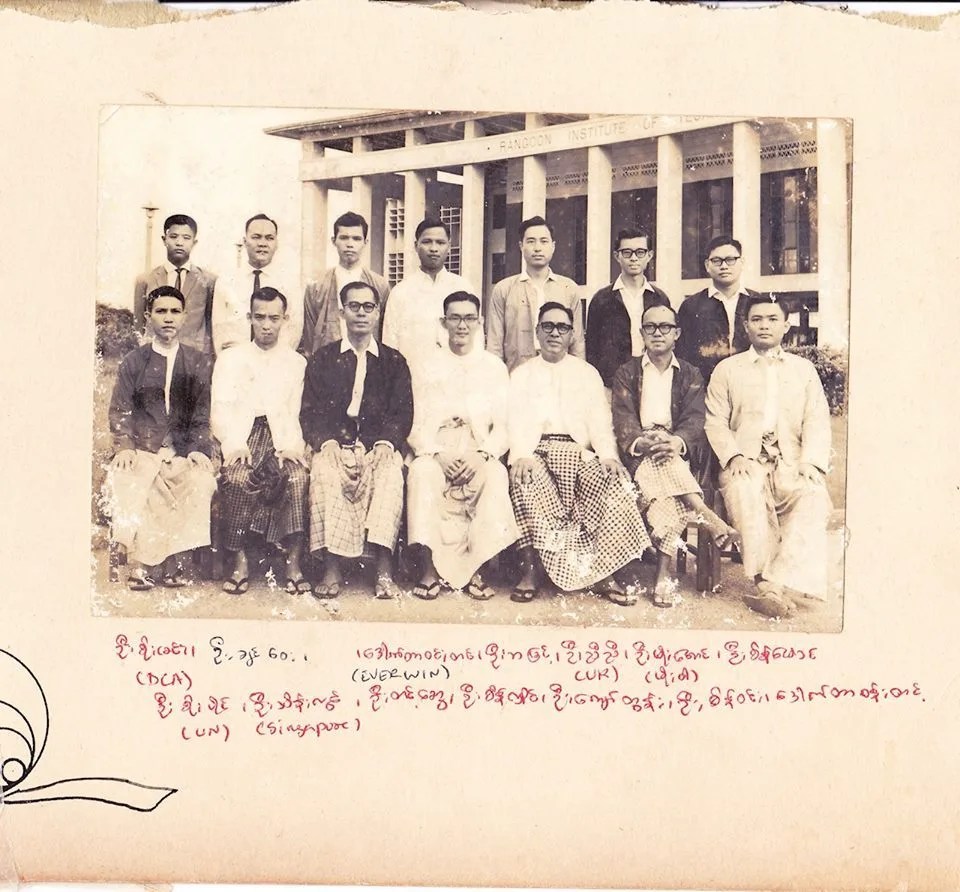
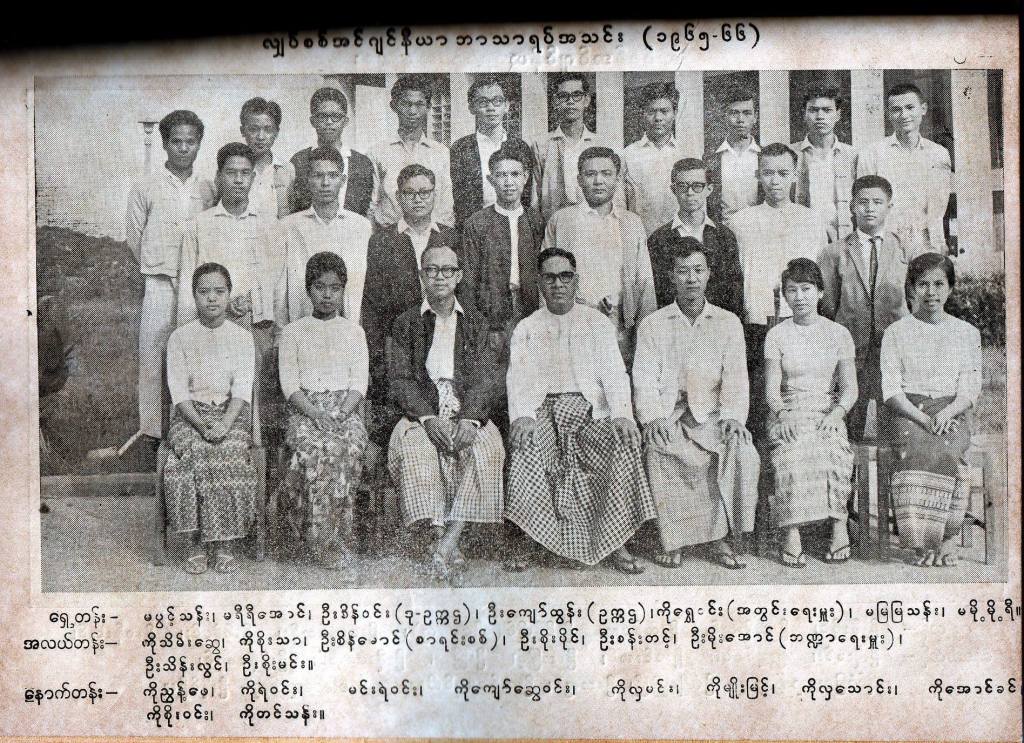
I have an old group photo taken about the end of 1963, and all the known information are printed. Inside the brackets are where about of the person [at the time of the post].
Department of Architecture
Rangoon Institute of Technology
1963 ~ 64
Front row, L to R
2nd. Row, L to R
Back Row, L to R
Absentees:
1st Year B. Arch, 10 students (8 passed and 2 failed)
2nd Year B. Arch, 5 students (3 passed and 2 failed)
3rd Year B. Arch, 6 students (3 passed and 3 failed)
Several Architecture students failed in of a subject from other departments. There was no moderation. If one gets 49% or less of the grade, the student has to repeat all subjects next year.
I cannot find the photo mentioned by Kogyi Koung.
The early sayas and sayamas of the Architecture Department include :
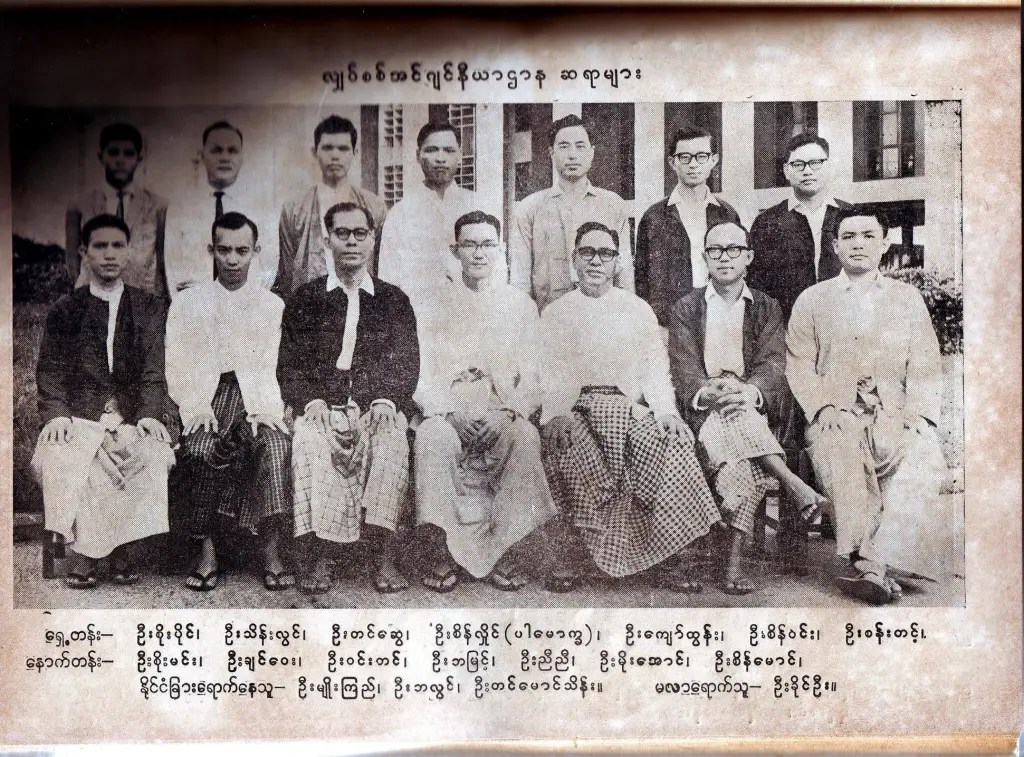
by Hla Min & U Myo Kyi
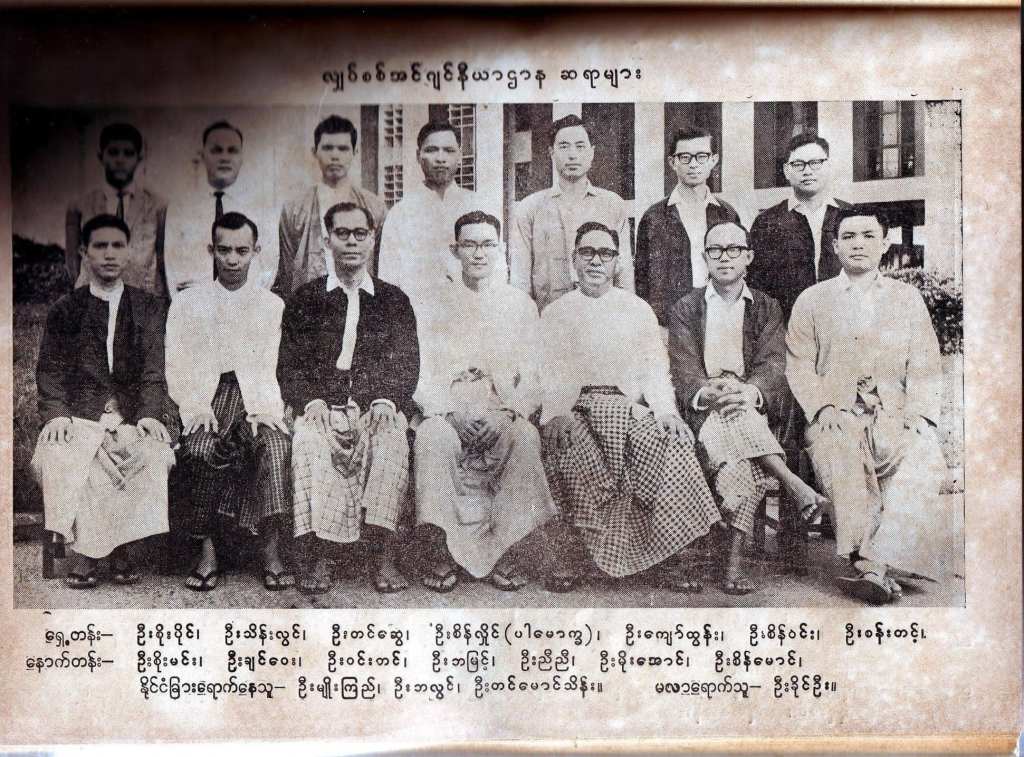
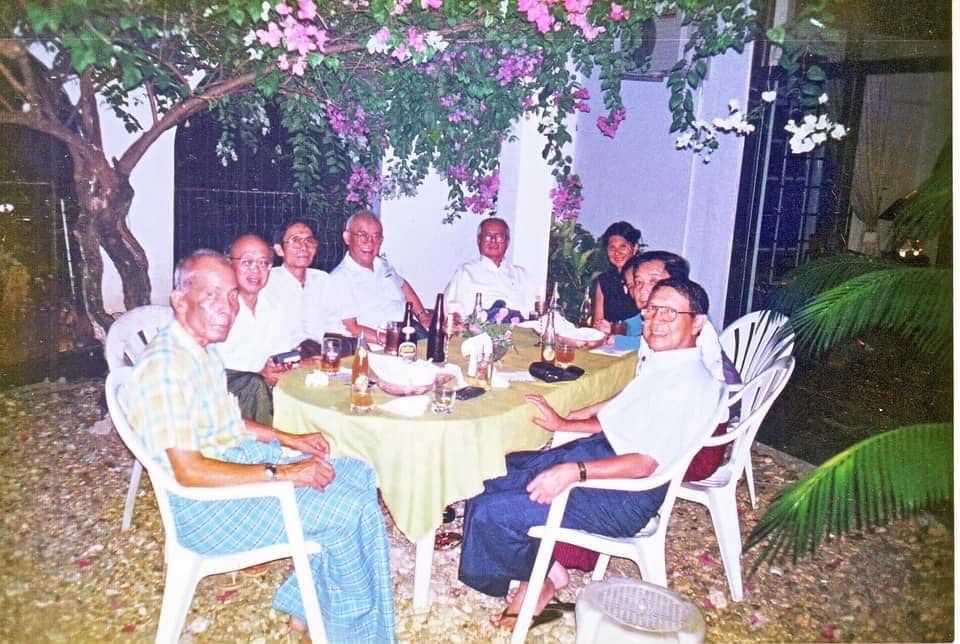
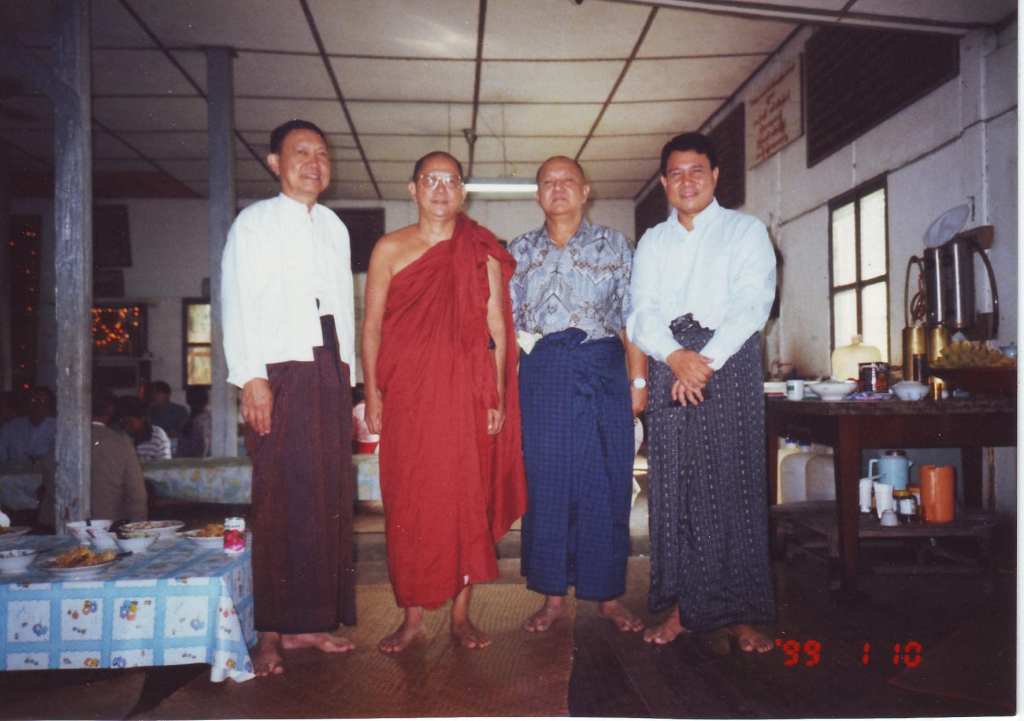
Seated : U Soe Paing, U Thein Lwin (GBNF), U Tin Swe (GBNF), U Sein Hlaing (Professor, GBNF), U Kyaw Tun (GBNF), U Sein Win (GBNF), U San Tint (GBNF)
Standing : U Soe Min (GBNF), U Chin Way (GBNF), U Win Tin, U Ba Myint, U Nyi Nyi (GBNF), U Moe Aung, U Sein Maung
Studying abroad : U Myo Kyi, U Ba Lwin, U Tin Maung Thein
Absentee: U Khine Oo
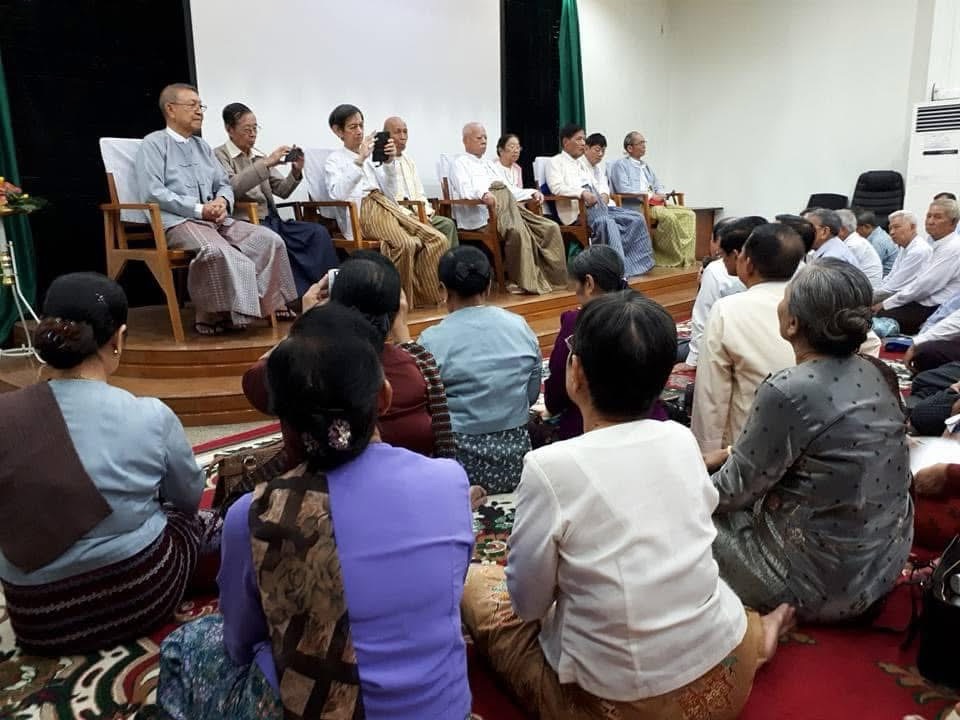
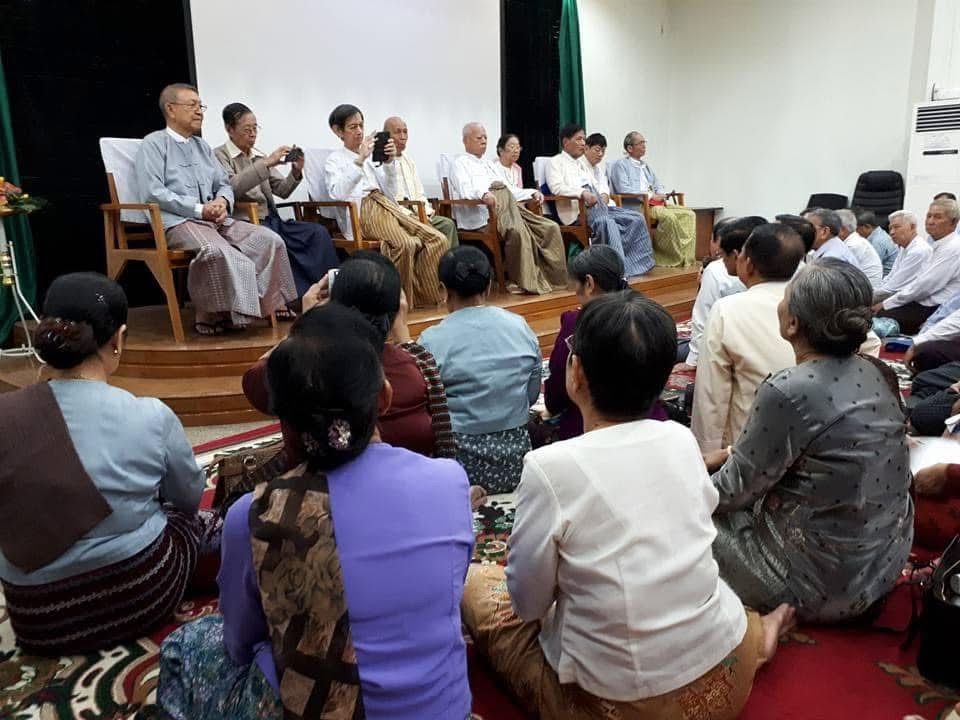
I wrote “A short and sad clip : EE Sayas” for the commemorative issue of Swel Daw Yeik Sar Saung for SPZP-2010. Saya U Moe Aung suggested the title of my article.
Source : Saya U Myo Kyi (EE59)
1. U Kyaw Tun 1950 – 1971 (started teaching at BOC College)
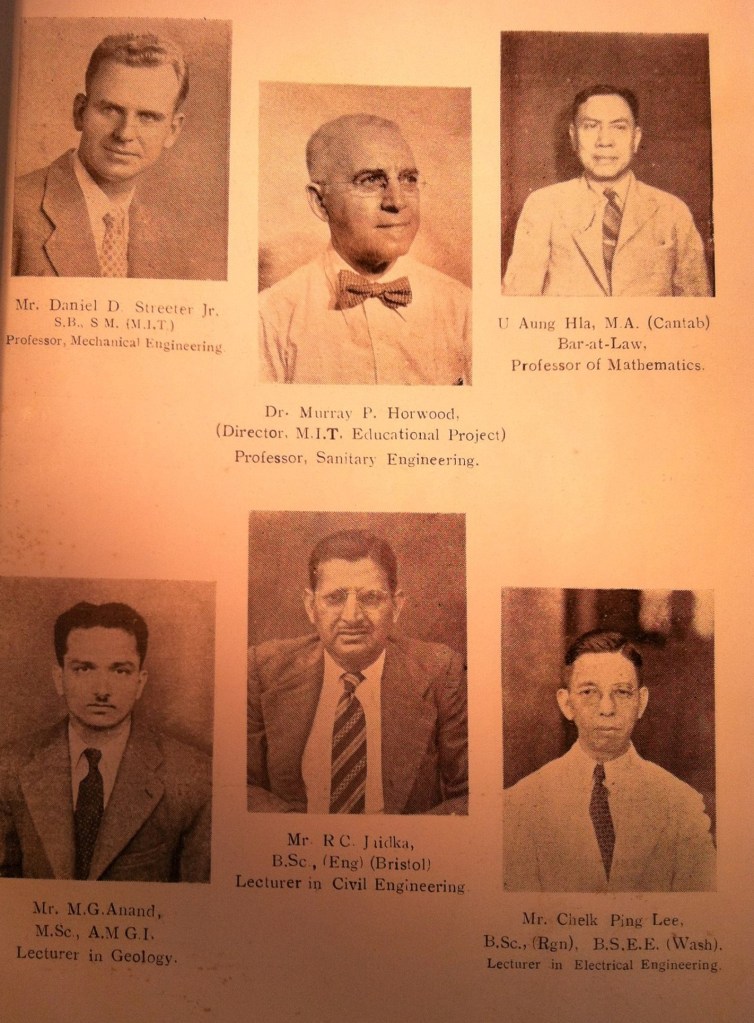
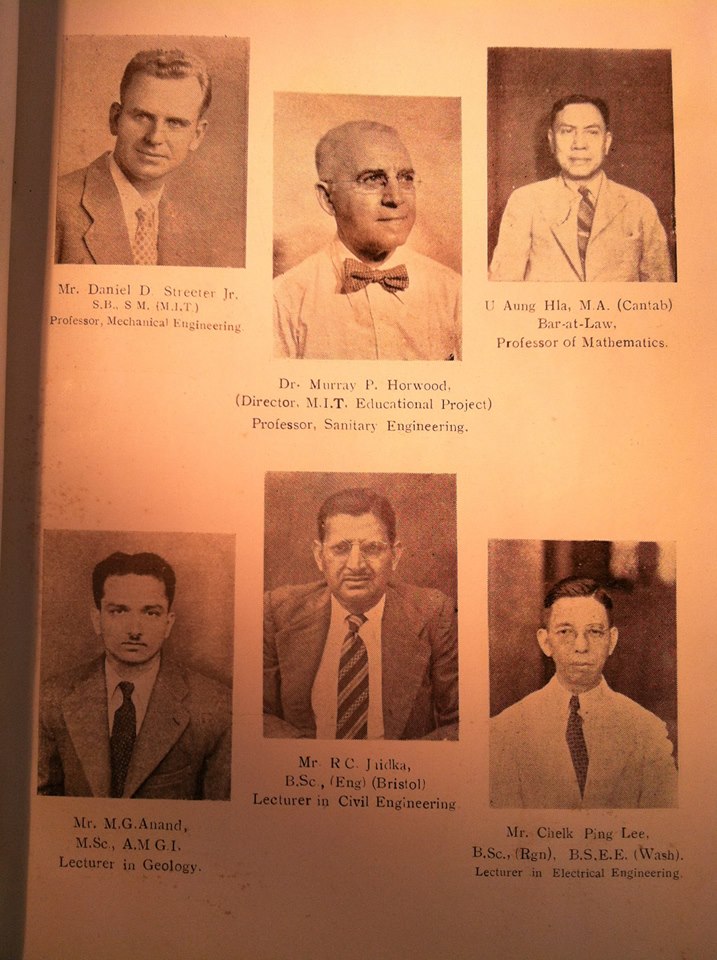
2. U C Ping Lee 1950 – 1952
3. U Sein Hlaing 1954 – 1986
4. U Tin Swe 1954 – 1998
5. Dr. Freddie Ba Hli (Part time) 1959
6. U Htin Paw 1958 – 1959
7. U Ba Nyunt 1958 – 1959
8. Dr. A. E. Guile (Colombo Plan) 1959 – 1960
9. U Myo Kyi 1959 – 2002
10. Dr. Ba Lwin 1959 – 1994
11. U L. Tin Htun 1959 – 1960
12. Teoh Chin Koon 1959 – 1960
13. U Sein Win 1960 – 1994
14. Dr. San Tint 1961 – 2002
15. Mr. Zagarosky (Russian) 1962 – 1963
16. Dr. Ba Myint 1963 – 2000
17. U Sein Maung 1963 – 1994
18. U Khine Oo 1963 – 1996
19. Dr. Win Tin 1963 – 1990
20. U Moe Aung 1963 – 1990
21. U Chin Way 1963 – 1968
22. U Soe Min 1963 – 1965
23. U Nyi Nyi 1963 – 1965
24. U Thein Lwin 1964 – 1972
25. U Soe Paing 1964 – 1971
26. U Tin Maung Thein 1965 – 1990
27. U Tin Shwe (Ashin Wi thu ta) 1966 – 1996
28. Daw Mya Mya Than 1968 – 2003
29. U Than Lwin 1970 – 1994
30. U Kyaw Lwin 1970 – 1991
31. U Tin Win 1972 – 1980
32. U Thein Dan 1973 – 1997
33. U Khin Soe 1973 – 1982
34. Daw Khin Aye Win 1973 – 2009
35. Daw Nyunt Nyunt Yee 1973 – 2000
36. U Kyaw Aung (U Kyin Phyuu) 1973 –
37. U Aung Than (U Ah Chun) 1973 – 2004
38. Daw Khin Swe Oo 1974 – 2002
39. U Clement Sadhana 1976 – 2010
40. Daw Than Than Win 1976 – 2012
41. Daw Khin Tint 1981 – 2008
42. U Myint Oo 1982 – 1990
43. Daw Khin Ma Ma Soe 1982 – 2008
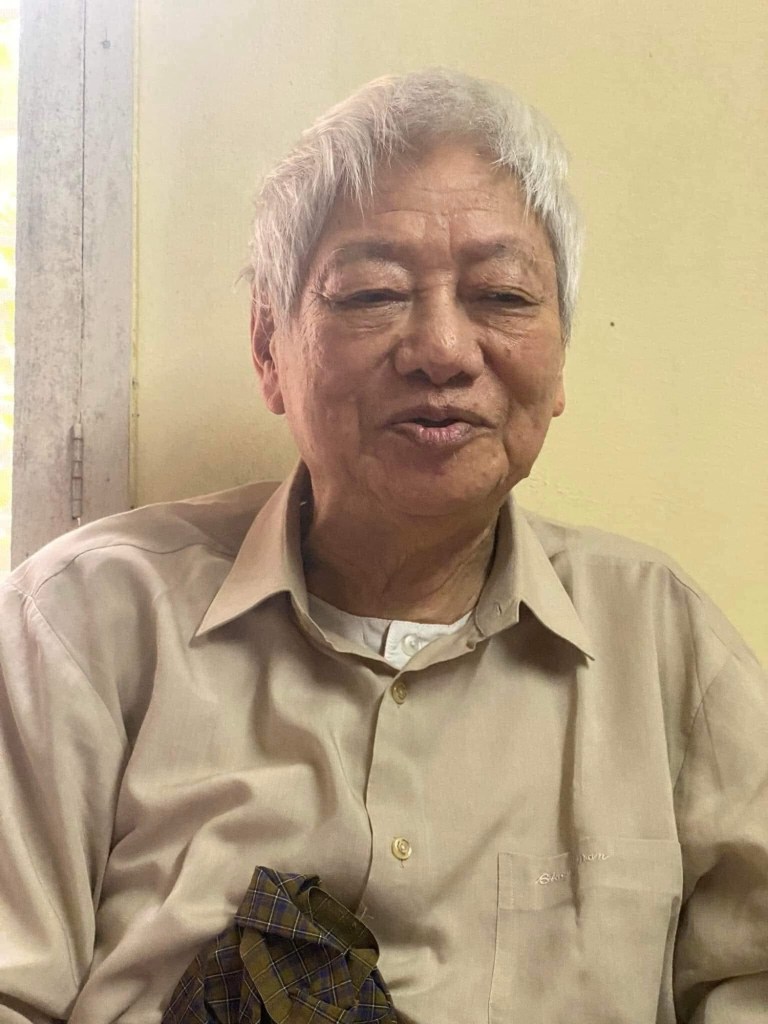
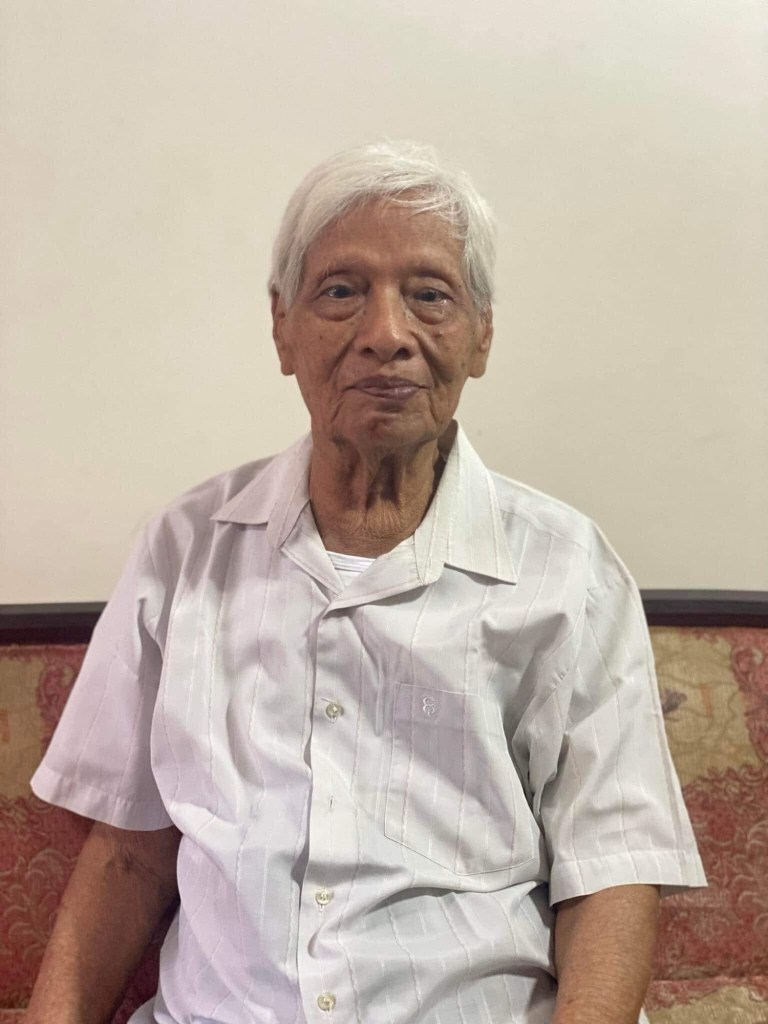
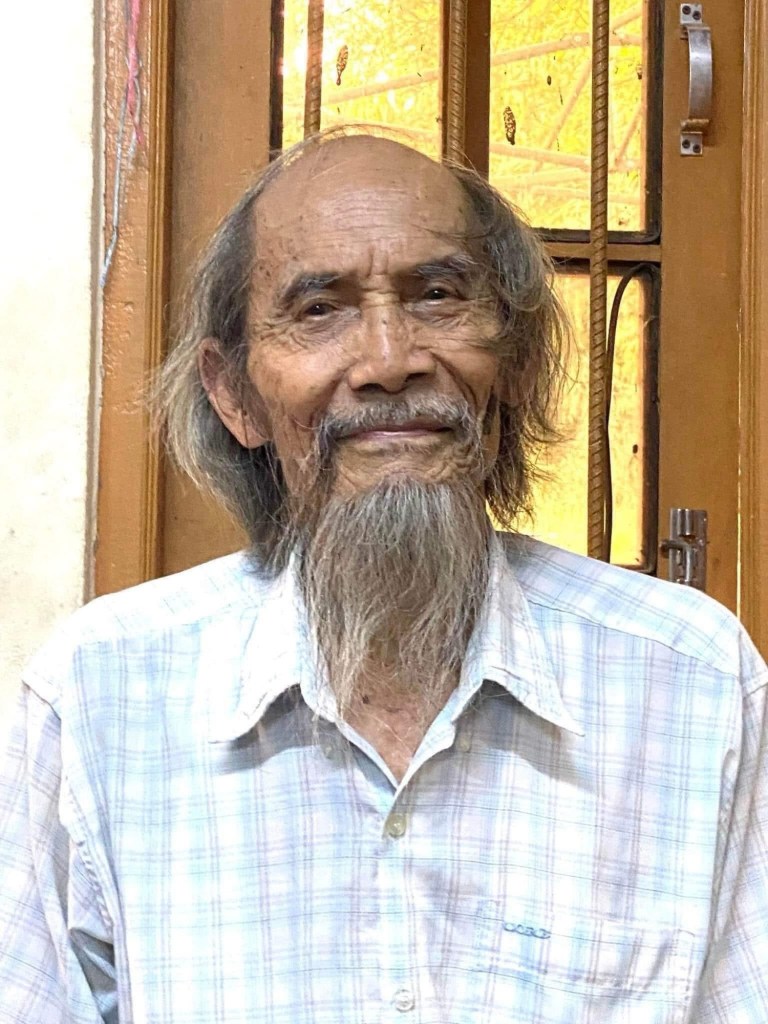
Editor’s Notes
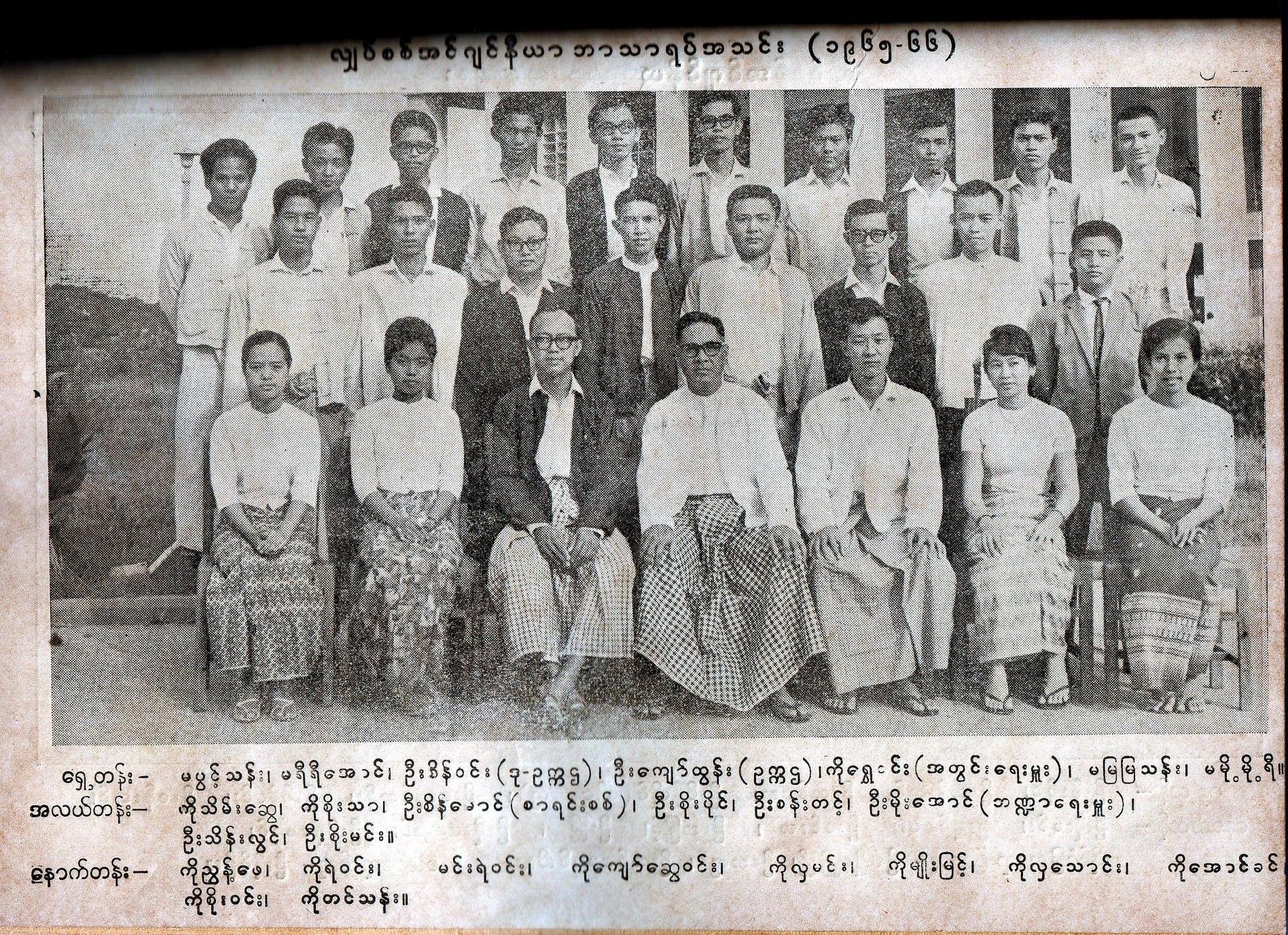
Seated : Ma Pwint Than, Ma Yi Yi Aung, U Sein Win (Vice President), U Kyaw Tun (President), Ko Shwe Win (Secretary), Ma Mya Mya Than, Ma Mo Mo Yi
Middle row : Ko Thein Swe, Ko Soe Than, U Sein Maung (Auditor), U Soe Paing, U San Tint, U Moe Aung (Treasurer), U Thein Lwin, U Soe Min
Last row : Ko Nyunt Pe, Ko Ye Win, Mehm Ye Win, Ko Kyaw Swe Win, Ko Hla Min, Ko Myo Myint, Ko Hla Thaung, Ko Aung Khin, Ko Soe Win, Ko Tin Than
I served as a EC member.
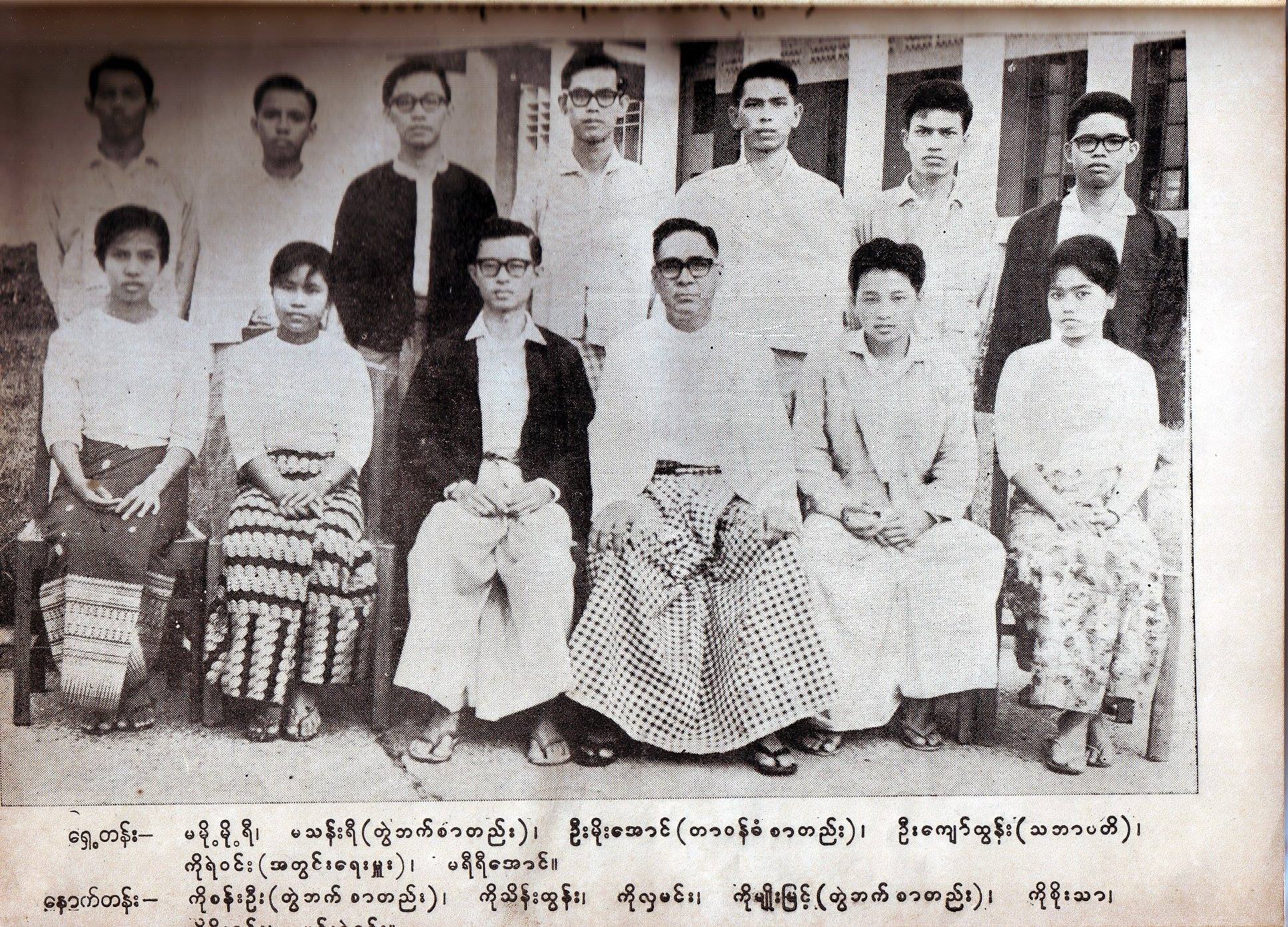
Seated : Ma Mo Mo Yi, Ma Than Yi (Associate Editor), U Moe Aung (Chief Editor), U Kyaw Tun (Patron), Ko Ye Win (Secretary), Ma Yi Yi Aung
Standing : Ko Sann Oo (Associate Editor), Ko Thein Tun, Ko Hla Min, Ko Myo Myint (Associate Editor), Ko Soe Tha, Ko Soe Win, Mehm Ye Win
I served as a member.
by Hla Min
Update : July 2025
I went to the University Central Library and managed to get scanned photos from the Engg Student Annual Magazines 51-52, 52-53, 56-57 and 60-61. Photos include photos of Sayas, students of that year. From these when can know about the Sayas at that year. We can also identify the students at that year.
U Sein Hlaing (Prof EE) was a final year student in 1951-52 and became an A/L starting 1952-53. Saya U Tin Swe was a student in 1951-52 and 52-53. He was a member of the Eng Student Union and the victorious Prome Hall football team. Ex-Burma Selected Footballer U Chan Tha (Chief Engineer, Roads, Rangoon Municipal) was the Captain. U Khin Si (husband of RIT Finance Officer Daw Yin Yin Htway and part time lecturer Textile) and U Tin Si (U Khin Si’s brother and tennis doubles partnership that won RU as well as national championships) were members of the Prome hall team.
The 1956-57 magazine contains photos when the new Leik Khone Engineering Buildings were inaugurated in 1956 Nov by the Prime Minister at that time U Ba Swe.
In the 1952-53 magazine I found out that Mr. Robert Hole (ex-EE, Highways, PWD, PWC, CC; uncle of Percy Maung Maung and uncle Bobby to me) was the English editor. I called Uncle Bobby and requested him to write something about his engineering student days, his teachers and fellow students. He agreed and asked for about three weeks time.
I need to go back and to the UCL to get more info from the RIT handbook 1966-67 and photos from the Hlyat Sit Sar Saung.
U Ba Than has donated some of his Engineering College photos to the MES library and I need to go there to check up on the photos.
The mention of RIT, BIT, and BOC college in the first newsletter bring back memories of our good old days in Rangoon University. Although we did not graduate from Rangoon University, we had a really great two and a half years there before we went for studies aroad under government scholarship.
Our first year 1956-1957 was in Yankin College. Yankin was a campus of RU for first year science students. It is now Yankin State High School No. XX? Hteedan was for the 1st year arts students. Our second year I.Sc. was at the RU campus itself which we refer to as Main. The Arts students have classes at Judson. That time the new Social Science Building (now Institute of Economics) was completed. We had our second year ISc exams in that new building.
Then it is our 1st year B.Sc. Engineering course at the new Faculty of Engineering in Prome Road (now Institute of Medicine I). We attended for six months till December 1958. That campus was designed and built especially for the Faculty of Engineering. Civil, Electrical, Mechanical Departments were there but Chemical, Textile, etc. were in the old BOC building at the back.
The 1st year classes were from 7 to 9 a.m. for Mathematics. We then have a one hour break and we start the engineering courses at 10 a.m. We usually have a snack during the break at a small cafe between Tagaung and Prome Halls. Those halls were only for engineering students then. The mathematics (Pure & Applied) lecturers were from India hired under contract. We had three engineering courses: Building Materials taught by Mr. Tan Ba Hli (the Dean of Engineering himself). Heat Engines taught by U Aung Khin. Principles of Electrical Engineering taught by U Kyaw Tun. We had EE lab with Ko Htin Paw and Ko Ba Nyunt as lab instructors. We also had engineering drawing with Ko San Hla Aung and Allen Htay (for Chem, Tex, etc.) as instructors.
Those were the days when Rangoon University was one of the best universities in SE Asia and Asia. It also had a really nice campus.
Reading about communications from Richard Khoo (Dr. Aung Soe, C61) and seeing the list of Sayas in the 1966-67 Handbook brings back memories of our soccer team.
As I remember it was from 1964 to 1968 or 1969. We played against (i) the senior students of different majors Civil, Mechanical, Electrical etc. (ii) the sayas at GTI and Natmauk Technical Institute (iii) the Burma Air Force officers.
We also played in the annual tournament for RIT Staff. The staff teams are the Sayas, Workshop staff, Lab staff, Hostel staff and the youth team from the RIT compound.
As I remember (other Sayas & graduates may correct me) these were the people in the team.
Goalkeepers :
Defenders :
Midfielders :
Forwards :
We rarely practiced but we enjoyed playing the games. We split games with the GTI sayas & the Air Force officers. We beat the Natmauk sayas and we won more than we lost in the RIT staff tournament. But I am sure we lost more than we won against the final year students. Would appreciate comments on this; especially on the names I missed in the team.
by Hla Min
Update : July 2025
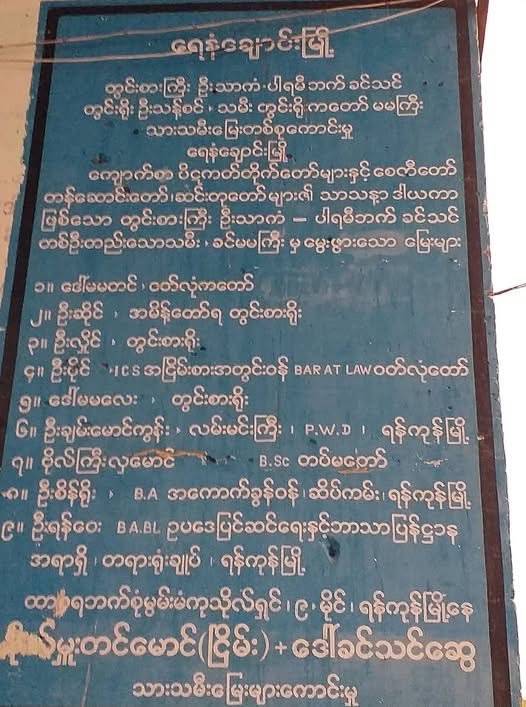
Father : ICS U Paing
Mother : Daw Oo Yin (daughter of Sir Po Tha & Lady Tha)
Sons : Myo Paing, Soe Paing, Win Paing, Kyaw Paing
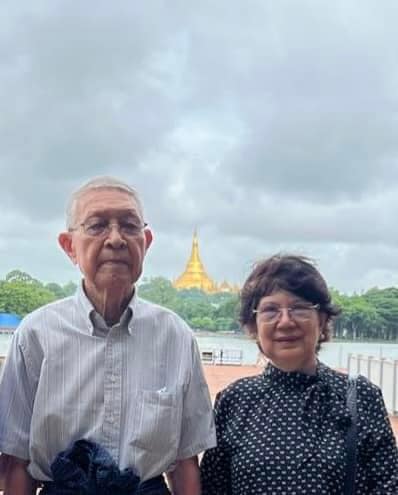

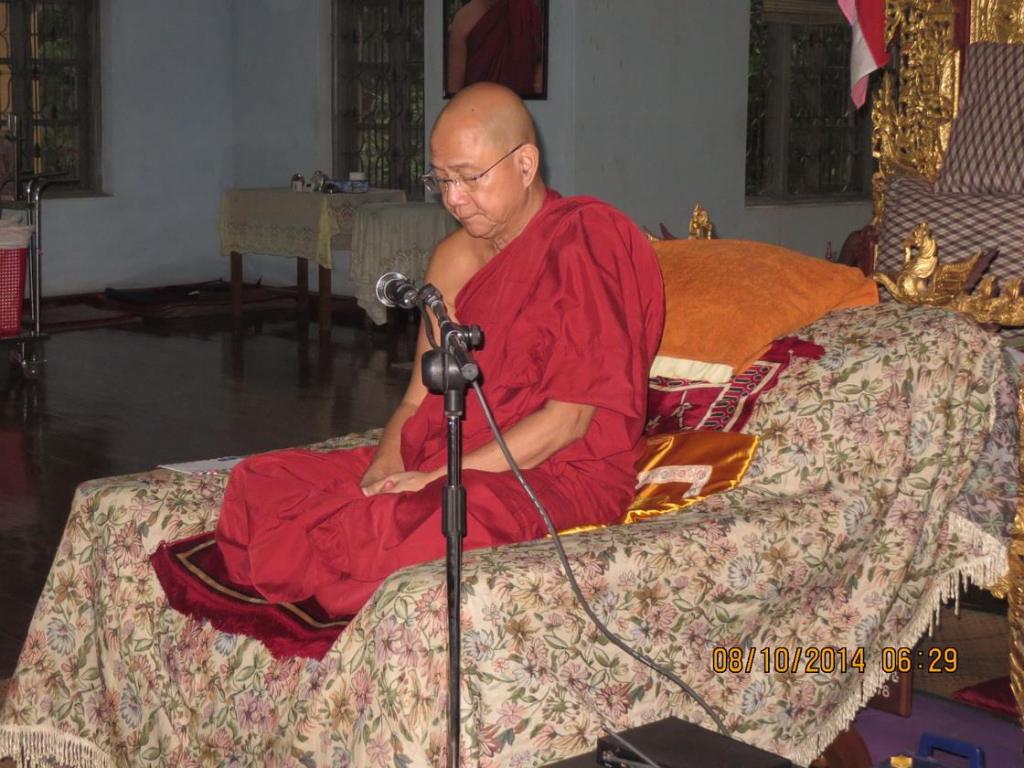

U Khin Maung Zaw (EC76) wrote :
For number of years, I was the carrier-cum-postman to bring Saya U Soe Paing’s typed golf news to the WPD, Working Peoples’ Daily at Theingbyu Street! Just one of the chores I had in those days.
I remember jokingly asked Sayadaw U Wara how he felt seeing the (18th??) hole over the fence from the Sunlun Kyaung’s “Thein”. The new golf course was built for VIPs inside Kabaaye, and that particular hole was seen from the “Thein” less than 40-50 yards, of course over the fence.
 HlaMin