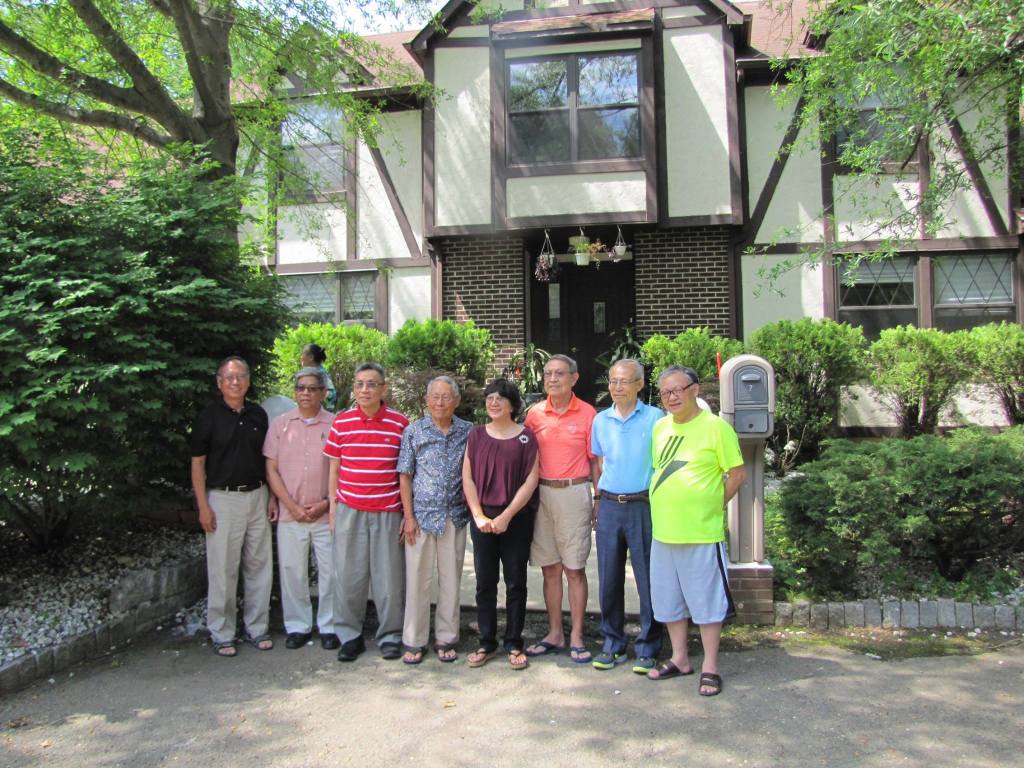
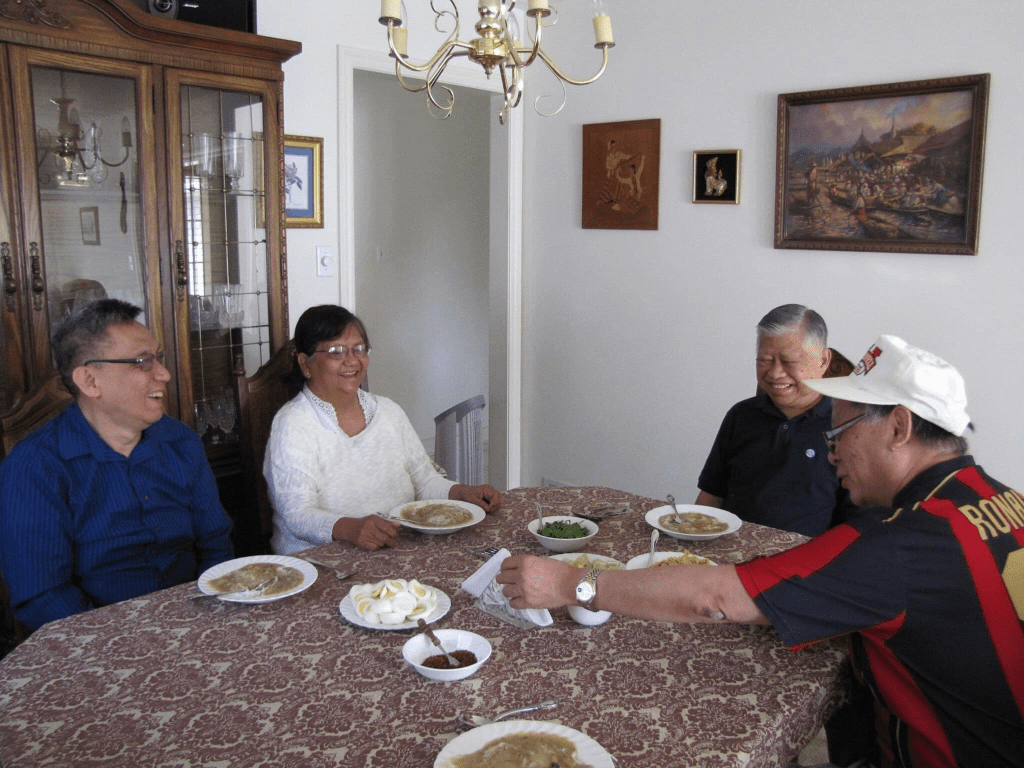
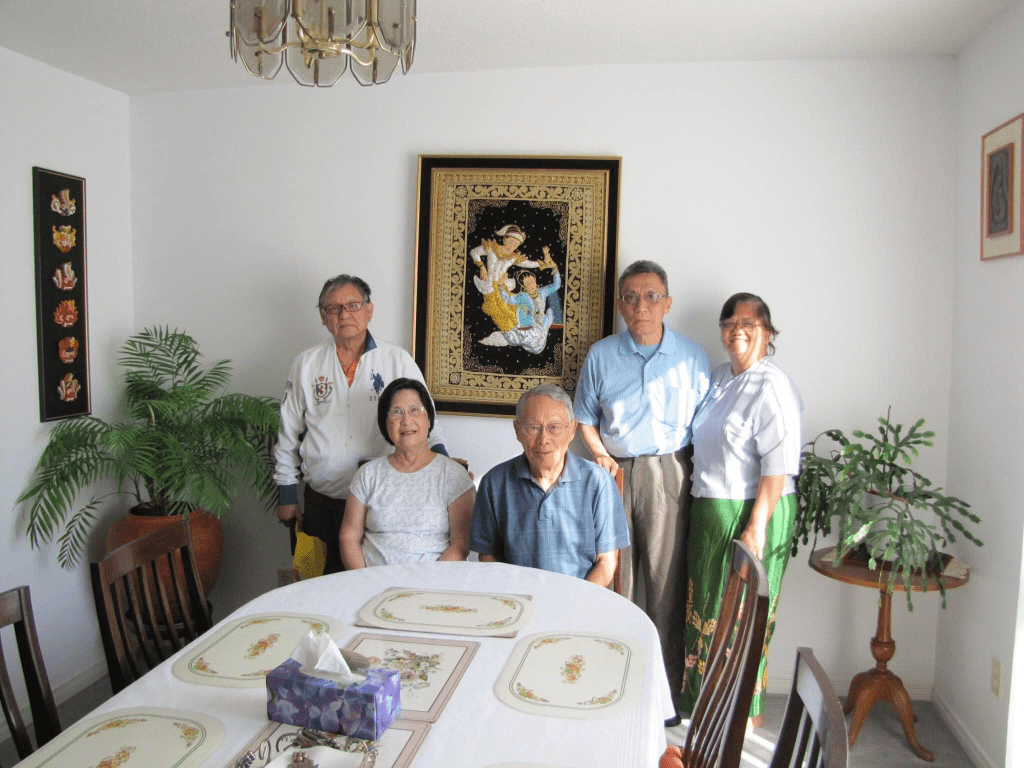
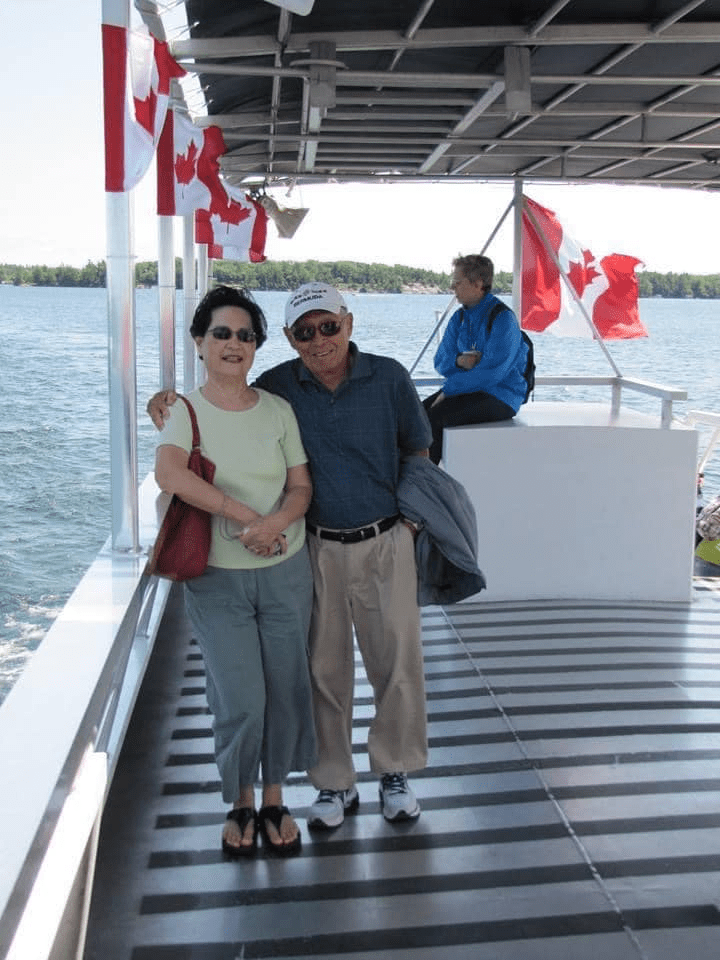
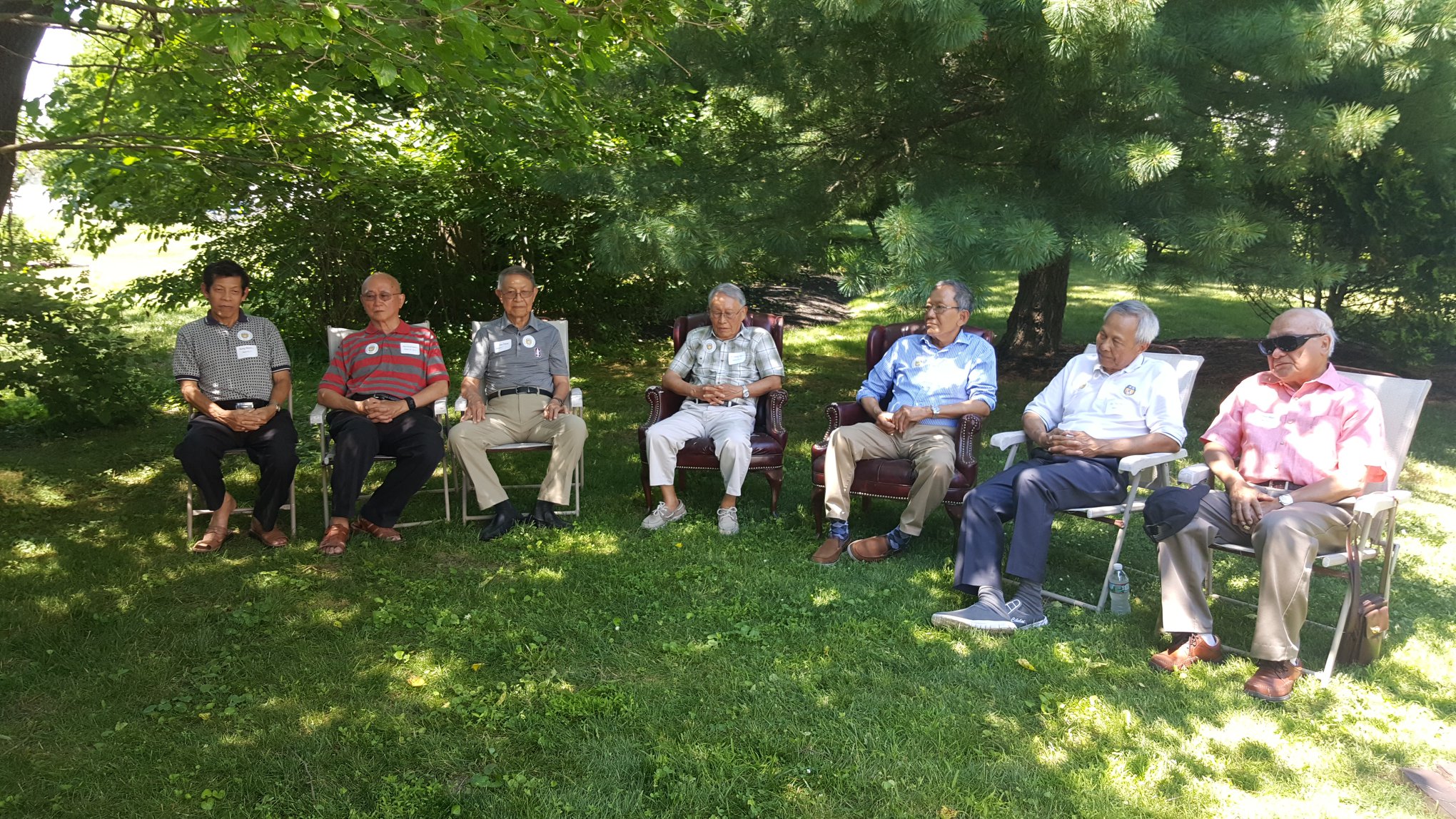
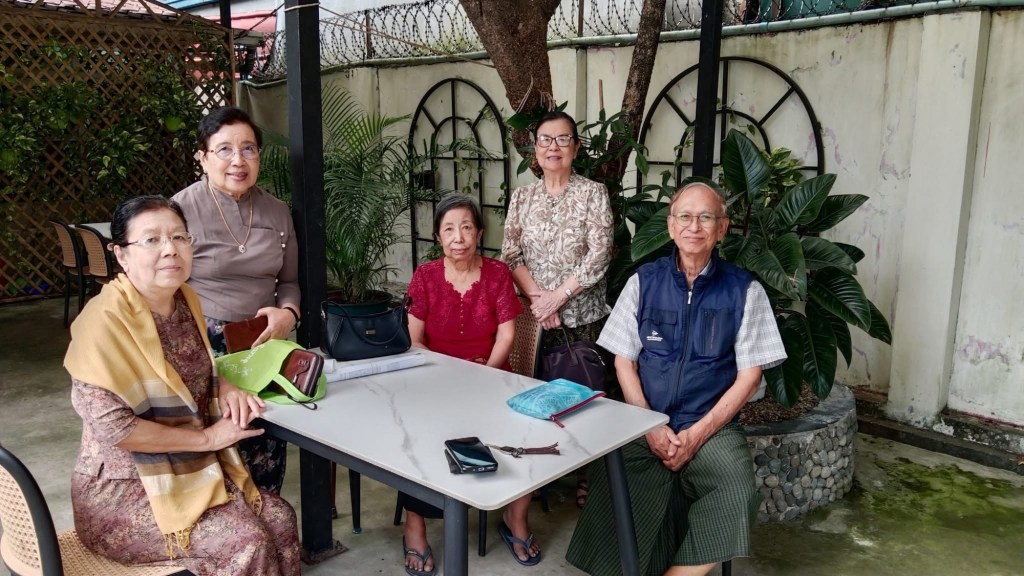
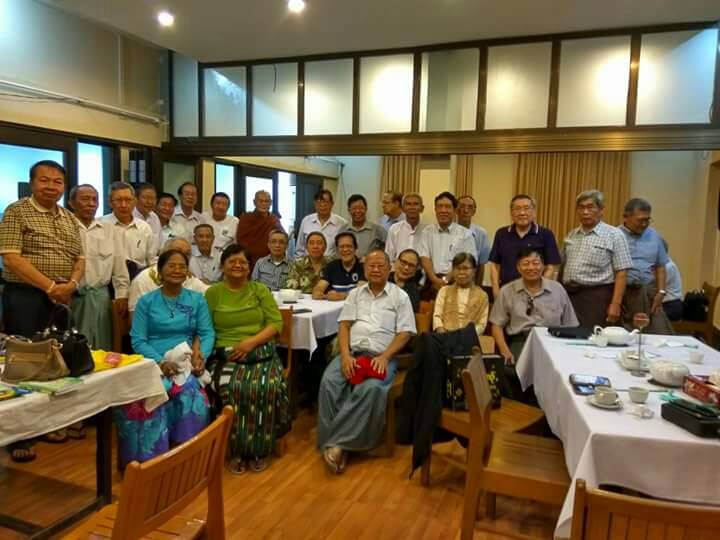
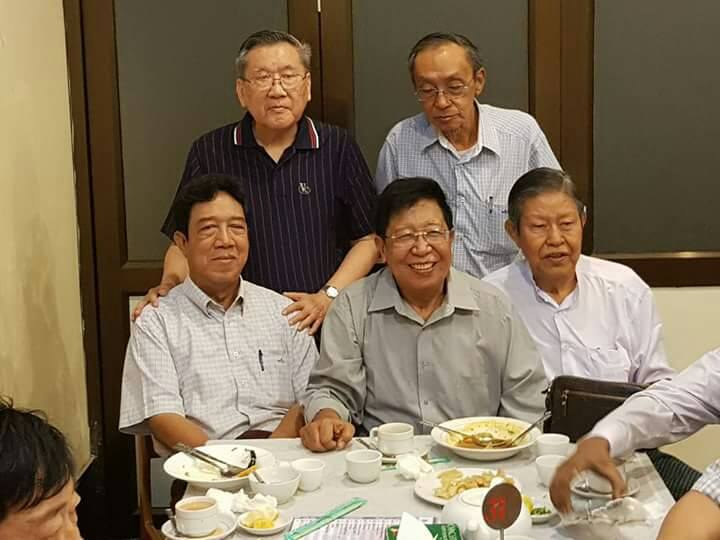
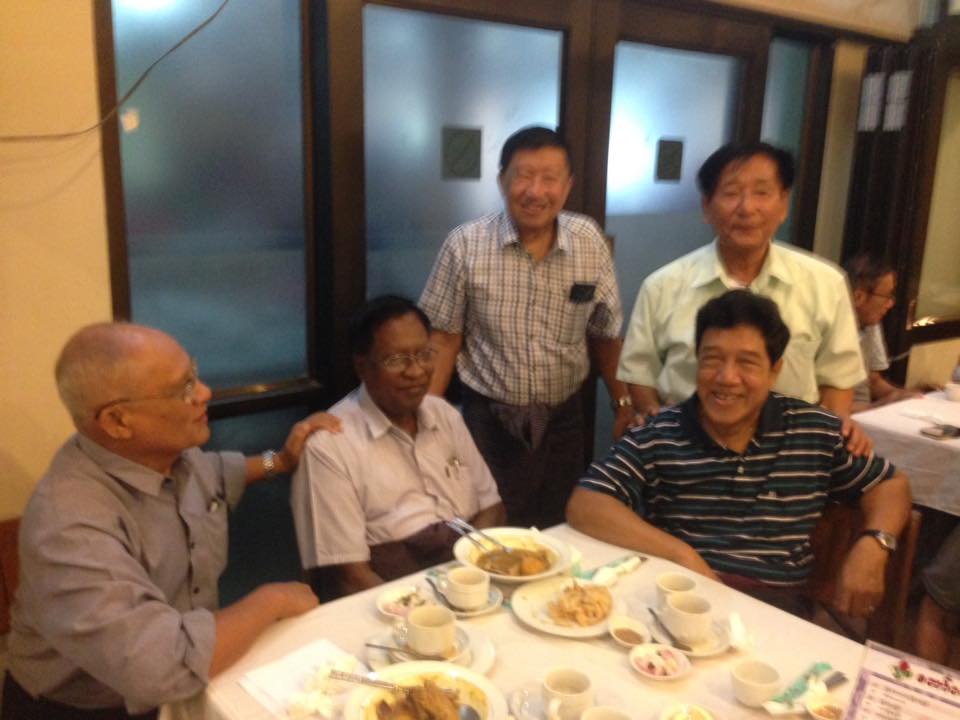
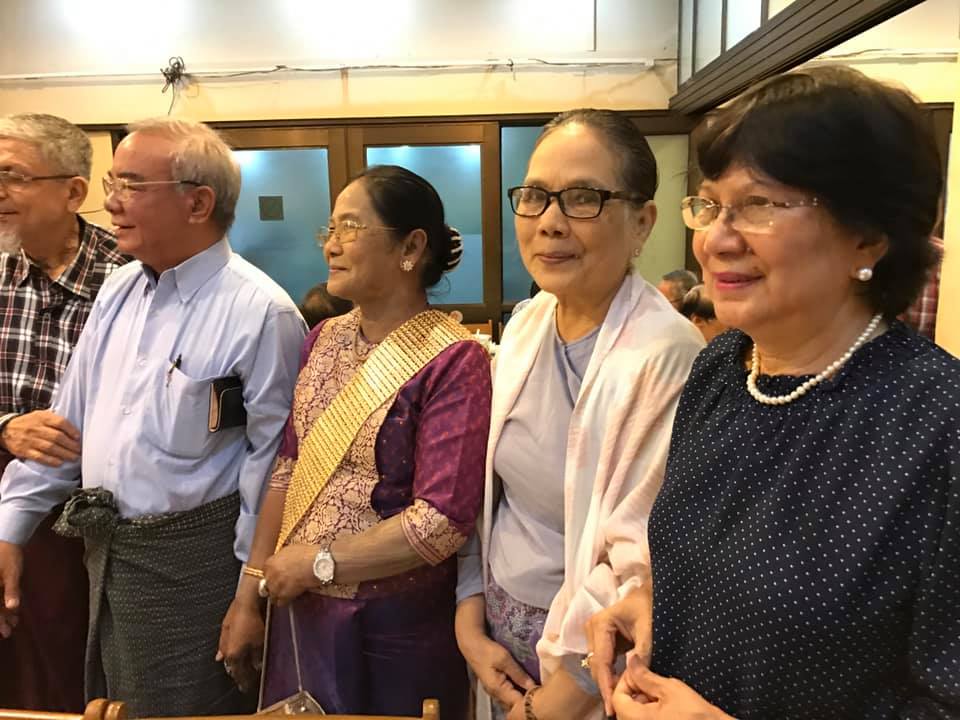
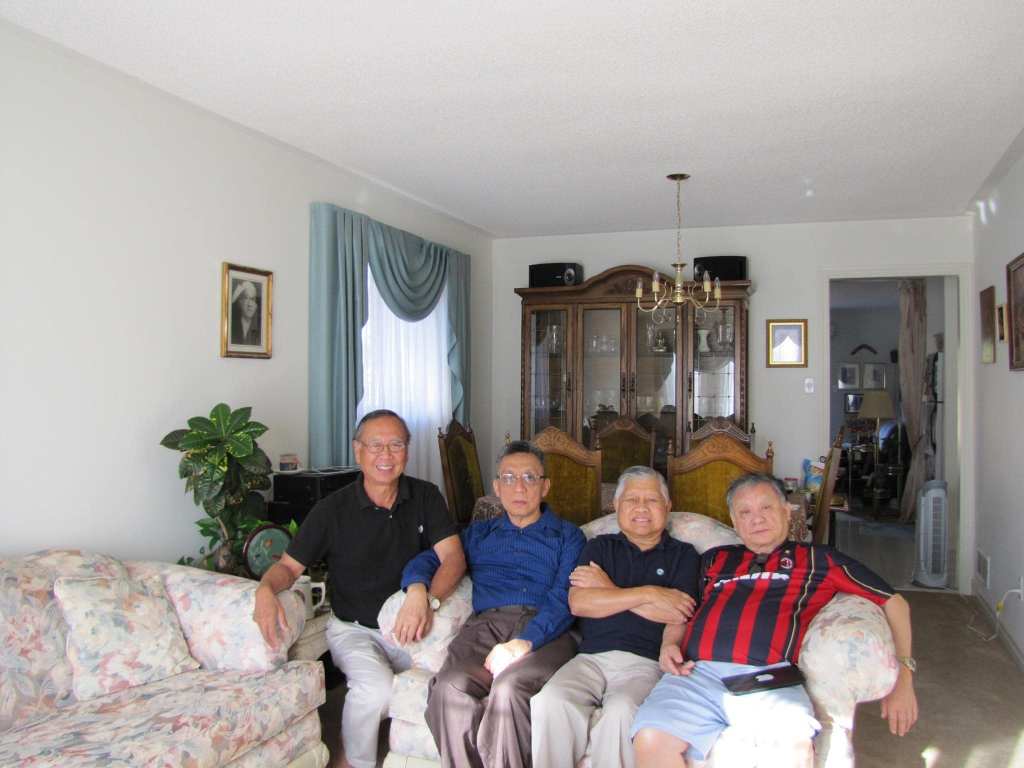
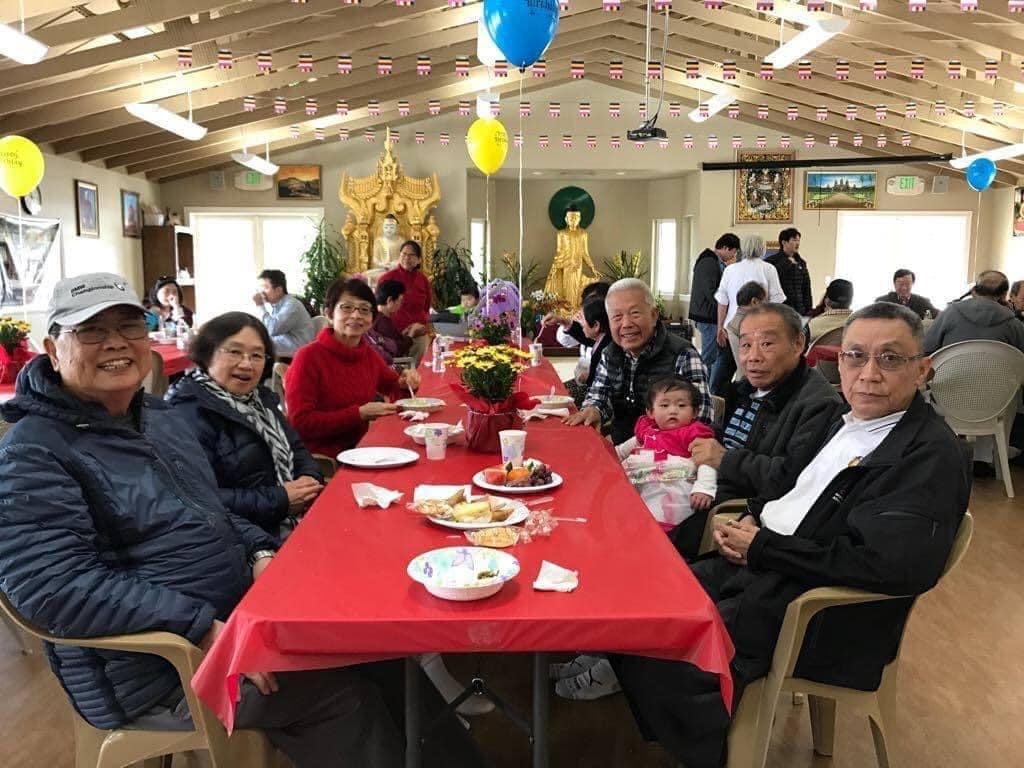
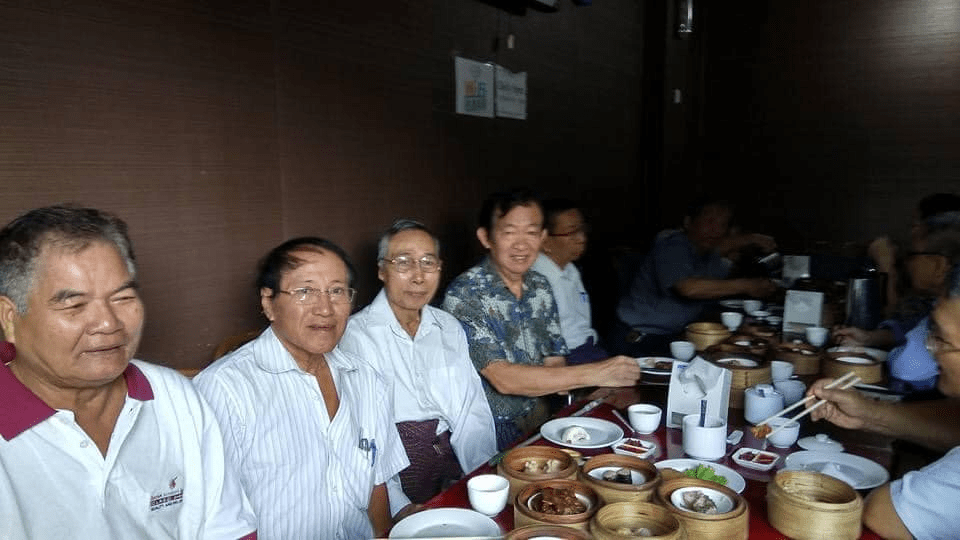
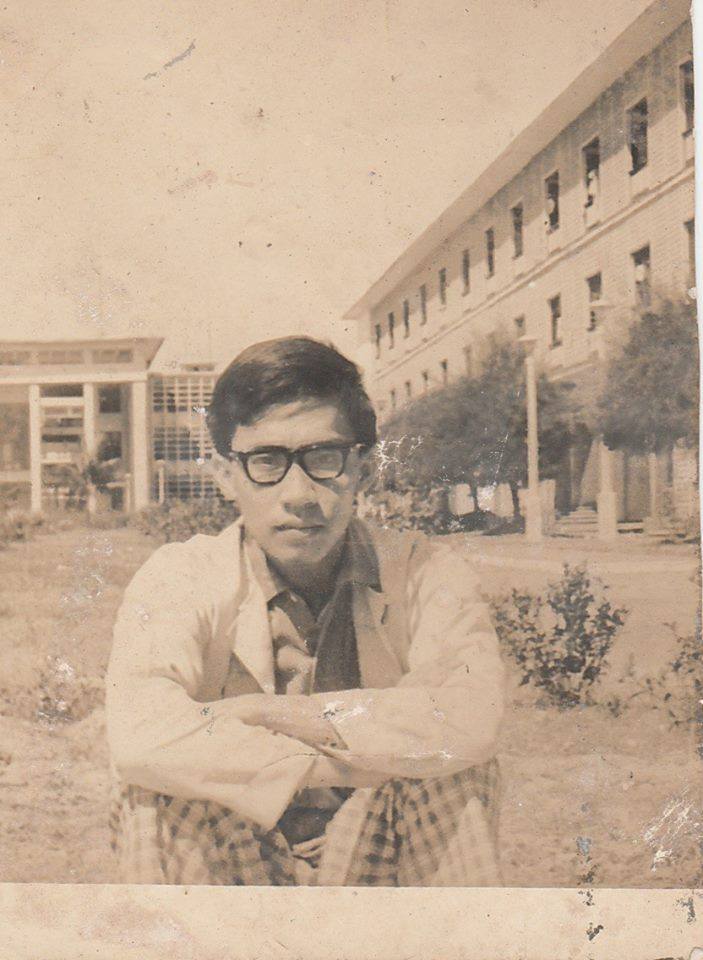
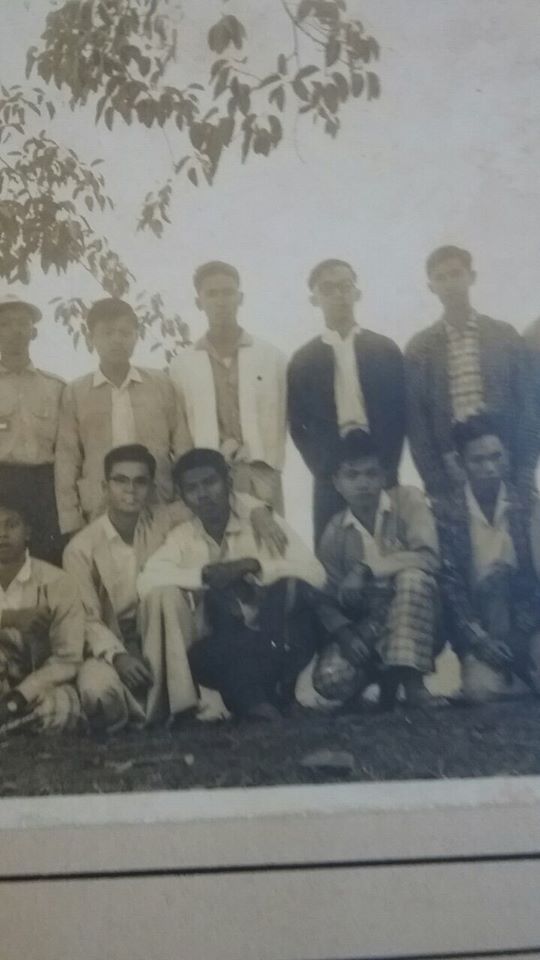
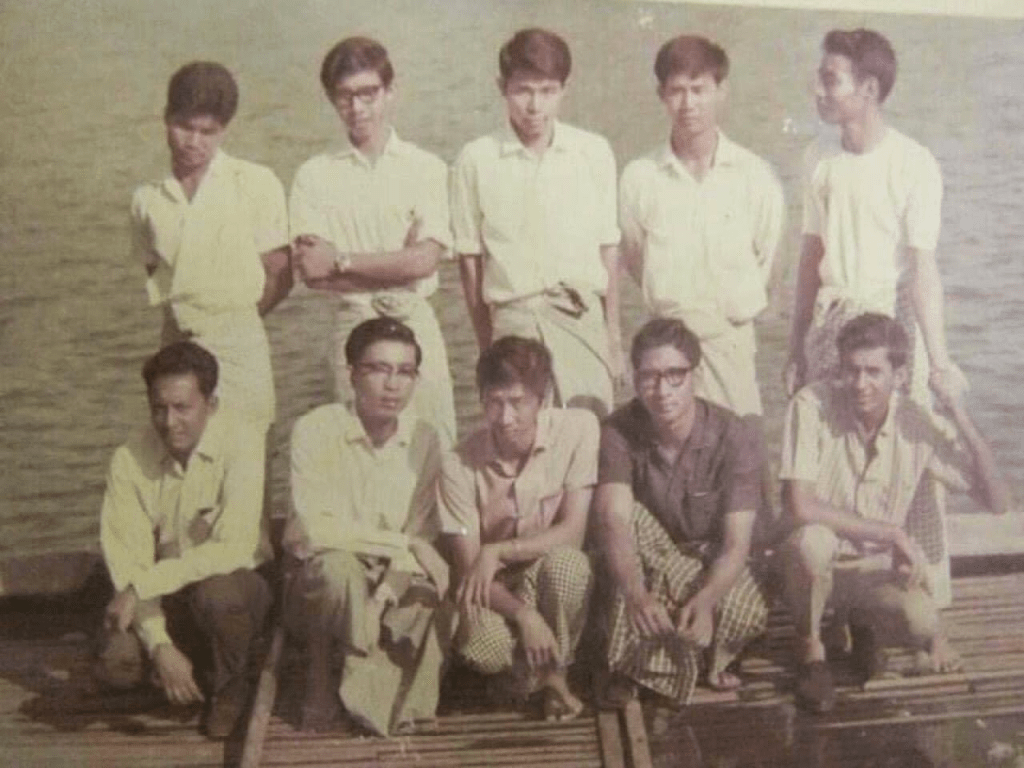
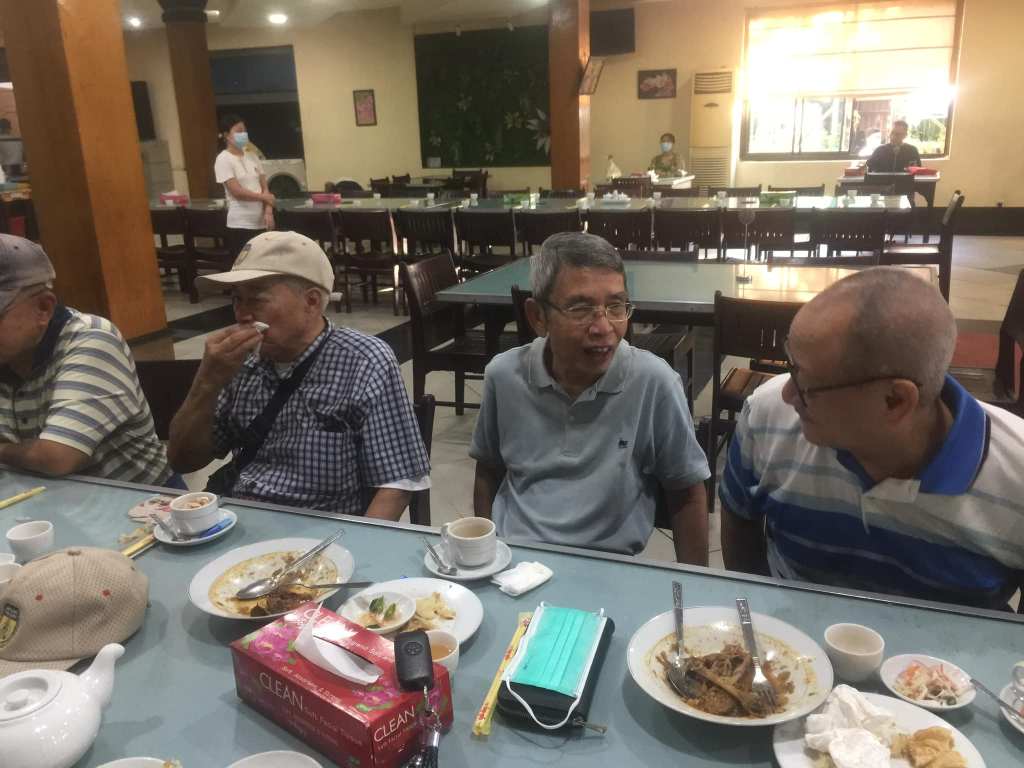
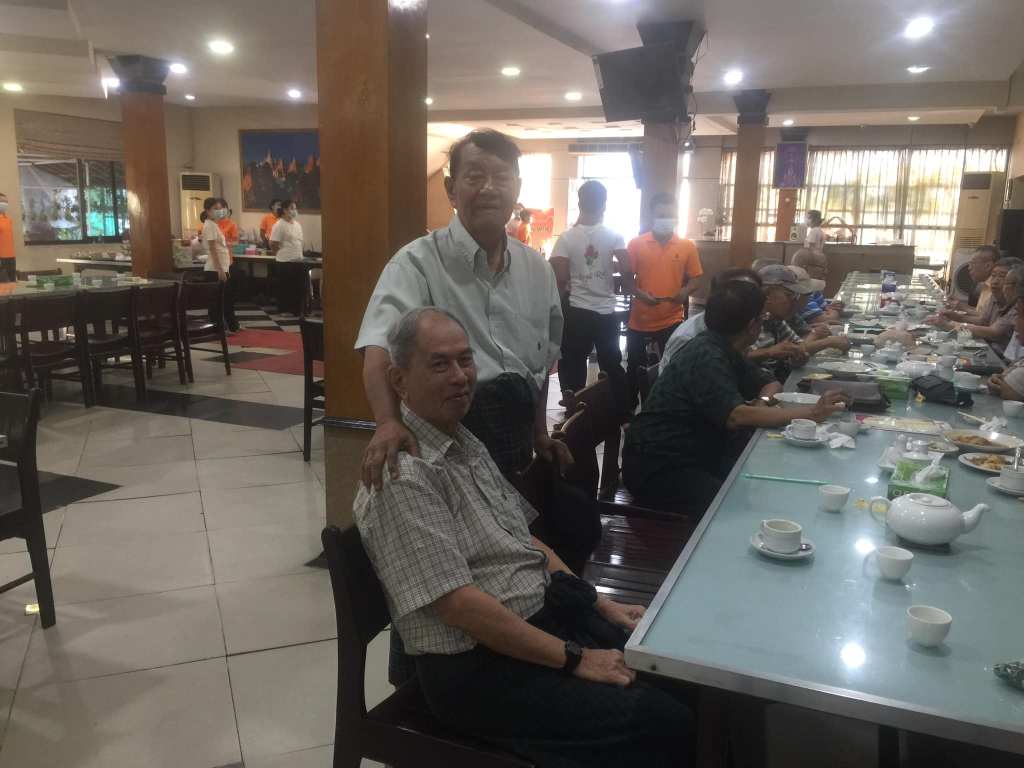
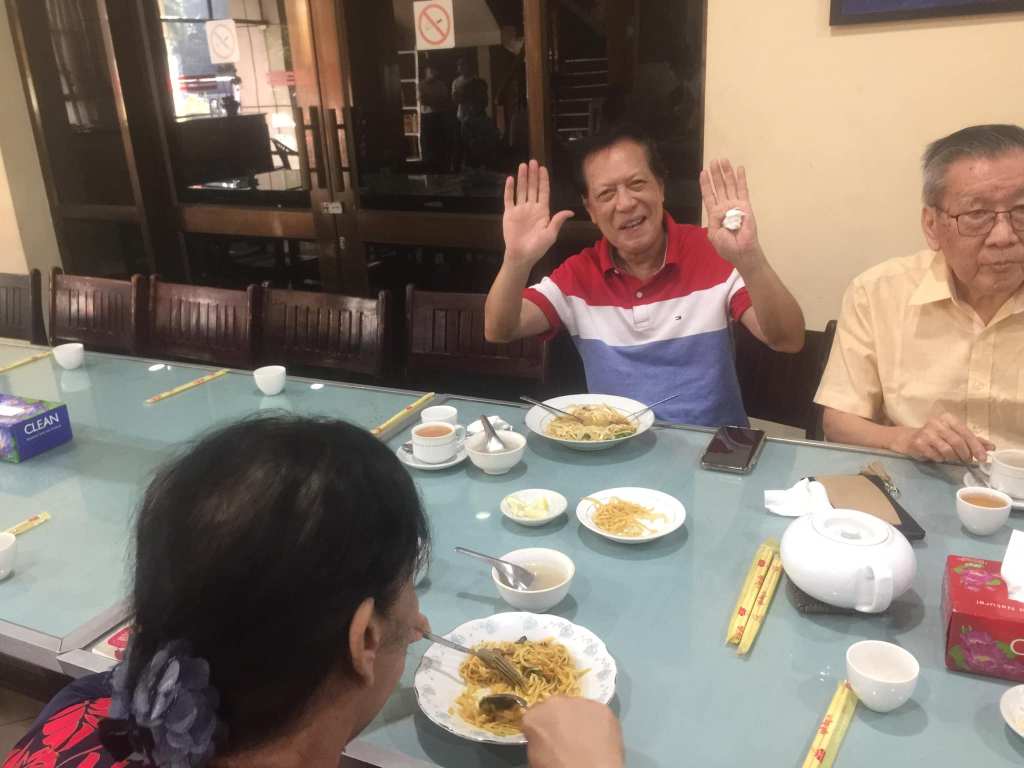
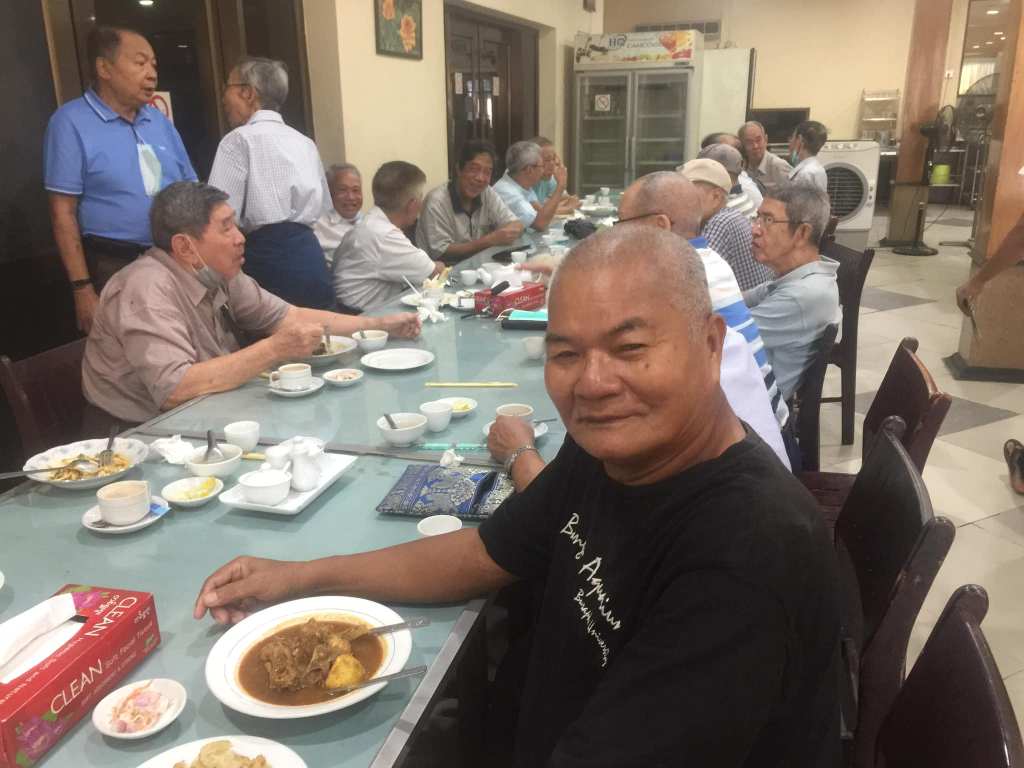
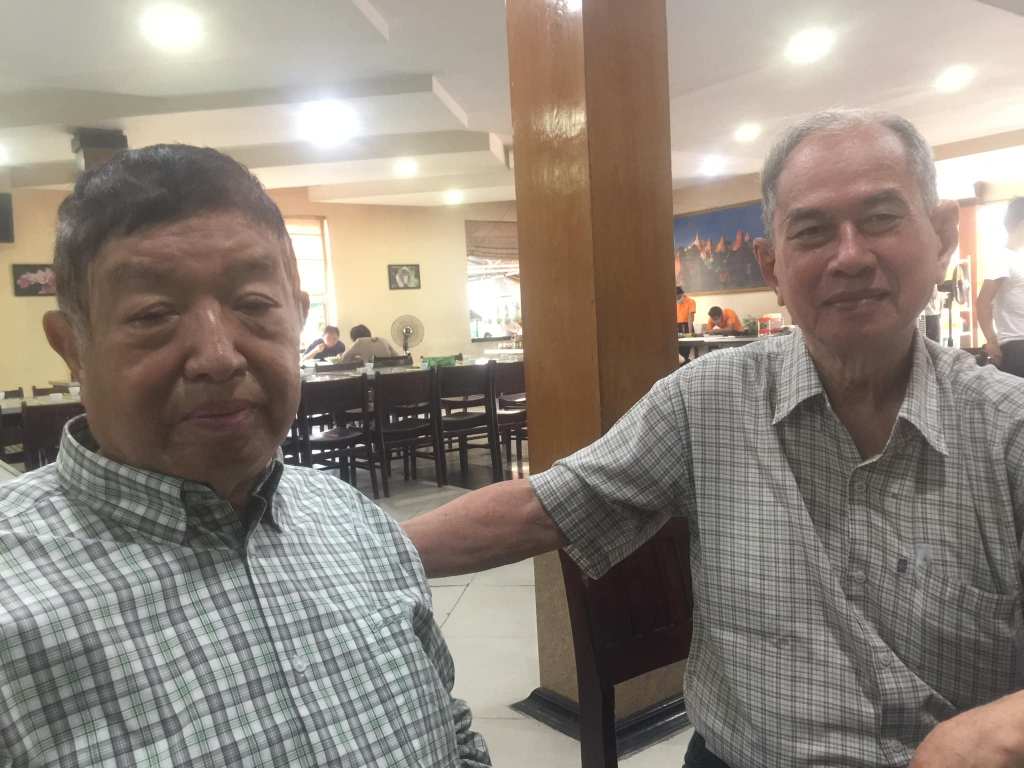
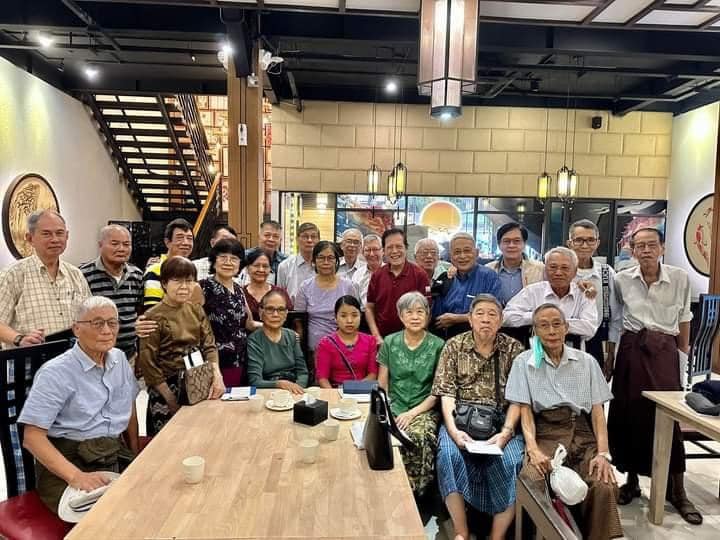
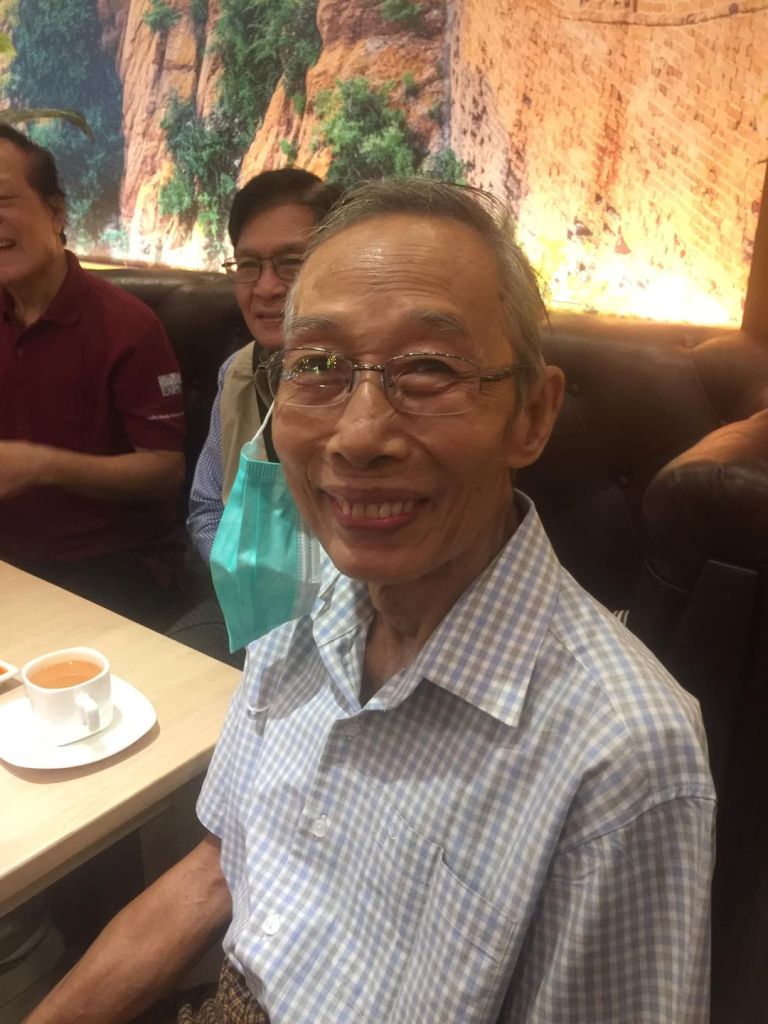
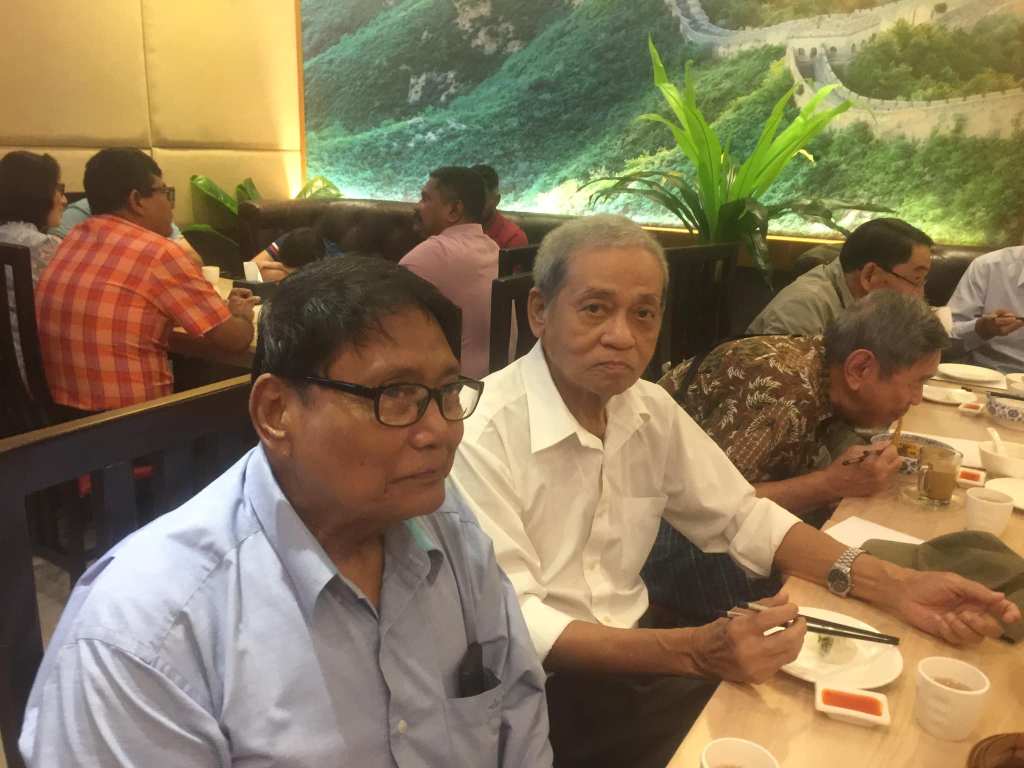
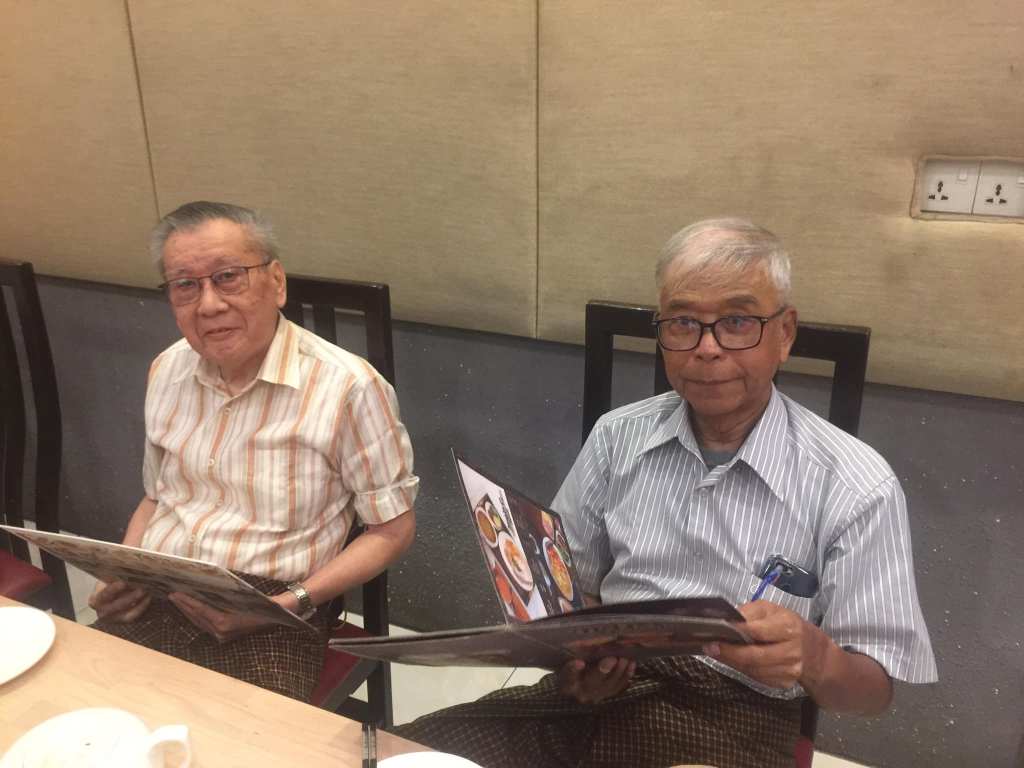
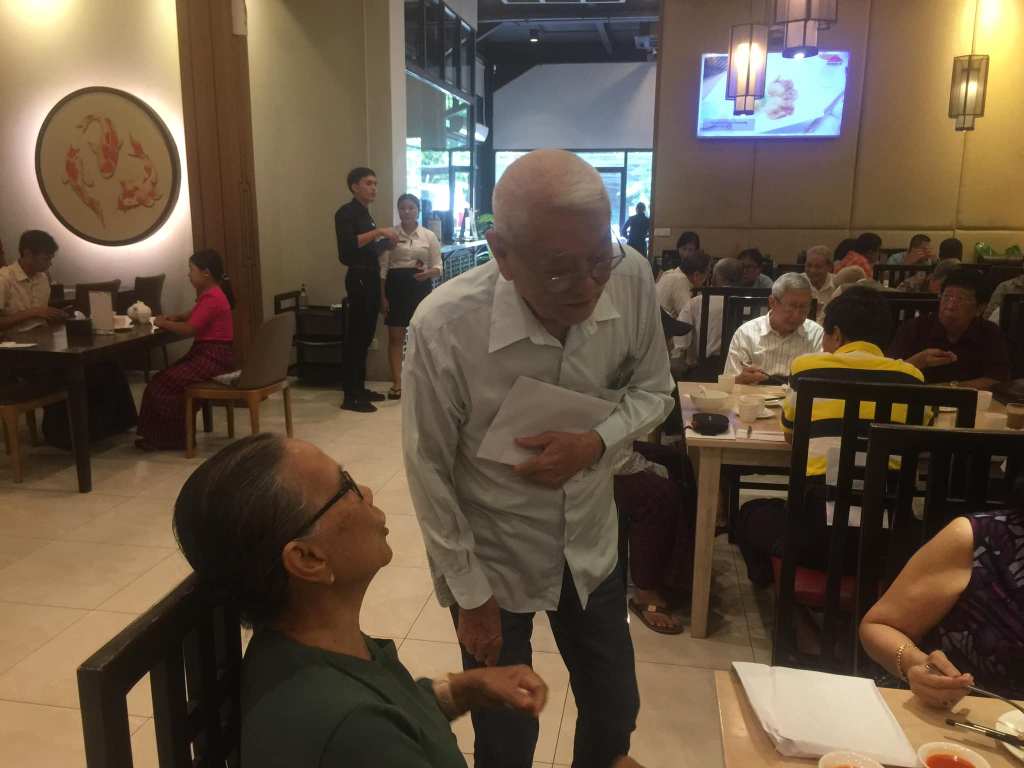
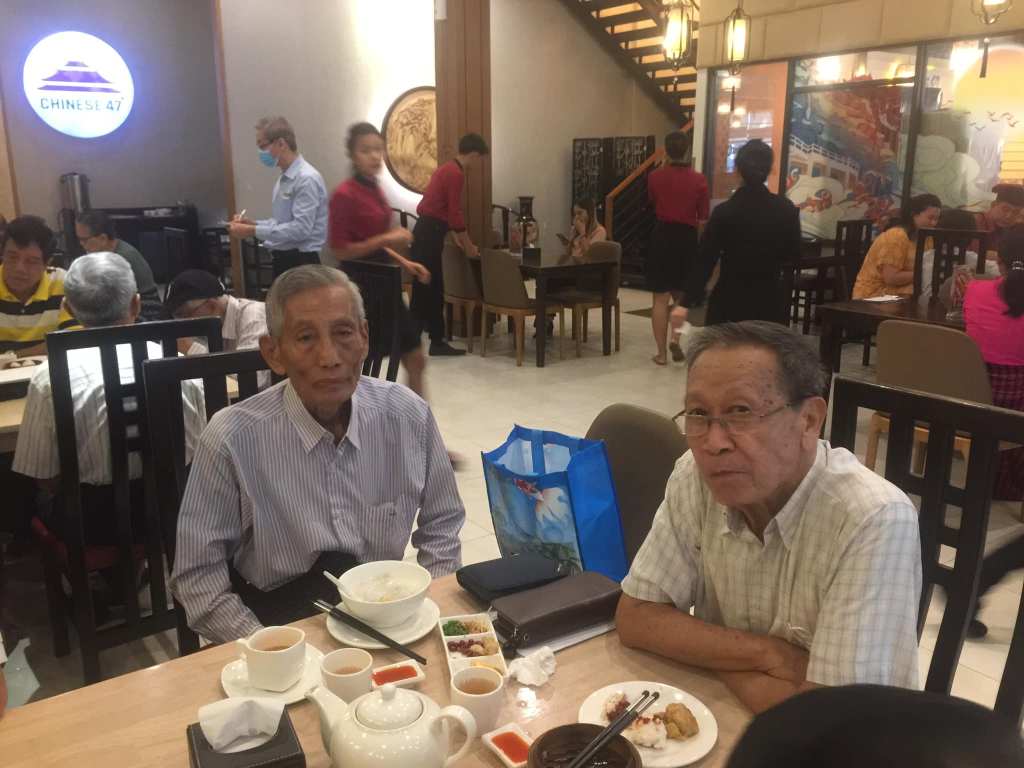
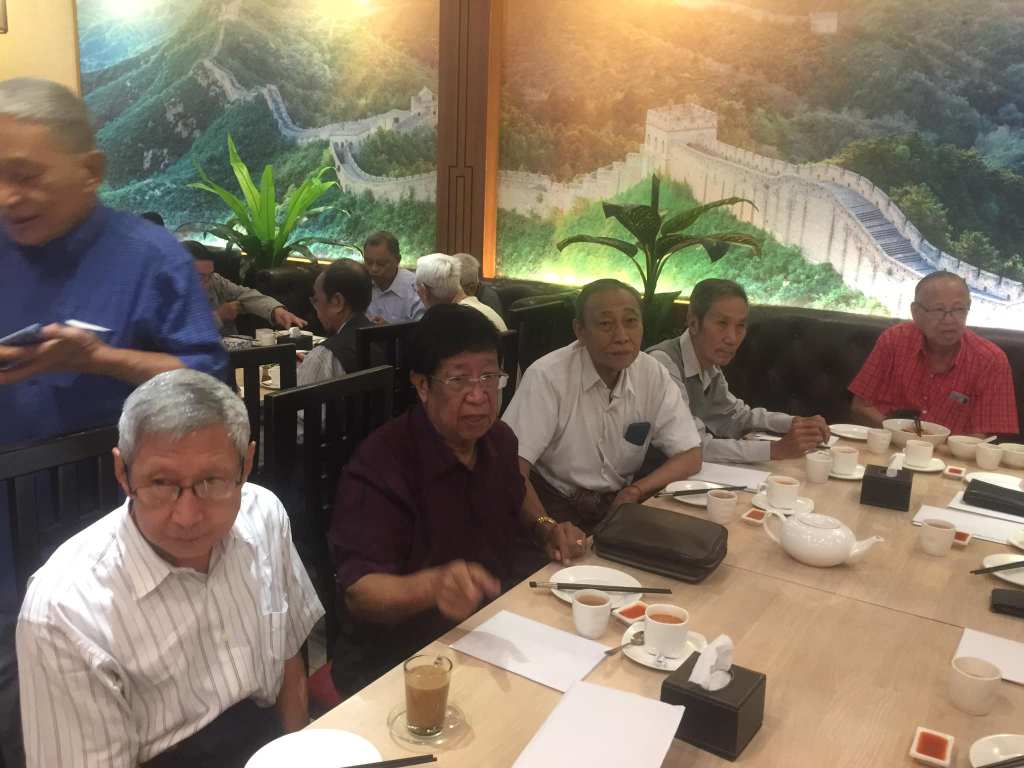
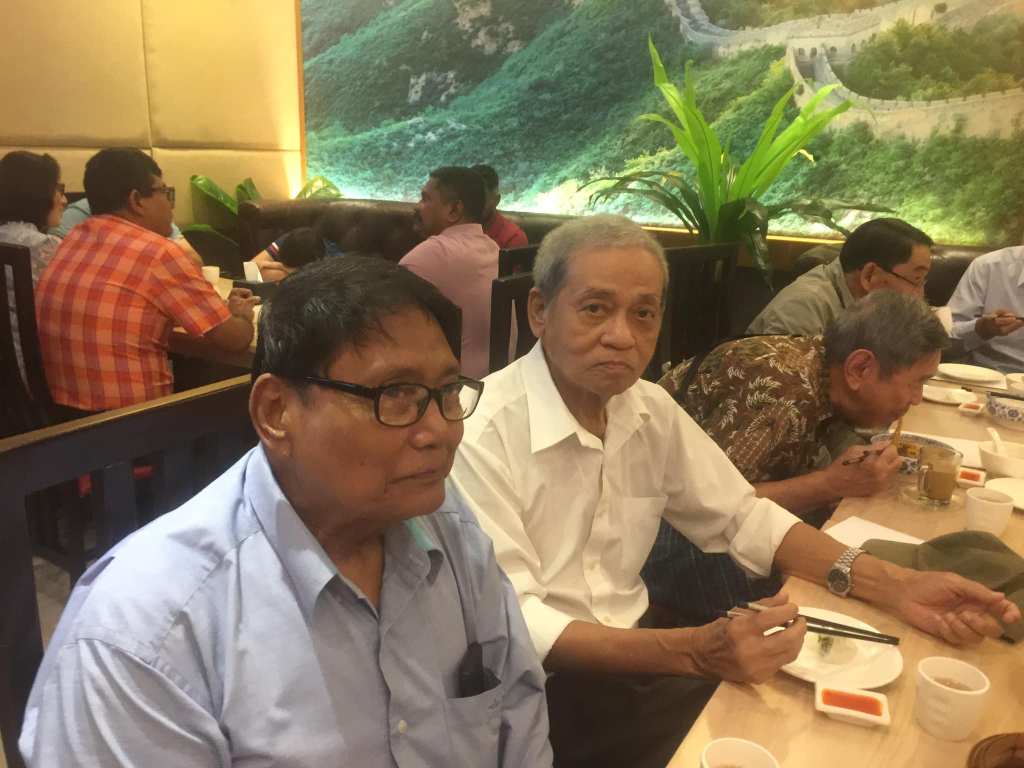
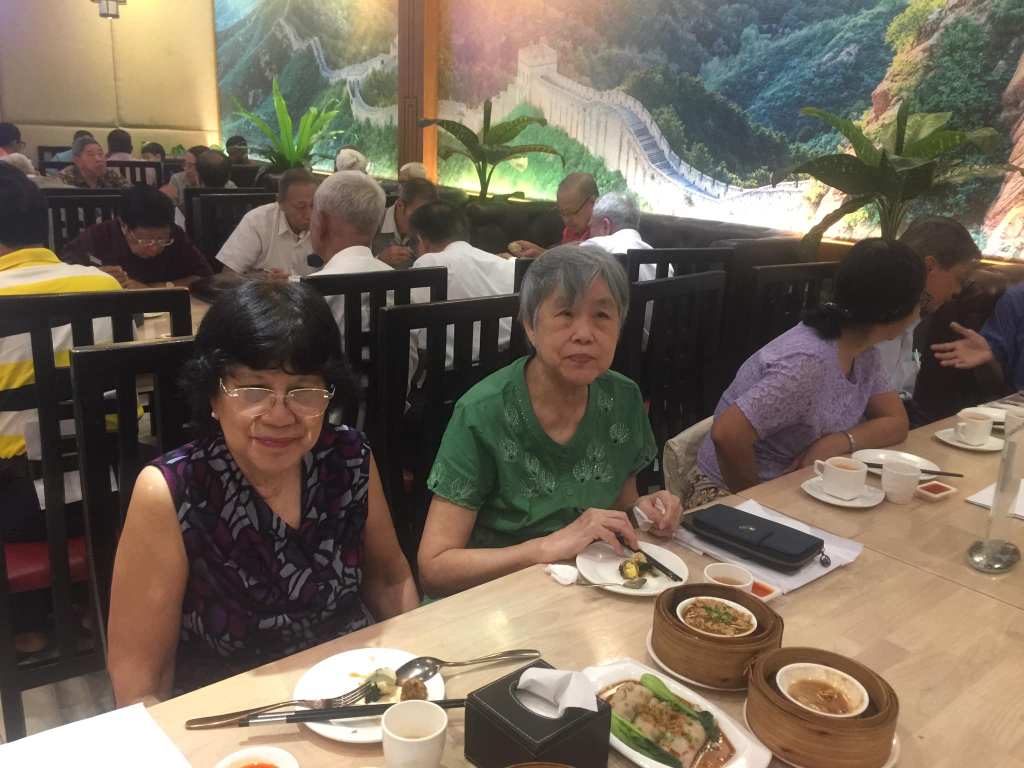
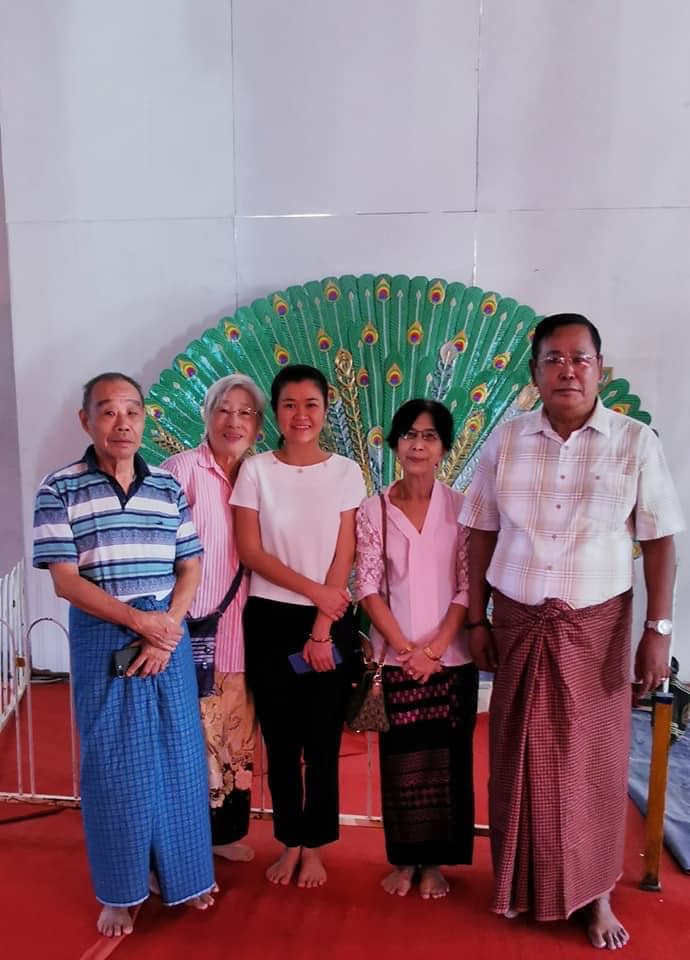
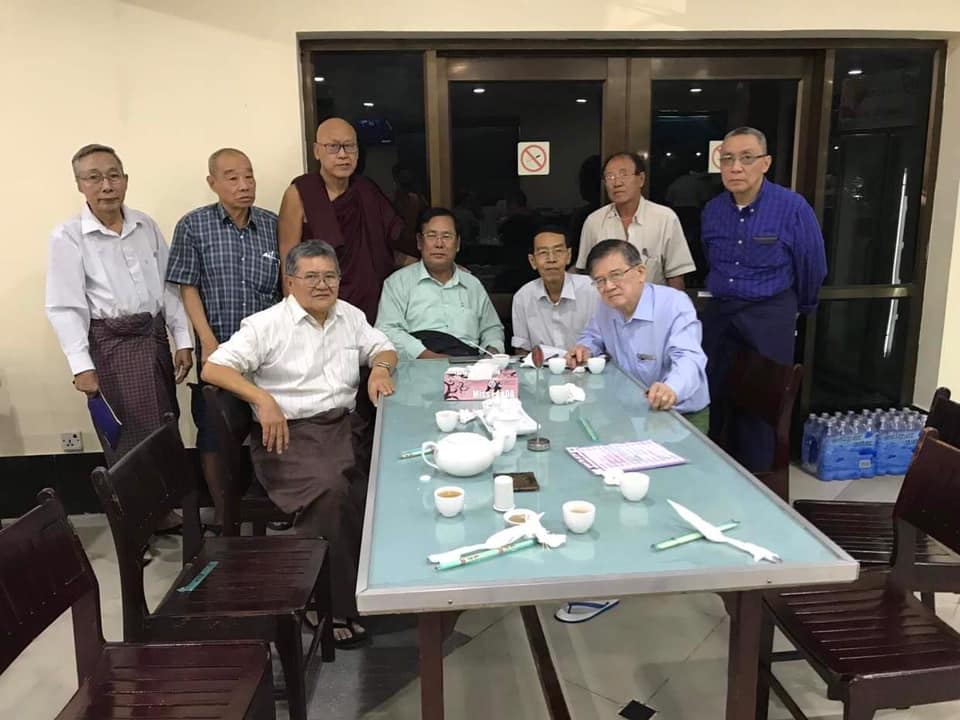
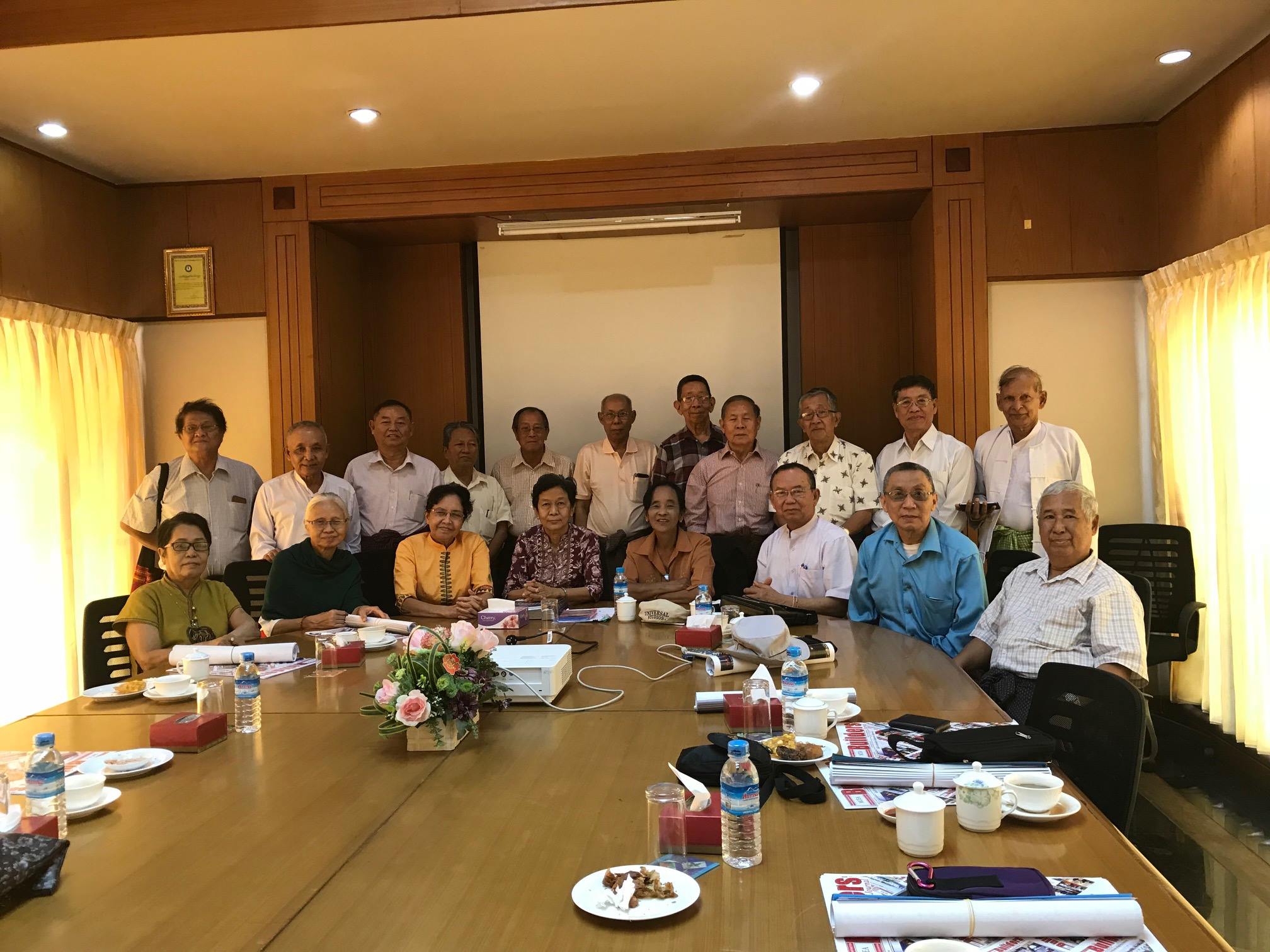
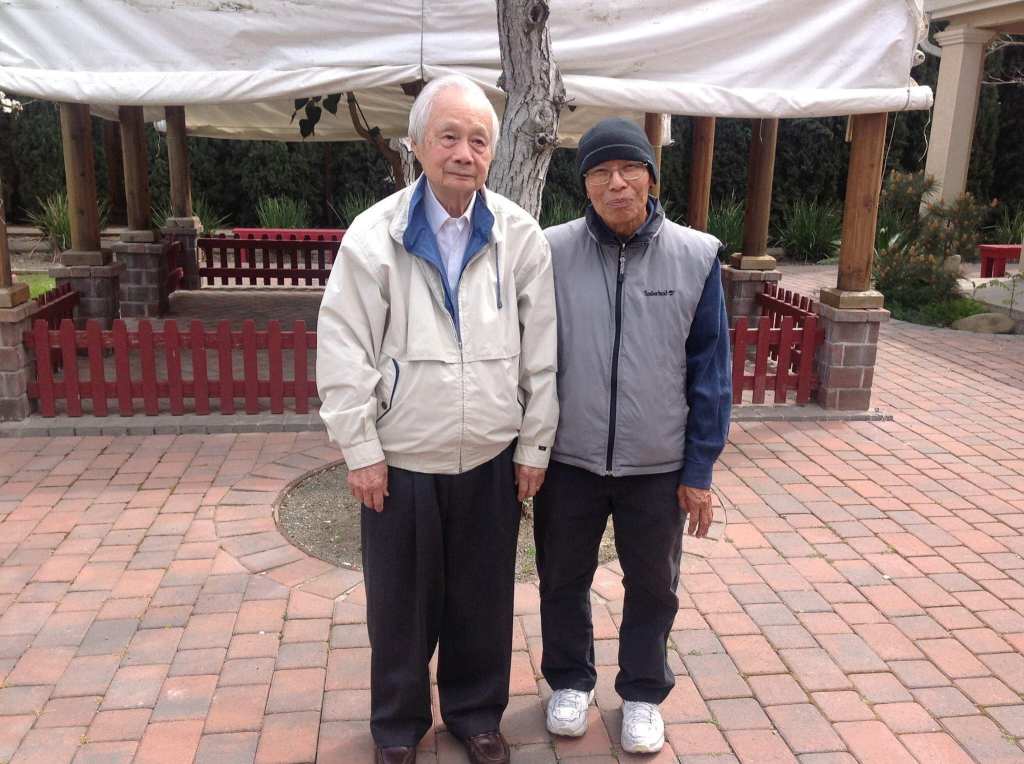
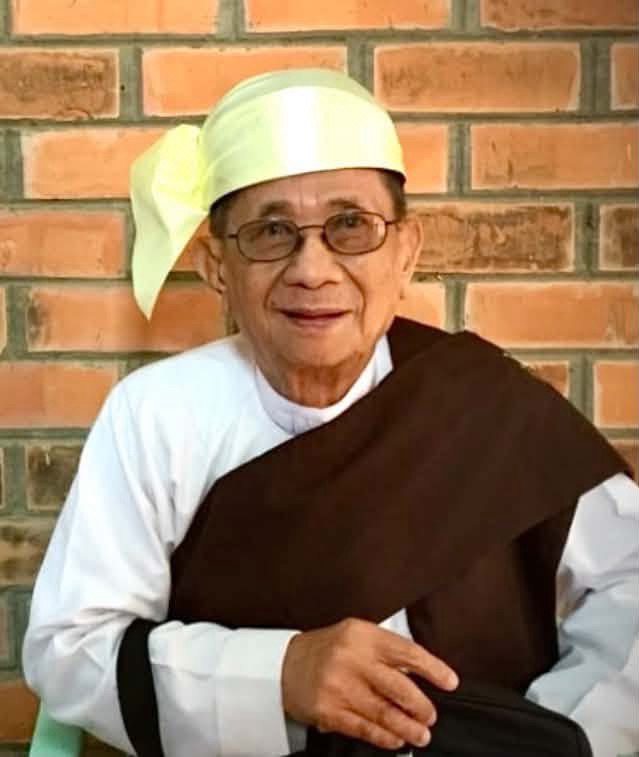
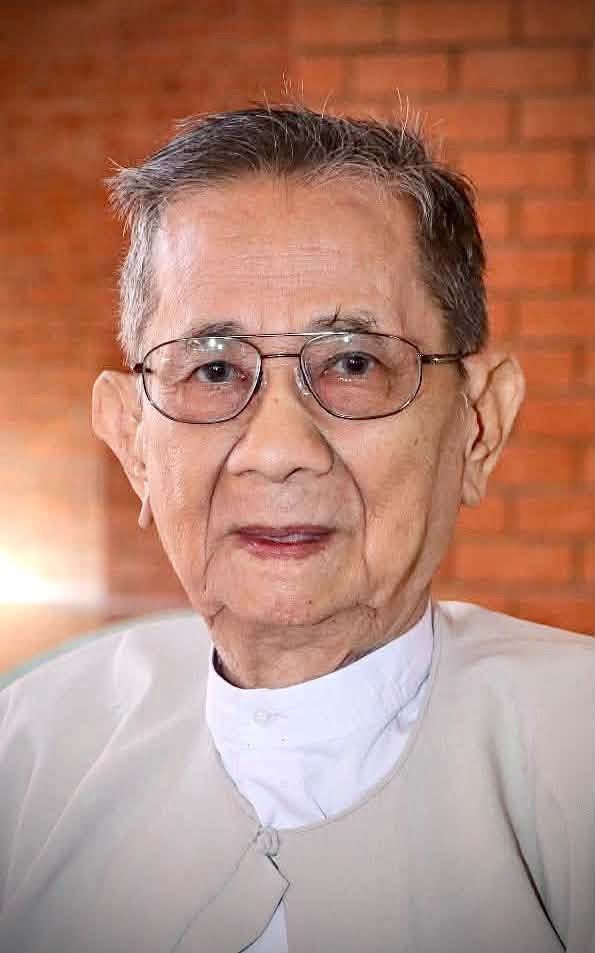
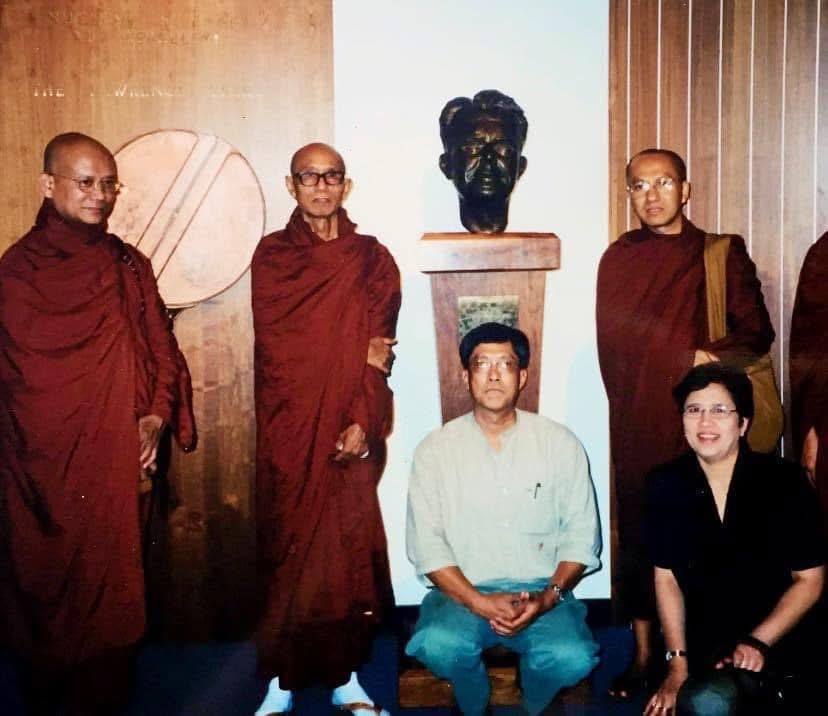
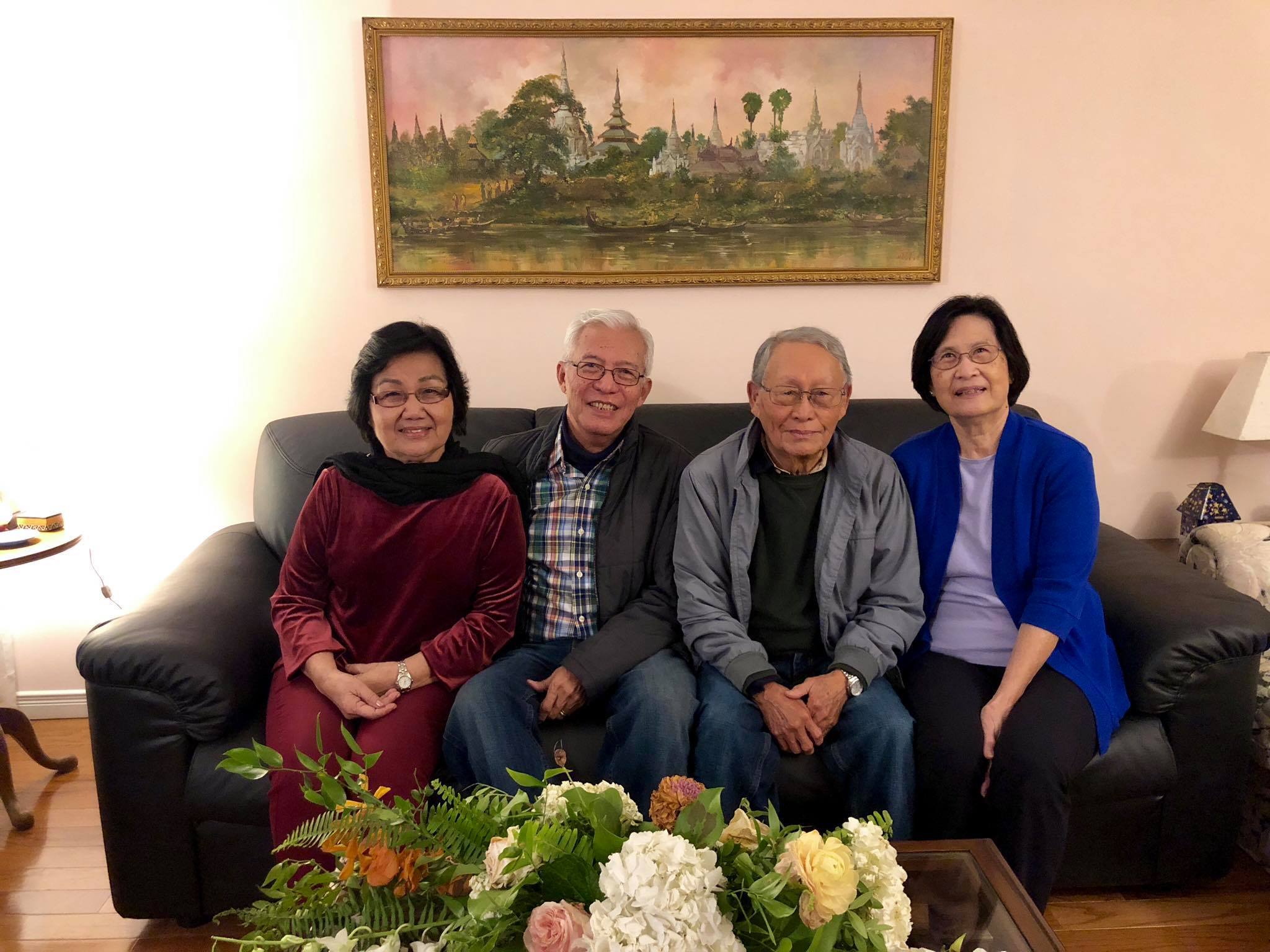
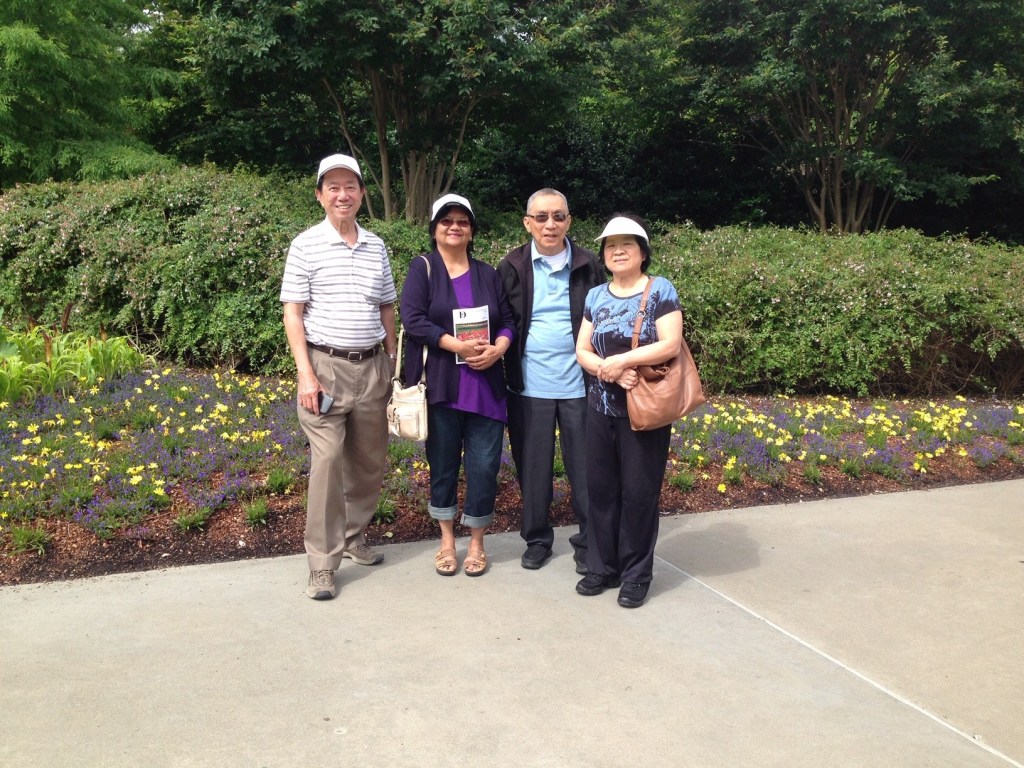
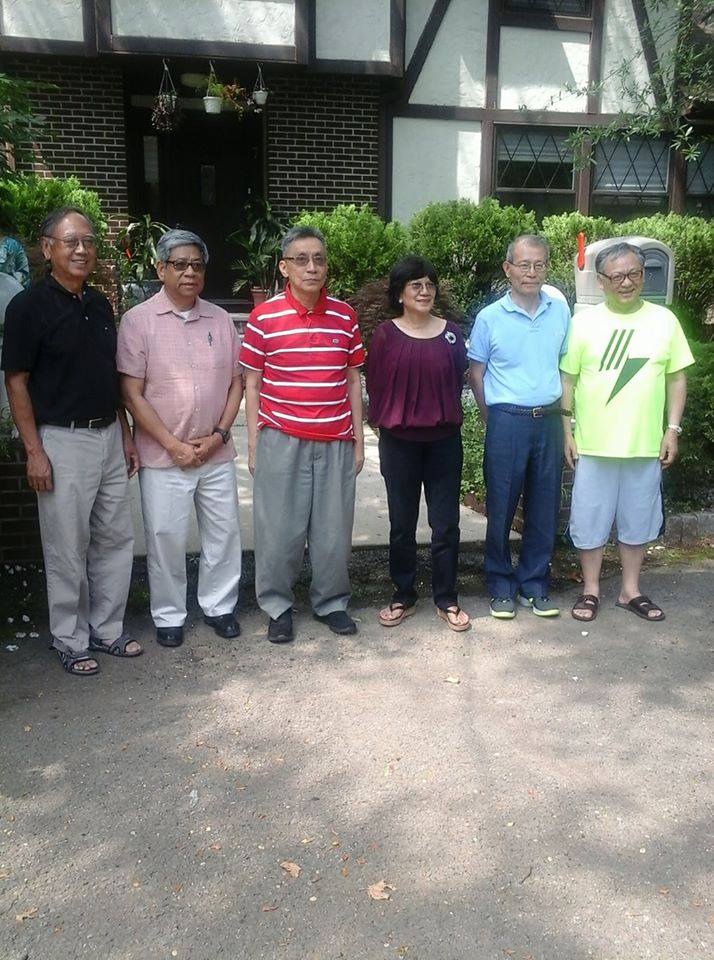
Ivan Lee (M69) invited several 69ers to get together at his house in New Jersey around June-July of 2015. U Aung Myint & U Sein Tin (who had visited Ivan previously) could not make it to the 2015 mini-reunion.
Fred Thetgyi (M69)
Lives in Philadelphia
Joined the 2015 mini-reunion
Drove most of the 1800+ mile trip in Ivan’s Mercedes
Except when his batteries went out (and had to be replaced), he took pictures at the mini-reunion and the trip. He would appear only in a fraction of the photos, when someone else (Ivan, a waiter, or a complete stranger) would offer to take the photo.
Photos
Grouped by location
New Jersey — Main Host : Ivan; Other hosts : Saya U Soe Paing & Daw Saw Yu Tint
New Jersey
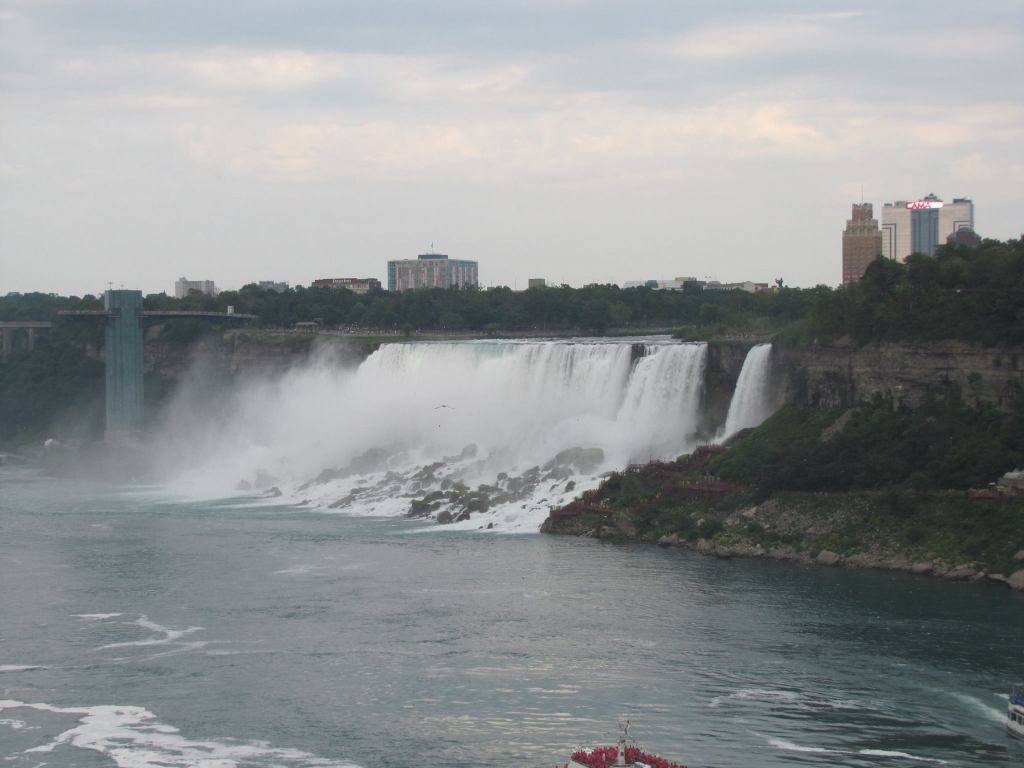
Niagara Falls on the way to Canada — Photos from the US side & the Canada side
Niagara Fall
Windsor, Canada — Host : Sayagyi U Aung Khin
U Aung Khin
Toronto (brief sight seeing)
Ottawa, Canada — Host: Sayagyi Dr. Aung Gyi & Daw Emma
Dr. Aung Gyi
Thousand Islands — quick trip
Thousand Islands
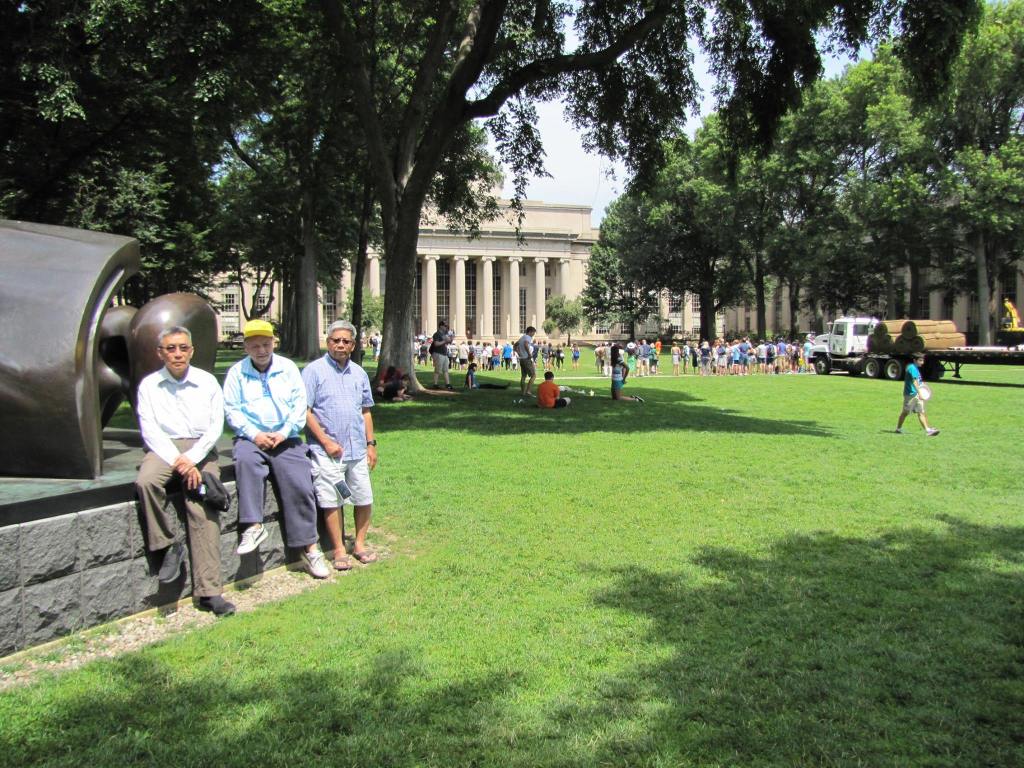
Massachusetts — Hosts : Dr. Tun Aung Gyaw (EC69) & Daw Khin Maw Maw; visit MIT & Harvard University
U TAG
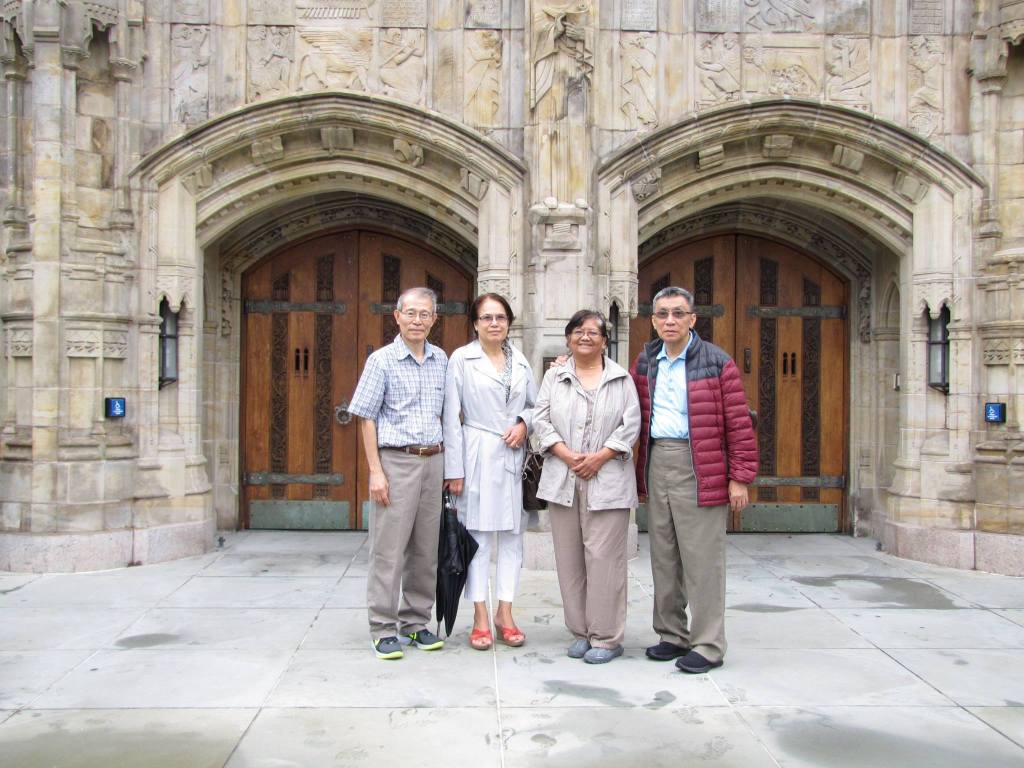
Connecticut — Hosts : U Toung (Tom, EC69) and Daw Khin Myint; visit Yale University; visit Pizza place frequented by the young Bill Clinton
Ko Toung
Philadelphia — Hosts : Fred Thetgyi (M69) & Eunice; visit Pake Forge and Liberty Bell; visit my last remaining uncle U Thein Han in Maryland
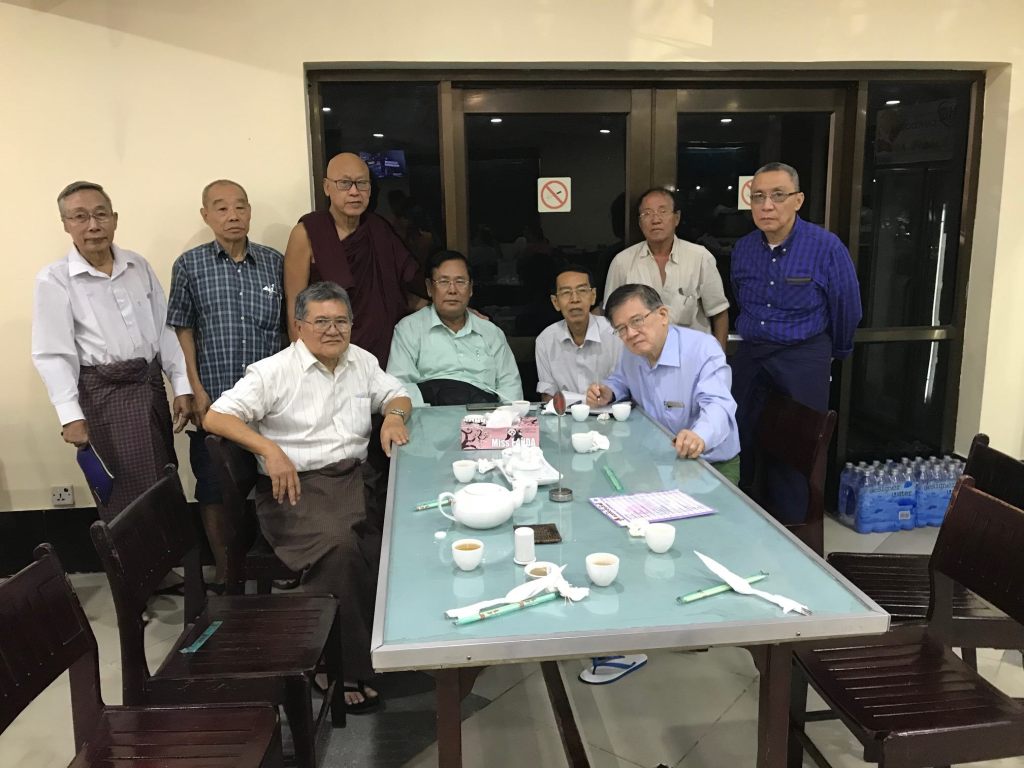
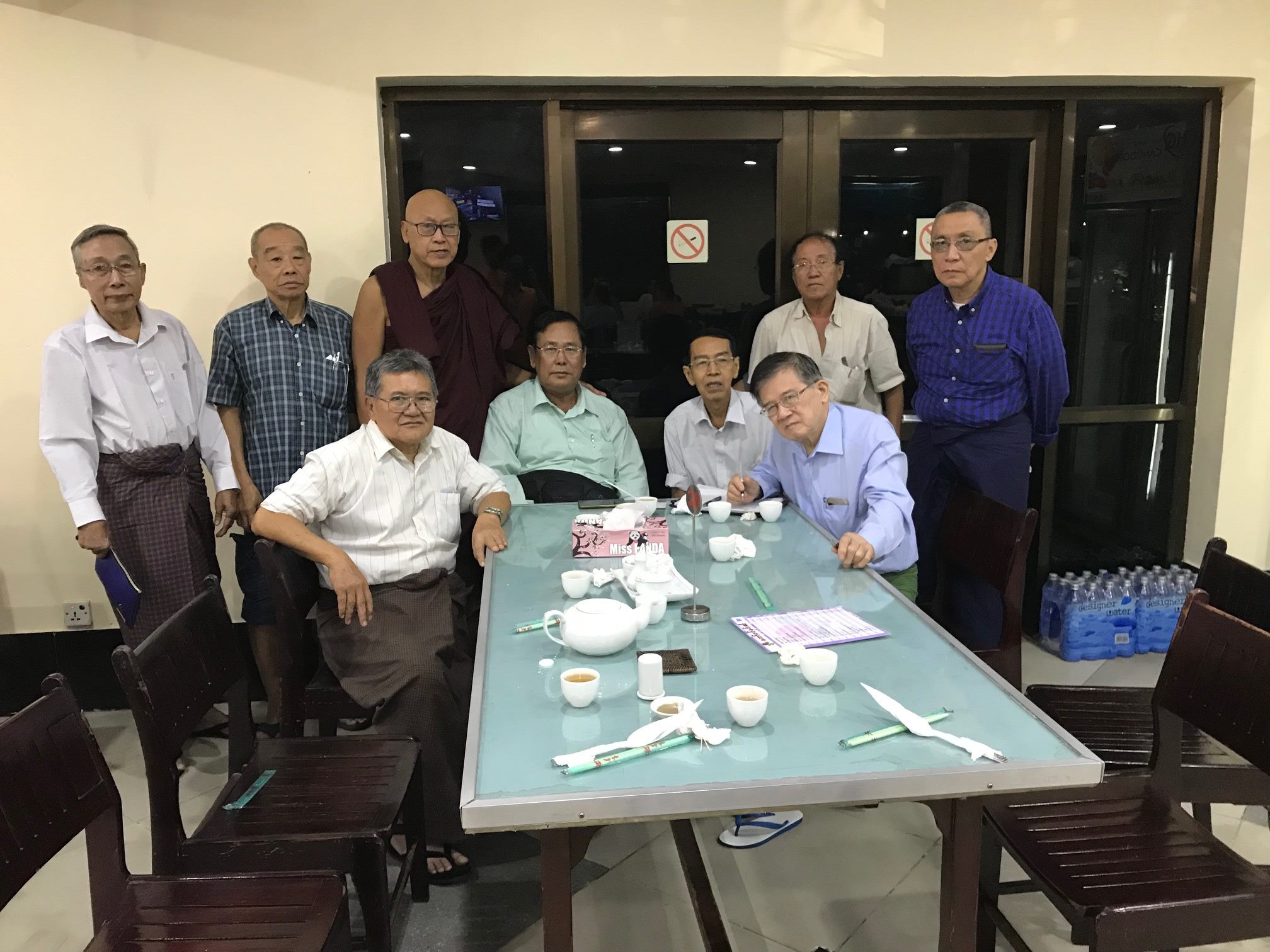
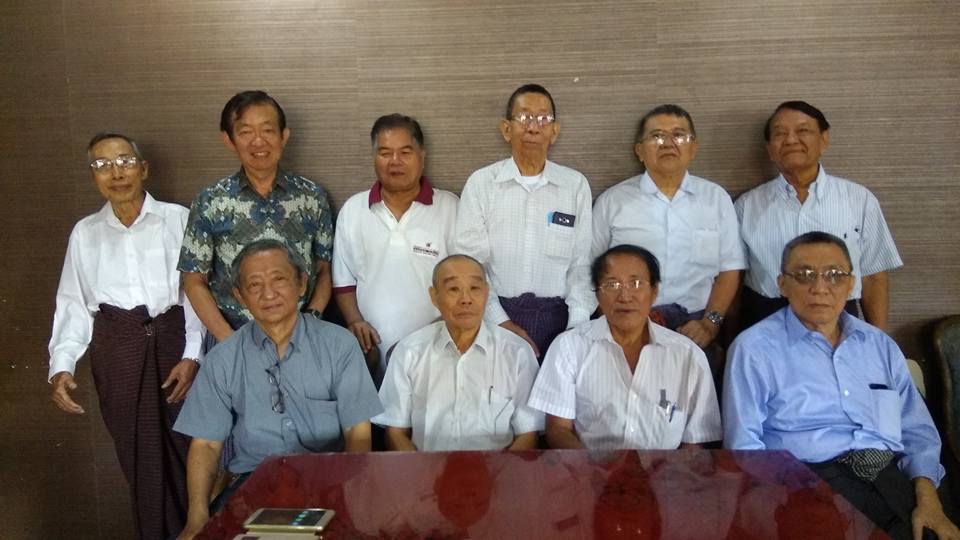
During one my of visits, I hosted a Breakfast Gathering at Taw Win Hnin Si တော်ဝင်နှင်းဆီ
Ko Win Maung provided the ride.
At the time, Uzin Aung Chaw (C69) was visiting Yangon. He became a monk after retirement and spent several vassa (Rainy Season Retreat) in Sagaing Hills. Uzin later moved to Thonegwa in the Irrawaddy Delta region.
Ko Win Thein Zaw (Wai Lu, Min69) took Optional Burmese in High School. He was an MP in the Pyithu Hluttaw in charge of Mining and related areas. He surprised us at the gathering.
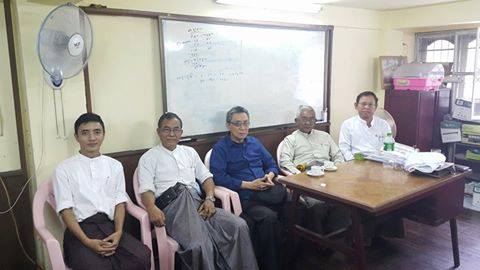
Ko Shwe, Ko Sein Myint, Ko Myat Soe Lwin, Ko Kyi Win, Ko Win Maung and Ko Myint Maung were my EE classmates.
Ko Shwe was a Treasurer of the 69er HCF and the EE 69er HCF.
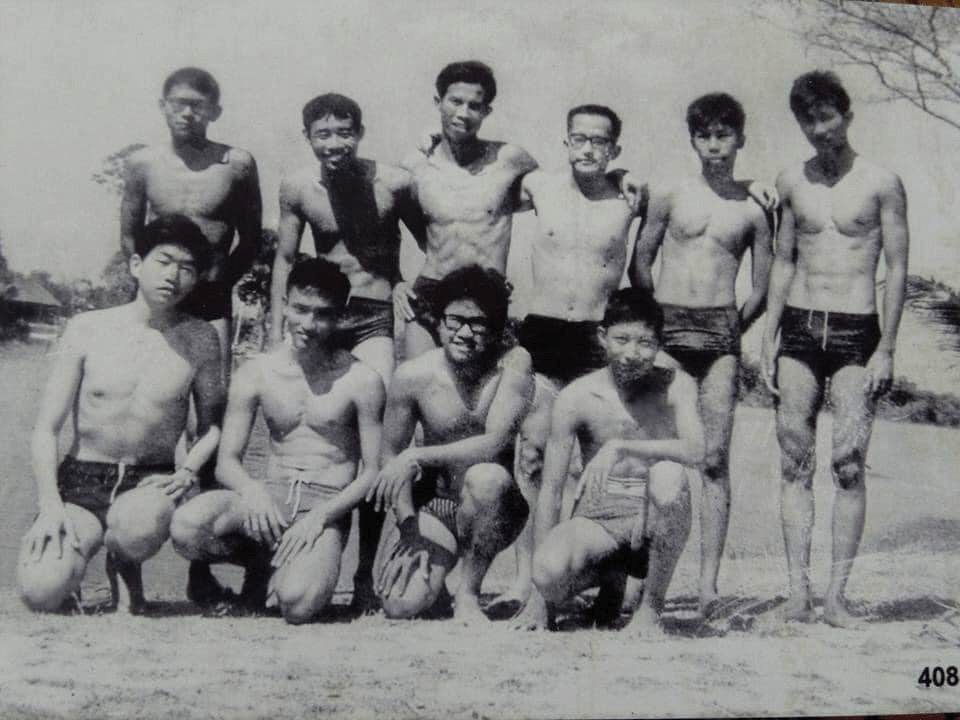
Ko Sein Myint is a major donor to both funds. He and Ko Win Maung represented RIT in Swimming, Water Polo and Rowing.
Ko Myint Maung played Volleyball for RIT EE along with Saw Edison, Ko Maung Maung and Ko Aye Thein.
Ko Kyi Win taught selected subjects for seafarers.
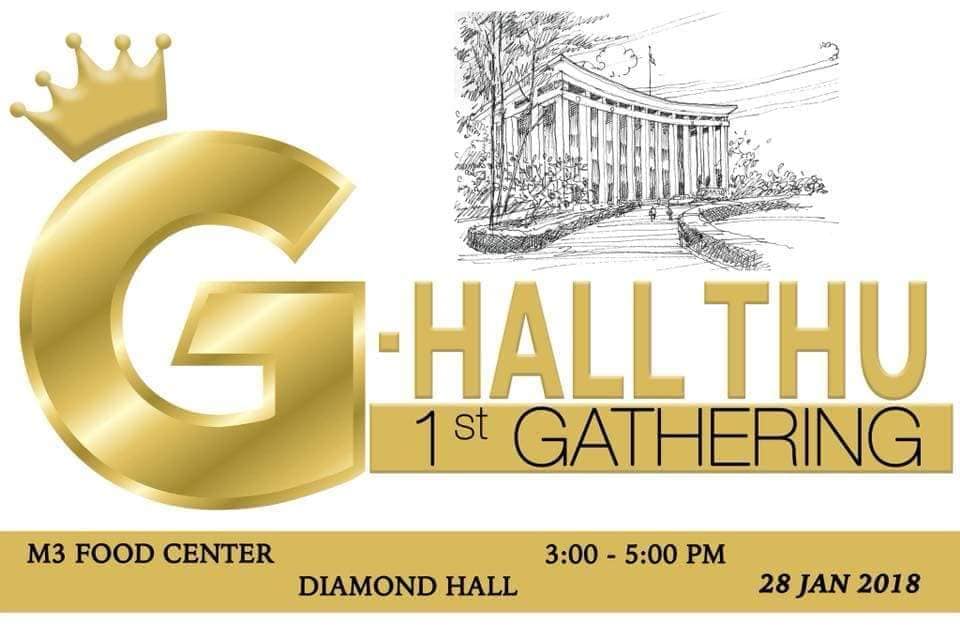
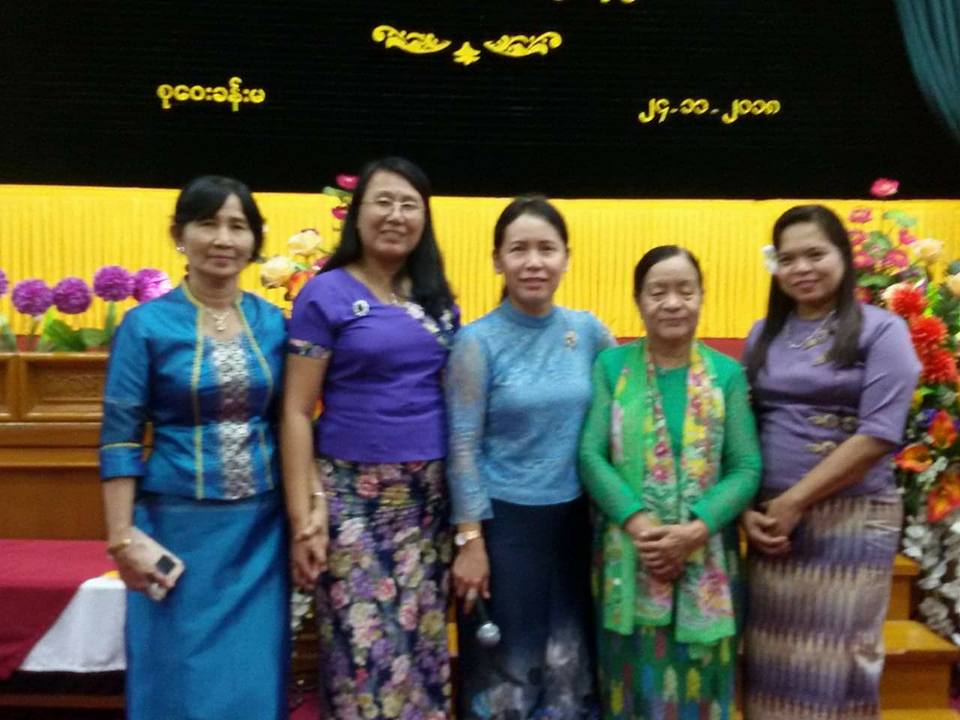
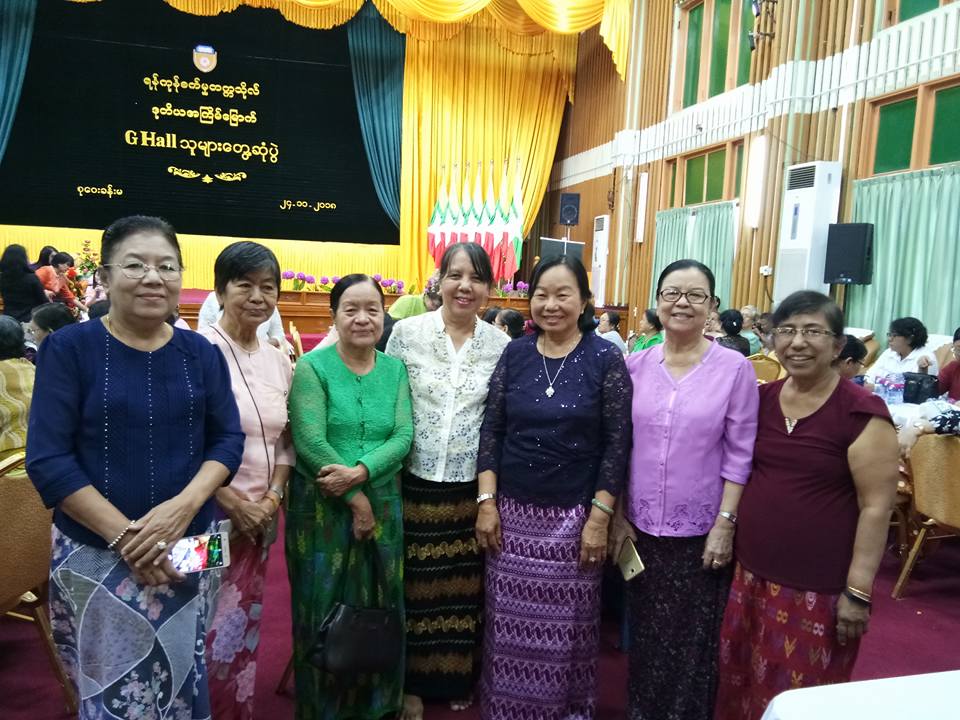
In November 1964, G-Hall was assigned to female engineering students.
There has been two Reunions of G-Hall Thu.
Poems and articles were compiled and published for the Second G-Hall Thu Reunion.
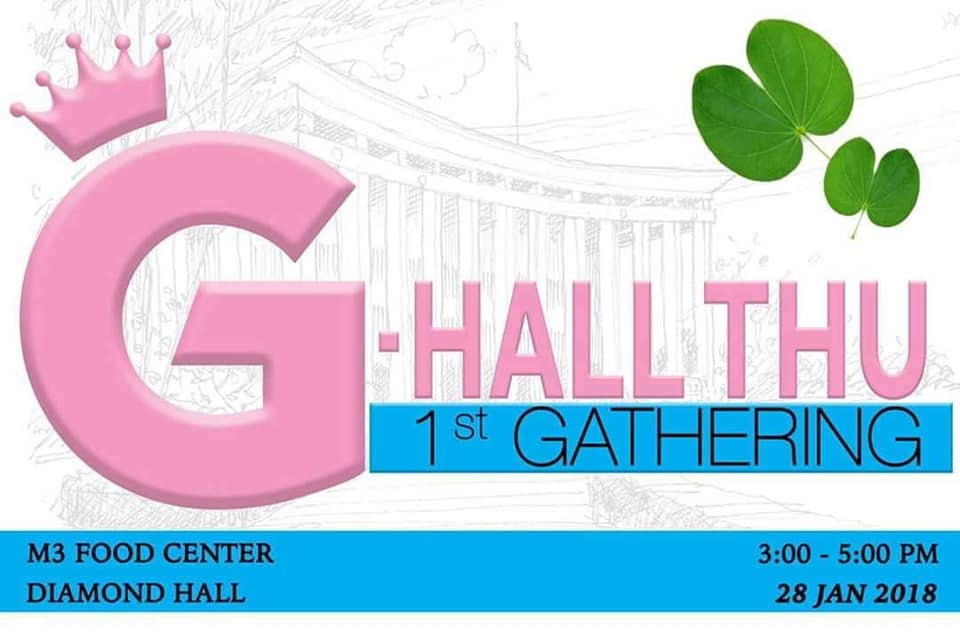
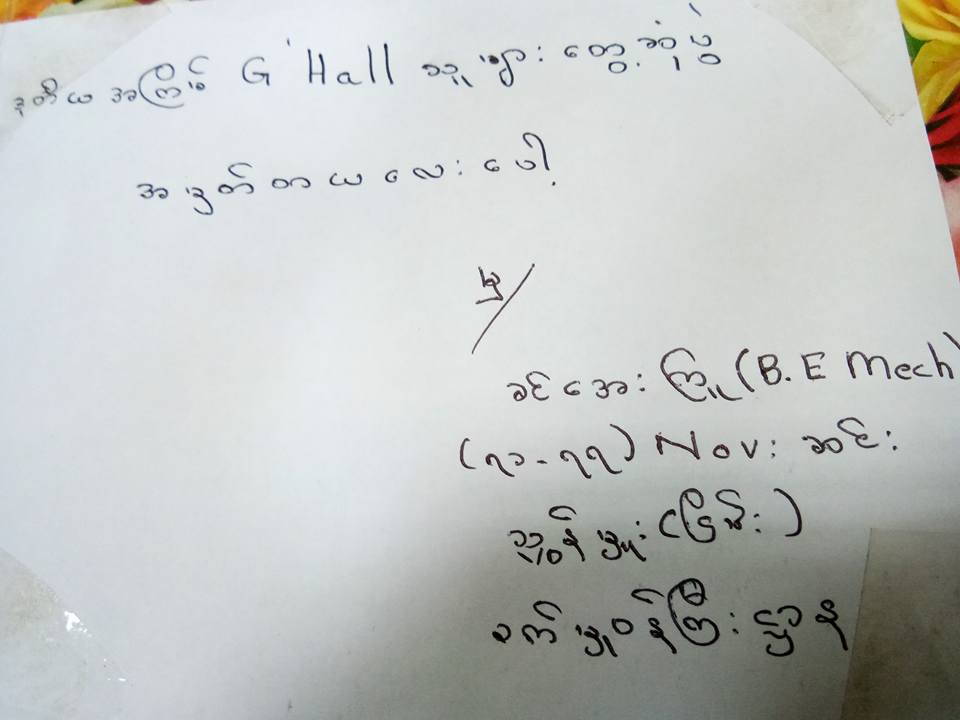
First GatheringPosterGathering
Photos
by Daw Tin Aye (C73)
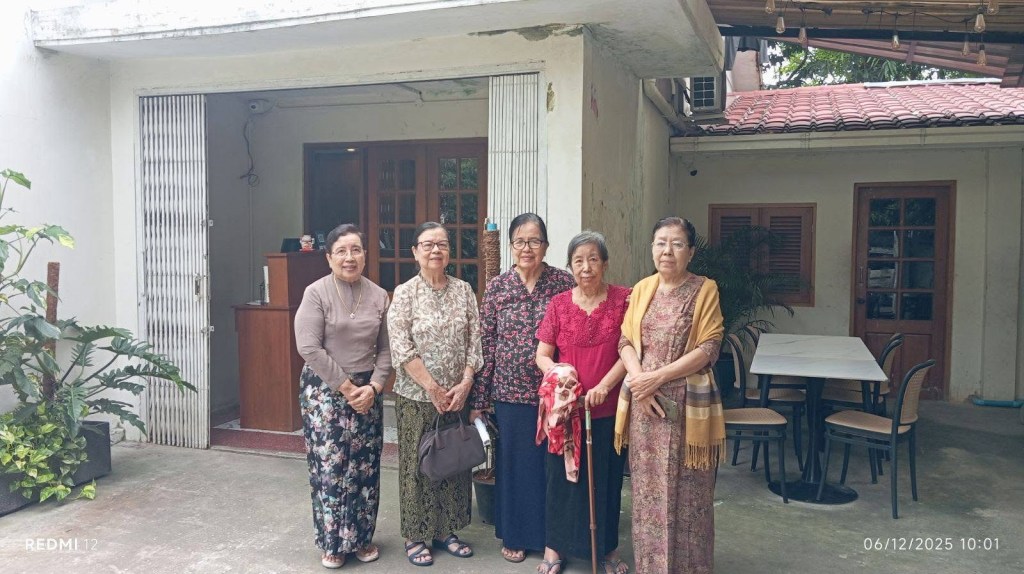
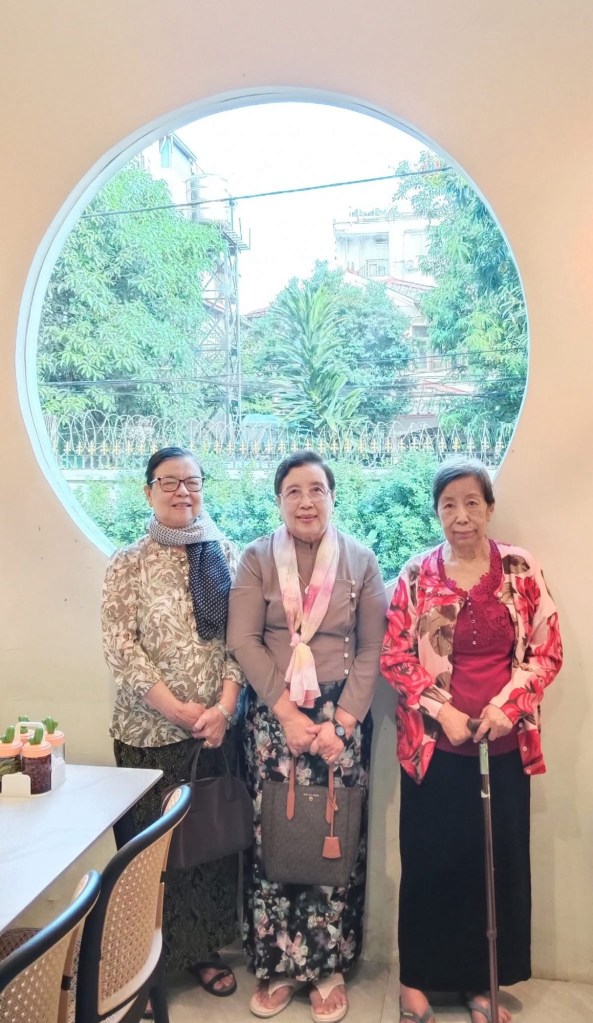
G Hall Thu 1G Hall Thu 2G Hall Thu 3G Hall Thu 4G Hall Thu 5
Photos by Daw Pwint Than (EP71)
Daw Pwint Than (EP71) received a dhamma book as a gift prize from a younger alumni.
She thanks the young energetic “Nyi Ma Nge Myar” for helping organize the memorable get together with the old (former Hall Tutors, classmates) and the new.
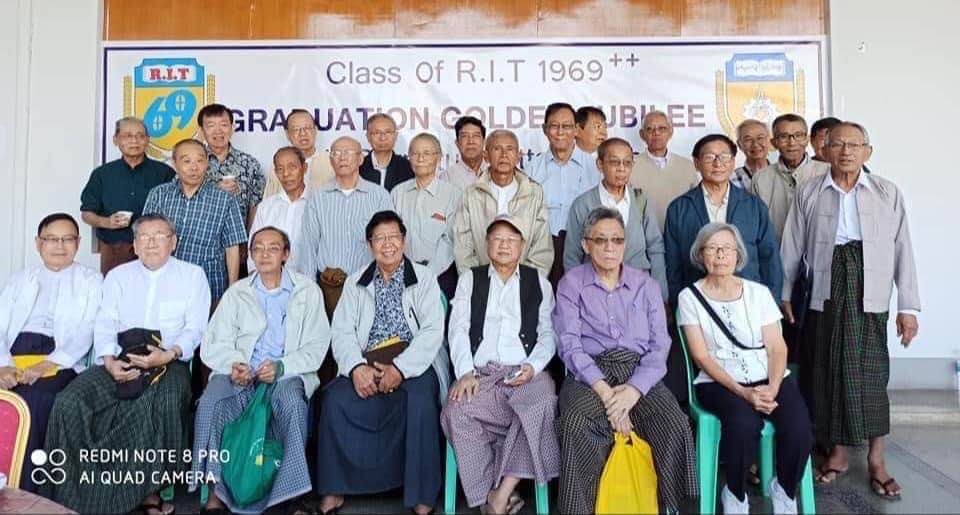
69ers celebrated the True Golden Jubilee of Graduation on December 14, 2019.
Before the pandemic, they used to meet at least once every month.
Several 69ers have hosted or co-hosted the breakfast, lunch and dinner gatherings. The Mike Khes (Po So Chins) often entertain with live and Karaoke music.
The photos were taken by several 69ers.
Taw Win Hnin Si (Royal Rose)
During my visit to Yangon in January and February 2018, I was host and guest of several 69 gatherings.
69ers in February 2018Tin Aung Win (Oscar), Tin Maung Aye (Accordion), Aye Thein (Volleyball) David Myint Thein (Rowing), Aye Lwin (RIT Magazine)
The restaurant is owned by U Soe Nyunt (Old Paulian, GBNF), who managed to get the “SPHS Honor Roll” after SPHS got hospitalized.
Attendees range from the 30’s and 40’s to 60’s (or more depending on the health and availability). For example, Soe Thein (Peter Myint Maung) has to ask his daughter to drive to the gatherings.
69ers usually book two adjacent rooms and turn them into a single large room for holding the monthly breakfast gatherings.
There are hosts to celebrate their birthdays and anniversaries, and sometimes welcome classmates visiting from overseas.
Win Maung (Lake) had to pick up U Okkantha (Uzin Victor Aung Chaw, Sagaing Hills) to attend the gatherings.
Those who spend time outside Yangon (e.g. Zau Lai, Myitkyina) have to come a long way to meet, greet and fete with their former classmates.
Several annual gatherings were held at M3.
Tun Tin, Aung Gyi Shwe, Sa Maung Maung, Tin Aung Win (Oscar)
M3
Myint Pe, Kyaw Nyunt, Ma Thaung Htwe, Ma Myint Myint, Saw Yu Tint
The 69ers book around 10 tables. They are provided a stage for the Karaoke and Live Music.
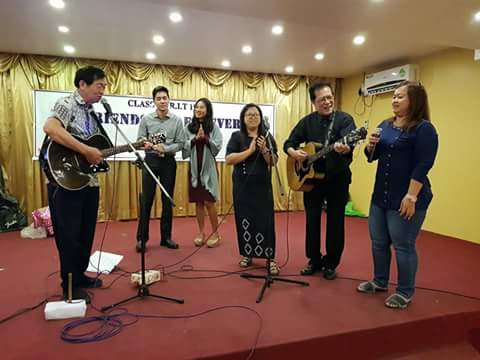
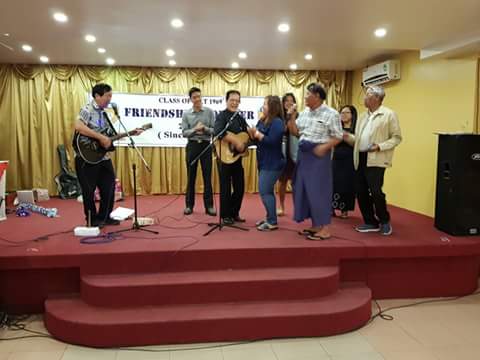
U Tint Lwin (Daniel) can play the lead, rhythm, bass and drums. Saya U Win Mra taught Daniel and his brothers to play guitar, and encouraged them to set up their own band. He is also a vocalist.
U Kyaw Min (Albert) is proud to be called “Elvis”. He has sung in gatherings (with international companies).
U Win Boh (Robert) played in various gatherings in Australia and Myanmar.
Some 69ers (Tin Maung Aye, Than Myaing, Khin Maung Tint, Aye Lwin, Win Lwin, Myo Nyunt, …) were RIT Ah Nu Pyinnya Shins and organizers, but some have given up their hobbies to spend quality time with their loved ones.
“Pho Pho” U Aung Min and “Ah Pho Gyi Tone Kyaw” U Han Sein (GBNF) are some of the regulars at the 69er gatherings.
Crystal Jade
Around SPZP-2012, an ad hoc lunch gathering was held to meet some 69ers from overseas (attending the SPZP-2012).
U Tin Win (Mining) footed the bill.
The attendees (who had bought the lunch tickets) agreed to donate the ticket sales to the 69er Fund.
Myint Thein (Kabar, GBNF), Sein Myint, Win Maung, Hla Min Ko Shwe, Daniel Tint Lwin, Sein Tun, Ohn Khine (M70), Myat Soe Lwin (Sai Hwet), Aung Min
In 2016, there was an ad hoc breakfast gathering to welcome U Sein Myint and me, and to bid farewell to Daniel.
Westin Park
Daw Myint Myint (C69) hosted a lunch gathering to welcome Daw Nyunt Nyunt Wai (Millie, T69).
Others
There have been gatherings at may other places including Shwe Bei, Bone Kyaung (or nearby shop), Cafe on Saya San Lann, YTU Assembly Hall, …
First HSF Only exam in 1962; Those from Rangoon had to take exams in March & August
Matric Only exam in 1963; My older brother entered Yankin College in 1957 after passing 9th Std (HSF & Matric) exam.
Attended last ever I.Sc(A)
Admitted to 2nd BE in Nov 1964
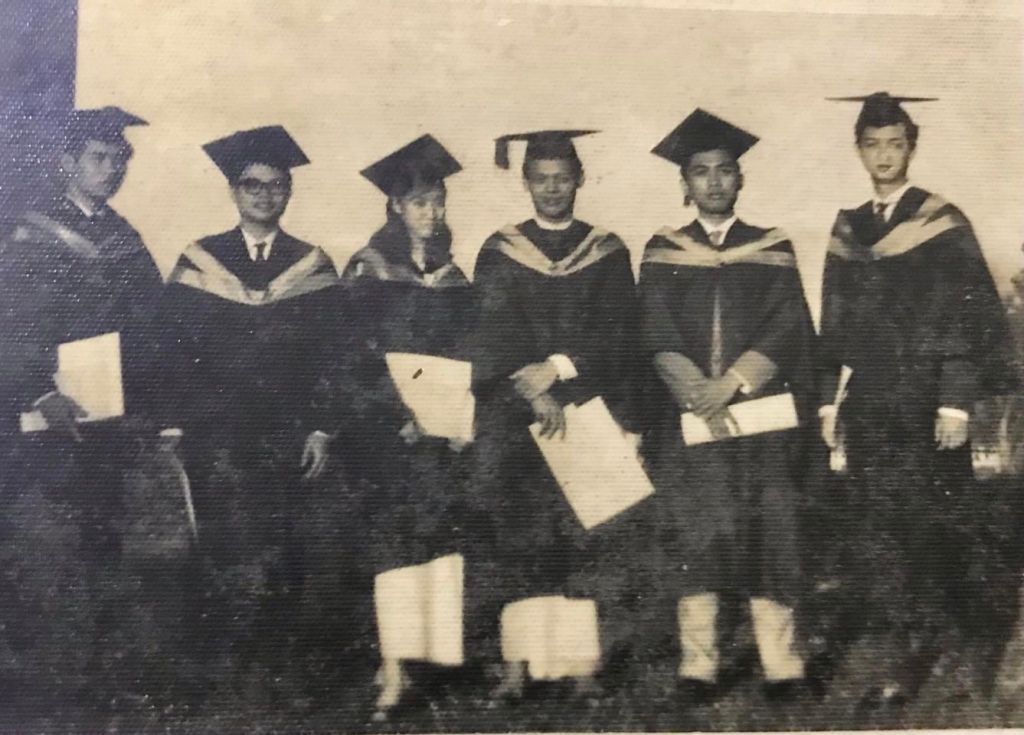
Graduated with BE (a few with BArch) in 1969
Long After Graduation
First major Reunion in 1999
Anniversary Reunions in 2009, 2014 and 2019
Except for pause during pandemic, Monthly Breakfast Gathering (usually at Taw Win Hnin Si)
Jara, Byadi & Marana
Over 40% are GBNF
Remaining 69ers try to be active physically, mentally & spiritually.
Two are Sayadaws: Ashin Ukkamsa & Ashin Pannagavesaka
Many hosted and/or attended Monthly Breakfast Gatherings.
One gathering had a record of nine hosts.
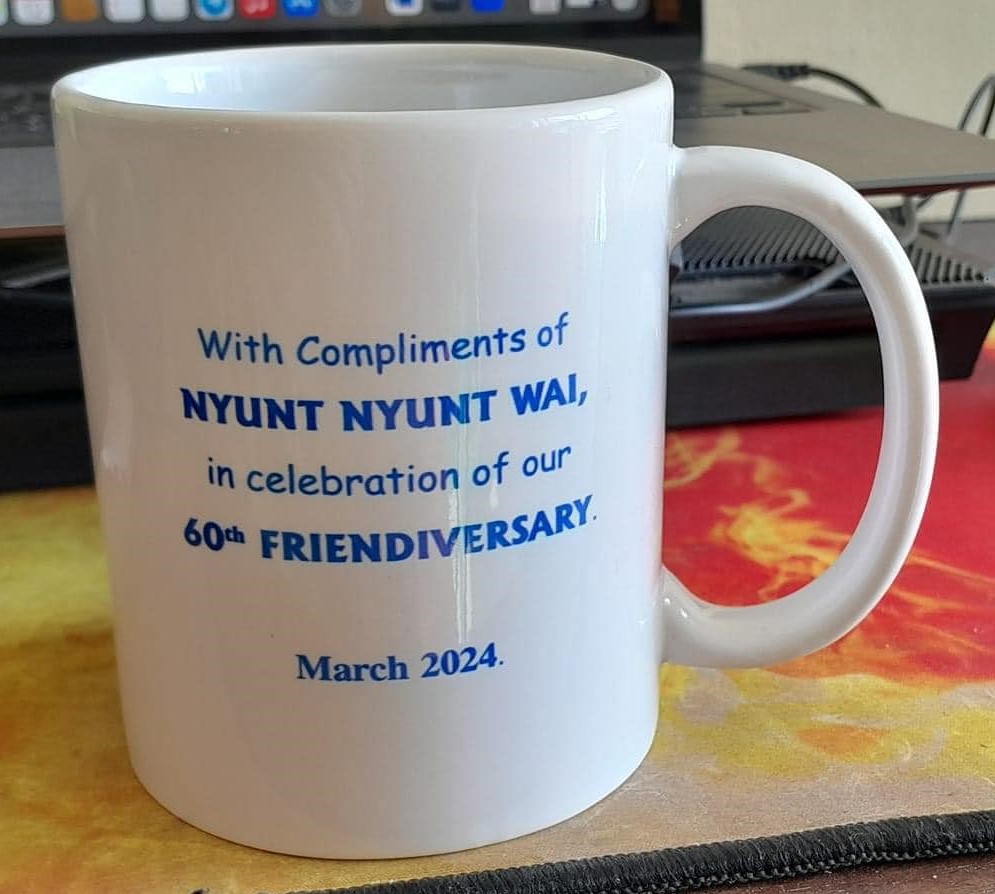
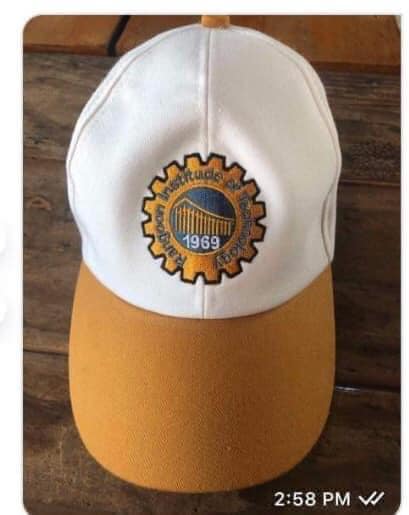
Gifts — 69er towel, 69er mug, 69er cap, 69er hat, 69er pen, medicine — are given at selected gatherings; Albert & company gave out towels; Millie was represented by her cousin; Kyaw Zin was represented by his elder daughter; Fred gave some gifts via 69ers that visited USA (e.g Kyaw Nyunt)
69er mug69er cap69er cap
Some donated and/ or joined virtually (via Zoom or Messenger).
Will go on Sharing & Charing
until the Last 69er
The following gives an account of 69ers & their gatherings.
Need input, feedback & suggestions to have a comprehensive album.
Donors & Volunteers
Aung Min (M) is Chair of 69er Health Care Fund. He & his team organized 69er events. They have updated Contact List several times.
Aung Min (Right)
Myint Myint, Ivan & Sein Myint are major donors. Others (e.g Mehm Aye Chan) make recurring and lump sum donations.
Myint MyintIvan (Right)Sein Myint (2nd from Right)
There are many unsung heros. Despite having limitations due to an injury at work, Ko Shwe drove long distance to collect donations.
Ko Shwe (3rd from Left)
Others visited 69ers in hospitals & homes (e.g to aid health care or offer Kutho donation).
1964 – 65
About 320 were admitted to 2nd BE in Nov 1964
Most graduated in 1969.
Luyechun program started in 1964 for high school & middle school. The program was expanded in 1965 for Universities & Institutes.
2nd BE (1964 – 65)LYC (Summer of 65)
See also
From BIT to YTU
Luyechun
Memories of a 69er
RIT Days
1966 – 69
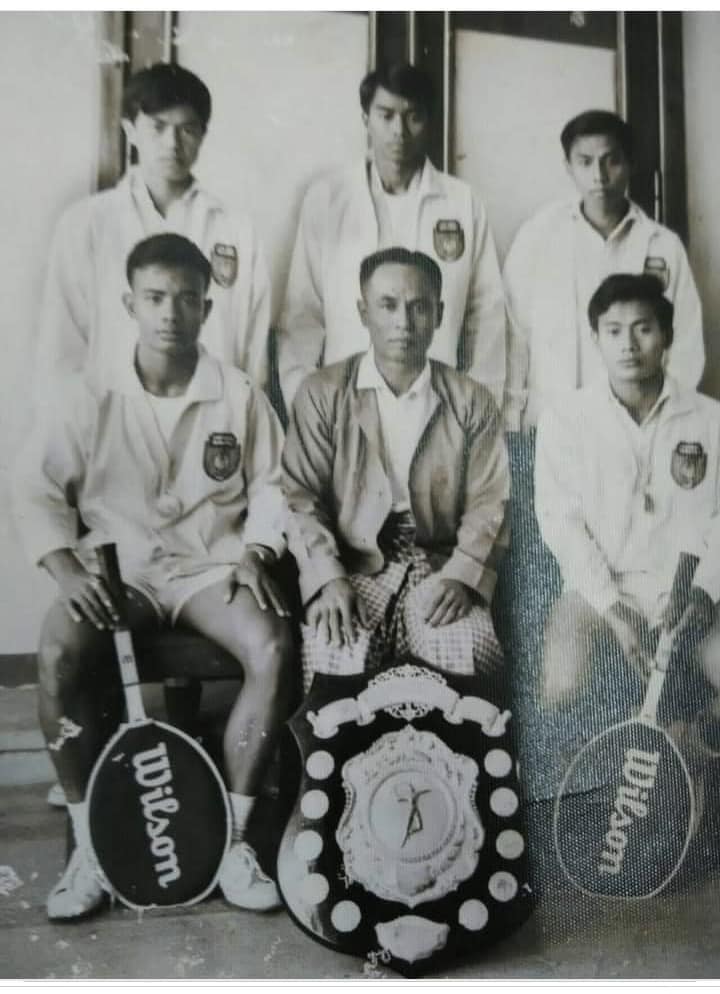
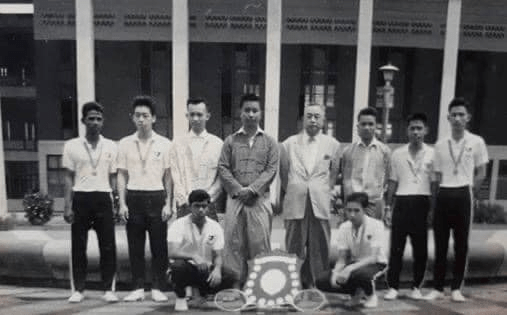
Tennis
Inter-Institute Trophy winners
Kyaw Nyunt (M, GBNF)
Than Htay (EE)
…
RIT TennisKyaw Nyunt (2nd from Left)
Badminton
Inter-Institute Trophy winners
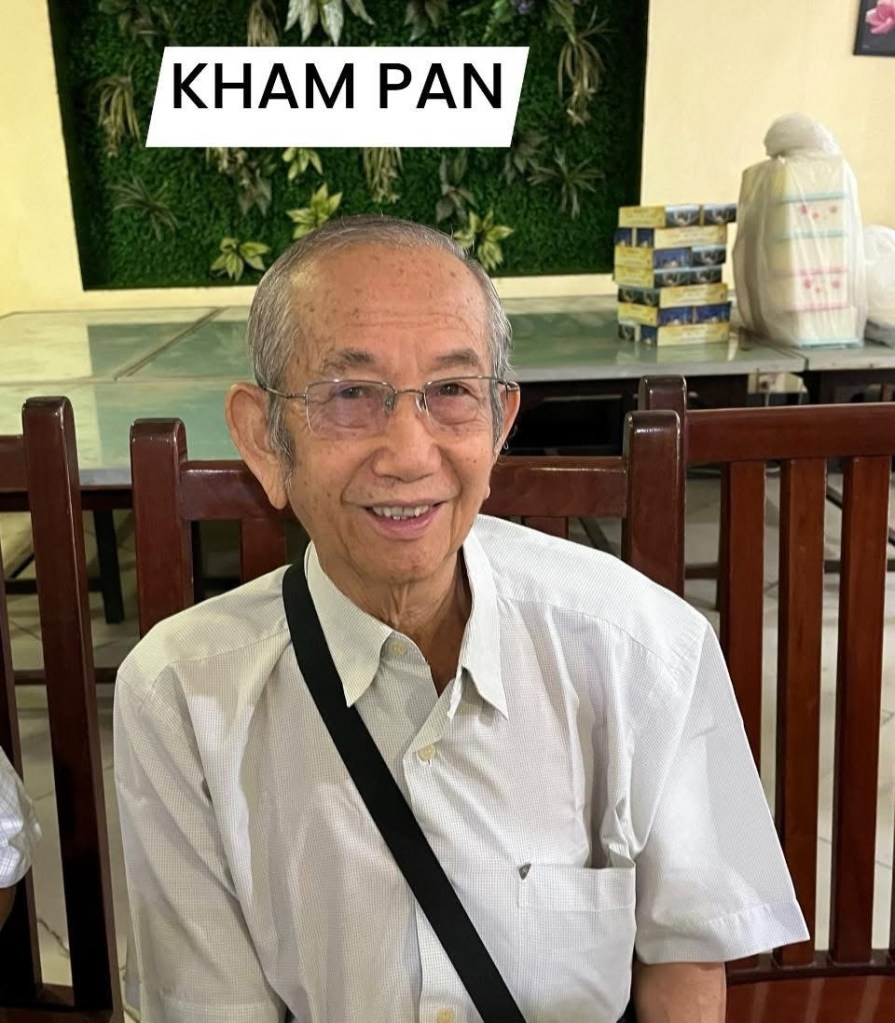
Sai Kham Pan (EP) : Burma Selected
Bishnu (EP, GBNF)
Myint Sein (M, GBNF)
…
RIT Badminton 1RIT Badminton 2Sai Kham Pan
Track & Field
Aung Gyi Shwe (EP, GBNF) : Secretary
Margaret (Khin Than Myint Tin)
Myo Nyunt (C) : Joint Secretary — for Henry Khin Maung Lay (T68)
…
Aung Gyi Shwe (Standing Left)Myo Nyunt
Swimming & Water Polo
Htay Aung (M) : Burma Selected; Fifth SEAP Games
Hla Kyaing (M)
Han Sein (C, GBNF)
Jimmy Kyin (T, GBNF)
Sein Myint (EP)
Swan Kong (?)
Win Maung (Lake)
Moe Hein (ChE)
…
Htay AungRIT Crosslake Swimmers
Rowing
Chit Po Po (M, GBNF)
Hla Min (EC) : Treasurer & Vice Captain of RUBC
Sein Myint (EP)
Win Maung (Lake)
Win Naing (Dicky, M, GBNF) : recruited David, Fred, Ohn Mg & Sein Tun
…
Chit Po PoWin Naing (Dicky)Sein Myint, Hla Min, Tin Myint
Table Tennis
Tin Myint (John, M, GBNF) : also Luyechun for 4th BE
Aung Myint (Pet) : Kyant Ba Hone (Cartoon); Tech & Edu Notes
Taing Oke : Yin Maung; National Literary Award
Tin Htut (Harry, M) : Mon Yu
Win Thein Zaw : Wai Lu
…
Kyant Wai Lu
69ers at Inya
Nay Win, Yee Pin, Khin Mg Gyi & Chit Po Po are GBNF
69ers at Inya
See also
Activities
Celebrations
Publications
RIT & Burma Selected
Sports
EE69
See post with annotations by Thein Swe (GBNF, Luyechun for 3rd BE) & me
EE69Ko Shwe (L), Thein Swe (R)
Graduates
Mostly Mech
Aung Thu Yein (E), Kyaw Than (Met?), Nay Win (M), Khin Maung Gyi (M) & Toby (A) are some of the GBNF
Most worked for government and industry. Some joined the Faculty. A few worked for private & family business. Some went overseas.
GradsA69
See also
69er — Memories
Then & Now
How Time Flies
1970 – 1998
There were no formal Reunions.
Most were busy with their work and family.
In the mid 1990s, Danny discussed with some friends about a 69er Reunion.
1999
30th Anniversary of Graduation; See Danny’s post about the event
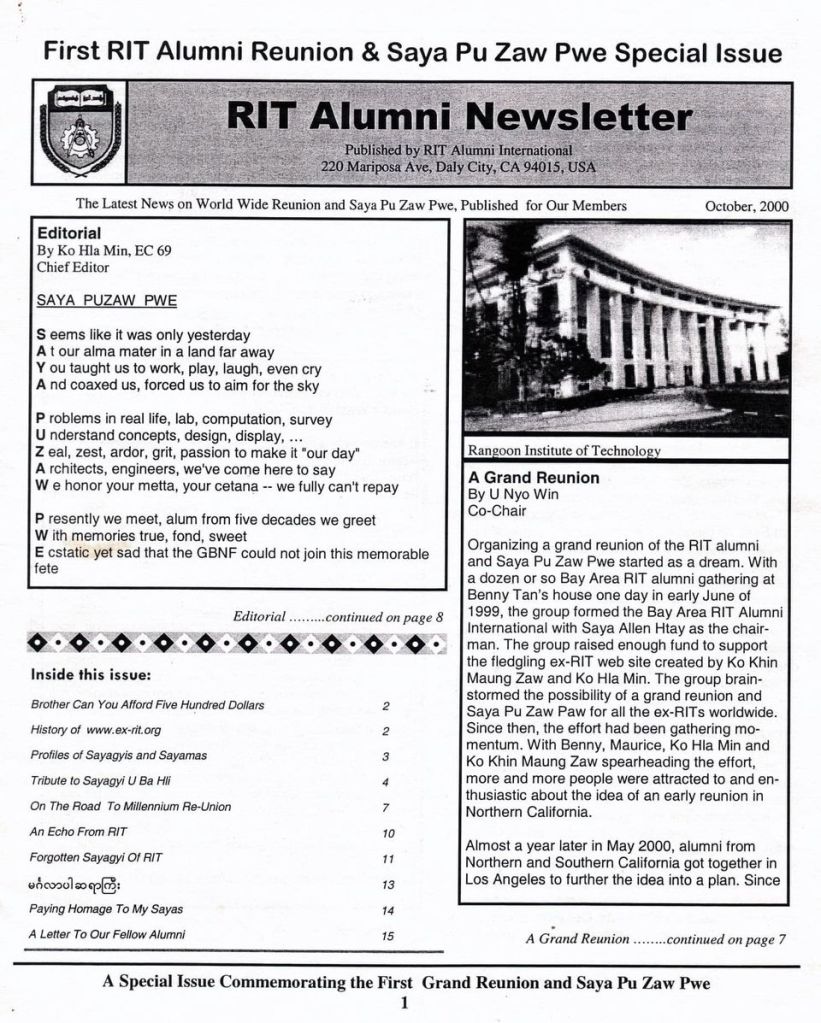
I started “RIT Alumni Newsletter”; See my posts
Newsletter
2000
First RIT Alumni Reunion and Saya Pu Zaw Pwe (SPZP-2000) in the SF Bay Area : Oct 29 – 30, 2000 ; See posts about SPZP-2000
I was an Organizer & Chief Editor of the special issue of “RIT Alumni Newsletter”
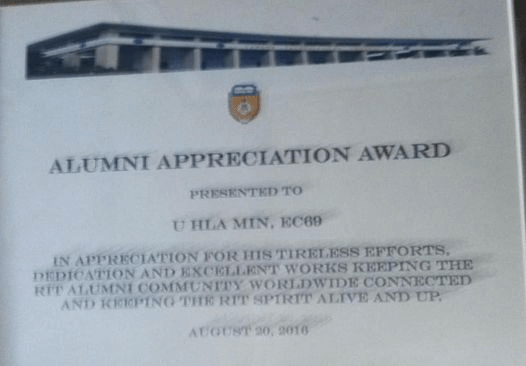
(First) Alumni Appreciation Award received at SPZP-2000; Also given to KMZ (webmaster) & Maurice (core organizer)
Tint Lwin (Danny, M), Tin Myint (John, M), Lyo Kyin Sein (Mabel, T), Mg Toung (Tom, EC) & Myo Khin (C) attended SPZP-2000. Danny came from Singapore. John & Mabel live in Union City, California. Tom came from Connecticut. Myo Khin & Winsome (C73) came from Japan.
SPZP-2000 OrganizersSPZP-2000 attendees
2009
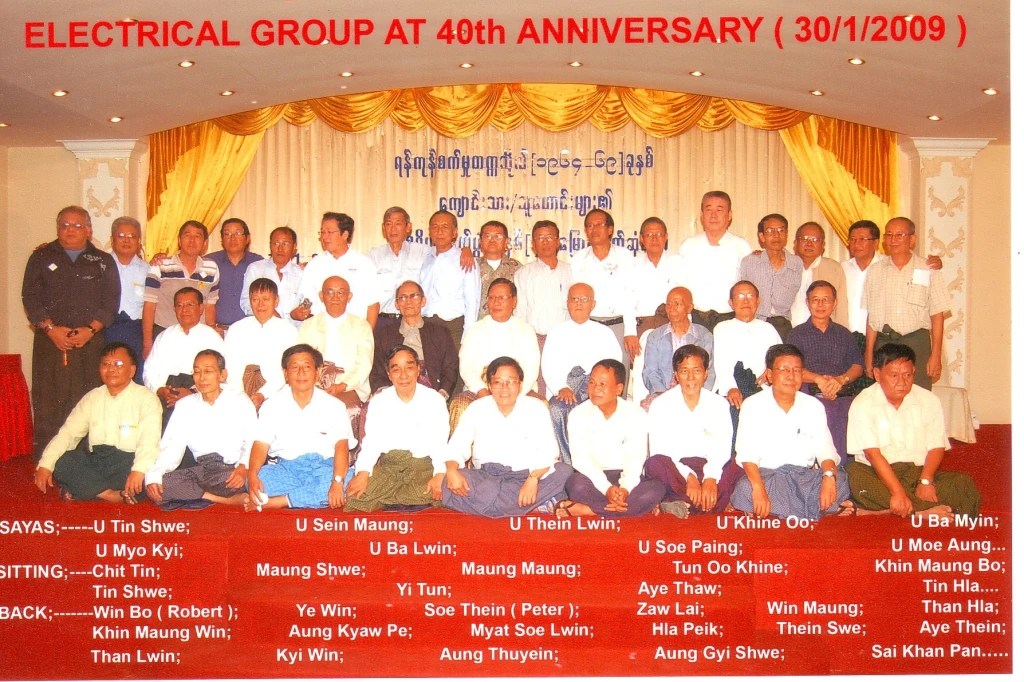
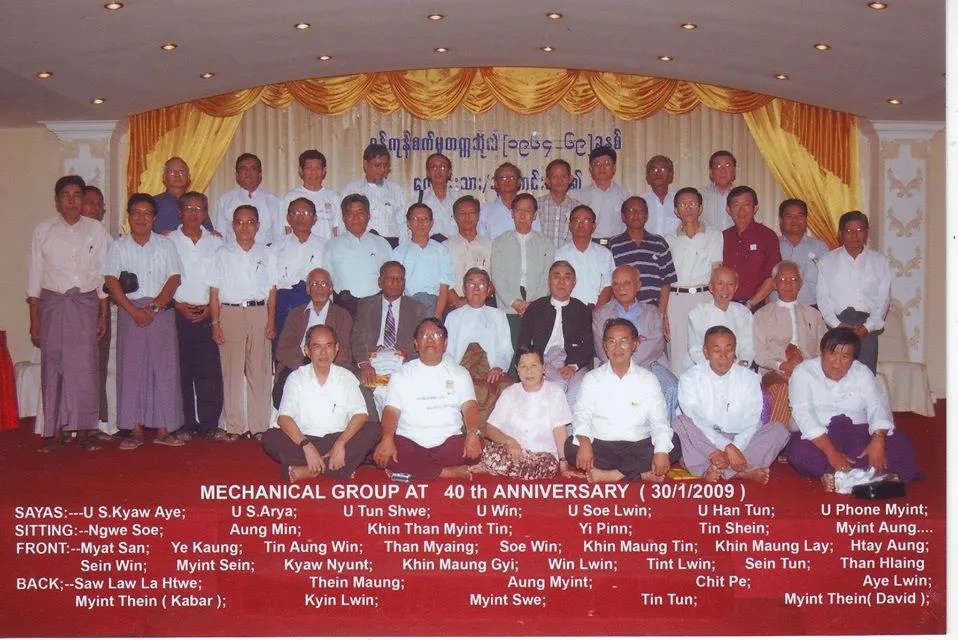
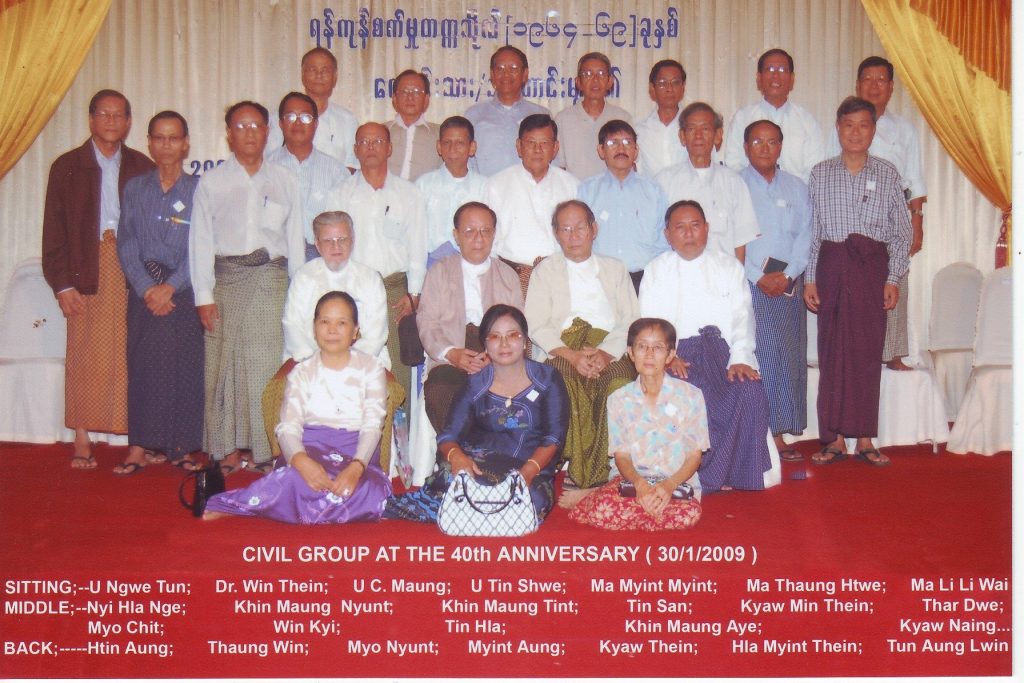
40th Anniversary of Graduation; See post for the event
Group photos : Electrical, Mechanical, Civil, Textile, Chemical
ElectricalMechCivilTextile & Chemical
2014
50th Anniversary of RIT; See post about the event
Pseudo Golden Jubilee for 69ers
GJ of Admission
2015
Myint Myint (C) hosted a Welcome Lunch Gathering at Western Park for Nyunt Nyunt Wai (Millie, T)
Welcome Millie in 2015
Six 69ers at Ivan’s house. Ivan hosted annual RIT-UCC gathering for over a decade. Eventually, MASTAA was established with Ivan as CEO.
2016
(Second) Alumni Appreciation Award at the Birthday Soon Kyway Gathering in August; Organized by Maurice Chee (M75); Most attendees from California
Award 1
(Third) Appreciation Award at NorCal RITAA Annual Dinner in September
Award 2
SPZP-2016
Gathering — Welcome Sein Myint & me; Farewell to Tint Lwin
Gathering
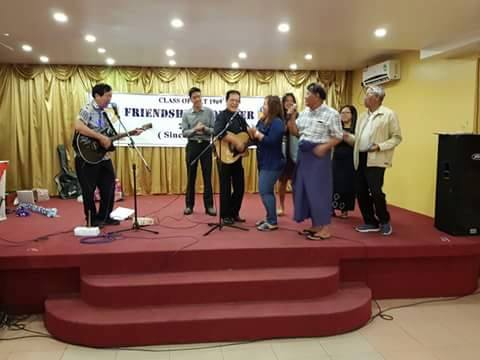
2017
Monthly Gatherings
Ad hoc Gatherings
Annual Gathering
BFG 1
2018
Monthly Gatherings
Ad hoc Gatherings
Annual Gatheting
BFG 2017BFG 2018
2019
Golden Jubilee of Graduation
Home coming for Tin Tin (Ann)
GJ
2020 – 2021
SPZP-2000 canceled due to Pandemic
Several 69ers & family members succumbed to Covid
Gatherings put on hold
2022
December
Tin Shwe
2023
August
September 2023
အလှူရှင်
ဦးငွေထွန်း၊
ဦးတင်ရှိန်၊
ဦးသန်းဝင်း၊
ဦးချမ်းငြိမ်း၊
ဒေါ်ခင်သန်းမြင့်တင်၊
ဦးစောမြင့်နိုင်၊
ဦးဖေဟန်ထွန်း
U Zaw Win (Thailand)
Albert Kyaw Min
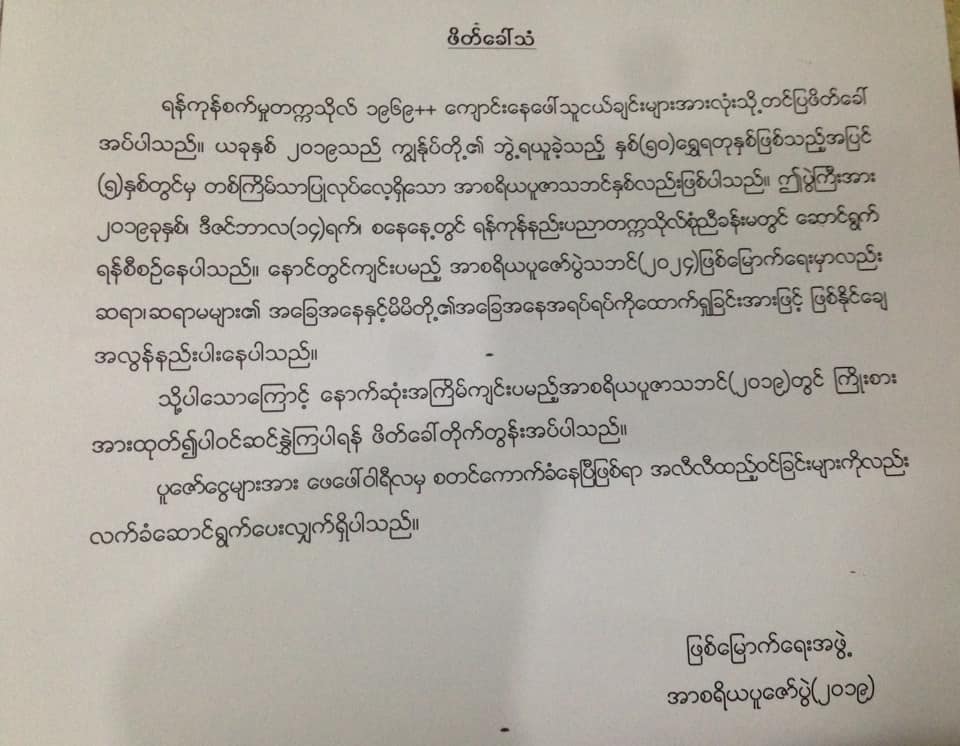
Dear RIT 69++friends
ဖိတ်ကြားအပ်ပါတယ်
September breakfast gathering သို့ မပျက်မကွက် ကြွရောက်ကြပါခင်ဗျား။
Wrote several articles for the 69er Golden Jubilee Magazine RIT Thaing Exhibition RIT Nicknames
Spouse (Mu Aye) is a cousin of Ko Win Boh (Robert, EC69, Australia)
Retired Member of Parliament of Pyitthu Hluttaw Oversaw Committees related to Mining and Natural Resources.
Surprised us at an ad hoc breakfast gathering with Uzin Aung Chaw, Ko Sein Myint, Ko Myint Maung, Ko Win Maung, Ko Shwe, Ko Maung Maung, Ko Myat Soe Lwin …
He is now GBNF
69ers
Kyaw Tint (Min69)
Kyaw Tint
Youngest, smartest and most stubborn among the 14 students in Min69.
Joined the Faculty
Received Masters from Australia.
Prisoner of Conscience.
Wrote an article in the 69er Golden Jubilee magazine.
GBNF #110 Passed away in September 2021
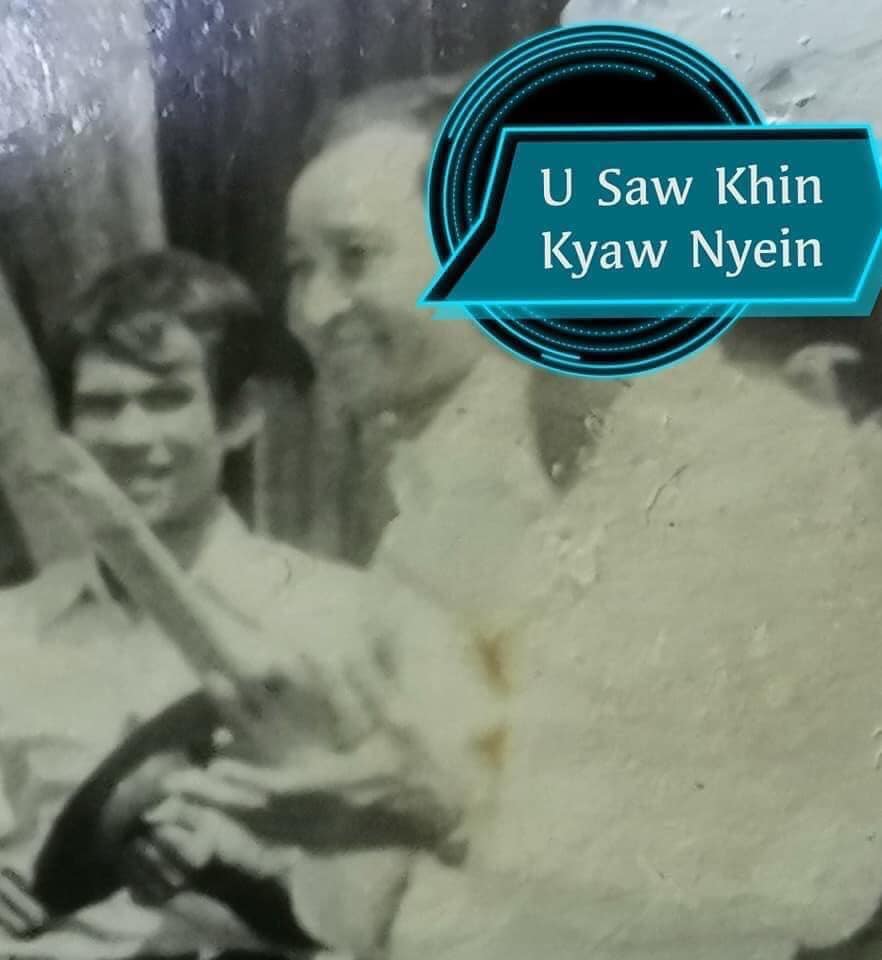
Khin Kyaw Nyein (GBNF)
Khin Kyaw Nyein
RIT Volleyball Selected
Taught/coached female Volleyball players (e.g. Ma Tin Aye, C73)
Also good at Soccer, Dobat & Dancing.
He is GBNF #117 Passed away in January 2022
Khin Maung Gyi (Min69)
One of two Khin Maung Gyi in the Class of 69.
Room mate of Ko Chit Pe (M69, GBNF)
Still have dark hair (hopefully original)
Mech KMG (GBNF) passed away in 2021.
Tin Win (Min69)
Hosted some 69er gatherings.
He was Honorary Consul for Switzerland.
Min69 (GBNF)
Aung Naing (Bahadhur) : Aug 14, 2011, #055, GTI Principal (Taunggyi), Yangon
Chit Htun
Chit Htun : Dec 11, 2011, #058, YIT Lecturer, Yangon
Dennis Mackey (Kyaw Thu, C73) and George Peters (C73) did their final year project at UCC. Their supervisor was Saya Allen Htay (C58, GBNF).
George moved to Perth, Australia. I met him at the RIT Reunion Dinner in Sydney, Australia in 2006.
Dennis moved to Auckland, New Zealand. He reported about the alumni activities in NZ along with Saya Dr. Koung Nyunt (A67, GBNF) and Stanley Saw (Myo Lwin, M71).
After retirement, Dennis moved to Canada.
In late 2018, Dennis paid respect to Sayagyi Dr. Aung Gyi.
EC73
U San Lin (Robert, EC73) and Daw Hla Myint (Marina, EC73)
Robert’s father (Chan Boon Pin) graduated with Mechanical and Engineering Combined Degree from the Faculty of Engineering in 1948 – 49.
Robert studied M.Sc. (Computer Science) at UCC.
He worked in Singapore and the US.
After retirement, he moved to Dallas, Texas to be near his son and grand children.
San Lin
U Htun Aung Kyaw (HAK, EC73)
Htun Aung Kyaw (HAK) and Tun Aung Gyaw (TAG) are variant spellings of the same Burmese name.
Excellent golfer.
Worked for Schlumberger before moving to Sydney, Australia.
M73
Dr. Myint Thein (M73)
Doctorate from Georgia Institute of Technology (aka Georgia Tech) in Atlanta.
Pen name : Ba Thein (Atlanta)
Wrote several articles for RIT Alumni International Newsletter.
Dr. L Sein Myint (M73)
Younger brother of L Than Myint (M63, RUBC Gold)
Doctorate from the UK
Spends time in the US, Myanmar & Australia.
Helped organize the first Alumni Reunion in the East Coast of the US.
U Khin Maung Aye (MEHS67, M73)
Took Applications Option for his M.Sc. (Computer Science).
GBNF.
U Myo Myint (M)
He is from the Class of 73. He took sabbatical and graduated in 1974. He retired as Deputy Chief Engineer of Burma Railways.
He has connections with the Class of 72. His spouse is a cousin of U Myo Myint Pe (ChE72). He shared a dinner table with Saya U Aung Myaing (ChE72).
He designed and drew covers for RIT Annual Magazines and the commemorative issues of Swel Daw Yeik Magazines.
He drew Pon Tus of sayas and sayamas, and gave most of them as presents at the SPZPs or RIT gatherings. He sent via Lu Kyone some Pon Tus for the overseas sayas.
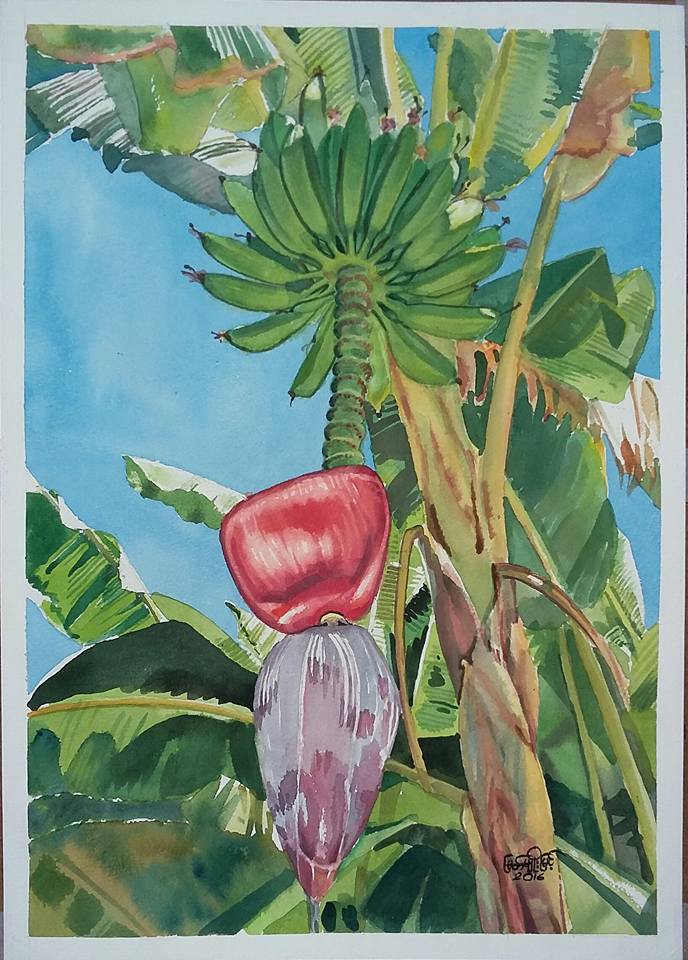
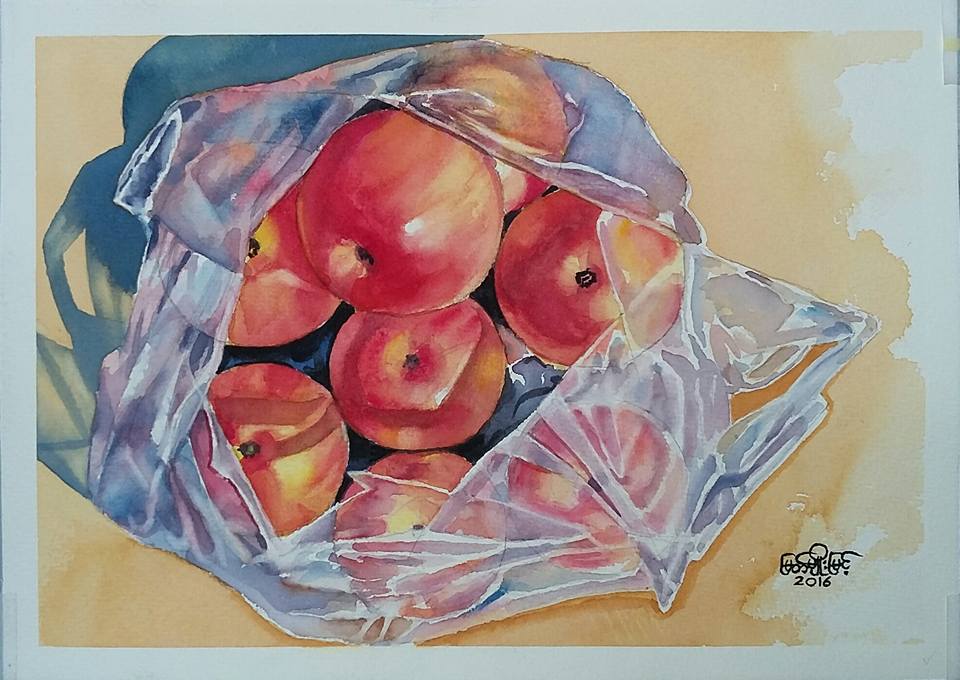
He also drew Oil Paintings and sold (or auctioned) them and gave the proceeds to the SPZP funds.
Sample paintings are shown here.
U Hla Win (M)
Veda sayas
He is from the Class of 73. He took sabbatical and graduated in 1975.
Served as Master of Ceremonies for All Mechanical Gathering; Gatherings for the Class of 73, 74 and 75
Core organizer for SPZP-2004, SPZP-2012 and SPZP-2016.
EC and Saya at MARB
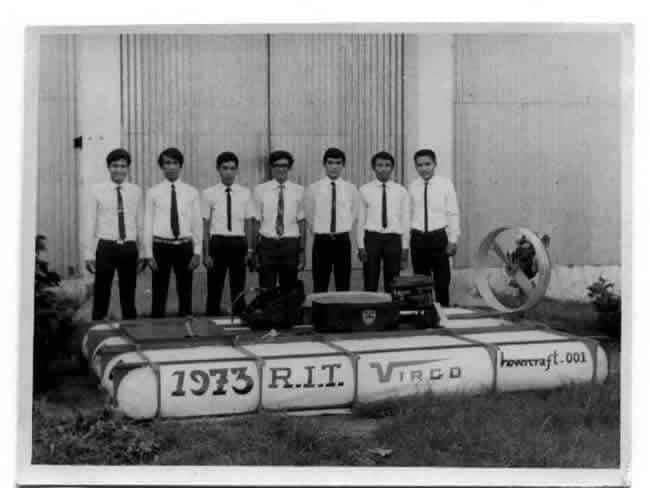
Hovercraft Project
Supervisor : U Tu Myint
M73 members : Ko Hla Win, Ko Khin Maung Cho, Saxon Sein …
Matriculates had to study two years of Intermediate Classes.
Those aspiring to become Engineers had to pass the I.Sc. (Intermediate of Science) classes with 50+ marks in Maths, Physics and Chemistry. They then study four years at the Engineering College for their B.Sc. (Engg) degree.
RU
Rangoon University was opened on 1st December 1920 with Rangoon College and Judson College as constitutent colleges. There were only three Faculties: Arts, Science and Law.
First Strike
The First RU Students’ Strike started on 5th December 1920 to protest the deficiencies of the 1920 RU Act. It led to the opening of National Schools and National College. It also forced amendments to the RU Act (notably in 1923).
Engineering Classes
In 1924, the inaugural engineering classes were opened.
Details can be found in the HMEE (History of Myanmar Engineering Education) book published in 2012. Saya U Aung Hla Tun (GBNF, National Literary Award winner, former Chief Editor of RIT Annual Magazine) served as Leader and Principal Auhor of the book. U Ohn Khine (M70) and I compiled the CD Supplement for the HMEE book.
Engineering students have to attend
I.Sc.(A)
I.Sc.(B)
1st Year of Engineering
2nd Year of Engineering
3rd Year of Engineering
4th & Final Year of Engineering
Engineering Departments
Architecture
Chemical
Civil
Electrical
Mechanical
Metallurgy
Mining
Textile.
Civil was the earliest Discipline. Mechanical and Electrical Disciplines were offered next. In the mid and late 1950s, five more Disciplines were added.
New Education System
In November 1964, RU was reorganized. Several Faculties became autonomous Institutes.
RIT
The Faculty of Engineering (known also as the Burma Institute of Technology) became Rangoon Institute of Technolgy with U Yone Moe (former Dean of BIT) as Rector and U Soe Thein (former Ta-Ka-Tha Leader) as Registrar.
Three Batches
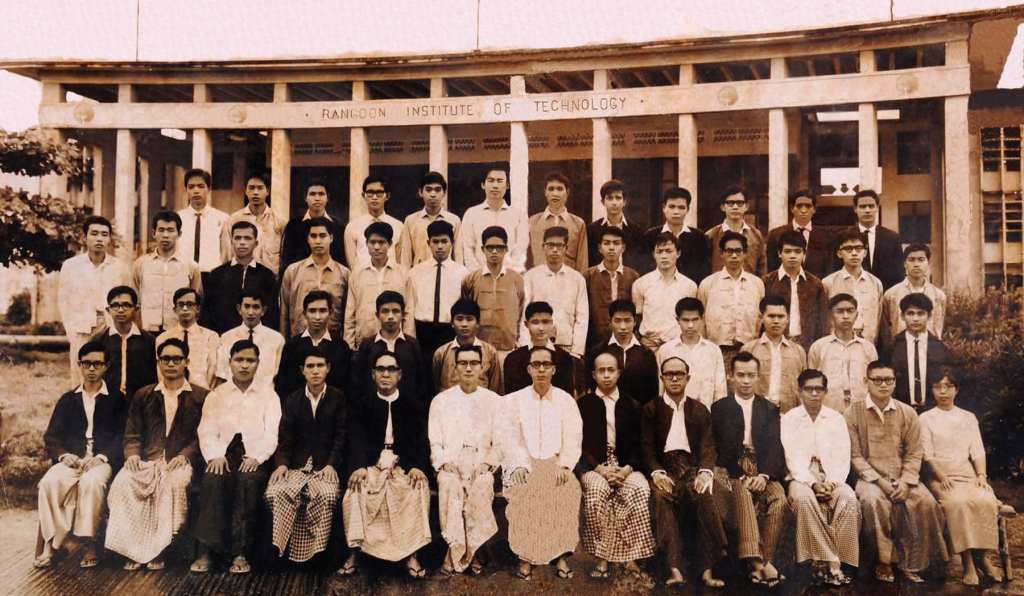
In November 1964, three batches of students were admitted to RIT.
ILA (Intelligence Level Agregate) was used to admit 400+ Matriculates to the 1st BE. ILA was controversial.
300+ students who had passed the I.Sc.(A) examination were admitted to the 2nd BE.
About 200 students who had passed the I.Sc.(B) examination were admitted to the 3rd BE.
Classes
In the New Education System, the Classes are called
1st BE
2nd BE
3rd BE
4th BE
5th BE
6th & Final BE. BE stands for Bachelor of Engineering.
For Architects, the Classes are called BArch (Bachelor of Architecture).
RIT69ers
Guinea Pigs
The Group is jokingly eferred to the Guinea Pigs of the Education Systems.
Most took the Last ever 7th Standard Government exam in March 1960.
They took the First ever 9th Standard (HSF/ High School Final Only) exam in March 1962. Those from Rangoon had to take the exam with Security Forces patroling the streets after the Coup d’etat on March 2nd by the Revolutionary Council. They had to retake the HSF exam in August 1962 because the Higher Authorities said that there were question leakage.
They took the 10th Standard (Matriculation Only) exam in May 1963.
In sum, they had to take three or four Government exams before being admitted to the University. In contrast, my older brother had to take only two exams : 7th Std. exam in March 1955, and the HSF & Matriculation exam in March 1957.
They took the Last ever I.Sc.(A) exam at various schools, since most classes at Rangoon University, Mandalay University and Intermediate Colleges were suspended (for an unspecified period).
Some classmates (e.g. Maung Maung Kyi (GBNF, SPHS63, 11th in Matric) applied Scholarship to study abroad, since he was the eldest in the family and did not want to burden his parents.
After a long wait, some of my Leik Khone classmates (e.g. Aung Min (M69)) were admitted to 2nd BE in November 1964. There were 300+ students. The admission was based on the I.Sc.(A) exam marks. A few decided to study BArch.
For the 2nd BE, the students had to study English, Maths, Physics, Chemistry, Mechanical Drawing, Surveying, Materials and Processes, Sociology & Workshop.
Starting with the 3rd BE, the students had to choose their Discipline. Civil and Mechanical were the top choices with 100+ students. Electrical had 70+ students. Chemical and Textile had 15+ students. Mining, Metallurgy and Architecture had 10 (or so) students.
For 5th BE, EE students had to chose the Option: EP (Electrical Power) and EC (Electrical Communications)
Most 69ers graduated in 1969 after passing 6th BE. Some took sabbatical, and graduated a year or two later.
The 69ers worked mainly in the Government departments and Industry. Some worked for private companies and family business. A few moved abroad.
Some 69ers (e.g. Dave Saluja and Win Maung) left before graduation.
Membership
The members include (a) those who entered 2nd BE in 1964 (b) those who graduated in 1969 (c) those who studied a year or more with the above
The Group is also known as 69ers, the RIT Class of 69 and the Class of RIT 69++ .
Gatherings
The first formal Reunion of the Group occurred in 1999. It also was instrumental for the development of the RIT Alumni Newsletter, the inaugural ex-rit website, and the First RIT Grand Reunion and Saya Pu Zaw Pwe (SPZP-2000).
30th Anniversaryin 1999
In 1999, Ko Tint Lwin (Daniel), Ko Sein Myint, Ko Sein Win (“Nar Yee”), and several 69ers organized the reunion for the “30th Anniversary of Graduation” and also a mini-SPZP. Ko Tint Lwin e-mailed me a report. Ma Saw Yu Tint (Alice) e-mailed me photos.
Saya U Soe Paing e-mailed me about several mini-gatherings in Yangon (e.g. with Sayagyi Dr. Aung Gyi).
Ko Tint Lwin (M69) wrote :
Thank you very much for your write-up about our 1999 “30th Anniversary of Graduation”. Actually. it all started in 1996 when I visited Burma and had dinner with a few of my close friends, including, Ko Shwe, Ko Win Mg, Ko Ye Pinn, Gabar Ko Myint Thein, etc. During dinner somebody mentioned that in 3 years time it would be 30 years since we graduated. Out of the blues I suggested to have a reunion in 1999. Everybody laughed as it was so far away. When I came back to Singapore and told Ko Sein Myint and Dickie they also laughed and told me that I must be crazy to think about so far away. However, time flies and in either late 1998 or early 1999 at Ko Win Htein’s funeral wake, some of our friends remembered the reunion proposal. They quickly formed a committee and organised the very first reunion at ‘Sait Taing Kya Restaurant. After the event I wrote you a report, Alice sent you a few photos and the rest is history.
40th Anniversaryin 2009
The Class of 69 organized the “40th Anniversary of the Graduation” in 2009.
Golden Jubilee of Admissionin 2014
The “Golden Jubilee of the admission to 2nd BE” was celebrated in 2014, because the 69ers were concerned with the declining health of members and that some may not be able to make it to the True Golden Jubilee of graduation in 2019.
Golden Jubilee of Graduation in 2019
The Class of 69 celebrated the true Golden Jubilee (50th Anniversary of Graduation) in December 2019.
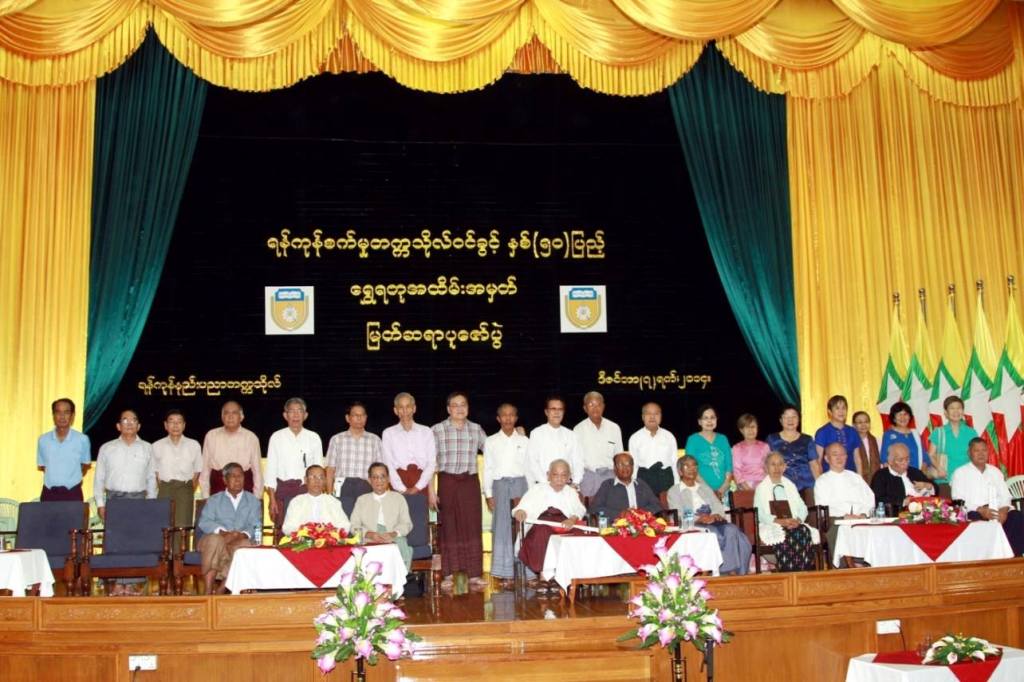
Acariya Pu Zwe Pwe was held at the Assembly Hall on Gyogone Campus.
The Reunion Dinner and Entertainment was held at the former Office Compound of Ko Aung Min.
Ma Tin Tin (Anne, EC69) had a “Home Coming” after her graduation.
Many were unaware that the gathering would be a final one for some (especaially those who would succumb to Covid).
My Contributions
RIT Alumni Newsletter
I started “RIT Alumni (Abroad) Newsletter” to share RIT-related news (such as the mini-gatherings) and solicited contact information (in the form a spread sheet) from interested sayas and alumni.
“RIT” stands not only for Rangoon Institute of Technology, but all the engineering schools that precede or succeed it. RIT is a place holder for the RU Faculty of Engineering, Burma Institute of Technology, Yangon Institute of Technology, Yangon Technological University and various Technological Universities in Myanmar.
The name was changed to “RIT Alumni International Newsletter” to include alumni in Burma and the rest of the world.
A commemorative issue was published for SPZP-2000.
RIT Web Site
Ko Khin Maung Zaw (KMZ, EC76) designed and implemented the first RIT web site.
I served as Content Provider and Editor of the web site. I composed the “SAYA PU ZAW PWE” poem. I posted 64 “Countdown to the Reunion” and 36 “Post Reunion”.
Ko Ivan Lee (Khin Maung Oo, M69), Ko Aung Myint (M69, Singapore) and the San Francisco Bay Area Group led by Saya Allen Htay (C58, GBNF) provided some financial help to operate the web site.
“RIT Alumni International” hosted the First RIT Grand Reunion and Saya Pu Zaw Pwe (SPZP-2000) in October 2000.
SPZP
The term “Saya Pu Zaw Pwe” was chosen over “Saya Ga Daw Pwe” (which has religious connotation) so that alumni professing various faiths can pay respect to their former sayas / mentors.
There has been seven world wide SPZPs: SPZP-2000 in USA, SPZP-2002, SPZP-2007 and SPZP-2010 in Singapore, SPZP-2004, SPZP-2012 and SPZP-2016 in Yangon.
Due to COVID-19 pandemic, SPZP-2020 was cancelled.
I have been an Organizer and/or Facilitator for the SPZPs.
My “SAYA PU ZAW PWE” poem was published in the Commemorative Newsletter for SPZP-2000.
Saya U Moe Aung reprinted the poem as the Back Cover of Commemorative Swel Daw Yeik Sar Saung for SPZP-2002.
My poem “SWE DAW YEIK” was published in the Commemorative Swel Daw Yeik Sar Saung for SPZP-2007.
My article “A Sad and Short Clip : EE Sayas” was published in the Commemorative Swel Daw Yeik Sar Saung for SPZP-2010.
Zau Lai (EP69) wrote :
Thank you, Ko Hla Min, for your writings. If it’s not for you there will be no records and history of RIT. I am reading interestingly all your writings all the time. When we all are gone your writing will live on.
Aung Min (M69) wrote :
So thanks for your recordings. Appreciations.
Food For Thought
Aging, Health and GBNF
At one moment, the Class of 69 had a median age of 69, and the list of GBNF has 69 members.
That symmetry no longer holds. The Class of 69 has a median age of 79, and the list of GBNF has 146 members. Over 45% have passed away.
In the latter half of 2021, twenty 69ers passed away. 18 were victims of Covid.
Declining Health
The attendees at the mini-gatherings have decreased. Some could not drive, and had to ask their family members to take them to the gatherings. Some had major or minor operations, and need time to recover fully. Some had medical problems for some time (e.g. a year or two).
Retirement
Most are retired or semi-retired. A few did not retire or did not have the chance to retire.
Ko Tin Maung Lay (M69) worked in Europe and Middle East. So he came back to California only on home leave.
His spouse wanted him to retire.
He agreed but his boss requested him to perform a meticulous “hand-over” before retiring.
He had daily work outs and supposedly had no known major health problems.
He passed away in Dubai on a Friday (holiday in the country). His company and colleagues tried extra hard to make sure that his body could be flown back to Southern California, USA.
69er HCF (Health Care Fund)
U Aung Min (M69, Chair), U Shwe (EP69, Secretary) and team are the core volunteers for the 69er HCF. The team sends out monthly, quarterly and annual reports (including Donations, Income, Expenditure, GBNF)
Ivan Lee (U Khin Maung Oo, M69), Daw Myint Myint (C69) and U Sein Myint (K K Wong, EP69) are some of the major donors to HCF.
Most 69ers donate at the 69er Gatherings (e.g. Monthly Breakfast Gathering at Taw Win Hnin Si / Royal Rose Restaurant).
Ko Ivan Lee (M69) wrote :
Dear Classmates,
Recently rather than optimistic good news, we heard spreading pessimistic health concern news mostly. It clearly indicates that we are aging higher and health is going down lower and lower. I can imagine 5 years from now how many will be terribly survived. I am kind of depressed that sooner or later we will be meeting THERE. At this moment all I can express is to wish our classmates who are in sickness to recover ASAP.
Ivan Lee (M69)
Paying Homage to Saya U Ba Than (GBNF)
U Tin Maung Soe (Tommy, EP69, GBNF)
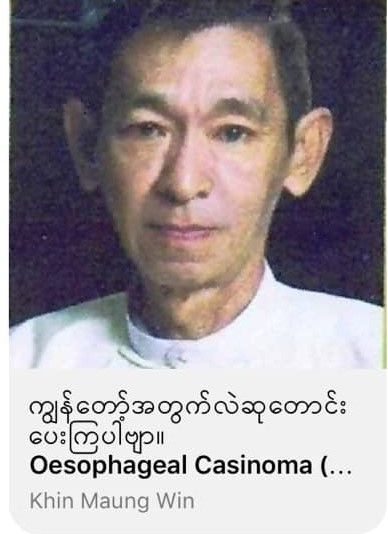
Khin Maung Win (EP69, GBNF)
Known fondly as “Sargalay” and “Nutty”
Usually finished Mechanical drawings in about an hour and still get Grade 5.
Later changed his name to “Lada” and “Galon”
Training partner for Sai Kham Pan (EP69, Burma Selected in Badminton)
Badminton selection at the Township level
U Khin Maung Win (RIP)
A69
Aung Khin After working in Botswana, he and Tin Tin Hla (A70) moved to Seattle, Washington, USA to be near their daughters and grand children. He attended the Golden Jubilee on December 14, 2019 in Yangon
Kyaw Kyaw He belonged to an elite group who married before graduation.
Myo Tun (Bobby) Won essay contests as Errol Than Tun. After retirement from PWD, he became Ashin Pannagavesaka. He is an editor of Pa Auk Sayadaw’s books and a dhamma librarian at the Mawlamyine Pa Auk Taw Ya. He went on dhamma dhuta missions (e.g. to Vietnam).
Tobias K. Ku, Saw (Tobi, GBNF) He attends 69er monthly breakfast gatherings. Passed away in 2021.
Thet Htun He moved to Taiwan.
Thwin Thwin Aye Hmi, Daw (Olive) Used to play chinlon with her classmates. Spouse : U Han Zaw. Met both last at the lunch gathering at Crystal Jade in 2012 (preceding SPZP-2012).
Tin Maung Hla (GBNF) Had some medical problems (which hopefully had gone away).
ChE69
Aung Min Oo
Aung San
Aye Aye Kyu, Daw
Ceril Shair (USA) ?
Khan Za Lan
Khin Maung Win
Kyaw Minn (Ei Kun, Singapore)
Kyaw Min (Albert)
Moe Hein (Ajala, Swimming and Water Polo)
Myat Tun
Myint Ko
Myint Myint Aye, Daw
Myo Khin, Dr. (Japan)
Mehm Myo Min
Soe Win
Swe Swe Oo, Daw
Taing Oke, Dr. (Japan)
Yi Yi Khaing, Daw (Vilma, Singapore)
C69
Aung Chaw (Victor, Ashin Okkantha)
Aung Kyaw Nyein (USA)
Aung Myint
Aung Than
Aung Win
Ba Than Chit (Saw Myint Naing)
Han Sein (“Tone Kyaw”, Swimming and Water Polo, GBNF)
Hla Myint
Hla Myint Thein (Patrick Aye)
Htay Aung (Canada)
Htay Myint
Htin Aung, Dr. (Chinlone)
Khin Aung (Taiwan)
Khin Maung
Khin Maung Aye
Khin Maung Myint (Mandalay)
Khin Maung Tint
Khin Maung Win, Dr. (Donald Ba Pe)
Kyaw Min Thein (Kenneth)
Kyaw Naing (Kyaw Thwin)
Kyaw Thein
Kyaw Tint
Li Li Wai, Daw
Maung Kyaw
Myint Aung
Myo Khin, Dr. (Japan)
Myo Nyunt
Myo Win
Myo Chit
Myint Myint, Daw
Nyi Hla Nge
Ngwe Tun (Tun Tun)
Phone Kyaw (Mandalay)
Phor Daw Khan
Sam Nithang (Samuel, USA)
Saw Lwin
San Linn
Saw Yan Naing (GBNF)
Sein Tun
Soe Myint
Soe Tint
Than Htwe
Than Oo
Thaung Htay
Thaung Htwe, Daw
EE l69
Abdul Rauf (GBNF)
Aung Gyi Shwe (Track and Field, Soccer, GBNF)
Aung Kyaw Pe (Singapore, Myanmar)
Aung Than
Aung Thu Yein (GBNF)
Aye Thein (Volleyball)
Ba Oak
Bishnu Shahi (Badminton, Nepal, GBNF)
Chit Tin (GBNF)
Dave Singh Saluja (Thailand)
Hla Min (Rowing, USA)
Hla Paik
Hla Tun
Khin Maung Hassan (Saudi Arabia. USA)
Khin Maung Bo (Alan Saw Maung, GBNF)
Khin Maung Soe
Khin Maung Tint
Khin Maung Nyo (GBNF)
Khin Maung Win Sargalay, GBNF)
Khin Maung Win (Roland)
Krishnan Lal (Australia)
Kyaw Sein (Ashley Woo, Kyaukme)
Kyaw Sein (Singapore)
Kyaw Soe (GBNF)
Kyaw Win
Kyaw Zin (visiting Australia)
Kyi Shwin
Kyi Win (Kyaw Gyi)
Kyin Hwet
Maung Toung (Tom, USA)
Maung Kaung
Maung Ko
Maung Maung (Volleyball, EE69er HCF)
Maung Shwe (69er HCF, EE69er HCF)
Mehm Paw Oo (GBNF)
Mehm Aung Tin
Min Aung (Hla Thaung)
Min Lwin
Min Thaw (Gilbert, GBNF)
Myat Soe Lwin (Sai Hwet)
Myint Maung (Bu, Volleyball)
Myo Aung (GBNF)
Myo Hein (GBNF)
Oo Kyaw Hla (Canada, GBNF)
Sai Aik Yee (GBNF)
Sai Kham Pan
Sai Kyaw Aye
Saw Aung
Saw Edison
Saw Lwoi Lwin Thaw (?)
Sein Myint (K K Wong)
Soe Myint
Soe Myint Thein (GBNF)
Soe Thein (Peter)
Tan Chaung Yin (USA)
Thar Kyaw
Than Hla (Cyril)
Than Htay
Than Lwin (Henry)
Than Myint
Thein Swe (GBNF)
Thein Tun (Michael)
Thet Lwin
Tin Maung Soe (Tommy, GBNF)
Tin Oo
Tin Shwe
Tin Tin, Daw (Anne, USA)
Tun Aung Gyaw, Dr. (USA)
Victor Lwin
Win Boh (Robert, Australia)
Win Maung (Lake)
Ye Win, Mehm
Yi Tun
Zau Lai, Duwa
M69
Aye Lwin (GBNF) Secretary of RIT Mechanical Engineering Association Editor of RIT Annual Magazine Attended RIT Alumni Gathering in Los Angeles in 2015
Aung Myint Joined Faculty after graduation Taught at Singapore Poly Lives in New Zealand and Singapore Hobbies : Painting, Motivational Messages
Mehm Aye Chan (Ohn Maung) Joined Faculty after graduation Worked at sea before founding his own company
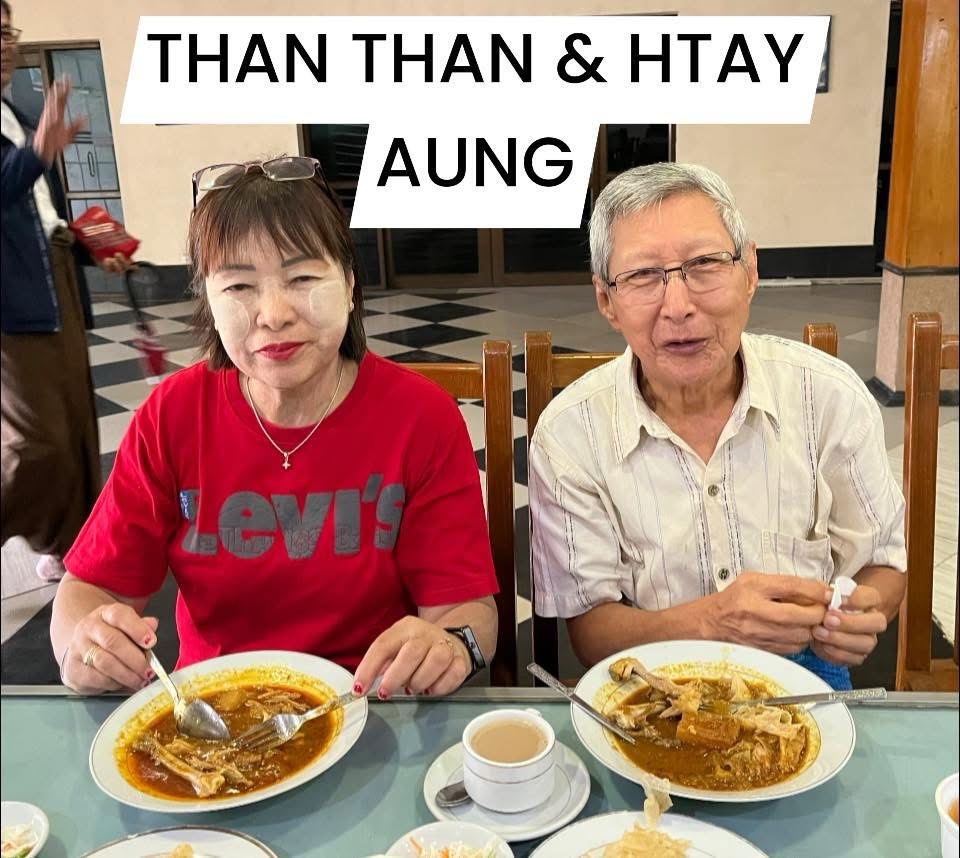
Htay Aung Outstanding swimmer. Won 100m, 200m, 400m, 800m, 1500m and Cross-lake. Burma selected in water polo for 1969 SEAP Games Spouse : Than Than (Burma Champion sprinter)
Khin Maung Aye Joined Defense Industries Pen name : Maung Hmut
Khin Maung Tin Joined Faculty after graduation Taught at RIT and Marine Engineering Institute
Khin Maung Oo (Ivan Lee) Post graduate studies in USA Professional Engineer for New York and New Jersey Golden Sponsor of SPZP-2000 Major donor to 69er Health Care Fun Host for RIT-UCC Gathering in New Jersey for more than a decade
Tint Lwin (Daniel) Grad studies in Canada Retired Associate Professor from NTU Guitarist / Vocalist
Aung Naing (Bahadhur, GBNF)
Chit Pe (GBNF)
Chit Po Po (GBNF)
Dicky (Win Naing, GBNF)
Khin Maung Gyi (GBNF)
Kyaw Nyunt (GBNF)
Myint Sein (Badminton, HCF, GBNF)
Myint Thein (David)
Myint Thein (Kabar, GBNF)
Ngwe Soe (Walter)
Sein Win (GBNF)
Soe Win (GBNF)
Than Myaing
Than Win
Tin Aung (GBNF)
Tin Aung Win (Oscar)
Tin Htut (Seafarer)
Tin Htut (Harry)
Tin Maung Aye (Accordion)
Tin Myint (John Lee, GBNF)
Yin Kyu (GBNF)
Met69
Myint Kyi
Maung Tun (GBNF)
Ohn Kyaw
Sai Aung Win (Mandalay)
Sai Kyaw Myint
Tin Aung
Min69
Aung Win
Chit Htun (GBNF)
Khin Kyaw Nyein (GBNF)
Kyaw Tint (GBNF)
Khin Maung Gyi
Mya Win
Tin Maung (oldest)
Tin Win (Hosted the lunch gathering at Crystal Jade in 2012)
Win Thein Zaw (Wai Lu)
Pet69
Aung Myint (Kyant Ba Hone, GBNF)
Kyaw Din
Kyaw Than (Magwe)
Kyaw Myint
Myint Maung
Myint Swe
Paw Mya
T69
Aung Thein (USA)
Aye Aye Kyi, Daw
Cho Cho, Daw
Hla Shwe (GBNF)
Hla Thaung
Hla Tun (Japangyi, GBNF)
Jimmy Kyin (GBNF)
Kyaw Min (Mandalay)
Kyi San (Win Maung, Mandalay)
Lyo Kyin Sein, Daw (Mabel Lee, USA)
Lin Lin Aung, Daw (Singapore)
Myo Myint Thein
Nan Su Su, Daw (GBNF)
Naw Mu Mu Aye, Daw
Nyunt Nyunt Wai, Daw (Millie Hoe, Germany)
San Kyi, Daw (USA?)
San San Myint, Daw (Helen Wu, USA)
Saw Yu Tint, Daw (Alice)
Sein Sein Maw
Than Win
Thet Myint
Tin Tun Aung
Tint Swe (Zeegone)
Recollections of a 69er
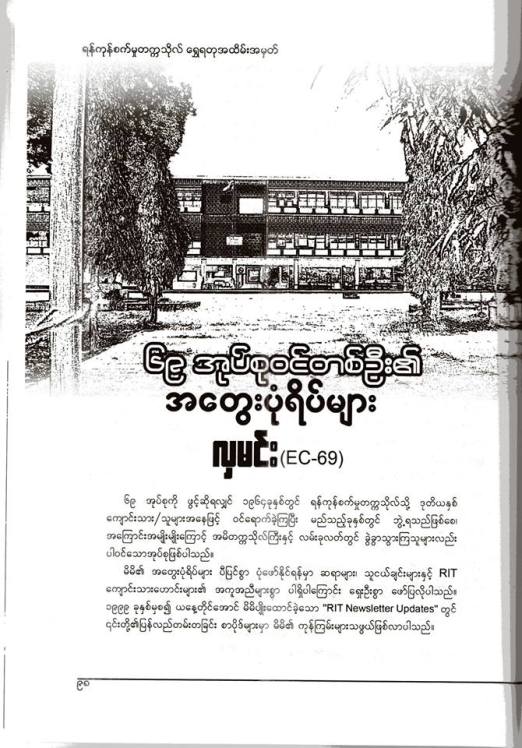
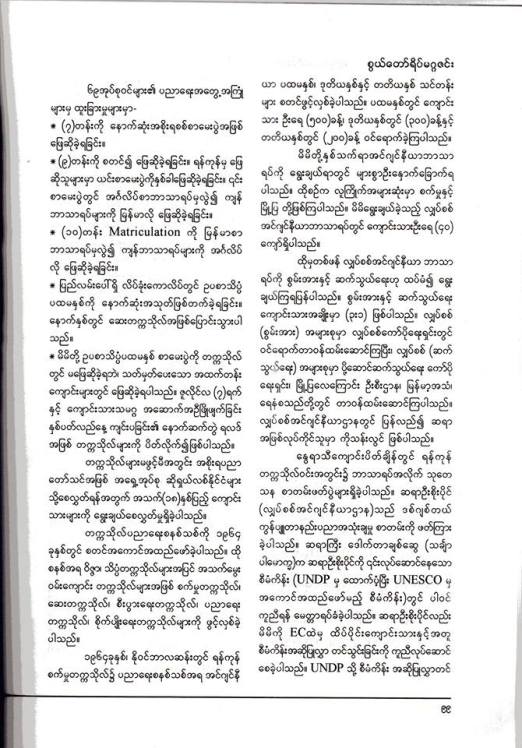
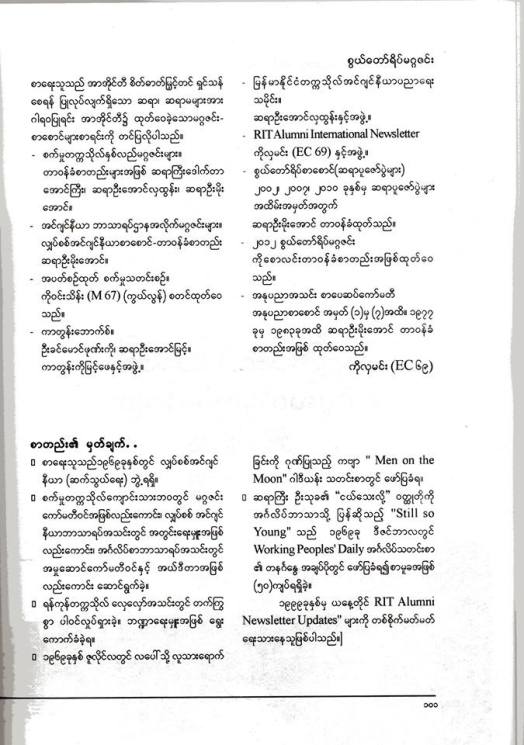
I wrote an article for the Commemorative Issue of Swel Daw Yeik Magazine in 2014 for RIT Shwe YaDu (Golden Jubilee of the then New Education System).
Saya U Moe Aung (Tekkatho Moe War) served as the Chief Editor.
Article 1Article 2Article 3
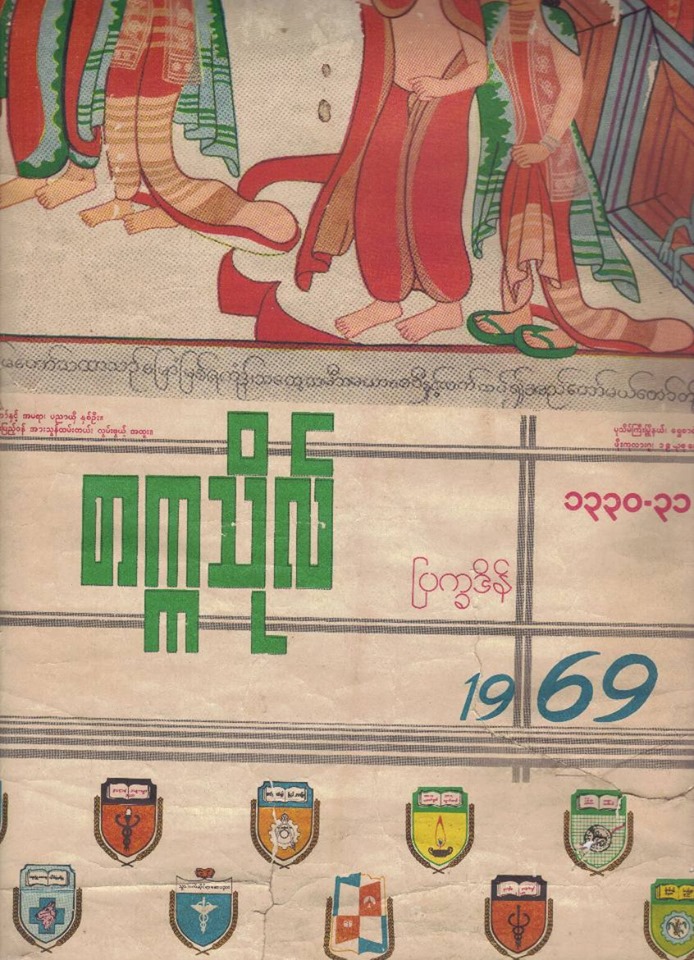
1969 Calendar
Published for the Universities and Institutes
1969 Calendar
Some Memories
Alice visiting the San Francisco Bay Area
Alice visited her son and family in the San Francisco Bay Area
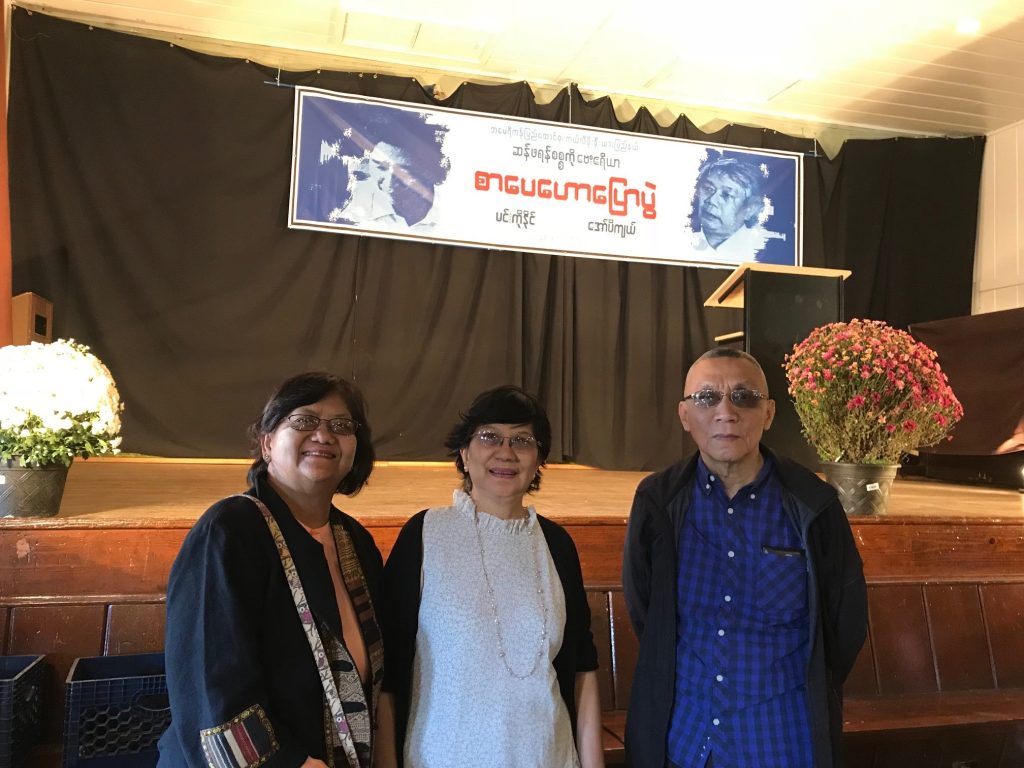
She took time off to attend the Literary Talks by Min Ko Naing and Aw Pe Kye
With Alice
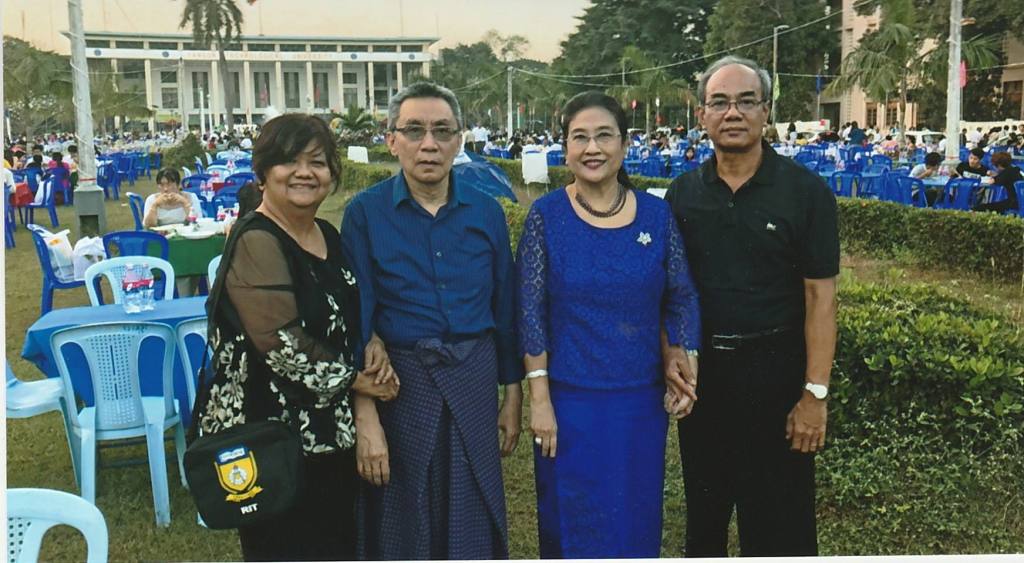
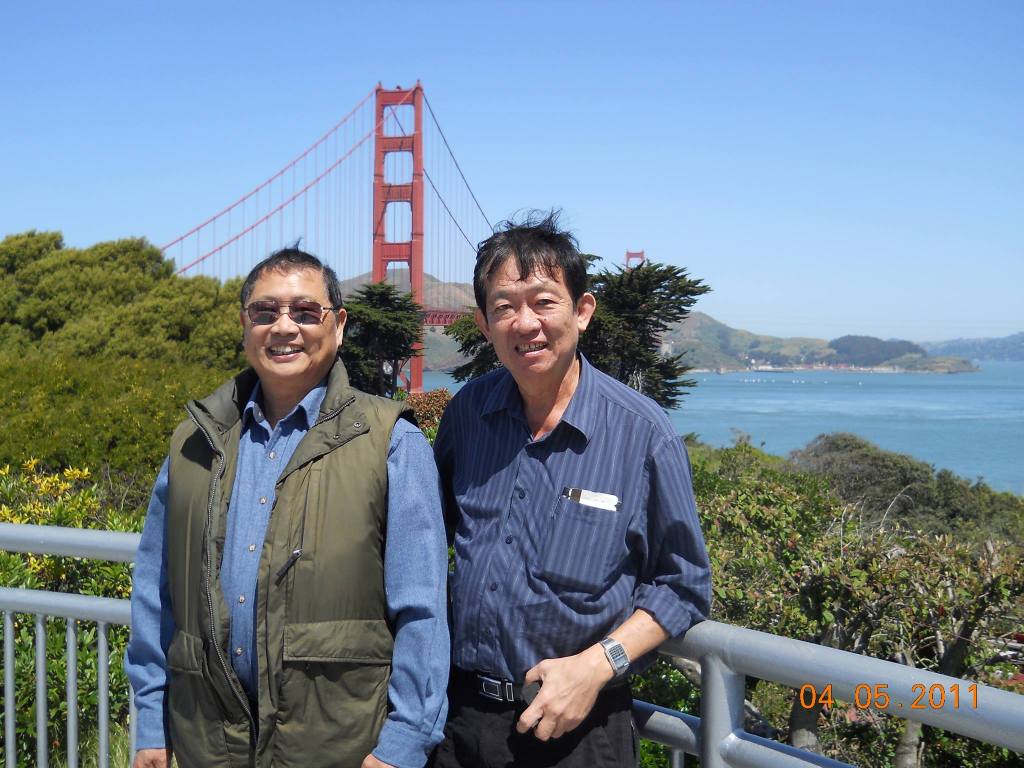
69ers at a gathering hosted by Ivan Lee (New Jersey)
Ivan has hosted annual gatherings at his house for RIT and UCC Alumni.
The timing is chosen to conincide with the visits of Sayagyi Dr. Aung Gyi and Saya U Soe Paing to the area.
Fred (Pennsylvannia), TAG (Massachussetts), HM (California), Alice (Myanmar), Tom (Connecticut) and Ivan (New Jersey) had a mini-gathering.
Ivan is co-founder and Patron of MASTAA (based in New York). MASTAA has broadcast interviews with Sayagyi Dr. Aung Gyi, Saya U Soe Paing and Saya Dr. San Hla Aung. MASTSAA members and friends donated for COVID-19 relief (prevention and treatment) in USA and Myanmar.
Ivan is a major donor to the 69er HCF (Health Care Fund) along with Daw Myint Myint and U Sein Myint.
In New Jersey
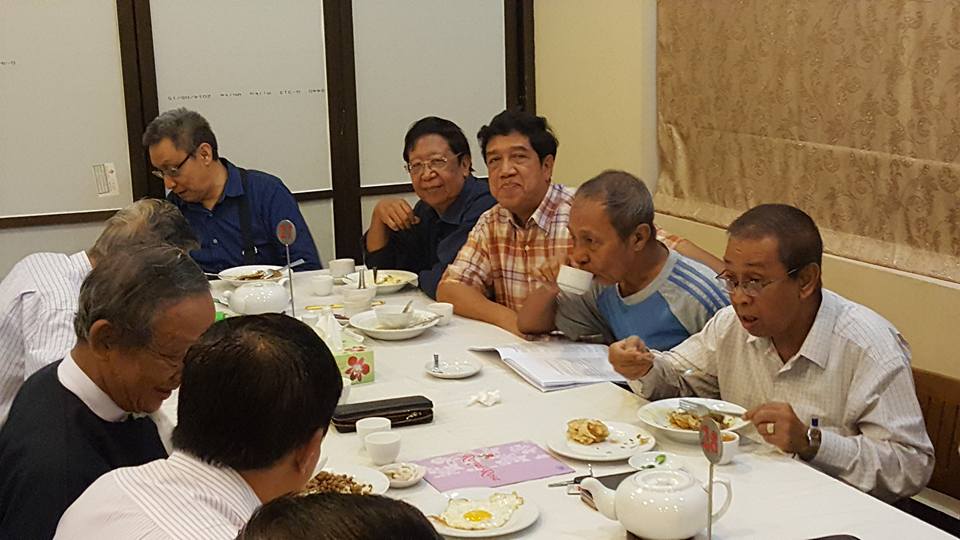
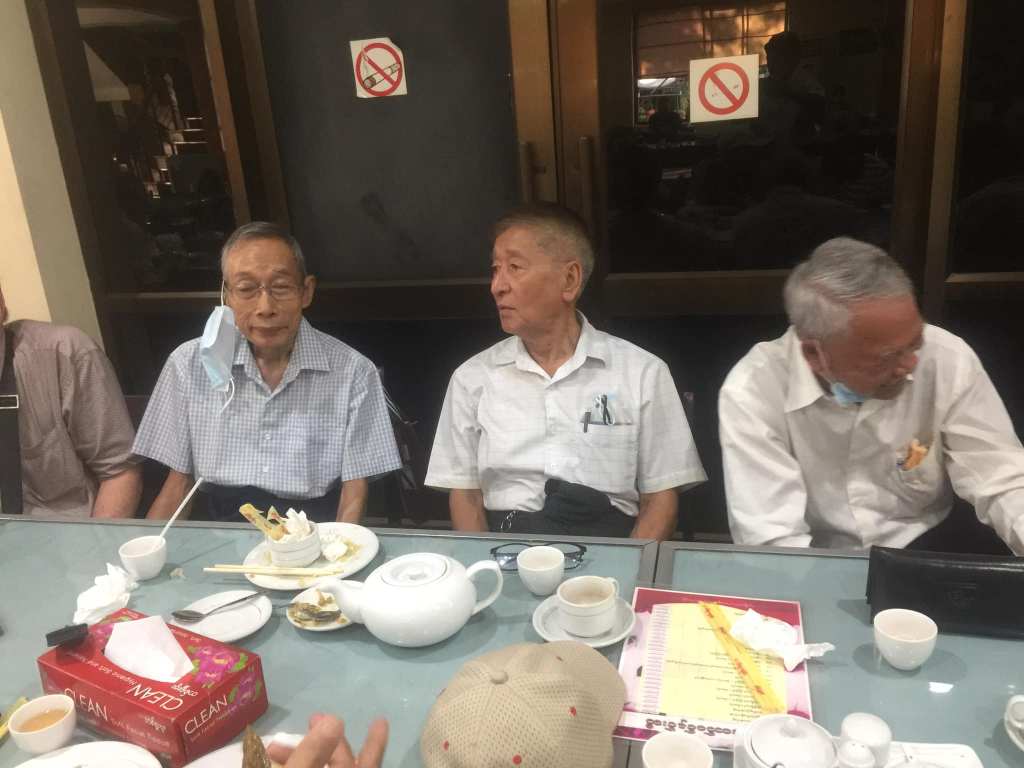
Monthly Breakfast Gathering at Taw Win Hnin Si
Before the pandemic, 69ers had monthly breakfast gathering at Taw Win Hnin Si (Royal Rose Restaurant).
At Taw Win Hnin SiMyo Nyunt, Ngwe Soe (Walter), Tin Aung Win (Oscar), Uzin Myo Tun (Bobby), Mehm Aye Chan (Ohn Maung), Soe Thein (Peter), Albert Kyaw Min
Annual Dinner at M3
For several years, the Annual Dinner and Entertainment was held at M3.
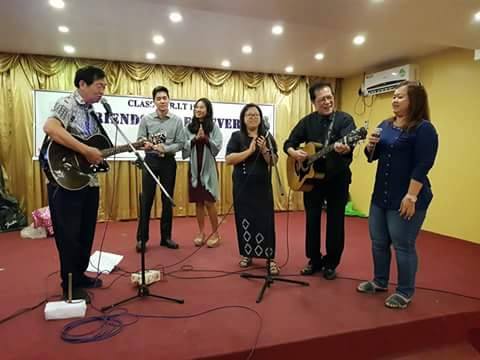
Albert and Danny are two regular performers (guitar and vocal).
Best Friends Forever 1Best Friends Forever 2
Danny’s visit to San Francisco
Ko Tin Myint (John Lee) showed Danny around the SF Bay Area.
Saya Allen Htay and Daw Mu Mu Kin hosted a dinner for Danny at a restaurant in Castro.
Ko Tin Myint (John Lee) and Ko Tint Lwin (Daniel)
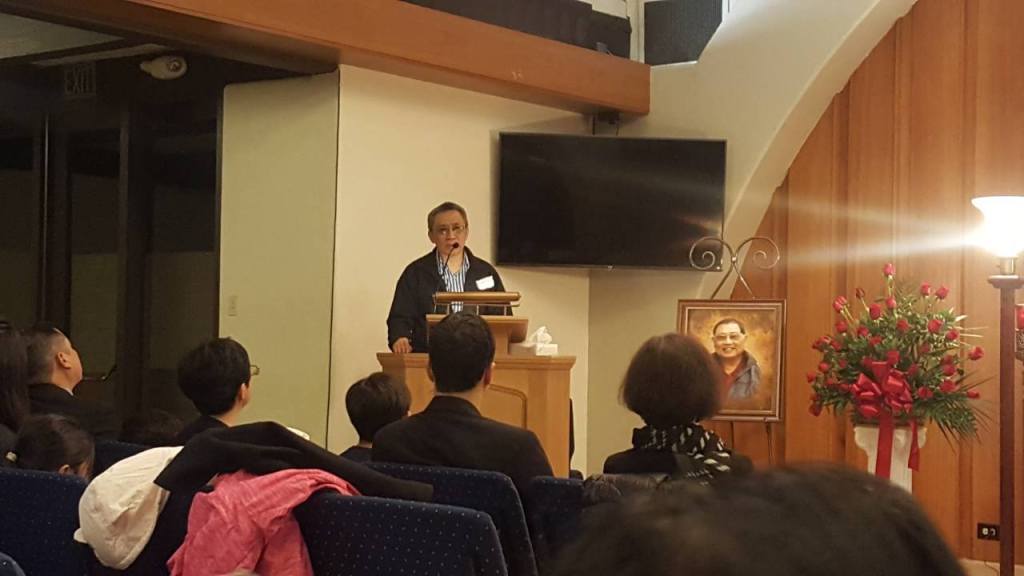
Speaking at John Lee’s Memorial Service
Ko Tin Myint (John Lee) passed away.
His daughter (a medical doctor) requested me to share my memories.
Ko Tin Myint’s Service
Maung Maung Kaung (Yi Pinn) in Dawei
Yi Pinn is busy with his projects in Dawei.
Some time back, his spouse passed away in Yangon. He rushed to Yangon, but had to self-Q. He could not be present at his spouse’s last journey.
He later succumbed to Covid.
Yi Pinn
Donation by Daw Myint Myint
Daw Myint Myint is a major donor to the 69er HCF.
She also hosted or sponsored lunch and dinner gatherings. e.g. Welcome Daw Nyunt Nyunt Wai (Millie) at Westin Park Hotel
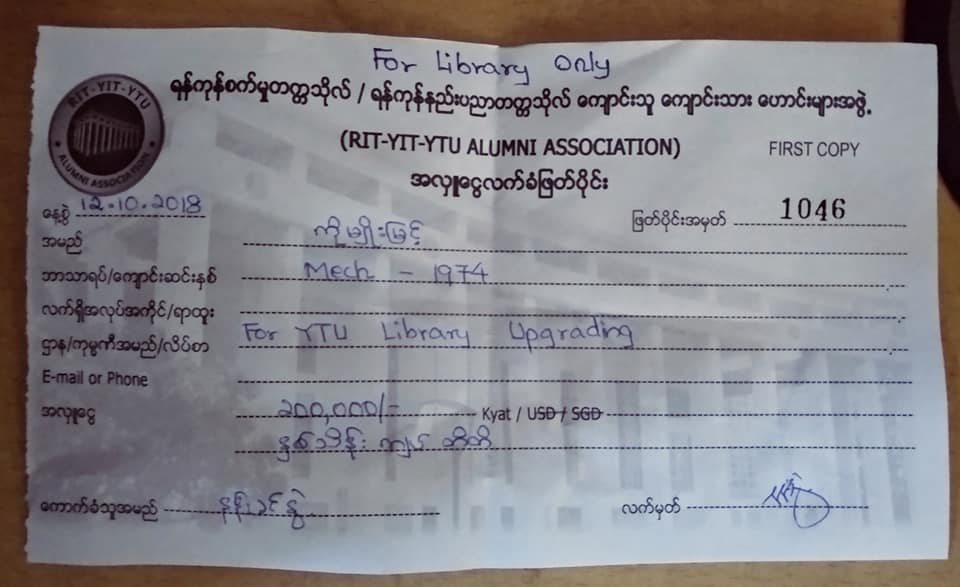
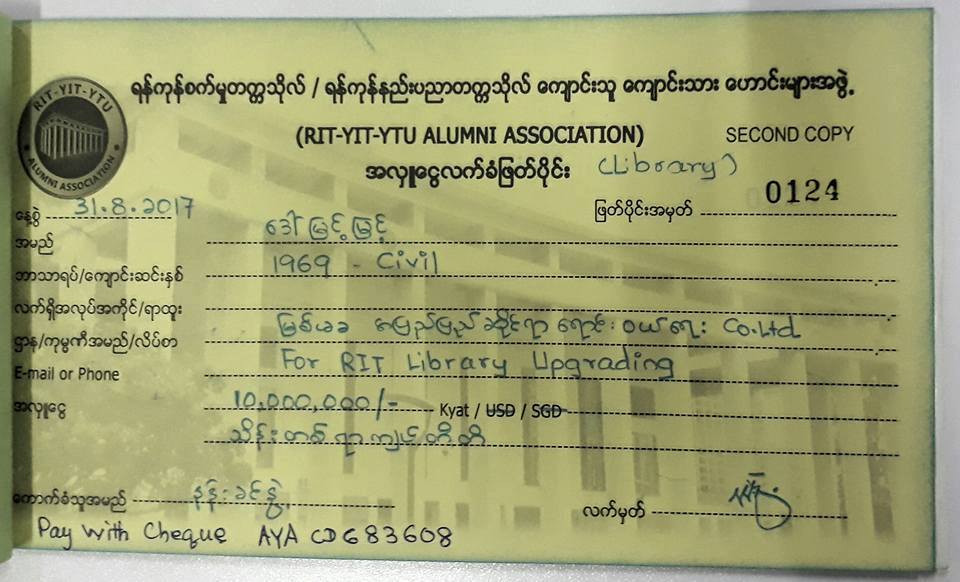
She donated twice for YTU Library Modernization Project. e.g. K100 Lakhs once
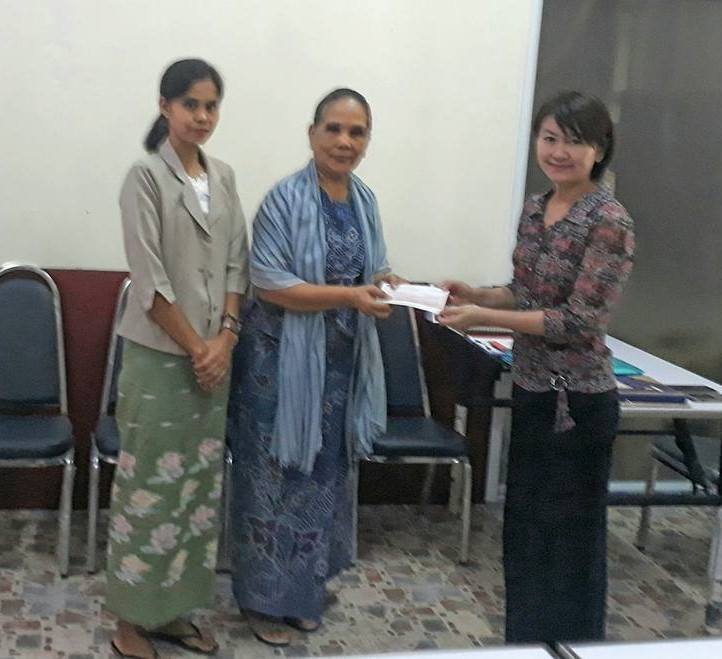
Daw Myint Myint’s donation receiptDaw Myint Myint and Nan Khin Nwe
Received the official DVD of the 40th Anniversary gathering & mini-SPZP of the class of ’69. It took about two hours to view the DVD.
Myint Thein (Maung Kabar, GBNF) — a core organizer who offered the use of his office for the preparation meetings — looked as young as ever.
It is difficult to recognize some faces and remember their real and nick names. Except for thin, grey or dyed hair, a few have changed much over the years.
Ko Aung Min, Master of Ceremonies, appeared to have gained some weight.
Ko Thein Swe (GBNF) described the event in his e-mail.
Sayas who attended the event
U Ba Than (M)
U Khin Aung Kyi (ChE, former Rector)
U Thit (Met, Melbourne, Australia)
U Myo Myint Sein (Arch, California, US),
U Thein Lwin (EE, Singapore)
U Soe Paing (my mentor at RIT & UCC)
U Moe Aung (EE, Tekkatho Moe War, Chief Editor of “Swe Daw Yeik Sar Saung”, “Hylat Sit Sar Saung)
U Ba Myint (EE, former Pro-Rector)
U Khine Oo (EE)
U S. Kyaw Aye (M, elder brother of Abdul Rauf)
U Han Tun (M, GBNF)
Dr. Thaung Myint (Maths)
Dr. Kyaw Win (Pet)
Daw Tin Myint (ChE)
Some sayas (e.g. Saya U Shwe Hlaing) could not make it to the event.
Saya U Khin Aung Kyi, Saya U Thein Lwin and Saya U Moe Aung gave short speeches on behalf of the sayas and sayamas.
In the DVD, the commentator mentioned the name and department of the saya/sayama.
We wish he had thrown in more names of the attendees [not just the presenters & the performers] so that we can match the names and faces of our long lost classmates.
Some words by 69ers
Ko Khin Maung Tin (M69)
Ko Nyi Hla Nge (C69)
Ko Myint Thein (Maung Kabar, M69, GBNF)
Ko Daniel Tint Lwin (M69)
Ko Robert Win Boh (EC69)
Ko Aung Kyaw Pe (EP69)
Ko Aung Myint (Pathein, M69)
Ma Khin Than Myint Tin (Magaret Aung Tin, M 69)
Entertainment
Saya U Khin Aung Kyi
Saya U Moe Aung
Albert Kyaw Min (several Burmese & English songs)
Ko Khin Maung Nyunt
Ko Hla Shwe
Maung Kabar Myint Thein
Daniel Tint Lwin
Robert Win Boh
Naw Mu Mu Aye & company
Myo Nyunt
David Myint Thein
Aung Min
Sargalay Khin Maung Win
Aye Lwin
and several organizers took part in the musical/dance entertainment.
General
The commentator noted that unlike other batches who studied 4 years or 6 years, most intake of 2nd BE in ’64 spent 5 wonderful years at RIT.
Uzin Myo Tun (Bobby) was in good company with Saw Tobius Kittum Ku (Toby) and Ko Khin Maung Hla.
Optimists say they will take part in the Golden Jubilee in 2019.
Conservatives suggest meeting several times before then.
Realists note that the GBNF list has 39 [at that time constituting 11% of the class.]
Kudos to the organizers, sponsors, and well-wishers for keeping the RIT spirit alive and well.
Editor’s Notes in 2021
Posted Group photos (with captions) taken in 2009. Thanks to the organizers who provided the photos.
Several sayas are now GBNF.
Several 69ers are now GBNF. The GBNF list is 113 .
There was a pseudo Golden Jubilee in 2014 to celebrate the Golden Anniversary of the Admission to RIT in November 1964.
The true Golden Jubilee for Graduation was celebrated in 2019.
G 1G 2G 3G 4
Updates
Several — Harry Tin Htut, Albert Kyaw Min, Uzin Bobby, Uzin Aung Chaw, Tun Tun, Oscar, Kyaw Zin, Robert — have become Octogenarians. Tin Maung is the oldest.
Several sayas and alumni are now GBNF.
Saya U Ba Than passed away after his 94th birthday.
69er GBNF list has 128 members. Over 40% classmates have passed away. 18 succumbed to Covid.