It is a time honored tradition to pay respect to one’s parents, mentors and elders.
Garawa can be performed at any time.
Thadingyut is one occasion where most Burmese pay respect to their elders.
In our younger days, some come to our parent’s house with BOC candles, bananas, or token items of gratitude.
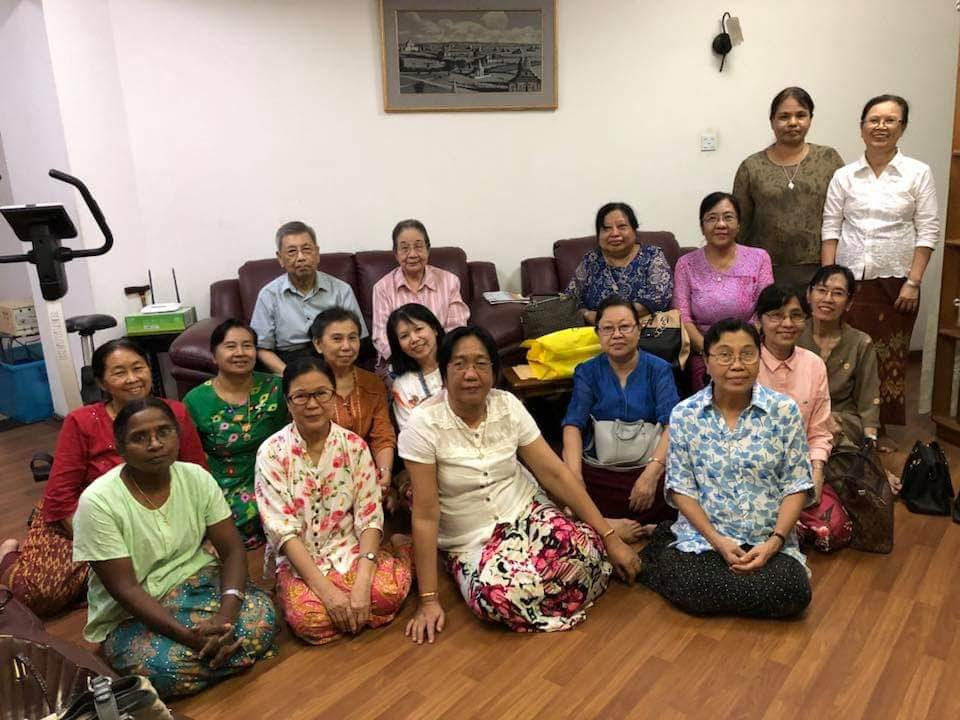
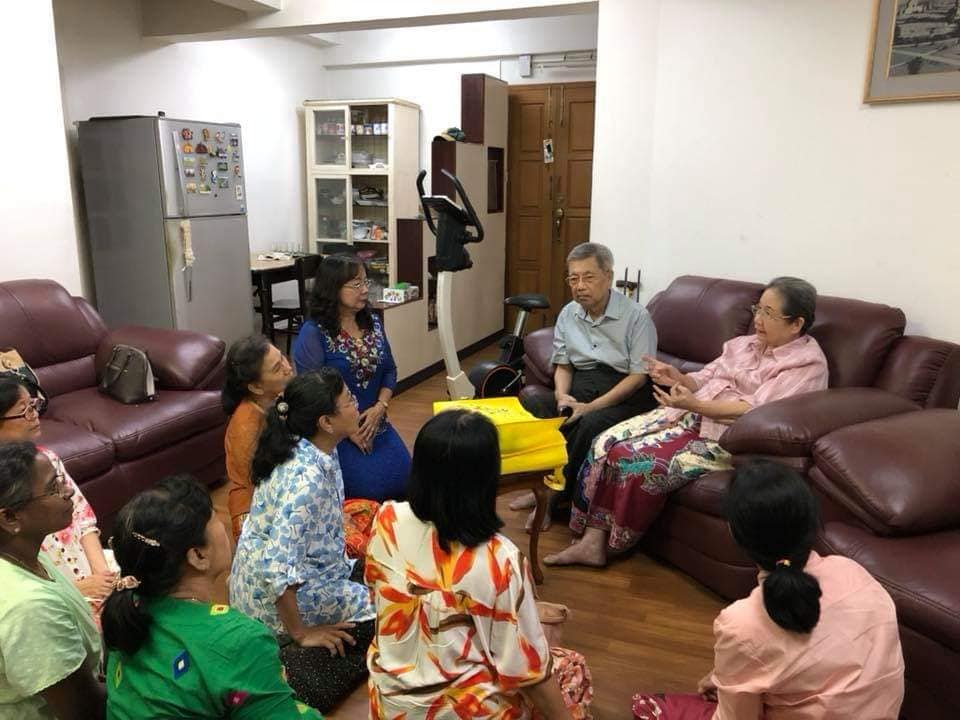
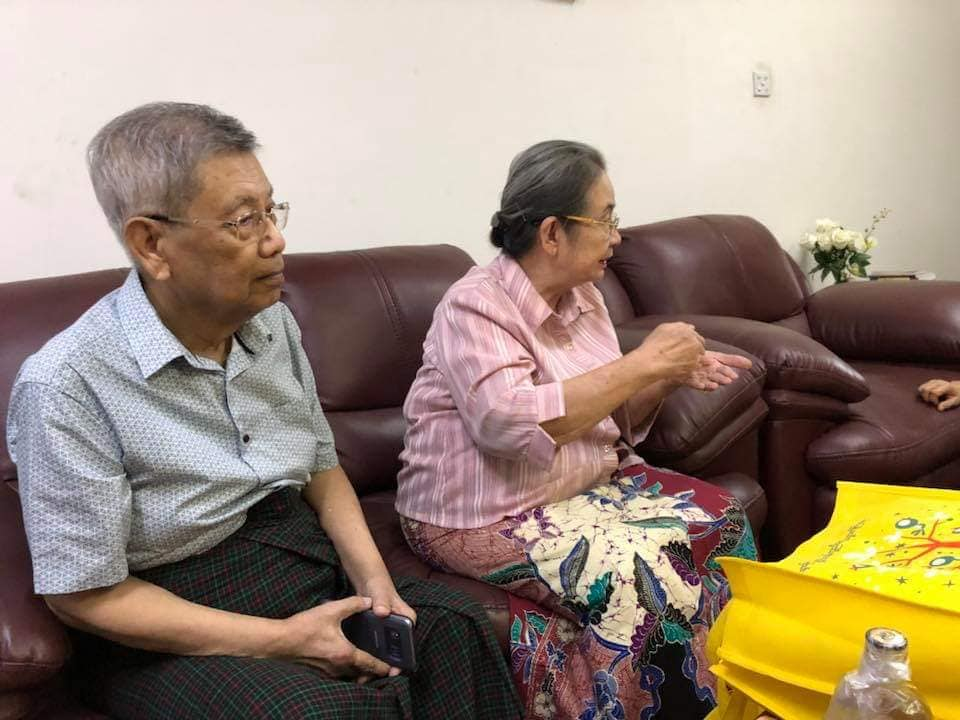
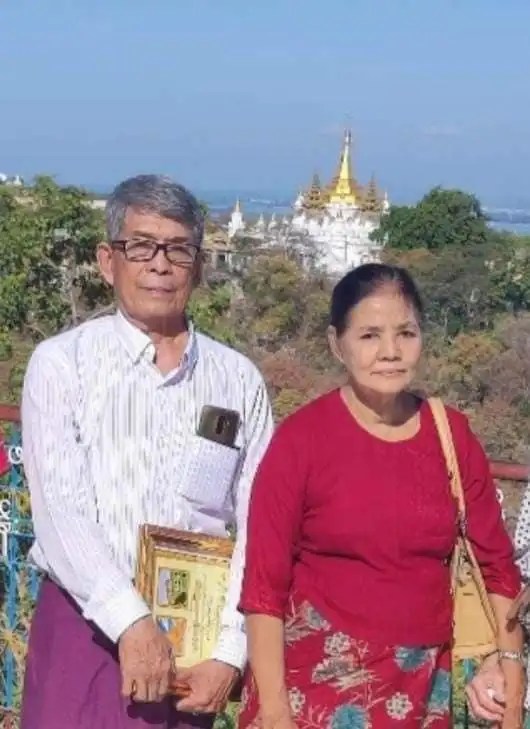
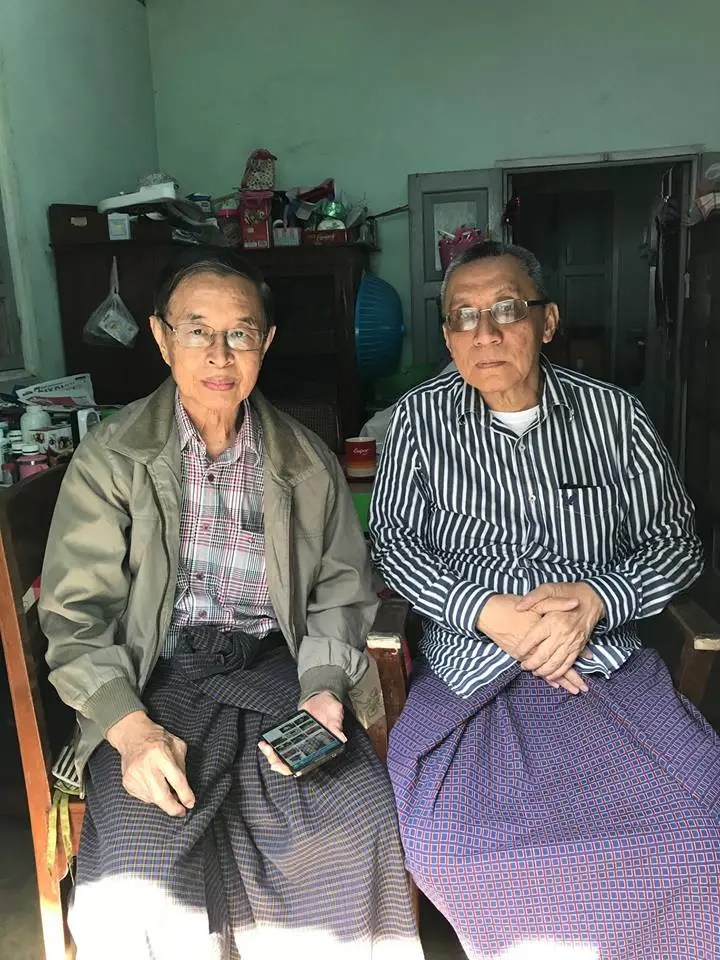
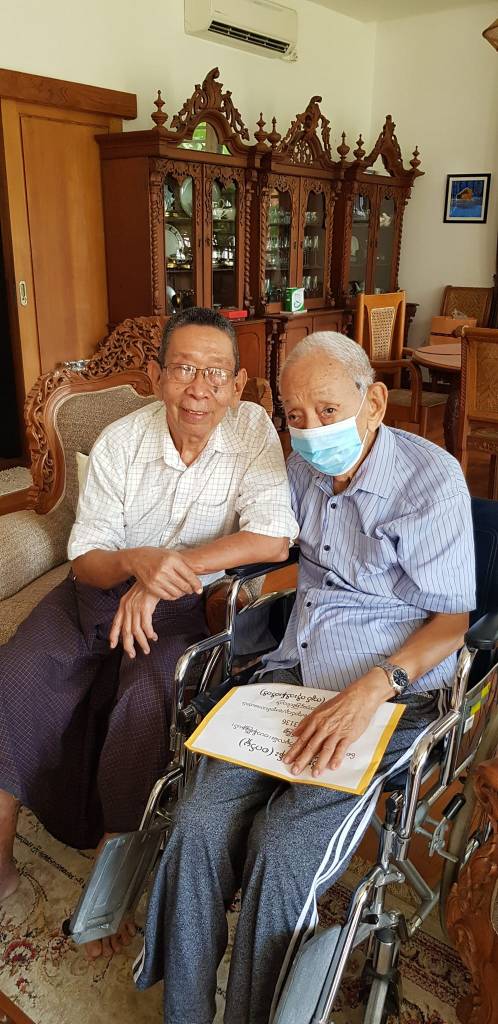
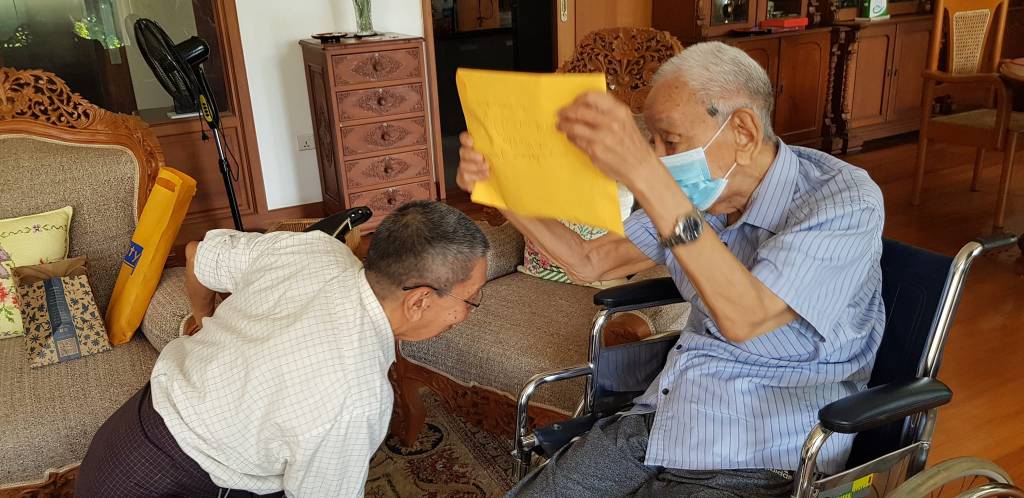
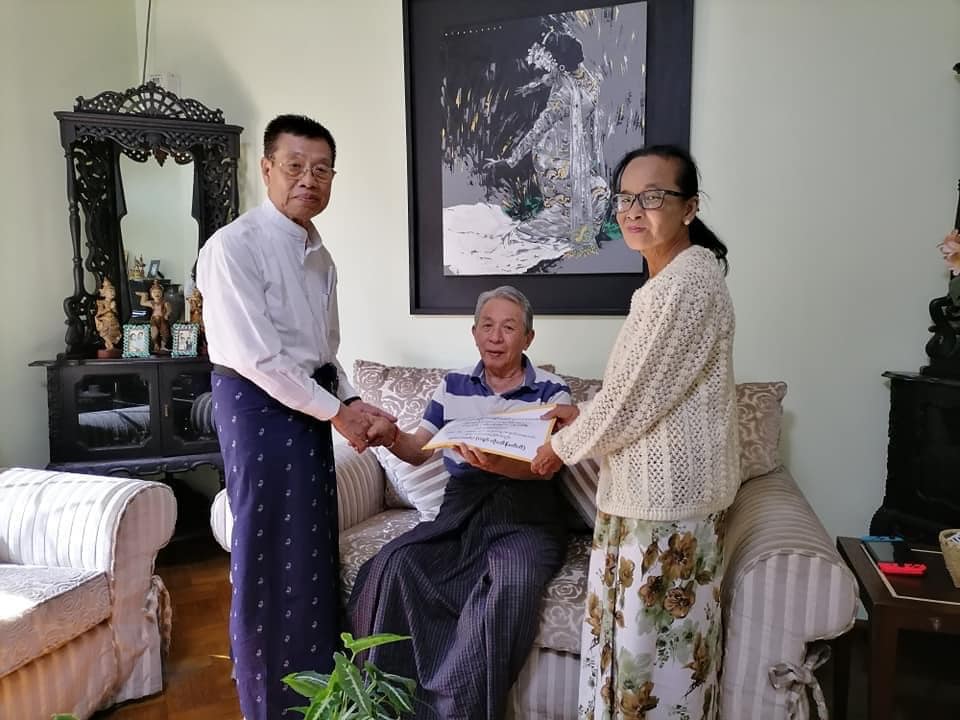
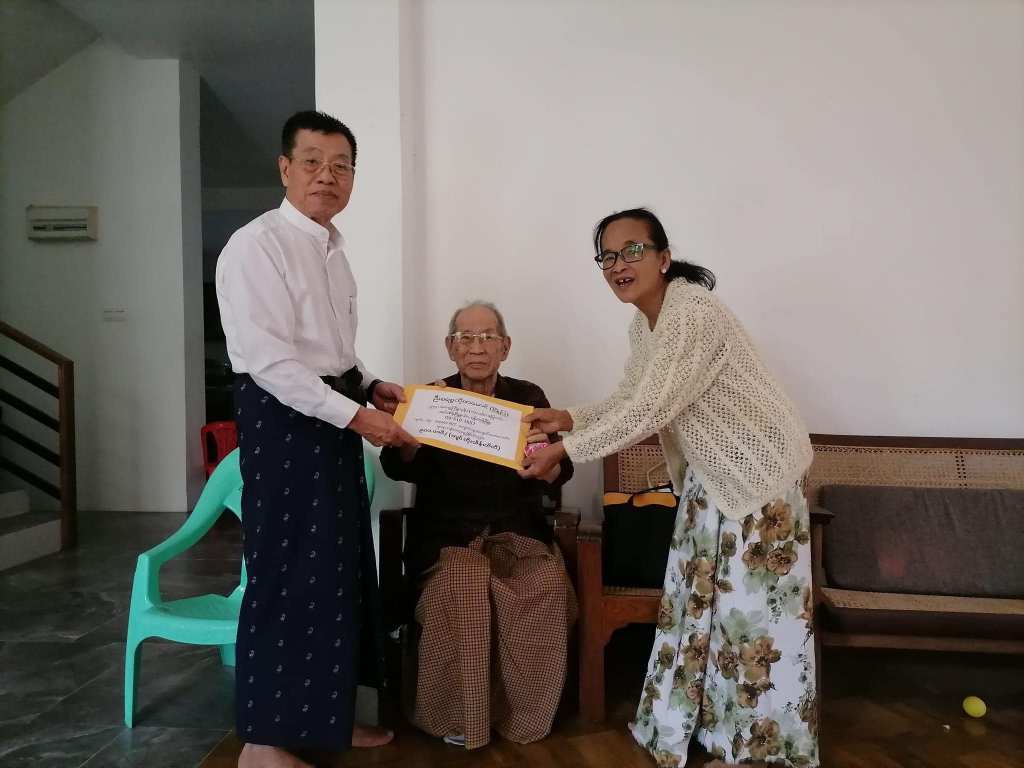
Several former students (mostly retired Professors) paid respect to Saya Dr. Soe Win (retired Rector of YUFL) and Sayama Daw May Saw Lwin (Chemistry).
Saya earlier missed the Puzaw Pwe of ICST/UCSY, since he was hospitalized for about 10 days.
Dr. Soe Win wrote :
It’s absolutely amazing how you put together your Trivia with accuracy, correct timing and up-to-date. It’s not enough to say you are a walking encyclopedia. I enjoy and benefited by your Trivias as do many others. Thank you.
Classmate Priests High school and university classmates who became priests Some quite early A few after retirement
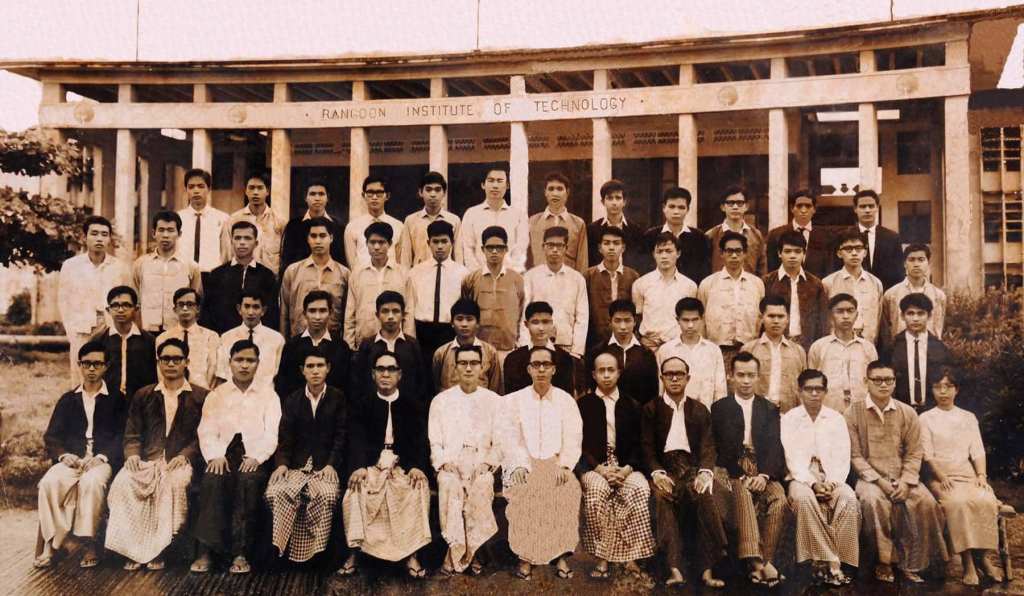
1965 – 1969 Spent most of that period at Rangoon Institute of Technology Was active in extra-curricular activities
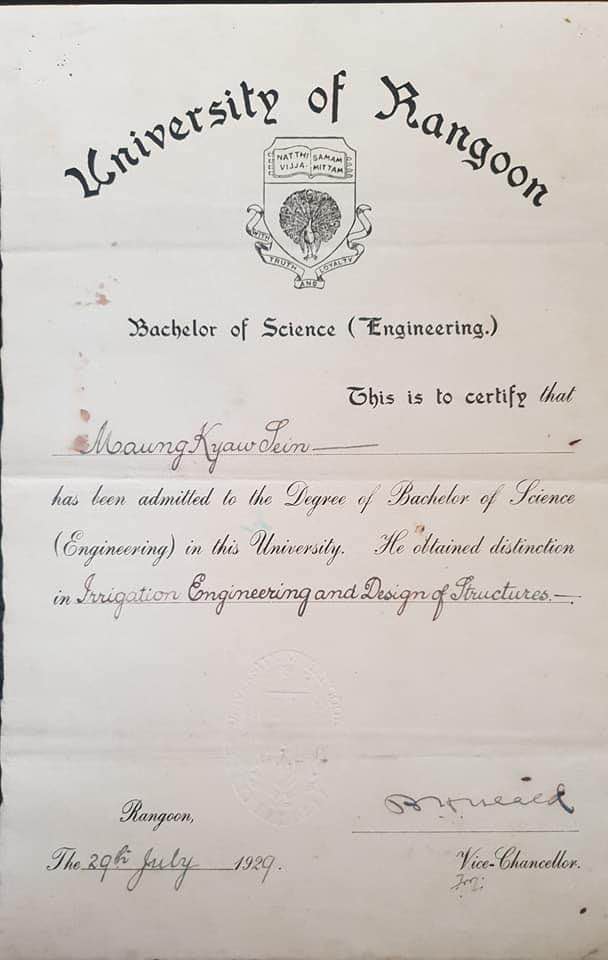
1920 – 1929 The first decade of Rangoon University Established in December 1920 with Rangoon College and Judson College as constituent Colleges
Myanmar Medical and Dental Professionals Had world wide gatherings (e.g. California, New York)
BMRI / DMR Dr. Mya Tu founded Burma Medical Research Institute He also co-authored “Who’s who in Medicine in Burma?”
Classmate Priests
Edwin David (7th from left in Fourth Row) Bernard Taylor (2nd from right in Second row) Aung Chaw (7th in Third row)
Catholic Priests
Father Edwin David (SPHS, GBNF) served as Priest of the St. Mary’s Cathedral.
Father Bernard Taylor (SPHS) served as a Missionary in some Asian countries. He resettled in Upper Burma.
Sayadaws
Ashin Okkantha
After retirement, U Aung Chaw (Victor, SPHS63, C69) became Ashin Okkantha. Sayadaw’s monastery is in Sagaing.
Uzin Bobby Myo Tun
After retirement, U Myo Tun (Bobby, A69) became Ashin Pannagavesaka. Sayadaw serves as Dhamma Librarian, Editor and Interpreter at Mawlamyaing Pa Auk Monastery.
1965 – 1969
Lu Ye Chun Camp (Summer 1965)
Inlay Lu Ye Chun Camp
The Lu Ye Chun Program was extended to Universities and Institutes. Inlay Khaung Daing Camp was established. The Camp hosted the Lu Ye Chuns from the High Schools, Universities and Institutes.
I was chosen as Lu Ye Chun for 2nd BE in 1965.
Ko Thein Swe was chosen as Lu Ye Chun for 3rd BE in 1966.
Ko Tin Myint was chosen as Lu Ye Chun for 4th BE in 1967.
The RIT Lu Ye Chun list that appeared in HMEE-2012 is not complete. It did not contain Ko Sein Shwe, Ko Hla Min, Ma Khin Than Myint Tin and Ko Zaw Min (Lu Ye Chuns for 1965 Inlay Camp).
Classes at RIT
Except for Architecture students, students from other majors took the same courses (albeit taught in different sections) for 2nd BE. There were 300+ students.
They had to select their major for 3rd BE. There were 80+ EE students.
Some left before graduation. Some decided to take sabbatical.
At the end, there were 40+ EE students left.
The EP students outnumbered the EC students 3 by 1.
We studied EC (Electrical Communications).
Eleven of us graduated in 1969.
Three (Kyaw Soe, Aung Thu Yein, Chit Tin) are now GBNF (Gone But Not Forgotten) at this time.
RIT (General)
With every turmoil (effecting “National Security”), the Classes were suspended.
U Win Thein (M67, GBNF) was a Prime Mover. He co-founded Set Hmu Thadinzin and Mechanical Magazine. He co-organized activities.
Several RIT students excelled at Sports. There were Burma Selected (e.g. Sai Kham Pan, Htay Aung) and All Universities Selected.
Activities
I served as
Treasurer and Vice Captain of Rangoon University Boat Club
Class Representative, Joint Secretary and Secretary of RIT Electrical Engineering Association
Committee Member for “Hlyat Sit Sar Saung”
Editor of the Bulletin published by RIT English Association
Member of UTC, Scrabble, and Chess teams
Free lance writer (articles, poems, translations)
Nationalization
The schools were nationalized.
St. Paul’s High School became No. (6) Botathaung State High School.
Some Brothers left Burma for Malaysia, UK and Germany.
A few indigenous Brothers (e.g. Brother Anthony) remained in Ady Road.
Brother Joseph was ordained as Father Joseph.
U Khin Maung Zaw (KMZ, EC76) wrote :
AFAIK, EC was the hardest and strictest discipline at the RIT in those days as we’ve been told. Some even asked us why we had to go there. Of course, I am not going to mention the easiest discipline there but we joked like, “they had 109 students and 110 passed the exam”. I do not mean any disrespect to Sayas and friends from other majors!! At times, it made us wonder why were we there for god’s sake.
CRAZY TIMES!!! Indeed.
1920 – 1929
1920
Rangoon University was established with Rangoon College and Judson College as constituent colleges.
First Rangoon University Students’ Strike protesting the limited scope of the Rangoon University Act. The event is celebrated as National Day (Ah Myotha Aung Pwe Nay). The movement led to the founding of National Schools.
Saya U Ba Toke is a Phwa Bet Taw of the above events. All took place in December 1920.
1921 and 1922
Rangoon University conducted its own examinations for Arts and Science.
Amendments to the Rangoon University Act were suggested. Some were implemented.
1923
Preparation to add Engineering classes at Rangoon University
Rangoon University Boat Club (RUBC) was founded by Sir Arthur Eggar (Law Professor and member of Cambridge University Rowing Club)
1924
Admitted students with B.Sc. to attend a “condensed” three-year degree course in Engineering
Admitted students with I.Sc. to attend a four-year degree course in Engineering
First year Engineering classes were given for the first time
1925
Second year Engineering classes were given for the first time
1926
Third year Engineering classes were given for the first time
1927
Fourth (Final) year Engineering were given for the first time
The first batch of Engineering graduates (those who already had B.Sc.)
1928
The second batch of Engineering graduates (those who joined after passing I.Sc.)
U Hla Maung wrote in the RU Golden Jubilee Magazine.
U Hla Maung’s article was referred in HMEE-2012 book.
1929
The third batch of Engineering graduates
Suggested Reading
Magazine published in 1970 to commemorate the Golden Jubilee of Rangoon University
Literature on “Ah Myo Thar Aung Pwe Nay”
HMEE-2012 by Saya U Aung Hla Tun and team
HMEE-2012 Section One (Translated by U Ohn Khine and revised by Saya U Soe Paing)
Book published by Dr Khin Maung Swe (Maung Thin Char) for the 80th Birthday of Saya U Ba Toke
[1963] 40th Anniversary of RUBC (compiled by Sithu U Tin, U Po Zon and U Tin Htoon)
[2013] 90th Anniversary of RUBC : U Tin Htoon (Chair), U Myo Myint (Vice Chair), U “Henry” Htaik San (Secretary) and several members. I volunteered as a Contributing Editor and wrote Prelude for all sections and three articles.
Myanmar Medical and Dental Professionals
There have been five Global Reunions for Myanmar Medical & Dental Professionals.
Los Angeles, California, USA in 2009
Sydney, Australia in 2012
Yangon, Myanmar in 2014
London, United Kingdom in 2016
New York, USA in 2018
BMRI / DMR
During the early days of UCC, I was invited to give guest lectures at BMRI (Burma Medical Research Institute).
Dr. Mya Tu founded BMRI. He passed away at the age of 91 in Australia.
His successors include Dr. Aung Than Ba Tu, Dr. Khin Maung Tin, Dr. May May Yi, Dr. Than Swe and Dr. Paing Soe.
BMRI later became DMR (Directorate of Medical Research).
Dr. Nyunt Wai added :
The founder Dr. Mya Tu was a physiologist. One of his successors was a physiologist (Dr. May May Yee), another was a microbiologist (Than Swe), and the rest were physicians. Dr. Khin Maung Tin, who specialized in liver diseases passed away the earliest (heard it was a heart attack); survived by Dr. Daw Htay Kyi, a TB specialist. Dr. Aung Than Ba Tu, around 90 years of age, is still active, giving talks and participating in the editorial team of a certain journal.
Each tile holds a letter worth one to ten points, or a “blank” (similar to a “joker” or a “wild card” in card games).
Rules
The word must appear in the official set of dictionaries (e.g. Chamber’s Dictionary, Jone’s Pronouncing Dictionary).
A player can challenge the validity of a word. He or she will forfeit a turn if the challenge is unsuccessful.
A bonus of 50 points is given for a word formed with all seven tiles. e.g. MAJESTY
In some contests, adding “s” to a singular to make it plural is disallowed.
Scrabble Tournaments
In our younger days, Scrabble tournaments were held by
Guardian Newspaper P. Aung Khin (Editor, “Dawlay’s Circle” was a host. There was a “Tiger” Scrabble team with three players. One of the Tigers joined Saya Des Rodgers to play Doubles.
RIT Scrabble Club Saya Des and Saya U Khin were hosts.
YMCA It is known for the Chess Champions (e.g. Saya Dawson). It also hosted Scrabble tournaments.
Saya Des Rodgers won several trophies. Most of the English sayas (e.g. U Khin) and sayamas (e.g. Daw Toni) played Scrabble along with the students such as Ko Myo Tun (Bobby) and Ko Khin Maung Win (Roland). Civil Engineering sayas (e.g. U Tin Win) also frequent the English Department for Scrabble sessions and tournaments.
Saya U Khin has Chamber’s Dictionary and Jone’s Pronouncing Dictionary on his desk for use in the challenges.
Miscellaneous
Saya Des moved to UK and then Canada.
Saya U Khin moved to Taiwan.
Sayama Toni joined her husband (who retired as Ambassador). After his demise, Sayama moved back to Yangon. She reports about the gatherings (sumptuous food and Scrabble) in Yangon.
After retirement, Bobby was ordained as iAshin Pannagavesaka (Pa Auk Tawya monastery in Mawlamyine). He served as a Librarian and Interpreter. He has taught English to monks and youths at various cities. He mentioned that Paul requested him to be a judge at the Guardian Scrabble tournaments, so he could not participate.
Roland retired after working for an Embassy in Yangon.
In Computer Science and applications, a Programming Language is a language used to program (e.g. instruct) computers.
Machine Language
In the early days, computer engineers and selected programmers have to program in Machine Language (with strings of Zeroes and Ones). They are due partly to the choice of Binary Number System as the basis of designing Arithmetic and Logic Unit inside the computer.
On the ICL 1902S computer, we often have to use the 24 keys to enter short pieces of Machine Code. That is history.
Assembly Language
To bridge the human users and the computers, the next step was to use Assembly Languages such as
Simple/Symbolic Assembly Language
Macro Assembly Language.
A Macro Processor translates Macros (a well-defined group of Assembly Language instructions).
An Assembler translates a program in Assembly Language into Machine Language instructions.
History of Programming Languages
The development of the first 11 (or so) programming languages can be found in the first HOPL (History of Programming Languages) Conference.
Currently, there are thousands of programming languages (some for academic purposes) and a limited number used for production.
Evolution of Programming Style
Over the years, the style of programming evolved. The list is not exclusive.
Procedural programming e.g. telling the computer system what to do, emphasis on the “verbs”
Non-procedural programming e.g. telling the computer system what one wants
Object Oriented programming e.g. emphasis on the “nouns”
Functional programming e.g. based on “functions”
Logic programming e.g. based on “Horn logic” and similar logic systems
Top down step wise development
Bottom up & Middle out techniques
Artificial Intelligence (AI) programming
Theoretical model
With each paradigm, there are several programming languages with known advantages and limitations.
There is a theoretical model called “Turing Machine”, which is primitive but has the computational power of modern computers.
The machine was proposed by Alan M. Turing (who has an ACM award named after him that is considered the “Nobel Prize in Computing“).
Alan Perlis, a pioneer Computer Scientist and Programming Language Designer, defined a “Turing Tar Pit, where everything is possible [to compute], but nothing is easy.”
If one is inattentive for a few seconds, then one can trip or fall.
Take 30 seconds to 2 minutes to change posture.
Don’t climb up a foot or higher without something to hang on to.
Maintain balance and moderation. With control, you can enjoy good food and even wine (or beer).
Enjoy BFF (Best Friends Forever). Meet, greet, eat and be merry.
Laughter is the best medicine.
If you perform good deeds, you get merit every time you rejoice about those deeds.
Be imperfectly perfect.
Better to get a thing done than waiting for perfection (which may never come as in Charles Babbage’s projects).
Que sera sera (What will be will be).
Do not have great expectations.
Buzz Aldrin became depressed after the Apollo 11 trip, because he was only the second person to land on the moon.
Remember the things you learned as a kid.
“I had the blues because I had no shoes Till upon a street I met a man without feet.”
“Brighten in your corner.”
“In life’s rosy morning In manhood’s firm pride Let this be the motto Your footsteps to guide In storm or in sunshine Whatever assail We’ll go onward and conquer And never sail FAIL.”








 HlaMin