Category: Language

  • Fun with English

    Homonym

    A cricket ball is THROWN to the AIR.
    The Prince of Wales is HEIR to the THRONE.

    Tongue Twister

    (How a detective thwarted a pick pocket)

    When he saw the pickpocket pick the pocket of a man
    he picked the pocket of the pickpocket
    and put the pickings
    in the pocket of the man
    whose pocket the pickpocket had picked.

    Word Construction

    Make a sentence with “ANALYZE” and “ANATOMY”.

    (Sing to the tune “My Bonnie lies over the ocean”)
    My ANNA LIES over the ocean
    My ANNA LIES over the sea
    My ANNA LIES over the ocean
    And bring back my ANNA TO ME.

  • Language Aids

    Dictionary

    A dictionary minimally provides the meaning of a word or a phrase. Some also provide examples of usage, synonyms and antonyms.

    • Advanced Learners’ Dictionary
    • Bilingual Dictionary (aid for translation)
    • Chambers Dictionary
    • Funk and Wagnal’s Dictionary
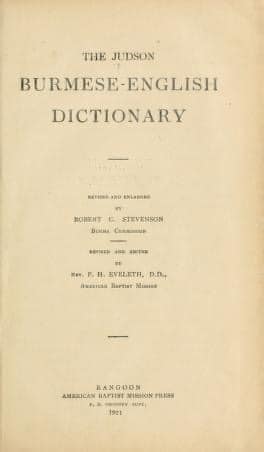
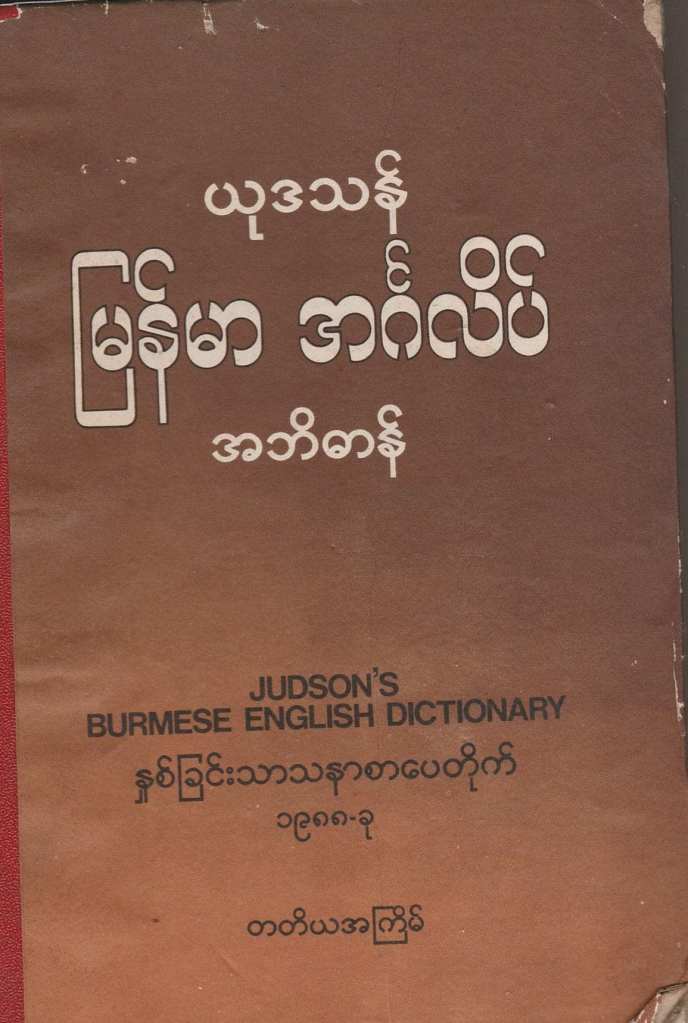
    • Judson’s Burmese – English & English – Burmese Dictionaries
    • Jones Dictionary for Pronounciation
    • Merriam Webster Dictionary
    • Oxford English Dictionary
    • Specialized Dictionaries (e.g Pali, Rhyming Dictionary, Technical Dictionary)
    • Word Processing Systems (with built in dictionary)
    • Visual Dictionary

    There are now Online Dictionaries.

    Judson 1
    Judson 2
    Judson 3

    Thesauraus

    The word means a “Treasure” or “Treasury”.

    Dr. Peter Mark Roget compiled a Thesaurus of English words based on his system of classification.

    A Thesaurus complements a Dictionary.

    • One looks up a Dictionary when one knows a word and wants to find out the meaning and/or usage. One looks up a Thesaurus when one has an idea or a concept, and wants to find out the right word.
    • Over the years, both have evolved and even converged.
    • One Thesaurus is arranged in Dictionary form for ease of look up.
    • There are Editors and Word Processors with built-in dictionary and thesaurus.
    • There is a “Visual Thesaurus” where one can start with a word and follow the links.

    Language Usage

    • Antonym
    • Homonym
    • Idiom
    • Metaphor
    • Parsing
    • Proverb
    • Quote
    • Simile
    • Synonym
  • Complementary Skills

    • The “Lone Genius” is a Myth.
    • The Success of a company or a product often requires complementary skills.
      Three examples are provided.

    Microsoft

    • Paul Allen, co-founder of Microsoft, passed away at the age of 65. He had the technical expertise.
    • Bill Gates had the business acumen to turn Paul Allen’s ideas into products.
      The two were complementary.

    Apple

    • Steve Wozniak, co-founder of Apple, built the microcomputer and wanted to share his ideas with members of the Home Brew Computer Club.
    • Steve Jobs had the business acumen and persuaded Woz to form Apple Computers.
      The two were complementary.

    Music

    • Oscar Hammerstein wrote beautiful lyrics.
    • Richard Rodgers was a talented composer.
    • The two produced hits for the Broadway and the movies such as South Pacific, My Fair Lady and The Sound of Music.
  • Cards

    A Deck has 52 cards.

    Suits

    There are four suits :

    • Clubs (Black)
    • Diamonds (Red)
    • Hearts (Red)
    • Spades (Black)

    Each suit has 13 cards : Ace / One, Deuce / Two, Trey / Three, Four, Five, Six, Seven, Eight, Nine, Ten, Jack, Queen, King.

    Correspondence

    • The four suits correspond to the four seasons or four quarters.
    • The 13 cards in a suit correspond to the number of weeks in a quarter.
    • The 52 cards in a deck correspond to the number of weeks in a year.
    • The two colors correspond to Ying and Yang.

    Card Games

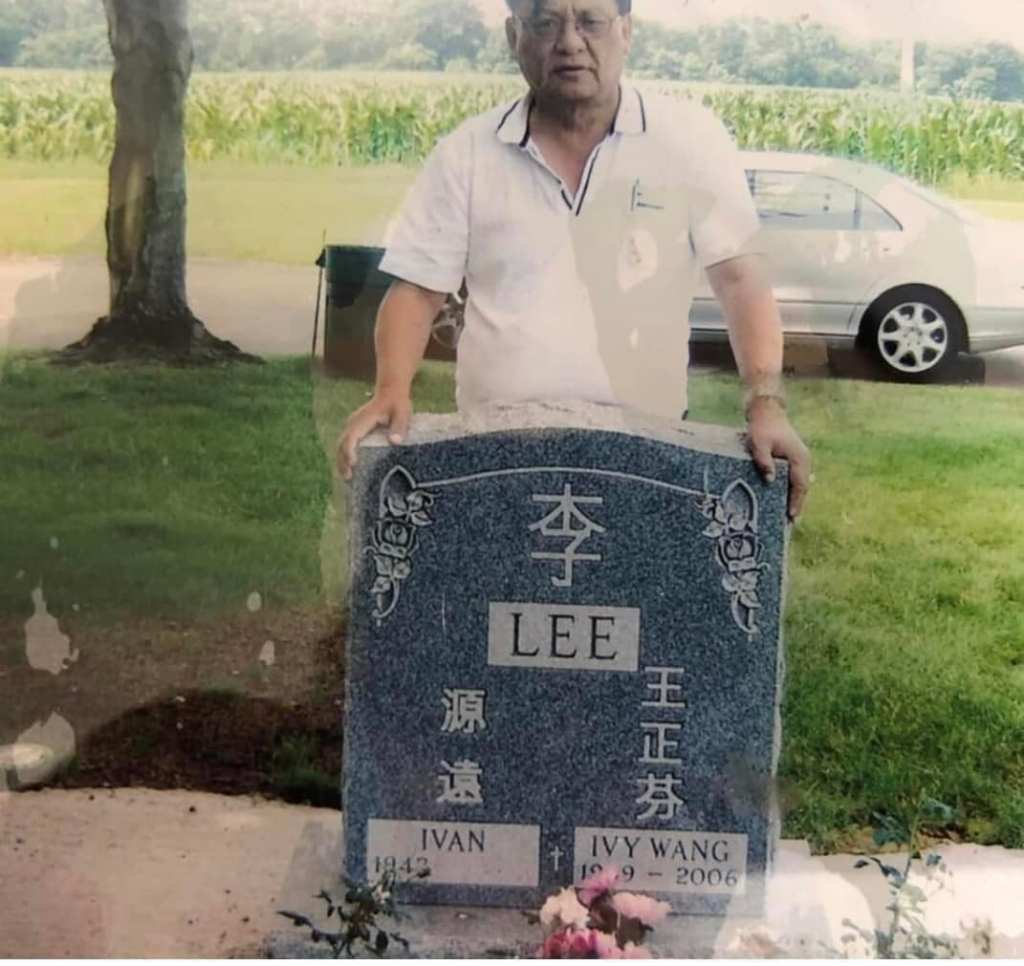
    Ivan Lee (M69)
    • Bridge uses a deck of cards. Each player is dealt 13 cards. The players then bid or pass. Ivan Lee (M69) is a Life time Platinum Bridge Expert.
    • Some games use two decks.
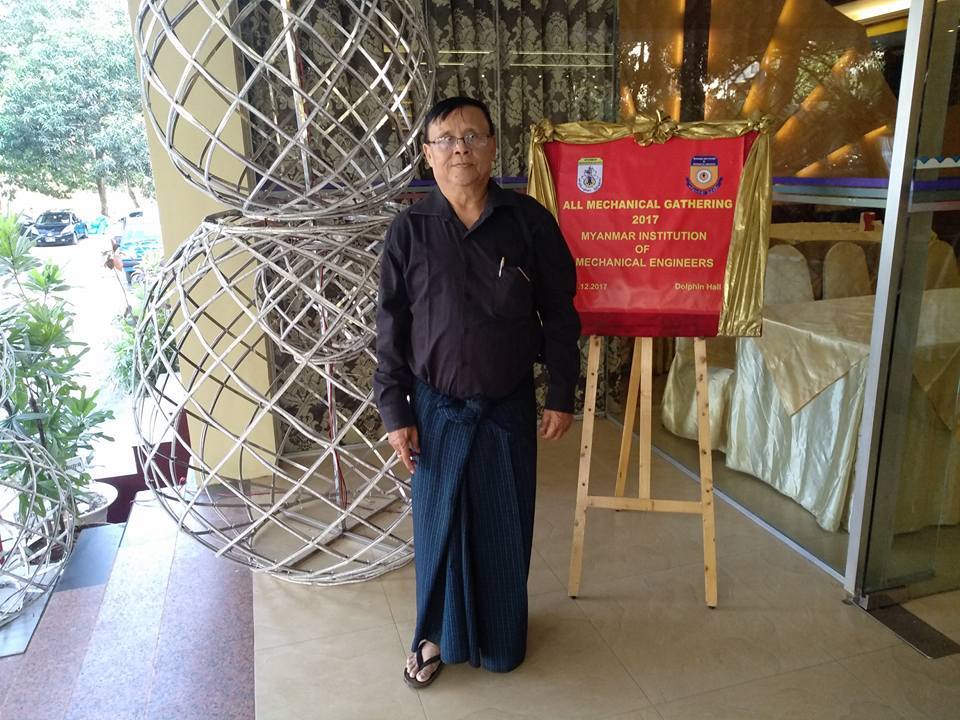
    • A few games (e.g ရှိုး၊ တချပ်မှောက်) may use a subset. Mg Mar Ga (M72) has written some posts about the RIT Card Players.
    Mg Mar Ga (M72)
  • Poetic Art Project

    Collaboration of sayas and alumni

    Poets

    • Tekkatho Moe War : Saya U Moe Aung (EE63)
    • Maung Sein Win (Padeegone) : Class of M72
    • Okpo Maung Yin Maung : Saya U Aung Myaing (ChE72)
    • Maung Nyunt Htay (Ah Htet Min Hla) : Saya U Nyunt Htay (Met73)
    • “Ka Byaung” : U Win Myint (M72)

    Illustrator

    • Bagyee Myat Myo Myint : U Myo Myint (Class of M73)

    Translator

    • U Hla Min (EC69)
    U Aung Myaing & U Myo Myint
    U Moe Aung
    U Nyunt Htay
  • Programming Language

    In Computer Science and applications, a Programming Language is a language used to program (e.g. instruct) computers.

    Evolution

    In the early days, computer engineers and selected programmers have to program in Machine Language (with strings of Zeroes and Ones). They are due partly to the choice of Binary Number System as the basis of designing Arithmetic Logic Unit (ALU) of the computer.

    On the ICL 1902S computer, we often had to use the 24 keys to enter short pieces of Machine Code. That is history.

    To bridge the human users and the computers, the next step was to use Assembly Languages such as (a) Simple/Symbolic Assembly Language (b) Macro Assembly Language.

    A Macro is a well-defined group of Assembly Language instructions.

    An Assembler translates a program in Assembly Language into Machine Language instructions.

    The development of the first 11 (or so) programming languages can be found in the inaugural conference on the History of Programming Languages (HOPL).

    Currently, there are thousands of programming languages (some for academic purposes) and a limited number used for production.

    Programming Style

    Over the years, the style of programming evolved. The list is not exclusive.

    • Procedural programming (e.g. telling the computer system what to do, emphasis on the “verbs”)
    • Non-procedural programming (e.g. telling the computer system what one wants)
    • Object Oriented programming (e.g. emphasis on the “nouns”)
    • Functional programming (e.g. based on “functions”)
    • Logic programming (e.g. based on “Horn logic” and similar logic systems)
    • Top down step wise development
    • Bottom up technique
    • Middle out technique
    • AI programming

    Computation

    With each paradigm, there are several programming languages with known advantages and limitations.

    There is a theoretical model called “Turing Machine”, which is primitive but has the computational power of modern computers.

    Alan Perlis, a pioneer Computer Scientist and Programming Language Designer, defined a “Turing Tar Pit, where everything is possible (to compute), but nothing is easy.”

  • Education Systems

    • The following are examples of the Changing Education System.
    • The terms “Old”, “New” and “Newer” depend on the context.

    Old System : Options for Matriculation students

    In the old system, Matriculation students can take

    • Burmese
    • Lower Burmese (for a restricted time)
    • Optional Burmese
    • English
    • Optional English
    • Mathematics
    • Additional Mathematics
    • Physics, Chemistry, …
    • History, Geography, …
    • Usually five Subjects (not restricted to Science only, or Arts only)
    • One extra subject (as insurance)

    Old System : Options for University Students

    In the old system, University students can

    • switch from one discipline to another
      e.g. Engineering back to Medicine, Pure Science, Arts …
    • take Double Maths (Pure, Applied)
    • take Triple Maths (Pure, Applied, Statistics)
    • join B.L, B.ED, … (after their Bachelors)
    • 3-year Special Honors (after Intermediate)
    • 2-year General Honors (after Intermediate)

    New System : Options for Matriculation students

    In the new system, Matriculation students

    • take six prescribed subjects based on Science or Arts option
      e.g. Burmese, English, Mathematics, Physics, Chemistry, Biology (for Science option)
    • 5-year Law degree
    • 5-year Education degree
    • can apply for Science Scholarship (SS)
    • bypass the Intermediate and are admitted directly to the Institutes using the controversial Intelligence Level Aggregate (ILA)

    Newer Systems

    The newer systems tried

    • Regional College
    • Moving some disciplines to the Ministry of Science and Technology
    • “Compressed” academic terms [to make up for school closures]
    • Proliferation of Colleges and Technological Universities [without the needed resources]
    • “Hybrid” nomenclature :
      Professor
      Associate Professor
      Lecturer (instead of Assistant Professor)
    • Multiple Professors in a Department
      One designated as Head of the Department
    • Having high percentage rate of success in examinations [without maintaining the quality and integrity]
  • The Power of Poem

    Kabyar is a Burmese Poem

    Poem : Tekkatho Moe War
    Translator : Hla Min

    Poem

    Poem is animate
    But [it’s life is] not just a [fleeting] morn

    Poem is a weapon
    But not for destroying the world

    Poem is key
    For liberation and independence
    But not devoid of principles [and morals]

    Poem has power
    Hidden but efficient & effective
    Like sharp-pointed spear-head
    Can thrust into [the heart of] a power-maniac
    Cause trembling, shivering, throbbing & anguished pain

  • Homonym

    Homonyms are words which sound the same. Examples:
    rain, rein, reign
    air, heir
    throne, thrown

    A puzzle based on homonyms : “What is the difference between the Prince of Wales and a cricket ball?”

    The Prince of Wales is HEIR to the THRONE.
    A cricket ball is THROWN to the AIR.

  • Checkers

    Board Game

    * Played using only 32 Black Squares on a 8×8 board

    * Each player has 12 pieces

    * Known as ကျား

    * Mandalay had a ကျားဘုရင်

    His famous assistant was ကျားဘညိမ်း who was also a National Boxing Champion and founder of a Boxing Club with ကျား (Tiger) Logo

    Type of Games

    * Traditional

    Player wins when opponent has lost all pieces

    * Unconventional

    Player who loses all pieces first wins.

    * Showmanship

    Choose 12 pieces or Single piece

    Player who loses all pieces first wins.

    AI (Artificial Intelligence)

    * Early AI projects include the development of a Checkers program by Arthur Samuel (IBM)

    The program learned from the Rules Book as well as actual play against humans

    * Checkers is not as complex as Chess and Go.

    With the advent of powerful computers, specialized Chips and highly skilled players, AI Community now have World Class Chess & Go programs.

    * IBM Deep Blue beat Gary Kasparov (then World Champion in Chess).