During our school days we had to learn World History (Feudal system, Renaissance) and Burmese History (called “Yazawin”and renamed as “Thamaing”).
Later, after hearing from the Thin sayas, Myin sayas, and Kyar sayas, I became interested in some aspects of history : History of computers and computing, History of Myanmar Engineering Education, “Truth or fiction?” about historical events, …
Burmese History
After the first Anglo-Burmese war (in 1824), the British annexed Rakkhine (Arakan) and Tennasserim (Taninthayee).
After the second war (in 1852), the British annexed Lower Burma.
After the third war (in 1885), the British annexed Upper Burma. Burma became a British Colony.
For some time, the British Governors would base their office in India and rule both India and Burma.
ICS (Indian Civil Service) examinations were held in India and UK. It was succeeded by BCS (Burma Civil Service).
Formal history of Burma has been written by British scholars (Harvey, Luce, …) and later by native scholars (Dr. Kyaw Thet, Dr. Than Tun, Bohmu Ba Shin …).
Informal accounts of Burma can be found in the works by Indians (Tagore, …), British (Maurice Collis, George Orwell, …) and Burmese (Dr. Htin Aung, U Po Kyar, …).
The conventional wisdom is that our neighbors entered the country in three phases.
Burmese archeologists and geologists found “ancient sites and quite old fossils and bones” to indicate that there were early inhabitants, but they could not completely counter the “migration theory” proposed by the British historians.
Pyu is an ancient civilization, and some Pyu sites are “preserved” as UNESCO Cultural Heritage Sites.
Dr. Than Tun
Some sayings
History repeats itself.
We should learn history so that we may not be stupid or dumb.
There is usually no single correct history. Often there are parallel, competing histories.
“Pazat Yazawin” and “theories” should be evaluated with the help of kyauk sar (stone inscriptions).
Even in the peer-to-peer refereed papers, there are discrepancies and [unintentional] errors.
National Archive, Burmese History Commission, and Burma Research Society used to hold artifacts about Burmese History.
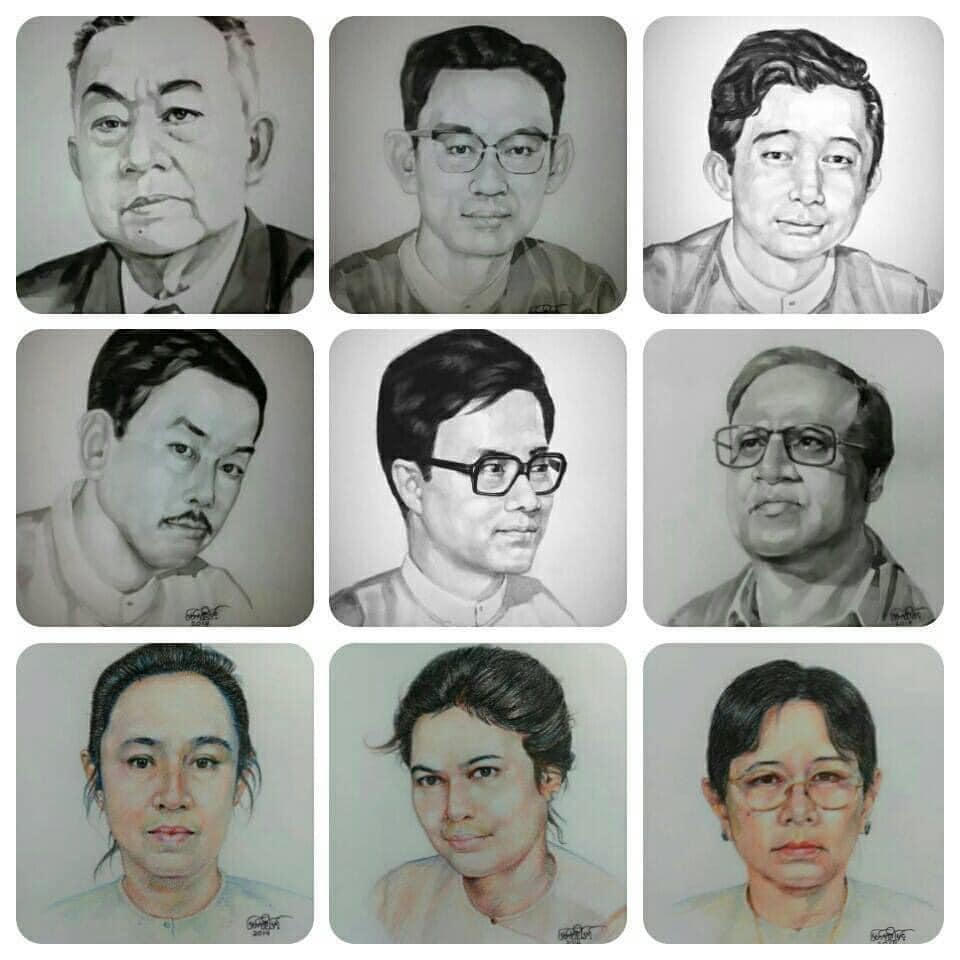
He was struck by a baton on December 20, 1938 during the third RU student boycott. He is an early casualty in the struggle for Burma’s independence. He was named “Bo Aung Kyaw”. Sparks Street was renamed as Bo Aung Kyaw Street. December 20 is known as “Bo Aung Kyaw Nay”.
Ko Harry Tan
He was a Seventh Student from SPHS. He was hit by a stray bullet. In 1956, there was a leakage of the Government Seventh Standard examination causing a protest close to Ko Harry’s house. All those who took the “Harry Tan Khun Hnit Tan” were declared to pass.
Ko Aung Khin
He was on his way back from RUBC (Rangoon University Boat Club) to his house in Windermere Road when he was hit by a stray bullet. He was listed in the Government newspapers as the 17th casualty of 7th July 1962.
Ko Phone Maw
He was hit by a stray bullet on March 13, 1988. Ko Soe Naing and Ko Myint Oo were also hit and hospitalized in not-so-humane conditions. Ko Soe Naing succumbed to the gun shot wounds. Ko Myint Oo survived. The “Burma Human Rights Day” and “Phone Maw and Soe Naing Nay” became milestones in Burma’s history.
He served as Professor of Mathematics and Dean of Arts at Rangoon University. Saya wrote notes for Burmese songs. His spouse Daw May Than was a vocalist. His son Ko Mya Than played the guitar and the piano.
U Kar
He served as Minister of Education in the Care Taker Government, and later as Rector of RU. His son Dr. Tin Maung served as Mathematics Lecturer, Director of UCC, and Rector of ICST.
U Ba Toke
He served as Professor (of RU and RIT), Rector, MASU. Saya taught mathematics to our sayas (then engineering students). As a saya of our sayas, Sayagyi was invited to the SPZP’s starting with SPZP-2000 held in California, US. His life and journey can be read in the book authored by Saya Dr. Khin Maung Swe (Maung Thin Char, GBNF).
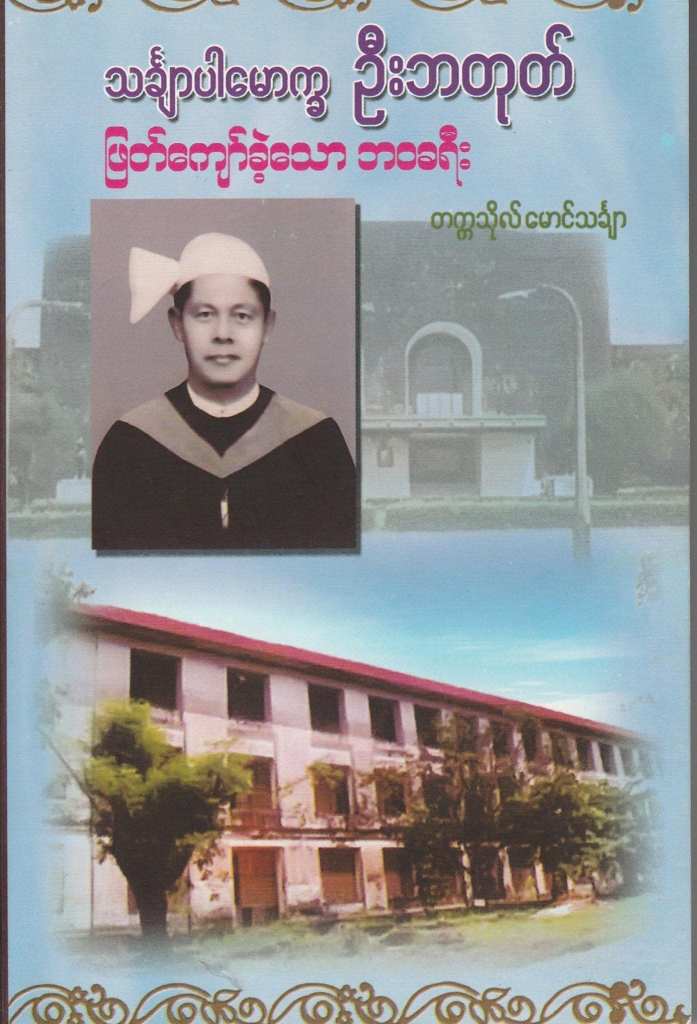
Book
U Net
He served as Professor of Mandalay University. His daughter (Daw Khin Mar Mar) studied Physics and Computer Science. His grandson (U Wunna Ko Ko) designed and implemented the second RIt web site. He is an expert on NLP (Natural Language Processing).
Dr. Chit Swe
He served as Professor, Founder-Director of UCC, and Rector, RASU. Saya founded UCC with the help of Saya U Soe Paing, Saya U Myo Min, and Saya U Ko Ko Lay (GBNF, brother of U Than Htut (M67, RUBC Gold)). Saya U Soe Paing wrote “Computer Ah Sa UCC Ga” and several articles. I posted 40+ blogs on “Memories of UCC”.
As an assistant to Dr. Chit Swe in his projects (e.g. “High School Mathematics”, “Children’s Treasury of Knowledge”, “UCC”, … I worked with several Mathematics sayas and educators (Maths curriculum, …) They include U Tin Hlaing, U Sein Min (GBNF), Dr. Khin Maung Win (GBNF), Dr. Khin Maung Swe (GBNF), Dr. Pyke Tin, Dr. Kyaw Thein (GBNF), Dr. Saw Tin (GBNF), and Dr. Kyaw Nyunt.
Mathematics is central to several other disciplines (Engineering, Physics, Economics, and Computer Science).
The Lucasian Professorship and Chair of Mathematics at Cambridge University has been held by Sir Isaac Newton, and Stephen Hawkings.
John Nash (Mathematician”, “A Beautiful Mind”) won the Nobel Prize for Economics.
RU had a Chancellor (Adipati) and a Vice Chancellor.
After independence, the Prime Minister of the Union of Burma served as the Chancellor. He would attend the Convocation and give a speech.
The road leading to the Convocation Hall is named Chancellor Road.
Justice U Bo Gyi served as Vice Chancellor for two terms.
A senior Saya (e.g. U Hla Aung, L. Htin Si) served as a Bursar or Registrar
Faculties
RU had several Faculties :
Science
Arts
Social Science
Engineering
Law
Medicine
…
Early Scholars and Sayas
Dr. Tha Hla, Dr. Maung Maung Kha, and Dr. Hla Myint were among the early scholars sent to UK to study for their doctorates. They later headed Geology, Physics and Economics Departments.
Saya U Ba Hli was the first native Dean of Engineering. He studied in India and UK. He served as Principal and Civil Professor at GTI before he transferred to RU.
Saya U Ba Hli is credited with the “Twinning Program” with prestigious universities in the US. Beneficiaries of the program include engineering students (Dr. Aung Gyi, U Min Wun, U Maung Maung Than, U Aung Khin, U Khin Aung Kyi, U Thit, U Soe Paing, U Ko Ko Lay …), sayas (U Sein Hlaing, U Tin Swe, U Allen Htay, Dr. San Hla Aung, U Htin Paw, U San Tun, U Tin Hlaing … ), and eligible graduates (U Aw Taik Moh …).
U Yone Mo studied Honors at RU and engineering in UK. At that time, membership and associate membership of the engineering societies were valued for non-academic positions and jobs.
In contrast, a Masters Degree is usually needed to become a Lecturer.
Some sayas did a second round of studies to complete their Masters and get promoted to Lecturers.
In the early days, there was a Pali Department, but no Burmese Department.
Saya U Pe Maung Tin (Pali) proposed and succeeded in the founding of the Burmese Department at RU. His students : ICS U Sein Tin (Theikpan Maung Wa), U Thein Han (Zawgyi) and U Wun (Minthuwun) spearheaded the “Khit San Sar Pay”. We had to study the works of all four in high school (and beyond).
Minthuwun’s poems and his classic short story (Bagyi Aung Nyar De) were translated into English by U Ohn Pe (Tet Toe), U Khin Zaw (“K) and fellow scholars,
and the collection was published in both Burmese and English.
U Pe Maung Tin, U Aye Maung, and U Wun, served as Professor of Burmese Department.
U Myo Min (Nwe Soe, Professor of English) was also involved in the Khit San Sar Pay.
Details of the early departments and pioneer sayas can be found in the RU Golden Jubilee Magazine, the 90th Anniversary Issues and the RU Centennial publications.
It took a long time to design and implement the UCC project. Details can be found in the article “Computer Ah Sa UCC Ga” by Saya U Soe Paing my mentor at RIT and UCC).
Saya U Soe Paing, Saya U Myo Min and Saya U Ko Ko Lay (GBNF) helped Saya Dr. Chit Swe (GBNF) found UCC (Universities’ Computer Center). At UCC, our four Sayagyis are addressed as Saya Chit, Saya Paing, Saya Myo and Saya Lay.
Pioneer Project
UCC Project was conceived in the mid-60s when Saya Chit headed the Mathematics Department at the Institute of Economics. The initial scope was to get a grant for a digital computer for IE, but the scope was expanded to cover selected Universities and Institutes.
The UCC Department was launched in 1970 with Saya Chit as Founder/Director and the three sayas as Managers of Computer Systems, Computer Operations and Computer Applications departments.
Academic studies & Training
Computer courses (academic, training, orientation …) were given at UCC under the leadership of Saya Chit (who served a dual role as UCC Director and Mathematics Professor) and the help of visiting Professors (mostly Computer Scientists) from US, UK, Europe …
Saya Dr. Chit Swe
Saya Chit was the founder Director of UCC and Professor of Mathematics at RASU. He later became Rector of RASU.
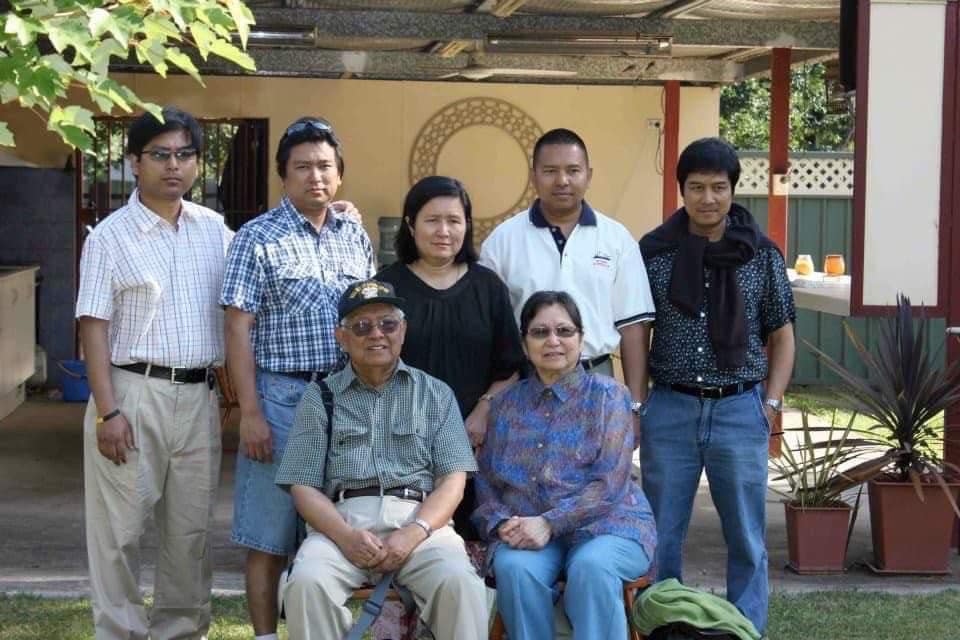
Saya Chit & Family
Saya Chit was succeeded by Saya Dr. Tin Maung (GBNF), who continued and elaborated on Saya Chit’s Vision and Mission.
After retirement from RASU, Saya taught for some time in Bangkok, and migrated to Australia. Saya Chit continued to supervise Burmese/Myanmar doing graduate studies in Australia. He served as Visiting Professor at Macquarie University.
In 2006, we paid respect to Saya Chit and Saya Dr. Freddie Ba Hli (former DG of UBARI, former Natjonal Advisor, UCC Board Member, GBNF) at Saya Zaw’s house with Mohinga and delicacies prepared by Ma Kyawt. Saya gave me his hat. Hope that hat can transfer Saya’s brain and work ethics to yours truly.
Saya Chit was a room mate of Saya U Ba Than during their study days in UK.
DCS (Department of Computer Science)
DCS was established with Saya Lay as Professor, U TAG (EC69) as Associate Professor, and I as Lecturer.
ICST (Institute of Computer Science and Technology.
ICST was founded in 1988 with Saya DTM as Rector, Saya Lay as Professor, U TAG and I as Associate Professors, and several others as Lecturers.
The 30th Anniversary was celebrated in 2018.
I attended two ICST Reunion & Acariya Pu Zaw Pwe held at MICT Park.
UCSY (University of Computer Studies in Yangon)
ICST became UCSY.
UCSY had visiting Professors & Researchers.
One down side is the lack of residential dorms and a relatively long commute for several sayas, sayamas and students.
While I was still a high school student, my uncle Saya U Than Lwin (Eric, GBNF) took me to the Social Science Library. He was a Lecturer in the Economics Department and also served as Librarian for the Social Science Library. Daw Myint Myint Khin (Hazel, GBNF) was an assistant librarian. She was later promoted to Librarian for the Rangoon Institute of Technology.
Most sayas (from the Economics, Commerce and Statistics Departments) would not remember the “Char Taik”. My uncle gave rides to Saya Dr. Maung Shein and several sayas. My uncle introduced me to Saya Dr. Than Tun (History, GBNF) at the Recreation Center.
Selected Libraries
Engineering
Saya Dr. Maung Maung Kha (GBNF) then Interim Dean of Engineering, requested Saya U Ba Than (GBNF) to help the engineering library by compiling and/or recommending journals and text books.
Medicine
U Tun Aung (GBNF), Librarian for IM(2) passed away due to a stroke after taking several baths on a hot day in Mandalay.
Northern Illinois
Daw May Kyi Win (GBNF), Assistant Librarian for the Central Library, took courses at UCC. She won a DV (Diversity Visa) to migrate to the US. She worked at NIU (Northern Illinois University), which has an “Asian Collection”. She maintained the “Burma” section of that collection.
Saya Dr. Than Tun (GBNF) wrote some of his books during his stay at NIU.
Saya U Saw Tun (former Head of RIT Burmese Department) was active with RIT Ah Nyu Pyinna Athin (Saya U Moe Aung and team). For a commemorative Swel Daw Yeik Sar Saung, he recounted how he and Saya U Moe Aung were summoned to the Ministry and told to “stop” Swel Daw Yeik troupe activities. Saya was and may be still at NIU teaching and researching Burmese.
Ko Wunna Ko Ko, designer of the second RIT web site, studied and also worked as a research associate at NIU. He is an expert of NLP (Natural Language Processing).
St. Paul’s High School
I was admitted to Section (D) of IVth Standard at SPHS (St. Paul’s High School). There was a theory that students who did not join SPHS from KG could/should be tested by placing them in Section (D) instead of the elite Section (A). Dr. Thane Oke Kyaw Myint had a similar experience. Only after proving our worth for four years, we were finally transferred to Section (A) of VIII Standard.
Brother Canice picked me from among the IV standard students to volunteer at the School Library. That was my first hands on experience working with a Librarian.
In High School, we had a Class Library. Brother Austin, our teacher for English and “Morals and Manners”, would allow us to borrow books not only from the Class Library but also from the School Library (where he served as a Librarian). We were asked to review the book that we had borrowed. Brother Austin would also reward those who do well in the tests with a book from the Class Library. I won “History and Atlas of North America”.
RUCL
I joined BRS (Burma Research Society) as a student member. I would go to the RUCL every three or six months to pick up my copy of the BRS journal. The journal uses transcription for the Burmese words.
RIT
Ko Mya, Assistant Librarian at RIT, was friendly and helped the students looking for journals …
USIS / USIA
In July 1969, I wrote a poem “Men on the Moon”. My mentor, who is the Buddhist Archbishop of Latvia and a Laureate Poet, submitted my poem to the Guardian newspaper and to Mr. Hall, an officer with USIS/USIA. The poem was sent to NASA.
Mr. Hall registered me as a user of USIS publications (Lin Yaung Chi and monthly or bi-monthly translations).
Daw Rita Tin Aung, Librarian for USIS, provided access to UCC staff. She would also photocopy articles that we requested.
Family & Relatives
My parents and uncles have their personal libraries. Collectively, we have access to encyclopedias (in English and Burmese), dictionaries (of various sizes) and books (on science, technology, religion, history, fine arts …)
Internet
With the advent of Internet, I had access to e-libraries.
We hope that the “YTU Modernization Project” would be implemented successfully and that YTU will get accredited from ASEAN and beyond.