In the 1950s and early 1960s, there were several daily newspapers in Burmese (e.g. Kyemon, Myanmar Ah Lin, Yangon, Tun Nay Zin, Mahn Daing, Botathaung) and English (e.g. The Nation, Guardian). There were also a few evening newspapers.
We will cover the following :
The Nation
Guardian Publications
Working People’s Daily
The Nation
The Nation was one of the early English newspapers published in the Union of Burma.
Edward Michael Law-Yone founded and served as Chief Editor.
The Nation was shut down in May 1963.
U Law-Yone was imprisoned for five years.
In 1970, he moved to Thailand. Continued publishing The Nation in Thailand.
Finally moved to the USA.
Children : Marjorie, Hubert, Byron, Wendy
Guardian Publications
Guardian Daily newspaper in English
Guardian Magazine (published monthly)
Editors
Guardian U Sein Win (Early Journalist)
Daw Khin Swe Hla (Assistant Editor, moved to WPD)
U Soe Myint (Chief Editor, moved from WPD)
P. Aung Khin (Assistant Editor)
U Khin Maung Zaw (KMZ, EC76) wrote :
The late Chief Editor of Guardian and Working People’s Daily (English) U Soe Myint was my father-in-law. He was an accomplished musician and played several instruments.
He was the eldest son of U Thein Maung, known to many by his pen name Htin Lin, who translated many books into Burmese in those days. U Soe Myint’s siblings include U Soe Win (RIT EC70, ex-UCC, ex-PTC), U Kyaw Zaw (GBNF – RIT EP72, DCA) and U Khin Zaw (ex-UCC Cupertino, CA, USA).
In honor of his great grandfather, my son is named Htin Lin.
Dawlay’s Family Circle
Daw Khin Swe Hla founded “Dawlay’s Family Circle”. After she moved to Working People’s Daily, several male editors (e.g. P. Aung Khin) continued as “Daw Lay”.
Uzin Bobby Myo Tun (A69) wrote :
I worked very closely with P. Aung Khin (Paul) in the preparation and editing of the Guardian Daily’s Sunday Supplement page ‘Dawlay’s Family Circle’ in the mid-1960’s. It was great fun compiling shorts on regular features such as ‘Popular Fallacies’, ‘Birds of Burma’ and filler jokes. I learnt much on proof reading of dailies from those days. I also wrote some short stories for the Sunday Supplement and the Guardian magazine. P. Aung Khin, endearingly known to most as Uncle Paul, wouldn’t let me compete in the Scrabble tournaments. Instead, I was asked to be one of the judges on those occasions. Those were the days! Thanks for bringing back those memories.
Essay Contest
Daw Lay’s Circle sponsored “Essay Contests”.
The winners include
Errol Than Tun (Uzin “Bobby” Myo Tun, A69)
L R C Truitwein
Tin Maung Maung Aung
Hla Yee Yee (MEHS61)
Winsome Ba Thike (MEHS61)
Katherine Ba Thike
Scrabble
Scrabble
Scrabble was played at the Guardian premises (on weekends).
Saya Des Rodgers, Nelson Rodgers and the Tiger Scrabble Team (U Tin Shwe, U Ba U) are some of the regular players.
They also played Scrabble at YMCA.
My Writings
In July 1969, my poem “Men on the Moon” (honoring the Apollo 11 mission) was published in the Guardian.
In the 70s, at the request of U Soe Myint, I wrote articles on Computers and Computer Applications for the Guardian.
Working People’s Daily (WPD)
The BSPP Government introduced two newspapers :
Loke Tha Pyi Thu Nei Zin (in Burmese) with Shwe Oo Daung as Chief Editor
Working People’s Daily (in English) with U Khin Maung Latt as Chief Editor Successors : U Than Saw, U Ko Lay
U Khin Maung Latt
Number One told the Chief Editors that there would be no censorship for the editorials.
One day, Number One asked U Khin Maung Latt if he wanted to be an Ambassador.
Daw Khin Myo Chit responded, “Ko Latt can go back to teaching”.
U Than Saw
U Than Saw succeeded U Khin Maung Latt as Chief Editor.
U Soe Myint (Assistant Editor, eldest son of U Thein Maung) married Aida Than Saw (daughter of U Than Saw). U Soe Myint later moved to Guardian and became Chief Editor. He is the father of Daw Khin Khin Latt (spouse of U Khin Maung Zaw / KMZ).
U Ko Lay
U G. Ko Lay (RUBC Gold) was Chief Editor at the time when I wrote poems and translations for WPD.
Father : “Motley” Ko Ko
Spouse : Daw Nyunt Nyunt Win (Physics, Registrar of RASU).
WPD Sunday Supplement
The Sunday Supplement published translations (e.g. of modern Burmese short stories).
The translators include well known authors and scholars such as
MMT (former Chief Justice U Myint Thein)
Tet Toe (U Ohn Pe, author and lexicographer)
ZMT (former ambassador U Zaw Myint Thein (a) U Zaw Win)
Sao Hso Holm (English Honors First Class, LLM, son of Arzani Mong Pawn Sawbwa Sao San Htun)
Translation of Short story
I was the exception.
Daw Khin Swe Hla (who started “Daw Lay’s Circle” in the Guardian before moving to WPD), wanted to encourage aspiring writers.
She requested me to translate “Nge Thay Loe” (a short story by Saya U Thu Kha).
I received fifty kyats for my translation “Still So Young“. Pen name : Maung Hlaing Phyo
Saya U Thu Kha was given fifty kyats for his original work.
Poem
WPD published poems
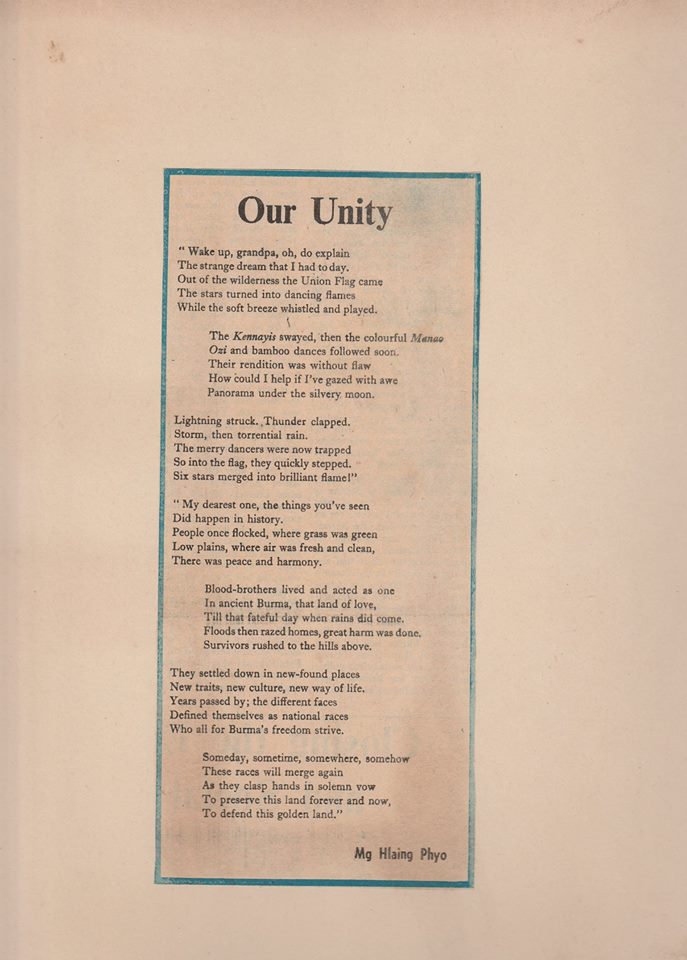
WPD published my poems (e.g. Our Unity) Pen name : Maung Hlaing Phyo
Translation of Poem
WPD also published translations of Burmese poems.
WPD published my translation “To my alma mater“. Pen name : Maung Hlaing Phyo
I received fifteen kyats for my translation of the poem.
Beginning of Censorship
After the Coup D’etat in March 2, 1962, the Revolutionary Council and the Government took complete control of the news media and the newspapers.
Most newspapers were shut down. The Nation was one of the earliest. U Law Yone was detained.
Finally, only four newspapers were left.
Two new newspapers (Loketha Pyithu Nay Zin and Working Peoples’ Daily) were added to bring the total to six : four in Burmese and two in English.
The News Agencies (e.g. AP, Reuters) could only send the news to the newly established NAB (News Agency Burma).
U Ohn Pe (Tet Toe) headed NAB.
He was succeeded by U Kyaw Min (Min Kyaw Min).
The news were censored.
The uncensored news were translated into Burmese.
The NAB news were then distributed to the six newspapers.
Later, two groups of three Chief Editors (one from English and two from Myanmar newspapers) were formed to review and censor the articles and poems submitted to the papers.
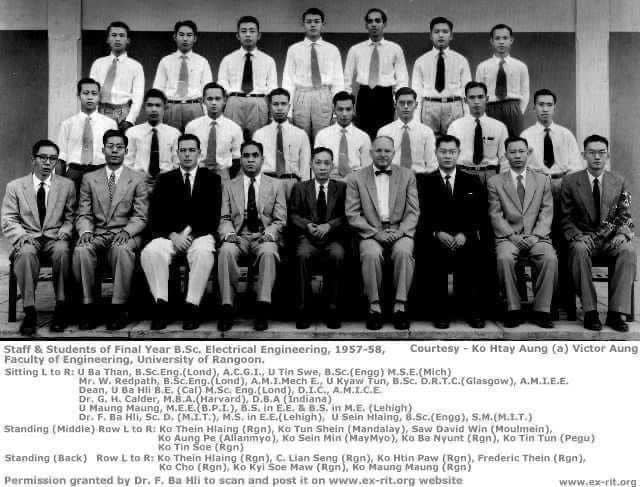
ဦးဘလှီ (ကွယ်) U Ba Hli (GBNF) မဟာဌာနမှူး Dean Proponent of the “Twinning Program” between the Faculty of Engineering, RU and prestigious universities in the USA
ဦးနန်ကောက် (ကွယ်) H Num Kok (GBNF) BOC ကောလိပ်မှာ စာ စသင် Started as a teacher at BOC College Saya of our sayas
ဦးအောင်ကြီး U Aung Gyi နောက် — Dr.၊ ပါမောက္ခချုပ် Rector
ဦးမင်းဝန် (ကွယ်) U Min Wun (GBNF) နောက် — ပါမောက္ခ Professor
ကိုအယ်လင်ဌေး (C58, ကွယ်) Allen Htay (GBNF) နောက် — ကထိက Lecturer President, RIT Photography Association Leader,San Francisco Bay Area RIT Alumni Group ဥက္ကဌ၊ RIT Alumni International / President Organizer, SPZP-2000 Author, “Brother, can you afford to spare $500 and more?” In saya’s memory, his spouse Daw Mu Mu Kin donated saya’s books to YTU Library. She also provided financial aid to eligible YTU students.
SPZP-2000 Organizers
Thingyan — April 1966
ကိုစံလှအောင် (C58) San Hla Aung နောက် — ကထိက President, RIT Swimming Association President, RIT Rowing Association Line Judge, RUBC Regattas Dr., Tulane University ပါမောက္ခ Professor
Donated Garawa money to Swel Daw Yeik Foundation
ကိုဝင်းသိန်း (C58, ကွယ်) Win Thein နောက် — Dr., ပါမောက္ခ Professor In saya’s memory, his sister donated to Swel Daw Yeik Foundation, MES and Starvation Eradication
Civil Engineering Acariya Pu Zaw Pwe
အထွေထွေ General
SPZP-2000 ဆရာပူဇော်ပွဲ Saya Pu Zaw Pwe RIT Alumni International (headed by Saya Allen Htay) hosted the First RIT Grand Reunion and Saya Pu Zaw Pwe in October 2000. Benny Tan (M70) and Maurice Chee (M75) were co-Chair of the Working Committee.
ဆရာ၊ ဆရာမများSayas and Sayama at SPZP-2000
Several Civil Engineering sayas attended SPZP-2000. They include Dr. Aung Gyi, U Min Wun, U Allen Htay, Dr. San Hla Aung, Dr. Aung Soe, U Myint Lwin, U Tin Maung, and U Myat Htoo.
စွယ်တော်ရိပ်ဖေါင်ဒေးရှင်း Swel Daw Yeik Foundation
Dr.စံလှအောင် အလှူငွေ ပေးအပ် On behalf of SDYF, Saya U Moe Aung, U Wynn Htain Oo and Nan Khin Nwe accepted Dr. San Hla Aung’s donation.
မြို့ပြဆရာပူဇော်ပွဲ Civil Engineering Pu Zaw Pwe Before the pandemic, there used to be All-Civil Reunion and PZPs. Later, some PZPs are conducted via Zoom.
ဆရာဦးဘသန်း၊ Dr. စံလှအောင် Dr. San Hla Aung visited Winner Inn and paid respect to Saya U Ba Than.
1966 သင်္ကြန် — ဆရာအယ်လင်ဌေး An old photo shows Saya Allen during Thingyan festival.
Saya U Moe Aung (Tekkatho Moe War) composed a poem called “Shwe YaDu Lann”.
U Hla Min translated the poem.
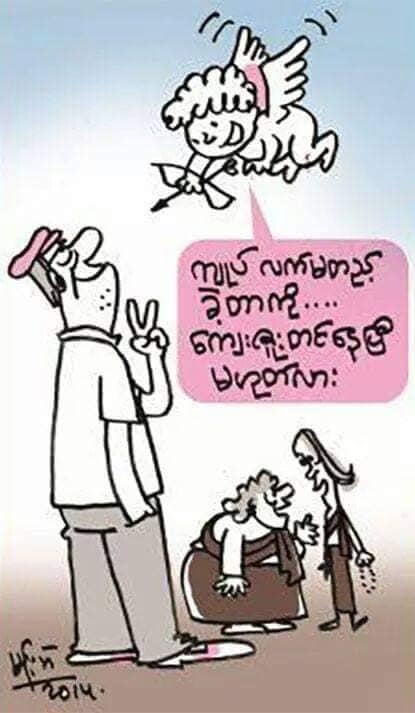
မန်းဘဲ ရဲ့ ရွှေရတု ကာတွန်း Cartoon
Thanks for Cupid’s missed shot
ရွှေရတု ညစာ စားပွဲ Shwe YaDu Dinner
အထွေထွေ General
မန်းဘဲ (earlier pen name of APK) အတွင်းရေးမှူး၊ RIT ကာတွန်း အဖွဲ့ Secreatry, RIT Cartoonists Association Maintainer of RIT Cartoon Box (started by U Myint Pe) (နောက်) အော်ပီကျယ် Aw Pi Kye ဥက္ကဌ၊ မြန်မာပြည် ကာတွန်း အသင်း President, Myanmar Cartoonists Association
မော်ဒယ် နဲ့ organizer ဗိုလ်ပုချို
တင်မိုးလွင် Tin Moe Lwin Master of Ceremonies အခမ်းနားမှူး
ဦးဘသန်း၊ ဦးတင်ဆွေ (ကွယ်)၊ Mr. W Redpath, ဦးကျော်ထွန်း (ကွယ်)၊ ဦးဘလှီ (ကွယ်၊ မဟာဌာနမှူး)၊ Dr. G H Calder, ဦးမောင်မောင်၊ Dr. ဖရက်ဒီဘလှီ (ကွယ်)၊ ဦးစိန်လှိုင် (ကွယ်)
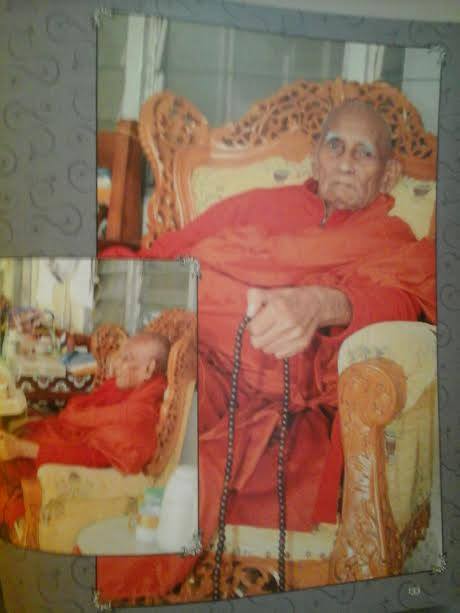
Known fondly as “Mon Sayadaw”, DPZ Sayadaw U Thilawunta built pagodas in Burma/Myanmar, USA, Canada, New Zealand, South Africa and several other countries.
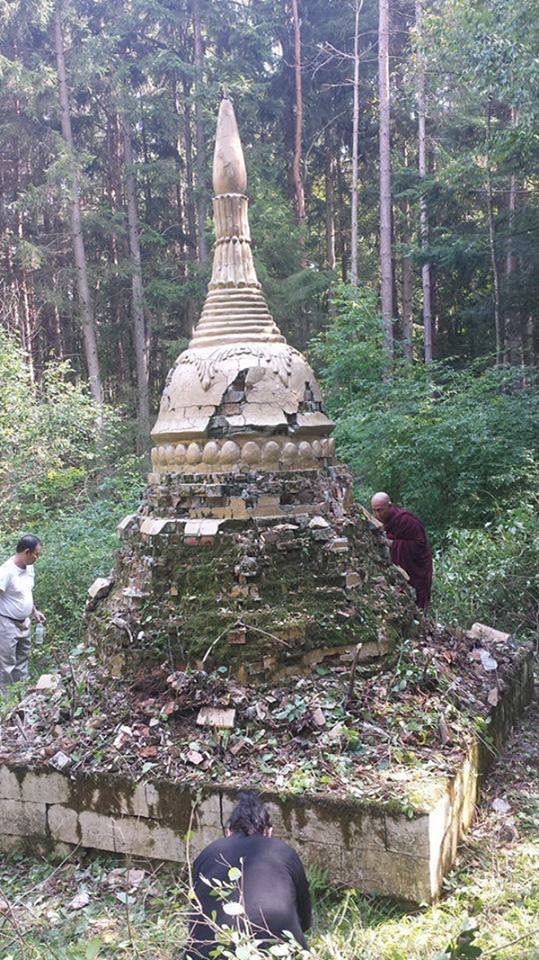
Sayadaw visited the United Nations and U Thant. He build the first Burmese pagoda in the Allegheny mountains near New York.
He served as the Chief Abbot of the Dat Paung Zon Aung Min Gaung monastery on Windermere Road, Rangoon, Burma from 1949.
At the invitation of U Thant, Sayadaw traveled to the US (via the ocean liner – predating the days of air travel) and build a pagoda on the Allegheny Mountains.
In 1958, Leslie Dawson, Canadian of Irish and Scottish descent, asked Mon Sayadaw to be his mentor. Dawson traveled to Bodh Gaya, India to rejoin the Sayadaw and received ordination as a samanera (novice monk). He continued on to Burma where he was ordained as Anandabodhi bhikkhu at the Shwedagon temple, Rangoon (21 Dec 1958). Ananda Bodhi had followers in Canada and New Zealand, most of whom have visited Sayaadaw and the Dat Paung Zon pagoda. Two of them also ordained as Buddhist monks with Mon Sayadaw as preceptor.
Ananda Bodhi became a Tibetan Master with the name Namgyal Rinpoche in 1971, but continued to preach dhamma from Theravada, …
Mon Sayadaw built pagodas in the several countries including US, Canada, New Zealand, and South Africa.
Details of Sayadaw’s dhamma duta missions can be found in the official biography (in Burmese and English) and the web pages of his disciples.
In the early days, most students know Burmese and English well. Many went on to become bi-lingual writers and outstanding translators.
Rangoon University had students from overseas (India, Nepal, Japan, Russia).
Some (e.g. one Russian, one Japanese) majored in Burmese.
BRS
Several British scholars and/or teachers helped set up the Burma Research Society (BRS) and published the BRS Journal.
The journal contains transliteration of old Burmese/Myanmar inscriptions (kyauk sar). For example, use three English letters KOL => Ka gyi, Lone gyi tin, Ta chaung gin to transliterate the Burmese word “Ko”.
BRS also helped conduct “Research Congress”.
Saya U Win (Geography) was the last presenter at the Research Congress. Higher authorities came in and declared the immediate demise of BRS.
Burmese Typewriter
The advent of Burmese typewriter (around Burma’s Independence) allowed reasonable typing of Burmese characters and words.
Olympia provided two models : Portable and Standard (which had more keys such as “Tha gyi” and “Pat sint” characters. Some tricks had to be employed to type Pali and less common Burmese words.
Burmese Language Studies
There were exchange programs between the RU Burmese Department and some foreign Universities (e.g. in Osaka, Japan; School of Oriental and Asian Studies, UK; Northern Illinois University, US).
U Hla Nyunt (father of Mary Nicely) taught Burmese at the precursor of Defense Language Institute in Monterey, Northern California.
Professor Harada (“Chit Mann Nwe”, born in Mandalay) of Osaka University won the National Literary Prize for translating the novel “Thway” into Japanese. He invited Sayagyi U Wun (Minthuwun) to help compile the Japanese-Burmese Dictionary and to do research with Burmese Language Professors at Osaka University.
Sayagyi Dr. Hla Pe (author of “Burmese Proverbs”) a close friend of Sayagyi U Wun (Min Thu Wun) and Sayagyi U Thein Han (Zaw Gyi). He and his colleagues (notably John O’kell) advocated the need for Burmese word processing on Apple Mac, and also [co]published “Learning Burmese/Myanmar” and others. Software was developed to input Burmese characters into a Mac using transliteration.
A few years back, the National Language Center at the University of Maryland (College Park) had a project to develop listening and reading comprehension courses for Burmese and have it available on its network.
Daw Khin Htwe retired from The Library of Congress. She was in charge of Burmese manuscripts and books. During her days, the query system used a phonetic system.
Some monasteries and/or organizations in US have offered Burmese classes and “Sagar Waings”. But, there are some who do not want to invest their time to learn Burmese without a hefty ROI (Return on Investment).
Saya U Kyaw Hlaing taught Burmese at NIU (Northern Illinois University), which has an Asian Collection and Burmese Sub-collection. He later taught Burmese for a Summer course at the University of Hawaii.
Dr. Than Tun was a Research Scholar at NIU.
Saya U Saw Tun is current Head of the Burmese Department at NIU.
Daw May Kyi Win (GBNF) served as Librarian of the Burmese Sub-collection at NIU.
Cornell University, New York offers Burmese language and literature courses. The Burmese sayama also works for the French Department.
Development
To please the then Number One, the Burmese spelling was revised twice by the Myanmar Sar Ah Phwe.
Despite the fact that the ancient pagoda was called “Botathaung” and not “Bo Tit Htaung”, the Burmese were forced to use “Tit” everywhere instead of “Ta”. Violators are fined ten pyas per occurrence.
Word Processing
The initial Burmese Word Processing was done at UCC.
Without standardization, several Burmese Fonts and Keyboards were developed by the industry.
Zawgyi Font was used in most web sites. Met one of the authors in Mandalay, who explained the background of its development.
Unicode was proposed as a standard for informationprocessing, but it took a long time for web sites and smart phones to comply. There are now Unicode sets for Myanmar and some languages used by the indigenous people.
There are some limitations in the Unicode-compliant systems. e.g. Saya U Moe Aung found it difficult if not impossible to type “Theikkha” and similar Myanmar words.
A compromise solution is offered by “ZawDecode”. One can read Unicode well, and 80 – 90% of Zawgyi.
Some use two devices (e.g. two phones, a phone and a lap top) with Zawgyi on one device and Unicode-compliant font (e.g. Pyidaungsu) on the other device.
Some switch the “Preferred Language” setting as needed May require a restart
Some save read-only documents as PDF. PDF readers are free. PDF writers are usually not free.
Some use converters / translators.
Decline
With the use of SMS, the spelling skills have deteriorated. “Kha Lay” (child) became “Khay”.
False Pride
One Burmese parent back in Yangon proudly claimed that her daughter is attending a prestigious “international school” to study overseas and she does not speak Burmese.
Thakhin Kodaw Hmaing Founder of Peace Movement Principal of National College
U Thant
U Thant United Nations Secretary General Third UNSG First Asian UNSG
Bogyoke Aung San Architect of Burma’s Independence
U Thein Han (Zawgyi) Chief Librarian of Rangoon University Central Library Laureate Poet Co-founder, Khit San Sar Pay
U Wun (Minthuwun) Professor, Burmese Department, RU Head of RU Translation Department Lexicographer Visiting Professor at Osaka University Laureate Poet Co-founder, Khit San Sar Pay
Dr. Maung Maung Kha First native Professor of Physics Rector of Rangoon University (with longest tenure)
Ludu Daw Ah Mar (Amar) 1936 RU Students’ Strike Author and Publisher Spouse : Ludu U Hla
U Khin Maung Latt Taught English at RU and at his private school Chief Editor of Working People’s Daily Spouse : Daw Khin Myo Chit
Daw Khin Myo Chit Participant in the struggle for Burma’s Independence Award winning Author and Translator Spouse : U Khin Maung Latt
Rangoon University
The University of Rangoon was established in December 1920.
Silver Jubilee (in 1945) Most of the schools were closed for three years. The University of Rangoon reopened in 1946. There were make-shift classes on Mogul (Shwe Bon Tha) Street during that period. Saya U Ba Toke was lucky to receive his Masters during the war (thanks to his supervisor).
Golden Jubilee (in 1970) I used to have a commemorative issue. I also had a small part as a volunteer of the “Zay Nay Yar Cha Htar Yay Ah Phwe”.
Diamond Jubilee (in 1995) Saya Dr. Soe Win has posted a picture.
Centennial (in 2020) “Yar Pyay Ah Kyo” celebrations kicked off in December, 2019
EC Members of the “Tekkatho Kalaung Ah Thin (1958 – 1962)” published a Kabyar book and a commemorative issue.
Miscellaneous
Centennial for “Amyotha Aung Bwe” in 2020 uses Myanmar date
Centennial for “Myanmar Yoke Shin” in 2020
Centennial for “Engineering Education” in 2023
Centennial for “Rangoon University Boat Club” in 2023 I was a Contributing Editor for the 90th Anniversary
At the centennial celebrations of some universities, the alumni and staff were asked to nominate events and people to be honored as the 100 items associated with the school.









 HlaMin