Category: Burma

  • Pay Scale

    Terms

    • SS — Starting Salary
    • AI — Annual Increment
    • MS — Maximum Salary (aka Bar Sone)
    • CLA — Cost of Living Allowance

    Tutor (for non-Science Departments)

    • Pay scale : 200 – 10 – 300
    • With CLA, starting pay is 200 + 97 = 297 kyats
    • Lecturing Tutor gets an additional 100 kyats
    • Ad hoc Tutor gets 100 kyats

    Demonstrator (for Science Departments)

    • Same pay scale as Tutor

    Assistant Lecturer (AL)

    • Pay scale : 350 – 25 – 700
    • With CLA, starting pay is 350 + 89 = 439 kyats
    • Is a Gazetted Officer

    Lecturer

    • Old pay scale : 800 – 50 – 1200
    • No CLA, but has access to staff shop
    • Can spend 10% of salary at the staff shop

    Professor

    • Pay scale : 1300
    • No CLA, but has access to “staff shop”
    • May be eligible for a house in the Campus

    Rector

    • Pay scale : 1500

    Gazetted Officer

    • Assistant Lecturers and above are Gazetted Officers.
    • Details (promotions, transfers, vacation) are recorded in the Gazette.

    Changes

    CLA was abolished.

    New positions and scales were introduced.

    • A hybrid system (Professor, Associate Professor and Lecturer) was adopted instead of the more common system (Professor, Associate Professor and Assistant Professor)
    • Engineering Instructor: 450 – 25 – 700 [“new” position]
    • Assistant Lecturer: 450 – 25 – 700 [“new” scale]
    • Lecturer: 800 – 40 – 1000 [“new” scale]
    • Associate Professor: 1000 – 50 – 1200 [“new” position]

    Miscellaneous

    Gazetted officer : 450 scale & above

    The pay raises could not keep up with the rising cost of living.

    Promotions take considerably longer.

    • In the early days, engineering graduates joined the Faculty of Engineering as Assistant Lecturers.
      In the later days, engineering graduates have to serve as Instructors before they become Assistant Lecturers.
    • In the early days, a Lecturer can get promoted to Professorship. In the later days, a Lecturer gets promoted to Associate Professor.

    The Public Services Commission (PSC) took charge of the appointments of government employees.

    Observation

    In the old days, a University is a collection of Colleges. Most departments have a Professor, who also served as Head of the Department. Some departments were headed by Lecturers and even Assistant Lecturers.

    There are now some Universities in Myanmar that do not have multiple Colleges. Some departments have several Professors.

    There are some private Universities.

  • U Han Sein & U Aung Gyi Shwe

    U Han Sein

    • Swimming, Diving, Water Polo, Basketball
    • Prisoner of Conscience
    • Volunteer Photographer for 69er gatherings

    U Aung Gyi Shwe

    • Secretary, RIT Track & Field
    • T&F, Weight lifting, Soccer
  • Trailblazers

    Sayagyis

    • U Pe Maung Tin
      First native Principal of Rangoon College
      Proposed to have a separate Burmese Department
      First Professor of Burmese Department, Rangoon University
    • Dr. Htin Aung
      Principal of Rangoon College
      First native Rector, Rangoon University
      Retired as Vice Chancellor, Rangoon University
      Distinguished author, historian and folk lorist
    • U Ba Hli
      Principal of Government Technical Institute (GTI)
      First native Dean of Engineering, Rangoon University
      Proponent of “Twinning” with prestigious universities in USA
    • Dr. Mya Tu
      Founder/Director, Burma Medical Research Institute (BMRI)
      Co-authored “Who’s who in health and medicine in Myanmar
    • Dr. Chit Swe
      Founder/Director of Universities’ Computer Center (UCC)
      Pioneer of Computer Systems, Applications and Education in Burma

    Khit San Sar Pay Founders

    • Theikpan Maung Wa (ICS U Sein Tin)
    • Zawgyi (U Thein Han)
    • Minthuwun (U Wun)

    There were the early students of Sayagyi U Pe Maung Tin (Pali and Burmese Scholar) at the then newly established “Burmese Department” at the Rangoon University.

    This image has an empty alt attribute; its file name is minthuwun.jpg
    Minthuwun

    UCC Founders

    • Dr. Chit Swe (GBNF)
    • U Soe Paing
    • U Myo Min
    • U Ko Ko Lay (GBNF)

    Details can be found in my article “Paying Back to UCC” and several posts on Saya Chit, Saya Paing, Saya Myo and Saya Lay.

    Early Burmese Scholars in the UK

    • Dr. Hla Myint (Economics)
    • Dr. Tha Hla (Geology)
    • Dr. Maung Maung Kha (Meteorological Physics)
    • Dr. Po Aye (Meteorology)

    Early recipients of the Twinning Project

    • Dr. Aung Gyi (Civil, RIT Rector)
    • U Min Wun (Civil, Professor)
    • U Maung Maung Than (Textile, RIT Rector)

    Early Founders of Banks in Burma

    • U Rae Kyaw Thu
      Founded the first bank in Rakkhine
    • U Po Sa
      First Burmese to found a bank in Burma

    Early Sayadaws in the UK

    • U Thithila
    • Dr. Rewata Dhamma

    Early Sayadaws in the USA

    • U Silanandabhivamsa (Northern California)
    • Penang Sayadaw (Southern California)
    • U Kelasa (East Coast)
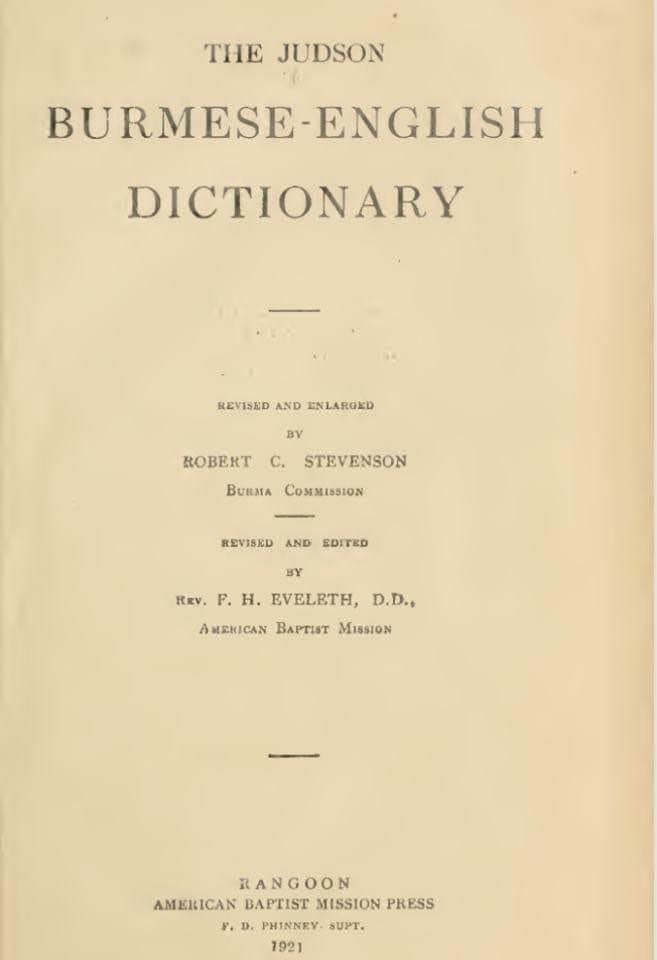
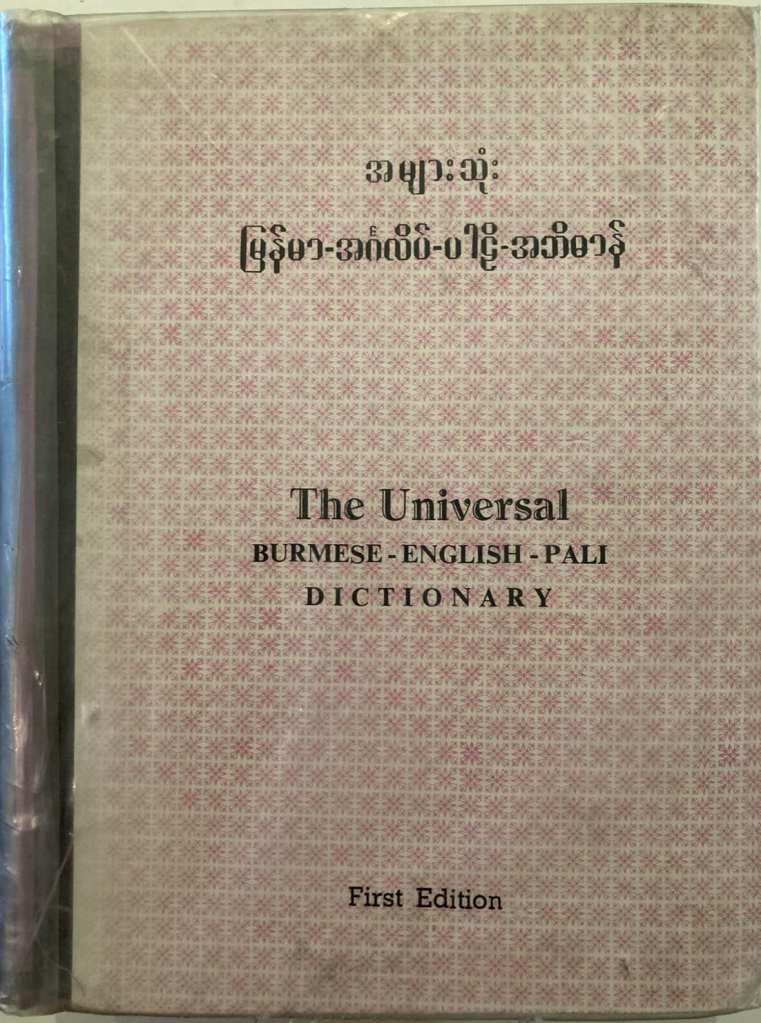
  • Myanmar / Burmese

    Language

    There are two forms of Myanmar / Burmese language.

    • Myanmar Sagar (Oral / spoken)
    • Myanmar Sar (Written)

    Alphabet

    The Alphabet has 33 Eik Khaya (loosely rendered as letter or character).

    Grouping

    There are several groups (Wagga) of five letters.

    Linguists and phonologists refer to the groups as

    • Gutturals (Ka group)
    • Palatels (Sa group)
    • Cerebrals (Ta-ta-lin-chaik group)
    • Dentals (Ta group)
    • Labials (Pa group)
    • The first group (known as “Ka” wag [or wagga]) consists of
      Ka (Ka gyi), Kha (Kha Gway), Ga (Ga Nge), Ga (Ga Gyi) and Nga.
      Note that the 3rd and 4th members have the same sound.

    Basic Rules

    • There are some basic rules for “Pa Sint” (where one letter is placed on top of the other).
    • One rule says “Eik Khaya Tu, Wag Tu Sint”. It means the two letters forming a “Pa Sint” must be the same, or from the same group.
      So, it is a “No No” to have a Ka on top of Sa.
    • Another rule says, “Even for letters within a group, the ordering must be preserved”.
      So, Ka can be put on top of Kha, but not the other way.
      Also, Ga Nge can be put on top of Ga Gyi, but not the other way.

    Byee and Thara

    • Ah is used as a Byee (Consonant) and sometimes as a Thara (Vowel).
    • A Burmese word can be formed with a Byee and one or more Thara.

    Typewriter Keyboard

    When the Burmese Keyboard was implemented for a typewriter (e.g. Olympia), the keys are labeled Red (keys that prevent the shifting of the carriage to type Thara) and Black (keys that signal the completion of the word and allows the carriage to advance).

    Word Processing

    The early Burmese word processing systems use

    • transliteration (e.g. on Apple Macintosh computers)
    • Thara before Byee (as in the typewriter)
    • Byee followed by Thara (which requires processing to delimit the words and to have a canonical ordering for representation).

    Issues

    • The Myanmar Sar Ah Phwe published two major revisions for spelling. It forced publishers to use “Tit” instead of “Ta” (without exception) with a fine of ten pyas for each “violation”.
      Scholars pointed out the ancient pagoda had “Bo Ta Htaung” and not “Bo Tit Htaung” in its inscriptions, but the group who wanted to please Number One prevailed.
    • There was a rush to implement Burmese type faces and type fonts.
      The implementations did not have consensus and did not address compliance (e.g. with Unicode).
      They led to the incompatibility issues in the current computer systems, smart phones and devices.
    • Short Messaging Systems inadvertently degraded the spelling prowess.
  • Myanmar Language

    Language

    There are two forms of Myanmar / Burmese language.

    • Myanmar Sagar (Oral / spoken)
    • Myanmar Sar (Written)

    Alphabet

    The Alphabet has 33 Eik Khaya (loosely rendered as letter or character).

    Grouping

    There are several groups (Wagga) of five letters.

    Linguists and phonologists refer to the groups as

    • Gutturals (Ka group)
    • Palatels (Sa group)
    • Cerebrals (Ta-ta-lin-chaik group)
    • Dentals (Ta group)
    • Labials (Pa group)
    • The first group (known as “Ka” wag [or wagga]) consists of
      Ka (Ka gyi), Kha (Kha Gway), Ga (Ga Nge), Ga (Ga Gyi) and Nga.
      Note that the 3rd and 4th members have the same sound.

    Basic Rules

    • There are some basic rules for “Pa Sint” (where one letter is placed on top of the other).
    • One rule says “Eik Khaya Tu, Wag Tu Sint”. It means the two letters forming a “Pa Sint” must be the same, or from the same group.
      So, it is a “No No” to have a Ka on top of Sa.
    • Another rule says, “Even for letters within a group, the ordering must be preserved”.
      So, Ka can be put on top of Kha, but not the other way.
      Also, Ga Nge can be put on top of Ga Gyi, but not the other way.

    Byee and Thara

    • Ah is used as a Byee (Consonant) and sometimes as a Thara (Vowel).
    • A Burmese word can be formed with a Byee and one or more Thara.

    Typewriter Keyboard

    When the Burmese Keyboard was implemented for a typewriter (e.g. Olympia), the keys are labeled Red (keys that prevent the shifting of the carriage to type Thara) and Black (keys that signal the completion of the word and allows the carriage to advance).

    Word Processing

    The early Burmese word processing systems use

    • transliteration (e.g. on Apple Macintosh computers)
    • Thara before Byee (as in the typewriter)
    • Byee followed by Thara (which requires processing to delimit the words and to have a canonical ordering for representation).

    Issues

    • The Myanmar Sar Ah Phwe published two major revisions for spelling. It forced publishers to use “Tit” instead of “Ta” (without exception) with a fine of ten pyas for each “violation”.
      Scholars pointed out the ancient pagoda had “Bo Ta Htaung” and not “Bo Tit Htaung” in its inscriptions, but the group who wanted to please Number One prevailed.
    • There was a rush to implement Burmese type faces and type fonts.
      The implementations did not have consensus and did not address compliance (e.g. with Unicode).
      They led to the incompatibility issues in the current computer systems, smart phones and devices.
    • Short Messaging Systems inadvertently degraded the spelling prowess.
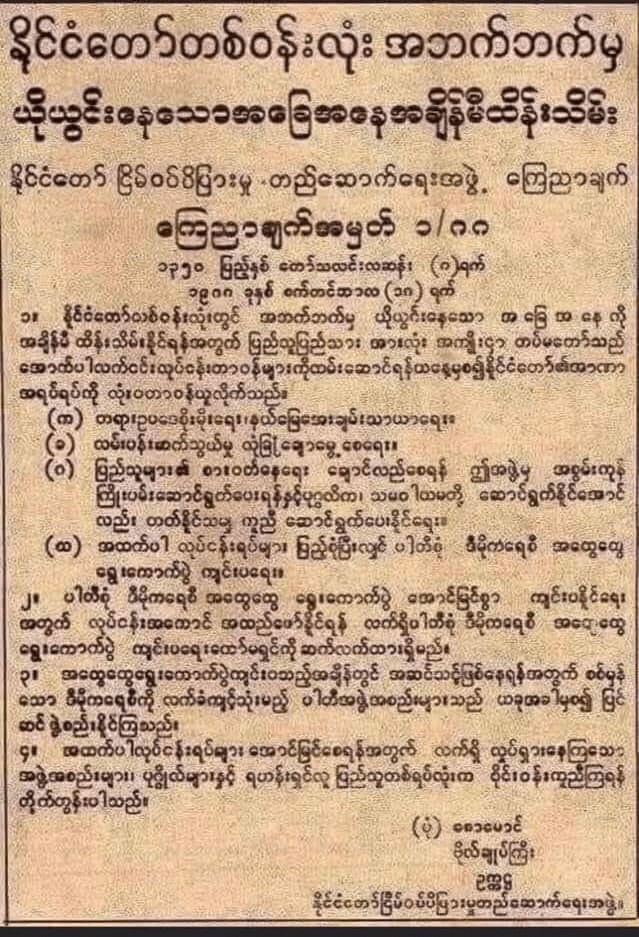
  • Coup d’etat

    • Soft coup in 1958
      In the guise of “Ain Saunt Ah Soe Ya” (Caretaker Taker Government)
      Initially requested 6 months to hold free and fair elections
      Actually, took 18 months (first of many broken promises by the Armed Forces)
    • First hard coup on March 2, 1962
      By the 17-man Revolutionary Council (headed by Bo Ne Win)
      Arrested President, Prime Minister & Cabinet Ministers
      Later arrested Chief Justice, Senior Police Officers, Politicians
    • Second coup on September 18, 1988
      By SLORC (State Law and Order Restoration Council) headed by Bo Saw Maung
      Crushed the 8-8-88 movement
    Proclamation in September 1988
  • Zoology Staff and Graduates

    သတ္တဗေဒ Zoology မိသားစု မှတ်တမ်း

    ပါမောက္ခ Dr. ဦးကိုကိုကြီး Prof. Dr. U Ko Ko Gyi

    ပါမောက္ခ Dr. Mrs. J. A. Lynsdale Prof.

    ပါမောက္ခ ဦးစိန်လွင် Prof. U Sein Lwin

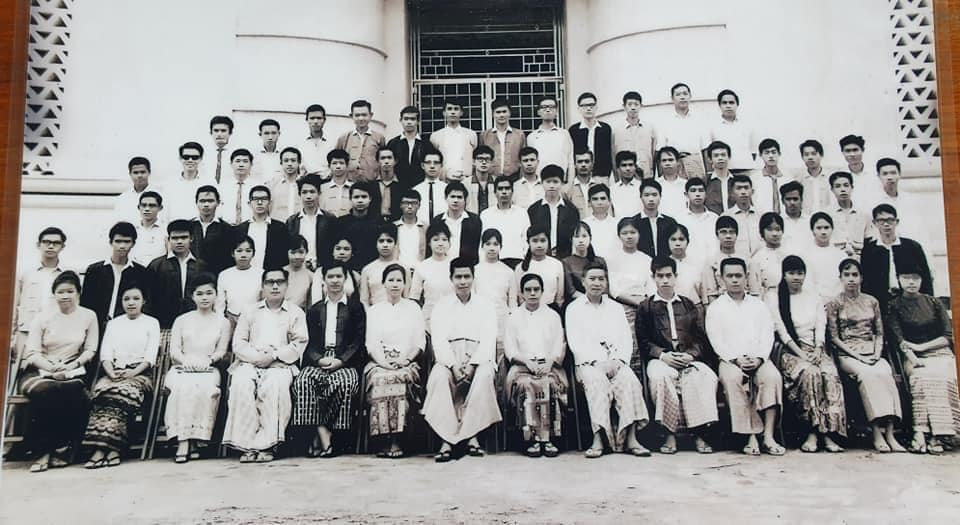
    1967 — နောက်ဆုံးနှစ်ကျောင်းသားများ Final Year

    Walter Su နဲ့ အဖွဲ့

    ဆရာဦးမြမောင်၊ ဆရာဦးစိုးသူ၊ ဆရာမဒေါ်ရှယ်လီ၊ ပါမောက္ခ Dr. ကိုကိုကြီး၊ဆရာမဒေါ်ခင်မေကြီး၊ ဆရာဦးဝင်းထင်

    1974 — မဟာသိပ္ပံဘွဲ့ M.Sc.

    Hazel Kyaw Zaw နဲ့ အဖွဲ့

    Dr. မာမာငြိမ်း Mar Mar Nyein

    ဓာတ်ပုံတချို့ ကို ကံ့ကော်မြေ( နှစ်တစ်ရာပြည့် တက္ကသိုလ်) မှာ post လုပ်

  • Active

    Grammar

    In our younger days, we had to study

    • Active Voice
    • Passive Voice.

    Advice by Sayagyi Dr. Aung Gyi

    Sayagyi Dr. Aung Gyi reminded us to be

    • Physically Active
    • Mentally Active
    • Socially Active.

    Physically Active

    • One can stay physically active by walking, running, biking, swimming or exercising at a gym.
      One should do proper warm up and cool down.
    • Saw Maung Maung Htwe (Intake of 64) was Inter-Institute Marathon Champion.
      He stays fit by running daily and competing in long distance events all over Myanmar.
      He is the most senior among the active Marathoners.
      In 2018, I met him in Mandalay, where he had just completed his long distance race. We had a quick chat.
      In 2019, I saw him running all the way to attend the Reunion and Acaiya Pu Zaw Pwe of the Combined 1st BE Intake of 64 and 65.
    • Khin Maung Myint (M71) stays active by competing in events in several countries.
      He represented RIT in Rowing.
      There are three Khin Maung Myint in the Class of 71.

    Mentally Active

    • One can stay mentally active by reading, writing, playing word games & cards, and meditating.
    • One can also exercise one’s mind (e.g. recalling the events associated with a picture).
    • Ivan Lee’s mother lived up to be 102 by being mentally active.
      She played Mah Jong two hours daily.

    Socially Active

    • One can stay socially active by attending events (e.g. Toastmasters International, Meetups, celebrations).
    • One can also be active on the Social Media.
    • I have 2600+ posts in my web site hlamin.com
      I am Admin or Moderator in selected Facebook groups such as
      RIT Updates
      Fun with Learning
      RU Centennial
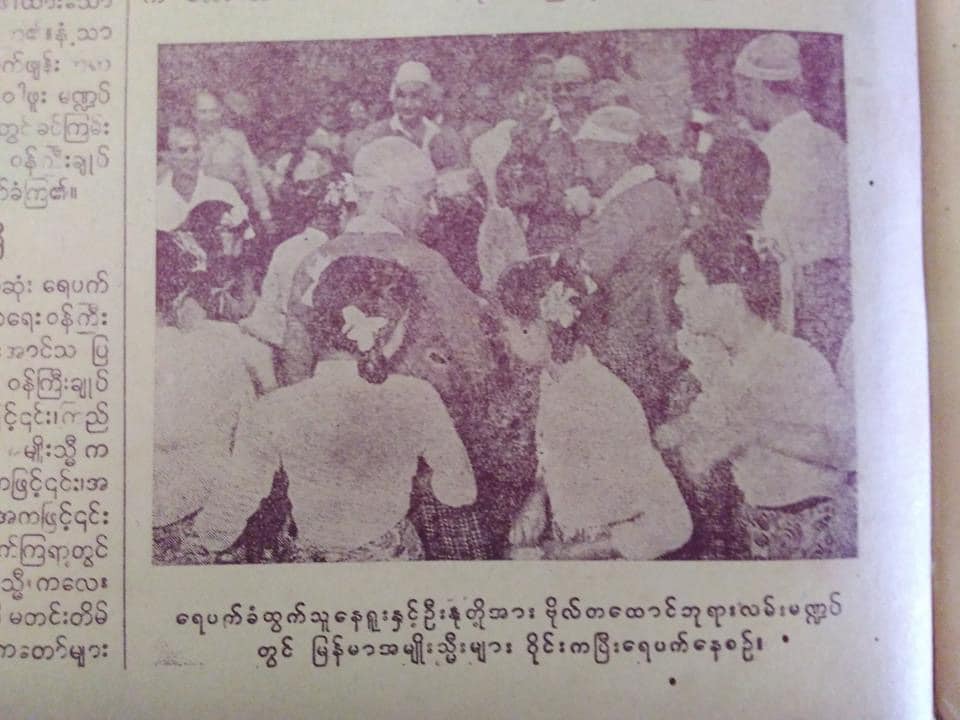
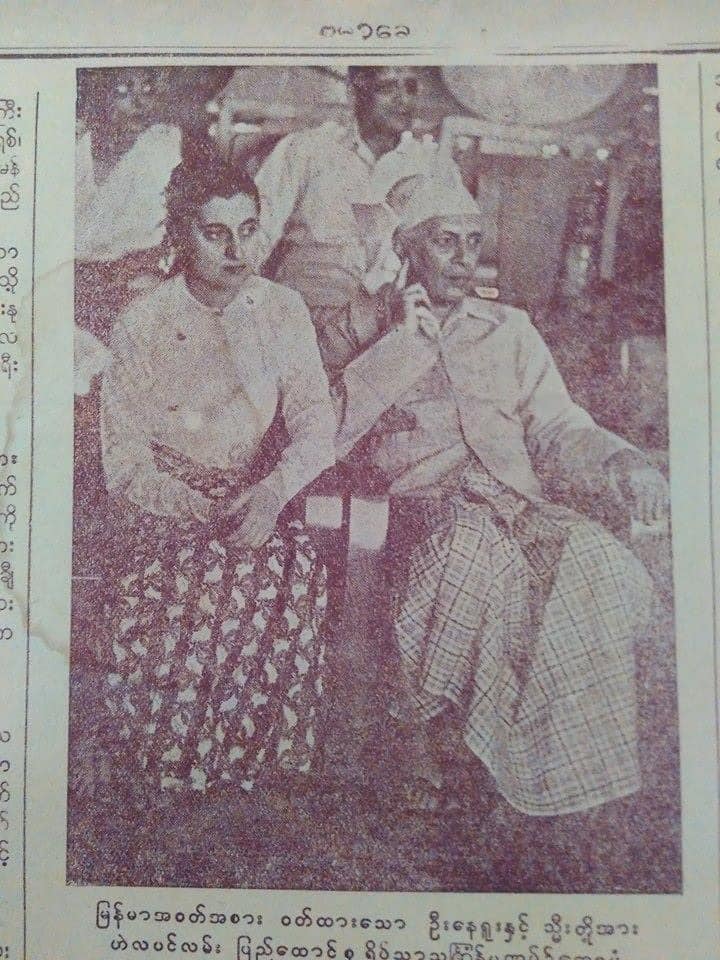
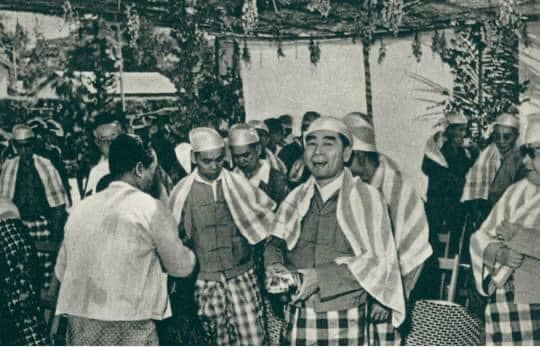
  • Visits by Foreign Leaders

    ဧည့် — နိုင်ငံခြား ခေါင်းဆောင် (တချို့)

    ဟိုချီမင်း Ho Chi Minh

    နေရူး Nehru

    ချူအင်လိုင်း Chou En Lai

    နာဆာ Nasser

    အထွေထွေ

    • သင်္ကြန် Thingyan”
      Water Throwing Festival
    • Non-aligned Movement
      Bandung Conference
    • Indira Gandhi (နောက် — ဝန်ကြီးချုပ်)
      Accompanied her father Nehru
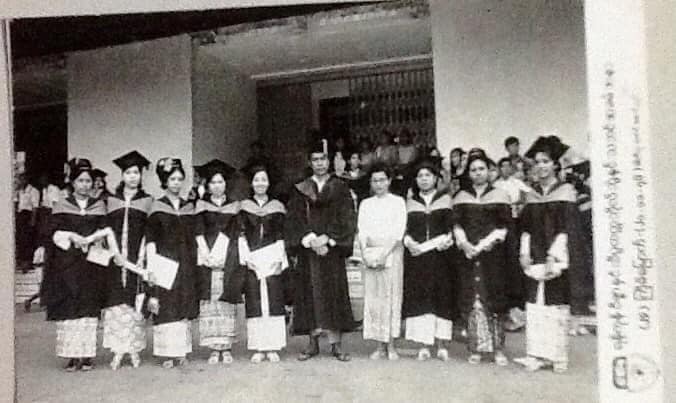
  • Early Female Engineers

    ကနဦးအမျိုးသမီးအင်ဂျင်နီယာများ

    1961 Textile ချည်မျှင်နှင့်အထည် အင်ဂျင်နီယာ

    * ဆရာမ ဒေါ်ဂျူလီဟန် (နောင် Dr) — Julie Han

    * ဆရာမ ဒေါ်တင်တင်အုန်း / အေမီသွင် — Tin Tin Ohn / Amy Thwin

    * ဒေါ်ရင်ရင်ကြည် — Daw Yin Kyi

    * ဒေါ်မိမိလေး — Daw Mi Mi Lay

    1961 Chemical ဓာတုအင်ဂျင်နီယာ

    * Pauline Reynolds

    1962 Textile

    * ဒေါ်ခင်သန်းနွယ် — Khin Than Nwe

    အထွေထွေ General

    * S Begum — ပထမ ဆုံး ကျောင်းသူ

    A60 batch

    Left before graduation

    * ဒေါ် Dolly သွင် ChE64 — Ni Ni Thwin / Dolly Thwin

    * ဒေါ်ခင်သိန်းရီ ChE65

    * ဆရာမ ဒေါ်တင်မြင့် ChE66