Category: Buddhism

Sayadaws, Suttas, Terms

  • Perfect

    Perfect

    by Hla Min

    Updated : May 2025

    Parami ပါရမီ

    • Pali word
    • Usually rendered as “Perfection“.

    There are Thirty Paramis:

    • Ten Paramis
    • Ten Upapa Paramis
      Higher grade Paramis
    • Ten Paramattha Paramis
      Highest grade Paramis

    Marks

    In our younger days, a score of 100 marks in an examination is considered perfect.

    Our High School Mathematics teacher Brother Clementian (former Brother Director who continued teaching till his final days) trained us to take an hourly weekly test comprising of three questions. So, most students were on track to complete the three hour Matriculation examination in two hours or less and gain Distinction in Mathematics.

    A score of 100 could not single out Mathematical geniuses like Dr. Min Oo (SPHS63, Second in Burma, Two doctorates in Mathematics from Germany) and gifted scholars and researchers like Dr. Khin Maung U (SPHS63, First in Burma, MD).

    Gymnastics

    1972 Munich Olympics saw all judges gave a young woman gymnast Olga Korbut (Soviet Belarusian) perfect Tens.

    1976 Montreal Olympics saw more perfect Tens for Nadia Comanche (Romanian).

    Some critics wonder how to judge superior performances in the future gymnastic competitions.

    Perfect shapes

    The ancient sages appreciate perfect shapes such as equilateral triangles, squares, regular polygons and the circle.

    Some astronomers felt that the planets should orbit in perfect cycles. To calculate the path of the planets, they hard to resort to the use of epicycles in their models.

    Kepler found out that the planets conserve their energy by following an elliptical path. The planets will need far more effort and energy to maintain the supposedly perfect circular paths.

    An ellipse has two foci, a major axis and a minor axis. It is a supposedly imperfect shape, but the limiting case approaches a circle with a center (for a single focus) and the lengths of the major axis and minor axis being equal.

    High cost for Perfection

    The search for perfection may have some negative effects in research.

    The 90/90 rule says that in the search for the perfect completion of a project, the last 10 percent could take up resources equal to that of the first 90 percent.

    Charles Babbage had excellent ideas for the Difference Engine and the Analytical Engine, but his search for perfection in the design and implementation left both projects incomplete.

    Imperfectly Perfect

    • I am imperfectly perfect.
    • Usually type straight for most of my posts without reference to notes and references.
    • Several readers pointed out the discrepancies and errors.
    • Glad to share my memories, experience and knowledge.
    • Some inquiring minds might transform my writings into high quality texts for posterity.
  • Meditation

    Meditation

    by Hla Min

    Updated : May 2025

    Types of Meditation

    The Scriptures describe 40 kinds of Meditation.

    The methods generally fall into

    • Samatha (Concentration Meditation)
    • Vipassana (Insight Meditation)

    Samatha

    In Samatha, one chooses a “Meditation Object”. In the early days, some practitioners chose a white or colored disk (Kasina) as a Meditation Object. By fixing one’s eyes and thoughts on the Meditation Object, one can develop Concentration.

    Some practitioners chose “Ana Pana” (Out-breath and In-breath). For example, one can note the direction, direction and hardness/softness of the breath.

    One may attain one level of more Jhana (Absorption).

    Vipassana

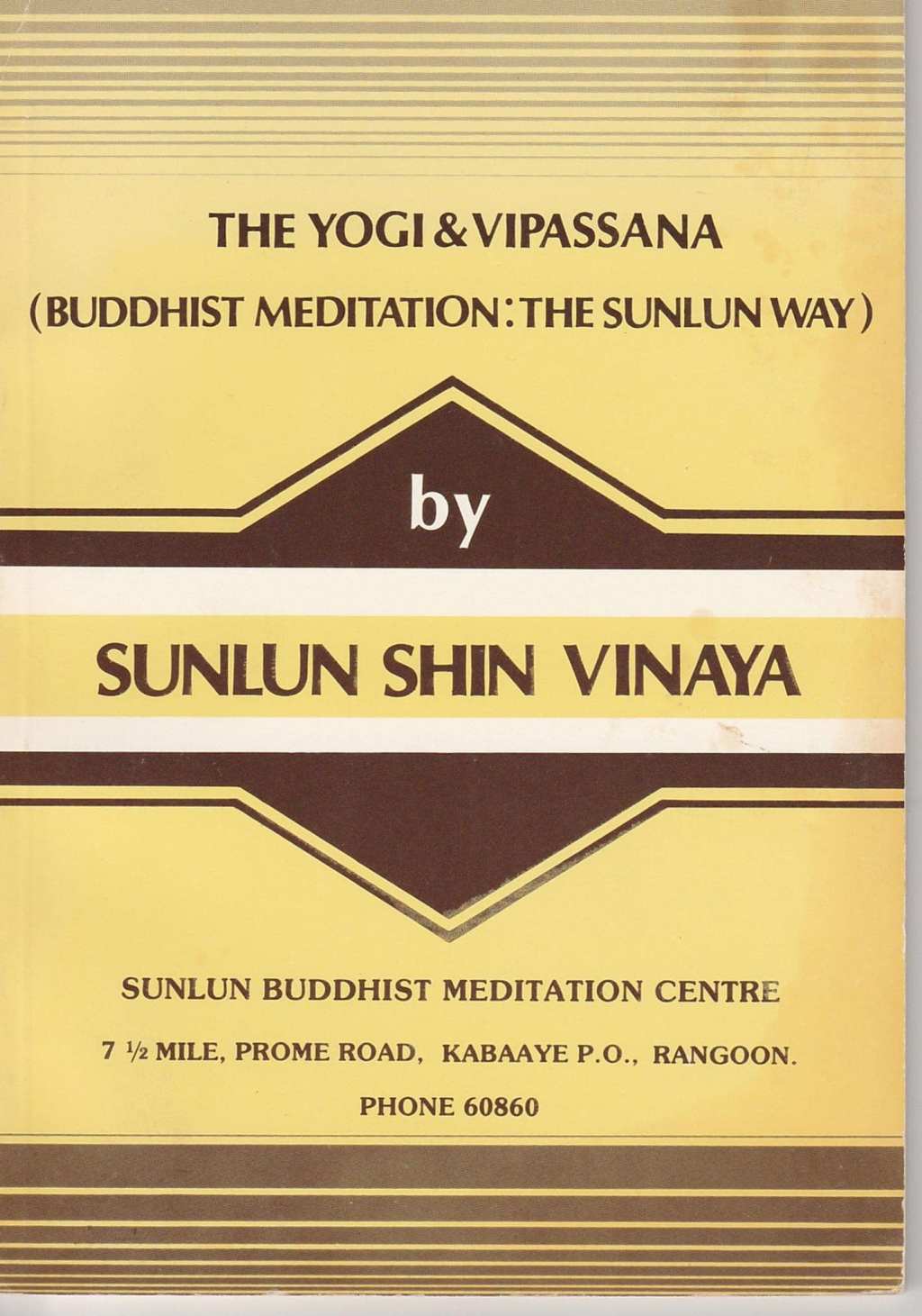
    Vipassana book

    Vipassana means

    • various ways of seeing
    • seeing things as they truly are.

    A practitioner may choose a Primary Object for the meditation session. Depending on the tradition of the Mediation Master, the Primary Object can be a nostril, nge dait (part of the head), abdomen, or the body (e.g. touching the mat or floor).

    Then, one practices one of the “Four Foundations of Mindfulness” by being aware of the Kaya (Physicality), Vedana (Feelings), Citta (Mind) and Dhamma (General artifacts for meditation).

    One may practice Meditation using one of four postures.

    One may be able to experience

    • Nama and Rupa
    • Anicca, Dukkha, Anatta
    • Stages of development ultimately leading to Liberation.

    In the West, some people try Meditation

    • to experience relaxation and tranquility
    • as an alternative medical treatment (allowed by some Health Insurance).
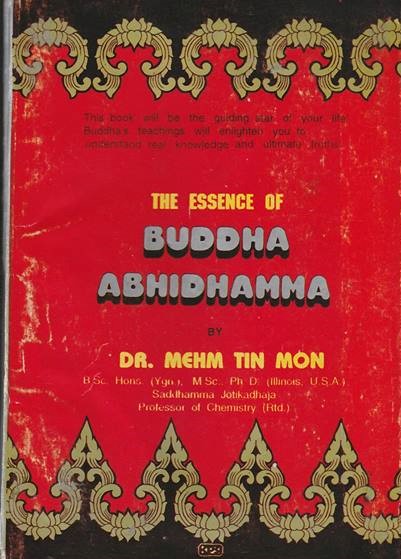
  • The Essence of Buddha Abhidhamma

    The Essence of Buddha Abhidhamma

    by Hla Min

    Updated : May 2025

    Book

    Author : Dr. Mehm Tin Mon

    First Printing, April 1995

    Publisher : Mehm Tay Zar Mon Yadana Min Literature

    Foreword : Sao Htun Hmat Win

    Mehm Tin Mon

    Preface

    Buddha’s Teachings

    The significance of Abhidhamma

    What is the mind?

    An intellectual treat

    The Essence of Buddha Abhidhamma

    Introduction

    Chapters

    1. Citta (Consciousness)

    2. Ctasikas (Mental Factors)

    3. Pakinannaka (Miscellaneous Section)

    4. Vithi (Process of Consciousness)

    5. Vithimut or Bhumi (Planes of Existence)

    6. Rupa (Matter)

    7. Samuccaya (Compendium of Ultimate Realities)

    8. Paccaya (Cause or Condition)

    9. Kammatthana (Subjects of Meditation)

    Conclusion

    References

    Index

    Abhidhamma Charts

  • U Thittila (1896-1997)

    U Thittila (1896-1997)

    by Hla Min

    Updated : May 2025

    • Ovadacariya to Sanagha Maya Nayaka, trustees of renowned pagodas
    • Outstanding teacher and writer
    • Played an important role in reviving Buddhism in India and propagating the study of Abhidhamma
    • Very modest; rarely talked about his many achievements
    • Patamagyaw scholar of all Burma (1918) : selected from among 5000 candidates
    • Panyattisasanahita (1923) : among the 4 out of 150 entrants who passed the toughest monastic examination
    • Studied Sanskrit in India; English in India and England
    • Lectured in US, UK, France, … (25+ countries)
    • Translated Vibhanga (second of the seven Adbhidhamma texts) from Pali to English : published by the Pali Text Society in 1969 under the title of The Book of Analysis
    • Essential Themes of Buddhist Lectures
    • Collection of unconnected individual talks given between 1938 – 1983
    • Part 1 : Introductory articles or Talks of Buddhism (10 lectures)
    • Part 2 : Talks involving Sila in particular (5 lectures)
    • Part 3 : Talks involving Samadhi in particular (12 lectures)
    • Part 4 : Talks involving Panna in particular (4 lectures)
    • Part 5 : Talks dealing with Buddhism in general (12 lectures)
  • Dhammacakkappavatttana Sutta

    The Great Discourse on the Wheel of Dhamma

    • Teacher : The Venerable Mahasi Sayadaw
    • Translator : U Ko Lay
    • Sukhi Hotu Dhamma Publication 1998

    PART I

    • Preface to the Discourse
    • The Date of the Discourse
    • Three Kinds of Introduction

    PART II

    • Sensuous gratification is base and vulgar
    • Dittadhamma Nibbana Vada
    • A low, common practice

    PART III

    • Elaboration of the Eight-fold Path

    PART IV

    • Truth of Suffering (Dukka Sacca)

    PART V

    • Samudaya Sacca

    PART VI

    • Nirodha Sacca

    PART VII

    • Sacca Nana with regard to Dukka Sacca
    • Kicca Nana with regard to Dukka Sacca
    • Kata Nana with regard to Dukka Sacca

    PART VIII

    • When the Buddha did not admit Enlightenment
    • Acknowledgement of Buddhahood
    • Concluding statement
  • The Dawn of Wisdom

    Subtitle : On the Practice of Vipassana Satipatthana

    by Sayadaw U Lakkhana (of Sagaing Hills)

    Translator : U Mya Thaung

    Editor : Gregory Pai, Ph.D.

    Publisher : Sukhavati

    Dhamma dana publication, 2002

    Contents

    Four Foundations of Mindfulness

    Basic Satipatthana Instructions

    The Hindrances (1)

    The Hindrances (2)

    The Hindrances (3)

    Effort, Mindfulness, and Concentration

    Right Aim

    Right Effort

    Insight Knowledge

    The Home Object and Walking Meditation

    Walking Meditation and Insight Knowledge

    Walking Meditation

    Clear Comprehension (1)

    Clear Comprehension (2)

    The Three Characteristics

    Discerning Mind and Body

    Contemplation of Feelings

    Painful Bodily Feelings

    The Truth of Suffering

    Conclusion

  • The Four Foundations of Mindfulness

    • THE FOUR FOUNDATIONS OF MINDFULNESS
    • Author : Venerable U Silananda
    • Editor : Ruth-Inge Heinze, Ph.D.
    • Wisdom Publications
    • First Printing : 2002
    • Foreword by Larry Rosenberg, Cambridge Insight Meditation Center

    PART I : COMMENTARY

    Introduction

    1. Contemplation of the Body in the Body

    2. Contemplation of Feelings

    3. Contemplation of Consciousness

    4. Contemplation of the Dhammas

    5. Assurance of Attainment

    PART II : THE GREAT DISCOURSE ON THE FOUNDATIONS OF MINDFULNESS

    PART III : MEDITATION INSTRUCTIONS

    Notes

    Glossary

    Select Bibliography

    Index

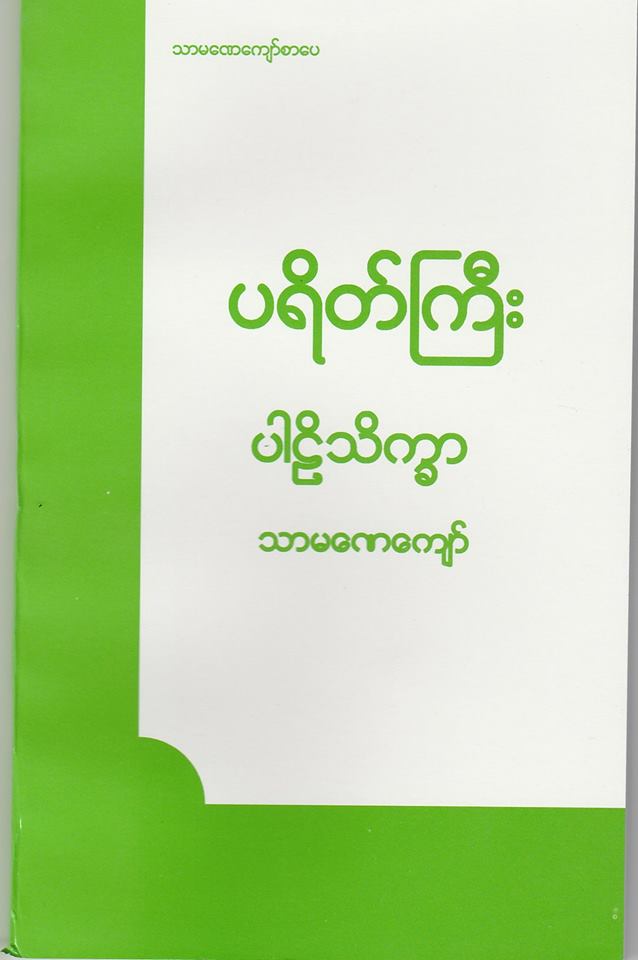
  • Patthana

    It is the 7th text in Abhidhamma

    Book of Conditional Relations

    1. Root Condition
    2. Object Condition
    3. Predominance Condition
    4. Proximity Condition
    5. Contiguity Condition
    6. Co-nascence Condition
    7. Mutuality Condition
    8. Dependence Condition
    9. Strong-Dependence Condition
    10. Pre-nascence Condition
    11. Post-nascence Condition
    12. Repetition Condition
    13. Kamma Condition
    14. Resultant Condition
    15. Nutriment Condition
    16. Faculty Condition
    17. Jhana Condition
    18. Path Condition
    19. Association Condition
    20. Disassociation Condition
    21. Presence Condition
    22. Absence Condition
    23. Disappearance Condition
    24. Non-Disappearance Condition

    Patthana in Daily Life

    Subtitle : An introduction to the Law of Conditionality
    Author : U Hla Myint
    Publisher : Tathagata Meditation Center, 2010

    CONTENTS

    Introduction

    Root condition : Hetu-paccayo
    Fascination (Sense-object) condition : Arammana-paccayo
    Predominance condition : Adhipati-paccayo (sahajata, arammana)
    Continuity condition : Ananatara-paccayo
    Contiguity condition : Samanantara-paccayo
    Co-nascence condition : Sahajata-paccayo
    Mutuality condition : Annamanna-paccayo
    Dependence condition : Nissaya-paccayo (shajata, purejata)
    Strong-dependence condition : Upanissaya-paccayo (aramana, anantara, pakatupa)
    Pre-nascence condition : Purejata-paccayo (vatthu, araammana)
    Post-nascence condition : Pacchajata-paccayo
    Repetition condition : Asevana-paccayo
    Kamma condition : Kamma-paccayo (shahajata, mamakkhanika)
    Resultant condition : Vipaka-paccayo
    Nutriment condition : Ahara-paccayo (sahajarta, kabalikara)
    Faculty condition : Indriya-paccayo (shajata, rupajivita, vatthu-purejata)
    Jhana condition : Jhana-paccayo
    Path condition : Magga paccayo
    Association condition : Samapyutta-paccayo
    Disassociation condition : Vipayutta-apccayo (sahajata, pacchajata, vatthupurejata)
    Presence condition : Atthi-apccayo (sahajata, pacchajata, vatthupurejata)
    Non-disappearance condition : Avigata-paccayo
    Absence condition : Natthi-paccayo
    Disappearance condition : Vigata-apccayo

    Conclusion

    Resources

    • Patthana Theikpan (College)
    • Basic, Intermediate, and Advanced Courses on Patthana
    • A Manual of Abhidhamma
    • Charts, illustrations, mnemonics
    • Computer programs to study Patthana
    • Tri-lingual book (in Pali, Myanmar, and English)
  • Buddhist Association

    • Saya Dr. Thein Hlyne
    Dr. Thein Hlyne (Center)
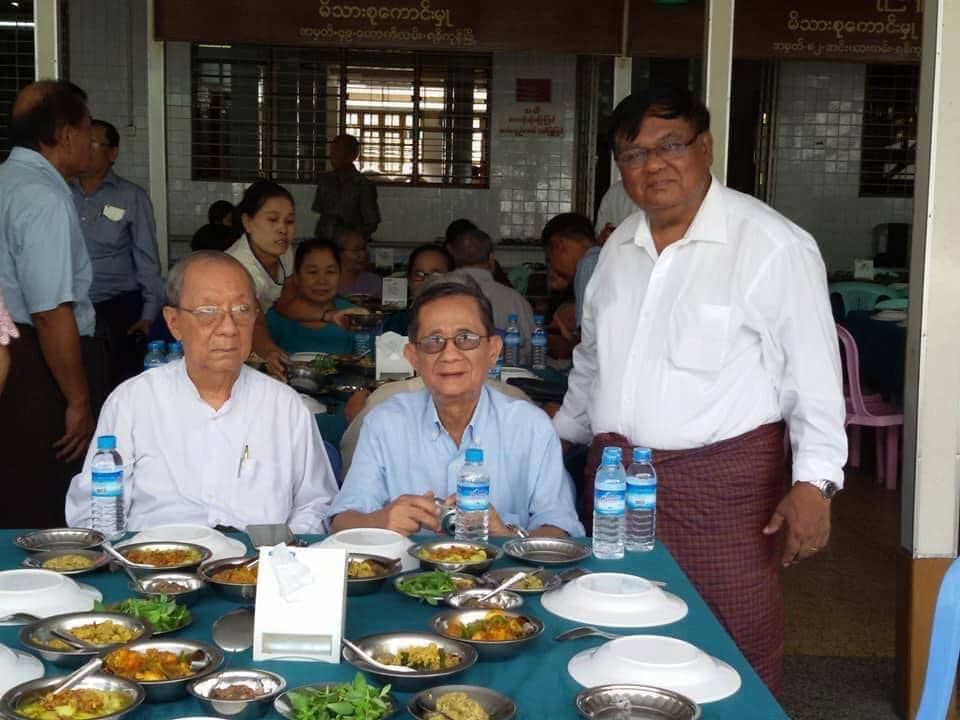
    • Saya U Lin (M66)
    U Lin (2nd from Right)
    • Saya U Tin Shwe (EP66, GBNF)
    U Tin Shwe
    • Saya U Soe Myint (Min83)
    • U Kyi Twe (A70)
    • U Maung Maung Lay
    • U Myint Soe (M79)
    • U Sein Win (C80)
    • U Maung Maung Lay

    The Association’s activities include

    • Kathein robe offering
    • Library of books on Buddhism
    • Ovada of sayas and sayamas
      attending SPZP-2012
      attending SPZP-2016
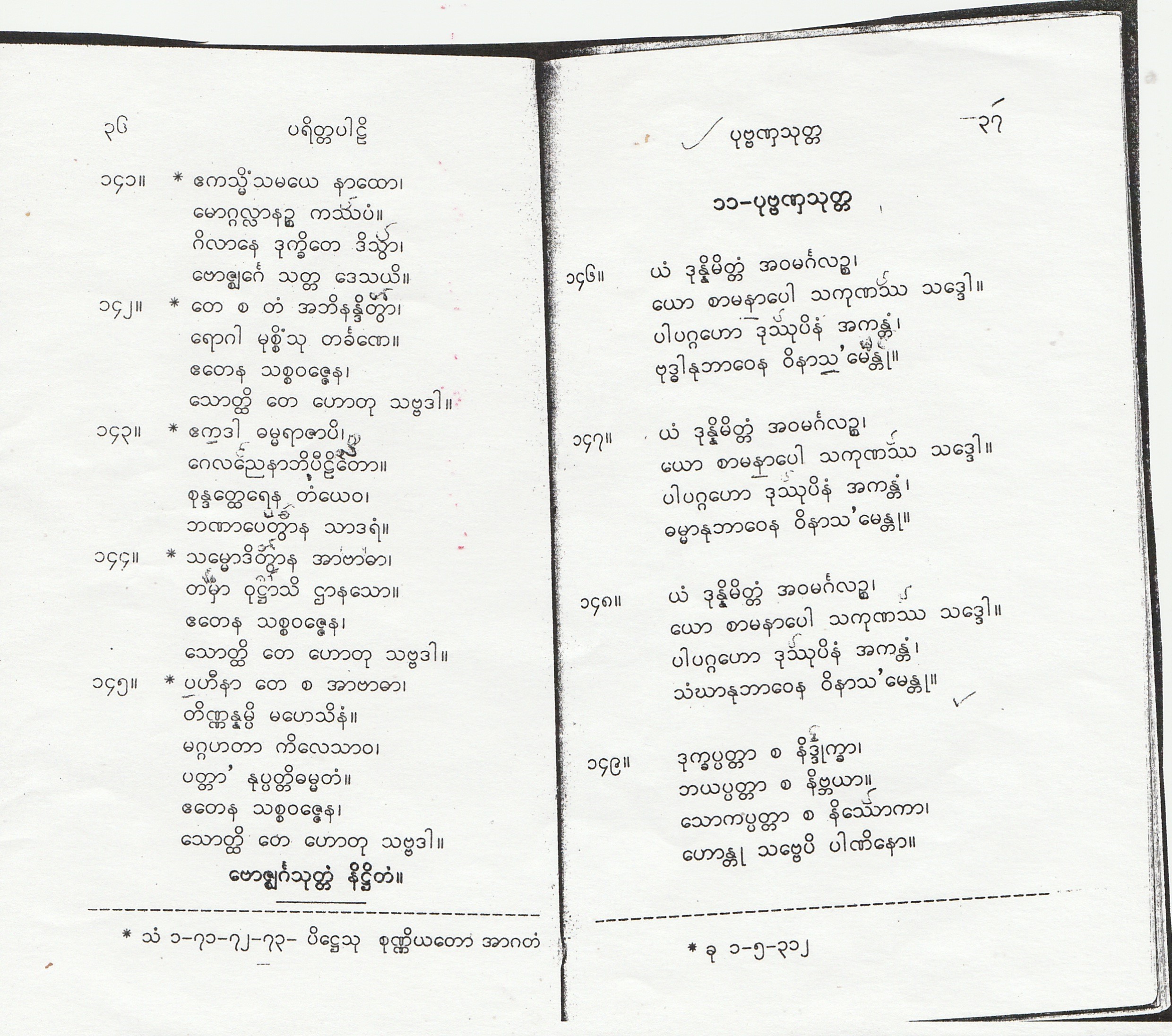
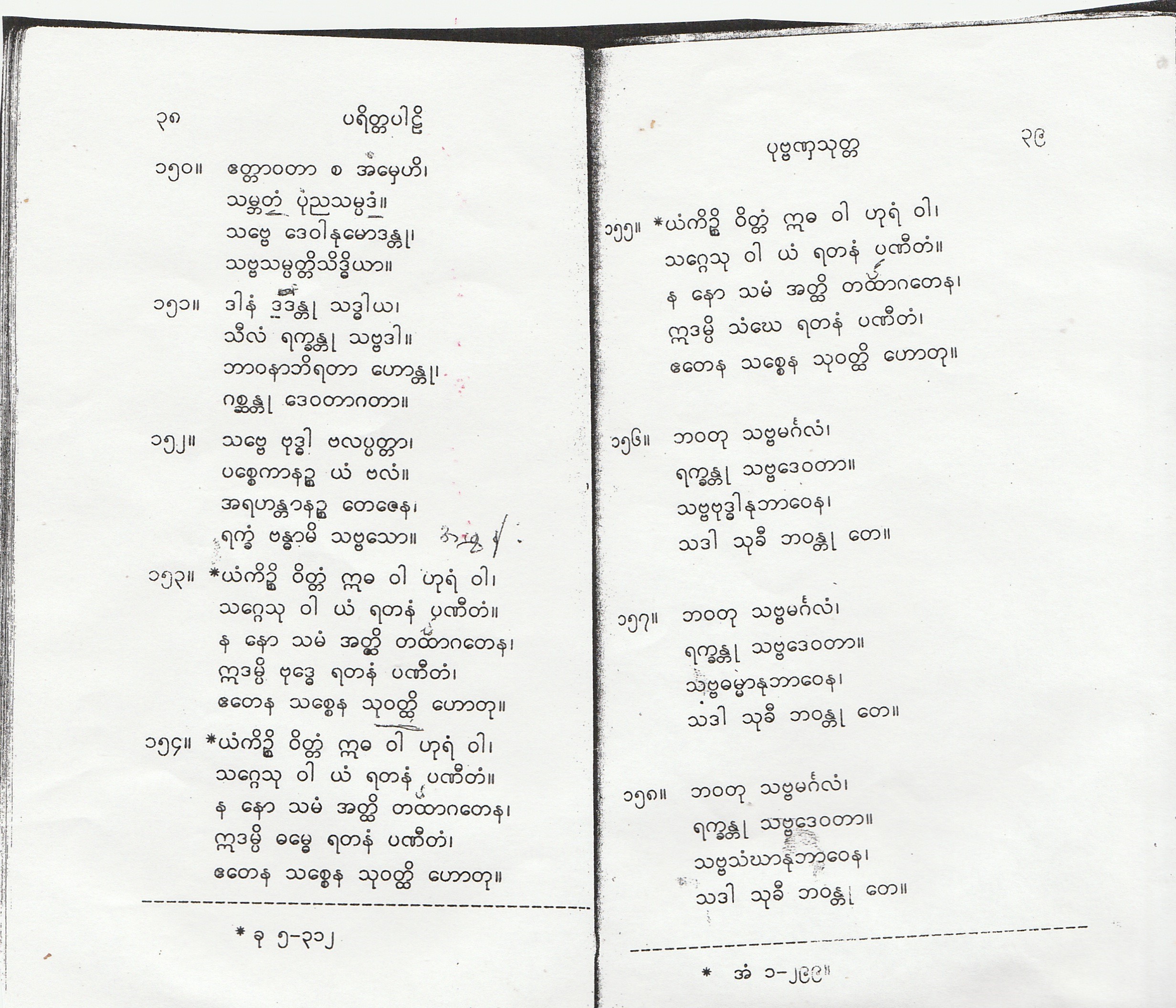
  • Pubbhana Sutta

    Paritta
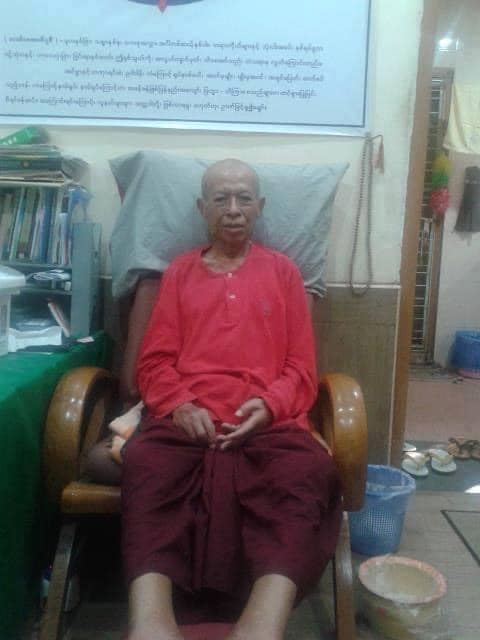
    U Silananda
    Pa Yeik Kyee

    No need to wait for lucky stars

    • 11th Sutta in “Paritta Pali
    • For protection against bad omens, etc. and gaining happiness

    Four verses from the Scriptures
    Verse numbering per Sayadaw U Silanandabhivamsa

    • Verse 153 (of “Paritta Pali”)
      Assertion of truth about the “Accomplished One”
    • Verse 162 (of “Paritta Pali”)
      “every day can be auspicious day”
      On the day meritorious deeds are performed, the stars are auspicious, blessings are suspicious, … , the time is auspicious. Offerings made to the holy ones on such a day are well-offered.
    • Verse 163 (of “Paritta Pali”)
      three kinds of felicitous actions : bodily, verbal, mental
    • Verse 164 (of “Paritta Pali”)
      Good deeds
      Good results
      (a) Growth in the Dispensation of Buddha
      (b) have bliss
      (c) free from diseases
      (d) happy together with your relatives
    • The rest composed by compilers

    Pali (in Burmese Script)

    This image has an empty alt attribute; its file name is pp-36-37-1.jpg
    This image has an empty alt attribute; its file name is pp-38-39.jpg
    This image has an empty alt attribute; its file name is pp-40-41.jpg