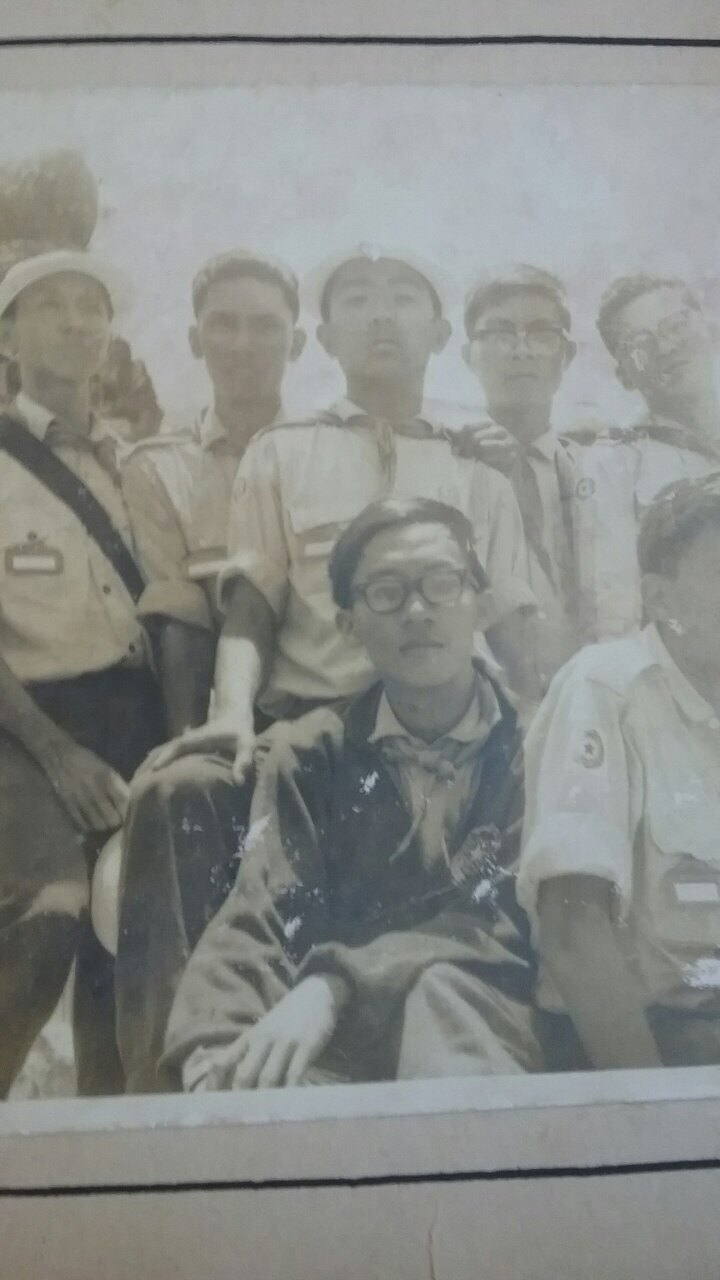
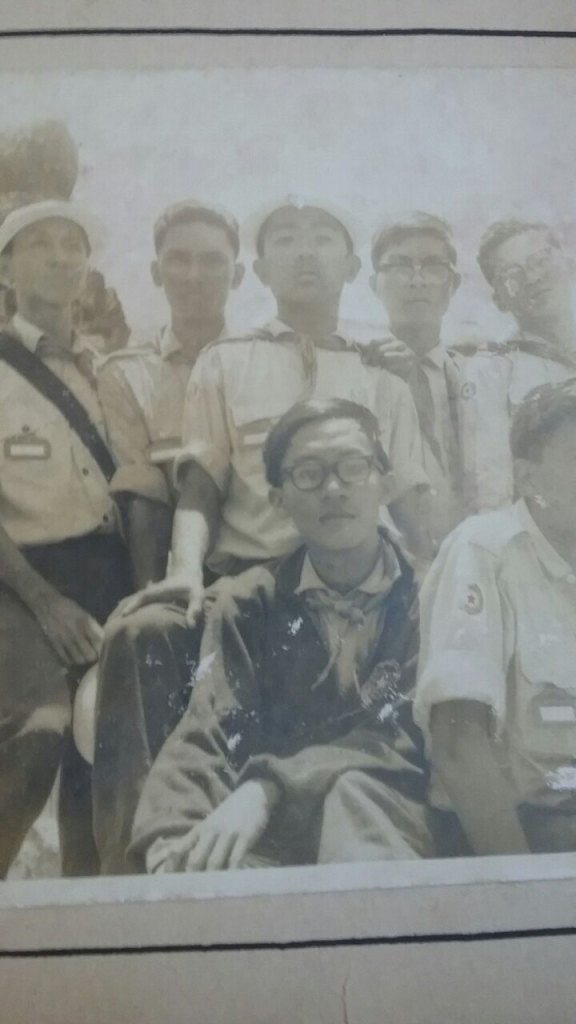
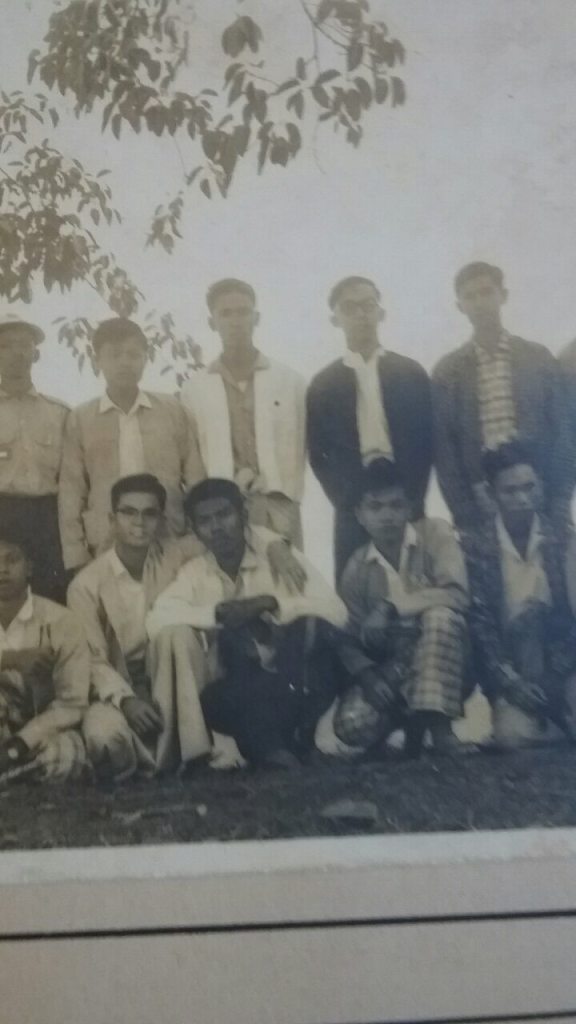
Author: Hla Min (Lifelong Learner)

  • U Kyaw Myint

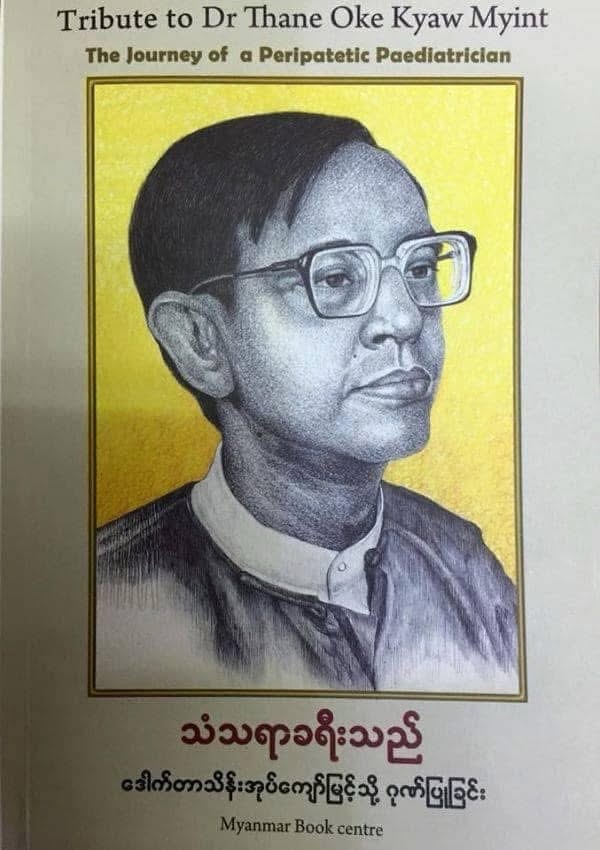
    by TOKM & Hla Min

    Updated : June 2026

    Introduction by Hla Min

    U Kyaw Myint

    He had a checkered life with a a series of setbacks and victories. His life is brilliantly recounted by his son Dr. Thane Oke Kyaw Myint (Pediatrician).

    Several readers have compared the accounts as befitting a romantic novel or historical episodes.

    Connections

    I first knew him as a dhamma friend of my parents. The two families helped build the Dat Poung Zon Aung Min Gaung Pagoda and supported Mon Sayadaw U Thilawuntha.

    Two paternal uncles (who are Barristers) worked at his Law firm.

    His son Dr. TOKM was my senior at SPHS. He became a saya of my beloved spouse at IM(1). He took care of my two young sons. When I published “Trivia” posts, he provided comments and details to several posts.

    I learned more about his father, uncles and aunts first via his commentaries and now via his articles (e.g. the value of emotional intelligence and brotherhood, the indomitable spirit). He also covered notable events and people.

    The Brief Biography of U Kyaw Myint appeared in “Who’s Who in Burma”.

    U Kyaw Myint’s Brief Biography

    He was born in April 18, 1898 in Zalun Henzada district. He is the second son of U Pein, K.S.M, A.T.M, Deputy Commissioner and Daw Mi Mi.

    Seven Siblings / Outstanding Burmans

    • ICS U Tin Tut is known as a diplomat, journalist and for being a victim of the the political assassination. Details can be found in the post “The Empty Tomb” and related articles on the unsolved mysteries of Burma. He is the first Burmese ICS by invitation.
    • U Kyaw Myint
      His life is covered in this post. It was first published as a series of articles in Facebook.
    • U Myint Thein was Chief Justice of the Union of Burma. He was detained in the Coup d’etat on March 2, 1962. He was Ambassador to China.
      Pen name : MMT
      Spouse : Daw Phwa Mi (first Burmese Female Barrister)
    • Dr. Htin Aung
      Principal, Rangoon College
      First native Rector, Rangoon University
      Vice Chancellor, Rangoon University
      Diplomat, Ceylon
      Scholar : Oxford & Cambridge
      Author, Historian & Folklorist
    • Daw Khin Mya Mu
      Kyauk Sar Specialist
      Thamadi Myo Wun
      Spouse : Professor U E Maung
    • Daw Khin Saw Mu
      Early graduate of Burmese Department, RU
      Khit San Poet
      Spouse : ICS U Ba Tint
      Children : Daw Khin Saw Tint & Nay Oke
      Daw Khin Saw Tint wrote an article about her mom and aunts
    • Daw Tin Saw Mu
      Lecturer, English Department, RU
    Mesopotamia (Action during WWI)

    My Father

    U Kyaw Myint

    By Dr. Thane Oke Kyaw Myint (SPHS60)

    My father had a very chequered life.

    Early Life

    Short stay at Rangoon College

    He stood first in the Matriculation examination at the age of sixteen. He had distinction in all subjects including shorthand and typing. He got scholarship when he entered Rangoon College in June 1914 but was expelled from the College in July 1914.

    There was going to be a scholarship exam to enter Calcutta University. The Principal of Rangoon College, Mr. Mathew Hunter had chosen two bright young men to take the exams to enter medical college in Calcutta. The two students for this exam were my father and Sayagyi U Ba Than. They were very close friends.

    Just before the exams, my grandmother passed away in upper Burma where my grandfather was working. Father went to the Principal to give him leave to attend his mother’s funeral. But the dates would clash with the exams and Mr Hunter refused his permission. Father was told that if he went without the Principal’s agreement, he would be expelled on return.

    My father went in time for the funeral but on return, as told to him earlier he was expelled from the College.

    Self Support

    My grandfather was very angry with my father being expelled. Father was told not to come back to the family.

    Father supported himself by doing a unique job. He traveled from Pegu passing through small towns and villages. At that time, there were many Burmese women who had children by Englishmen, and were common law wives. The Englishmen had left Burma, but they did not money regularly.

    On behalf of the women, father wrote letters in English to the men in England. He was offered food, small amounts of money, and a place to stay.

    He continued doing this, going up the country till he reached Myitkyina some months later.

    Bombay Burma Company

    Due to father’s expertise in short hand and typing, a young English man from Bombay Burma Company gave father a job as a clerk and secretary. Father told me about the kindness of the English couple who let him stay with them.

    Apart from Secretary work, he had to go with workers to the teak trees that had been cut down and later sent them down the Irrawaddy to Rangoon. Father had to supervise that the Bombay Burma Company seal was hammered deep at the end of the logs. The logs were floated down the Irrawaddy river. Logs with the seal were collected and exported to England.

    Illness

    A year later father had cerebral malaria and it was the young couple who looked after him during the illness.

    Enlistment and Assignments

    Father stayed on with the English couple till the end of 1916. By that time the war that was said to last only one year had to gone into its third year with no resolution. There were many casualties and new fronts for the conflict. The English government intensified their recruiting efforts.

    The young Englishman and his wife returned to England. The husband joined the army.

    Father did not want to continue working in Myitkyina. He also thought of enlisting for the war.

    He first went to Pegu to reconcile with his father. Grand father was doing a job what would be equivalent to a District Commissioner (DC) but being Burmese was given the post as Extra Assistant Commissioner (EAC) but doing the same job.

    Burmese doctors were appointed as Sub Assistant Surgeon (SAS). They had to work like surgeons and civil surgeons.

    NB: the status of Burmese doctors before Independence can be read in the books by Dr. U Myint Swe.

    In spite of my grandfather telling him not to enlist, father went ahead for enlistment.

    The place for enlistment was the at the Cantonment (which was Burmanized as “Kan Daw Min” Park). It is the place with a small lake near the Shwe Dagon Pagoda.

    At that time, no Burmese would be accepted. One must either be an Anglo-Burman or and Anglo-Indian.

    When asked, father gave his name as “John Henry Wilson”. He could be taken for an Anglo because he was very fair with sharp facial features.

    Next he was asked to go against the wall to measure his height. Father was only five foot two inches. When the sergeant cane to measure him, he stood up on his toes so that it would be five foot four (the required height for a soldier).

    The sergeant asked him whether he really wanted to serve, and getting an affirmative, the sergeant write down on his enlistment as “John Henry Wilson, Anglo-Burman, five foot six”. Father became a soldier.

    Note:

    Since, the English keeps excellent records, there must be enlistment records for the regiment that above item written down above, would still be there in their archives.

    I visited the Middle Temple Inn in London, from where my father was called to the Bar. I wanted know about my father, the Librarian asked me for date of being called, went in, back in about 15 mins and gave me a copy of information of my father as recorded in their archives.Will write more about this in a later post “My father: the Barrister”

    I tried to remember but still could not get the place in India where he was sent. I only remembered that it was in a cantonment not far from Dehli.

    Father was sent to where the Gloucester Regiment, the 12th Battalion was billeted. He got his training, stayed there for some time rising to the rank of corporal.

    Mesopotamia Campaign and “the war to end all wars”

    At the start of the war, the British army and its allies thought that it would be a short war lasting for a year or so. But it didn’t as the allies were fighting on different fronts. When the Turkish Ottoman army joined the war, that opened a new front of the war: the “Mesopotamia Front / Campaign”. Father’s regiment was sent to that front.

    Germany had sent a fleet of submarines to attack British ships carrying either troops or cargo.

    Although not entirely, the British army and navy were depending on oil from Burma Oil Company in Yenangyaung. But when their ships sailing from Burma were being sunk, they looked for an alternative.

    Apart from Burma, the oil fields from Mesopotamia were near to England and likely to have less loss during transport.

    Just like Burma Oil Company (BOC), there was another company that could offer the required crude oil. Like BOC, the Anglo-Persian Oil Company (AOC) was owned by an Englishman. Both BOC and AOC were taken over by the British government for the war efforts.

    The Mesopotamia Campaign happened mainly to save and have access to AOC refineries.

    For some years now, whenever I heard about Iraq, Iran, Syria, two words often appeared: Basra and Mosul.

    Mesopotamia was the area between the Tigris and the Euphrates rivers. It covered what would later become most of Iraq, parts of Northern Arabia, Eastern part of Syria and South East Turkey.

    The oil rigs were in Basra and Mosul within Mesopotamia.

    And that was where my father’s regiment was sent: to guard the oil fields from the Germans.

    As the German army was engaged in other fronts, it was the Turkish (Ottaman) soldiers and Nomadic Arabs attacking these two areas.

    It was mainly skirmishes and attacks mainly by the nomadic Arabs who were given arms by the Germans. The disciplined regiment could repel the poorly planned attacks and thus England still had access to the oil.

    Armistice: 11-11-11 11AM

    Father and did comrades stayed on in that area till Armistice, the end of the war at: “the 11th hour, of the 11th day of the 11th. month of the year”.

    President Woodrow Wilson in his speech said, “the war to end all wars” had ended, using H.G. Wells’ words from the book “The War of the Worlds”. How ironic it was as only three decades later the Second World War happened.

    Return Home

    Not too long after that soldiers including my father were demobilized and could return to their home countries.

    Father returned home to be with his family.

    Study at Cambridge University

    Since he was expelled from the College, he had never given up his hope to gain a good education. The demob and savings from his salary and other benefits on leaving the army, he now had enough money to go to England to get what he had wanted to do since 1914.

    He applied to be admitted to Queens’ College Cambridge, where his elder brother [U Tin Tut] had attended gaining MA, LLB.

    Father landed on the shores of England in the spring of 1919. He was twenty one years old.

    After spending time in London for a week or so he got to Cambridge to seek admission. Father told me that it was a vibrant time to be as there were so many young men like him, veterans of the war, some who had left their studies and had left to fight the war as well as those like him who had come to be admitted for the first time. He wanted to study at Cambridge as this was where his elder brother studied for his BA (later MA) and LLB.
    Both Oxford and Cambridge gave dispensation for veterans, so that they did not have to undergo a strict entrance exam but only had to take what was known as “the little go”.

    Father went to the College with all that he had was his matriculation certificate from Burma. He had to go through an interview first to see whether he should be admitted. Father impressed the examiners that he was admitted without the need to take entrance exams.

    Finally he thought he was going to get the education he had missed before. He had enough money to sustain him for the four years at the university.

    During the two years he was in Cambridge, he actively participated in debates conducted by the Cambridge Union, where he sharpened not only his oratory but also would help him at the courts when he became a practising barrister in Burma. It also helped when he became a well known politician in Burma.

    Two things happened that would affect his ambition to be a college graduate.

    First when he was in the second year, U Tin Tut arrived. He was sent to Oxford to do his training for the Indian Civil Service (ICS). He was to be the very first Burmese to be admitted to the Service. And unlike the others who later joined, he was the only Burmese to be admitted by nomination and not by selection examinations.

    On 29th December 1920, there was a nation wide students strike against the British government. Schools and the Rangoon University was closed down.

    U Myint Thein was then studying in the junior BA class at the University. Not knowing when the university would be reopened, even without telling my father he traveled by ship to England. This he did without any funds for tuition fees. He arrived and requested my father to pay for his tuition and upkeep in Cambridge.

    U Tin Tut gambled a lot on the races and he also was asking father to help pay some of his gambling debts.

    Father decided to leave Cambridge so that he could support his younger brother. He searched for a job to sustain the three of them.

    For the second time in his life, his education had to be postponed.

    At that time, there was Burma Club. Many years later — at the time when Saya U Maung Nyo was studying in London — there would be the Britain Burma Club. And Prof. Woodruff, who was a visiting professor of tropical medicine in Rangoon, was a Patron.

    The Burma Club was for the people who have served in Burma both before and during the war. Father got a job as the secretary of the Club. It enabled him to sustain the needs of his two brothers and allowed him to prepare for the barrister examinations.

    I have titled this part of my post as “Cambridge — here I come”, but for father in 1920 was “Cambridge — here I leave”.

    Yet again he was thwarted from gaining a university degree.

    P.S. In spite of all the obstacles, in 1948, on gaining independence, my father, the college dropout, was appointed as one of the first three Supreme Court Justices of our country. And also later became the very first Dean of the Faculty of Law at the Rangoon University.

    The Four Brothers and Inns of Court

    May I give some information about the Honorable Societies of Barristers: the four Inns of the Court of England and Wales. namely The Inner Temple, The Middle Temple, Grey’s Inn and Lincoln’s Inn.

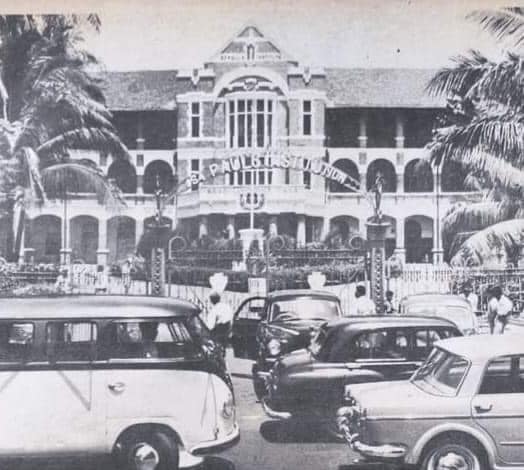
    The first photo is the Temple and second is the current School of Law, under University of London, showing the shields of the four Inns: On top Lincoln’s Inn and Middle Temple. below Grey’s and Inner Temple.

    The full name of the Temple was Solomon’s Temple.

    Originally the temple was for a Catholic Military Order (Fellow Soldiers of Christ) and the members of the Order were known as Knight Templars. This order was to protect pilgrims going to the the holy land as well as to fight with Muslim armies trying to expand their territories.
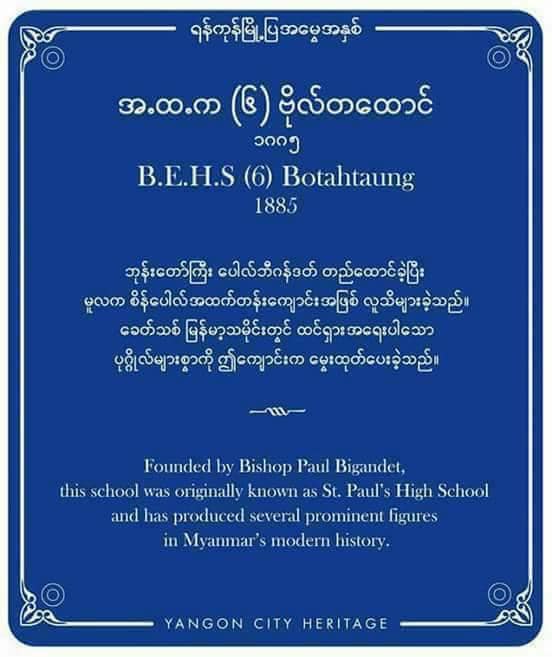
    This change must be made as seen in the photo as the four Honorable Societies do not give degrees, no scrolls, no diploma nor parchment. There was only entries of a person being called to the bar in the records of the four inns.

    According to my uncles (U Myint Thein and Dr Htin Aung) the exams were tougher in the Inner and Middle Temple compared to Grey’s and Lincoln’s. They therefore chose to go to Lincoln’s Inn.

    There were no formal lectures nor teaching. Candidates had to attend and listen to trials going on and listen to some tutorials given at the Temple by senior barristers. And mainly one studied on his own.

    The way assessments were made was for each subject, written papers had to be submitted followed by “dinings”.

    When a candidate felt that he was ready to be assessed, he would invite three senior barristers to actually dine with him in the dining hall. Over dinner, questions were asked and discussions were made. The candidate was told whether he had satisfied the senior barristers and could now go to the next subject i.e. next dining.

    If unsuccessful, the candidate had to undergo another dining for that subject.

    Father succeeded in at the first attempt of all subjects except on Roman Civil Law which was examined in Latin. Father could answer only one question as he had to learn Latin only on arriving in England. Father had been preparing himself for the bar exams while he was in Cambridge.

    At his last dining, the senior most barrister said, “young man you had answered only one out of the four questions in Roman Civil Law. But you had written it like a brief by an experienced barrister. If need be, we hope that you will study more. We are satisfied with you and you need not come back for a second dining”.

    Father, the College drop out, the ex- soldier, had finally been called to the Bar on 26 January 1923 at the age of 25 years.

    He would then go on to be a Judge of Court of Small Causes at the age of 25 (after only ten months as a practicing barrister), a High Court Judge in 1946 and one of the first three Supreme Court Judges at independence in 1948. He resigned in 1950 in protest against the Prime Minister’s interference with the judiciary. (This will have to be told later).

    He became the Professor and Dean of Law, Rangoon University and was conferred with a honorary doctorate (LL D in honoris causa) on his retirement.

    …………………..

    In 1972, when I was living and studying in London, I became a friend with South African (of Dutch descent) who was taken his bar exams at Middle Temple Inn. He had stayed on to do an academic degree in law.

    Candidates were allowed to bring friends to dinner even when they were not being examined.

    Each table was for four. My friend and I were joined by two senior barristers. It was such a pleasant evening.

    There were two entrances to the dinning hall. Barrister had to go in one, where they were given barrister gowns to wear. Visitors in formal wear had to enter from another entrance. He took me through the visitors entrance, moved to the other entrance, donned the robe and came back to me to go to the dining tables.

    There were tables on a stage. My friend told me that the tables were for for judges called the Benchers.

    My friend told the senior barristers about my father. They wanted to know whether father was still practising. I told them about my father being a Supreme Court Judge but had retired and had resumed his legal practice.

    On another day, my friend took me to the Temple Library where records of people who been called to the Bar from Middle Temple.

    When I told the librarian that I only knew about my father being called in 1923, she went to look at the records for that year, found my father’s name and brought out the to me to show me the entry for my father.

    It was a very brief entry:

    “Maung Kyaw Myint, of the Burma Club, St. Peter’s Square, Hammersmith W.6. (21) second son of Maung Pein, A.T.M of Pegu, Burma, special power magistrate. Called 26 January 1923”.

    Then she said, “would you like to have a copy of the entry? I said yes. I was given a xerox copy of that page.

    P.S: U Tin Tut and U Kyaw Myint were called to the Bar from Middle Temple. U Myint Thein and Dr. Htin Aung from Lincoln’s Inn.

    Daw Phwa Hmi, who would become the wife of U Myint Thein, was the first Burmese woman to be called to the bar from Inner Temple. There was a story behind this about U Myint Thein and Daw Phwa Hmi.

    P. S. in case I might forget to write about my uncles, I want to add two amusing anecdotes of them.

    Anecdote #1: U Myint Thein

    When U Myint Thein was studying in school at Pegu, he and his friends had a fight with another group of young men. U Myint Thein hit a man from the other side with an iron rod and broke his head.

    Both groups were arrested for fighting and disturbance of peace by the police and brought before the magistrate. It was my grandfather as the EAC had magisterial function. The young men had to appear before him. All meekly accepted the fines to be given but not for Maung Myint Thein.

    When each of them were asked why and the fight started, and what should be their sentence. All accepted to pay the fine for bring public nuisance.

    Except my uncle, who was being given a sentence more than others because of the assault with an iron rod. He was made to pay a fine and seven days custody at the police station.

    He would not keep his mouth shut that it was not fair as what he said that what he did was according to the Buddhist literature.

    His father asked him to explain why. He quoted a stanza of the Mingala Sutta:

    He said that in the 20 stanza of the sutta,
    “Garavo ca Novato ca
    Suntutthi ca katannuta”

    The Burmese pronounced the Pali words differently: the word “suntutthica” was pronounced as “than dote thi sa” and therefore he said he should not be given a punishment more than the others as he was doing what was mentioned in the scripture.

    Grandfather was very angry with his insolence and sacrilege in using a Pali word to be equal to an iron rod, he had not only to pay to stay in custody for fourteen days for not only assault but also sacrilege.

    And that was the my uncle Myint Thein the jailbird who would many years later became the Chief Justice of the Union.

    Anecdote 2: Dr Htin Aung

    Badwe was studying in Trinity College Dublin for his doctorate which he finished in nine months. To celebrate, he and some friends went on the town. Although he did not drink himself, he plied his college friends with as much alcoholic drinks that they could drink.

    After some time, the group became very rowdy and disturbing to other people. They became such a nuisance that the bar tender called the police and all were arrested by the police.

    The next morning they were brought in front of the magistrate accused of disturbance of peace in the community. The magistrate asked whether they were all inebriated at the time of arrest. The arresting policemen said yes except for one person who happened to be my uncle.

    The magistrate gave a sentence of a fine of one pound for all his friends “disorderly while being drunk”.

    My uncle was fined five pounds. The magistrate said while he did not partake in the drinking but was equally rowdy and disturbing people he was fined more because of “disorderly without being drunk”. Said he should have known better than other not to disturb people.

    The Age of Barristocracy

    Father came back to Burma in 1923 and started practicing as a barrister in Rangoon.

    Ten months later he was appointed as a judge of the Court of Small Causes, similar to a magisterial Court. He was the youngest lawyer to be made a judge, not just in Burma but in India also.

    How it came about was that the sitting English judge had to return to England. The Court clerk asked the then Chief Justice as to who should be appointed in that position.

    The Chief Justice said “the very bright young barrister who had appeared in court. He knows the laws and is very impressive”. The court clerk explained that father had only been working as a barrister for only ten months. The Chief Justice nevertheless decided to give the post to my father.

    Father was the youngest ever — at the age of twenty three — to be become a judge in colonial India and Burma.

    Nationalism

    But at that time, the political climate has begun to change. Nationalism had emerged in both India and Burma.

    After two years as a judge, father at twenty five years of age resigned to return to practice as well as to enter the political arena.

    He stood for and won the elections of the Members of the Legislative Assembly (MLA), which was equivalent for the lower house in Parliament. The Imperial Council was similar to the upper house but their members were appointed by the Governor General and was by nomination rather then by election.

    Seeing the work of many well known barristers in Indian made father stand for election and winning the position from the Kyimindaing (Kemmendine) constituency in Rangoon where he served for two terms.

    It was the senior barristers of India and Burma whom he wanted to emulate. While serving as a member of the Legislative Assembly, he got to know and learn from these barristers.

    As most of the MLA were barristers and he got to know them well. It seemed as though one would have to be a barrister to become a politician that was why the term “barristocracy” came into being.

    Eminent barristers and political leaders

    The following eminent barristers in India and Burma were the political leaders at that time.

    Mahatma Gandhi : Inner Temple

    Pandit Nehru : Inner Temple

    Mohamed Jinnah : Lincoln’s Inn, the youngest to be called to the bar at the age of nineteen

    Solomon Bandaranaike : Inner Temple

    Another activist barrister was Dr. Ambedkar, a dalit, from the scheduled caste, who entered the legislative assembly to fight for the Dalits and formed the “scheduled cast federation”. He was a highly educated and committed lawyer and activist.

    Dr. Ambedkar studied at Columbia University and London School of Economics and he was called to the bar at Grey’s Inn. He attained following degrees: BA, MA, PhD, MSc, DSc, LL D, D Litt, Barrister at Law (Grey’s Inn).

    He founded the Scheduled Caste Alliance. One tactic he used was to have the untouchable to change their religion from Hinduism where they were at the bottom of the ladder, to Buddhism which had no hierarchy.

    Father was to become close to Nehru from India and Mr. Bandaranaike, who not only knew fellow barristers but also MLAs.

    He visited Calcutta to meet with Dr. Ambedkar and also with Nataji (Subaru Chandra Bose).

    Father also visited Mahatma Gandhi in his ashram, every time when he was in India when he and his disciples were doing “satyagraha” the nonviolence movement.

    Nehru and Indira

    Nehru was arrested and put in prison. On being released, he and the young Indira came to visit Burma and stayed with my father for three weeks. Nehru gave copies of his books “Letters to a daughter” and “Glimpses of India”. The first book was signed by both the father and the daughter.

    When U Myint Thein was arrested by Ne Win, the MI (Military Intelligence) people came, ransacked and took away many of my father’s books. We did not know why the Nehru books, books by Jung and Freud, a complete collection of Gandhi’ speeches, law books and even some books of fairy tales were taken.

    Father was told that the books would be returned after some time but they never came back. May be most of them were illiterate and could not read them.

    Father knew Nataji very well. Apart from members of the Indian community, my father visited him often in the Mandalay jail where he was imprisoned from 1924 to 1925. Later U Myint Thein also did the same.

    In Burma not just the barrister but also eminent lawyers entered politics:

    Dr. Ba Maw, MA Calcutta, LL D Bordeaux

    U Pu, Barrister at Law

    Dr Ba U, MA, LL D (Cambridge).

    Non-separation versus Separation

    During the separation movement, Dr. Ba Maw, Rambyae U Maung Maung and my father U Kyaw Myint founded a political party. They were for non-separation.

    U Ba Pe (a journalist), Barrister U Pu and U Shein were for separation from India. U Ba Pe was the founder of the Burmese Newspaper: Thuriya (the Sun). Their stand was for separation from India.

    During the campaigning, U Ba Pe called his faction as “Pe Pu Shein” the initials of the three leaders of their party. But he addressed my father’s party as “Maw Myint Byae” – the “byae” was a derogatory word meaning “disorderly”.

    Due to standing for non-separation, father did not win in the next legislative assembly and returned to his practice as a barrister.

    Deciding late for standing in the election, the Kemmendine constituency went to another candidate. Father was given the Kungyangone constituency where he lost mainly because of his non-partition stance.

    The positive side of standing for election in Kungyangone was that he met my mother. And married her.

    The Eligible Bachelor and a Man About Town

    Father returned to his practice as a barrister and became very busy. As Burma had been annexed to India, the Burmese Courts were under the judicial system of India.

    There were many Indians businessman in Burma who had kept some of their enterprises in India. Father was traveling from Burma to appear before the courts in India. For some cases, Burma not having a Supreme Court at that time, he had to travel to New Dehli from time to time.

    Being an eligible bachelor had “dalliances” with young ladies but never serious except for a couple of them: Daw Yin May and Daw Khin Khin Gyi. As both my father as well as the two ladies had passed away, I think I could write a few sentences about my father’s love life!

    One of the main reasons he stayed a bachelor was because of his three younger sisters, Daw Khin Mya Mu, Daw Khin Saw Mu and Daw Tin Saw Mu. Grandfather had remarried and the step mother was very unkind to father’s sisters. In spite of grandfather objections, father took them under his wings and they lived together in Lewis Street Rangoon.

    Father and Daw Yin May did have a serious relationship. I was told by one of father’s previous staff that, father would as much as possible visit Daw Yin May in the evenings whenever she was less busy. She was then living in the house in the Dufferin Hospital compound.

    Father had left his job as a judge to enter politics. According to my father, she asked father what would happen then. It was about the time when Nehru was in jail. He said there could a chance of being imprisoned.

    Due to this uncertainty, Daw Yin broke her relationship with my father and eventually married Col. Min Sein.

    When they were still favouring each other, father sent a bouquet of flower to Daw Yin May every day.

    According to Prof. Daw Hla Kyi, Daw Yin May told her about receiving daily bouquets from father. She said that she also received flowers every day from the gardener of the hospital!

    Prof. Daw Hla Kyi was from Pegu and her father worked under my grandfather in Pegu. She had many stories of my father and his three brothers.

    Father also had a relationship with Daw Khin Khin Gyi but again he was looking after his sisters on top of being involved in politics.

    Father told me that Daw Khin Khin Gyi asked him to give a pair of velvet slippers from Mandalay adorned with semiprecious stones. This he did get a pair (setting semiprecious stones into the slippers was not easy and they were more expensive).

    She married lCS U Shwe Baw. Father told me that he was very happy that both of them got married to very good men.

    Dr. Daw Yin Yin Nwe asked me when did my father got to become a life long friend the princes of Shan State.

    And below is the answer.

    At the time, Shan States were different in governance to the mainland Burma. The British allowed the Sawbwas to retain their status and administer and govern as before. But the British foresaw that it would be to the advantage of the Shans to be part of Burma even though the Shan rulers were more closer and related to the kings of Thailand.

    Father was appointed as the legal (constitutional) adviser to the Shan rulers. He had to travel to the Shan States and explain why a constitution would be drafted even before getting independence. That a consultation and an agreement would be made (which would be the Pinlon conference).

    Father was helping the Shan royalties to understand definitely how things would be or should not be when the time came.

    It was a lengthy process as father was going to each of the Sawbwas and later as a group.

    The Mongrai family was related to the Thai royalty and efforts were made so that they would stay in the Union of Burma, with state governance for the Shans.

    During his visits he stayed with Nyaung Shwe Sawbwa and came very close to Sao Shwe Thaike. Similarly he became very close with the Sawbwas of Kengtung and Sipaw.

    I would like to mention two ladies who had made their marks in not just in the history of the Shan States and the Sawbwas, bit also internationally.

    They were:

    Daw Mi Mi Khaing : educationalist/author

    Sao Ohn Nyunt: paintings of her by Sir Gerald Kelly became international renowned, for her beauty and demeanor: I have put up only right of the paintings by Kelly.

    The two photos in black and white are photos of Daw Mi Mi Khaing, again good friends with father.

    Interludes

    Interlude (1) : Daw Phwa Hmi

    She was Burma’s first barrister at Law from Inner Temper Inn. She became my aunt when she married U Myint Thein. My uncle was an eligible young man, Cambridge graduate and barrister at Law (Lincoln’s Inn). They would be the first Burmese couple to be barristers. How did they meet?

    While working at the Burma Club and studying to be called to the Bar, father had taken down very complete notes on various laws and on trials that he observed in courts. Father unlike me had a very fine and readable writing. Younger Burmese preparing for the Bar exams used his notes even when he went home.

    One evening, U Myint Thein was at the Club to borrow the notebooks. He found that it was already taken by a lady. He got to know her by him telling her that he was the brother of the person who wrote the Notes. And gentlemanly let the books be taken by the lady. He also offered to come to wherever she was residing to collect the books and return them to the Club.

    The “young lady” was no other than Daw Phwa Hmi. Letting her have the notes first, offering to collect them from her residence just my uncle’s ploy to get to know about this young lady!

    In the pretext of studying together, he became very friendly with her. Both were called to the Bar about the same time. Ba Dwe wooed her and was accepted so that they were to get married on return.

    Father was told about his engagement and was asked to prepare for the wedding. But on his way back by ship, father had just reached Aden he received an urgent telegram from his younger brother:

    “HAVE MET EVA. STOP. MARRYING HER SOON. STOP. CAN YOU MARRY MA PHWA HMI IN MY PLACE. ENDS

    Father was very upset and sent back the following telegram:

    YR TELEGRAM RECEIVED. STOP. AM SUEING YOU FOR BREACH OF PROMISE. STOP. ON BEHALF OF MA PHWA HMI. ENDS.

    At that time, if a gentleman after betrothal, would not marry the lady, he could be sued and would be usually ordered by the court to give substantive amount of cash to the lady. And gentlemen’s clubs could “black ball” him and would lose memberships of the clubs.

    U Myint Thein knew that his elder brother would and could do as per the telegram. He came back and married Daw Phwa Hmi. Father was upset because his brother would not keep his promise to not only a fellow barrister but the country’s first woman barrister.

    Sadly, they had not any children. My aunt got pregnant, difficult labour during which she had what must had been amniotic embolism that caused a stroke and she was left with paralysis on one side of her body. The baby did not survive.

    P.S. Eva, the English lady whom my uncle would like to marry, kept in touch with him. She died two years later of cancer. My aunt magnanimously allowed my uncle to put a framed photo of Eva on the mantelpiece in their dining room.

    Interlude (2) : Daw Mi Mi Khaing

    She was a prominent educator and writer.

    During the British times, the Sawbwas were initially living on levies from their subjects and the income for mining of silver.

    Their eyes were opened by seeing bright young men like U Kyaw Myint as well as how these Western educated young men were holding important jobs,, They wanted their sons to have similar education. As mining was important, few of the Shan princes were sent to University of Colorado to get degrees in Geology.

    Saopha Kuang Kiao Intakeng, father of Sao Sai Mong Mangrai, decided to send his son Sao Sai Mong Mangrai for studies in the West. He studied at the University of London, Cornell University, University of Michigan. Cambridge. He became famous as historian, scholar, linguist, lexicographer of the Shan script and language. His most well known publication was “Shan States and British Annexation” published by Cornell.

    Sai Saing Mong met and married Daw Mi Mi Khaing, the first Burmese lady to write about Burmese Culture and traditions in English.

    Well known publications of Daw Mi Mi Khaing were:

    • Burmese Family: University of Indiana 1962
    • Cook and Entertain the Burmese way 1973, Karoma Publishers.
    • The World of Burmese Women 1984
    • People of the Golden Land
    • Burmese Characters and Customs 1958
    • Burmese Names and a guide 1955

    And many more: the most well known of her books was “Burmese Family”.

    And many more articles in various English magazines and periodicals.

    Daw Mi Mi Khaing was also very well known for the Kanbawza College.

    There was earlier a College in Taunggyi only for the son’s of the sawbwas.

    Daw Mi Mi Khaing opened the first private college in Burma, in the Shan States, a school very much like the well known colleges of England. (My elder brother attended this college after he studied at the St. Joseph College in Darjeeling India).

    I did not meet either of them but learn about both from my father telling me about the two famous intellectuals.

    I only had the good fortune to meet and know of their brilliant daughter Dr. Yin Yin Nwe PhD (Cantab) doctorate in geology. Due to the connections between the Shan Lords and my father, I got to know members of the Mangrai family, and Yin became a “sister” to me.

    The daughter took after both parents, worked for many years in UNICEF and currently a well sought adviser on development in many countries.

    Most of what I knew was from my father and from my uncle U Myint Thein, who succeeded my father as the legal adviser to the Shan princes. When my father got appointed as a High Court Judge, his younger brother to take over his responsibilities in the Shan State.

    POST SCRIPT:

    1. My father became close friends with the families of the Sawbwas , Mahadevis, other consorts. And he was showered with gifts, mainly products of the Shan States. This included many silk cloths and other woven clothes for his “Gaung Paung” headdresses, shirts, jackets and long gyi.

    All of these became very handy during the Japanese Occupation: mother told me that dress materials were very scant during this period. Most of the clothes that my mother, my sisters and other members of the family were by using these gifts given to father.

    Other source was material from parachutes.

    2. There was one episode told me without mentioning names. One of the wives of a Prince eloped with a member of the household staff. The Prince was so upset. My father was there at that time. He asked my father to get back his wife (also a close friend of father). Father said he gave his car, a driver and a bodyguard who was armed. He asked my father to persuade her to come back. Failing this the bodyguard was to shoot both of them.

    Father caught up with them before they have reached May Myo. The lady told father about why she had left. Father stopped the body guard from harming them and the two left. He went back and told the prince that they must have left early and could not catch them in time.

    I was very intrigued with what father told me.

    Request for corrections

    I have been jotting down what I remember about my father. He had led a very full life.

    If there are mistakes in my writings please let me know and correct me. I will change or delete the affected parts as needed.

    I do not want to hurt people’s feelings. My memory is not as good as before. I forget some names and events from the past.

    Writing about my father and the family is in some way catharsis for me. It is also very poignant because memories about what happened on 2nd March 1962. The dark day in Burma left psychological scars on the family.

    It was also sad to experience 8-8-88 and the aftermath. I had to resign from my job in 1990 and eventually leave our country.

    With Metta,
    Thane Oke Kyaw-Myint

    More to come

    Before I write further, I reread the following books, as I would like write about

    1. assassination of Aung San and associates, as my father was the Chairman of the Special Tribunal
    2. assassination of U Tin Tut, my father’s elder brother
    3. Why my father resigned from the Supreme court, in protest

    The books are:

    1. A History of Burma by Dr Htin Aung (my father’s younger brother)
    2. The River of Lost Footsteps by Thant Myint U
    3. Eliminate the Elite by U Kin Oung
    4. A Burmese Heart by Daw Tinsar Maw Naing
    5. Golden Parasol by Wendy Law-Yone
    6. Biography of Commissioner of Police (Rest.) U Ba Aye. (In Burmese)

  • U Soe Paing

    U Soe Paing

    Saya Paing

    One day, the people on the UCC ferry shouted, “Saya Paing”. To their amazement, ICS U Paing (Saya’s father) came out.

    Saya U Soe Paing is the second son of U Paing and Daw Oo Yin (Daughter of Sir Po Tha and Lady Tha).

    Golf Champions

    Saya and his siblings Dr. Myo Paing, U Win Paing (Sayadaw U Wara, ChE70) and U Kyaw Paing (Putra Cup Player) are excellent golfers and Champions at RGC (Rangoon Golf Club) and BGC (Burma Golf Club).

    St. Paul’s High School

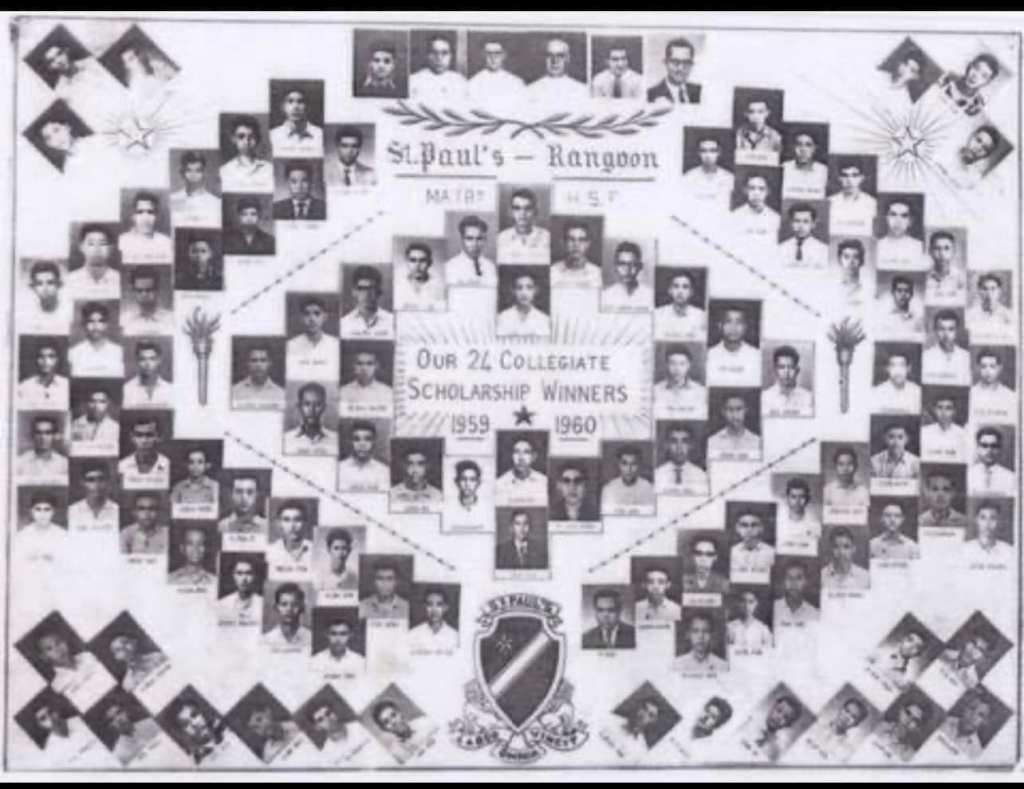
    Saya matriculated from SPHS (St. Paul’s High School) in 1956 along with U Ko Ko Lay, U Win Htein, Percy Maung Maung, U Than Se (Richard Khoo), and U Ba Min.

    Saya stood 13th in Matriculation and was awarded Collegiate Scholarship.

    Rangoon University

    Saya won two Gold Medals for excellence in the Intermediate of Science.

    He scored the highest marks in the I.Sc. examinations.

    He scored the highest marks in Mathematics in I.Sc. along with two other students.

    Since the original endowment for the Gold Medals did not cover the rising cost of Gold, Saya’s family had to give K150 for each Gold Medal.

    Saya rowed and coxed at RUBC. Saya won prizes including the Inter-Hall Fours.

    Stanford University

    Saya was selected as a States Scholar to attend Stanford University along with Saya U Ko Ko Lay and Bohmu Percy.

    Saya received his BS and MS in EE (Electrical Engineering).

    Saya did programming for his studies and also worked part-time as computer operator.

    RIT Electrical

    Upon his return to Burma, Saya joined the EE Department as Assistant Lecturer. His sponsor supposedly was UBARI (Union of Burma Applied Research Institute).

    At a research congress held in the Main Campus, Saya presented a paper covering Digital Logic and Circuits,. Dr. Chit Swe was impressed. Through Saya U Nyi Nyi (EE saya, who moved to the UK), Saya Paing gained contact with Saya Chit. The rest is history.

    Saya Paing would help Saya Chit with the UCC Project.

    It would take a few years before the UCC Project got approved by UN and funded by UNDP.

    UCC – RIT Connection

    Saya Paing promised Saya Chit to recruit his top students to join the UCC Project, but the long delay of the Project to get funded made the task difficult.

    Ko Tun Aung Gyaw (EC69), Ko Hla Min (EC69) and Ko Soe Win (EC70) joined UCC as Maintenance Engineers.

    Ko Hla Min (Pauk Si, EP70) joined UCC as Chief Operator.

    Ko Aung Myint transferred from the RIT EE Laboratory to join UCC as Maintenance Technician.

    UCC

    Saya transferred to UCC as Manager of Systems Division. He managed Maintenance Engineers, Maintenance Technicians, System Programmers and Software Librarian (to name a few).

    Saya did another Masters (this time in Computer Science) at Southampton University in UK.

    Saya would later manage the Operations Division as well.

    Saya allowed Ko Aung Zaw and me to co-author Lecture Guides and Training Manuals for use at UCC.

    UN

    Saya served as Project Manager / Advisor for UN projects in several countries.

    For details

    For a detailed story of Saya’s life and work at RIT, UCC and overseas as a UN Advisor, read his articles in English and Burmese. They are available in SCRIB_D.

    Saya wrote “Computer Ah Sa UCC Ga”

    Sayagadaw and Classmate

    Saya U Soe Paing in California
    Saya U Soe Paing in New Jersey (2018)
    Saya U Soe Paing in 2009

    Sayagadaw Daw Saw Yu Tint (Alice, T69) was my classmate at RIT.

    She and Saya Paing have hosted several UCC mini-gatherings at their house.

    At one of the gatherings in 2007, Ko Po (U Htin Kyaw, Peter Wun) not only attended the gathering, but gave me a ride back home. He also briefly mentioned about his four-month detention.

    After retirement

    After retiring from the UN, Saya would visit UK, USA and Singapore to spend time with his children and grandchildren.

    During his trips to New Jersey, there would be several UCC-RIT gatherings.

    Ivan Lee (Khin Maung Oo, M69) has hosted the annual RIT-UCC gatherings for a decade or so. He would invite Saya Dr. Aung Gyi and Ma Ma Emma to stay at his house. The timing is chosen to coincide with Saya Paing’s visit to New Jersey.

    Saya is healthy, but he had two operations :

    • by-pass heart surgery
    • surgery for the back

    Saya meditates and plays golf. Saya stopped both activities when he had a minor ailment (hurting his back and leg). Per advice of Alice’s medical friends (MEHS Alumni), Saya had a surgery in Singapore.

  • U Soe Paing

    U Soe Paing

    by Hla Min

    Updated: June 2026

    U Soe Paing

    Saya Paing

    One day, the people on the UCC ferry shouted, “Saya Paing”. To their amazement, ICS U Paing (Saya’s father) came out.

    Saya U Soe Paing is the second son of U Paing and Daw Oo Yin (Daughter of Sir Po Tha and Lady Tha).

    Golf Champions

    Saya and his siblings Dr. Myo Paing, U Win Paing (Sayadaw U Wara, ChE70) and U Kyaw Paing (Putra Cup Player) are excellent golfers and Champions at RGC (Rangoon Golf Club) and BGC (Burma Golf Club).

    St. Paul’s High School

    Saya matriculated from SPHS (St. Paul’s High School) in 1956 along with U Ko Ko Lay, U Win Htein, Percy Maung Maung, U Than Se (Richard Khoo), and U Ba Min.

    Saya stood 13th in Matriculation and was awarded Collegiate Scholarship.

    Rangoon University

    Saya won two Gold Medals for excellence in the Intermediate of Science.

    He scored the highest marks in the I.Sc. examinations.

    He scored the highest marks in Mathematics in I.Sc. along with two other students.

    Since the original endowment for the Gold Medals did not cover the rising cost of Gold, Saya’s family had to give K150 for each Gold Medal.

    Saya rowed and coxed at RUBC. Saya won prizes including the Inter-Hall Fours.

    Stanford University

    Saya was selected as a States Scholar to attend Stanford University along with Saya U Ko Ko Lay and Bohmu Percy.

    Saya received his BS and MS in EE (Electrical Engineering).

    Saya did programming for his studies and also worked part-time as computer operator.

    RIT Electrical

    Upon his return to Burma, Saya joined the EE Department as Assistant Lecturer. His sponsor supposedly was UBARI (Union of Burma Applied Research Institute).

    At a research congress held in the Main Campus, Saya presented a paper covering Digital Logic and Circuits,. Dr. Chit Swe was impressed. Through Saya U Nyi Nyi (EE saya, who moved to the UK), Saya Paing gained contact with Saya Chit. The rest is history.

    Saya Paing would help Saya Chit with the UCC Project.

    It would take a few years before the UCC Project got approved by UN and funded by UNDP.

    UCC – RIT Connection

    Saya Paing promised Saya Chit to recruit his top students to join the UCC Project, but the long delay of the Project to get funded made the task difficult.

    Ko Tun Aung Gyaw (EC69), Ko Hla Min (EC69) and Ko Soe Win (EC70) joined UCC as Maintenance Engineers.

    Ko Hla Min (Pauk Si, EP70) joined UCC as Chief Operator.

    Ko Aung Myint transferred from the RIT EE Laboratory to join UCC as Maintenance Technician.

    UCC

    Saya transferred to UCC as Manager of Systems Division. He managed Maintenance Engineers, Maintenance Technicians, System Programmers and Software Librarian (to name a few).

    Saya did another Masters (this time in Computer Science) at Southampton University in UK.

    Saya would later manage the Operations Division as well.

    Saya allowed Ko Aung Zaw and me to co-author Lecture Guides and Training Manuals for use at UCC.

    UN

    Saya served as Project Manager / Advisor for UN projects in several countries.

    For details

    For a detailed story of Saya’s life and work at RIT, UCC and overseas as a UN Advisor, read his articles in English and Burmese. They are available in SCRIB_D.

    Saya wrote “Computer Ah Sa UCC Ga”

    Sayagadaw and Classmate

    Saya U Soe Paing in California
    Saya U Soe Paing in New Jersey (2018)
    Saya U Soe Paing in 2009

    Sayagadaw Daw Saw Yu Tint (Alice, T69) was my classmate at RIT.

    She and Saya Paing have hosted several UCC mini-gatherings at their house.

    At one of the gatherings in 2007, Ko Po (U Htin Kyaw, Peter Wun) not only attended the gathering, but gave me a ride back home. He also briefly mentioned about his four-month detention.

    After retirement

    After retiring from the UN, Saya would visit UK, USA and Singapore to spend time with his children and grandchildren.

    During his trips to New Jersey, there would be several UCC-RIT gatherings.

    Ivan Lee (Khin Maung Oo, M69) has hosted the annual RIT-UCC gatherings for a decade or so. He would invite Saya Dr. Aung Gyi and Ma Ma Emma to stay at his house. The timing is chosen to coincide with Saya Paing’s visit to New Jersey.

    Saya had some medical problems. He had a by-pass heart surgery and surgery for the back.

    Saya is currently residing in New Jersey.

  • Notes 11

    Notes 11

    by Hla Min

    Updated : June 2026

    HMEE book

    Jubilees

    Rangoon University

    • Rangoon University (RU) was established in December 1920 with two constituent colleges : Rangoon College and Judson College.
    • Saya U Pe Maung Tin served as the first native Principal of Rangoon College.
    • Saya Dr. Htin Aung served as the first native Rector of Rangoon University.

    RU Golden Jubilee

    • The RU Golden Jubilee was celebrated in 1970.
    • Saya Dr. Aung Gyi and Saya U Thet Lwin are among the core organizers of the RU GJ Celebrations.
    • I had a minor role as a volunteer for the “Zay Committee”.
    • RIT Ah Nu Pyinnyashins took part in the Entertainment Program. The “Htee Yein” and “Swel Daw Yeik Ah Nyeint” were attractions. The term “Swel Daw Yiek” became synonymous with RIT and the engineering schools which preceded RIT.
    • The Commemorative Magazine reprinted Bogyoke Aung San’s translation of “Invictus”. The Magazine also had an account of U Hla Maung, who graduated with B.Sc. (Engg) degree in 1928.

    RU Centennial

    • The Centennial was celebrated in 2020.
    • Saya U Moe Aung (Tekkatho Moe War) and fellow authors (e.g. Shwe Ku May Hnin) have published “Collections of Poems and Articles” to commemorate RU Centennial.

    Engineering Education in Burma

    • Engineering Education in Burma started in 1924.
    • The Centennial will be celebrated in 2024.
    • The History of Myanmar Engineering Education Project compiled and published HMEE-2012 in time for SPZP-2012. Saya U Aung Hla Tun was the Team Leader. U Ohn Khine (M70) and I compiled the CD Supplement for the book.
    • HMEE-2018 is a follow up Project. In addition to revising the HMEE-2012 book, the Project will cover new material (e.g. History of the Engineering Departments).
    • The 90th Anniversary was celebrated in 2014. The Centennial will be celebrated in 2024.

    Rangoon Institute of Technology

    • The New Education System which made RIT an autonomous Institute with was established in November 1964.
    • The Golden Jubilee was celebrated in 2014.
    • Saya U Yone Moe served as the first Rector of RIT. He was succeeded by Saya Dr. Aung Gyi.
    • In 1964, there were eight Engineering Departments : (1) Architecture (2) Chemical (3) Civil (4) Electrical (5) Mechanical (6) Metallurgy (7) Mining (8) Textile.
    • Supporting Departments were established at RIT. They include (1) Burmese (2) Chemistry (3) English (4) Geology (5) Physics.
    • For some time, there were Visiting Lecturers from USSR and selected Departments of other Universities and Institutes.
    • RIT was renamed as YIT (Yangon Institute of Technology). YIT in turn became YTU (Yangon Technological University).

    RIT Spirit

    • The sayas and alumni are known for the “RIT Spirit” (which survived the brutal crushing in the Adhamma Era).
    • RIT was considered a Dying Breed. The school was branded as “Thabone Kyaung”. The Swel Daw Bins were banished from the Gyongone Campus. Several equipment were taken away to set up a Military Engineering branch at DSA.
    • The alumni wanted to pay back the metta and cetana of their mentors.
    • The First RIT Grand Reunion and Saya Pu Zaw Pwe was held in California, USA in October 2000. I wrote the “SAYA PU ZAW PWE” poem. It has been reprinted in several RIT-related publications.
    • The subsequent World Wide SPZPs were held in Singapore (in December 2002, April 2007 and December) and in Yangon (in December 2004, December 2012 and December 2016).
    • Swel Daw Yeik Foundation was established in 2013.
    • The Shwe YaDu Celebrations were held in 2014.
    • RITAA is helping YTU in several ways. It is helping to raise the fund for YTU Library Modernization Project (which is a requirement to get YTU accredited at the Regional level and beyond).

    Stories to illustrate the RIT Spirit

    • I am an amateur historian and a folklorist.
    • I have a dream to compile stories to illustrate the friendly and indomitable RIT Spirit.
    • I will use the articles that were contributed to the RIT Alumni Newsletter and Updates.
    • Sayas and alumni could provide new and old stories (e.g. published in the various Magazines, Sar Saungs, Thadin Zin, Wall Posters, Cartoon Box, Exhibitions).
    • While we have reasonably good health and memory, we plan to pay back to our alma mater.

    My Facebook Pages and Web sites

    I have three kinds of Facebook Pages.

    • The first is for my acquaintances.
    • The second is for my family members, relatives and close friends.
    • The third is for knowledge sharing (e.g. Life Long Learning) and/or archiving my posts (e.g. RIT Alumni International Newsletter updates).

    Not all postings are of equal importance. They can be grouped as follows:

    • Current news
    • SPZP-2012 : Count down and Event
    • Shwe YaDu Golden Jubilee Celebrations
    • SPZP-2016
    • Swel Daw Yeik Foundation (SDYF)
    • Alumni Associations in Myanmar and Northern California
    • History of University Engineering Education in Burma/Myanmar
    • Memoirs by U Ohn Khine (M 70) and U Zaw Min Nawaday (EP 70)
    • Golden Jubilee (GJ) Magazine published by the Class of 70 & 71
    • Reunions of the Class of 69
    • Class Photos
    • Brief History of the RIT Departments by Sayagyis
    • Excerpts from the archives of SPZP-2000
    • Successors of RIT (e.g. YIT, YTU)
    • Where are they now?
    • GBNF : Sayas and alums

    Hope the postings will be of interest to historians — professional or amateurs.

    I have two web sites.

    SPZP and Alumni Activities

    Paying respect to Sayas for their metta and cetana is a tradition that is unique to Burma/Myanmar.

    The tradition is alive and well.

    There have been SEVEN world wide SPZPs :

    • SPZP-2000 (US)
    • SPZP-2002, SPZP-2007, SPZP-2010 (Singapore)
    • SPZP-2004, SPZP-2012, SPZP-2016 (Yangon)
    • SPZP-2020 (scheduled for December 26, 2020 in Yangon) was postponed due to COVID-19 pandemic

    Many alumni are active in the following:

    • SDYF (Swel Daw Yeik Foundation)
    • RITAA (RIT-YIT-YTU Alumni Association)
    • MES (Myanmar Engineering Society)
    • MEC (Myanmar Engineering Council)

    HMEE Projects

    • “History of University Engineering Education in Burma/Myanmar” (HMEE-2012) was published in time for SPZP-2012.
    • The project’s initiators included Saya U Soe Paing, Sayagyi U Ba Than and several sayas and alumni (See Acknowledgement in the Book).
    • Saya U Aung Hla Tun and team (including Yours Truly) compiled the book.
    • The draft for the first two sections were prepared by Saya U Soe Paing and team.
    • Ko Ohn Khine (M70) translated Section 1 and summarized Section 2.
    • Ko Ohn Khine’s translations have been revised by Saya U Soe Paing.

    Saya U Aung Hla Tun suggested that the Book should be revised/updated (e.g. every five years or so).

    HMEE-2018 (follow up project to HMEE-2012 is headed by Saya U Aung Hla Tun. Some new members joined the HMEE-2018 project.

    YTU Library Modernization Project

    • Donations — large and small — were received.
    • An alumnus had made monthly donation of One Lakh kyats for 27+ months,
    • U Khin Maung Tun (T78), Daw Myint Myint (C69), Saya Dr. Myo Khin (C70) and Daw Mya Nwe (Winsome, C73), Saya U Tin Htut (M60) … donated K100 Lakhs each (or more) for the Project.
    • Thanks to Ma Nan Khin Nwe (83 Intake) and tfund raising team. The team had published the list of donors.

    The project was established as a requirement for the Accreditation of YTU.

    Health Care

    • There were several HCF (Health Care Funds).
    • The balance of “Steeve and Helen Kay Health Care Fund for RIT sayas and sayamas” have been handed over to Swel Daw Yeik Foundation.
    • The balance of “U Khin Maung Tun’s family for providing Vision Care to eligible sayas and sayamas” have been handed over to Swel Daw Yeik Foundation.
    • SDYF provides limited financial assistance to eligible RIT sayas and sayamas for health care (e.g. hospitalization, frequent visits to clinics).
    • SDYF also provides Annual Medical and Vision Checkup for eligible sayas and sayamas.

    RIT related Facebook pages and web sites

    • RIT Updates
    • Swel Daw Yeik Foundation
    • RIT-YIT-YTU Alumni Association
    • Google Group for Combined 1st BE Intake of 64 and 65
    • Google Group for RIT Updates
    • hlamin.com
    • lifelonglearning140.wordpress.com
    This image has an empty alt attribute; its file name is spz-01.jpg
    SPZ 1
    This image has an empty alt attribute; its file name is spz-02.jpg
    SPZ 2

    No Last Journey for us

    Last Journey

    • I had the opportunity to serve as Master of Ceremonies at two last journeys.
    • The first was for Dr. Htay Lwin Nyo (EP 74), part time Professor at San Jose State University. Ko Khin Maung Zaw (EC76) set up the commemorative web pages on http://www.ex-rit.org. I have excerpted some in my Trivia posts.
    • The second was for Sayadaw U Silanandbhivamsa, Rector of the International Theravada Buddhist University.
    • I volunteered as Book Committee member and Contributing Editor for “Paying Homage to Sayadaw U Silanananda.
    • There is a 2-set DVD of Sayadaw’s last journey and can be found as a supplement for the Commemorative book.
    • There will be no funeral services, viewing and eulogies for us. We have registered as organ donors.

    Simple Joys of Living and Paying Back

    • We are deeply honored to the sponsors, donors,volunteers, and well-wishers for the soon kyway on August 20, 2016 at Half Moon Bay monastery.
    • Special thanks to sayas and alumni near and far who took special time to express their appreciation to the messenger turned amateur historian.
    • We are simply following the practice of our beloved philanthropic ancestors who donated for the construction and maintenance of hospitals, schools, pagodas, zayats, free dispensaries.
    • I have donated thousands of hours trying to get the sayas and alumni get connected electronically and physically, and also share my experience as a Life Long Learner.
    • Ko Thaung Sein (Steeve Kay, EC70, Multiple Golden Sponsor of SPZPs) said, “Do not retire. Re-tire.” He also mentioned that if we can serve the sayas and alums for two decades, we should be satisfied since RIT is a dying breed. I have completed 27 years as founder and editor of RIT Alumni International Newsletter.
  • Meeting on Dec 28, 2016

    Meeting on Dec 28, 2016

    by Hla Min

    Updated : June 2026

    Preparation

    • U Ohn Khine (M70) took me to the meeting of the Combined 1st BE Intake of 64 and 65.
    • Relayed Steeve’s request for a special Acariya Pu Zaw Pwe.
    • Asked help to prepare material for the Gift package to be given at the PZP.
    • SPZP-2000 was recorded on a 3-hour tape. I had it converted to a set of two DVDs. U Win Htay & team copied the DVDs to be given to the sayas.
    • I was Chief Editor for the Commemorative Issue of RIT Alumni International Newsletter for SPZP-2000. Saya U Thein Aung (Met72) & Henry Lim (Alumnus, Editor of BAPS Newsletter) were Associate Editors. Maurice Chee (M75) was Publisher. U Win Htay & team printed copies of the Newsletter to be given to the sayas.
    • Female members of the Combined Intake (e.g. Mai Khin Nyunt) agreed to take care of preparing monetary gifts. Every saya and sayama will receive One Lakh Kyats. Selected sayagyis will receive Two Lakh Kyats.

    Event

    Speakers

    U Hla Min & Benny spoke at the Special Acariya Pu Zaw Pwe hosted by Steeve
    • I was the key note speaker.
    • Benny spoke on behalf of the alumni.
    • U Win Mra spoke on behalf of the sayas and sayamas.

    Attendees

    • Reserve tables had to be used to accommodate the large number of attendees
    • In addition to those from the Combined 1st BE Intake of 64 and 65, those who had volunteered for the “Steeve and Helen Kay Health Care Fund for RIT Sayas and Sayamas” were also invited

    Key Note Address

    Welcome to this gathering!

    Today is a special gathering organized by the 64/65 intakes and sponsored by the “Steeve and Helen Kay Saya Health Fund”.

    Today’s event complements last month’s 64/65 intake held an Acariya Pu Zaw Pwe and tomorrow’s seventh RIT Grad Reunion and Saya Pu Zaw Pwe.

    In addition to paying our respect to the sayas and sayamas, today we would also like to present to Ko Thaung Sein (Steeve Kay, EC70) an appreciation award for his continued support.

    Although Steeve migrated to the US in 1971 to pursue his dreams, he never forgot his roots, his alma mater and his friends.

    Over the past 17 years, Steeve has made various contributions totaling $200,000.

    Highlights of those contributions are as follows:

    SPZP-2000

    As you recall, the first ever RIT Grad Reunion and Saya Pu Zaw Pwe was held in the year 2000.

    It was started by a group of RIT students in San Francisco, among them Ko Benny Tan and me.

    I remember when I sent out the invitation flyers, we received a $1,000 check from Ko Thaung Sein.

    Later, he donated $3,000 as seed money to assist with fundraising efforts.

    Throughout the years, Steeve has supported multiple world-wide reunions and SPZP as a Golden Sponsor.

    Health Care Fund

    In June 2005, Steeve set-up a $50,000 Saya Health Care Fund administered by U Win Khaing of MES and his administrative committee.

    Many saya/sayamas attending today have benefited from that fund.

    Steeve also helped to set-up a second fund, administered by the 64/65 intakes, as a supplemental retirement fund for the sayas and sayamas.

    MoST Delegation to the US

    In May 2013, Kay Family Foundation, a philanthropic foundation set-up by Steeve Kay, sponsored the Ministry of Science and Technology (MOST) delegation to visit Centers of Excellence in California.

    The delegation was headed by the late Dr. Ko Ko Oo and Professor Nyi Hla Nge.

    Alumni Reunion in Los Angeles in 2015

    Last year, in October 2015, Steeve Kay donated $30,000 in matched funds to hold the RIT in Southern California, Los Angeles.

    During the gathering, he sang a Burmese folk song ‘Shwe Me’ to express his feeling towards Myanmar, the land where he spent his youth growing up.

    Health Concerns

    This year, Steeve Kay’s own health fell ill.

    We wish him good health. Instead of attending the RIT Grad Reunion himself, he asked Ko Benny to hold a gathering and Pu Zwe Pwe this year.

    Ko Benny consulted with his classmates and decided that December 28, 2016 – the day preceding the Seventh RIT Grand Reunion and Saya Pu Zaw Pwe – seemed to be the right time.

    The classmates, in turn, would like to honor their life-long friend and sponsor of numerous RIT-related activities.

    The history of Steeve and his philanthropic work should be recorded and preserved for posterity.

    Every saya and sayama will be presented with a gift package from Steeve.

    Gift Package

    • Short biography of Steeve
    • Commemorative issue of RIT Alumni Newsletter for SPZP-2000
    • Two-set DVD of SPZP-2000
    • CD of photos and articles from SPZP and RIT-related activities
    • Monetary gift for each saya and sayama

    Event in Three Parts

    Today’s event covers three parts:

    • Paying respect to the sayas and sayamas who taught the Combined Intake of 64 and 65 students
    • Mini-gathering of the Combined Intake of 64 and 65 students
    • Appreciation award to be presented to Ko Thaung Sein (Steeve)

    Ko Khin Maung Lay will be the emcee.

    Selected sayas and alumni will recall Steeve’s work and their importance and impact to the RIT community.

    This image has an empty alt attribute; its file name is steeve-kay-1-1.jpg
    This image has an empty alt attribute; its file name is steeve-kay-2.jpg
    This image has an empty alt attribute; its file name is steeve-kay-3.jpg
    This image has an empty alt attribute; its file name is steeve-kay-4.jpg
    This image has an empty alt attribute; its file name is steeve-matching-fund.jpg
    2015 Reunion in Los Angeles
    This image has an empty alt attribute; its file name is benny-beside-steeve-pic.jpg
    Hla Min and Benny

    Updates

    • Steeve had remission for some time.
    • He finally passed away.
    • He did not complete writing his experiences and thoughts.
  • Nyunt Wai

    by Hla Min

    Updated : May 2026

    • Alias : Victor Nyunt
    • Classmates in Standards VIII A, IX A and X A at St. Paul’s HS.
    VIII A
    • Stood 4th in Burma in Matric of 1963 and won Collegiate Scholarship.
    SPHS63
    • Graduated from Institute of Medicine (2). Wrote articles and drew paintings & cartoons for IM(2) magazine.
    • Doctorate from UK
    • Taught Physiology at IM(1), IM(2) and a Malaysian University.
    • Has compiled a list of Professors of Physiology.
    • Attended the Soon Kyway for Sayadaw Beatson (Physics teacher & Scout Master at SPHS).
    V Nyunt Wai 1
    • Artist and painter. He illustrated a book by Ashin Ananda (Reverend F Lustig, Laureate Poet).
    • Writes blogs, poems (including Kauk Kyaung Kabyar ကောက်ကြောင်းကဗျာ and Sagar Pariyae စကားပရိယာယ်).
    V Nyunt Wai 3
    • Dr. Nyunt Wai wrote :
      I’m no painter or a poet. Just occasional excursions to these fields. And I’m not a visiting Professor. Had to apply for this job in Malaysia just like any other expatriate from India or Bangladesh. So I’m no 3 “P”s. This reminds me of “No 3 P policy” of the now extinct Yahoo group Alumni-Myanmar-medical-institutes founded by Saya Johnny Thane Oke Kyaw-Myint, which served well as a lively forum for us until the advent of Facebook.

      Dr. Thane Oke Kyaw Myint wrote :
      Yes AMIM was a tight small group of us. Those who became friends then remain now as close friends. On FB, there is short attention as well as being bombarded by posts that we have no interest in.
    V Nyunt Wai 1

    Posts

    • Matriculates
    • Sagar Pariyae
    • St. Paul’s High School
  • New Zealand

    by Dennis Mackey

    Updated : May 2026

    Dennis Mackey (Kyaw Thu, C73)

    Dennis (2nd from Left)

    In the early 70s, New Zealand had an intensive technical training program with the Burmese government, namely the NZ Polytechnic sector and our GTI. One direct, international flight to Myitkyina with staff, teaching equipment and machinery was even made accessible to the NZ government. There is no such program that we know of at University level. However, there have been several at professional level with visits by Myanmar engineers and geologists in the Energy (Oil and Gas, Electricity) sector.

    Graduate engineers from Myanmar also arrived in New Zealand in the early-to-mid 1970s. Almost all have settled in the North Island, particularly in Auckland, the City of Sails, which is also known as the gateway to NZ, where it is easier to secure jobs and the weather is relatively warmer. Currently, there are 27 alumni; 4 are architects and the rest, engineers. The most senior member graduated in 1967 and the youngest in 2003. Six are female and notably, two of them (both single) who used to live in Auckland are now working in Australia; one is in Perth, Western Australia working in the mining sector. Just as we are particularly proud of these two remarkably enterprising female alumni, we also take pride in our younger members who are pursuing post-graduate studies in their related fields in NZ.

    In terms of Myanmar community functions, we are abreast with our counterparts in Australia, North America (USA) and SE Asia (Singapore). It is our engineering alumni who have, for the past 20 years, spearheaded the annual Thingyan celebrations in Auckland, and more recently, championed other socio-cultural events at our Buddhist monasteries. Although we do not have a formal engineering association per se, we have organized and enjoyed several summer get-together picnics in Auckland. On more than one occasion, our members have attended Myanmar Engineers’ gatherings in Sydney, Australia. In February this year, we successfully organized and celebrated our first “Get Together Auckland 2012” for Myanmar Engineers and Professionals. Of the 44 who attended, 4 were from Australia and 2 from Singapore. We envisage and sincerely hope that more RIT alumni will be able to join us in our future get-together.

    Editor’s Notes

    • After retirement, Dennis moved to Canada.
  • Kyi Kyi Win

    by Hla Min

    Updated : May 2026

    • Textile Graduate
    • Represented RIT in Rowing and Basketball
    • Timing Stroke of the RIT team that won the Inter-Institute Fours
    RIT Fours
    • Learned from Daw Tin Aye who was Bow of the winning team that Daw Kyi Kyi Win passed away on July 29, 2021 due to Covid.
    • May she rest in peace.
  • Myint Thein

    by Hla Min

    Updated : May 2026

    Education

    Mech Engg from RIT in 1973

    Received his Ph.D. from Georgia Institute of Technology in Atlanta

    Writings

    Pen name is Ba Thein (Altanta)

    Wrote articles for RIT Alumni International Newsletter and Swel Daw Yeik Sar Saung for Singapore SPZPs.

    The topics cover

    • An Apology to Sayagyi U Ba Toke
    • Saya S. Arya : Some poked fun at his pronunciation; He complained to Sayagyi U Ba Than
    • An Echo from RIT
    • Hovercraft : M73 project
    • IDC Kerosene Stove : Call for donation to SPZP
    • GBNF Frequency

    Spouse

    He found his life love in his old school mate Daw Nyo Nyo Win (T73).

    They wed around SPZP-2000.

    Present

    He gave me a book that he bought in Myanmar. The author Kyi Aye (Yamethin) wrote about Minthuwun, U Tin Aye (Shan Pyay), U Thein Pe Myint, and Daw Khin Kyi.

    (1) My Apology to Sayagyi U Ba Toke, Sayas & Sayamas of RIT

    Sayas and Sayamas are truly the unsung heroes of our lives. For them, it is hard to know the fruits of their formidable efforts. They have made a positive difference to our lives. However, often they are overlooked in nowadays society. Now, due to the invaluable efforts initiated by a group of people, we have a great opportunity to praise show our gratitude.

    I have learned that Sayagyi U Ba Toke will come to the Pu Zaw Pwe, 2000. I am writing this article to apologize for my silly act that I did about some 25 years ago at RIT.

    An early afternoon in the beginning of a summer at the RIT. My 6 years of study was close to completion. I was waiting for a mathematics class and standing on the breeze-way which connect the second-floors of the Building 1 and Building 2. The sun was shining well, and as usual, the wind was blowing so strong that the yellow leaves were floating in the turbulent air. The “Kha Yay” trees at the end of the Textile Department are swaying back and forth in the gusty winds. They were reminding me of the unstable, impermanent nature of human life.

    I was thinking deeply of the future. “I don’t want to leave the RIT yet. I have enjoyed here very much. What I should do? ” I could not find out any decent means to lengthen my happy student-life at RIT.

    The next class at 1 p.m. would be “Selected Topics in Mathematics” taught by Sayagyi U Ba Toke at Room 1/3-16. It was a large lecture theater with about 200 foldable seats, located on the third floor, north-east corner of Building 1, adjacent to Chemistry laboratories.

    The bell rang and I went into the class. I took a seat in the rear section of the class. In our class, there were about 120 students. There were only 2 female students in the class so that no much reasons for distractions from paying attention to the teachings. However, I was still thinking deep. Through the wide glass window panes, I could see the F-27 Fokker Friendship airplanes flying in and out of the Mingaladon Airport.

    Sayagyi U Ba Toke entered into the class, stepped onto the stage, and immediately started to teach. He said, “Today, I am going to teach ‘Functions and Relations’”. I thought it was a boring topic and would not be much useful in the future. My mind was wandering all over the universe.

    Sayagyi’s solid profile standing firmly before the students and his commanding voice were dominating the entire class. I was able to see his joy and enthusiasm on his face. Skillfully using the blackboard, he was explaining articulately about the mathematical functions and its indispensable applications to every discipline of engineering.

    Sayagyi continued to talk about the ‘Domain and Range’. A friend sitting next to me made an unfavorable comment, “What is this DOMAIN about? For what use?” I supported his comments by a nod. Just a nod. The disrespectful act returned its reactions about 10 years later.

    U Ba Toke

    I got a rare and invaluable opportunity to pursue further study in the United States. I was taking a course ‘Viscous Flow Theory’ taught by a well-known professor. There were about 30 students from different parts of the world. About half of them were from Germany, Switzerland, and east-European countries. On that day the professor was talking about the Navier Stokes Equation and its solutions. At one point, he talked about using the ‘time-space DOMAINS’ in the numerical methods to solve the second order – nonlinear partial differential equations.

    The word ‘DOMAIN’ shocked me like a thunder. Enormous fear pushed out sweats all over my body. I realized that my bad deed had finally rewarded me the bad result. I didn’t know anything about DOMAIN, except its name. Sayagyi U Ba Toke’s solid figure and his distinctive face appeared on my mind. “Yes, obviously, I did a big mistake. Now, at this place, at this time, who would kindly teach me ‘DOMAINS’. In Rangoon, while Sayagyi U Ba Toke was teaching with great and pure ‘Cetana’, I didn’t take it with respect”. I felt an unforgettable remorse. After this incident, although I paid the price for my bad deed by spending long late-night hours for the whole semester with nightmares to understand the subject, I did not do well at the exam.

    Now, welcoming the noble occasion “Saya Pu Zaw Pwe of 2000 at San Francisco”, I do apologize for my unintentional bad deeds to all the Sayas and Sayamas who taught me generously with pure ‘Cetana’. Physically, verbally, and mentally, from the deep bottom of my heart, I do beg your kind pardon.

    For any failure or obstacle in my studies in the past, present, and future, it is entirely due to my incompetence, NOT because of the teachings of my Sayas and Sayamas at RIT were inferior.

    The primary reason why I am surviving today is the invaluable-unparalleled teachings of my Sayas and Sayamas of RIT. I would like to exclaim that “What our Sayas and Sayamas taught at RIT is ‘Absolutely Superior’ to the teachings at all over the other engineering universities in the world.”

    Yours Respectfully,
    Ba Thein Atlanta, GA

    (2) Saya S. Arya and Sayagyi U Ba Than

    U Ba Than

    Under the leadership of Ko Maurice Chee (M75), a group of RIT alumni is planning to honor Ko Hla Min. To keep RIT alumni connected and informed, since 1999 Ko Hla Min has voluntarily tirelessly posted weekly RIT-Updates. While reading his recent RIT-Updates, I remembered an event happened in our third year 1970.

    During our six years at RIT, most of Mechanical students have almost never seen laughing or smiles of our Sayagyi U Ba Than and Sayagyi U Aung Khin. In third year Sayagyi U Ba Than taught us a major engineering subject “Strength of Materials”. Then, the typical class format was a 50-minute lecture followed by 50-minute tutorial classes comprised of 30-35 students.

    Saya Arya

    Saya Arya was one of the tutorial teachers. Since his parents are Indian descendants, Saya Arya’s accent on Strength of Materials terminologies and vocabularies were unique and distinctive.

    In the class of 1966-1972 Mechanical, there were some life-is-so-good die-hard native-Rangoon day-students included. They were neither quiet nor strictly-obedient students. Since they were one year senior to us, we learned and inherited a lot of extra-curricular activities, trades, and tricks from them.

    One day, news went viral. The event took place in the tutorial class room on the third floor, near the English Department. In the tutorial class, while Saya Arya was writing differential equations on the blackboard, students were teasing and playing each other behind him. One of them threw a ZeeThee to his friend sitting in the front row. It missed him – hit the desk – bounced and hit the blackboard. Without delay, Saya Arya asked the class: “ZeeThee pauk tar Bu Thu Le ?”

    One or two students answered promptly: “Bu Thee Booo”.

    Saya Arya rushed to Sayagyi U Ba Than’s office. A group of students were summoned and questioned. They explained and appealed. Sayagyi U Ba Than could not hold his straight tight face and broke into laugh. Only a few students would know the exact true story what happened.

    After the incident, there were floating quotes in the RIT campus for a while. Questions and Answers. If somebody threw paper-arrows from behind, then asked:

    . . . Bu Thoo Le ? . . . . Bu Thee Booo !

    It was 46+ years ago. In the evenings and weekends, yells and shouts occasionally roamed on the broad windy empty corridors of RIT. The clocks hanging overhead did not mind. Swel Daw trees were green and thrived and bloomed.

    During the Adhamma era, our mother RIT was labelled “The Mother of The Rebels”. Swel Daw trees were also punished. With tears, we heard and read the news. Now, the situations of the mother country have been changed, generally. Mother RIT is welcoming back her sons and daughters coming back from the other side of the world. In this coming December last-week of 2016, mother RIT is going to celebrate Global RIT Reunion.

    Last 17 years, in his weekly RIT Updates “Gone But Not Forgotten” (GBNF), U Hla Min has occasionally posted the short bios of RIT alums who have abruptly or unwillingly or unexpectedly left us. Gone with The Wind.

    For some of 1960s and 1970s graduates mother RIT born, this Reunion may be the last one to meet and hug their classmates together at this very holy place.

    Thanks,

    May All You See Broad Smiles Again.

    Myint Thein (M 73)

    (3) An Echo from RIT

    by Maung Ba Thein (Atlanta)

    In October 1999, I visited my alma mater, RIT. I was very excited to see the campus totally green covered by grown trees. According to the newspapers, in 1999 the rainfall was the highest in Yangon since 1872, one year after the precipitation data were started to record at Kaba Aye station.

    First I went to the main portico. Its splendid 12 columns were standing straight and firm in the morning sun. With dignity, they were still sustaining the weight of huge concrete roof. I suffered a sad feeling of having to leave them behind. I was standing still for a moment on its steps. From there, I saw the windy space right under the ‘Set Hmu Hall’. There used to be Registrar U Hla’s office on the left, a big bulletin board and the library on the right, and in the middle two English newspaper reading-stands (Guardian and Working People’s Daily provided by the registrar’s office). At this place every morning we would stand and explore the outside world’s events during the height of the Vietnam War. It used to be so windy at this place that while reading we had to use our both hands to hold down the newspaper.

    I walked to the east of main building. I came across an old green Mazda pickup truck anchored in the car parking lot. It might be at least 35 years old and expired. It took me back to the days at RUBC. This old truck had served us as a ferry to RUBC at Inya Lake from RIT and Thazin Hall (Hlaing Campus), 3 afternoons a week for two years. Sometimes two trips a day. Because of its transportation, we successfully recruited female members to our RIT Rowing Club. At the 1972 RUBC Annual Regatta, RIT Rowing Club competed in full strength including (for the first time) 4 crew of Women’s Eight, breaking our RIT Rowing Club’s tradition of ‘All Guys’.

    I walked to the north along the concrete driveway, made a pause between Buildings 1 and 2, and looked up. I saw the corridors where we used to stand, watch, shout, cheer, and laugh. On these corridors, our butts and the floors had kissed each other uncountable times during the rainy seasons.

    I continued roaming down the road. The trees were still welcoming me. All were green and had grown well. On my left I could see the Building 2 where Departments of Textile, Electrical, Mining & Petroleum, Physics, and machine shops were located. On my right, in the lower triangular terrain, annexed Buildings 5, 6, 7, and 8 where housed the Architecture, Civil, and Mechanical Engineering Departments were sitting quietly under the blazing sun. I heard a jet flew out of the Mingaladon Airport making a loud roar.

    At the Mechanical Engineering Department, I met Saya U Khin Mg Tin and Saya U Kyaw Aye. I was looking for Saya Arya (Strength of Materials) to apologize him. Instead of learning respectfully what he taught in the class, I made jokes with my classmates on his accent. For these silly acts, (in the past, present, everyday, everywhere) I was/am paying the price. Many people hardly understand my speaking. For me – frustrations, arguments, ridicule, shame, unconstrained anger, refusals for the service, etc. You name it. I had it. They were common for me.

    At the Metallurgy Department, I met Saya U Tin Mg Nyunt and U Nyunt Htay. We went to the food court. The restaurants ‘Nway-Aye’ and Aung Theik Pan’ were still running. I assumed that the cafe owned by ‘U Chit of Blacksmith’ would be also doing well. In the courtyard the Padauk trees were growing well and providing the patrons a green canopy.

    On the other side of the concrete driveway, I could see the soccer-field where we enjoyed crazily in the mud and rain like buffaloes. Our “loyal fans” of the G-Hall might be watching our games or might be suppressing their intense hunger watching the clock for dinner. In reality, they saw us as the reincarnations of the ‘Ah Yee Gyees’ (who faithfully practiced self-torturing exercises to purge their body from Kilesa (mental defilement) of the Bagan era before His Majesty King Anawrahta stripped them off, booted out from their dwellings, and sent to the elephant and horse stalls to pick up the animal-made fertilizers.

    The trees had grown so well that I could hardly see our great sisters’ G-Hall. Next I saw were the infirmary and the resident quarter for the faculty and staff.

    Then I went to the west of the main building to see the small entrance behind the BPI bus stop on Yangon-Insein Road. On Friday mornings, we used to buy the ‘Set Hmu Thadin Zin’ at this gate. I was surprised to see that the entrance had been widened to about 10 feet.

    In our days, it was only about 3 feet wide. Two students could barely pass simultaneously this gate without touching each other. To emphasize the width of the entrance, one of my friends used to brag that “In this RIT campus, there were many female students who were Ma’ Loot Ma’ Kinn Phyit with me”.

    I came back to the oval lawn in front of the main portico. There was no water rising into the air at the fountain as it was the same in our days. However, flowers were blooming. I learned that there was a graduation ceremony on that morning for completing a diploma program. I saw some young female students with brand-new crispy dresses moving to and fro in the oval garden. Some of them were standing / sitting / lying on the grass in a variety of postures for the zooming cameras. A great photo-opportunity for them at this age, time, and place. I stood gazing at their agility, youth, and smiles. I was thinking very deeply.

    In the south, I could see the dormitories A, B, C, and D Halls sitting quietly at a distance waiting for my visit. Again, my mind took me back to the old days.

    Suddenly, I thought I heard – from a 30-year distance – somebody from the top-floor corridor of hostel A-Hall roared like a lion at his highest volume:
    Ma’ Pyawwww Ma’ Sheee Ja Ne Byoooooooow !

    A long echo followed. All residents of A-Hall came out of their rooms and joined their leader’s wake-up call by beating loudly nearby bathing-utensils, pots, and pans. And a trembling noise like a thunder.

    Today, welcoming the upcoming noble occasion and recalling the echo and tremble which I used to hear often at RIT, let me hail again.
    Ma’ Pyaww Ma’ Sheee Ja Ne Byoooow !

    We are going to have a once-in-a-life-time gathering at ‘Saya Pu Zaw Pwe and RIT Grand Reunion’ in San Francisco on October 28-29, 2000.

    (4) GBNF Frequency

    Once, I have learned:

    Into the Highlands of The Mind, Let Me Go !

    From U Hla Min’s RIT Updates, I read from time to time “Gone But Not Forgotten” (GBNF) news of our RIT brothers and sisters. Recently, I sadly noticed that frequency and recurrence of GBNF news is alarming. Generally, most of us have understood and accepted the occurrence of inevitable death. However, when we face the reality and imminent nearness or arrival of death, it is extremely hard (even to learn GBNF news) for us to cope with. Oh, he/she has gone. He/she did not even say goodbye. Probably, he/she might be so exhausted . . . wrestling tackling and defending the arrival of his/her last breath.

    [Yours Truly Falsely (YTF) Notes:] In the not-very-olden days or socialist-shining-glorious days of 1970s of Burma, at funeral wakes and viewings . . friends and relatives used to gather, sit + talk + chew some seeds . . . kind of Kwar-Ce-Hlor or Ney-Gyar-Ce seeds (water melon seeds and sunflower seeds).

    YTF doesn’t dare to let anybody near him knows, especially his nephews/nieces or any relatives friends, whenever suffer uncomfortable health problems. Because, YTF have surely noticed that . . .whenever he began just having some intermittent/continuous coughing . . . all of his nephews nieces of near and far associates went out and bought Kwar-Ce-Hlor and Nay-Gyar-Ce . . . make ready, unwaveringly sat and waited . . . anticipating willingly naively for YTF’s demise.

    [Confidential, Top secret, bottom Open]. In reality, there may be nobody around him, IF they know YTF = “Naing-gan-jar-pyan RIT Alumni (Return form Abroad, RIT Descendant) has prepared a Will with Nothing for them. They do not know YTF’s regular contributions to Academy Minn Thar Gyi Ko Kyaw Thu + Associates’ Free Funeral Service Society (FFSS).

    Am I prepared, Now ? None ! Nothing !

    YTF is Still Extremely Greedy.

    Wealth under his holy Mattress. Daily counting and re-counting.

    At every AM and every PM.

    The Guinness Book of World Records might keep my name on top in Greed category.

    Yours Truly Falsely,
    Maung Ba Thein, Atlanta.

    Myint Thein, 1973 Mechanical of RIT.

    (5) M73 Hovercraft Project

    Dear Saya U Kyaw Sein and U Hla Min,

    With respect, regarding the Hovercraft built by mechanical RIT students, I would like to supplement a piece of information on Hovercraft of RIT.

    I am not aware of any information about the thesis or papers existed before 1973, related to the Hovercraft. This Hovercraft physical-model, based on a lawn mower, was built by a team led by Saya U Tu Myint and a group of 1973 final-year Mechanical students. They include

    • Ko Hla Win (Mechanical One)
    • Ko Khin Maung Cho (Lu Ye Chun)
    • Don D Silver
    • Saxon Sein

    They were among the top students of our class. The Hovercraft was successfully tested in the lake located near the Insein Locomotive yards. Ko Hla Win is now working in Singapore. On those days, many people wished to have a test drive of this craft.

    While training hard in Inya Lake – Rangoon University Boat Club, (where we were dreaming under the scorching sun of becoming RUBC golds) sometimes we missed the classes. Ko Hla Win often kindly shared us his lecture-notes, learning, knowledge, and also, of course, his neatly completed solved home works. Our group, senior members of RIT Rowing Club of 1972-73, owe Ko Hla Win and his Hovercraft-group a lot for their precious kindness and help, which also contributed to our successful graduation from RIT.

    In Saya U Kyaw Sein’s Facebook RIT photos (one posted by Ko Thura Thant Zin), 1972-73 RIT Rowing Club photo shows our group (none of us were physically big-tall Goliath). Two of our friends have prematurely – permanently left this world. I wish they should have waited to witness the revival of our Mother RIT and Mother country.

    [Dr.] Myint Thein (M73)

    (6) IDC Keresone Stove

    Dear U Hla Min + RIT Brothers + Sisters:

    .. who were/are tirelessly offering participating joining efforts, energy and time .. planning organizing implementing SPZP-2012 and Revitalization of our Mother-RIT.

    In late 1960s, when I relocated to Rangoon, I used to read in newspapers that .. for kerosene stoves – manufactured by IDC (Industrial Development Corporation), Burma:

    Meeee-Hpo Pyet Yin – Pyitt Ma Htarr Par Ne.
    Kyune-Daw Arrrr Gyeee Ceit Soe De”
    .
    {Don’t leave Your Stove Broken – I am Extremely Annoyed.
    Advertisement by IDC Yay-Nan-Cee MeeePho}.

    Recently, reliable news arrived. Under new Management – new Leaderships – new System .. our Mother-RIT has been re-opened. Naively, I am pleased. NOW, at least we see the dawn. Reclaiming the RIT Glorious status which we have held and enjoyed is not a quick and easy task. However, it is not an impossible dream. If we can realize our Mother-RIT’s recovery within a decade, I would claim “An Unbelievable Success”.

    It took more than 60 years of precious intellectual investments for Mother-RIT to attain internationally recognized position and to stand up distinctly among Asia countries .. so that, again, it will take considerable time to successfully regain recover her strength and vigor.

    I was not aware of, (also did not believe/accept) that our Mother-RIT was virtually closed. I assumed those news are rumors. I thought, there might have been a few undisclosed issues those I missed and should be aware of. I did not know that although it was a public university, it became a place of OFF-limits .. for general public and her alumni.

    Once, at the entrance U Lu Paw gate, surprisingly I was denied – declined to see my alma mater. It was totally unexpected and I was well stranded. Fortunately, an abrupt heavy downpour of Rangoon’s monsoon rain came down in that early morning – (May be sofa couch of our Celestial King (Tha-Gyar-Minn) had abnormally become rigid-firm-tense) .. my former class-mate who was an RIT retired-professor suddenly emerged at the gate. I was very much elated. I strongly believed that savior has answered my call. He bailed me out. And then I was unconditionally allowed to enter and see my Mother-RIT.

    My friend-professor gave me a short brisk tour in the rain. I observed the changes from a substantial distance. I saw our old RIT-Clinic which we often-refuge was still active and breathing well in good shape. Also, A – B – C – D – E- F halls for male students and their once always-busy noisy pots and pans .. open dining-hall .. all were still standing up, except no inhabitant. No smoke at-all.

    From a distance, in the rain, I saw a pretty big rocket standing-tall in front of G-Hall. May be it was one of the latest RIT defense Surface to Air Missile systems .. promoting guarding our forever-young treasures RIT-Sisters.

    Also, RIT football field was under fertile management by Ministry of Agriculture. We used to play in this holy field in non-negotiable mud .. like water-buffaloes .. under heavy rains. I saw all were green under thick vegetation. May be maintenance budget has been cut.

    Across the soccer-field, RIT food-court. I was sure it was not a botanical garden. It used to be a pivotal place bee-hive in our days. It looked like an abandoned island ghost town. I did not see any moving-being any moving-species or moving-object in the food-court. It was totally closed and silent. It’s silence recalled a phrase in my mind. A sign posted at the entry of a food-stall. It read: Ya-Nay Ah-Kyway Loane-Wa Ma-Yaung Ber. (Today – Absolutely, No Credit-Sales). May be too-many student-debtors who no longer afford to pay their debts and declared bankrupt and left the school. National economy might be slightly down.

    Not to blame anybody. Mother-RIT is 50 plus years old. In a tropical-season .. under intense wet-hot-dry cycle conditions. Her superstructure seems to be normal. Only inevitable normal wear and tear may be. However, if we don’t attend her (care and maintain), she may expire prematurely.

    Now, I think, favorable Time and Tide have arrived. I do not know “How long it will be like under this situation?”.

    Now, during this High Tide and Wind (impermanent, always changing),

    Now, RIT able-bodied Brothers and Sisters are Tirelessly pushing/pulling .. our abandoned grounded Mother-ship RIT .. to get-off the ground .. Tow to the shore .. for immediate essential repairs.

    And then . . resume Her Sails . . Her Heads High-Up in the prevailing Wind . . holding a Huge Genuine Smile on Her Face.

    While we were Crocodiles, practicing rowing in Inya Lake Rangoon University Boat Club (RUBC, often . . we were prompted by the cox’s call, to move our oars forward-ready position,

    Come Forward ! ! !

    Please, don’t seek advice from your spouse.

    Bring your Cash, Check-book or Genuine Cey-Ta-Nar.

    Sincere Salutations to all my RIT Brothers and Sisters – – for your enormous efforts,

    [Dr.] Myint Thein
    1973 Mechanical, RIT.
    San Francisco, CA.

  • Allen Htay

    by Hla Min

    Updated : May 2026

    Memories

    • His friends sometimes called him “Htay Bo Htay”
    • Saya is the eldest of five siblings. Youngest brother & youngest sister predeceased him. Younger brother is in Yangon. Younger sister in the US East Coast.

    Thingyan

    Thingyan

    C58

    • Graduated with Civil Engineering in 1958
    • Classmates : Dr. San Hla Aung, Dr. Win Thein (GBNF), Khin Mg Win (Sid, GBNF), Oscar Sharazee
    C58

    RIT Saya

    • Joined Civil Engg Dept as Assistant Lecturer
    • Masters from Harvard; Also took courses at MIT (e.g. “SCHEME” / Lexically scoped Lisp)
    • Programmed his calculator using Reverse Polish Notation
    • Promoted to Lecturer
    • President, RIT Photography Association
    • Supervised C73 Final Year project, where his students — Dennis Mackey & George Peters — used UCC computer.

    UN Project

    • Advisor in Bengladesh

    SF Bay Area

    SF Bay Area Alumni Group
    • Leader of SF Bay Area Group, which formed “RIT Alumni International”
    SF Bay Area Alumni
    • Founding member & President of RIT Alumni International
    SPZP-2000 Organizers
    • Core Organizer of SPZP-2000. His article “Brother, can you afford $500 and more?” saved the organizers from U Nyo Win’s Act.
    • Took me to BAPS picnic. Demonstrated “Burmese Goodbye” by taking an hour to greet alumni on the way back to his car.
    • To avoid monotony, he took a different route going out and coming back. He did not mind missing an exit; he would simply make a turn at the next one.
    • He, Saya U Tin Maung Nyunt, U Ko Ko Aye (GBNF), Ko Thein Naing (Patrick) and me would meet monthly to have Coffee / Tea & Dosa တိုရှည် and chat.
    • Sometimes, Dr. San Lin would come down from Santa Rosa to see Saya U Soe Khaw (GBNF). Saya Allen & I would join them for lunch gathering, which extended until dinner.
    With Dr. San Lin
    • Saya is interested in Comparative Religion & Culture. Saya U Aung’s anecdote mentioned Saya’s visit to a mosque & Burmese Buddhist Temple in Singapore.
    • Saya retired twice.
    • Was coaxed by his former students to un-retire twice. Saya U Thein Aung (Met72) requested him to work at the Lawrence Livermore Lab at UC Berkeley. Later, Saya U Myat Htoo (C68) requested him to work as Consultant for CalTrans.
    • Passed away before his final retirement.

    Health

    • Survived two Strokes.
    • Succumbed to the Stroke at the MEHS Reunion in Las Vegas. He accompanied his spouse Daw Mu Mu Kin (MEHS57) to the Reunion.
    • Did not live long enough to see his four grandsons. Two have “Allen” in their names.
    • May he rest in peace.

    Donations

    • In Saya’s memory, Daw Mu Mu Kin donated Sayas’ books to YTU Library. She also offered scholarship to eligible YTU students via NorCal RITAA.
    Two Sayas


    Brief Bio

    Saya Allen Htay and Daw Mu Mu Kin
    • Born in Mandalay, attended St. Joseph English Convent and St. Peter’s Boys’ School in Mandalay and the Methodist High School in Rangoon.
    • Graduated B Sc (Engg) in Civil Engineering in 1958 from Rangoon University and joined the Faculty of Engineering as Assistant Lecturer in the same year at the invitation of Prof T Ba Hli, then Dean of Engineering.
    • Awarded the Burmese Government State Scholarship for study in the United States from 1960 to 1963, and the US Government Fulbright Travel Grant.
    • Received the degree of Master of Engineering from Harvard University in 1963, specializing in Soil Mechanics and Foundation Engineering.
    • Returned to Burma and joined the newly formed Rangoon Institute of Technology in Gyogon.
    • Served as Lecturer in Civil Engineering from 1964 to 1975, except from 1966 to 1968 which was spent on advanced study in Hydraulics Engineering in the Netherlands at Delft Technical University under UNESCO assistance program for Burma.
    • Immigrated to USA in 1975. Currently working at the California Department of Transportation as Project Engineer.
    • Married to Mu Mu Kin in 1971 and have two surviving children, Myo Lynn and Thuzar Kin. Mu Mu works at TIBCO Software Inc in Palo Alto to supplement the family income.

    Work Experience:

    • Soils Engineer: Mueser Rutledge Wentworth and Johnston, New York, NY, 1975-1978.
    • Washington DC Metro Subway Project. Civil Engineer: International Engineering Company, Inc, San Francisco, CA, 1978-1983.
    • USAID Bangladesh Fertilizer Warehouses Construction Project.
    • Senior Staff Engineer: Morrison Knudsen Corporation, San Francisco, CA, 1984-1996.
    • DOE Uranium Mill Tailings Remedial Action Project.
    • Principal Research Associate: Lawrence Berkeley Laboratory, Berkeley, CA, 1997.
    • DOE Yucca Mountain High Level Radioactive Materials Repository Project.
    • Transportation Engineer: California Department of Transportation, Oakland, CA, 1999-.
    • Toll Bridge Program- Project Development/Project Controls.

    My dear parents gave me birth and brought me up to be a good son. My teachers taught me everything else I know. My land of birth, Myanmar, through the sweat and hard work of its citizens supported and paid for my engineering education and my studies abroad. To each and everyone I am obligated and I give my thanks. For it is narrated in Al-Hadith that one who does not thank one another in this life even for little favors is unworthy to thank the Lord for the big favor.

    Civil 1958

    • Class photo was sent by Saya Allen
    • Dr San Hla Aung helped to identify classmates
    • U Khin Maung Win (Sidney Chen, GBNF) supplied the photograph.
    Class of C58
    Class of Civil 58

    Sitting: (1) U Pu (2) Dr. Aung Gyi (3) U Min Wun (4) U Ba Hli (5) Mr. Redpath (6) U Ngwe Thein (7) Mr. Eswara (8) Mr. Num Kock

    1st Row: (1) Khin Maung (2) Than Aung (3) Htay Aung (4) Khin Maung Lwin (5) Kyaw Tin (6) Win Thein (7) Chit Pe (8) Shwe Tun Maung (9) Win Maung (10) Thein Lwin (11) Tun Yi (12) Than Pe

    2nd Row: (1) V. Kumar (2) Kyaw Hoe (3) Allen Htay (4) Ba Hnin Chit (5) Kyaw Mya (6) Kyaw Din (7) Irwin Myaing (8) Chit Aye (9) Maung Maung (10) Nolan Wu (11) Morgan Singar

    3rd Row: (1) Patrick George (2) Oscar Shirazee (3) Hla Shwe (4) Aung Par Thein (5) Saw Lwin (6) San Hla Aung (7) Shwe Win (8) Douglas Hoe (9) Sidney Chen

    Notes

    There was a mini-gathering at SPZP-2000. The attendees include

    • Mr. Num Kok (Portland, Oregon, GBNF)
    • Dr. Aung Gyi (Ottawa, Canada)
    • U Min Wun (Los Angeles, California, GBNF)
    • Allen Htay (Mountain View, California, GBNF)
    • Dr. San Hla Aung (New Orleans, Louisiana)
    • Oscar Shirazee (Middle East)

    When Sidney Chen’s health was failing, his daughter requested us to let his classmates and friends know that he was eager to regain contact with them. Sadly, he passed away.

    Mr. Oscar and U Aye Win Hlaing used to work in Iran many years ago. Mr. Oscar’s spouse is the sister of U Ngwe Zoe (Peter, SPHS57, GBNF).

    Due to schedule conflicts, Saya Dr. San Hla Aung could not attend some SPZPs. He retired at the age of 80. He is now free to attend many SPZPs.

    Saya Dr. Win Thein (GBNF) succeeded Saya U Min Wun as Professor & Head of the Department. Except for a warning sign from an early Medical check up, he was healthy. He passed away in Yangon. His sister has donated Saya’s Garawa money to selected Charities.

    Brother, can you afford Five Hundred Dollars?

    And many weekends spent away from your family as well? If you can then you probably are a member of the RIT Grand Reunion and Saya Pu Zaw Pwe organizing committee.

    It all began one day several months ago when we met over lunch at Benny Tan’s home in Hillsborough. Ko Hla Min and Ko Khin Maung Zaw among the lunch party had started the RIT Alumni website and were receiving enthusiastic responses. Hearing that the duo were carrying on the project all by themselves we decided to throw in our moral and financial support to assure its survival, realizing that it was providing a needed service for the RIT alumni to locate and communicate with each other. Every one present, ten of us at that time, took out our checkbooks and wrote out one hundred dollars each, with promises of more as needed. We informally called ourselves the RIT Alumni Bay Area Group. I was asked to be the group leader.

    After that fateful event we continue to have regular meetings, hosted in turn at the homes of some among group members: Ko Hla Min, Maurice Chee, Ko Myat Htoo, Ko Thein Aung, and most recently Dr Nyo Win. Did I leave out any one? Ah yes! Ko Myint Swe and San San Swe. All the while the membership continues to grow and our objective keeps on changing from support of the website to some vague dream of a future RIT alumni organization on a global scale and finally settled on a plan for RIT Alumni Grand Reunion at the beginning of the 21st Century. Ko Hla Min broached the idea to include Saya Pu Zaw Pwe as part of the Grand Reunion in keeping with the Myanmar custom of honoring one’s teachers. As our plan jelled we got carried away by our own excitement and started talking about holding the reunion before the end of the Year 2000. After all, ending one millennium successfully augers well for success in the next millennium.

    Before we fully realized what we were up to we have found an ideal site, the Embassy Suites Hotel conference hall near the San Francisco International Airport, and found ourselves making a commitment for a definite date, 28 October 2000 and a attendance fee of fifty dollars, a modest amount to encourage maximum number of Alumni to participate. The minimum capacity of the conference hall is 200 seats and we were required to make down payment and sign a rental and service agreement based on 200 seats. Our most optimistic estimate at the time was 100 attendees. If the attendance is low that means the Bay Area Group, as the Organizing Committee was not in force at the time, will have to make up the short fall. Which could amount to as much as five thousand dollars, or five hundred dollar from each group member. We hesitated a moment to reflect on what that means to us individually in terms of diminished spending power. But, in the end our attachment to RIT and the engineering profession, our sincere desire to meet the Sayas and class mates from whom we were separated for long over came us. We will accept the risks.

    Thus was born the preparations in full swing for the Grand RIT Reunion and Saya Pu Zaw Pwe. Others must tell the rest of the story – of struggles, compromises, and elations along the way and from participants themselves what it means to be present at the defining moment in the history of RIT Alumni.

    Allen Htay,
    RIT Alumni International – Bay Area Group
    RIT Grand Reunion and Saya Pu Zaw Pwe Organizing Committee

    Appreciation of SPZP-2000

    Hello All:

    Thanks and Congratulations for a well organized and well executed event. I believe we all went to bed early Sunday night irrespective of the change back to Standard Time (from Daylight Savings Time according to the rule “Spring forward, Fall back”) , and no doubt slept soundly and very happy, knowing full well what happened during the past three days is more than what we dared to dream. I for one took the Monday off and forgot lunch because I woke up so late. But what is one missed lunch!

    Allen Htay

    ____

    Dear Ko Maung Maung Than (M79):

    Thanks for your note of appreciation for the RIT Reunion and Saya Pu Zaw Pwe. Everybody chipped in: the sayas, organizers, committee members, helpers, supporters like you which we were very fortunate to have, the alumni and general guests and well-wishers. We won’t be able to host an event of this magnitude and importance if any of the components were missing.

    Success belongs to everyone.

    Thanks again for your generous support

    Allen Htay

    Remembering Saya Allen Htay

    From Saya U Thit

    Dear Colleagues and students

    I am very sad to hear that Allen Htay passed away.

    I have known Allen Htay since the early 1950s when we were both students at Methodist High School, Yegyaw, East Yangon. He was one year junior to me.

    We were together again in the late 1950s when we were both Assistant Lecturers at B.O.C. Engineering College. During that time he and I together with Saya Num Kock and Saya U Aung Khin went for an excursion to visit Lawpita Hydroelectric Plant construction site near Loikaw, in Kayah State.

    While I was living on the R.I.T. campus in the early 1960s he moved to a house just across the street from us.

    I will always remember him coming to our house many times in the evenings for a chat with my family.

    The last time I saw him was at the 2004 Saya Puzawpwe in Yangon.

    He will be sadly missed by many of his friends and students.

    May his soul rest in Peace.

    Maung Thit (Metallurgy)
    Melbourne, Australia

    From alumni in Australia

    By Ko “Henry” Thet Tun

    Our sincere and deepest condolences to Saya U Allen Htay & family for the demise of Saya.

    From the RIT Alumni Australia & Myanmar Engineering Association of Australia Inc.

    From Saya Dr. Tin Win (M62) & Lily (T72)

    Dear Ko Hla Min,

    We are very much saddened by the departure of Saya Allen Htay. Please convey our heartfelt condolences to Daw Mu Mu and family. His good nature and kind demeanor will always live in our memory and that of those who loved him.

    While we will all miss Saya Allen very much, I hope all his loved ones can find some slight comfort in knowing that his suffering has ended.

    Very Sincerely,
    Tin Win and Lily.

    From Ko Kyaw Thu (Dennis Mackey)

    Dear Ko Hla Min,

    Without the RIT Alumnu Updates, I would not have known about the passing of our (me and George Peters) final year thesis supervisor Saya U Allen Htay.

    Thank you for your regular as well as supplement updates.

    Please convey our deepest condolences to Daw Mu Mu and family. Our thoughts and prayers are with them at this time of great loss and sadness.

    Best regards,
    Dennis (Kyaw Thu) (C73) & Alice U

    Editor’s Notes:
    Dennis & Alice moved to Canada.

    From Saya U Soe Paing & Daw Saw Yu Tint

    My friend Allen Htay (GBNF)

    Some years ago I wrote an article for the ex-RIT.org about my saya friends at RIT which included Allen Htay.

    I met Allen Htay when I joined the 1st Year BSc (Engg) class at the Faculty of Engineering at Leikkhone in 1958 .Ko San Hla Aung was our drawing instructor for the main majors (Civil, Mechanical, Electrical), and Allen Htay was the instructor for the rest.

    In December1958, I went on State Scholarship to Stanford University. When I returned home after completing my studies, I found myself on the same ship S S Warickshire from Liverpool to Yangon with Allen Htay, Ko Tin Maung Nyunt (Agri Eng) and Ko Ko Lay (UCC). There was also another Myanmar Ko Than Pe, a Chartered Accountant, on the ship. Those days it was customary for the Government to send the returning scholars by ship.

    We normally had our meals together seated at the Chief engineer’s table. After dinner we would play bridge to spend the time. Ko Ko Lay partnered with Ko Tin Maung Nyunt and Allen Htay and Ko Than Pe took turns as my partner against them. We played almost every night after dinner and all of us became very good friends.

    We got back to Yangon in October 1963. Allen Htay rejoined RIT. I was posted to RIT in January 1964 and Ko Tin Maung Nyunt in March 1964 and so we were together again. When I got married and moved into the RIT staff quarters I was at 16F, Allen Htay at 16E and Ko Tin Maung at 16D. We visited each others house very often. We also became friendly with Allen Htay’s brothers and sisters.

    I have attached a photo taken during Thingyan 1966 with Allen Htay (2nd from left) and his youngest brother (extreme right).

    This image has an empty alt attribute; its file name is saya-allen-thingyan.jpg

    I left RIT for UCC and the UN, and Allen Htay and Ko Tin Maung Nyunt went to the United States. All of us met gain in the Bay Area in 1985, 2001 and 2010. I saw Allen Htay at the RIT reunions in 2004 (Yangon), 2007 and 2010 (Singapore).

    He could not make it to the 2012 reunion in Yangon because of his health. He was a mild mannered soft spoken gentleman and we will all miss him. May he rest in peace.

    Daw Mu Mu Kin (Saya’s Spouse)

    “Let me count the ways [to love]” by Elizabeth Browning is a poem present by Ma Ma Mu to Saya Allen.

    Donations in Saya Allen’s Memory

    This image has an empty alt attribute; its file name is saya-allen-3.jpg

    In memory of Saya, Daw Mu Mu Kin

    • donated Saya’s books to YTU Library
    • provided cabinets for Saya’s books
    • sponsored scholarships for eligible YTU students

    Ko Maurice Chee (M75) coordinated the donation of books.

    NorCal RITAA and some volunteer alumni from Yangon coordinated the selection of scholarship recipients.

    This image has an empty alt attribute; its file name is Saya-Allen-1.jpg
    Daw Mu Mu Kin (Saya’s spouse)
    This image has an empty alt attribute; its file name is Saya-Allen-2.jpg
    Meeting
    This image has an empty alt attribute; its file name is Saya-Allen-4.jpg
    This image has an empty alt attribute; its file name is Saya-Allen-5-1.jpg
    This image has an empty alt attribute; its file name is Saya-Allen-6.jpg
    This image has an empty alt attribute; its file name is Saya-Allen-7.jpg
    This image has an empty alt attribute; its file name is Saya-Allen-8.jpg

    Related Posts

    • C58
    • Civil Engineering
    • RIT Alumni International
    • RIT Sayas
    • SF Bay Area Alumni
    • SPZPs