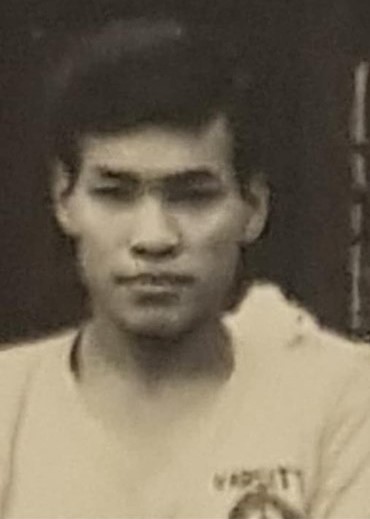
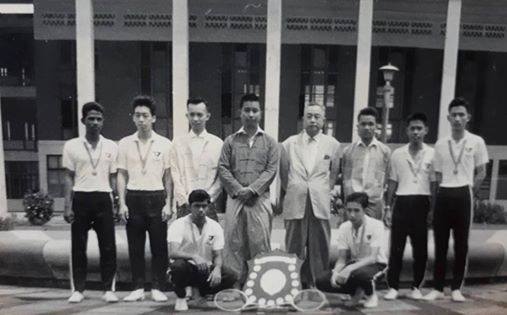
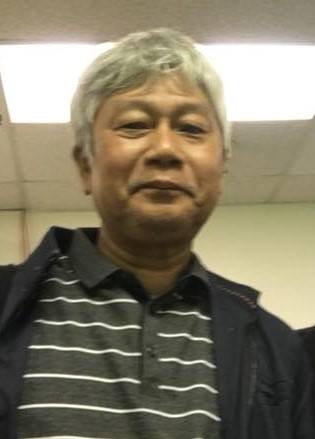
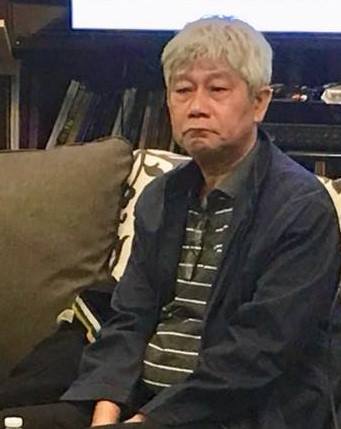
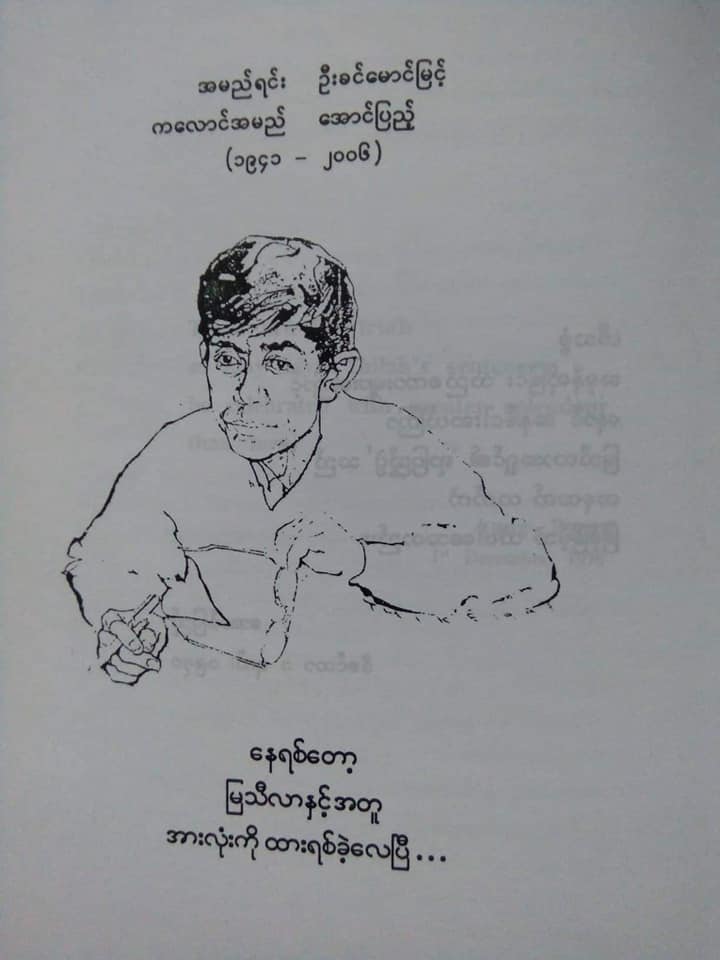
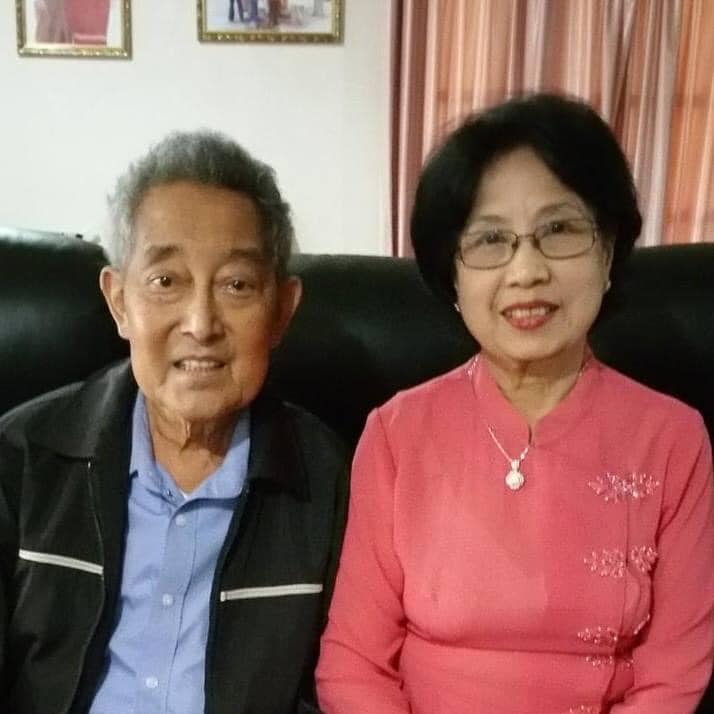
Represented RU and Burma in the First SEAP Games in Bangkok in 1959, and the Second SEAP Games in Rangoon in 1961 Won Bronze in 1959 and Gold in 1961 for 4x 100 m Relay
Team mates include Tun Mra (Sprint), Kyaw Mra (Hurdles) and Soe Mra (Pole Vault).
Mra Brothers
Mra Brothers
Sons of U Shwe Mra (ICS; Chief Secretary, Union of Burma; UN)
U Shwe Mra & Tun Mra
Tun Mra Represented RU and Burma in the First SEAP Games in Bangkok in 1959, and the Second SEAP Games in Rangoon in 1961 Won Bronze in 1959 and Gold in 1961 for 4x 100 m Relay. Full Green, Old member and Patron of RUBC. Appeared in Saya Nyein’s program for RU Diamond Jubilee.
RU Athletic Club
Kyaw Mra (GBNF) Represented RU and Burma in the First SEAP Games in Bangkok in 1959, and the Second SEAP Games in Rangoon in 1961 Won Silver for Hurdles at the Second SEAP Games. Retired as National Coach for Track and Field. Full Green, Old member of RUBC.
RU Athletes
Soe Mra won Gold for Pole Vault at the Second SEAP Games. He won Gold in subsequent Games.
Inter-Varsity Sports
Win Mra was a Medalist in Burma Pole Vault before doctors asked him to retire. He is an excellent guitarist and vocalist. Taught English at RIT. Retired as Myanmar Ambassador to the United Nations. Chair of Myanmar Human Rights Commission.
Maung Maung Mra succeeded his elder brothers as Burma Pole Vault Champion. Won Bronze at the Fifth SEAP Games. Also competed for RASU in High Jump at the Inter-Institute Tournament.
Dr. Aung Mra represented IM(1) in Track and Field. Pole Vault seems to be the favorite for the Mra brothers.
Kyaw Khin (GBNF)
Represented SPHS, RASU and Burma in Track and Field.
Events include 800m, 1500m, 110m Hurdles and 400m Hurdles
Became National Coach in Track and Field
Richard Yu Khin (GBNF)
Won Gold in Yachting with U Maung Maung Lwin (Commodore of Rangoon Sailing Club)
Trained with Burma Selected Swimmers, but he could compete in two sports at the SEAP Games.
U Aye (M62) wrote :
Mg Hla(Badminton), was from Moulmein. We were together at Moulmein College (1956-58). He was selected as a National player even at that time.
Aye Kyaw (Swimming) was from Mudon. He joined Navy after graduation.
Rangoon University celebrated its Golden Jubilee in December 1970.
I was a volunteer for the “Zay Nay Yar Cha Htar Yay Committee” headed by Saya U Tun Hla Aung (Geography).
Saya Dr. Aung Gyi (Professor, Civil Engineering) and Saya U Thet Lwin (Burmese, Institute of Economics) were Chair and Secretary of a Committee. They had a reunion as Rector and Registrar of RIT.
Ah Nu Pyinnya Shins from RIT took part in the Entertainment with Swel Daw Yeik A Nyeint, Tabin Daing A Ka & Htee Yein.
RU Golden JubileeRIT Htee Yein
There are other Golden Jubilees :
GJ of the new Education System introduced in 1964
GJ of Admission to University or Institute
RIT GJ in 2014
GJ of Graduation from University or Institute
69ers GJ in 2019
Geology
Dr. Tha Hla received his doctorate from the UK. He served as Professor of Geology Department. He retired as Rector of the University of Rangoon.
His successors include Dr. Nyi Nyi, U Ba Than Haq and Dr. Maung Thein.
Geology Sayas and Sayamas
Dr. Tha HlaDr. Nyi NyiGeology 1978Dr. Maung Thein
Geology Volleyball
Geology Volleyball
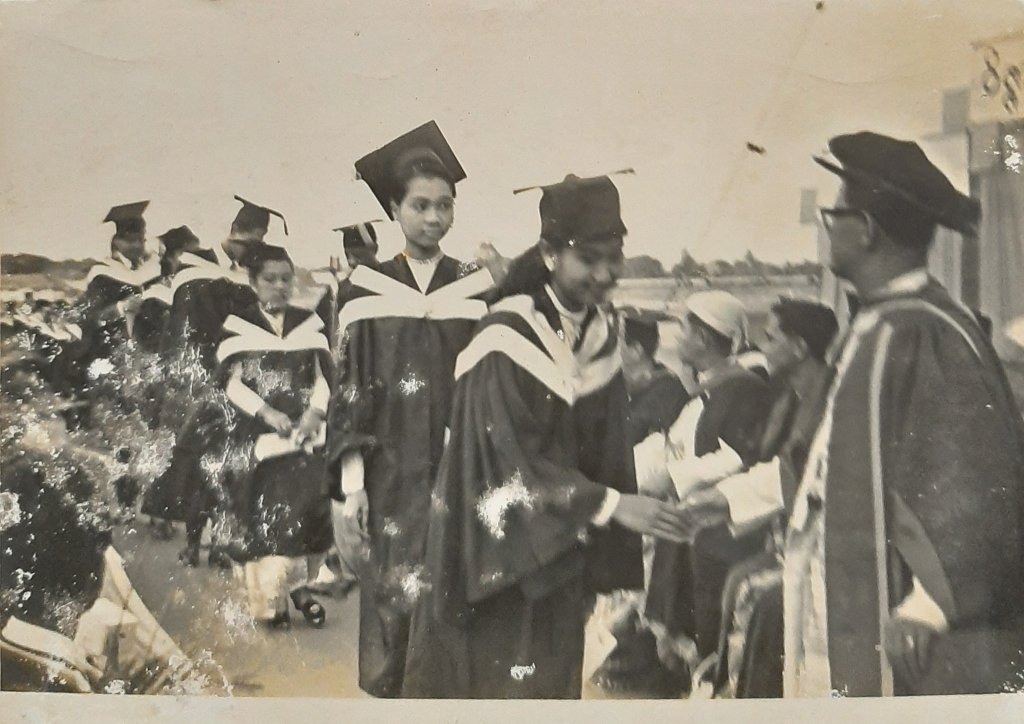
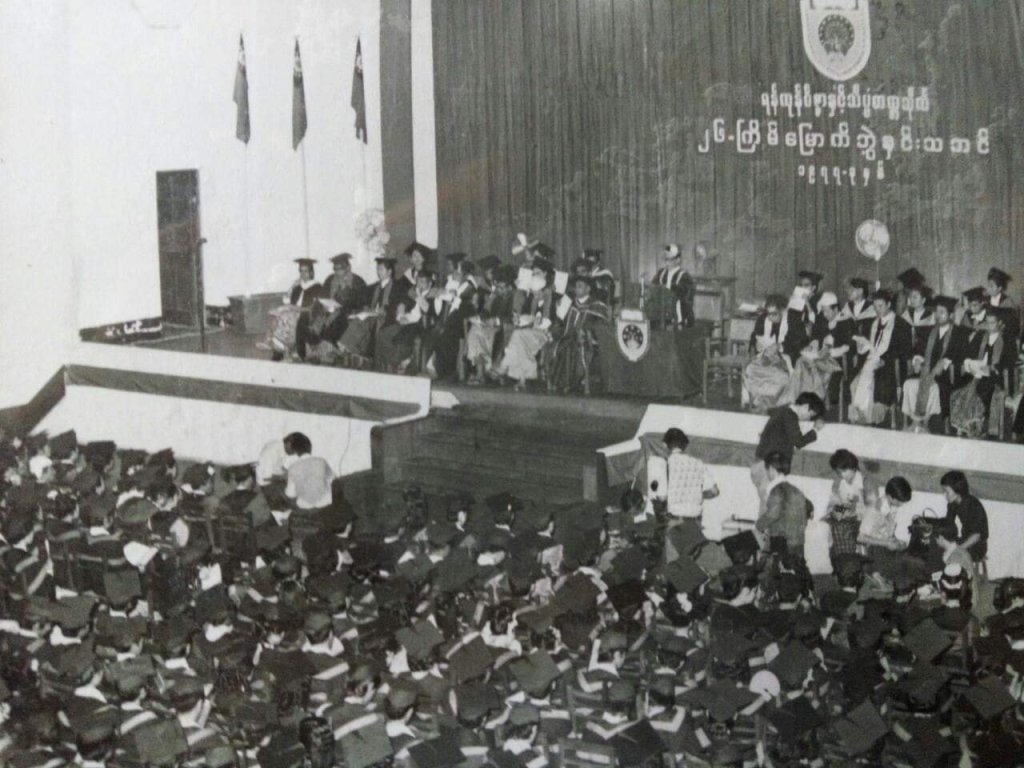
Graduation
RIT Grads
RIT 69ers
Tin Aung Win (M69) & his fatherM69 gradsA69 grads
Graduation Photos
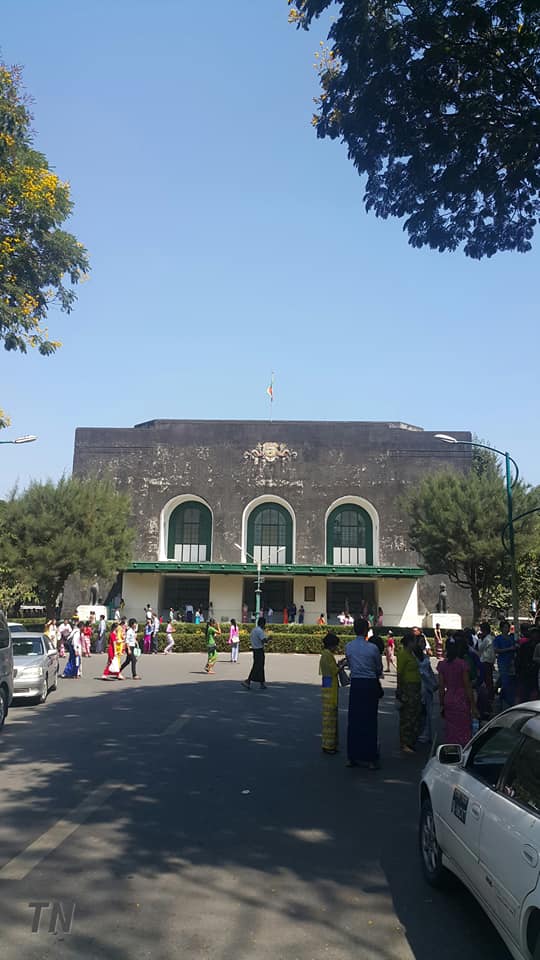
In the early days, some quality photos had to be taken in Studios. The photo (taken at “Bayin Ma”) shows proud parents of a fresh graduate.
Grad 1
It was customary to take photos at the “Full Dress Rehearsal” and in front of the Convocation Hall.
Grad 2
Permits were issued to registered photographers to take photos during the Convocation. Maung Maung Nhyat made a fortune.
Grad 3Grad 4
GeographySayas
Geography Dept
L Dudley Stamp taught at LSE and RU.
Dr. Daw Thin Kyi was an early Burmese Sayama to receive a Doctorate from USA. An Alumnus donated Seed Money for her bust.
Dr. Daw Thin Kyi
Dr. Maung Htoo : Professor
U Kyaw : Principal, Workers’ College; Rector, Institute of Education; Father of U Myo Nyunt (Harry, OPA) & Daw San San Kyaw (UCC)
U Kyaw
U Win : Received Doctorate from USA; GIS; Water Resource
U Soe Paing, U Win Paing (U Wara), Dr. Myo Paing, U Kyaw Paing
Family
Parents : ICS U Paing & Daw Oo Yin
Siblings : Dr. Myo Paing, U Win Paing (Sayadaw U Wara, GBNF), U Kyaw Paing
Spouse : Daw Saw Yu Tint (T69)
Children : Two sons & One daughter
Grandchildren : 3
Education & Work
He matriculated from St. Paul’s High School in 1956. He stood 13th in Burma and won the Collegiate Scholarship.
At the Convocation of 1958, he won two Gold Medals — one for the Highest Total Marks in I.Sc.(A) and I.Sc.(B); and another for Joint Highest Marks in Mathematics for I.Sc.(A) and I.Sc.(B).
He received a States Scholarship to study BSEE and MSEE at Stanford University.
He joined the RIT Electrical Engineering Department as Assistant Lecturer.
He helped Sayagyi Dr. Chit Swe found Universities’ Computer Center. He transferred to UCC as Systems Manager in charge of Systems Division. He later also managed the Operations Division.
He received M.Sc.(Computer Science) from Southampton University in UK.
He worked for UNDP Projects in several countries.
Mentor
He was my mentor at RIT and UCC. He allowed U Aung Zaw (GBNF) and me to co-author Texts, User Guides and Manuals for use at UCC.
HMEE
He was an early supporter of the HMEE project. He prepared a draft for the HMEE book and handed it to Saya U Aung Hla Tun (GBNF) & team. He and U Ohn Khine (M70) translated Section 1 of the HMEE Book and summarized Section 2 of the book.
Posts
Post from March 2011
I went to the University Central Library and managed to get scanned photos from the Engg Student Annual Magazines 51-52, 52-53, 56-57 and 60-61. Photos include photos of Sayas, students of that year. From these when can know about the Sayas at that year. We can also identify the students at that year.
U Sein Hlaing (Prof EE) was a final year student in 1951-52 and became an A/L starting 1952-53. Saya U Tin Swe was a student in 1951-52 and 52-53. He was a member of the Eng Student Union and the victorious Prome Hall football team. Ex-Burma Selected Footballer U Chan Tha (Chief Engineer, Roads, Rangoon Municipal) was the Captain. U Khin Si (husband of RIT Finance Officer Daw Yin Yin Htway and part time lecturer Textile) and U Tin Si (U Khin Si’s brother and tennis doubles partnership that won RU as well as national championships) were members of the Prome hall team.
The 1956-57 magazine contains photos when the new Leik Khone Engineering Buildings were inaugurated in 1956 Nov by the Prime Minister at that time U Ba Swe.
In the 1952-53 magazine I found out that Mr. Robert Hole (ex-EE, Highways, PWD, PWC, CC; uncle of Percy Maung Maung and uncle Bobby to me) was the English editor. I called Uncle Bobby and requested him to write something about his engineering student days, his teachers and fellow students. He agreed and asked for about three weeks time.
I need to go back and to the UCL to get more info from the RIT handbook 1966-67 and photos from the Hlyat Sit Sar Saung.
U Ba Than has donated some of his Engineering College photos to the MES library and I need to go there to check up on the photos.
Post from May 2000
The mention of RIT, BIT, and BOC college in the first newsletter bring back memories of our good old days in Rangoon University. Although we did not graduate from Rangoon University, we had a really great two and a half years there before we went for studies aroad under government scholarship.
Our first year 1956-1957 was in Yankin College. Yankin was a campus of RU for first year science students. It is now Yankin State High School No. XX? Hteedan was for the 1st year arts students. Our second year I.Sc. was at the RU campus itself which we refer to as Main. The Arts students have classes at Judson. That time the new Social Science Building (now Institute of Economics) was completed. We had our second year ISc exams in that new building.
Then it is our 1st year B.Sc. Engineering course at the new Faculty of Engineering in Prome Road (now Institute of Medicine I). We attended for six months till December 1958. That campus was designed and built especially for the Faculty of Engineering. Civil, Electrical, Mechanical Departments were there but Chemical, Textile, etc. were in the old BOC building at the back.
The 1st year classes were from 7 to 9 a.m. for Mathematics. We then have a one hour break and we start the engineering courses at 10 a.m. We usually have a snack during the break at a small cafe between Tagaung and Prome Halls. Those halls were only for engineering students then. The mathematics (Pure & Applied) lecturers were from India hired under contract. We had three engineering courses: Building Materials taught by Mr. Tan Ba Hli (the Dean of Engineering himself). Heat Engines taught by U Aung Khin. Principles of Electrical Engineering taught by U Kyaw Tun. We had EE lab with Ko Htin Paw and Ko Ba Nyunt as lab instructors. We also had engineering drawing with Ko San Hla Aung and Allen Htay (for Chem, Tex, etc.) as instructors.
Those were the days when Rangoon University was one of the best universities in SE Asia and Asia. It also had a really nice campus.
RIT Saya Soccer Team
Reading about the communications from Richard Khoo (Dr. Aung Soe, C61) and seeing the list of Sayas in the 1966-67 handbook brings back memories of our soccer team.
As I remember it was from 1964 to 1968 or 1969. We played against (i) the senior students of different majors Civil, Mechanical, Electrical etc. (ii) the sayas at GTI and Natmauk Technical Institute (iii) the Burma Air Force officers.
We also played in the annual tournament for RIT Staff. The staff teams are the Sayas, Workshop staff, Lab staff, Hostel staff and the youth team from the RIT compound.
As I remember (other Sayas & graduates may correct me) these were the people in the team.
Goalkeepers :
Richard Khoo (Civil)
Maurice Kyaw Zaw (Chemistry),
Sein Myint/Ah Sein (Petroleum)
Defenders :
Ko Maung Maung Than (Textile)
Ko Aung Soe (Math)
Ko Aung Hla Tun (Met)
Ko Sann Tint (Elect)
Christopher Maung (Civil)
U Tin Swe (Elect)
Ko Tin Win (Mech)
Midfielders :
Ko Tin Maung Nyunt (Agri)
Desmond Rogers (English)
Ko Khine Oo (Elect)
Ko Maung Maung Win (Mech)
Ko Tin Hlaing II (Mech)
Forwards :
Ko Pike Htwe (Chemistry)
Ko Aung (Math)
Ko Tin Hlaing I (Agri)
Ko Soe Min (Elect)
Ko Kyin Soe (Auto)
myself (Elect)
We rarely practiced but we enjoyed playing the games. We split games with the GTI sayas & the Air Force officers. We beat the Natmauk sayas and we won more than we lost in the RIT staff tournament. But I am sure we lost more than we won against the final year students. Would appreciate comments on this; especially on the names I missed in the team.
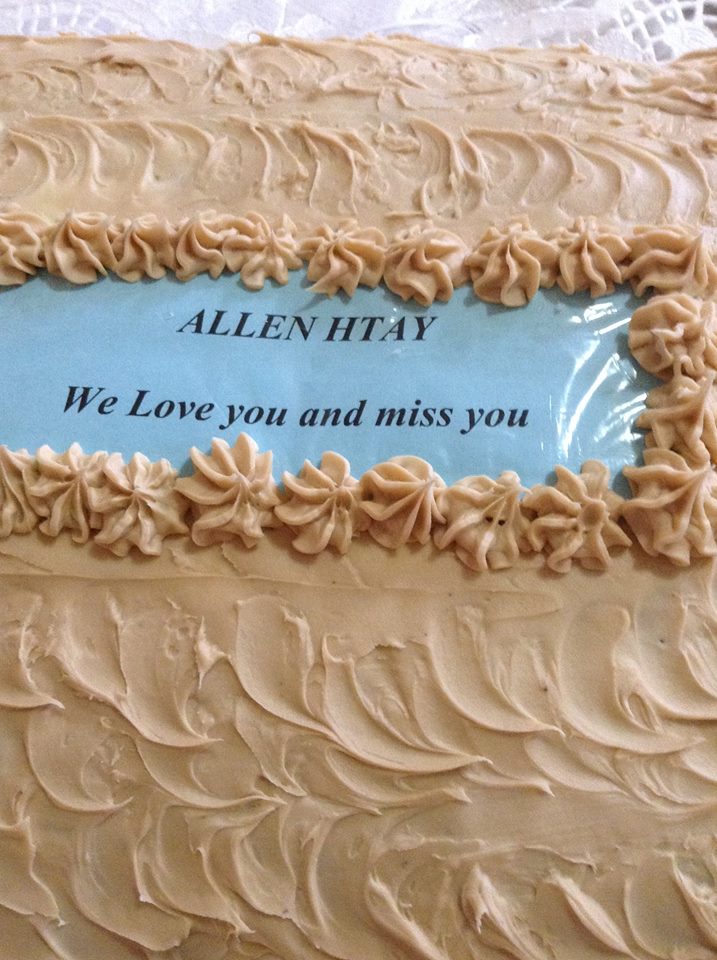
Saya Allen Htay (C58) is a founding member of RIT Alumni International and served as its President.
He wrote “Brother, can you spare US $500 and more?” for the First RIT Grand Reunion and Saya Pu Zaw Pwe (aka SPZP-2000).
Saya retired thrice, but his former students coaxed him to un-retire twice.
With the help of U Maurice Chee (M75), Daw Mu Mu Kin donated Saya’s books to YTU Library. The dedication ceremony took place at YTU on February 26, 2016.
I matriculated in 1949 and entered the University of Rangoon and stayed in Ava Hall and took the Intermediate of Science (ISc) courses. The courses were: English, Burmese, Physics, Chemistry, and Mathematics (Pure and Applied Maths). We needed to take these courses for two years in order to go to the engineering studies. I remember having a great time in the first year as we did not have to take the examination at the end of the first year for some unknown reason. But we had to take the examination at the end of the second year for all the subject matters that were taught to us for the whole two years. It was a tough examination at the end of the second year as we had to study a lot. We had physics and chemistry examination papers, two mathematics papers, English and Burmese papers, physics lab practical exam and chemistry lab practical exam within a period of 15 to 20 days in the hot month of March. Only about 60% of the students passed through the first time. The passing grade for each subject was 40%. Fortunately the University authorities in those days were understanding and kind enough to give the failed students what they called compartmental examination again in May/June for the failed subjects. Given a second chance like that, a lot of students passed the examination this time around. The Faculty of Engineering admitted the students, including the students who passed the ISc exam. under the compartmental system, with a passing grade of at least 40% for each of ISc subjects and the average passing grade for all the subjects combined of 50%.
I was quite fortunate to have good teachers in my ISc days. I remember that Saya U Than Tin gave good lectures in physics. Saya U Thein Nyunt was good as well in teaching us chemistry. Needless to say the experiments that I had to do in physics and chemistry labs were interesting as they were all new to me.The maths teachers I remember were Professor U Aung Hla, Sayagyi U Kar, Sayagyi U Ba Toke, two Indian lecturers with the same last name Chowdhury. I forgot their first names. One Chowdhury was bald headed and the other had a lot of hair.They were teaching, I think, under contract with the Rangoon University. These very good teachers, I had to say, gave me a good foundation in mathematics. The English teachers were very good too. They were Saya U Kan Gyi and Sayama E. Kan Gyi. The only Burmese teacher I remember was Saya U Hla Maung who could make a boring topic into an interesting lecture. I owe a lot of gratitude to these wonderful teachers.
I joined the first year engineering class in 1951-1952 academic year, having satisfied the entrance requirements of the Faculty of Engineering mentioned above. The academic year , I think was from June to February with about one month break in October. So far as I know there was a “new course engineering” at the Faculty of engineering right after the World War ll. I do not know what the entrance requirement for this new course was.
I stayed in Prome Hall like most of the other engineering students in those days, as it was situated close to the B.O.C. College of Engineering building where we had classrooms, laboratories, and workshop for our engineering courses. A few engineering students however stayed in Tagaung Hall which was in the same Prome road campus of the Rangoon University as Prome Hall. Both of these hostels were timber buildings and they could easily get burnt down; but I was happy to see that they are still standing there when I visited Yangon in 2010. These two Halls gave accommodations to all engineering students, even to some students from Rangoon at that time, as there were vacancies and as the total engineering student population was not that big. If my guess is correct, I think there were about 350 to 400 students for 4 years of all engineering disciplines, out of which there were about 75 1st year engineering students. The system in place at that time was in such a way that the students had to take common courses in the first 2 years and branched out into different disciplines of choice, starting from 3rd year.
I remember that as first year engineering students, we still had to take mathematics classes from 7:00 am to 9:00 am at the main campus where we had taken the Intermediate of Science courses. I remember getting up early in the morning in Prome Hall ,and taking a walk along the road, what we called as “Padaukpin lane” or “Thaton lane”, and through Thaton Hall and Ava Hall , for the mathematics classes at the main campus. All of us then rushed back to B.O.C. College of Engineering from the main campus after 9:00 am to take theengineering classes, which included lectures, practical laboratory work, workshop practice, and drawing classes, starting from 10:00 am. We normally finished our classes around 4:00 pm. The total contact hours of learning for engineering students were about 30 hours per week. If my memory is correct, it was difficult to get an engineering degree in 6 years after matriculation. Somewhere along the way some of us failed for one reason or the other, and had to repeat a class.The passing grade for each subject, which included workshop training at the Engineering Faculty was 40% and the average passing grade for all the subjects combined was 50%. When I passed my 1st year engineering in April/May 1952 I noticed that about 15% of my classmates were left behind to repeat the 1st year engineering.
I do not remember all of my teachers at that time. I can only recall that Saya Num Kock was in charge of 1st year engineering drawing, Saya Jaidka taught us ” building materials and construction”, Saya Ketrepal gave lectures and practical laboratory training in “heat engines”, Sayagyi U Kyaw Tun / Saya C. Ping Lee taught us “electrotechnology” in the classroom and in the laboratory. In addition to the lectures, laboratory work and drawing, all of us had to take workshop training in carpentry, blacksmith, welding, and in machine shop. The medium of teaching was English. We were also encouraged to take some practical training with some engineering organization during the summer vacation. I am not quite sure , but I think Ko Chit was an assistant at the blacksmith shop, and U Ba Sein was an assistant in the electrical lab. I think Mr P. Davis was the workshop superintendent. The classrooms , laboratory facilities, the workshop facilities that I had attended were good and adequate. The library I visited some time was full of good engineering books, magazines and journals. I could imagine that with its qualified teaching staff and good teaching facilities, the Faculty of Engineering was producing the qualified engineers needed by the country at that time.
I do not know what was the total number of teachers we had at the Faculty of Engineering at that time. I could guess that the student/teaching staff ratio was about 20:1 from the number of teachers and from the number of students I had seen. I noticed that there were few Burmese nationals teaching staff at the Faculty, and most of the teachers were from India and UK. It seems that, right after the World War II, there was shortage of qualified teaching staff from Burma at higher education/University level as a whole. Sayagyi Professor U Ba Hli was Dean of the Faculty of Engineering, and I believe he received his post graduate degree from a British University. He was quite far-sighted and tried to broaden and improve the engineering education by having some kind of twinning arrangements with not only a British University but also with Massachusetts Institute of Technology, USA (M.I.T). I remember as a student that there was a visiting Professor called Professor Horwood from M.I.T at the Faculty; and I think he gave us lectures on sanitary engineering. Sayagyi U Ba Hli must have planned to increase the number of engineering disciplines that were given at the Faculty from civil, mechanical and electrical engineering to other disciplines as well, such as Mining, Chemical, Metallurgy, Textile engineering and Architecture. I understood this plan came into fruition in 1954/1955. He must have also planned to send the Burmese nationals to UK, USA and as qualified teaching staff at the Faculty at a later date. I therefore take this opportunity to put on record that a big credit is due to the late Sayagyi U Ba Hli for his contribution to the improvement of engineering education in Myanmar.
Pu Zaw Pwe is a Noble Tradition that is practiced in Burma.
Thet Kyee PZP is for paying respect to the Elders. The age requirements vary.
Saya PZP is for paying respect to the sayas and sayamas. Some use the term Acariya PZP.
Thet Kyee PZP
In some places, a Senior Day is held. Transportation, Food, Entertainment and Photo-shoot are provided for Old people of all races and creeds.
Thet Kyee PZP may be held in conjunction with a Festival, e.g Thingyan or Thadinkyut. Buddhists may also pay respect physically to the Elders.
MES organized Thet Kyee PZP for Senior Engineers and Architects.
The All-Mechanical Gathering also had a program to pay respect to Thet Kyee Mechanical Engineers.
Acariya PZP
Examples :
Combined 1st BE Intake of 64 and 65
M72 (and some other Disciplines)
ICST/UCSY
Saya PZP
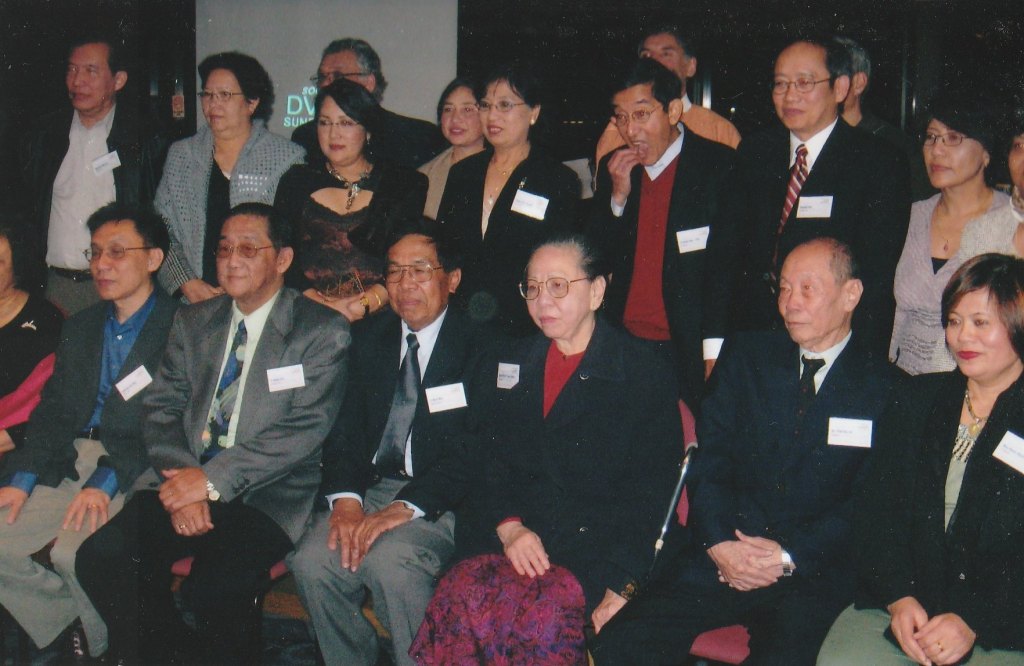
RIT Alumni International hosted the First RIT Grand Reunion and SPZP in San Francisco, California in October 2000. The term SPZP was chosen over Saya Ga Dawt Pwe so that Alumni of different Faith can pay back the Metta and Cetana of their mentors. I am honored to be a Core Organizer of SPZP-2000. I wrote the poem “SAYA PU ZAW PWE”. It was published in the RIT website and the Commemorative Issue of the RIT Alumni Newsletter for SPZP-2000.
Singapore hosted SPZP-2002, SPZP-2007 and SPZP-2010. Saya U Moe Aung (Tekkatho Moe War) and team published Commemorative Issue of Swel Daw Yeik Sar Saung for the SPZPs. My poem was reprinted on the Back Cover of SDYSS-2002. I wrote a poem “SWE DAW YEIK” for SDYSS-2007. I wrote an article “EE Sayas : A Sad and Short Clip” for SDYSS-2010.
Yangon hosted SPZP-2004, SPZP-2012 and SPZP-2016. Commemorative Issue of Swel Daw Yeik Magazine was published for SPZP-2012 and SPZP-2016. U Saw Lin (GBNF) was Chief Editor of SDYM-2012. Saya U Moe Aung was Chief Editor of SPZP-2016. Several Distinguished Authors (e.g Ma Sandar, Maung Sein Win — Padeegone, N Jar Thaing, Aw Pi Kye) also served as Editors.
Due to the pandemic, SPZP-2020 was canceled.
Some of the Organizers and Volunteers of the SPZPs are GBNF. They include Saya Allen Htay, Ko Saw Lin, Ko Aung Moung, Ko Than Sin Myint and Ko Robin.
Several Sayas are GBNF. They include U Ba Toke, H Num Kok, U Soe Khaw, U Khin Aung Kyi, U Thit, Dr. Mg Mg Win, S Arya, S Kyaw Aye, U Soe Lwin.
Sayas U Ba Than, U Aung Khin, Dr. Aung Gyi and U Min Win are 90+ years young. Many of our sayas are 80+ years young.
We hope to see SPZPs in the not so distant future (after the Calamities have ended).