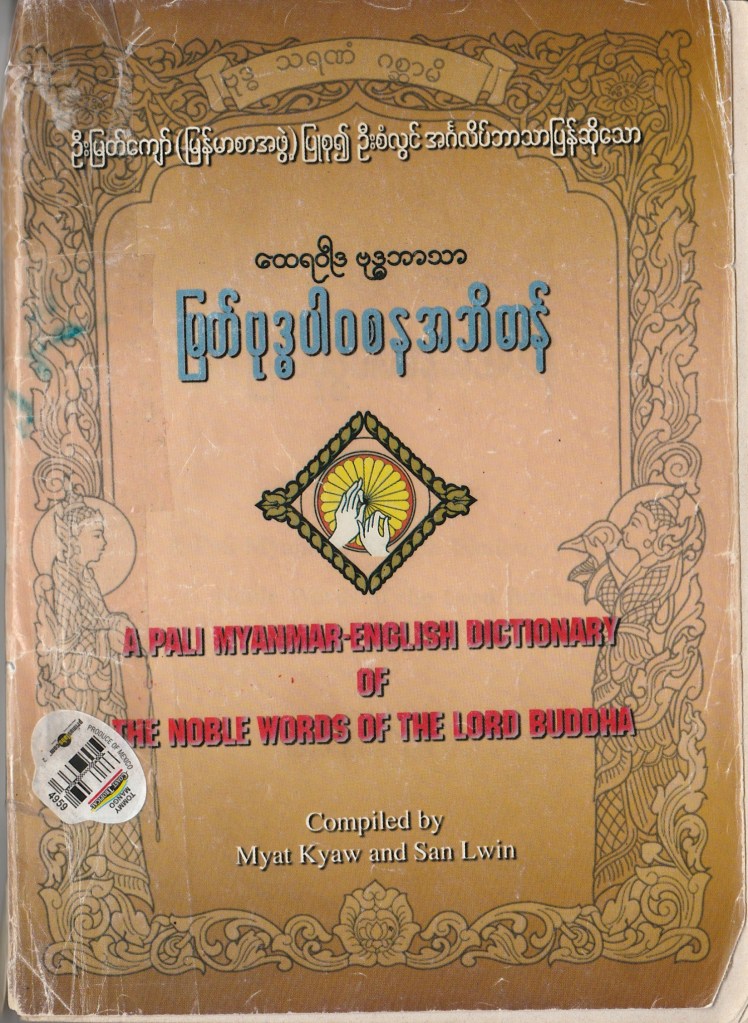
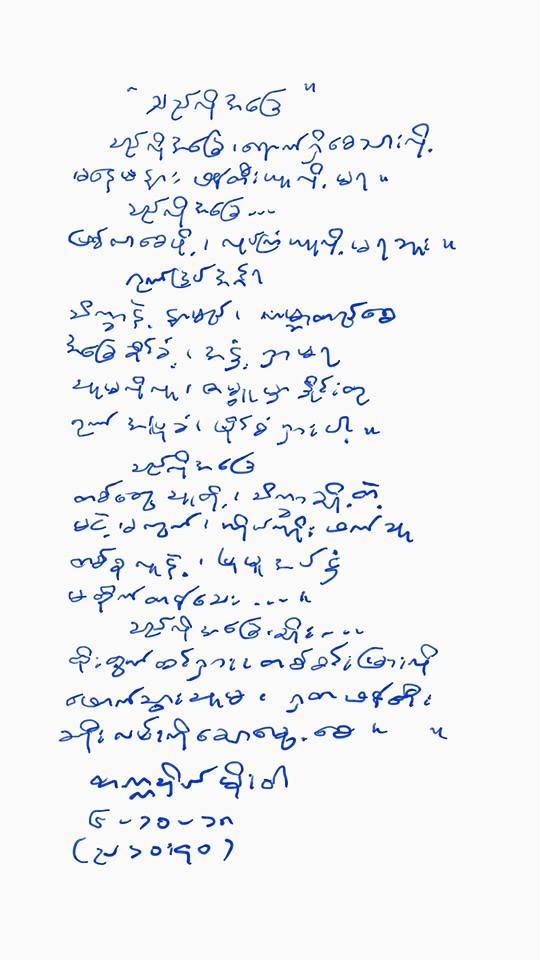
Category: Language

  • Learning

    by Hla Min

    Updated : Apr 2026

    There are several ways to classify learning.

    Four Pillars of Learning

    • Learning to know — both formal (via schooling) and informal (via senses)
    • Learning to do — both formal (via a mentor or supervisor) and informal
    • Learning to be — e.g. a professional (doctor, engineer, scientist, public speaker)
    • Learning to live — e.g. a happy and fruitful life (with peace and tranquility)

    Types

    There is meta-learning and efficient learning (e.g. Learning how to learn).

    For AI (artificial intelligence), there is Machine Learning (which may be supervised or unsupervised) and Deep Learning (from large sets of data).

    Rote learning is not very effective. An effective technique is to perform repetitions (or revisions) at specified intervals.

    Lifelong Learner

  • Writings (1)

    by Hla Min

    Updated : Apr 2026

    • Freelance Writer, Editor & Translator
    • Sample writings in this post

    Still So Young

    Translation

    Still So Young
    Hla Min
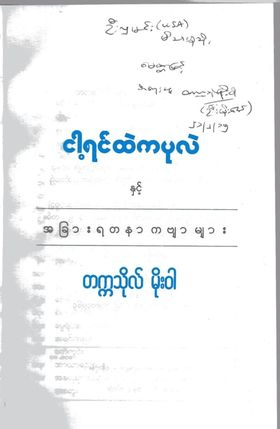
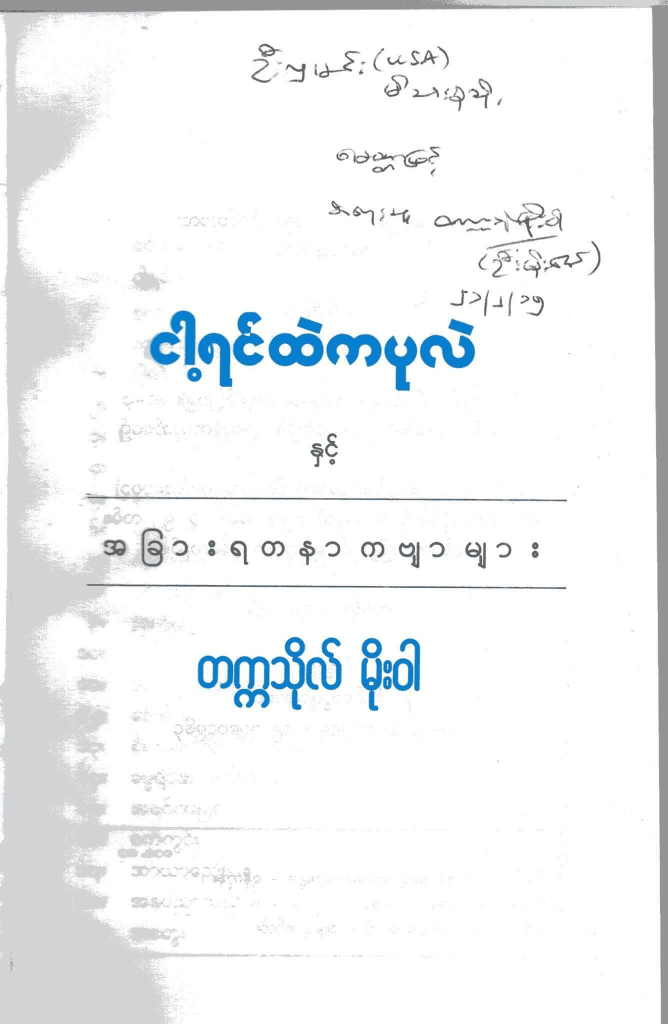
    • “Nge Thay Loh ငယ်သေးလို့”
    • Short story by Thu Kha (Author, Director, Actor)
    • Translator : Hlaing Phyo (pen name of Hla Min)
    • I received fifty kyats for the translation. U Thu Kha was given fifty kyats.
    • Modern Burmese Writings, Working People’s Daily
    • Editor : Daw Khin Swe Hla (founder of “Dawlay’s Circle” at Guardian”)

    Men on the Moon

    Poem

    Writing 107
    Men on the Moon
    • Honoring the Apollo 11 Mission in July 1969
    • Neil Armstrong (Mission Commander)
    • Michael Collins (Command Module Pilot) ; Columbia : code name for Command Module
    • Edwin “Buzz” Aldrin (Lunar Module Pilot) ; Eagle : code name for Lunar Module
    • Mission : Land Eagle on Tranquility Bay; Set US Flag on the Moon’s surface; Collect rock samples
    • Guardian Daily
    • Chief Editor : U Soe Myint
    • Mr. Hall (USIA) forwarded my poem to NASA.

    Phaungdaw-u Festival

    Poem

    This image has an empty alt attribute; its file name is writing-105.jpg
    Phaungdaw-u
    This image has an empty alt attribute; its file name is writing-104.jpg
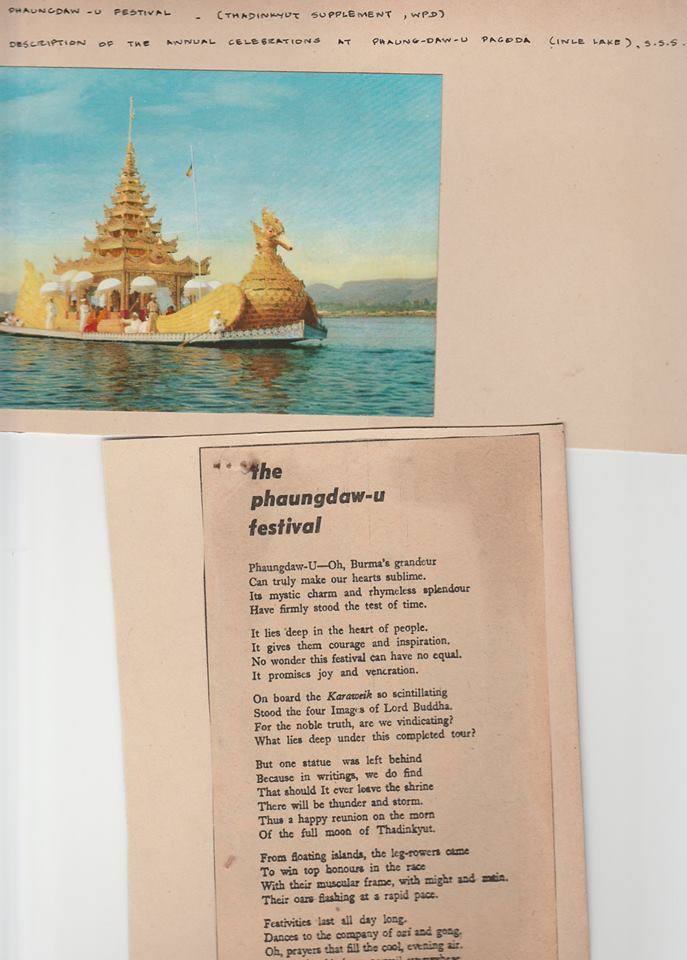
    Poem about Phaungdaw-u Festival
    • Thadinkyut Festival at Inlay Lake, Shan State
    • Inlay is known for the floating islands and leg rowers
    • Thadinkyut Supplement, Working People’s Daily
    • Chief Editor : U Ko Lay
    • Remuneration : K 15
    • Visited Inlay four times
    • Inlay Khaung Daing Luyechun Camp in the Summer of 1965
    • Peter Pe (SPHS63) invited us to visit Inlay & Taunggyi in October 1965; Saw Phaungdaw-u Festival
    • In mid 2010, took a Packaged Tour to Heho, Inlay & Taunggyi.
    • In January 2020, visited Inlay as the last leg of the PSA tour.

    The Ngapali Beach

    Poem

    Ngapali
    • Famous Beach near Thadwe
    • WPD
    • Visited Ngapali three times
    • With cousin & friends in the ‘60s
    • With family in the ‘80s
    • Guest Lecturer, Ngapali Luyechun Camp in ‘88

    Till We Meet Again

    Poem

    SEAP
    • Dec ‘69
    • Fifth SEAP Games hosted by Burma
    • WPD

    The United Nations

    Poem

    UN
    • United Nations Day
    • October ‘69
    • WPD
    • U Thant : 3rd UNSG; 1st Asian UNSG

    The Great Gandhiji

    Poem

    This image has an empty alt attribute; its file name is writing-101.jpg
    Gandhi
    • Centennial of the Apostle of Non-violence
    • Born Mohandas Gandhi, he was also called “Mahatma”
    • October 1, 1969
    • Working People’s Daily
    • Chief Editor : U Ko Lay

    To The Fallen Warrior

    Poem

    This image has an empty alt attribute; its file name is writing-106.jpg
    To the Fallen Warrior
    • Honoring the Sayadaws စာဆိုတော်များ writers who fought for Burma’s Independence
    • Forward Magazine
    • Chief Editor : Maung Thaw Ka (Bohmu Ba Thaw)
    • Editor : U Sein Hla

    Calendars

    Article

    This image has an empty alt attribute; its file name is writing-102.jpg
    Article on Calendars
    • There are various Calendars.
    • The Burmese Calendar is luni-solar, socio-religious calendar.
    • BAPS Newsletter
    • Chief Editor : Henry Lim
    • Contributing Editor : Hla Min
    • Revised versions published in my FB groups and my website hlamin.com

    Sea Burial for Dr. Htay Lwin Nyo

    Article

    This image has an empty alt attribute; its file name is writing-103.jpg
    Last Journey of Htay Lwin Nyo
    • Part-time Professor of Electrical Engineering, San Jose State University passed away alone at his home.
    • Per request from the Professor & Head of EE Department, SJSU, the Burmese Community in the San Francisco Bay Area helped with the Final Journey.
    • I had the honor to push the incinerator and also to join Dr. Swe Aye and Dr. Khin Nyo Thet to scatter the ashes in the waters off Santa Cruz
    • BAPS Newsletter : Chief Editor — Henry Lim
    • RIT Alumni International Newsletter : Chief Editor — Hla Min
    • Memorial Page for Htay Lwin Nyo in the first ex-rit website : Webmaster — KMZ; Content Provider & Editor — Hla Min
    • Revised versions published in my FB groups and my website hlamin.com

    Publications

    • Contributor, Encyclopedia of Asian American Folklore & Folklife
    Encyclopedia
    • Editor of selected Books, Newsletters & Projects
    Dhamma & Bawa
    Cetana Thi Thar Kan
    • Poems
    • Poetic Art Series
    • Translation of Articles, Poems & Short Stories
    Shwe YaDu Lann

    Posts

    • Lifelong Learner
    • Memories —Series
    • My Beliefs
    • My Passion
  • Burmese Festivals

    by Ashin Acariya & Hla Min

    Updated : Apr 2026

    The Burmese Calendar is a luni-solar-socio-religious calendar.

    The Burmese New Year falls on or around April 16. The three (or sometimes four) days preceding the New Year is celebrated as Thingyan (similar to Songkran festival in Thailand).

    It is a lunar calendar with 12 lunar months in most years. An intercalary month called “Second Waso” is added every three years. There are 12 religious and/or social festivals (one for each Burmese month).

    Most religious festivals are celebrated on the Full Moon Day.

    The following is a brief description of the 12 Burmese months and the associated festivals.

    1. Month of Tagu

    Name of the auspicious event:
    Ushering in the Burmese New Year by the Buddhists

    Associated festival:
    A Ta Thingyan Water Festival (generally held from April 13 – 15 or 16)

    Details for the celebration:
    (a) Invite guests for special treat. (b) Take eight precepts and practice Sila (morality). (c) Listen attentively to the “38 Blessings” by the sangha. (d) Chant Paritta (protective verses) and Pathana (“relations”) (e) Pay homage to the elderly people as if they were one’s own parents (f) All the above are performed (by the Burmese Buddhist) to accumulate kusala (wholesome deeds) (g) Most younger people usher in the Burmese New Year by throwing water (h) Thingyan festival is the most prominent among the 12 (monthly) festivals.

    Objectives:
    To cleanse akusala (unwholesome deeds) from the past year (a) symbolically by throwing water (b) practically by performing meritorious deeds such as dana (charity), sila (mrality), and bhavana (meditation)

    2. Full Moon Day of Kason

    Name of the auspicious event:
    Buddha’s Day. It is the most prominent day for the (Theravada) Buddhists celebrating four milestones (a) the proclamation that the Bodhisatta Sumeda would become Buddha in four incalculables and 100,000 worlds (b) birth of the Boddhisatta Sidartha (c) enlightenment of Gautama Buddha (d) Mahaparinibbna (final passing away of Buddha)

    Associated festival:
    Kason Nyaung Ye Thun Pwe (pouring water on the Bodhi tree)

    Details for the celebration:
    (a) Invite guests for special treat. (b) Invite sangha and offer requisites (c) Take (five or eight) precepts and practice Sila (morality) (d) Listen to the dhamma talks (e) Practice metta (loving kindness meditation) (f) Share merits (g) Pour water on the Bodhi tree

    Objectives:
    (a) To acknowledge the practice of parami (perfection) for four incalculables in order to become a Buddha (b) To realize that Buddha’s teachings are for our own good (c) To make a determination that we should practice Buddha’s teachings to the fullest extent

    3. Full Moon Day of Nayone

    Name of the auspicious event:
    Mahasamaya (“Great Occasion”) A Kha Daw Nay
    (a) Commemorating truce between Kapilavutta and Koliya countries (b) Assembly of devas, brahmas, galons, nagas, and sanghas expressing their metta (unbounded love) (c) Ordination of 500 princes from the Sakya clan (d) In sum, distinguished and outstanding day of love and peace

    Associated festival:
    Recitation of Mahasamaya Sutta

    Details for the celebration:
    (a) Invite guests for special treat. (b) Invite sangha and offer requisites (c) Take (five or eight) precepts and practice Sila (morality) (d) Listen to the dhamma talks (e) Recite Mahasamaya Sutta (f) Practice metta (loving kindness meditation) (g) Share merits

    Objectives:
    (a) To advocate love and peace among nations with diverse cultures and beliefs (b) To practice metta (unbounded love) not only for humans but for all beings

    4. Month of Waso

    Name of the auspicious event:
    (a) Offering of Waso robes (b) Recitation of Dhammacakkapavutna Sutta (“Turning the Wheel of Dhamma”)

    Associated festival:
    There is no specific date for the offering of Waso robes to the sangha.
    Full Moon Day of Waso is a prominent day for (Theravada) Buddhists celebrating three milestones (a) the day when Boddhisatta was conceived in the womb of Queen Mahamaya (b) the day when Prince Sidharta renounced his worldly pleasures (c) the day when the First Sermon Dhammacakkapavutna Sutta was delivered to his five disciples

    Details for the celebration:
    (a) Invite guests for special treat. (b) Invite sangha and offer requisites (c) Take (five or eight) precepts and practice Sila (morality) (d) Listen to the dhamma talks about Magga (Noble Eight-fold Path) (e) Collectively recite Dhammacakkapavutna Sutta (f) Practice metta (loving kindness meditation) (g) Share merits

    Objectives:
    (a) To avoid the two extremes of sensual pleasure and self-mortification (b) To practice the Noble Eight-fold Path

    5. Full Moon Day of Wa Khaung

    Name of the auspicious event:
    Metta (“Unbounded Love”) A Kha Daw Nay
    500 monks who were practicing meditation in the forest were intimidated by nats (guardian spirits) and returned to Buddha’s monastery. Buddha preached them Metta Sutta and exhorted them to practice loving kindness meditation to the nats before meditating. The monks returned to the forest and practiced per Buddha’s exhortation. The nats no longer obstructed the practice of the monks, thereby allowing them to progress and get enlightened. Thus, Metta A Kha Daw Nay came into being.

    Associated festival:
    Recitation of Metta Sutta & Sar Ye Tan Mei (deciding the donation to a monk based on a “raffle” [letter written on a stick, in ancient times]

    Details for the celebration:
    (a) Invite guests for special treat. (b) Invite sangha and offer requisites (c) Take (five or eight) precepts and practice Sila (morality) (d) Collectively recite Metta Sutta (e) Offer requisites to the monks based on the Sar Ye Tan Mei “raffle” (f) Dhamma talk on metta and the virtues of practicing metta (g) Share merits

    Objectives:
    To practice metta (unbounded love), karuna (compassion), mudita (altruistic joy), & uppekha (equinamity)

    6. Full Moon Day of Tawthalin

    Name of the auspicious event:
    Garudhamma (“Five precepts”) A Kha Daw Nay
    A brief history is as follows. Bodhisatta was (once) born in Kuru Taing (province), where the king and his people practiced Garudhamma. They refrain from (a) killing (b) stealing (c) sexual misconduct (d) lying (e) taking intoxicants. So, the weather was fine and wealth was amassed. Kawlinga Taing (province) suffered from (a) war (b) famine (c) disease. Many perished. The king and people of Kawlinga Taing decided to emulate the king and people of Kuru Taing. Soon, the weather became fine and wealth was amassed. The three sufferings disappeared. The Full Moon Day of Tawthalin, which is part of the rainy season, was named Garudhamma (“Five precepts”) A Kha Daw Nay.

    Associated festival:
    Competition for reciting poems about the merits of taking five precepts.

    Details for the celebration:
    Host competitions for reciting poems about the merits of taking five precepts.

    Objectives:
    (a) To make people aware of the merits of taking five precepts (b) To have a peaceful community (c) To promote world peace

    7. Full Moon Day of Thadinkyut

    Phaungdaw-u Festival

    Name of the auspicious event:
    Abhidhamma (“Ultimate Reality”) A Kha Daw Nay & Mahapavayana Nay
    Buddha taught Abhidhamma to the devas in Savateinsa (during the Buddhist Lent) and returned to earth on the Full Moon Day of Thadinkyut

    Associated festival (1):
    Festival of Light

    Details for the celebration:
    (a) Light candles (b) Light incandescent bulbs
    Objectives: Emulate the scene where the devas and the people paid homage with candles and lights to the Buddha upon his return from Savateinsa

    Associated festival (2):
    Pavayana Pwe

    Details for the celebration:
    (a) Monks assemble in a sima hall (b) Each monk invites other monks to give advice. He says, “If you have seen me commit a misdeed, you may reprimand me. If you hear that I have committed a misdeed, you may reprimand me. If you doubt me, you may reprimand me. I will try not to commit that misdeed in the future.” (c) Lay people might also invite their fellow people to give advice.


    Objectives:
    (a) To practice Nivata Mangala — blessing where one displays humility (b) For monks to practice Sovacasatta Mangala — blessing where one takes constructive critism (c) For lay people to become good & wise people

    8. Full Moon Day of Tazaungdaing

    Name of the auspicious event:
    Samyannaphala (“Virtues of monkhood”) A Kha Daw Nay
    Buddha gave the sermon to King Ajjasathat on the Full Moon Day of Tazaungdaing

    Associated festival:
    Tazaungdaing Festival

    Details for the celebration:
    (a) Light candles (b) Take (eight) precepts and practice Sila (morality) (c) Dhamma talks based on Samyannaphala Sutta (d) Practice metta (loving kindness meditation) (e) Share merits

    Objectives:
    (a) Make people aware of the virtues of monkhood and the qualities of sangha (b) If one has conducted misdeeds like King Ajjasathat, one should acknowledge the fact, but be determined to be good by doing meritorious deeds.

    9. Full Moon Day of Nadaw

    Name of the auspicious event:
    Dhamma Sarsodaw Myar Nay
    In Burmese History, Full Moon Day of Nadaw honors the literary giants (writers, poets). In modern days, the Department of Religious Affairs designated the day to honor writers for the dissemination of dhamma

    Associated festival:
    Sar Pyan Pwe (Oral and written examination for the monks)

    Details for the celebration:
    (a) Hold religious examinations (b) Written examination about Tipitaka (“Three Baskets”) : Vinaya (Monastic rules of conduct), Sutta (Discourses), Abhidhamma (Ultimate Reality) (c) Oral examination about Tipitaka (d) Lay people may visit libraries and borrow religious books (e) Lay people may hold discussions about dhamma

    Objectives:
    (a) Preservation and propagation of Tipitaka (b) Encourage youths to be highly literate and have good moral character

    10. Month of Pyatho

    Name of the auspicious event:
    Shin Ta Htaung (1000 ascetics) A Kha Daw Nay
    During Buddha’s time, 1000 ascetics in Uruvela forest led by the Kassappa brothers renounced their wrong beliefs and become arahants.

    Associated festival:
    Ordination of monks and novices

    Details for the celebration:
    (a) Hold ceremonies for higher ordination of monks (b) Allow youths to become novices

    Objectives: (a) To reinforce the importance of practicing morality (b) To familiarize people with religious ceremonies & the performing of meritorious deeds

    11. Full Moon Day of Tabodwe

    Name of the auspicious event:
    Ovada Patimauk (Buddha’s exhortation to avoid akusala, to perform kusala, and to purify one’s mind) A Kha Daw Nay

    The Full Moon Day of Tabodwe is significant for several reasons. (a) Venerable Sariputta became an arahant (b) Both Venerable Sariputta and Venerable Mogallana were proclaimed by Buddha as the Best in their specialties (c) Without any explicit notice, Ehi Bhikkhu Calabinna Patisambidapatta arahants (elite monks who do not need explicit ordination, who possess six divine powers, and who easily became enlightened) convened for the Ovada Patimauk ceremony.

    Associated festival:
    Ovadaha Partimauk & Htamane Pwe (Sticky rice) festival

    Details for the celebration:
    (a) Collectively prepare Htamane (b) Offer htamane to monks and devotees (c) Listen to dhamma talks

    Objectives:
    (a) Emphasize the strength of unity (b) Perform meritorious deeds collectively (c) Understand Buddha’s exhortation to avoid akusala, to perform kusala, and to purify one’s mind & practice accordingly

    12. Full Moon Day of Tabaung

    Name of the auspicious event:
    Myat Buddha Pyi Daw Win A Kha Daw Nay
    At the request of his father’s emissary Kaludayi, Buddha accompanied by 20000 arahants returned to Kapilavutta from Rajagaha. The return trip commenced on the 1st waning day of Tabaung in year 103 of Mahatheikarit (calendar used in Buddha’s time)

    Associated festival:
    Buddha Pujaniya Tabaung Festival (paying homage to Buddha)

    Details for the celebration:
    (a) Invite as many sangha as possible (b) Offer requisites to the sangha

    Objectives:
    To remember the Triple Gems: Buddha , Dhamma, and Sangha

    Posts

    • Calendars
    • Holidays & Festivals
    • Seasonal Changes
    • Translation
  • Hla Min Writings

    by Hla Min

    Updated : Apr 2026

    • Shwe YaDu Lann (Poem and Translation)
      Tekkatho Moe War (Saya U Moe Aung) wrote a poem for the RIT Shwe YaDu (Golden Jubilee). I translated the poem into English.
    • Encyclopedia of Asian American Folklore and Folklife (Article)
      Nine of my articles were published in Volume One of the Encyclopedia. 23 Asian American Groups were featured in the three-volume Encyclopedia.
    • The (Hidden) Power of Kabyar (Poem and Translation)
      Tekkatho Moe War (Saya U Moe Aung) wrote a poem for “Kabyar Nay” (Poem Day). I translated the poem into English.
    • To the Shwe Duo (Poem and Translation)
      Tekkatho Moe War (Saya U Moe Aung) wrote a poem in memory of Saya U Tin Shwe (EP66) and Saya U Hla Shwe (T69), who passed away within a few months of each other. I translated the poem into English.
    • To ease Nostalgia / “Lwann Pyay Aung (Poem and Translation)
      Saya U Nyunt Htay (Met73) composed an excellent poem for SPZP-2012. I translated the poem into English.
    • Names (Article)
      I have presented several speeches on Names at “Toastmasters International”. I have also written articles on naming conventions, common names, pen names and meaning of names.

    Shwe YaDu Lann

    Shwe YaDu Lann

    Translation by U Hla Min

    Shwe YaDu Lann
    Let it be rough [but it’s tough]. Flowers are blossoming again.
    Fear not the summer
    Care not the rain [drops]
    or the thick fogs & darkness
    or if winter’s not true to its form

    Shwe YaDu Lann
    Let it be rough. No gentle stream flowing
    Fear not high winds
    Care not dense clouds
    Topsy turvy [come what may]
    Can paddle upstream
    With strong mind & conviction
    Place where heroes [Thu Ye Kaungs] are produced.

    Swel Daw Myaing Dann
    Shwe YaDu Lann
    is a start [of a journey]
    To raise the Banner loftily
    to the skies, to the Zenith
    displaying our thitsar (vow of truth and integrity)

    HLA MIN (Editor, Newsletter Updates, USA)

    Encyclopedia of Asian American Folklore and Folklife

    • Nine of my articles appear in the Encyclopedia of Asian American Folklore and Folklife (AAFF).
    • The three-volume book was published by ABC-CLIO in 2011. At the beginning, the book was sold for $275.
    • I received a book (for completing eight articles according to the agreement) and $10 (for the additional article).
    • Burmese Americans are covered in Pages 127 to 178 of Volume One.
    • The Editors decided to merge two of my articles with other authors.
    • Unfortunately, an error introduced by my co-author. On page 150, he mentioned July 22 (instead of July 19) as Martyrs’ Day. The merged article unfortunately was not sent to me for review. The Editors promise to correct the error in subsequent editions.
    • Folk tales (as told by Saya Dr. Htin Aung and Ludu U Hla) are part of the Folklore.
    • To read my articles on-line, you should go to “Google Books” and then search “Hla Min“.
    This image has an empty alt attribute; its file name is aaff-encyclopedia-1.jpg

    The (Hidden) Power of Kabyar

    Translation by U Hla Min

    Kabyar is animate
    But [it’s life is] not just a [fleeting] morn

    Kabyar is a weapon
    But not for destroying the world

    Kabyar is key
    For liberation and independence
    But not devoid of principles [and morals]

    Kabyar has power
    Hidden but efficient & effective
    Like sharp-pointed spear-head
    Can thrust into [the heart of] a power-maniac
    Cause trembling, shivering, throbbing & anguished pain

    Poem in Burmese by Tekkatho Moe War (Saya U Moe Aung)

    To the Shwe Duo

    Translation
    by U Hla Min

    in memory of “Shwe Duo” : Saya U Tin Shwe (EP66) and Saya U Hla Shwe (T69)

    “TO THE SHWE DUO”
    by Tekkatho Moe War

    SHWE duo
    Blossom in unison
    Disappear together
    Free from complaint
    Even with thin breath
    Showed mark [of courage and wisdom]
    Never wavered …
    Pressed by burden
    At the awaited turn [of journey’s end]
    Body — inheritance [from previous lives]
    Succumbs [to failing health]
    Yet, “Wei-nyin” is fresh, alive and hovering.

    To ease Nostalgia

    Poem by U Nyunt Htay

    This image has an empty alt attribute; its file name is nyunt-htay-poem.jpg

    Saya U Nyunt Htay (Met73) is a distinguished poet. He is Chief Editor and/or Publisher of Myanmar Mudita. He composed an excellent poem for SPZP-2012.

    Translation by U Hla Min

    One cannot forget the history and sweet memories of one’s alma mater, and one feels that most alumni — near and far — still yearn for the good old days.

    In front of A Hall, B Hall [C, D, E, F, Halls] friends would tease and prank, yet do no harm. They do not care to find weaknesses in others, and will remain loyal friends. In front of Uttra (North or G) Hall — usually in the evenings — aspiring Ah Nu Pyinnya Shins serenade with love songs aided by guitars, harmonicas and violins.

    Hear the bells in Building One, Two [Three] ringing once more. Many rush to the classrooms [some spend time on the corridors to enjoy the belles go by]. At night, some “count the numbers” (perhaps playing cards, or actually studying and doing home work).

    RIT students do not feel outnumbered by RASU [with Burma selected] or Eco at any kind of sports [soccer, volleyball, basketball, swimming, water polo …]. RIT has staunch loud-voiced fans [like “Ajala” Moe Hein].

    Assembly Hall hosted not just presentations and debates. It also is the home of Geeta See Sar [Musical Evening Extravaganza] with outstanding musicians, composers, vocalists and dancers. Swel Daw Yeik Troupe and Ah Nyeint, Pyazat, … melt our hearts.

    Cartoon Box [former telephone kiosk] nurtured many cartoonists to share their humor, satire and ideas with the readers searching for Sacca (Truth).

    Aw Bar Lann (precious memories to the graduates attending the graduation ceremony) is known not also for applause but also for the tongue-in-cheek comments and unruly claps and shouts to the unwary treading the Lann.

    “Nwe Aye”, “Aung Theik Pan”, “Kan Thar Ya”, “U Chit” …

    Memories from those who spend six years or more.

    As the examinations near, most try their best [by borrowing books and notes from their friends, by attending crash sessions] to pass the hurdle. On the desks are notes [not neat and tidy] scattered all over. Times and systems change, but most RITians are able to decide the essentials (“Ah Hnit”) from the inessentials (“Ah Kar”).

    Swel Daw Yeik

    One can never forget the history and [priceless] memories.

    Names

    Overview

    • Before the advent of MRI and Ultra Sound, some people prepare a set of 14 names for the forthcoming : 7 names for a boy (one for each day of the week) and 7 names for a girl (ditto).
    • Some prefer to have a formal naming ceremony a specified number of days after the birth of a child.
    • Names may have meaning and/or a historical background.
    • For example, “Pyke Tin” means “left on a net”.  The mother of Saya Dr. Pyke Tin presumably had problems (e.g. miscarriage), so she performed a “Yadana” to catch Saya with a net.
    • I have a cousin aunt named “Pyke Mi” meaning “caught on a net”.
    • Ko Ko, Nyi Nyi, Maung Maung, Maung Gyi, Maung Lay, Ma Gyi, Ma Nge are some names based on the order of birth.
    • There may be name changes.  For example, Bogyoke Aung San was named “Htain Lin”, but he changed him name to “Aung San” to rhyme with “Aung Than” (his elder brother).
    • A new name is given in some social (e.g. Coronation of a King or Queen) and religious (e.g. Higher Ordination) events.

    Burma/Myanmar has a sizable number of race and ethnicity.

    The following are some prefixes of my sayas, sayamas and friends.

    • Sao (e.g. Saya Sao Kan Gyi, descendant of Keng Tung Sawbwa)
    • Sai (e.g. Sai Kyaw Aye, broadcaster for the BBS Shan Language Program)
    • Saw (e.g. Saw Edison, Karen, RIT Volleyball)
    • Sa (e.g. Sa Maung Maung, Joint Treasurer, EE69er HCF)
    • Duwa (e.g. Duwa Zau Lai, Myitkyina)
    • Nan (e.g. Nan Khin Nwe, young and energetic fund raiser)
    • Nang (e.g. Nang Khaming, RIT Track and Field)
    • Naw (e.g. Naw Mu Mu Aye, Professor, Textile)
    • Salai (e.g. Saya Salai Tun Than, Professor, Yezin)

    In most countries, the Father’s lineage is used for the Family Name.  Long ago, in some Matriarchal society, the Mother’s lineage is used for the Family Name.       

    • John Fitzgerald Kennedy (or John F. Kennedy) is the US President who proposed the Space Program to send Men to the Moon and bring them back safely to earth. His first name (or personal name) is John. His last name (or family name) is Kennedy. The middle name is Fitzgerald. The middle initial is F.  Fitz means “son of”.       
    • President Harry Truman has no middle name. His middle initial is S.
    • I have no middle name. So at one company, I was registered as Hla X Min (where X is a filler).       
    • My name has only six letters, but it has been misspelled and mispronounced in six (or more) ways.

    Prefix

    A name may have a prefix.

    Prefixes for

    • a male Burmese name include Maung, Ko, U, and Pho.
    • a female Burmese name include Ma, Daw, and Phwa.
    • a Burmese monk name include Ashin, Sayadaw, Venerable and U.
    • Shan names include Sao, Sai, and Nan.
    • Mon names include Mehm, Min, Nai, and Mi.
    • Karen (Kayin) names include Saw, Sa, Pado, and Naw.
    • Kachin names include Duwa.
    • Chin names include Salai.

    Old Burmese passports were issued with the prefix included. This created confusion when matching names from other documents (e.g. birth certificate).

    Dr. U Win was called “Hey, U (pronounced as You)” by his friends, who did not realize that “U” (pronounced as Oo) is a prefix for a Burmese name.

    Suffix

    A name may have a suffix.

    Suffixes include

    • Sr. (Senior for the father)
    • Jr. (Junior for one of the sons)
    • Generation number, e.g. Bill Gates is named William Gates IV
    • Esq. (Esquire, used earlier in Britain)
    • Degree, e.g. Freddie Ba Hli, Sc.D.
    • Fellowship or Membership

    Monk names

    Some monks names may have “abhivamsa” or “alankara” as suffixes.

    Sayadaw U Silananda the prestigious monk examination (conducted in Mandalay) before the age of 27. So, he is often referred to as U Silanandabhivamsa.

    There are several distinguished Sayadaws named Ashin Janakabhivamsa.

    U Neimeinda and U Siri (Thiri) passed the “Lankara” religious examinations as novices. They may suffix their names with “alankara”.

    Prefix for Monk Names

    • Bhikkhu
    • Ashin
    • Baddhanta
    • Sayadaw
    • Upazin or Uzin
    • U
    • Thera
    • Maha Thera
    • Venerable (in English)
    • Tipitaka Dara (one who completed “Vinaya”, “Sutta”, and “Abhidhamma” exams)
    • Dwee Pitaka Dara (one who completed “Vinaya” and “Sutta” examinations)

    Suffix for Monk Names

    Monk names may be suffixed with one or more of the following:

    • Lankara (one who had passed that dhamma exam as a novice)
    • [A]bhivamsa (one who had passed the “Set kyar thi ha Dhammacariya” exam before the age of 26)
    • Wun tha ka (one who stood first in the special examination)
    • Pa hta ma gyaw (one who stood first in the Pa hta ma pyan exam)
    • Thi ro ma ni (one who finished 9 “kyans” in a single year)
    • Pali Paragu (one who completed the exam in Pali)
  • Discovery

    by Hla Min

    Updated : Mar 2026

    Serendipity

    Some inventions are attributed to Serendipity. Three notable examples are

    • Discovery of X-rays
      X stands for “Unknown”. German scientist Wilhelm Rontgen discovered X-radiation (unknown type of radiation) on November 8, 1895. Other names include X-ray, Xray and Röntgen radiation.
    • Discovery of Penicillin
      Scottish scientist Alexander Fleming discovered Penicillin in 1928.
    • 3M’s Post-it notes
      Dr. Spencer Silver, a scientist at 3M, accidentally discovered a weak glue in 1968. Arthur Fry obtained permission from 3M to develop “sticky notes” in 1974.

    Kekule’s Dream

    • Friedrich August Kekulé, a German chemist, was searching for the structure of Benzene, which has six Carbon atoms and six Hydrogen atoms.
    • In 1865, he had a day-dream where a snake’s head tried to bite its tail. Was an “Aha” moment for him. Figured out the ring shape of the Benzene molecule.
    • Some use this example as the power of the subconscious mind in solving problems.

    Saya Dr. Soe Win wrote :

    The structure of benzene is indeed a significant discovery in the history of science.

    Dr. Soe Win
  • Sea of Men

    by Hla Min & Tekkatho Moe War

    Updated : June 2025

    Tekkatho Moe War

    Article By Tekkatho Moe War (Saya U Moe Aung)

    Translated by Hla Min

    (1)

    When the Korean War erupted in 1950 with the USA and China as the main protagonists, I was a child [probably too young to comprehend the details], but the interest in the war and its impact intensified as I grew older. Imperial Japan ruled Korea from 1910 to 1945. At the end of the Second World War, USSR (Union of Soviet Socialist Republic) declared war on Japan [supposedly] with the aim of dividing Korea. With the approval of the US, the Soviet Union claimed North of the 38th Parallel. The USA took control of South Korea. Japan conceded defeat and left Korea.

    The conflict between the Governments of North Korea and South Korea escalated into a full-scale war. With the backing of the Soviet Union and China, the North Korea army invaded South Korea in June, 1950. The United Nations Security Council (UNSC) condemned the invasion and passed a resolution to defend South Korea. Twenty one nations (including US) sent forces to defend South Korea.

    About two months – in the early phase of the war – South Korean forces suffered losses and had to retreat. Then, the counter attacks of the UN forces were able to “severe” the connections of the North Korean fighting units. In the middle of 1951, China sent forces to aid the North Korean army. UN forces retreated.

    I am not trying to describe the Korean War in detail. I want to emphasize the intensive use of man power to engage in traditional combat. Note that there were occasional uses of bombers. During the three years (June 25th 1950 to July 27th 1953), there was a huge number of dead, wounded, POW (prisoners of war), and MIA (missing in action). The following statistics show the ghastly nature of the war. Note that only South Koreans are accounted for “South Korea & the 21 nations sent by UN”.

    South Korea
    178,426 Dead
    566,434 Wounded & POW

    North Korea
    300,000 (estimate) Dead
    303,000 Wounded; 120,000 POW

    China
    400,000+ (estimate) Dead
    486,000 Wounded; 21,000 POW

    Civilian Casualty
    2.5 million South Koreans
    1.5 million North Koreans

    (2)

    From the list of casualties, we can clearly see the striking amount of dead and wounded for both soldiers and civilians. In particular, China – the most populated nation in the world – is estimated to have 900 thousand dead and wounded. Imagine, how many soldiers China must have sent to help North Korea. The News Media of that time coined the phrase “Sea of men” to describe the Chinese army battling the Korean War. One can envision the mass of fighters as an vast open sea.

    We have witnessed two “Sea of men” in our mother land. We saw the first Sea in 1988. We are seeing the second Sea now [in 2015]. The poem “Sea of men” was written in September 1988, but it was censored. One does not need to think twice to guess why I wrote the poem.

    SEA OF MEN

    Water – drop by drop

    countless drops assemble

    as a water flow

    Water flows – collectively

    rushing, hustling, bustling –

    transforming into a stream

    From streams

    to twisting, turning and winding rivers

    to the whorl of the sea

    Very long and broad – vast expanse

    waves – agitated by winds – rise high

    with grudge and anger

    to put down [intruders]

    It’s SACCA (“Thitsar” – Truth of nature)

    [Rower] holding an oar

    thrusting into the water

    hoping to harness the wave, but …

    [Helmsman] on board a ship

    with engine roaring

    hoping to split the wave, but …

    Only for a short while

    the waves seem to loosen –

    with sprinkles and sprouts

    turn into vortex with immense power –

    stronger than ever

    One can never break up determined men

    It’s SACCA (“Thitsar” – Truth of nature).

    September 23rd, 1988

    The current “Sea of men” is not for sending people to fight as in the Korean War. It is SACCA [“Thitsar” – Truth of nature] that people, who had to breathe for a long, long time polluted air and strive in an environment with degradation in economics, health, civics, ethics, and education, WOULD assemble VOLUNTARILY in the hope of breathing pure, clean air once again. Does not one like gentle breeze? Does not one want to enjoy fragrances that are carried by the breeze? Sad to note that some of the drains that are left uncleaned are making the air unfit to breathe. Worse still, the defamatory attacks by some have further degraded the air quality.

    As the November, 2015 elections draw close, we see “Sea of men”. People truly want to understand and differentiate the ones who really care to upgrade the quality life of lay people, from those, who tend to ignore the people and care only for their own.

    Updates

    Saya Moe
    • Saya had medical problems, but he did not stop writing articles & kabyars.
    Kabyar
    • Thanks Saya for your presents — books, magazines, sar saungs & pasoe
    Book present

    Posts

    • Books
    • Lost in Translation
    • Presents
    • Publications
    • Tekkatho Moe War
  • Perfect Translation is difficult

    Perfect Translation is difficult

    by Tekkatho Moe War

    Updated : June 2025

    TMW article

    ယူနက်စ်ကို ၏ကမ္ဘာ့ရှေးဟောင်းယဥ်ကျေးမှုအမွေအနှစ်အဖြစ်သတ်မှတ် ခံရသော ပုဂံမြေ….​” ပုဂံ အမွေ ” ကဗျာကို ပြန်လည်ဖတ်ရှုခံစားစေရန် နှင့် အမေရိကားမှ ဦးလှမင်းက အင်္ဂလိပ်ဘာသာသို့ လှပစွာပြန်ဆိုထားခြင်းကိုလည်း အရသာခံဖတ်ရှုစေလိုသည့် စေတနာအရင်းခံစိတ် တို့ကြောင့် ပြန်လည်တင်ပြရခြင်း ဖြစ်…။

    သည်နေ့ ၁၉-၁ဝ-၂ဝ၂ဝ ထုတ် Weekly Eleven တွင် ပါသော စာရေးသူ၏ဆောင်းပါး…..

    ရသ အားလျော့သွားတတ်သော ဘာသာပြန်ဆိုမှု

    (၁)

    ဘာသာပြန်ဆိုမှုနှင့်စပ်လျဉ်း၍ ပြောရပါက စာရေးသူသည် ဘာသာပြန်သည့်အလုပ်ကို အနည်းအကျဉ်းသာလုပ်ခဲ့ဖူးသည်။ များသောအားဖြင့် အင်္ဂလိပ်ဘာသာစာပေ၊ အင်္ဂလိပ်ဘာသာသိပ္ပံပညာတို့မှတစ်ဆင့် မြန်မာဘာ သာသို့ ပြန်ဆိုရေး သားခြင်း ဖြစ်သည်။ မြန်မာမှအင်္ဂလိပ်သို့ ပြန်ဆိုခြင်းကိုမူ တစ်ခါတစ်ရံသာလုပ်ဖူးသည်ဟု ဝန်ခံရပေမည်။ ပြီးခဲ့သည့် ရက် သတ္တတစ်ပတ် ခန့်က ရသကဗျာစာပေနှင့်ပတ်သက်၍ ရေးရန် တာစူခဲ့သော်လည်းမရေးဖြစ်ခဲ့ဘဲ အာရုံထွေပြားကာ အခြားအကြောင်းခြင်းရာ တစ်ခုသို့ ရောက်ရှိသွားခဲ့သည်။ ယခုတော့ အာရုံသည် ဘာသာပြန်စာပေကိစ္စသို့ ပြန်လည်ဆိုက်ရောက်လာပြီ။ ကိုဗစ်ဟူသော ကမ္ဘာ့ကပ်ရောဂါပိုးကူးစက်မှုသည်သာ လူအများ၏ အတွေးဦးနှောက်ထဲ ကိန်းအောင်းနေချိန်၌ စိတ်နှလုံးအား အထိုက်အ လျောက်အေးငြိမ်းစေမည့် စာပေကဗျာကိစ္စ၊ အလင်္ကာ ရသကိစ္စ တို့ကိုရေးးသားတင်ပြလျှင် သင့်တော်လိမ့်မည်ဟု တွေးဆ မိသည်။ ဘာသာပြန်အလုပ်သည် အသက်မွေးမှုအတတ်ပညာတစ်ခုဖြစ်သည်ဟု ရှေးကတည်းက အသိအမှတ်ပြုလက် ခံခဲ့ ကြကြောင်း မှတ်သားဖူးသည်။ တစ်နည်းအားဖြင့် အင်္ဂလိပ်လို ပရိုဖက်ရှင် (Profession) ဟုခေါ်သည်။ လက်ရှိအချိန်တွင် အသက်မွေးဝမ်းကျောင်းမှု၊ သို့မဟုတ်အသက်မွေးဝမ်းကျောင်းပညာဟု လူအားလုံးလိုလိုပင် သုံးနှုန်းနေကြပြီ။ အမှန်အတိုင်းဝန်ခံရလျှင် ဘာသာပြန်သည့်အလုပ်မှာ လွယ်ကူသည့်အလုပ်မဟုတ်ပေ။ တစ်ဘာသာမှတစ်ဘာသာသို့ ပြန်ဆိုရာတွင် ရှောင်လွှဲမရသောအခက်အခဲများစွာ ရှိစမြဲဖြစ်သဖြင့် ပြန်ဆိုမှုအနေအ ထားအရ စာလုံးတစ်လုံးကို တစ်လုံးချင်း အသေထားပြန်ဆို၍မရနိုင်သည်ကို တွေ့ရမည်။ ဘာသာပြန်ဆိုမှုပြု လုပ်သူအချို့သည် စကားလုံးတစ်လုံးအား အသေထား၍ ပြန်ဆိုနိုင်သည်ဟု အထင်ရောက်နေဆဲပင် ဖြစ်သည်။ ဥပမာအားဖြင့် အင်္ဂလိပ်စကားလုံး exploit ကိုကြည့်လျှင် ယင်း၌ကောင်း သောအဓိပ္ပာယ်ရှိသကဲ့သို့ မကောင်း သောအဓိပ္ပာယ်လည်း ဆောင်သည်။ exploit ဟု ပြောလိုက်သည်နှင့် လူတစ်ဦးနှင့်တစ်ဦး ခေါင်းပုံဖြတ်သည် ဟု မျက်စိထဲ၌ တန်းခနဲမြင်ယောင်သည်၊ တခြားမည်သည်ကိုမျှ မစဉ်းစားတော့…။ ဥပမာအားဖြင့် အလုပ်သ မားခေါင်းဆောင်ဖြစ်သူသည် သူ၏ လက်အောက်အလုပ်သမားတို့အား ပေးရမည့် လုပ်ခကို အကုန်ရှင်းမပေးဘဲအချို့အား ဖြတ်ယူထားခြင်းသည်လည်း exploit လုပ်သည်ဟုခေါ်သည်။ သို့သော် exploit တွင် အခြားအဓိပ္ပာယ်များလည်းရှိသေးသည်။ ဥပမာ exploit one’s opportunities မှာ အခွင့်အလမ်းများအားမိမိက ကောင်း စွာ အသုံးချခြင်း ဟူ၍ အဓိပ္ပာယ်ရသည်။ ဆောင်းပါးအတွက် နေရာအခက်အခဲဖြစ်သောကြောင့် နမူနာစကား လုံးအချို့ကိုသာ တင်ပြနိုင်မည်။ ဆင်တူယိုးမှား စကားလုံး နှစ်လုံးအဖြစ် self နှင့် ego ကိုသုံးသပ်ကြည့်လျှင်မြန်မာသို့ဘာသာပြန်ရန်အတော်ပင် အခက်အခဲတွေ့ရမည်။ ပုဂ္ဂလ ဟုပြန် မည်လား၊ အတ္တ ဟုပြန်မည်လား၊ ဘာသာပြန်အတွေ့အကြုံနှစ်ပေါင်း ၅ဝ မကရှိသော စာရေးဆရာတစ်ယောက်က မိန့်ဆို ပါသည်။ (ကိုးကား-ဆရာကြီးသခင်ဘသောင်း၏ “ဘာသာပြန်သူတစ်ဦး၏အတွေ့အကြုံနှင့်ထင်မြင်ချက်များ” စာတန်း)။ သို့ဖြစ်၍ စာစုတစ်ခုအား ဘာသာပြန်ရာ၌ ထိုစာစုတွင်ပါသော အချို့အချက်အလက်များကို ချန်လှပ်၍မထား သင့်။ မပါသော အချက်အလက်ချားကိုလည်း အပိုထည့်၍ပြန်ဆိုခြင်း မပြုသင့် ဟု ထင်မြင်မိသည်။ နုတ်ပယ်၊ဖြည့်စွက်ထားသည့် ဘာသာပြန် ရေးသားချက်တစ်ရပ်ကို ဘာသာပြန်ဟုမပြောသင့်ကြောင်း မှတ်ချက်ချရပေ မည်။ ထို့ပြင် တိတိကျကျ တိုတိုတုတ်တုတ် ရေးသားဖော်ပြထားသည့် စာစုတစ်ခုကို ပိုမိုဖတ်ရှုကောင်းစေရန်စကားတို့ဖြင့် အစားထိုးကာ ရှည်လျားစွာ ပြန်ဆိုခြင်းသည် လည်း မူရင်းအပိုဒ်၏အာဘော် ပျောက်ကွယ်သွားနိုင်ကြောင်း ဆရာကြီးများက သတိပေးခဲ့သည်။ အဓိကအကျဆုံးတစ်ခုမှာ ဘာသာပြန်ဆိုသူများအတွက် အဘိဓာန်များ၊ ကိုးကားရည်ညွှန်းကျမ်းများ ပြည့်ပြည့်စုံစုံရှိနေရန်လိုအပ်သည့် အချက်ဖြစ်သည်။

    (၂)

    အထက်တွင် ရေးသားခဲ့သည့် ဘာသာပြန်ဆိုမှုနှင့်ပတ်သက်၍ တွေ့ကြုံရတတ်သော အခက်အခဲများအား နမူနာအနည်း ငယ် သုံးလျက် အလွန့်အလွန်အကျဉ်းမျှသာ ဖော်ပြပေးထားသည်ကို တွေ့ရပေမည်။ တကယ်တမ်း နမူနာများစွာအသုံးပြုလျက် အခက်အခဲများကို လေ့လာသုံးသပ်မည်ဆိုပါက ဆောင်းပါးရှည်တစ်ပုဒ် ဖြစ်သွားပေမည်။ ဤ ဆောင်းပါးရေးခြင်း၏ ရည်ရွယ် ချက်မှာ ဘာသာပြန်ကဗျာကိစ္စကိုသာ အကျဉ်းတင်ပြရန်ဖြစ်သည်။ မြန်မာကဗျာမှ အင်္ဂလိပ်သို့ပြန်ဆိုရာ၌ အင်္ဂလိပ်စကားပြေ သို့ဖြစ်စေ၊ အင်္ဂလိပ်ကဗျာသို့ဖြစ်စေ ဘာသာပြန်နိုင်သည်။ မြန်မာကဗျာမှ အင်္ဂလိပ်ကဗျာသို့ ပြန်ဆိုသည့် လုပ်ငန်းတွင် မြန်မာ မဟုတ်သောစာဖတ်သူတစ်ဦးကယင်း က ဗျာ ကိုပင် မြန်မာတစ်ဦးကဖတ်၍ခံစားရသည့်အတိုင်း အင်္ဂလိပ်ဘာသာ စကားဖြင့် နားလည်ခံစားနိုင်အောင် ပြု လုပ်ပေးခြင်း ဖြစ်သည်။ လက်တွေ့၌ မြန်မာကဗျာဖတ်သူ၏အာရုံတွင် ဖြစ်ပေါ်သော ခံစားချက်များ အတိုင်း အင်္ဂလိပ်ကဗျာဖတ်သူတစ် ဦး က သူ၏အာရုံ၌ ထပ်တူထပ်မျှ ခံစားချက်မျိုးပေါ်လာစေရန် ဘာသာပြန်နိုင်မည် မဟုတ် ပေ။ မြန်မာကဗျာ သည် မြန်မာကဗျာဖြစ်၍ အင်္ဂလိပ်ကဗျာမဟုတ်သောကြောင့် မည်သည့်နည်းနှင့်မျှ တိကျစွာပြန်ဆိုနိုင်ရန်ဟူ သော လိုအင်ဆန္ဒပြည့်ဝမည်မဟုတ်။ မြန်မာကဗျာဖတ်ရှုသူ မြန်မာအချင်းချင်းပင်လျှင် ထိုကဗျာမှရရှိသည့် ခံစားချက် တူညီ မည်မဟုတ်။ ယင်းသို့ဆိုသဖြင့် မြန်မာကဗျာကို အင်္ဂလိပ်သို့ပြန်ဆိုရန်မဖြစ်တော့ဟု အားလျှော့ပစ်ရန်မဟုတ်။ မြန်မာစာနှင့် ဝါကျ တည်ဆောက်ပုံမှာ အင်္ဂလိပ်ဝါကျပုံစံနှင့်မတူ၊ တစ်နည်းပြောရလျှင် ပြောင်းပြန်ဖြစ်သည်ဟု ပြောရမည်။ မြန်မာသဒ္ဒါတွင် ကြိယာသည် ဝါကျတစ်ခု၏နောက်ဆုံးတွင်ရှိသည်။ အင်္ဂလိပ်ကမူ ကြိယာက ဝါကျအလယ်လောက်တွင်တည်ရှိသည်။ မြန်မာ ကဗျာတစ်ပုဒ်ကို မူရင်းအတိုင်းဖတ်ရှုပြီး ယင်းကဗျာကိုဘာသာပြန်ထားသည့် အင်္ဂလ်ိပ်ကဗျာအားဖတ်ရှုသော် အတွေးရလဒ် တစ်ခုတည်းကို နှစ်ပုဒ်စလုံးကဖော်ပြသည်ဟု ဆိုနိုင်သည်။ သို့သော်လည်း ခံစားမှုနှင့် ခံစားမှုအစဉ်ချင်းမတူသောကြောင့် အရသာပေါ်ပုံချင်းမတူပေ။ ဆရာကြီးဦးဝင်းဖေ၏ “မြန်မာကဗျာမှအင်္ဂလိပ်ကဗျာသို့ ဘာသာပြန်ဆိုခြင်း” ဆောင်းပါးကိုရည် ညွှန်းကိုးကား ရပါက အောက်ပါမြန်မာကဗျာကို ဆရာကြီးကထုတ်နုတ်ထားသည်ကို တွေ့ရ၏။

    မရွာဘဲ မဲ(မည်း) ပါနဲ့ ရွှေမိုးညို
    အိမ်ကလူအနေကျုံ့အောင်၊
    မှိုင်းအုံ့လှသကို။
    ရွာတော့ ရွာမလိုလိုနဲ့
    ရွှေမိုးညို မြောက်မြေထူးဆီက
    ချုန်းသင့်ပါဘူး။

    Do not darken without pouring,
    oh! overcast skies.
    You loom and lour
    to constrict the home-dweller.
    Even as though about to pour,
    you should not thunder
    from above Myedu Town in the north.

    အထက်ဖော်ပြပါဘာသာပြန်ကဗျာကိုကြည့်လျှင် မြန်မာကဗျာနောက်ဆုံးစာကြောင်းဖြစ်သော “ချုန်းသင့် ပါဘူး” မှာ ကဗျာ၏ အထွဋ်အထိပ်ဟု ဆိုရမည်ဖြစ်ပေသည်။ အင်္ဂလိပ်ဘာသာပြန်တွင်ရှိသောဖွဲ့ပုံစနစ်မတူသောကြောင့် ဝါကျအားလုံး၏ အလယ် ပိုင်းအောက်နားသို့ ရောက်သွားရာ ခံစားရမည့်ရသသည် ယုတ်လျော့အားပျော့သွားလေတော့သည်။

    (၃)

    အမေရိကန်နိုင်ငံတွင်နေထိုင်လျက်ရှိသော စာရေးသူ၏မိတ်ဆွေ၊ ရန်ကုန်စက်မှုတက္ကသိုလ်မှ ဘီအီး လျှပ်စစ်ဆက်သွယ်ရေး အင်ဂျင်နီယာဘွဲ့ရ ဦးလှမင်း က စာရေးသူ၏ “ပုဂံအမွေ” ကဗျာအား အင်္ဂလိပ်သို့ ပြန်ဆိုပေးခဲ့ သည်။ သူသည်ငယ်စဉ် ကျောင်း သား ဘဝကတည်းက အင်္ဂလိပ်ဘာသာဖြင့် ထုတ်သည့် ဂါးဒီးယန်းကဲ့သို့သောသတင်းစာ မဂ္ဂဇင်းတို့တွင် အင်္ဂလိပ်ဘာသာ စကားဖြင့် ကဗျာအများအပြားရေးခဲ့သူဖြစ်သည်။ “ပုဂံအမွေ” ကဗျာကို မြန်မာ-အင်္ဂလိပ် နှစ်ဘာသာဖြင့် ယှဉ်တွဲ၍ ရသခံစား ကြည့်ပါက ဆရာ့ဆရာကြီးများ မိန့်မြွက်ခဲ့သည့်အတိုင်း မူရင်းထက် ရသ အားနည်းသွားသည်ကိုတွေ့ရမည်ဖြစ်သည်။
    ယူနက်စ်ကိုမှ ကမ္ဘာ့ယဉ်ကျေးမှုအမွေ အနှစ်အဖြစ် သတ်မှတ်ခြင်းခံရသည့် ပုဂံမြေအတွက်ရေးသော မှတ်တမ်းကဗျာဖြစ်သည်။

    “ ပုဂံ ‌အ မွေ “

    နှလုံးသွေးရဲ့ တဒုတ်ဒုတ်မြည်သံ
    ပုဂံမြေထဲ လွင့်ပျံသွား…။

    နှလုံးသားမှာစူးနစ်….
    အမွေအနှစ်ဟာ ပုဂံ။

    ကမ္ဘာ့ရင်သပ်ရှုမော၊ အံ့သြဖွယ်ကြည်ညို
    ပုဂံကိုသွတ်သွင်း၊ စာရင်းဝင်အမွေအနှစ်
    လွမ်းရစ်တော့တစ်ဖန်
    သြော်… ပုဂံရယ်….။

    ဟိုးအဝေးထိ၊ လှမ်းမျှော်ကြည့်တိုင်း
    ထိရှလွမ်းမော၊ တဝေါဝေါ စီးဆင်း
    မြစ်မင်း ဧရာဝတီ၊ ဝန်းလည်ရစ်ခွေ
    မှိုင်းမှိုင်း ဝေဝေ
    နှလုံးသား ကြွေကျ၊ အန ဂ္ဃချစ်ခြင်း
    သြော်… မြစ်မင်းဧရာဝတီရယ်….။

    ယဉ်ကျေးမှုရဲ့
    ပန်းပု ဗိသုကာ၊ လက်ရာထောင်သောင်း
    စေတီပုထိုးပေါင်းများစွာ
    ကမ္ဘာကုန်တည်သရွေ့၊ ကြည်မွေ့ နှစ်လို
    ကြည်ညို ဝပ်တွား၊ ပျောက်ပျက်မသွားဖို့
    ထားသစ္စာဉာဏ်အသိ၊ တိကျမှန်ကန်
    သြော်… ပုဂံရယ်….။
    တက္ကသိုလ် မိုးဝါ (၇-၇-၂ဝ၁၉)

    Heritage of BAGAN
    By HLA MIN

    Rapid, incessant heartbeat
    racing towards the Bagan area
    Deeply rooted in the bottom of my heart
    the cultural, religious, historical and
    architectural heritage of Bagan.

    Fascinating, full of wonder and memories,
    heart-rendering sublime Bagan
    finally, rightfully inscribed as World Heritage Site
    O… ancient Temple City
    where I left my heart.

    Every time one looks yonder
    touched by the whirling, swirling, vibrant
    Ayeyarwaddy (Lord of the rivers)
    Misty, dreamy panoramic view
    O…. my dear Ayeyarwaddy.

    Finest culture
    Treasure of sculpture
    Architecture galore
    Countless shrines and pagodas of Bagan
    Will last for eternity
    as World Heritage Site
    to be revered, cherished and appreciated
    O…. glorious Bagan.
    ရေးသူ– တက္ကသိုလ် မိုးဝါ

    Posts

    • Kabyar
    • Poetic Art Series
    • Poetry
    • Rhyme
    • Translation
  • Fun

    by Hla Min

    Updated : June 2025

    Class of 1972

    U Thein Aung

    U Thein Aung (M72) presents the differentiation with U Thein Aung (Met72).

    • I am Set HmuMaung Thein Aung စက်မှု — မောင်သိန်းအောင် (I am Maung Thein Aung — Mechanical Engineer.)
    • He is Set Hmu MaungThein Aung စက်မှုမောင် — သိန်းအောင် (He is Thein Aung, who won Mr. RIT award and Sa Lwei Thaing in 1968).

    Transformation

    During his RIT days, U Thein Aung (Met72) was “Ba La Gyi ဗလကြီး “ full of strength and prowess).

    Lately, he has become “Ba Lar Gyi ဗလာကြီး” nothing notable left).

    Sargalay

    At a 69er gathering, Daw Saw Yu Tint (T69) greeted U Khin Maung Win (EP69, GBNF) as Sargalay (စာကလေး “sparrow”).

    He replied, “I am no longer Sargalay. I have become a La Da (လဒ “vulture”).

    Cartoon

    Saya U Aung Myint (Pet69, Kyant Ba Hone, GBNF) drew a cartoon:

    “Ah Ba, Kar Ku La Thin Char (ကာကုလသင်္ချာ Calculus) is fascinating.
    If you differentiate a La Da, you get a Sargalay.
    If you integrate a Sargalay, you get back a La Da.”

    Palindrome

    It reads the same when read forward or backward.

    There are palindromes in languages, music and art.

    The Pulitzer Prize winning book on Escher (Painter), Godel (Mathematician) and Bach (Composer) discusses threads that are common to Mathematics and Computer Science, Arts and Music. One such thread is a palindrome. For example, a musical composition (which is a palindrome) can be played from the front to back, and vice versa.

    Palindrome #1

    The earliest palindrome supposedly occurred in the Garden of Eden.
    MADAM I’M ADAM and the reply EVE

    Palindrome #2

    Napoleon Bonaparte is the first Corsican to attend the French Military Academy. He rose to be a young General, and then an Emperor. He supposedly lamented as follows: ABLE WAS I ERE I SAW ELBA .

    Palindrome #3

    There were two early Canals (Suez and Panama) to shorten the sea routes. The degree of difficulty was not the same. It took meticulous planning to build the Panama Canal. It gave rise to the palindrome :
    A MAN, A PLAN, PANAMA

    Palindrome #4

    Ashin Pannagavesaka wrote :

    Parent #1: My son’s only four and he can already spell his name backwards.
    Parent #2: Oh? And what’s his name?
    Parent #1: Otto.

    Jokes

    In our younger days, there were Newton jokes. Later, there were Einstein jokes. It is possible that someone created a joke about an absent minded professor and then attributed to a famous person.

    Joke #1

    It was raining. Einstein took off his hat and hid it in his coat.
    A student asked “Why?”
    The reply : “My hat is new and can be damaged. But my head cannot be damaged by the rain.”

    Joke #2

    A ticket inspector boarded a train. Einstein searched for his pockets.
    The inspector said, “You need not show me the ticket. You are Einstein.”
    The reply : “I do not know which stop I should get down.”

    Joke #3

    Einstein was carrying a stack of books. He collided with a lovely student.
    The books fell down.
    The student collected the books and returned them to Einstein.
    Einstein asked, “Which way was I going?”
    The student replied, “You were going towards the school.”
    Einstein felt relieved and said, “Then, I must had my lunch at home.

  • Dream

    Dream

    by Hla Min

    Updated : June 2025

    Jules Verne

    He dreamed of traveling

    • to the Moon and back
    • in a hot air balloon
    • in a submarine 20000 leagues under the sea
    • to the center of the earth
    • around the world in 80 days (a remarkable feat for his time)

    He inspired people to transform most of his wishes into reality.

    • He sent three men from a Cape in Florida to orbit the moon, and returned them safely to earth.
    • A century later — around Christmas of 1968 — Apollo 8 with Frank Borman, James Lovell and Bill Anders made Verne’s dream a reality. The space ship was launched from Cape Canaveral (later renamed Cape Kennedy), which is within striking distance of the spot chosen by Vernes.
    • In July 1969, Apollo 11 with Neil Armstrong, Michael Collins and Buzz Aldrin landed in Tranquility Bay on the Moon.
    • When President John F. Kennedy proclaimed, “Before this decade is out, we will send men to the moon and then bring them back safely to earth”, there was no substantial plan to support his dream.
    • Wernher von Braun, a German rocket scientist, and his team were given a “level of trust” to work on the NASA project.
    • It would need baby steps : Mercury, Gemini & Apollo projects to have one, two and three astronauts to man the space ships.
    • It was not clear how to implement the important phase. e.g. How can a direct hit to the moon cause a safe return to earth? Folklore said that an engineer scribbled on his lunch bag a “spider” landing on the moon and returning. His dream resulted in the design of the Lunar Module. The rest is history.
    • The take away is that “If you can dream, others can fulfill [your dream].”

    My Early Dream

    • My dream — more than two decades ago — was to get the sayas and alumni get reconnected electronically (virtually) and physically (face-to-face).
    • In 1999, we founded the “RIT Alumni International Newsletter” and ex-rit.org website.
    • With the help of countless sponsors and volunteers, the First RIT Grand Reuion and Saya Pu Zaw Pwe (SPZP) was held in San Francisco, California, USA in October 2000.
    SPZP-2000 Organizers
    • Seven SPZPs have been held
      USA in 2000, Singapore in 2002, 2007 and 2010, Yangon in 2004, 2012, 2016.
    • SPZP-2020 was cancelled due to the pandemic.

    My Recent Dream

    • It was to compile and publish a story of our beloved land, our ancestors, mentors prime movers; those who helped build the “Rice Bowl of Asia”; those who dragged it to LDC (Least Developing Country) status; unsung heroes who tried to overcome the “Adhamma Era” and rebuild the nation into former glory.
    • I have written numerous articles / posts.
    • 2500+ posts can now be read from my web site — hlamin.com
    • I have broadcast 220+ educational videos.
    • We request Volunteers (paid or unpaid), Subject Matter Experts, Editors, Proofreaders, Presentation Gurus, Sponsors, Contributors & Supporters to help implement my Dream.
    • @hmin3664
    YouTube Channel for my videos

    U Khin Maung Zaw (KMZ, EC76) wrote :

    Dreaming and creating inspiration for others to be able to fulfill your dreams are two different animals, if you will, by themselves. I, like many others, have dreams but we do not have your dedication, perseverance and drive to inspire others,

    As I have said many times here, my hats off to you, I am very proud to be considered your friend, and informal pupil. And to your significant other (Ma Sein Yie) to take care of you/look after you and your sons while you would be deep into these projects. Please convey my regards to your family members

  • TED and TEDx Talks

    TED and TEDx Talks

    by Hla Min

    Updated : June 2025

    TED Talks

    • TED Talks started 30+ years ago.
    • In the beginning, the talks were mainly about
      (a) Technology
      (b) Entertainment
      (c) Design
    • The talks now cover a much broader scope.
    • Each talk cover lasts around 18 minutes.
    • The videos can be found on TEDTalks.org and YouTube.

    TEDx Talks

    They are similar to TED talks, but they are organized by regional and local organizations.

    Daw Thin Thiri Mon is the daughter of Dat Pone Sann Aung (RUBC Gold, M74) and Dr. Anna Myint. She is the niece of Sayama Daw Tin Tin Myint (Emma Myint, ChE70). She is a co-organizer of several TEDx Talks in Yangon.

    TEDx Inya Lake

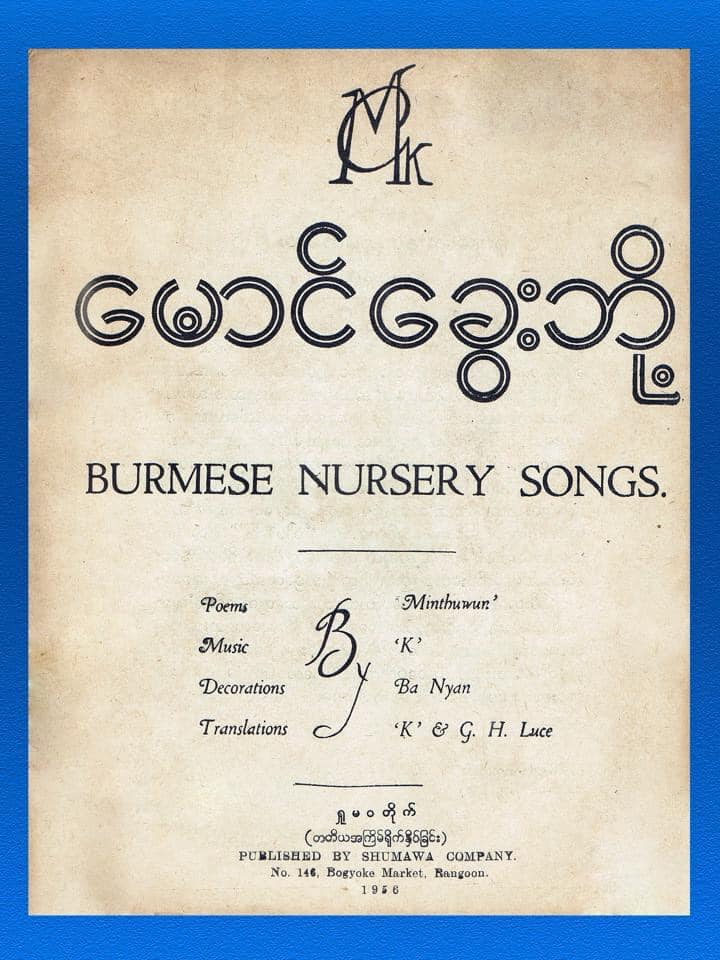
    In TEDx Inya Lake, U Nay Oke (St. Paul’s) talked about two Burmese Poets from the “Khit San Sar Pay” era. One was his beloved mother Daw Khin Saw Mu. The other was Minthuwun (Saya U Wun). They were students of Saya U Pe Maung Tin (Pali Scholar who proposed to establish a separate Burmese Department at the University of Rangoon). U Nay Oke gave the background of the short story “Bagyi Aung Nyar De ဘကြီးအောင် ညာတယ်” by U Wun (Minthuwun). He remarked that the true story should be visited since it led to the emergence of Myanmar Kabyar, and all the main characters alluded in the story — ICS U Tin Tut, ICS U Ba Tint, Minthuwun and Daw Khin Saw Mu — have passed away.