Some inventions are attributed to Serendipity. Three notable examples are
Discovery of X-rays X stands for “Unknown”. German scientist Wilhelm Rontgen discovered X-radiation (unknown type of radiation) on November 8, 1895. Other names include X-ray, Xray and Röntgen radiation.
Discovery of Penicillin Scottish scientist Alexander Fleming discovered Penicillin in 1928.
3M’s Post-it notes Dr. Spencer Silver, a scientist at 3M, accidentally discovered a weak glue in 1968. Arthur Fry obtained permission from 3M to develop “sticky notes” in 1974.
Kekule’s Dream
Friedrich August Kekulé, a German chemist, was searching for the structure of Benzene, which has six Carbon atoms and six Hydrogen atoms.
In 1865, he had a day-dream where a snake’s head tried to bite its tail. Was an “Aha” moment for him. Figured out the ring shape of the Benzene molecule.
Some use this example as the power of the subconscious mind in solving problems.
Saya Dr. Soe Win wrote :
The structure of benzene is indeed a significant discovery in the history of science.
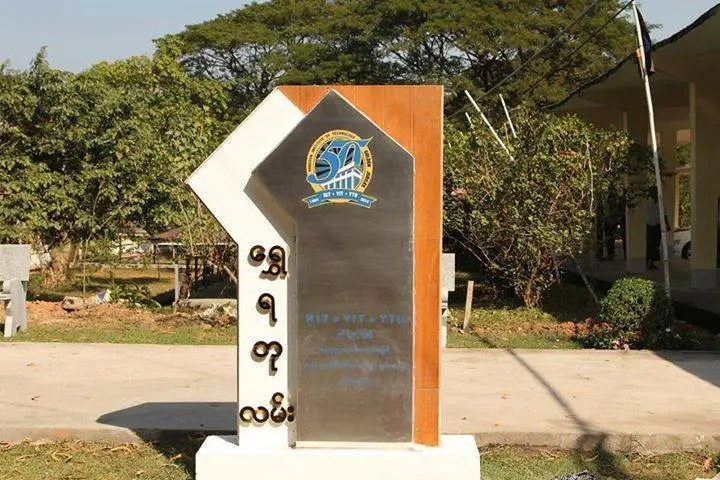
Shwe YaDu Lann (Poem and Translation) Tekkatho Moe War (Saya U Moe Aung) wrote a poem for the RIT Shwe YaDu (Golden Jubilee). I translated the poem into English.
Encyclopedia of Asian American Folklore and Folklife (Article) Nine of my articles were published in Volume One of the Encyclopedia. 23 Asian American Groups were featured in the three-volume Encyclopedia.
The (Hidden) Power of Kabyar (Poem and Translation) Tekkatho Moe War (Saya U Moe Aung) wrote a poem for “Kabyar Nay” (Poem Day). I translated the poem into English.
To the Shwe Duo (Poem and Translation) Tekkatho Moe War (Saya U Moe Aung) wrote a poem in memory of Saya U Tin Shwe (EP66) and Saya U Hla Shwe (T69), who passed away within a few months of each other. I translated the poem into English.
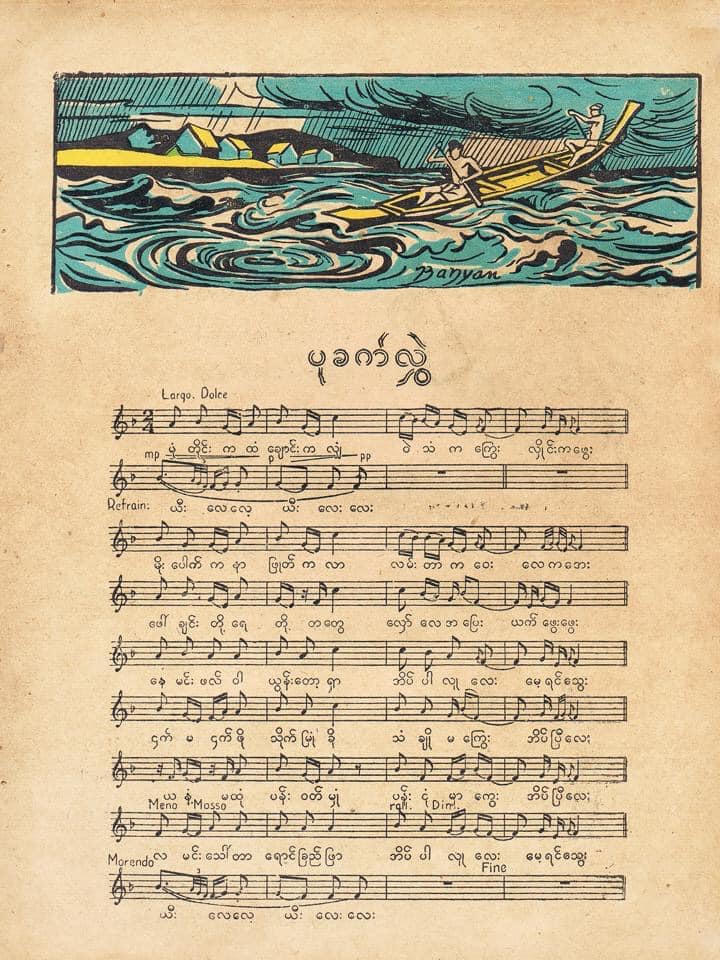
To ease Nostalgia / “Lwann Pyay Aung (Poem and Translation) Saya U Nyunt Htay (Met73) composed an excellent poem for SPZP-2012. I translated the poem into English.
Names (Article) I have presented several speeches on Names at “Toastmasters International”. I have also written articles on naming conventions, common names, pen names and meaning of names.
Shwe YaDu Lann
Shwe YaDu Lann
Translation by U Hla Min
Shwe YaDu Lann Let it be rough [but it’s tough]. Flowers are blossoming again. Fear not the summer Care not the rain [drops] or the thick fogs & darkness or if winter’s not true to its form
Shwe YaDu Lann Let it be rough. No gentle stream flowing Fear not high winds Care not dense clouds Topsy turvy [come what may] Can paddle upstream With strong mind & conviction Place where heroes [Thu Ye Kaungs] are produced.
Swel Daw Myaing Dann Shwe YaDu Lann is a start [of a journey] To raise the Banner loftily to the skies, to the Zenith displaying our thitsar (vow of truth and integrity)
HLA MIN (Editor, Newsletter Updates, USA)
Encyclopedia of Asian American Folklore and Folklife
Nine of my articles appear in the Encyclopedia ofAsian American Folklore and Folklife (AAFF).
The three-volume book was published by ABC-CLIO in 2011. At the beginning, the book was sold for $275.
I received a book (for completing eight articles according to the agreement) and $10 (for the additional article).
Burmese Americans are covered in Pages 127 to 178 of Volume One.
The Editors decided to merge two of my articles with other authors.
Unfortunately, an error introduced by my co-author. On page 150, he mentioned July 22 (instead of July 19) as Martyrs’ Day. The merged article unfortunately was not sent to me for review. The Editors promise to correct the error in subsequent editions.
Folk tales (as told by Saya Dr. Htin Aung and Ludu U Hla) are part of the Folklore.
To read my articles on-line, you should go to “Google Books” and then search “Hla Min“.
The (Hidden) Power of Kabyar
Translation by U Hla Min
Kabyar is animate But [it’s life is] not just a [fleeting] morn
Kabyar is a weapon But not for destroying the world
Kabyar is key For liberation and independence But not devoid of principles [and morals]
Kabyar has power Hidden but efficient & effective Like sharp-pointed spear-head Can thrust into [the heart of] a power-maniac Cause trembling, shivering, throbbing & anguished pain
Poem in Burmese by Tekkatho Moe War (Saya U Moe Aung)
To the Shwe Duo
Translation by U Hla Min
in memory of “Shwe Duo” : Saya U Tin Shwe (EP66) and Saya U Hla Shwe (T69)
“TO THE SHWE DUO” by Tekkatho Moe War
SHWE duo Blossom in unison Disappear together Free from complaint Even with thin breath Showed mark [of courage and wisdom] Never wavered … Pressed by burden At the awaited turn [of journey’s end] Body — inheritance [from previous lives] Succumbs [to failing health] Yet, “Wei-nyin” is fresh, alive and hovering.
To ease Nostalgia
Poem by U Nyunt Htay
Saya U Nyunt Htay (Met73) is a distinguished poet. He is Chief Editor and/or Publisher of Myanmar Mudita. He composed an excellent poem for SPZP-2012.
Translation by U Hla Min
One cannot forget the history and sweet memories of one’s alma mater, and one feels that most alumni — near and far — still yearn for the good old days.
In front of A Hall, B Hall [C, D, E, F, Halls] friends would tease and prank, yet do no harm. They do not care to find weaknesses in others, and will remain loyal friends. In front of Uttra (North or G) Hall — usually in the evenings — aspiring Ah Nu Pyinnya Shins serenade with love songs aided by guitars, harmonicas and violins.
Hear the bells in Building One, Two [Three] ringing once more. Many rush to the classrooms [some spend time on the corridors to enjoy the belles go by]. At night, some “count the numbers” (perhaps playing cards, or actually studying and doing home work).
RIT students do not feel outnumbered by RASU [with Burma selected] or Eco at any kind of sports [soccer, volleyball, basketball, swimming, water polo …]. RIT has staunch loud-voiced fans [like “Ajala” Moe Hein].
Assembly Hall hosted not just presentations and debates. It also is the home of Geeta See Sar [Musical Evening Extravaganza] with outstanding musicians, composers, vocalists and dancers. Swel Daw Yeik Troupe and Ah Nyeint, Pyazat, … melt our hearts.
Cartoon Box [former telephone kiosk] nurtured many cartoonists to share their humor, satire and ideas with the readers searching for Sacca (Truth).
Aw Bar Lann (precious memories to the graduates attending the graduation ceremony) is known not also for applause but also for the tongue-in-cheek comments and unruly claps and shouts to the unwary treading the Lann.
As the examinations near, most try their best [by borrowing books and notes from their friends, by attending crash sessions] to pass the hurdle. On the desks are notes [not neat and tidy] scattered all over. Times and systems change, but most RITians are able to decide the essentials (“Ah Hnit”) from the inessentials (“Ah Kar”).
Swel Daw Yeik
One can never forget the history and [priceless] memories.
Names
Overview
Before the advent of MRI and Ultra Sound, some people prepare a set of 14 names for the forthcoming : 7 names for a boy (one for each day of the week) and 7 names for a girl (ditto).
Some prefer to have a formal naming ceremony a specified number of days after the birth of a child.
Names may have meaning and/or a historical background.
For example, “Pyke Tin” means “left on a net”. The mother of Saya Dr. Pyke Tin presumably had problems (e.g. miscarriage), so she performed a “Yadana” to catch Saya with a net.
I have a cousin aunt named “Pyke Mi” meaning “caught on a net”.
Ko Ko, Nyi Nyi, Maung Maung, Maung Gyi, Maung Lay, Ma Gyi, Ma Nge are some names based on the order of birth.
There may be name changes. For example, Bogyoke Aung San was named “Htain Lin”, but he changed him name to “Aung San” to rhyme with “Aung Than” (his elder brother).
A new name is given in some social (e.g. Coronation of a King or Queen) and religious (e.g. Higher Ordination) events.
Burma/Myanmar has a sizable number of race and ethnicity.
The following are some prefixes of my sayas, sayamas and friends.
Sao (e.g. Saya Sao Kan Gyi, descendant of Keng Tung Sawbwa)
Sai (e.g. Sai Kyaw Aye, broadcaster for the BBS Shan Language Program)
Saw (e.g. Saw Edison, Karen, RIT Volleyball)
Sa (e.g. Sa Maung Maung, Joint Treasurer, EE69er HCF)
Duwa (e.g. Duwa Zau Lai, Myitkyina)
Nan (e.g. Nan Khin Nwe, young and energetic fund raiser)
Nang (e.g. Nang Khaming, RIT Track and Field)
Naw (e.g. Naw Mu Mu Aye, Professor, Textile)
Salai (e.g. Saya Salai Tun Than, Professor, Yezin)
In most countries, the Father’s lineage is used for the Family Name. Long ago, in some Matriarchal society, the Mother’s lineage is used for the Family Name.
John Fitzgerald Kennedy (or John F. Kennedy) is the US President who proposed the Space Program to send Men to the Moon and bring them back safely to earth. His first name (or personal name) is John. His last name (or family name) is Kennedy. The middle name is Fitzgerald. The middle initial is F. Fitz means “son of”.
President Harry Truman has no middle name. His middle initial is S.
I have no middle name. So at one company, I was registered as Hla X Min (where X is a filler).
My name has only six letters, but it has been misspelled and mispronounced in six (or more) ways.
Prefix
A name may have a prefix.
Prefixes for
a male Burmese name include Maung, Ko, U, and Pho.
a female Burmese name include Ma, Daw, and Phwa.
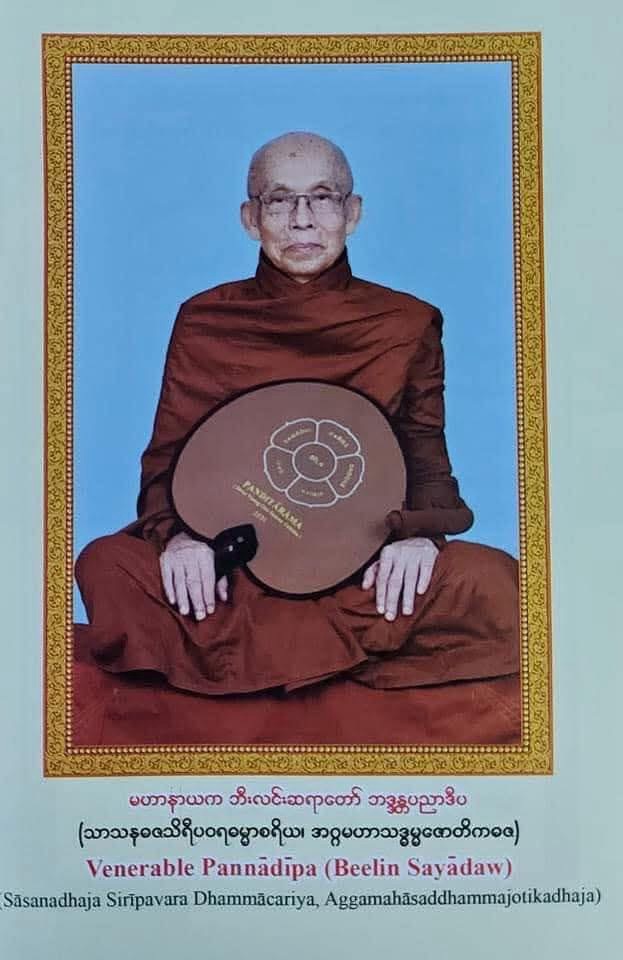
a Burmese monk name include Ashin, Sayadaw, Venerable and U.
Shan names include Sao, Sai, and Nan.
Mon names include Mehm, Min, Nai, and Mi.
Karen (Kayin) names include Saw, Sa, Pado, and Naw.
Kachin names include Duwa.
Chin names include Salai.
Old Burmese passports were issued with the prefix included. This created confusion when matching names from other documents (e.g. birth certificate).
Dr. U Win was called “Hey, U (pronounced as You)” by his friends, who did not realize that “U” (pronounced as Oo) is a prefix for a Burmese name.
Suffix
A name may have a suffix.
Suffixes include
Sr. (Senior for the father)
Jr. (Junior for one of the sons)
Generation number, e.g. Bill Gates is named William Gates IV
Esq. (Esquire, used earlier in Britain)
Degree, e.g. Freddie Ba Hli, Sc.D.
Fellowship or Membership
Monk names
Some monks names may have “abhivamsa” or “alankara” as suffixes.
Sayadaw U Silananda the prestigious monk examination (conducted in Mandalay) before the age of 27. So, he is often referred to as U Silanandabhivamsa.
There are several distinguished Sayadaws named Ashin Janakabhivamsa.
U Neimeinda and U Siri (Thiri) passed the “Lankara” religious examinations as novices. They may suffix their names with “alankara”.
Prefix for Monk Names
Bhikkhu
Ashin
Baddhanta
Sayadaw
Upazin or Uzin
U
Thera
Maha Thera
Venerable (in English)
Tipitaka Dara (one who completed “Vinaya”, “Sutta”, and “Abhidhamma” exams)
Dwee Pitaka Dara (one who completed “Vinaya” and “Sutta” examinations)
Suffix for Monk Names
Monk names may be suffixed with one or more of the following:
Lankara (one who had passed that dhamma exam as a novice)
[A]bhivamsa (one who had passed the “Set kyar thi ha Dhammacariya” exam before the age of 26)
Wun tha ka (one who stood first in the special examination)
Pa hta ma gyaw (one who stood first in the Pa hta ma pyan exam)
Thi ro ma ni (one who finished 9 “kyans” in a single year)
In our younger days, tears would not fall easily even when one is forsaken by a lover.
Later, even when one’s parents passed away (especially untimely), one sensed grief and might shed a few tears.
A few years back (in April, 2013) we told the workers (masons, carpenters, painters …) not to bring their lunch boxes the following day, since we would be offering requisites (robes, medicine, Nawakama, Soon) and that they would have Dan Bauk (Birayani).
The next day, the workers brought their lunch boxes as usual.
Asked “Why?”
They replied, “We want to take back Dan Bauk to feed our children, who have never eaten such delicacy.”
My heart ached (thinking of the hard lives of the workers and their families).
Tears were ready to roll down. (There were Tears of Sorrow followed by Tears of Joy – appreciating the metta and cetana of parents.)
Note for the revised article: Should we substitute Dan Bauk with Two Eggs?
Editor’s Notes
Due to the pandemic, the former Rice Bowl of Asia is facing food shortage.
Due to misdirected policies, the purchasing power of Burmese Currency has declined.
Thanks to Ko Htoo and Ko Hta, many starving families have temporary relief in the form of Food Coupons (e.g by Mg Mar Ga, Shwe Zin Ma and their supporters).
I earlier translated Saya’s article about the K1000 (gratitude gift) by his mother-in-law to purchase a bowl of Khauk Swe.
Feedback
Saya U Moe Aung wrote :
Dear Ko Hla Min
As a matter of fact, I really cherished the article you’ve rendered into English recently. By the way, DanBauk is Briyani or, Birayani, as per your usage above?
Excellent rendition, cheers!!
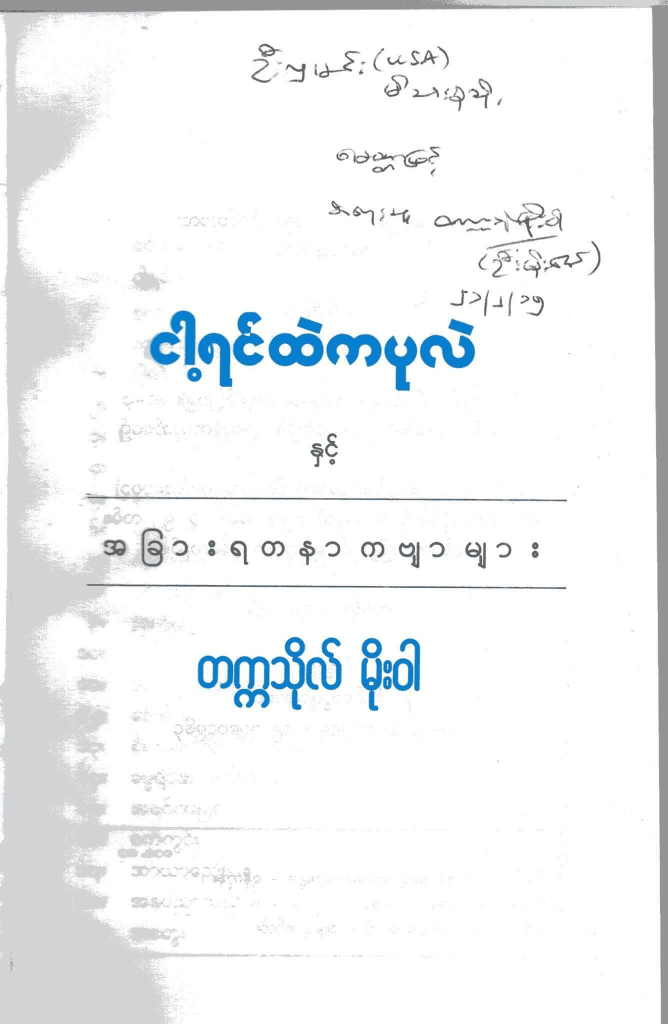
Tekkatho Moe WarBook Present from Tekkatho Moe War
The Burmese Calendar is a luni-solar-socio-religious calendar.
The Burmese New Year falls on or around April 16. The three (or sometimes four) days preceding the New Year is celebrated as Thingyan (similar to Songkran festival in Thailand).
It is a lunar calendar with 12 lunar months in most years. An intercalary month called “Second Waso” is added every three years. There are 12 religious and/or social festivals (one for each Burmese month).
Most religious festivals are celebrated on the Full Moon Day.
The following is a brief description of the 12 Burmese months and the associated festivals.
1. Month of Tagu
Name of the auspicious event: Ushering in the Burmese New Year by the Buddhists
Associated festival: A Ta Thingyan Water Festival (generally held from April 13 – 15 or 16)
Details for the celebration: (a) Invite guests for special treat. (b) Take eight precepts and practice Sila (morality). (c) Listen attentively to the “38 Blessings” by the sangha. (d) Chant Paritta (protective verses) and Pathana (“relations”) (e) Pay homage to the elderly people as if they were one’s own parents (f) All the above are performed (by the Burmese Buddhist) to accumulate kusala (wholesome deeds) (g) Most younger people usher in the Burmese New Year by throwing water (h) Thingyan festival is the most prominent among the 12 (monthly) festivals.
Objectives: To cleanse akusala (unwholesome deeds) from the past year (a) symbolically by throwing water (b) practically by performing meritorious deeds such as dana (charity), sila (mrality), and bhavana (meditation)
2. Full Moon Day of Kason
Name of the auspicious event: Buddha’s Day. It is the most prominent day for the (Theravada) Buddhists celebrating four milestones (a) the proclamation that the Bodhisatta Sumeda would become Buddha in four incalculables and 100,000 worlds (b) birth of the Boddhisatta Sidartha (c) enlightenment of Gautama Buddha (d) Mahaparinibbna (final passing away of Buddha)
Associated festival: Kason Nyaung Ye Thun Pwe (pouring water on the Bodhi tree)
Details for the celebration: (a) Invite guests for special treat. (b) Invite sangha and offer requisites (c) Take (five or eight) precepts and practice Sila (morality) (d) Listen to the dhamma talks (e) Practice metta (loving kindness meditation) (f) Share merits (g) Pour water on the Bodhi tree
Objectives: (a) To acknowledge the practice of parami (perfection) for four incalculables in order to become a Buddha (b) To realize that Buddha’s teachings are for our own good (c) To make a determination that we should practice Buddha’s teachings to the fullest extent
3. Full Moon Day of Nayone
Name of the auspicious event: Mahasamaya (“Great Occasion”) A Kha Daw Nay (a) Commemorating truce between Kapilavutta and Koliya countries (b) Assembly of devas, brahmas, galons, nagas, and sanghas expressing their metta (unbounded love) (c) Ordination of 500 princes from the Sakya clan (d) In sum, distinguished and outstanding day of love and peace
Associated festival: Recitation of Mahasamaya Sutta
Details for the celebration: (a) Invite guests for special treat. (b) Invite sangha and offer requisites (c) Take (five or eight) precepts and practice Sila (morality) (d) Listen to the dhamma talks (e) Recite Mahasamaya Sutta (f) Practice metta (loving kindness meditation) (g) Share merits
Objectives: (a) To advocate love and peace among nations with diverse cultures and beliefs (b) To practice metta (unbounded love) not only for humans but for all beings
4. Month of Waso
Name of the auspicious event: (a) Offering of Waso robes (b) Recitation of Dhammacakkapavutna Sutta (“Turning the Wheel of Dhamma”)
Associated festival: There is no specific date for the offering of Waso robes to the sangha. Full Moon Day of Waso is a prominent day for (Theravada) Buddhists celebrating three milestones (a) the day when Boddhisatta was conceived in the womb of Queen Mahamaya (b) the day when Prince Sidharta renounced his worldly pleasures (c) the day when the First Sermon Dhammacakkapavutna Sutta was delivered to his five disciples
Details for the celebration: (a) Invite guests for special treat. (b) Invite sangha and offer requisites (c) Take (five or eight) precepts and practice Sila (morality) (d) Listen to the dhamma talks about Magga (Noble Eight-fold Path) (e) Collectively recite Dhammacakkapavutna Sutta (f) Practice metta (loving kindness meditation) (g) Share merits
Objectives: (a) To avoid the two extremes of sensual pleasure and self-mortification (b) To practice the Noble Eight-fold Path
5. Full Moon Day of Wa Khaung
Name of the auspicious event: Metta (“Unbounded Love”) A Kha Daw Nay 500 monks who were practicing meditation in the forest were intimidated by nats (guardian spirits) and returned to Buddha’s monastery. Buddha preached them Metta Sutta and exhorted them to practice loving kindness meditation to the nats before meditating. The monks returned to the forest and practiced per Buddha’s exhortation. The nats no longer obstructed the practice of the monks, thereby allowing them to progress and get enlightened. Thus, Metta A Kha Daw Nay came into being.
Associated festival: Recitation of Metta Sutta & Sar Ye Tan Mei (deciding the donation to a monk based on a “raffle” [letter written on a stick, in ancient times]
Details for the celebration: (a) Invite guests for special treat. (b) Invite sangha and offer requisites (c) Take (five or eight) precepts and practice Sila (morality) (d) Collectively recite Metta Sutta (e) Offer requisites to the monks based on the Sar Ye Tan Mei “raffle” (f) Dhamma talk on metta and the virtues of practicing metta (g) Share merits
Objectives: To practice metta (unbounded love), karuna (compassion), mudita (altruistic joy), & uppekha (equinamity)
6. Full Moon Day of Tawthalin
Name of the auspicious event: Garudhamma (“Five precepts”) A Kha Daw Nay A brief history is as follows. Bodhisatta was (once) born in Kuru Taing (province), where the king and his people practiced Garudhamma. They refrain from (a) killing (b) stealing (c) sexual misconduct (d) lying (e) taking intoxicants. So, the weather was fine and wealth was amassed. Kawlinga Taing (province) suffered from (a) war (b) famine (c) disease. Many perished. The king and people of Kawlinga Taing decided to emulate the king and people of Kuru Taing. Soon, the weather became fine and wealth was amassed. The three sufferings disappeared. The Full Moon Day of Tawthalin, which is part of the rainy season, was named Garudhamma (“Five precepts”) A Kha Daw Nay.
Associated festival: Competition for reciting poems about the merits of taking five precepts.
Details for the celebration: Host competitions for reciting poems about the merits of taking five precepts.
Objectives: (a) To make people aware of the merits of taking five precepts (b) To have a peaceful community (c) To promote world peace
7. Full Moon Day of Thadinkyut
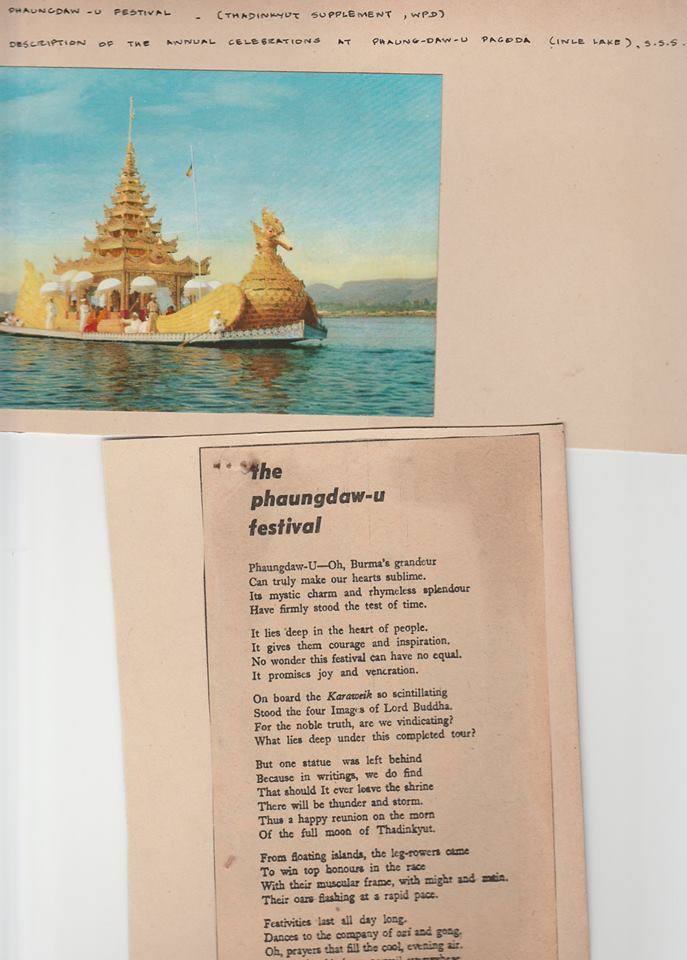
Phaungdaw-u Festival
Name of the auspicious event: Abhidhamma (“Ultimate Reality”) A Kha Daw Nay & Mahapavayana Nay Buddha taught Abhidhamma to the devas in Savateinsa (during the Buddhist Lent) and returned to earth on the Full Moon Day of Thadinkyut
Associated festival (1): Festival of Light
Details for the celebration: (a) Light candles (b) Light incandescent bulbs Objectives: Emulate the scene where the devas and the people paid homage with candles and lights to the Buddha upon his return from Savateinsa
Associated festival (2): Pavayana Pwe
Details for the celebration: (a) Monks assemble in a sima hall (b) Each monk invites other monks to give advice. He says, “If you have seen me commit a misdeed, you may reprimand me. If you hear that I have committed a misdeed, you may reprimand me. If you doubt me, you may reprimand me. I will try not to commit that misdeed in the future.” (c) Lay people might also invite their fellow people to give advice.
Objectives: (a) To practice Nivata Mangala — blessing where one displays humility (b) For monks to practice Sovacasatta Mangala — blessing where one takes constructive critism (c) For lay people to become good & wise people
8. Full Moon Day of Tazaungdaing
Name of the auspicious event: Samyannaphala (“Virtues of monkhood”) A Kha Daw Nay Buddha gave the sermon to King Ajjasathat on the Full Moon Day of Tazaungdaing
Associated festival: Tazaungdaing Festival
Details for the celebration: (a) Light candles (b) Take (eight) precepts and practice Sila (morality) (c) Dhamma talks based on Samyannaphala Sutta (d) Practice metta (loving kindness meditation) (e) Share merits
Objectives: (a) Make people aware of the virtues of monkhood and the qualities of sangha (b) If one has conducted misdeeds like King Ajjasathat, one should acknowledge the fact, but be determined to be good by doing meritorious deeds.
9. Full Moon Day of Nadaw
Name of the auspicious event: Dhamma Sarsodaw Myar Nay In Burmese History, Full Moon Day of Nadaw honors the literary giants (writers, poets). In modern days, the Department of Religious Affairs designated the day to honor writers for the dissemination of dhamma
Associated festival: Sar Pyan Pwe (Oral and written examination for the monks)
Details for the celebration: (a) Hold religious examinations (b) Written examination about Tipitaka (“Three Baskets”) : Vinaya (Monastic rules of conduct), Sutta (Discourses), Abhidhamma (Ultimate Reality) (c) Oral examination about Tipitaka (d) Lay people may visit libraries and borrow religious books (e) Lay people may hold discussions about dhamma
Objectives: (a) Preservation and propagation of Tipitaka (b) Encourage youths to be highly literate and have good moral character
10. Month of Pyatho
Name of the auspicious event: Shin Ta Htaung (1000 ascetics) A Kha Daw Nay During Buddha’s time, 1000 ascetics in Uruvela forest led by the Kassappa brothers renounced their wrong beliefs and become arahants.
Associated festival: Ordination of monks and novices
Details for the celebration: (a) Hold ceremonies for higher ordination of monks (b) Allow youths to become novices
Objectives: (a) To reinforce the importance of practicing morality (b) To familiarize people with religious ceremonies & the performing of meritorious deeds
11. Full Moon Day of Tabodwe
Name of the auspicious event: Ovada Patimauk (Buddha’s exhortation to avoid akusala, to perform kusala, and to purify one’s mind) A Kha Daw Nay
The Full Moon Day of Tabodwe is significant for several reasons. (a) Venerable Sariputta became an arahant (b) Both Venerable Sariputta and Venerable Mogallana were proclaimed by Buddha as the Best in their specialties (c) Without any explicit notice, Ehi Bhikkhu Calabinna Patisambidapatta arahants (elite monks who do not need explicit ordination, who possess six divine powers, and who easily became enlightened) convened for the Ovada Patimauk ceremony.
Associated festival: Ovadaha Partimauk & Htamane Pwe (Sticky rice) festival
Details for the celebration: (a) Collectively prepare Htamane (b) Offer htamane to monks and devotees (c) Listen to dhamma talks
Objectives: (a) Emphasize the strength of unity (b) Perform meritorious deeds collectively (c) Understand Buddha’s exhortation to avoid akusala, to perform kusala, and to purify one’s mind & practice accordingly
12. Full Moon Day of Tabaung
Name of the auspicious event: Myat Buddha Pyi Daw Win A Kha Daw Nay At the request of his father’s emissary Kaludayi, Buddha accompanied by 20000 arahants returned to Kapilavutta from Rajagaha. The return trip commenced on the 1st waning day of Tabaung in year 103 of Mahatheikarit (calendar used in Buddha’s time)
Associated festival: Buddha Pujaniya Tabaung Festival (paying homage to Buddha)
Details for the celebration: (a) Invite as many sangha as possible (b) Offer requisites to the sangha
Objectives: To remember the Triple Gems: Buddha , Dhamma, and Sangha
There are eight parts of speech in the English language.
(1) Noun
A noun is a name of a person, place, thing, or concept.
It may be classified as (a) Proper noun (b) Common noun (c) Collective noun (d) Abstract noun.
(2) Verb
A verb usually describes an action or a process.
It may be classified as (a) Transitive verb (b) Intransitive verb.
(3) Pronoun
A pronoun stands for a noun. Associated with a pronoun is person and number.
When we speak, the first person is the one who speaks. The second person is the one being spoken two. The third person is some other being referenced.
Number may be Singular or Plural. If there is only one person, we say it is singular. If there is more than one, we say it is plural. In English, the term “You” may be singular or plural.
(4) Adjective
It is a Modifier
An Adjective usually modifies a Noun or Pronoun.
(5) Adverb
It is a Modifier
An Adverb usually modifies a Verb.
(6) Conjunction
It is a Connector
A Conjunction (such as And or But) connects two parts of a Sentence
(7) Preposition
It is a Connector
A Preposition adds information such as position (e.g. in, on, upon, under) and time (e.g. before, after).
(8) Expression of Mood
There are words to express Mood (e.g. surprise).
They are called Exclamation or an Interjection.
Techniques
In a Grammar class, we had to learn two techniques :
Synthesis combining the parts of speech
Analysis breaking down into the parts of speech.
Need for Grammar
Many native speakers read and write fluently without caring much for grammar.
Knowledge of grammar is needed in
Formal Languages
Automata Theory
Compilers
Translation
Natural Language Understanding and Processing
Burmese
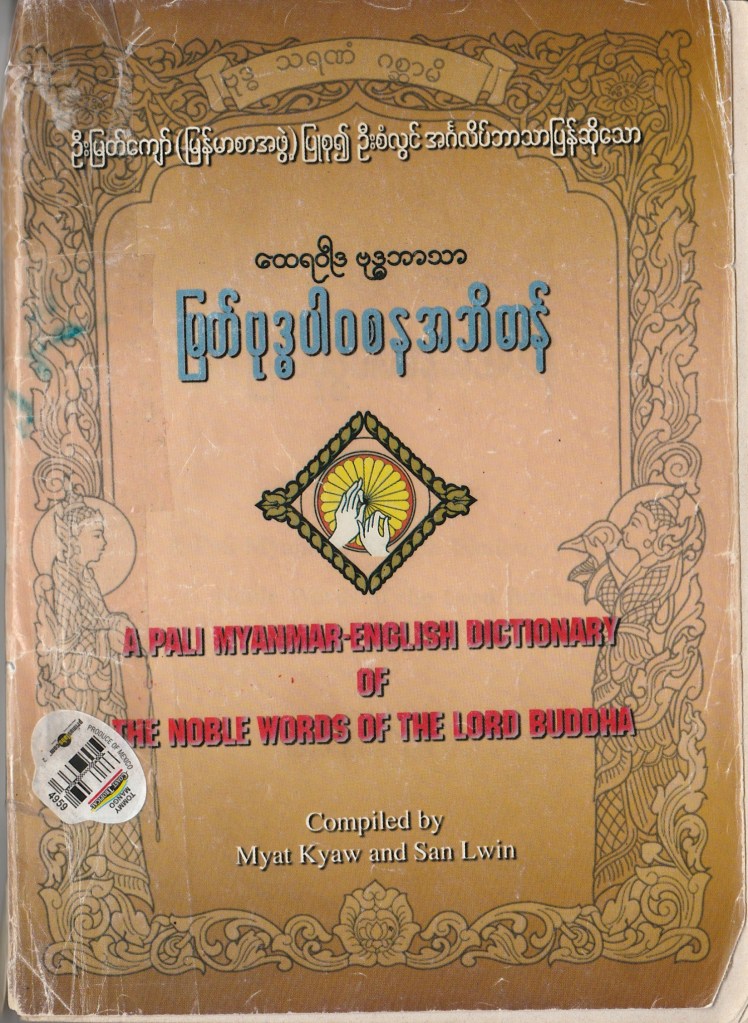
In middle school, we had to study မြန်မာသဒ္ဒါ based on the text by Saya U Pe Maung Tin.
Parts of Speech
နာမ် — noun
ကြိယာ — verb
နာမ်စား — pronoun
နာမဝိသေသန — adjective
ကြိယာဝိသေသန — adverb
သမ္ဗန္ဒ။ — conjunction
ဝိဘတ် — preposition
အာမေဋိတ် — interjection
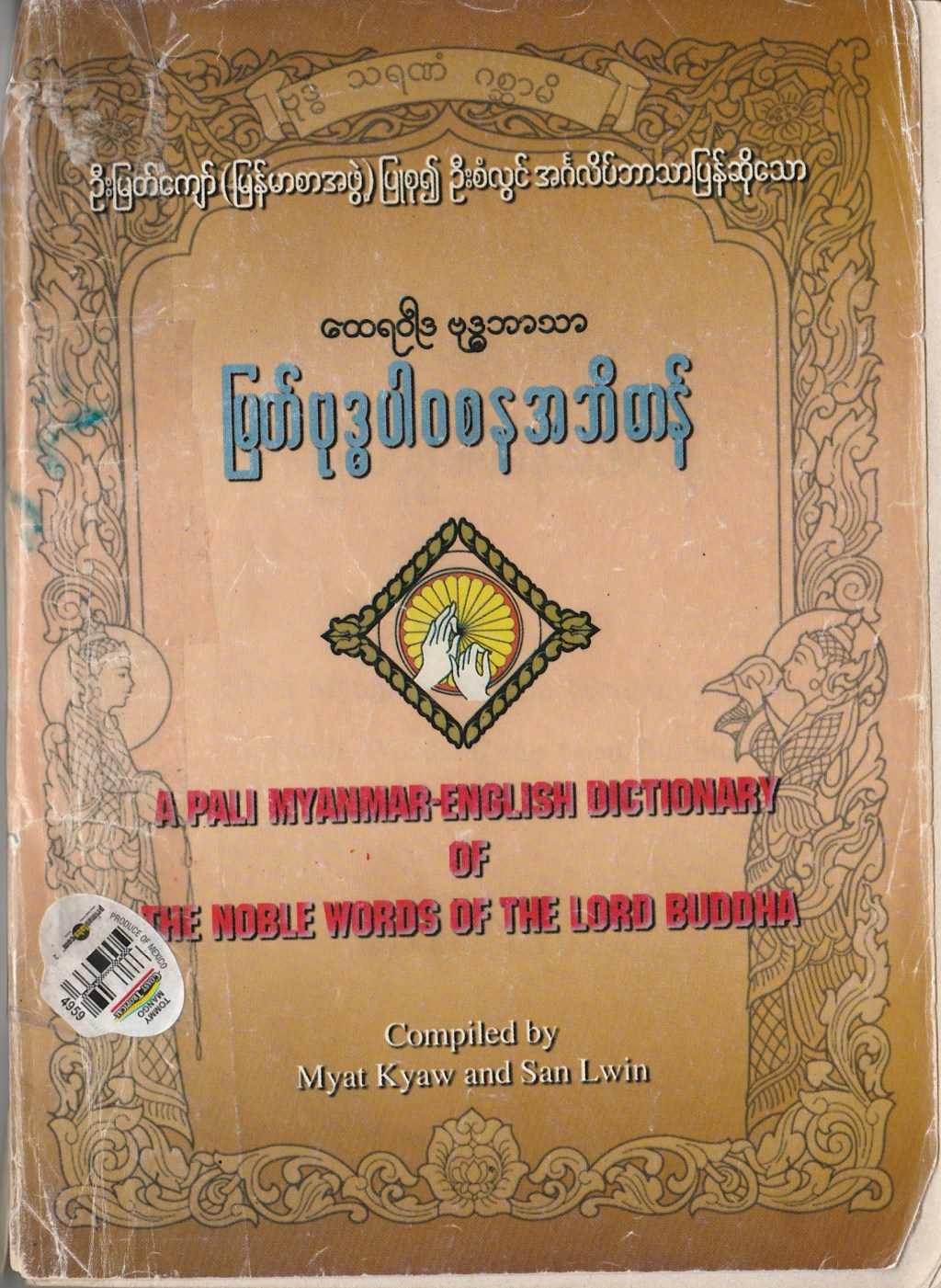
Pali
Parts of Speech
Pali has only four parts of speech.
Noun
Pronoun
Verb
Clitics (which are equivalent to conjunctions and interjections).















 HlaMin