Category: SPZP

  • Dr. Aung Gyi’s Speech (2000)

    Dr. Aung Gyi’s Speech (2000)

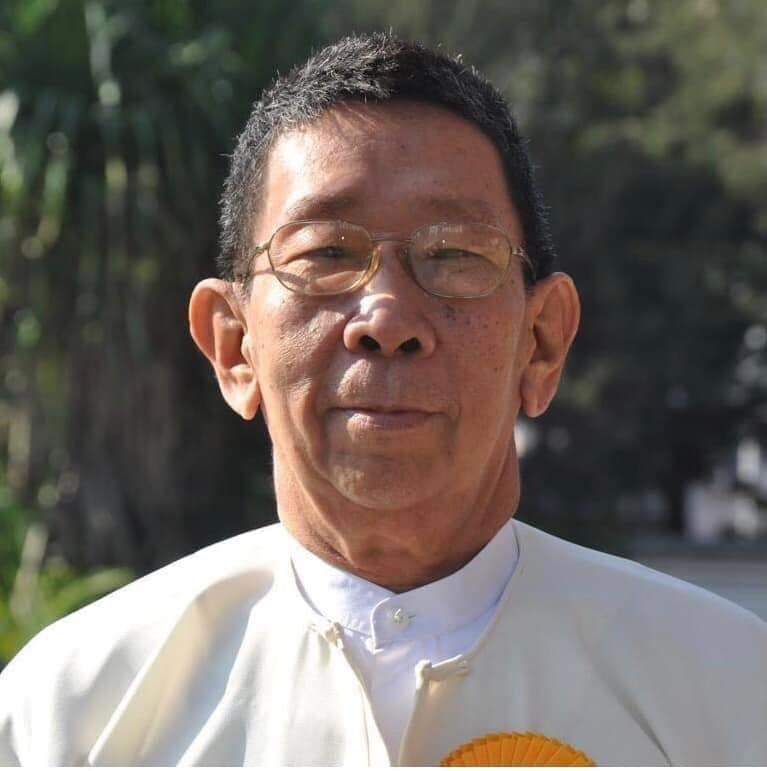
    by Dr. Aung Gyi

    Updated : June 2025

    SPZP-2000

    Mr. Chairman, my Sayas, my former colleagues, friends, RIT graduates, Ladies and Gentlemen,

    Before I begin to say anything, I would like to request you to take the word “RIT” as to stand not only for Rangoon Institute of Technology but also BOC College of Engineering and Faculty of Engineering, Rangoon University. I am using RIT only, just for convenience sake.

    Having said that, it is with a chestful of emotions that I am standing before you, trying to say a few words appropriate and befitting to this important and joyful occasion. My overwhelming emotion is, needless to say, happiness – happiness which results from seeing my Sayas, my friends, my former colleagues, and RIT graduates alive and well, after so many years. My happiness is also mingled with a certain amount of pride: pride arising from the knowledge that we have fond memories and a sense of belonging and attachment to the good old institution as well as to one another.

    We are fortunate that we could all gather here to exchange our life experiences, both good and bad, and to reminisce about our past when we were at RIT. While we are doing that, we all must have noticed that all of us have changed quite a bit since we last saw one another, at least physically, some more so than other. We all now have a few gray and also less hair, we have a few wrinkles on our face; maybe we also lost a few teeth and cannot see or hear as well as we did before. Some of us also lost the memory a bit and become forgetful about lots of things such as forgetting names for example. This, as we all know, is life and nature of things. Everything changes and nothing is permanent. Bur fortunately we still have our values. Our values such as respect and gratitude for the elders and teachers, caring of our respective children and family members, helping our friends, and attachment, and gratitude to the institution which nurtured us to meet the challenges of life, are still with us. They have not changed. This Saya Pu Zaw Pwe and reunion is a testimony to those values.

    I must now pause and thank and congratulate the Organizing Committee for their untiring and selfless efforts to make this event possible and successful. This Saya Pu Zaw Pwe and RIT Alumni reunion is, as far as I know, once-in-a-life-time event. As far as I am concerned it is already a resounding success with the cooperation and great enthusiasm that I have seen. I hope this will be the beginning and not the last of our get-togethers. When my wife and I paid visits to Myanmar in 1996, 1997 and 1999 we had mini get-togethers with RIT Alumni. When I was here a few years ago we also got together with a few RIT Alumni. I understood that Saya U Aung Khin also had one mini get-together here some years ago. But these get-togethers were not on a grand scale as the one that we are having here now. However the spirit of camaraderie and friendliness among RIT Alumni mini get-togethers, was the same as the one that we find here now. If you look around you, you will find that all of us came here from different parts of the world, indicating the great attachment and respect that we all have for our old institution and also for one another.

    While I was preparing for this speech, fond memories of the years that I spent as a student, as a teacher and later as Rector at RIT came flashing through my mind. Without going into details, I remember that all my teachers, including Saya Num Kock and Saya U Ba Toke who are here with us, were good inspiring teachers with kind hearts. When I became a teacher and later the Rector at RIT, I noticed that my colleagues were good and dedicated people who tried their best to teach what they had learnt from good Universities and Institutions abroad.

    They made conscious efforts to raise the level of education at RIT so much that the students were fully occupied with classes, studies, projects, and homework. I have to mention here that my Sayas and my former colleagues were, and still are honest, compassionate, gentle and kind people. Within this context I would now like to take this opportunity to offer my humble apologies to my Sayas and colleagues for the wrong things that I may have done or said which might have hurt them in any way in the past.

    As for the students, I remember that they were good, intelligent, and energetic students in general. Since I was also involved in extracurricular activities of the students, I had more interaction and gained more understanding of their needs and feelings. Like most of the other teachers I tried my best to be helpful to them not only in their studies but also in any other problems that they needed my help. Because of the compassion that I had shown for them they became more communicative, and listened to what I had to say most of the time. Like a breath of fresh air, the first batch of female engineering students were among us, I believe in 1958. So far as I remember they did as well as or some even better than the male students in their studies. I remember that as a teacher I felt very good and satisfied whenever some students did well in their studies or did well in their careers after they left school. These are fond memories that I still have with me about the students at RIT.

    As you probably know, I left RIT and Myanmar in 1977 to join UNESCO. I then migrated to Canada to join International Development Research Centre (IRDC) in 1981. For your information, IRDC is a Canadian Agency which funds research projects for development in the developing countries. I retired from IRDC in 1997. Looking back to the past, I must say that I spent the best years of my life at RIT, challenging and troubling at times, but on the whole happy and satisfied with the job that I was doing.

    Now please let me take a few minutes of your time to share with you my thoughts, which I believe are some important elements of life. You might not agree with me to what I am going to say. At least, in that case, you might take them as food for your thoughts. If I sound like lecturing to you now, you must remember that the habit of a former teacher dies hard.
    When I was young and immature. I had great admiration for people with high I.Q. (Intelligence Quotient). I also tended to think in those days that I was quite intelligent. After going through life experiences with ups and downs I became to realize that high Emotional Quotient (E.Q.) or emotional mastery is more important in life than high I.Q., to cope with adversities, disappointments, failures and sometimes even tragedies. No one that I know of, escapes the negative impacts of life in one form or another. If you have emotional mastery you can deal with and overcome these negative impacts and still get ahead in life and be relatively happy. One thing that can help us is to have optimism, hope and courage in life and to minimize the negative thoughts and creeping pessimism. It will be wrong to classify anything in life in opposites either in black or white. One can neither be fully optimistic nor fully pessimistic all the time. There is a gray area which is neither black nor white, and so long as the dominant part of this gray area is optimism, things will turn alright in the end. I read in one of the books long time ago that the Chinese word for “crisis” denotes both risk and chance (opportunity). A pessimistic person would tend to look at the crisis as the big risk and will despair and do nothing, whereas an optimistic person will look at it as a challenge and opportunity and will do something with courage and determination and overcome the crisis. He or she might fail in doing something. But without failures one will not know success. In short, although we will not be able to master the circumstances, and situations in life, we sure can try to master our thoughts and emotions to meet the challenges of life. Here are the spiritual sides of us or our respective religions might be helpful.

    Now that I am getting old and getting inflicted with aches and pains here and there, especially when I get up in the morning, I begin to realize that the important part of my life is to keep myself in good health. There are lots of books and doctors telling us how to keep ourselves in good health. The simple gist of the whole message is to have some form of physical exercise or activity to keep our weights down; and to eat nutritious food and avoid or cut down fatty, sweet, salty and high cholesterol food which are harmful to our health. As you know, it is easier said than done. What I know is we do need to make conscious efforts to keep ourselves in good health by taking physical exercises and by eating nutritious and non-fattening food. One thing is for sure, if we are not in food health we will not be able to enjoy our success or good things in life, and we will be, relatively speaking, unhappy.

    When I was young, my grandmother used to tell me to get ahead in life I would need luck, brain, and industriousness. She was right of course. But one important element in life that she missed telling me was to develop and have good social relationships will all the people that I would come across in life, including family members. No one can live and get ahead in life alone. Each one of us at some stages of our respective lives needed and got help from someone to move on with our lives. From my personal experience, I noted that one must be non-egoistic, not too aggressive, be polite, be helpful, and tries to understand and respect other person’s points of view, needs and feeling, to develop good social relationships. Here I would like to add that each of us can judge who is good, who is bad, who is untrustworthy, etc. and avoid bad people and associate with good people to the extent that each of us can.

    Each one of us had twenty four hours a day and the one who can budget and manage his/her time day by day, week by week, month by month, year by year according to his priorities and short term and long term goals will get ahead in life better. One should use the time and even manipulate it and not waste it to achieve one’s short term and long term goals. One must also be patient if the short term and long term goals are not achieved in budgeted time. So long as the time is used and not wasted, one will reach his/her goads in due course.

    I hope everyone present here will agree with me the importance of financial management at the personal or family level as well as at the business level. At the business level there are of course financial plans and budgets for the present as well as for the future. One should likewise have financial plans and budgets at personal/family level for the present and future, to spend, save and invest within one’s available means. As you know money is neutral. If you are wise, money will treat you well; and if you are foolish it will not stay with you for long. Like time, one’s hard-earned money should be used and not wasted.

    The last thing that I would like to point out to you is the danger of complacency. If you own a business and if you are complacent after a certain level of success, your business will suffer, simply because you fail to keep up with the changes in the market conditions and because of the intense competition one faces nowadays. Likewise at the personal level we should be wary of complacency. We should try not to be complacent by improving ourselves and keeping ourselves busy mentally and physically. Life thrives on activity and activity is the proof of our existence. No one is perfect and there is always something that each of us can improve upon. If we do that, at least we will not be bored, and may achieve some fulfillment in life.

    With these remarks I now conclude my speech. May you all be successful and happy in life. May you have a pleasant stay in SF.

    ______________________________________________________________________________

  • Steeve’s message (2000)

    Steeve’s message (2000)

    by Hla Min

    Updated : June 2025

    SPZP-2000

    • RIT Alumni International hosted the First RIT Alumni Reunion and Saya Pu Zaw Pwe in October 2000.
    • It started with a Welcome Dinner at a seafood restaurant for attendees.
    Welcome Dinner
    • The Reunion Dinner & Saya Pu Zaw Pwe was held at the Enbassy Suites Hotel near SFO (International Airport).
    SPZP-2000
    • A family Lunch gathering at a High School bade farewell to the SPZP attendees, organizers and volunteers.

    Steeve’s Message following SPZP-2000

    RIT Poet Laureate Ko Hla Min:

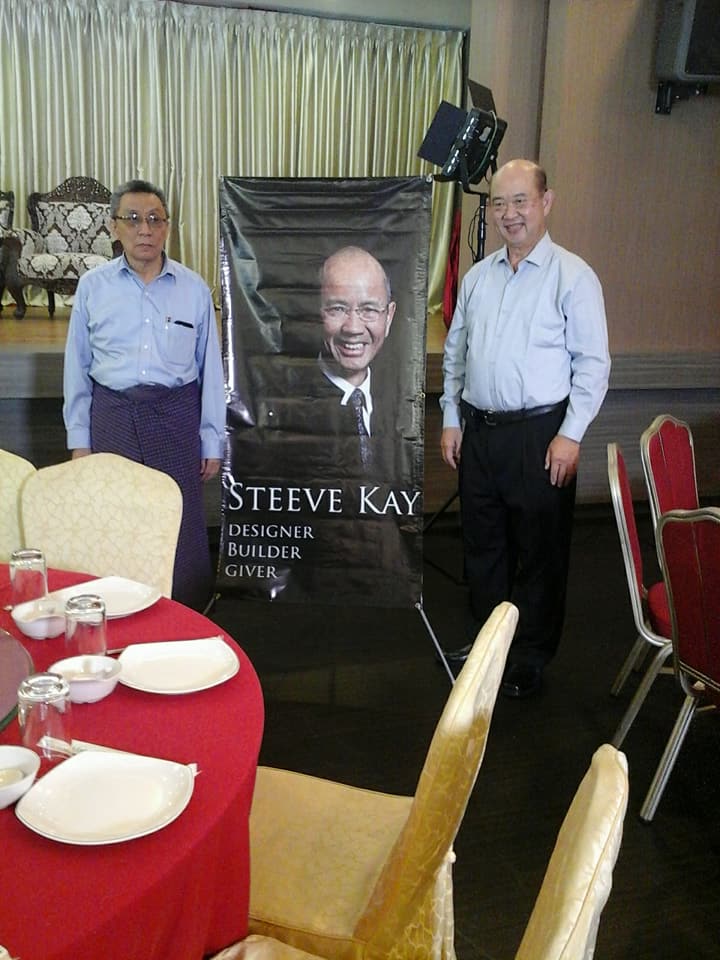
    This image has an empty alt attribute; its file name is steeve-kay-1.jpg
    Steeve Kay 1

    I must admit that I was suffering from a Monday morning “hangover”, having been intoxicated with emotional overdose over the reunion weekend [in October 2000].

    Judging from the post-reunion emails I read, I am not alone. What a reunion!

    By all measures, it was a success and did satisfy the alumni’s tremendous pent-up desire to reconnect with each other after many decades of separation. The dedication of the members of the organizing committee is second to none.

    With the assistance of his lovely wife, Benny Tan devoted practically full-time to this project for several months. I had a first-hand experience to see how meticulous he was when he was designing the RIT T-shirt. It came out a winner!

    I do appreciate the sensitivity the organizing committee displayed in making this event non-religious and non-political. Otherwise, it would have been very difficult for me to attend. The only regret is that I failed to locate the whereabouts of my buddy Ko Aung Min of Taunggyi (M70). I heard he went to Singapore, but so far my search has ended in “no find”.

    Now that the grand reunion is over, everybody is slowly recovering from the “hangover”. The big question is who would go to Singapore in 2002, and how do we go about doing it?

    With best regards,
    Steeve Kay (Ko Thaung Sein)

    Editor’s notes

    Steeve Kay 2
    • Steeve Kay (Thaung Sein, EC70) is a multiple Golden Sponsor of SPZPs. He donated $200000+ to RIT-related projects and events.
    Steeve Kay 3
    • He attended GTI for a while before joining the first ever 1st BE class in 1964.
    • Received MSEE from Stanford University and MBA from Pepperdine University.
    • At the request of his sister, who is a medical doctor who had patents for processing disability claims, he decided to transform from a successful electronics designer to the CEO of QTC Management.
    • After private investors showed interest in his company, he retired, but continued to lead a multiple-purpose fourth career: (a) visiting the places of the world’s leading religions
      (b) establishing Kay Family Foundation (c) incubating the projects of young professionals
      (d) supporting education (e.g. as trustee of University of California at Irvine)
      (e) maintaining a diverse business portfolio
      (f) helping those in need
      (g) continue paying back the metta and cetana of his mentors — as Golden Sponsor of RIT Grand Reunion and Saya Pu Zaw Pwes, Helen and Steeve Kay Health Care Fund for the RIT Sayas and Sayamas.
  • Essence of our SPZP 2000

    By Ba Thein (Atlanta)

    Thank you very much to all of you (Organizing members and the participants) for the unforgettable grand event “SPZP and RIT Reunion 2000” at San Francisco.

    Let me express the most exciting moment for me at the event. Earlier, I have learned from your “Countdown to the Reunion” articles that there were some questions about the agenda, especially about the Saya Ga Daw Pwe which is a tradition/practice for the Buddhists. Later the organizing committee members arranged it as an optional for the attendees.

    On that great evening of October 28, I arrived just in time from the other hall into the main hall to participate in my most anticipated moment. I jumped into the event from behind the other participants. For a few seconds, all of us struggled willingly with joy for a tiny spot to pay homage to our Sayagyis. Each of us did it successfully in a thrilling moment. To pay homage all my Sayagyis together in this place and time was an extraordinary opportunity for all of us. It does not matter for me – their religion – whether they directly taught me, indirectly, or did not – whether I have seen them before or not. Sayas are Sayas. Whoever they were/are. There is no problem. Our Sayas and Sayamas have done a grand – unparalleled accomplishments to our Mother “Rangoon Institute of Technology”, to our Mother Country , and to our lives.

    One more special excitement for me was, I noticed that there were non-Buddhists not only on the stage among the Sayas but also on the floor among the engineers who were proudly paying homage with strong eagerness to our Sayagyis. Immediately after we paid homage, I saw many of us ‘Great Engineers’, some with tears of joy, bowing their heads, rushed to the Sayagyis sitting on the stage, touched, and held their Saya’s hands with excitement. I guessed that some of these fore-rushers were in their 60’s and trembling with exultation. I learned that SPZP is not only for young engineers.

    The event was very enthusiastic and swift. [Let me say,] it was also a little chaotic and informal. However, this kind of chaotic atmosphere was the real unforgettable “Unique Essence” of our once-in-a-life-time SPZP and Reunion, 2000.

    With Respect, Ba Thein, Atlanta

    Editor’s note:
    On the eve, we had an informal gathering at an “all you can Japanese, Korean and Chinese buffet”. There we saw some of our Sayagyis revering their Sayas. At the Reunion dinner, the main event, and the picnic the following day, we saw more instances. Sayagyi U Khin Aung Kyi paying respect to his Sayas — Sayagyi U Ba Toke (Maths) and Sayagyi U Num Kok (Civil) — is awesome and inspiring.
    Earlier I received e-mails telling me the difference of Asian and Western cultures, e.g. how one calls one’s professors by their first name, and hinting that “it would be awkward for non-Asian spouses to witness/understand the SPZP”. Fortunately, we did not hear any complaints at the event.

  • Memories of SPZP-2000

    It took a lot of planning, time and energy to host the First RIT Grand Reunion and Saya Pu Zaw Pwe in October 2000.

    The attachment shows the draft invitation with several items as TBD (To Be Decided).

    Main event

    The main event “RIT Reunion Dinner and Saya Pu Zaw Pwe” was held from 5 pm to midnight on October 28, 2000 at the Embassy Suites Hotel near San Francisco International airport.

    There was some inconvenience as the 300+ attendees had to be accommodated in two rooms instead of the single room (booked initially).

    Except for the sit-down dinner, the attendees from the “overflow” room joined the “main” room.

    A live band comprising of Ko Thet Win (drummer, son of U Shwe Kyaw (M63, BAF, GBNF) and Ko Thiha (keyboard, son of Dr. Daw Mya Mya (OG), son-in-law of Saya U Ba Nyunt (EE58) entertained.

    Ko Tint Lwin (Daniel, M69), Ma Myint Myint Sein (Diana, M70) and several alumni sang and danced (e.g. to Mee Bone Pwe).

    The key note was given by Saya Dr. Aung Gyi.

    Saya U Aung Khin, Saya U Khin Aung Kyi, Saya U Myo Myint Sein, Saya U Min Wun and Saya U Ba Toke gave speeches.

    Several attendees participated in the optional “Ga Daw Pwe”.

    Recognition awards were given to

    • the Golden Sponsors — U Thaung Sein (Steeve Kay, EC70), Yu Beng (Benny Tan, M70), U Tin Myint (David Ko, M67), U Khin Maung Oo (Ivan Lee, M69) and U Maung Maung Than (M79)
    • U Hla Myint Thein (Maurice Chee, M75, core organizer of SPZP-2000)
    • U Hla Min (EC69, Chief Editor of RIT Alumni International Newsletter)
    • U Khin Maung Zaw (EC76, Designer and web master of http://ex-rit.org)

    Details can be found in the 64 “Countdown to the Reunion” and 36 “Post-Reunion” posts.

    The 3-hour VHR Cassette had been converted to a 2-disk DVD.

    Secondary event

    Reunion picnic was scheduled for a park (with Coyote Point as a first preference), but due to weather reports predicting inclement weather, the picnic was held instead at a school.

    Family members of sayas and alumni demonstrated their culinary expertise.

  • SPZP-2007 Appreciation

    SPZP-2007 Appreciation

    by Hla Min

    Updated : May 2025

    The Fourth RIT Grand Reunion and Saya Pu Zaw Pwe was held in Singapore on April 7, 2007.

    SPZP-2007

    SPZP-2007 Appreciation Dinner

    The Appreciation Dinner for the organizers and volunteers for SPZP-2007 was successfully held on 19th May, 2007 (6 pm to 10 pm)

    at LOTUS GARDEN RESTAURANT, International Road, Singapore.

    Attendees :

    Guest of honor : Dr Tin Hlaing
    Chairman : U Nyan Win Shwe
    Secretary : Ko Aunt, Ko Zaw Tun Naing
    Funds collection : Saya U Tin Lin & Group
    Logistics : U Moe Myint & Group
    Information : Ko Zaw Win Htut & Group
    Entertainment : Ma Shwe Zin Ma & Group
    BBT & OCC Section : Ko Moe Aung Lwin & Group

    Total Attendance : 70 from Archi, Chemical, Civil, EE, Mechanical, etc.

  • Volunteers for SPZP-2012

    • U Ohn Khine (M 70)
    Ohn Khine
    • U Saw Lin (C 71, GBNF)
    Saw Lin
    • Daw Hla Thi (Tex 72)
    • U Aung Myo Khin (M 71)
    • Daw Pyone Pyone Oo (C 79)
    • U Myo Myint (M 72)
    • U Myint Soe (Pet 72)
    • U Ko Ko Gyi (C 73)
    • U Aung Moung (M 73, GBNF)
    • U Nyunt Htay (Met 73)
    • U Toe Maung (C 74)
    • Daw San San (C 79)
    • U Win Khaing (M 75)
    • U Than Win (Pet 75)
    • U Htay Maung (M 75)
    • U Tin Tun Aung (M 75)
    • U Than Po (M 75)
    • Daw Khin Saw Mu (EP 74)
    • U Zaw Min (M 75)
    • U Hla Win (M 75)
    • U Myint Aung ( 78)
    • U Win Htay (M 78)
    • U Myint Wai (A 79)
    • Daw Hla Htay Aung (A 79)
    • U Soe Myint (Min 83)
    • U Aung Win (C 84)
    • U Win Khaing Moe (EE 84)
    • U Aung Kyi Soe (M 85)
    • Daw Kyi Kyi Pyone (M 86)
    • U Kyaw Hlaing (M 86)
    • U Tin Maung Naing (M 87)
    • U Tin Oo (M 87)
    • U Myint Naing (EE 91)
    • U Zaw Naing (EE 96)


  • Ovadha published by Buddhist Association

    SPZP-2012

    • The RIT Buddhist Association published two books for SPZP-2012.
    • One is a collection of the Ovada (Exhortations) of the sayas and sayamas [mostly Professor and/or Head of Departments or their representatives] given at the “Arcariya Pu Zaw Pwes” at RIT/YIT.
    • Another details the history and the activities of the RIT Buddhist Association. Contributors include Saya Dr. Thein Hlyne, Saya U Sein Maung, Saya U Lin, Saya U Soe Myint, and several EC members (notably U Maung Maung Lay and spouse).
    Dr. Thein Hlyne
    U Sein Maung
    U Lin

    SPZP-2016

    The RIT Buddhist Association published Ovada (Exhortations) of the sayas and sayamas invited to SPZP-2016.

  • Kind words from Saya Moe

    Dear U Hla Min

    This is with reference (Update Sept 5, 2012) to your emotional feelings about not being a Saya at RIT and people being not aware of you as a Post Master and an Editor.

    Saya Moe

    It is very natural that with the generation gap growing wider and wider with each passing decade, the middle-aged or the younger people will definitely not- or not wish to- know who their preceding generations are and how they fared or are faring.

    Only with the exception of a few who possess strong desires to master some language (e.g. English, Burmese) and to acquire in-depth knowledge and writing skills to become a writer or poet, I believe that not many wish to take up interest in these fields. Please correct me if my viewpoint is wrong. Since we are living in a modern hi-tech world, especially in capitalist countries, most people tend to chase after monetary gains first and place others last.

    But, people who know you will not hesitate to shower their praise on you, because they acknowledge that you have sacrificed a vast portion of your time and energy throughout the years to get RITians connected and feel at home. If I were sitting near or at the same dinner table as you, I am sure I would have done the same thing like Saya Dr Myo Khin and Saya Dr Soe Thein did. Since I did not see you at the SPZP 2007 dinner night, I thought that it was my duty to call on you the next day and that was why I saw you off at the Airport with Ko Tin Aung Win (TAW) at the wheel. I remembered that day because it was raining heavily and I was soaked.

    For me, U Hla Min, you deserve to be deemed a writer and a poet, because you don’t need to write hundreds to become one. There were instances of some famous poets who wrote only a few poems in their lifetime.

    My memory doesn’t permit me to recall distinctly but only vaguely the ones you wrote. During that period I myself wrote some poems in English and they got published in “The Guardian” Magazine.

    We all know you were a Saya at UCC, DCS and ICST and I would like to take this opportunity to mention that my brother-in-law Ko Hla Min (same name) was your former pupil. The last time when you visited Singapore, I heard Ko Hla Min went to meet you.

    Well, U Hla Min, this is Life! and whatever will be, will be (Que Sera Sera). But as you mentioned, let us share our memories of our beloved Swel Daw Yeik with never ending love and passion.

    Let us Embrace SPZP 2012 Yangon together!

    Regards
    [Saya U] Moe Aung

    Editor’s notes

    • Thanks Saya for your kind words. Things have changed since SPZP-2007.
    • RIT Alumni International and NorCal RITAA presented me “Appreciation Awards”.
    • During my visit to Canada, Sayagyi U Aung Khin and Sayagyi Dr. Aung Gyi hosted us.
    • I was invited to the 5th Acariya Pu Zaw Pwe of UCSY. Even though I could not attend the UCC/ICST/UCSY Thetkyi Pu Zaw Pwe, the organizers reserved “Garawa money” for me. Sayama Daw Mu Mu Myint asked her husband to drive a long way to give me the Garawa money.
    • Saya U Moe Aung is a Laureate Poet and a distinguished writer, editor and publisher. His mentors include the famed Sayagyi Daung Nwe Swe.
    • In his student days and later as a faculty member, Saya not only served as the [Chief] Editor, but also supervised the printing of the Sar Saungs and Magazines.
    • Saya has published poems in both Burmese and English.
    • Saya’s contributions include Chair of SPZP-2002 and SPZP-2010, and the Chief Editor and/or Publisher of the commemorative issues of the “Swel Daw Yeik Sar Saung” and “Swel Daw Yeik Magazine”.
    • Saya is a Patron of Swel Daw Yeik Foundation.
    • During my visits to Singapore and Yangon, Saya gave me books and vintage magazines.
    • Sayagyi U Kyaw Tun (GBNF), Saya U Myo Kyi, and Saya U Moe Aung taught “Principles of Electrical Engineering” to non-Electrical engineering students.
  • Steeve’s message in 2000

    Steeve 1

    RIT Poet Laureate Ko Hla Min:

    I must admit that I was suffering from a Monday morning “hangover”, having been intoxicated with emotional overdose over the reunion weekend [in October 2000].

    Judging from the post-reunion emails I read, I am not alone. What a reunion!

    By all measures, it was a success and did satisfy the alumni’s tremendous pent-up desire to reconnect with each other after many decades of separation. The dedication of the members of the organizing committee is second to none.

    With the assistance of his lovely wife, Benny Tan devoted practically full-time to this project for several months. I had a first-hand experience to see how meticulous he was when he was designing the RIT T-shirt. It came out a winner!

    I do appreciate the sensitivity the organizing committee displayed in making this event non-religious and non-political. Otherwise, it would have been very difficult for me to attend. The only regret is that I failed to locate the whereabouts of my buddy Ko Aung Min of Taunggyi (M70). I heard he went to Singapore, but so far my search has ended in “no find”.

    Now that the grand reunion is over, everybody is slowly recovering from the “hangover”. The big question is who would go to Singapore in 2002, and how do we go about doing it?

    With best regards,
    Steeve Kay (Ko Thaung Sein)

    Editor’s notes

    This image has an empty alt attribute; its file name is steeve-kay-1.jpg
    Steeve 2
    • Ko Thaung Sein (EC70) is a multiple Golden Sponsor of SPZPs. He donated $20000+ to RIT-related projects and events.
    Steeve 3
    • He attended GTI for a while before joining the first ever 1st BE class in 1964.
    • Received MSEE from Stanford University and MBA from Pepperdine University.
    • At the request of his sister, who is a medical doctor who had patents for processing “disability” claims, Steve decided to transform from a successful electronics designer to the Chief Executive Officer of QTC Management.
    • After private investors showed interest in his company, he retired, but continued to lead a multiple-purpose fourth career: (a) visiting the places of the world’s leading religions
      (b) incubating the projects of young professionals
      (c) supporting education (e.g. as trustee of University of California at Irvine)
      (d) maintaining [diverse] business portfolio
      (e) helping those in need (via CABA)
      (f) continue paying back the metta and cetana of his mentors — as Golden Sponsor of RIT Grand Reunion and Saya Pu Zaw Pwes, Helen and Steeve Kay Health Care Fund for the RIT Sayas and Sayamas.
  • Swel Daw Yeik Sar Saung for SPZP-2010

    Editorial

    Sar Saung 1
    Sar Saung 2

    Team

    • Saya U Moe Aung (Tekkatho Moe War) & team published the commemorative issue.
    • They printed my article “A Short and Sad Clip: EE Sayas” (renamed by Saya). The article will be re-posted separately.
    EE Sayas