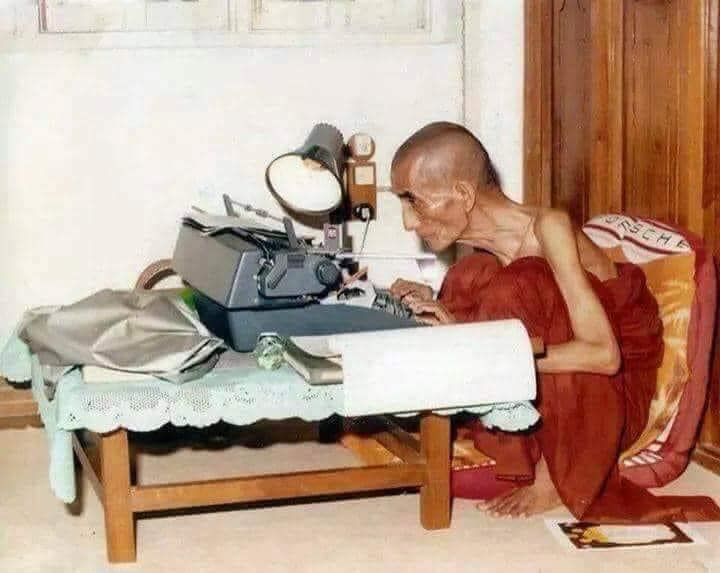
Chief Resident Monk of A Lo Daw Pyie Monastery in Apache Junction, Arizona.
Published five volumes of Q&A (Questions and Answers) about Buddhism.
Published several other books.
Gave me his books in person (during his visits to the San Francisco Bay Area) and by mail (via United States Postal Service).
Buddha Dhamma Ah Hnit Chote
Bilingual (Myanmar and English) book
Dhamma dana by Dr. U Win (Salinas)
January, 2006
Translation to Myanmar from English By Ashin Kelasa
Buddhism in a Nutshell By Narada Maha Thera
Chapters 1. The Buddha 2. The Dhamma : Is it a Philosophy? 3. Is it a Religion? 4. Is Buddhism an Ethical System? 5. Some salient features of Buddhism 6. Kamma of the law of Moral Causation 7. Re-birth 8. Paticcasamuppada 9. Anatta or Soul-lessness 10. Nibbana 11. The Path to Nibbana
Long term memory It is analogous to disk (or similar) storage in a computer system
Short term memory It is analogous to RAM (Random Access Memory)
Photographic memory Some people could glance at documents and recall them
Associative memory Facts are easier to recall if they are associated and chunked
False memory Some innocent people were victimized by key witnesses with “unreliable” memory
Study of Memory
The study of memory transcends medical research, sociology, linguistics, cognitive science, and artificial intelligence.
It is often done by a team of multi-disciplinary experts.
Aging contributes loss of short term memory or the decline in the ability to retain short term memory. My younger cousin sister said, “I forgot what I wanted to say”.
One elderly could recall names of his primary school classmates, but could not recognize his youngest grand son that grew up in his hands.
Memory loss may be temporary. Ko Tin Oo (M87, SDYF, RITAA) temporarily forgot his name, but uttered “I pledged my donation for the YTU library, but I have not made the donation.” The memory lapse was attributed to a fall that hurt his back.
Memory Feats
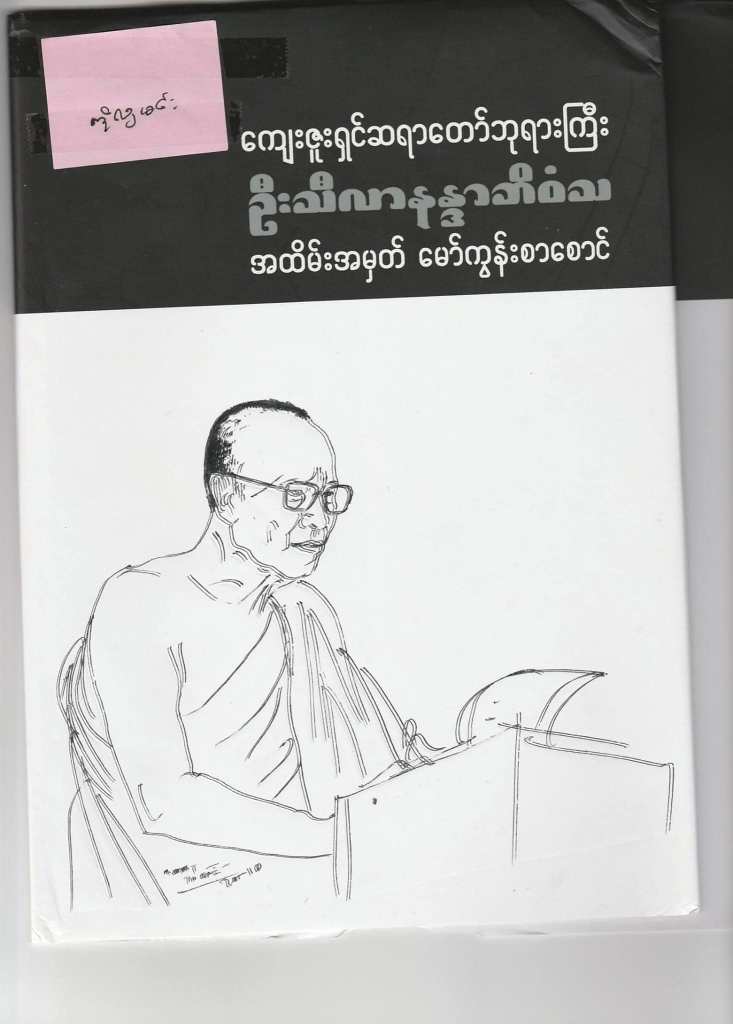
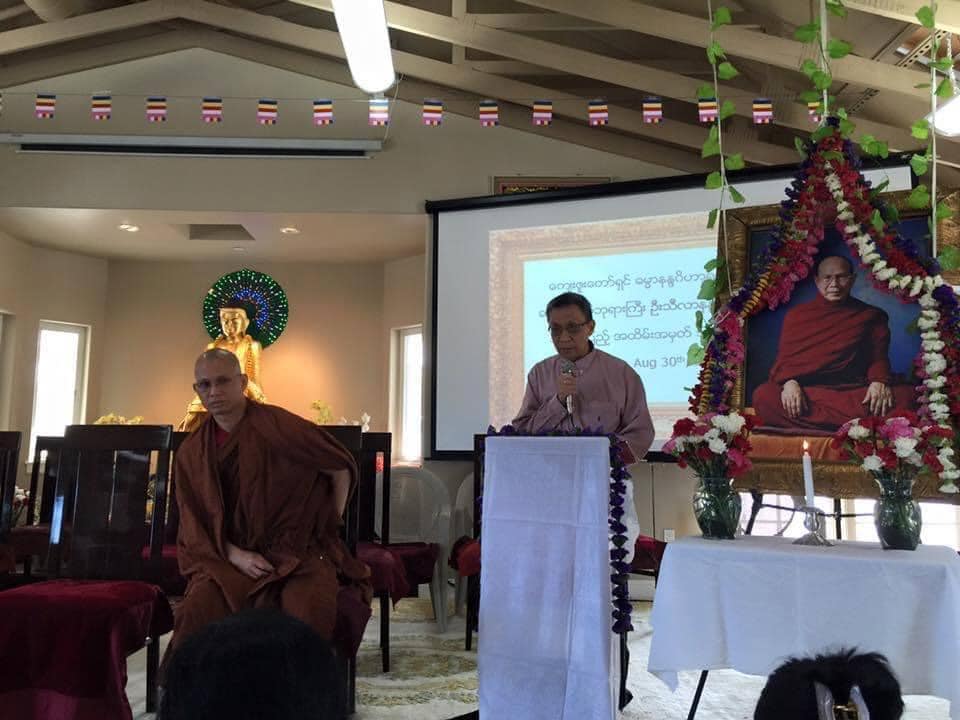
Mingun Tipitaka Sayadaw
Mingun Tipitaka Sayadaw U Vicittasarabhivamsa was recorded in the Guinness Book of World Record for his phenomenal memory that he displayed in the Sixth Buddhist Council held at Kaba Aye (World Peace) Pagoda from 1954 – 1956.
He not only remembered 8000+ pages of the Scriptures, but he could also point out the variants of some Suttas while he took the Oral tests for the Tipitaka Examination.
He passed the Oral and Written tests for Vinaya (Monastic rules of conduct), Sutta (Discourses) and Abhidhamma (Ultimate reality) with Distinction.
Sayadaw became the Grand Custodian of the Tipitaka (Three Baskets) and was the key player in the Sixth Buddhist Council.
Dale Carnegie wrote that Harry S. Truman won the presidency because his campaign manager could address 50,000+ voters by their first name.
I thought that I should try for 500 or 5000 names.
Some trained / developed their memory to compete in memory contests (e.g. recall cards, numbers).
My Memory
Hla Min
When I was in Middle School, Chauk Htutt Kyee Sayadaw came to our house to give a dhamma talk. After Sayadaw returned, I recounted the main points of the talk.
I have a built-in recorder and a reasonably good memory, but the use of association, chunking, mnemonics, and “learning how to learn” helped to make my memory better.
Not everyone appreciated my memory. One person thought that I was dyslexic when I wrote English words and sentences backwards and upside down. I also wrote a few in mirror image. Another said, “What’s the big deal? You just have to remember patterns.”
I often start a talk –tongue in cheek — by saying, “My brain is damaged. It’s easy to remember, but it’s hard to forget.”
He was listed in the “Guinness Book of World Records” for his phenomenal memory. When Burma hosted the Sixth Buddhist Council in 1954 – 56 to commemorated the 2500th year of the “Sasana Calendar”, Sayadaw acted as the “Reciter” of the Tipitaka (Triple Basket : Vinaya (Monastic rules of conduct), Sutta (Discourses), and Abhidhamma (Ultimate Reality)) and selected Commentaries. According to the Kaba Aye Edition, the Tipitaka covers 8000+ pages.
To prepare for the Buddhist Council, Sir U Thwin requested Mingun Sayadaw to take the Tipitaka examination. Sayadaw passed the Oral and Written tests for the Three Baskets with Distinction. He was the first Sayadaw to be conferred “Bearer of the Tipitaka & Treasurer of the Dhamma”. The Oral tests will fail a candidate if he needs five (or six) prompts. Sayadaw did not need a single prompt. The Written tests cover in-depth topics. During the recitation, Sayadaw amazed the examiners by pointing out the variations of the text and highlighted the preferred version.
Sayadaw received requisites. He distributed them to the monks (in the town where he received them). To help ease the monks trying to pass one or more Baskets in the [later] Tipitaka examinations, Sayadaw set up a monastery in Mingun and accepted monks who had finished their Dhammacariya.
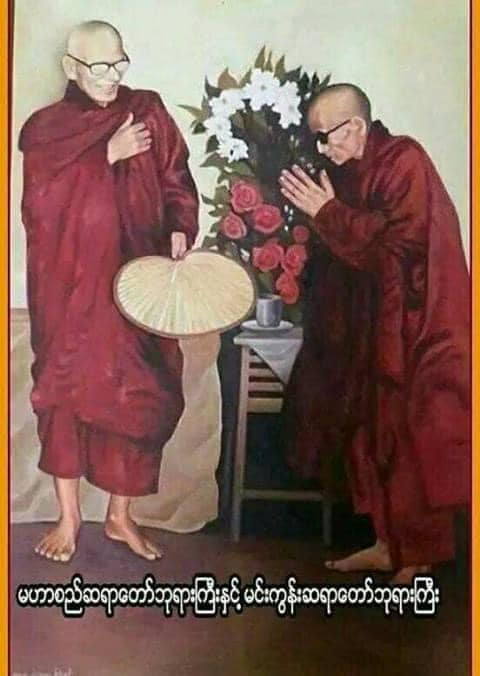
Mahasi & Mingun Sayadaws
Memory Types
We have a short term memory and a long term memory.
When people age, most retain their long term memory, but they often experience decline of their short term memory.
My young cousin approached us and then uttered, “I forgot what I was about to say”.
My high school classmate would abruptly stop in the middle of our walk and pondered, “Did I lock the door?”
Ko Tun Aung’s uncle (GBNF) could recall his primary classmates but could not recognize his beloved grand kid.
There are books and courses about memory.
According to some authors, we could use “chunking”, “association”, “reinforced (non-blind) repetition”, … to move important and worthwhile items in the short term memory into long term memory.
Memory is not static. It is elastic. There is restructuring (reorganizing, indexing, …) every time we use it.
There are techniques (mnemonics, visualization, …) to train and improve our memory.
Thanks to the sayas and colleagues who complimented for having a good memory. I was a mini-dictionary, a micro-encyclopedia, and a reliable proof-reader & spelling checker. May be it was partly because I was born before the pervasive use of Internet and on-line tools, and there was not too much diversion.
There are a few who want to down play the importance of memory by saying, “I can Google …”