He taught Numerical Analysis and Numerical Methods.
He passed away on February 28, 2011.
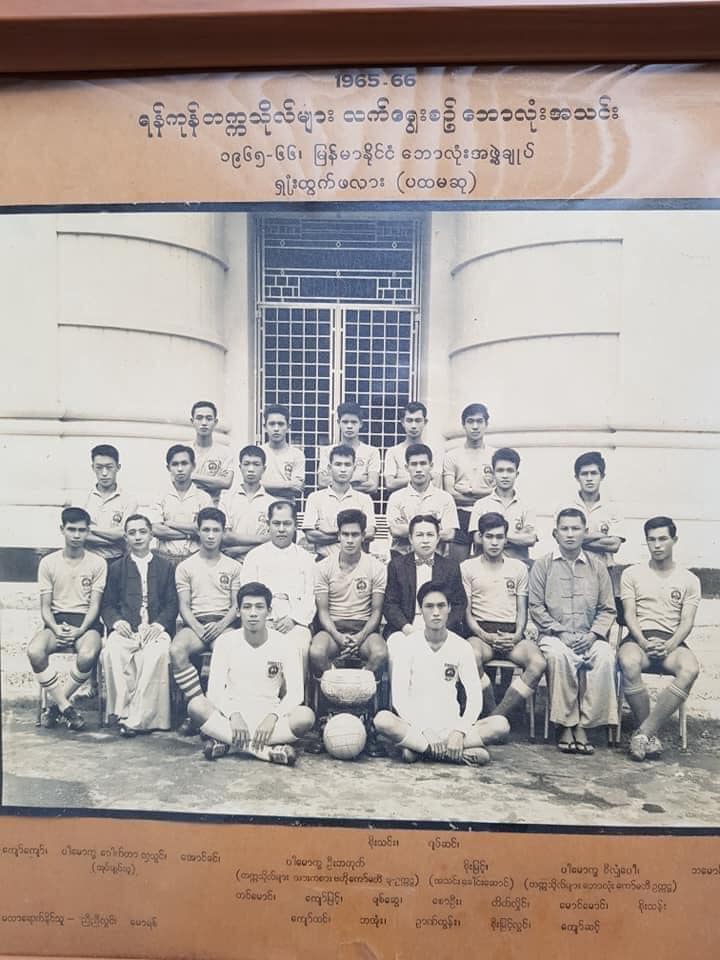
In his youth, he was active playing soccer and volleyball.
His friendly smile will be missed by all.
Aging and declining health had a toll on U Kyaw Nyein and his spouse. He had diabetes for a long time without control/treatment. His kidney began to fail around October, 2010. Doctors recommended preparation for dialysis, which is minor operation on his vein/arteries on his hand, but he wanted to try alternative medicine (e.g. Chinese medicine).
UCC alumni set up a health care fund to help him, but he was either too “Arr Nar De” or too frail to do dialysis.
He lost memory and could not recognize his colleagues. His wife had limited mobility on her left hand. People in Yangon wanted her to go for therapy but it was not easy for them to visit therapists on their own.
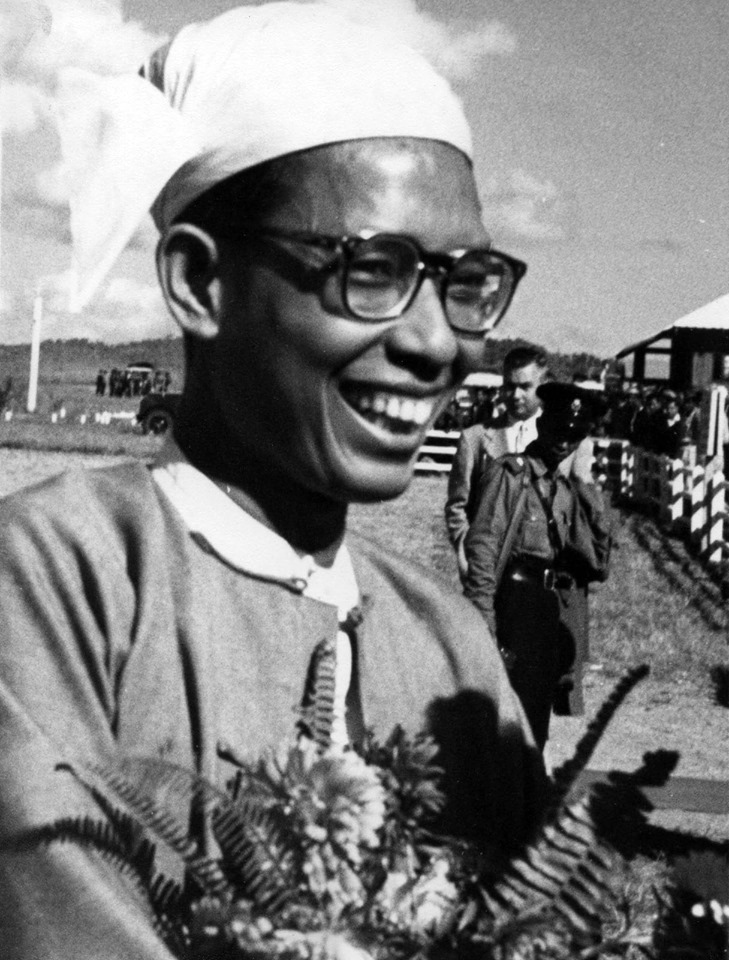
U Kyaw Nyein (AFPFL)
U Kyaw Nyein (AFPFL)
He was a Minister (of Home Affairs) in the AFPFL government.
He was a leader of the Swe-Nyein Faction (aka Ti Mye တည်မြဲဖဆပလ)
U Kyaw Nyein (BSPP)
He was Minister (of Education) and in the BSPP government.
U Kyaw Nyein (USIS)
He invited us to use the USIS library.
He is the third son of Myoma Sayagyi U Ba Lwin.
U Kyaw Nyein (Franklin)
He is the younger brother of U Wah Kyu (Maurice Chee’s father) and Saya U Win Kyaing.
Most twins share the same birthday (Day, Month, Year). An exception occurs when one twin is born before midnight and the other is born after. Another exception occurs when one twin is born on New Year’s Eve and the other is born on New Year.
February 29 born
Do they celebrate only in Leap Years? Do they celebrate every year on February 28 or March 1st?
Same Month
If there are more than 13 people, then at least two must share the Month in their birthdays. It follows the Pigeon Hole Principle.
Same Month and Day
If there are more than 30 people, then there is a high likelihood that at least two share the Day and the Month in their birthdays. It follows from Probability and Statistics.
Distribution
In a group, the birthdays are not equally distributed. For instance, my two sisters and I are August born. There are seven siblings.
Freebie
Some restaurants do not charge the Birthday Person (Boy, Girl) if there are three more persons in the group. They will ask and verify the ID.
Happy Birthday
“Happy Birthday” song is one of the most played songs. In the early days, the song received a lot of royalties. It is now in the free public domain.
Different Calendars
Some celebrate their birthday twice : using the Gregorian Calendar and the Myanmar luni-solar Calendar.
There was a minimum age requirement for admission to the University of Rangoon. Saya Dr. Hla Aung (C58) had to wait one year to enter Rangoon University because he was under age.
No minimum age requirement
At some universities, young talented students (12 – 16 years young) graduate. Robert Floyd (ACM Turing Award winner) received his BA (at age 16) and BS from the University of Chicago. He retired as Chairman of Computer Science Department at Stanford University.
Transfer students
Some who transferred to St. Paul’s High School had to re-do some classes. They may become the senior members of their class. Some complete the High School Curriculum at a Chinese School, but cannot afford to attend a university overseas (e.g. in China). They join the regular schools and sit Government exams. They may become senior members of their class.
Time off
A few decide to work for a couple of years after Matriculation usually as a teacher. When they later join the University, they may become the senior members of their class. Saya Dr. Tin Win (M62) was the youngest in his class. A classmate, who joined Rangoon University after serving as a high school teacher, was 7 years older than him.
Kyaung Pyaw
There were some “Kyaung Pyaws”. They enjoy their university life so much that they try to stay as long as possible. Some repeat every class. When Saya U Soe Paing (EE, UCC) returned from the USA after completing his BS and MS, he had to teach one of his former classmates.
Dr. Thane Oke Kyaw Myint wrote :
During the good times of having factions of students for student “politics”, “Tat Oo” and “Ye Gaung“, some students either defer or deliberately fail exams so that they could stay in as university students. Some take BL (Bachelor of Law) and Diploma classes so that they can continue as EC (Executive Committee) members in the student associations.
Many universities have “Alumni Relations Department” and “Alumni Association“.
They have personnel to reach out to alumni and hold alumni events.
Notable and successful alumni support their alma mater in various ways. e.g. establish new Departments, Chairs, Research facilities, Mentoring programs, Internships
Sad story
After the fateful Coup D’etat in 1962, all organizations (except BSPP and related ones) were banned.
The practice continued to the Adhamma Era, when our alma mater was branded as “Thabon Kyaung” and the Swel Daw Bins were destroyed.
Perseverance
With the dawning of the Pwint Linn Era, steps were taken to bring back the alma mater to former glory.
In February 2016, U Wynn Htain Oo, U Tin Latt and U Than Htay proposed to U Aye Myint (then Rector of YTU) the establishment of an alumni association. The Rector gladly agreed.
A core group helped with the registration of RIT-YIT-YTU Alumni Association.
Issues
Many alumni were not aware of the association and its objectives
Only a few (mostly members of the “80000 YaThay”) actively participated in the formative events
There was virtually no fund to operate (let alone assist the alma mater)
Help and Resolution
Then, things started to click
An office space for the Alumni Association was provided by YTU
The association received nice Logo and Banner.
Donations — large and small — were received (mostly for the YTU Library Modernization Project which is a requirement for the Accreditation). Donations were received from well-wishers (who are not alumni).
Membership grew by leaps and bounds. Even alumni overseas joined the association. Currently, Life membership costs K60000.
Saya’s Corner was established. Wheel chairs are available (especially for use by Sayagyis attending SPZPs).
Staff and Volunteers helped with the regular and ad hoc projects (such as clean-up).
The Annual General Meeting (AGM) was attended by alumni spanning three (or so) decades. Several young alumni came forward to take leadership roles.
The association helped with YTU Library Modernization Project, z”Honoring matriculates of alumni” and the vetting of YTU students applying for financial aid.
The RU Act of 1920 was passed on December 1, 1920 to establish the University of Rangoon with Rangoon College and Judson College as the constituent Colleges. There were only three Faculties: Science, Arts and Law
On December 5, 1920, some RU students staged a strike to protest the 1920 RU Act for not being overreaching. The first RU Students’ Strike was later celebrated as “Ah Myo Tha Aung Pwe Nay”. The Strike gave birth to National Schools and “Ah Myotha Kaw Leik (National College)”. The Strike also caused the higher authorities to amend the “RU Act of 1920”.
In 1924, some Faculties (Engineering, Forestry, Social Science and Medicine) were added.
Celebrations
Due to the war, the RU Silver Jubilee could not be celebrated in 1945. It was celebrated in the 1950s.
In 1970, the Golden Jubilee of the founding of RU was celebrated. A magazine was published to commemorate the event.
In Deember 2019, the pre-Celebration for the RU Centennial took place. In 2020, due to Covid, the RU Centennial was celebrated with restrictions.
Positions and Pay Scales
The list is not exhaustive.
The pay scales are samples for the early days.
Gazetted Officer
Those who earn 350 (and CLA) or higher
450 (Base Pay) in the newer system
Promotion, deputation, transfer, and leave are published in the [Burma] Gazette
Selection Grade
Those who earn 800+ Kyats
Entitled to buy 10% of salary at “Staff Shop”
Administrators
Chancellor : Prime Minister or his appointee; U Nu attended Convocations and gave speeches.
Vice-Chancellor : Chief Justice U Bo Gyi served for two terms at Rangoon University. U Ko Lay (Zeyar Maung) was the Vice Chancellor of Mandalay University.
Rector : Dr. Htin Aung was the first native Rector of Rangoon University. Dr. Hla Myint, Dr. Tha Hla, U Kar and Dr. Maung Maung Kha were the early Rectors.
Pro-Rector : introduced in the 80s. U Ba Than Haq was the first Pro-Rector of RASU.
Principal : in charge of a College; U Pe Maung Tin was the first native Principal of Rangoon College.
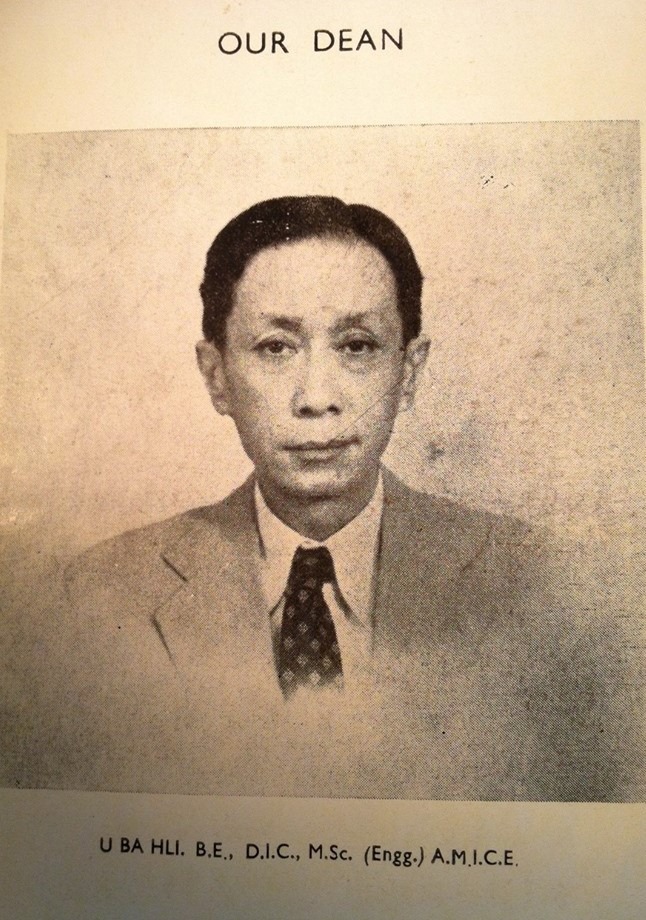
Dean : in charge of a Faculty; U Ba Hli was the first native Dean of Engineering.
Registrar : U Htin Si and U Yu Khin were the early Registrars of Rangoon University.
Head of Department : (e.g. at RIT in the 60s)
Large departments are headed by a Professor
Sub-departments are headed by a Lecturer
Supporting departments may be headed by an Assistant Lecturer.
Professor : 1300+ Kyats
Associate Professor : introduced in the 80s (1000 – 50 – 1200 Kyats) for minimum, annual increment and maximum
Lecturer : 800 – 50 – 1200 Kyats (for Lecturers before the 80s) 800 – 50 – 1000 Kyats (for Lecturers in the 80s)
Assistant Lecturer : 350 (and CLA) – 25 -700 Kyats and CLA (Cost of Living Allowance) was 89 Kyats (or so) The “adjusted” pay was 439 Kyats (or so) So, Assistant Lecturer : 450 – 25 – 700 Kyats (after the period when CLA was dropped)
Instructor : 450 – 25 – 700 Kyats (introduced for the Institutes in the 60s) The pay scale is the same as Assistant Lecturer. It takes longer to become a Lecturer.
Demonstrator : Early days : 200 (and CLA) => 297 Kyats (or so) Later : 320 Scale Supervises lab
Tutor : Early days : 200 (and CLA) => 297 Kyats (or so) Later : 320 Scale Supervises lab and/or tutorials
Lecturing Tutor : 100 Kyats additional
Ad hoc Tutor : Early days : 100+ Kyats
Editor’s Notes :
For better or for worse, there have been several changes to the Education System. Pro-Rector and Associate Professor were introduced in the 80s. Some departments now have several Professors. There are Universities with a single Institute of College. There are 30+ Technological Universities.
Due to the decline in the buying power of the money, it is difficult for most teaching staff to survive with the salaries (and occasional pay raises). In 2018, a Professor told me that she earned about K5 Lakhs, of which a sizable amount is spent on transportation.
Was offered as an Option by the Economics Department, Rangoon University.
Became a separate Department under the Faculty of Social Science
Later became a Department of the Institute of Economics.
Saw William Paw
Professor William Paw
During our University days, Professor William Paw was President of RUBC (Rangoon University Boat Club). As Treasurer, I had to go to his office several times .
The earlier RUBC Presidents were Sir Arthur Eggar (founder), Commodore Than Pe, U Tun Thaung and Sithu U Tin.
He was also President of the RU Sports Council.
Dr. Khin Maung Kyi
He attended Rangoon University as a monk.
He is known for his debates and writings.
He taught at Commerce Department and later headed the Research Department.
He later taught in Malaysia and Singapore. I visited Saya in Singapore to hand over a parcel/present by Saya U Myo Min (UCC).
Dr. Khin Maung Kyawe (Jimmy)
It is his preferred spelling over “Kywe”.
I first met him when my cousin uncle Saya U Than Lwin (Eric, GBNF) took me to the Social Science Library. My uncle taught Economics and also served as Librarian. He would give rides to the sayas including Sayas Jimmy and Dr. Maung Shein.
I met him again in the mid 80’s as Head of BERB (Burma Education Research Bureau). I attended several meetings at BERB.
Dr. Mya Than
Dr. Mya Than & Daw Yee May Kaung
He taught at PBRS before going for postgrad overseas.
His spouse Daw Yee May Kaung is the younger daughter of Sithu U Kaung. She was the last Treasurer of Burma Research Society.
They moved to Singapore and later Thailand.
U Myo Min (UCC)
U Myo Min
He won medals for standing first in I.Com and also in B.Com. (Accounting).
He became a Chartered Account and worked for IBM UK.
Per request from his mother and Sayagyi Dr. Chit Swe, he came back to Burma to help with the UCC Project. He co-founded UCC with Sayas Dr. Chit Swe, U Soe Paing and U Ko Ko Lay. He taught classes at the Institute of Economics.
He later taught at Nangyang Technical Institute in Singapore and worked for Seagate Technologies & Connors in California, USA.
U Mya Thein & U Thein Oo
They transferred to UCC as Business Application Programmer/Analyst.
U Mya Thein (GBNF) retired as Manager of Business Applications. He also taught ITBMU.
U Thein is Founder & CEO of Ace Computers.
Commerce Graduate Association
Per request of Ko Kyi Soe and Ko Aung Myin, I helped with a course (Mathematics of Finance & related topics) conducted by Commerce Graduate Association (CGA).
U Chan Min
Uzin Chan Min
He represented Institute of Economics in Rowing and Chinlon.
He was the de facto leader for the Institute of Economics Rowing teams (including former President U Htin Kyaw).
He attended courses at UCC. He worked at EPC and later moved to USA.
After retirement, U Chan Min decided to become a monk. For the transition, he asked me to be a temporary monk with him for a week (or so).
He stays mostly at Dhammananda Vihara in Half Moon Bay, California. Per request from his brother Dr. Patheda Tin (NASA), Uzin spent vassa (waso retreat) at the Chan Myei Yeiktha in Springfield, Illinois.
Some of his former B.Com classmates include U Kun Pe (brother of Dr. Nyi Nyi), U Ohn Myint, U Kyi Khin, U Soe Myint (GBNF) and U Ye Myint (father of Zayanda).
Feedback by U Aye (M62) & Dr. Richard Yu Khin (MEHS61)
Prome Hall Soccer
For two successive years, the Prome Hall Football Team won the Championship at Rangoon University.
U Chan Tha (Class of 53) was Captain of the team. He is a Past Captain and Gold of RUBC (Rangoon University Boat Club).
Saya U Tin Swe (EE, Class of 53) was also a star player. Retired as Lecturer, EE Department, RIT.
Two athletic brothers (U Khin Si and U Tin Si) were members of the Champion team. They also were Tennis Doubles Champions at Rangoon University and at the National level.
The photo was scanned from a RUESU Annual Magazine by Saya U Soe Paing (EE, UCC) for the “History of University Engineering Education in Burma/Myanmar”. Saya U Ba Than (M) and Saya U Thaw Kaung (retired Chief Librarian of Rangoon University Central Library) were proud supporters and enablers for the project.
U Aye (M62) wrote :
In the photo of Prome Hall football team,
Extreme left standing- Jimmy Sein (U Tint Swe, C55, GBNF) Dy. DG of Vocational and Technical Schools. He was from St. Patrick’s HS, Mawlamyine.
Sitting extreme left- U Taik Ain (C54, GBNF), SE at PWD(CC), from Mudon. He was also a RU tennis champion. He passed away recently in 2020.
S. Mahindar (C52), Standing back row center, goalkeeper was from Moulmein. SE, PWD ( Retired). His younger brother B. Singh, was RU and Tennessarim division selected goalkeeper. B. Singh was my classmate at St. Patrick’s HS, Moulmein.
U Win Kyu (C52), SE, PWD (Retired). Sitting second from right. He was from Taunggyi.
U Thaung, (C55), SE, PWD ( Retired). Sitting extreme left, He was from Taunggyi.
Dr. Richard Yu Khin (MEHS61) wrote :
My father [U Yu Khin] was Warden of Prome Hall in 1946-1947 and their football team (green shirts) became my favorite.
In 1946, former President of Burma Peter Wun [UHtin Kyaw] was delivered by my mother [Dr.Daw Phay] at Prome Hall at our residence. Mrs. Wun and my mother were classmates at ABM (American Baptist Mission) High School in Mandalay.
The residences on Pagan Road was reserved for British in pre-war Burma. A few months before Independence on January 4, 1948, these residences became available to Burmese. U Wun (Minthuwun) had the residence in front of us which had the same floor plan. Dr. Maung Maung Kha‘s residence had the same floor plan as U Thein Han (Zawgyi). All of these two storey residences are built on one acre lots.
AGTI (Associate of Government Technical Institute)
Graduated from RIT with Mechanical Engineering in 1983
Received MS from CSU (California State University)
Work Experience
Founder/President, Mechanical Solutions
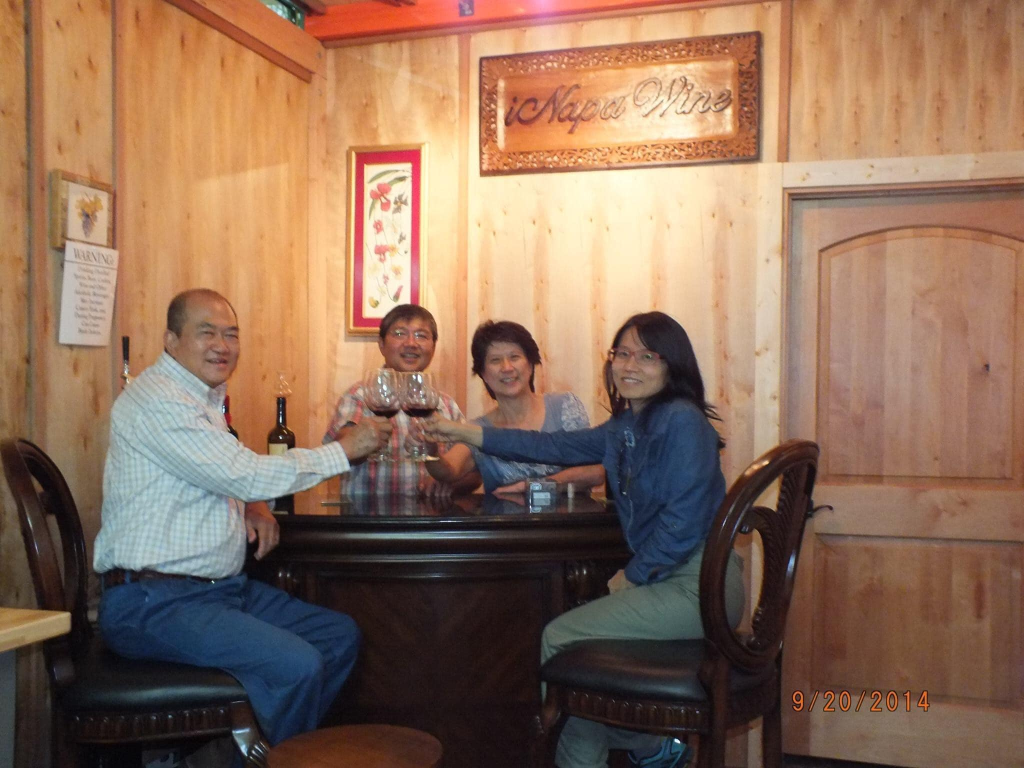
Founder/President, iNapa Winery
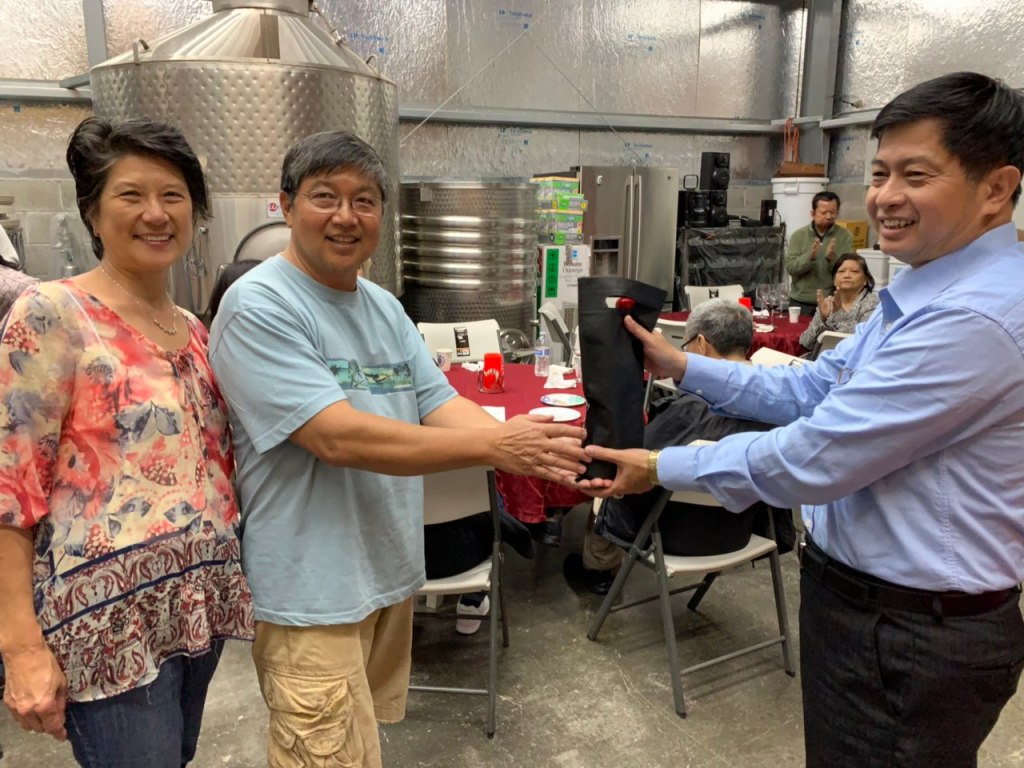
Gatherings at iNapa Winery
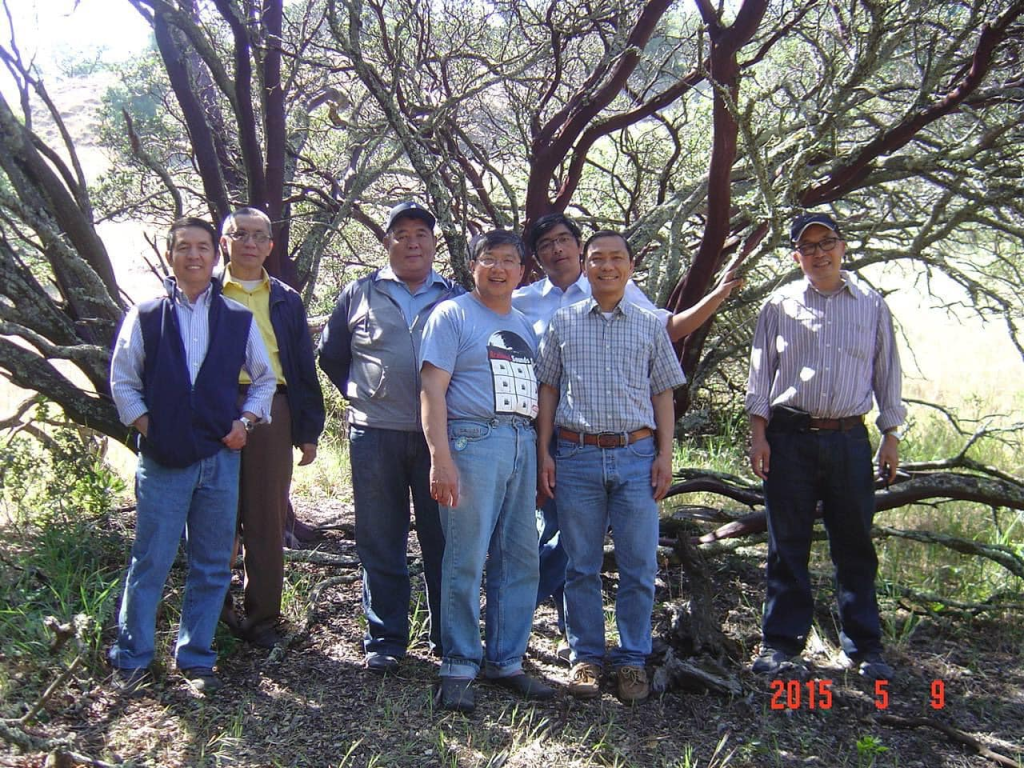
With RIT Alumni
With RIT Alumni
With David Ko (U Tin Myint, M67, GBNF)
With David Ko (U Tin Myint, M67, Golden Sponsor of SPZP-2000)
Welcoming Dr. Aung Gyi & Metallurgical Engineering Sayas who had attended 2015 RIT Alumni Reunion in Los Angeles
Saya Dr. Aung Gyi and Daw EmmaWith Saya Dr. Aung Gyi, visiting Metallurgical Engineers and RIT Alumni
Welcoming Saya U Tin Myint (M80)
Welcoming Saya U Tin Myint (M80)
Quick Tour & Long Tour
Donated iNapa Wine for selected events (e.g 2015 RIT Alumni Reunion in Los Angeles)
Alumni Organizations
Youngest of the Founding members of RIT Alumni International
RIT Alimni International
Organizer, SPZP-2000
SPZP-2000
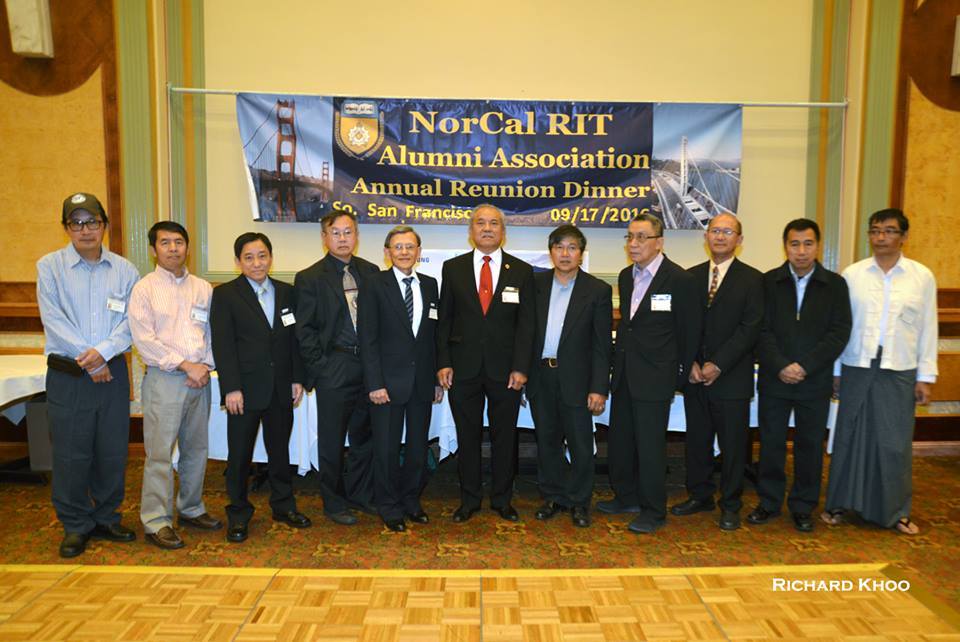
Founding member and Past President of Norcal RITAA
NorCal 1NorCal 2NorCal 3
Family members
Father : U Kaung (GBNF) was Head of Mechanical Engineering Department at Insein GTI.
Spouse : Lillian Kaung (EC83)
Two sons
U Ko Ko Zin (AGTI, M84) is the spouse of Thida Kaung (Gordon’s younger sister). He is a founding member, Past Treasurer & VP of Norcal RITAA. He organized the visit to Asian Heritage Museum (where he is Chief Engineer).
Ko Ko Zin & Thida Kaung
Fire
iNapa Winery was lucky to escape the great Fire with slight damage. Gordon and Lillian had to spend three weeks in a hotel before they can return to their home.
iNapa Winery was not so lucky the next time. There was some damage, but with the help of alumni and friends, recovery was smooth.
Saya U Myat Htoo (C68), Chair of BOD (Board of Directors) and Daw Hnin Maung Maung (“Ma Ku”) hosted the face-to-face meeting on September 23, 2018.
The face-to-face meeting is usually held every quarter.
The next meeting will be held in early November by U Nyunt Than (M86, Joint Secretary) and Daw Htwe Htwe to prepare for the AGM (Annual General Meeting), where the election of the EC (Executive Committee) and BOD will take place.
Activities
An activity of NorCal RITAA is to provide scholarship (some prefer the terms stipend, grant and financial aid) to eligible YTU students.
Last year four YTU students were offered $1000 for a year and three YTU students were offered $500 for a year.
The current recipients should reapply the following years if (a) they have maintained good grades (b) they still need financial assistance.
U San Lin (M87) and family have pledged to support for one student a maximum of six years until graduation.
U San Lin (Rightmost)
Daw Mu Mu Kin, spouse of Saya Allen Htay (C58, GBNF) has supported two students. She has pledged to support one student for the following year.
Daw Mu Mu Kin
U Kaung Kaung Oo (Gordon, M83) and Daw Lillian Kaung (EC83), owners of iNapa Wine, have pledged to support one student for the following year.
Gordon & Lillian
Donations
U Thein Tun Aung (Dennis, EP76) donated $600 to the NorCal RITAA Scholarship fund.
Daw Kyu Kyu Lin (Bawlone, T75) donated $300 to the NorCal RITAA Scholarship fund.
Daw Khin Mya Yee (Sarah, C77) donated $200 to the NorCal RITAA General Fund.
King Wong (Victor, C66) donated $100 to the YTU Library Project via NorCal RITAA.
Saya Dr. Nyo Win (M65) donated $50 at the NorCal RITAA Summer Picnic.
NorCal RITAA presented appreciation award (plaque, certificate) to the major donors.
The list of donors is maintained by U Ko Ko Zin (M84), Treasurer.
Updates
Saya U Maung Maung (ChE66), Gordon Kaung (M83) & U Aung Myint Oo (EC84) are Past Presidents.
U Tin Maung Win (C86) is the President.
Stan Liou (M67) is Past Chair of BOD.
Saya U Myat Htoo (C68) has been Chair of BOD for several terms.
During the pandemic, several activities were put on hold.
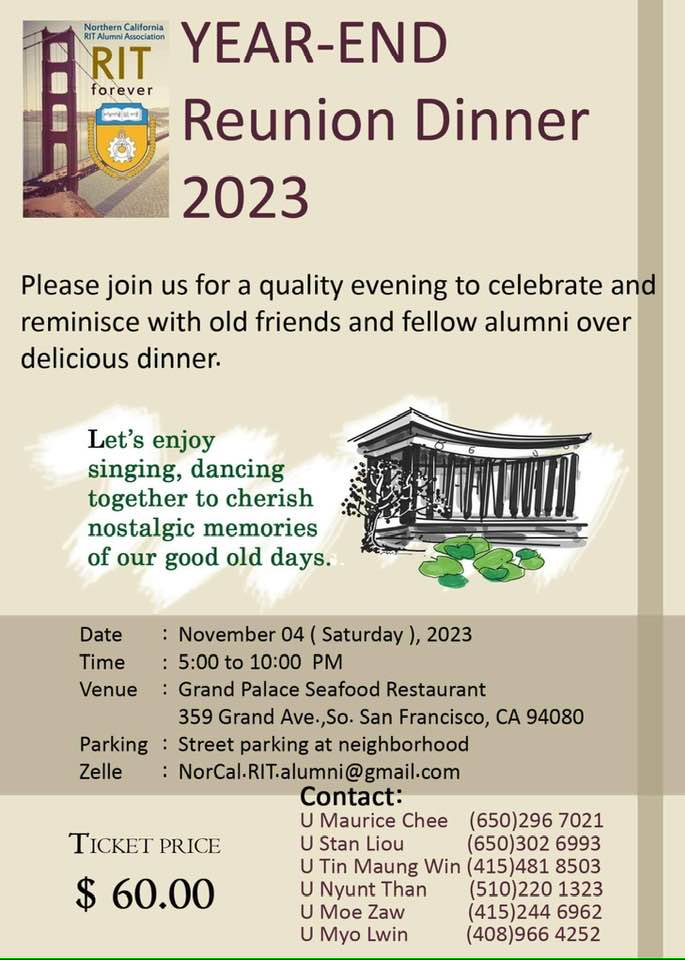
In 2023, activities resumed with the Annual Dinner.
2023
In 2024, NorCal RITAA celebrated the Centennial of Engg Education in Burma, and the 60th Anniversary of RIT. It also revamped the website.
Several sayas and senior alumni mentioned the difficulty of attending Dinner Gatherings.
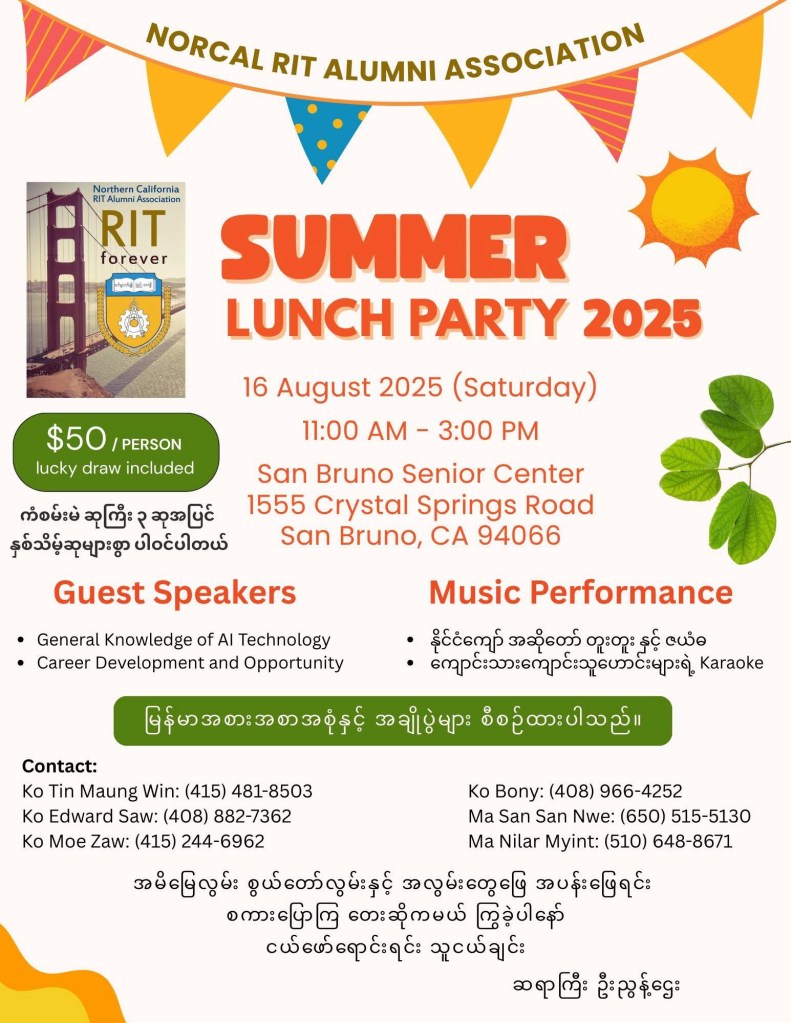
NorCal RITAA will hold a special Lunch Gathering on August 16, 2025. The entertainment program will feature Tu Tu & Zayanda. The educational program will feature two Speakers.