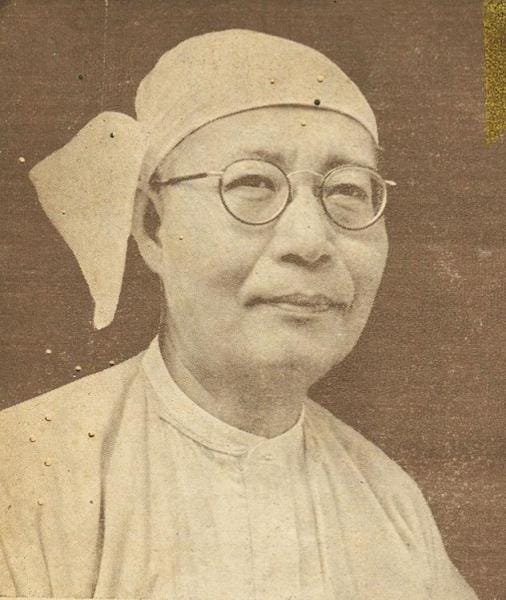
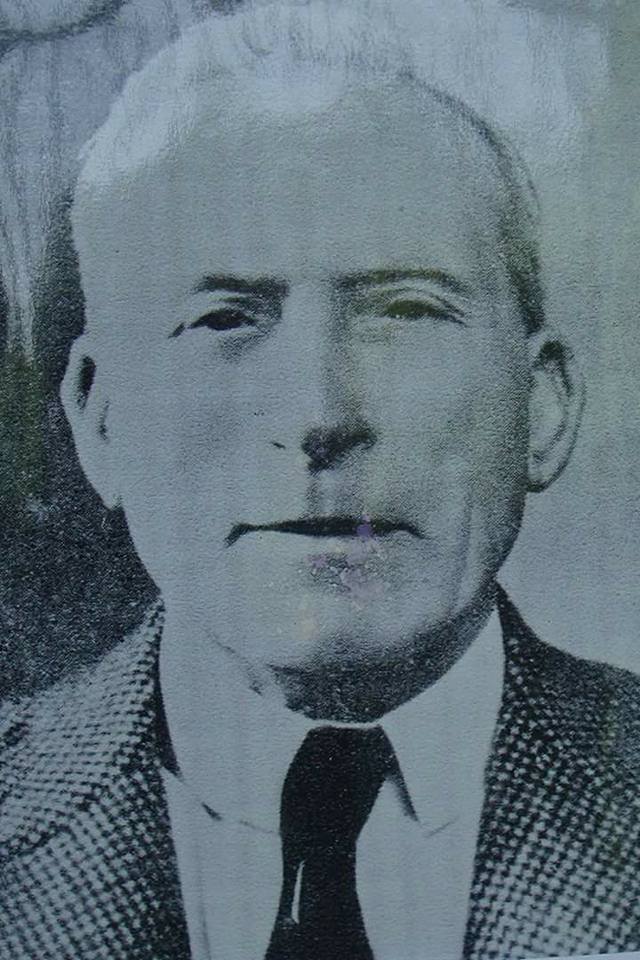
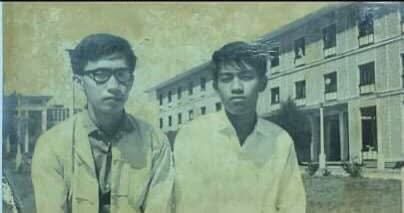
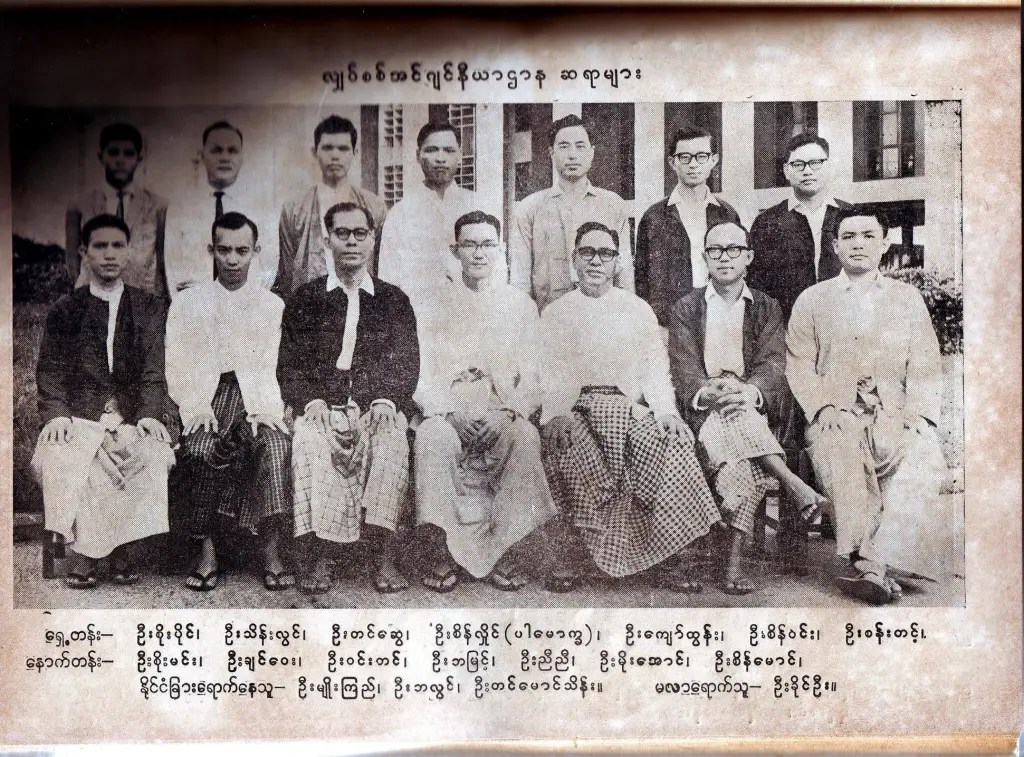
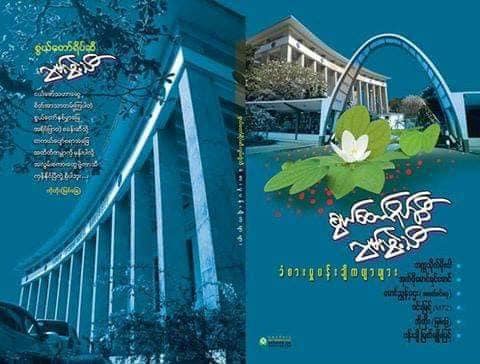
Sayagyi U Tha Tun served as Head of Architecture Department at BIT.
Dr. Koung Nyunt and U Than Tun wrote about their mentor for RIT Alumni Newsletter.
Dr. Koung Nyunt
Compiled by his disciple U Than Tun (Arch 65)
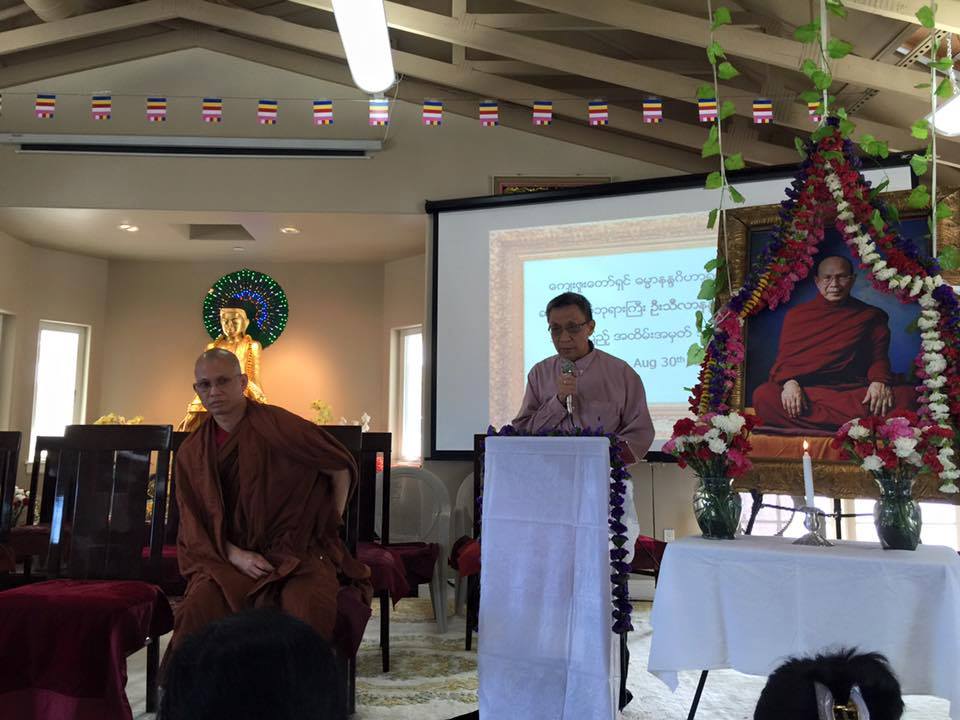
The biography was read in commemoration of his 100th birthday (held in Kemmendine).
Sayagyi U Tha Tun was born on 4 October 1899.
He received
B.Sc. degree from Yangon University in 1921
A.A. dip. from London in 1926
F.R.I.B.A. (Fellowship of Institute of British Architects) and A.M.T.P.I. (Associate Member of Town Planning Institute) in 1936
He is the only person who got F.R.I.B.A. as a Myanmar citizen up to date (in 1999). So his degree in full is : B.Sc., A.A.Dip.(London), F.R.I.B.A., A.M.T.P.I.
Back in Myanmar he worked as Executive Engineer (Planning) in National Housing Board and Town & City Development Trust.
From 1941-1945, he worked as City Architect and Government Architect in Public Works Department.
From 1954-58, he taught “History Of Architecture” at the Rangoon University Engineering department.
From 1960-1963, he was Head of Department of Architecture in BIT/RIT.
His works in Yangon include
Medical College 1 in Yangon.
Inya Hall, Thiri Hall,
Many other private houses
[Contributed his labor in] many religious buildings all over Myanmar.
He also won first prize in design competition for the renovation of Shwe Maw Daw Pagoda (Pegu) which was destroyed by an earthquake.
He lived for 75 years and passed away on 13th Sept. 1974 in Yangon.
Whenever he was invited to a meeting or a gathering of Architects, he always tried to attend and used to say his favorite words: “A THING OF BEAUTY IS A JOY FOREVER”
Before he died, he sent a message to a meeting of S.S.A. and the following are the excerpts from his message.
” THE ART AND CULTURE REST ON THE FUTURE OF SOCIETY OF STUDENTS ARCHITECTS. I EXHORT TO THE SPIRIT OF S.S.A. TO CREATE A HISTORY AND I RENDER A HEARTFELT CONGRATULATIONS FOR PROMOTION OF ARCHITECTS IN BURMA”
In the old Education System, there were only a handful of female Engineering students
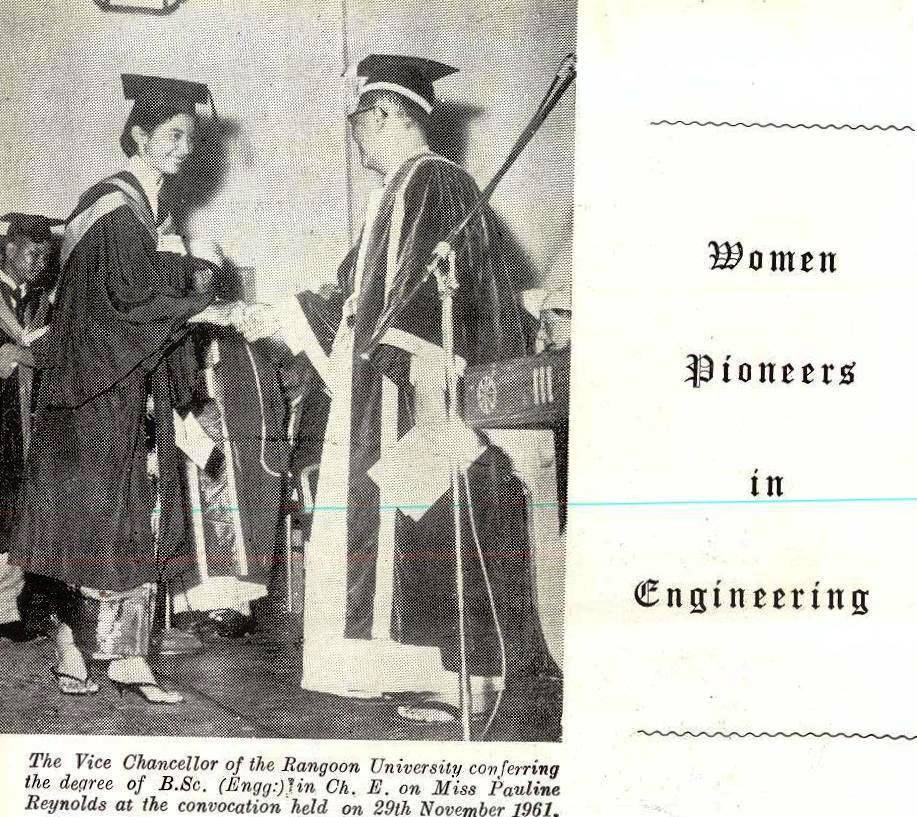
The first batch of five female students graduated in 1961. Four were from Textile : Tin Tin Ohn (Amy Thwin), Julie Han (later Dr.), Yin Yin Kyi and Mi Mi Lay. Pauline Reynolds was the first female Chemical Engineering graduate.
Julie Han Pauline Reynolds
In 1962, Khin Than Nwe (Margaret, Tex) was the lone female engineering graduate.
Khin Than Nwe
Ma Ni Ni Thwin, Ma Khin Thein Yi, Ma Tin Myint, Ma Pyi Aye, Ma Khin Khin Kyu, Nancy Hla Aung, Maywaddy Tun Tun, Ma Yi Yi Aung, Ma Mya Mya Than, Ma Nyunt Nyunt Zaw, Ma Cho are grads from 1963 – 68.
Nancy & Yi Yi Aung
The new Education System saw more female students.
There were about 45 female students in the 1st BE intake in 1964, and about 30 female students in the 2nd BE intake in 1964. G-Hall accepted most female students.
There were more in the 1st BE intake in 1965.
Archi
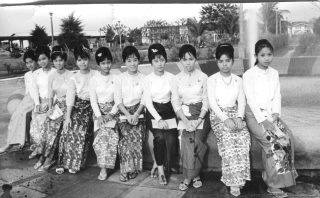
Ushers at RIT Graduation
Annotation : Daw Mae Khin Nyunt (Rosie, ChE71) Editor for “Swel Daw Yeik Magazine” Organizer for Combined 1st BE Intake of 64 and 65
We all served as ushers at the Graduation Dinner in late 1966.
Graduation took place at RIT as well as the Dinner, at “aw bar lan” area.
Ushers
Right to Left
Sandi Hlaing — Ch 66 intake
Mai Khin Nyunt (Rosie Gyi) — Ch 65 intake
Nila Mya Aung — M 64 intake
Jessie Htwe — M 66 intake
Annie Ba Htaw — Tex65 intake
Aye Aye Than (Pauk Pauk) Ch 66 intake (UK)
Tin Tin Myint (Emma Myint) — Ch 64 intake (Singapore)
Than Than Yi (GBNF) Tex 65 intake (my best friend who passed away in Sept 2013, USA)
Photo provided by Daw Tin Aye (C73). Initially took Mechanical Engineering and helped with “Set Hmu Thadin Zin” (founded by U Win Thein). Played Volley for Civil Engineering Volunteered for SPZP-2012 and SPZP-2016
Annotation : Daw Mae Khin Nyunt (Rosie, ChE71)
Right to Left
Aye Aye Than (Pauk Pauk, Ch 66-72, UK)
Tin Tin Myint (Emma Myint, Ch 64-70, Singapore)
Hla Hla Aye (She was as a cover girl at one of the “Shay Tho Sar Saung”, and inside the Sar Saung had an article about RIT activities with photos. I kept that Sar Saung, but unfortunately (after so many years) now I only have a page left with a photo taken at the Chemistry lab, which included Ma Khin Myat Swe (spouse of Saya U Moe Aung), Henry Koe, my spouse Ko Khin Mg Miynt and myself).
Tin Aye (C )
Nelly Khin Myo Win (GBNF) (Ch 65-71, Mandalay)
Could be Margaret Yi (Ch 65)
All are from G -Hall at one of the Tha Din Gyut or Da Saung Taing Pwe at Shwe Dagon Pagoda, organized by G -Hall.
Reunions
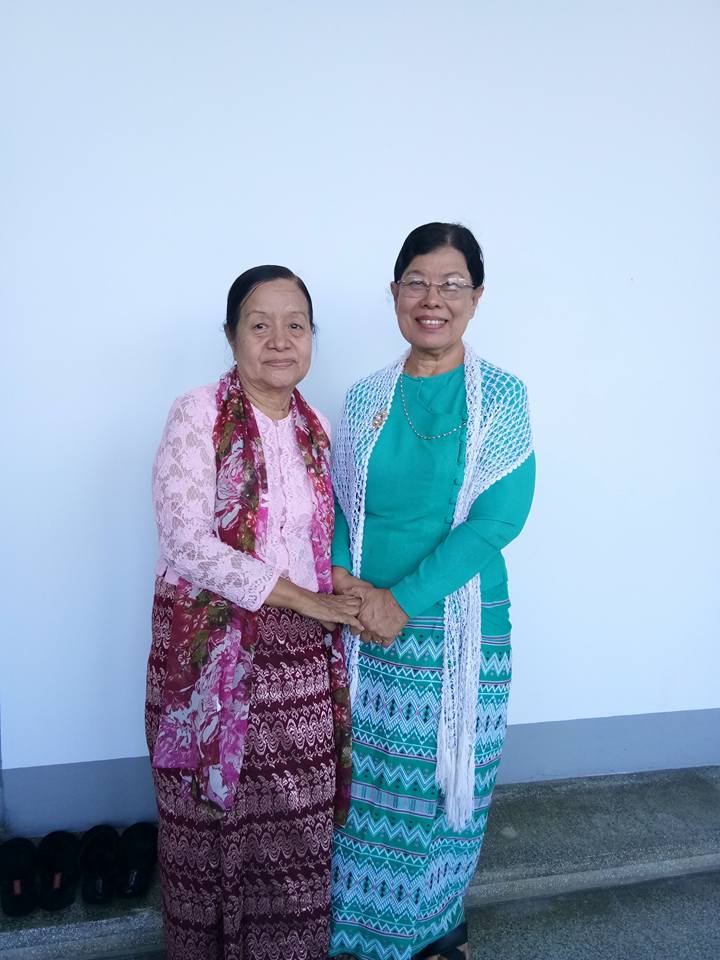
Daw Pwint Than
Daw Pwint Than and Daw Cho Cho Tin
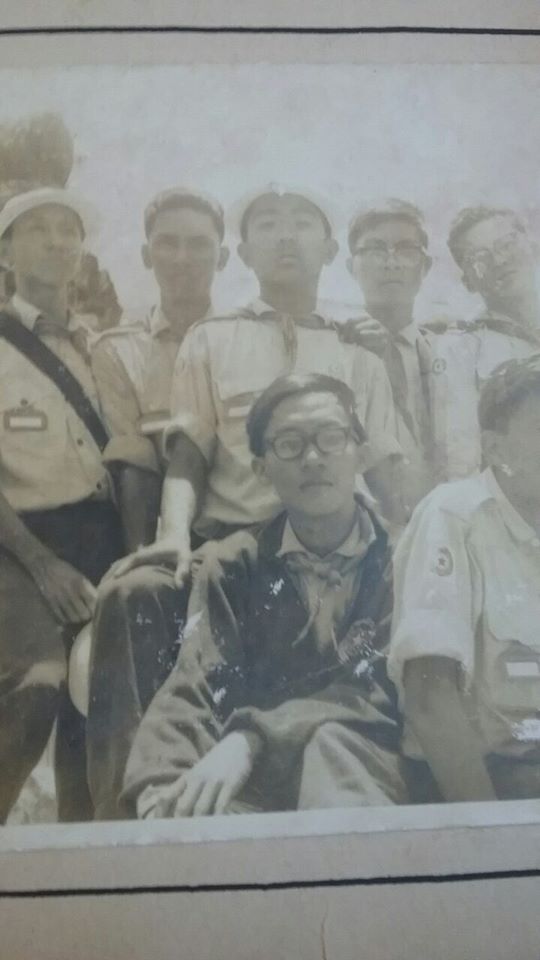
Selected High School Luyechun from Loikaw twice : Ngapali Camp in the Summer of 1964 and Inlay Camp in the Summer of 1965.
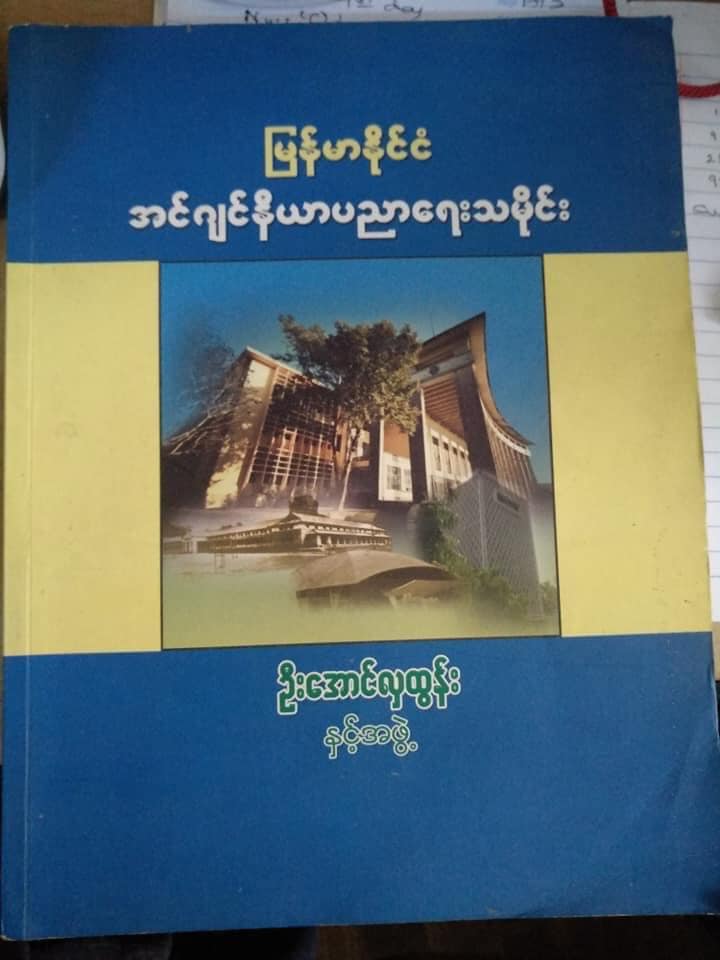
Compiled for the HMEE Book with အုန်းခိုင် (M70) Ohn Khine
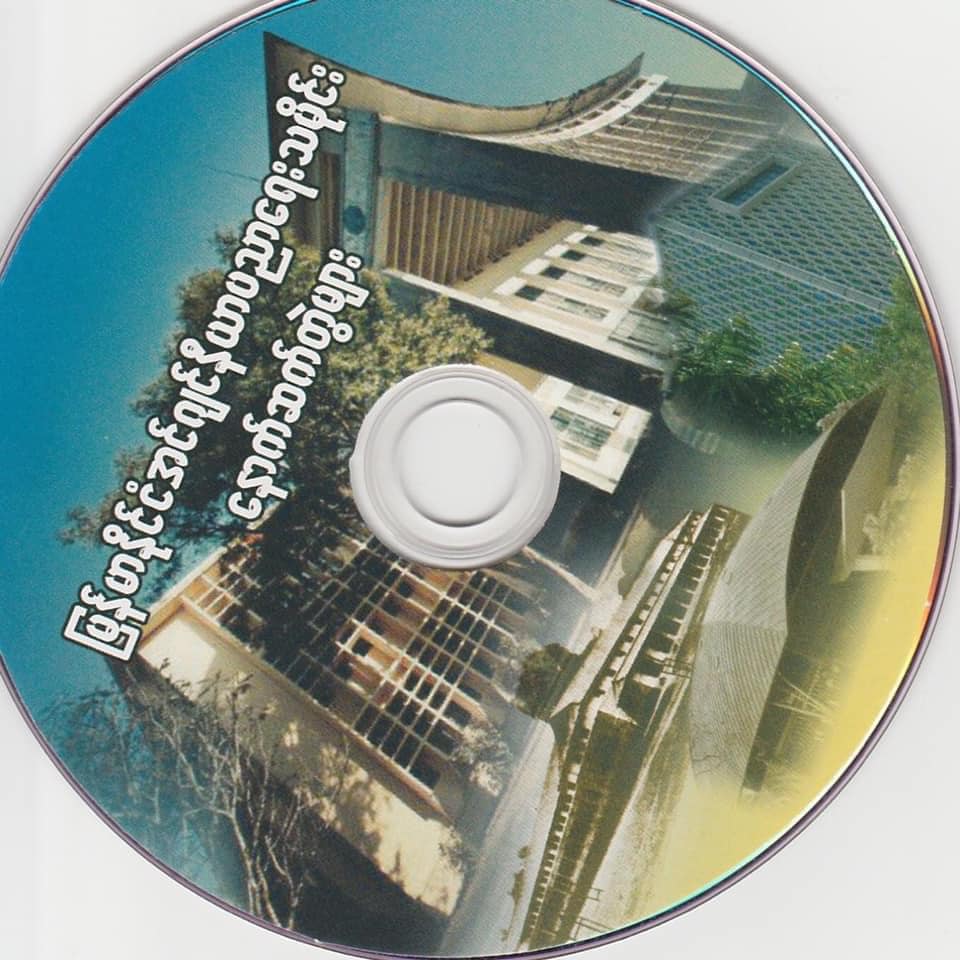
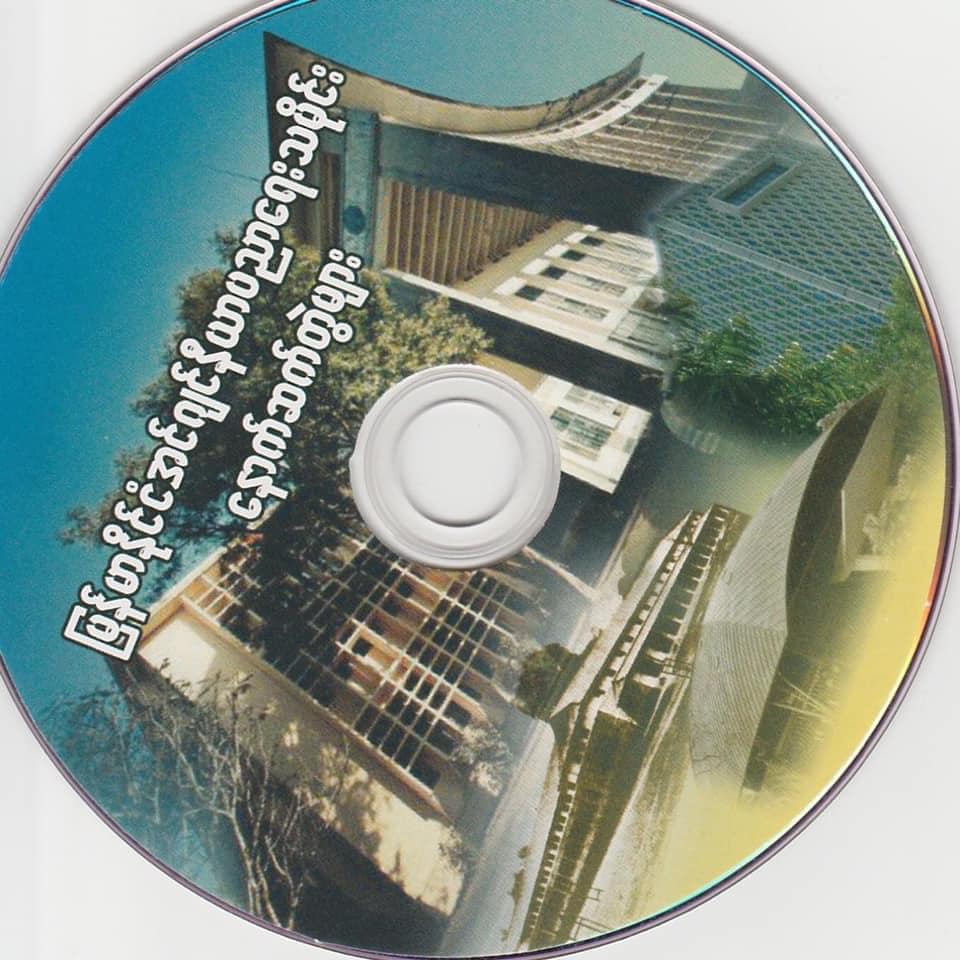
CD
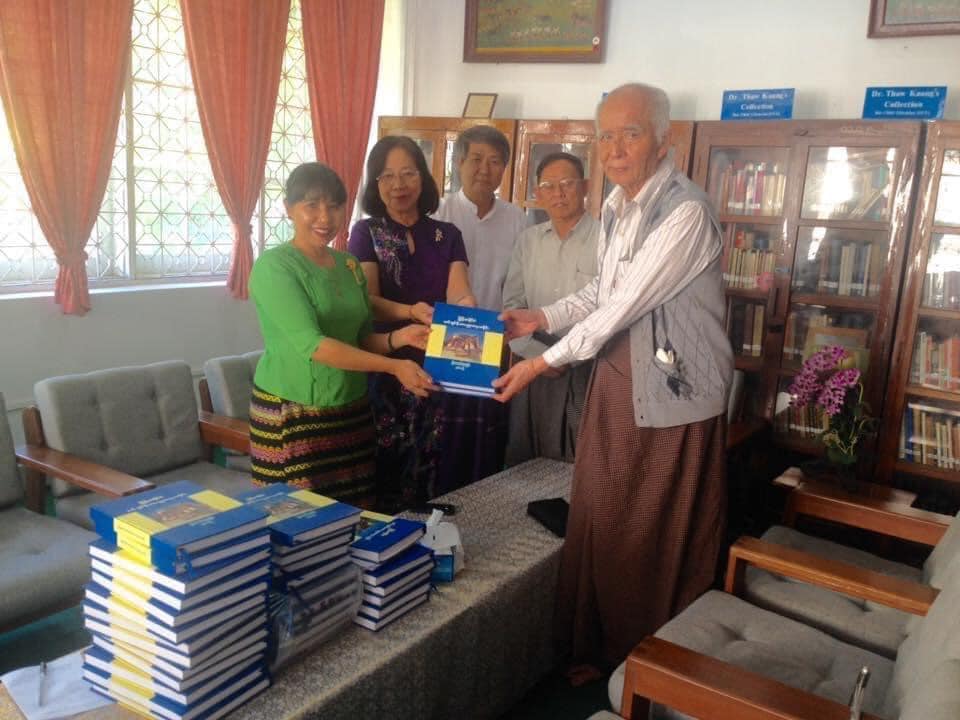
HMEE စာအုပ် ကို RU စာကြည့်တိုက် မှာလှူ Donated HMEE book to Universities Central Library & YTU Library
Book Donation
Highlights
1964 မှာ 2nd BE တက်ခဲ့ Admitted to 2nd BE as Top student (Roll Number One)
2nd BE
လူရည်ချွန် — 1965 Summer (အင်းလေး) Selected Luyechun (Outstanding Student) to the Inlay Khaung Daing Camp in the Summer of 1965
Luyechun
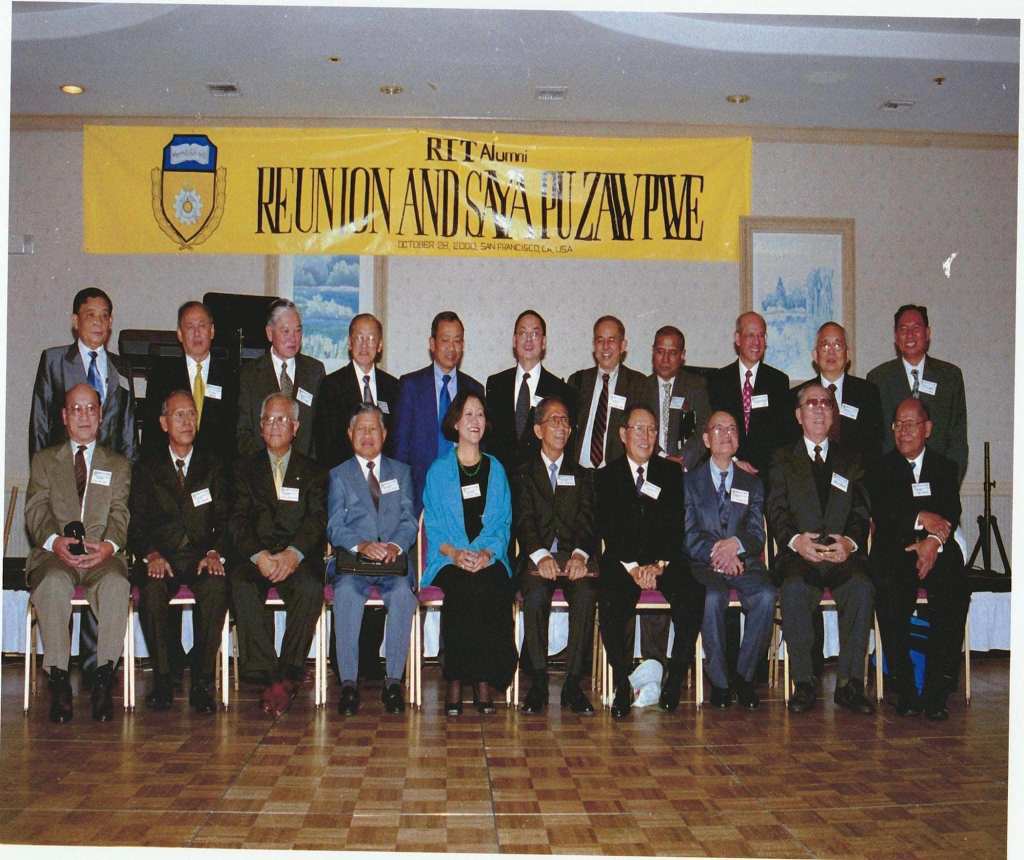
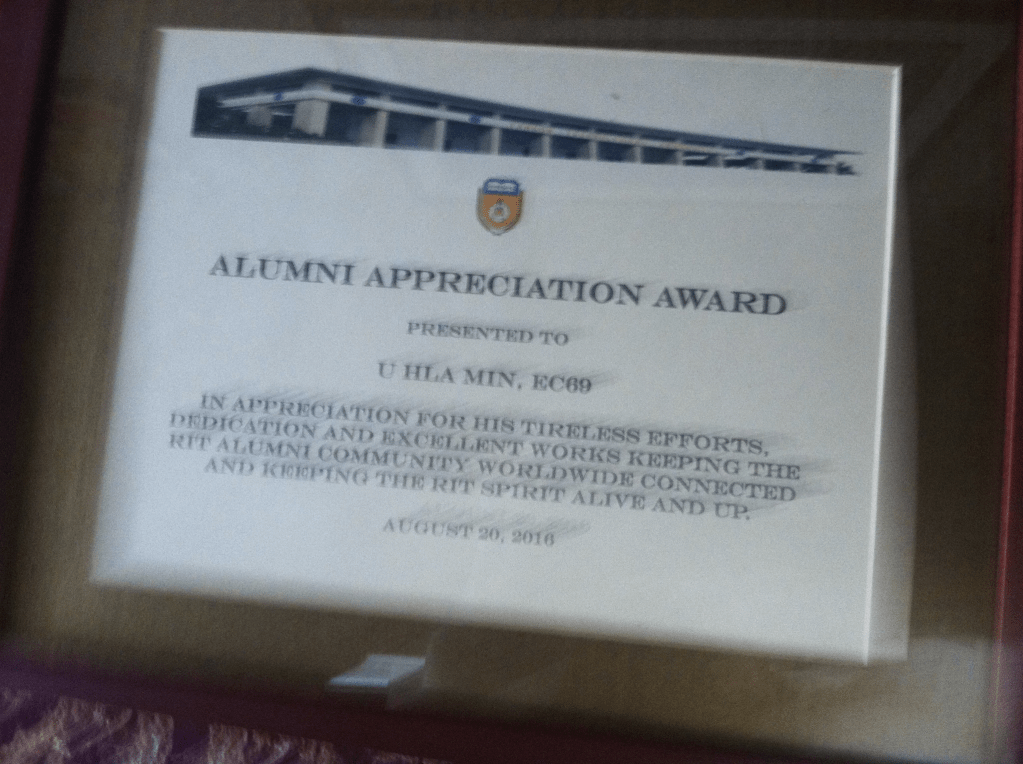
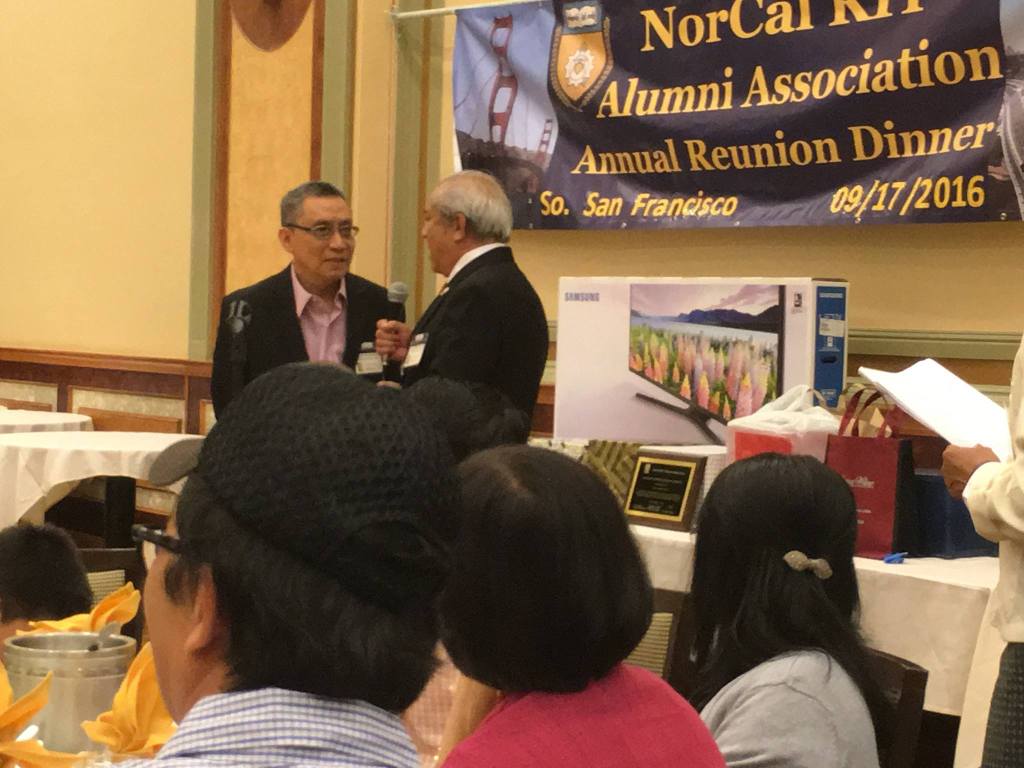
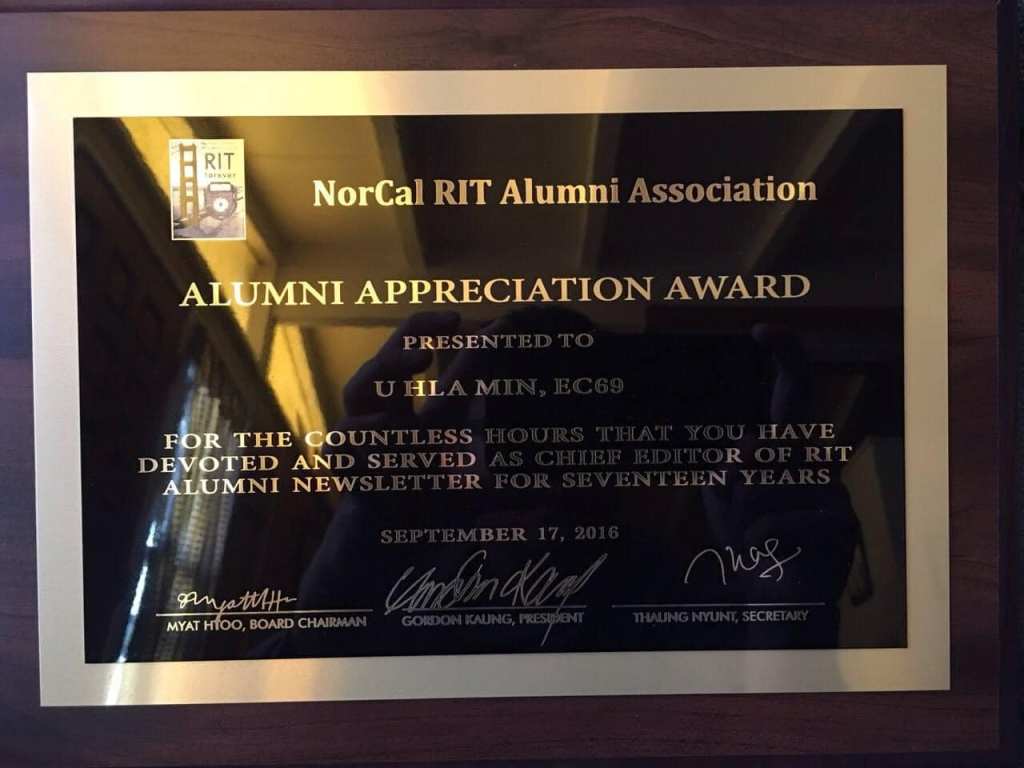
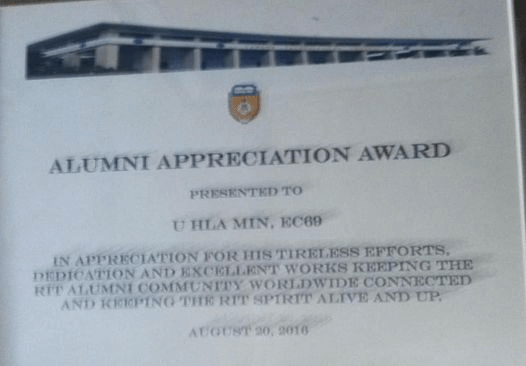
Organizer, SPZP-2000 First RIT Grand Reunion and Saya Pu Zaw Pwe Received “Alumni Appreciation Award”
SPZP-2000 Organizers
Received three Alumni Appreciation Awards (a) at SPZP-2000 (b) from worldwide alumni in Aug 2016 (c) from Northern California RIT Alumni Association in Sep 2016
In our younger days, Opal was a decent car. But, when one jokingly calls someone “Opal” (or “O Pei အို ပယ်” then one is obsolete (good to be ignored for getting old).
T. O
Technical Obsolescence
Some artifacts can be found only in museums, antique fairs (by die-hard collectors).
Some technologies are disruptive.
Many automobile workers lost their jobs when robotics gradually displaced them. Those, who did not have alternate skills, were hit hard.
Secretaries (experts in shorthand and typing) found that their skills have been marginalized by the word processors, voice-activated systems and similar advanced tools.
Thoughts
On the flip side, I might not have a good memory and a hobby of “connecting the dots” of seemingly diverse topics if I had early access to the wonderful world of Internet, AI, and Gaming.
Slate, Chalk & Talk, Log Table, Slide rule, Multiplication tables (up to 16), Grammar books, Pronouncing Dictionaries, and now hard-to-find artifacts trained us to remember (not rote learning per se, but using visualization and tricks).
Some people thought that I am either “brain damaged” or have an “unusual brain”.
One said, “You can write backwards faster than most of us can write forward”.
A few were not impressed.
A professor said, “You cannot earn money by being an expert in History in general, and History of Computing in particular.”
A manager said, “What is the use of knowing the Trivia (e.g. hobbies, awards) of your fellow workers?”
T.O. required me to unlearn some old skills, and to learn new “latest and the greatest” skills.
Encyclopedia
For me, it’s easy to remember and too hard to forget. I know thousands of names.
After procrastinating for decades, I had a wake up call to dump my Trivia.
I have posted 2500+ articles and 220+ videos in the past few years.
Ripley’s “Believe it or not” named U Khanti Kyauksar (inscriptions) of the Fifth Buddhist Council (Synod) held in Mandalay as the “Largest Book” in the world.
Guinness Bookof World Records
Mingun Sayadaw
The Guinness Book of World Records listed Tipitakadara Sayadaw Ashin Vicittathara as having a phenomenal — the best at that time in 1954.
In the First Buddhist Council, Ashin Upali served as the Reciter of Vinaya (Rules of monastic conduct). Ashin Ananda served as the Reciter of Sutta (Buddha’s Discourses) and Abhidhamma (Ultimate Reality).
In the Sixth Buddhist Council held at KabaAye (World Peace) Pagoda in Rangoon, Burma from 1954 – 1956 Ashin Vicittathara served as the Reciter of Vinaya, Sutta and Abhidhamma. He also recited the selected Commentaries.
Sayadaw could memorize, recall, and give exposition on 8000+ pages of the Buddhist Scriptures known as Tipitaka [“Three Baskets”] : Vinaya, Sutta and Abhidhamma at the second to fifth Tipitakadara examinations. He passed with distinction in both oral and written parts.
Sayadaw served as an examiner for the first Tipikadara examination. Sir U Thwin requested him to take the examination. The rest is history.
Saya U Yone Moe was the Dean (since BIT was then Faculty of Engineering of Rangoon University).
U Sein Hla (MIT alumnus) was the Registrar.
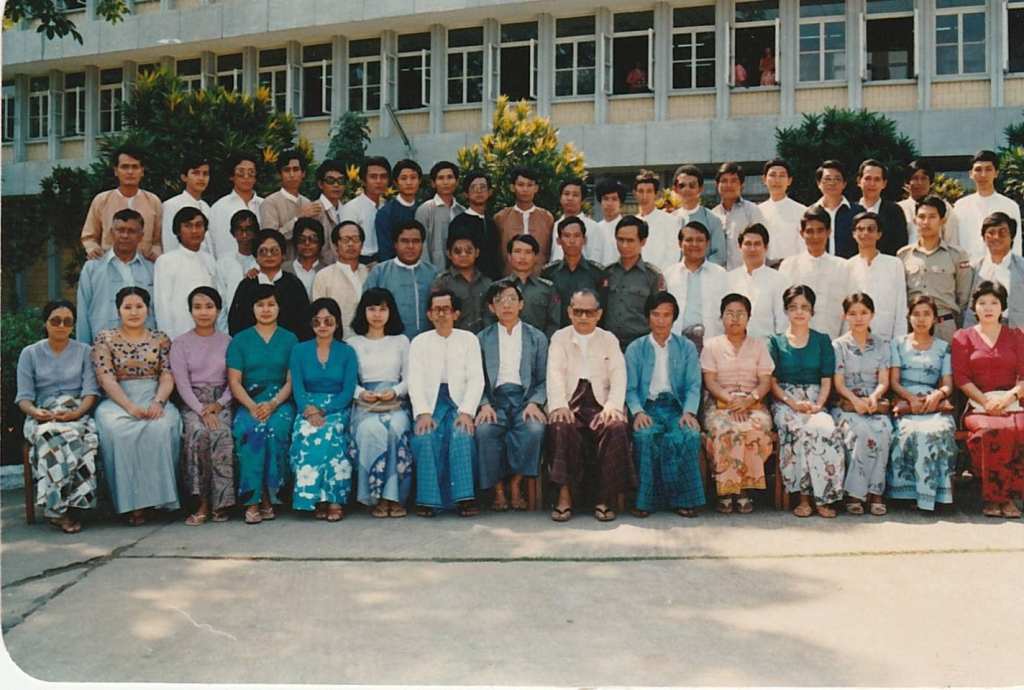
Dr. Aung Soe (C61), Dr. San Tint (EE61) and U Maung Maung Win (M61) joined BIT as Assistant Lecturers.
Mao Toon Siong (M62), S Arya (M62), Dr. Tin Win (M62), U Aye (M62), U Tin Win (M62), U Hla Myint (M62), U Than Se (Richard, ChE62), U Aung Gyi (Simon, ChE62), Chow Seik Lim (EE62), and Daw Khin Than Nwe (T62) are some of the students who attended the Final Year classes at BIT.
U Aye (M62) and U Shwe Kyaw (M63, GBNF) represented RU and BIT in Volleyball.
BIT Volleyball
Coup d’etat occurred on March 2, 1962. The final exam for the Class of 62 was delayed for an hour or so.
Hall Tutors & Warden
U San Tun (M59) was a Gold Medalist in his class and joined the Faculty. He studied for his Masters at MIT. Upon his return, he taught at BIT and also served as a Hall Tutor.
U Kyaw Tun (EE, saya of our sayas) was the Hall Warden.
U Myo Kyi (EE59), U Tun Shwe (EE60), U Maung Maung Win (M61), Dr. San Tint (EE61) and Saya U Shwe Yi (T61) were Hall Tutors.
Social and Reading Club
BIT S&R Club
BIT had “Social and Reading Club” (သဟာယနဲ့စာဖတ်အသင်း Tha ha ya and Sar Phut Ah Thinn).
Most halls in Rangoon University have Social and Reading Clubs. For example, Shwe Ku May Hnin described S&RC and the notable members (who became known in the Literary Circle in Burma and beyond) in her book, “Nga Doh Khit Tone Ga Tekkatho”. She gave me an autographed copy during her visit to the US.
Rangoon Institute of Technology
BIT was renamed as Rangoon Institute of Technology (RIT).
The name change took place in 1964 with the introduction of the New Education System.
RIT became an autonomous Institute. U Yone Moe became the Rector.
The degree was renamed as B.E.
First Intakes at RIT in 1964
In November 1964, there were three Intakes.
450+ students were admitted to the 1st BE based on the ILA system.
320+ students were admitted to the 2nd BE based on the marks from the I.Sc.(A) exam.
About 200 students were admitted to the 3rd BE based on the marks from the I.Sc.(B) examination. They were joined by a few students who took sabbatical in the last First Year of Engineering (in the old system).
Engineering Departments
In 1964, there were eight engineering departments.
Architecture (Acting Head : U Tha Tun)
Chemical (Head : U Khin Aung Kyi)
Civil (Acting Head : U Min Wun)
Electrical (Head : U Sein Hlaing)
Mechanical (Acting Head : U Ba Than)
Metallurgy (Head : U Thit)
Mining (Head : U Soon Sein)
Textile (Head : U Maung Maung Than)
Supporting Departments
Several departments were placed in-house.
English (Head : Daw Yin Yin Mya)
Burmese (Head : U Tein Kyi)
Maths (Head : U Sein Shan)
Physics (Head : Daw Nyein)
Chemistry (Head : U Kyaw Tun)
There were several Visiting Lecturers (e.g. for Sociology, Industrial Management, Electrical Inspection) and Part-time Lecturers.
What’s in a name?
We are not sure if “BIT Rangoon” was considered as an alternative to RIT.
Indian Institute of Technology (IIT) has several campuses. The five oldest IIT campuses and their establishment dates are: (a) IIT Kharagpur IITKGP 1951 (b) IIT Bombay IITB 1958 (c) IIT Kanpur IITK 1959 (d) IIT Madras IITM 1959 (e) IIT Delhi IITD 1963 [founded in 1961]
Many IIT graduates continue their studies at the prestigious universities in the USA.
Asian Institute of Technology (AIT) presumably was designed as a school for South East Asian Treaty Organization (SEATO).
Some states (e.g Massachusetts, Illinois, California) in USA are known for their Institutes of Technology.
Dr. Freddie Ba Hli received his Sc.D. in EE from MIT. He was an informal adviser to Dr. Aung Gyi and U Min Wun, who were among the first three engineering undergraduates to be chosen under the “Twining Program” initiated by U Ba Hli, first native Dean of the Faculty of Engineering, Rangoon University.
Further Name Changes
RIT was renamed as YIT (Yangon Institute of Technology) and later as YTU (Yangon Technological University).
Placeholder
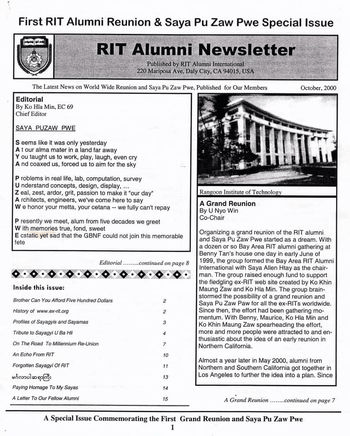
In 1999, I started the “RIT Alumni International Newsletter” partly because my alma mater was called RIT during our days, but I have mentioned repeatedly that “RIT” is simply a placeholder for all the engineering schools in Burma/Myanmar that precede RIT and succeed RIT.
Highlights and Lowlights
Adhamma Era
Our alma mater had its ups and downs. The classes were forced to close citing “disturbances”. There were no convocations for the years 1988 to 1991. It was branded as “Tha Bone Kyaung သူပုန်ကျောင်း” during the “Adhamma Era”. The classes were relocated to far away places, and “Swel Daw Bins” were decimated. The A to G Halls were transformed into make-shift quarters. Wall clocks stopped. Bushes sprang up. A video of that time brought tears and anger, and the notion that “we might not live to see our alma mater in its former glory for decades to come”.
Pwint Linn Era
With the dawn of the some-what “Pwint Linn Era”, our alma mater rose from the ashes. Per request from H.E. U Aye Myint (EP 72), the alumni — young and old, near and far — provided physical, monetary, and spiritual support to help the alma mater in every way possible.
Home Coming
The first true “Home Coming” took place in December 2012. There were tears of joy.
3000 copies of the Swel Daw Yeik Magazine were sold out in a couple of days.
Limited reprints of the 23 RIT Annual Magazines were also sold out.
Autographed copies of “Selected RIT Cartoons” were also sold out.
Some copies of “History of University Engineering Education in Burma/Myanmar” were donated to RU Central Library and YTU Library.
RUESU
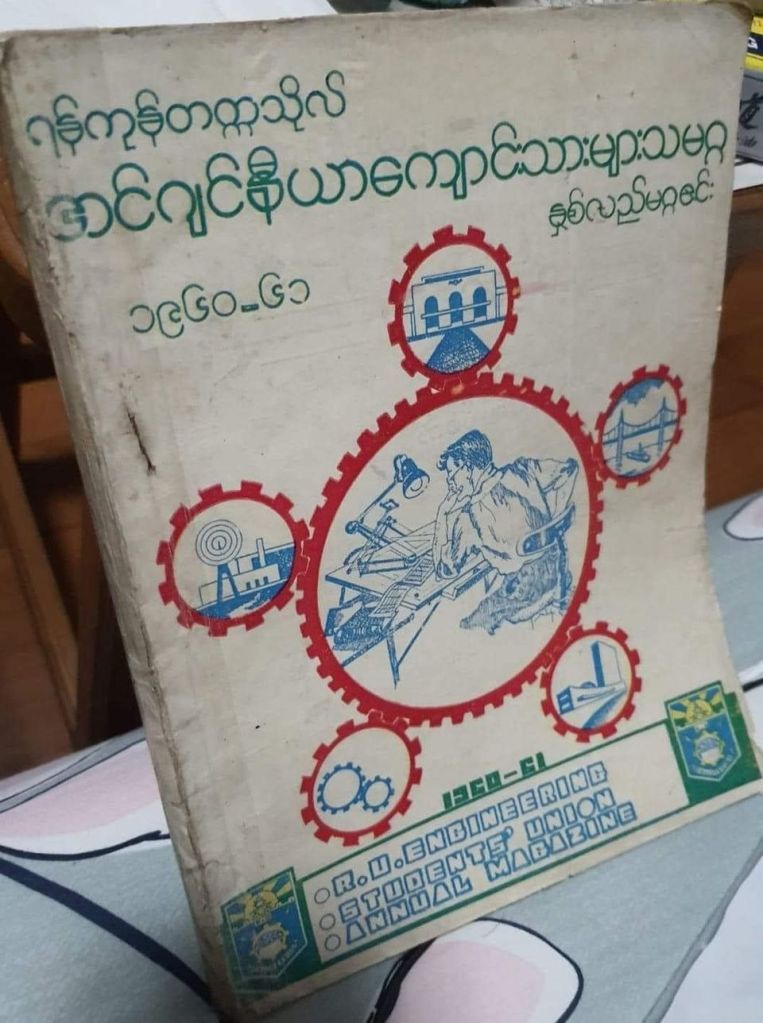
Six Annual Magazines published by RUESU (Rangoon University Engineering Student Union). Saya U Moe Aung learned and refined his publication skills as an editor/publisher of the magazine.
Ban by BSPP
The student unions and all professional organizations were banned following the coup d’eat in March 1962. Censorship increased with subsequent regimes.
Alumni Association
We now have an official alumni association. It sponsored the Seventh RIT Grand Reunion and SPZP in 2016.
Shwe YaDu
Shwe YaDu Celebrations were held in 2014. Fifty Swel Daw Bins were planted and maintained. The sayas and alumni donated for the Shwe YaDu Lann, Shwe YaDu benches and much more.
SPZP
The world wide SPZP scheduled for December 2020 was cancelled due to the pandemic.
Library
YTU Library Modernization Project was launched to satisfy a requirement for the accreditation of YTU. There were hiccups in the design and implementation, but thanks to the generous supporters — young and old, far and near — the first phase of the project was completed recently. Students will be provided access to the new YTU Library.
Acknowledgement
Thanks to the Ko Htu’s and Ko Hta’s ကိုယ်ထူ ကိုယ်ထ our alma mater မိခင်ကျောင်းတော်ကြီး is on track to achieving its former glory.
Kudos to the sayas and alums for keeping the RIT (Swel Daw Yeik စွယ်တော်ရိပ်) Spirit alive and well.
Less than 10% passed the Matric exam in the early days.
A few (e.g U Ba Khin who stood First in Burma) chose to work instead of attending RU.
It was an honor to prefix one’s name with Tekkatho တက္ကသိုလ် or University.
Khin Nyo wrote: Absolutely right. I think in 1957 only 2% Passed and the total is 20000. Even dancer AmarSein was conferred with the title Thekkatho Amar Sein by the Rector Dr Tha Hla.
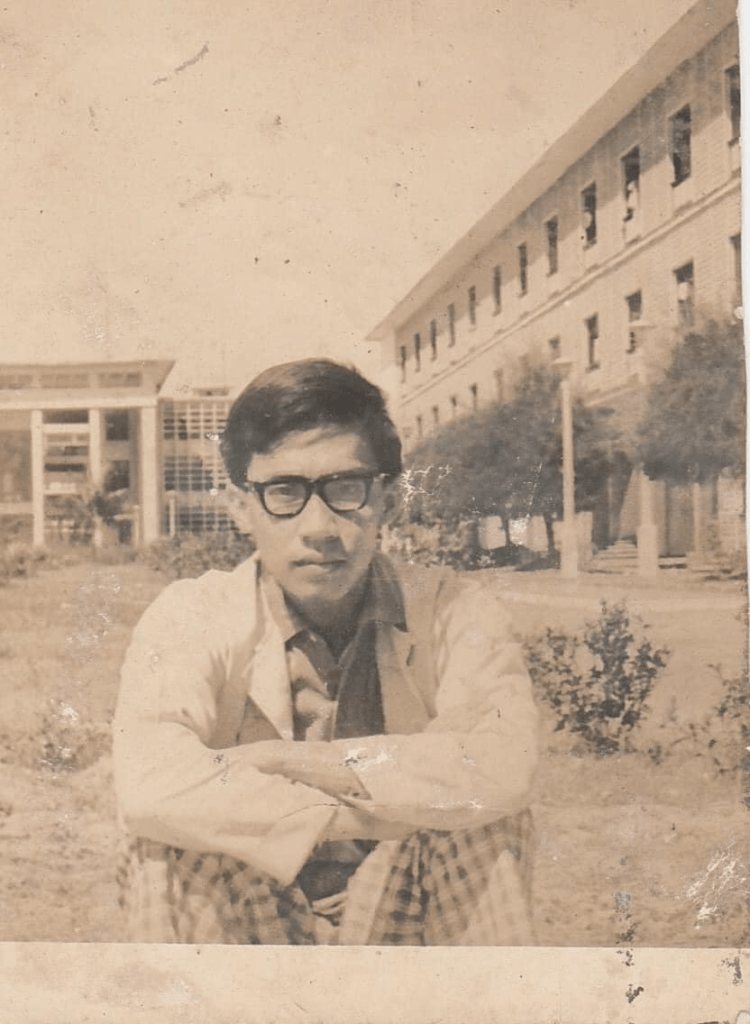
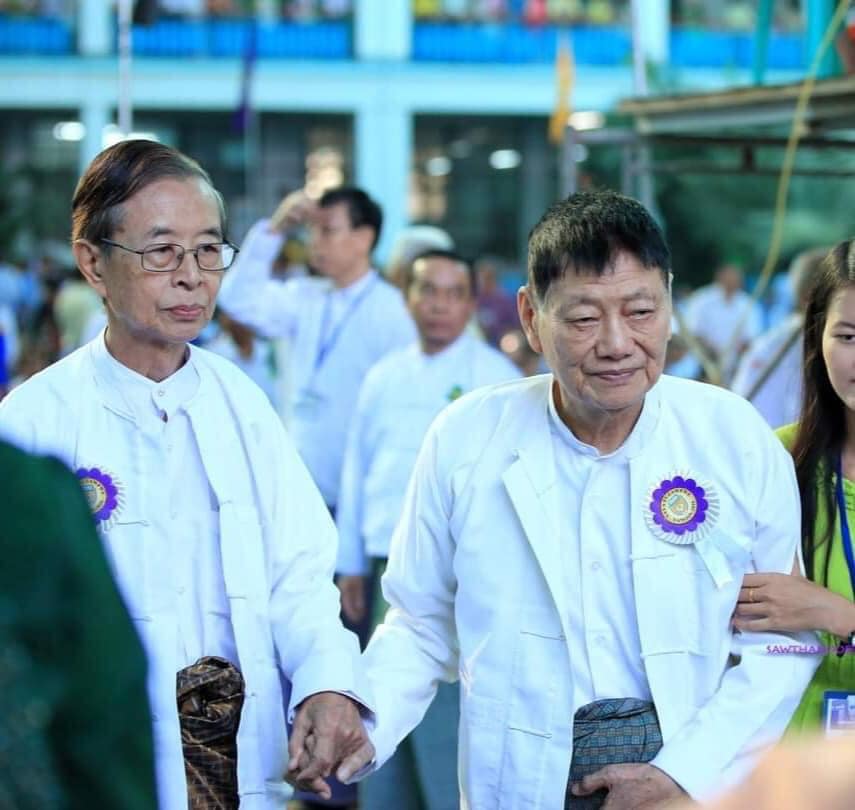
Tekaktho Moe War (U Moe Aung)
U Moe Aung
Student Days
Matriculated from St. John’s Dio.
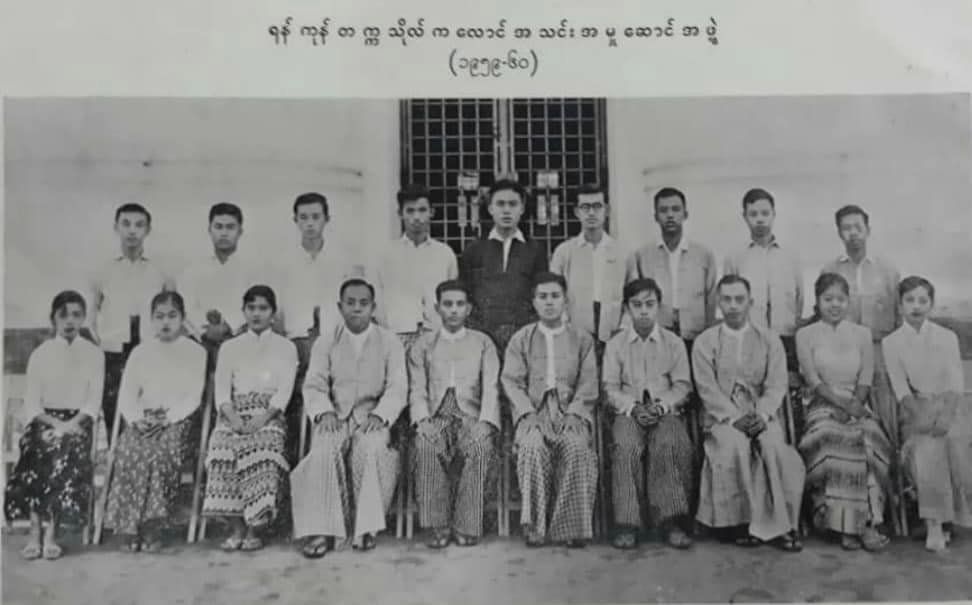
EC, RU Kalaung Ah Thin
RU Association
Editor, RUESU Annual Magazine for 1960 – 61
RUESU Magazine
RIT Days
Electrical Engineering Saya at RIT
EE SayasU Moe Aung & U Sein Maung
Chief Editor, RIT Annual Magazine
Editor, Hlyat Sit Sar Saung
Co-leader, Swel Daw Yeik Troupe (Ah Nyeint, Htee Yein, Ta Bin Daing Ah Ka) at RU Golden Jubilee in 1970
Singapore Days
Worked in Singapore
Chair, SPZP-2002 & SPZP-2010 (in Singapore)
Editor / Publisher, Swel Daw Yeik Sar Saung for SPZP-2002, SPZP-2007 & SPZP-2010
Organizer, Alumni Activities (e.g Thingyan)
Post Retirement
Moved back to Myanmar
Taught refresher courses (e.g. Electrical Saftey) at Electrical Inspectorate
Kept mind alert by writing poems & articles in weekly publications
Patron, SDYF; Composed & performed SDY Song
Entertainment for SPZP-2012 & SPZP-2016
Publications
Distinguished Writer, Poet, Editor & Publisher
Editor, RUESU Annual Magazine
Chief Editor, RIT Annual Magazine for more than a decade
Chief Editor, Hlyat Sit Sar Saung
Chief Editor, Swel Daw Yeik Sar Saung for SPZP-2002, SPZP-2007 & SPZP-2010 in Singapore
Chief Editor, Swel Daw Yeik Magazine for Shwe YaDu in 2014 & SPZP-2016 in Yangon
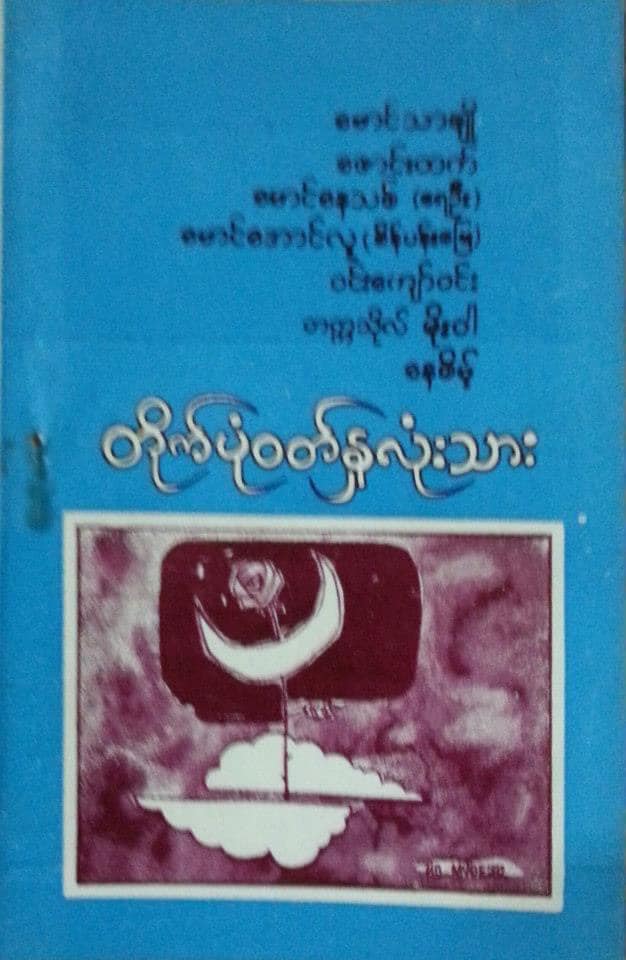
Kabyars — solo; with RIT poets; with former EC members of RU Kalaung Ah Thinn
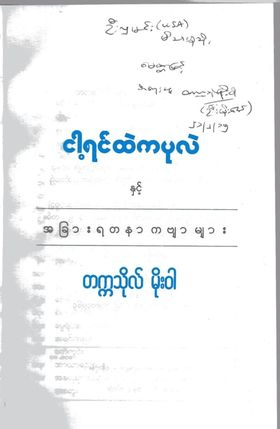
Book 1Book 2Book 3Book 4
Books — Collection of articles; Collection of poem