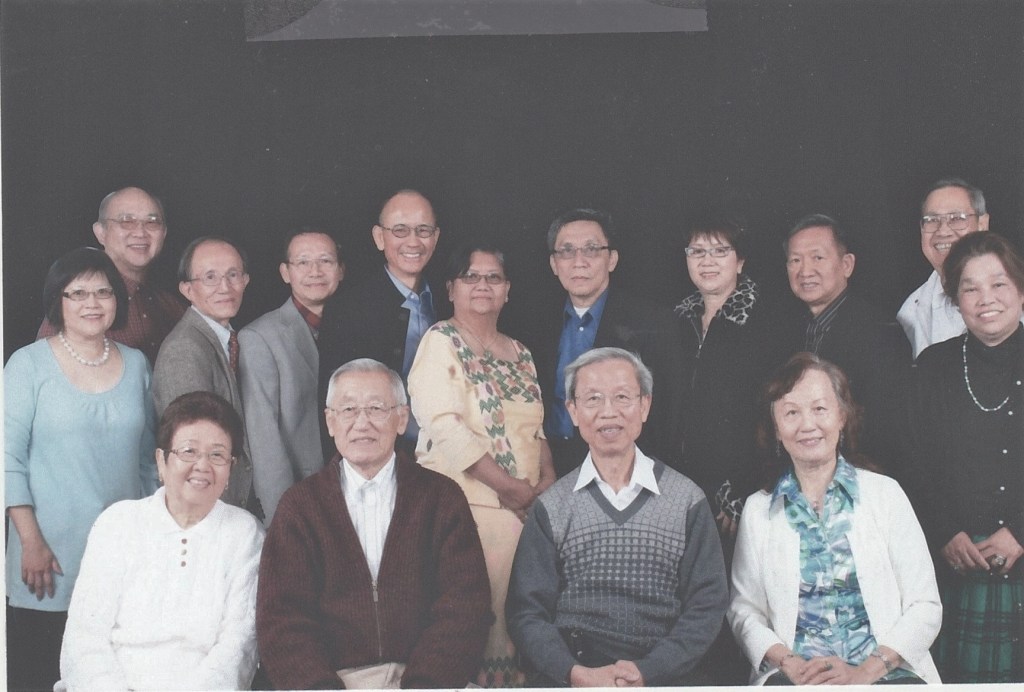
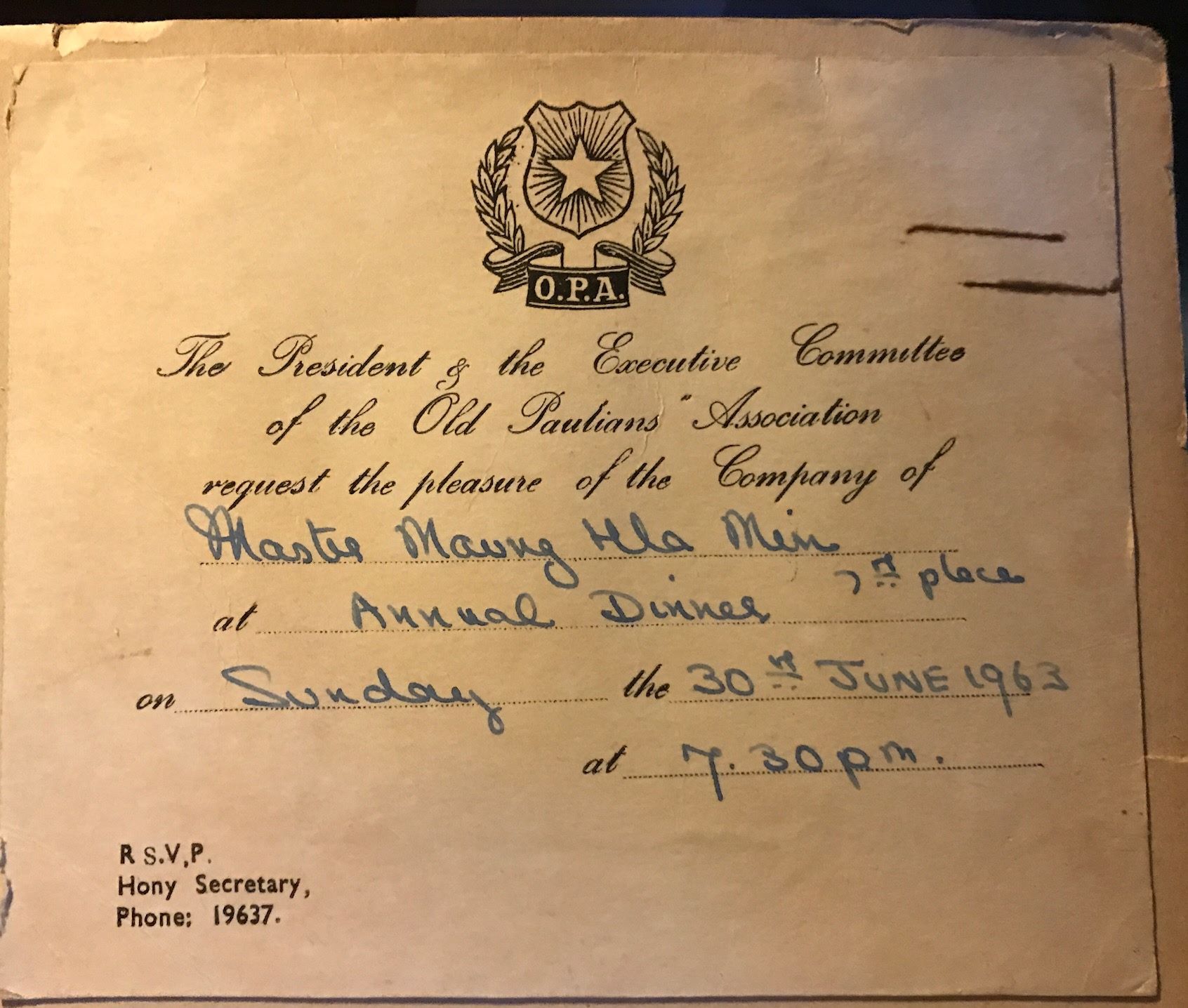
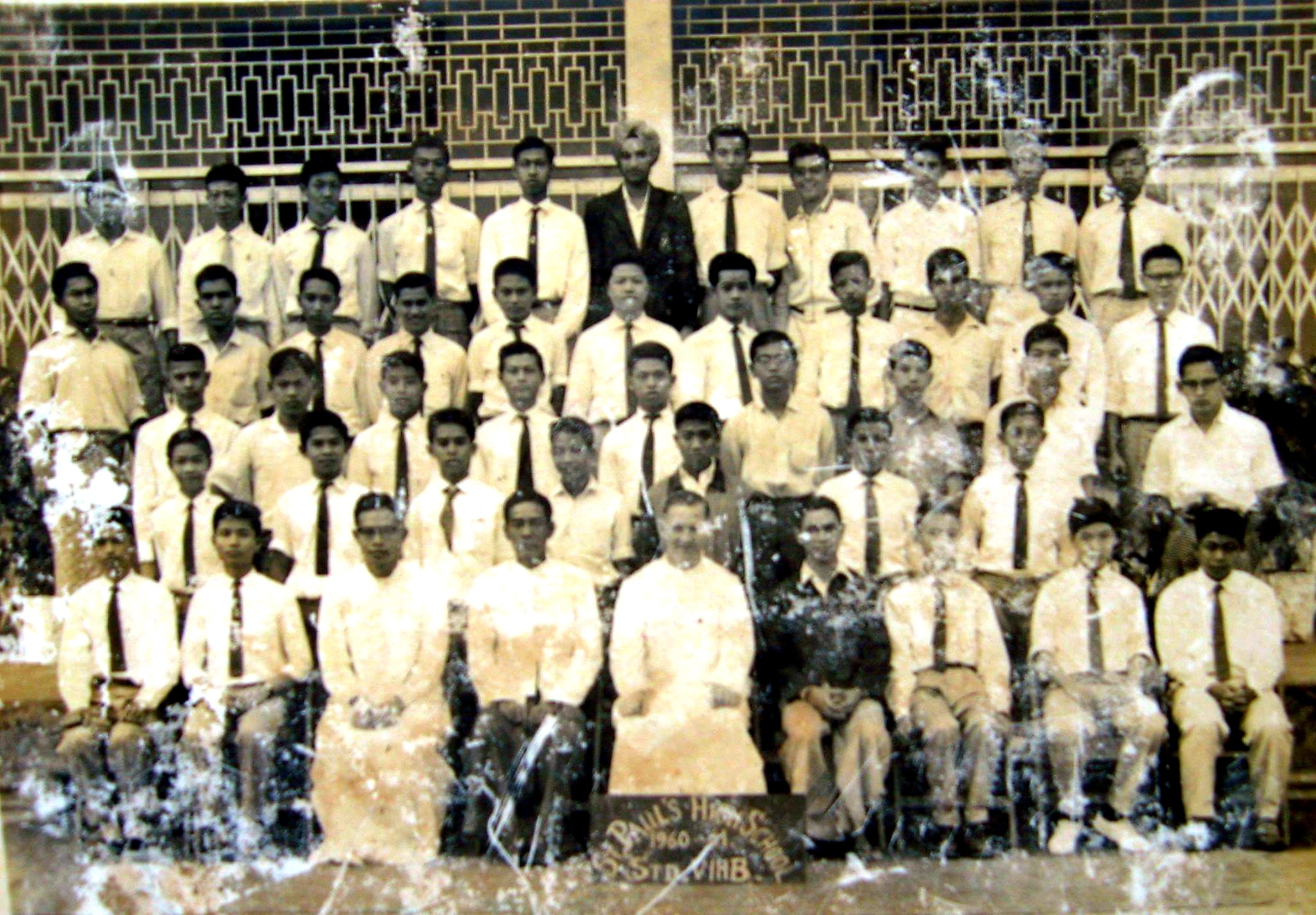
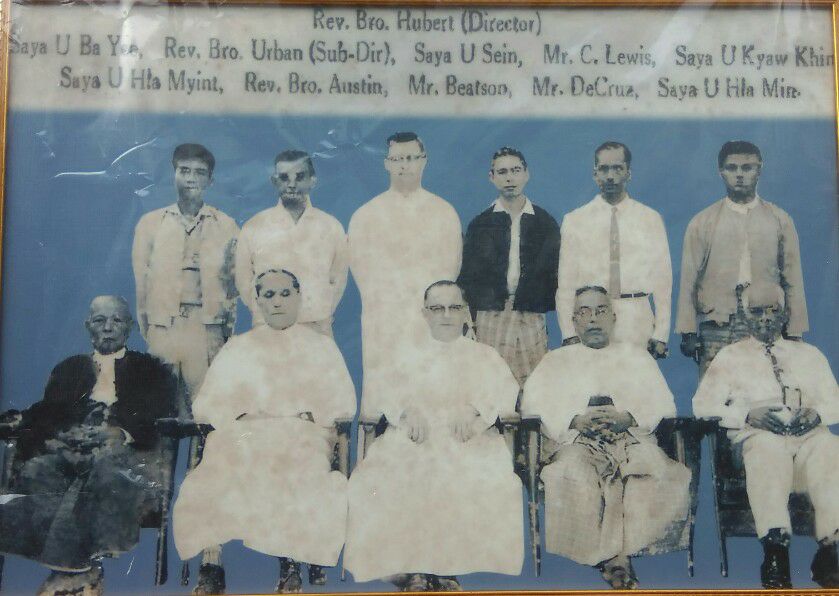
U Soe PaingU Soe Paing & Daw Saw Yu Tint U Soe Paing, U & Mrs. Hla Min
Name: U Soe Paing
Qualification: BS (Stanford), MS (Stanford), MSc. Computer Science (Southampton)
Department: Electrical Communications Position: Assistant Lecturer, (Jan 1964 to March 1971) Reason for Leaving: Joined Universities’ Computer Center in April 1971.
Engineering Alumni: Attended First Year Faculty of Engineering, Rangoon University from June to December, 1958. Reason for Leaving: Awarded State Scholarship to study in USA.
Occupation: Data Processing Adviser (Retired)
Organization: United Nations
Updates
Saya was my mentor at RIT and UCC.
He offered me and Saya U Aung Zaw (UCC, GBNF) to be his co-authors. We wrote programming texts, manuals and guides.
Saya was a prime mover to get the “RIT Alumni International Newsletters” and http://www-ex-rit.org started.
Saya would mention that I am a “Shay Hmi; Nauk Hmi. ရှေ့မှီ၊ နောက်မှီ”
Sayagadaw added: “Bay Hmi ဘေးမှီ as well’.
Saya wrote articles for the RIT Newsletter and selected journals & magazines. They can be accessed via SCRIB-D
U Aung Min (M69) and team maintain the GBNF list for 69ers(2nd BE intake in 1964). Over 40% of the 69ers are GBNF. About 20 members succumbed to Covid.
U Ohn Khine (M70) and team maintain the GBNF list for 1st BE intake in 1964. About 140 members are GBNF.
Saya U Ba Than
Saya U Ba Than is Retired Professor of Mechanical Engineering. He was an early supporter of HMEE project. He donated his Garawa money to various charitable associations.
Steeve Kay
Steeve Kay (U Thaung Sein, EC70) is a Multiple Golden Sponsor for SPZP. He is Chair of Kay Family Foundation.
Saya U Min Wun
Saya U Min Wun retired as Professor of Civil Engineering. He was a member of the Myanmar Pyet Ka Dein Ah Phwe. He was advisor for the Regional College Project and Pagan Restoration Project. He passed away in California, USA.
U Wynn Htain Oo (M72) and team occasionally published the GBNF list for M72.
Ma Ma Pat
Ma Ma Pat (spouse of Saya U Myo Myint Sein) passed away unexpectedly on October 2, 2022. Saya Myo celebrated his 91st birthday on October 1, 2022.
Daw Khin Kyi Nyunt, Dr. Peter Khin Tun
Three family members of U Tin U passed away within a few months. Dr. Khin Kyi Nyunt (spouse) — November, 2019 Dr. Peter Khin Tun (elder son) — April 2020 U Tin Tun (son-in-law) — May 2020
Saya U Aung Hla Tun, Retired Associate Professor of Metallurgical Engineering passed away in February 2022. He was Chief Editor of RIT Annual Magazine. He led the History of Myanmar Engineering Education Project. He won the National Literary Award.
Saya U Aung Hla Tun (GBNF)
U Tun Aung (Jefferey, EC68) is a founding member and past President of BASES. He passed away in October 2021.
U Tun Aung (GBNF)
U Soe Myint Lwin (EP68) played Soccer for Burma, RU & RIT. He was EC of the Burma Women’s Soccer Federation. He passed away in 2017.
Memorial Service for U Soe Myint LwinSoon Kwyay Invitation for U Soe Myint Lwin
I Zeyar Lin (69er) passed away in 2018
I Zeyar Linn (69er)Saya H Num Kok Saya H Num Kok
Saya H Num Kok is a Saya of our Sayas. He passed away in Portland, Oregon, USA in his late 90s.
Saya Allen Htay
Saya Allen Htay (C58) is a founding member and President of RIT Alumni International which hosted SPZP-2000. He passed away in California, USA.
Dr. Win Thein
Saya Dr. Win Thein (C58) retired as Professor and Head of Civil Engineering.
U Khin Maung Win (Sid, C58) passed away in USA. He is a classmate of Sayas Allen Htay, Dr. San Hla Aung and Dr. Win Thein.
Class of Civil 1958Han Sein
U Han Sein (C69) represented RIT in Swimming, Water Polo, Diving and Basketball. He was a Prisoner of Conscience for 17 years.
Benedict Sia
U Myat Swe (Benedict Sia, M75) passed away in Taiwan. He is a life member of Alumni Association. He donated a Shwe YaDu bench.
Aung Gyi Shwe
U Aung Gyi Shwe (EE69er) was Secretary of RIT Track and Field Association. He also played soccer and enjoyed weightlifting.
Aye Lwin
U Aye Lwin (M69) was Secretary of RIT Annual Magazine Committee & RIT Mechanical Engineering Association.
Win Thein
U Win Thein (M67) founded Set Hmu Thadin Zin. He was an Organizer for Ah Nu Pyinnya Ah Thinn and several RIT events.
U Khin Maung Myint (John Tint, M72) Burma, RU & RIT passed away in 2020
John Tint
U Thein Lwin (M72) Captain, RIT Soccer passed away in 2022
U Thein LwinKo Thein LwinSoon Kwyay Invitation U Thein LwinM72 GBNF
USA hosted the FirstRIT Grand Reunion and Saya Pu Zaw Pwe in October 2000.
The Celebrations kicked off with an Informal “Welcome” Dinner / Gathering” at a Sea Food Restaurant. The Main event was the Reunion and SPZP at Embassy Suites Hotel near San Francisco International Airport. The Family event was the “Farewell” Lunch / Gathering at a High School.
Donors
Saya Allen Htay‘s article, “Can you spare US$500 and more?” was a major factor for having Donors — large and small — for SPZP-2000.
There were Five Golden Sponsors. Steeve Kay (U Thaung Sein, EC70, Southern California) Benny Tan (Tan Yu Beng, M70, Northern California) Ivan Lee (U Khin Maung Oo, M69, New Jersey) David Ko (U Tin Myint, GBNF, M67, Northern California) U Maung Maung Than (M79, Texas)
SPZP-2000 Organizers
U Khin Maung Zaw (KMZ, EC76, web master) copied the names/tags from the very first posting from his album.
Sitting L-R: Saya U Mya Htoo (Civil 68), U Benny Tan (Yu Beng, Mech 70), Saya KC Chiu (Dr. Tin Aung, Chem 63), U Hla Min (EC 69) Editor Extraordinaire, Saya U Allen Htay (GBNF, Civil 58), Saya U Nyo Win (Dr. K H Chen, Mech 65), Saya U Tin Htut (Mech 60), Saya U Maung Maung (George, Chem 66), Daw San San Nyunt (Sandra, Mrs. Thein Aung, Mech 76)
Standing L-R: U Soe Aung (Mech 75), U Gordan Kaung (Kaung Kaung Oo, Mech 83), U Myint Swe (EP 74), U Anthony Ng (Aye Tun, Mech 76), U Mya Thwin (Phillip, EP 75), U Maurice Chee (Hla Myint Thein, Mech 75), U Thura Thant Zin (Mech 76), Sayalay U Thein Aung (James, Met 72), U Myint Lwin (Henry Chee, GBNF, Civil 63), U Khin Maung Zaw (KMZ, EC76), Daw Yi Yi Khaing (Audrey Wong, Civil 84), Daw San SanSwe (Mrs Myint Swe, EC74)
All of them, except KMZ, live in various cities across Northern and Southern California. KMZ lives in a city near Seattle, Washington State.
Publications
The Commemorative Issue of “RIT Alumni International Newsletter” was published for SPZP-2000. I served as Chief Editor. Henry Lim (U Aung Myint, BAPS) and U Thein Aung (Met72) volunteered as Associate Editors. Maurice Chee (M75) served as Publisher (in addition to being Co-Chair, Working Committee; Financial Controller; Logistics Head)
It featured articles by Sayas and Alumni.
My poem “SAYA PU ZAW PWE” was published in the Newsletter as well as in the ex-RIT website (designed and implemented by U Khin Maung Zaw). Several sayas and alumni contributed to the two series : 64 “Countdown to the Reunion” articles and 36 “Post-Reunion” articles
SAYA PUZAW PWE Poem by Hla Min
S eems like it was only yesterday A t our alma mater in a land far away Y ou taught us to work, play, laugh, even cry A nd coaxed us, forced us to aim for the sky
P roblems in real life, lab, computation, survey U nderstand concepts, design, display, … Z eal, zest, ardor, grit, passion to make it “our day” A rchitects, engineers, we’ve come here to say W e honor your metta, your cetana — we fully can’t repay
P resently we meet, alum from five decades we greet W ith memories true, fond, sweet E cstatic yet sad that the GBNF could not join this memorable fete
Notes
The term “SAYA GADAW PWE” has religious connotations.
Since the SPZP-2000 organizers and attendees profess different religions, the term SAYA PUZAW PWE (meaning honoring the mentors and paying respect to them for their metta and cetana) was chosen.
GBNF means “Gone But Not Forgotten“.
As of March 1, 2024. the GBNF list for the Class of 69 is 128 (about 40%).
Of the 20 (or so) EE sayas of our RIT days, almost half are GBNF.
Singapore SPZPs
Singapore hosted SPZPs in December 2002, April 2007 and December 2010.
Saya U Moe Aung was Chair of SPZP-2002 and SPZP-2010.
U Nyan Win Shwe (William, M72) chaired SPZP-2007.
Commemorative Issue of “Swel Daw Yeik Sar Saung” was published for each SPZP. Saya U Moe Aung (Tekkatho Moe War) served as Chief Editor.
My poem “SAYA PU ZAW PWE” was reprinted on the Back Cover of SPZP-2002 Sar Saung.
My poem “SWE DAW YEIK” was printed in SPZP-2007 Sar Saung. In my later writings, I use SWEL DAW (following Saya’s usage) instead of SWE DAW.
My article “A Sad and Short Clip : EE Sayas” was published in SPZP-2010 Sar Saung”.
Yangon SPZPs
Yangon hosted SPZPs in December 2004, December 2012 and December 2016.
There was a slight earthquake on the day of SPZP-2004.
A follow-up SPZP was scheduled for Yangon in December 2006, but changes in Political Climate dictated the SPZP to be rescheduled for Singapore in April 2007 (around Thingyan).
SPZP-2012 was the first to be held at the Gyogone Campus.
Thanks to H.E. U Aye Myint (EP72) for his initiative to bring back glory to our beloved alma mater, and to the sayas, sayamas, and alumni who made the “Home Coming Reunion” possible.
There were tears of joys.
On a sad note, the higher authorities transferred U Aye Myint to another Ministry before he could help the alma mater to the fullest extent.
SPZP-2012 led to the founding of Swel Daw Yeik Foundation (SDYF), the Shwe YaDu Celebrations (with the planting of 50 Swel Daw Bins), and the RIT-YIT-YTU Alumni Association (ARITA) — to name a few.
SPZP-2016 was a FREE All Day (Breakfast, Lunch and Dinner) at the Gyogone Campus.
Due to the pandemic, SPZP-2000 was cancelled.
Not sure if there will be a SPZP (as comprehensive as SPZP-2016) in a foreseeable future.
Jara, Byadi and Marana have hit many sayas and alumni.
January 1 is usually accepted as “New Year’s Day”.
Some countries celebrate it as a holiday.
December 31 is “New Year’s Eve”.
Some sing “Auld Lang Syne” to usher in the New Year.
Old Calendars
The old Roman Calendar has only 10 months starting with March So, March signified the New Year
Some civilizations celebrate Vernal equinox or First Day of Spring e.g. Persian New Year So, the New Year will fall around 20th – 22nd March
Lunar New Year
Falls around end of January or beginning of February
Celebrated by Chinese and Vietnamese
Luni-solar New Year
Falls in mid-April
Celebrated by Burmese / Myanmar, Thai, Cambodia, Laos
Burmese New Year followsThingyan (which means change) Maha Thingyan means Great Change (from one year to the next). Cula Thingyan means Small Change (from one month/yathi to another month/yathi)
3 or 4 days of Thingyan (also known as Water Throwing Festival)
Miscellaneous
New Year of the indigenous people e.g. Karen New Year
I matriculated in 1949 and entered the University of Rangoon and stayed in Ava Hall and took the Intermediate of Science (ISc) courses. The courses were: English, Burmese, Physics, Chemistry, and Mathematics (Pure and Applied Maths). We needed to take these courses for two years in order to go to the engineering studies. I remember having a great time in the first year as we did not have to take the examination at the end of the first year for some unknown reason. But we had to take the examination at the end of the second year for all the subject matters that were taught to us for the whole two years. It was a tough examination at the end of the second year as we had to study a lot. We had physics and chemistry examination papers, two mathematics papers, English and Burmese papers, physics lab practical exam and chemistry lab practical exam within a period of 15 to 20 days in the hot month of March. Only about 60% of the students passed through the first time. The passing grade for each subject was 40%. Fortunately the University authorities in those days were understanding and kind enough to give the failed students what they called compartmental examination again in May/June for the failed subjects. Given a second chance like that, a lot of students passed the examination this time around. The Faculty of Engineering admitted the students, including the students who passed the ISc exam. under the compartmental system, with a passing grade of at least 40% for each of ISc subjects and the average passing grade for all the subjects combined of 50%.
I was quite fortunate to have good teachers in my ISc days. I remember that Saya U Than Tin gave good lectures in physics. Saya U Thein Nyunt was good as well in teaching us chemistry. Needless to say the experiments that I had to do in physics and chemistry labs were interesting as they were all new to me.The maths teachers I remember were Professor U Aung Hla, Sayagyi U Kar, Sayagyi U Ba Toke, two Indian lecturers with the same last name Chowdhury. I forgot their first names. One Chowdhury was bald headed and the other had a lot of hair.They were teaching, I think, under contract with the Rangoon University. These very good teachers, I had to say, gave me a good foundation in mathematics. The English teachers were very good too. They were Saya U Kan Gyi and Sayama E. Kan Gyi. The only Burmese teacher I remember was Saya U Hla Maung who could make a boring topic into an interesting lecture. I owe a lot of gratitude to these wonderful teachers.
I joined the first year engineering class in 1951-1952 academic year, having satisfied the entrance requirements of the Faculty of Engineering mentioned above. The academic year , I think was from June to February with about one month break in October. So far as I know there was a “new course engineering” at the Faculty of engineering right after the World War ll. I do not know what the entrance requirement for this new course was.
I stayed in Prome Hall like most of the other engineering students in those days, as it was situated close to the B.O.C. College of Engineering building where we had classrooms, laboratories, and workshop for our engineering courses. A few engineering students however stayed in Tagaung Hall which was in the same Prome road campus of the Rangoon University as Prome Hall. Both of these hostels were timber buildings and they could easily get burnt down; but I was happy to see that they are still standing there when I visited Yangon in 2010. These two Halls gave accommodations to all engineering students, even to some students from Rangoon at that time, as there were vacancies and as the total engineering student population was not that big. If my guess is correct, I think there were about 350 to 400 students for 4 years of all engineering disciplines, out of which there were about 75 1st year engineering students. The system in place at that time was in such a way that the students had to take common courses in the first 2 years and branched out into different disciplines of choice, starting from 3rd year.
I remember that as first year engineering students, we still had to take mathematics classes from 7:00 am to 9:00 am at the main campus where we had taken the Intermediate of Science courses. I remember getting up early in the morning in Prome Hall ,and taking a walk along the road, what we called as “Padaukpin lane” or “Thaton lane”, and through Thaton Hall and Ava Hall , for the mathematics classes at the main campus. All of us then rushed back to B.O.C. College of Engineering from the main campus after 9:00 am to take theengineering classes, which included lectures, practical laboratory work, workshop practice, and drawing classes, starting from 10:00 am. We normally finished our classes around 4:00 pm. The total contact hours of learning for engineering students were about 30 hours per week. If my memory is correct, it was difficult to get an engineering degree in 6 years after matriculation. Somewhere along the way some of us failed for one reason or the other, and had to repeat a class.The passing grade for each subject, which included workshop training at the Engineering Faculty was 40% and the average passing grade for all the subjects combined was 50%. When I passed my 1st year engineering in April/May 1952 I noticed that about 15% of my classmates were left behind to repeat the 1st year engineering.
I do not remember all of my teachers at that time. I can only recall that Saya Num Kock was in charge of 1st year engineering drawing, Saya Jaidka taught us ” building materials and construction”, Saya Ketrepal gave lectures and practical laboratory training in “heat engines”, Sayagyi U Kyaw Tun / Saya C. Ping Lee taught us “electrotechnology” in the classroom and in the laboratory. In addition to the lectures, laboratory work and drawing, all of us had to take workshop training in carpentry, blacksmith, welding, and in machine shop. The medium of teaching was English. We were also encouraged to take some practical training with some engineering organization during the summer vacation. I am not quite sure , but I think Ko Chit was an assistant at the blacksmith shop, and U Ba Sein was an assistant in the electrical lab. I think Mr P. Davis was the workshop superintendent. The classrooms , laboratory facilities, the workshop facilities that I had attended were good and adequate. The library I visited some time was full of good engineering books, magazines and journals. I could imagine that with its qualified teaching staff and good teaching facilities, the Faculty of Engineering was producing the qualified engineers needed by the country at that time.
I do not know what was the total number of teachers we had at the Faculty of Engineering at that time. I could guess that the student/teaching staff ratio was about 20:1 from the number of teachers and from the number of students I had seen. I noticed that there were few Burmese nationals teaching staff at the Faculty, and most of the teachers were from India and UK. It seems that, right after the World War II, there was shortage of qualified teaching staff from Burma at higher education/University level as a whole. Sayagyi Professor U Ba Hli was Dean of the Faculty of Engineering, and I believe he received his post graduate degree from a British University. He was quite far-sighted and tried to broaden and improve the engineering education by having some kind of twinning arrangements with not only a British University but also with Massachusetts Institute of Technology, USA (M.I.T). I remember as a student that there was a visiting Professor called Professor Horwood from M.I.T at the Faculty; and I think he gave us lectures on sanitary engineering. Sayagyi U Ba Hli must have planned to increase the number of engineering disciplines that were given at the Faculty from civil, mechanical and electrical engineering to other disciplines as well, such as Mining, Chemical, Metallurgy, Textile engineering and Architecture. I understood this plan came into fruition in 1954/1955. He must have also planned to send the Burmese nationals to UK, USA and as qualified teaching staff at the Faculty at a later date. I therefore take this opportunity to put on record that a big credit is due to the late Sayagyi U Ba Hli for his contribution to the improvement of engineering education in Myanmar.
U Tin Htoon (Peter’s uncle) has shared the first set of photos.
He is planning a Photo Album / Book for Peter, who left this world unexpectedly on April 13, 2020.
He has compiled and published Photo Albums not only for himself, but also as birthday presents for his elder brothers U Tin U and U Ba Than.
Peter is the eldest child of my cousin U Tin U and Dr. Khin Kyi Nyunt (Cherry Tin Gyi, GBNF). U Tin U is the eldest among his siblings. Ma Cherry is the youngest among her siblings.
Peter shares the honor of being the eldest son of the eldest son of the eldest son. He received a special present that was handed over by his paternal great grand father.
Ma Cherry and Peter share January as the birth month. For several years, Peter flew from UK in January to celebrate his mom’s birthday. They usually perform dana together at Chan Myay Yeik Tha.
Photos
The photos show a handsome boy with his proud parents.
A few photos were taken with Peter in a pram.
Tragedies
Ma Cherry passed away in late 2019 a few months before her 89th birthday.
U Tin U was shocked when Peter passed away in April 2020. He refused to go out to the front lawn in the evenings (where he would relax and take his daily “medicine”),
The family endured a third tragedy when Ko Tin Tun (Aye Aye Khin’s spouse) passed away in May 2020.
Ma Cherry & PeterU Tin U, Ma Cherry & PeterBaby Peter 1Baby Peter 2Baby Peter 3Baby Peter 4Baby Peter 5
Dr. Khin Tun (Peter) passed away on April 13, 2020.
He was laid to rest on April 30, 2020.
His immediate family and a few friends attended the service.
Life cut short by misguided Policies
Peter’s grand mother lived up to 94.
Peter’s father celebrated his 90th birthday in 2019. He used to sit in the garden every evening talking with someone and taking his daily dose of medicine. After learning about Peter’s untimely demise, he was devastated for three days. He no longer feel sitting out in the garden.
Peter’s mother passed away a few months short of her 89th birthday. She and Peter are both January born. Peter would fly back to Yangon almost every year (for the past decade) in time for his mother’s birthday. They would perform dana together mostly at Chan Myei Yeiktha.
Three uncles and two aunts are in their 80s.
Relatives and friends mourn the loss of Peter and miss his compassion, help and smiles.
Due to misguided Policies and Guidelines, Peter lost his life at the tender age of 62.
We cannot get Peter back, but we hope other medical staff in the front line fighting the invisible enemy would not have to suffer the same fate as Peter.
Archives
Myo Kyawswar (Peter’s cousin) recorded and shared the Audio files.
Thin Thiri Tun (Peter’s niece) recorded and shared the Video.
AD stands for Anno Domini / “In the year of our Lord”
Also known as CE (Common Era)
Usually differs from the Burmese Era by 638 Note : Burmese New Year falls in mid-April. So, the Gregorian year will span two Burmese years.
BC
BC stands for “Before Christ“
BE / ME
Burmese / Myanmar Era
Started off with Sasana Era
Now differs by 1182 due to “Thet ka rit phyo” (adjustment by two Kings who believed in the astrological “kain khan” sayings)
SE
SE stands for Sasana Era Sasana is usually rendered as “Dispensation of Buddha”
SE is reckoned from Maha Parinibbana (Death of Lord Buddha)
In the mid 1950s, the Sixth Buddhist Council was held at the Kaba Aye (World Peace) Pagoda to celebrate the 2500 year of the Sasana Era.
Sample Conversions
Suppose the Burmese Era is 1382 BE, then Sasana Era = 1382 + 1182 = 2564 and Common Era = 1382 + 638 = 2020
Note: January, February, March and early April of 2020 AD will correspond to 1381 BE The latter part of April, and May to December of 2020 AD will correspond to 1382 BE.
February has 28 days in a common year, and 29 days in a leap year.
April, June, September and November have 30 days.
January, March, July, August, October and December have 31 days.
January : 31
February : 28 (or 29) February is the shortest month in the year with 28 days in a Common Year and 29 days in a Leap Year.
March : 31
April : 30
May : 31
June : 30
July : 31
August : 31
September : 30
October : 31
November : 30
December : 31
Days in a year
A common year has 365 days, while a Solar year has 365.2422 days.
A year which is not a Century year is a Leap Year if it is divisible by 4. The discrepancy of .9688 days is rounded up to a day.
A year which is a Century year is a Leap Year if it is divisible by 400. This ensures that there are 97 leap years in four centuries.
Grapevine
February initially had 30 days, but one day each was transferred to July (honoring Julius Caesar) and August (honoring Augustus Caesar) to have 31 days in those months (worthy of Roman Emperors).
February was left with 28 days.
Ripley’s “Believe it or not” illustrated a grave stone which had February 30.
Special Days
We were aware of
Father’s Day
Mother’s Day
Labor Day
Christmas
Easter
Thanksgiving
Independence Day
Presidents’ Day
Valentine’s Day
Differences
For a long time, we were not aware that some special events are celebrated on different days (depending on the country and religious order).
Most Christian denominations celebrate according to the Gregorian Calendar.
The Orthodox Church celebrate Christmas and Easter according to the old calendars (e.g. Julian).
The Theravada Buddhists celebrate the Full Moon Day of Kason as the “Thrice Blessed Day”.
The Mahayana celebrate the events (Birth, Enlightenment, Maha Parinibbana) on dates different from those of Theravada Buddhists.
Some Thoughts
We later learn about
Kabyar (Poem) Nay
Myat Saya (Teacher) Nay
Secretary Day
Friend Day
Pi Day
Some wonder why there is no Grandfather’s Day, Grandmother’s Day or Grandparent’s Day.
Holidays
Not all special days and events are holidays.
Even among holidays, there are Public Holidays, State Holidays, and Bank Holidays.
There may be good reasons (social, commercial) for having the designated days.
Thanksgiving
For us, every day is Thanksgiving (time to repay to our parents and mentors for their unbounded love and care).
Adeline Hpyu Hpyu Aung wrote :
Yes Saya. We should be thanking God, Parents and teachers everyday, without them we will not be who we are.
KMZ wrote :
My left brain at times over-analyzed many of these days.
Many of these holidays are the work of “Holiday Industrial Complex”.
As Ma Adelyne Hpyu Hpyu Aung posted, some of these days like Mothers’ Day/Fathers’ Day should be 365 days a year, not necessarily just the designated day a year.
Believe it nor not there also is a ‘National Splurge Day’ which is June 18th. US Congress eventually passed a law to stop creating those days.