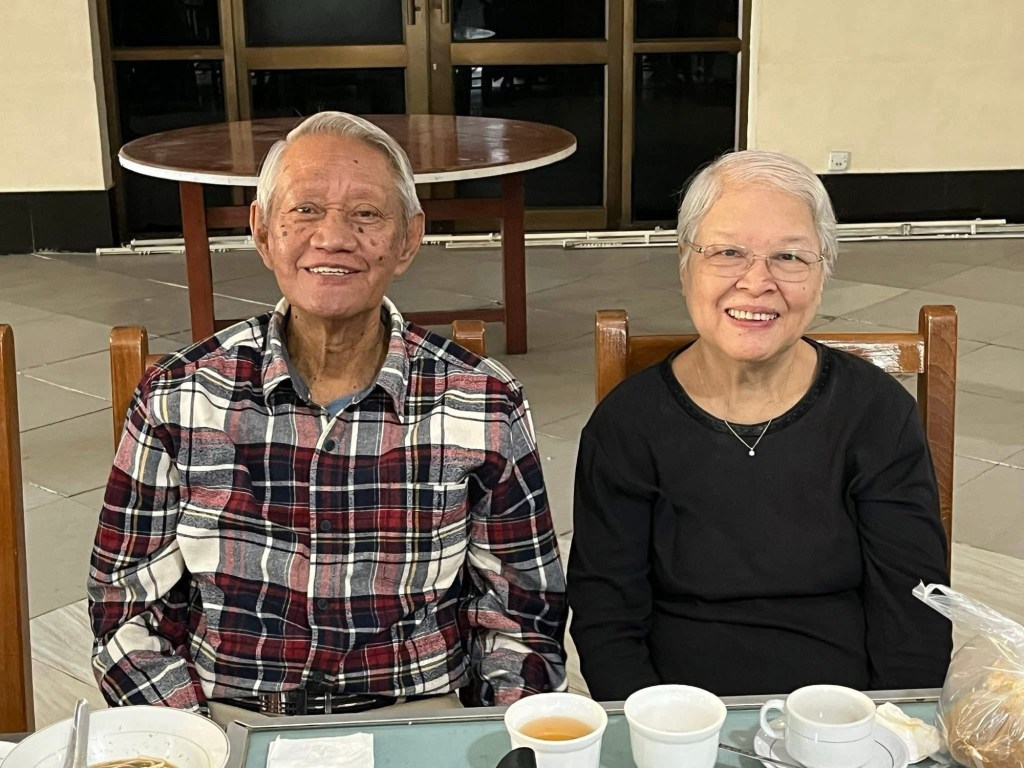
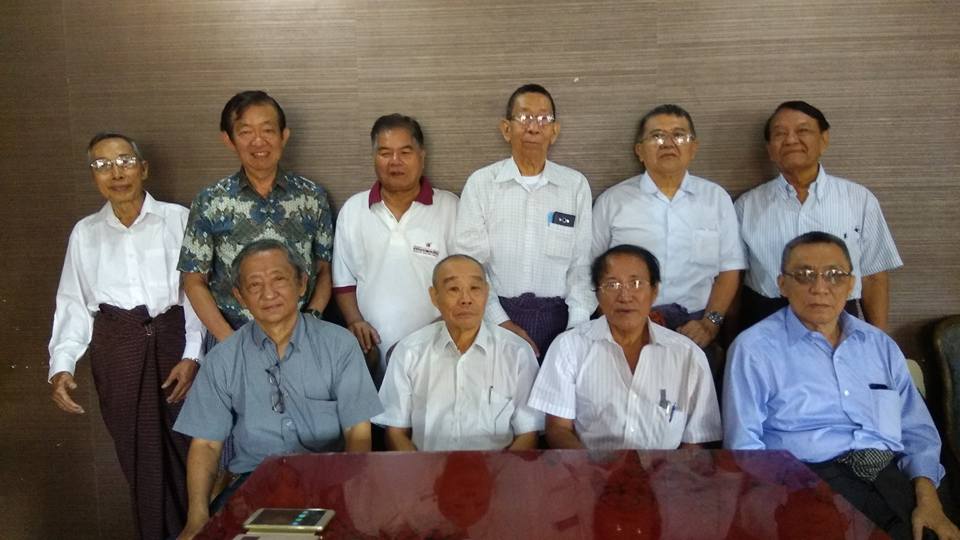
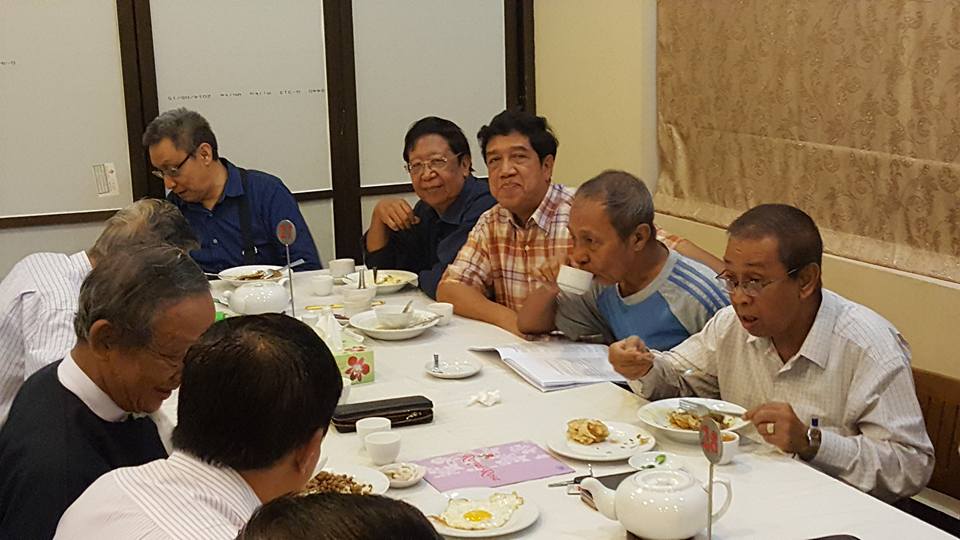
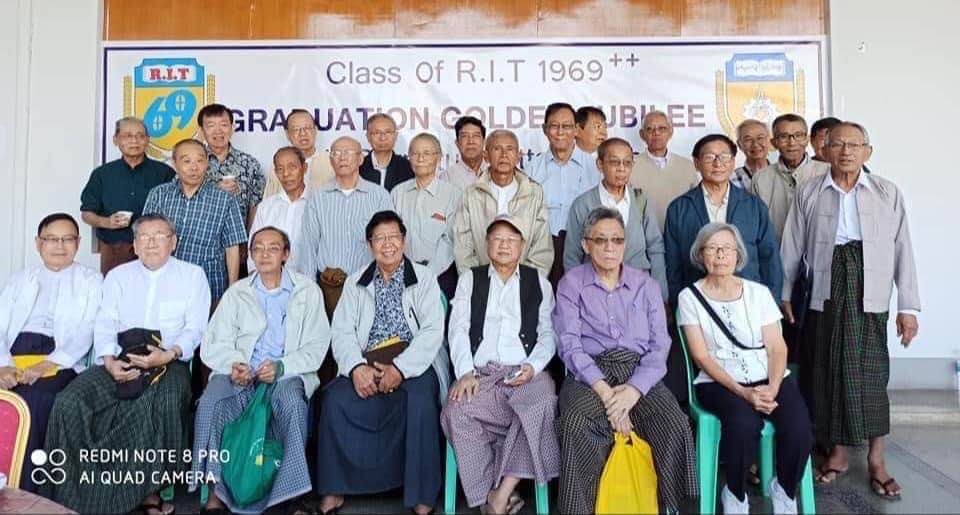
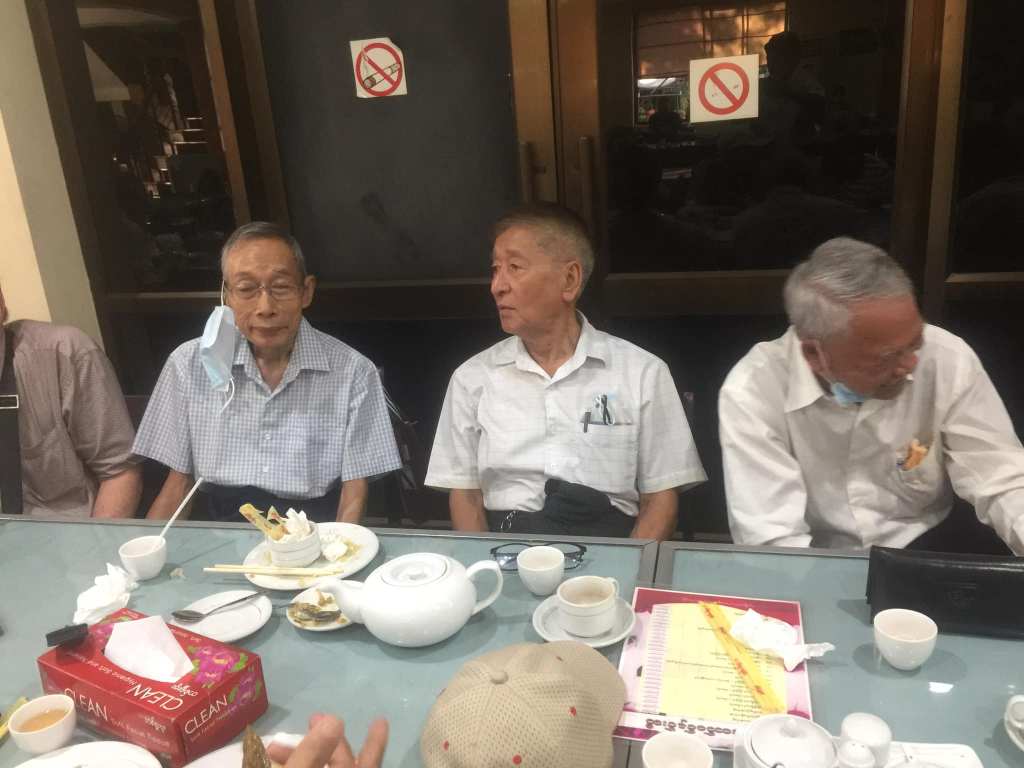
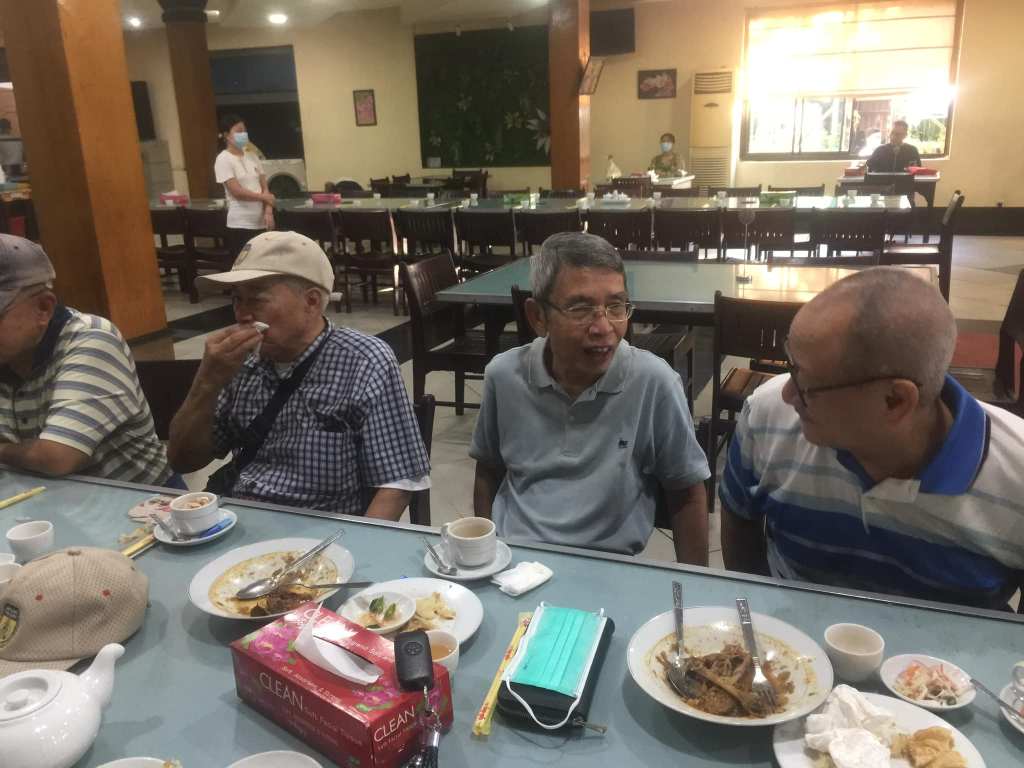
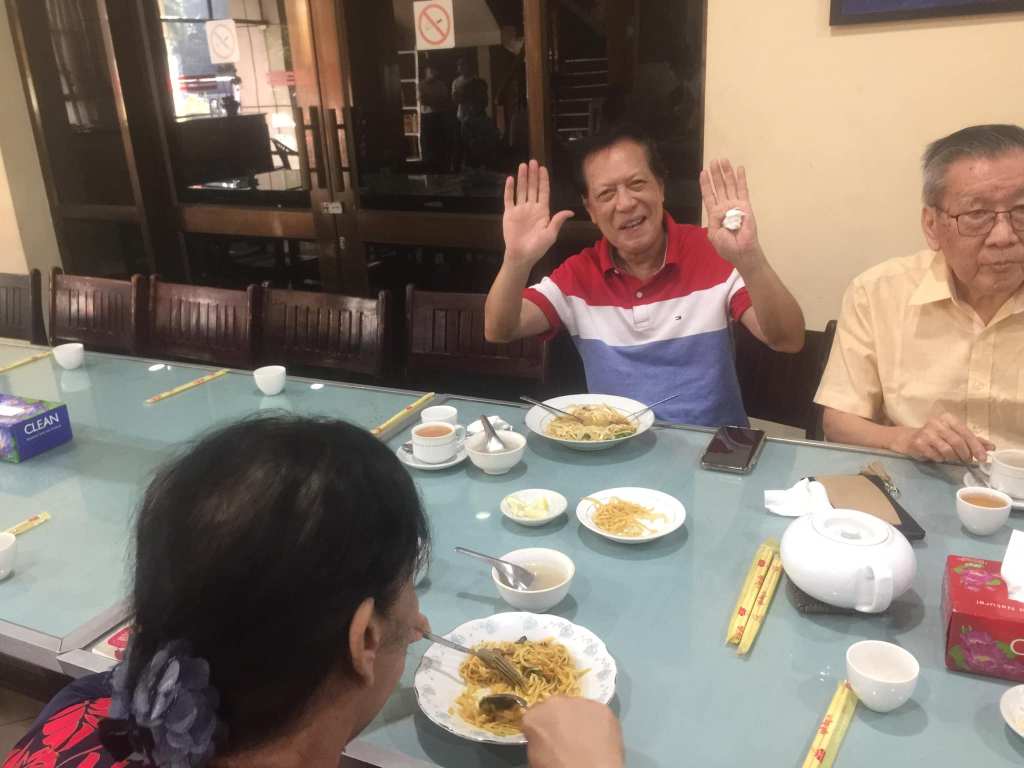
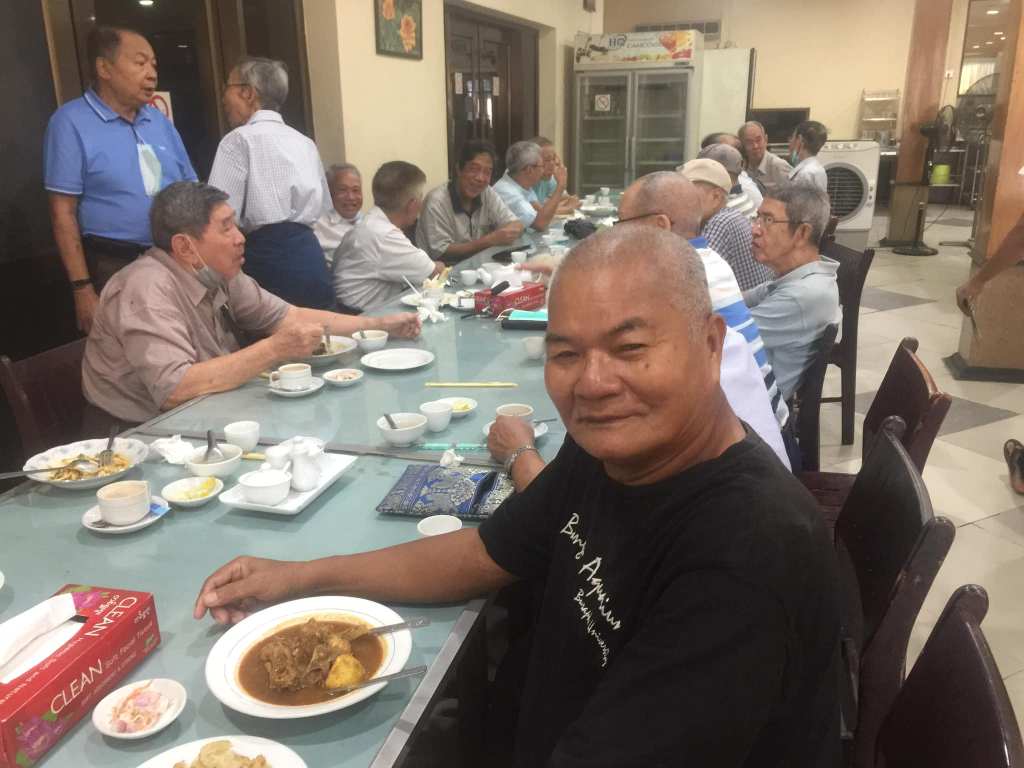
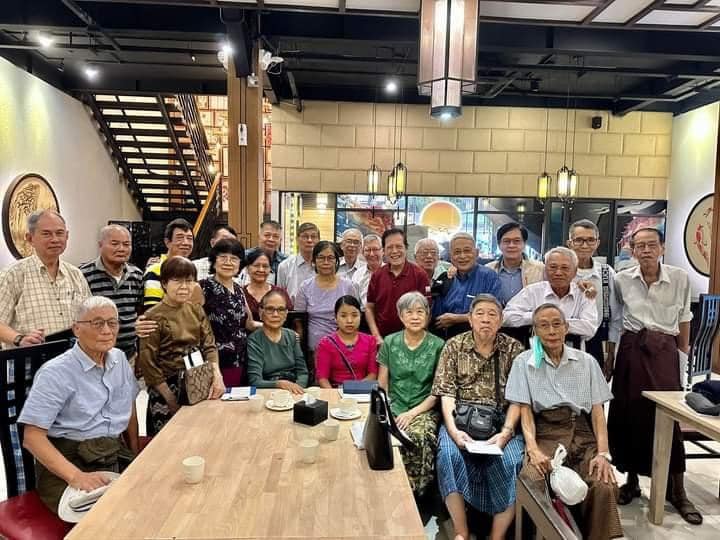
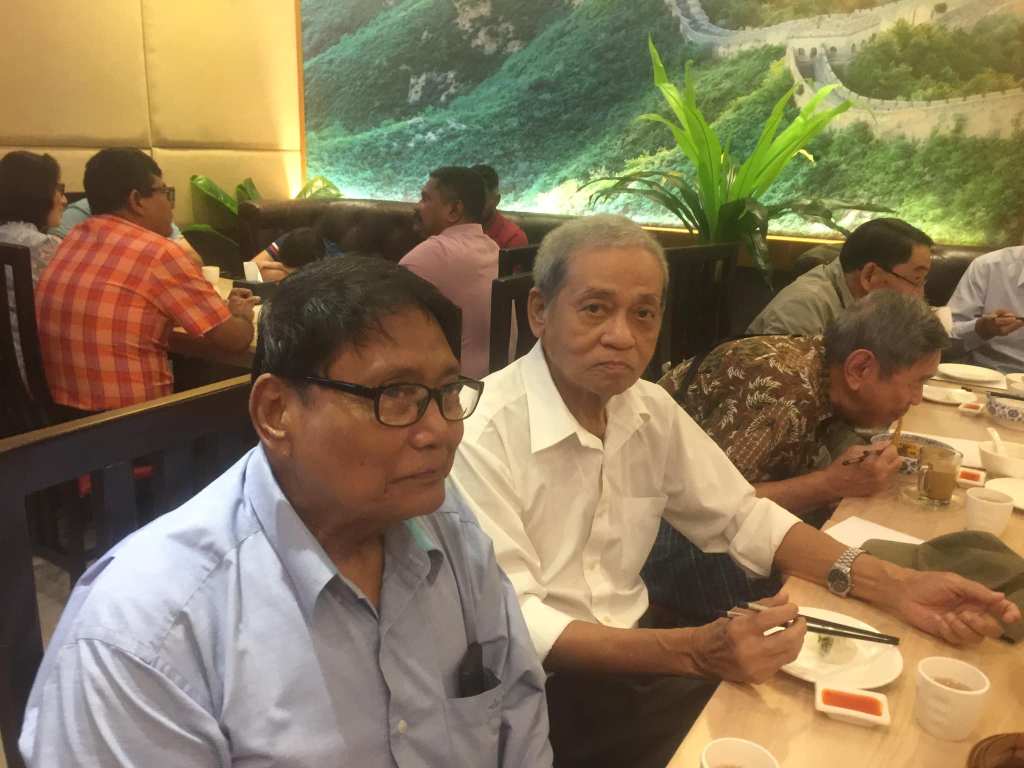
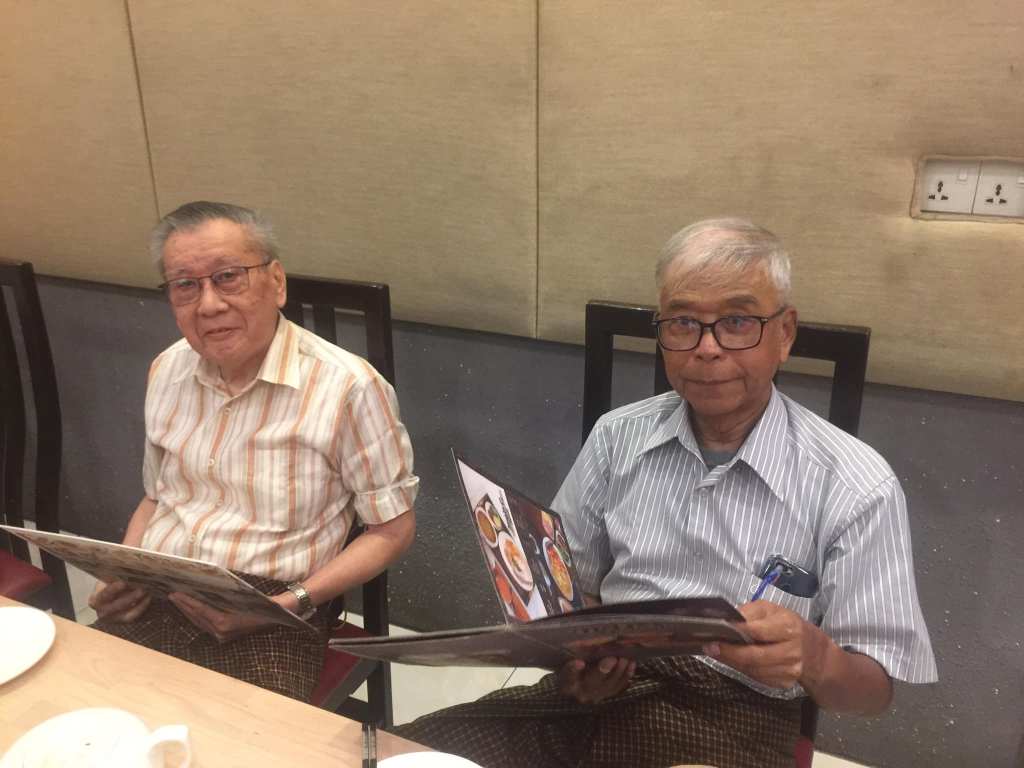
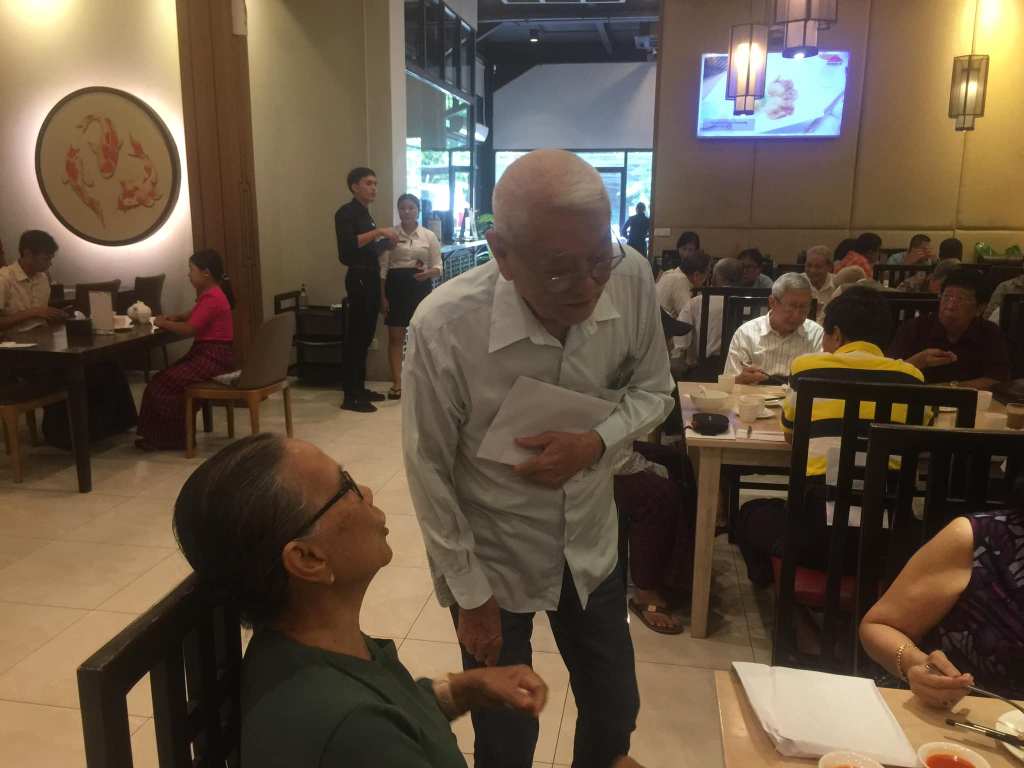
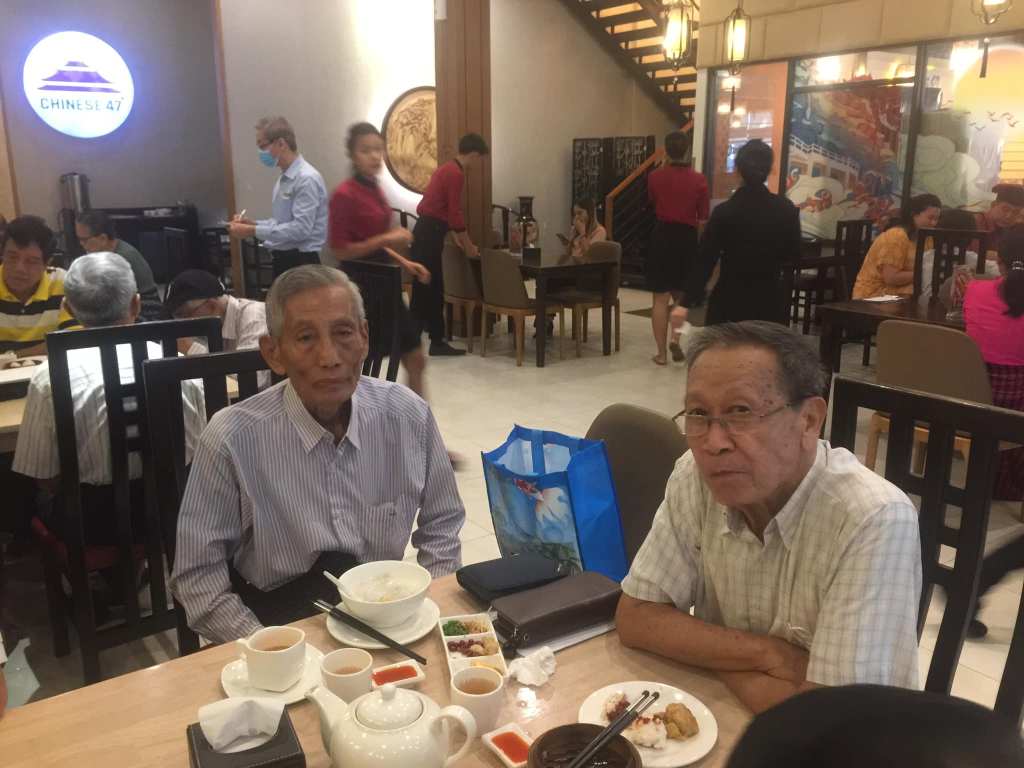
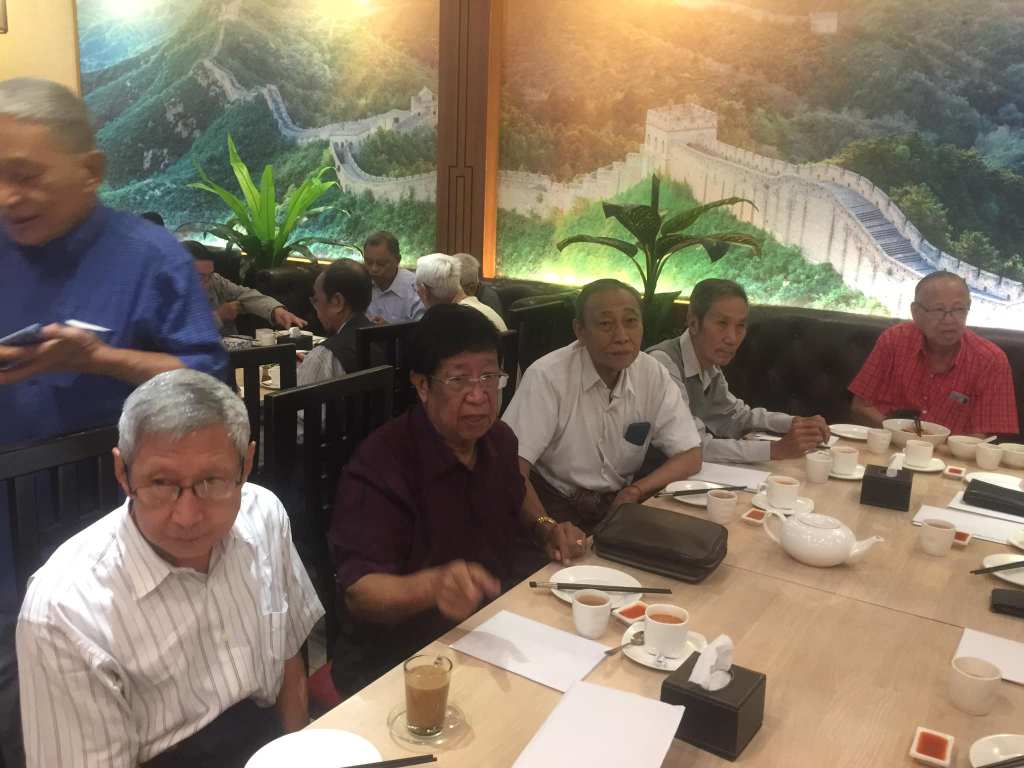
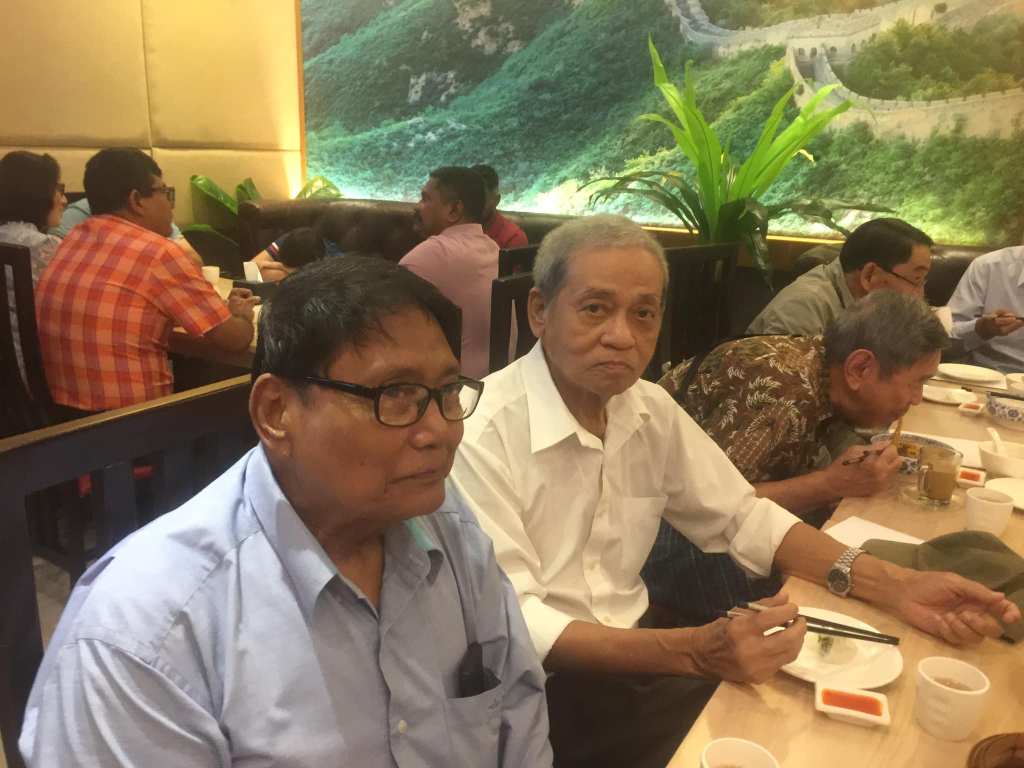
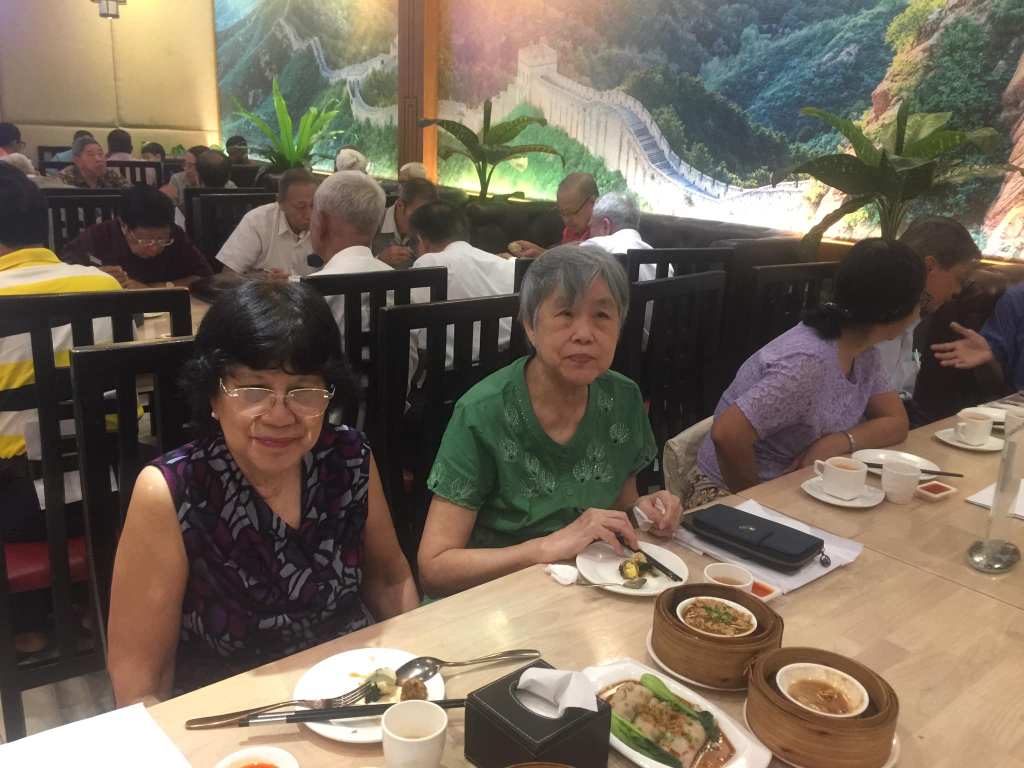
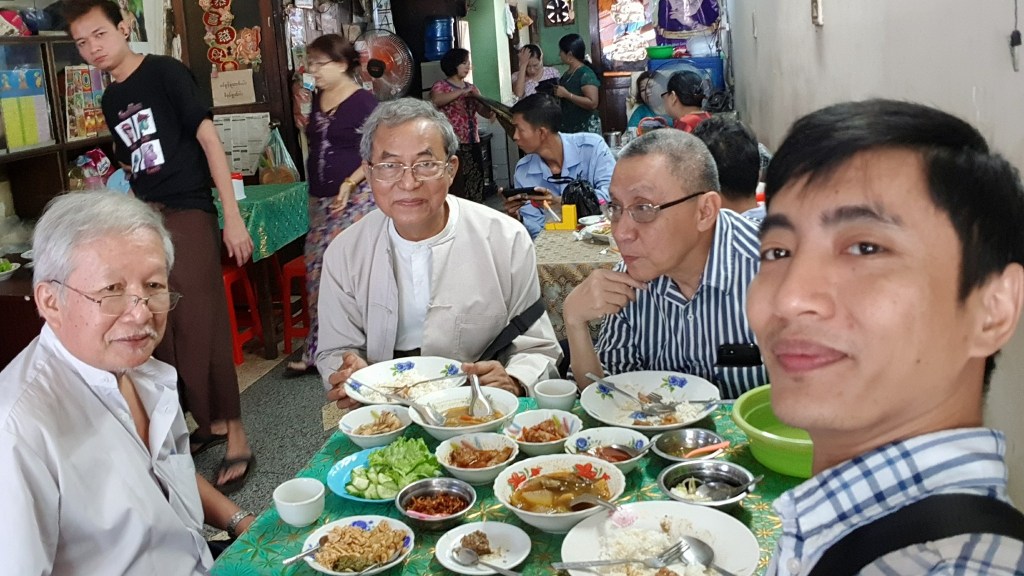
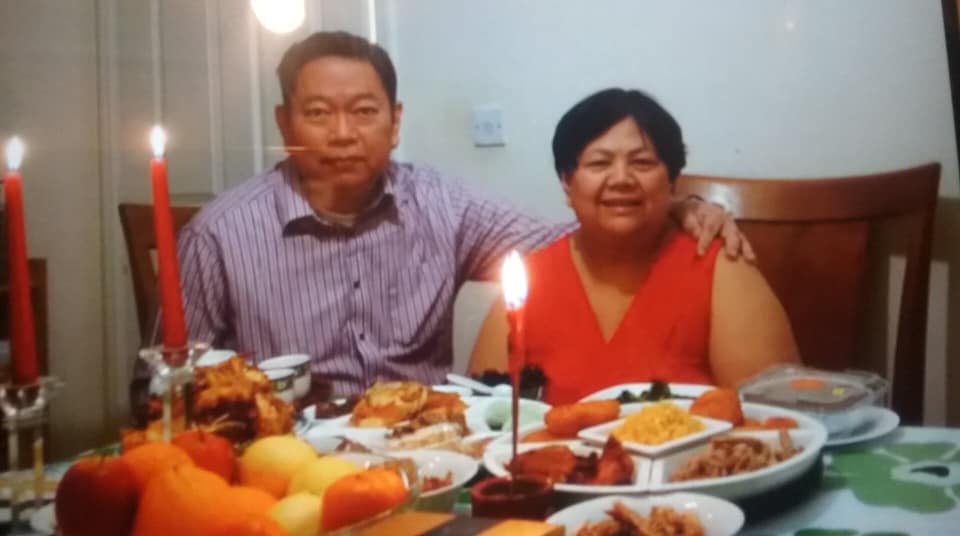
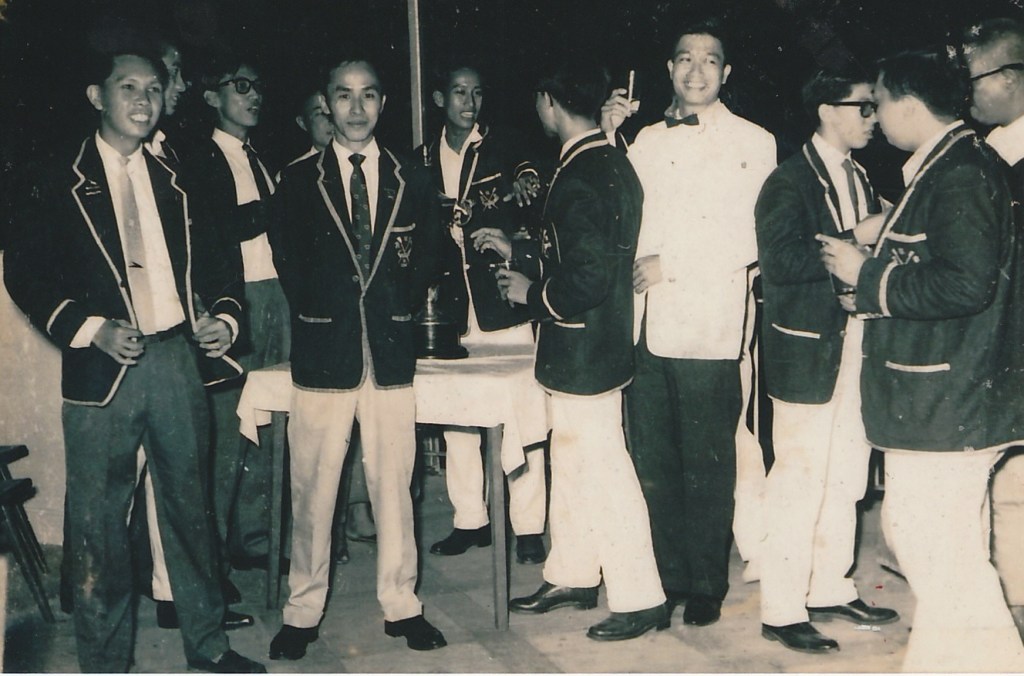
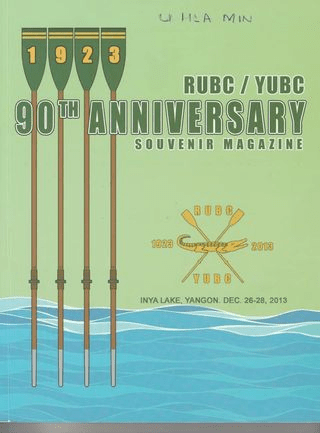
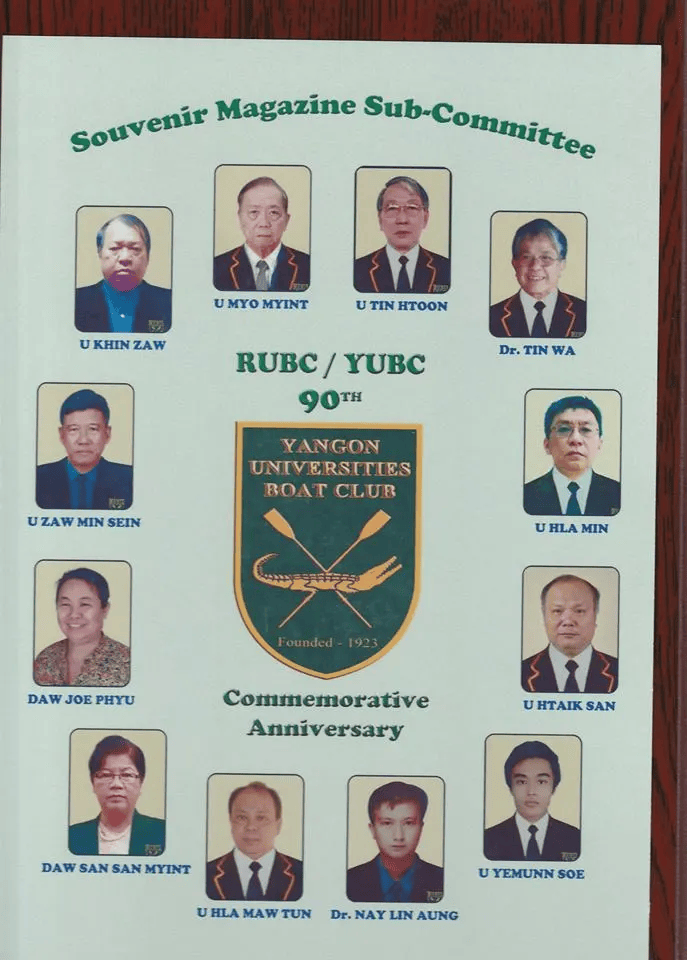
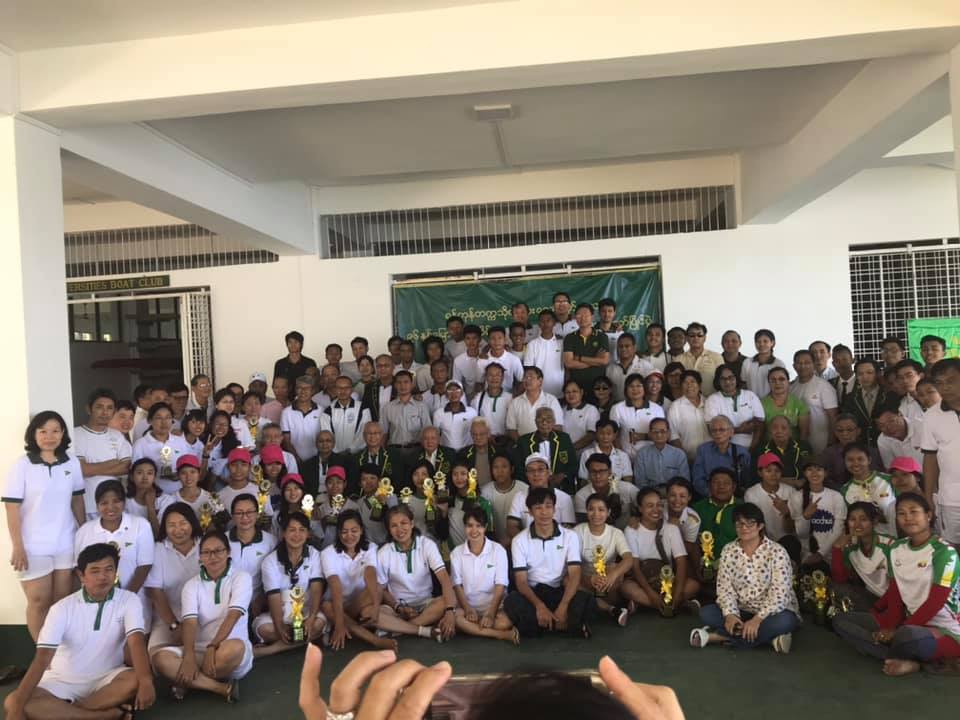
We are organizing a milestone birthday (soonkway) and appreciation celebration for our alumni icon U Hla Min at Theravada Buddhist Society of America (TBSA), Half Moon Bay on August 20, 2016 from 9:00AM to 3:00 PM.
I will be sponsoring my signature Indian (Chicken) and Chinese (baby back spare rib ) Dan Pauk, Benny (Mohingar), Saya Maung Maung (samosa), Daw San San Swe (Chin-Paung-Kyaw), Ko Hla Kyi (Bannana Dessert), Ko Gordon Kaung and Lillian Kaung (a tray of desserts).
You are welcome to sponsor, contribute and volunteer to help with the event.
To provide adequate foods, please send in your RSVP to mcmauchee@gmail.com by August 7, 2016.
Please come and join us to celebrate this special day with a mindful and cheerful party and we look forward to seeing you all to show our appreciation to U Hla Min for taking care of RIT newsletter as Chief Editor for the past seventeen years.
Saya U Tin Htut will be flying in from Los Angeles to attend the RIT mini-gathering. Saya was a member of the Organizing Committee for SPZP-2000. He is a co-founder and Past President of BASES.
Event address
Theravada Buddhist Society of America (TBSA) 17450 S. Cabrillo Highway, CA 94019 Half Moon Bay CA 94019 U.S.A Phone: 650-712-9165
I have been asked whether they can bring friends and family members to Ko Hla Min’s birthday celebration at TBSA, Half Moon bay, on August 20, 2016. The answer is Yes, per the Myanmar tradition any ah hlu ah tan is open to all well beings (alumni, non-alumni, friends and dhamma friends of Ko Hla Min).
With metta, Maurice Chee, M75
Appreciation
From Saya U San Tun (Sain Fone Wong, M59)
Dear U Hla Min,
We regret that we will not be able to join the celebration of your birthday at the Theravada Buddhist Society of America on August 20, 2016.
There is no doubt that the attendance will be large and all the Burmese foods will be mouth-watering and delicious. We are sure all the attendees will have a good time and leave the celebration venue with a fond memory.
We admire you for all the good deeds and sacrifices you have been doing over the past decade for the benefits to oversea Burmese immigrants not only in the bay area, Southern California, the United States and over various parts of the world. Keep up the good work!
We expect to meet you at the annual Nor Cal RITAA dinner on September 17,2016. We wish you a happy birthday and our best regards to your beloved Daw Sein Yee.
Sain Fone & Sylvia
From Salim Mayet (M67)
Dear U Hla Min,
Wish you a very happy birthday. I admire you for all the hard work you have been doing for more than a decade to keep us informed about RIT sayagyis, sayamas and other members. Thank you.
Salim Mayet (M 67)
From Daw Mai Khin Nyunt (Rosie, ChE71)
Dear Ko Hla Min,
(a) May I wish to your beloved grand daughter “Grace”.
HAPPY 2nd BIRTHDAY AND MANY MORE TO COME
No doubt that she will become a smart little adorable girl. My grandson will be two years in coming Sept. He gives us hope and happiness. Each and every movement is interesting and adorable for us. I’m sure you and Ma Sein feel the same.
(b) Many Happy Returns of the Day. Wish you could spend your life per your wish with Dhamma, family and friends.
Have a nice and memorable gathering.
With Metta,
Rosie
From Saya U Khin (Lucien Chen, RIT English, Taipei)
Dear Hla Min,
I have been an ardent “fan” of your RIT Newsletter updates ever since you included me in your mailing list at the suggestion of Des Rodgers many many years ago.
You have made a great contribution to the RIT community by bringing the RIT alumni, sayas and sayamas together through your reports, messages, photos, etc. in the RIT Newsletter and also through your persistent efforts in carrying on the good work against all odds. Who is going to fill your shoes after you retire?
I spent the best years of my life (1964 ~ 1968) at the RIT and I cherish the good old days I had at the RIT with my former colleagues at the English Department such as Saya Desmond Rodgers, Saya U Win Mra, Saya U Joe Ba Maung, Saya Sao Kangyi (deceased), Saya U Kyaw Lwin Hla, Sayama Daw Yin Yin Mya (Terry), Sayama Daw Charity Sein U, Sayama Daw Khin May Lwin (Muriel), Sayama Daw Tin Tin Oo (Toni), Sayama Daw Khin Saw Tint (Anne), among others; my former colleagues at other engineering departments and non-engineering departments such as Saya U Tin Maung (Civil), Saya U Christopher Maung (Civil), Saya Allen Htay (civil), Saya Dr K.C. Khoo (Chemical), among others; and my former students Tin Tin Myint (Emma), Khin Phyu Latt (Christine), Tin Tin Hla (Su Tin), Sai Kham Sang, Pamela Myo Min, George Lim, among others.
I hope you will have a great time at the birthday party that will be hosted in your honor on August 20th at Half Moon Bay, California, by your former classmates, colleagues, sayas and sayamas.
I shall also be wishing you a happy birthday in absentia from this part of the world, and hope you will have many happy and healthy returns of the day in the years to come.
Sincerely yours, Lucian Chen (Saya U Khin)
From Saya U Tin Htut (M60, Los Angeles)
Yes, I will be glad to join you all in the celebration.
Tin Htut
From Saya U Maung Maung (George, ChE66) and spouse
Dear Ko Hla Min,
See you at the Half Moon Bay Monastery this Saturday.
Thanks for your dedication and untiring effort in keeping us all in touch with alumni all around the world.
Also wishing you the very best on your Birthday and many more to come.
Best regards, George & Eng Eng Chan
From Benny Tan (Yu Beng, M70) and Angelina
Dear Ko Hla Min,
You’ve spent years sharing your amazing memories and wonderful writing ability with all of us from RIT, YIT, etc.
I like to thank you for sharing your wonderful RIT spirit and making a positive difference for so many people. Time is the most precious thing and you have generously shared your time and talents with all of us year after amazing year.
Congratulations and all the best to you on your milestone birthday. May you live long, happy and healthy and may all your dreams and wishes come true.
All the best, Benny and Angelina Tan
From Gordon Kaung (M83) and Lillian Kaung (EC83)
Hello Saya Hla Min:
We wish you the happiest of B-days, and many many more to come!
We will bring a bottle of premium iNapaWine for you and ama to enjoy at your B-day (we know ama will definitely enjoy our premium wine to stay healthy, and take good care of you).
With lots of metta, Gordon and Lillian Kaung Wine Maker
From Saya Dr. Chris Lee (L Tin Htun, EE59)
Dear Ko Hla Min:
From reading the recent emails in your “Update”, tomorrow will be a great “Happy Birthday Bonanza Party” for you. It will surely be a fun, exciting and memorable event for all attendees.
We wish you a wonderful Happy Birthday and many many more returns.
Best regards, Chris and Pam Lee
U Myint Soe (M79)
He emailed me three photos.
U Soe Thu (C98)
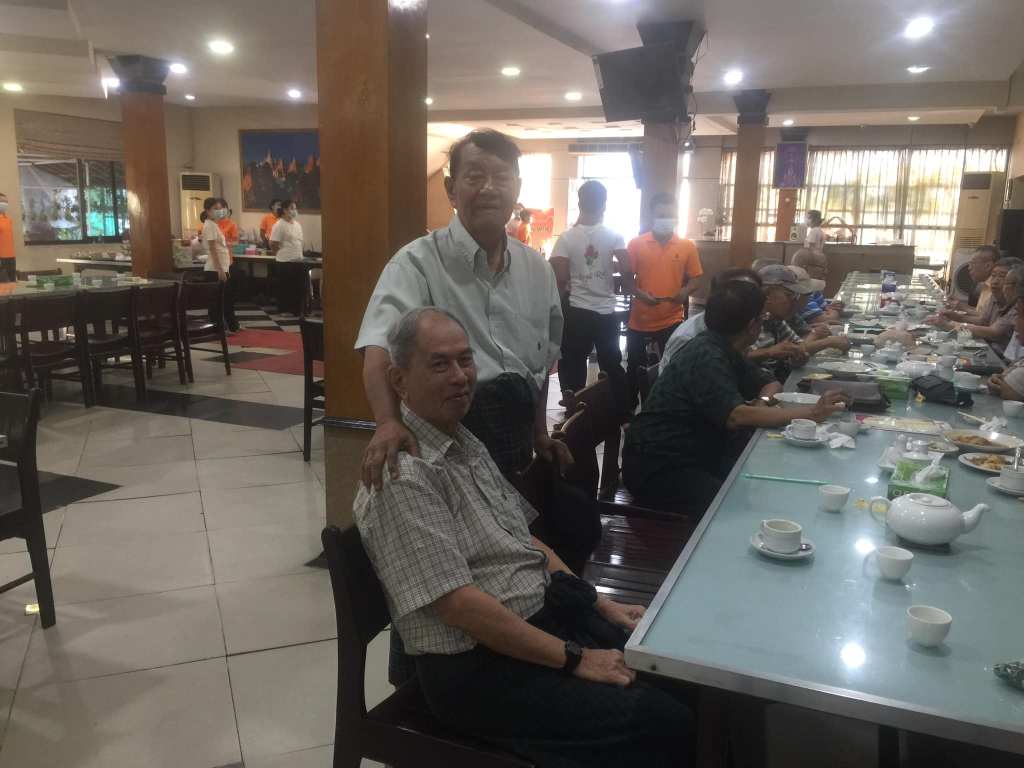
He e-mailed me the Group Photo taken in front of U Silananda Hall at Dhammananda Vihara, Half Moon Bay.
U Chan Min, who rowed for the Institute of Economics, became a monk at Dhammananda Vihara after his retirement. His crew members include U Htin Kyaw (Peter) and U Soe Thinn. He also attended the computer classes at UCC in Rangoon.
From U Tha Aung (M79) & Daw Kinsa Maw-Naing (ChE79)
Dear Ko Hla Min,
Happy Birthday and to say thank you for all your efforts in keeping RIT alumni connected globally. Even though we don’t have much to say, we always follow your updates.
May you have a happy healthy long life and lots of ku-tho.
With metta from Tha Aung & Kinsa
Editor’s notes :
Appreciate your work hosting mini reunions in Canada and for volunteering as SPZP2016 representatives. Sayamagyi Daw Tinsa Maw-Naing was my English teacher in I Sc(A).
From Saya U Htun Aung Kyaw (ChE67)
Happy Birthday Ko Hla Min and cutie pie!
I appreciate all you hard work and dedication to RIT Alumni newsletter.
Sorry I cannot attend the event.
Thanks for your appreciation
Dear Sayas and Colleagues,
It is truly amazing to be appreciated by sayas and alumni. The following are examples.
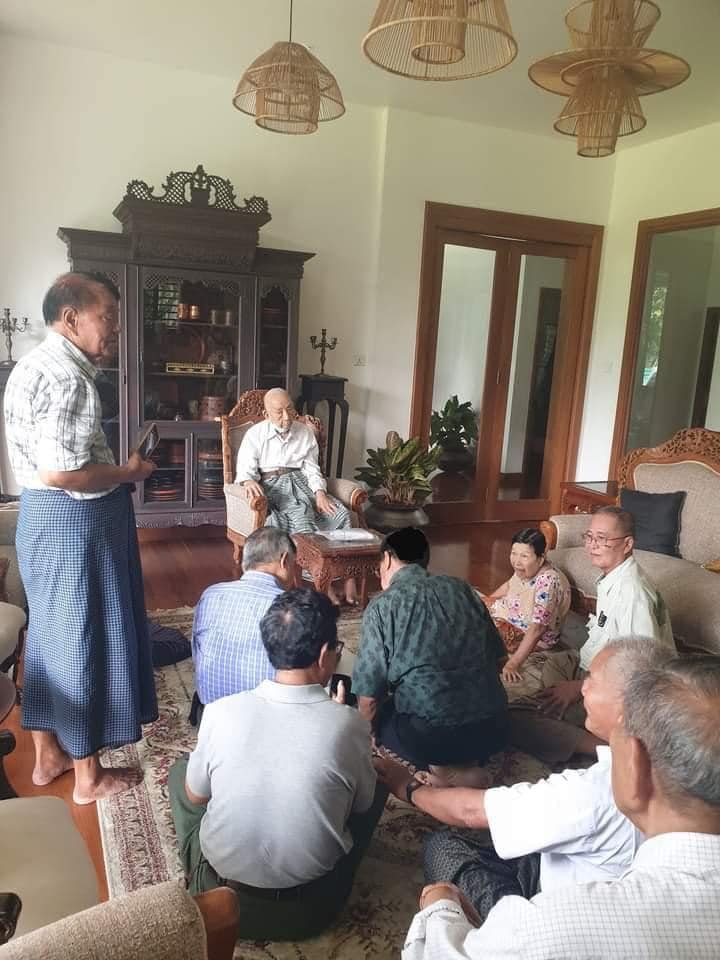
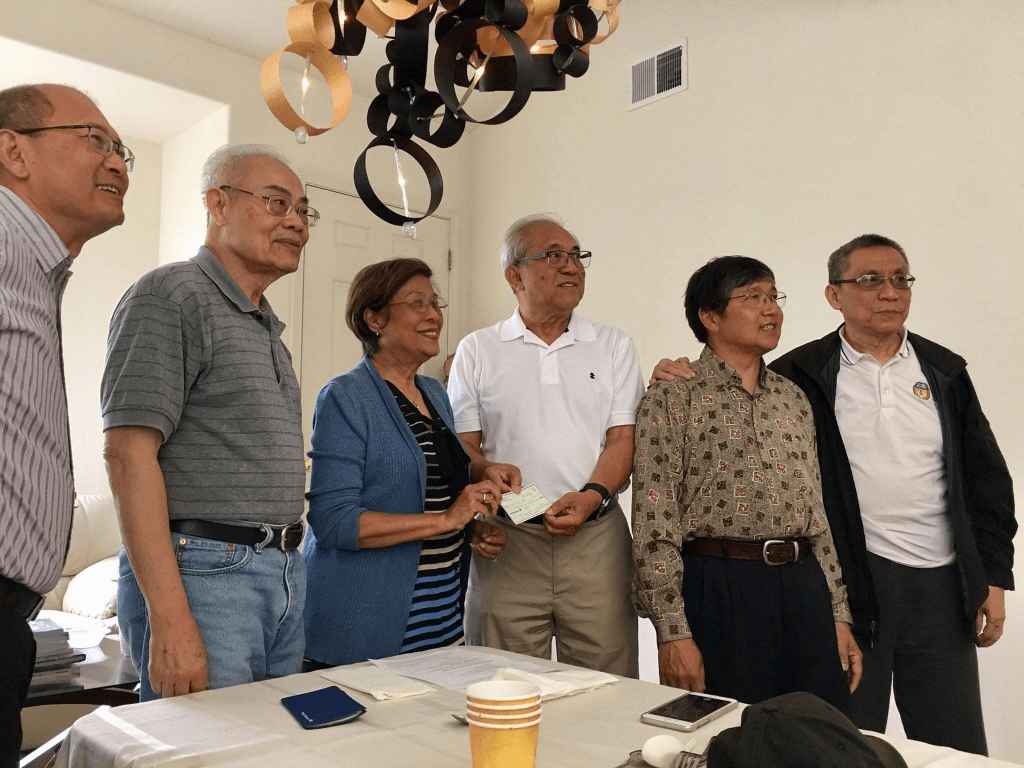
Sayagyi Dr. Aung Gyi & Daw Emma called from Canada to wish my Cutie Pie and me. They also sponsored “Tohu Thoke တို့ဟူးသုတ်” for the attendees. Sayagyi sent Maurice his congratulatory message for me to be read at the soon kyway gathering. See the following section for details.
Saya U Tin Htut flew in from Southern California.
Ko San Lin (M 87, “Maung Lu Pay”) took time off from work to attend the soon kyway.
Ko Kyaw Myint (M 83) delegated his “Flower shop” to his assistant to attend the soon kyway.
Ko Myint Soe (M79), who recently had knee surgery, requested Ko Aung Myint Oo (EC 84) to give him and his spouse a ride to the soon kyway.
Due to tight multiple schedules, Angelina & Benny Tan (M 70) came in separate cars so that Benny can have more time with his sayas and colleagues.
Saya U Tin Maung Nyunt (M 60) will celebrate his 80th birthday in December. Saya only drive local short distance, so he asked Ko Thein Naing (Patrick) to give him a ride.
Daw Mu Mu Kin, spouse of Saya Allen Htay, had tears in her eyes. She said that Saya would wish to be at the RIT mini-gatherings. She gave me silk neck ties that were bought (but never worn) by Saya. She shares the birthday on August 18 with my Cutie Pie.
Maurice ordered a genericcake to celebrate Daw Mu Mu Kin, Ko Myint Swe (EP 74) and other August born.
Maurice hand crafted a custom “birthday greetings” card with extracts from the birthday greetings from the RIT updates. The messages from Saya Dr. San Hla Aung, Ko Tha Aung & Ma Kinsa Maw-Naing came in too late to be incorporated into the gigantic card.
Maurice spent countless days organizing the event. Following the tradition of his late father Uncle U Wah Kyu, he also prepared custom birayani (dan bauk ဒန်ပေါက်).
Charlie Tseng (EC70) and Diana Tseng (ChE71) ordered two large birthday cakes.
The full list of food donors and sponsors is maintained by Maurice.
Johnson Lim (cousin of Robert San Lin) needs a human walking “cane” (his beloved spouse). They are regular food donors at most events.
Daw Kyu Kyu Lin (T75) rarely attends gatherings. She made an exception this time. She brought “Kyee Oh See Kyet ကြေးအိုးဆီချက်”. She also gave a ride to two Textile grads: Ko Than Htay (T75) and Ma Bibsu (T76).
Sayama Daw Khin Khin Chit Maung rarely attends gatherings. She made an exception this time. She and Saya U Myo Min fetched Saya U Tin Htut (her elder brother) at the air port and also brought him to the Half Moon Bay monastery.
Gordon Kaung (M 83) and Lillian Kaung (EC 83) drove close to 3 hours from Napa. They also brought a bottle of iNapa Premium wine and desserts.
Saya U Myat Htoo (C68) spent a decade or so as President of TBSA (Theravada Buddhist Society of America) at Half Moon Bay monastery. Today was a sort of “welcome back” for him and Ma Ku (Daw Hnin Maung Maung).
Saya U Maung Maung (George, ChE 66) is a Past President of NorCal RIT Alumni Association and a founding member of RIT Alumni International. He and Daw Eng Eng (sister of Saya U Myat Thwin, ChE 66) brought samoosa.
There were a few young and not so young alumni at the event. They include Ko Soe Thu (C98) and Ma Thandar.
Saya U Nyo Win (M65) and spouse were caught in the traffic.
Saya U Thein Aung (Met72) and Sandra (M76) brought their daughter.
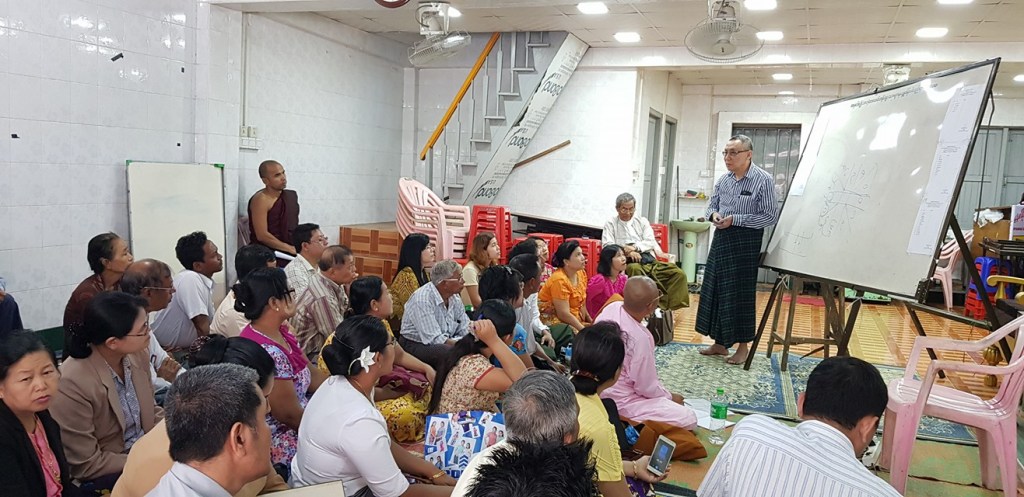
Dr. Myint Thein (M73) talked about his “Htaik Htar ထိပ်ထား” Daw Nyo Nyo Win (T73) and provide examples of “Applied English” (e.g. “air cut” for stroke).
Award
Award
Received appreciation award for helping the sayas and alumni to get connected via the RIT Alumni International Newsletter and Updates since 1999.
It was the second award from the RIT Community.
I received the first award at SPZP-2000 along with Maurice and KMZ.
The 1969 RIT Graduates Reunion was held in Rangoon/Yangon, Burma/Myanmar on Saturday, 20 February 1999 at Sait-Teng-Kya Restaurant near Kandawgyi lake.
Idea
The idea was mooted three years ago when a few of us were having dinner together and thought of having a gathering in 1999. After that most of us have forgotten about the idea until around the end of November 1998 when a group of our friends led by Ko Yee Pinn (Tavoy), Ko Myint Maung (aka “Bu”, RIT Volleyball selected), Ko Shwe, Ko Win Lwin, etc. decided to have a grand re-union in February 1999. They also decided that to be more meaningful we should invite our Sayas to pay them respect as well and, hence, it became the reunion cum Saya-ga-daw-pwe.
Attendees
On that very day the guest trickled in starting from about 4.00 p.m at the restaurant. The guests were required to fill in their names and contact numbers. The organizers promised to compile the name list and send to everybody who attended. By 6.00 p.m. about 30 Sayas and about 120 of our graduates were in the restaurant. The master-of-ceremony, Ko Win Lwin, announced the start of the ceremony.
Speeches
The programme started off with a few speeches, led by Nyi Hla Nge, representing the graduates in Rangoon, followed by Danny, representing the graduates overseas, Sai Aung Win, representing graduates outside Rangoon and last but not the least, by Saya U Kyin Soe, representing all the Sayas.
Paying respect
After that we gave respect to the Sayas. All the Sayas were seated on the stage and all of us sat on the floor. Some gifts were distributed to the Sayas followed by photo taking session and then the sumptuous dinner began.
Dinner & Entertainment
About 9 to 10 dishes were served but, most of us were too excited to notice what we were eating. Halfway through the dinner some of us went up the stage and sang some songs for entertainment. Even all the ladies, led by Alice and Naw Mu Mu Aye were on the stage as well. The crowd went wild.
Vow
The party ended at about 9.30 p.m. with some of the graduates not so sober. It was indeed a memorable gathering and we all vowed to meet again in December 2000 at place and date to be announced early next year. Three cheers to the organizers and those who have one way or the other help in making this event a great success.
1969
Updates
How time flies.
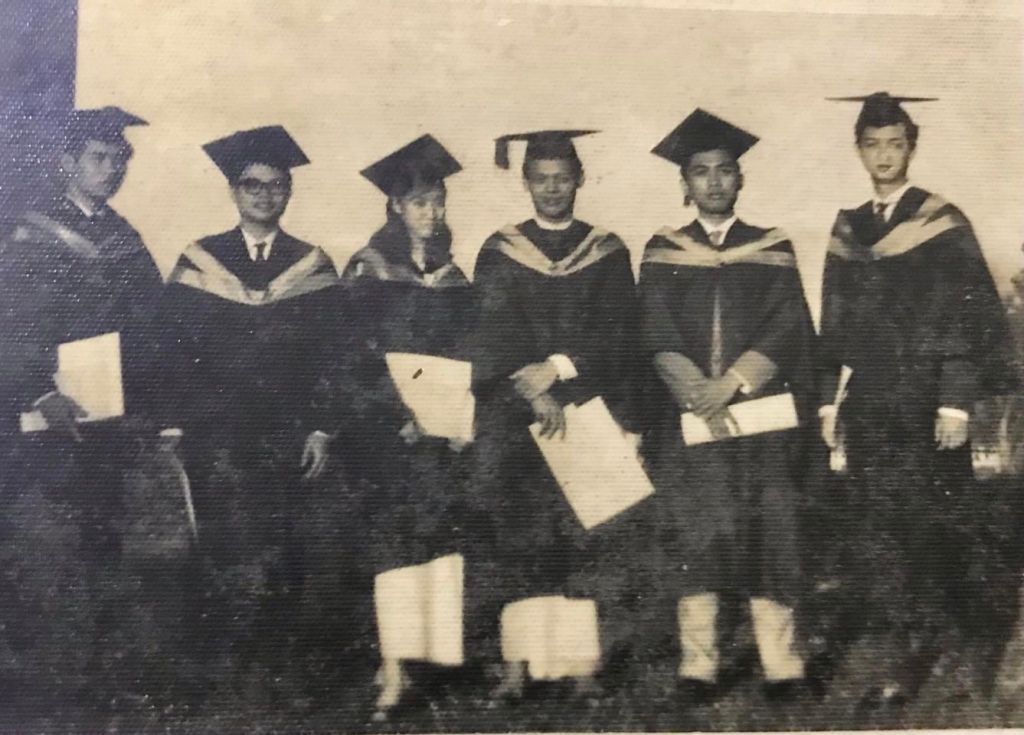
The Class of 69 celebrated the 30th anniversary reunion in 1999. The correspondence (Ko Daniel Tint Lwin, Ma Alice Saw Yu Tint, …) was partly responsible for the establishment of the “RIT Alumni International Newsletter” and the first ex-RIT web site.
40th Anniversary Reunion in 2009
2009
Golden Jubilee of Admission in 2014
2014
Golden Jubilee of Graduation in 2019
2019
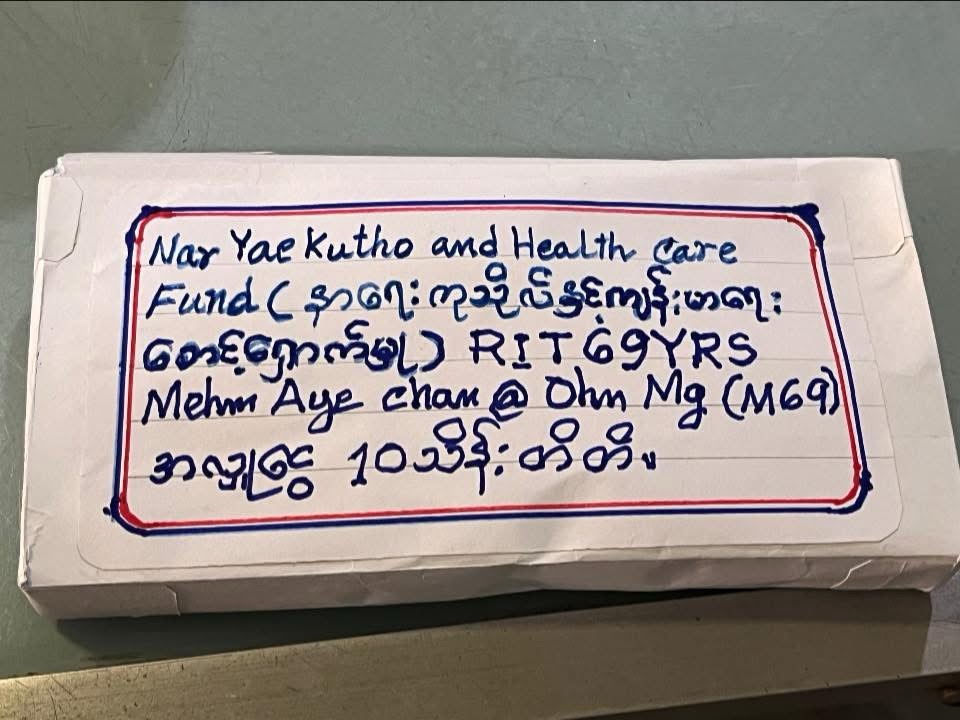
U Aung Min (M69) is Chair of 69er Health Care Fund. He and his team maintain the GBNF list.
GBNF
Several Octogenarians — U Tin Maung, Harry Tin Htut, Uzin Bobby, Uzin Aung Chaw, U Ngwe Tun, U Win Thein Zaw, U Ngwe Soe, Albert Kyaw Min, Mehm Aye Chan, U Kyaw Zin, Robert Win Boh, U Tin Aung Win …
Mr. Salvitore was working as a Chemist in the USA.
Received a book as Christmas present from his supervisor. A chapter was “Dhammapada”. After reading it, Samvega (sense of urgency) crept in.
Quit his job. Left for Burma to be ordained as a Buddhist monk. Became “U Lokanatha”.
Wrote “I became a Buddhist. My supervisor remained a Christian.”
Was from a devout Catholic family. Elder brother was a Priest.
My paternal grand mother offered a monastery for U Lokanatha in Bawdigone (Windermere), Rangoon.
Practiced Dhutanga. Preached & took Dhamma Dhuta missions to India and Ceylon.
Passed away in Maymyo in 1966.
Ashin Ananda
(Latvian monk)
Rev. Lustig With his mentor
Fled Communist Rule
Rev. Friedrich V. Lustig’s mentor Rev. Tonison was the Buddhist Archbishop of Latvia and Lithuania. When the Communists invaded their country, they sought refuge in Burma. The government provided them a monastery in the “Ah Le Pyit Sa Yan” of Shwe Dagon Pagoda.
Moke Seit
Known as “Moke Seit Phone Gyi” for his beard. Came for alms to our parent’s house in Windermere Road.
After his mentor’s demise, he became Buddhist Archbishop of Latvia & Lithuania.
Ashin Ananda
Shaved his beard
Ordained as a Theravada monk with the title “Ashin Ananda”
Laureate Poet & Translator. Wrote poems in English. Translated selected Burmese poems into English.
In July 1969, he gave my poem “Men on the Moon” to Mr. Hall (USIS) to be forwarded to Apollo 11 astronauts. Gave a copy to the Guardian newspaper for publication.
Men on the Moon
U Thilawuntha (Mon Sayadaw)
Built pagodas worldwide
Mon Sayadaw
In early 1949, my father and his siblings donated 5 acres and built Dat Paung Zon Aung Min Gaung Pagoda in Windermere Road. My elder brother helped with the construction as a Koyin.
Sayadaw U Thilawunta (fondly known as “Mon Sayadaw”) was invited by my father and his dhamma friends to be the Chief Resident Monk of DPZ monastery.
He built pagodas in Burma/Myanmar, USA, Canada, New Zealand, South Africa and several other countries.
In the ’50s, Sayadaw visited the United Nations and U Thant. He built the first Burmese pagoda in the Allegheny mountains near New York.
First pagoda in USA
During his visit to California, Sayadaw would spend time with his devotees such as Russell Wolfe (Santa Cruz) and U Aung Myint (Donald, Milpitas).
Sayadaw U Zeya
Monastery in Las Vegas
Las Vegas is known for its Casinos and Recreation.
Las Vegas also has some monasteries including Thai monasteries supported by members of the Royal Family.
Sayadaw U Zeya resided at a Thai monastery and rose up the ranks. Gave dhamma talks in Thai, English & Burmese. Several devotees offered him a monastery.
In May 2013, several dhamma friends in the Bay Area rented a van to attend “Htee Tin Pwe” of the pagoda inside U Zeya’s monastery compound.
Donated for two Nagas at the Las Vegas Monastery in memory of our parents and in-laws.
Engineers & Architects
Dr. Lwin Aung (A59)
Dr. Lwin Aung
Entered monk-hood after retirement
Was Professor of Architecture and Pro-Rector of YTU
Volunteered as a Consulting Architect for the construction of dhamma buildings
Due to health, he left monk-hood after several vassa.
U Bo Gyi (A59)
U Bo Gyi
Founded “Architect Incorporated” with U Tin Htoon (A60) & U Aung Kyee Myint (A60)
Later joined PWD along with his partners
Designed Mausoleum for Daw Khin Kyi, and was shunned by the higher authorities.
Hobbies : music (piano) and modeling (sculpture)
He is now GBNF.
U Han Nyo (Met60)
He helped conduct meditation retreats in Southern California and Mexico.
U Myo Tun (A69)
U Myo Tun
Ashin Pannagavesaka
Won prizes for essays under the name “Errol Than Tun”
Made dhamma duta mission to Vietnam
Was Dhamma Librarian for Moulmein Pa Auk Tawya Monastery
Edited Pa Auk Sayadaw’s books
Taught English to Dhammacariya Sayadaws
U Aung Chaw (C69, SPHS63)
U Aung Chaw
Ashin Ukkamsa
Resided in Sagaing
Later moved to the Irrawaddy Delta region
Met him in 2018 when he came to Yangon. Attended some breakfast gatherings by the 69ers. Kyaw Win (SPHS63) offered soon to Sayadaw at Shwe Ba Htamin Saing, and also offered Nawakamma.
He is now GBNF.
U Wara (Win Paing, ChE70, SPHS64)
U Wara
Younger brother of Saya U Soe Paing (EE, UCC)
Entered monkhood after the Final Year ChE exam
Chief Resident Sayadaw, KabaAye Sun Lun Gu Kyaung
Was Taik Oke Sayadaw for Sayadaw U Vinaya
He is now GBNF
U Jotika (EE73)
After graduation, ဦးနေဒွန်း became a monk
Bilingual author
An outstanding Dhamma Lecturer
Spent vasa at Taung Pu Lu Kaba Aye monastery in Boulder Creek
Revisited US about a decade ago
Frequently visited Singapore and other neighboring countries
Ashin Pannobhasa (M91)
Met him in SF Bay Area with his mentor (Sayadaw from Myanmar).
Born in April 1966 Thursday (2nd Waning day of Kason 1328 BE) in Pyapon, Irrawaddy Division.
After finishing his Mechanical Engineering degree from Yangon (Rangoon) Institute of Technology he received higher ordination as a Bhikkhu or a monk at the age of 24 in the Ordination Hall, Pyapon Mahasi Sasana Yeiktha under the preceptor of Venerable U Vannita, Pyapon Mahasi Sayadaw, Pyapon Mahasi Sasana Yeiktha on 27th July 1991.
Chief Resident Monk at a monastery in Seattle, Washington
He had a checkered life with a a series of setbacks and victories. His life is brilliantly recounted by his son Dr. Thane Oke Kyaw Myint (Pediatrician).
Several readers have compared the accounts as befitting a romantic novel or historical episodes.
Connections
I first knew him as a dhamma friend of my parents. The two families helped build the Dat Poung Zon Aung Min Gaung Pagoda and supported Mon Sayadaw U Thilawuntha.
Two paternal uncles (who are Barristers) worked at his Law firm.
His son Dr. TOKM was my senior at SPHS. He became a saya of my beloved spouse at IM(1). He took care of my two young sons. When I published “Trivia” posts, he provided comments and details to several posts.
I learned more about his father, uncles and aunts first via his commentaries and now via his articles (e.g. the value of emotional intelligence and brotherhood, the indomitable spirit). He also covered notable events and people.
The Brief Biography of U Kyaw Myint appeared in “Who’s Who in Burma”.
U Kyaw Myint’s Brief Biography
He was born in April 18, 1898 in Zalun Henzada district. He is the second son of U Pein, K.S.M, A.T.M, Deputy Commissioner and Daw Mi Mi.
Seven Siblings / Outstanding Burmans
ICS U Tin Tut is known as a diplomat, journalist and for being a victim of the the political assassination. Details can be found in the post “The Empty Tomb” and related articles on the unsolved mysteries of Burma. He is the first Burmese ICS by invitation.
U Kyaw Myint His life is covered in this post. It was first published as a series of articles in Facebook.
U Myint Thein was Chief Justice of the Union of Burma. He was detained in the Coup d’etat on March 2, 1962. He was Ambassador to China. Pen name : MMT Spouse : Daw Phwa Mi (first Burmese Female Barrister)
Dr. Htin Aung Principal, Rangoon College First native Rector, Rangoon University Vice Chancellor, Rangoon University Diplomat, Ceylon Scholar : Oxford & Cambridge Author, Historian & Folklorist
Daw Khin Mya Mu Kyauk Sar Specialist Thamadi Myo Wun Spouse : Professor U E Maung
Daw Khin Saw Mu Early graduate of Burmese Department, RU Khit San Poet Spouse : ICS U Ba Tint Children : Daw Khin Saw Tint & Nay Oke Daw Khin Saw Tint wrote an article about her mom and aunts
Daw Tin Saw Mu Lecturer, English Department, RU
Mesopotamia (Action during WWI)
My Father
U Kyaw Myint
By Dr. Thane Oke Kyaw Myint (SPHS60)
My father had a very chequered life.
Early Life
Short stay at Rangoon College
He stood first in the Matriculation examination at the age of sixteen. He had distinction in all subjects including shorthand and typing. He got scholarship when he entered Rangoon College in June 1914 but was expelled from the College in July 1914.
There was going to be a scholarship exam to enter Calcutta University. The Principal of Rangoon College, Mr. Mathew Hunter had chosen two bright young men to take the exams to enter medical college in Calcutta. The two students for this exam were my father and Sayagyi U Ba Than. They were very close friends.
Just before the exams, my grandmother passed away in upper Burma where my grandfather was working. Father went to the Principal to give him leave to attend his mother’s funeral. But the dates would clash with the exams and Mr Hunter refused his permission. Father was told that if he went without the Principal’s agreement, he would be expelled on return.
My father went in time for the funeral but on return, as told to him earlier he was expelled from the College.
Self Support
My grandfather was very angry with my father being expelled. Father was told not to come back to the family.
Father supported himself by doing a unique job. He traveled from Pegu passing through small towns and villages. At that time, there were many Burmese women who had children by Englishmen, and were common law wives. The Englishmen had left Burma, but they did not money regularly.
On behalf of the women, father wrote letters in English to the men in England. He was offered food, small amounts of money, and a place to stay.
He continued doing this, going up the country till he reached Myitkyina some months later.
Bombay Burma Company
Due to father’s expertise in short hand and typing, a young English man from Bombay Burma Company gave father a job as a clerk and secretary. Father told me about the kindness of the English couple who let him stay with them.
Apart from Secretary work, he had to go with workers to the teak trees that had been cut down and later sent them down the Irrawaddy to Rangoon. Father had to supervise that the Bombay Burma Company seal was hammered deep at the end of the logs. The logs were floated down the Irrawaddy river. Logs with the seal were collected and exported to England.
Illness
A year later father had cerebral malaria and it was the young couple who looked after him during the illness.
Enlistment and Assignments
Father stayed on with the English couple till the end of 1916. By that time the war that was said to last only one year had to gone into its third year with no resolution. There were many casualties and new fronts for the conflict. The English government intensified their recruiting efforts.
The young Englishman and his wife returned to England. The husband joined the army.
Father did not want to continue working in Myitkyina. He also thought of enlisting for the war.
He first went to Pegu to reconcile with his father. Grand father was doing a job what would be equivalent to a District Commissioner (DC) but being Burmese was given the post as Extra Assistant Commissioner (EAC) but doing the same job.
Burmese doctors were appointed as Sub Assistant Surgeon (SAS). They had to work like surgeons and civil surgeons.
NB: the status of Burmese doctors before Independence can be read in the books by Dr. U Myint Swe.
In spite of my grandfather telling him not to enlist, father went ahead for enlistment.
The place for enlistment was the at the Cantonment (which was Burmanized as “Kan Daw Min” Park). It is the place with a small lake near the Shwe Dagon Pagoda.
At that time, no Burmese would be accepted. One must either be an Anglo-Burman or and Anglo-Indian.
When asked, father gave his name as “John Henry Wilson”. He could be taken for an Anglo because he was very fair with sharp facial features.
Next he was asked to go against the wall to measure his height. Father was only five foot two inches. When the sergeant cane to measure him, he stood up on his toes so that it would be five foot four (the required height for a soldier).
The sergeant asked him whether he really wanted to serve, and getting an affirmative, the sergeant write down on his enlistment as “John Henry Wilson, Anglo-Burman, five foot six”. Father became a soldier.
Note:
Since, the English keeps excellent records, there must be enlistment records for the regiment that above item written down above, would still be there in their archives.
I visited the Middle Temple Inn in London, from where my father was called to the Bar. I wanted know about my father, the Librarian asked me for date of being called, went in, back in about 15 mins and gave me a copy of information of my father as recorded in their archives.Will write more about this in a later post “My father: the Barrister”
I tried to remember but still could not get the place in India where he was sent. I only remembered that it was in a cantonment not far from Dehli.
Father was sent to where the Gloucester Regiment, the 12th Battalion was billeted. He got his training, stayed there for some time rising to the rank of corporal.
Mesopotamia Campaign and “the war to end all wars”
At the start of the war, the British army and its allies thought that it would be a short war lasting for a year or so. But it didn’t as the allies were fighting on different fronts. When the Turkish Ottoman army joined the war, that opened a new front of the war: the “Mesopotamia Front / Campaign”. Father’s regiment was sent to that front.
Germany had sent a fleet of submarines to attack British ships carrying either troops or cargo.
Although not entirely, the British army and navy were depending on oil from Burma Oil Company in Yenangyaung. But when their ships sailing from Burma were being sunk, they looked for an alternative.
Apart from Burma, the oil fields from Mesopotamia were near to England and likely to have less loss during transport.
Just like Burma Oil Company (BOC), there was another company that could offer the required crude oil. Like BOC, the Anglo-Persian Oil Company (AOC) was owned by an Englishman. Both BOC and AOC were taken over by the British government for the war efforts.
The Mesopotamia Campaign happened mainly to save and have access to AOC refineries.
For some years now, whenever I heard about Iraq, Iran, Syria, two words often appeared: Basra and Mosul.
Mesopotamia was the area between the Tigris and the Euphrates rivers. It covered what would later become most of Iraq, parts of Northern Arabia, Eastern part of Syria and South East Turkey.
The oil rigs were in Basra and Mosul within Mesopotamia.
And that was where my father’s regiment was sent: to guard the oil fields from the Germans.
As the German army was engaged in other fronts, it was the Turkish (Ottaman) soldiers and Nomadic Arabs attacking these two areas.
It was mainly skirmishes and attacks mainly by the nomadic Arabs who were given arms by the Germans. The disciplined regiment could repel the poorly planned attacks and thus England still had access to the oil.
Armistice: 11-11-11 11AM
Father and did comrades stayed on in that area till Armistice, the end of the war at: “the 11th hour, of the 11th day of the 11th. month of the year”.
President Woodrow Wilson in his speech said, “the war to end all wars” had ended, using H.G. Wells’ words from the book “The War of the Worlds”. How ironic it was as only three decades later the Second World War happened.
Return Home
Not too long after that soldiers including my father were demobilized and could return to their home countries.
Father returned home to be with his family.
Study at Cambridge University
Since he was expelled from the College, he had never given up his hope to gain a good education. The demob and savings from his salary and other benefits on leaving the army, he now had enough money to go to England to get what he had wanted to do since 1914.
He applied to be admitted to Queens’ College Cambridge, where his elder brother [U Tin Tut] had attended gaining MA, LLB.
Father landed on the shores of England in the spring of 1919. He was twenty one years old.
After spending time in London for a week or so he got to Cambridge to seek admission. Father told me that it was a vibrant time to be as there were so many young men like him, veterans of the war, some who had left their studies and had left to fight the war as well as those like him who had come to be admitted for the first time. He wanted to study at Cambridge as this was where his elder brother studied for his BA (later MA) and LLB.
Both Oxford and Cambridge gave dispensation for veterans, so that they did not have to undergo a strict entrance exam but only had to take what was known as “the little go”.
Father went to the College with all that he had was his matriculation certificate from Burma. He had to go through an interview first to see whether he should be admitted. Father impressed the examiners that he was admitted without the need to take entrance exams.
Finally he thought he was going to get the education he had missed before. He had enough money to sustain him for the four years at the university.
During the two years he was in Cambridge, he actively participated in debates conducted by the Cambridge Union, where he sharpened not only his oratory but also would help him at the courts when he became a practising barrister in Burma. It also helped when he became a well known politician in Burma.
Two things happened that would affect his ambition to be a college graduate.
First when he was in the second year, U Tin Tut arrived. He was sent to Oxford to do his training for the Indian Civil Service (ICS). He was to be the very first Burmese to be admitted to the Service. And unlike the others who later joined, he was the only Burmese to be admitted by nomination and not by selection examinations.
On 29th December 1920, there was a nation wide students strike against the British government. Schools and the Rangoon University was closed down.
U Myint Thein was then studying in the junior BA class at the University. Not knowing when the university would be reopened, even without telling my father he traveled by ship to England. This he did without any funds for tuition fees. He arrived and requested my father to pay for his tuition and upkeep in Cambridge.
U Tin Tut gambled a lot on the races and he also was asking father to help pay some of his gambling debts.
Father decided to leave Cambridge so that he could support his younger brother. He searched for a job to sustain the three of them.
For the second time in his life, his education had to be postponed.
At that time, there was Burma Club. Many years later — at the time when Saya U Maung Nyo was studying in London — there would be the Britain Burma Club. And Prof. Woodruff, who was a visiting professor of tropical medicine in Rangoon, was a Patron.
The Burma Club was for the people who have served in Burma both before and during the war. Father got a job as the secretary of the Club. It enabled him to sustain the needs of his two brothers and allowed him to prepare for the barrister examinations.
I have titled this part of my post as “Cambridge — here I come”, but for father in 1920 was “Cambridge — here I leave”.
Yet again he was thwarted from gaining a university degree.
P.S. In spite of all the obstacles, in 1948, on gaining independence, my father, the college dropout, was appointed as one of the first three Supreme Court Justices of our country. And also later became the very first Dean of the Faculty of Law at the Rangoon University.
The Four Brothers and Inns of Court
May I give some information about the Honorable Societies of Barristers: the four Inns of the Court of England and Wales. namely The Inner Temple, The Middle Temple, Grey’s Inn and Lincoln’s Inn.
The first photo is the Temple and second is the current School of Law, under University of London, showing the shields of the four Inns: On top Lincoln’s Inn and Middle Temple. below Grey’s and Inner Temple.
The full name of the Temple was Solomon’s Temple.
Originally the temple was for a Catholic Military Order (Fellow Soldiers of Christ) and the members of the Order were known as Knight Templars. This order was to protect pilgrims going to the the holy land as well as to fight with Muslim armies trying to expand their territories.
This change must be made as seen in the photo as the four Honorable Societies do not give degrees, no scrolls, no diploma nor parchment. There was only entries of a person being called to the bar in the records of the four inns.
According to my uncles (U Myint Thein and Dr Htin Aung) the exams were tougher in the Inner and Middle Temple compared to Grey’s and Lincoln’s. They therefore chose to go to Lincoln’s Inn.
There were no formal lectures nor teaching. Candidates had to attend and listen to trials going on and listen to some tutorials given at the Temple by senior barristers. And mainly one studied on his own.
The way assessments were made was for each subject, written papers had to be submitted followed by “dinings”.
When a candidate felt that he was ready to be assessed, he would invite three senior barristers to actually dine with him in the dining hall. Over dinner, questions were asked and discussions were made. The candidate was told whether he had satisfied the senior barristers and could now go to the next subject i.e. next dining.
If unsuccessful, the candidate had to undergo another dining for that subject.
Father succeeded in at the first attempt of all subjects except on Roman Civil Law which was examined in Latin. Father could answer only one question as he had to learn Latin only on arriving in England. Father had been preparing himself for the bar exams while he was in Cambridge.
At his last dining, the senior most barrister said, “young man you had answered only one out of the four questions in Roman Civil Law. But you had written it like a brief by an experienced barrister. If need be, we hope that you will study more. We are satisfied with you and you need not come back for a second dining”.
Father, the College drop out, the ex- soldier, had finally been called to the Bar on 26 January 1923 at the age of 25 years.
He would then go on to be a Judge of Court of Small Causes at the age of 25 (after only ten months as a practicing barrister), a High Court Judge in 1946 and one of the first three Supreme Court Judges at independence in 1948. He resigned in 1950 in protest against the Prime Minister’s interference with the judiciary. (This will have to be told later).
He became the Professor and Dean of Law, Rangoon University and was conferred with a honorary doctorate (LL D in honoris causa) on his retirement.
…………………..
In 1972, when I was living and studying in London, I became a friend with South African (of Dutch descent) who was taken his bar exams at Middle Temple Inn. He had stayed on to do an academic degree in law.
Candidates were allowed to bring friends to dinner even when they were not being examined.
Each table was for four. My friend and I were joined by two senior barristers. It was such a pleasant evening.
There were two entrances to the dinning hall. Barrister had to go in one, where they were given barrister gowns to wear. Visitors in formal wear had to enter from another entrance. He took me through the visitors entrance, moved to the other entrance, donned the robe and came back to me to go to the dining tables.
There were tables on a stage. My friend told me that the tables were for for judges called the Benchers.
My friend told the senior barristers about my father. They wanted to know whether father was still practising. I told them about my father being a Supreme Court Judge but had retired and had resumed his legal practice.
On another day, my friend took me to the Temple Library where records of people who been called to the Bar from Middle Temple.
When I told the librarian that I only knew about my father being called in 1923, she went to look at the records for that year, found my father’s name and brought out the to me to show me the entry for my father.
It was a very brief entry:
“Maung Kyaw Myint, of the Burma Club, St. Peter’s Square, Hammersmith W.6. (21) second son of Maung Pein, A.T.M of Pegu, Burma, special power magistrate. Called 26 January 1923”.
Then she said, “would you like to have a copy of the entry? I said yes. I was given a xerox copy of that page.
P.S: U Tin Tut and U Kyaw Myint were called to the Bar from Middle Temple. U Myint Thein and Dr. Htin Aung from Lincoln’s Inn.
Daw Phwa Hmi, who would become the wife of U Myint Thein, was the first Burmese woman to be called to the bar from Inner Temple. There was a story behind this about U Myint Thein and Daw Phwa Hmi.
P. S. in case I might forget to write about my uncles, I want to add two amusing anecdotes of them.
Anecdote #1: U Myint Thein
When U Myint Thein was studying in school at Pegu, he and his friends had a fight with another group of young men. U Myint Thein hit a man from the other side with an iron rod and broke his head.
Both groups were arrested for fighting and disturbance of peace by the police and brought before the magistrate. It was my grandfather as the EAC had magisterial function. The young men had to appear before him. All meekly accepted the fines to be given but not for Maung Myint Thein.
When each of them were asked why and the fight started, and what should be their sentence. All accepted to pay the fine for bring public nuisance.
Except my uncle, who was being given a sentence more than others because of the assault with an iron rod. He was made to pay a fine and seven days custody at the police station.
He would not keep his mouth shut that it was not fair as what he said that what he did was according to the Buddhist literature.
His father asked him to explain why. He quoted a stanza of the Mingala Sutta:
He said that in the 20 stanza of the sutta, “Garavo ca Novato ca Suntutthi ca katannuta”
The Burmese pronounced the Pali words differently: the word “suntutthica” was pronounced as “than dote thi sa” and therefore he said he should not be given a punishment more than the others as he was doing what was mentioned in the scripture.
Grandfather was very angry with his insolence and sacrilege in using a Pali word to be equal to an iron rod, he had not only to pay to stay in custody for fourteen days for not only assault but also sacrilege.
And that was the my uncle Myint Thein the jailbird who would many years later became the Chief Justice of the Union.
Anecdote 2: Dr Htin Aung
Badwe was studying in Trinity College Dublin for his doctorate which he finished in nine months. To celebrate, he and some friends went on the town. Although he did not drink himself, he plied his college friends with as much alcoholic drinks that they could drink.
After some time, the group became very rowdy and disturbing to other people. They became such a nuisance that the bar tender called the police and all were arrested by the police.
The next morning they were brought in front of the magistrate accused of disturbance of peace in the community. The magistrate asked whether they were all inebriated at the time of arrest. The arresting policemen said yes except for one person who happened to be my uncle.
The magistrate gave a sentence of a fine of one pound for all his friends “disorderly while being drunk”.
My uncle was fined five pounds. The magistrate said while he did not partake in the drinking but was equally rowdy and disturbing people he was fined more because of “disorderly without being drunk”. Said he should have known better than other not to disturb people.
The Age of Barristocracy
Father came back to Burma in 1923 and started practicing as a barrister in Rangoon.
Ten months later he was appointed as a judge of the Court of Small Causes, similar to a magisterial Court. He was the youngest lawyer to be made a judge, not just in Burma but in India also.
How it came about was that the sitting English judge had to return to England. The Court clerk asked the then Chief Justice as to who should be appointed in that position.
The Chief Justice said “the very bright young barrister who had appeared in court. He knows the laws and is very impressive”. The court clerk explained that father had only been working as a barrister for only ten months. The Chief Justice nevertheless decided to give the post to my father.
Father was the youngest ever — at the age of twenty three — to be become a judge in colonial India and Burma.
Nationalism
But at that time, the political climate has begun to change. Nationalism had emerged in both India and Burma.
After two years as a judge, father at twenty five years of age resigned to return to practice as well as to enter the political arena.
He stood for and won the elections of the Members of the Legislative Assembly (MLA), which was equivalent for the lower house in Parliament. The Imperial Council was similar to the upper house but their members were appointed by the Governor General and was by nomination rather then by election.
Seeing the work of many well known barristers in Indian made father stand for election and winning the position from the Kyimindaing (Kemmendine) constituency in Rangoon where he served for two terms.
It was the senior barristers of India and Burma whom he wanted to emulate. While serving as a member of the Legislative Assembly, he got to know and learn from these barristers.
As most of the MLA were barristers and he got to know them well. It seemed as though one would have to be a barrister to become a politician that was why the term “barristocracy” came into being.
Eminent barristers and political leaders
The following eminent barristers in India and Burma were the political leaders at that time.
Mahatma Gandhi : Inner Temple
Pandit Nehru : Inner Temple
Mohamed Jinnah : Lincoln’s Inn, the youngest to be called to the bar at the age of nineteen
Solomon Bandaranaike : Inner Temple
Another activist barrister was Dr. Ambedkar, a dalit, from the scheduled caste, who entered the legislative assembly to fight for the Dalits and formed the “scheduled cast federation”. He was a highly educated and committed lawyer and activist.
Dr. Ambedkar studied at Columbia University and London School of Economics and he was called to the bar at Grey’s Inn. He attained following degrees: BA, MA, PhD, MSc, DSc, LL D, D Litt, Barrister at Law (Grey’s Inn).
He founded the Scheduled Caste Alliance. One tactic he used was to have the untouchable to change their religion from Hinduism where they were at the bottom of the ladder, to Buddhism which had no hierarchy.
Father was to become close to Nehru from India and Mr. Bandaranaike, who not only knew fellow barristers but also MLAs.
He visited Calcutta to meet with Dr. Ambedkar and also with Nataji (Subaru Chandra Bose).
Father also visited Mahatma Gandhi in his ashram, every time when he was in India when he and his disciples were doing “satyagraha” the nonviolence movement.
Nehru and Indira
Nehru was arrested and put in prison. On being released, he and the young Indira came to visit Burma and stayed with my father for three weeks. Nehru gave copies of his books “Letters to a daughter” and “Glimpses of India”. The first book was signed by both the father and the daughter.
When U Myint Thein was arrested by Ne Win, the MI (Military Intelligence) people came, ransacked and took away many of my father’s books. We did not know why the Nehru books, books by Jung and Freud, a complete collection of Gandhi’ speeches, law books and even some books of fairy tales were taken.
Father was told that the books would be returned after some time but they never came back. May be most of them were illiterate and could not read them.
Father knew Nataji very well. Apart from members of the Indian community, my father visited him often in the Mandalay jail where he was imprisoned from 1924 to 1925. Later U Myint Thein also did the same.
In Burma not just the barrister but also eminent lawyers entered politics:
Dr. Ba Maw, MA Calcutta, LL D Bordeaux
U Pu, Barrister at Law
Dr Ba U, MA, LL D (Cambridge).
Non-separation versus Separation
During the separation movement, Dr. Ba Maw, Rambyae U Maung Maung and my father U Kyaw Myint founded a political party. They were for non-separation.
U Ba Pe (a journalist), Barrister U Pu and U Shein were for separation from India. U Ba Pe was the founder of the Burmese Newspaper: Thuriya (the Sun). Their stand was for separation from India.
During the campaigning, U Ba Pe called his faction as “Pe Pu Shein” the initials of the three leaders of their party. But he addressed my father’s party as “Maw Myint Byae” – the “byae” was a derogatory word meaning “disorderly”.
Due to standing for non-separation, father did not win in the next legislative assembly and returned to his practice as a barrister.
Deciding late for standing in the election, the Kemmendine constituency went to another candidate. Father was given the Kungyangone constituency where he lost mainly because of his non-partition stance.
The positive side of standing for election in Kungyangone was that he met my mother. And married her.
The Eligible Bachelor and a Man About Town
Father returned to his practice as a barrister and became very busy. As Burma had been annexed to India, the Burmese Courts were under the judicial system of India.
There were many Indians businessman in Burma who had kept some of their enterprises in India. Father was traveling from Burma to appear before the courts in India. For some cases, Burma not having a Supreme Court at that time, he had to travel to New Dehli from time to time.
Being an eligible bachelor had “dalliances” with young ladies but never serious except for a couple of them: Daw Yin May and Daw Khin Khin Gyi. As both my father as well as the two ladies had passed away, I think I could write a few sentences about my father’s love life!
One of the main reasons he stayed a bachelor was because of his three younger sisters, Daw Khin Mya Mu, Daw Khin Saw Mu and Daw Tin Saw Mu. Grandfather had remarried and the step mother was very unkind to father’s sisters. In spite of grandfather objections, father took them under his wings and they lived together in Lewis Street Rangoon.
Father and Daw Yin May did have a serious relationship. I was told by one of father’s previous staff that, father would as much as possible visit Daw Yin May in the evenings whenever she was less busy. She was then living in the house in the Dufferin Hospital compound.
Father had left his job as a judge to enter politics. According to my father, she asked father what would happen then. It was about the time when Nehru was in jail. He said there could a chance of being imprisoned.
Due to this uncertainty, Daw Yin broke her relationship with my father and eventually married Col. Min Sein.
When they were still favouring each other, father sent a bouquet of flower to Daw Yin May every day.
According to Prof. Daw Hla Kyi, Daw Yin May told her about receiving daily bouquets from father. She said that she also received flowers every day from the gardener of the hospital!
Prof. Daw Hla Kyi was from Pegu and her father worked under my grandfather in Pegu. She had many stories of my father and his three brothers.
Father also had a relationship with Daw Khin Khin Gyi but again he was looking after his sisters on top of being involved in politics.
Father told me that Daw Khin Khin Gyi asked him to give a pair of velvet slippers from Mandalay adorned with semiprecious stones. This he did get a pair (setting semiprecious stones into the slippers was not easy and they were more expensive).
She married lCS U Shwe Baw. Father told me that he was very happy that both of them got married to very good men.
Dr. Daw Yin Yin Nwe asked me when did my father got to become a life long friend the princes of Shan State.
And below is the answer.
At the time, Shan States were different in governance to the mainland Burma. The British allowed the Sawbwas to retain their status and administer and govern as before. But the British foresaw that it would be to the advantage of the Shans to be part of Burma even though the Shan rulers were more closer and related to the kings of Thailand.
Father was appointed as the legal (constitutional) adviser to the Shan rulers. He had to travel to the Shan States and explain why a constitution would be drafted even before getting independence. That a consultation and an agreement would be made (which would be the Pinlon conference).
Father was helping the Shan royalties to understand definitely how things would be or should not be when the time came.
It was a lengthy process as father was going to each of the Sawbwas and later as a group.
The Mongrai family was related to the Thai royalty and efforts were made so that they would stay in the Union of Burma, with state governance for the Shans.
During his visits he stayed with Nyaung Shwe Sawbwa and came very close to Sao Shwe Thaike. Similarly he became very close with the Sawbwas of Kengtung and Sipaw.
I would like to mention two ladies who had made their marks in not just in the history of the Shan States and the Sawbwas, bit also internationally.
They were:
Daw Mi Mi Khaing : educationalist/author
Sao Ohn Nyunt: paintings of her by Sir Gerald Kelly became international renowned, for her beauty and demeanor: I have put up only right of the paintings by Kelly.
The two photos in black and white are photos of Daw Mi Mi Khaing, again good friends with father.
Interludes
Interlude (1) : Daw Phwa Hmi
She was Burma’s first barrister at Law from Inner Temper Inn. She became my aunt when she married U Myint Thein. My uncle was an eligible young man, Cambridge graduate and barrister at Law (Lincoln’s Inn). They would be the first Burmese couple to be barristers. How did they meet?
While working at the Burma Club and studying to be called to the Bar, father had taken down very complete notes on various laws and on trials that he observed in courts. Father unlike me had a very fine and readable writing. Younger Burmese preparing for the Bar exams used his notes even when he went home.
One evening, U Myint Thein was at the Club to borrow the notebooks. He found that it was already taken by a lady. He got to know her by him telling her that he was the brother of the person who wrote the Notes. And gentlemanly let the books be taken by the lady. He also offered to come to wherever she was residing to collect the books and return them to the Club.
The “young lady” was no other than Daw Phwa Hmi. Letting her have the notes first, offering to collect them from her residence just my uncle’s ploy to get to know about this young lady!
In the pretext of studying together, he became very friendly with her. Both were called to the Bar about the same time. Ba Dwe wooed her and was accepted so that they were to get married on return.
Father was told about his engagement and was asked to prepare for the wedding. But on his way back by ship, father had just reached Aden he received an urgent telegram from his younger brother:
“HAVE MET EVA. STOP. MARRYING HER SOON. STOP. CAN YOU MARRY MA PHWA HMI IN MY PLACE. ENDS
Father was very upset and sent back the following telegram:
YR TELEGRAM RECEIVED. STOP. AM SUEING YOU FOR BREACH OF PROMISE. STOP. ON BEHALF OF MA PHWA HMI. ENDS.
At that time, if a gentleman after betrothal, would not marry the lady, he could be sued and would be usually ordered by the court to give substantive amount of cash to the lady. And gentlemen’s clubs could “black ball” him and would lose memberships of the clubs.
U Myint Thein knew that his elder brother would and could do as per the telegram. He came back and married Daw Phwa Hmi. Father was upset because his brother would not keep his promise to not only a fellow barrister but the country’s first woman barrister.
Sadly, they had not any children. My aunt got pregnant, difficult labour during which she had what must had been amniotic embolism that caused a stroke and she was left with paralysis on one side of her body. The baby did not survive.
P.S. Eva, the English lady whom my uncle would like to marry, kept in touchwith him. She died two years later of cancer. My aunt magnanimously allowed my uncle to put a framed photo of Eva on the mantelpiece in their dining room.
Interlude (2) : Daw Mi Mi Khaing
She was a prominent educator and writer.
During the British times, the Sawbwas were initially living on levies from their subjects and the income for mining of silver.
Their eyes were opened by seeing bright young men like U Kyaw Myint as well as how these Western educated young men were holding important jobs,, They wanted their sons to have similar education. As mining was important, few of the Shan princes were sent to University of Colorado to get degrees in Geology.
Saopha Kuang Kiao Intakeng, father of Sao Sai Mong Mangrai, decided to send his son Sao Sai Mong Mangrai for studies in the West. He studied at the University of London, Cornell University, University of Michigan. Cambridge. He became famous as historian, scholar, linguist, lexicographer of the Shan script and language. His most well known publication was “Shan States and British Annexation” published by Cornell.
Sai Saing Mong met and married Daw Mi Mi Khaing, the first Burmese lady to write about Burmese Culture and traditions in English.
Well known publications of Daw Mi Mi Khaing were:
Burmese Family: University of Indiana 1962
Cook and Entertain the Burmese way 1973, Karoma Publishers.
The World of Burmese Women 1984
People of the Golden Land
Burmese Characters and Customs 1958
Burmese Names and a guide 1955
And many more: the most well known of her books was “Burmese Family”.
And many more articles in various English magazines and periodicals.
Daw Mi Mi Khaing was also very well known for the Kanbawza College.
There was earlier a College in Taunggyi only for the son’s of the sawbwas.
Daw Mi Mi Khaing opened the first private college in Burma, in the Shan States, a school very much like the well known colleges of England. (My elder brother attended this college after he studied at the St. Joseph College in Darjeeling India).
I did not meet either of them but learn about both from my father telling me about the two famous intellectuals.
I only had the good fortune to meet and know of their brilliant daughter Dr. Yin Yin Nwe PhD (Cantab) doctorate in geology. Due to the connections between the Shan Lords and my father, I got to know members of the Mangrai family, and Yin became a “sister” to me.
The daughter took after both parents, worked for many years in UNICEF and currently a well sought adviser on development in many countries.
Most of what I knew was from my father and from my uncle U Myint Thein, who succeeded my father as the legal adviser to the Shan princes. When my father got appointed as a High Court Judge, his younger brother to take over his responsibilities in the Shan State.
POST SCRIPT:
1. My father became close friends with the families of the Sawbwas , Mahadevis, other consorts. And he was showered with gifts, mainly products of the Shan States. This included many silk cloths and other woven clothes for his “Gaung Paung” headdresses, shirts, jackets and long gyi.
All of these became very handy during the Japanese Occupation: mother told me that dress materials were very scant during this period. Most of the clothes that my mother, my sisters and other members of the family were by using these gifts given to father.
Other source was material from parachutes.
2. There was one episode told me without mentioning names. One of the wives of a Prince eloped with a member of the household staff. The Prince was so upset. My father was there at that time. He asked my father to get back his wife (also a close friend of father). Father said he gave his car, a driver and a bodyguard who was armed. He asked my father to persuade her to come back. Failing this the bodyguard was to shoot both of them.
Father caught up with them before they have reached May Myo. The lady told father about why she had left. Father stopped the body guard from harming them and the two left. He went back and told the prince that they must have left early and could not catch them in time.
I was very intrigued with what father told me.
Request for corrections
I have been jotting down what I remember about my father. He had led a very full life.
If there are mistakes in my writings please let me know and correct me. I will change or delete the affected parts as needed.
I do not want to hurt people’s feelings. My memory is not as good as before. I forget some names and events from the past.
Writing about my father and the family is in some way catharsis for me. It is also very poignant because memories about what happened on 2nd March 1962. The dark day in Burma left psychological scars on the family.
It was also sad to experience 8-8-88 and the aftermath. I had to resign from my job in 1990 and eventually leave our country.
Before I write further, I reread the following books, as I would like write about
1. assassination of Aung San and associates, as my father was the Chairman of the Special Tribunal 2. assassination of U Tin Tut, my father’s elder brother 3. Why my father resigned from the Supreme court, in protest
The books are:
1. A History of Burma by Dr Htin Aung (my father’s younger brother) 2. The River of Lost Footsteps by Thant Myint U 3. Eliminate the Elite by U Kin Oung 4. A Burmese Heart by Daw Tinsar Maw Naing 5. Golden Parasol by Wendy Law-Yone 6. Biography of Commissioner of Police (Rest.) U Ba Aye. (In Burmese)
“Taw Hlan Yay Nay” (တော်လှန်ရေးနေ့ Resistance Day) is celebrated in March. The resistance officially started on March 27, 1945. Bohmu Ba Htoo had started the resistance earlier, but it was made to look like a random sporadic act of defiance. The town which housed the early military training school was named “Ba Htoo Myo ဗထူးမြို့”
“Lut Latt Yay Nay” (လွတ်လပ်ရေးနေ့ Independence Day) is celebrated in January. The Union Jack was lowered and the Union Flag was flown on January 4, 1948. The time 4:20 AM may have been suggested by an astrologer.
Many civilians and armed personnel put their lives on the line in their support for a Democratic and Independent Union of Burma.
Saying “The pen is mightier than the sword.”
Forward Magazine
My poem “To the fallen warrior” was published in Forward Magazine.
Bohmu Ba Thaw (Maung Thaw Ka) was Chief Editor.
U Sein Hla was Assistant Editor.
I received Fifteen Kyats for my poem.
The artist who illustrated my poem received Fifty Kyats.
The Phaundaw-u Festival
Phaungdaw-u Festival
I wrote a poem “The Phaungdaw-u Festival” for the Thadinkyut Supplement of Working People’s Daily (WPD).
I visited Inlay Lake four times.
My first visit was in the summer of 1965 as Tekkatho Luyechun for the Inlay Khaung Daing Camp.
My second visit was in October, 1965. I accompanied Ko Aung Kyaw (Peter Pe, SPHS, Movie Star) and Ko MaungMaung Aye (SPHS, IM1, GBNF) to Inlay and Taunggyi. Peter’s cousins (including a medical doctor) live in In Paw Khone in Inlay. Peter’s uncle U Maung Maung Latt was Ah Mat Choke (အမတ်ချုပ်) in Taunggyi. We saw first hand the famous Phaungdaw-u Festival.
My third visit was in the mid 2010s. We took a tour package (air travel, hotel, car & boat) to Inlay. We stayed at a hotel in Inlay and then visited selected places in a chartered boat. We were sad to see the declining state of Inlay (e.g. water level). We spent some time in Taunggyi and the nearby cave in Ho Pone.
My fourth visit was in January 2020 as the final leg of the Professional Speakers Association’s tour.
The Ngapali Beach
The Ngapali Beach
My poem “The Ngapali Beach” was published in the Forward Magazine on March 2, 1970.
I received fifteen kyats for my poem.
The illustrator received fifty kyats.
Bohmu Ba Thaw (Maung Thaw Kha) was Chief Editor.
U Sein Hla was Assistant Editor.
Visits
My first visit was during my student days. My cousin and friends stayed at the Bungalow owned by U Tha Gyaw Wai and managed by my uncle. At a nearby bungalow was a movie crew by Amyotha Yoke Shin အမျိုးသားရုပ်ရှင် with U San Maung (Gerald, RUBC Gold and Coach). Ko Gerald asked me if I would be interested to join them on the way back via Taung Goke. We were hosted by a cinema owner. He offered the movie audience a free show if they could translate the Burmese titles into English. One submission was “Fly away bitter bird” (Pyan Lay dei Nget Khar ပျံလေတဲ့ငှက်ခါး)
My second visit was with my beloved spouse and two young sons. We stayed at the Bungalow owned by Amyotha Yoke Shin and managed by U Mya Maung (elder brother of Saya U Tin Htut).
My third visit was as Guest Lecturer for the Ngapali Luyechun Camp. I spent some time chatting with other Guest Lecturers including Saya U Kyaw Myint (Director of Higher Education, former Professor of Physics at Mandalay).
Hantha Aye Nylon — the parents of Than Than Yee (T71) and Sann Aung (M74) — also owned a Bungalow.
The Hotel and Tourist Corporation built the first hotel in Ngapali.
I know a few people who have taken almost yearly trips to Ngapali.
Our Unity
Our Unity
My poem “Our Unity” was published in WPD (Working People’s Daily) for Pyidaung Su Nay (Union Day). It was written as a dream.
Hlaing Phyo is one of my pen names.
I received fifteen kyats for my poem.
G Ko Lay (RUBC Gold) was Chief Editor of WPD. His spouse : Daw Nyunt Nyunt Win (Physics, RASU Registrar)
Former Chief Editors of WPD include U Khin Maung Latt (father of Saya Dr. Khin Maung Win, grand father of Maung Yit and Junior Win) and U Than Saw (grand father of KMZ’s spouse).
Tekkatho Moe War wrote : This is really an amazing verse to read, especially for a poetry lover, be it in any language, so to speak.
Aging & declining health had a toll on him and his spouse
Had diabetes for a long time without control / treatment.
His kidney began to fail around October 2010. Doctors recommended preparation for dialysis, which is minor operation on his vein / arteries on his hand, but he wanted to try alternative medicine.
UCC alumni set up a health care fund to help him, but he was either “Arr Nar De အားနာတယ်” or frail to do dialysis.
He lost memory and could not recognize his former colleagues.
His wife had limited mobility on her left hand. People in Yangon wanted her to go for therapy but it was not easy for them to visit therapists on their own.
U Kyaw Nyein (AFPFL)
U Kyaw Nyein
Minister, Home Affairs
Leader of Swe-Nyein Faction
Stable AFPFL (တည်မြဲ ဖဆပလ)
U Kyaw Nyein (BSPP)
Minister, Education
U Kyaw Nyein (USIS)
Invited us to use the USIS library
Third son of Myoma Sayagyi U Ba Lwin
U Kyaw Nyein (Franklin)
Younger brother of U Wah Kyu (Maurice’s father) & Saya U Win Kyaing