Tag: HlaMin

  • Library

    Library

    by Hla Min

    Updated : Aug 2025

    U Khin Zaw

    U Khin Zaw
    • Chief Librarian, Rangoon University Library
    • Founder & Director of “Myanmar Ah Than” (Burma Broadcasting Service).
    • Has a son (Ko Wint Khin Zaw) and four daughters.

    U Thein Han / Zaw Gyi

    U Thein Han
    • Co-founder of the “Khit San Sar Pay”
    • Literary Award Winner
    • Laureate Poet
    • Succeeded U Khin Zaw as Chief Librarian of Rangoon University

    U Thaw Kaung

    U Thaw Kaung
    • Succeeded U Thein Han as Chief Librarian of Rangoon University
    • He and Saya U Ba Than (M) were the early supporters of the HMEE (History of Myanmar Engineering Education) project. He provided access to the library archives for Saya U Soe Paing (EE, UCC) and his team to compile an early draft for the HMEE-2012 book.

    Libraries

    Universities and Colleges around the world usually maintain libraries and offer cross-loans for rare books and documents.

    There are Public Libraries and Private Libraries.

    Before the Internet, most libraries use the Dewey Decimal System for cataloging books. Since the distribution of the books is not uniform, some books have several decimal digits following the original three digit category.

    ISBN is used by major publishers. A Stanford University Arts Professor wanted to use “The Illustrated History of Buddhism ” by Ashin Janakabhivamsa (Taung Myo Sayadaw) and illustrated by Saya U Ba Kyi. Since the book did not have an ISBN, the book could not be ordered and sold through the University Book Store.

    The Library of Congress has a large collection of books. It also has a section for books from Asian countries. The books in the Burma Collection are cataloged using phonetic transcription of the Burmese title.

    U Win Pe (Maung Swan Yi) served as Secretary of the Burmese Curriculum and later studied Library Science. He wrote an article in Myanmar Gazette about collecting Burmese books for access via the New York libraries and the Library of Congress.

  • Talk — Sleep

    Talk — Sleep

    by Hla Min

    Updated : Aug 2025

    Video Broadcast on January 12, 2021

    Hla Min
    • Most people spend one third of their lives sleeping.
    • Some try to sleep 8 hours a day because they are told that it is necessary to refresh the body and the mind.
    • Some say that the number of hours of sleep vary with age.
      Children need to sleep longer.
      Adults may sleep less.
    • My late uncle slept about four hours a night, but he took a power nap.
      He lived up to his 80’s.
    • A friend of mine sleeps four hours a night.
      He is active at work, church, Toastmasters and play competitive ice hockey.
    • Some say that the quality of sleep is more important than the quantity of sleep.
    • Too much sleep might make a person sluggish.
    • Some develop a rhythm for sleeping.
      They go to bed at the same time every day, and get up at the same time every morning.
    • Those who work on different shifts might encounter sleep problems.
    • During youth , some may not feel drastic effect of 24-hour, 36-hour or more duty.
      The Navy SEALs have to spend sleepless nights during their training / certification.
    • Before you sleep, turn off your smart phone and place the alarm clock away from the bed.
    • Some can sleep easily — like a log.
      They can sleep on trains, planes, and beaches.
    • Some find it hard to fall asleep. (Insomnia).
      Counting sheep or reading books do not help them fall asleep.
    • Some may have breathing problems during Sleep. (Apnea)
      They may be prescribed breathing apparatus.
    • Some have dreams, but they cannot recall them.
    • Some may have nightmares, and wake up.
    • A few perform Sleep Walk. (Somnambulism)
    • There are Sleep Study Projects.
      Monitor brain activities and physiological factors

    Dr. Nyunt Wai (SPHS63) wrote :

    “Ma Eik Ma Nay Ah Thet Shay”

    Editor’s Notes

    Pauk Kyaing was advised to follow :

    • “Thwar Bar Myar Khayee Yauk”,
    • “May Bar Myar Sagar Ya” and
    • “Ma Eik Ma Nay Ah Thet Shay”.

    Skipping sleep for one night allowed Pauk Kyaing to avert a death threat and become a King.

  • Talk — Sati

    Talk — Sati

    by Hla Min

    Updated : Aug 2025

    Hla Min

    Video Broadcast on January 28, 2021

    Meanings

    • Awareness
    • Factor for gaining Enlightenment
    • (Formal) Tha Di Pa Than : Mindfulness
    • (Casual) Memory

    Types of Meditation

    The Scriptures describe 40 kinds of Meditation.

    The methods generally fall into

    • Samatha (Concentration Meditation)
    • Vipassana (Insight Meditation)

    Samatha

    In Samatha, one chooses a “Meditation Object”. In the early days, some practitioners chose a white or colored disk (Kasina) as a Meditation Object. By fixing one’s eyes and thoughts on the Meditation Object, one can develop Concentration.

    Some practitioners chose “Ana Pana” (Out-breath and In-breath). For example, one can note the direction, direction and hardness/softness of the breath.

    One may attain one level of more Jhana (Absorption).

    Vipassana

    Vipassana means

    • various ways of seeing
    • seeing things as they truly are.

    A practitioner may choose a Primary Object for the meditation session. Depending on the tradition of the Mediation Master, the Primary Object can be a nostril, nge dait (part of the head), abdomen, or the body (e.g. touching the mat or floor).

    Then, one practices one of the “Four Foundations of Mindfulness” by being aware of the Kaya (Physicality), Vedana (Feelings), Citta (Mind) and Dhamma (General artifacts for meditation).

    One may practice Meditation using one of four postures.

    One may be able to experience

    • Nama and Rupa
    • Anicca, Dukkha, Anatta
    • Stages of development ultimately leading to Liberation.

    In the West, some people try Meditation

    • to experience relaxation and tranquility
    • as an alternative medical treatment (allowed by some Health Insurance).

    Miscellaneous

    • Covered in books and podcasts
    • Slips, falls and accidents may be caused by “slight loss of attention”
  • Talk — Mogok Sayadaw

    Talk — Mogok Sayadaw

    by Hla Min

    Updated : Aug 2025

    Video Broadcast on January 13, 2021

    U Hla Min

    Mogok Sayadaw U Vimala (1899 – 1962)

    • Renowned Vipassana meditation master
    • 500 (or more) audio tapes of Sayadaw’s recordings have been transcribed into books (some e-books), and CDs
      Available at the Mogok Vipassana Meditation Centers
    • Featured in “Yahanda Hnit Poke Ko Htoo Myar” book by Dhammacariya U Htay Hlaing

    First and Last Visit to Rangoon

    • Arrived Rangoon on the morning of July 6, 1962 (Friday)
    • A dhamma talk was scheduled at Tekkatho Dhammayone (RU Dhamma Hall) that evening
    • Citing security reasons, the venue had to be changed to
      U Than Daing’s residence on 35 Lancaster Road (now Bo Ye Nyunt Lann)
    • Sayadaw delivered the talk “The Four Noble Truths”
    • Translation of the talk by U Sway Tin
    • Devotees asked Sayadaw if he would come back the following year.
    • Sayadaw said, “This Khanda will provide an answer”.
    • Sayadaw passed away three months later.

    Translations of Mogok Sayadaw’s Works

    HOW TO DIE WITH A SMILE
    By U Sway Tin

    THE FOUR NOBLE TRUTHS
    delivered by THE MOGOK SAYADAW on July 6, 1962
    Recorded/translated by U Sway Tin
    Publisher: Society for the Propagation of Vipassana (Mogok Sayadaw’s way)

  • Talk — Prize And Award

    Talk — Prize And Award

    by Hla Min

    Updated : Aug 2025

    Video Broadcast on January 16, 2021

    U Hla Min

    Nobel Prize

    • Physics
    • Chemistry
    • Medicine
    • Literature
    • Peace

    Awards (considered equivalent to Nobel Prize)

    • “Nobel Prize in” Economics
    • ACM Turing Award (in Computing)
    • Field Medal (in Mathematics)

    Prizes at School

    • Highest score in a test or examination
    • Prize for reciting poems (e.g. Mingalar Kabyar)
    • Prize for good handwriting
    • Prize for good behavior
    • Prize for sports events
    • Collegiate Scholarship (for top students in Matriculation examination)

    Rangoon University Boat Club (RUBC)

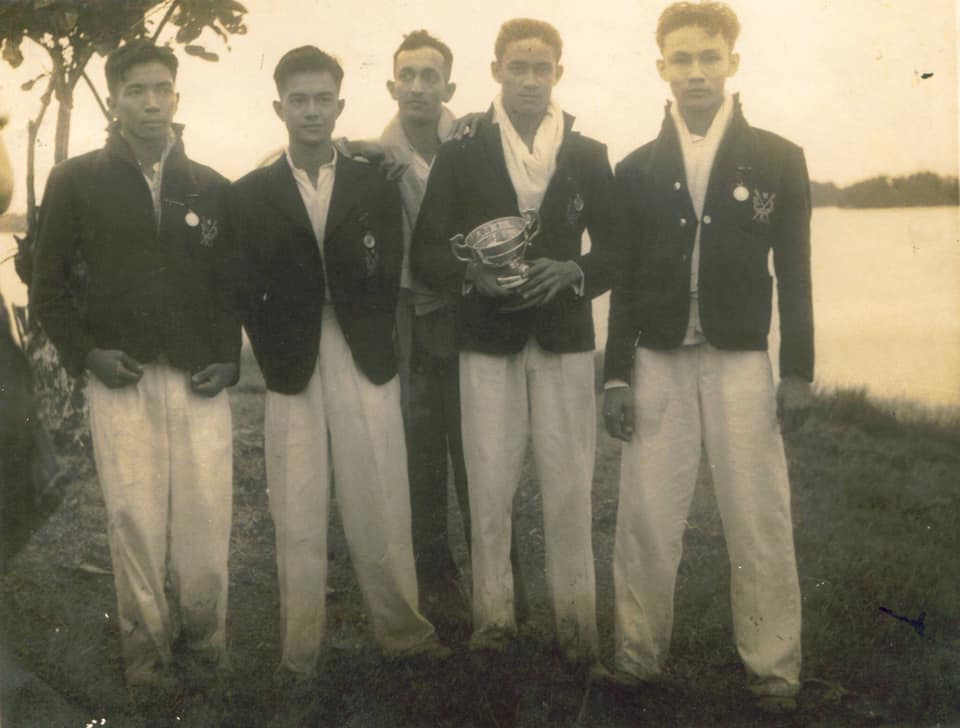
    • In the early days, RUBC awarded cups to the winning teams.
    • The President of the Union of Burma donated the “President’s Challenge Cup for Inter-Club Eights.”
      In the inaugural competition, RUBC beat the combined team of Calcutta Lake Club and Calcutta University Rowing Club.
    • The Prime Minister of the Union of Burma donated the “Prime Minister’s Challenge Cup for Inter-Club Fours.”
    • The Challenge Cups are listed in the commemorative issue for the 90th Anniversary for the founding of RUBC.
    • Sir Arthur Eggar donated a Pewter Cup for the Senior Novices.
      The Senior Novice Winners receive a brooch.
    • Gold, silver and bronze medals were awarded in the latter days.
      For obvious reasons, the medals are plated.
      P. Orr Tun Yin was a primary supplier of the cups and medals.
      U Hla Din and sons became the secondary source.

    Soccer

    • For World Cup, there was Jules Rimet Trophy.
    • For soccer in Burma, there was “Dunlop Shield (Daing)”

    Number of Medals

    • In some competitions, the two losing semi-finalists are awarded Joint Third prize.
      So, the number of bronze medals can be higher than the number of gold medals.
    • Due to the introduction of tie-breakers in most sports, we rarely have joint champions.
      In a few instances (e.g. the clock cannot discriminate the two winners), two gold medals were awarded to the joint champions.

    Miscellaneous

    • Fellowship
    • Lifetime Achievement Awards
    • National Awards
    • Literary Awards
  • Encyclopedia

    Encyclopedia

    by Hla Min

    Updated : Aug 2025

    Text Update on January 2, 2021

    U Hla Min

    Early Encyclopedias

    “Chamber’s Cyclopaedia” was one of the earliest encyclopedias. It covered 40+ subjects.

    In our younger days, we had “Pear’s Soap” and “Pear’s Cyclopaedia”. The company was probably building its brand name by supporting the publication of an encyclopedia.

    Encyclopedia Britannica

    My uncle had a set of “Encyclopedia Britannica”. It covers many topics written by SME (Subject Matter Experts). Yearly supplements were published. The final supplement came out a couple of years ago. There will no longer be printed editions. There will only be on-line subscription.

    Wikipedia

    • Wikipedia is a collection of encyclopedias in multiple languages.
    • The English edition of the Wikipedia is the largest.
    • The accuracy of the Wikipedia is comparable to that of the “Encyclopedia” thanks to the countless volunteer contributors and editors.
    • I was a volunteer to correct discrepancies (mostly entries on Burmese/Myanmar). For example, a young author wrote that St. Paul’s High School was the first among the De La Salle Schools in Burma. He was unaware that St. Patrick’s High School in Mawlamyaing was the first (and was established a few months earlier than St. Paul’s).

    No Absolute Perfection

    There is a slight chance that there are errors in an encyclopedia (or an equivalent “book of knowledge”). One author was unaware that Rajiv Gandhi was the elder son of Indira Gandhi. He was a pilot and entered politics only when his younger brother Sanjay Gandhi (touted as Indira’s confidante and successor) died in a plane crash.

    Collaboration

    The advent of Internet and the rise of “Collaborative Work” have lowered the time and cost to maintain encyclopedias.

    This image has an empty alt attribute; its file name is img_20181003_0001.jpg

    A few years back, I received a call to submit entries to “Encyclopedia of Asian American Folklore and Folklife”. I emailed to the editors that I was willing to help them on the Burmese section. They sent me four samples and asked me to send back one short article (not exceeding 500 words and with two or more references) on a chosen Head Word (e.g. Burmese American Festivals). They reviewed my article and accepted me. The remuneration was $10. I replied that I would like to have a copy of the 2-volume encyclopedia. A deal was struck. They would give me the encyclopedia if I submit at least 8 articles. Nine articles were accepted. Two articles were merged with the work of other authors. One author was a Burmese College Professor. Another was probably a graduate student, who inserted the wrong date for Martyr’s Day. The Editors promised to correct his error in another edition. I received a 3-volume encyclopedia (initially projected to be 2-volume) and an additional $10.

    Google Books

    • Some are not aware of “Google Books”.
    • If one goes to “Google Books” and search for my name, one can find the nine articles.

    Burmese Encyclopedia

    In my younger days, my parents bought me “Myanmar Swel Sone Kyan” (Burmese Encyclopedia).

    I heard that the “Myanmar Swel Sone Kyan” is under re-development with the help of SME (Subject Matter Experts).

  • Talk — Metta

    by Hla Min

    Updated : Aug 2025

    Video Broadcast on January 10, 2021

    Four Byamaso Taya

    • Metta
      Unbounded Love / Loving Kindness
    • Karuna
      Compassion
    • Mudita
      Altruistic Joy or Sympathetic Joy
    • Uppekkha
      Equanimity
    This image has an empty alt attribute; its file name is metta-sutta-1.jpg
    Book by U Thu Kha

    Metta

    • Pali term
      Written in Burmese as Myitta
    • Rendered as
      Unbounded Love
      Loving Kindness
    • One of the four Bhamaso Taya or Bhama Vihara (along with Karuna, Mudita, and Uppekha)
    • Practiced as a form of meditation
    • U Silananda‘s book on Protective Verses has a section on how to practice Loving Kindness Meditation.
    • Tipitaka Mingun Sayadawgyi recited the Two Methods of sending Metta.
      As mentioned in Metta Sutta
      Alternative: 528 “Metta” (13 x 4 x 12)
      They can be found on YouTube and CDs.
    • Metta Sutta” is one of the eleven Suttas in “Paritta Pali” (Protective Verses).
      Also known as Karaniya Metta Sutta
      Chanted at most Buddhist ceremonies.
    • Myitta is covered along with Thitsar (Truth) in Dr. Min Tin Mon‘s book “Myitta and Thitsar
    • U Thu Kha wrote a book on Metta Sutta.
    • U Jotalankara‘s book explains the 528 Metta.
    • A Physics teacher said, “Myitta So Dar Ah Hlyar Ah Nan Ma Shee Bay Mei Ah Thwar Ah Pyan Shee Bar Thay Dae.”
    • Metta is also used as a name or part of a name.
    • Metta is a Myanmar comedian.
    • Mettananda Vihara is a monastery in Northern California.
      Moved from Central Avenue, Fremont to Castro Valley.
    • Metta Vihari is an association that performs Chanting, and also offers food dana at selected gatherings.

    Practicing Metta

    By Way of LOCATION:

    • May I be well, happy and peaceful.
    • May all beings in this house be well, happy and peaceful.
    • May all beings in this area be well, happy and peaceful.
    • May all beings in this city be well, happy and peaceful.
    • May all beings in this country be well, happy and peaceful.
    • May all beings in this world be well, happy and peaceful.
    • May all beings in this universe be well, happy and peaceful.
    • May all beings be well, happy and peaceful.

    By Way of PERSONS:

    • May I be well, happy and peaceful.
    • May my teachers be well, happy and peaceful.
    • May my parents be well, happy and peaceful.
    • May my relatives be well, happy and peaceful.
    • May my friends be well, happy and peaceful.
    • May the indifferent persons be well, happy and peaceful.
    • May the unfriendly persons be well, happy and peaceful.
    • May all meditators be well, happy and peaceful.
    • May all beings be well, happy and peaceful.

    Metta Sutta

    • Third sutta in “Paritta Pali”
    • also referred to as Karaniya Metta Sutta
    • Desirable qualities of a Practitioner
    • Loving Kindness Meditation
    • Formal
      Translation from Pali into Burmese/Myanmar and English
    • Informal
      Books by Saya U Thu Kha and Saya Dr. Mehm Tin Mon

    Chanting

    Two ways (as per Mingun Tipitaka Sayadawgyi)

    • Referred in Metta Sutta
    • 528 “Metta” (13 x 4 x 12)
    This image has an empty alt attribute; its file name is pp-12-13.jpg
    This image has an empty alt attribute; its file name is pp-14-15.jpg
    Buddhist Dictionary

  • Talk — Medical Education

    Talk — Medical Education

    by Hla Min

    Updated : Aug 2025

    Video Broadcast on January 31, 2021

    Dt. Thane Oke Kyaw Myint
    • LMP (Licensed Medical Practitioner)
    • MBBS (Calcutta)
    • MBBS (Rangoon) offered by the Faculty of Medicine, Rangoon University
    • “Fast track” MBBS for LMP
    • Medical Branch (of RU) in Mandalay
    • MBBS (Mandalay)
    • New Education System
      Institute of Medicine (1)
      Institute of Medicine (2)
      Mandalay Institute of Medicine
    • MD
    • Ph.D
    • Membership
      MRCP, MRCOG …
    • Fellowship
      FRCP, FRCS …
    • Physicians / Medicine
      Col Min Sein (Dean)
      Major Shwe Zan
      Dr. Maung Gale (Dean)
      Dr. Maung Maung Gyi (Rector)
      Dr. U E (Rector)
      Dr. Hla Myint (Aba)
    • Surgeons
      Dr. Ba Than (Police Surgeon, MS of war-time RGH, Rector)
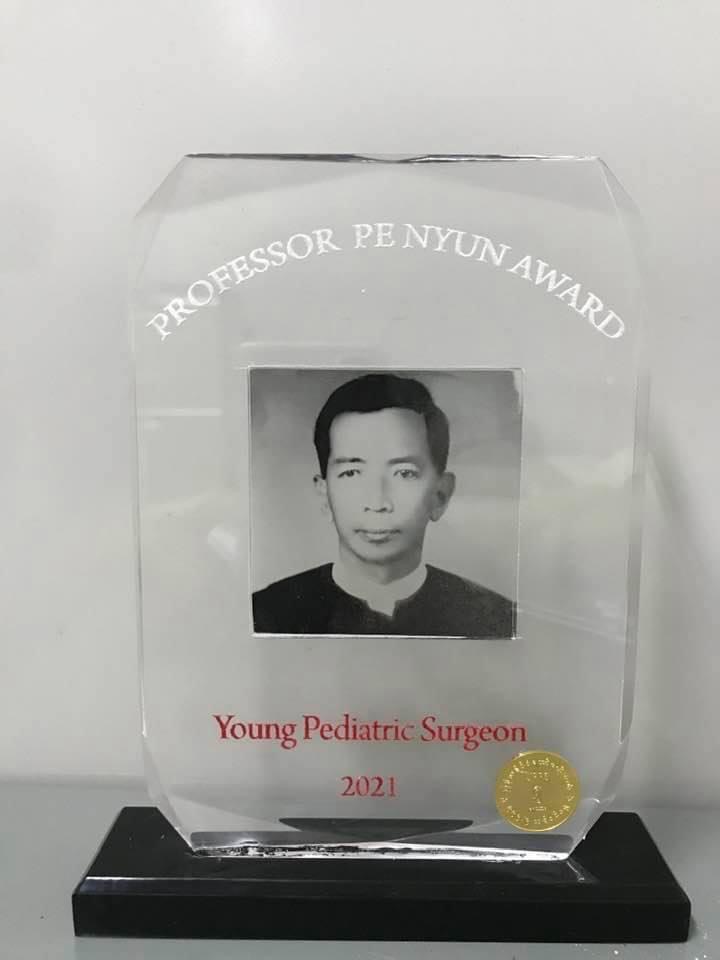
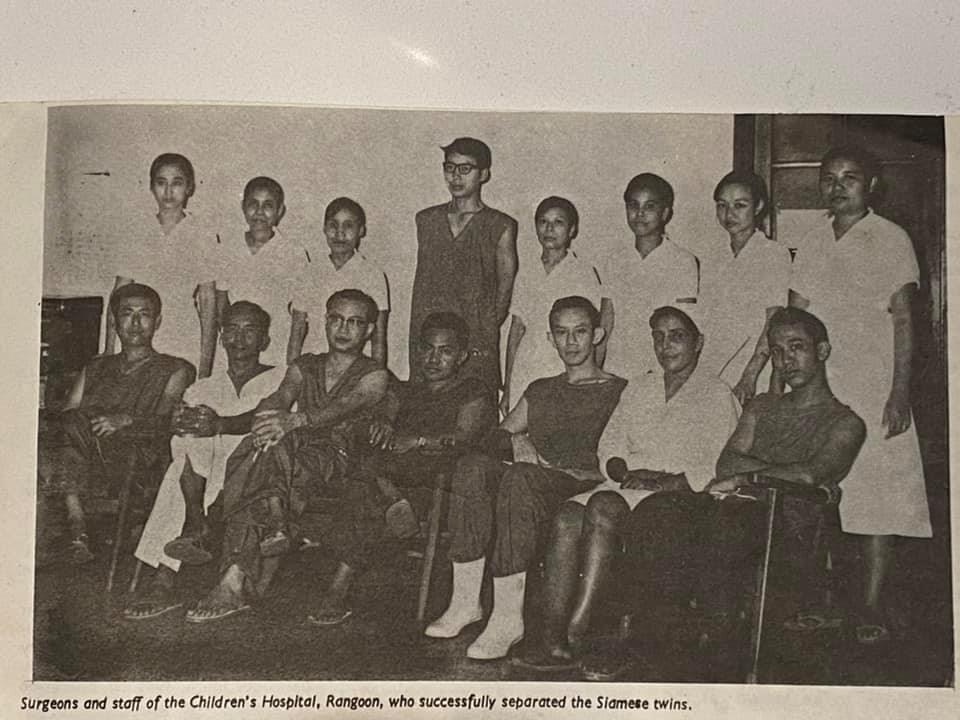
      Dr. Pe Nyun (Ped)
      Dr. Htut Saing (Ped)
      Dr. Maung Maung Taik(Forensic)
      Dr. Min Lwin (Ortho)


  • Talk — Luyechun

    Talk — Luyechun

    by Hla Min

    Updated : Aug 2025

    Video Broadcast on November 14, 2020

    Inlay Luyechun in 1965

    Introduction

    • Luyechun is an award presented by the Ministry of Education to selected “outstanding students“.
    • The initial program ran from 1964 to 1988.
    • A new program was established a few years back.
    • I was selected as RIT Luyechun in the summer of 1965.
    • I was invited as a Guest Speaker to the Ngapali Luyechun Camp in the summer of 1988.

    Summer of 1964

    • The first Luyechun camp was opened at Ngapali in the summer of 1964.
    • It was for Luyechuns for 7th, 8th, 9th and 10th standards.

    Some Luyechuns

    • Ko Win Myint (Mergui, UCC)
    • Ko Win Aung (TTC, Mech 70, RIT Swimming and Water Polo)
    • Ko Kyaw Zaw (TTC, EC72, GBNF)
    • Ma Pwint Than (Loikaw, EP71)
    • Ko Oak Soe Kha (IM1, Swimming and Water Polo)
    • Ko Aung Myint (Mdy)
    • Ko Tin Soe (Ygn, DSA, Attaché)

    Summer of 1965

    • The second Luyechun camp was opened at Inlay in the summer of 1965.
    • For the first time, Luyechuns were selected for the Universities and Institutes.

    Staff at Inlay Camp

    • U Aung Gyi (Maths, MASU)
    • Dr. Daw May May Yi (IM2)
    • Daw Po (Burmese)
    • Dr. Naing Tint San (Med Officer)
    • U Khin Aung
    • U Khin Maung Htwe
    • U Than Tun Aung Hlaing
    • Lu Nge Yay Yar / Youth Affairs

    Some Luyechuns

    • Ma Than Than Tin (Cherry Hlaing, First in Burma in 1964, IM1)
    • Ko Khin Maung U (First in Burma in 1963, IM1)
    • Ma Anita Aye Pe (IM1)
    • Ko Kyaw Sein Koe (IM1, GBNF)
    • Ko Thein Win (IM2)
    • Ko Soe Aung / Soe Min Thein (IM2)
    • Ko Tun Naung (BDS, Stereo)
    • Ko Tin Hlaing (MASU, Le Dwin Tha Saw Chit, Literary Awards)
    • Ma Khin Aye Myint (RASU)
    • Ma Mu Mu Win (RASU)
    • Ko Min Oo (Second in Burma in 1963, RASU, Mathematics Professor in Germany and Canada)
    • Ko Ye Myint (RASU)
    • Ma Khin Aye Than (RASU, GBNF)
    • Ko / Maung Aye (RASU, Diplomat)
    • Ko Mya Than (RASU)
    • Ko Zaw Min (RIT)
    • Ko Hla Min (RIT)
    • Ma Khin Than Myint Tin (RIT)
    • Ko Sein Shwe (RIT)
    • They attended the Inlay camp together with the 10th standard Luyechuns.
      Ko Than Sit (Sagaing, Liver Foundation, GBNF)
      Ko Uttam Singh (Myitkyina, RIT, NASA)
      Ko Win Myint (Letpadan, RIT, Bogyoke / Dy Minister)
      Ko Aung Myint (Mandalay)
      Ko Aung Kyaw Nyunt (Myingyan)
      Ko Kyaw Myint (Yamethin)
      Ko Kyaw Myint (Delta)
      Ko Nelson Kaw (Taunggyi)
      Ko Thein Lwin
      Ko Hla Kyaing (Yangon)

    • There were two other camps : Rangoon Combined Camp and Ngapali Camp (for the lower classes).
    • The staff members from Lu Nge Yay Yar (Youth Affairs) were responsible for the logistics.
    • Selected sayas and sayamas took charge of the Luyechuns.
      They include Dr. May May Yi (then at IM(2), later DG of BMRI), Daw Po (later Professor of Burmese), and U Aung Gyi (MASU Maths).
    • There was a mishap when one student got injured during a “mandatory” exercise program.
    • For this and other reasons, the later Camp Commandants were chosen from Sayagyis (e.g. U Ba Toke).

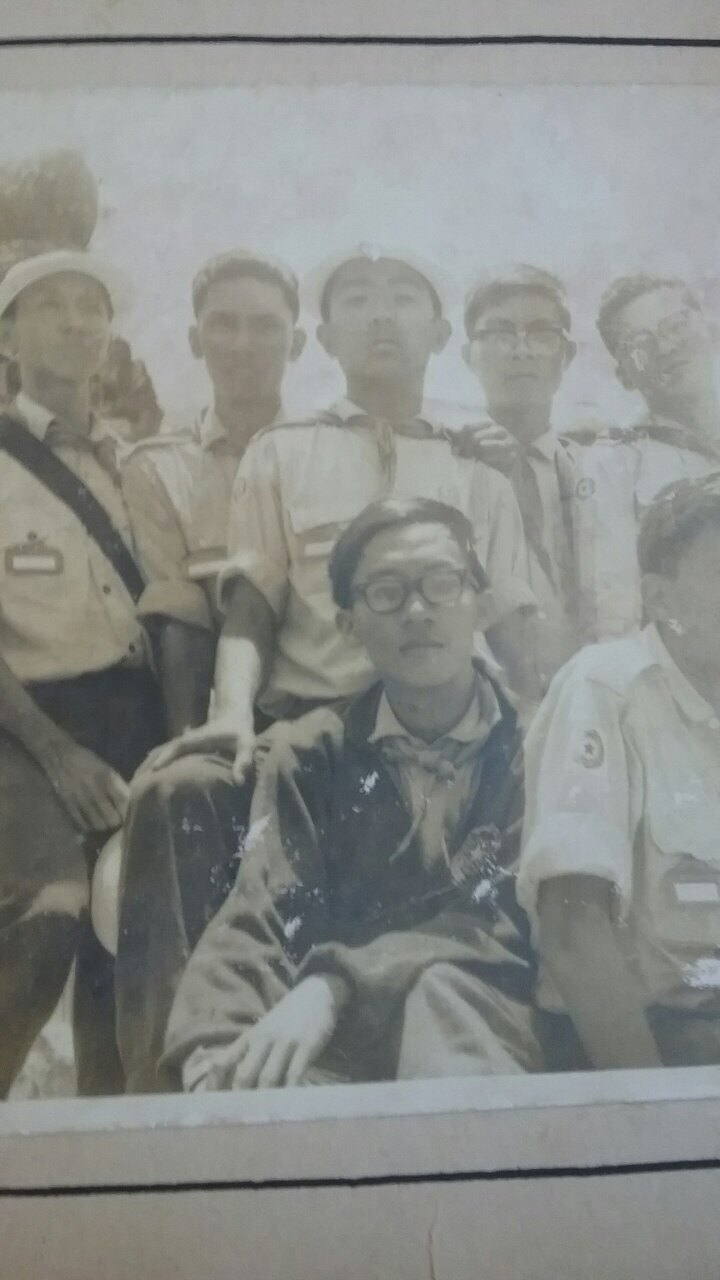
    Front : Than Sitt, Sein Shwe, Min Oo, Nelson Kaw, Kyaw Myint
    Back : Soe Aung, Aung Kyaw Nyunt, Aung Shwe, Hla Min, U Khin Aung

    Front : Than Sitt, Aung Kyaw Nyunt, Min Oo
    Back : Soe Aung, Kyaw Myint, Sein Shwe, Ye Myint, Hla Min
    This image has an empty alt attribute; its file name is lyc-1.jpg
    Front : Hla Min
    Back : Aung Myint, Aung Kyaw Nyunt, Tin Maung Htwe, Ye Myint, Sein Shwe
    • Tekkatho Tun Naung (1st year BDS, madolin) and Ko Sein Shwe (4th BE Mech, dobat, harmonica, flute) were some of the entertainers for the Luyechun concert. U Aung Gyi (Maths, MASU) wrote the “Than Gyurt”.
    • Ko Tin Hlaing (Le Dwin Thar Saw Chit, 1st year Burmese, MASU) was a notable contributor to the daily pamphlets.
    • Some high school Luyechun students later joined RIT. They include Ko Win Myint (later Bogyoke), Ko Aung Win (later Saya), Uttam Singh (later Ph.D working at NASA), Ma Pwint Than (later EPC), …
    • The guest lecturers include Saya U Thein Han (Zawgyi), Saya Dr. Nyi Nyi, and U Thu Ta (Met and Hydro DG).
    • Trips include Lawpita Dam and selected factories and departments.

    Miscellaneous

    • Htut Kwan
    • 7-time winner
    • 6-time winner
    • 2-time winner
    • Association
    • Gatherings
    • FB Group
    • Support new generation of LYC
    • Donation for prevention / treatment of COVID
    • Database of LYC
    • Active members
    • GBNF (Gone But Not Forgotten)

    Guest Lecturers in 1965

    • Dr. Nyi Nyi (Secretary / Dy Minister)
    • U Thu Ta (DG, Met and Hydro)
    • U Thein Han (Zawgyi)

    Guest Lecturers in 1987/88

    • U Kyaw Myint (DHE)
    • U Hla Min (UCC/DCS/ICST)

    Luyechun Association

    • A few years back, Luyechun (1964-1988) Association was formed.
      The association meets one or more times a year.
    • There have been Annual Dinner Gatherings.
    • It has a Facebook group.
    • There are “Then and Now” photos of some Luyechuns.
    • Some are “Hturt Kwan” (Multiple) Luyechuns.
      Some were selected Luyechun for a consecutive number of years.
      A few won the award six or seven times.
    • Some Luyechuns have passed away.
    • Dr. Kyaw Sein Koe (IM 1) passed away early.
    • H.E. U Myint Thaung and U Myint Thin (M71, RIT) are some Luyechuns who passed away recently.

    Another Trip to Inlay in October 1965

    • As part of the award, one received a 50% travel discount.
    • During the October holidays in 1965, I took on the offer from Ko Aung Kyaw (Peter Pe, SPHS, star in one movie) to join him and Ko Maung Maung Aye (IM(1), GBNF) to visit his cousin doctor in Inn Paw Khone (Inlay village).
    • I visited Phaung Daw-U again with a difference (as expressed in my poem).

    PHAUNG DAW-U FESTIVAL

    Phaung Daw-U, oh Burma’s grandeur
    Can truly make our hearts sublime
    Its mystic charm and rhymeless splendor
    Have firmly stood the test of time

    It lies deep in the heart of people
    It gives them courage and inspiration
    No wonder this festival has no equal
    It promises joy and veneration

    On board the Karaweik so scintillating
    Stood the four images of Lord Buddha
    For the Noble Truth are we vindicating?
    What lies deep under the completed tour?

    But one statue was left behind
    Because in writings we do find
    That should it ever leave the shrine
    There will be thunder and storm
    Thus a happy reunion on the morn of the full moon of Thadinkyut

    From floating islands the leg rowers came
    To take part in the race
    With their muscular frame, with might and main
    Their oars flashing at a rapid pace

    Festivities last all night long
    Dances to the company of ozi and gong
    Oh, prayers that fill the cool evening air
    May loving kindness prevail everywhere

    Last Trip to Inlay in January 2020

    • I was invited to join the 2020 Professional Speakers Association (PSA) Tour to selected cities in Upper Myanmar.
    • Several hotels sponsored part of the tour and/or provided discount rates to the Tour group.
    • At the end of the tour, we visited Inlay.
      Two PSA sayas provided a short training course for the employees of the hotel.
  • Hack

    Hack

    by Hla Min

    Updated : Aug 2025

    U Hla Min

    In the early days of Computing, a Hack is defined to be a “useful and/or beautiful piece of code.”

    Hacker

    • Some students, who worked at Massachusetts Institute of Technology (MIT) Computing Laboratories, preferred working on code rather than attending courses.
    • They feel proud of their Hacks and are addressed as Hackers.
    • Over time, Unethical Hackers emerged.
    • Ethical Hackers also rose to defend against the Unethical Hackers.
    • Most people do no know or care about the difference between Ethical and Unethical Hackers.

    Ethical Hackers

    • They try to break the security of computer systems and applications.
    • They propose solutions to defend the possible attacks of Unethical Hackers.
    • They are known as White Hats.

    Unethical Hackers

    • They inflict damage to hardware, software and data systems.
    • They may steal and sell sensitive information.
    • One study says that it is safer and lucrative to be a Criminal Hacker (also referred to as Cracker) than selling drugs (which can lead to imprisonment and death in some countries).
    • The underground business for malware (viruses, Trojan horses, …) is valued at multi-billion dollars.