Blog

  • Sixth BE (1969 – 70)

    Sixth BE (1969 – 70)

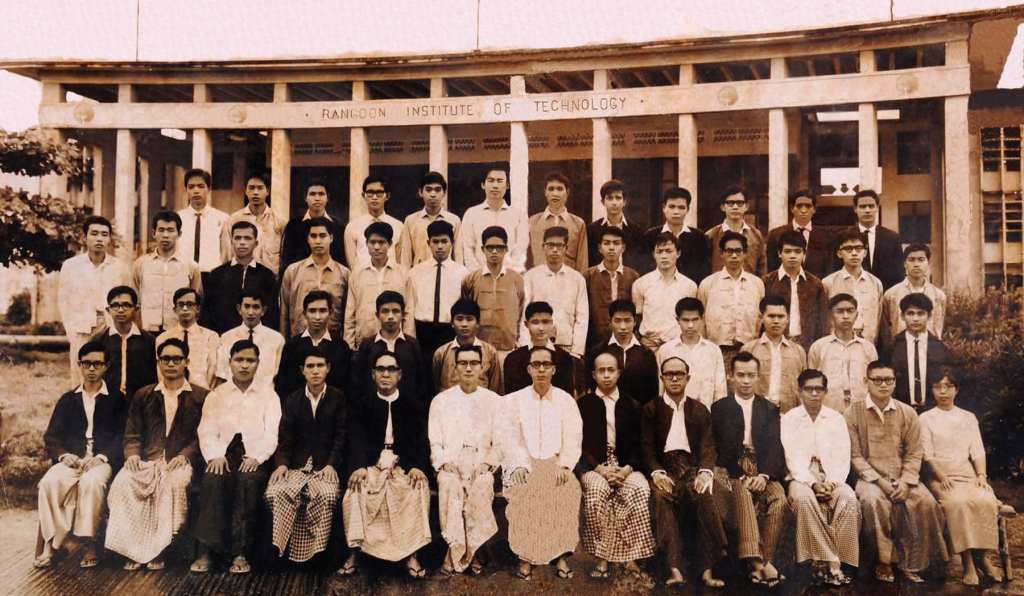
    by Zaw Min and Ohn Khine

    Updated : June 2025

    U Zaw Min (Standing 2nd from Left)
    U Ohn Khine

    The academic year started around October 9th for our final year. Ko Aye Win Hlaing (“La La”, Abel, EP 65 intake), picked me up at the central train station, and took me to his home for dinner. Afterwards, he drove me to the RIT hostels. I had again applied for hostel accommodation paired with Ko Cho Aye (M). We got lucky and were assigned single rooms at F Block, which had bathrooms attached. That was great. No more going to the common bathrooms or showers. I was in F-10 and Ko Cho Aye was in F-9. Sai Aung San (Met) my room mate from 3rd year and Sai Maung Lin (Ag) were in F-1 and F-2.

    Rowing

    At the Boat Club, Ko Aung Lwin (Jasper, C) got me to be accepted as a “Half Green”. No more rowing wooden tubs for me. I had now advanced to the “Shells”, after doing the required Clinker outings. Ko Aung Lwin told me he was putting me on the RIT Eights crew. We set out to do a practice run, I was assigned position number 6, on the stroke side. George Htoon Pay (Aung Tun Oo, M, 65 intake), was the Cox that guided the boat and shouted out commands. The distance for the Eights competition was 2000 meters, the distance from the University Boat club to Dubern beach. We rowed out to Dubern Beach and from there, rowed back as if we were in competition with another boat. Half way back, I began to tire and did not put enough power into my strokes. The Cox, who was watching, yelled out “Number 6”. I tried to put power into my strokes but soon slacked off again. “Number 6” the Cox yelled again.

    The next day, we were to compete against RASU as part of the Inter-Institute competition. Ko Aung Lwin (C) told me he was putting me into reserves. That was the closest thing at RIT that I came to achieving something in sports. Unfortunately, due to my own fault, I did not get the chance to represent RIT.

    In rowing, you were supposed to put the oar into the water at right angles to the water surface. If you put the oar at another angle with the water surface, the oar would slice into the water, unbalancing the boat. We called it “Dip Yike”(or “Catch Crab”). Normally, it could happen if you get very tired and could not control your oar, or if for some reason you were not paying attention. If somebody did a “Dip Yike” during competition, the boat would become temporarily unbalanced and lose momentum. In most cases, your boat was almost sure to lose the race if that happened.

    Ko Aung Lwin (C) was right to replace me. I did not have the stamina to go the distance. The irony was that my replacement, an experienced “Full Green”, did a “Dip Yike” at the very start of the race against RASU. The RIT boat was left standing at the starting place while the RASU crew rowed away to victory. For a “Dip Yike” to happen at the very first stroke, that person, my replacement, must not have been paying any attention.

    In the second half of the year, I teamed up with 65 intake students on a “Fours”. I was in the number 2 position, stroke side. The distance for the “Fours” competition was 1000 meters. We were in competition against a “Fours” crew from RASU for the Monsoon regatta. It was not an Inter-Institute competition. It just happened that all of us were from RIT and the other crew from RASU. We were leading by a boat length when we were about 150 meters from the finish line. We heard clapping and shouts of “RIT” “RIT”. It was a female “Eights” crew from the Inst of Economics, sitting in their boat and cheering us. Suddenly, our boat shook and shuddered as one of us had a “Dip Yike”. We lost the race. After the race, our Number 3, on the bow side, told me he turned to look to see who were clapping and cheering and dipped his oar improperly, causing the “Dip Yike”.

    Saya U Thein Aung (Micky Tan, SPHS59, Physics, RASU), who was running the Boat club, brought a Laung Hle. The Laung Hle had a leak and he had it repaired. Ko Myo Khin (C, one yr senior in 64), asked for permission to take the Laung Hle out for a trial. He recruited me, Ko Yit Moe (C65 intake) and two others from RIT and the five of us rowed the Laung Hle out to the center of the lake. A Laung Hle is difficult to keep in balance, but probably due to the fact that there were only 5 of us, it glided in the water smoothly and in perfect balance. Unfortunately, the leak had not been repaired properly and the Laung Hle started to sink. We could here a big “Wah Ha Ha Ha” from the people looking at us from the Boat club, jeering at us when the Laung Hle sank. Luckily, a rescue row boat came out from the nearby Yacht club and threw us a line. They towed the Laung Hle to the Yatch club side, across the water from the University boat club while we swam along beside the towed Laung Hle. It was dark when we reached land and had to walk around to get back to the Boat club.

    Track and Field & Some Rum

    I also had another Kauk Yoe Mee project. I tried to compete in the 400 meters race at RIT. In the heats, I ran for 300 meters looking at the heels of the great RIT athlete Ko Mg Mg Thaw (EP). After 300 meters, my stamina gave out. Sayagyi U Mg Mg Than (T, President of RIT Track and Field association) commented that I was able to run only 300 meters since I had only trained to run 300 meters during practice. I was supposed to run 500 meters in practice if I wanted to compete in the 400 meters.

    Although my efforts came to nought, Sayagyi U Mg Mg Than invited me to a cocktail party that he was giving for the RIT Track and Field athletes at his house. Ko Yit Moe (C 65 intake), Ko Oo Myint (Mn), Ko Zaw Win (M or Mn) were there. Female athletes, Ma Nang Kam Ing (A), Ma Lei Lei Chit (Ch) were probably there together with Ma Nyunt Nyunt Shwe (E, from Moulmein, about 3 years junior).

    For the first time in my life, I had a hard drink (Rum). I had drunk only beer before. After the party, I was walking back to the hostels with Ko Yit Moe when he started to stagger. I put my left arm around his waist, put his right arm around my neck and grasped it with my right hand. We walked like that until we reached D Block, Ko Yit Moe’s home Block. He could not climb up the stairs so I lifted him up in my arms and carried him all the way up to the 3rd floor and put him on his bed. Coming back to my room in F Block, someone told me Ko Oo Myint (Mn) was getting loud and boisterous in front of the main RIT building. Since we had drank together, I somehow felt responsible and went there, but found that Ko Zaw Win (?) had used reverse psychology to calm Ko Oo Myint (Mn) down without incident.

    Study Hard

    During our final year, all of us studied hard. We knew that we must learn as much as possible about the subjects that were taught in our final year so that we may be able to work without any problem after we graduated. In addition, Ko Win Thein (EP, GBNF) and I would go to “Ava House” bookstore on Sule Pagoda road and scrounged around for good technical books. I managed to get my hands on a good book. It was about industrial controls, which I found to be very helpful when I started working.

    Doing these extra studies also created a disappointment for me. I had bought a book from the central book shop titled, “Principles of Automatic Controls” and had gone through all the problems in it. There was, however, one problem that I could not solve. It was about a Motor- Generator Control set up. We had been taught the “Ward – Leonard Motor Generator Control System” by Sayagyi U Tin Swe in RIT. This set up was different. I passed over it thinking it was not relevant since we were not taught that type of system. Got an unpleasant surprise at the finals when this exact problem was asked. That turned out to be the only problem I could not solve for that subject. I felt like a person that had a winning lottery ticket and did not know about it.

    No time for relaxation

    After the last day of the finals, I thought of relaxing with my friends for a few days before leaving. That was not to be.

    My eldest brother Saya U Myo Min (Geology Dept. ,RASU) showed up that very evening and told me to pack up and leave immediately. Perhaps he was afraid that I might again be falsely accused of stirring up trouble, like at the time of the unexpected school closing in December 1969 when someone made a false report to the school authorities that I was going around the hostels stirring up the students. He gave me money to rent a Bo Bo Aung (higher priced taxi). Ko Cho Aye (M) helped put all my belongings on it. So it was with great sadness that I bade my final good bye to the RIT Hostels that had been my home away from home for the past 5 plus years.

    Conclusion

    I have no regrets for the way I had spent my time at RIT. Not studying much during my first two-three years, getting involved in one activity after another, being a “Jack of all trades and Master of none” in sports. The only thing I regretted doing was that incident where I got physical with the student from the 66 intake, which I wished I had never done.

    I had entered RIT as a wild eyed teenager, just becoming 17 years of age the month I entered, and now I was leaving as a mature grown man.

    The life I had at RIT was very memorable. In my eyes, I can still see the Sayas, the Sayamas and our friends as they were then. The laughter that we had together is still echoing in my ears. It is a part of my memory that will remain with me until the sun sets on my life.

  • Sports

    Sports

    by Hla Min

    Updated : June 2025

    (1) Aung San Stadium

    Burma Athletic Association (BAA) has a stadium to host

    • Soccer games
    • Track and Field
    • (Later) Indoor games

    It was renamed Aung San Stadium to honor Bogyoke Aung San.

    Games

    • League Championship (for First Division teams) : The lowest teams are relegated to the Second Division. They are replaced by the Top Finishers of the Second Division.
    • Dunlop : Knock Out Tournament
    • Inter State and Division (ISD) Tournament : Shan States won the inaugural tournament in 1952. Suk Bahadur was a star player and later became Captain of the Burma Selected. He was also selected as an Asian All Star.

    Stands

    • My uncle U Win Tin (GBNF) would take me to watch soccer matches.
    U Win Tin (Left)
    • Watched selected matches (e.g. Dunlop Trophy) & some International matches (e.g. 2nd SEAP Games).
    • The Northern and Southern Stands cost about fifty pyas.
      Provided limited scope and vision, but have roofs.
    • Grand Stand costs about five kyats. Rare treat to watch from the Grand Stand (especially near the center line).
    • The Open Stand opposite the Grand Stand is a compromise for about K1.50. Had to carry umbrella or wear raincoat for matches during the Rainy Season.

    Events

    • It was the main venue for the SEAP Games hosted by Burma in 1961 and 1969.
    • We had to march with the Marching Band from St. Paul’s High School (SPHS) to the Aung San stadium to perform Drill as part of the “Education Day” Celebrations. Dennis Stevens (brother of my classmate George Stevens) played the Big Drum. Twin brothers Bo Kyi and Bo Kyi were the drummers. Jerry Hin Hwa, Orlando Thein, Win Maung and Bernard Taylor played selected musical instruments.

    (2) Badminton

    Burma Selected

    • Kyi Nyunt : Burma Champion in Singles and Doubles; Won medals in SEAP and Asian Games
    • Sai Kham Pan : No. (2) in Singles; Doubles Champion with Kyi Nyunt; Led RIT to Inter-Institute Championship
    Kham Pan

    RIT Badminton

    RIT Badminton
    • Myint Kyi (GBNF), Bishnu Shahi (GBNF), Khin Maung Nyo, Tommy Shwe (GBNF)
      represented RIT in Badminton
    RIT Team
    • Saya U Thein Lwin (EE, GBNF) was President of RIT Badminton Association
    • RIT won the Inter-Institute Trophy. The team was led by Sai Kham Pan.
    • Kham Pan would bring back shuttle cocks, which were still good but discarded at the Burma Selected Training Camp, for his hostel mates.
    • Due to tight schedules for some tournaments overseas, Kham Pan had to take books along to study for the examinations. Had excellent foot work and strong wrists. Needed training partners at RIT. Myint Sein (M69) was his partner in training and competition. Khin Maung Win (Sargalay, EP69) was his reliable training partner; he would be given 10+ bonus points for the 15 point game.

    (3) Basketball

    RIT, RASU & Burma Selected

    • U Thein Han (RIT Maths, elder brother of Khin Khin Kyu (A67)) was Burma Selected in his student days.
    • U Soe Win (EP69, GBNF) was Captain of the RIT Basketball team. Tommy (69er, GBNF) was a member of the team.
    • Lyo Kyin Sein (Mabel Lee, T69) represented RIT in Basketball.
    • San San Myint (Helen, T69) rooted for the RASU Basketball team & Sam Wu, who played not only for RASU, but also for Black Cat and the Burma Selected. They live in Fremont, California.

    Birth of Basketball

    • Basketball was invented by James Naismith (born in Canada) at YMCA in Massachusetts, USA in 1861.
    • He later wrote the rules for the game.

    Basketball Championships

    The Basketball championships include

    • NCAA Tournament (“March Madness”) : College teams are organized into Four Regions (each with Seeds 1 to 16); The Knock out tournament has First round, Second round, Third round (Sweet sixteen), Quarter finals, Semi finals (Final Four) and Finals.
    • NBA Post-season (late April to mid June) : Eight teams each from the Eastern Conference and Western Conference are seeded 1 to 8. The tournament consists of First round, Second round (Conference semi-finals), Conference Finals and NBA Finals. Boston Celtics had won the most NBA titles to date. In 2019, Toronto Raptors became the first Canadian team to win the NBA title.
    • Summer Olympics : 1992 Barcelona Olympics featured the “Dream Team” from US.
      The team comprised of Larry Bird (Boston Celtics) & Magic Johnson (Los Angeles Lakers) as Captains; Michael Jordan & Scottie Pippen of the Chicago Bulls; Karl Malone & John Stockton of Utah Jazz; Patrick Ewing (New York Knicks); David Robsinson (San Antonio Spurs); Charles Barkley (Philadelphia 76er); Chris Mullin (Golden State Warriors); Clyde Drexler (Portland Trailblazers) & Christian Laettner (Duke University). Chuck Daley (Detroit Pistons) was the Head Coach. Mike K (Duke University) was an Assistant Coach.
    • World Championship.

    Players

    • The five-on-five (with five players on each team) is the most common.
    • The five players are usually called Point Guard (PG), Shooting Guard (SG), Small Forward (SF), Power Forward (PF) and Center (C).
    • There are variations such as the “Small Ball Lineup” which substitutes a Center with another Guard or Forward.

    Back Court

    • The Back Court is made up of a Point Guard & a Shooting Guard.
    • Point Guard handles the ball and usually distributes it to open players. Earvin “Magic” Johnson and Steph Curry are some of the well-known Point Guards who helped their teams win multiple NBA titles.
    • Shooting Guard is an excellent scorer. Michael Jordan led Chicago Bulls to six NBA Championships (with two 3-repeats). Klay Thompson, “Splash Brother” of Steph Curry, is a Shooting Guard and an excellent defender.

    Front Court

    • The Front Court is made up of a Small Forward, a Power Forward & a Center Forward.
    • Scottie Pippen, as Small Forward, helped Michael Jordan win six Championships.
    • Kevin Durant, as Small Forward, helped Golden State Warriors win back-to-back titles in 2017 and 2018. He won Finals MVP award for both years.
    • Dennis Rodman, rebounding Champion, was Power Forward on three Chicago Bulls Championship teams. He also won two NBA titles with the Detroit Pistons.
    • Draymond Green, as Power Forward, helped Golden State Warriors win NBA Championships in 2015, 2017, 2018 and 2022.
    • Wilt Chamberlain, famed Center, scored 90+ points in a single game.
    • Bill Russell (Center, Boston Celtics) won 11 NBA titles as player and coach. The Most Valuable Player (MVP) Trophy is named after him.

    Techniques

    • The techniques evolve over the years.
    • The “Triangle Offense” of the Chicago Bulls gave over to the “Small Line-up” without a “true” center.
    • 3-point shooting from beyond the arc now make or break games.
    • Some teams play two Centers. Some use three or even four guards at a time.
    • 2025 NBA Finals is being played with two teams, which had not won a Title. Oklahoma City Thunder’s old team was Seattle Supersonics. OKC would not acknowledge the Supersonics Title as its own. Indiana Pacers made to the Finals 25 years ago.

    (4) Body Building

    • Kaya Bala ကာယဗလ Members
    • Commander Maung Maung :
      First Mr. Burma (Maung Bama မောင်ဗမာ)
    • U Ba Kun (Maung Bama) : became a movie actor
    • Dr. Kyaw Sein (M65) managed the RIT Weightlifting & Body Building Team.
    • Thein Aung (Met72) won Mr. RIT in 1968.
    Thein Aung

    (5) Boxing

    Rangoon University Boxing Club

    The club was founded (or re-established) by

    • Myint Khine (Norman, SPHS57, C63)
    • Tin Wa (SPHS57)
    • San Aung (Sonny, St. Albert’s 58, formerly SPHS)
    • Hla Ngwe Tin (Frankie, SPHS59)
    • and their friends.

    Boxing Champions

    • Myint Khine (Norman, Civil)
    • Tin Wa (Chemistry)
    • San Aung (Sonny) — became UBA Senior Pilot
    • Hla Ngwe Tin (Frankie, Physics Hons)
    • Myint Thein (RASU Chemistry)
    • Maung Maung Thaw (RIT Class of 70)

    Burma

    Kyar Ba Nyein, Thein Myint, Tin Tun and Stanley Majid are some boxers who represented Burma in international competitions (SEAP, Asian Games, Olympics).

    “Kyar ကျား” stands for “Tiger” as well as “Checkers”. Per his request, Ludu Daw Ah Mar wrote about Kyar Ba Nyein in her book “Mandalay Thar and Mandalay Thu” but only after Kyar Ba Nyein’s death. Kyar Ba Nyein competed in International competitions and was a certified referee and judge. He founded a club and coached young boxers (which later became champions). He also sponsored Myanmar Let Hway matches.

    World

    Rocky Marciano is the only undefeated Heavyweight Champion. He inspired Sylvester Stallone to make “Rocky Balboa” movies.

    Muhammad Ali won the 1960 Olympics Light Heavyweight title as Cassius Clay Junior. He became “Louisville Lip” for predicting the round in which his opponent will be knocked out. He beat Sonny Liston to become the World Heavyweight Champion. He was stripped off his title for refusing to join the Draft. He was Champion thrice. He had Parkinsonism and ailments attributed to having taken many blows to his head. There are books about “I am the Greatest”. He is known for “Float like a butterfly. Sting like a bee” and for lighting the Olympic Torch in 1996 Olympics held in Atlanta, Georgia, USA.

    (6) Gymnastics

    • U Myint Aung
      Won several Golds in SEAP

    Competition

    • Men : Individual & Team
    • Women : Individual & Team

    Highlights

    • Men : Japan, China …
    • Women : Soviet, USA …
    • Olga Kolbert
    • Nadia Commenchi
    • Simon Biles

    (7) Hockey

    here are two kinds of Hockey :

    • Field Hockey
    • Ice Hockey

    Field Hockey

    • In our younger days, Theinbyu Ground was used for Field Hockey.
    • Suk Bahadur (Captain of the Burma Soccer Team) and Dr. Harry Saing (Htut Saing, Past Captain and Gold of RUBC, Pediatric Surgeon of “Ma Nan Soe – Ma Nan San” fame as Chief Assistant to Dr. Pe Nyun) also excelled at hockey.
    • Rangoon University and later the All Universities and Institutes had hockey teams.
    • For some time, India and Pakistan were power houses in hockey. Several nations have overtaken them.

    RIT Hockey

    • According to Ko Khin Maung Zaw (KMZ, EC76), he was the last defender of the RIT Hockey team. Ko Thura Thant Zin (RUBC Gold, Past President of BASES, M76) was the goalkeeper.
    • The photo of some RIT Hockey players in the 70s was provided by KMZ.
    This image has an empty alt attribute; its file name is rit-hockey.jpg

    Standing L-R: Thein Lwin (EP77-CA/USA), Tin Myint (), Pyo Win (M76), Htay Aung (M76-Aus??), Saya U Tin Hlaing (M), Tin Oo Thein (C7x-Australia), Khin Maung Zaw (EC76-WA/USA), Thein Htun Aung (EC76-CA/USA), ??, Ebrahim Mehta (Met76-NY/USA)

    Sitting L-R: Thein Zaw (??), Moe Zaw, Soe Aung (M75-CA/USA), Moosa Mehta (EC73-WA/USA), Win Bo (EC76-TX/USA), Nay Win (EP7?-??), Dudley Moore, Win Aung Nyunt @ Cho Pi (EP76-GBNF)

    Ice Hockey

    • NHL (National Hockey League) is made up of ice hockey teams from US and Canada.
    • A game is played over three periods of 20 minutes each. A tied game will go into overtime.
    • At any given time, six players from a team are on the ice. Typically, there is a goalkeeper, two backs, two wings and a center forward. Power plays occur when a player is penalized for a specified period.
    • The teams vie for Stanley Cup.

    (8) Judo

    • Myint Lwin (Charles) :
      University, Burma
    • Tin Maung Aye :
      University, Burma
    • Most Champions are from the Army

    (9) Rowing

    • Tin Htoon (S) and Harry Saing (B) won Venables Bowl for Coxless Pairs at 1958 ARAE Regatta in Calcutta
    • Tin Htoon (S), Harry Saing (B), Victor Htun Shein (2), Sunny Teng (3) and Sein Htoon (Cox)
      won Willingdon Trophy for Coxed Fours at 1960 ARAE Regatta in Colombo
    • Phyu Lin, Htaik San & younger generation won medals in FEARA

    (10) Sailing

    Rangoon Sailing Club

    • The Club was located in Inya Lakes.
    • Some members represented Burma in SEAP Games.
    • Some RUBC Old Members also joined the Sailing Club.

    Gold medal winners

    • U Maung Maung Lwin :
      Commodore of the Sailing Club; former Weightlifting Champion
    • Dr. Richard Yu Khin : Also excelled in Swimming
    • Dr. Khin Thein (Victor Thein Maung)
    • Dr. Tun Thein (George Thein Maung)

    Silver medal winners

    • U Tin Htoon (Past Captain and Gold of RUBC)
    • U Hla Khin (Navy)

    Leading females

    • Shirley Thein Maung
    • Rosie Thein Maung

    Editor’s Notes :

    Dr. Richard Yu Khin has two Facebook pages. One is exclusively for Sailing.

    (11) Soccer

    Introduction

    Shwe Yoe (Scott, author and teacher) introduced soccer to Diocesan Boys High School.

    Some not so young people abroad remember “U Thant (UN Secretary General), and the once “Soccer Power House in South East Asia (and beyond)” when they hear the name “Burma”. Burma won the Asian Games soccer.

    Outstanding Footballers

    • Suk Bahadhur (Asian Selected)
      : Forward turned Midfielder; Played for Shan States, Army and Burma
    • Maung Maung (Asian Selected)
      : Midfielder
    • Khin Maung Tun (Asian Selected) : Goalkeeper
    • Tin Aung (Asian Selected) : Goalkeeper
    • Auro (Customs)
    • Aung Khin (RU)
    • Aye Maung (BAF)
    • Aye Maung (PWD)
    • Ba Pu (Mandalay)
    • Chan Tha (RU)
    • Collegian Nay Win (RU)
    • Gale (Railways)
    • Gwan Shein (Army)
    • Hla Htay (Irrawaddy, Customs)
    • Hla Tin (Kee)
    • Htoo War
    • John Tint (RIT)
    • Kenneth Shein (RU, Railways)
    • Ko Ko Gyi (Tenessaarim, Customs)
    • Kyaw Htin (RIT, PWD)
    • Kyaw Min (Navy)
    • Maung Maung (RU)
    • Pe Khin
    • Soe Myint (RU)
    • Soe Myint Lwin (RIT, EPC)
    • Than Soe (Suttee, Municipal)
    • Tin Aung Moe
    • Tin Han (Railways)
    • Toe Aung (Dio)
    • Tun Kyi (RU, Railways)
    • Tun Wain (Tenessarim, Customs)
    • Vernon Stiles (Tin Tun, Army)

    First Division

    The First Division matches are played at Aung San Stadium. The teams include Rangoon University, Burma Railways, Customs, Army, Navy and several others. The bottom teams in the League get relegated to Second Division the following year.

    Inter State and Division

    • The Inter State and Division (ISD) Soccer tournament was established in 1952. Shan States with Suk Bahadhur won the inaugural tournament.
    • Mandalay (with Ba Pu), Tennessarim (with Ko Ko Gyi), Irrawaddy (with Hla Htay) became Contenders and/or Champions. Many players were recruited by the First Division teams and some became Burma Selected.

    RU Soccer

    For several years, Rangoon University First Eleven competed as a First Division team at the Aung San Stadium.

    Saya Nyein (Diocesan Alumni) was RU Coach. He gave an interview to the BERB team for the Diamond Julibee of Rangoon University.

    Than Win (Captain of RU football) studied in the US and served as a Director of SPED (Sports and Physical Education Department) or equivalent. His spouse retired as Professor of Botany Department, RU.

    Some early players include

    • Chan Tha : Engineer, Past Captain of RUBC & Captain of the Prome Hall team [mostly engineers]
    • Tun Kyi (Engineer)
    • Nay Win, Collegian (Academy winner)
    • Kenneth Shein : Father of Pale / Pearl
    • Tint Lwin

    U Chan Tha’s team won the Inter-Hall Soccer Trophy for three consecutive years. U Tin Swe (EE53, GBNF) was a star player.

    RIT soccer

    U Myo Myint Sein (A58) was a well-known soccer player.

    Kyaw Sint (Edward, T70) was among the preliminary members for Burma Selected, when his career was cut short by a “vicious tackle” by Tin Han.

    Kyaw Htin (C67), Soe Myint Lwin (EP68, GBNF), John Tint, and James Tint played for [youth and/or senior] National Soccer Teams.

    Khin Maung Lay (T68), Myo Nyunt (C69), Myint Sein (Jabu), pKhin Maung Lay (Mutu, M70), and Sai Thein Maung (C70) are some who represented RIT in soccer.

    Maung Maung (Burma) was RIT Sports Officer.

    RIT Saya Soccer Team

    by Saya U Soe Paing

    Reading about the communications from Richard Khoo (Dr. Aung Soe, C61) and seeing the list of Sayas in the 1966-67 handbook brings back memories of our soccer team.

    As I remember it was from 1964 to 1968 or 1969. We played against

    • the senior students of different majors Civil, Mechanical, Electrical etc.
    • the sayas at GTI and Natmauk Technical Institute
    • the Burma Air Force officers.

    We also played in the annual tournament for RIT Staff. The staff teams are

    • the Sayas
    • Workshop staff
    • Lab staff
    • Hostel staff and
    • the youth team from the RIT compound.

    As I remember these were the people in the team.

    1. Goalkeepers: Richard Khoo (Civil), Maurice Kyaw Zaw (Chemistry), & Sein Myint/Ah Sein (Petroleum)

    2. Defenders: Ko Maung Maung Than (Textile), Ko Aung Soe (Math), Ko Aung Hla Tun (Met), Ko Sann Tint (Elect), Christopher Maung (Civil), U Tin Swe (Elect), Ko Tin Win (Mech).

    3. Midfielders: Ko Tin Maung Nyunt (Agri), Desmond Rogers (English), Ko Khine Oo (Elect), Ko Maung Maung Win (Mech), Ko Tin Hlaing II (Mech).

    4. Forwards: Ko Pike Htwe (Chemistry), Ko Aung (Math), Ko Tin Hlaing I (Agri), Ko Soe Min (Elect), Ko Kyin Soe (Auto) & myself (Elect).

    We rarely practiced but we enjoyed playing the games. We split games with the GTI sayas & the Air Force officers. We beat the Natmauk sayas and we won more than we lost in the RIT staff tournament. But I am sure we lost more than we won against the final year students. Would appreciate comments on this; especially on the names I missed in the team.

    Soccer Tournaments

    Many people in Myanmar follow the World Cup, Premium League, European Cup … in addition to the soccer tournaments (Asian Games, SEA Games, …) in which Myanmar compete.

    (12) Swimming

    Burma Selected Swimmers / Divers

    • Aung Khine Cho (Attended UCC)
    • Aung Than (Freestyle)
    • Aye Kyaw (Joined Navy)
    • Chit Soe (became Diplomat)
    • Derek Lynsdale (Backstroke)
    • Htay Aung (Swimming, Water Polo)
    • Maung Kyi (Breaststroke)
    • Mya Thee (Free style; became Coach)
    • Nanda Kyaw Zwar (Butterfly)
    • Nyunt Soe (became Coach)
    • Oscar Thwin
    • Philip Smythe (Diving; Moved to Australia)
    • Richard Yu Khin (excelled in Yachting)
    • Thet Win (Diving; Became Sports Officer)
    • Tin Maung Ni (SEAP & Asian Games Gold Medalist; Competed in Olympics)
    • Willie Huie (Breaststoke)
    • William Smythe (Diving; Moved to Australia)
    • Elizabeth Smythe
    • Marlar Swe
    • Mary Soe
    • Polly Ba San
    • Sally Soe
    • Sylvia Thwin

    Dr. Richard Yu Khin wrote :

    I was on the swim team with Tin Maung Ni who is a gentleman. Ten of us were trained by Mr. Matsuda who was on the Japanese national swim team. Mr. Matsuda was manager of a Japanese company in Rangoon. He made us swim six 50 metres sprints, with one minute interval. The time difference for the 1st and 6th sprints — the decline curve should be limited. This was the first time we had scientific training in swimming. Tin Maung Ni was the only Asian, other than Japanese, to win a gold medal in swimming at the Asian Games. The US Embassy provided a goodwill tour of USA for Tin Maung Ni. He is from the Kachin State.

    Dr. Richard Yu Khin wrote :

    Swimmers trained by Mr. Matsuda in 1959 include Derek Lynsdale (backstroke), Aye Kyaw (Hla Yee Yee’s cousin) and Willie Huie (breast-stroke). A few years ago saw photo of Thet Win at Kokine Swimming Club, and Aung Than who is working as swim coach in Bangkok. Derek Lynsdale’s mother was a Lecturer at Rangoon University who moved to a university in East Africa subsequent to military coup in 1962. Aye Kyaw was Tin Maung Ni’s deputy in the Burma Navy.

    Ba Than Nyunt wrote :

    (U) Tin Maung Ni won Gold medals not only in SEAP games but also in two successive Asian Games. If my recall is right, he is from Bhan Maw, Kachin State.

    (13) Table Tennis

    Terms

    Table Tennis is also known as “Ping Pong”.

    The term “Ping Pong Diplomacy” is used for jump starting the “strained relations” between China and US. The friendly Ping Pong matches preceded the diplomatic talks.

    Saya Mao Toon Siong

    This image has an empty alt attribute; its file name is mao-toon-siong.jpg
    Saya Mao
    • Saya Mao Toon Siong (M62) was Burma Champion in both Singles and Doubles.
    • Competed in the Table Table World Championship held in Beijing in 1961.
    • Served as Coach of the Burma National Team.
    • Managed the RIT Table Tennis teams, which won the Inter-Institute Trophy. The Inter-Institute Trophy winners include U Maung Maung (67, Sin Gyi, good Chess player), U Win Myint (EE67), and U Stanislau Lou (M67, see photo).
    • Taught us Thermodynamics.
    • Attended SPZP-2016 in Yangon, and also paid respect to Sayagyi U Ba Than. Saya U Tin Htut, Saya U Tin Win (Bago) … also visited Sayagyi that day. Saya said that he would send me a “good” copy of the group photo.
    • After moving to the US, Saya continued playing Table Tennis.

    Ba Wai

    • Champion in the next generation

    Stan Liou

    • Stan was a member of the Inter-Institute Trophy winning team.
    • Founding member of NorCal RITAA and served as Chair, BOD (Board of Directors).

    Changes

    • Changes in the equipment (e.g. size of bat, texture [using pimples]) and the rules.
    • In the early days, most players used the “handshake” grip. Later, players used the “pen holder” grip.
    • There used to be games of 21 points.The winner is decided over the best of three (or five).
    • In recent tournaments, the game is shorted to 11 (or so) points. The winner is decided over the best of seven.
    This image has an empty alt attribute; its file name is stan.jpg
    Stan Liou

    (14) Tennis

    Tennis Court

    • Tennis courts are provided by RU, RIT & Organizations (e.g. at Theinbyu Court).
    • Some homes have Tennis Courts and often produce good Tennis players at the University and National level.

    Outstanding Tennis Players

    • Joe Ba Maung : National Champion in Singles; National Champion in Mens’s Doubles with Than Lwin; National Champion in Mixed Doubles with Ruby Kha; Taught English at RIT; Transferred to Railways
      & oversaw the Burma Railways Sports programs
    • Than Lwin : Succeeded Joe Ba Maung as National Champion
    • Tin Si & Khin Si
    • Pe Than Maung
    • Thein Tun (Robert)
    • Biak Cin
    • Maung Maung Lay (Ah Pu Lay)
    • Than Htut
    • Aung Htay
    • Khin Maung Aye
    • Tin Aung Cho
    • Mu Mu Khin (Daphne Tha Doke)
    • Joy Hla Pe
    • Jacqueline Tun Shwe
    • Daw Ruby Kha (Mixed Doubles)

    RIT Tennis

    RIT Tennis
    • Kyaw Sint (E Tai, T70, GBNF)
      National Junior Champion in high school. University First Eleven in soccer.
    • Soe Tha (EC67)
    • Tun Kyi (M67, GBNF)
    • Kyaw Nyunt (M69, GBNF)
    • James Than (70)
    • Htin Myaing (A66)

    Several sayas (Dr. Aung Gyi, U Tin Hlaing, U Tu Myint) played Tennis.

    International

    • The US Tennis Federation sent some players (Stan Smith, Bob Lutz) to Burma to hold Tennis Clinics and Exhibition Matches (with selected Burmese Tennis stars).
    • Rod Laver (“Rocket”) won two “True” Grand Slams:
      First time as an Amateur
      Second time as a Professiona
      Won all four Grand Slam Tournaments (Australian Open, French Open, Wimbledon, and US Open) in the same Calendar year.
    • Some (e.g. Andre Agassi) won Career Grand Slam.Won the four Tournaments at different times in their career, but not in the same Calendar year.
    • Pete Sampras has many Wimbledon titles (played on the Grass Court). He has more Grand Slam titles than Andre Agassi, but he never won the French Open (played on the Clay Court).
    • Novak Djokovic currently holds the World Record for the most Grand Slam titles. He beat the records set by Roger Federer & Rafael Nadal.
    • “Who is the Greatest Of All Times (GOAT)?” varies with the sports writers and players spanning several generations.

    (15) Thaing

    It is a generic name for Burmese/Myanmar Martial Arts.

    It comprises of

    • Bando (unarmed combat Thaing)
    • Banshay (armed combat Thaing).

    There are various schools of Thaing.

    One famous school was started by Saya U Pyi Thein. He is familiar with the other martial arts. He translated/adapted a book on selected martial arts around the world. An unconventional one is called “Naga Ngway Thaing” where the practitioner “emits” a “horrible” smell that can knock out people.

    U Chit Than succeeded U Pyi Thein as head of their Thaing movement.

    Some Thaing sayas are experts in other disciplines.

    U Po Kyaw Myint was a University Lecturer in Burmese. His pen name is Myan Sar Gon Kyaw Myint.

    U Mya Thein is a lawyer. He also starred in the movie “Thadin Kyut Tat Myee” along side Jolly Swe.

    U San Maung taught Academy Nyunt Win for “Bando Lugalay Hnit Thuzar”. He also performed stunt in several movies.

    U Min Din was a high school Luyechun. He volunteered for the Thaing demos at YTU and other schools.

    Saya U Tin Maung Nyunt (M60) served as President of the RIT Thaing Association. Dr. Tun Aung Gyaw (EC69) served as Joint Secretary.

    There is also a school called “Thaing Byaung Byan” (literally meaning “Reverse Thaing”).

    Dr. Khin Maung U (SPHS63) wrote :

    Had a chance to treat “Thaing Byaung Byan” U Maung Lay in Wards 19&20, Yangon Hospital, in the 1970s. Can’t recall his illness. His school of martial arts handle and weapons (e.g., sticks, spears, etc.) in an eccentric manner (i.e., not in a balanced manner, holding one side longer than the other), and by so doing, confuses the usual martial arts fighters.

    (16) Track and Field

    • Once upon a time, Burma was known as a power house of athletics in SEAP games.
    • Burma placed first in the 2nd SEAP Games held in December 1961 at Rangoon, Burma.
    • Burma also dominated in the 1969 SEAP Games.
    • Some competed in the Asian Games and in the Olympics.

    Male Track and Field stars

    This image has an empty alt attribute; its file name is till-we-meet-again.jpg
    1969 SEAP Games

    • Kyaw Mra and Kyaw Khin (Hurdles)
    • Soe Mra and Maung Maung Mra (Pole vault)
    • Myee Tun Naw : Burma & SEAP Champion for Marathon
    • Shin Bwe Gan : Burma & SEAP Champion for 5000 and 10000 meters; Runner up in the early Marathons, and eventually ended as a Champion
    • Jimmy Crampton (SPHS) : Burma & SEAP Champion for 800 m & 1500 m
    • Soe Win : Won 100m and anchored 4 x 100m relay in 2nd SEAP Games
    • Tun Mra : Won Gold in 4 x 100m relay
    • Kyaw Mra & Kyaw Khin (SPHS)
      : Champion Hurdlers; National Coach
    • Win Mra, Soe Mra, Maung Maung Mra : Pole Vault
    • Saw Maung Maung Htwe (RIT)
      Marathon (Inter-Institute Individual & Team); Still competing
    • Sai Thein Maung (RIT) : Sprint (RIT, Inter-Institute)
    This image has an empty alt attribute; its file name is cross-country-race-trophy.jpg

    Female Track and Field stars

    • Gracie Carr (100m & long jump)
    • Tin Pu
    • Khin Htay
    • Jennifer Tin Lay (Javelin and shot put)
    • Than Than
    • Weik Pan (Marathon)

    Inter-school Tournaments

    In the early days, there were T&F competitions as part of the Annual Sports (e.g. in SPHS), Inter-school Tournaments and Inter-Institute Tournaments. Some (e.g. Jimmy Crampton) went on to shine as Burma Selected. A few (e.g. Kyaw Mra, Kyaw Khin) later chose to become National Coach.

    It is sad to learn that many students would not (or could not) give some time to train and excel in sports in addition to being good in their studies.

    KMZ wrote :

    Jimmy Crampton is an OP, Old Paulian. If my memory serves me one of his running partners was non other than our own Dr. Rafiul Ahad, ex-UCC.

    Rafiul was chosen for the preliminary team for Burma. He placed third in the hurdles. His coach was Kyaw Khin (Old Paulian, and Burma Champion in hurdles and 1500m).

    (17) Volleyball

    • Kyaw Nyunt, Tin Maung Swe, Kyaw Han, Than Soe, Tha Din, Ohn Shein : Burma Selected
    • Ko Aye, Shwe Kyaw : RU & BIT
    • Orson, Edison, Khin Kyaw Nyein : RIT
    • Aye Thein, Maung Maung, Myint Maung : RIT EE

    (18) Weightlifting

    • U Zaw Weik : Competed in the Olympics; Co-founded Burma Olympic Committee
    • U Aung Gyi : World Record in Snatch for Flyweight Division in the early 1970s; Competed in World Championship & Munich Olympics
    • Dr. Kyaw Sein, Khin Win, Jimmy Kyin, Thein Aung, Ohn Khin : RIT Weightlifting and Body Building

    (19) Yachting

    • U Maung Maung Lwin (SEAP Gold)
    • Dr. Richard Yu Khin (SEAP Gold)
    • Dr. Khin Thein / Victor (SEAP Gold)
    • Dr. Tun Thein / George (SEAP Gold)
    • Htoo Aung Gyi (SEAP Gold)
    • U Tin Htoon (SEAP Silver)
    • U Hla Khin (SEAP Silver)
    • Dr. Shirley Thein Maung (Burma)
    • Dr. Rosie Thein Maung (Burma)


    (20) All-round Athlete

    Memories of Ko Aung Khin

    by Ko Zaw Min Nawaday (EP70)

    Ko Aung Khin was in his second half of his 5th year class (either Mech or Agri, not sure) when we entered RIT in Nov 1964. One good thing about Hostel life in those days is, your dining table mates were selected for you at random.

    I was blessed to be at the same dining table with Ko Aung Khin in the May ‘ 65 semester, when he was starting his final year and I got to know him. Ko Aung Khin played on the RIT B soccer team that year, and in the basketball finals against A&S, at the RC center, we cheered for him.

    Again in Nov ’65, I remember cheering him play on the RIT volleyball team against A& S.

    Best of all, I was among the few RIT fans sitting in front of the high jump pit at the Universities Sports day January 1966, and we cheered as he out jumped Mg Mg Mra of A & S to take the gold.

    Years late, 1975, I saw him again when I went to the tractor repair shop at 9th mile for help in repairing our tractors in our factory. He was the second in command at that place then. Last time I saw him was at the bus stop in Kamayut late 1975. I was rushing to get on the No 8 bus and I heard ” Pyai Pyai Pou “. Turned around and there he was, standing and smiling at me.

    I really like to know where Ko Aung Khin is now. Maybe Emma Myint may know. She and Tin May Soe were among the RIT girls taught how to play volleyball by Ko Aung Khin back in 1964/65.

    Editor’s Notes :

    • During our RIT days, Saya U Maung Maung Than (Tex) was Chair of the RIT Sports Council.
    • RIT Selected were awarded certificates.
    • I received a certificate for representing RIT in Rowing.
    • I remember Ko Aung Khin receiving five (or more) certificates. He represented RIT in Track and Field, soccer, basketball, volleyball, and hiking.

    (21) Sports & Studies

    In the early days, there were several people who were excellent in their studies and in their hobby sports.

    For example, Dr. Harry Saing (Htut Saing, Pediatric Surgeon, GBNF) served as Captain of RUBC. He won with U Tin Htoon (A60) the Venables Bowl for Coxless Pairs in 1958 ARAE (Amateur Rowing Association of the East) Regatta in Calcutta. He won with U Victor Htun Shein, U Sunny Teng, U Tin Htoon (A60) and U Sein Htoon (M63) the Willingdon Trophy for Coxed Fours in the 1960 ARAE Regatta in Colombo. He was Burma Selected in Hockey and Cricket, and represented the Faculty of Medicine in T&F and soccer. He assisted Dr. Pe Nyun (Dick San Pe, Pediatric Surgeon, Past Captain and Gold of RUBC) for the first ever operation in Burma to separate conjoined twins (Ma Nan Soe and Ma Nan San). He later taught at the University of Hong Kong, and also served as Patron for the Hong Kong Rowing Club. Per his wishes, his ashes were scattered in the waters near the Hong Kong Rowing Club.

    Even in our days, there were several people who were good in sports and studies. Htay Aung (M69), Sai Kham Pan (EP69), Wunna Sithu (EC71), and Victor Aung Myin (M72) are some examples.

    Class of 69

    Aung Gyi Shwe & Khin Than Myint Tin competed in Track and Field.

    Soe Win was Captain of RIT Basketball. Han Sein & Tommy are team members.

    Sai Kham Pan was Burma Selected in Badminton. He also led the RIT team to Inter-Institute Championship. Myint Sein & Bishnu are team members.

    Htay Aung was Burma Selected in Water Polo. He also led the RIT Swimming & Water Polo teams. Sein Myint, Jimmy Kyin, Win Maung, Hla Kyaing, Swan Kong & Han Sein are team members.

    Class of 70

    The Class of 70 was represented in RIT and/or Inter-Institute by the following :

    Source : Ohn Khine (M70) and Zaw Min Nawaday (EP70)

    • Sai Thein Maung (100m, Triple Jump, RIT Goalkeeper, organizer of Intake of 64 & 65)
    • Shein Kee Gae GBNF Track & Field (Long Distance runner)
    • Saw Mg Mg Htwe Track & Field (still running long distance races)
    • Oo Myint (Mn) Track & Field
    • Win Naing Track & Field
    • Lei Lei Chit (Ch) Track & Field
    • Nan Khaming (A) Track & Field
    • Maung Maung Thaw (E) Track & Field, and Boxing

    RIT Sports Stars

    Aung Khin (M66) is a multiple-sports athlete. He won the Inter-Institute High Jump by beating the Burma selected from RASU. He also represented RIT in soccer, volley ball, basketball and hiking.

    Khin Maung Lay (Henry, T68) and Victor Aung Myin (M72) are also star athletes.

    Sports Coverage

    Before the advent of TV and the Internet, one has to follow sports via radio and newspapers.

    Won a ticket from my “Morals and Manners” class teacher to see 1960 Rome Olympics Documentary at Thamada (President) Cinema. Armin Harry (Germany) won the 100m and 200m. Rafer Johnson (US) won the Decathlon. Abebe Bikila (Ethiopia) won the Marathon while running bare foot. He would successfully defend his title in 1964 Tokyo Olympics.

    I was able to watch the 1972 Munich Olympics on a color TV.

    Fast forward. … Usain Bolt retired as the “fastest man”.

    Hope we will see well-rounded student athletes in Myanmar again.

    Aung Win (C87) wrote :

    Jennifer Tin Lay is still working as sport instructor in International School Myanmar near my home.
    Teachers of Myanmar (mostly female teachers) cannot guide students to do sports activities. Hardly expect again for well-rounded student athletes.No block selected.


    (23) Olympics

    Origin

    • Modern Olympics was a revival of the ancient games held every four years at Olympia.
    • The four year interval is called an Olympiad. The ancient Greeks use Olympiad instead of years when describing dates.
    • Pierre de Coubertin created the International Olympic Committee (IOC) in 1894.
    • IOC selects a city or cities to hold the Summer Olympics and the Winter Olympics. The two Olympics are interlaced.
    • There were no Olympics in 1940 and 1944. Berlin Olympics was held in 1936.
      London Olympics was held in 1948.
    • 2020 Olympics scheduled for Tokyo was postponed to July 2021 due to COVID-19.
    • 2024 Olympics was held in Rio de Janerio.
    • 2028 Olympics will be held in Los Angeles

    Drama in the Olympics

    Summer Olympics has its share of drama.

    Berlin Olympics (1936)

    The 1936 Summer Olympics was held in Berlin and was attended by Adolf Hitler (who promoted the supremacy of the Aryan race). Jesse Owens, a black athlete from the USA, won four Gold medals : 100m, 200m, 4 x 100m relay, and Long Jump.

    The drama occurred in the Long Jump event. Jesse Owens was having some problems in the Long Jump when the German competitor Lang advised him to leave about six inches gap behind the broad to prevent overstepping and getting disqualified. Jesse took the advice, regained his poise and went on to win the Long Jump Gold. It was a mark of true sportsmanship.

    Note : Jesse Owens later “took back” the story. Since there was not much media coverage, there is no proof or disproof.

    Munich Olympics (1972)

    • Mark Spitz (USA) won seven Gold medals in record time in swimming : 100m & 200m Freestyle, 100m & 200m Butterfly, 4 x 100m Freestyle relay, 4 x 200m Freestyle relay, and 4 x 100 Medley relay.
      Saved energy by skipping the trials of selected relay events.
    • Olga Kolburt (USSR) was awarded a couple of Perfect Ten in Gymnastics.
    • Eleven Israeli athletes were kidnapped (shown live on TV) and murdered by Black September. Mossad took several years to track down & decimate Black September.

    Boycotts

    • USA boycotted the 1980 Olympics held in Moscow.
    • USSR retaliated with a boycott of the 1984 Olympics held in Los Angeles.

    Olympians

    • Some Olympians went on to have illustrious careers.
    • Johnny Weissmuller, swimming champion, gained fame as Tarzan in the movies.
    • Cassius Marcellus Clay Jr., Light Heavyweight Boxing Champion, went on to become Mohammad Ali, three time World Heavyweight Boxing Champion.

    Media Coverage

    • During my SPHS days, there was no television in Burma.
    • I received a ticket from Brother Austin as a prize to see the “1960 Rome Olympics” documentary at Thamada (President) cinema.
    • I was in the UK and was fortunate to see the 1972 Munich Olympics on a Color television.

    (24) RU Sports

    Sports Council

    Rangoon University used to have a Sports Council. It awards Varsity Blue and Half Blue to the selected athletes.

    In our days, U Maung Maung Than (T, GBNF) chaired the RIT Sports Committee. Certificates were presented to the RIT sportsmen and sportswomen at the Annual gathering.

    (25)!RIT Sports

    Sports Committee

    • Chaired by U Maung Maung Than (Tex, GBNF); Later became Rector of YTU
    • Committee would organize an Annual Dinner where Certificates were awarded to the students who had represented RIT in the various sports.
    • Received a certificate for Rowing.
    • Ko Aung Khin (M66) received six certificates.

    Inter-Institute Championships

    Over the years, RIT won several Inter-Institute Championships. They include

    • Badminton
    • Chinlon
    • Rowing
    • Soccer
    • Swimming and Water Polo
    • Table Tennis
    • Tennis
    • Track and Field (Cross Country)
    • Weight lifting & Body building

    News and photos are covered in several of my posts.

    (26) World Cup

    • Started as a challenge between selected European soccer clubs and South American soccer clubs.
    • Several boycotts in the early years.
    • Number of entries for World Cup was expanded initially to 16 teams, and later 24 and 32 teams.
    • There will be 48 teams on or before 2026 World Cup to ensure a larger participation from all continents.

    Jules Rimet Trophy

    The trophy (named after the founding President) was won outright by Brazil, after winning the World Cup three times in

    • Sweden (1958) with a youngster named Pele
    • Chile (1962) with Garrincha — born with deformed feet — joining Pele
    • Mexico (1970) with Pele as the Best Player

    FIFA World Cup Trophy

    Trophy which succeeded the Jules Rimet Trophy is handed over to the winner during the presentation. Winner only takes home a replica.

    Brazil won the Trophy twice, making it the only nation with five World Cup Titles.

    Germany is second with four titles, but got knocked off in World Cup 2018.

    Won the World Cup as a player and as a manager

    • Mario Zagallo (Brazil) : 1958 and 1962 as a player, 1970 as Manager
    • Franz Beckenbauer (Germany) : 1974 as Captain,
      1990 as Manager
    • Didier Deschamps (France) :
      1998 as Captain, 2018 as Manager

    Youngest Teenager to score in a Final

    Pele (Brazil, 1958) is the youngest teenager to score in a World Cup Final. He was 17 years old.

    Youngest Team to win World Cup

    Brazil (1970) is the youngest team to win the World Cup

    World Cup 2018

    • France (2018) is the second youngest team to win the World Cup. Mbappe (France, 2018) is the second youngest teenager to score in a World Cup Final. He was 19 years old.
    • 50 players in World Cup 2018 were born or raised in France.
    • Video Assistant Referee (VAR) was employed in World Cup 2018.

    Team Sports

    • Soccer is a team sports
    • Many star players fail to win the World Cup.
      Puskas (Hungary, 1954)
      Johan Kruff (Netherlands, 1970)
      Ronaldo (Portugal) has not won yet

    Transformation

    Soccer has transformed from a highly offensive game — with Just Fontaine (France) scoring 13 goals to win the Golden Boot — to a mostly defensive game albeit with smart counter-attack game. Henry Kane scored 6 goals in 2018 World Cup. His closest challengers scored 4 goals, and the number of assists was used for the tie-breaker.

    In our younger days, most soccer teams used 2-3-5 (two backs, three mid-fielders & five forwards). Then came 3-4-3, 4-2-4, 4-3-3, 4-3-2-1 (with lone striker) and 5-3-2.

    Viewing games

    We once tried to join a crowd on or near the German Embassy compound showing a movie of the then World Cup match. It is now common to join “watch parties” for interesting matches if one does not want to see on the smart devices and the large screen TVs alone.

    U Khin Maung Zaw (EC76, UCC) wrote :

    In many sports, the street smart is one of ingredients if you will in addition to the skills and talent, practice and experience to become a successful.

    There was an interesting article on the current crops of successful young footballers coming out of Paris suburbs. Many of these suburbs are economically challenge, inhabited by immigrants especially from African nations. Quite a few of these players could not even find their place in the French National Team and ended up playing for one of their parents’ nations.

    It is also interested to note that as the many European countries transformed from somewhat monolithic to multi-culture societies their National teams started to reflect this trend.

  • Digital Equipment Corp

    Digital Equipment Corp

    by Hla Min

    Updated : June 2025

    • DEC was founded by Ken Olson.
    • It produced PDP and VAX.
    • PDP-8 had limitations, but it was affordable to universities and users.
    • UCC bought PDP11/70.
    • Gordon Bell was the architect of VAX.
    • Microsoft bought a part of DEC.
    PDP11/70

    Khin Maung Zaw wrote :

    It’s kind of sad that DEC failed to keep up with their lead beyond PDP.

    I don’t know why Ken Olsen was pushed out, my limited understanding was that he was not high on Unix (he had been attributed to calling Unix a ‘snake oil’), for some reason his attempts to push VAX/VMS didn’t take off as he might have liked. I’ve read it somewhere that he didn’t get much support within DEC on the VAX/VMS endeavor.

    At the time, there was a talented group of DEC engineers in Seattle area (across the lake from Seattle, matter of fact we here called East Side – Bellevue/Redmond). If I recall correctly, the first Microsoft Data Center at Canyon Park, several miles north of Redmond, was ran by DEC folks in the late 80s, early 90s.

    A brilliant OS​ architect, Dave Cutler, part of a triumvirate led DEC’s Star project, a virtual 32-bit extension on PDP 11/70. Star and its cousin Starlet became precursor to VAX/VMS among others. The triumvirate were working at the DECWEST facilities in Bellevue, next to the city of Redmond.

    Around late 1980s, some events – of which I’m no clue whatsoever, Canyon Park Data Center staff as well as many of the DECWEST team became part of Microsoft.

    As the saying goes, “The Rest Is History”. Dave Cutler and his team led the development of Windows NT, New Technology” and beyond. Some folks attributed Billg who manged to extract most of the DEC VAX team into MSFT.

    [A titbit on VAX and NT] Mark Russinovich, received his PhD from Carnegie Mellon in 1994, wrote series of articles in the Windows magazine, comparing the deep down internals of vms and NT. He even discovered the names of the internal variables have the identical names between them.

    He co-founded a company called “Winternals”, developed a set of Windows tools which quickly became a Swiss knife for every Windows engineer. Needless to say, Microsoft bought his company, the tools became part of Windows. Mark became Technical Fellow, and now he is the CTO of Azure.

  • Saya Zawgyi

    Saya Zawgyi

    by Hla Min

    Updated : June 2025

    ဆရာ ဇော်ဂျီ / ဦးသိန်းဟန် (1907 – 1990)

    စာပေ Literature

    • ခေတ်စမ်းစာပေ Khit San Sar Pay

    သိပ္ပံမောင်ဝ၊ မင်းသုဝဏ် နဲ့ အတူ with Theikpan Maung Wa & Minthuwun

    • အမျိုးသားစာပေဆု ( ဘာသာပြန်) National Literary Award for Translation
    • အမျိုးသားစာပေဆု (ကဗျာ) National Literary Award for Poetry
    • စာပေဗိမာန် ဆု Sarpay Beikman Prize for Manuscript

    ဘွဲ့ Degree / Award

    • ဝိဇ္ဇာ Bachelor — ဆရာဦးဖေမောင်တင် ရဲ့ တပည့်
    • မဟာဝိဇ္ဇာ Master — English & မြန်မာ Literature

    * စာကြည့်တိုက်ပညာ Library Science — Dublin တက္ကသိုလ်

    * Wunna Kyaw Htin ဝဏ္ဏကျော်ထင် 1949

    * Thiri Pyan Chi သီရိပျံချီ 1961

    အတွေ့အကြုံ Experience

    • ဆရာ၊ မြို့မ အထက်တန်းကျောင်း
    • ဆရာ၊ ရန်ကုန်တက္ကသိုလ် မြန်မာစာ ဌာန
    • စာကြည့်တိုက်မှူး၊ Chief Librarian

    ရန်ကုန်တက္ကသိုလ် စာကြည့်တိုက်

    တက္ကသိုလ်များ စာကြည့်တိုက်

    • ဥက္ကဌ / နာယက / အကြံပေး
    • အဖွဲ့ အစည်း — တော်တော်များ

    မှတ်တမ်း

    • Dr. ခင်မျိုးဟန် / သမီးကြီး ရဲ့ စာအုပ်
    Book
    • တို့ တိုင်းပြည်
    Poem
    • ပန်းပန်လျက်ပဲ
    Poem 2
    • မင့်အိမ်
    Poem 3
    • တက္ကသိုလ် ဆရာ ခြောက်ဦး Six University Teachers
    Sayas
    • ကဗျာ ညီနောင် Two Poets
    Poets
    • ကဝိ သုံးဦး Three Kavi’s
    Kavi’s
    • ဆရာ့ ရုပ်ထု Bust
    Bust
    • ဆရာ့ ပုံ (တချို့) Selected Photos
    Photo 1
    Photo 2
    Photo 3
    • လက်ရေးမူ Handwritten
  • From the family of Saya U Myo Win

    From the family of Saya U Myo Win

    by Noreen

    Updated : June 2025

    U Myo Win

    Dear friends and former colleagues of the RIT,

    I was overwhelmed by your kind letters of sympathy and messages of condolence. It seemed as though time and distance have rolled away, back to the happy memories of the days gone by when all were young and working together at the RIT.

    2017 has been a very difficult year for the family from the time Ko Myo Win was diagnosed with cancer of the bile duct in February, soon after his return from Yangon. As his cancer was inoperable, he went through eight cycles of Chemo and although it seemed to be responding well initially things started to change as his cancer markers went up and the tumour became resistant to the treatment. He remained positive and fought on, but sadly he lost the battle and passed away peacefully at home on 14 November.

    From the time he was diagnosed with cancer, he had wanted to remain private and would not let us tell anyone of his illness and neither would he let any friend visit him. We respected his wishes and let him have his way.

    My apologies for not being able to respond to your letters individually but I will try and do that in the days ahead. It is in times of grief and sadness that your love and support has helped us through this ordeal.

    I would also like to take this opportunity to express my thanks to my brother Tin Aung Win, sister-in-law Dorothy for their love and support.

    Finally sincere thanks to Ko Hla Min for bringing together the RIT family, friends and colleagues through your forum.

    In appreciation
    Nu Nu Yee (Noreen) Win
    (nunuyee.win@gmail.com)
    Aye, Aung and the rest of the Win Family

  • C. Ping Lee

    C. Ping Lee

    by U Htin Paw (EE58) & Hla Min

    Updated : June 2025

    C Ping Lee (Bottom Right)

    I was very sad to read the news of Saya C. Ping Lee in Ex-RIT web site. Ko Win Aung (M62, NSF) wrote: “Please add the name of my late father, Saya C. Ping Lee, Lecturer in Electrical Engineering, BOC College. He passed away in Berkeley, CA in 1987. He was a contemporary of the late Dean U Ba Hli and late Saya U Kyaw Tun. His former students included the late Saya U Sein Hlaing”.

    At our first Burmese Engineers Association in the Bay Area, he was named the first honorary member of the association.

    When I was a first year student at BOC College, I heard he had left the BOC College of engineering for the position of the Director of Technical Education at Insein Technical Institute (GTI). Though he left the BOC College, people at the Engineering Lab mentioned so much of their fond memory of him. The words then was that he left BOC College to take up a position as an educator in the engineering arena, GTI. He was one of the most outstanding scholars in electrical engineering in Burma of his time. He was a good teacher and a compassionate one. Most of his pupils could attest to that.

    He had groomed many outstanding pupils like, U Mya Than (EE 53) a contemporary of Prof. U Sein Hlaing, and U Jimmy Sein, to head several of the branch facilities in Insein and Mandalay. Although he has departed, he left behind his legacies for all his pupils to cherish and treasure. Mr. U Taik Moh (C54), one of his top name pupils, said many good things of Saya C. Ping Lee. I am sure his contributions to Technical Education in Burma will remain in the forefront for years to come.

    I would like to encourage his former pupils like Mr. Aw Taik Moh to write their thoughts and their fond memory of Saya C. Ping Lee for the posterity. If anyone who should meet U Mya Than B.Sc.Engg. (EE 53), M.S.E (Mich) (Ex-Principal, GTI, Insein), in the New York area, please let him know about this short note.

    Ko Win Aung, please accept my sympathy and I would to put this on record in the ex-rit web site for all as my tribute to your Dad, Saya C. Ping Lee.

    Sabbe purentu samma sankappa Mettacittena

    (Maung H[tin] Paw – E58)

    Updates (by Hla Min)

    • Saya U Htin Paw is Past President of BEA and TBSA. He attended SPZP-2000. He is now GBNF. His only son Dr. Barry Paw passed away mid-air on a flight from Sydney to USA.
    • U Than Aung (Minister of Education) recruited Saya C. Ping Lee (his student at SPHS) to be Director of Technical & Vocational Education.
    • Dr. Win Aung (M62) worked for NSF and as Secretary General of iNeer. He hosted a Dinner Gathering following the RIT Alumni Reunion in East Coast in 2009.
  • “Doctor” Tin Aung Win

    “Doctor” Tin Aung Win

    by Tin Aung Win

    Updated : June 2025

    Dear Ko Hla Min,

    I really do like reading your profile of past alumni. It is inspiring as well as very informative. I would like to suggest that you make it a regular feature, maybe in the future. I know you guys are really busy now and do admire for the time and energy you can give to the cause. You all have done a very good job and have my sincere best wishes. Thank you again to all of you.

    I’m in awe of many alumni with PhDs and so on. However, I earned my doctorate a very long time ago. In fact, I believe I’m the only one who first got a doctorate before the first degree. I’ll let you in on the secret. It was back in the late 60’s when I was dating Sanda (daughter of the late Saya U Kyaw Tun). Although I was never in Sayagyi’s class, when he was lecturing, he would tell his class that he has two daughters and that he would only marry them off to someone whom has a Ph.D. From then on, whenever we were together and walking along the corridors, someone would say, “here comes Dr. Tin Aung Win”.

    As I am leaving Sydney with my wife Sanda (Dorothy) on the 9th of October, 2000, I’m going to miss your countdown series. However, I have printed out most of them, which will enable me to read on the long flight to SF. I’ll be spending time in some countries before I hit SF on the 27th of Oct, and for the mega reunion on the 28th.

    Cheers
    Tin Aung Win

    Comments

    Saya U Kyaw Tun (President of RIT EE Association)
    • Sayagyi is a saya of our sayas (including U Sein Hlaing and U Tin Swe).
    • His elder daughter Elizabeth was my primary school friend.
      She received her Ph.D. in English in 1994 and worked at Indiana University and/or Purdue University.
  • Mahasi Sayadaw U Sobhana

    Mahasi Sayadaw U Sobhana

    by Hla Min

    Updated : June 2025

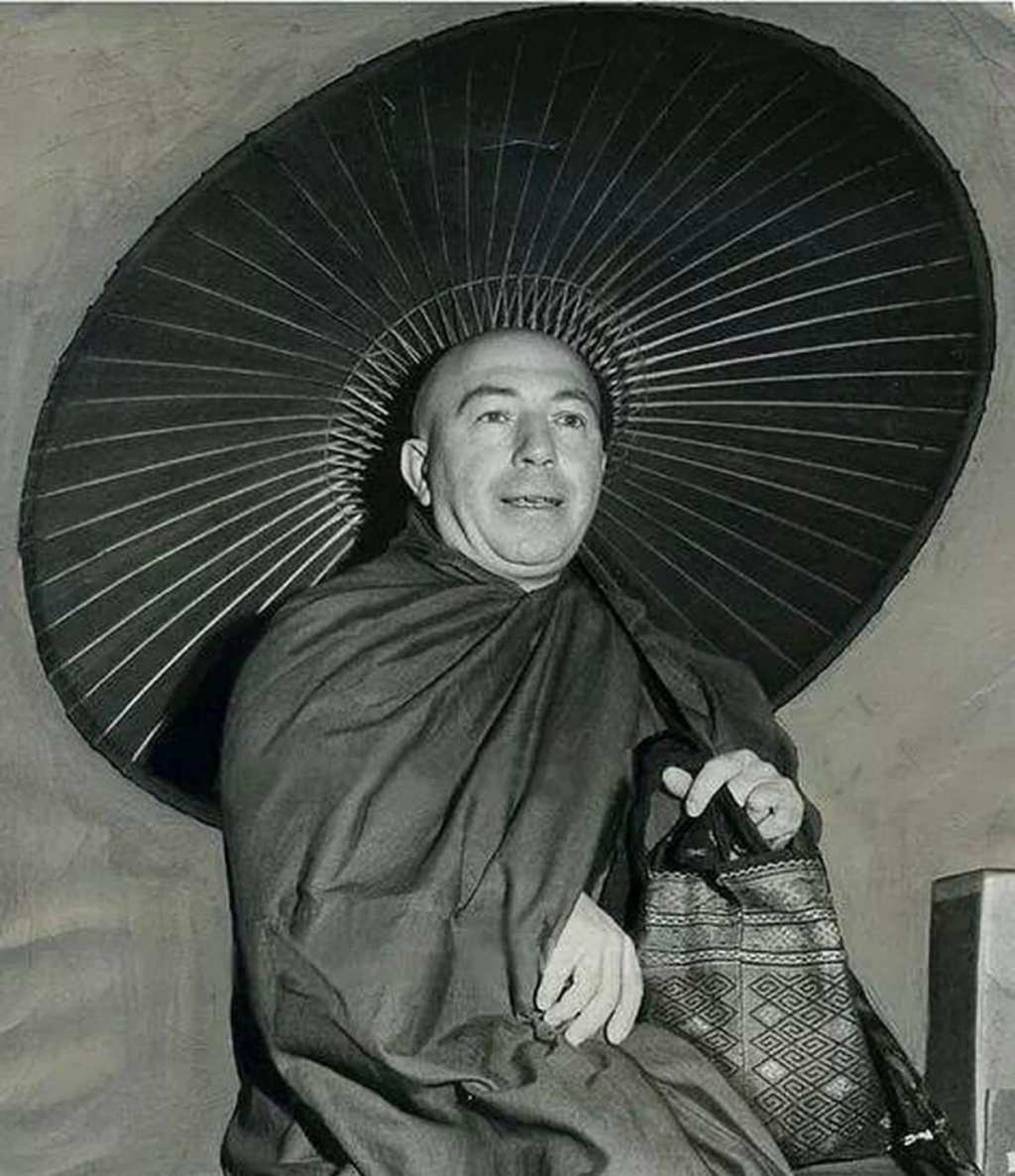
    Mahasi Sayadaw မဟာစည်ဆရာတော်

    • U Sobhana ဦးသောဘန
    • Renowned Meditation Master and author
    • Questioner at the Sixth Buddhist Council ဆဌသံဂါယနာ held at Kaba Aye, Rangoon, Burma
    Mahasi (2nd from Right) & Mingun (Right)
    Mahasi & Mingun Sayadaws
    • Chief Resident Monk of Mahasi Sasana Yeiktha မဟာစည်သာသနာ့ရိပ်သာ
    • Mentees : Sayadaws U Pandita, U Kundala, U Janabhivamsa and many meditation teachers

    Practical Vipassana Meditation Exercises

    • by The Venerable Mahasi Sayadaw
    • Talk given to his disciples on their induction into Vipassana Mediation at Sasana Yeikhta Meditation Center, Yangon, Myanmar
    • Translated from the Myanmar language by U Nyi Nyi
    • Original Publisher : The Buddhasasanuggaha Association, Yangon, Myanmar
    • Dhamma dana distribution : Tathagata Meditation Center, San Jose, California
    • 22 pages
    • Vipassana (Insight Meditation)
    • understand correctly the nature of the psycho-physical phenomena taking place in the body
    • rupa : material qualities
    • nama : acts of consciousness or awareness
    • breathing : vayodhatu (the element of motion)
    • yogi should behave as if he were a weak invalid
    • noting (at all times)
    • physical object of attention and the mental act of noting occur as a pair
    • relaize all phenomena are anicca, dukkha, and anatta
    • experience nana (knowledge) : path, fruit, liberation
    • INITIAL DOUBT

    Dhammacakkappavatttana Sutta

    • The Great Discourse on the Wheel of Dhamma
    • Teacher : The Venerable Mahasi Sayadaw
    • Translator : U Ko Lay
    • Sukhi Hotu Dhamma Publication 1998
    • PART I
    • Preface to the Discourse
    • The Date of the Discourse
    • Three Kids of Introduction
    • PART II
    • Sensuous gratification is base and vulgar
    • Dittadhamma Nibbana Vada
    • A low, common practice
    • PART III
    • Elaboration of the Eightfold Path
    • PART IV
    • Truth of Suffering (Dukks Sacca)
    • PART V
    • Samudaya Sacca
    • PART VI
    • Nirodha Sacca
    • PART VII
    • Sacca Nana with regard to Dukka Sacca
    • Kicca Nana with regard to Dukka Sacca
    • Kata Nana with regard to Dukka Sacca
    • PART VIII
    • When the Buddha did not admit Enlightenment
    • Acknowledgement of Buddhahood
    • Concluding statement

    Fundamentals of Vipassana Meditation

    Book by Mahasi Sayadaw

    Primary Author : Mahasi Sayadaw
    Translator : Maung Tha Noe
    Editor: Sayadaw U Silananda
    Original Publisher : Dhammachakka Meditation Center, 1991
    Republished with other sources : Tathagata Meditation Center

    Other sources included the book
    “Instructions to Meditation Practice” by Mahasi Sayadaw
    “Benefits of Walking Meditation” by Sayadaw U Silananda
    “Guidance for Yogis at Interview” by Sayadaw U Pandita
    “An Interview with Mahasi Sayadaw” by Thamanaykyaw, translated by U Hla Myint

  • Kyaw Win, Dr.

    Kyaw Win, Dr.

    by TOKM

    Updated : June 2025

    Dr. Thane Oke Kyaw Myint wrote

    Dr. Kyaw Win, former Director of Medical Services, Burma Army Medical Corp (BAMC) and Retired Myanmar Ambassador to the Court of St. James (UK), passed away at home, in Rangoon, on 29th. October 2010. He was 72 years old.

    To many of us, he was never seen as senior physician, the Director of BAMC an oncologist or an international expert on malaria, but as U Lay Kyaw ဦးလေးကျော် an uncle who looked after us and our families who lived in Inya Road and University Avenue in Rangoon. Not just as children and teenagers, when a fair number of us entered medical school and later worked in the health services, he was a teacher and mentor to many generations of medical graduates from all three medical schools in Burma.

    U Lay Kyaw was the son of U Po Sa ဦးဖိုးစ who founded the very first bank in Rangoon owned by a Burmese. (U Rae Kyaw Thu ဦးရဲကျော်သူ opened the first bank in Rakhine some years earlier to do commerce with India).

    He went to UK to do postgraduate studies and successfully obtained MRCP (Edin) and DTM&H (London) on his own expense. On his return he decided to join BAMC as a physician, posted to Base Military Hospital (BMH), Maymyo. He was later posted to No. 2 base  Military Hospital, Rangoon where he served as the Chief Physician for many years. He was later elected a Fellow of the Royal College of Physicians, (FRCP) Edinburgh.

    During this period, U Lay Kyaw pioneered in two very important areas of medicine: together with Lt. Col. Aye Pe and Dr. U Myo Tint, he started the services in oncology which was open to all patients with malignancies, both civilian and from the army without any discrimination. He standardized chemotherapy regimes in Burma, procured chemotherapeutic agents through the Medical Corp but again for use by all patients attending the Oncology Clinic. U Lay Kyaw also started with his colleagues a weekly tumor clinic where cases are reviewed by the team. All of us in pediatrics will never forget his kindness and care in helping us in looking after patients with childhood malignancies. We benefited so much from the oncological services in 2 BMH, as he provided not only his technical expertise but also shared with us his limited resources of equipment and medicine.

    When increasing numbers of drug resistant malaria were reported, U Lay Kyaw initiated a team to tackle this major health problem in our country, working closely with the Malaria Institute in Rangoon with Dr. Barua, Dr. Franco Tin, and Prof. U Aung Than Batu and his team from Department of Medical Research. A systematic approach to management of severe forms of malaria as well as preventive measures were standardized and adhered to in Burma. It was his initiative to introduce Artemetha (Ging Hou Zou) as part of the anti-malaria armamentarium. His efforts in visiting Kew Gardens in London to identify Artemetha species growing in Burma helped Burma in no longer being dependent on importation of Artemetha and its extracts from China. Later, the active alkaloid Artemesanine, was extracted from local species and used as drug of choice for drug resistant malaria.

    Dr. Kyaw Win was considered as one of world’s most renowned expert in Malaria and provided advice the World Health Organization Geneva on issues related to malaria. He was also the author of numerous articles both on malaria and cancer therapy.

    He left the medical services to serve as the Myanmar Ambassador to the Court of St. James, London.

    Spouse : Daw Kyi Kyi Chit Maung (eldest sister of Prof. Than Toe)
    Children : Dr. Htut Kyaw Win, Aung Kyaw Win and Aye Sandar Kyaw Win.

    U Lay Kyaw will be very much missed not only by his immediate family but by all of us, members of his extended family now living in many countries.

    Photo (at the beginning of the article) : U Lay Kyaw as the Ambassador in London during the exhibitions of paintings and art works by Burmese artists.

    Dr. Ye Myint wrote :

    I worked with him for 2 years at 2, Military Hospital for 2 years. He wrote a chapter about Rickettsial Diseases in First edition of Oxford Textbook of Medicine (major large reference textbook in UK). He was Editor in chief for First Textbook of Internal Medicine in Myanmar. And published research papers in many medical journals.

    From Prof. U Mya Tu’s Who’s Who in Health & Medicine in Myanmar

    570 Kyaw Win, Brig. General (Retd) Dr. U, M.B., B.S. (Rgn); D.T.M. & H. (Eng.); M.R.C.P. (Edin.); F.R.C.P. (Edin.); F.A.C.T.M. (Australia); SAMA 1883; Physician (Internal Medicine);
    son of U Po Sa and Daw Kin Lay;
    born 03 January, 1938 in Yangon;
    spouse Daw Kyi Kyi
    Education: Faculty of Education Practicing School (TTC) 1947-53; matriculated 1953; Faculty of Medicine, University of Rangoon, M.B., B.S., 1960; D.T.M. & H (Eng) 1962; Royal College of Physicians, Edinburgh, M.R.C.P., 1964; Royal College of Physicians, Edinburgh, F.R.C.P., 1978. Career: House Surgeon, Yangon General Hospital, 1960-61; Demonstrator in Pathology, Faculty of Medicine, University of Rangoon, 1961-62; Postgraduate training in UK, 1962-64; Consultant Physician, Base Hospitals, Burma Army Medical Corps, 1964-88; Director of Medical Services, Ministry of Defence, 1988-95; Ambassador Extraordinary & Plenipotentiary of Myanmar to Canada, 1995-99; Ambassador Extraordinary & Plenipotentiary to United Kingdom of Great Britain and Northern Ireland, 1999 to date; Ambassador Extraordinary & Plenipotentiary to Kingdom of Sweden and Ambassador Extraordinary and Plenipotentiary to Kingdom of Norway, 2000 to date.
    Special Mention: Currently Part-time Advisor on SE Asia Programmes of the Welcome Foundation in London and the Friedland Foundation in U.S.A.
    Honours / Awards: Fellowship, Royal Society of Tropical Medicine and Hygiene, 1962; Fulbright-Hays Senior Fellow; Research Fellow / Visiting Lecturer, Harvard Medical School, 1974-76; Naing Ngan Daw Sit Hmu Htan Tazeik; Naing Ngan Daw Aye Chan Tha Yar Ye Tazeik; Tat Ma Daw Gon Du Saung Amu Htan Tazeik; Kut Ke Hmu Tazeik; Sit Hmu Htan Gaung Tazeik; Myanmar Academy of Medical Science Oration, 2002.
    Membership of Societies / Associations / Committees: Myanmar Medical Association; Royal Society of Tropical Medicine; New York Academy of Sciences; American Association for Advancement of Science; Fellow, Australasian College of Tropical Medicine, 1995; Member, National Health Committee, 1989-95; Member, National Olympic Committee, 1992-95. Conferences / Study Tours / Training: Fulbright-Hays Fellowship, Harvard School of Public Health, U.S.A., 1975-76; Has attended many WHO Conferences, International Congresses for Tropical Medicine, Malaria and Drug regulation; Japanese-German Cooperative Symposium on Protozoan Diseases, Japan, 1989; International Congress for Infectious Diseases, Canada, July 1990; International Conference of Drug Regulatory Authorities, Ottawa, Canada and Geneva, Switzerland, Oct. 1991; Western Pacific Congress for Infectious Diseases, Pattaya, Thailand, 1992; Malaria Control Meeting for Asia and Pacific Regions, New Delhi, India, 1992; Expert Review Group Global Strategy for Malaria Control, Geneva, Switzerland, 1992; Ministerial Meeting Conference on Global Strategy for Malaria Control, Amsterdam, Netherlands (as WHO Expert Review Group), Oct-Nov 1992; WHO Task Force Meeting on Antimalarial Drug Use in Tropical Regions, Bangkok, Thailand, Apr-May 1993; Meeting on Application for Artemisinin, Geneva, Switzerland, Sep-Oct 1993; Brazilian Congress on Tropical Diseases, Salvador, Brazil, Mar 1994; Meeting on Effective Usage of Drugs for Malaria in South East Asia Region, Hanoi, Vietnam, May 1994; Alternate Representative of Myanmar, United Nations General Assembly, New York, Sep 1996-98; Representative of Myanmar to the United Nations Conferences on Environment and Biodiversity, Montreal, Canada, Sep 1995-97; WHO Informal Consultation on Antimalarial suppositories, Geneva, May 1995; WHO Task Force on improved used of antimalarial in South East Asia, Ho Chi Min City, Vietnam, Nov 1996; 14th International Congress of Tropical Medicine, Nagasaki, Japan, Dec 1996; Meeting on Rational use of Qing-Han-Hsu and its derivatives, Annecy, France, Apr 1998; Lectured and conducted seminars at various medical schools in Ottawa, St. Johns (New Foundland), and Vancouver, Apr 1995-Apr 1999. Areas of research interest: Anti-malaria drugs (Artemesinin); pathophysiology of cerebral malaria. Publications: Kyaw-Win, Tin-Ohn & Marlar-Than (1968). Scrub Typhus in Burma, 1967. Union of Burma J. Life Sci. 1: 209-211; Kyaw Win, Ye Thwe, Khin Mg Mg Than et. al (1985). Alternative drug regimens for multidrug resistant falciparum malaria. Burma med. J. 31(1) Suppl.; Kyaw Win, Ye Thwe, Khin Maung Maung Than et. al (1985). A clinical experience with Artemether, a Quinhosu derivative in the treatment of malaria. Burma Med. J. 31(1); Suppl.; Kyaw Win, Ye Thwe, Khin Mg Mg Than et. al (1986). The role of mefloquine in the prevention and treatment of malaria. Paper presented at the 33rd Burma Medical Conference, 1986; Kyaw-Win, Ye-Thwe, Marlar-Than, et al. (1989). The efficacy of Artemisinin derivatives in the treatment of cerebral malaria. Myanmar Military Research Programme. Paper read at the Japanese-German Cooperation Sympoasium, July 1989; Kyaw-Win, Marlar-Than et al. (1989). The efficacy of Artemisinin derivatives plus mefloquine in the treatment of cerebral malaria. Abstract, Medical Research Congress, Department of Medical Research, Yangon, 18 Dec 1989; Kyaw-Win, Ye-Thwe, Marlar-Than et al. (1990). Progress in antimalarial drug trials. Abstract, 2nd Western Pacific Congress on Infectious Diseases and Chemotherapy., 11-14 Dec 1990; Kyaw-Win, Marlar-Than et al. (1991). Response to new drug regimen in man of multidrug resistant uncomplicated falciparum malaria. Advanced Knowledge on Malaria in South East Asia. 23: Suppl 4: 111-115; Kyaw-Win, Marlar-Than et al. (1991). A comparative study of Mefloquine, Artesunate and Halofantrine in treatment of uncomplicated falciparum malaria. Abstract, Medical Research Congress, Department of Medical Research, Yangon, 17-20 Dec 1991; Tin Shwe and Kyaw Win. (1991). Iron, Desferrioxamine and Malaria infection (Review Article). Myanmar Medical Journal 36 (1-4): 66-69; Kyaw-Win, Marlar-Than, Ye-Thwe et. al (1991). Comparison of combinations of parenteral artemisinin derivatives plus oral mefloquine with intravenous quinine plus oral tetracycline for treating cerebral malaria. Bull. Wld Hlth Org. 70(6): 777-782; Kyaw-Win, Marlar-Than et al. (1992). Factors associated with adverse outcome in adult cerebral malaria. Abstract, Myanmar Medical Conference, 16-20 Jan 1992, Myanmar Medical Association; Kyaw-Win, Marlar-Than et al. (1992). Artesunate and artemether in combination with mefloquine in Myanmar. Abstract, 13th International Congress for Tropical Medicine and Malaria, Pattaya, Thailand, Nov 29 – Dec 4, 1992; Myint-Oo, Tin-Oo, Kyaw-Win and Marlar-Than (1993). Nucleoside permeability and antimalarial action of Nitrobenzyl-thio-inosine in combination with purine antimetabolite. J. Myanmar Military Med. 2(1): 8-13; Kyaw-Win, Marlar-Than et. al (1993). Regional differences in mefloquine response rates in uncomplicated falciparum malaria. J. Myanmar Military Med. 2(1): 14-18; Kyaw Win and Tin Shwe. (1993). Clinical trials of I/M Artemether and I/V and oral Artesunate in the treatment of falciparum malaria in Myanmar. DMR Bulletin 7 (4): 1-15; Kyaw-Win, Marlar-Than et. al (1994). Comparing the efficacy of mefloquine-artesunate combination with mefloquine alone in uncomplicated falcuparum malaria. Myanmar Hlth Sci.Res. J. 6(1): 4-10; Kyaw-Win, Marlar-Than, Ye Thwe et. al (1996). The use of Purified Immune African IgG as an adjunct to i.m. Artemether in the treatment of Cerebral Malaria in South-East Asia. Jap. J. Trop. Med. Hyg. 24 (Suppl. 1): 33-37; Tin Shwe, Kyaw Win , Ko Ko Hla (1998). Clinical trials of I/M artemether, I/V and oral artesunate in the treatment of falciparum malaria in Myanmar . Myanmar Medical J. 42 (3,4): 6-10; Chief Editor and contributing author. Textbook of Internal Medicine, 1st, 2nd, and 3rd Editions, Published by the Myanmar Medical Association; Contributing author, Oxford Textbook of Medicine, 2nd and 3rd Editions (1966), Oxford University Press, England; Kyaw Win, (2002). Man against (pathogenic) microbes through the ages. Myanmar Academy of Medical Science Oration, 16 August 2002, Myanmar Academy of Medical Science, 27, Pyidaungsu Yeik Tha Road, Yangon;
    Recreation: golf; music.

  • U Moe Aung

    U Moe Aung

    by Hla Min

    Updated : June 2025

    Education

    U Moe Aung
    • Matriculated from St. John’s Dio.
    • Enjoyed being goalkeeper in soccer and performing in concerts & recitals
    • Attended Yankin College & Faculty of Engineering.
    • EC member of the RU Kalaung Ah Thin (တက္ကသိုလ်ကလောင်အသင်း)
    RU Literary Club
    • Editor of RUESU Annual Magazine for 1960 – 61
    RUESU Magazine

    RIT Saya

    • After graduation, he joined the Electrical Engineering Department
    EE Sayas
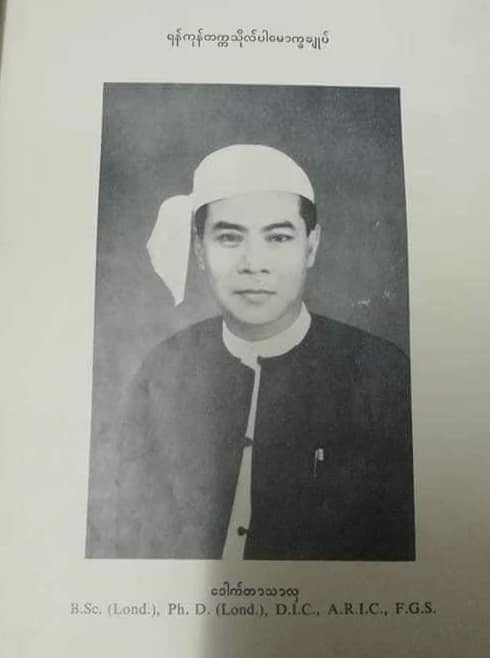
    • Chief Editor, RIT Annual Magazines
    • Chief Editor, Hlyat Sit Sar Saung (လျှပ်စစ်စာစောင်)

    Singapore

    • Later worked in Singapore
    • Chair, SPZP-2002 & SPZP-2010
    • Chief Editor, Swel Saw Yeik Sar Saung for SPZP-2002, SPZP-2007 & SPZP-2010

    Home Sweet Home

    • Moved back to Yangon
    Saya Moe
    • Co-founder, Swel Daw Yeik Foundation
    • Chief Editor, Swel Daw Yeik Magazine for Shwe YaDu (2024) & SPZP-2016
    • Performed at SPZPs (e.g sang SDYF Song)
    Saya Moe
    • Despite having medical problems, he still writes poems and articles
    Sample Kabyar

    Achievements

    He is a distinguished poet, writer, editor and publisher. He wrote for newspapers, magazines and journals. He has compiled and published collections of his works.

    His mentor was Daung Nwe Swe (Laureate Poet).

    He served as an all-round volunteer for the publication of Annual Magazine of RUESU (Rangoon University Engineering Students Union).

    He served as Chief Editor and/or Publisher of the following (and more) :

    • RIT Annual Magazines;
    • Hlyat Sit Sar Saung (for RIT EE Association);
    • Commemorative issues of Swel Daw Yeik Sar Saung for SPZP-2002, SPZP-2007, and SPZP-2010;
    • Commemorative issues of Swel Daw Yeik Magazine for Swe YaDu and SPZP-2016
    Saya U Moe Aung

    The (hidden) power of Kabyar

    Kabyar is animate

    But [it’s life is] not just a [fleeting] morn

    Kabyar is a weapon

    But not for destroying the world

    Kabyar is key

    For liberation and independence

    But not devoid of principles [and morals]

    Kabyar has power

    Hidden but efficient & effective

    Like sharp-pointed spear-head

    Can thrust into [the heart of] a power-maniac

    Cause trembling, shivering, throbbing & anguished pain

    Poem in Burmese by Tekkatho Moe War (Saya U Moe Aung)

    Translated by Hla Min

    Publications

    Book 1
    Book 2
    Book 3
    Book 4
    Magazine 1

    Posts

    • Kabyar
    • RIT EE
    • SDYF
    • SDY Magazine
    • SDY Sar Saung
    • SPZP