The corresponding letters from the Upper Case and Lower Case are known as Allographs. e.g. A and a
Many English words were derived from Latin which had 23 letters.
In Old English, the letters V and U are allographs.
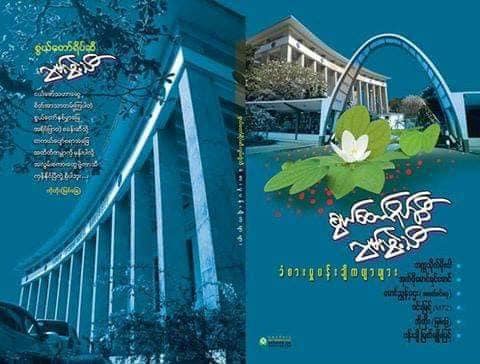
The early Printing presses use the letter V (instead of U, e.g. VNIVERSITY as in the Inscription shown). Based on context, the V is pronounced as U.
The letter W is written in some old languages as UU or VV and is pronounced as “Double U”.
Some stone inscriptions from Rangoon University has FOVNDATION & VNIVERSITY. They stand for FOUNDATION & UNIVERSITY (since U and V are allographs).
Dark Days
There were many Dark Days in the History of Burma.
7th July 1962 saw indiscriminate shooting at the student protesters. The official tally was 17 dead. Ko Aung Khin was hit by a stray bullet as he was returning home in Windermere Road from RUBC.
8th July 1962 saw the revered RU Student Union Building demolished. The two highest ranking officials said that they did not give the orders. Some people reported hearing strange sounds and seeing strange images in or near the residence halls (e.g. Mandalay Hall). Some believe that there might be ghosts.
In 1963, there were pamphlets & Sar Saungs commemorating the anniversary of 7th July. The higher authorities gave ultimatum to the hostel students to leave. All classes except those from the Faculty of Medicine and the Faculty of Engineering were closed. The final examinations were held locally (e.g. at State High Schools). The schools were reopened in November 1964 under a new Education System.
In mid-1960s, Nationalization and Demonetization crippled the “Rice Bowl of Asia”.
The use of the ILA system and the 3 NRC rule created a Tier System among the Once Equal Disciplines. A sayagyi told his students, “If all of you go to medical and engineering, there will be not enough talent left to cover other important fields.”
There were some exceptions. Min Oo (in 1963) and Zaw Win (a few years later) stood Second in the whole of Burma in the Matric exam. They both chose to study Maths & received Doctorates from Germany. Dr. Min Oo retired from McMasters University in Canada. He earlier taught in Germany and in the USA as visiting professor. Dr. Zaw Win is GBNF.
“Burmese Way to Socialism (Despotism, Nepotism)” created Second & Third Class Citizens. Shortage of rice (unheard of in the “Rice Bowl of Asia”) caused unease. The problem was redirected to create a riot known as “Tayoke Bama Ah Yay Ah Khinn”.
“U Thant Ah Yay Ah Khin” in 1974 can be read in a book with rare photos. Htein Win Sar Pay has published books about the two Ah Yay Ah Khinn. Ko Khin Maung Zaw mailed me a copy of “U Thant Ah Yay Ah Khinn”. At the 5th Irrawaddy Literary Festival, Ko Htein Win gave me a copy of the 8-8-88 Ah Yay Ah Khinn.
There were several more closure of the schools. Many students lost three precious years of their lives (1988, 1989 and 1990). There were no clases, exams and Convocation for three years. The 1st BE Intake of 1983 graduated in 1992. Those who failed the 6th BE in 1987 had to repeat in 1991.
Dr. Tin Aung
In August 1988, Dr. Tin Aung (Physics) and U Tun Aung Chain (History) were in the USA as members of the Burmese Education Delegation. Dr. Tin Aung was elected in abstentia as a Patron of the “Sayas and Sayamas from All Universities & Institutes”. Upon his return to Burma, he was forced to resign. Some time back, Dr. Tin Aung had to replace the pacemaker. His former students from Myanmar & Overseas donated for his health expenses.
Presidential Fellowship in Teaching Innovation, Lamar University, 2015
Presidential Fellowship in Teaching Innovation, Lamar University, 2014
Presidential Fellowship in Research, Lamar University, 2014
Tim Kendall Memorial Prize, Asian Institute of Technology, Bangkok, Thailand, 1991
Pi Tau Sigma, Honors Society of Mechanical Engineers
Ivan Lee (M69, co-Founder and Patron of MASTAA) wrote
Kendrick has been with MASTAA, USA since June 2019.
He was an invaluable member of our team.
He was the heart and soul of our team in promoting Myanmar students who want to study abroad. His information was vital to our organization’s Students Info page. His contribution to MASTAA can be seen on Students Info page at MASTAA.ORG website.
He left his beloved wife Khin Khin Hla and two adult sons. Khin Khin Hla is also an RIT Alumni 1984 B.Engg Civil as well as AIT Alumni 1991 M. Engg Water Resources
The funeral service will take place on January 20, 2021.
Our condolences for this tragic loss and wish Dr. Kendrick Aung, RIP.
Phyu Phyu Kyaw (ex-UCC) wrote :
KTA came & joined us (Methodist English High School / No. 1 Dagon SHS : K Class) when Ye Myat Soe (ex-UCC), his wife Ohnmar Aung (our classmate) & daughter visited Los Angeles in September, 2019.
We had the Class Gathering in Las Vegas. All were from K Class (starting from Lower KG to High School).
KTA was a Top Student since he was young.
Learnt that KTA is a cousin of Ko Aung Zaw Myint (ex-UCC). Both have the nick name “Gaung Gyi”.
Ko Soe Myint (President, MASTAA) wrote :
I will offer Soon and three sets of robes to Sayadaws (in New York) in memory of Dr. Kyaw Than Aung, and share merits with him.
Ko Wint Khin Zaw (Sydney, Australia) wrote :
I felt unjustifiable by the shocking news of a very untimely loss of our AIT contemporary Burmese Engineering Scholar, Prof. Dr Kyaw Than Aung. He was our academic idol and the pride of Burmese students body at the time as the first Burmese Awardee at AIT, the first chess champion and a runner-up table tennis champ. He also helped any Burmese students who found difficulty academically. He was a good friend and one of the smartest Burmese persons I have ever met. I could recall our table tennis games and watching World Cup Soccer matches together at the Student Union parlour. We lost contact since 1990s then a few years ago he and family visited Sydney so we met again as a pleasant reunion. He said he will come again but ….
So long Ko Kyaw Than Aung …
Our heartfelt condolences and sympathy to Ma Khin Khin Hla and sons. Our metta and prayers are with you at this difficult time.
Ko Maw Lin, President of AMA (Association of Myanmar Architects) and Chief Editor of ‘Pyithu Ayay’ journal wrote :
Dr. Kendrick Aung, 60, passed away on 01/13/2021 in Seabrook, TX, USA. He was born on June 5th, 1961 in Yangon, Myanmar to U Than Aung and Daw Nyunt Nyunt. Dr. Kendrick Aung is survived by: his wife, Khin-Khin Hla Aung; sons, Raymond Aung and Andrew Aung; brothers, Dr. Khin Zaw Aung and Dr. Min Zaw Aung; sisters-in-law, Daw Theingi Swe and Dr. Aye Aye Yee, and numerous family members and friends. He earned a Ph.D (Aerospace) from University of Michigan, M.Eng (Energy Tech) from Asian Institute of Technology, B.Eng (Mechanical) from Rangoon Institute of Technology, and matriculated from No. (1) Dagon State High School in Yangon. Dr. Kendrick Aung worked as an Interim Department Chair & Professor for Lamar University located in Beaumont, TX. He had a passion for teaching, books, Chess and loved to travel with family and friends.
There will be a Visitation for Dr. Kendrick on Wednesday, January 20, 2021 from 2:00 pm to 3:00 pm followed by a Memorial Service at 3:00 pm at Crowder Funeral Home, 111 E Medical Center Blvd Webster, TX 77598. Those wishing to send flowers in Dr. Kendrick Aung’s memory should be directed https://www.kemahflorist.com or by calling 281-532-6933 and having them sent to the Crowder Funeral Home – Webster, TX.
Condolences
Daddy (Ko Ko Gyi) I love you and will miss you forever. Whatever I do, I am thinking you are next to me. you will be always with me in my heart. I greatly appreciated the time we were together. Don’t want to let you go but please go freely. Share all the merit we did with you. Amya-amya-amya, sadu sadu sadu Khin Khin Hla
Dad We love you and miss you, thank you for everything you have done for us and the community. Aung family
We understand that we own nothing in this world. Everything surrounding us are only temporary. Only the love we have in our hearts will remain forever. Those we Love don’t go away, they Walk beside us Every Day. Unseen, Unheard, but Always Near, So Loved, So Missed, So Very Dear. So Thar Thar, you may be gone prematurely, but you are going to be with us forever! Your eldest brother Ko Ko Ni, Ma Theingi & Chan (Khin ZawAung)
Please take care Thar Thar wherever you are Hope to see you again in next life. You left so early…………… Amya-amya-amya Your elder brother Ko Latt (Dr. Min Zaw Aung)
I am totally broken hearted my baby brother. I didn’t know that our last Zoom in December was your way of saying good-bye. Want to remember you as someone who was full of motivation inspiration and a brilliant mind. I am sure you knew that you were very much loved by all of us. . You are in my prayers sweetheart and may you look down from heaven to share the merits. amya amya amya.. thar thar yay Your big sister Ma Ma Aye xxx (Aye Aye Yee)
Though I got to know you very briefly , just for a span of 3 years or so when you came to stay with us, you were like a younger brother that we never had ; for ma ma aye and I. I will not forget you. You will be sadly missed thar thar. Than Than Yee
Compiled information from people close to Dr. Aung and shared it to selected Facebook groups. The original post is archived in my web site hlamin.com and updated periodically. Sad to lose a young all-round (academic, athletic and community services) star who had brightened the lives of many. May Dr. Aung rest in peace. Hla Min (Life Long Learner)
May you be peaceful at much higher realm Ko Kyaw Than Aung. You will be dearly missed by all of us. Our deepest condolences and sympathy to Khin Khin, Raymond and Andrew at Seabrook, Texas and all the bereaved family members elsewhere. With metta Wint Thanda & Tharlon (Wint Khin Zaw)
Our condolences to you and your family. Our thoughts and prayers are with you. The Boyce family (Mee Mee)
So sad your early departure my friend (our high school class mate @ Dagon 1) Please accept my sincere condolences to my friend family. You will be missed. Rest in Peach my friend. Sincerely Phyu Phyu Kyaw (Los Angeles)
So sorry for your loss. I know this must be a very difficult and demanding time for you all. Our thoughts and prayers are with you. Please accept my condolences. Ohnmar nyunt (SHS1 Dagon)
So sorry for your loss. I was saddened to hear my friend kyaw Than Aung Passed away. My thoughts and prayers are with you and your family. Please accept my condolences. Ohn Mar Nyunt
I am so sorry and saddened by the news of losing my friend from Dagon 1. Please accept my sincere condolences. I will remember the great time we all had with our childhood friends in Las Vegas in October 2019. Rest In Peace my friend. 🙏🙏🙏🙏🙏 Zaw Lwin
Dear Ko Kyaw Than Aung, Recently we met you at San Francisco after the graduation (1983 -Mech). You are talented, honest and having beautiful mind and so lovely. When I heard about you, I was shocked and very sad. Please accept my condolence . Where ever you go, May you be healthy, happy, wealthy, peaceful and attain the highest wisdom! You will be always in our heart! With All the Best Wishes, Kyi Shein (83-Mechanical)
I am grateful to have shared memorable-days with Saya Ko Kyaw Than Aung while studying in RIT and AIT. Will always remember you Saya! Engshwe
It’s so hard saying goodbye to you. Our condolences and prayers to you and your family. You will deeply be missed, rest in peace. Chu family from LA
To Uncle Ken, My heart is heavy, there are no words to describe how sad I am. I still can’t believe that you are no longer here with us, you will always be in our hearts and thoughts. You are like second father to me growing up with Raymond. Thank you for always caring for me and teaching me. You inspired me with all of your achievements. I will always cherish and remember the time that I had with you from growing up as a kid and the family vacations we had together. You are gone too soon.. My family and I will miss you so much, Rest in Peace Stephanie Chu
Dear Aung Family, We are very sorry to hear of the lose of Dr. Aung. He’s a brilliant Professor whom will be missed by many hear at Lamar University. I wish to thank him for sharing his knowledge with my students. Praying for overwhelming peace during this difficult time for all of your family. LU Family and friends
Dr Kendrick Aung We never forget you. Shu & Sue Chin family
No man is an island, Entire of itself. Each is a piece of the continent, A part of the main. If a clod be washed away by the sea, Europe is the less. As well as if a promontory were. As well as if a manor of thine own Or of thine friend’s were. Each man’s death diminishes me, For I am involved in mankind. Therefore, send not to know For whom the bell tolls, It tolls for thee. [John Donne]
So sorry to hear of Ken’s passing, he was kind, intelligent, caring and a wonderful colleague who will be missed. Taken far too soon. Love and condolences to the family. Harley Myler
We are all deeply shocked and saddened to hear the terrible news, and are so sorry for wife and sons’ loss. Kendrick’s untimely departure will be felt very keenly by everyone; not least his students, his colleagues , us and all his friends . Kendrick had so much more to give in this life, and such a beautiful family to enjoy. His premature departure is cruel. May Kendrick rest in peace. With our sincere condolences, Kyaw Thu Ya, Jacqueline, Shan and Thazin (London)
You can shed tears that he is gone, Or you can smile because he lived, You can close your eyes and pray that he will come back, Or you can open your eyes and see all that he has left. Your heart can be empty because you can’t see him Or you can be full of the love that you shared, You can turn your back on tomorrow and live yesterday, Or you can be happy for tomorrow because of yesterday. You can remember him and only that he is gone Or you can cherish his memory and let it live on, You can cry and close your mind be empty and turn your back, Or you can do what he would want: smile, open your eyes, love and go on. Khin Sabai
The Department of Computer Science from Lamar University is deeply saddened of the untimely passing of Dr. Aung. He was a dedicated leader who cared about his students and colleagues. Sincere condolences to Dr. Aung’s family and friends. Stefan Andrei
Dr. Aung Family, My condolences on the passing of Dr. Aung. I’ve had the opportunity to work with him at Lamar University for more than 14 years. He was truly an exceptional person, a great colleague, a favorite teacher, and a true friend! Dr. Aung was a founding member of the Office of Undergraduate Research Advisory Council and played an instrumental role in the development of the program at Lamar. He touched so many lives for the good. I’m honored and blessed to have known Ken! He will be missed badly! With deepest sympathy, Kumer Das (University of Louisiana at Lafayette, Lafayette, Louisiana)
My condolences to the Aung family on the passing of Ken. He was an exceptional colleague and a genuinely good person who cared for his students. I have fond memories of the many times we met in the dining hall and discussed how our program offerings could be improved. He was taken too early and will be missed a lot. Srinivas Palanki
Dear Dr. Aung: I am blessed to have a great friend and colleague like you! Thank you very much again for all your kindly help and support at Lamar! You will be always be remembered. RIP!! Qiang Xu
No words can describe my great sadness. Dr. Aung had always been a trusted colleague and true friend for the past 17 years. He was such a brilliant and knowledgeable person. I thought we’d have so many more years and so much more time to talk about curriculums, course contents, travelling, martial-art novels and other books … It just ended too early and too suddenly! My deepest sympathies to Dr. Aung’s family. My heart goes out to you all. Jenny Zhou (Dept. of Mechanical Engineering, Lamar University)
Rest In Peace Dr. Aung I will miss you Justin Ho (Hung Ho), Lamar University – Mechanical Engineering Student
My condolences to the Dr. Aung’s family. I have had the opportunity to work with him in Mechanical Engineering at Lamar University for 3 years. He was truly a great colleague, a favorite adviser, and an exceptional person who cared for his students and colleagues. I have lots of good memories with him as we met each other in his office where he advised me how my teaching could be improved. He will be deeply missed, rest in peace. Monayem H. Mazumder (Saginaw Valley State University, Saginaw, Michigan)
I am so sorry to hear about Dr. Aung’s passing. He was one of my favorite professors and definitely the most generous with his time. Not sure I would have made it through with his help. Tim Dwyer
My most sincere condolences. Much Love and Prayer for the Family! Dr. Aung was a great mentor. As we grieve him let’s also remember to Celebrate his Life! Carlos A. Caballero (Mechanical Engineering, Lamar University – Class of May 2018)
I am at a loss for words with hearing of the passing of Dr. Aung. He was such a great person and a terrific influence for so many at Lamar. He would always take the time to help his students, and he has helped so many to become successful in their endeavors. My deepest condolences to his family and all the Lamar family as well who will truly miss this great man. Eli Clark
Professor Emeritus & Head of Civil Engineering at Rangoon Institute of Technology
Nativity
Born, brought up, and schooled in Taungdwingyi, Magwe Division, Myanmar, by my parents Saw Boon Koke (aka) U Win Myint and Daw Kyin Toke.
Family
Named as Maung Kyit Ing, the eldest son of six, three younger brothers (two Medical Doctors and one Head Master of State High School) and two younger sisters (one Medical Doctor and one Director of Education).
Married to Daw Khin Myint Myint.
Have two sons (Nicholas, a Medical Doctor and Daniel, a Computer Analyst) and one daughter (Penthea, a Medical Doctor), and three grand daughters.
Residence
Currently living with my spouse at 5947 Loma Avenue, Temple City, California 91780-1924, U.S.A.
Academic Career
School Leaving Certificate from Taungdwingyi State High School and Matriculated, 1948
University of Rangoon: Intermediate of Science, 1950
B.O.C. College: 1st Year B.Sc. Engineering, 1951
Massachusetts Institute of Technology (MIT): BS (Civil Engineering), 1955
Cornell University: MS (Civil Engineering) with Major in Geodesy and Photogrammetry, 1956
Faculty of Engineering, University of Rangoon, 1957-1961
Colombo Plan Professor, University College, London, 1974-1975
Rangoon Institute of Technology (RIT), once also known as Burma Institute of Technology (BIT), Department of Civil Engineering, 1961-1988
Accomplishments
Professor & Head of Department of Civil Engineering, more than 31 years of service as educator and administrator at RIT, (1957-1988)
Director of Regional Colleges Development Project (Burmese Counterpart to Foreign Experts) (1978-1982), helped establish 20 Regional Colleges all over Burma
Chairman of Civil Engineering Construction Cooperative (CECC) (1976-1982), created job opportunity and On-the-Job-Training (OJT) for RIT and University Graduates, a Consultant Firm engaging the expertise of Faculty and Laboratory Staffs
Consultant Member of the Myanmar National Calendar Advisory Committee (1972-1988), helped revise and update Traditional Calendar Computation and Compilation Methods
Member of the Advisory Committee for Restoration of Bagan (1975-1988), helped strengthen Bagan Monuments (Stupas & Pagodas) and establish Photogrammetric Resources for rapid and precise mapping of Bagan Monuments.
Editor’s notes
Saya taught “Surveying” in my 2nd B.E. course
He is an expert in both Western & Eastern Astronomy, Western & Eastern Astrology.
He served on the “Myanmar Calendar Advisory Board” for many years.
He wrote an article, which complements/augments Kogyi Koung’s narrative of the “Kyaikhtiyo Project”.
He also wrote about “Bagan restoration” and “Civil Engineering Department”.
He retired from Caltrans when he was about 80 years young.
He passed away in Southern California.
Memories
Attended SPZP-2000 & gave speech
Welcome Dinner for SPZP-2000
Alumni mostly from SoCal meet annually for Lunch gathering with Saya. Dr. San Lin invited us to one gathering.
Saya & former students
Dr. Aung Soe led the practical for Saya’s course on Surveying.
U Min Wun Professor Emeritus, Civil Engineering, RIT
U Min Wun
When I read the article on “Kyaik Hti Yo Development Project” (KHYDP) by Dr. Koung Nyunt, Arch 67 – New Zealand, it brings me lots of fond memories and remind me of the “Good Old Days” of my tenure at the then R.I.T. It urges me to write this supplemental article.
There are many attractive sites in Myanmar for pilgrims, such as
• “Ah Laung Daw Katha Pha” to the west of Monywa, • “Popa Taung Kalat” and “Mount Popa” north of Kyauk Pa Daung, • “Pin Da Ya Hlaing Gu” near Nyaung Shwe in Shan State, • “U Daung Taung” near Inlay Lake in Shan State, • “Mrauk U” and “Wei Tha Li” in Rakkhine State, • “Kyaik Hti Yo” in Mon State, … and so on, just to mention a few.
These pilgrimage sites are our “National Wilderness Heritages”. A Wilderness is a place where the imprint of humans is substantially unnoticed, and the changes will occur primarily through natural disturbance, and minimum human influence. This is not the case with Kyaik Hti Yo, and many of the above pilgrimage sites in Myanmar, where human encroachment and activity are becoming noticeable.
On your way up the Kyaik Hti Yo Trek, after the Nga Gar Lain climb, the first sight of the Gilded Stupa-Topped Boulder, resembling a Hermit’s Head, floating on top of a Stone Pillar, appears in vista vision. At that time, a thrilling feeling of achievement and excitement is beyond description and all the physical tiredness seems to have dissolved and melted away in the bodily blood stream. During the Pagoda Festival Season, this scenario was usually hidden from view by a long row of bamboo huts along the last ridge toward the Kyaik Hti Yo Pagoda Plateau. Many smaller boulders along the ridge were painted in white for advertising the vendors.
To the East of the Pagoda Plateau many bamboo huts align the smaller ridges with waterless bathrooms in the back and human wastes are dumped along the slopes, creating ugly and unsanitary sites for parasites, and causing unpleasant smell in the air. Water is a scarce property and it is a luxury to afford a shower.
With the blessing of the venerable “Me Byaw Sayadaw”, the Kyaik Hti Yo Pagoda Trustees (KHYPT), requested me to prepare a Project Report for the development of Kyaik Hti Yo and its Environment. The Project was sponsored by the KHYPT under the auspices of the Kyaik Hto Township Party and Council. The Project Development Team (PDT) was formed with the following volunteer Team Leaders: Dr. Koung Nyunt, ( Dept of Architecture, R.I.T.); Dr. San Lin and U Hla Thein (Electric Power Corporation, E.P.C.); Dr. Kyaw Latt, (National Housing Board, N.H.B.); U Tint Lwin (?), (Dept of Geology, R.A.S.U.); U Aye Win Kyaw, (Dept of Civil Engineering, R.I.T.).
And volunteer members from R.I.T., E.P.C., N.H.B., R.A.S.U., too numerous to mention and I do hope they will excuse me.
Preservation of Wilderness : Dr. Koung Nyunt and his team had prepared many good recommendations to preserve Kyaik Hti Yo and its environment by maintaining the natural landscapes and scenic beauty, and to preserve it as a Wilderness Area. (See Slide #16 of Kyaik Htiyo Album, KHA. Dr. Kyaw Latt is the Second from the Left, looking away from camera.)
Zoning : The team lead by Dr Kyaw Latt had prepared useful Zoning Maps, with guidelines for enforcement, to demarcate Kyaik Hti Yo Plateau for Resting Huts, Food Stalls, Souvenir Boutiques, Photographers, etc.
Hydro-power : The Hydropower Team lead by Dr. San Lin & U Hla Thein made a feasibility study for Micro-hydro Power Project, for lighting, for pumping water to the Pagoda Plateau level for water supply and sanitation purposes. U Hla Thein will design the turbine and manufacture it locally. (See Slide #29 of KHA.)
Geological Survey : U Tint Lwin and his team made a general geological survey of Hyaik Hti Yo Pagoda Site. A detailed study of the Stone Pillar and the Hermit-Head Boulder was conducted. Disposed “Food Offerings” were found at the foot of the Stone Pillar and many “rodent holes” were also observed. These holes became small piping tunnels for runoff water to drain deeper and quicker into the ground, causing erosion and exposing the base of the Stone Pillar. This process was gradually endangering the stability of the Stone Pillar, which is “supposed” to support the 160-ton Hermit-Head Boulder on top of it. A concrete slab was poured around the base of the Stone Pillar and discarding of “Food Offerings” at the base was at once prohibited. Several hairline cracks were observed at the top of the Stone Pillar and “Water Offerings” to the Stupa on top of the Boulder was prohibited temporarily until the hair line cracks were sealed with apoxy resin. (See Slide # 25 of KHA.)
Civil Engineering : U Aye Win Kyaw and his surveying team were very ingenious to determine the volume of the Hermit-Head Boulder and its weight, which was calculated to be approximately 160 tons. The center of gravity of the Boulder was determined to be 6 to 9 inches away from the vertical axis of the “Contact Point” with the Stone Pillar, giving an impression of being on the verge of falling off. The Boulder seems to be afloat and can be rocked back and forth about a shifting “Contact Point” on top of the Stone Pillar. A rope can be pulled through this “Contact Point”, without getting crushed, by rocking the Boulder gently. And it seems to defy the Law of Gravity, thus making it both a terrestrial and a celestial “Wonder”. (See Slides #13, #22, and #24 of KHA.)
Many field trips were organized by each team to do site investigations both during Kyaik Hti Yo Festival Season (beginning at the end of the Buddhist Lent and ending on the Lunar New Year Day) and off the Festival Season. According to an age-old saying, the author should become rich because he had made more than “Three Trips to Kyaik Hti Yo Pagoda”, at least nine trips. The age-old saying is, perhaps, true, because many of the PDT members and volunteers are now abroad living comfortably or enjoying a retirement life.
A feasibility report was submitted to the Kyaik Hti Yo Pagoda Trustees in 1982. Since then I have not been to Kyaik Hti Yo Pagoda Festival. I have learned that there are many improvements to make Kyaik Hti Yo a Tourist Attraction. We should, however, keep in our mind that the “Wilderness” of Kyaik Hti Yo should be protected and valued for its unique ecological, historical, religious, scientific and experiential resources.
Note :
Saya Dr. Koung Nyunt (A67) and Sayagyi U Min Wun are GBNF.
Was studying Mechanical Engineering when he was offered to study MET at Lehigh University in the US.
Completed BS & joined Faculty as Assistant Lecturer
Received MS from Melbourne University
Became Lecturer & Head of Metallurgy Department
Taught “Materials and Processes” in our 2nd BE class. He would throw chalk at the noisy student(s).
Moved to Australia.
Sent condolences via the RIT Alumni Newsletter when Saya Allen Htay (C58) passed away. He was a bit senior to Saya Allen during their high school in Yegyaw.
Wrote a brief history of the Metallurgy Department for HMEE project. He suggested other Met sayas to cover more (after he left RIT).
Attended selected Reunion and PZPs in Yangon.
Dr. Saw Pru (GBNF)
He succeeded U Thit as Head of Department
Ko Thein Ngwe (ChE76) posted an article about “လူဝင်စား” It mentioned that Saya chose to be reborn as a son of his nephew Ko Khin Aung Shwe.
U Than Tin
He studied in US.
Acting Head of Department
After teaching for several years, he moved to US.
I spoke with him briefly before SPZP-2000.
Dr. Tin Win said that U Than Tin moved from East Coast to Los Angeles
Dr. Khin Maung Win (GBNF)
Dr. Khin Maung Win
B.Sc. from Mandalay University
Worked at Mandalay U and later at UBARI in Rangoon.
Went on a government scholarship to USA to get his MS and PhD in Metallurgy.
Joined RIT Met
Later became DG of Technological Agricultural and Vocational Education.
U Aung Hla Tun (GBNF)
U Aung Hla Tun HMEE
Retired as Associate Professor
Published two books
Won National Literary Award for his first book.
Chief Editor of RIT Annual Magazine
He & his team published the History of Myanmar Engineering Education book in 2012. U Ohn Khine (M70) and I compiled the CD supplement for the book.
Saya led HMEE-2012 & HMEE-2018 projects.
Some Senior Sayas
U Pe Win : Professor and Rector
U Tin Maung Nyunt (Met70) : Retired as Professor. Note that U Tin Maung Nyunt (M60) taught Agricultural Engineering.
Daw Victoria Simon (Met70) : Retired as Professor. Her father was Workshop Superintendent.
U Win Kyaw (Met71) : Rowing; Moved to Ministry of Mines in 1982
Win Kyaw
U Thein Aung (Met72) : Mr. RIT in 1968; SPZP-2000 (co-emcee, Associate Editor), Lawrence Livermore Lab
Thein Aung
U Nyunt Htay (Met73) : High school Luyechun, Poet, Chief Editor of Mudita Myanmar)
Nyunt Htay
Miscellaneous
U Win Kyaw, U Thein Aung & U Nyunt Htay had a micro-reunion at 2015 RIT Alumni Reunion in Los Angeles and at the iNapa Winery Lunch & Dinner hosted by Gordon Kaung (M83) and Lillian Kaung (EC83).
U Nyunt Htay hosted a Dinner for U Win Kyaw, U Ye Myint and me during my visit to Yangon (from Nov 2019 to Jan 2020). He also gave me the Kabyar book (by five RIT sayas / alumni) and the Mudita Sar Saung (which featured the kabyars of him and Saya U Moe Aung).
Younger sayas and sayamas include Dr. Naing Naing Aung (Met91, who organized seminars).
Served as Foreign Minister, Brigadier of a Reserve Army, Journalist and Publisher.
Perished when a bomb (placed under his car) exploded. There were investigations, but no conclusive results were reported.
Dr. Thane Oke Kyaw Myint posted photos and articles about his Ba Gyi (e.g. The Empty Tomb).
“Ba Gyi Aung Nyar Dei” (a famous short story by Minthuwun (Saya U Wun) has implicit references to U Tin Tut.
U Kyaw Myint
U Kyaw Myint
Barrister, Judge of Supreme Court, Head of Tribunal that tried Galon U Saw, Dean of the Faculty of Law, Politician, Head of private Law firm that defended several people accused by the BSPP government).
Stood first in Burma from Central with distinctions in all subjects. Sadly, he was expelled from the University of Rangoon for attending his mother’s funeral and earned the ire of the Principal and his father. His saga is recounted in a series of posts by his son Dr. Thane Oke Kyaw Myint.
Dhamma friend of my beloved parents. They built Dat Paung Zon Aung Min Gaung pagoda and supported “Mon” Sayadaw U Thilawanta.
Brief Bio of U Kyaw Myint
U Myint Thein
Chief Justice of the Union of Burma
On March 2, 1962, a Coup D’etat took place. Arrested along the Prime Minister, Cabinet Ministers, several Sawbwas and high ranking officials. During his detainment, he was allowed only one day off to attend the funeral of his spouse Daw Phwa Hmi (an early Burmese female to be called to the Bar in the UK).
Ambassador to China
Outstanding author and translator
Pen name : “MMT” (for Maung Myint Thein). His works were heavily censored.
Dr. Htin Aung
Dr. Htin Aung
Principal of Rangoon College
First native Rector of the Rangoon University
Prolific writer covering history, folklore and several topics
“Burmese Drama” & “Thirty Burmese Tales” were prescribed texts
Daw Khin MyaMu
Lecturer in Burmese
Thamadu Myo Win (family court judge)
Expert in Kyauk Sar (stone inscriptions)
Spouse : Professor U E Maung
Her handwritten manuscripts were not published due to lack of fonts, and were ultimately lost
Daw Khin Saw Mu
Daw Khin Saw Mu
Early student of Sayagyi U Pe Maung Tin
Khit San Poet
Spouse : ICS U Ba Tint
Children : Daw Khin Saw Tint (RIT English, bilingual writer) and U Nay Oke Tint (St. Paul’s, TED-x InyaLake speaker, successful tuition saya, Chair of the Myanmar Board for organizing the 5th Irrawaddy Literary Festival)
Publications – Cartoons Comics Journals Magazines Newspapers Novels Sar Saungs
Calendar
Old Roman Calendar Ten “working” months (from March to December)
Later Roman Calendars Twelve months (from January to December)
Julian Calendar
Gregorian Calendar
Child
Khalay
Khalay Ah Thinn (Association)
Child Psychology
Piaget
Fun
Fun with Learning Facebook group
Fun with English Definitions Palindrome Tongue Twister Word Games (Crossword puzzle, Lexicon, Scrabble, Anagram, Jumbled phrase)
Fun with Mathematics Paradox Puzzles
Fun with Physics Online course
Maths
Saya U Aung Hla In 1950 – 52, Saya U Aung Hla was Dean of Arts. He was also Professor of Maths. He is an expert in music, and wrote notes for selected Burmese songs. His spouse Daw May Than is a vocalist. His son U Mya Than is a Guitarist and Pianist.
Maths Department In the early days, the Maths Department was under the Faculty of Arts. Later, Maths Department was under the Faculty of Science.
Options (offered in different periods) at Rangoon University Pure Maths Applied Maths Double Maths : Pure & Applied Triple Maths : Pure, Applied & Statistics
My Contributions
Five decades as Volunteer of various organizations and projects
26 years as Founder & Chief Editor of RIT Alumni International Newsletter Silver Jubilee in 2024
Member, HMEE (History of Myanmar Engineering Education). U Ohn Khine and I compiled the CD Supplement for the HMEE Book in 2012
220+ Videos (on selected topics) : Broadcast in 2019 and 2020
3000+ Articles in my web site hlamin.com
Former Moderator of RU Centennial Facebook Group Overview of RU Centennial Group (Posts) Countdown to RU Centennial (Posts) Photo Essays and Photo Albums
Memories Memories of PPBRS (Private Primary Boundary Road School) Memories of SPHS (St. Paul’s High School) Memories of RIT (Rangoon Institute of Technology) Memories of UCC (Universities’ Computer Center)
Contributor Encyclopedia of Asian American Folklore and Folklife
Language Expert Burmese Language Project, NFLC, University of Maryland at College Park
Contributing Editor, Dhammanda Newsletter
Contributing Editor, “Homage to U Silananda”
Contributing Editor, Souvenir Magazine for RUBC 90th Anniversary
Contributing Editor, BAPS Newsletter
Bilingual Author
Wrote and translated Poems and Articles
Interpreter, Meditation Retreats
Edited books of Sayadaws and colleagues
New Year
Gregorian Calendar January 1st
Lunar New Year aka “Chinese New Year” and “Tet” January or February
Persian New Year aka “First day of Spring” around March 21
Myanmar New Year aka “Thingyan” Mid April cf : Songkran in Thailand
Karen New Year
Bringing in the New Year Celebrations of New Year’s Eve (December 31) e.g. Dropping the ball at Times Square in New York
Olympics
Ancient Games Mount Olympus, Greece
Modern Olympic Games proposed by Pierre de Coubertin Early period : amateurs only Later : commercialized (sponsors, hosts, professional athletes …)
Summer Olympics Breaks during the World War Postponed during the Pandemic
1936 Berlin
1948 London
1952 Helsinki
1956 Melbourne
1960 Rome
1964 Tokyo
1968 Montreal
1972 Munich
1976 Montreal
1980 Moscow
1984 Los Angeles
1988 Seoul
1992 Barcelona
1996 Atlanta
2000 Sydney
2004 Athens
2008 Beijing
2012 London
2016 Rio de Janerio
2020 Scheduled for Tokyo Postponed to 2021 due to pandemic
2024 Paris
Winter Olympics
Sleep
Conventional 8 hours (for adults) more (for infants)
Could/ should vary with person e.g. my uncle slept 4 hours, but he had power naps in the day
Rationale for sleep Rest “Clean up garbage” in the brain Activities by the Subconscious (e.g. problem solving)
Sleep studies Dream Sleep Apnea (Breathing difficulties) Monitor brain (for a specified period) Effect of duration (too little, too much) Effect of rhythm (specified time to go to sleep)
Miscellaneous Early to bed, early to rise makes a man healthy, wealthy and wise The story of Pauk Kyaing
Thet Kyee Sayas and Alumni
Sayagyi U Ba Toke Phwa Bet Taw of Rangoon University in December 1920 Book about his life and achievements by Dr. Khin Maung Swe (Maung Thin Char, GBNF) Saya of our sayas Passed away on December 2, 2020 (the day after the RU Centennial Celebrations) but a few days short of his Centennial on December 26.
U Ba Toke
U Thein Han (96 years) Worked as Systems Engineer for IBM Burma Active doing exercises and sharing memories / posts
U Thein Han
U Tin U (96 years) Joined Rangoon University in 1946 along with Dr. Pe Nyun, Dr. Pe Thein and U Sein Hlaing. Former part time Lecturer at Civil Engineering Department; Oldest and Most senior among Past Captains of Rangoon University Boat Club that are still alive; Opened the RUBC Centennial Ceremony in December 2023, Past Captain of Rangoon Golf Club; Lost his beloved spouse Dr. Daw Khin Nyunt, his eldest son Dr. Khin Tun (Peter, MRCP, Former Associate Dean of Oxford University) and his son-in-law U Tin Tun within a few months (late 2019 to May 2020)
U Tin U
U Ba Than (94 years) Won Collegiate Scholarship in 1947; Gold Medalist for highest score in Intermediate Examinations for 1948 and 1949; Retired as Professor and Head of Mechanical Engineering; Early supporter of HMEE-2012 (History of Myanmar Engineering Education) Now GBNF
U Ba Than
Other Thet Kyees Several of my sayas, sayamas, relatives and friends are 90+ years young.
Time and Motion Study Kenneth and Lillian Gilbraith
Time Management
Five minute biographies
One minute manager
Early responder within 4 or 5 minutes
Gettysburg Address less than 2 minutes
TED Talk less than 18 minutes
Toastmaster Speech typically 5 to 7 minutes
Sports Timing Records
To Err Is Human
“To err is human, but to make blunders use a computer indiscriminately.”
Some software “auto-corrects” words incorrectly.
In our younger days, there was a good Scrabble player named James Thet Wai (Proof Reader for the Guardian newspaper).
Burmese publications have language experts (Burmese, English, Pali).
Before the Internet, the production of a good book requires the expertise of editors and reviewers. Even then, some typos and discrepancies can appear. e.g A reference book described Rajiv Gandhi as the “younger” son of Indira Gandhi.
Note that articles on the Internet / Social Media — with lax reviews — can have typos and errors. An entry on Dr. Ba Than lists Dr. Aung Than as his son. Another article claimed that Prof. U E Maung was “Bagyi Aung”. One author did not know the time line / order of Arzani Nay and the assassination of ICS U Tin Tut.
It is important to check facts (especially historical dates & events) and provide correction.
YMBA
Young Men’s Buddhist Association
Illustrated History of Buddhism Mahagandayone Sayadaw Ashin Janakabhivamsa (Author); Saya U Ba Kyi (Artist) First edition : Myanmar text Supplement : English text Reprint: Theravada Buddhist Society of America
YMCA
Young Men’s Christian Association
N. Smith — Invented Basketball
Dale Carnegie — How to win friends and influence people; How to stop worrying and start living; How to improve your diction
Dr. Ralph Smedley — Public Speaking and Leadership; Precursor to Toastmasters International
Zero
Numerals
Hindu-Arabic numeral : 0
No such Roman numeral
Miscellaneous
The Dawn of Nothing
Positional number system
0-based numbering
Nil; Null; Nothing
Often used to represent “False” in two-valued logic.
Absolute Zero (temperature)
Ground Zero
Zero in
Zoom
Lens
Photographers and Videographers often use Zoom lens for special effect.
The more we grow older the more we have to avoid “zoom camera” to our face.
Zoom In and Zoom Out
We zoom in when we want to see things in detail.
We zoom out when we need to see things in the bigger picture.
Magazines and Periodicals published by the Faculty of Engineering (1946 to 1964)
Engineering students as well as teaching staff expressed their knowledge on Science and technical subjects and also their philosophies and narrative skills by writing technical articles, poems and short stories in the periodicals and magazines published by the faculty.
By going through these articles, one could clearly see the reflection of the activities of the students and staff of our Faculty of Engineering (later Institute of Technology). It was also one of the main source of information for this brief history of engineering education.
There were not many publications during the 1940 to 1964 period. Only five issues could be found. “Engineering Student Journal” was the first to be published in 1940-41 academic year. A proper magazine came out in 1951-52 academic year named “Rangoon University Engineering Students’ Union Annual Magazine”.
RUESU formed a magazine committee at the students’ annual mass meeting to be able to publish an annual magazine. Chief editor was Ko Maung Maung Aye (2nd year), secretary was Ko Ohn Ghine (2nd year). Teaching staffs were named as consultants. Mr. Cutter Pearl acted as consultant editor. See Appendix B for the list of magazine committee members.
RUESU took care of everything from financial matters up to the printing of the magazine. Motto of the magazine was “to shape knowledge with our hands”, and the main objective of publishing the magazine was to be able for the students to achieve the talent of expressing the significant features of the subject(s) that they regarded as interesting.
The magazine was bi-lingual (Burmese and English) and had 168 pages. It was printed at “Aung Meit Set” printing house.
The annual magazine came out in 1952-53 academic year also. Chief Editor was Ko Maung Maung Lay (3rd year), secretary was Ko Kyaw Win (2nd year), and consultant editor was Mr. C. Ping Lee [father of Dr. Win Aung (M 62)]. A contest for short story, poem and article was included in this magazine. It was bi-lingual and had 138 pages. It was printed at “Setkyarwalar (Universe)” printing house on Inya Road. See Appendix B for a list of committee members and winners of the contest.
In the foreword of the 1956-57 annual magazine, it was stated thus: “It was a sad thing that the annual magazine could not be published for three years after 1952-53 academic year. We had tried our utmost to overcome whatever difficulties we faced and finally we could hand the magazine to you”. To overcome the shortage of capital, advertisements had to be included in the magazine.
Ko Myo Aung was chairman of the magazine committee and Ko Kyaw Hoe was chief editor and publisher. The consultant editors were U Maung Maung Gyi (later professor of Burmese department) and U Ngwe Thein (later lecturer of Engineering Geology of Mining department) for Burmese and English sections respectively. The magazine was bi-lingual and had 108 pages. Photos of the newly opened Engineering College on Prome Road were included in the magazine.
There were no annual magazines after 1956-57 academic year. Only in 1960-61 academic year, the magazine could be published again. Publisher was Ko Ne Tun and editor in chief was Tetkatho Moe War (U Moe Aung, Electrical Engineering department). U Kyaw Tun (Lecturer, Electrical department), and U Aung Khin (Lecturer, Mechanical department) were consultant editors. See appendix B for a list of members.
The magazine was printed at Myo Nyunt Press House. It was a bi-lingual with 160 pages. It was the last magazine published with the name of “Rangoon University Engineering Students’ Union Annual Magazine”. After the publishing of 1960-61 annual magazine, there were no magazines up till 1965.
Engineering Education around the 1950 period
To get a clear picture of the engineering education at the faculty of engineering, Rangoon University, excerpts from an article written by Dr. Aung Gyi is included. Dr. Aung Gyi was an Inter Science and Engineering student from 1948 to 1952. He served as Rector of Rangoon Institute of Technology from 1971 to 1978. The following are excerpts from his article.
“I was an engineering student and then became one of the teaching staff at a later date. I matriculated in 1949 and entered the University of Rangoon and stayed in Ava Hall and took what we called in those days the Intermediate of Sciences (I. Sc.) courses. The courses were: English, Burmese, Physics, Chemistry and Maths (pure and applied maths). We needed to take these courses for two years in order to go to the engineering studies. I remember having a great time in the first year as we did not have to take the exam at the end of the first year for some unknown reason. But we had to take the exam at the end of the second year for all the subject matters that were taught to us for the whole two years. It was a tough examination at the end of the second year as we had to study a lot. We had physics and chemistry exam papers, two maths papers, English and Burmese papers, physics lab practical exam and chemistry lab practical exam within a period of 15 to 20 days in the hot month of March. Only about 60% of the students passed through the first time. The passing grade for each subject was 40%. Fortunately the University authorities in those days were understanding and kind enough to give the failed students what they called compartmental examination again in May/June for the failed subjects. Given a second chance like that, a lot of students passed the exam this time around. The Faculty of Engineering admitted the students, including the students who passed the ISc exam under the compartmental system, with a passing grade of at least 40% for each of I. Sc. subjects and the average grade for all the subjects combined of 50%.
I was quite fortunate to have good teachers in my I. Sc. days. I remember that Saya U Than Tin gave good lectures in physics. Saya U Thein Nyunt was good as well in teaching us chemistry. Needless to say the experiments that I had to do in physics and chemistry labs were interesting as they were all new to me. The maths teachers I remember were Professor U Aung Hla, Sayagyi U Kar, Sayagyi U Ba Toke, two Indian lecturers with the same last name Chowdhury, I forgot their first names. One Chowdhury was bald headed and the other had a lot of hair. They were teaching, I think, under contract with the Rangoon University. These very good teachers, I had to say, gave me a good foundation in maths. The English teachers were very good too. They were Saya U Kan Gyi and Sayama E. Kan Gyi. The only Burmese teacher I remember was Saya U Hla Maung who could make a boring topic into an interesting lecture. I owe a lot of gratitude to these wonderful teachers.
I joined the first year engineering class in 1951-52 academic year, having satisfied the entrance requirements of the Faculty of Engineering mentioned above. The academic year, I think, was from June to February with about one month break in October. So far as I know there was a “new course engineering” at the Faculty of Engineering right after the World War II. I do not know what the entrance requirement for this new course was.
I stayed in Prome Hall like most of the other engineering students in those days, as it was situated close to the B.O.C. College of Engineering building where we had classrooms, laboratories and workshop for our engineering courses. A few engineering students however stayed in Tagaung Hall which was in the same Prome road campus of the Rangoon University as Prome Hall. Both of these hostels were timber buildings and they could easily get burnt down, but I was happy to see that they are still standing there when I last visited Yangon in 2010. These two Halls gave accommodations to all engineering students, even to some students from Rangoon at that time, as there were vacancies and as the total engineering student population was not that big. If my guess is correct, I think there were about 350 to 400 students for 4 years of all engineering disciplines, out of which there were about 75 first year engineering students. The system in place at that time was in such a way that the students had to take common courses in the first two years and branched out into different disciplines of choice, starting from 3rd year.
I remember that as first year engineering students, we still had to take maths classes from 7:00 am to 9:00 am at the main campus where we had taken the I. Sc. courses. I remember getting up early in the morning in Prome Hall, and taking a walk along the road what we called as “Padaukpin Lane” or “Thaton Lane”, and through Thaton Hall and Ava Hall, for the mathematics classes at the main campus. All of us then rushed back to B.O.C. College of Engineering from the main campus after 9:00 am to take the engineering classes, which included lectures, practical laboratory work, workshop practice, and drawing classes, starting from 10:00 am. We normally finished our classes around 4:00 pm. The total contact hours of learning for engineering students were about 30 hours per week. If my memory is correct, it was difficult to get an engineering degree in 6 years after matriculation. Somewhere along the way some of us failed for one reason or the other, and had to repeat a class. The passing grade for each subject, which included workshop training at the engineering faculty was 40% and the average passing grade for all the subjects combined was 50%. When I passed my 1st year engineering in April/May 1952, I noticed that about 15% of my classmates were left behind to repeat the 1st year engineering.
I do not remember all of my teachers at that time. I can only recall that Saya U Num Kok was in charge of 1st year engineering drawing, Saya Jaidka taught us “building materials and construction”. Saya Ketrapal gave lectures and practical laboratory training in “ heat engines”. Sayagyi U Kyaw Tun and/or Saya C. Ping Lee taught us “electrotechnology” in the classroom and in the laboratory. In addition to the lectures, laboratory work and drawing, all of us had to take workshop trainings in carpentry, blacksmith, welding and in machine shop. The medium of teaching was English. We were also encouraged to take some practical training with some engineering organization during the summer vacation. I am not quite sure, but I think Ko Chit was an assistant at the blacksmith shop, and U Ba Sein was an assistant in the electrical lab. I think Mr. P Davies was the workshop superintendent. The classrooms, laboratory facilities, the workshop facilities that I attended were good and adequate. The library I visited some time was full of engineering books, magazines and journals. I could imagine that with its qualified teaching staff and good teaching facilities, the Faculty of Engineering was producing the qualified engineers needed by the country at that time.
I do not know what the total number of teachers we had at the Faculty of Engineering at that time. I could guess that the student/teacher ratio was about 20:1 from the number teachers and from the number of students I had seen. I noticed that there were few Burmese nationals teaching staff at the Faculty, and most of the teachers were from India and UK. It seems that right after the World War II, there was shortage of qualified teaching staff from Burma at higher education/University level as a whole. Sayagyi Professor U Ba Hli was Dean of the Faculty of Engineering, and I believe he received his post graduate degree from a British University. He was quite far-sighted and tried to broaden and improve the engineering education by having some kind of twinning arrangements with not only a British University but also with Massachusetts Institute of Technology USA (M.I.T.). I remember as a student hat there was a visiting Professor called Professor Horwood from M.I.T. at the Faculty, and I think he gave us lectures on sanitary engineering. Sayagyi U Ba Hli must have planned to increase the number of engineering disciplines that were given at the Faculty from civil, mechanical and electrical engineering to other disciplines as well, such as Mining, Chemical, Metallurgy, Textile engineering and Architecture. I understood that this plan came into fruition in 1954/55. He must have also planned to send the Burmese nationals to UK, USA, and other countries for further training so that they could be appointed as qualified teaching staff at the Faculty at a later date. I therefore take this opportunity to put on record that a big credit is due to the late Sayagyi U Ba Hli for his contribution to the improvement of engineering education in Myanmar.
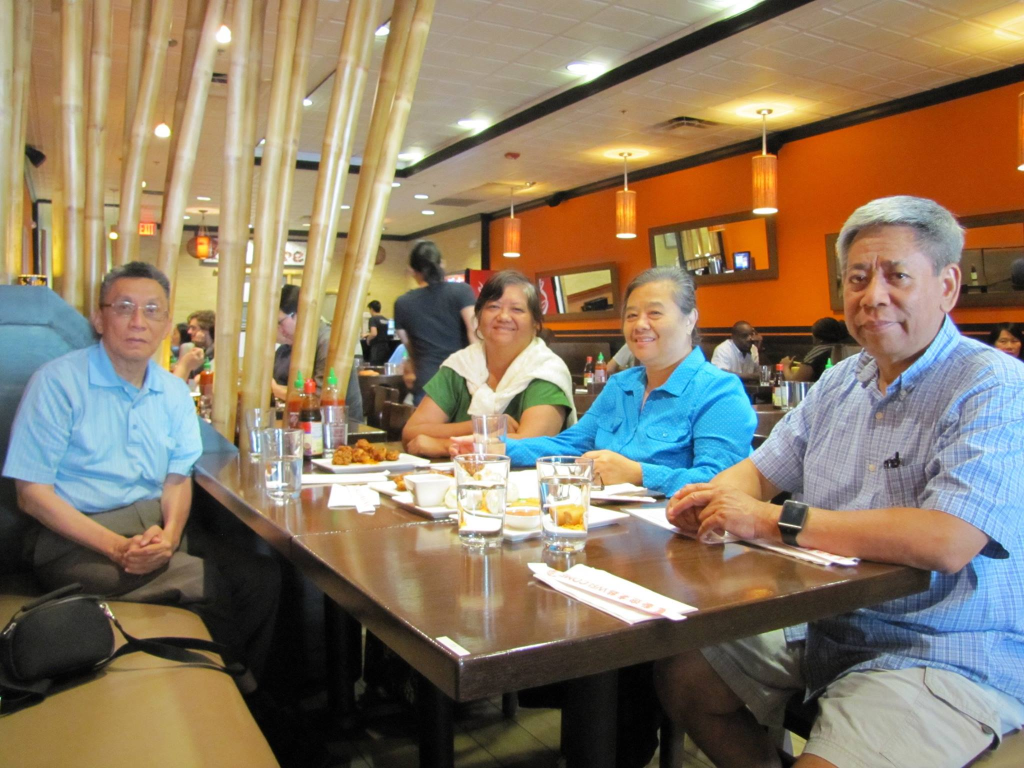
After attending the 2nd year engineering class from June 1952 to September 1952, I went straight to MIT on a state scholarship to continue my studies. Saya U Min Wun and I went together to MIT and joined the academic session, starting from September 1952. We met Dr. Freddie Ba Hli at MIT, who was already studying for his Ph.D in electronics or electrical engineering. He was one of the nicest and helpful persons that I have ever met in my life. He gave us briefings and guidance so that we were able to assimilate into the American education system and American way of life without any difficulty. He also helped with our home works when we had some difficulties in the beginning. I am forever grateful to him for his kind help. I am sure U Min Wun feels the same. Saya U Khin Aung Kyi, Saya U Sein Hlaing, U Percy Lao, U Win Htein, U Kyaw Min, Robin Aw, U Kyaw Thein, U Aung Kywe, U Aung Myint and U Sein Hla came to MIT for further studies at a later date. U Percy Lao later became Rangoon City Engineer (water and sanitation). U Win Htein who is an architect became a Rangoon City Building Engineer. The late U Kyaw Min became a free lance architect (and also taught part-time at the architecture department for some time). All these three professionals taught some time at RIT. I do not know what happened to Robin Aw. The late U Kyaw Thein was an engineer at the Construction Corporation and later became a lecturer at the Civil Engineering department at RIT. U Aung Kywe was a Director (water and sanitation) at the Construction Corporation. U Aung Myint became the Chief Architect at the Construction Corporation. U Sein Hla was an engineer at the Construction Corporation and later became the Registrar at RIT under Rector U Yone Moe. Later more batches of Burmese students came to MIT when I was no longer there. I am describing all these things to point out the fact that the standard of engineering education in Burma at that time was quite good. None of us had to go through the entrance exam to get into MIT. They trusted our grades and our education standard. Maybe the visiting Professor Horwood from MIT was quite impressed with the Faculty of Engineering and put a good word for us to the MIT admission authorities.
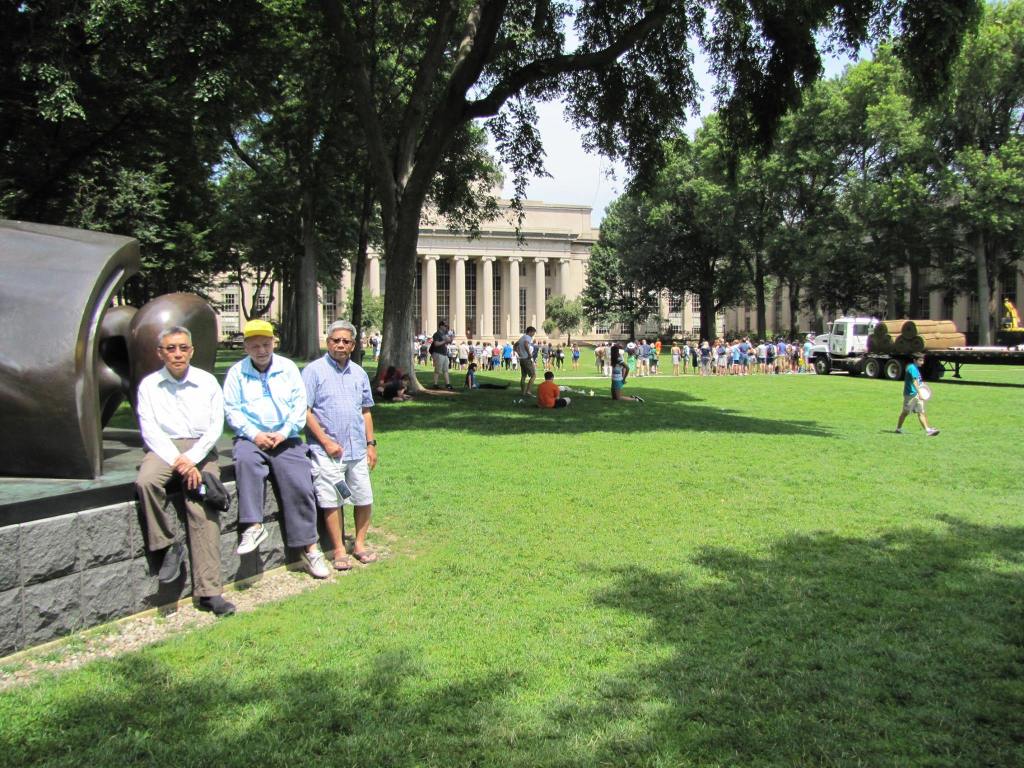
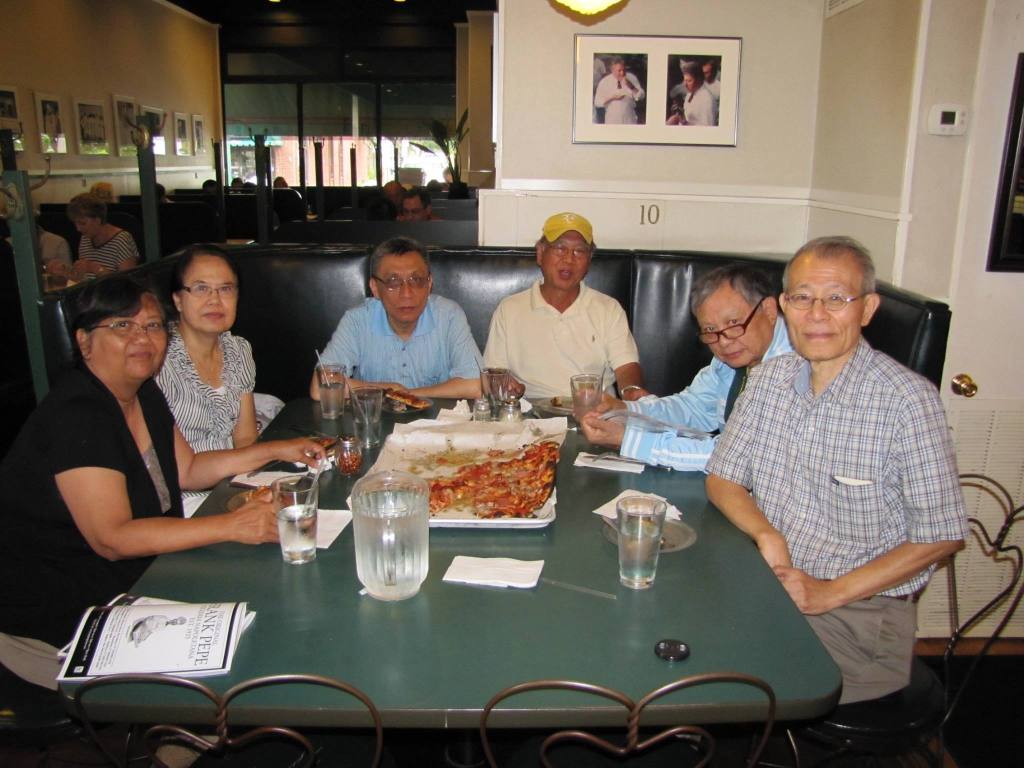
Now I would like to touch upon the extra-curricular activities of the students from 1949 to 1952 when I was one of the University students in Rangoon. As mentioned in the beginning, all the extra-curricular activities were in sports; in artistic and literary related activities; in activities of various students’ associations, societies and clubs according to their respective aims. Good and adequate facilities were available for these activities at the Rangoon University campus, except for swimming. But Inya Lake was available for the students for swimming and rowing. There were competitions in sports such as soccer, tennis, table tennis, badminton, basket ball, volley ball, track and field, swimming, rowing, boxing, weight-lifting, and body building (Mr. University). There was University soccer team which was quite good and competing nationally at Aung San stadium. There were annual dinners of various hostels with anyeints and concerts participated by outside professional artists. There were separate annual concerts, stage shows and anyeints by the talented students also. There were students’ magazines published every year with articles and poems by the students.
I will not go into details of all the various students’ associations, societies and clubs, as there were so many of them. But I would like to mention briefly about the hostel life, that I had experienced at that time. Every hostel had what we called social and reading club. There was an adequate room reserved for this club at the ground floor of the hostel. In general, newspapers, popular magazines, a chess board, a carom board and a table tennis were provided so that the hostel students could read, play chess, play carom board, and play table tennis and socialize to get to know each other well. Even without the social and reading club, all the hostel students ended up knowing each other well sooner or later, as they met each other almost everyday at the hostel and at the dining hall. The hostel students were in general well behaved. I hardly saw the Warden or Hall Tutors at Ava Hall and Prome Hall, as there were very few student problems which needed attention of the Warden or Hall Tutors.
Based upon my experience, I feel that these extra-curricular activities and hostel life gave the opportunities to the students to broaden the knowledge of the different parts of Myanmar; and they also created a better understanding of the different culture, food, habit, dresses, dialects etc. of the country. Most of the students developed life-long friendships through these activities which contributed to well-beings of these students throughout their lives. Sports activities also taught the students about hard work, cooperation, team work, competition, winning and losing. The extra activities also triggered, developed, and enhanced the hidden talents of some of the students. These activities therefore formed part of the University education of the students, in addition to the education that they received from the classrooms. Another benefit of these activities was the bonding and a better understanding, which developed between the students and the teachers who were involved in these activities”.
Editor’s notes
With the support of Sayagyi U Ba Than & Saya U Thaw Kaung, Chief Librarian of the RU Central Library, Saya U Soe Paing compiled materials. Most articles and correspondences from the early periods were in English. Based on Saya U Soe Paing’s work, the editorial team headed by Saya U Aung Hla Tun, former Editor-in-chief of RIT Annual Magazines and also a National Literary Award winner, wrote the book in Myanmar/Burmese.
U Ohn Khine and I prepared the CD Supplement for the book. It included photos (too many to be incorporated into the book), bio of Sayas and sayamas, articles for the SPZPs, and excerpts from my Updates.