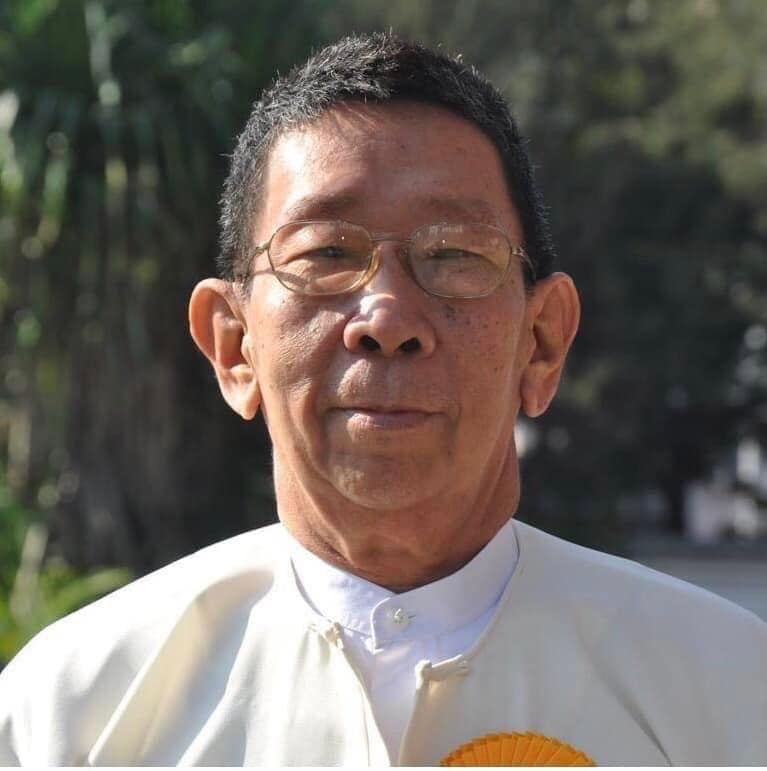
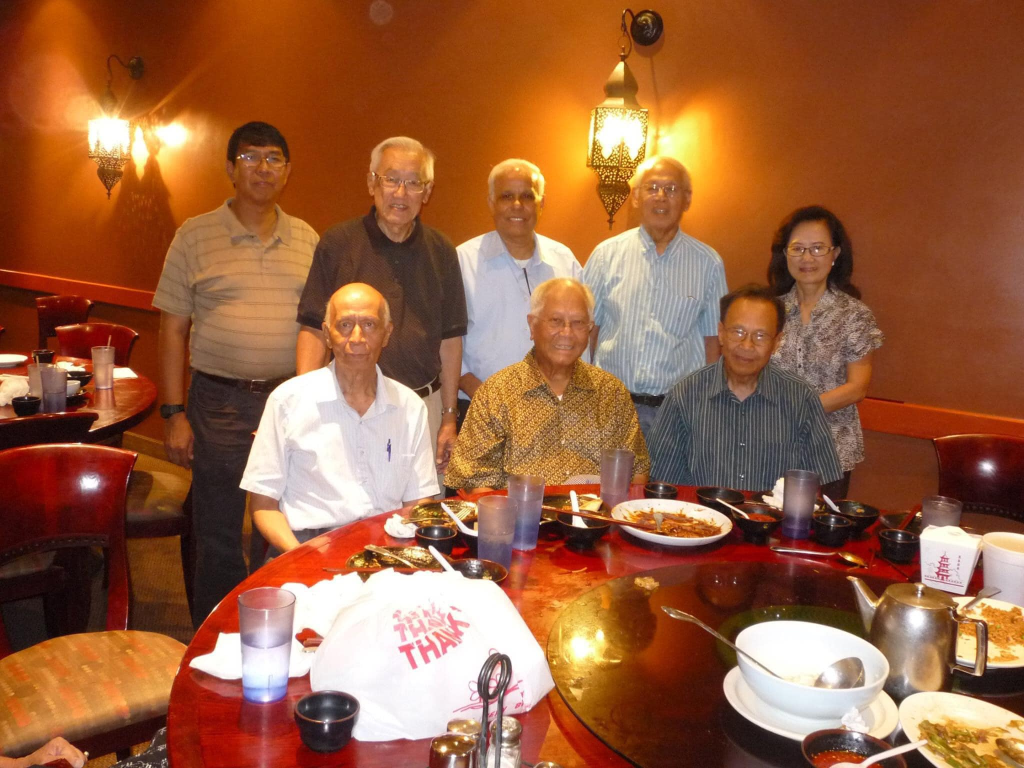
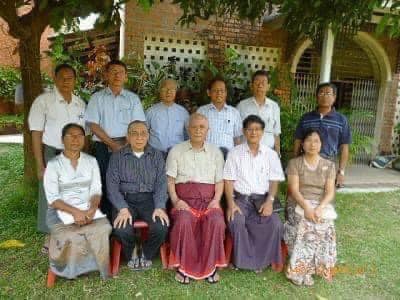
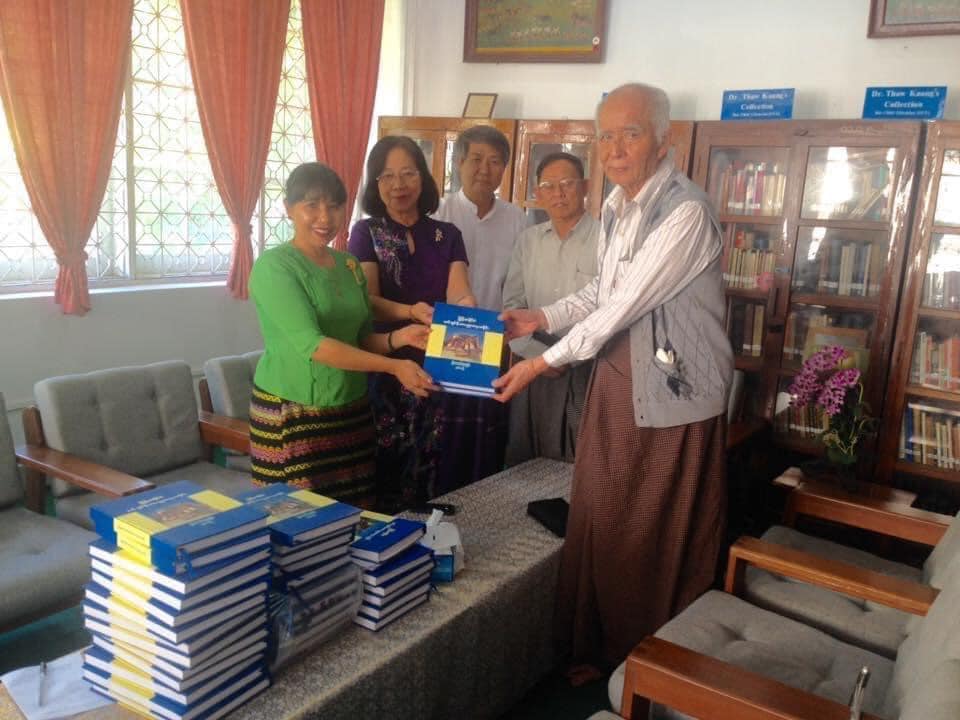
Khin Maung Htun (SPHS58, GBNF) — PPFC; Patron of OPA and OPA Buddhist Association
Khin Maung Latt (GBNF) — Taught English at RU and his private school; Chief Editor of WPD; Spouse : Khin Myo Chit; Son: Dr. Khin Maung Win
U Khin Maung Latt and Dr. Khin Maung Win
Khin Maung Latt — AFPFL Minister; Sons: U Khin Maung Gyi (English), U Khin Maung Lay (M70).
Khin Maung Latt (M63) — Member of 4×100 m relay team that set the RU record; Represented the Faculty of Engineering in Rowing. Soccer and Track & Field; Brother: Khin Maung Lay (T68)
Khin Maung Latt — Saya; Maths
Khin Maung Lay (Henry, T68) — Represented RIT in Soccer, Rowing, Track & Field.; Past Secretary of RIT Track & Field; Past President of BASES; Emcee for BASES and 2015 RIT Alumni Reunion in Los Angeles; Excellent cook and vocalist; Brother : U Khin Maung Latt (M63)
Khin Maung Lay (Mu Tu, M70) — RIT Soccer; Organizer and MC for the 1st BE Intake of 64 and 65; Principal of Labor School; Member of Myanmar HRC; Father: H.E U Khin Maung Latt
Khin Maung San (Tommy, GBNF) — Marlar Confectionery
Khin Maung Saw
Khin Maung Sein
Khin Maung Shwe
Khin Maung Soe (Tommy, EE69er) — Basketball
Khin Maung Swe, Dr. (Tekkatho Maung Thin Char, GBNF)
Khin Maung Than (SPHS, M71)
Khin Maung Than (Kenneth, GBNF) — CMA
Khin Maung Thaung
Khin Maung Thaw
Khin Maung Thein — Minister
Khin Maung Thint (A) — Saya
Khin Maung Thwin
Khin Maung Tin (M69) — Saya
Khin Maung Tin, Dr. —BMRI
Khin Maung Tint (C69) — Saya
Khin Maung Toe (GBNF) — Musician
Khin Mg U, Khin Mg Zaw
Khin Maung U, Dr. (SPHS63, First in Burma)
Khin Maung Win, Dr. (Pathology, GBNF)
Khin Maung Win, Dr. (Maths, GBNF)
Khin Maung Win, Dr. (Cardiologist)
Khin Maung Winm Dr, (Donald, C69) — Saya
Khin Maung Win (EP69, Sargalay, GBNF)
Khin Maung Win (EE69er, Roland Thein)
Khin Maung Win (ChE69)
Khin Maung Wint — RUBC Gold
Khin Maung Yin (A60, Kin Maung Yin, GBNF) — Director; Artist
Khin Maung Yin — Dy. Minister; Daughter : Dr. Lay May Yin
Khin Maung Zaw (SPHS70, EC76) — Microsoft; Founding member of RIT Alumni International, which hosted SPZP-2000; Designed and implemented the first RIT website.
Khin Maung Zaw (SPHS61, EP77)
Khin Maung Zaw, Dr. (Frank, SPHS63) — 17th in Burma
Khin Nyein
Khin Nyo, Colonel — Member of the Revolutionary Council; Sons: Myint Lwin Nyo, Dr. Htay Lwin Nyo (EP74), Aung Lwin Nyo and Kyaw Lwin Nyo
Khin Nyo (Eco) — Rowing; Registrar
Khin Nyo — RIT Reporter
Khin Sabai
Khin San
Khin San, Daw
Khin San Myint, Daw
Khin San Thaung, Daw
Khin Si Thaung, Daw — UCC; TSC
Khin Soe Tin, Daw — Sayama
Khin Swe Aye, Daw (Winnie, ChE70) — Sayama
Khin Swe Aye, Dr. (Doris, Bohmu)
Khin Swe Myint
Khin Swe Myint, Dr. — Sayama; Physics
Khin Swe Thaung, Daw
Khin Than Nwe (Margaret, T62)
Khin Than Nwe (Physics) — Sayama
Khin Than Nwe, Dr. (Chemistry) — CSO
Khin Than Nwe (Myint Myint)
Khin Thein, Dr. (Victor) — Won Golds for Yachting at SEAP Games
Khin Tun, Dr. (Peter, MRCP, UK) — Former Associate Dean of Oxford University; Succumbed to Covid
Khin Zaw (“K”) — First Chief Librarian of Rangoon University Central Library; Founder / Director of Myanmar Ah Than (Burma Broadcasting Service)
Khin Zaw (Mathematics) — Saya; RU and Workers’ College
The first year students were divided into four sections : A, B, C and D. Most students of Sections A & B had passed Matriculation with Pure Science. Most from Sections C & D had passed with either Science & Arts Combination or Pure Arts. There were some late joiners to RIT.
Male students from districts and states were boarded in hostels, in the ground floor rooms of B, D and E Blocks and “Inlay Hall” in Thamaing.
A building named “G Hall” was assigned to board female students from districts and states. Local female students who applied were also allowed to board in G Hall.
Engineering was not considered appropriate livelihood for women. Hence, there were only a few female students studying Engineering before our intake. With the new system, there was an influx of girls. It was quite a pleasant feast to the seniors who were not used to seeing those many female students. So when our ‘64 intake started attending classes, it was a thrill for the senior students to watch a great number of female students strolling in the corridors, coming in and out of class rooms,in canteen, in the food shops, in the library and everywhere on the campus grounds. We were also thrilled to get in company with a lot of female classmates. (It was exciting for me to have female classmates as I [Ohn Khine] was sent to all boys school, St. Peter’s High School in Mandalay since Kindergarten till I matriculated in 1964.) It is fair to note that the girls were somewhat intimidated and somewhat amused by the loud remarks of a few rowdy students or even feeling stared at while having to move from one classroom to another. Girls spent time during breaks in an area of a corridor surrounded by shaded blinds which was known as LCR (Ladies’ Common Room) where the day students usually ate home-brought snacks and rest. Ladies residing at G Hall would have lunch at the canteen and were able to rest in their rooms. The first LCR was a little room on the third floor before a section of the corridor on the third floor was made as the LCR before the start of our 2nd year at RIT. When the bell rang for the next class, it was customary to peek through the blinds to check whether the boys had gone inside the theatre for the timid girls to come out of the LCR.
Outstanding athletes from our class
The list was compiled by Ko Ohn Khine. Comments were provided by Ko Zaw Min Nawaday. Organization / presentation (with corrections) was done by Ko Hla Min
Badminton
Tommy Shwe (GBNF)
Kyi Kyi Sein
Basketball
Tin Aung (E)
Tin Aye (M)
Kevin Law
Soe Aung (Auto)
Body Building / Weightlifting
Than Htike (M)
Boxing
Maung Maung Thaw (E)
Chinlon
Soe Tint (C)
Mya Daung (M, GBNF)
Football / Soccer
Sai Thein Maung (C)
Khin Maung Lay (Mutu, M)
Win Zaw (A)
Myint Sein (Ja Pu Sein, GBNF)
Kenneth (Khin Maung Shwe, GBNF)
Htun Myint (M)
Hla Kyi
Sai Aung San (Met)
Judo / Aikido
Sein Myo (C)
Kyaw Soe Win
Soe Aung (Auto)
Thaung Lwin (M)
Soe Myint (Agri)
Sai Loke Khan (Mn)
Rowing
Htein Win (M)
Aung Lwin (Jaspar Wu) (C)
Swimming / Water Polo
Peter Pe (GNBF)
Htein Win (M)
Win Aung (M)
Mg Mg Swe (M) (5)
Ma Tin Tin Myint (Ch)
Tennis
Aung Kyaw Soe (James Than) (Ep)
Khin Mg Shwe (Ep)
Wai Lwin (Agri)
Rosie Tin Maung (Ch)
Track and Field
Sai Thein Maung (C)
Shein Kee Gae (GBNF)
Saw Mg Mg Htwe
Oo Myint (Mn)
Win Naing
Lei Lei Chit (Ch)
Nan Kham Ing (A)
Maung Maung Thaw (E)
UTC Marksman
Tan Yu Beng (Benny) (M) Let Pyaunk Tat Thar, twice, both UTC 1st & 2nd yr.
Volleyball
Kyaw Sein (M)
Salai Myo Myint (C)
Additional Information by Ko Zaw Min Nawaday
Sai Thein Maung (C), was a great RIT goalkeeper for 6 years. He also won gold medals in 100 meters and Hop Step and Jump in the Inter Institute track and field competition almost every year.
Tin Tin Myint (Emma) (Ch) bravely competed in the inter-institute swimming meet. I believe she also practiced throwing the Javelin and played volleyball.
Khin Mg Shwe (Ep) won the “Novice” tennis competition at RIT. He represented RIT in the 2nd year and we cheered him as he played a nationally known played from RASU (at the courts across from the Universities football field) during our 2nd yr at RIT.
My good friend Tan Yu Beng (Benny, M) took the best marksman trophy at both 1st and 2nd yr UTC camps. He competed against not only RIT but UTC students from RASU, Institute of Medicine, and Institute of Economics.
Hla Kyi (nickname Sut Kaw) played center right back for RIT selected football team. Most RIT students that watched the game between RIT and Loke Thar during our first year will remember the flying kick he took at the head of the left winger of Loke Thar when Myint Sein (M) GBNF and that left winger got into a fracas. The Universities team coach Saya Nyein, who was the referee for this game, promptly told Hla Kyi to leave the field.
There were also unsung heroes (e.g. The RIT B football team). I did not know about them until the third year, when Sai Aung San, my room mate for that year, told me about it. He was the goalkeeper, Yan Shin played in the back line and Kyaw Min Aung was the reserve goalkeeper.
Ah Nu Pyinnya Shins from our class
Ko Myint Swe Win (M): Mandolin virtuoso, vocalist. Participated in every concert and pwe
Ma Mo Mo Yi (E) : Announcer
Ma Tin Tin Myint (Emma Myint) (Ch) : Myanmar Dance
Ma Tin Myint Oo (Rosie Tin Maung) (Ch) acted as “Tha Gyar Min သိကြားမင်း in the musical performance of the song “Sanda Kein Na Yi”. Vocalist and instrument (Don Minn) by Ko Yu Swan (M 68).
George Ko Ko Gyi (Ch) played the part of Ten Headed Ogre (Dat Tha Gi Ri) in the short opera of Chasing the Deer (Rammayana play)
Ko Than Myint (M) : Vocalist & All-round instrument player
Ko Soe Aung (Auto) : Clarinet
Ko Tin Win (Texile) : Burmese Harp (Don Minn)
Ko Aung Myint (a) “Thaman Kyar Ko Myint” (Mn) starred in the “Thaman Kyar သမန်းကျား” movie
Ko Than Win (Tex), spouse of Ko Myint’s cousin, wrote the story of “Thaman Kyar”.
UTC (Universities’ Training Corps)
Some of us entered the UTC.
We had two camps the first year we were at RIT : Summer camp at KyeDaw, Toungoo; October camp at Meikthila.
First UTC Camp
At the Toungoo camp, our platoon was the only RIT platoon stationed with RASU students. So we were 30 or so RIT students among 500 plus RASU students at the 10th Buregt. The main body of RIT students were at a little school. They were the lucky ones. They had the instructors from UTC in charge while we at the 10th Buregt. were assigned a grouchy sadistic corporal from the regular infantry to drive us. He has a mustache so we nicknamed him “Nga Khu”. Ko Win Htut (C), Ko Khin Mg Lay (M), Ahmed Soorma (Ch), Ko Kyaw Min Aung, John Krasu, Ko Htwe Myint (C), Ko Htain Win (M, Chauk Pe) were among those in this platoon.
It was here that Ko Htwe Myint got his nickname “Bo Hmu” because of the military bags he had on him.
We slept on a long bamboo platform, next to each other. We had to stand guard duty at night, one hour each and sign off on the duty sheet. If our duty hour fell on 8pm-9pm, it was great. If it were from 1pm to 2pm, it was the graveyard hour. One time, my duty was from 1pm to 2pm, Ko Khin Mg Lay (M), who slept next to me was from 12-1pm. He tried to wake me up to give the duty sheet but I refused to get up since I was so sleepy. He finally said “Min Tar Wun You Mea So Yin Ngar Ate Pi”. I finally got up and took over the duty sheet. Standing guard duty during graveyard hours had its benefits. I saw the Big Dipper, Khun Na Sin Kyea, turn and point its tail upwards. (Khun Na Sin Kyea Pyong ah mee thoung, than goun chain tho youk.)
We had to get up at 5pm and run PT, guzzle a cup of tea and swallow down bein moun at 6.30am. At 7am, we were on the parade ground doing marching drills. One time, our sadistic corporal made us run for 45 minutes with our rifles in our hands because he was unhappy with our performance. That event also brought out the best in the RASU students. When the whistle blew for a 10 minute break, in a rare display of camaraderie, some RASU students came over with water for us to drink.
Lunch was a little meat dish and great Pe Hin.
In the afternoons, we had to go to a Phone Gyi Kyaung about half a mile away so that we can sit in the shade while we were taught small arms. We were not allowed to use the water in the well at the Kyaung, so four persons from each platoon had to take 2 Ye Oes full of water. Although it meant carrying the heavy Ye Oe, in addition to my rifle, I always volunteered for that duty since we got to leave about 20 minutes earlier for the Phone Gyi Kyaung. That way, we got to rest and enjoy the tranquility of the Kyaung Win before the rest of the students arrived and the lessons started. I remember laying under the trees while waiting for the rest to come over, looking at the Toddy (Htan) trees and wondering if King Tabinshwethi had one time spent his days near this place drinking Htan Ye .
I remember the incident about Ko Win Htut being punished harshly one time. I don’t remember exactly what it was about. We all know that Ko Win Htut liked to have fun and his happy go lucky come attitude got him into trouble with our party pooper instructor Nga Khu. He was ordered to jump from a squatting position while having his rifle held above his head until he fell exhausted. After 3 weeks, training was ending and we decided to give the Corporal a longyi as present and all of us Ka Daw to him. For the first time, tears rolled down this tough Corporal’s cheeks.
The next day was the graduation parade. It was a proud moment for all RIT students when Tan Yu Beng (Benny) (M), stepped up to receive the award for Let Pyaunt Tat Thar, standing first in marksmanship among 800 UTC students from all Institutes and RASU.
Second UTC Camp
To attend the second UTC camp, we left for Meikthila on the 3rd week of September. The train travel ed at night, but we had trouble sleeping on the train. We were sent to the 3rd BATD. Beautiful barracks with wood flooring. But horror of horrors. Hundreds of bed bugs came out from between the wooden planks. That night, there was no way I could sleep with the bugs biting me. so, even though there was a slight drizzle of rain falling, I decided to sleep on the ground outside. Since I did not get any sleep the night before, I slept through the morning PT before waking up. Ko Khin Mg Lay told me that the instructor came to kick me while I was sleeping in the morning, but I just kept on sleeping. The instructor was overheard saying something like “Mway Pauk Tay Mae” before walking away. My official place in the barracks was next to Ko Sein Win (EC). Ko Sein Win was very neat and had the best prepped bed for daily inspection. Next to him, mine looked like crap. Points were given daily for how good you had prepared your bed. Ko Sein Win always got the best comments and mine was in the pits. Actually I did not sleep a single night in my bed place. I used my blanket as a cot by tying it to two posts out in the veranda and slept there.
Life at Meikthila camp was more pleasant than Toungoo camp. For one thing, all of us RIT 1st year students were in one company. We had our share of funny incidents. One day, the RSM of UTC chided all of us for soiling the side of the toilet holes in the outhouses. His words were, “Nya Kya Ah Pauk Te Te Ko Min Doe Win Aung Htet Naing Dae. De Louk Ah Pauk Gyi Kya Win Aung Ma Par Naing Bu.”
As it happened, that evening, the RSM was kicking the ball to the goal and it went wide. Bohmu Htwe Myint shouted “De Louk Gyi Dae Ah Pouk Win Aung Ma Kan Naing Bu Lar?” The RSM walked away with his head bowed.
Sometimes, we drove the instructors hopping mad. One time the instructor told us “Ngar So Dar Lite So”. In one voice, we all shouted “Ngar So Dar Lite So”.
After two weeks, we were told to give our kit bags to be taken by truck to Taung Pulu, while we would have to march 18 miles to that place the next day. Without a kit bag, no blanket to make my cot, I spent the night just walking around in the veranda since it was raining outside and there was no way I could sleep inside with the bed bugs. The next day we marched to Taung Pulu, carrying our rifles. It was tough for me since I did not sleep a wink the night before. The sun was beating down on us the whole day. Where was the rain when we needed it? Worse was the rocky road made of Gawoon rocks. It made the nails in my boots hurt my feet. I must have pulled out over half a dozen nails from each boot.
We finally made it to Taung Pulu in the evening. We were given rice to cook for ourselves and were assigned 4 persons to a tent. That night, there was a tremendous storm. Water gushed into the tents. The next day, someone told me that everyone was sitting in their tents except me. He said I was asleep with my head in the mud. I did remember waking up during the storm, looking up at my tent mates who were sitting, and going back to sleep.The next day, we were told to move into a Zayat on a hill. It was so crowded in the Zayat, I refused to sleep there. Instead, I went up the Phaya Yin Pyin and slept alone on the brickwork with a blanket tucked around my body to prevent the winds from blowing it away.
Time came for graduation and our Tan Yu Beng (Benny, M) again got the Let Pyaunk Tat Tar award.
Ko Win Htut, I and others that I don’t remember, took a bus to Mandalay from Meikthila. We arrived in Mandalay, near 33rd and Zeygyo (84th) around 6 pm. Ko Win Htut was home since his house was around the corner. For myself and a couple of others, we just kept on walking towards the direction of the clock tower, hoping we would run into something. It was seeming more and more likely we might have to sleep on someone else’S doorstep.
Then, we saw a jeep come down 84th street and stop. It was a MMTA taxi with Saw Mg Mg Htwe sitting in the front seat! (MMTA stood for Maymyo-Mandalay Taxi Association).
He told us that he figured there might still be some UTC students that wanted to go to Maymyo coming this way and had asked the taxi driver to drive along 84th street before turning towards “A” road to take the car out of Mandalay to the Maymyo road.
My introduction to teaching at RIT began as a team member of the English Department. Besides Daw Yin Yin Mya (Head of the English and known to us as Terry), and Daw Sheila Saing (Asst. Head), there were 10 tutors including myself.
Nicknames
In his own inimitable and affectionate way, Saya U Khin, also one of the new tutors, decided to spice up our group by giving us nicknames. I’m sure my former colleagues will forgive me for revealing these juicy tidbits as this generous gesture of U Khin’s served to bind and give our departmental community a semblance of togetherness.
Daw Yin Yin Mya was complimented with the name Shwe Man Mé (in honor of her previous beauty pageant title). I wouldn’t want to reveal Daw Sheila Saing’s nickname. Despite its not being slanderous or derogatory, it was a typical humorous expression of what we Burmese immediately notice about anyone’s appearance. U Win Mra was known as Rakhine gyi, Saya Tony (Sao Kan Gyi) as Shan gyi (sadly gone, but he must be smiling down on us from his abode of eternal rest), Sayama Toni as Byaing ma gyi, Sayama Muriel – a name I don’t recall, but which I think reflected her sweet innocence and being the object of Saya U Khin’s “secret” admiration, Sayama Khin Saw Tint, ungallantly nicknamed Ahnaik té gyi, and Sayama Charity who was inexplicably called Shwe nga.
For some strange reason, U Khin spared me, perhaps out of intimidation or deference for my scrabble prowess, as he often challenged but rarely ever beat me in games involving money bets.
Both Saya Joe Ba Maung, and Saya Kyaw Lwin Hla, easy targets, were also excepted by U Khin, perhaps to portray a side of his that reminded him of having some good social graces. These intimate nicknames, characteristic of us Burmese helped with the bonding process more closely, and nobody took offense at their liberal use. It certainly seemed that despite our different ethnic backgrounds, we enjoyed a far greater measure of coexistence, cooperation, and friendship in our department than the Burmese government of the day did, in their efforts to co-opt and mold the various ethnic groups of the country into a unified whole.
Classes and Examinations
Those were halcyon days for us at RIT, teaching classes of 20 to 25 respectful and committed students, who basically went along with what we decided was appropriate to teach, and in the manner we decided was best for them to learn. Saya U Khin and I usually had Sayama Terry’s ear, so to speak, and we got to make considerable input into the curriculum and test instruments. At exam time, I was given the duty of conducting the Listening tests over a loudspeaker system across a few wooden framed classrooms (not unlike large zayats), likely due to my previous stint as a radio entertainer with the BBS.
Students
I got to love my work and I became very attached to the students. In particular, I remember one student. In my classes, he was almost habitually slouched over his desk in the last row of the class, seemingly half asleep on one bent elbow with glasses barely supported on his nose, and seldom looking up or towards the front of the classroom. His seeming indifference belied a very active, bright, and absorbing mind, one which on facing a problem or engaging in conversation requiring close concentration manifested its ability to ably comprehend sophisticated concepts or language use. Usually indulging in his pastime of doodling, I’m sure he was immersed in daydreams of one day becoming an editor of a successful newspaper or a widely popular and eagerly-read newsletter.
When I wasn’t teaching, I was either playing scrabble with Saya U Khin, Roland Thein, Sayama Anne, or Bobby Myo Tun, now respectfully addressed as Bhikku Pannagavesaka, who undoubtedly must now be spending some time apart from his meditation in his monastery in Mawlamyine to reminisce on some of the earthly pleasures RIT once had to offer.
Our teaching staff was a friendly bunch. We had a regular stream of students, and some members of other departments visiting with us either to exchange pleasantries or to “check out the scenery” from our vantage point on the 3rd floor. Regulars such as Roland Thein and the Rev. Bobby Myo Tun (no disrespect intended), were often joined by Johnny Hla Min, Kenny Wong, Robert Win Boh, La La, George Tun Pe, D.S. Saluja, Toby Kittim Ku, Zaw Min Nawaday, Walter Tan, Gregory Win Htut, Reggie Kyaw Nyunt, etc., and their delightful female counterparts viz., Christine Phyu Phyu Latt, Emma Myint (later an RIT sayama), and Pamela Myo Min (now Head of Architecture) etc.,. Others, one year junior were Merrylin Smith (now Mrs. Zaw Mon with a very successful career in the US government’s EPA), Than Than Yi (at whose house I played tennis a few doors from Daw Aung San Su Kyi’s residence on University Avenue), Amy Lei Lei Myaing (Tex), Rosie Gyi, Annie (?), and Merlin Vaz, etc., Many of these students not only strolled into our “English Corner”, but unstintingly gave of their time to help me set up the RIT scrabble group, which later even involved the participation of Sayagyis Dr. Aung Gyi, U Min Wun, and perhaps Saya Bilal Raschid in competition games in the institute. The students’ help also extended to organizing the department’s debates and carol singing at Christmas time – an interesting seasonal Christian celebratory event, where racism and religious discrimination played no part in the thinking of our community. We were just happy to be one, and to do things and enjoy each other’s company in whatever manner we could, all in true Burmese fashion.
Sayas from other departments
On other fronts, I thoroughly enjoyed socializing and cultivating friendships with faculty members from other departments. Saya U Sein Shan (Math) was a consistently friendly and jovial presence, as were Saya U Maung Maung Win (Mech) with his flashing smile worthy of any CNN news anchor, Saya Maurice Kyaw Zaw, and Saya U Soe Paing, whom I called “the involver and the motivator”. I had frequent stimulating conversations with Sayas Christopher, U Thein Dan, and U Allen Htay of the Civil department. And of course, I was not only very friendly with Saya Bilal Rachid of the Architecture Dept., but was, and will always continue to be deeply grateful to him for helping me get my Canadian visa. He did much to introduce me to the international diplomatic circuit where the foreign ambassadors often engaged in discussing topical issues, a pastime close to my heart. We now keep in close contact by email, and I plan to visit him and others in the Washington [D.C.] area in the near future.
In the same way that I had learned to smoke from some RIT seniors in 1959, I also learned to drink from socializing and playing tennis with the Russian Architectural and Mining lecturers. Interestingly, Viktor, the head of the Russian group took me aside when I went on my rounds to wish my various colleagues “Good-bye”, and asked if I would mind keeping in touch with him as he wanted to immigrate to Canada. When asked, “Why Canada?” his answer was a simple, “They have excellent fishing there!”
Rector and Registrar
Despite my very cordial relations with Sayagyi U Yone Moe through my occasional visits to his office, there was one person in the administration who seemed to consider me anathema to the institution, with no apparent justifiable reason. Whenever I happened to see U Soe Thein the Registrar, which was practically everyday, he would always stare or glare at me with thinly disguised feelings of dislike.
Anecdote
I know I’m fast forwarding a bit here, but I’d like to narrate an interesting and illuminating anecdote that happened towards the end of my teaching career at RIT.
One day, a brilliant student of mine – who shall remain anonymous, returned from the government’s annual Lu Ye Chun summer camp for outstanding achievers. At the usual meeting of students, faculty and administration in the RIT Assembly Hall, instead of going along meekly with the official policy line of praising the program to the skies, and using the occasion to encourage other students to strive for higher ideals within the government’s philosophical purview, he delivered a critical unflattering message labeling the program as nothing less than an attempt to indoctrinate the students with questionable socialist ideals!
We sat in stunned silence, not for one moment expecting such a tirade. I never quite got around to asking him what chastisement was meted out to him, but within an hour of his outburst, I was “requested” to see U Soe Thein in his office. There, I was pointedly accused of imbuing this student of mine with harmful western liberal thinking that was detrimental to the Burmese Way to Socialism. Despite my protests to the contrary, I was roundly castigated on the grounds that I was a natural suspect due to my westernized manner of dressing, my behavior, and outlook. Well, so much for U Soe Thein – himself a suspected front man for the party, and his heavy-handed attitude.
There was no love lost between us, but I very sadly had to conclude that after this, my first experience of discrimination in my life, and a few other misgivings about the systemic failure I was witnessing, including the plight of the working class people at large, I would sooner or later have to leave the land of my birth, as it was becoming extremely constricting and taxing for me to exist in such a stifling political system. I have since moved on, preferring to relegate the “U Soe Thein fiasco” to a footnote in my teaching career at RIT.
And as for my student? I was left with an absolute sense of admiration for this young, conscientious, and courageous person who had had enough gumption to speak truth to power!
Editor’s notes
Sayama Terry moved to Australia.
Daw Yin Yin Mya
Sayama Sheila moved to Thailand. Her spouse Dr. Zin Aung taught at Assumption University (formerly ABAC).
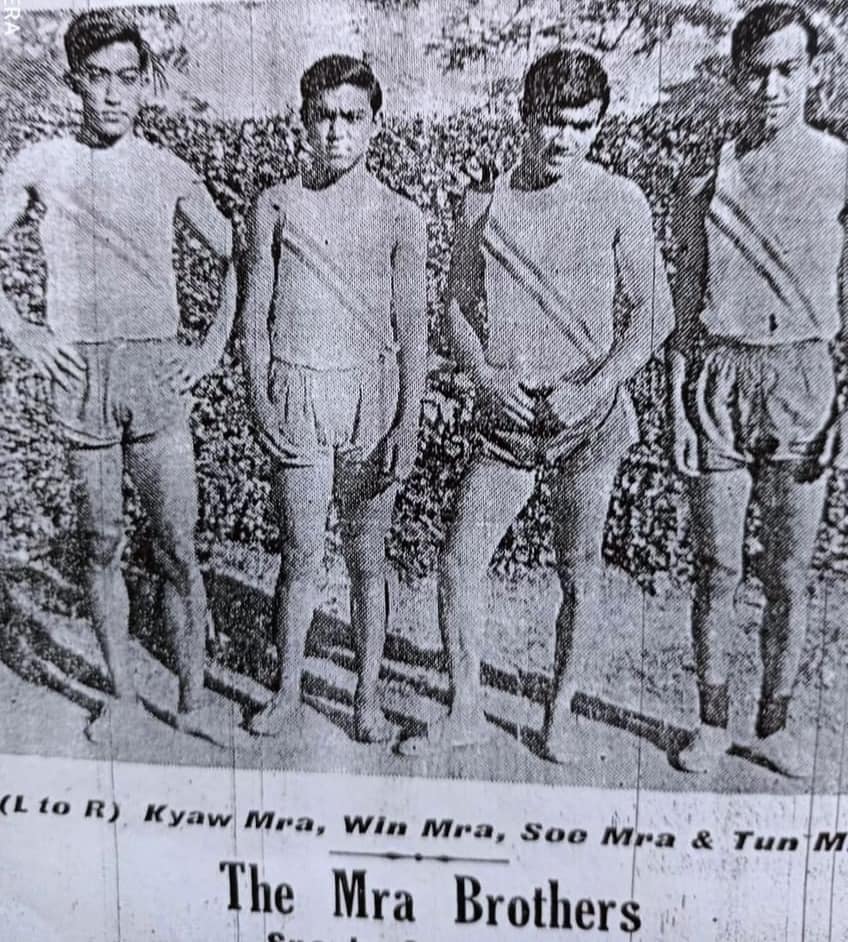
U Win Mra retired from Pole Vault Competition and became Burma’s Elvis Presley. He joined the Foreign Office. He served as Ambassador to the UN. Upon his return, he chaired the Burma Human Rights Commission. He is a Khamee Khamet of Sayama Toni .
Win Mra
Sao Kan Gyi (GBNF) wrote with the pen name “Khemerat”. His sister Biddy (spouse of Mawn Pong Sawbwa Lay) published a book in Australia.
Daw Khin Saw Tint is a bilingual author and a happy great grand mother. Her younger brother U Nay Oke Tint (St. Paul’s) gave a TEDx talk about their mother Daw Khin Saw Mu and her role in the Khit San Sar Pay.
Sayama Muriel (spouse of Saya U Aung @ Alphonso Rivers @ Ko Nge) moved to Thailand. I met them at Saya U Tin Maung Nyunt’s house in Milpitas. They were visiting their daughter in Southern California and made a short trip to Northern California.
Sayama Charity retired as Professor. I met her at SPZP-2012.
Saya Des sent me his book. He had back pain, which limited his traveling. For some time, he taught English on-line to students far and wide.
Joe Ba Maung (GBNF) was Burma’s Tennis Champion in both Singles and Doubles. He joined Burma Railways and also managed the Sports Program. He lost his job after 8-8-88.
U Kyaw Lwin Hla joined UNDP and had a long UN career.
U Khin also won some Scrabble tournaments, but the awards are less that those of Saya Des. He moved to Taiwan. He sent me a long e-mail in 2016 when Ko Maurice Chee (M75) organized a Birthday & Appreciation Soon Kway at Dhammananda Vihara, Half Moon Bay, California.
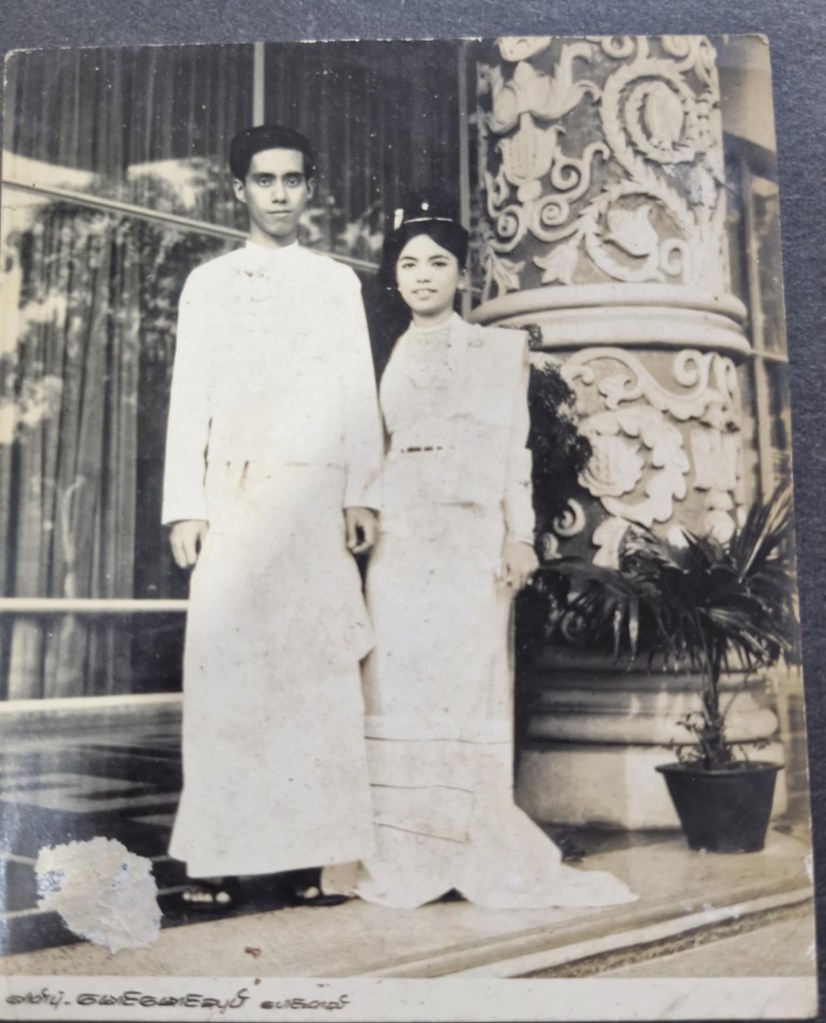
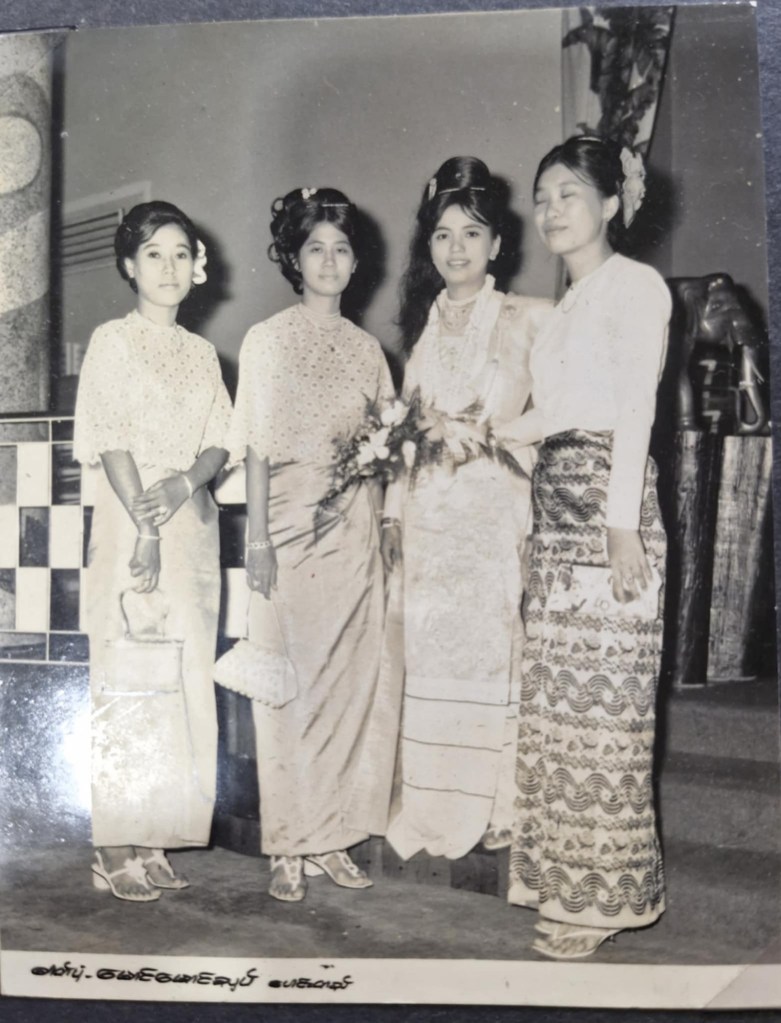
At my wedding, Mama Si Si Chit Maung did the flower arrangements on the stage. In those days there were no florists yet. And all the white Lillie’s were from Daw Khin Kyi’s garden, 54 University Ave. Aunty Marie Hla Taw booked for my wedding (4 months ahead) after my engagement was done in September 1971. Can’t get those flowers in the market in those days too.
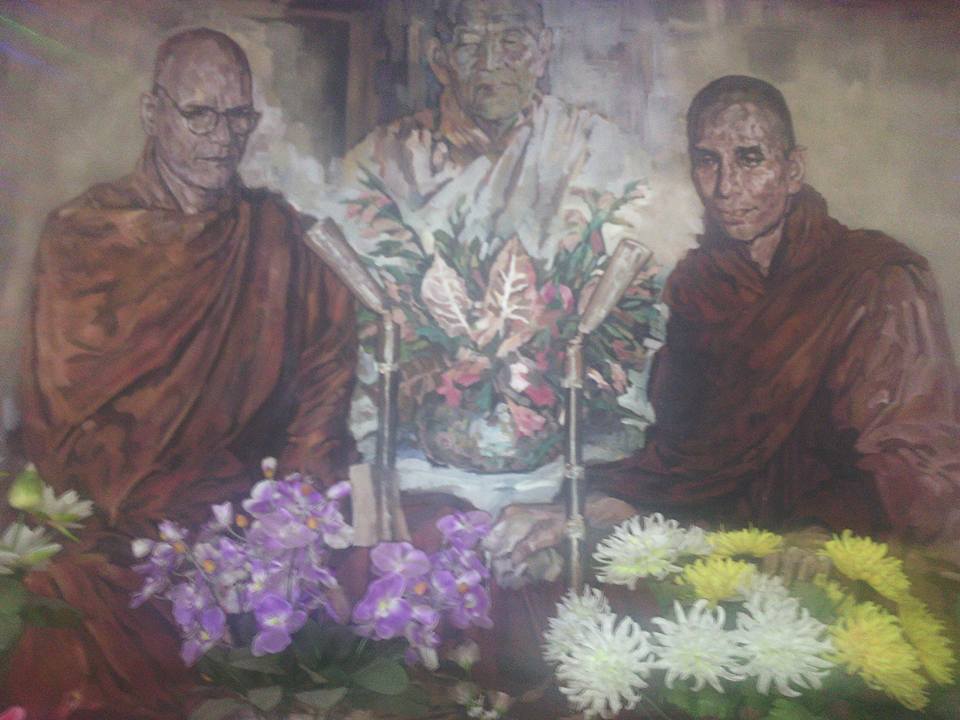
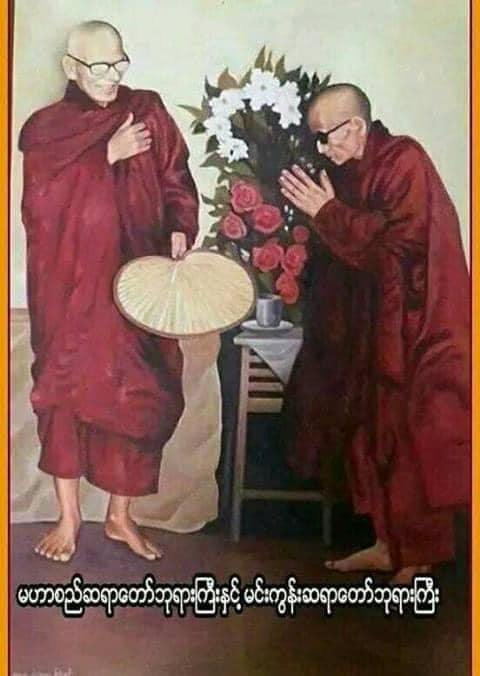
U Vicittasarabhivamsa (GBNF) ဦးဝိစိတ္တသာရာဘိဝံသ was listed in the “Guinness Book of World Records” for his phenomenal memory.
When Burma hosted the Sixth Buddhist Council ဆဌသံဂါယနာ at Kaba Aye Pagoda in 1954 – 56 to commemorate the 2500th year of the “Sasana Calendar“, Sayadaw acted as the “Reciter” of the Tipitaka (Triple Basket : Vinaya, Sutta, and Abhidhamma) and the selected Commentaries.
According to the Kaba Aye Edition, the Tipitaka covers 8000+ pages. Vinaya : ဝိနည်းMonastic rules of conduct Sutta : သုတ္တန် Discourses Abhidhamma : အဘိဓမ္မာUltimate Reality
Sayadaw could recall all and provide exposition.
To prepare for the Buddhist Council, Sir U Thwin ဦးသွင်requested Mingun Sayadaw to take the Tipitaka examination.
Sayadaw passed the Oral and Written tests for the Three Baskets with Distinction.
Oral tests will fail a candidate if he needs five (or six) prompts. Sayadaw did not need a single prompt.
Written tests cover in-depth topics.
During the recitation, Sayadaw amazed the examiners by pointing out the variations of the text and highlighted the preferred version.
First Sayadaw to be conferred “Guardian / Bearer of the Tipitaka & Treasurer of the Dhamma“.
When Sayadaw received requisites, he gave them to the monks (in the town where he received them).
To support the monks studying for the later Tipitaka examinations, Sayadaw set up a monastery in Mingun and accepted monks who had finished Dhammacariya.
Became monk after retirement and spent several vassa.
Dr. Lwin Aung (Center)
U Bo Gyi (A59, GBNF)
Assisted Saya Mr. O Nagler for the design of the RU Recreation Center.
Pianist
Modeling expert
Co-founder of Architects Incorporated.
After Nationalization, moved to PWD.
Architect of Daw Khin Kyi Mausoleum.
Became monk after retirement from PWD.
U Bo Gyi
Civil
U Kyaw Sein (Bran Dev, C59)
EE Irrigation (Sedawgyi project).
RU team forward. From Mandalay. Prome hall.
U Htay Aung(C59)
Prome hall soccer forward. He was transferred from Tagaung hall.
U Hla Baw(C59)
Prome hall S& R President
Mechanical
Saya U San Tun (M59, GBNF)
Mechanical Engineering 1959 U San Tun 1U San Tun 2 U San Tun 3 U San Tun 4
Saya U San Tun (Sain Fone Wong) graduated with B.Sc. in Mechanical Engineering from the University of Rangoon in 1959. He passed with distinctions and won a Gold Medalist. At the convocation, he met Dorothy Tham (a female Gold Medalist from a different faculty). They became friends and later tied the knot.
He joined the Mechanical Engineering Department as an Assistant Lecturer.
He was awarded a States Scholarship to pursue graduate studies at MIT, USA. He received Masters from MIT, USA in 1962.
Upon his return, he taught at BIT and also served as a Hall Tutor.
He was promoted to Lecturer in 1964. He headed the Automobile Engineering (Sub-department of the Mechanical Engineering)
He relocated to California, USA in 1968.
From 1968 – 1974 he worked as a Contract Engineer, Cone Company, Burlingame, California
1974 – 1999 Bechtel Corporation, San Francisco, California (Retired in August 1999 after 25 years service).
Saya served as President of BEA. He succeeded Saya U Htin Paw (EE58, GBNF)
Saya passed away in California on December 12, 2025 at 10:30 am
U Tin Hlaing(M59, GBNF)
U Tin Hlaing
Joined the Faculty as Assistant Lecturer
MS from Purdue University.
Promoted to Lecturer.
Head of Agricultural Engineering (Sub-department of Mechanical Engineering)
Manager of All Universities and Institutes Hockey Team.
Played Tennis and Soccer
Passed away untimely since he could not get access to the Dialysis Machines at BMH and also could not get Passport and Visa in time to have medical treatment abroad.
U Tin Htway (M59)
Co-founder of BASES
U Tin Win (M59, Bei, Bago)
Assistant Lecturer
Left to run family business
M. Krishna(M59)
Assistant Lecturer
Moved to India and later to USA.
Attended SPZP-2000.
U Ohn Khin(M59, GBNF)
Lt Col. DI (Retired)
MD TC1
Tagaung hall.
U Win Tin(M59, GBNF)
BG DI (Retired)
Minister for Finance and Revenue
Minister for Post and Telecoms
Ramanya hall.
U Hla Aye(M59, GBNF)
EE Irrigation
Later FAO/UN Project Engineer in Laos.
RU football team Captain.
Prome hall and Moulmein district volleyball team Captain
Hla Myint Thein (Maurice Chee, M75) — Worked in Singapore and USA; Founding member of RIT Alumni International and served as Treasurer; Core Organizer of SPZP-2000 and served as co-Chair of the Working Committee, Financial Controller, Logistics Guru and Publisher of the commemorative issue of “RIT Alumni International Newsletter”; Past President of BAPS; Donated books to YTU Library and also coordinated the book donations by others (Daw Mu Mu Kin, Victor Wong) Founding member of NorCal RITAA and served as Vice President.
Ba Htoo — Started the Resistance ahead of March 27 in 1945
Ba Htoo Myo — Named after Ba Htoo; Had training centers for the army
Hla Htoo, Col., FRCR, senior radiologist Burma Army Medical Corp (BAMC), one of the first radiologists to pass the Fellowship of the Royal College of Radiology exam.
Khin Khin Htoo — Author
Khin Maung Htoo — Vocalist
U Myat Htoo (C68) — RIT Saya; Founding member of RIT Alumni International, and NorCal RITAA; Past President of TBSA and BADA.
Myat Htoo Razak, Dr. — RUBC Gold; Father: U Tin Myint
Myint Htoo — Justice
Yahandar Hnit Pokko Htoo Myar — Book by Dhammacariya U Htay Hlaing.