Some musicians play by the ear. They may know musical notation, but they often want to improvise. Examples include the Saing Waing and the Jazz troupes.
Bands and orchestras use Music Sheets. Some Conductors add comments and instructions as guide lines for the musicians in the team.
I have learned basics, but I am not proficient.
Keys Major Minor
Chords Major Minor Augmented
Terms and symbols Quaver Semi-quaver Semi-demi-quaver
Clefs Treble Bass
Mnemonics F-A-C-E E-G-B-D-F : Every Good Boy Does Fine
It was not trivial to transpose music from a sheet into a different key until music software came along.
My uncle bought a new piano. He allowed me to play. He also bought a booklet for me. It had the Relative Notation (1 for DO, 2 for RE, …, and dots to denote the octave). I learned to play using that notation some of Mar Mar Aye’s song (e.g. “Thet Tant Baw Hmar Kasar Mei”).
MIDI (Musical Instrument Digital Interface) and versatile Keyboards come along.
The innovation & information/knowledge explosion are difficult to keep up. One simply has to selectively learn new things without getting burned out.
I am happy to remain a Jack of All Trades and Master of Some.
Myanmar Saing Waing has Jazz as a distant cousin. They perform extemporaneously.
Myanmar Dobat is often performed in Thingyan and at Ah Hlu.
Philharmonic orchestras have various sections. They include
Wind
Brass
Strings
Pop Bands
During our younger days, most pop bands had
Lead guitar (e.g. John Lennon)
Rhythm guitar (e.g. George Harrison)
Bass guitar (e.g. Paul McCartney)
Drums (e.g. Ringo Starr)
Some musicians play multiple instruments. Examples :
Paul McCartney plays the Bass guitar and sometimes plays the piano. George Harrison plays the Rhythm guitar and plays the sitar. U Aunt Gyi usually plays the Accordion, but he sometimes also plays the piano and the guitar. At the Farmers’ Market, I have seen musicians playing two instruments (harmonica & guitar) at the same time.
Some bands play special guitars. They include
Double stringed guitar (with twelve strings)
Steel guitar
Hawaiian guitar
String Quartets
A String Quartet may consist of
Violin
Viola
Cello
Bass
Visiting bands and musicians
During our younger days, several foreign bands and musicians visited Burma. They include :
Benny Goodman (saxophone) and his band
Duke Ellington and his band
13th US Air Force band
US musicians (via the Cultural Exchange Program)
Piano
Piano means “soft”. Forte means “strong”. Pianoforte is a musical instrument that can play soft and hard notes. Commonly known as Piano.
Many composers (e.g. Chopin, Bach, Beethoven) created masterful pieces for the piano.
Pianos come in various sizes and flavors. Baby Pianos, Regular/Standard Pianos, and Grand Pianos.
Traditional piano comes with Black &White Keys, Pedals, Hammers to strike Strings.
“Piano Tuner” is the name of a hit movie.
U Bo Gyi (A59, Uzin) and U Kyaw Oo (M67, GBNF) tuned their pianos.
Cousin uncle U Than Lwin owned two pianos. Played Classical music for the BBS English program — at the request of BBS U Hla Bu (Uncle Percy), Aunty Olive and Allison Gaudoin — at the old BBS station in Windermere Crescent. He allowed me to play on his new piano.
Composer U Hla Moe (a distant cousin) would visit U Than Lwin and practice / display some of his compositions.
U Than Lwin bought a new piano.
BBS had a program called “Keyboard Constellation”.
Horowitz, a renowned pianist, said, “If I don’t practice for a day, only I will know. If I don’t practice for three days, my mum will know. If I don’t practice for seven days, my audience will know.”
Synthesizer
The Synthesizer can simulate many musical instruments.
Until musical software came along, it was not trivial to transpose music from a sheet into a different key.
The Book on BASIC had an example for transposition of musical keys.
Musical Instrument Digital Interface (MIDI) and versatile Keyboards come along.
Innovation & information/knowledge explosion are difficult to keep up.
Selectively learn new things without getting burned out.
MIDI
MIDI stands for Musical Instruments Digital Interface, Composition and play back of musical instruments can be done with the aid of MIDI.
Many automobile workers lost their jobs when robotics (and the related fields) gradually displaced them. Those, who did not have alternate skills, were hit hard.
Touch typists and secretaries found that their skills have been marginalized by the word processors, voice-activated systems and similar advanced tools.
In our younger days, high quality tape recorders (e.g. Ampex) were not easily available.
Burma Broadcasting Service (BBS) used Ampex.
Most people use Grundig, Sony, and Akai tape recorders with mono or stereo heads. The standard tape reels cover 1200 feet. Two tracks are recorded for mono. Four tracks are recorded for stereo.
Mogok Sayadaw’s dhamma talks were recorded by U Sway Tin (son-in-law of U Than Daing, co-founder of Mogok Yeiktha) and team. Over the years, the devotees have distributed Sayadaw’s talks with (a) tapes (b) cassette tapes (c) CDs and DVDs (d) memory sticks.
Some companies (e.g. SuperHet) distributed dhamma talks with the media (of the era).
Record (Dat Pya)
For some time, vinyl records were available. Even today, some (e.g. U Tin Myint (David Ko, M67)) prefer to build and maintain record players.
Burma Broadcasting Service (BBS) issued “Dat Pya” of selected musicians. Saya U Thet Lwin (former Registrar of RIT) received several Dat Pyas for his musical compositions (e.g. Mya Kyun Nyo Nyo Kun Yeik Kho). He received a remuneration of 100 kyats per “Dat Pya”, and treated his fellow Ah Nu Pyinnya Shins.
Miscellaneous
Technological advances have made the recording, copying and distribution of music, lectures easy.
Tekkatho Tun Naung (1st BDS) was selected Tekkaatho Lu Ye Chun for the Inlay Khaung Daing Camp in 1965. He was from the second batch of students from Dental College (later Dental Institute).
He used to play Mandolin placed on his back (preferably in front of the lady hostels).
He also entertained at the Camp by playing his mandolin.
He is credited as a co-founder of Stereo Khit along with Accordion Ohn Kyaw.
Musicians
The evangelists include Min Min Latt and Kyawt Hmu.
Musicians who have gained experience with the BBS Local Talent and Variety Show and free public appearances (e.g. Playboy band at the Golden Jubilee Celebration of Rangoon University in 1970) turned professional.
English, Chinese and Indian songs were provided Burmese lyrics.
Sai Kham Leik was one of the few who created hit songs with original melody and lyrics. Sai Htee Saing was his primary choice for singing his songs.
Studios and Shops
Recording Studios sprang up. They include
Sabai Oo
Lynn
May
Kumudra
Many shops sold mass-produced cassette tapes. Most played for 60 minutes. Tapes for 90 and 120 minutes often got stuck in the players.
Several shops allow a la carte. One can select songs and have them recorded in a tape.
“So Ka Yay Tee” is synonymous with “Ah Nu Pyinnya Ah Thin”.
Rangoon University has a “Ah Nu Pyinnya Ah Thin”. Saya Dr. Maung Maung Kha and Saya U Ba Kyi are Patrons. Saya Kha would play the violin and accompany U Ba Kyi singing “Only Two” (Hna Yauk Hte Nay Chin De).
Under the then New Education System, Institutes (such as IM, RIT, Eco, Edu) were established. Most of them have “Ah Nu Pyinnya Ah Thin”.
RIT
RIT Ah Nu Pyinnya Ah Thin held musical evening extravaganza (“Geeta See Sar”). RIT Ah Nu Pyinnya Ah Thin had a powerful presence at the 1970 RU Golden Jubilee Celebrations. It featured Swel Daw Yeik Ah Nyeint and Htee Yein.
Saya U Moe Aung (Tekkatho Moe War), Saya U Saw Tun (Saw Lu), Saya U Kyaw Sein (M65), Saya U Taing Oke (ChE69), and Saya U Khin Maung Tint (C69) are some of the driving forces for the outstanding performances by the Zat Sayas, Minthas, Minthamees, Lushwindaws, and the talented cast members.
Soul Mates
The Pon Chan Chan also helped find soul mates.
Don Min U Yu Swan and Sayama Emma Tin Tin Myint
U Tin Tun and Daw Mar Mar Yee
Saya U Khin Maung Tint and Sayama Daw Khin Sandar Tun
Usually finished Mechanical drawings in about an hour and still get Grade 5.
Later changed his name to “Lada” and “Galon”
Training partner for Sai Kham Pan (EP69, Burma Selected in Badminton)
Badminton selection at the Township level
Asked his friends to pray for him
Had an operation
Passed away a few days later.
U Khin Maung Win (RIP)
Myint Thin (M71, GBNF)
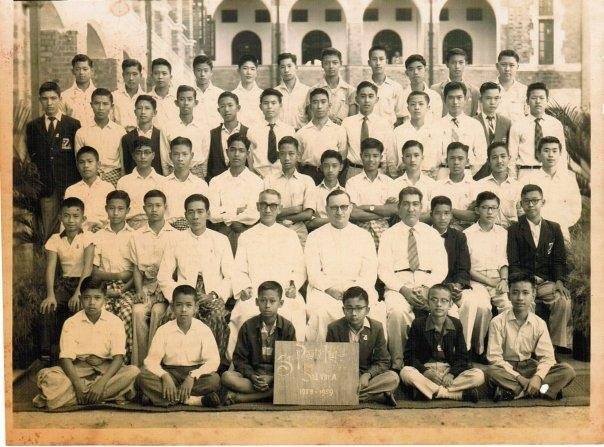
Matriculated from St. Paul’s High School in 1965
Classmates from SPHS to RIT : Myint Toe (M71), Michael Aye (M71)
Admitted to RIT as Mechanical Engineering Roll Number One
Selected RIT Luyechun
Represented RIT in Rowing
Sponsored Sayagyi U Ba Than to attend SPZP-2007
Passed away in Singapore.
Spouse : Daw Khin Win Ni
U Aung Myaing (ChE72) wrote :
He was one year senior to me. However, we belonged to Phaunggyi Zeya 12 while taking the civil service training in 1973. He was KATHA 101 and I was KATHA 102. Our beds were adjacent. Thus we had time to exchange our views on several topics. I came to realize how flexible and humble he was. We established a good friendship. After Phaunggyi training, to my memory, we met each other twice: once in Myanmar and another in Singapore. It is worth noting here that our relationship was always remarkably warm. May he be dwelling at a higher abode.
It is a myth that brain cells die as you get older.
You can get smarter up to Age 100 by reading, doing puzzles, engaging in exercise like Tai Chi, playing instruments or learning dances.
Synapses are like wires that connect brain cells and they grow by above mentioned activities. They don’t die.
Acetyl choline is important for the cognition and drugs that we are using like donepezil (Aricept) prevent breakdown of Acetyl choline and they don’t work very well.
I will mention the diet, minerals and vitamins, and herbs that will reduce the risk of dementia and Alzheimer’s diseases.
Phosphatidylserine. 300 mg. a day to preserve serotonin and dopamine.
Bacopa. 300 mg. a day.
Ginkgo biloba. 120 mg. twice a day. Avoid if you are taking Coumadin.
Vitamin B 12. 800 mcg. a day.
Huperzine A (Chinese Club Moss) 0.2 mg. a day.
Essential fatty acids. flaxseed oil, fish oil.
Acetyl L carnitine. 500 mg. 3 times a day.
Phosphatidylcholine in fish, egg yolk, legumes, nuts and vegetables.
Turmeric (Curcumin). Cook your curry or go to Indian restaurant.
Zinc.
Vitamin B 6, B12, Folate and Vitamin D.
Jelly fish (Apoaequorin). Prevagen is the trade name for this. 10 to 20 mg. a day.
Citicoline is for ATP production and protects against free radicals . 500 to 1000mg. a day.
Dental care like flossing, brushing and rinsing to kill P. gingivalis which causes heart attacks, stroke and dementia by way of chronic inflammation.
PPIs like omeprazole lowers zinc level and increase risk of dementia.
Inorganic copper from copper pipes in drinking water is detrimental. Measure copper level and use reverse osmosis filter to lower it.
120+ Doctors and Health Care Workers in the UK succumbed to COVID-19.
An early casualty was Dr. Peter Tun (MRCP, former Associate Dean of Oxford University). He was hailed as one of the “Heroes”, and the Neuro Academy has named an award after him.
Award
Many family members felt that their loved ones paid a high price behind misguided and rigid Guidelines and Policies.
Unanswered Questions
How did Covid-19 start? From the wet market? From eating exotic animals / food? From a lab?
Some say that the virus is not man-made. Some speculate that the virus could have escaped leading to conspiracy theories. The Blame game (by countries and organizations) is still going on.
Why did the early reports downplay the damaging power of COVID-19?
Initial reports did not mention that the virus can be transmitted by humans. Later reports show how a single infected person can unknowingly spread the virus to masses attending gatherings, taking cruises.
Some said that washing hands is good enough. Others pointed out that the hand is only one source of infection.
Initial reports said that the virus would only attack the respiratory system. Later reports mentioned that the organs and the nervous system could be damaged.
Initial reports did not include symptomatic patients. Some reports counted only deaths of COVID-19 patients in hospitals.
Why did several countries react slowly to the Pandemic?
Some pointed the fingers to WHO for declaring the Pandemic late. Some dismissed the virus as a “Myth” or a “Kind of flu that will go away easily”.
Why were the front line health workers in some countries not provided with PPE?
Some said the policies were guided not by science, but by the availability of resources. Some guidelines were relaxed too much.
Some said that the policies and guidelines were to save cost (not realizing that the medical equipment may not be easy to purchase or order during a Pandemic).
The impact on economy
The Bull market disappeared.
Several companies filed for bankruptcy.
Millions became unemployed (furloughed or terminated).
The impact of social behavior
The levels of isolation varied, quarantine / lock-down shelter at home / circuit breaker self-isolation
Some people cannot even visit their family members and close relatives.
Teleconferencing / virtual meeting to see loved ones for the last time; cannot attend funeral services
On-line teaching / learning needs good Internet connection and devices.
Domestic and international travel
The safe distance
Most guidelines say 6 feet,
Some experiments show that the virus can travel farther (up to 20 feet)
Why were asymptomatic cases ignored in the initial reports?
To have good statistical reports
Many that were infected did not display symptoms, but they contributed to the spread of virus.
They could “carry” / “spread” COVID-19 (and not easy to “trace” the 0-person / originator of hot spots)
Why COVID-19 has different impact on
Men (60% of cases in UK)
Asian and Blacks (were hit more in UK)
Age groups (80 year olds are the hardest hit at first. Younger age groups are getting hit. Even children (1 to 2 years) are being tested positive,
Nursing home fatalities are high (e.g. in a New Jersey nursing home, 50 of the 80 elders died of COVID-19).
Countries (some “poor” nations fare better than “rich” nations)
Many factors (e.g. genetic make up, health condition, blood type) are being studied, but no conclusive results yet.
Most new medicine /cure take 5 – 10 years of development, testing and approval
Can a “truly safe” vaccine or a cure be found / developed in a few months?
There is a race to come up with a safe vaccine. The stock prices of some bio-tech companies went up. Not sure if the cost of the vaccine would be covered (or subsidized).
Why many “miraculous cures” were promoted by people who have no medical knowledge
Ingesting disinfectants
Why some do not seem to have compassion
A few politicians say that “economy and liberty” are much more important than the loss of lives (particularly the “seniors”)
Testing
What is the reliability of test-kits?
What is the consensus on “anti-body testing”?
Wave
Is the first wave still on?
Is there a resurgence (or second wave) in some places that re-opened early?
I have been an ardent “fan” of your RIT Newsletter updates ever since you included me in your mailing list at the suggestion of Des Rodgers many many years ago.
You have made a great contribution to the RIT community by bringing the RIT alumni, sayas and sayamas together through your reports, messages, photos, etc. in the RIT Newsletter and also through your persistent efforts in carrying on the good work against all odds. Who is going to fill your shoes after you retire?
I spent the best years of my life (1964 ~ 1968) at the RIT and I cherish the good old days I had at the RIT with my former colleagues at the English Department such as Saya Desmond Rodgers, Saya U Win Mra, Saya U Joe Ba Maung, Saya Sao Kangyi (deceased), Saya U Kyaw Lwin Hla, Sayama Daw Tin Tin Mya (Terry), Sayama Daw Charity Sein U, Sayama Daw Khin May Lwin (Muriel), Sayama Daw Tin Tin Oo (Toni), Sayama Daw Khin Saw Tint (Anne), among others; my former colleagues at other engineering departments and non-engineering departments such as Saya U Tin Maung (Civil), Saya U Christopher Maung (Civil), Saya Allen Htay (civil), Saya Dr K.C. Khoo (Chemical), among others; and my former students Tin Tin Myint (Emma), Khin Phyu Latt (Christine), Tin Tin Hla (Su Tin), Sai Kham Sang, Pamela Myo Min, George Lim, among others.
I hope you will have a great time at the birthday party that will be hosted in your honor on August 20th [2016] at Half Moon Bay, California, by your former classmates, colleagues, sayas and sayamas.
I shall also be wishing you a happy birthday in absentia from this part of the world, and hope you will have many happy and healthy returns of the day in the years to come.
Sincerely yours, Lucian Chen (Saya U Khin)
Scrabble
Saya Des and Saya U Khin were Scrabble Champions at the tournaments held at Guardian premises and YMCA. Chambers Dictionary and Jones Pronouncing Dictionary were used to confirm/deny the word challenges. They were always present on Saya U Khin’s desk.
Scrabble
Champions
Saya U Win Mra was Burma’s Pole Vault Champion before he was asked to “retire” by the doctors. Saya U Win Mra and Saya Des are excellent guitarists and singers. Saya joined the Foreign Service. He was Myanmar Ambassador to the United Nations.
Win Mra
Saya Joe Ba Maung (GBNF) was Burma’s Tennis Champion in Singles and Doubles (with U Than Lwin). Saya joined Burma Railways.
Status / Notes
Khemarat was the pen name of Saya Sao Kangyi (Tony, GBNF),
Saya U Kyaw Lwin Hla transferred to UNDP.
Sayama Terry migrated to Australia. She was a Beauty Queen in her college days.
Sayama Charity retired as Professor and Head of the RIT English Department. Met her briefly at SPZP-2012.
Met Sayama Muriel when she and Saya U Aung (Alphoso) visited Saya U Tin Maung Nyunt in Milpitas, California. We had lunch gatherings.
Sayama Toni is a cousin of Ko Thet Tun (Henry, M75). Their maternal aunt is Dr. Khin Kyi Nyunt (spouse of Saya U Tin U), Met her briefly at SPZP-2012. She is a Khamee Khamet of Saya U Win Mra.
Sayama Toni
Sayama Daw Khin Saw Tint (GBNF) published several books/booklets. She wrote about her mom (Daw Khin Saw Mu) and aunts (Daw Khin Mya Mu and Daw Tin Saw Mu). She is the niece of ICS U Tin Tut, U Kyaw Myint (Head of Tribunal for Galon U Saw’s case), U Myint Thein (former Chief Justice and writer/translator “MMT”), Dr. Htin Aung (former Rector and author of books about Burma — history, drama, folk tales).
There is a NFLC (National Foreign Language Center) at the University of Maryland (College Park), USA.
It used to provide free (or limited) access to Federal employees and eligible educators to study languages (e.g. French, Chinese, Arabic).
For a number of years, it chose from among the languages used by minorities to add introductory level courses to its library.
Burmese
One year NFLC chose to develop Listening and Reading Comprehension listening for basic Burmese. NFLC sent request to Burmese associations to help with the project.
Hla Min
I was accepted as the Language Advisor for the Burmese project.
The listening comprehension consisted of broadcasts (e.g. “Win Pe Lwai Eik”).
The reading comprehension consisted of short articles (e.g. Amyotha Pyinnya Wun U Po Kyar).
Specific fonts and browsers were needed to read the script for the Listening and Reading Comprehension.
An English translation was provided. My task was to ensure the quality (e.g. correctness of the translation).
Exercises were provided
Access
As a contributor to the project, I had access to LangNet
NLC no longer offers free access. Individuals and groups can subscribe to NFLC’s courses for nominal fees.
Okkpo Maung Yin Maung / Saya U Aung Myaing (ChE72)
Ba Thein (Atlanta) / Dr. Myint Thein (M73)
Maung Nyunt Htay (Ah Htet Min Hla) / Saya U Nyunt Htay (Met73)
Ko Toe Hmit Che / U Toe Aung (C75)
Maung Yit / Ko Maung Maung Win (EC93)
Nick Names
U Seit To and Myauk Nyo
Cartoon characters
According to Saya U Tin Myint (M80), the nicknames were given to two sayas by G-Hall Thu
Myauk Phyu
White monkey
Ah Yan Kan
Random kicking footballer
Bo Daw
Could be sarcastic
Saya Maung
Given by a girl to her teacher/boy friend
Tar Tay Gyi
Reference to an actor for scary movies
Dauk Soe
Dr. Soe Myint Win (GNBF) was called Dauk Soe by some students
Nyi Nyi & Pho Nyi
Nyi Nyi may be used in a name e.g. Dr. Nyi Nyi
Nyi Nyi and Pho Nyi are used as nicknames e.g. Than Htut (M67, RUBC Gold)
Sonny
May be used in a name e.g. Sonny Yone Sein
May also be used as a nickname e.g. “Sonny” Aung Myint, “Sonny” Soe Naing
Lake or Leit
Ko Win Maung (EE69er) represented RIT in Rowing, Swimming and Water Polo. He is a Back Stroke specialist. He swam the 2000 meters Cross-Lake with Back Stroke. He is known as “Lake” or “Leit” (Tortoise in reference to his Back Stroke swimming). Ko Htay Aung (M59, Burma Selected) and several others using Front Crawl finish quite ahead of Leit. Before graduation, he went to UK for license & training in air craft maintenance. He joined UBA/BAC. He is now an entrepreneur doing family business.
Khwet
Ko Sein Myint (K K Wong, EP69) represented RIT in Rowing, Swimming and Water Polo. Someone transformed his name “Kwet” into “Khwet”. He is a major donor of the 69er Health Care Fund and the EE69er HCF. After retirement, he spends time in Singapore, Yangon and California.
Htaw Kyin
Ko Htin Kyaw (Peter Wun, MEHS63) worked for the Institute of Economics and UCC before joining HIC and FERD. He was called “Htaw Kyin”. Some British could not pronounce his name. They called him “Ha Htin Coil”.
Kyein
Ko Kyaw Nyein (GBNF) taught Numerical Methods and Numerical Analysis at the UCC courses. He played soccer and volley ball. He was fondly called “Kyein”.
Bo Shoke
Ko Mya Thein (GBNF) taught at the Institute of Economics, UCC and IMBTU. He was originally called “Bogyoke” and later became known as “Bo Shoke”.
Ah Thay Lay
Ko Thein Oo taught at the Institute of Economics and UCC. His friends call me “Ah Thay Lay”. He was good at volleyball, table tennis and cards.
Ah Pho Gyi
Ko Tin Maung Thant (son of UNSG U Thant) was fondly called Ah Pho Gyee by his PPBRS classmates
Ko Han Sein (C69, GBNF)
Shwee
Ko Kyaw Zan Hein (C69, GBNF) was admitted to the 2nd BE in 1964 as Roll Number 14. There were no word processors in those days; only the use of cyclostyle (Gestener). So, when the person who was admitted as Roll Number 14, the Administrative Office typed in Shwee’s name instead. Some would call him Kyaw Zan Shwee.
Ngu Yin Kong Kee
It is a Burmanized name of a Vietnamese General.
Saya U Win Kyaing (GBNF) is the paternal uncle of Ko Maurice Chee (M75). Saya is often called Ngu Yin Kong Kee. He was also known as U Wah Kyaing, younger brother of U Wah Kyu.
Hna Khan Hmwe
There are some who have notable mustache.
One such person was Ko Khin Nyo, “Kyaung Tha Thadin Htauk (Student Reporter at RIT)”. According to Ko Zaw Min Nawaday (EP70), he met — several decades later — Ko Khin Nyi without mustache in New York, USA
Pauk Si
Ko Hla Min (L T Gwan, SPHS64, EP70, GBNF) joined UCC as Chief Operator. He was called CO by his colleagues and “Pauk Si” by his close friends. His father loaned money to a Pauk Si vendor, who did not pay back the loan. At break time at SPHS, Ko Hla Min would get Pauk Si from the vendor.
Pauk Pauk
Ma Aye Aye Than (ChE72) is the sister of Sayama Dr. Hla Hla Sein (Maths) and Ma Myint Myint Sein (Diana, M70). Her friends called her Pauk Pauk.
Bu
Ko Myint Maung (EP69) is one of the youngest 69ers and one of the few remaining Eligible Bachelors. He represented RIT EE Department in Volleyball along with Saw Edison, Ko Aye Thein and Sa Maung Maung. He was fondly called “Bu” in reference to “Minbu” (his home town).
Shastri
Ko Khin Maung Myint (C69, GBNF) is called Shastri (former Prime Minister of India).
Ohn Thee
Ko Ohn Thwin (PPFC, GBNF) attended classes at UCC and BARB. He is called “Ohn Thee” (Coconut) by his friends.
May Pa Le
Daw Yee Yee Aung
“May Pa Le” is a two-handed compliment given to selected female RIT students. e.g. Daw Yee Yee Aung (EP67, EC member of RIT EE Association)
It means Miss Pearl (a belle who is Pearly White).
It’s concoction “Mae Pa Le” means “Wow. So dark [complexion]”.
Rocket
Saya U Ko Gyi was a Lecturing Tutor in Mathematics. He is known for reciting the first 100 digits of PI (a constant which is 3.14159265 …). He used Rocket as an example in his classes. For some reason, he named Ma Tin Tin Myint (Emma, ChE70) as “Rocket”. The classmates who witnessed the naming can provide details.
Emma Tin Tin Myint is co-founder of Triple Gems Publication. She is also co-founder of Dana Sri Lanka (DSL). She is called Mae Daw Gyi by the young monks studying in Sri Lanka.
La La
La La is a form of “Kala” or “Kular” (Person of dark color).
Some young dark skinned kids (e.g. Aye Win Hlaing (Abel, EE72)) are given the nickname “La La”.
Ajala
Ajala was a Nigerian student who led demonstrations in front of the US Embassy in Rangoon (in our younger days).
Moe Hein (ChE69) represented RIT in swimming and water polo. He has a loud voice (which is very helpful in supporting RIT athletes in the Inter-Institute Tournaments). He is fondly called Ajala by his close friends.
Maung Kabar
Obituary of Kabar Myint Thein
Maung Kabar was an adorable Cartoon character.
Those who have slightly round faces are called “Maung Kabar” or “Kabar”.
According to Saya U Myat Htoo (C68), his classmate and fellow Saya U Myint Soe (SPHS64, C68) was named “Maung Kabar”.
U Myint Thein (M69) is known as “Maung Kabar”, which shows up in his Obituary.
Bagyi Aung
Bagyi Aung is a fictional character from Min Thu Wun’s short story.
U Hla Aung (EP68) wrote : May I share our time nick names. May Pa Le is Yee Yee Aung (EP67). Her friend is Nancy Hla Aung. My nick name is Ba Gyi Aung.
Three Sizes
In Mechanical Drawing, we learned about scales.
One student gave the nicknames “Half size, Full size and Double size” to three female students.
Two of them were Sayama Daw Mya Mya Than (EP68, “Full size”) and Daw Nyunt Nyunt Zaw (T68, “Double Size”, spouse of Victor Ohn Maung and brother of Ricky Zaw).
Sargalay and Lada
Sargalay is a sparrow.
Lada is a vulture
Khin Maung Win (Sargalay, EP69) was the training partner for Sai Kham Pan (EP69, Burma Selected in Badminton). Kham Pan would give 10 – 12 points bonus to play a 15-point game.
At a reunion, Daw Saw Yu Tint fondly addressed Khin Maung Win as Sargalay. He replied, “I am now a Lada”. He gained a lot of height from 2nd BE to Final Year.
The nickname allows 69ers to differentiate KMW (Sargalay), KMW (Roland Thein), KMW (Donald Ba Pe) and KMW (ChE).
Most 69ers might remember the cartoon by Kyant Ba Hone Aung Myint (Pet69). “Ah Ba. Kar Ku La Thin Char (Calculus) is very fascinating. If we differentiate a Lada, we get a Sargalay. If we integrate a Sargalay, we get a Lada.”
Kywei Gyi
Kywei Gyi is a big, strong Buffalo.
Ko Khin Maung Lay (Henry, T68) served as Secretary of the RIT Track and Field Association. He competed in 100 m, 200m, 4 x 100m relay and Long Jump (emulating Jesse Owens at the 1936 Berlin Olympics). He represented RIT in Track and Field, Soccer and Rowing. He is fondly called “Kywei Gyi” for his physical prowess. His elder brother Ko Khin Maung Latt (M63) represented the Faculty of Engineering in Rowing. His brothers-in-law include Saya Dr. Ba Lwin (EE59) and U Tin Myint (son of Arzani U Razak).
Mu Tu
Ko Khin Maung Lay (M70) represented RIT in soccer. He served as emcee (Master of Ceremonies) at the Reunion and Acariya Pu Zaw Pwe of the Combined 1st BE Intake of 64 and 65. He is currently a member of the Myanmar Human Rights Commission. He is the younger son of U Khin Maung Latt (AFPFL Minister) and the brother of Saya U Khin Maung Gyi (English, GBNF).
Phone Gyi
Several alumni are called “Phone Gyi” (Monk) by their friends.
Ko Tin Tun (SPHS63, M69) was my classmate since Std. IV(D) at SPHS. His mother Daw Tin Tin would come and feed him at lunch break. He studied and taught Marine Engineering.
Ko Tin Shein (M69) reminded me that we were class mates at the 2nd BE English class of Saya Des and that he gave a talk on Chinlon. He represented RIT in Chinlon.
Ko Soe Myint (M72, GBNF) volunteered as a Kappiya at the Kaba Aye Sun Lun Gu Kyaung. He also helped with the maintenance. He retired as Pro-Rector of ICST.
Chauk Pay
Some tall students are called Chauk Pay (Six Footer).
Ko Htein Win (Richard, M70) represented RIT in Rowing, Swimming and Water Polo, where he tended the goal at the Shallow End. He moved to Canada. He bought the tickets for SPZP-2000, but could not attend it due to a strike.
Ja Bu and Shorty
Some short students are called Ja Bu (Midget) or Shorty.
Ko Myint Sein (M70, GBNF) represented in Soccer.
There were two Bohmus named “Shorty” Tin Myint.
Japan Gyi
Some who were born during the Japanese Occupation were given Japan Gyi as their nick name.
Ko Hla Tun (T69, GBNF) would end most sentences with an expletive. He told me that he was married to Dolly Gale (my primary school classmate and sister of Robert Gale (Khin Maung Oo, EC66)).
Cowboy
Ko Tin Nwe (C69, GBNF) was a jovial person and was called Cowboy by his friends.
Three Old Paulians — Ko Tin Nwe, Ko Min Thaw (Gilbert) and Ko Maung Maung Aye were involved in a car accident after an OPA dinner gathering, but they were not hurt seriously. Sadly, they are now all GBNF.
Duwa
Duwa is a title for a Kachin Leader.
Ko Zau Lai (EP69) spends time in Myitkyina and Yangon. He is an entrepreneur and a Kachin Leader. He often drove a long way from Myitkyina to attend the 69er gatherings.
Bei Oo
Bei Oo is a “Duck Egg”. It may also stand for “Zero”.
Ma Kyi Kyi Sein (T70) represented RIT in Badminton and Hiking. She is an organizer for the Combined 1st BE Intake of 64 and 65.
Kyet Taw
I know some people named Kyet Taw. They may have “Taw” in their names.
Ko Harry Taw (MEHS57) was a friend of my older brother.
Dr. Nyan Taw (Dicky, SPHS63) was my neighbor for some time. We jogged, biked and rowed. He worked at RASU, Pearl and Fishery before moving overseas for assignments (e.g. in Indonesia). He invited me to the wedding receptions of his younger son and daughter.
Ko Khin Maung Lwin is an organizer for the Class of 87 and 91. RIT was closed for three years. He also organized the Golf Tournament for the alumni. He served as Secretary of the Swel Daw Yeik Foundation.
Saya San
Saya San is a revolutionary figure in the history of Burma.
Saya [Ko] Maung San studied his Masters in the UK. He often shopped in the “Junior” section. He taught Geology at RIT and ABAC.
I met Ko Aung Than (Saya San) at a meeting for the Combined 1st BE Intake of 64 and 65. He told me that he had to study for the last ever 7th Standard Government examination.
Gaing Gyi
The Burmese sometimes pronounce “Kyaw” as “Gyaw”; “Kyee” as “Gyee” and “Khine” as “Gaing”.
Ko Ohn Khine (M70) was named Ohn Gaing at St. Peter’s High School in Mandalay. He was called “Gaing Gyi” by some friends. He is the founder and moderator of the Google Group for the intake of 64 and 65. He volunteered for SPZP-2012, Shwe YaDu, SPZP-2016, SDYF, HMEE-2012 and HMEE-2016. He translated Section 1 and summarized Section 2 of the HMEE-2012 book. He and I compiled the CD supplement for the HMEE-2012 book.
Byte and R
Byte may mean stomach or belly.
R may mean “talkative”.
Saya Dr. Tin Hlaing (M63) was called “Byte Tin Hlaing” and “R Tin Hlaing” by his friends to differentiate from the senior Saya U Tin Hlaing (M59, GBNF).
Ko Kyaw Zin (EP69) was called “R Zin” by some of his friends.
Ko Myint Soe (UCC) worked as Maintenance Technician in the Systems Division. He was called “Byte”.
Shwe Gaung Byaung
It is the name of a cartoon character. It literally means “Golden, Bald Head”. Toe Nyunt (Ted Mya Maung) starred in a movie of that name.
Ko Wynn Htain Oo (M72) is a super fund raiser is fondly known as “Shwe Gaung Byaung”. He is known as
WHO (not World Health Organization)
Shwe Gaung Byaung
Hmaw Sayagyi
Mg Mar Ga
Sa Yay
Sa Yay may mean a Clerk.
Sa Yay Gyi is a Senior Clerk.
Saya Lay is a Junior Clerk.
Ko Khin Maung Zaw (EC76) was called “Sa Yay Lay” by his teacher Perrera (V Standard in St. Paul’s High School).
In primary school, my spouse was told by her teacher that her hand writing looked like that of a “Sa Yay”. It motivated her to become a medical doctor.
Hanuman
It is an Indian Diety.
Ko Han Tun Maung (GBNF) was a star athlete at SPHS. He excelled in Track and Field, and Soccer. He was fondly called “Hanuman”. He served as President of Old Paulians Association, Kokkine Swimming Club, Equestrian and Archery Associations. His family owned a Stable with “Sein Hlyan” as a Champion horse. The family opened Sein Hlyan Cafe. The Intake of 65 meets monthly as the Cafe.
Mote Seit
It may mean “Beard”.
Myo Hein (69er) is fondly called Mote Seit by his friends.
Reverend Frederich Ludwig (Buddhist Arch Bishop of Latvia and Lithuania) was fondly called “Moke Seit Phone Gyi”. He later shaved his beard and ordained as a Theravada monk with the title Ashin Ananda. He is a Laureate Poet.
Papu
According to Dr. Tint Lwin (Goalkeeper of the Rangoon University Soccer Team), Collegian Nay Win was fondly called Papu by his coach and team mates.
Po Htaung and Po Maung
Sons of Ko Khin Maung San (Tommy San, PBRS, GBNF)
Nyunt Win (classmate of Tommy’s wife Lily at Darjeeling) liked the nicknames and used them in a movie.
Gyi
Japan Gyi / Hla Tun (T69)
Kyaw Gyi / Ko Kyi Win (EP69)
Maw Gyi / Saya U Myat Htoo (C68)
EE69ers
Ko Thein Swe (EP69) described nicknames of the EE69ers in his post.