Shein — SLR (Surveyor Land Records).; Attended DAC; Hiking and Mountaineering
Shein, Dr. Maung— Economics; Deputy Minister of Finance; World Bank
Shein, Maung — Chinese Ah Yo Ku; Father: Ah Yo Ku Saya U Kwi Si
Shein Soe Myint (EC83, GBNF) — Saya; UCC; ICST; Passed away while doing further studies in Singapore; Father: Saya U Hla Myint (former Head of Maths at IE)
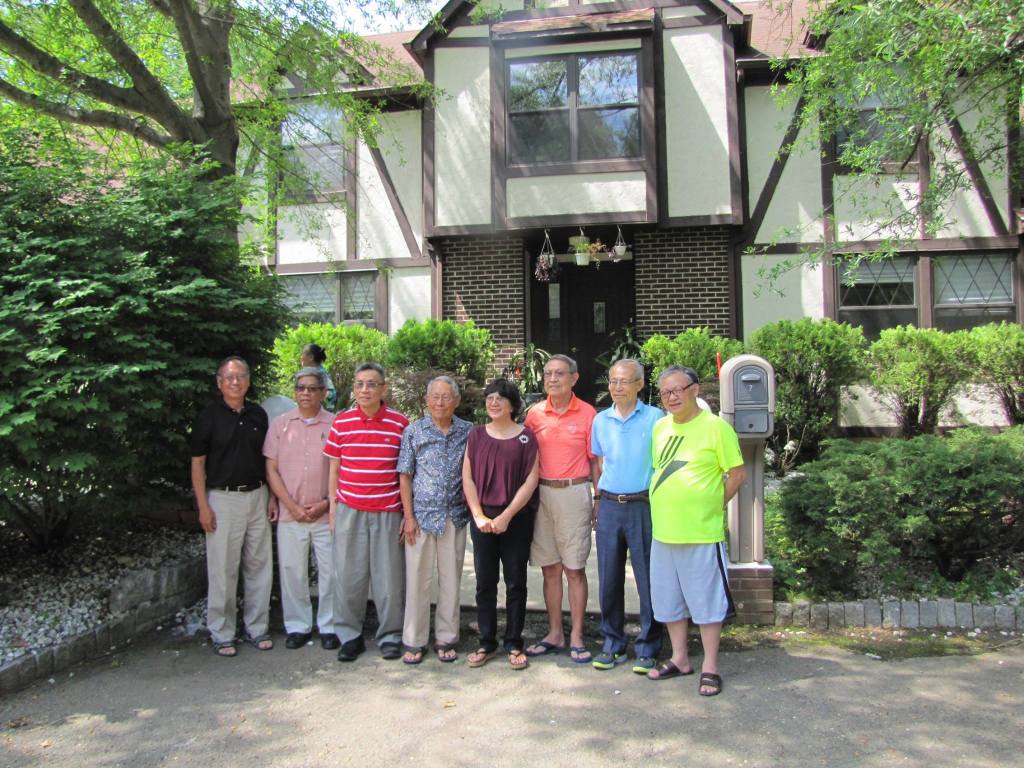
Shein Soe Myint (Standing rightmost)
Shwe
Shwe (EP69) — Treasurer of 69er HCF and EE69er HCF
Shwe Aung — Author
Shwe Hlaing — Saya; Studied Chemical Engineering and Maths in the USA; Taught “Engineering Mechanics”, Algol and Fortran; Member of UCC project
Shwe Mra, ICS — Eco Honors; Secretary of the Burmese Government; UN; Sons: Tun Mra, Kyaw Mra, Soe Mra, Win Mra, Maung Maung Mra, Rai Mra, Aung Mra are Scholar Athletes
Shwe Oh — Early engineer
Shwe OoDaung — Author; Chief Editor of Loke Tha
Shwe Thein (SPHS) — Dawei
Shwe Zan, Major — Doctor; Son : Tun Zan (RUBC Gold)
Shwe Zan Aung (SPHS63, GBNF) — Army; Seafarer
Singh
Used as a Middle name (and often abbreviated as S.) by Sikhs.
Teja Singh — Entrepreneur. He is the father of D S Saluja.
Dave Singh Saluja (SPHS63) — Left RIT before graduation; Co-founded Rama Enterprise
Surinder Singh (EE69er) — Moved to Australia
SurinderSingh — Moved to USA
Meenu Singh, Dr. (ChE70) — Moved to USA; Professor in CS & IT
Jagjit Singh (Jack Bopari, EC73) — Moved to USA; Lab Head UIUC
Uttam Singh, Dr. (U, S. Gill, M71) — High School Luyechun from Myitkyina; NASA
A S Soni (SPHS63)
Soe
Soe Aung (M/Auto71) — Secretary of RIT Ah Nu Pyinnya Ah Thinn
Soe Aung (M72)
Soe Aung (M75)
Soe Khaw (GBNF) — Saya; Served as Part-time Lecturer & Head of Mining Department at BOC College; UN in Thailand; Supporter of selected monasteries in the San Francisco Bay Area
Soe Khine (M70) — Organizer for the Combined 1st BE Intake of 64 and 65
Soe Lwin (EC66) — Railways; Casualty for 8-8-88; Astrology; Meditation
Soe Lwin (M63) — Saya; Assisted Sayagyi U Ba Than and also taught Strength of Materials.
Soe Lwin, Dr.
Soe Maung — Father of scholar athletes: Johnny, Willy, Nyunt Soe, Chit Soe, Sally, Mary, Muya …
Soe Maung (M66)
Soe Min — Saya; Mathematics & Astronomy
Soe Min (EE, GBNF) — Saya; RIT, DCA
Soe Mra — Pole Vault Gold in the 2nd and 3rd SEAP Games
U Soe Myint (UCC, ICST)
Soe Myint (M72, UCC, GBNF) — Retired Pro-Rector of ICST/UCSY; Passed away one morning around 3 AM; Nick name : Phone Gyi
Soe Myint (GBNF) — Eldest son of U Thein Maung (Htin Lin); Asst. Editor at WPD; Chief Editor at Guardian Daily and Magazine; Per his request, I wrote several articles on Computers and Computer Applications.
Soe Myint (Geology, CS) — Nickname: KSM; UCC; UN; President of MASTAA; His saya Dr. Maung Thein (Geology) told him to study Computer Science; Saya Thein requested KSM and me to give a short session at the Geology department at MASU; Several sayas were not happy. “Why is Saya Thein asking two UCC guys to spoil our vacation?”; After Saya Thein transferred to RASU, he again requested UCC to conduct a short course for his sayas.
Soe Myint (Min83) — Secretary (as student) and later Patron (as saya) of the RIT Buddhist Association; Joint Secretary of SPZP-2012 and SPZP-2016; Helped organize the compilation and publication of Ovada (Exhortation) of the Sayas and sayamas invited to the SPZPs
Soe Myint — Played Football for Rangoon University and Burma
Soe Myint — Manager, Rangoon University Printing Department
Soe Myint Win, Dr. (GBNF) — Saya; Doctorate in Electronics; Taught in the Physics Department
Soe Naung, Dr. — Doctor; Gawpaka in Jamaica
Soe Paing — Saya; Co-founder of UCC; RIT; UCC; UN
Soe Paing — Musician
Soe Paing (GBNF) — Singapore
Soe Pay — Movie director
Soe Sa
Soe San — Recording studio and distributor
Soe Tha (EC67) — Retired Minister; RIT Tennis Champion
Soe Than, Dr. — Saya; UCC; DCS; ICST
Soe Thein, Dr. (C75) — Organizer for Singapore SPZPs ; Web master for the Singapore Alumni
Soe Thein — Student Leader, Ta Ka Tha; RIT Registrar; Director at Department of Higher Education
Soe Thein (Peter, EE69er) — Had an operation; His daughter drive him to the 69 Gathering
Soe Thein (GBNF) — UCC
Soe Wai — Defense Rowing
Soe Win, Dr. (SPHS5) — First in Burma in Matriculation; Retired Rector of YUFL
Soe Win, Dr. (Dicky) — IM1 79er
Soe Win (EP69, GBNF) — Captain of RIT Basketball team
Soe Win (TTC64, EC70) — UCC; PTC
Soe Win (M66) — Classmate of U Lin
Su
Su
Su Phaya Latt — Queen
Su Su
Su Su Khin
Su Su Kyi
Su Su Lwin — UCC
Su Su Lwin — MP; Spouse: Htin Kyaw
Sway & Swe
Sway Tin — Devotee of Mogok Sayadaw; Recorded Sayadaw’s dhamma talks; Translated some talks
Swe Aye, Dr. (MEHS63, IM2) — Medical doctor; Poet; Co-founded the Aye-Thet Scholarship program at TBSA with Dr. Khin Nyo Thet (MEHS63, IM2, GBNF)
Swe Khin Tun, Dr.
Swe Than, Bohmu
Swe Swe Than — UCC
Swe Swe Win
Swe Swe Win Aye, Dr.
Swe Tin (EE77) — Nickname: Kyauk Pya; Father: Kyauk Lone
Several Sayas were interviewed for the HMEE (History of Myanmar Engineering Ecucation) Project.
Saya U Tin U
U Soe Paing (EE, UCC) interviewed U Tin U (C).
U Tin U joined RU in 1946 and attended Engineering classes before studying in the USA.
BS in Civil Engineering from Oregon State University
MS in Civil Engineering from Yale.
He taught Part-time at Rangoon University while working for a private Construction Company.
Treasurer, BSCE (Burma Society of Civil Engineers)
He is the Most Senior & Oldest Past Captain of RUBC and Past Captain of RGC.
U Khin Aung Kyi (GBNF)
U Khin Aung Kyi
U Ohn Khine (M70) and team interviewed Saya U Khin Aung Kyi.
He joined RU in 1949 and attended Engineering classes before studying in the USA.
BS and MS in Chemical Engineering at MIT.
He served as Professor and Head of Chemical Engineering, and as Rector of RIT (1977 – 1988).
Interview by Gazettes
Mandalay Gazette and Myanmar Gazette interviewed selected Sayas and Alumni.
U Maung Maung Kyi founded Mandalay Gazette.
Thakin Kai Bhor is Chief Editor and Publisher of Myanmar Gazette. He earlier served as Editor and Technical Advisor for Mandalay Gazette.
I was interviewed by Mandalay Gazette several years ago.
Mandalay Gazette
Saya U Min Wun and Saya Dr. Tin Win were interviewed by Myanmar Gazette.
Interview by AZMTV
U Htaik San (Henry Kao, M81) is Past President of Burmese Associations in Southern California.
He is Past Captain and Gold of RUBC.
He and his spouse helped run AZMTV. They and their team interviewed selected sayas and alumni who attended 2015 RIT Alumni Reunion in Los Angeles.
Henry sent me links to the videos (published in You Tube). I have posted the links.
Sample link (for Saya U Min Wun’s interview)
Saya U Min Wun
He joined RU in 1949 and attended Engineering classes before studying in the USA.
BS from MIT and MS frim Cornell.
He served as Professor and Head of Civil Engineering before moving to USA.
He retired from Caltrans at the age of 80.
He was a member of Myanmar Pyeik Ka Dein Ah Phwe.
He wrote articles for RIT Alumni International Newsletter.
Saya U Myo Myint Sein (A58)
He is from the first batch of Architecture graduates.
He received MS from Michigan.
He served as Professor and Head of Architecture before moving to USA.
He served as Consultant / Lecturer and also authored books.
He wrote for Swel Daw Yeik Magazine and HMEE.
He played soccer for Engineering and RU.
He was President of RU ConBro Association.
Life Journey of Saya U Ba Toke
Tekkatho Maung Thin Char (Saya Dr. Khin Maung Swe, GBNF) interviewed Sayagyi U Ba Toke (GBNF).
The tapes were transcribed by his spouse Sayama Daw Myint Myint Khaing (daughter of Arzani Mahn Ba Khaing).
The book was sponsored by RU Thin Char Ah Thinn as a birthday present for Sayagyi.
Interview by Yangon Media
Saya U Thet Lwin (Maung Ngwe Hlinne)
He matriculated from St. Paul’s High School.
He taught Burmese at the Institute of Economics.
He transferred to RIT as Registrar.
He retired as Director from DHE.
He received a Dat Pya and a remuneration of K100 for his song “Mya Kyun Nyo”. The song has been sung at RU Centennial and SPZPs. He played the song for a special TV program.
Patron of RIT Ah Nu Pyinnya Ah Thinn
Publisher of RIT Annual Magazine
Saya U Moe Aung (Tekkatho Moe War)
He matriculated from St. John’s Dio.
He was Editor of RUESU Annual Magazine and learned first hand about early Printing systems.
Poet
Author of five books
Chief Editor of RIT Annual Magazine, Hlyat Sit Sar Saung, Swel Daw Yeik Sar Saung (for SPZPs in 2002, 2007 and 2010) and Swel Daw Yeik Magazine (for Shwe YaDu 2014 and SPZP-2016).
2024 — RIT 60th Anniversary ; 55th Anniversary of Graduation
BFF — Best Friends Forever
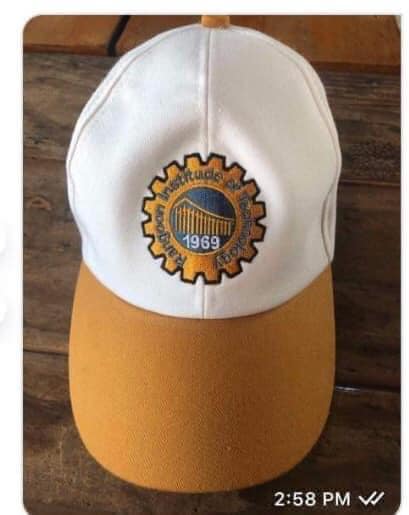
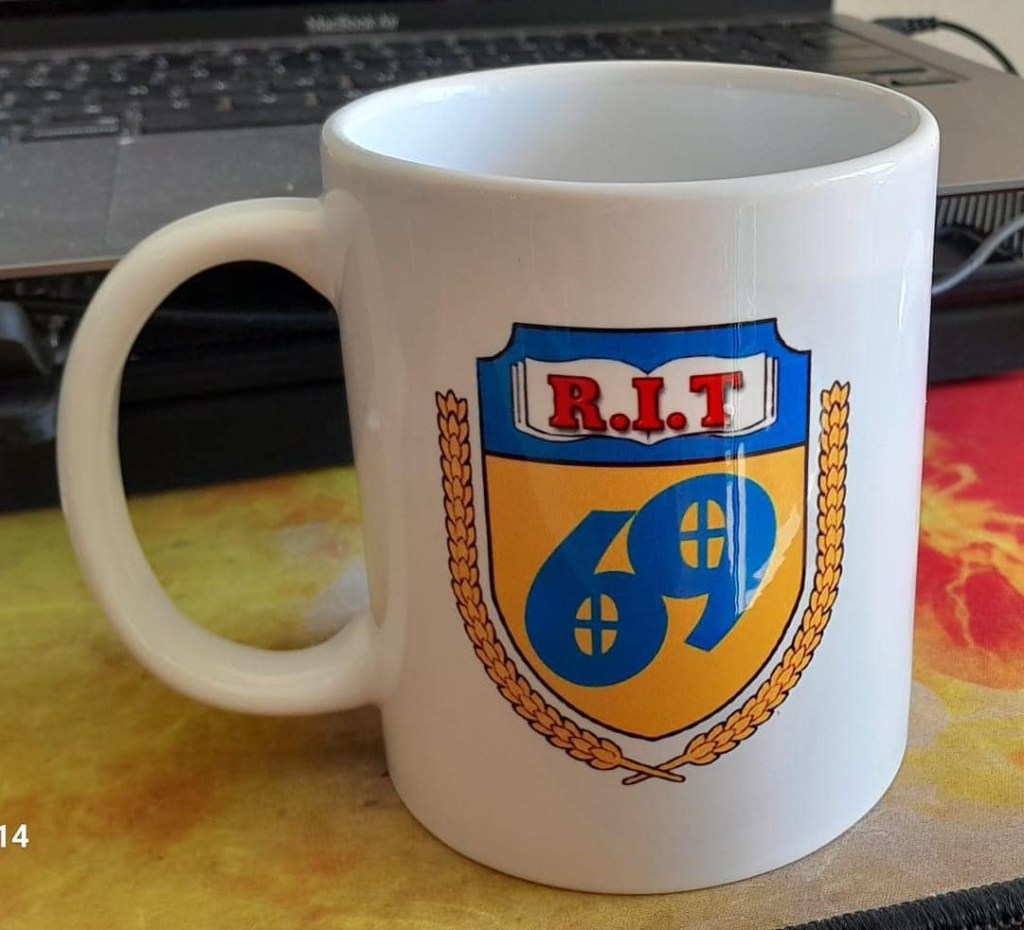
Swe Swe Kyaw Zin (daughter of U Kyaw Zin EP69) presented 69er Caps & Hats at a 69er Monthly Breakfast Gathering.
69er Health Care Fund
U Aung Min (M69) and team manage the 69er Health Care Fund
ကျန်းမာရေး ရံပုံငွေ Some make lump sum donation. Some donate in installments.
40% ကွယ်လွန် Gone But Not Forgotten
Reunion & Acariya Pu Zaw Pwe
On special occasions, the 69ers host the Reunion & Acariya Pu Zaw Pwe
Yearly — Annual Dinner & Entertainment (e.g M3, Panda, U Aung Min’s previous office)
Monthly — Breakfast Gathering (mostly at Royal Rose Restaurant / Taw Win Hnin Si) ; Could not meet during the Covid pandemic
Ad hoc — e.g Daw Myint Myint (C69) hosted lunch at Western Park to welcome Nyunt Nyunt Wai / Millie (T69); U Tin Win (Min69) hosted lunch at Crystal Jade for SPZP attendees
Aung Lwin : academy award winner, Director, script writer and actor.
Aung Lwin (Jasper, C70) : Secretary of RIT Rowing Association.
Aye Lwin
Aye Lwin (M69, GBNF) : Secretary of the RIT Mechanical Engineering Association; Secretary of the RIT Annual Magazine; He attended the 2015 Alumni Reunion in Los Angeles.
Ba Lwin (Myoma) : Chief Boy Scout of Burma; Ambassador to Ceylon (Sri Lanka); Father of USIS U Kyaw Nyein, U Kyaw Thein Lwin (Navy, Five Star Line), Dr. Yan Naing Lwin (WIU) and U Than Lwin (US State Department).
Dr. Ba Lwin
Ba Lwin, Dr. (EE59) : He and U Myo Kyi (EE59) are the senior sayas (by seniority) at the EE Department. He visited his daughter and his relatives in the USA.
Chit Lwin attended UCC.
Eric Lwin : Younger son of Dr. Kyi Lwin
Khin Maung Lwin, Dr, (FAME)
Khin Maung Lwin (Kyet Taw, M87-91 Group)
Kyi Lwin (George, C67)
Kyin Lwin (M69, GBNF) was a regular at the 69er Gatherings.
Kyaw Lwin (Seated 2nd from Right)
Kyaw Lwin (George Saw Lwin, EC64, GBNF) ; pianist and rower. His elder brother Jimmy Saw Lwin is RUBC Gold and a Diplomat.
Kyaw Lwin (C) : was Minister of Construction. He earlier was a Director General. I was a guest at a dinner reception to honor Dr. Aung Gyi at U Nyan Tun U’s residence. Active and retired Ministers paid respect to Sayagyi and Dr San Hla Aung.
Kyaw Lwin Hla : taught English at RIT; joined UNDP
Kyi Lwin, Dr.
Lwin Aung, Dr. (A59) served as Professor and Head of Architecture Department and retired as Pro-Rector of YTU. He practices Dhamma and also consults for the construction of religious buildings.
Bo Lwin Swe
Lwin Mar Oo (Winner Inn, W Bistro)
Lwin Swe, Bo (EE61) is s senior alumni, and a proud Great Grandfahter.
Bo Lwin Swe
Maung Lwin, Colonel : Former MI Chief and Ambassador to Germany; Father of Toe Lwin (Eco Rowing) and Soe Lwin (RASU Luyechun & amateur astronomer); Founding member of NLD, and Father of Daw Su Su Lwin
Lwin Oo : Dhamma friend.
Mar Lwin
Maung Lwin (Dawei, formerly Tavoy) owned a schooner. Hla Moe (Han Shein), his second son, perished when the schooner sank. Grapevine says that Hla Moe was warned by U Ba Than (Athletic Director and amateur palmist) that he could face a fatal accident. Hla Moe replied that he had survived a car accident (which left scars on his face) and that he would be visiting home via his father’s schooner and then return to Rangoon to become a Donlaba (temporary monk).
Maung Mae Thit Lwin Kyo So Pwe : welcome party for freshers.
May Lwin
Min Lwin, Dr. (SPHS60) : Orthopedic Surgeon. He treated me when I broke a small bone in my left wrist. He made sure that I could attend the wedding reception of my niece.
Min Lwin (2nd from Right)
Min Lwin, Dr. (Maurice Hla Kyi, SPHS64) stood Fifth in Burma in the Matric exam. He is a cousin of “Lake” Win Maung (George Tun) and Khin Swe Aye (Winnie Tun, ChE70). He treated me long ago when I stepped on a pebble and hurt my left foot.
Mya Lwin
Myat Lwin
U Myint Lwin (Standing)
Myint Lwin (Charlie, UCC) : Burma Judo Champion; Diploma in German from IF. His spouse is a niece of Saya U San Tun (M59).
Myint Lwin : UCC alumni; moved to Australia
Myint Lwin Thein, Dr. : his team offered DAG (Diploma in Applied Geology) courses.
Myo Lwin (RUBC)
Myo Lwin (RIT, GTI Saya)
Myo Lwin (Dhamma friend & organizer)
Nyunt Lwin
Ohn Lwin
Pyin Oo Lwin : name for Maymyo
Ronald Lwin : Elder son of Dr. Kyi Lwin
San Lwin, Dr. (Ronald Lwin, GBNF) : RUBC Gold; Cardiologist; Father of Sayama Daw Tin May Lwin (UCC).
San Lwin : Director
San Lwin : Philosophy; Director; Monk
San Lwin Tun
Saw Lwin : Director General at the Department of Higher Education (DHE).
Saw Lwin : He & Daw Su Su have three daughters — Hazel Saw Lwin, Olive Saw Lwin and May Saw Lwin.
Saw Lwin : Children — Jimmy Saw Lwin, George Saw Lwin
Sein Lwin (GBNF) studied in the USA during the time when racial discrimination was prevalent. He served as Professor of Zoology. He is a brother of Daw Khin Than Kywe (Commerce).
Sein Lwin (Raymond Ba Hpyu, GBNF) : distinguished vocalist; perished in an air plane crash; elder brother of Playboy Than Naing
Soe Lwin (Mech Saya, GBNF)
Soe Lwin, Dr. (Dhamma techer)
Soe Lwin (EC66, Railways)
Soe Lwin (Physics, Luyechun)
U Soe Myint Lwin
Soe Myint Lwin (EC68, GBNF) : Burma Selected in Soccer
Than Lwin (Eric Lwin, GBNF) : studied at LSE; room mate of Dr. Chit Swe; taught Economics at BIT; Lecturer at the Faculty of Social Science; Librarian of the Social Science Library.
Than Lwin : Burma Tennis Champion
Than Lwin (EC69) : RIT Saya
Than Lwin : UCC, CSO, Singapore
Thaung Lwin (EC66) : RUBC Past Captain and Gold; younger brother of U Tin U, U Ba Than, Dr. Myo Tint, U Tin Htoon (A60) and U Myo Min (UCC).
Thaung Lwin (Michael Maung Maung) : Former Deputy Minister
Thaung Lwin : former monk
Thein Lwin (GBNF) : Eldest son of U Maung Gyi & Daw Aw
Thein Lwin (Stanley Shwe Gyi) : SPHS63
Thein Lwin : Brother of Daw Mar Lwin
Thein Lwin (EE, GBNF) : alumnus of Lehigh University, USA; taught at RIT and Singapore Polytechnic; President of RIT Badminton Association.
Thet Lwin, Dr. (Statistics)
Thein Lwin (M71, Phyu)
Thet Lwin (Registrar, RIT; Director, DHE)
Thet Lwin (Henry, EC72)
Thet Lwin (UCC)
Tin Maung Lwin (RUBC) : brother of Tin Maung Latt
Tin Maung Lwin (Kenneth, RUBC)
Tin Maung Lwin (TBSA)
Tin May Lwin (UCC, DCS, ICST)
Tint Lwin (Daniel, M69) : retired Associate Professor of Mechanical Engineering from NTU; attended SPZPs and took part in the Entertainment Program as a vocalist; plays the guitar along with Albert Kyaw Min and Robert Win Boh at the 69er gatherings; U Win Mra (RIT English) taught him and his brothers how to play the guitar.
Wai Lwin (RIT)
WaiWai Lwin (Emma, TBSA)
Win Lwin (M69) : Secretary of RIT Hiking & Mountaineering Association. He and Ko Cho Aye (M70, GBNF) climbed Mount Victoria with the students from other Universities’ and Institutes
According to U Thant Zin (M), son of Saya U Sein Shan, City FM broadcast a “Congratulatory” session for Sayagyi U Ba Than’s 87th birthday on October 2nd, 2017 at 7 p.m.
Soon Kyway
Dr. Win Thein, Dr. Thein Hlyne, U Than Po
Saya Dr. Win Thein (C58), Saya Dr. Thein Hylne and U Than Po (M75) attended the birthday soon kwyay of Sayagyi U Ba Than.
RIT Alumni International hosted the First RIT Alumni Reunion and Saya Pu Zaw Pwe in October 2000.
It started with a Welcome Dinner at a seafood restaurant for attendees.
Welcome Dinner
The Reunion Dinner & Saya Pu Zaw Pwe was held at the Enbassy Suites Hotel near SFO (International Airport).
SPZP-2000
A family Lunch gathering at a High School bade farewell to the SPZP attendees, organizers and volunteers.
Steeve’s Message following SPZP-2000
RIT Poet Laureate Ko Hla Min:
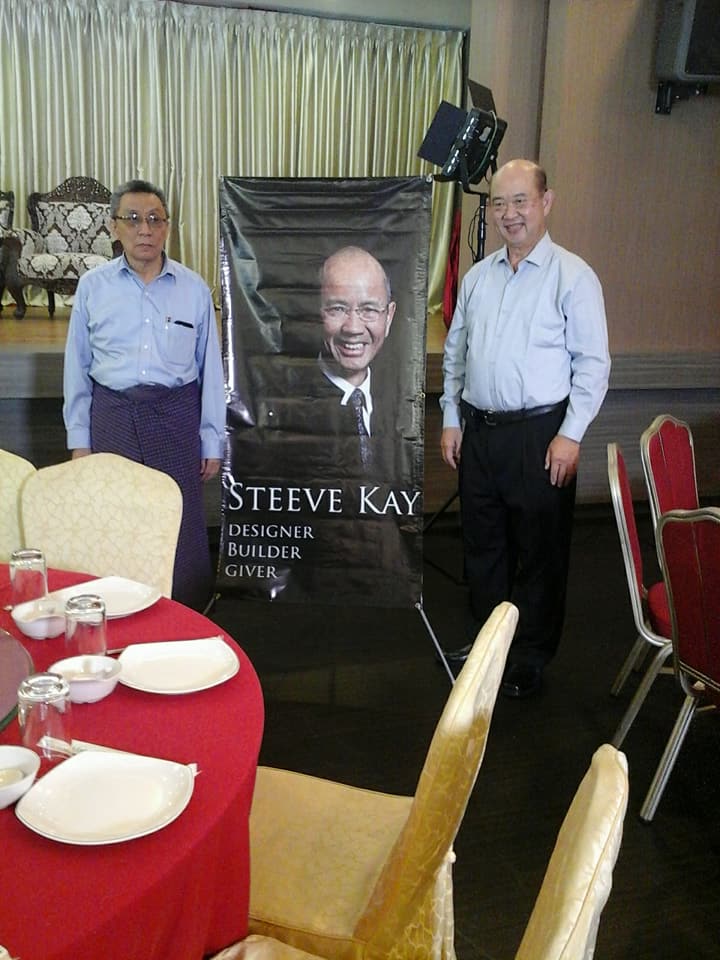
Steeve Kay 1
I must admit that I was suffering from a Monday morning “hangover”, having been intoxicated with emotional overdose over the reunion weekend [in October 2000].
Judging from the post-reunion emails I read, I am not alone. What a reunion!
By all measures, it was a success and did satisfy the alumni’s tremendous pent-up desire to reconnect with each other after many decades of separation. The dedication of the members of the organizing committee is second to none.
With the assistance of his lovely wife, Benny Tan devoted practically full-time to this project for several months. I had a first-hand experience to see how meticulous he was when he was designing the RIT T-shirt. It came out a winner!
I do appreciate the sensitivity the organizing committee displayed in making this event non-religious and non-political. Otherwise, it would have been very difficult for me to attend. The only regret is that I failed to locate the whereabouts of my buddy Ko Aung Min of Taunggyi (M70). I heard he went to Singapore, but so far my search has ended in “no find”.
Now that the grand reunion is over, everybody is slowly recovering from the “hangover”. The big question is who would go to Singapore in 2002, and how do we go about doing it?
With best regards, Steeve Kay (Ko Thaung Sein)
Editor’s notes
Steeve Kay 2
Steeve Kay (Thaung Sein, EC70) is a multiple Golden Sponsor of SPZPs. He donated $200000+ to RIT-related projects and events.
Steeve Kay 3
He attended GTI for a while before joining the first ever 1st BE class in 1964.
Received MSEE from Stanford University and MBA from Pepperdine University.
At the request of his sister, who is a medical doctor who had patents for processing disability claims, he decided to transform from a successful electronics designer to the CEO of QTC Management.
After private investors showed interest in his company, he retired, but continued to lead a multiple-purpose fourth career: (a) visiting the places of the world’s leading religions (b) establishing Kay Family Foundation (c) incubating the projects of young professionals (d) supporting education (e.g. as trustee of University of California at Irvine) (e) maintaining a diverse business portfolio (f) helping those in need (g) continue paying back the metta and cetana of his mentors — as Golden Sponsor of RIT Grand Reunion and Saya Pu Zaw Pwes, Helen and Steeve Kay Health Care Fund for the RIT Sayas and Sayamas.
It was the first school established by the De La Salle Brothers in Burma.
St. Pat 1
St.Patrick’s HS, Moulmein. Clock Tower and boarding house upstairs, examination hall below.
Photos taken in 2016, when I visited Moulmein
St. Pat 2St. Pat 3St. Pat 4Entrance
Our class photoV B
Our class photoVII Std
Class teacher Bro. Sebastian. I met him during our first year at Leikkone in 1958-59 while he was attending BAed.
Ko Ko Lay (UCC) first row, sitting second from left. U Aye (M62), second row, sitting second from right. B. Singh (RU goalkeeper) third row, first from right. Myo Lwin (M63), third row third from right.
Absentees : Kyaw Win (M62), Peter Gale.
Bro Canice was Bro Director, House Master Mr. E. Swarris, House Capt. Dr. Aung Myin (Eye, passed away in UK around 2018), U Win Naing (MS pulp and paper)(CRO) third row, fourth from right, U Aye, third row, third from right.
Our matriculation class 1955-56
Bro Austin, Bro Director, Bro Wilfrid, Class teacher, U Tun Shwe ,Myanmar Sar, Mr. DeMonte, Moral and Manners.
Peter Gale, Dr. Thet Lwin (Statistics), B. Singh (RU goalkeeper), medical doctors Dr JK Sinha (UK), Dr Rafi, Dr Rajani Vora, India, Capt. Aung Myint, Capt Ya Kyaw, Myo Lwin (M63), Kyaw Win (M62), John Ba Maung, Russian Lecturer (IFL)
Prof. Khin Zaw (Chemistry), Saw Alfred Keh (Preacher after graduation, son of pre-WW2, RU footballer Washington Keh), U Kyi Win (BPI), U Aye among others.
St Patrick’s HS football team of late 40s and early 50s
During 1948-49, St Pat’s team beat all other Schools’ Combined team. Some of the team members were-
Bernard Henry – Goalkeeper,
R. S. Pathy, Tin Aye — Fullbacks,
Pway Ain (Htay Aung), Jimmy Innes, Tin Ngwe (Mid-field),
Rama (Rightwinger), Khine Thein,SV Lingham, Jimmy Sein (Tint Swe), B. Boudville (Left winger).
Later Pway Ain (Htay Aung) played for RU, Jimmy Sein (Tint Swe) played for Prome Hall and RU. Jimmy Innes played for Customs FC in Rangoon first div.
Many played in Friends Union FC in Moulmein first div.
St Patrick’s Alumini, Ko Ko Gyi, Tenasserim division and Burma selected footballer.
Dennis Mackey (C73) wrote
Thanks for this piece as part of your “Work in Progress”.
Below are photos and notes that I posted on my FB page and on St. Patrick’s HS, Moulmein FB public group page.
In Latin, there are four terms to specify students.
alumnus : male student
almuna : female student
alumni : male students
alumnae : female students
Alumni (Modern usage)
Alumni
Alumni now applies to all four cases mentioned above.
It refers to all former students (not necessarily graduates) of a school, college or university.
It may also refer to former employees of a company or corporation.
Most Universities have
Alumni Associations
Office of Alumni Relations
RIT Alumni International
It was formed in 1999 with the primary objective of planning and implementing the First RIT Grand Reunion and SPZP (Saya Pu Zaw Pwe).
SPZP-2000
Saya Allen Htay (C58, GBNF) served as the President.
The RIT Alumni International Newsletter was published in April, 1999.
The Newsletter was posted on the two RIT web sites, FB groups and Google group.
RIT Alumni Newsletter
The Newsletter and Updates cover
the good and sad news of sayas, sayamas and alumni
micro-gatherings, mini-gatherings, gatherings (by class and/or discipline), world wide Reunions and SPZPs
articles
photos
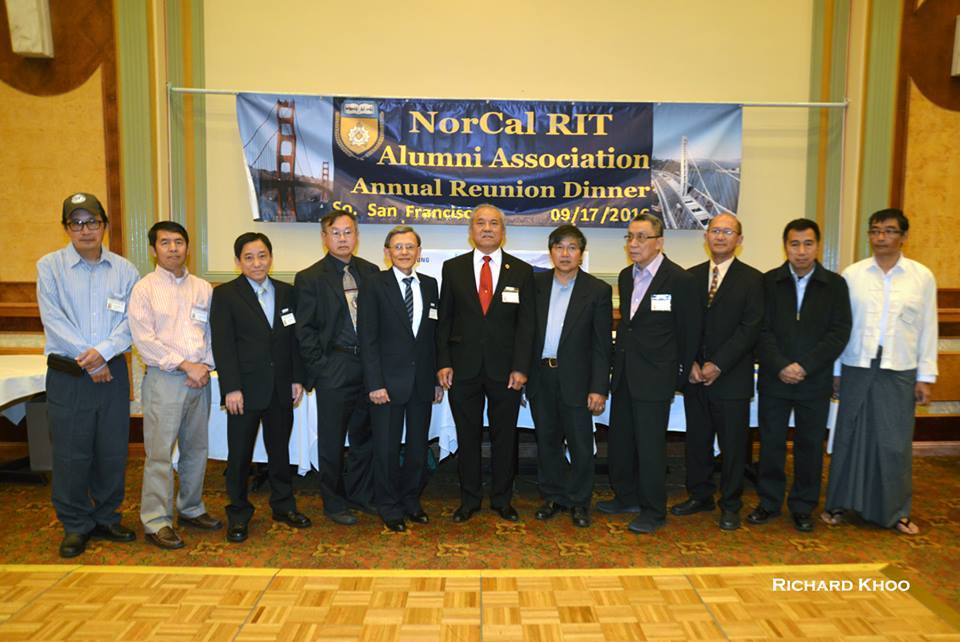
Northern California RIT Alumni Association
NorCal RITAA
It was formed about a decade ago as a continuation of the San Francisco Bay Area Alumni Group and RIT Alumni International.
Saya U Maung Maung (George, ChE66) served as the first President. His successors include U Kaung Kaung Oo (Gordon, M83) and U Aung Myint Oo (EC84). U Tin Maung Win (C86) is the current President.
Stan Liou (M67, Table Tennis) served as the first Chair of BOD (Board of Directors). His successor is Saya U Myat Htoo (C68).
U Thaung Nyunt (M87), U Myint Swe (EP74) and U Tin Maung Win (C86) served as Secretary for the different terms. The current Secretary is Maung Maung Moe Zaw (Met02).
NorCal RITAA has a website and FB group.
The pandemic caused a pause in the activities. Earlier, it provided scholarship for the children of alumni in the USA. It worked closely with RITAA in Yangon to provide scholarship for eligible YTU students.
It facilitated to raise funds for YTU Library Modernization Project. It donated $3000 for the training of Library Staff. It also pledged for the sign board and general fund.
Daw Mu Mu Kin has donated Saya Allen Htay’s books to YTU Library. In memory of Saya Allen, she also provided scholarships to YTU students.
RIT-YIT-YTU Alumni Association
Our alma mater (with name changes)
RITAA is a short name for RIT-YIT-YTU Alumni Association. WHO often refers to it as ARITA.
U Tin Latt (M85) was the Interim President. He is succeeded by U Myo Aye, who was elected at the AGM.
It has helped with the fund raising for the YTU Library Modernization Project.



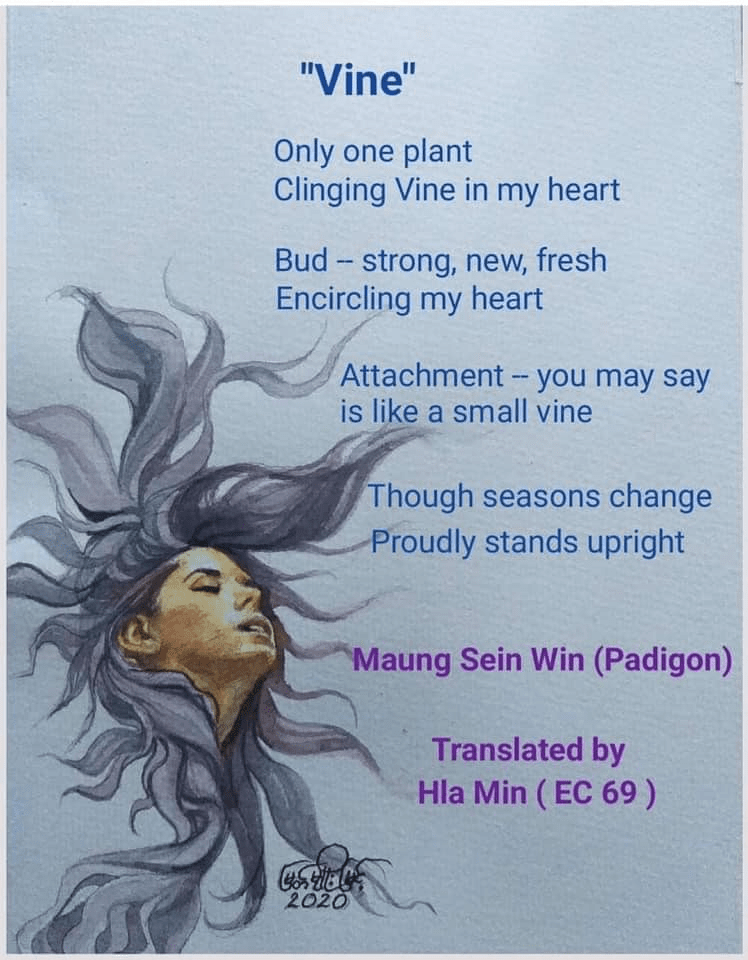
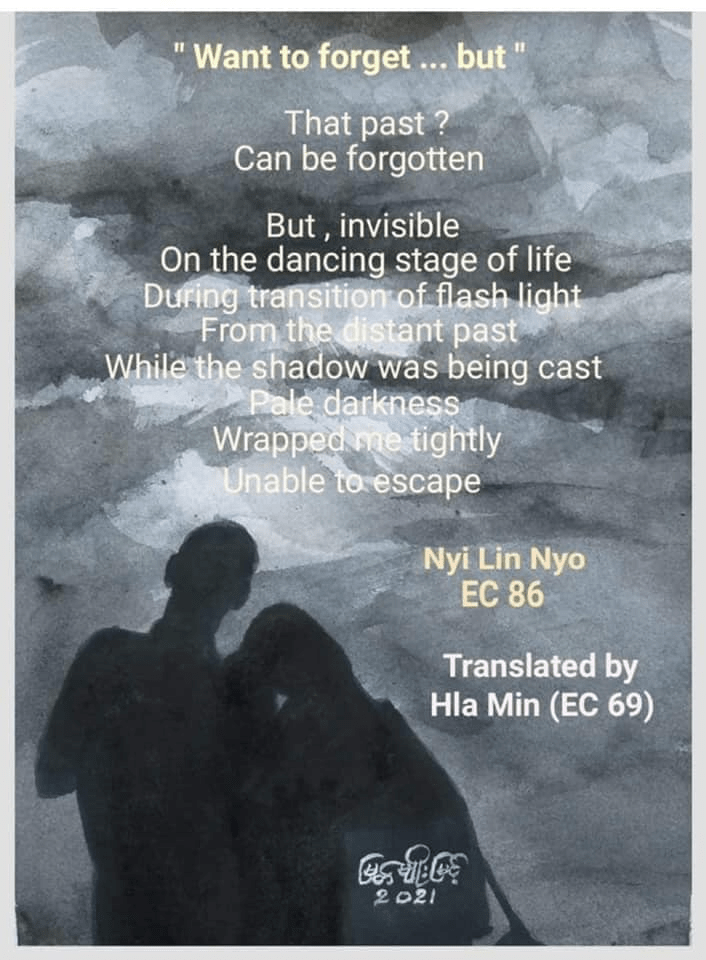






















 HlaMin