Category: UCC

  • Computer Studies in Burma

    Evolution

    • Universities’ Computer Center (UCC)
    • Department of Computer Science (DCS)
    • Institute of Computer Science and Technology (ICST)
    • University of Computer Studies in Yangon (UCSY)

    ICST (Institute of Computer Science and Technology) was founded in 1988. It was later renamed as UCSY (University of Computer Studies in Yangon). The 30th Anniversary was celebrated in Yangon on March 20, 2018.

    Saya U Soe Paing was my mentor at RIT and UCC. Saya U Soe Paing, Saya U Myo Min and Saya U Ko Ko Lay (GBNF) helped Saya Dr. Chit Swe (GBNF) found UCC (Universities’ Computer Center). The details can be found in Saya Paing’s article “Computer Ah Sa UCC Ga).

    We used to call our four Sayagyis as Saya Chit, Saya Paing, Saya Myo and Saya Lay.

    UCC Project was conceived in the mid-60s when Saya Chit headed the Mathematics Department at the Institute of Economics. The initial scope was to get a grant for a digital computer for IE, but the scope was expanded to cover selected Universities and Institutes.

    The UCC Department was launched in 1970 with Saya Chit as Founder/Director and the three sayas as Managers of Computer Systems, Computer Operations and Computer Applications departments.

    I posted 40+ blogs on “Memories of UCC” during a trip to Myanmar and also wrote a “summary” for use by UCSY.

    Computer courses (academic, training, orientation …) were given at UCC under the leadership of Saya Chit (who served a dual role as UCC Director and Mathematics Professor) and the help of visiting Professors (mostly Computer Scientists) from US, UK, Europe …

    Saya Chit was succeeded by Saya Dr. Tin Maung (GBNF), who continued and elaborated on Saya Chit’s Vision and Mission.

    Saya Chit later retired as Rector of RASU, taught for some time in Bangkok, and migrated to Australia. Saya Chit continued to supervise Burmese/Myanmar doing graduate studies in Oz.

    In 2006, we paid respect to Saya Chit and Saya Dr. Freddie Ba Hli (former DG of UBARI, former Natjonal Advisor, UCC Board Member, GBNF) at Saya Zaw’s house with Mohinga and delicacies prepared by Ma Kyawt. Saya gave me his hat. Hope that hat can transfer Saya’s brain and work ethics to yours truly.

    Saya Chit was a room mate of Saya U Ba Than during their study days in UK.

    DCS (Department of Computer Science) was established with Saya Lay as Professor, U TAG (EC69) as AP, and yours truly as Lecturer.

    ICST was founded in 1988 with Saya DTM as Rector, Saya Lay as Professor, U TAG and yours truly as AP, and several others as Lecturers.

    Time flies.
  • U Khin Maung Zaw (EC76)

    This image has an empty alt attribute; its file name is kmz.jpg
    This image has an empty alt attribute; its file name is kmz-gathering-at-kz.jpg

    Early Days

    Ko Khin Maung Zaw (KMZ) attended St. Paul’s High School (SPHS). He graduated after SPHS was nationalized and renamed as No. (6) Botahtaung SHS State High School.

    Due to disturbances, the convocation for his class took place in March of 1977. For simplicity (and consistency) we call his class as “Class of 76”.

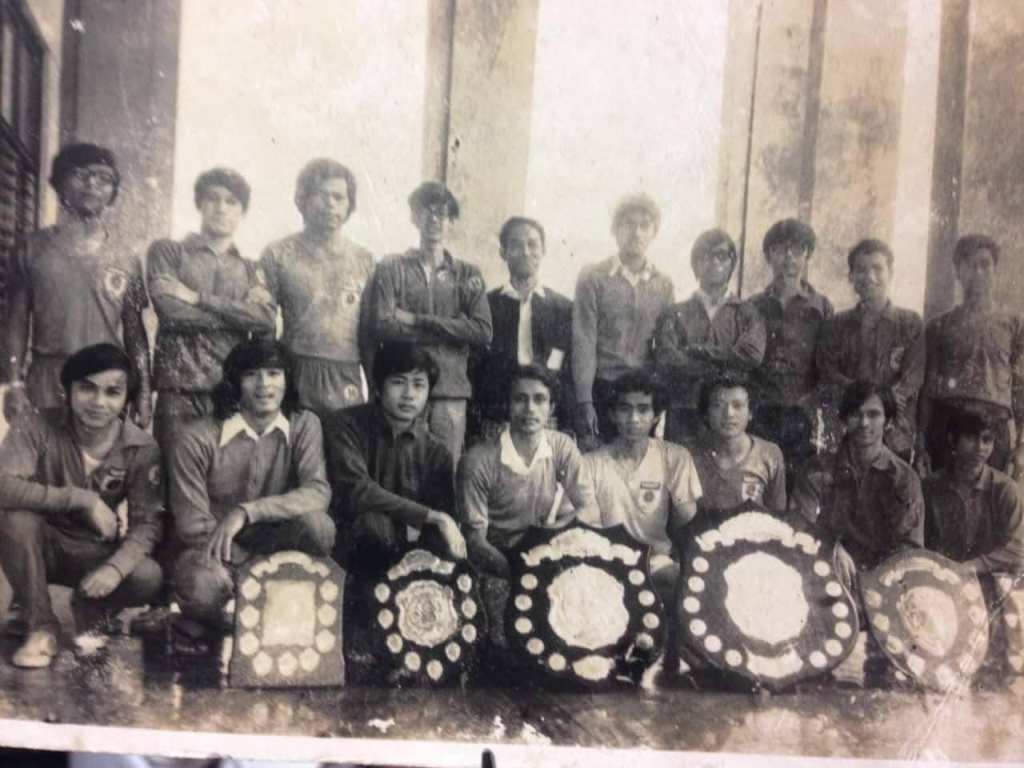
    He played as the last defender in the RIT Hockey Team. Many from the team played for the University and All-Institutes Team. He coached Ko Thura Thant Zin, who was goalkeeper for the team. At RUBC, Ko Thura Thant Zin (RUBC) coached KMZ.

    He helped Ko Maung Maung Hnyut and his brothers (who were major players for the Graduation Photos).

    Hockey team

    UCC

    KMZ volunteered for some time at UCC. He usually did not need to bring his lunch (only an empty lunch box and a spoon). Several friends and some “ah ma gyis” would provide lunch for KMZ.

    He would take some courses at UCC, but flatly refused to do some assignments (e.g. COBOL).

    Moving abroad

    He worked in Singapore and then migrated to US. He has been in the Seattle region since his arrival in the US.

    When my company subsidized my vacation trip (for the successful completion of the project), we visited KMZ at his old house. He showed us around (including a day trip to Vancouver, Canada). He showed me his wine cellar. Since I do not drink, I ended up with his concoction (“ginger beer (or similar) with ice cream”).

    SPZP-2000

    SPZP

    We were lucky when we were planning for SPZP-2000. He was working four 10-hour week with the Technology and Architecture Group of Nordstrom (where he had the time and luxury to play around with several computer systems).

    Too bad for KMZ, he accepted the call of Saya U Soe Paing and me to set up a web site for RIT sayas and alumni. He would spend countless nights and weekends to code the web site.

    At SPZP-2000, he promised to have Version 2.0 of the web site.

    Good for KMZ, he had a wonderful job at Microsoft and also started a wonderful family.

    Initially, bad for us, he no longer had the time for RIT Updates.

    Post retirement

    Finally, good for us, he has retired and is providing tags and comments for my postings.

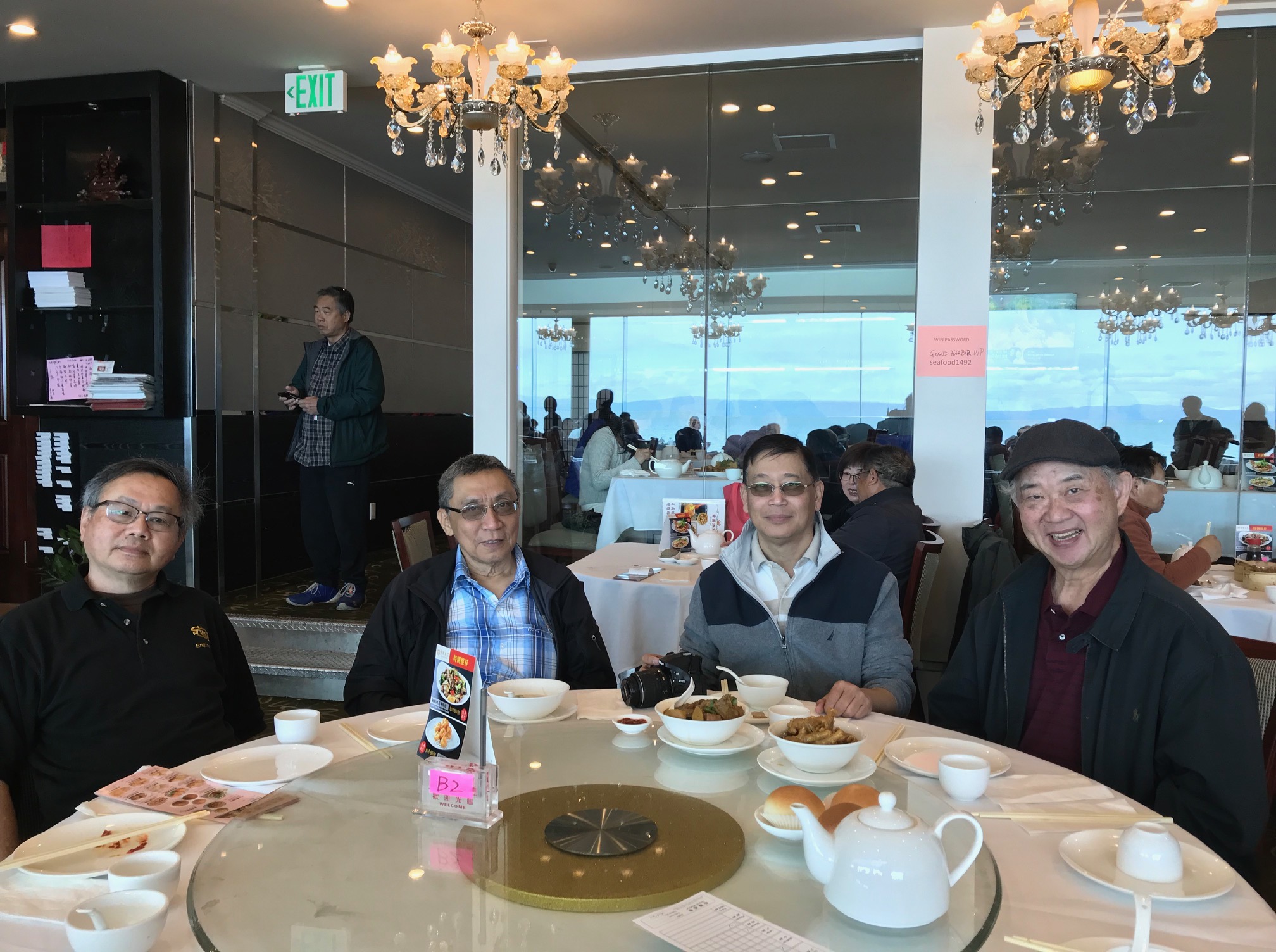
    He visited the San Francisco Bay Area in March 2018 to attend the retirement soon kyway of Ko Maurce Chee (M75). There was a pre-soon kwyay gathering at a Sea Food Restaurant in San Mateo.

    Presents

    He mailed me two books that he bought in Myanmar. One is about “U Thant Ah Ye Ah Khin” compiled by Htein Win (Photo). The other is a “tran-composition” of Saya Zaw Gyi’s poems about Pagan by Ah May Thar.

    He gave us a special present on our Golden Jubilee.

  • Soul mates

    Some found their soul mates while working or studying at UCC.

    • Aung Aung & Ma Kyin Mya
      Moved to Singapore
    • Aung Myint Oo & Ma Thida Khin
      Moved to Singapore and USA
    • Boe Ba Shan & Ma Phyu Phyu Win
      Moved to Singapore
    • Htay Aung & Ma Tin Tin Hlaing
      Moved to Australia
    • Kyaw Zwa Than (Jaws) & Ma Khin Khin Kyu (K-cube)
      Moved to Singapore, Canada and USA
    • Myint Oo & Ma Tin Tin Hla
    • Myint Swe & Ma Nge Ma Ma Than (GBNF)
    • Myint Zaw & Ma Nwe Nwe Win (Judy)
    • Sein Myint (Bei Gyi) & Ma Sao Mon Sint (Cindy)
      Moved to USA
    • Sein Myint Maung & Ma Khin Aye Mu
      Moved to NZ and Australia
    • Soe Than & Ma Wai Wai Than
      Moved to USA
    • Than Maung Maung & Ma Khin Si Thoung
      Moved to USA
    • Than Tun & Ma Hla Win (GBNF)
      Moved to USA
    • Thaung Tin & Ma Tin Tin Aye
      Founders of KMD
    • Thein Oo & Ma Than Than Tint
      Founders of Ace
    • Win Hlaing & Ma Thida Kyi
    • Win Myint & Ma Nu Nu Aung
  • Dr. Pike Tin

    His name literally “remain on a [fishing] net”.

    His mother had a few miscarriages. When he was conceived, his mother wanted to make sure that Saya would be born safe and sound.

    She performed a “Yadaya” (or similar) requiring someone close to her hold a “net” and “catch” Saya (in her imagination).

    Saya received his Ph.D from Monash University, Australia. The dissertation is based on Stochastic Processes (and related topics). For many years, he served as Reviewer for research papers.

    I had the opportunity to audit the “Linear Programming” course by him and learn his teaching style.

    I also worked with Saya and others (U Sein Min, U Soe Nyunt, …) on the “new” High School Mathematics Project.

    Saya Pike succeeded Saya Thein as Rector of ICST.

  • UCC and Burmese

    This post covers basics of Burmese typing, spelling, and word processing.

    Remington produced typewriters for English.

    Olympia was commissioned to produce typewriters for Burmese. The “red” keys were used to type vowels; the carriage did not go forward. The “black’ keys were used to type consonants. Back-spacing for half a step was necessary on the “standard” edition to type “tha gyee”. Manual dexterity was needed to type some “pa sint” characters. the “office’”edition had extra keys.

    IBM produced Selectric typewriters. “Golf” ball-like character sets had to be installed/replaced.

    Wang Computers provided word processors for various languages. Ko Htay Aung worked at Wang for a while on the “Burmese” language project.

    Burma Research So

    ciety (BRS) used transliteration for its publications. For example, “k-o-l” combination represents “ko”. The scheme was used on Macintosh.

    UCC had projects to do Burmese word processing. Saya Myo supervised a project for Ma San Yu Hlaing for “collation” (needed for sorting). Saya TAG and his team (Ko Htay Aung, Ko Soe Myint, …) worked on Cromenco System Three for printing and processing. U Soe Win and team worked on Calcomp graph plotter.

    Chinese characters were input on the early systems using (1) large tablets (2) three corner method (3) Romaji, …

    The evolution has seen various type face/font families, keyboard layouts, Unicode support, …

    We miss the days when we had type perfectly or reasonably well on typewriters using messy carbons.

    Also, planning to cyclostyle double-si

    ded printing (odd numbered pages first, then repeat with even-numbered pages).

    Burmese Language Commission bowed to higher authorities to revise the spelling at least two times.

    Fines were imposed on authors and publishers spelling the established way. (e.g. “ta”) instead of the preferred way (e.g. “tit”) despite the scholars pointing out the old inscriptions at “Bo ta htaung” (not “Bo tit htaung”) pagoda.

    CTK (Children’s Treasury of Knowledge) project was delayed to correct the spellings.

    It was not easy to write in those days without facing censorship. It was taboo to quote “Dhammata” poem (by Ananda Thuriya). It was a crime to write about the “setting sun”.

  • ICL Software

    The list is not exclusive.

    (1) ICL 1900 series use GEORGE (General Organization Environment) O/S Operating System.

    ICL1902S uses GEORGE-2.

    Some other models use GEORGE-3.

    (2) ICL1902S comes with several software packages.

    Saya U Aung Zaw and team install the software and the patches (during the period reserved for them).

    (3) PLAN (Programming Language for Nineteen hundred series) is the Assembly Language.

    (4) FORTRAN (Formula Translator) and COBOL (Common Business Oriented Language) are the programming languages used for scientific computing and business applications.

    The language compilers detect for syntax and semantic errors and output a form that can be read by a “consolidator” or “linking loader”.

    (5) There are application software packages. Examples are :

    FILAN (File Analysis) is used for the processing of Population Census data.

    CSL (Control and Simulation Language) is available for discrete event simulation.

  • ICL & Calcomp

    ICT (International Calculators and Tabulators) evolved into ICL (International Computers Limited). The British Government was partly responsible for the merger of several British Companies such as ICT and LEO.

    ICL 1900 series cover a range of machines : ICL 1901 to ICL 1907.

    The “basic” machines have “A” in the name, e.g. ICL 1901A

    The “enhanced” machines have “S” in the name, e.g. ICL 1902S (the one used at UCC).

    The following configuration was used at UCC.

    Some upgrades were made using the budget for “Population Census Data Processing” Project.

    ICL 1902S computer with 2.5 D (dimensional) core memory and a console typewriter

    Two ICL 2101 Card Readers

    ICL 1933 Line Printer

    Two ICL 2802 EDS (Exchangeable Disk Store)

    Each controller controls two EDS 8 disks

    Four ICL 2506 Magnetic Tape 9 track NRZI (Non Return to Zero Inverted)

    The computer has piano-like keys for “bootstrapping” and for “testing”.

    Some ICL computers use a 5-track Paper Tape Reader. There are pros and cons for using “punched cards” versus “punched paper tape’.

    Punched cards were used in the early looms and in the Hollerith Machines used for processing US Population Census Data. Hollerith founded a company, which evolved into IBM.

    Punched paper tape were used in the early transmission systems.

    Three UCC engineers (U TAG, U HM and USW) underwent training at the ICLETC (ICL Engineering Training Center) in Letchworth, UK.

    ICL provided a resident engineer to maintain the computer system and a resident programmer/analyst to guide the system programmers and selected application programmers.

    A flat bed CalComp Graph Plotter was added. Calcomp provided on-site training for the graph plotter.

    KMZ wrote :

    I believe I still have a key chain from Ko Soe Myint Gyi. He had a “ဆွမ်းအုပ်” drawn on Calcomp and laminated it to create the key chain. He gave it to me when I met him and KZ at Wynn Myint Aung’s house. They were on some tour visiting Washington DC area in the mid-80s.