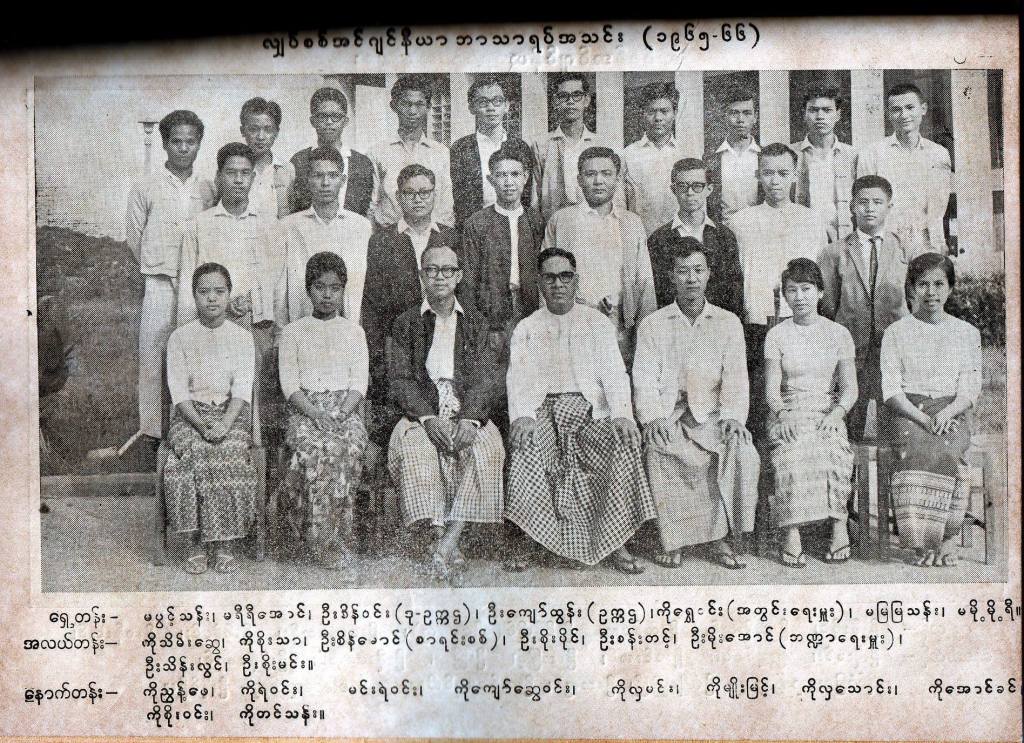
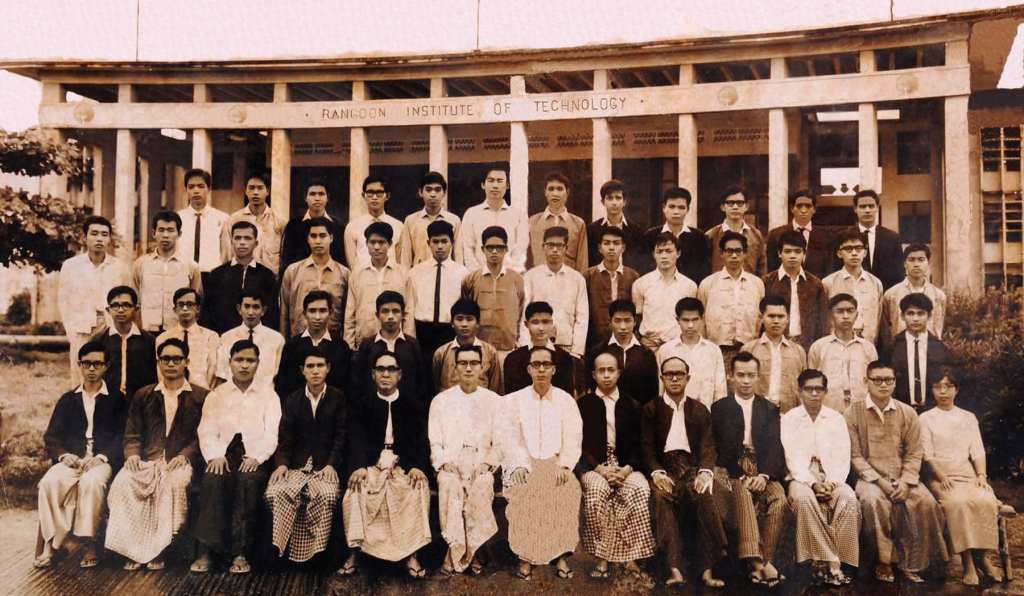
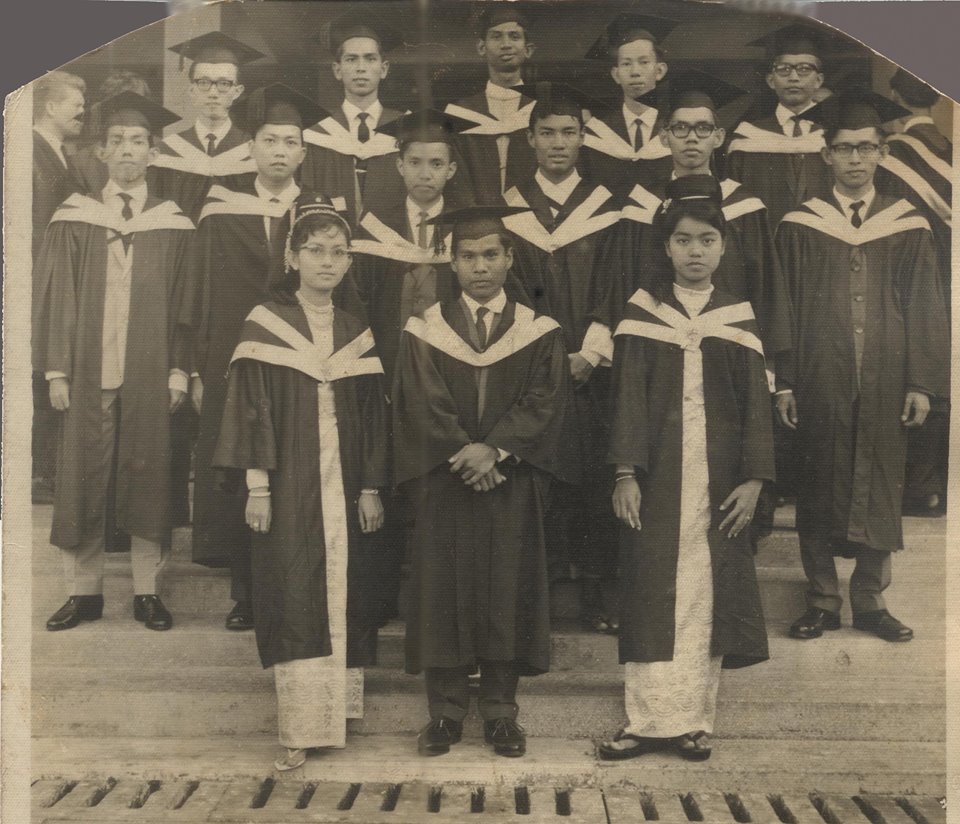
In the 60s, the Electrical Engineering Department offered EC (Electrical Communications) and EP (Electrical Power) courses.
During our RIT days, the EP students outnumber the EC students by roughly 3 to 1. A rationale was that EP students can get jobs much more easily than EC students.
EP & EC 69
Ma Tin Tin (Anne, EC69) was the sole female EE student from the Class of 69.
The Class of EE 67 had Daw Yee Yee Aung, Daw Nancy (GBNF) and Daw Maywaddy Tun Tun.
EP & EC 67
Daw Mya Mya Than (EP68, GBNF) joined the faculty.
In the following decades, the EC (now known as EcE or Electronics) students overtook the EP students.
EE formally evolved into two Departments. U Sein Win (GBNF) served as Professor and Head of Electrical Power Department. Dr. San Tint (GBNF) served as Professor and Head of Electronic Engineering Department.
There were more female EE students, and several joined the faculty. A few rose to become Associate Professors and Professors.
The following is a partial list of GBNF.
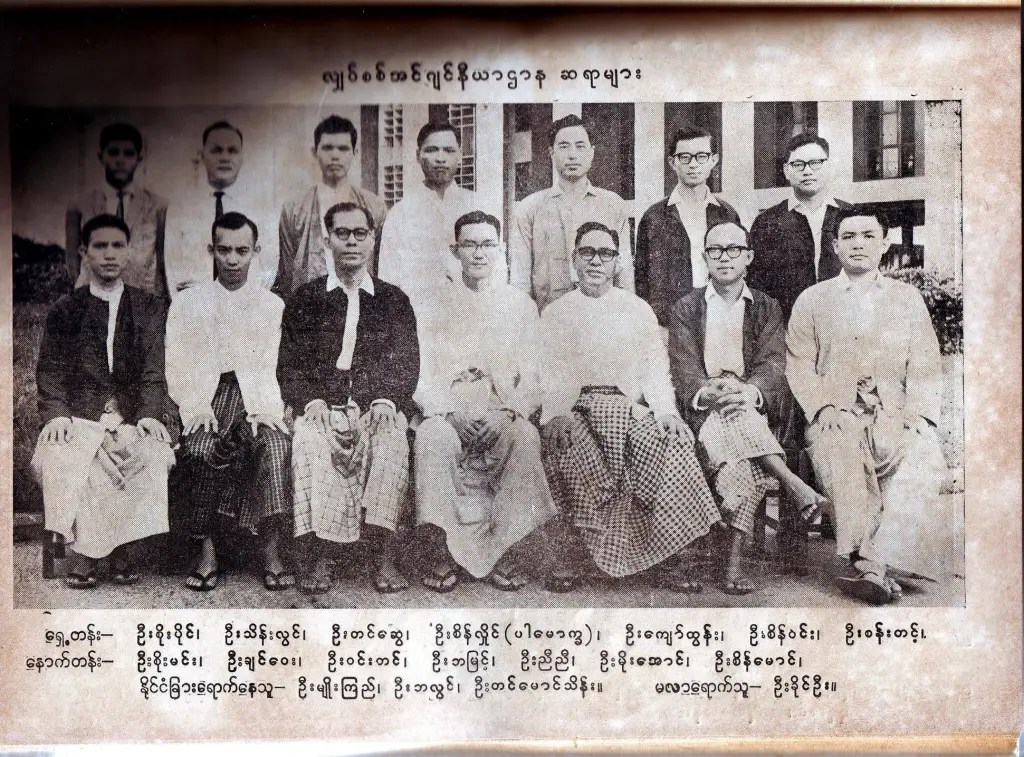
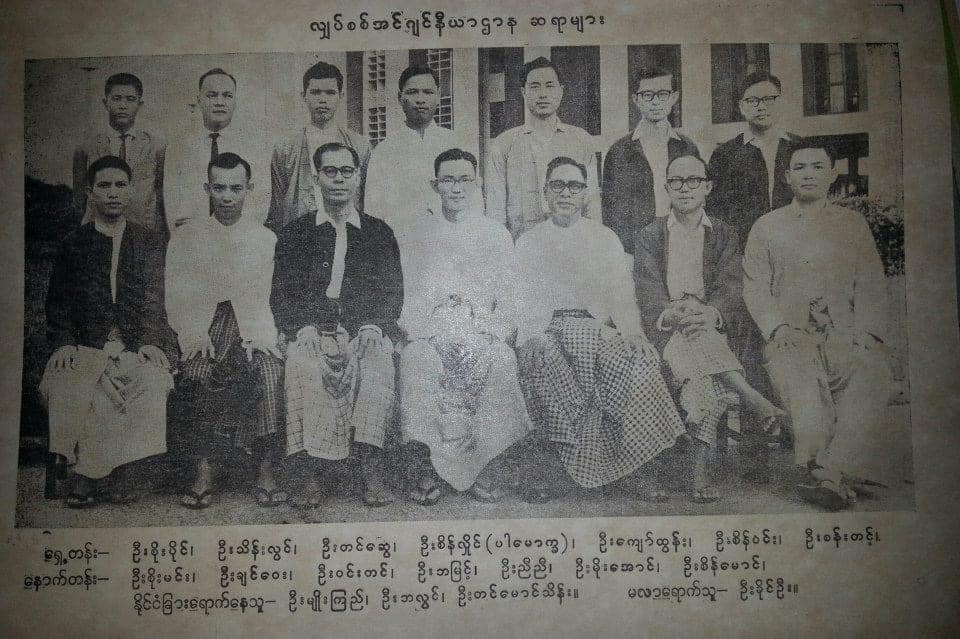
EE Sayas
U Kyaw Tun (Saya of our sayas) : Father of Dr. Elizabeth (English), Daw Dorothy (Mrs. TAW), …
C Ping Lee : Moved to head the Dept of Vocational and Tech at the request of the then HE U Than Aung, Minister of Education
Dr. Freddie Ba Hli taught part time; Served as Director General of UBARI; Advisor for National Planning Ministry; Board member of UCC
U Sein Hlaing (Professor) : Passed away a couple of years after retirement
U Tin Swe (Senior Lecturer) : Was a star soccer player; Also good at tennis; Power user at UCC
U Sein Win (Professor of the newly established EP Dept) : President of RIT Rowing; President of RIT Swimming; Advisor for UCC
U Htin Paw : Moved to UBARI and then to Electrical Inspectorate; later migrated to USA; President of BEA; President of TBSA; Wrote articles for RIT Alumni Newsletter; Attended SPZP-2000
U Ba Nyunt : Moved to MOC; Attended SPZP-2000
Dr. San Tint (Professor of the newly established EcE Dept) : Played on the Saya soccer team; External examiner for UCC and DCS; Attended SPZP-2000
U Thein Lwin : Elder brother of U Myo Myint, U Kyi Lwin (C67), U Tint Lwin (M79) and U Thet Lwin (EC72); Spouse of Sayama Daw May Than Nwe (Joyce, Physics, GBNF); President of RIT Badminton; Retired from Singapore Poly
U Soe Min : Moved to DCA after returning from UK
U Chin Way : Was active in SPARK; Migrated to USA
U Nyi Nyi : Introduced U Soe Paing to Dr. Chit Swe; Passed away in UK
U Tin Shwe : Became monk after retiring from ABAC
Daw Mya Mya Than : Early EE sayama
U Kyaw Naing (Sin Gwan) : Wrote “Computer ah sa Pay thee ga” for Hlyat Sit Sar Saung; Early casualty
Daw Nyunt Nyunt Yee : Spouse of Saya U Sein Hlaing
EE Association
EC/EP PZP a few years back
U Soe Paing, U Thein Lwin, U Moe Aung (Tekkatho Moe War), U Tin Maung Thein, Dr. Ba Lwin, U Myo Kyi, U Ba Myint, U Sein Maung, U Khaing Oo, and Daw Mya Mya Than are seen at the recent EC/EP Saya Pu Zaw Pwe.
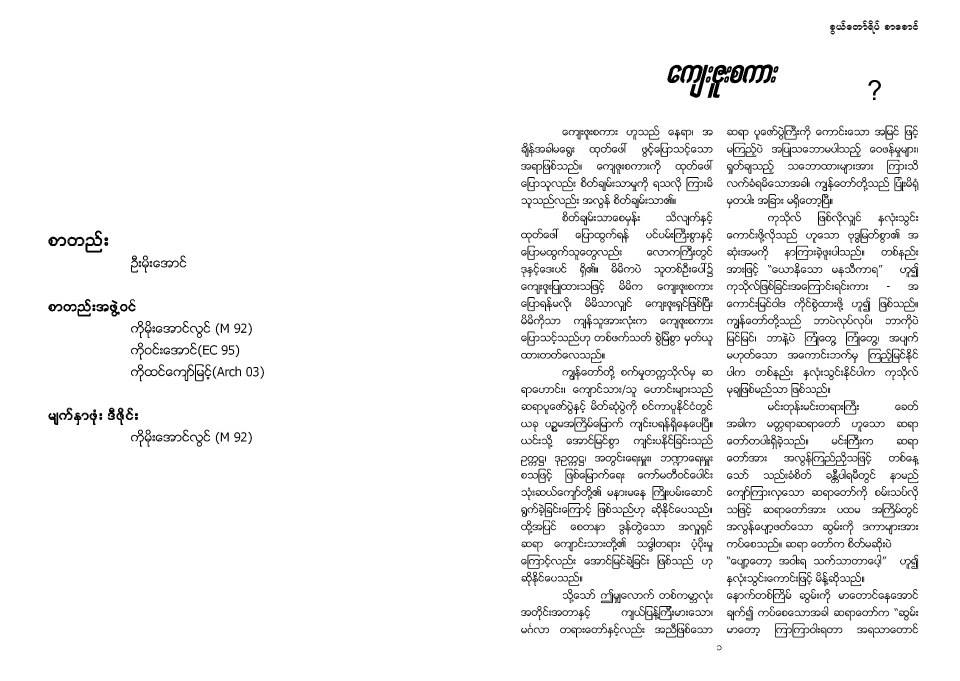
The commemorative issue of Swel Daw Yeik Sar Saung was published by Tekkatho Moe War (Saya U Moe Aung) and his team for SPZP-2010 held in Singapore.
Saya renamed my article as “A Short and Sad Clip : EE Sayas” and published it. It was really sad to have lost seven EE sayas (from the 20 or so sayas during our RIT days) at the time of the writing. Saya U Thein Lwin passed away a couple of years back (raising the GBNF count in the EE Sayas Group Photo to 8).
Sayagyi U Ba Hli was the first Dean of Engineering at the University of Rangoon. He also served as Professor of Civil Engineering. He is credited for the “Twinning” with the prestigious universities in the USA.
The commemorative issue of RIT Alumni International Newsletter for the first RIT Grand Reunion and Saya Pu Zaw Pwe paid respect to Sayagyi.
Sayagyi U Aung Khin (former Professor of Mechanical Engineering, and the driving force behind SPZP-2000) wrote an introduction to the special article written by Saya Dr. Freddie Ba Hli (the only child of Sayagyi U Ba Hli).
U Ba Hli’s son
Dr. F Ba Hli 1Dr. F Ba Hli 2
Dr. F. Ba Hli received his Sc.D. in Electrical Engineering from MIT. He helped Sayagyi Dr. Aung Gyi and Sayagyi U Min Wun, who were two of the first undergraduate engineering students from the University of Rangoon to be given State Scholarship as part of the “Twinning” program.
Dr. F. Ba Hli’s spouse is the sister of Sayagyi U Tin U (C), Sayagyi U Ba Than (M), Dr. Myo Tint (father of Ma Kay (EE93)), U Tin Htoon (A60), Saya U Myo Min (UCC) and U Thaung Lwin (EC66). Note that four are Past Captain and Gold of Rangoon University Boat Club.
Dr. F. Ba Hli has a daughter and two sons.
U Ba Hli’s grand children
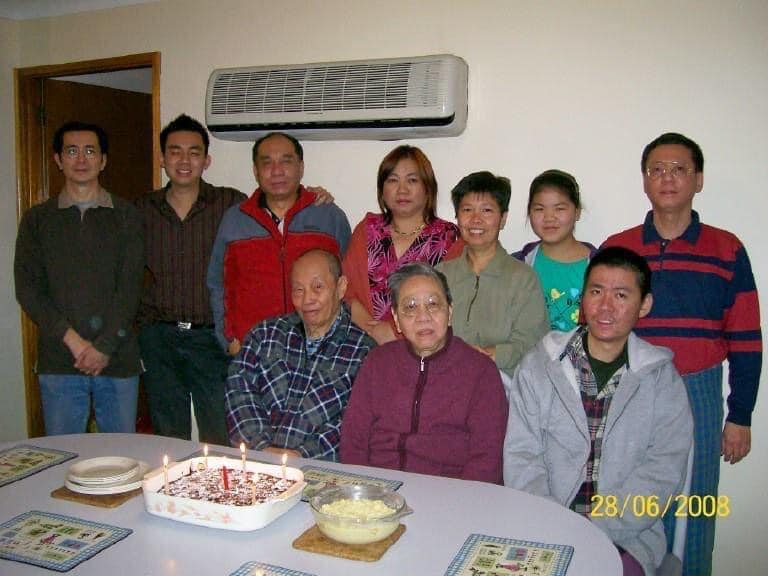
Dr. F Ba Hli’s birthday in 2008
Daw Tin Tin Hlaing (UCC) is the spouse of U Htay Aung (Victor, EC80, UCC, nephew of Saya U Sein Hlaing (EE)).
U Tha Hlaing (EC83, UCC) stood joint first with Ko Thaung Tin (KMD, former Deputy Minister) in their final year. He, his father and his paternal grandfather form Three Generation of Burmese engineers who are sayas or alumni.
Min Thet Tun (GBNF) did not smoke or drink, but succumbed to lung cancer in mid 30s. He lamented why some people who drink and smoke lived long.
U Khin Maung Myint (ChE71) and Daw Mai Khin Khin Nyunt (Rosie, ChE71) were among those who graduated from RIT in 1971.
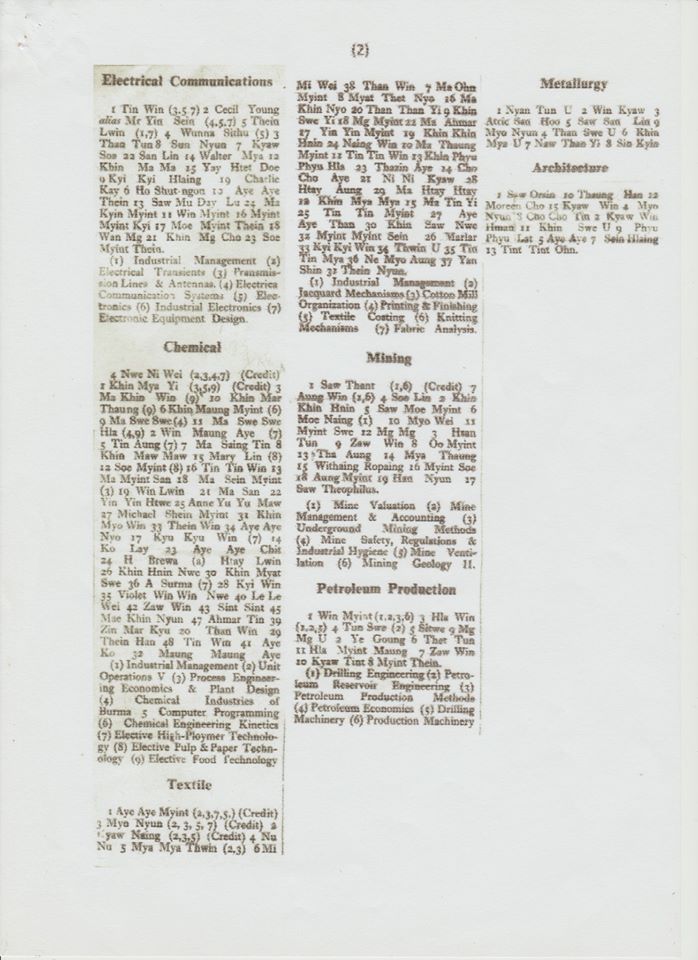
They shared the results published in Working People’s Daily
The top students include Khin Maung Chit (Civil) Ne Win (Mechanical) Myint Htay (Automobile) Ma Nwe (Agriculture) Tin Than (Electrical Power) Tin Win (Electrical Communications) Nwe Ni Wai (Chemical) Saw Thant (Mining) Win Myint (Petroleum Production) Nyan Tun U (Metallurgy) Saw Orson (Architecture) Aye Aye Myint (Textile)
Set Hmu is used to refer to RIT (as in Set Hmu Tekkatho). It is used to refer to Mechanical Engineering (as in Set Hmu InGyinNiYa).
It was founded by U Win Thein (M67, GBNF) in the 1964-65 Academic Year.
The weekly newsletter was sold by volunteers [mostly along the corridors] for ten pyas.
The Thadin Zin not only covered the news, but was a fertile breeding ground for poets, essayists, authors and cartoonists.
I wrote a few short notes for the Thadin Zin using my pen name “Tekkatho Ga [Nge] Ga [Gyi] Na [Nge] Na [Gyi]”.
I saw the dexterity with which U Win Thein cut the Stencil (also known Gestener and Wax paper) with his meticulous handwriting.
During my visit to Yangon in 2012, I received a CD of Mechanical Newsletters (for 1968-69 to 1973-74). They were compiled by an alumni couple (U Kyaw Thein and Daw Than Than Mu). U Tin Maung Swe (Cartoon) and U Khin Maung Toe received copies for re-distribution to interested sayas and alumni.
Saya U Maung Maung (a) George (ChE66) served as the first President
U Kaung Kaung Oo (a) Gordon (M83) is Past President
U Aung Myint Oo (EC84) is Past President
U Tin Maung Win (C86) is current President
U Stanlislau (a) Stan (M67) served as the first Chairman of the Board of Directors
Saya U Myat Htoo (C68) is the current BOD Chair
Web site : run by U Tin Maung Win (C86)
FaceBook page : run by U San Lin (M87)
Evite : run by U Myint Swe (EP74)
MailChimp : run by U Yu Ket (a) Edward Saw (EC85)
Extremely low overhead / expenses (due to hosts, sponsors and donors)
Awards (plaques, certificates)
PR : NorCal RITAA pens donated jointly by U Edward Saw (EC85) and U Myint Swe (EP74)
Committee to supervise NorCal RITAA Scholarships
Ad hoc committees formed to address specific issues e.g. sharing of knowledge and expertise with alumni in Myanmar
AGM in 2018
Soon offered to the monks at Mudita Shwe Kyaung
Mohinga, desserts … for all attendees
AGM meeting headed by Saya U Nyo Win (M65) and Saya U Myat Htoo (C68)
U Nyunt Than (M84) acted as Master of Ceremonies.
Saya U Myat Htoo (C68, Chair, Board of Directors) presented an Opening Speech
He later handed out awards to Sponsors and Donors
U Kaung Kaung Oo (a) Gordon (M83) and Daw Lillian (EC83) survived the raging fires in Napa, but they had to wait three weeks before returning to their “Home Sweet Home”. Due to 75 mph winds, a sizable percentage of the vineyards and homes took a heavy toll.
They donated to the Scholarship Fund and also encouraged their 83 Classmates (U Kyaw Myint, Daw Ni Ni Sein …) to pledge or donate.
Saya U Nyo Win accepted the award for Saya U Tin Maung Nyunt (M60).
List of donors/sponsors is maintained by U Ko Ko Zin (M84) and U Myint Swe (EP74).
Dr. Aung Gyi’s article about the history of Engineering Education reminds me of my 31 years of tenure as a teacher at RIT. I’ll try to describe some achievements in rendering Civil Engineering education, as far as my memory would carry me through by recollecting events of the past 55 years. I’ll try to supplement some of my recollections to his excellent account of engineering education in Myanmar.
Abroad for further studies
Dr. Aung Gyi and I had similar academic journey at the University of Rangoon, starting from admission to Intermediate of Science class to the day when we left Myanmar to pursue further studies abroad, until we graduated from MIT earning B.S. in Civil Engineering.
On September 19, 1952 three 2nd Year students [namely, Aung Gyi, Maung Maung Than, and Kyit In (aka) Min Wun] of BOC College were sent off at the Mingaladon Airport by a large group of classmates. It was such a wonderful event and surprisingly good news that three of us, the engineering students from B.O.C. College, were to be sent abroad to study engineering on State Scholarship.
U Maung Maung Than went to Falls River to study Textile Engineering. Dr. Aung Gyi and I flew to Boston to study at M.I.T. which is situated in Cambridge on the opposite bank of Charles River from Boston. When we arrived at the Logan Airport in Boston, Freddie Ba Hli, who was a post graduate student at M.I.T. , came to welcome us and helped us to get accommodated in the dormitory. He also took us to buy slide rule and advised us to learn how to use it before the classes.
As soon as the 1st assignment was given I really came to appreciate Freddie’s advice. Slide rule was an essential tool for calculation at that time. As we were admitted to the 2nd Year [sophomore] class we found Physics a bit tough for us. Freddie willingly came to our help again.
Before I was sent abroad to study engineering I was informed that I’ll be assigned to come back home to teach. I, therefore, paid special attention to the engineering education curriculum and collected all my class notes and assignments. Between school years I went to get practical training in structural engineering, both in design and construction, by working with the same company for three summers. In my final year I have to compile a Thesis, doing a Bascule Bridge Design, as part of the requirement.
After graduation from MIT in June 1955 Dr. Aung Gyi continued graduate studies in Transportation Engineering at M.I.T. However, I transferred to Cornell University to study Geodesy and Photogrammetry, as directed by Ministry of Education, because MIT did not offer this course at that time. I chose Structural Engineering as Minor option. I got M.S. degree in June 1956.
A Burmese State Scholar’s monthly allowance for boarding was $140. As I needed extra pocket money I worked for Professor Dr. Belcher doing aerial interpretation of terrain geology for real estate development. Dr. Belcher later came to Myanmar to train surveyors in the Department of Survey, under the Ministry of Forest and Agriculture.
I also worked part time for Professor Dr. Winter, doing bamboo-reinforced concrete design and testing. Dr. Winter sponsored me to continue with post graduate study in structural engineering. However, I was not granted extension of stay. The directive from Ministry of Education was to extend my stay for one more year to work and gain practical experience in Geodesy and Photogrammetry. I got a job with Hycon Aerial Surveys Company in Pasadena, California, where I gained practical experience in Aerial Mapping and Terrain Interpretation to select corridors for highways, power transmission lines, and oil pipe lines.
Beginning of teaching career
In June 1957 I flew back to Yangon and reported for duty at the Faculty of Engineering. I was appointed as Assistant Lecturer in the Department of Civil Engineering, Faculty of Engineering of the University of Rangoon. This is the beginning of my teaching career as a young engineer freshly out of college with only a limited practical experience.
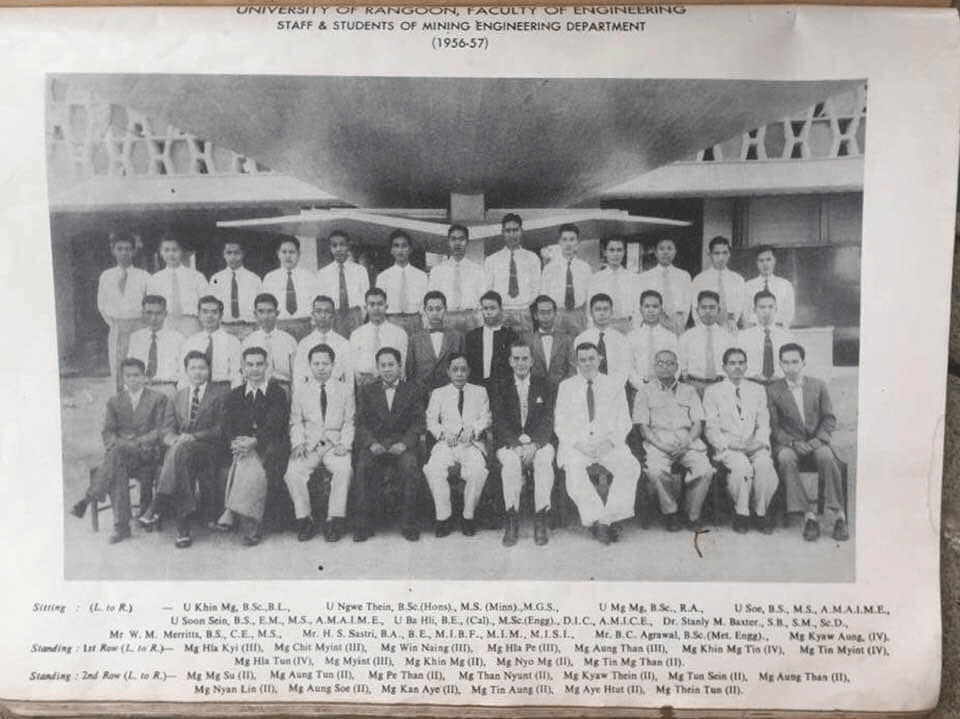
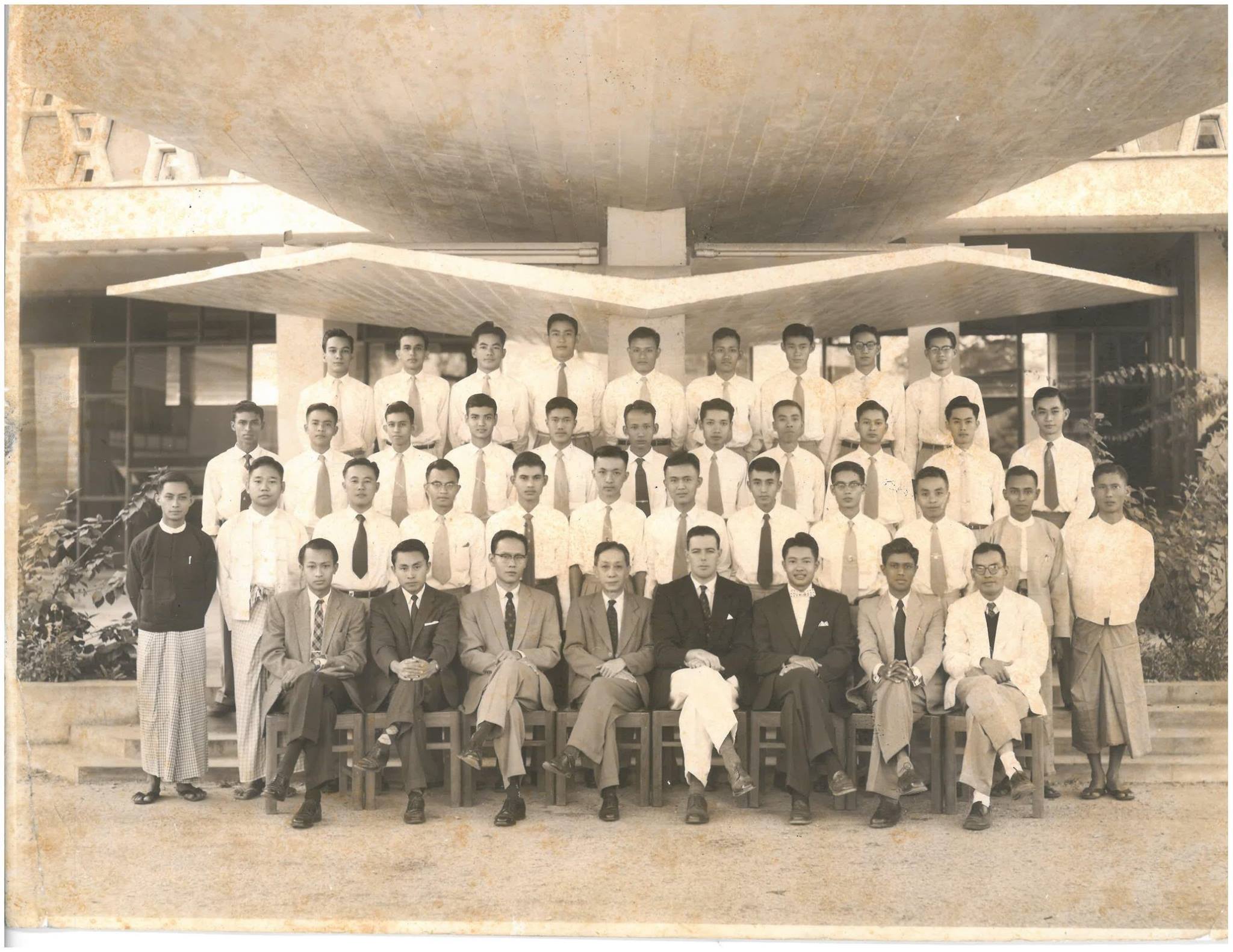
Three major Departments of Engineering [namely, Civil, Mechanical, and Electrical] of B.O.C. College were relocated in the new buildings along Prome Road. The turtle-shaped dome [Leik Khone] was a beautiful wooden folded plate structure and it served as an assembly hall. Dr. Aung Gyi and I were later promoted as Lecturers in 1958, and in 1960 the late U Mya Han was appointed as Professor and Head in our Department. But he did not stay long enough and I did not have a chance to get acquainted with him. He later worked for Louis Berger Construction Company to design Rangoon Mandalay Highway and as Dr. San Lin has recounted, U Mya Han employed some Civil Engineering graduates with higher pay to work for him.
In 1958 I was appointed as warden for the new Pagan Hall for engineering students. Pagan Hall was a new building situated in the same compound as Prome Hall and Tagaung Hall. At that time all the hostels were managed by a warden and an assistant warden. Instead of assistant warden, I requested U Yu Khin, registrar of the University of Rangoon, to allow me to appoint three tutors to help manage hostel matters, especially to help students in their studies. Three tutors were U Tun Shwe and U Ko Ko Gyi [Johnny King] of Mechanical Engineering Department, and U Ko Ko Lay of Chemical Engineering Department. I managed the hostel together with the three tutors, and EC members of the Students’ Welfare Committee. Procurement matters were jointly handled by us in consultation with U Aung Sein, the chief cook. We purchased rice, cooking oil, salts, etc at whole-sale prices and thus could save for messing. Packing materials were carefully salvaged and later sold back to the vendors and the proceeds were distributed to the hostel staff as annual bonus. The quality of meals became greatly improved so that the students could enjoy plentiful and better meals.
When we moved to Gyogone Campus in 1961 Saya U Kyaw Tun of Electrical Engineering was appointed as warden of three hostels [Block A, B, and C] and I continued as warden for three hostels [Block D, E, and F]. Our quality of meals was so well known that U Yu Khin interviewed me as to how we could provide batter and plentiful meals. I could still remember the first grand dinner held on the lawn in front of the hostel buildings. When new rules of a two-year term limit for a warden were set I resigned from the warden post.
Curriculum Development
When B.I.T. [later renamed as R.I.T.] became a separate institute the first thing I noticed was that the curriculum for the first two years were developed with emphasis toward technology. The curricula for Civil Engineering were also revised based upon our academic and practical training abroad.
One requirement for undergraduate study was to prepare a Thesis in the Final Year. All the staff was assigned as supervisors, thus creating an opportunity for the staff to work more closely with the students.
Graduate courses leading to Master Degree were also offered in [a] Structural Engineering, [b] Water Resources Engineering, and [c] Surveying and Photogrammetry. A Diploma Course was also offered in Water Supply and Sanitation Engineering.
Upgrading Laboratory Facilities
In an effort to upgrade laboratory facilities we have achieved to set up several up-to-date laboratories through foreign aids. Some equipment were also acquired through government funding.
1. Structural Testing Laboratory was established with the aid from German Government and Dr. Roberts of Tulane University came to teach Structural Engineering for one year.
2. Hydraulics Laboratory was aided by the British Colombo Plan.
3. A Photogrammetry Laboratory was also acquired through the British Colombo Plan Aid. Mr. Heathcoat from Great Britain came to teach Photogrammetry for one year. A Russian Professor came to the Department to teach Photogrammetry also. He delivered lecture through an interpreter. Through UNESCO aid the Department of Archeology, under the Ministry of Cultures, a Terrestrial Photogrammetric Plotter was acquired and it was set up in the Photogrammetry Laboratory. This plotter was later used to map ancient monuments of Pagan.
4. Materials Testing Laboratory was also expanded with equipment for testing soils as well as bitumen.
5. For Survey Laboratory modern Theodolites, such as Wild T-1, T-2, and T-3 and Zeiss Automatic Levels, and Invar Tapes for precise distance measurement were acquired.
Saya U Min Wun and C58
Staff Development
To fulfill staff requirement for the graduate courses Civil Engineering staffs were encouraged to attend graduate courses for Master Degree. Many were also sent abroad for further studies. The following list indicates that almost all the staff were trained abroad or locally to pursue graduate studies.
1. Structural Engineering staff
Dr. Aung Gyi was sent to Canada to pursue post graduate studies in Structural Engineering.
The late Saya U Kyaw Thein transferred to R.I.T. from Construction Corporation.
Dr. San Hla Aung was sent to M.I.T. to study Structural Engineering. He was also sent to Germany for training in Structural Laboratory Techniques.
U Tin Maung, U Nyi Hla Nge, U Khin Maung Tint, U Aung, and U Aung Kyaw Myat attended M.S. Course in Structural Engineering at R.I.T.
Dr. Myo Khin was sent to Japan to study Building Construction Technology, one of the Engineering electives for Regional Colleges.
2. Soil Mechanics and Geotechnical Engineering
Saya H. Num Kock was sent to England for to study Soil Mechanics Laboratory Techniques.
U Allen Htay was sent to the United States of America, and Dr. Aung Shein was sent to England to study Soil Mechanics and Geotechnical Engineering.
3. Water Resources Engineering
Dr. Win Thein was sent to Russia, U Thein Tan was sent to England, Dr. Daw Khin Ni Ni Thein, and Dr. Daw Nilar Win were sent to Netherlands, and Dr. Htin Aung and Dr Khin Maung Win were sent to the United States of America to pursue post graduate studies in Water Resources Engineering.
4. Surveying and Photogrammetry
I was sent to England to do research in Photogrammetry at University College, London. I collaborated with a post graduate student to do research on measurement of deflection patterns of a typical Railway Bridge by Terrestrial Photogrammetric method.
Dr. Aung Soe was sent to East Germany to study modern Surveying Techniques.
U Khin Maung Phone Ko was sent to the University College, London to specialize in Photogrammetry. He pursued graduate studies at the University of Glasgow.
U Aye Win Kyaw was sent to Paris to train in Terrestrial Photogrammetry.
U Ye Myint and U Khin Maung Maung were sent to the Netherlands to study Photogrammetry and Aerial Photo Interpretation.
5. Sanitary Engineering
Saw Christopher Maung, U Kyaw Win, U Khin Aung Han, the late Daw Yin Yin Myaing were sent to Netherlands.
6. Others
Saya U Myat Htoo , U Thein Kyaw, U Tauk Lin, U Samual Nay Than, U Kaung, and Tan Kyi Kong were some staffs who left the Department to go abroad. Daw Kyi Ngwe, Daw Yin Tint, and Daw Cho Cho pursued graduate studies at R.I.T.
Practical Training
Summer training program was coordinated with various Government Departments, such as Construction Corporation, Department of Irrigation, Department of Water Ways, etc and in some departments students were also paid.
Summer Surveying Training was part of the requirement for 4th Year Civil Engineering students. The first survey practical training was held during the summer of 1961 in Maymyo [PyinOo Lwin]. The Department of Survey, under the Ministry of Forest and Agriculture allowed us to establish the Survey Camp in one of their Office Buildings, where there were big office rooms for evening classes and for students to do survey data compilation, checking and calculations, and also to draw a topographic map. The training lasted four weeks and it was a good opportunity for the staff to get more acquainted with the students, thus creating a lasting and intimate relationship between the staff and the students.
On-the-job Training with CECC
In September 1976 Civil Engineering Construction Cooperative [CECC] was organized to create job opportunity for Civil Engineering graduates. I was assigned to lead as chairman with Sayas U Tin Maung and U Thein Tan as vice-chairmen, and student members were U Toe Maung as secretary with U Tin Ohn and U Myo Thant as executive members. Retired Charter Account U Ba Win was employed to supervise budgeting and accounts branch. U Mya Than, a retired Superintending Engineer of Construction Corporation, was also employed to supervise design branch. With the permission of Department of Higher Education laboratory technicians were also employed part-time to use the laboratory facilities to help CECC.
All the members were assigned to rotate on-the-job training through design branch, construction branch, procurement branch, etc. The purpose of the rotation program was to train all the members to be ready to assume any assignments and to be able to take charge of a project independently. CECC is still a strong and active construction cooperative. Many ex-CECC members are working abroad, especially in Singapore, as construction engineers.
In the beginning we started to work for free until we were awarded contracts to earn profits. With the support of the Ministry of Cooperatives CECC was awarded contracts to do the following:
1. Site development project for 100-ton rice mills.
2. Kyaik Hti Yo development project. My article “Kyaik Hti Yo Development Project 1979” was published at the www.ex-rit.org
3. Micro hydro power project for Tachilaik Township.
4. Township market building project.
5. Aerial Mapping project for Bassein-Monywa highway.
6. Terrestrial Photogrammetric mapping of ancient monument [stupas, pagodas, etc] in Pagan
7. Exhibition Stalls construction project for 12 Divisions and 12 States during Union Day Celebration event, etc.
Special Assignments
I came back from London on July 4th 1975. Pagan earthquake of July 8th 1975 destroyed the once awe-inspiring panorama of Pagan. Almost all the monuments were affected to a greater or lesser extent. The beautiful silhouettes of giant monuments, Thatbyinnyu, Ananda, Gawdawpalin, etc changed within a split second into ugly heaps of debris.
On July 9th 1975 a National Commission for Restoration of Pagan Monuments was duly formed, headed by the Deputy Minister of the Ministry of Construction. The Commission comprised of expertise from the Department of Archaeology, Universities and Institutes under the Department of Higher Education, and the Construction Corporation. Dr. Aung Gyi, U Myo Myint Sein, and I were also members of the Commission. I was with the Commission until I retired in December 1988.
From 1981 to 1988 I was assigned to become a member of the National Calendar Committee [Naing Gan Daw Pyeikkadaindaw Set Ah Phew]. Sayadaw U Thilasara of Patheingyi Kyaung of Mandalay was the chairman. Well known astrologers from Upper Myanmar and Lower Myanmar were appointed as members. Annual Myanmar Lunar Calendar was compiled and I also participated in computing planetary positions to determine Thinn Gyan duration and to fix the Myanmar New Year Day. It involved many hours of hand calculations based upon Surya-Siddhanta, Myanmar version of the archeo-astronomy. A Fortran Program was introduced to help the hand calculations and save time. Comparative studies on (a) Myanmar Almanac and Nautical Almanac, (b) Myanmar traditional methods of calculations for Solar eclipse and Lunar eclipse, (c) Identification of 27 Asterisms (Nakshatra) on a Star Chart based upon visual observation as shown by Sayadaw U Thilasara, etc were also presented to the NCC.
When Regional Colleges were established I was assigned in 1981 to work as National Counterpart with UNESCO expert, Mr. Harris. We were involved to help establish institution buildings for 20 Regional Colleges, curriculum development and reviews, staff development, etc.
In May 1981 a group of staff from Universities and Institutes under the Department of Higher Education took part in the inspection tour of the Industries on the West bank of Irrawaddy River. The tour began from Yangon to Bassein to inspect the Glass Manufacturing Factory. The entourage of motor vehicles continued with the inspection of the Bassein-Monywa road, Heavy Industries in Sin Te, and inspection of the Ngawin Dam.
The group presented reports at the end of the tour. My presentations were (1) How to prevent bullock cart tracks on the slopes of the earth embankments of Basssein-Monywa road, and (2) Justifications not to cover up the upstream embankment of Ngawin Earth Dam with concrete blanket to prevent seepage. I was glad that my presentations were accepted and the proposal for the concrete blanket was reversed.
Conclusion
The above recount of the History of Civil Engineering during my tenure at R.I.T. is compiled as far as I could recall. I’m sure there are some omissions, errors, or mistakes. Please help to correct them to be incorporated in the final edition.
I would like to say in conclusion that my 31 years of teaching career was not only a rewarding experience but also an opportunity to contribute toward upgrading the standard of Civil Engineering education in my motherland. I’m proud to say that R.I.T. graduate engineers are well qualified to assume responsibilities at home and abroad.